Article

Bibliometric Analysis of the Literature Regarding MRI-Linac: A Paradigm Shift in Radiation Oncology


by
Andrea Emanuele Guerini
1,
Paolo Rondi
2,*,
Federico Mastroleo
3,4,*,
Stefania Volpe
3,4,
Stefano Riga
5,
Stefania Nici
5,
Marco Luzzara
6,
Giulio Ferrazzi
7,
Marco Krengli
8,9,
Davide Farina
2,
Luigi Spiazzi
5,10,
Barbara Alicja Jereczek-Fossa
3,4,
Marco Ravanelli
2 and
Michela Buglione di Monale e Bastia
1,10
1
Department of Radiation Oncology, University of Brescia and Spedali Civili Hospital, Piazzale Spedali Civili 1, 25123 Brescia, Italy
2
Radiology Unit, Department of Medical and Surgical Specialties, Radiological Sciences and Public Health, University of Brescia, Spedali Civili, Piazzale Spedali Civili 1, 25123 Brescia, Italy
3
Division of Radiation Oncology, IEO European Institute of Oncology IRCCS, 20141 Milan, Italy
4
Department of Oncology and Hemato-Oncology, University of Milan, 20141 Milan, Italy
5
Medical Physics Department, ASST Spedali Civili Hospital, 25124 Brescia, Italy
6
Elekta AB, 103 93 Stockholm, Sweden
7
Philips Healthcare, 20126 Milan, Italy
8
Dipartimento di Scienze Chirurgiche Oncologiche e Gastroenterologiche, University of Padua, Via Giustiniani, 2, 35128 Padova, Italy
9
Radiotherapy Unit, Istituto Oncologico Veneto IOV—IRCCS, Via Nicolò Giustiniani 2, 35128 Padua, Italy
10
Centro per lo Studio della Radioterapia guidata dalle Immagini e dai Biomarkers (BIO-RT), Dipartimento di Specialità Medico-Chirurgiche, Scienze Radiologiche e Sanità Pubblica—University of Brescia, Piazza del Mercato, 15, 25121 Brescia, Italy
*
Authors to whom correspondence should be addressed.
Data 2026, 11(5), 97; https://doi.org/10.3390/data11050097
Submission received: 3 February 2026 / Revised: 31 March 2026 / Accepted: 7 April 2026 / Published: 28 April 2026

Abstract

Background: By integrating an MRI scanner and a linear accelerator, MR-linac systems provide superior soft tissue imaging and allow to perform adaptive radiotherapy adjusted on daily anatomical changes. The advent of this technology represents a revolution in radiation oncology and could improve treatment accuracy and clinical outcomes. We performed a comprehensive bibliometric analysis with the aim of displaying the available scientific literature and trends regarding MR-linac. Methods: Scopus database was investigated, considering documents published up to 6 April 2025. Keywords encompassed terms related to “MR-linac” or “MRI-linac” and possible combinations and acronyms. BibTeX data file was imported into Biblioshiny (Bibliometrix package—v. 4.1.4) and analysis was conducted using R code (R version 4.3.2) and the Bibliometrix package (version 4.1.4). Results: A total of 1624 articles on MR-linac were identified. The number of annual publications gradually increased from 21 in 2008, peaking at 211 in 2022 and then remaining substantially stable in subsequent years. Most of the papers were original articles (79.2%) and the majority was published by the 10 journals with the largest output. Remarkably, of 6385 identified authors, over 85% were from one of the 10 most represented countries (including European, North American and Asian nations). Consistently, the 10 institutions with the larger output were North American, Australian or European and provided over 60% of the articles. International co-authorship was found in only 23.6% of the articles. Keyword and co-occurrence analyses identified MR-guided radiotherapy, SBRT, dosimetry, and adaptive strategies as core themes, with emerging trends in radiomics, diffusion metrics, and deep learning. Conclusions: Bibliometric analysis identified trends and patterns of scientific publications regarding MR-linac, highlighting a growing interest in the topic. Nonetheless, it should be considered that the majority of the papers were published by a few journals and over 85% of authors were from 10 countries, demonstrating an evident disparity across nations. Multicentric international research protocols and common frameworks could foster the transition towards collaborative practice-changing studies.

1. Summary

This study presents a comprehensive bibliometric analysis of MR-linac research, highlighting its rapid growth and evolving focus. Using the Scopus database up to 6 April 2025, 1624 articles were identified, with publications increasing markedly after 2019 and peaking in 2022. Most papers were original articles published in a small number of journals, with over 85% of authors from 10 countries and more than 60% of output from institutions in Europe, North America, and Australia. Core themes included MR-guided radiotherapy, adaptive strategies, and SBRT, with emerging interest in radiomics and deep learning. The findings reveal strong growth but notable geographic and collaborative disparities.

2. Introduction

Radiation oncology is indissolubly linked with imaging, as optimal tissue definition is crucial for the adequate contouring of target volumes and organs at risk (OARs) [1,2]. In this framework, Magnetic Resonance Imaging (MRI) plays a pivotal role in oncology, as it provides unparalleled visualization of multiple anatomic structures [3,4]. Moreover, functional multi-parametric MRI provides information that could set the basis to assess tumor response and toxicity and to perform radiomic analyses [5,6].
Conventionally, radiotherapy treatment plans are generated from contours delineated on a simulation computed tomography scan (CT). As this image modality has suboptimal contrast for soft tissue, fusion with diagnostic MRI is often required, but its accuracy is limited by acquisition with different patient set up, and changes in neoplastic lesions and surrounding tissues over time (e.g., due to tumor growth and/or displacement, edema, and surgical cavity shrinkage) [7].
Image-guided radiotherapy (IGRT) is currently mostly based on CT scans with limited resolution (Kilovoltage-CT, Megavoltage-CT or cone-beam CT), hindering the assessment of tumor modification throughout treatment [8].
Recently, hybrid systems (MR-linacs) integrating a linear accelerator (linac) and an MRI scanner have been developed and this transformative synergy could redefine standards in radiotherapy accuracy, providing multiple advantages over conventional CT-based linacs.
The possible benefits include improved definition of treatment volumes and OARs, assessment of anatomical morpho-volumetric changes over time and evaluation of predictive parameters of treatment response and toxicity by means of radiomics analysis [7,9]. All these factors might allow margin reductions, reduced dose to the OARs and/or dose escalation to target volumes with the potential of limiting toxicity and improving cure rates [10,11,12]. The MR-linac workflow allows daily treatment plan adaptation on current patient’s anatomy, yielding the opportunity to offer online adaptive radiotherapy, and real-time monitoring during delivery.
On the other hand, several factors should be taken into account in the paradigm shift from CT-based radiotherapy to MRI-guided radiotherapy (MRgRT), encompassing geometric integrity, generation of syntetic-CT (synCT) from MRI and models to estimate electron density [13,14] and management of the magnetic field impact on dose distribution during treatment delivery (including electron return effect and electron streaming effect [15,16]).
The rapid pace of advancements and the interdisciplinary nature of this field pose challenges in keeping up to date with the current state of research.
Bibliometrics is a quantitative methodology for examining the patterns and trends in the scientific literature, highlighting the growth, impact, and interdisciplinary collaboration within a specific field [17]. This technique has already been implemented in different medical corpora of the literature, offering previously unavailable insights [18,19,20].
In the present study, bibliometric analysis is implemented to systematically map the scholar landscape regarding MR-linac technology, with the aim of elucidating the dynamics of research output, collaboration networks, and thematic evolution.

3. Methods

The Scopus electronic document database was utilized as data source for the analysis. The search strategy encompassed terms related to “MR-linac” or “MRI-Linac” and possible combinations and acronyms. We included documents published from 1970, date of the first publication on the subject, up to 6 April 2025. Available documents were exported by BibTeX file format, along with the corresponding metadata, on 6 April 2025.
Data Analysis:
BibTeX data file was imported into Biblioshiny (Bibliometrix package—v. 4.1.4) [21] and missing data analysis was performed to assess the reliability of future analyses.
Data were initially summarized by extracting key information concerning the number, types, and temporal distribution of the documents. Subsequent analyses identified the authors most actively engaged in this research field, their scientific output, affiliations, the countries of authorship, and the extent of collaboration among authors from different countries, building a collaboration map. Author productivity and the number of authors contributing to more than one article in the field were highlighted using Lotka’s law. Citations were analyzed to identify the most cited documents in the field. After synonym clustering, frequent and pertinent keywords were explored and the walktrap algorithm was applied for clustering common domains [22]. Findings were visualized through tree maps, co-occurrence network graphs, and factorial analysis keyword plots [23]. For clustering, Louvain algorithm was employed, removing isolated nodes, and setting the minimum number of edges at 2. Additionally, a thematic analysis was conducted, categorizing themes into basic, motor, niche, and declining themes depending on their degree of development and relevance [24].
The analysis was conducted using R code (R version 4.3.2) and the Bibliometrix package (version 4.1.4) [21].

4. Results

4.1. Dataset

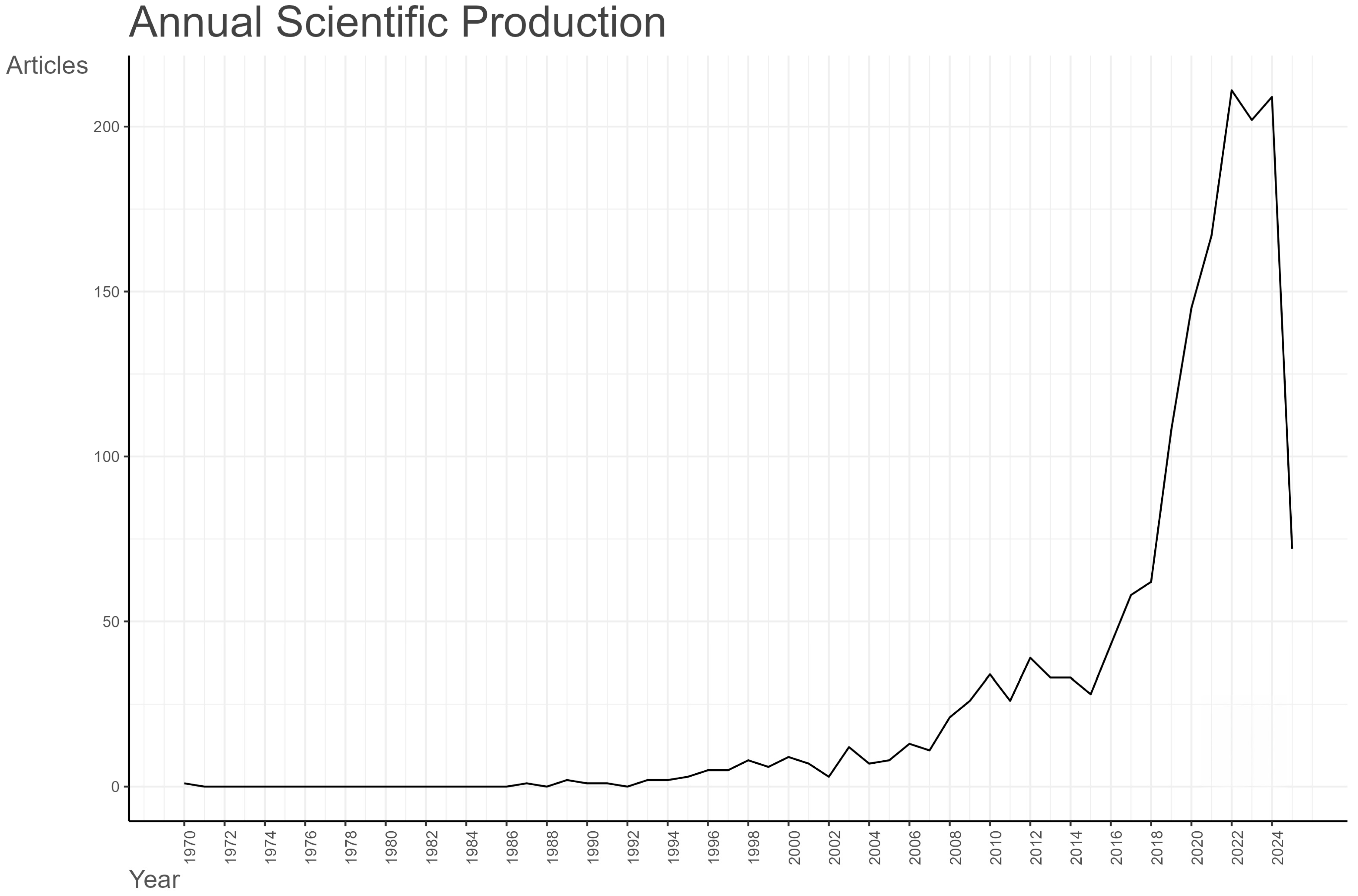
A total of 1624 articles were identified. In the last 20 years there was a growing interest in the literature on MR-linac: the annual scientific production notably started to grow from 2008 (21 papers), reaching the double of papers in 2016 and then further increasing and keeping steadily over 100 publications per year since 2019, peaking at 211 in 2022 and remaining substantially stable in 2023 and 2024 (Figure 1). The most represented document type was original article (79.2%, n = 1286), followed by conference paper (9.9%, n = 160) and review (5.5%, n = 89). Books and book chapters represented 0.12% and 1.2% of the total scientific output (n = 2 and 20, respectively).

4.2. Sources

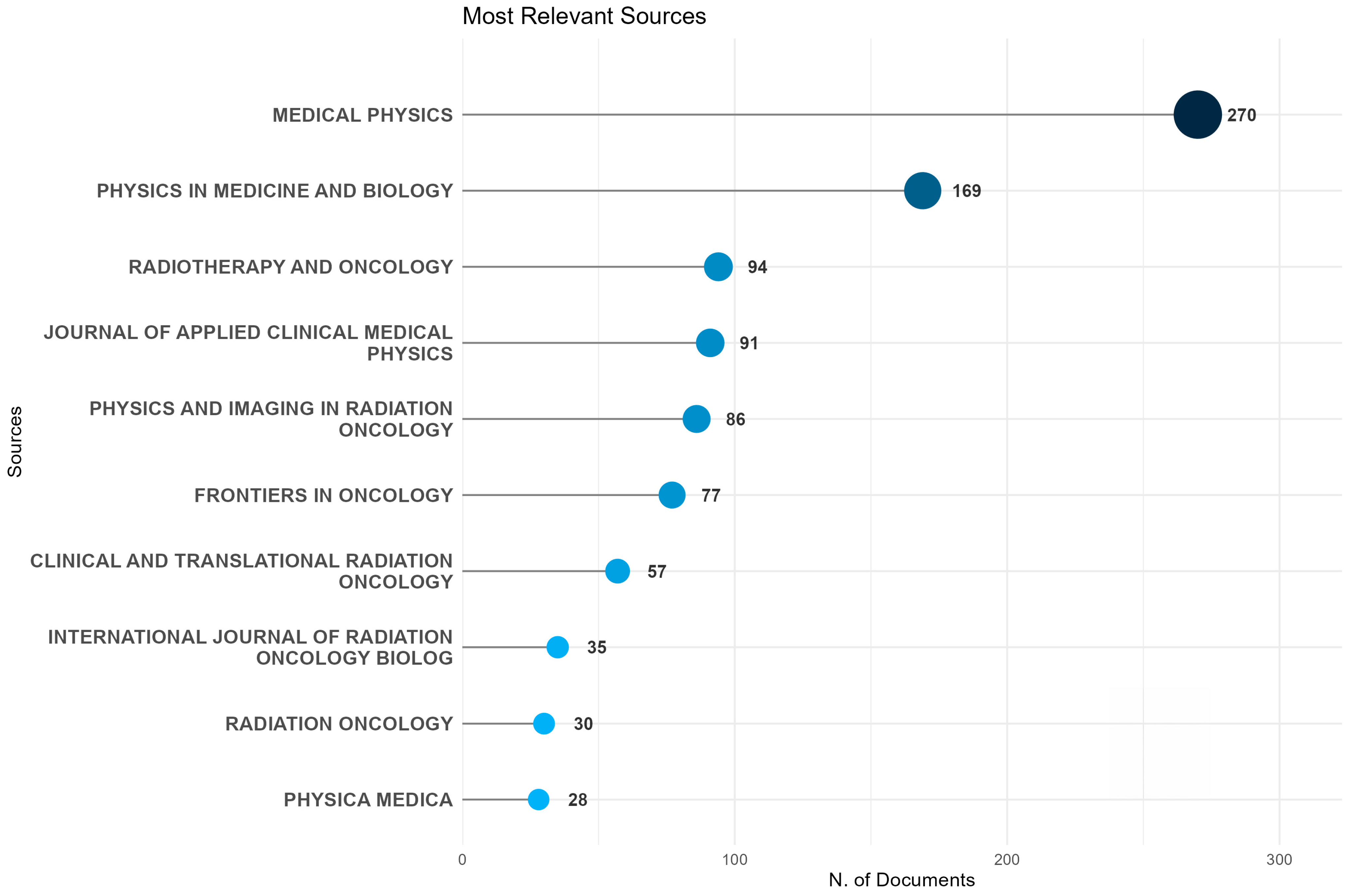
A total of 290 different sources of documents have been identified. Considering the scientific journals, the most represented was “Medical Physics” (270 articles, 16.6%), followed by “Physics in Medicine and Biology” (169 articles, 10.4%), “Radiotherapy and Oncology” (94 articles, 6.3%), “Journal of Applied Clinical Medical Physics” (91 articles, 5.6%), and “Physics and Imaging in Radiation Oncology” (86 articles, 5.3%), as shown in Figure 2.

4.3. Authors and Collaborations

Overall, 6358 different authors were comprised in the analyzed documents. An average number of 7.82 co-authors per document have been esteemed and 52 single-authored docs were found. International co-authorship was found in 23.65% of the articles. Average number of citations per document was 15.5.
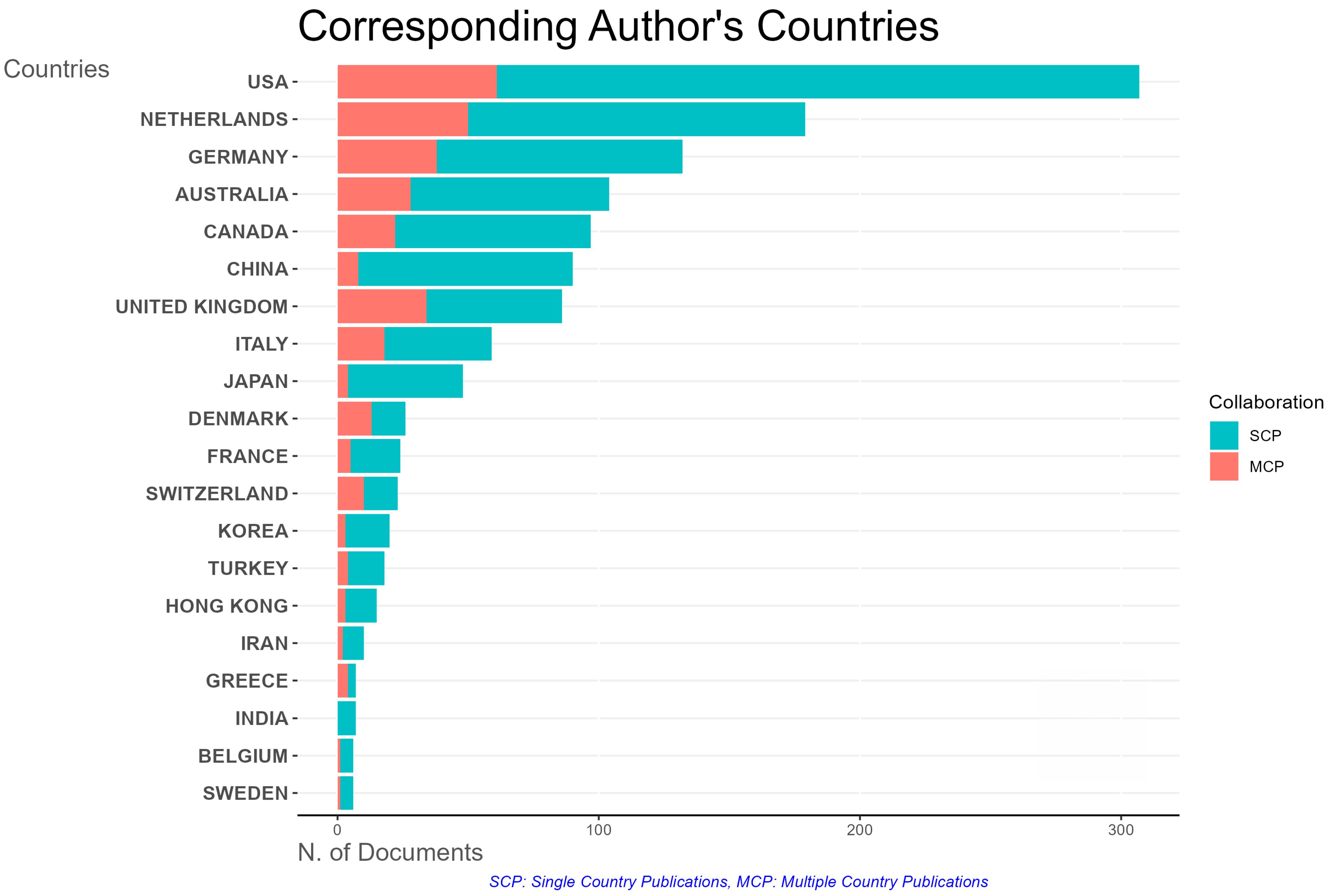
An insight into the Corresponding Authors’ Countries has been performed, followed by a subdivision of single and multiple country publications (Figure 3). The USA led the ranking with 307 publications with a single country publication ratio (SCPr) of 80.1%, followed by the Netherlands with 179 documents and SCPr of 72.1%, Germany with 132 documents and SCPr of 71.2%, Australia with 104 documents and SCPr 73.1% and Canada with 97 documents and a SCPr of 77.3%
University Medical Center Utrecht was the most relevant authors’ affiliation based on the number of published articles (n = 233), followed by University of Alberta, Canada (n = 126) and University of Toronto, Canada (n = 104). A full list of the top 10 most relevant affiliations is available in Table 1.

4.4. Citations

In Table 2, the 10 most cited documents on a global scale have been identified. The text analysis of the titles of the top 10 cited documents has not showed any significant frequent word trend, except for “Radiomics/Radiomic” and “quantitative”.

4.5. Keywords, Keyword Co-Occurrences

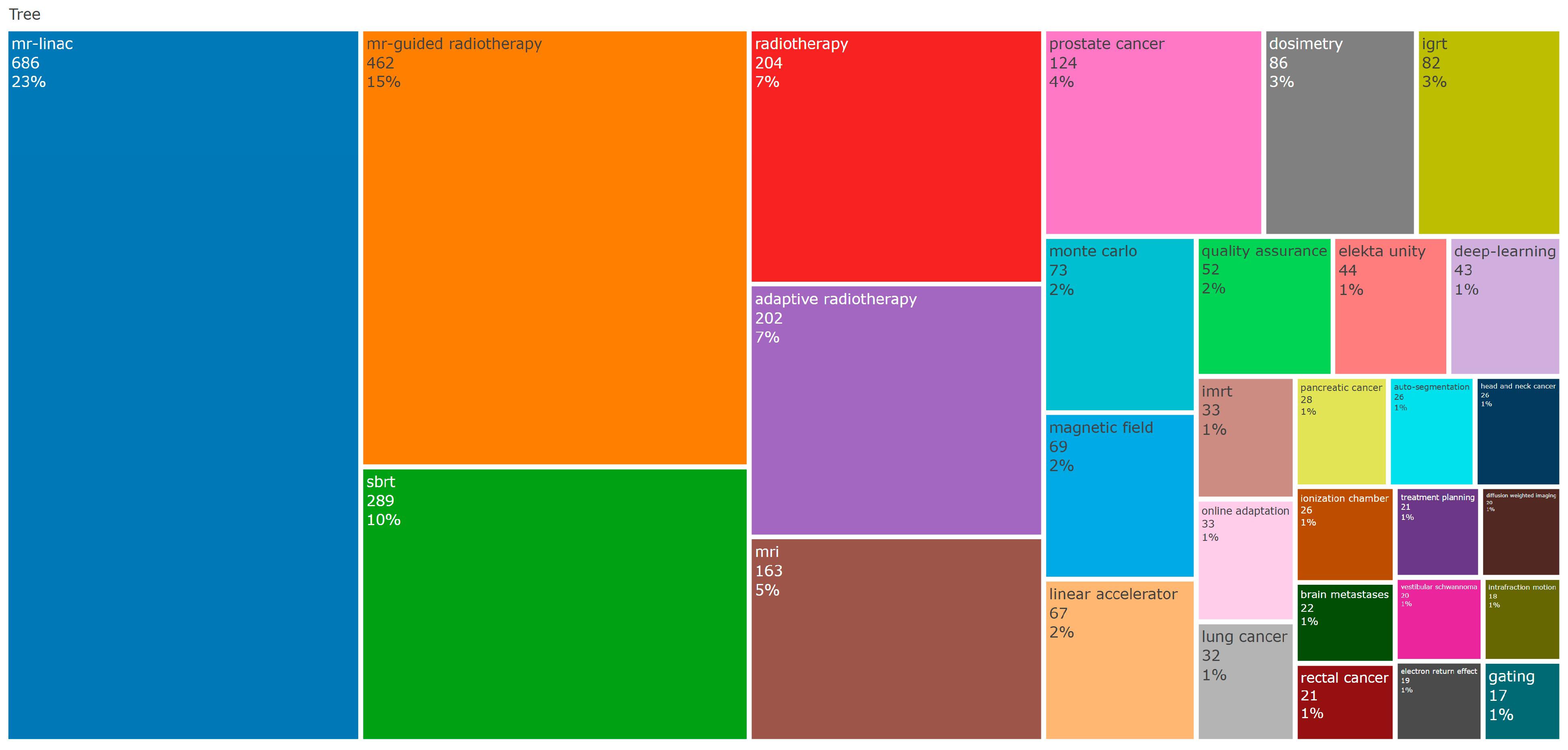
The articles’ author keywords were analyzed to assess the different topics underlying the MR-linac macro-area. The 30 most frequent author keywords have been plotted in the TreeMap in Figure 4.
We have performed a co-occurrence network analysis based on top 30 authors’ keywords. Four word clusters have been identified (namely, Linac Radiosurgery, Dosimetry, SBRT, and MR-guided radiotherapy).
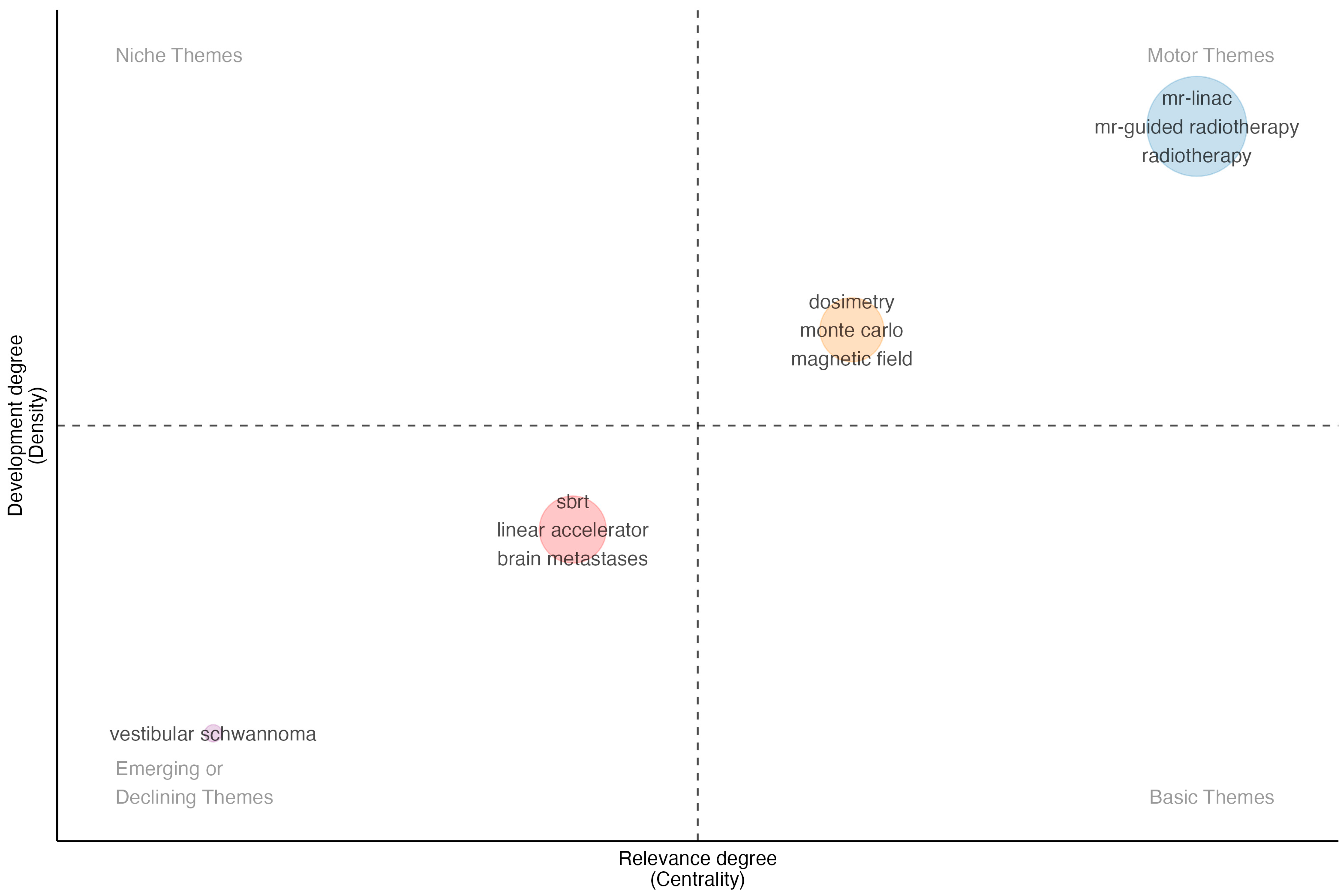
Thematic map analysis based on the five identified clusters has been performed, showing their development degree (density) and the relevance degree (centrality) in Figure 5.
This strategic diagram has allowed the identification of the hot topics (higher values of centrality and density) in the upper-right quadrant, the basic topics (higher values of centrality and lower values of density) in the lower-right quadrant, the peripheral topics (lower values of centrality and density) in the lower-left quadrant, and the niche topics (lower values of centrality and higher values of density).
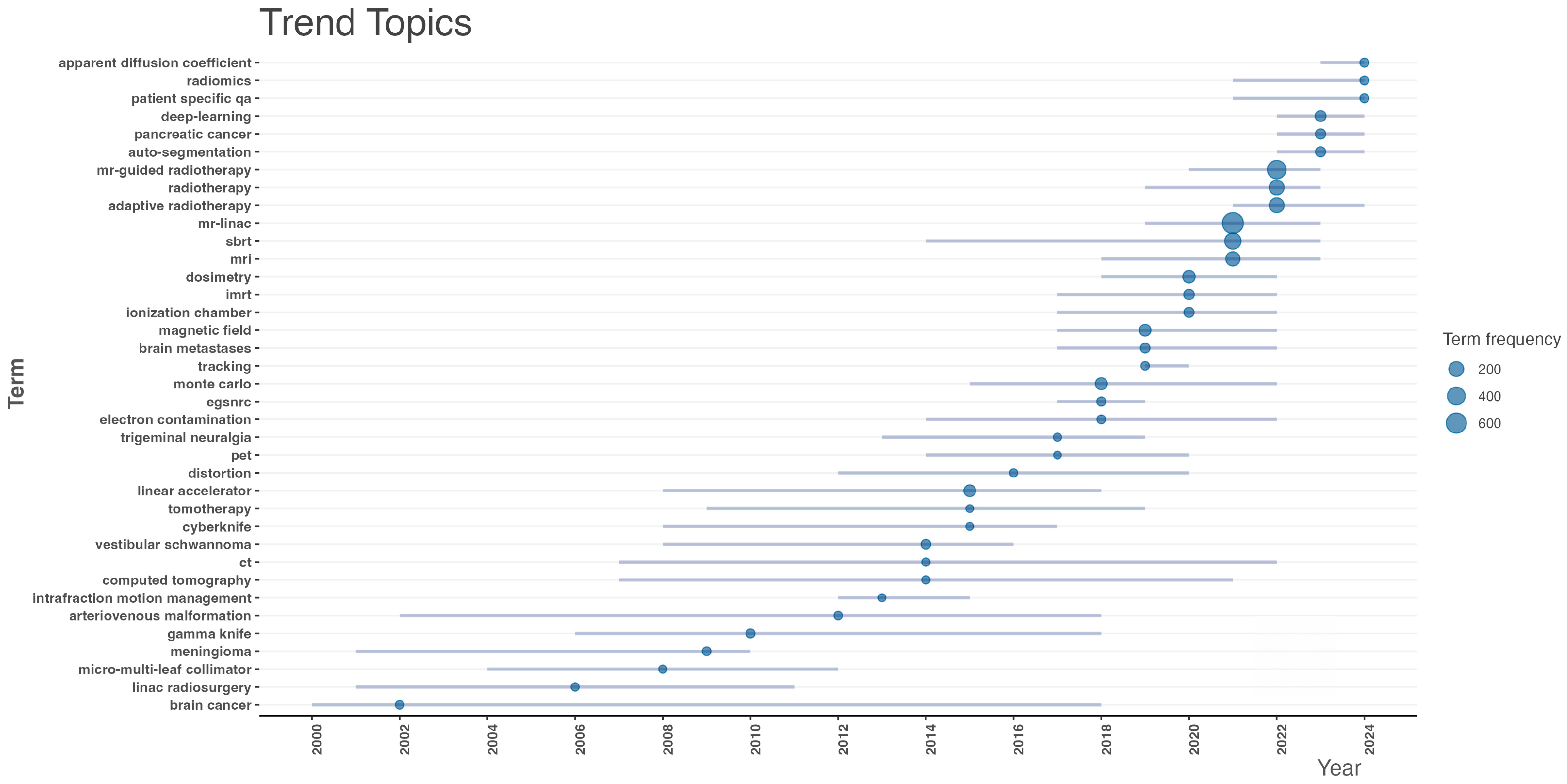
Trend topics, based on keyword frequency per year, are summarized in Figure 6. Topics with higher frequency included general terms such as MR-linac (n = 686), MR-guided radiotherapy (n = 462), SBRT (n = 289) and adaptive radiotherapy (n = 202). Topics trending in last years included radiomics, apparent diffusion coefficient and deep learning.

5. Discussion

This study depicts the current literature landscape regarding MR-linac through reproducible and standardized bibliometric analysis, identifying trends of research, monitoring scientific progress and recognizing key contributors to the field [25].
The concept of integrating an MRI scanner and a linac has been pursued since 1999 at the UMC Utrecht, leading to the first prototype in 2009, which allowed simultaneous irradiation and imaging acquisitions of phantoms [26].
This prototype led to the development of Elekta Unity system, the first MR-linac to make clinical debut in 2017 [27]. The experimental and clinical timeline of MR-linacs development is mirrored by the number of published papers by year that grew since 2009 and then exponentially increased from 2014 to 2022 (about a 5-fold increase in yearly production) to reach a substantial stability from 2022 [28].
The large majority of retrieved papers consisted of original articles, followed by conference papers, while reviews and books remarkably represent a limited fraction of the total production. This highlights the novelty of the field that is still undergoing scientific consolidation.
A relatively large number of sources were identified; nonetheless, the scene is dominated by a few sectorial publishers, as 43.7% of the available papers were published by the five more prolific journals and 57.7% by the 10 with the largest output. Of note, among these 10 journals, five have physics as focus and four radiation oncology.
Remarkably, 62.9% of documents had a corresponding author from the first five and 86.6% from the first 10 countries; this list included the USA, the Netherlands, Germany, Australia and Canada in the top five positions and other three European and two Asian countries. No South American or African countries were among the first 20 for corresponding author number, with respectively only three papers from Argentina and one from Egypt.
Considering the total number of authors, the five and 10 most represented countries accounted for respectively 64% and 86.6% of authors. Authors from European countries represented 44.5% of the total (36.7% considering the top five European countries), the USA 20.5%, Canada 10.5%, Australia 10.2% and top 3 Asian countries (Japan, China and Korea) 10.1%. South American and African authors represented respectively 0.6% and 0.2% of the total, with no authors from central or southern Africa.
Overall, this scenario highlights the disparity and technology gap across countries and how research is centralized in a few developed nations. Indeed, 66.6% of the authors are from the first 10 countries with the highest health expenditure to gross domestic product ratio and 88.8% from the first 20 [29].
Installation of an MR-linac is still challenging, as it is burdened by a substantially higher capital investment compared with conventional linac and requires time-consuming training of specialized personnel [30]. Therefore, although MR-linac system number is increasing worldwide, they are mostly located in developed countries.
International co-authorship was found in 23.65% of the articles; therefore, most items consisted of single-country publications (SCPs), with a range of multiple country publication between 8.3% and 50% across the ten most productive countries.
Multiple initiatives have been launched in order to establish shared data registries, such as the MOMENTUM study, with the aim of providing a platform supporting multicenter research that could foster international collaborations in the next years [31].
It is interesting to considered that, among the 10 most relevant affiliations, three were from Canada (all among the first five), two from the USA, two from Australia and three were European. Utrecht topped the ranking of scientific production, which reflects its leading role in the implementation of the first MR-linac. Furthermore, 38.7% of the output is provided by the first five institutions in the ranking and 58.3% by the first 10, again outlining how research on this topic is highly centralized and mostly carried out by specialized institutions and well-established networks.
The thematic maps showed two main theme categories. Motor themes included basic words such as MR-linac, MR-guided radiotherapy, radiotherapy and involved technical aspects regarding medical physics like dosimetry, montecarlo and magnetic field. Emerging themes included applications for which MR-linacs could be adopted (like SBRT, which reflects the trend towards hypofractionation) and indications such as brain metastases and schwannoma.
This is well-reflected by the keyword cluster analysis that showed three main domains. The first and largest group included basic words such as MR-linac, MR-guided radiotherapy, radiotherapy, MRI and linear accelerator, interspersed with most treated neoplastic diseases (i.e., prostate cancer, lung cancer and pancreatic cancer). Another well-represented cluster encompassed the applications for which MR-linacs could be adopted, like SBRT, adaptive radiotherapy and IGRT. A third cluster involved technical aspects including dosimetry, montecarlo, magnetic field, quality assurance and deep learning.
The resulting map portrays the progress in making a switch from basic research and technical and feasibility studies, which still represent the backbone of the literature regarding MR-linac, towards its clinical application.
Trending topic analysis demonstrated a growing interest in recent years both in technical aspects, such as “radiomics”, ”deep learning” and “auto-segmentation”, and clinical application, like “adaptive RT”, “online adaption” and “SBRT” and most commonly treated sites (e.g., “prostate cancer” and “pancreatic cancer”).
Our analysis clearly points out the current and future challenges in this promising field, including the implementation of specific MRI sequences that allow the acquisition of high-quality images in reduced times [32] and the shift from technical analyses to demonstration of clinical meaningful advantages over “conventional” linacs [33,34].
Moreover, given the fast pace of innovation and the heterogeneous applications of radiotherapy, the classical study design (phase I-IV) adopted for systemic treatment might not be the most efficient option to gather and standardize data. Specific research models including the unique features of radiation treatment have been proposed, including the R-IDEAL framework [30] that aims to timely identify the clinical benefit of the adoption of technical innovation such as the MR-linac and the UMBRELLA trial [35] with the aim of assessing feasibility of multiple techniques and treatment-related toxicity.
The performed ML-based bibliometric analysis provided an unbiased perspective of the scientific landscape regarding MR-linac, identifying features and patterns hardly detectable by human operators. Nevertheless, several limitations of the present study should be acknowledged. First, the analysis relied on a single bibliographic database (Scopus) as the sole source of data. Although Scopus is a comprehensive and widely used repository, the exclusive use of one database may have led to the omission of relevant publications indexed elsewhere, potentially introducing selection bias. Second, the lack of full standardization in terminology and keyword usage across the literature represents an additional constraint. Variations in nomenclature—such as MRI-linac, MR-linac, and MR-guided radiotherapy—may have limited the completeness of the search strategy despite efforts to include the most commonly adopted terms. Third, substantial heterogeneity exists among the included studies with respect to study design, clinical focus, technological platforms, and outcome measures, which may affect the comparability and interpretability of bibliometric indicators. Finally, bibliometric analyses are intrinsically limited in their ability to capture the dynamic nature of rapidly evolving research fields. As a consequence, the present results provide a snapshot of the scientific landscape at a specific point in time and may not fully reflect the most recent developments, particularly those disseminated through conference abstracts, preprints, or other scholarly outputs that are not indexed in Scopus.

6. Conclusions

This study highlights the potential of bibliometric analysis to identify trends and patterns of scientific publications regarding MR-linac. The exponential increase in documents in the last decade mirrors a growing interest in this topic. Nonetheless, the majority of the papers were published by a few journals and over 85% of authors were from 10 countries, demonstrating an evident disparity across nations. Promoting international author cooperation is the key to further consolidating this corpus of the literature: dedicated initiatives, multicentric research protocols and common frameworks could foster the transition towards collaborative practice-changing studies.

Author Contributions

A.E.G., P.R., F.M., S.V., S.R., S.N., B.A.J.-F., M.R. and M.B.d.M.e.B.; methodology, A.E.G., P.R., F.M., S.V., S.R., S.N., B.A.J.-F., M.R. and M.B.d.M.e.B.; software, F.M., S.V. and B.A.J.-F.; validation, A.E.G., P.R., F.M., S.V., S.R., S.N., B.A.J.-F., M.R. and M.B.d.M.e.B.; formal analysis, A.E.G., P.R., F.M., S.V., S.R., S.N., G.F., M.L., M.K., D.F., L.S., B.A.J.-F., M.R. and M.B.d.M.e.B.; investigation, A.E.G., P.R., F.M., S.V., S.R., S.N., M.K., D.F., L.S., B.A.J.-F., M.R. and M.B.d.M.e.B.; data curation, A.E.G., P.R., F.M., S.V., S.R., S.N., M.K., D.F., L.S., B.A.J.-F., M.R. and M.B.d.M.e.B.; writing—original draft preparation, A.E.G., P.R., F.M., S.V., S.R., S.N., B.A.J.-F., M.R. and M.B.d.M.e.B.; writing—review and editing, A.E.G., P.R., F.M., S.V., S.R., S.N., G.F., M.L., M.K., D.F., L.S., B.A.J.-F., M.R. and M.B.d.M.e.B.; visualization, A.E.G., P.R., F.M. and S.V.; supervision, A.E.G., P.R., F.M., S.V., D.F., L.S., B.A.J.-F., M.R. and M.B.d.M.e.B. All authors have read and agreed to the published version of the manuscript.

Funding

This research received no external funding.

Institutional Review Board Statement

Not applicable.

Informed Consent Statement

Not applicable.

Data Availability Statement

The data that support the findings of this study are available from the corresponding author, upon reasonable request.

Conflicts of Interest

Author Giulio Ferrazzi was employed by the company Philips Healthcare and Author Marco Luzzara was employed by the company Elekta. The remaining authors declare that the research was conducted in the absence of any commercial or financial relationships that could be construed as a potential conflict of interest.

References

  1. Beaton, L.; Bandula, S.; Gaze, M.N.; Sharma, R.A. How rapid advances in imaging are defining the future of precision radiation oncology. Br. J. Cancer 2019, 120, 779–790. [Google Scholar] [CrossRef] [PubMed]
  2. Roques, T.W. Patient selection and radiotherapy volume definition—Can we improve the weakest links in the treatment chain? Clin. Oncol. (R. Coll. Radiol.) 2014, 26, 353–355. [Google Scholar] [CrossRef] [PubMed]
  3. Noel, C.E.; Parikh, P.J.; Spencer, C.R.; Green, O.L.; Hu, Y.; Mutic, S.; Olsen, J.R. Comparison of onboard low-field magnetic resonance imaging versus onboard computed tomography for anatomy visualization in radiotherapy. Acta Oncol. 2015, 54, 1474–1482. [Google Scholar] [CrossRef] [PubMed]
  4. Bruno, F.; Arrigoni, F.; Mariani, S.; Splendiani, A.; Di Cesare, E.; Masciocchi, C.; Barile, A. Advanced magnetic resonance imaging (MRI) of soft tissue tumors: Techniques and applications. Radiol. Med. 2019, 124, 243–252. [Google Scholar] [CrossRef]
  5. Salvestrini, V.; Greco, C.; Guerini, A.E.; Longo, S.; Nardone, V.; Boldrini, L.; Desideri, I.; De Felice, F. The role of feature-based radiomics for predicting response and radiation injury after stereotactic radiation therapy for brain metastases: A critical review by the Young Group of the Italian Association of Radiotherapy and Clinical Oncology (yAIRO). Transl. Oncol. 2022, 15, 101275. [Google Scholar] [CrossRef]
  6. Kocher, M.; Ruge, M.I.; Galldiks, N.; Lohmann, P. Applications of radiomics and machine learning for radiotherapy of malignant brain tumors. Strahlenther. Onkol. 2020, 196, 856–867. [Google Scholar] [CrossRef]
  7. Guerini, A.E.; Nici, S.; Magrini, S.M.; Riga, S.; Toraci, C.; Pegurri, L.; Facheris, G.; Cozzaglio, C.; Farina, D.; Liserre, R.; et al. Adoption of Hybrid MRI-Linac Systems for the Treatment of Brain Tumors: A Systematic Review of the Current Literature Regarding Clinical and Technical Features. Technol. Cancer Res. Treat. 2023, 22, 15330338231199286. [Google Scholar] [CrossRef]
  8. Franzone, P.; Fiorentino, A.; Barra, S.; Cante, D.; Masini, L.; Cazzulo, E.; Todisco, L.; Gabriele, P.; Garibaldi, E.; Merlotti, A.; et al. Image-guided radiation therapy (IGRT): Practical recommendations of Italian Association of Radiation Oncology (AIRO). Radiol. Med. 2016, 121, 958–965. [Google Scholar] [CrossRef]
  9. Cuccia, F.; Corradini, S.; Mazzola, R.; Spiazzi, L.; Rigo, M.; Bonù, M.L.; Ruggieri, R.; Buglione di Monale e Bastia, M.; Magrini, S.M.; Alongi, F. MR-Guided Hypofractionated Radiotherapy: Current Emerging Data and Promising Perspectives for Localized Prostate Cancer. Cancers 2021, 13, 1791. [Google Scholar] [CrossRef]
  10. Nachbar, M.; Mönnich, D.; Kalwa, P.; Zips, D.; Thorwarth, D.; Gani, C. Comparison of treatment plans for a high-field MRI-linac and a conventional linac for esophageal cancer. Strahlenther. Onkol. 2019, 195, 327–334. [Google Scholar] [CrossRef]
  11. Winkel, D.; Kroon, P.S.; Werensteijn-Honingh, A.M.; Bol, G.H.; Raaymakers, B.W.; Jürgenliemk-Schulz, I.M. Simulated dosimetric impact of online replanning for stereotactic body radiation therapy of lymph node oligometastases on the 1.5T MR-linac. Acta Oncol. 2018, 57, 1705–1712. [Google Scholar] [CrossRef] [PubMed]
  12. Bainbridge, H.E.; Menten, M.J.; Fast, M.F.; Nill, S.; Oelfke, U.; McDonald, F. Treating locally advanced lung cancer with a 1.5 T MR-linac—Effects of the magnetic field and irradiation geometry on conventionally fractionated and isotoxic dose-escalated radiotherapy. Radiother. Oncol. 2017, 125, 280–285. [Google Scholar] [CrossRef] [PubMed]
  13. Huang, K.C.; Cao, Y.; Baharom, U.; Balter, J.M. Phantom-based characterization of distortion on a magnetic resonance imaging simulator for radiation oncology. Phys. Med. Biol. 2016, 61, 774–790. [Google Scholar] [CrossRef] [PubMed]
  14. Paradis, E.; Cao, Y.; Lawrence, T.S.; Tsien, C.; Feng, M.; Vineberg, K.; Balter, J.M. Assessing the dosimetric accuracy of magnetic resonance-generated synthetic CT images for focal brain VMAT radiation therapy. Int. J. Radiat. Oncol. Biol. Phys. 2015, 93, 1154–1161. [Google Scholar] [CrossRef]
  15. Baines, J.; Powers, M.; Newman, G. Sources of out-of-field dose in MRgRT: An inter-comparison of measured and Monaco treatment planning system doses for the Elekta Unity MR-linac. Phys. Eng. Sci. Med. 2021, 44, 1049–1059. [Google Scholar] [CrossRef]
  16. Nachbar, M.; Mönnich, D.; Boeke, S.; Gani, C.; Weidner, N.; Heinrich, V. Partial breast irradiation with the 1.5 T MR-Linac: First patient treatment and analysis of electron return and stream effects. Radiother. Oncol. 2020, 145, 30–35. [Google Scholar] [CrossRef]
  17. Vincini, M.G.; Zaffaroni, M.; Schwarz, M.; Marvaso, G.; Mastroleo, F.; Volpe, S.; Bergamaschi, L.; Mazzola, G.C.; Corrao, G.; Orecchia, R.; et al. More than Five Decades of Proton Therapy: A Bibliometric Overview of the Scientific Literature. Cancers 2023, 15, 5545. [Google Scholar] [CrossRef]
  18. Volpe, S.; Mastroleo, F.; Krengli, M.; Jereczek-Fossa, B.A. Quo vadis Radiomics? Bibliometric analysis of 10-year Radiomics journey. Eur. Radiol. 2023, 33, 6736–6745. [Google Scholar] [CrossRef]
  19. Marvaso, G.; Mastroleo, F.; Corrao, G.; Zaffaroni, M.; Vincini, M.G.; Borghetti, P.; Cuccia, F.; Federico, M.; Montesi, G.; Pontoriero, A.; et al. A Bibliometric Analysis of the Oligometastatic State over the Last Two Decades: A Shifting Paradigm for Oncology? An AIRO Oligometastatic Study Group. Cancers 2023, 15, 3902. [Google Scholar] [CrossRef]
  20. Franco, P.; De Felice, F.; Jagsi, R.; Marta, G.N.; Kaidar-Persong, O.; Gabrys, D.; Kim, K.; Ramiah, D.; Meattini, I.; Poortmans, P.; et al. Breast cancer radiation therapy: A bibliometric analysis of the scientific literature. Clin. Transl. Radiat. Oncol. 2022, 39, 100556. [Google Scholar] [CrossRef]
  21. Aria, M.; Cuccurullo, C. Bibliometrix: An R-Tool for Comprehensive Science Mapping Analysis. J. Informetr. 2017, 11, 959–975. [Google Scholar] [CrossRef]
  22. Lancichinetti, A.; Fortunato, S.; Kertész, J. Detecting the Overlapping and Hierarchical Community Structure in Complex Networks. New J. Phys. 2009, 11, 033015. [Google Scholar] [CrossRef]
  23. Cuccurullo, C.; Aria, M.; Sarto, F. Foundations and Trends in Performance Management. A Twenty-Five Years Bibliometric Analysis in Business and Public Administration Domains. Scientometrics 2016, 108, 595–611. [Google Scholar] [CrossRef]
  24. Aria, M.; Cuccurullo, C.; D’Aniello, L.; Misuraca, M.; Spano, M. Thematic Analysis as a New Culturomic Tool: The Social Media Coverage on COVID-19 Pandemic in Italy. Sustainability 2022, 14, 3643. [Google Scholar] [CrossRef]
  25. Kokol, P.; Blažun Vošner, H.; Završnik, J. Application of bibliometrics in medicine: A historical bibliometrics analysis. Health Inf. Libr. J. 2021, 38, 125–138. [Google Scholar] [CrossRef]
  26. Raaymakers, B.W.; Lagendijk, J.J.W.; Overweg, J.; Kok, J.G.M.; Raaijmakers, A.J.E.; Kerkhof, E.M.; van der Put, R.W.; Meijsing, I.; Crijns, S.P.M.; Benedosso, F.; et al. Integrating a 1.5 T MRI scanner with a 6 MV accelerator: Proof of concept. Phys. Med. Biol. 2009, 54, N229–N237. [Google Scholar] [CrossRef]
  27. Raaymakers, B.W.; Jürgenliemk-Schulz, I.M.; Bol, G.H.; Glitzner, M.; Kotte, A.N.T.J.; van Asselen, B.; de Boer, J.C.J.; Bluemink, J.J.; Hackett, S.L.; A Moerland, M.; et al. First patients treated with a 1.5 T MRI-Linac: Clinical proof of concept of a high-precision, high-field MRI guided radiotherapy treatment. Phys. Med. Biol. 2017, 62, L41–L50. [Google Scholar] [CrossRef]
  28. Bryant, J.M.; Weygand, J.; Keit, E.; Cruz-Chamorro, R.; Sandoval, M.L.; Oraiqat, I.M.; Andreozzi, J.; Redler, G.; Latifi, K.; Feygelman, V.; et al. Stereotactic Magnetic Resonance-Guided Adaptive and Non-Adaptive Radiotherapy on Combination MR-Linear Accelerators: Current Practice and Future Directions. Cancers 2023, 15, 2081. [Google Scholar] [CrossRef]
  29. Global Health Expenditure Database. Available online: https://apps.who.int/nha/database (accessed on 9 March 2024).
  30. Das, I.J.; Yadav, P.; Mittal, B.B. Emergence of MR-Linac in Radiation Oncology: Successes and Challenges of Riding on the MRgRT Bandwagon. J. Clin. Med. 2022, 11, 5136. [Google Scholar] [CrossRef]
  31. De Mol van Otterloo, S.R.; Christodouleas, J.P.; Blezer, E.L.A.; Akhiat, H.; Brown, K.; Choudhury, A.; Eggert, D.; Erickson, B.A.; Faivre-Finn, C.; Fuller, C.D.; et al. The MOMENTUM Study: An International Registry for the Evidence-Based Introduction of MR-Guided Adaptive Therapy. Front. Oncol. 2020, 10, 1328. [Google Scholar] [CrossRef]
  32. Moore-Palhares, D.; Ho, L.; Lu, L.; Chugh, B.; Vesprini, D.; Karam, I.; Soliman, H.; Symons, S.; Leung, E.; Loblaw, A.; et al. Clinical implementation of magnetic resonance imaging simulation for radiation oncology planning: 5 year experience. Radiat. Oncol. 2023, 18, 27. [Google Scholar] [CrossRef]
  33. Guerini, A.E.; Buglione, M.; Nici, S.; Riga, S.; Pegurri, L.; Mataj, E.; Farina, D.; Ravanelli, M.; Rondi, P.; Cossali, G.; et al. Adaptive radiotherapy for oropharyngeal cancer with daily adapt-to-shape workflow on 1.5 T MRI-linac: Preliminary outcomes and comparison with helical tomotherapy. Clin. Transl. Radiat. Oncol. 2025, 53, 100950. [Google Scholar] [CrossRef]
  34. Guerini, A.E.; Nici, S.; Riga, S.; Nicosia, L.; Pegurri, L.; Borghetti, P.; Bonù, M.L.; Mataj, E.; Rondi, P.; Cossali, G.; et al. Magnetic Resonance Guided Radical Radiation Therapy for Prostate Cancer in the Presence of Bilateral Hip Prostheses: First Experience With a 1.5 T Magnetic Resonance Linear Accelerator. Adv. Radiat. Oncol. 2025, 11, 101938. [Google Scholar] [CrossRef]
  35. Couwenberg, A.; van der Heide, U.; Janssen, T.; van Triest, B.; Remeijer, P.; Marijnen, C.; Sonke, J.J.; Nowee, M. Master protocol trial design for technical feasibility of MR-guided radiotherapy. Radiother. Oncol. 2022, 166, 33–36. [Google Scholar] [CrossRef]
Figure 1. Annual scientific production chart on MR-linac.
Data 11 00097 g001
Figure 2. Graph representing the most relevant sources of publication on MR-LINAC.
Data 11 00097 g002
Figure 3. Chart of the most productive country divided by single country publication (SCP) and multiple country publication (MCP).
Data 11 00097 g003
Figure 4. Treemap of the 30 most frequent author keywords.
Data 11 00097 g004
Figure 5. Thematic map analysis of the five identified clusters.
Data 11 00097 g005
Figure 6. Trend topics over years from 2001 to 2023.
Data 11 00097 g006
Table 1. List of the 10 most relevant affiliations.
Articles (n)Affiliation
233UNIVERSITY MEDICAL CENTER UTRECHT
126UNIVERSITY OF ALBERTA
104UNIVERSITY OF TORONTO
96CROSS CANCER INSTITUTE
69UNIVERSITY OF WOLLONGONG
68UNIVERSITY OF SYDNEY
64GERMAN CANCER RESEARCH CENTER (DKFZ)
64MEDICAL COLLEGE OF WISCONSIN
63ODENSE UNIVERSITY HOSPITAL
59THE UNIVERSITY OF TEXAS MD ANDERSON CANCER CENTER
Table 2. List of the 10 most cited documents.
Normalized TCTC Per YearTotal CitationsDOIPaper
1476647145310.1016/j.ctro.2019.04.001WINKEL D, 2019, CLIN TRANSL RADIAT ONCOL
1452250545110.1016/j.radonc.2007.10.034LAGENDIJK JJW, 2008, RADIOTHER ONCOL
1571486643810.1088/1361-6560/aa9517RAAYMAKERS BW, 2017, PHYS MED BIOL
881264131710.1016/j.semradonc.2014.02.015KEALL PJ, 2014, SEMIN RADIAT ONCOL
948415729110.1016/j.ctro.2019.04.007KLÜTER S, 2019, CLIN TRANSL RADIAT ONCOL
13151728910.1118/1.3125662FALLONE BG, 2009, MED PHYS
922404228310.1186/s13014-019-1308-yCORRADINI S, 2019, RADIAT ONCOL
653195823510.1016/j.semradonc.2014.02.011FALLONE BG, 2014, SEMIN RADIAT ONCOL
48380818610.1016/S0360-3016(03)00444-9MEIJER OWM, 2003, INT J RADIAT ONCOL BIOL PHYS
48466618010.1016/S0360-3016(99)00102-9MIYAWAKI L, 1999, INT J RADIAT ONCOL BIOL PHYS
Disclaimer/Publisher’s Note: The statements, opinions and data contained in all publications are solely those of the individual author(s) and contributor(s) and not of MDPI and/or the editor(s). MDPI and/or the editor(s) disclaim responsibility for any injury to people or property resulting from any ideas, methods, instructions or products referred to in the content.