Data Descriptor

Multimodal Dataset of In-Home Physiological and Inertial Measurements from Older Heart Failure Patients


1
Institute of Radioelectronics and Multimedia Technology, Faculty of Electronics and Information Technology, Warsaw University of Technology, 00665 Warsaw, Poland
2
Computer Science Department, Faculty of Automatic Control and Computers, National University of Science and Technology Politehnica Bucharest, 060042 Bucharest, Romania
3
Centrul IT Pentru Stiinta si Tehnologie (CITST), 020771 Bucharest, Romania
4
Department of Internal Medicine and Gerontology, Faculty of Medicine, Jagiellonian University Medical College, 31530 Krakow, Poland
*
Author to whom correspondence should be addressed.
Data 2026, 11(5), 106; https://doi.org/10.3390/data11050106
Submission received: 4 April 2026 / Revised: 24 April 2026 / Accepted: 2 May 2026 / Published: 7 May 2026
(This article belongs to the Special Issue Benchmarking Datasets in Bioinformatics, 3rd Edition)

Abstract

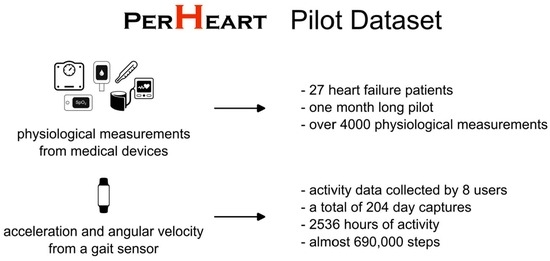
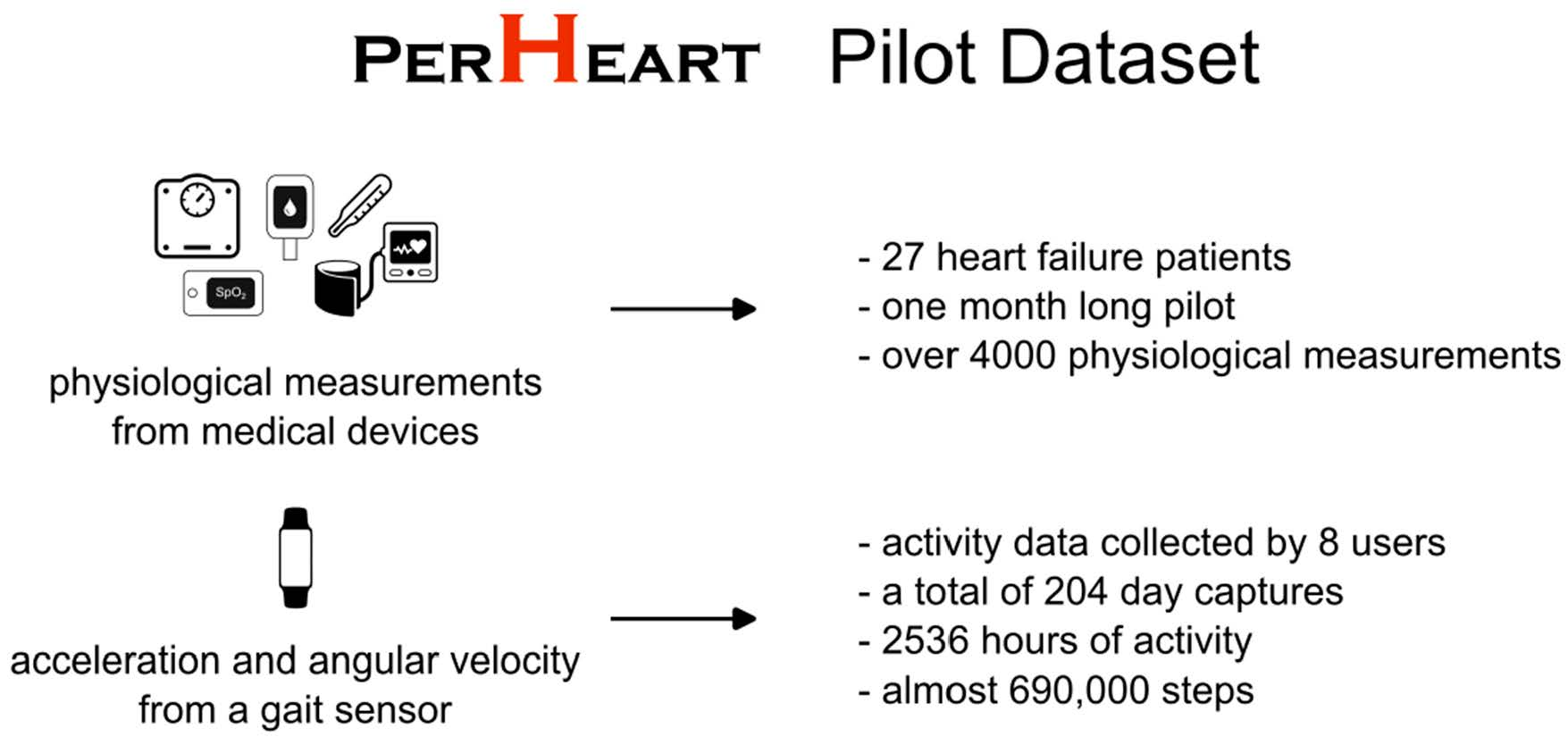
Numerous studies have shown that remote monitoring of heart failure patients can reduce hospital readmission rates and mortality. This dataset includes multimodal physiological and inertial signals (acceleration and angular velocity data) recorded with PerHeart—a remote health monitoring platform intended for heart failure patients. In the pilot, which took place in Poland, 27 participants’ health was monitored for one month using the platform with commercially available devices (blood pressure meters, pulse oximeters, bathroom scales, thermometers, and glucometers), resulting in over four thousand physiological measurements. Eight adults were additionally monitored for gait and activity analysis using custom wrist sensors with inertial measurement units, yielding 2536 h of movement data collected over 204 days with almost 690,000 steps detected.
Dataset: https://www.doi.org/10.5281/zenodo.17143199 (accessed on 5 April 2026).
Dataset License: CC BY 4.0

Graphical Abstract

1. Introduction

Heart failure (HF) is a major medical problem associated with high morbidity and mortality among affected patients and incurring a high direct and indirect cost to societies and medical systems around the world [1]. In the European Union, HF accounts for around 2% of current healthcare expenses, estimated at 29 billion EUR annually [2]. The global costs are projected to rise. In the US alone [3], it is projected that the associated costs will reach 70 billion USD by 2030. A significant portion of the costs is due to HF-related hospitalizations.
HF-related hospitalizations can be effectively reduced by remote monitoring of the at-risk patients [4]. Although the performed studies have shown that using even basic telemedicine features such as educational components, self-management, and video communication allows for a reduction in mortality, the full potential of remote monitoring can be achieved by employing additional sensors [5]. The sensors can range from constantly worn ECG monitors [6] or smartwatches [7] to incidental use devices such as bathroom scales [8].
Besides physiological parameter monitoring, HF management can be enhanced with additional proxies such as physical activity levels [9] and gait parameters [10]. Both can be assessed based on signals (acceleration, angular velocity) measured using inertial measurement units (IMUs). Although the subject of IMU-based activity and gait detection is very popular and many datasets contain relevant measurement results, datasets targeting the heart failure population are scarce.
In the following paper, we present a multimodal dataset of physiological measurements (blood pressure, blood oxidation, body mass, body temperature, and glucose levels) and inertial signals recorded using a wrist sensor by heart failure patients during their daily activities. The measurements are accompanied by basic user data incl. demographics, self-perceived health status, and life and health satisfaction. The data were gathered during the pilots of the PerHeart (Personalized ICT solution to reduce re-hospitalization rates in heart failure elderly patients suffering from comorbidities) European project [11] undertaken within the Era Permed program [12].
The PerHeart project aimed to develop a modern ICT (Information and Communication Technology) platform for HF patients. The platform’s main goal was to reduce re-hospitalization rates by supporting patients with effective disease self-management, giving feedback to caregivers, and providing healthcare professionals with data enabling disease progression monitoring. The platform integrates several applications, medical devices used for physiological measurements (including a digital scale, a blood pressure meter, a digital thermometer, and an oximeter), and a custom wrist sensor recording inertial signals and atmospheric pressure for gait and activity analysis.
In public data repositories, there are several datasets, including remote monitoring physiological measurements or data collected using wrist sensors. A comparison between the described dataset and publicly available ones is presented in Table 1.
Datasets that contain both physiological and inertial measurements are very rare. The only ones known to the authors were described in [13,14,15]. However, their usability for developing methods in remote health monitoring systems is questionable. The dataset in [14] includes only heart rate and inertial measurements. The data in [13] is simulated. Finally, although the results in [15] were collected with real patient participation, the collected data types are uncommon for digital health platforms.
Remote health monitoring datasets are generally not particularly common, mostly due to the high costs associated with such studies. Notable examples include TIHM [16], RESILIENT [17], and Comprehensive Patient-Health Monitoring Dataset [18]. The data types stored in those datasets differ—each of the studies used a different set of devices, limiting opportunities for cross-study comparisons.
The number of publicly available wrist sensor inertial signals datasets is much higher, as such signals are easier to collect and can serve a plethora of applications like activity recognition [14,19,20,21], gait analysis [15], or fall detection [14]. In most cases, the datasets are gathered under laboratory conditions [14,15,20] or in a controlled environment like a specially prepared smart home in [19]. During the trials for activity recognition studies, the participants are usually asked to perform a sequence of actions like standing up, walking, turning, and sitting [20] or to move under camera supervision so their actions or positions may be labeled [19]. In gait analysis studies, the participants traverse predefined paths where their gait parameters are recorded using additional equipment [15]. As the duration of lab-based experiments is usually limited, the size of the datasets usually does not exceed a few hours [15,19] of data. Unless specifically targeted, as in [15], where Parkinson disease patients’ gait was analyzed, participants are usually drawn from readily available sources, such as university students, resulting in a significant age imbalance compared to the general population.
Table 1. Comparison of publicly available datasets.
DatasetPatientsAgePhysiological MeasurementsMotion MesurementsMonitoring DurationLocationTargeted Disease
PerHeart (ours)2779.3 ± 6.6heart rate, blood pressure, SpO2, body temperature, body mass, glucose levelacceleration, angular velocity, atmospheric pressure1 monthin-homeheart failure
Inertial measurement and heart-rate sensor-based dataset [14]4127.9 ± 8.6heart rateacceleration, angular velocity, magnetic fieldone-off session (sequences of activities, falls)laboratoryfall detection
Dataset for Remote Health Monitoring and Fall Detection [13] 11760–70heart rate, SpO2, body temperatureacceleration, rotation3 hsimulated datasetfall monitoring
Multimodal Data for the Detection of Freezing of Gait [15]12mean 69.1electroencephalogram, electromyogram, skin conductanceaccelerationone-off sessionhospitalParkinson’s Disease (freezing of gait)
TIHM [16]56 users70–100heart rate, blood pressure, body temperature, body mass, body composition, sleep monitoringin-home movement from domotic sensors50 dayshomedementia
RESILIENT [17]73 users72–99heart rate, sleep monitoringstep count25–185 days (varying)in-homeaging-related comorbidities/
cognitive decline
Comprehensive Patient-Health Monitoring Dataset [18]n.s. 2n.s. 2heart rate, blood pressure, respiratory rate, body temperature, SpO2, glucose level-4 monthsdata from monitoring systemsgeneral health
SPHERE [19]1018–29-acceleration, signal strength (for localization), presence data, anonymized video (location of bounding boxes) 30 min sessionscontrolled living environmentnone (activity monitoring)
Dataset of Inertial Measurements of Smartphones and Smartwatches [20]2344.3 ± 14.3-acceleration, angular velocityone-off session (sequences of activities)laboratorynone (activity monitoring)
CAPTURE-24 [21]15118–53+-acceleration24 hin-homenone (activity monitoring)
1 Synthetic dataset. 2 not specified.
Datasets collected in real-life contexts are much less common. An example is CAPTURE-24 [21] where the data were gathered by 151 participants who recorded 3883 h of signals with a wrist-worn accelerometer. The samples were labeled thanks to the test subjects wearing cameras.
The following dataset has several features that distinguish it from the other published datasets. To our knowledge, it is the only dataset of physiological and inertial measurements that were recorded during the daily activities of older participants with HF. When it comes to the duration of the user’s health parameters monitoring, it was shorter than in the case of other remote monitoring datasets (30 against 25–180 days). The number of participants was also limited due to the imposed inclusion criteria (see Section 3.4). These limitations should be considered when using the dataset.
When it comes to the inertial measurements, thanks to significantly longer monitoring compared to other studies (30 days compared to at most 1 day or one-off sessions), the collected data volume is large (2536 h). It enables an analysis of day-to-day changes, which would be impossible in one-time measurements. Contrary to the standard practice of performing only acceleration measurements, the wrist sensors used in this study also recorded angular velocity, enabling more accurate activity detection [22] and atmospheric pressure, enabling the use of more advanced algorithms with additional activity context detection [23].
The data in the presented dataset were collected unsupervised in a non-controlled environment. This ensures that the obtained data are natural and that the users’ actions are not constrained by the presence of other people or cameras. At the same time, it prevents the data from being meticulously labeled with activity labels. The signals, however, are accompanied by the step count, enabling the use of the data in supervised gait detection studies.
Although the data is not labeled with the currently performed activities, its volume and collection in natural conditions make it a good candidate for use in weakly supervised and unsupervised learning. After expanding the dataset with some labeled examples, the data may be used in semi-supervised learning. The collected signals can also be jointly analyzed with the step count to label the signals with gait cadence, an indicator of activity intensity [24,25], creating a set of noisy labels that enable the dataset in weakly supervised scenarios. The data can also be used in unsupervised settings, for example, for training autoencoders. Given that the user sample is quite unusual compared to other studies, the collected signals could find application in unsupervised domain adaptation scenarios, where the models need to be adapted to an older population.

2. Data Description

2.1. Dataset Structure

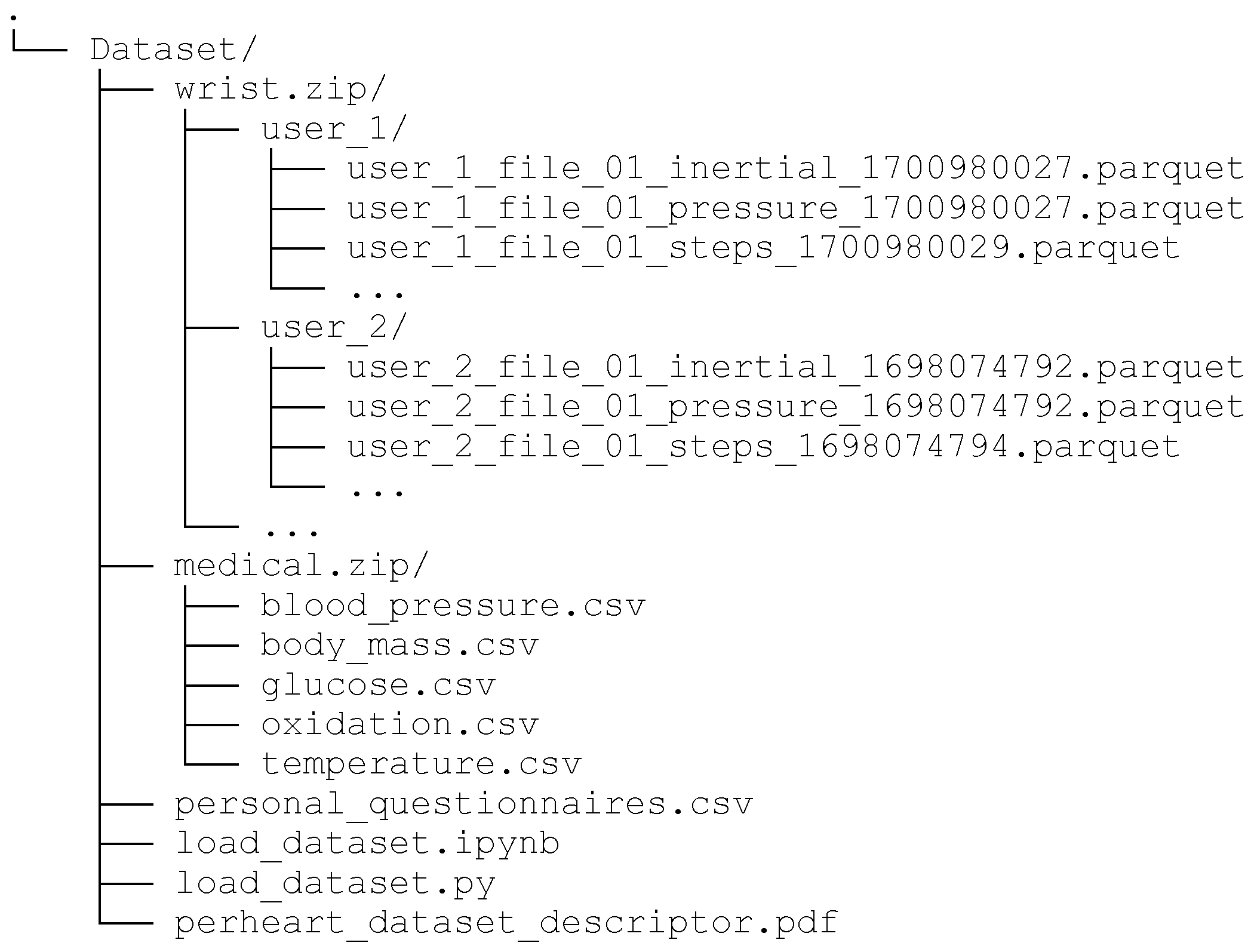
The dataset is available in the Zenodo repository at [26]. The dataset is structured as in the directory tree presented in Figure 1.
The dataset contains three types of data files: user demographics information, physiological measurement results obtained with medical devices, and inertial signals captured with a wrist-worn sensor. The user demographics are stored in the personal_questionnaires.csv file. Physiological and inertial signals are stored in medical.zip and wrist.zip archives, respectively.
The data are meticulously described in the perheart_dataset_descriptor.pdf document, which includes a codebook for the results of the personal questionnaires and information on the structure of the measurement files. The repository also contains exemplary code for data loading and exemplary visualization. The code is stored in load_dataset.py and load_dataset.ipynb files. The details are included in Section 4.1.

2.2. Dataset Contents

2.2.1. User Demographics

The users’ demographic data are stored in the personal_questionnaires.csv file. The table includes information on the users’ sex, age, health state, social and financial situation, and digital literacy. The responses are coded as integers. The dates and optional comments are stored as strings. The codebook for the file is included in perheart_dataset_descriptor.pdf.

2.2.2. Physiological Measurements

The medical measurement results are stored in separate CSV files, one per measurement type. The results are as they were returned by the devices and do not require any prior processing. The list of devices along with the measured values is presented in Table 2. All results are annotated with the user identifier and timestamp in seconds from epoch (UTC). For blood pressure and glucose, the devices returned additional comments, which were encoded as described in perheart_dataset_descriptor.pdf.
The basic statistics of the number of recorded medical measurements and the number of days on which the wrist sensors were used are presented in Table 3.
Each participant was provided with the working platform for at least a month. For the purpose of the analysis, the pilot duration is expressed as the number of days elapsed between the date the platform was given to the user and the date of the last measurement (the time when the user effectively stopped using the platform).
Regarding platform use, the users generally adhered to the suggested measurement frequency (details in Section 3.4). Apart from users 7 and 26, the participants performed the measurements consistently at least once per day, resulting in finely granulated time series.
All of the users were issued a complete set of devices (a glucose meter was given only to those at risk of diabetes). However, some of the users were selective in their device use. Three users did not measure body temperature, and eight did not use the blood oximeter even once. During the whole pilot study, no significant issues with the platform’s accessibility or operation were reported.

2.2.3. Inertial Measurements

The wrist sensor measurements are stored in the Parquet format and are located in the wrist.zip archive. There, they are further separated into user-specific directories. Due to different sensor sampling times, each measurement session is split into three files: inertial measurements, atmospheric pressure, and steps. The files are named using the following convention: user_id_file_file_no_type_ts, where
  • id—user identifier (from 1 to 8).
  • file_no—file number—two digits with leading 0, e.g., 01, 02 (does not correspond to day of the pilot but to the day when the sensor was in use).
  • type—file type, either ’inertial’, ’pressure’, or ’steps’.
  • ts—timestamp in seconds since epoch (UTC, measurements were conducted in Poland, which at the time of the pilots was UTC+1 or UTC+2 for the measurements taken before 29 October 2023).
Each wrist sensor file type stores an array, with each row corresponding to a single measurement result. The inertial file contains six columns (ax, ay, az for acceleration and gx, gy, gz for angular velocity). The pressure and steps files include a single column with atmospheric pressure and step count, respectively.
The dataset includes files containing a total of 204 full-day captures (complete days when the users wore the wrist sensor). The adherence to performing wrist measurements was generally quite high and ranged between 59 and 86 % of the pilot days (see Table 3). Due to the different adherence of the particular users, the data are not distributed evenly. For example, the number of days when user 1 wore the sensor is more than twice that of user 2.
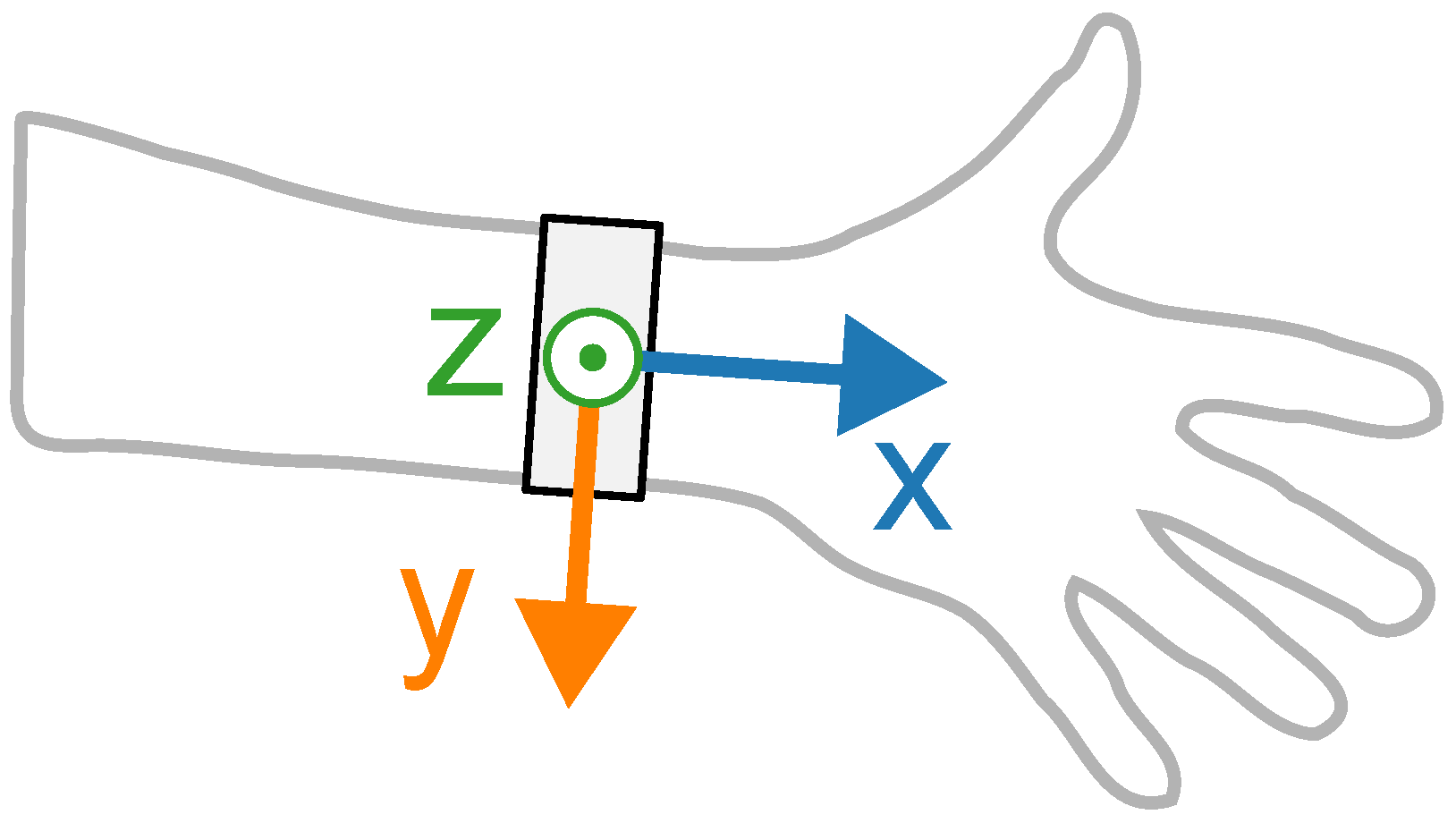
The inertial signals were collected using a custom wrist sensor developed at Warsaw University of Technology. It includes a BLE-enabled nRF52833 microcontroller, (Nordic Semiconductor ASA, Oslo, Norway) one Bosch Sensortec BMI270 Inertial Measurement Unit [27] (Bosch Sensortec BMI270, Reutlingen, Germany) comprising a 16-bit tri-axial gyroscope and a 16-bit tri-axial accelerometer, and one BMP390 [28] barometer (Bosch Sensortec BMI270, Reutlingen, Germany). It is encased in a Mi Band-strap-compatible 3D-printed case containing a small 220 mAh battery, which allows for over two days of constant operation. The directions of the IMU axes with respect to the sensor’s case are presented in Figure 2.
The device’s sensors operated with predefined sampling rates and resolutions, which were constant throughout the whole pilot study and are listed in Table 4.
For the inertial measurements, the sampling rate was set to 50 Hz, which is a lower value than in typical laboratory-based gait analysis systems [29], but is found in several systems intended for everyday use [30]. Such a decision was influenced by the need to prolong the battery life of the gait sensor and reduce the amount of data needed to be transmitted to the platform’s cloud. Our prior studies have shown that such a sampling rate is sufficient to extract basic gait parameters [31].
The gait sensor collects data constantly, even when not being worn. When charging, the sensor periodically dumps data to the tablet so that when the user puts on the device, it stores as few idle measurements as possible. Therefore, each measurement file starts with a short sequence of idle measurement results. If the user decides to take down the device during the day and leaves it immobile, it is possible to detect such a situation by analyzing the variability of the measured signals.
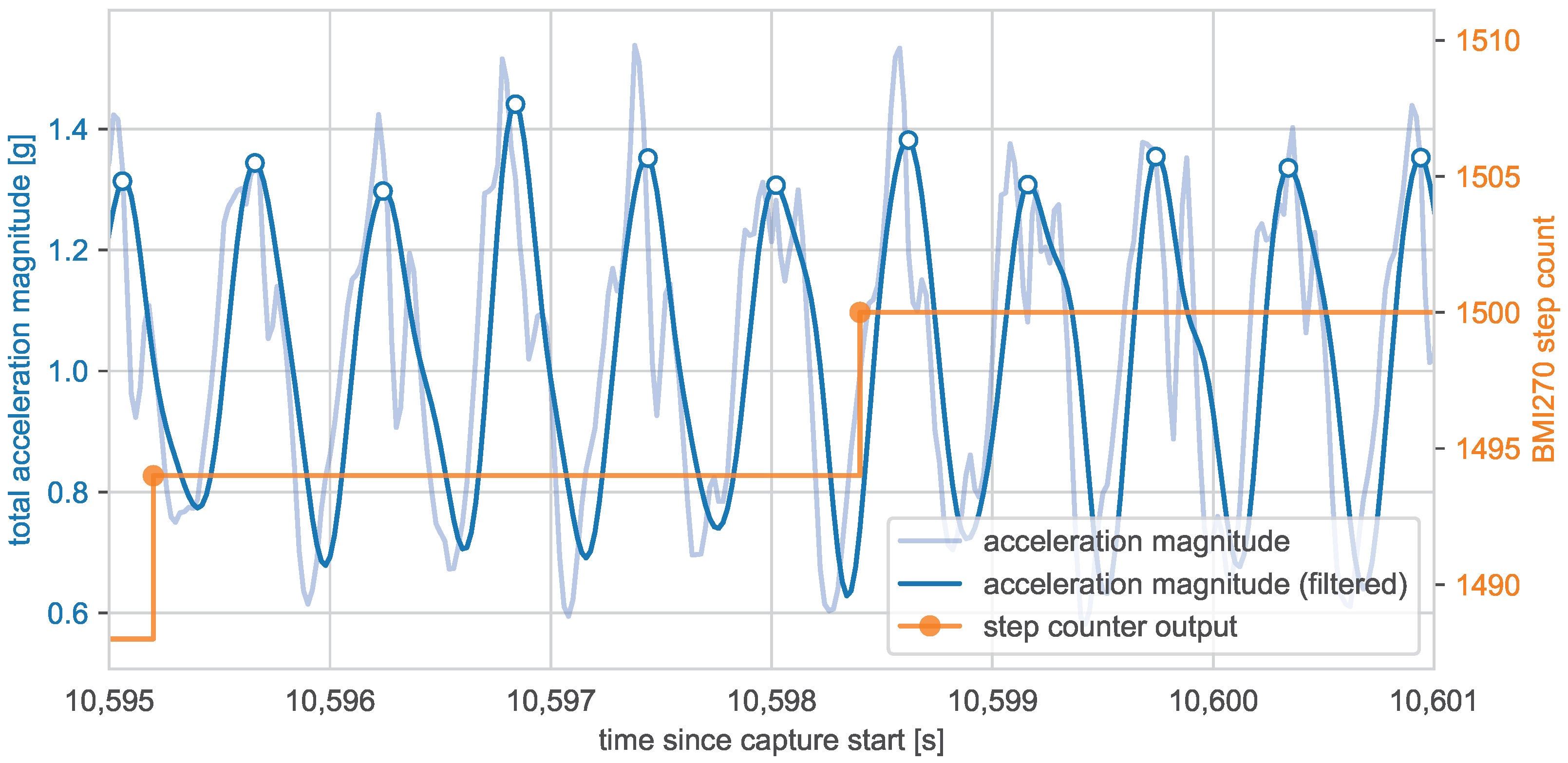
In addition to measuring acceleration and angular velocity, the IMU processes this data internally to detect steps taken by the person. The IMU offers two in-house algorithms [27] optimized for wrist-worn applications. The first algorithm is used for step detection and is optimized with detection latency in mind. The second one is used to count the steps. It uses the output of step detection and additionally validates it by considering the step regularity and movement dynamics to prevent false detections. As the piloting study assumed that the activity analysis and the total number of steps were more critical than the timestamps of the steps, the latter option was selected. Figure 3 presents an example of the filtered magnitude of the total acceleration signal and the corresponding output of the step counter.
The step counter functionality of the sensor was validated during development, when several team members walked a few hundred meters while counting steps and compared the results with the step counter output. The differences were in the order of 1–2 recorded steps over 300–400 steps made which was deemed as an acceptable error.
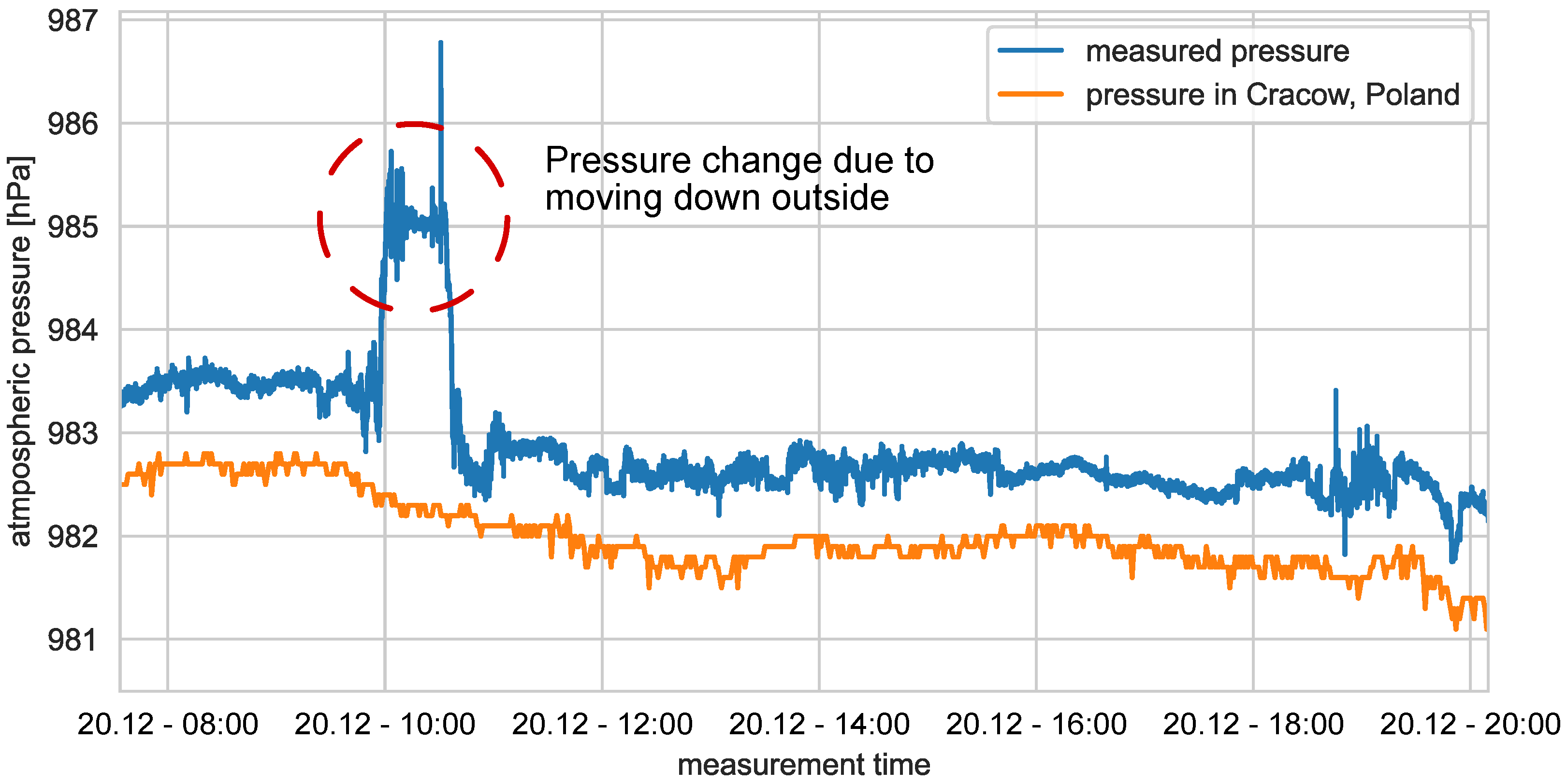
The inertial measurements are accompanied by atmospheric pressure measured at a rate of 2.5 Hz. The pressure from BMP390 is returned on demand and is an averaged value from the last 16 measurements taken at a 200 Hz rate, resulting in reduced noise. Thanks to the presence of the barometer, it is possible to detect the change in the person’s whereabouts based on the atmospheric pressure changes. If the participant lives on an upper floor, it is possible to detect the moment when the person leaves the flat and comes back based on fast measured pressure changes resulting from the altitude change. It enables adding an additional indoor/outdoor context to the collected data without using energy-inefficient GPS solutions. An example of a person leaving their apartment is presented in Figure 4.
In the presented example, the person living on an upper floor leaves the building, which results in about 1.5 hPa increase in the measured pressure, roughly corresponding to a 12–15 m change in altitude. After about 40 min, the person comes back, which leads to the measured pressure falling.
As the atmospheric pressure changes during the day on its own, moving out should be detected by identifying fast changes rather than comparing current pressure values. The proposed detection method may be harder to apply in the case of people living on lower floors or in houses, as the change in the measured pressure would not be as significant as presented in Figure 4.

3. Methods

3.1. Ethics Statement

This study was accepted by the Jagiellonian University Ethics Committee with reference 1072.6120.17.2023 (date: 15 February 2023). Informed written consent for participation and data sharing was obtained from all participants. All methods in the study were carried out in accordance with relevant guidelines and regulations.

3.2. Participants

The data were collected between July and December 2023, in Poland, with the participation of 27 users (7 female and 20 male) aged between 67 and 94 (mean: 79.3 ± 6.57 years). The participants were patients of the University Hospital in Krakow, Poland. All of them had a history of HF. The basic demographic information for the pilot participants is presented in Table 5.
All participants experienced heart failure events in the two years prior to the pilot’s start. User 6 also suffered HF exacerbation during the ongoing pilots. All the tested users were at most stable when it came to rating their health status. Although the sample size in this pilot study was relatively small, the study has provided additional insights into interactions with digital health systems. Thanks to monitoring, it was possible to provide feedback to patients and invite them to in-person visits, leading to successful medication adjustments. The very awareness of the monitoring routine, with the possibility of feedback from the clinician, had a reassuring effect on the patients.

3.3. Sensors and Devices

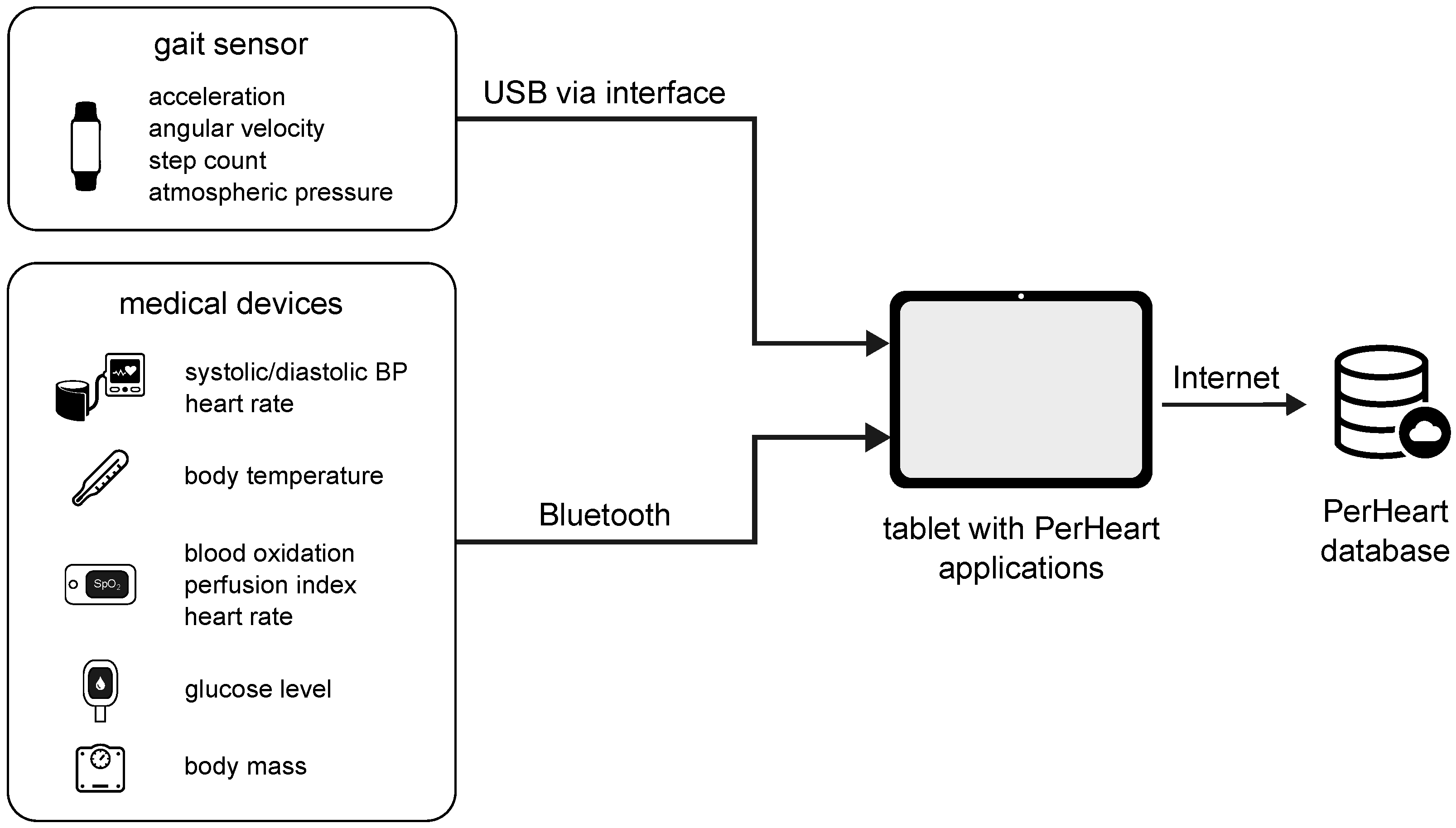
The PerHeart platform integrated custom applications, medical devices, and a gait sensor developed at Warsaw University of Technology (WUT). The architecture of the platform setup used in the pilot study is presented in Figure 5.
The main component of the platform is an Android tablet with PerHeart applications installed. The applications gather the results from medical devices and a gait sensor and upload them to the PerHeart cloud for future processing. Users can view their data at any time, as the applications include the required interfaces designed with older adults in mind. All medical devices were wireless-enabled. The list of devices is presented in Table 2.
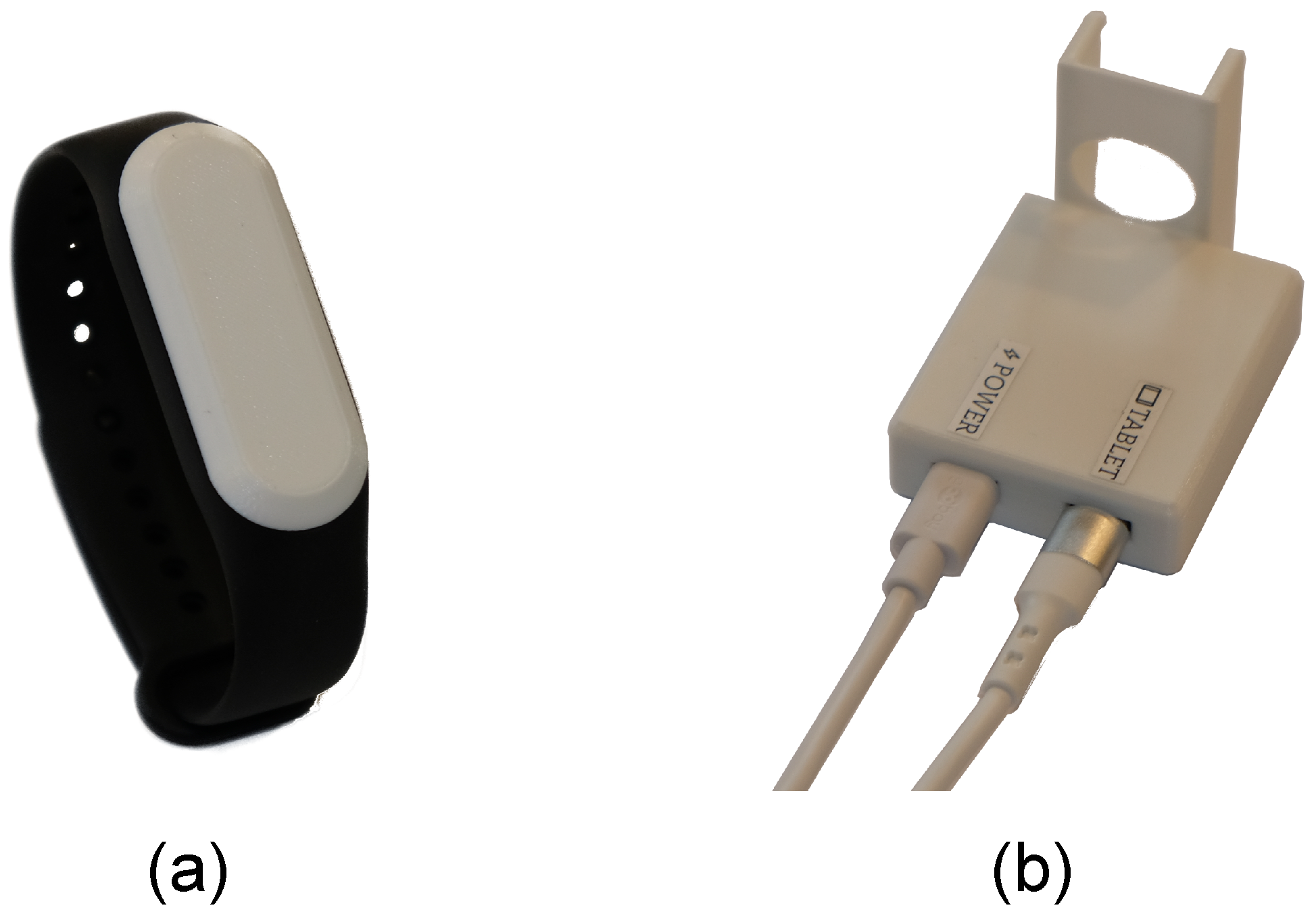
The medical devices communicate with the tablet using Bluetooth. The tablet application relays the raw measurement results to the PerHeart database without any processing. The wrist sensor used a custom interface connected to the tablet via USB for transmitting the recorded signals as well as charging the device. Photographs of both devices are presented in Figure 6.
The device’s sole purpose is to record inertial signals (acceleration and angular velocity) and atmospheric pressure. It is not fitted with any buttons or displays except the diodes signaling low battery level and charging status. The measurement results are saved to the gait sensor’s local memory. They are downloaded to the tablet and uploaded to the PerHeart cloud when the user charges the device. The users can monitor their daily step statistics (number of steps, gait cadence) using the supplied application.

3.4. Procedure

The patients performed the measurements at their homes in an unsupervised manner. The patients were selected based on the inclusion criteria agreed upon by the PerHeart project partners. The included patients were ≥65 years of age, had a diagnosis of heart failure based on the available medical records, had had an outpatient visit or hospitalization in the past 30 days, and had agreed to take part. The exclusion criteria included Mini-Mental State Examination < 21/30 or Barthel’s index < 91/100.
After signing the consent forms, participants were trained on platform use and provided with the devices. The training included a presentation of the platform capabilities and performing a test measurement session at the doctor’s office. Additionally, they were supplied with detailed manuals in Polish covering the use of medical devices and the platform. The users were asked not to alter their daily routine besides performing the measurements and wearing the wrist sensor.
The participants were asked to self-measure the biological signals. Blood pressure was to be measured preferably on the left arm in the sitting position, with the back supported, after five minutes of rest. The measurements were to be taken at least once daily, preferably in the morning. However, it was left to the discretion of the caring physician whether the patient was advised to take more measurements during the day, in which case the participant was instructed to follow their physician’s advice. Body weight was to be measured at least once per week. The armpit body temperature and the oxygen saturation of blood (peripheral pulsoxymetry method, for at least five seconds) were advised to be taken once daily. The wrist sensor was to be used constantly throughout the day.
Besides encouragement and occasional reminders, the project team did not influence the data collection process. Therefore, the adherence and volume of collected data differed among users.
At the end of the study, the users filled in a questionnaire asking about various issues, including their living arrangements, social and financial situation, self-perceived health, digital literacy, previous heart failure events, and impressions from the project. The participants were not compensated for taking part in the pilots.

3.5. Missing Data Handling

As described in the Section 2.2.3, the wrist sensors used in the study continuously collect data. Therefore, the data in each file are a complete capture between picking up the device and putting it on the charger. Due to the study being conducted in the users’ daily living spaces without constant supervision, we had no means of ensuring that the devices were used and that the collected data was uploaded to the platform every day. We have observed situations in which the users did not charge the device, which led to subsequent data loss. Some left it on the charger for longer periods, which resulted in captures including solely idle measurements. Such idle captures were excluded to reduce the dataset size.
In the case of body mass measurements, some corrupted results were observed. They included very low values (a few kg) due to incorrectly performed measurements and occasional measurements performed by the participant’s housemates (mass higher by 10 kg than usually observed). Such observations were removed from the dataset to preserve data integrity.

4. User Notes

4.1. Data Preparation

To reduce the dataset size, the timestamps for single wrist sensor measurements are not included, and the measurement results are stored as integers returned by the IMU and barometer. Therefore, data analysis requires prior preprocessing to annotate the samples with timestamps and convert the results to standard units. The timestamp for the given sample can be calculated as
t = t 0 + i 1 f s ,
where t 0 is the timestamp of the first measurement result (in the filename as described in Section 2.2.3), i is the index of the sample in the array, and f s is the sampling rate (as defined in Table 4). The unit conversion can be performed by dividing the integer value by the sensitivity specified in Table 4.
The repository includes exemplary Python (3.12.4) code for data processing. The codebase includes two files (load_dataset.ipynb notebook and load_dataset.py script). The files include helper functions for data loading, annotation with timestamps, and unit conversion. The notebook includes additional code presenting an exemplary analysis of daily captures for two selected users. Before running the scripts, it is required to unzip the wrist and medical archives.

4.2. Exemplary Use for Activity Detection

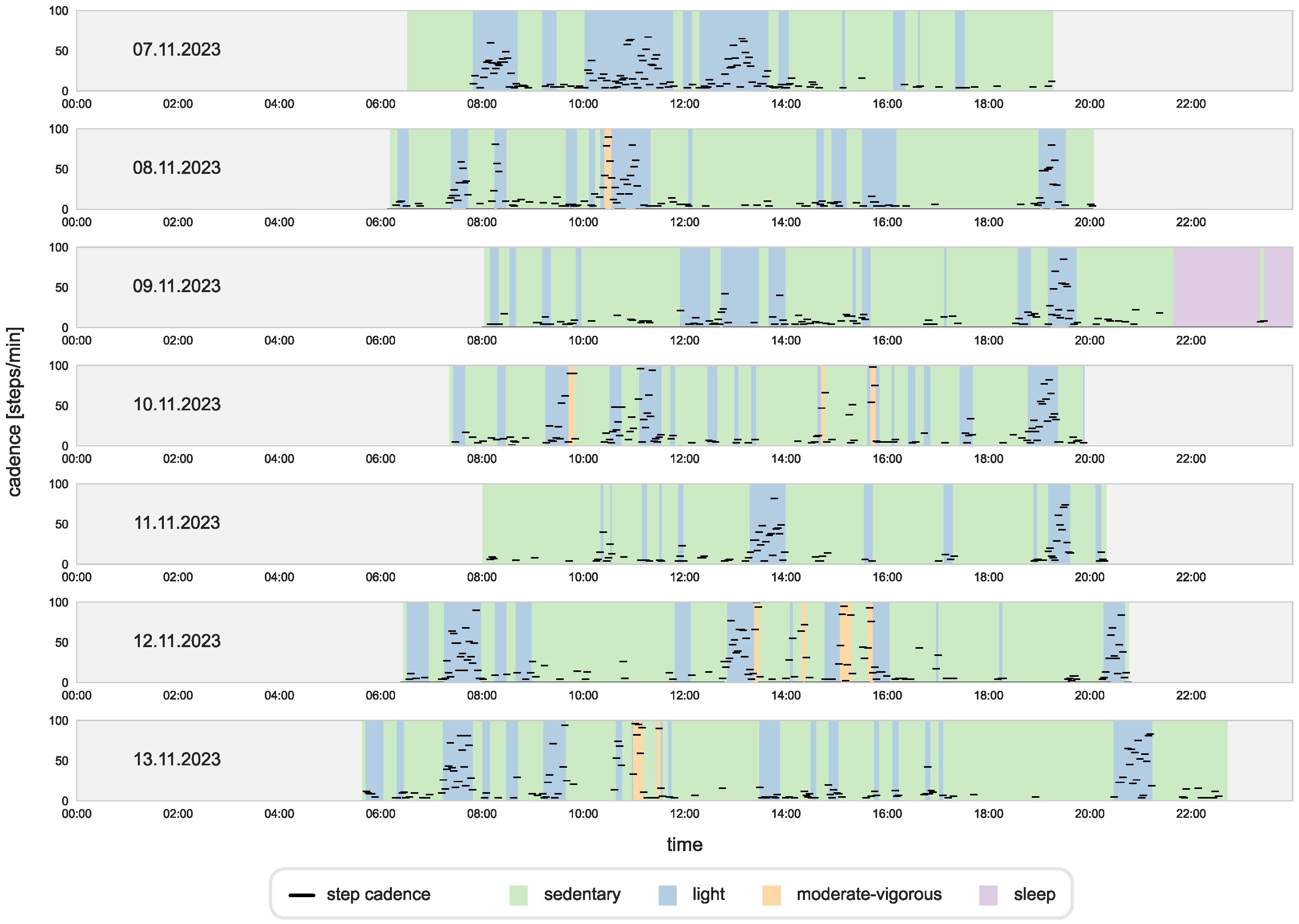
The acceleration measurement results can be used for daily activity analysis. To showcase this possibility, the results were processed using the Biobank accelerometer analysis tool developed at Oxford and described in [34]. The tool can assess the activity intensity and recognize activities using available pre-trained models. As the signals in our dataset are not labeled with specific activities, we analyzed activity intensity and compared it with the step counter’s output.
The inertial signals recorded over one selected week for user 2 were preprocessed to meet the analysis tool’s unit and timestamp format requirements. Then they were processed using the accProcess tool. The tool analyses the signals in 5 s epochs and outputs an activity volume and intensity summary showing the person’s activity during the day. The results of the analysis were compared with gait cadence (the number of steps the person took per minute), which can be treated as a proxy for physical activity intensity [24]. The results are presented in Figure 7.
During the analyzed week, the users engaged in mostly sedentary and light activities. The step cadence corresponds to the detected activity type—for light and moderate activities, it is visibly higher than for sedentary, which aligns with the findings presented in other works [24,25].

5. Conclusions

In this study, a multimodal dataset of in-home physiological and inertial measurements was presented. The described data was gathered during the pilots of the PerHeart European project with the help of 27 older heart failure patients who received help at the University Hospital in Krakow, Poland. The measurements were performed in an unsupervised manner at the patients’ homes for at least one month.
The described collection includes close to 4200 physiological measurements and 2536 h of inertial signals recorded during the users’ daily routines (captured by eight users; signals during sleep were not recorded). The users generally showed high adherence to the platform use. Although most measurements were performed daily, some users were selective about the devices they used. Several users did not use a body thermometer and blood oximeter even though they were asked to at the start of the study. This shows that when dealing with digital health platforms, such situations should be taken into account. It is especially important when implementing data processing methods and predictive algorithms whose effectiveness may suffer in the wake of missing data.
When it comes to collecting inertial measurements, users did not wear the wrist sensor every day. Given that the sensor was a custom device, which was not actively used and known to the users prior to the pilots, such an outcome was not unexpected. Additionally, for users already wearing the watch, wearing a second bracelet might have caused additional discomfort, leading to lower adherence. Following post-pilot users’ suggestions, the newer versions of the device will include a small LCD screen that displays the current time, giving the device an additional watch-like functionality.

Author Contributions

Conceptualization, M.K., J.K. and K.P.; methodology, I.P., J.G. and K.P.; software, M.K., V.D.-J., J.K., I.G.M. and O.C.; formal analysis, M.K.; investigation, M.K., V.D.-J., I.P., J.G. and K.P.; data curation, M.K., V.D.-J. and I.G.M.; writing—original draft, M.K.; writing—review and editing, M.K., J.K., J.G. and K.P.; visualization, M.K.; project administration, J.K. and O.C.; funding acquisition, J.K. and O.C. All authors have read and agreed to the published version of the manuscript.

Funding

The data was collected during the PerHeart project. In Poland, the PerHeart project was funded by the Polish National Centre for Research and Development, grant number PerMed/II/34/PerHeart/2022. In Romania, this work was supported by a grant of the Romanian National Authority for Scientific Research and Innovation, CCCDI—UEFISCDI, within PNCDI III, project ERANET-PERMED-PerHeart (No. 139/1.09.2020). The data processing was carried out as one of the tasks in the RENEW project. In Poland, RENEW was funded by the Polish National Centre for Research and Development, grant number THCS/I/24/RENEW/2025. In Romania, this work was supported in part by THCS European Project via RENEW Project and by a grant from the Ministry of Research, Innovation and Digitization, CNCS/CCCDI—UEFISCDI, project number 75/2024 COFUND-PARTENERIAT-THCS-RENEW, within PNCDI IV.

Institutional Review Board Statement

All methods in the study were carried out in accordance with relevant guidelines and regulations. The study was accepted by the Jagiellonian University Ethics Committee with reference 1072.6120.17.2023 (date: 15 February 2023).

Informed Consent Statement

Written informed consent for participation and data sharing was obtained from all participants.

Data Availability Statement

The dataset is available in the Zenodo repository under Creative Commons Attribution 4.0 International license at https://www.doi.org/10.5281/zenodo.17143199 (accessed on 5 April 2026).

Acknowledgments

We would like to thank the AGH Environmental Physics Group from the Faculty of Physics and Applied Computer Science, AGH University of Krakow, for making the atmospheric pressure measurements available for the purpose of this publication.

Conflicts of Interest

The authors declare no conflicts of interest. The funders had no role in the design of the study; in the collection, analyses, or interpretation of data; in the writing of the manuscript; or in the decision to publish the results.

References

  1. Darvish, M.; Shakoor, A.; Feyz, L.; Schaap, J.; van Mieghem, N.M.; de Boer, R.A.; Brugts, J.J.; van der Boon, R.M.A. Heart Failure: Assessment of the Global Economic Burden. Eur. Heart J. 2025, 46, 3069–3078. [Google Scholar] [CrossRef]
  2. Darbà, J.; Ascanio, M.; Rodríguez, A.; Charman, S.J.; Okwose, N.C.; Stefanetti, R.J.; Groenewegen, A.; Del Franco, A.; Tafelmeier, M.; Preveden, A.; et al. Economic Burden of Heart Failure in Europe: A Systematic Review of Costs and Cost-Effectiveness. ESC. Heart Fail. 2025, 12, 4055–4068. [Google Scholar] [CrossRef] [PubMed]
  3. Wei, C.; Heidenreich, P.A.; Sandhu, A.T. The Economics of Heart Failure Care. Prog. Cardiovasc. Dis. 2024, 82, 90–101. [Google Scholar] [CrossRef]
  4. Teleanu, I.C.; Bejan, G.C.; Poiană, I.R.; Mîrșu-Păun, A.; Dumitrescu, S.I.; Stănescu, A.M.A. Remote Monitoring of Patients with Heart Failure: Characteristics of Effective Programs and Implementation Strategies. Vasc. Health Risk Manag. 2025, 21, 489–503. [Google Scholar] [CrossRef]
  5. De Lathauwer, I.L.J.; Nieuwenhuys, W.W.; Hafkamp, F.; Regis, M.; Brouwers, R.W.M.; Funk, M.; Kemps, H.M.C. Remote Patient Monitoring in Heart Failure: A Comprehensive Meta-Analysis of Effective Programme Components for Hospitalization and Mortality Reduction. Eur. J. Heart Fail. 2025, 27, 1670–1685. [Google Scholar] [CrossRef] [PubMed]
  6. Pierucci, N.; Laviola, D.; Mariani, M.V.; Nardini, A.; Adamo, F.; Mahfouz, K.; Colaiaco, C.; Ammirati, F.; Santini, L.; Lavalle, C. Remote Monitoring and Heart Failure. Eur. Heart J. Suppl. 2025, 27, i126–i131. [Google Scholar] [CrossRef]
  7. Buendia, R.; Karpefors, M.; Folkvaljon, F.; Hunter, R.; Sillen, H.; Luu, L.; Docherty, K.; Cowie, M.R. Wearable Sensors to Monitor Physical Activity in Heart Failure Clinical Trials: State-of-the-Art Review. J. Card. Fail. 2024, 30, 703–716. [Google Scholar] [CrossRef]
  8. Fudim, M.; Egolum, U.; Haghighat, A.; Kottam, A.; Sauer, A.J.; Shah, H.; Kumar, P.; Rakita, V.; Lopes, R.D.; Centen, C.; et al. Surveillance and Alert-based Multiparameter Monitoring to Reduce Worsening Heart Failure Events: Results From SCALE-HF 1. J. Card. Fail. 2025, 31, 661–675. [Google Scholar] [CrossRef] [PubMed]
  9. Klompstra, L.; Kyriakou, M.; Lambrinou, E.; Piepoli, M.F.; Coats, A.J.S.; Cohen-Solal, A.; Cornelis, J.; Gellen, B.; Marques-Sule, E.; Niederseer, D.; et al. Measuring Physical Activity with Activity Monitors in Patients with Heart Failure: From Literature to Practice. A Position Paper from the Committee on Exercise Physiology and Training of the Heart Failure Association of the European Society of Cardiology. Eur. J. Heart Fail. 2021, 23, 83–91. [Google Scholar] [CrossRef]
  10. Singh, P.; Kourav, P.S.; Mohapatra, S.; Kumar, V.; Panda, S.K. Human Heart Health Prediction Using GAIT Parameters and Machine Learning Model. Biomed. Signal Process. Control 2024, 88, 105696. [Google Scholar] [CrossRef]
  11. PerHeart-European Partnership for Personalised Medicine-EP PerMed. Available online: https://www.eppermed.eu/funding-projects/projects-results/project-database/perheart// (accessed on 1 May 2026).
  12. ERAPerMed—Introduction. Available online: https://internacional.isciii.es/erapermed/introduccion (accessed on 5 April 2026).
  13. Islam, M.R.; Patwary, M.O.; Islam, S.M.A. AI-Driven Internet of Things (IoT) Dataset for Remote Health Monitoring and Fall Detection in Elderly People. Data Brief 2026, 66, 112641. [Google Scholar] [CrossRef] [PubMed]
  14. Nandi, P.; Anupama, K.R.; Agarwal, H.; Patel, K.; Bang, V.; Bharat, M.; Guru, M.V. Inertial Measurement and Heart-Rate Sensor-Based Dataset for Geriatric Fall Detection Using Custom Built Wrist-Worn Device. Data Brief 2024, 52, 109812. [Google Scholar] [CrossRef]
  15. Zhang, W.; Yang, Z.; Li, H.; Huang, D.; Wang, L.; Wei, Y.; Zhang, L.; Ma, L.; Feng, H.; Pan, J.; et al. Multimodal Data for the Detection of Freezing of Gait in Parkinson’s Disease. Sci. Data 2022, 9, 606. [Google Scholar] [CrossRef]
  16. Palermo, F.; Chen, Y.; Capstick, A.; Fletcher-Loyd, N.; Walsh, C.; Kouchaki, S.; True, J.; Balazikova, O.; Soreq, E.; Scott, G.; et al. TIHM: An Open Dataset for Remote Healthcare Monitoring in Dementia. Sci. Data 2023, 10, 606. [Google Scholar] [CrossRef]
  17. Céspedes Gómez, N.; Chen, Y.; Kouchaki, S.; Heydari, M.; Cairns, A.; Sierra Marín, S.D.; Capstick, A.; Somers, J.; Harris, K.; Goh, W.W.B.; et al. The RESILIENT Dataset: Multimodal Monitoring of Ageing-Related Comorbidities and Cognitive Decline. Sci. Data 2025, 12, 1675. [Google Scholar] [CrossRef]
  18. Karthick Raghunath, K.M. Comprehensive Patient-Health Monitoring Dataset. IEEE DataPort 2024. Available online: https://ieee-dataport.org/documents/comprehensive-patient-health-monitoring-dataset (accessed on 5 April 2026).
  19. Tonkin, E.L.; Holmes, M.; Song, H.; Twomey, N.; Diethe, T.; Kull, M.; Perello Nieto, M.; Camplani, M.; Hannuna, S.; Fafoutis, X.; et al. A Multi-Sensor Dataset with Annotated Activities of Daily Living Recorded in a Residential Setting. Sci. Data 2023, 10, 162. [Google Scholar] [CrossRef]
  20. Matey-Sanz, M.; Casteleyn, S.; Granell, C. Dataset of Inertial Measurements of Smartphones and Smartwatches for Human Activity Recognition. Data Brief 2023, 51, 109809. [Google Scholar] [CrossRef]
  21. Chan, S.; Hang, Y.; Tong, C.; Acquah, A.; Schonfeldt, A.; Gershuny, J.; Doherty, A. CAPTURE-24: A Large Dataset of Wrist-Worn Activity Tracker Data Collected in the Wild for Human Activity Recognition. Sci. Data 2024, 11, 1135. [Google Scholar] [CrossRef] [PubMed]
  22. Nazari, F.; Mohajer, N.; Nahavandi, D.; Khosravi, A.; Nahavandi, S. Comparison Study of Inertial Sensor Signal Combination for Human Activity Recognition Based on Convolutional Neural Networks. In Proceedings of the 2022 15th International Conference on Human System Interaction (HSI), Melbourne, Australia, 28–31 July 2022. [Google Scholar] [CrossRef]
  23. Tachikawa, M.; Maekawa, T.; Matsushita, Y. Predicting Location Semantics Combining Active and Passive Sensing with Environment-Independent Classifier. In Proceedings of the 2016 ACM International Joint Conference on Pervasive and Ubiquitous Computing, UbiComp ’16, New York, NY, USA, 12–16 September 2016; Association for Computing Machinery: Heidelberg, Germany, 2016; pp. 220–231. [Google Scholar] [CrossRef]
  24. Aguiar, E.J.; Mora-Gonzalez, J.; Ducharme, S.W.; Moore, C.C.; Gould, Z.R.; Chase, C.J.; Amalbert-Birriel, M.A.; Chipkin, S.R.; Staudenmayer, J.; Zheng, P.; et al. Cadence-Based Classification of Moderate-Intensity Overground Walking in 41- to 85-Year-Old Adults. Scand. J. Med. Sci. Sports 2023, 33, 433–443. [Google Scholar] [CrossRef]
  25. Wang, H.; Zhang, Y.F.; Xu, L.L.; Jiang, C.M. Step Rate-Determined Walking Intensity and Walking Recommendation in Chinese Young Adults: A Cross-Sectional Study. BMJ Open 2013, 3, e001801. [Google Scholar] [CrossRef] [PubMed]
  26. Kolakowski, M.; Djaja-Josko, V.; Kolakowski, J.; Mocanu, I.; Cramariuc, O.; Gąsowski, J.; Piotrowicz, K. PerHeart Pilot Dataset: Wrist-Worn Inertial Sensor and Physiological Data from Older Adults with Heart Failure. 2025. Available online: https://zenodo.org/records/17459937 (accessed on 5 April 2026).
  27. Bosch Sensortec. BMI270 Datasheet; Technical report; Bosch Sensortec: Kusterdingen, Germany, 2023. [Google Scholar]
  28. Bosch Sensortec. BMP390 Datasheet; Technical report; Bosch Sensortec: Kusterdingen, Germany, 2021. [Google Scholar]
  29. Mason, R.; Pearson, L.T.; Barry, G.; Young, F.; Lennon, O.; Godfrey, A.; Stuart, S. Wearables for Running Gait Analysis: A Systematic Review. Sport. Med. 2023, 53, 241–268. [Google Scholar] [CrossRef] [PubMed]
  30. Banos, O.; Garcia, R.; Holgado-Terriza, J.A.; Damas, M.; Pomares, H.; Rojas, I.; Saez, A.; Villalonga, C. mHealthDroid: A Novel Framework for Agile Development of Mobile Health Applications. In Proceedings of the Ambient Assisted Living and Daily Activities; Pecchia, L., Chen, L.L., Nugent, C., Bravo, J., Eds.; Springer: Cham, Switzerland, 2014; pp. 91–98. [Google Scholar] [CrossRef]
  31. Kolakowski, M.; Djaja-Josko, V.; Kolakowski, J.; Cichocki, J. Wrist-to-Tibia/Shoe Inertial Measurement Results Translation Using Neural Networks. Sensors 2024, 24, 293. [Google Scholar] [CrossRef] [PubMed]
  32. Femiano, R.; Werner, C.; Wilhelm, M.; Eser, P. Validation of Open-Source Step-Counting Algorithms for Wrist-Worn Tri-Axial Accelerometers in Cardiovascular Patients. Gait Posture 2022, 92, 206–211. [Google Scholar] [CrossRef]
  33. AGH University of Krakow. Weather Presentation System. Available online: http://meteo.ftj.agh.edu.pl/ (accessed on 5 April 2026).
  34. Doherty, A.; Jackson, D.; Hammerla, N.; Plötz, T.; Olivier, P.; Granat, M.H.; White, T.; van Hees, V.T.; Trenell, M.I.; Owen, C.G.; et al. Large Scale Population Assessment of Physical Activity Using Wrist Worn Accelerometers: The UK Biobank Study. PLoS ONE 2017, 12, e0169649. [Google Scholar] [CrossRef] [PubMed]
Figure 1. Dataset directory tree. The files with measurements from the wrist and medical sensors are organized into separate directories. The directories were compressed to adhere to the repository’s file number limit.
Data 11 00106 g001
Figure 2. Wrist sensor measurement axes orientation (blue—x axis, orange—y axis, green—z axis). The hand on which the sensor was worn was not enforced.
Data 11 00106 g002
Figure 3. Acceleration magnitude and the corresponding step counter output. The signal was filtered with a low-pass Butterworth filter with a 3.66 Hz cutoff frequency to remove noise and maintain changes related to gait. The peaks detected in the acceleration vector magnitude signal correspond to consecutive steps and can be a basis for step detection [32].
Data 11 00106 g003
Figure 4. Measured atmospheric pressure changes caused by moving out of the building. The reference pressure curve is based on data from the weather station operated by the AGH University of Krakow [33].
Data 11 00106 g004
Figure 5. PerHeart platform setup used in the pilot study. The original platform included additional devices and applications, including an intelligent pill box and cognitively stimulating smartphone games. As the dataset does not include any related data, they were omitted from the description.
Data 11 00106 g005
Figure 6. The wrist sensor (a) and the charging interface used for data transmission (b). Both devices were developed and assembled at WUT.
Data 11 00106 g006
Figure 7. Activity analysis using the Biobank accelerometer tools. The step cadence was obtained based on the step counter output.
Data 11 00106 g007
Table 2. Physiological data sources in the PerHeart platform. The device models are the ones used in the pilot study for this dataset collection. The detailed information on the demographic data (questions asked to the users and possible answers) can be found in the data dictionary supplied as a part of the dataset.
Data SourceDevice ModelMeasured Parameters
blood pressure meterUA-651BLE (A&D Company Ltd., Kitamoto-shi, Japan) or BM 95 (Beurer GmbH, Ulm, Germany)systolic blood pressure [mmHg], diastolic blood pressure [mmHg], heart rate [bpm]
thermometerUT-201BLE-A (A&D Company Ltd., Kitamoto-shi, Japan)body temperature [°C]
blood oximeterJumper JPD-500F BLE (Shenzhen Jumper Medical Equipment Co., Ltd., Shenzhen, China)oxygen saturation [%], perfusion index [-], heart rate [bpm]
bathroom scaleUC-352BLE (A&D Company Ltd., Kitamoto-shi, Japan)body mass [kg]
glucometer 1OneTouch Select Plus Flex (LifeScan Europe GmbH, Zug, Switzerland)glucose [mmol/L]
demographic datain-person questionnairesage, sex, living arrangements, job, self-rated health state, digital skills, HF history
1 The glucometers were used only by selected users at risk or suffering from diabetes.
Table 3. The number of physiological measurements performed by the users during the pilots. Hyphen ’-’ means that the user did not use the device even once.
User IDPilot DaysWrist Sensor DaysBlood PressureBody TemperatureBody MassOxidationGlucose
146399064446440
22917106-931167
33218362622-16
4332341503366-
5373234373370-
6373070-508716
73524185172-
82821606058--
929-333039-3
1032-769059111
1131-766765--
1232-3639478-
1330-343145--
1411-1595-2
1533-37332938-
1631-34323029-
1728-30433338-
1826-32443646-
1932-35343130-
2028-303030-25
2129-31-353133
2235-43302532-
2330-36343561-
2436-5538354527
2536-38373652-
2634-212221--
2732-48293258-
mean31-44.33837.74618
Table 4. Basic wrist sensor internal sensors parameters.
SensorSampling RateRangeSensitivity
IMU (acceleration)50 Hz±4 g8192 LSB/g
IMU (angular velocity)50 Hz±2000 dps16.384 LSB/dps
IMU (steps)1.25 Hz-1 step
Atmospheric pressure meter2.5 Hz-0.17 Pa 1
1 Averaged based on 16 last measurements taken with 200 Hz rate to reduce noise.
Table 5. Participants’ basic information.
UserAgeSexWeight (kg)Self-Perceived Health 1Date of Last Heart Failure Event 2
171male80.7304.2023
275male76.532021
376female68.3306.2023
481male87.5311.2023
583female52.432021
690male64.932023 3
769male71.8203.2023
867male75.2306.2023
994female74.2203.2023
1074male85.24>1 yr. ago
1183male69.1302.2023
1274male98.8206.2023
1387male61.922023
1485male111.722022
1577male83.8306.2023
1683male66.33n.s. 4
1780female63.932019
1874female91.83summer 2023
1977male83.732021
2083male104.432023
2175female67.5202.2023
2282male93.53n.s. 4
2377male75.132021
2478female81.832022
2585male89.532022
2672male93.822015
2788male83.8303.2023
mean79.3-79.92.8-
1 Scored 1–5 (higher is better). 2 The dates are as given by the participants. 3 User 6 also experienced a heart failure event during the pilot trials on 30 December 2023; he did not require hospitalization. The 2023 date in the table corresponds to the event prior to the pilot study. 4 The users did not provide the exact or approximate date of the last HF event.
Disclaimer/Publisher’s Note: The statements, opinions and data contained in all publications are solely those of the individual author(s) and contributor(s) and not of MDPI and/or the editor(s). MDPI and/or the editor(s) disclaim responsibility for any injury to people or property resulting from any ideas, methods, instructions or products referred to in the content.