Article

Preliminary Studies on the Use of Reactive Distillation in the Production of Beverage Spirits


by
Jacob D. Rochte
1,* and
Kris A. Berglund
1,2
1
Department of Chemical Engineering and Material Science, Michigan State University, East Lansing, MI 48823, USA
2
Luleå Biochemical Process Engineering, University of Technology, SE-97187 Luleå, Sweden
*
Author to whom correspondence should be addressed.
Beverages 2019, 5(2), 29; https://doi.org/10.3390/beverages5020029

Submission received: 14 January 2019 / Revised: 29 January 2019 / Accepted: 13 March 2019 / Published: 2 April 2019
(This article belongs to the Special Issue Distilled Beverages: Science and Technology Across the Supply Chain)

Abstract

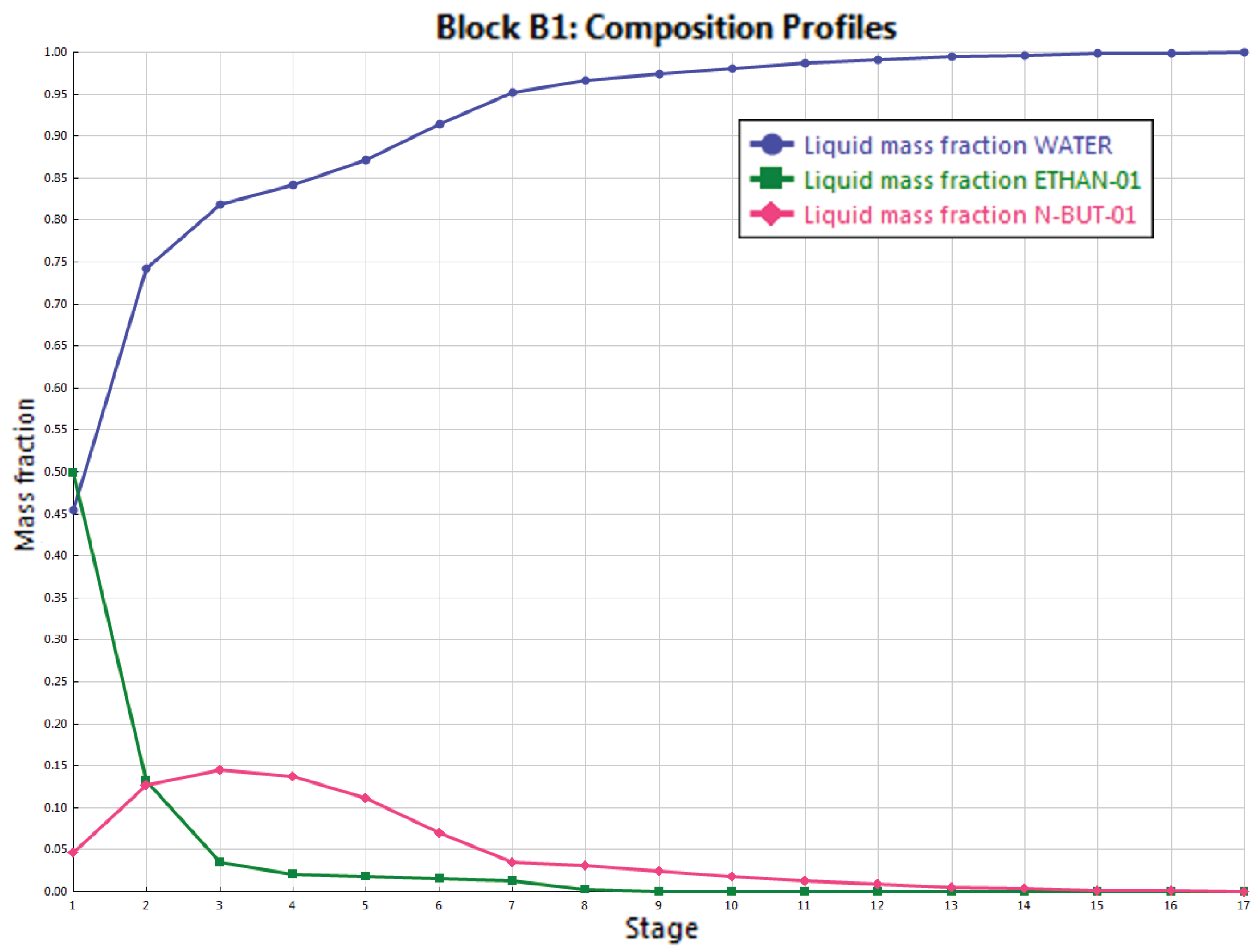
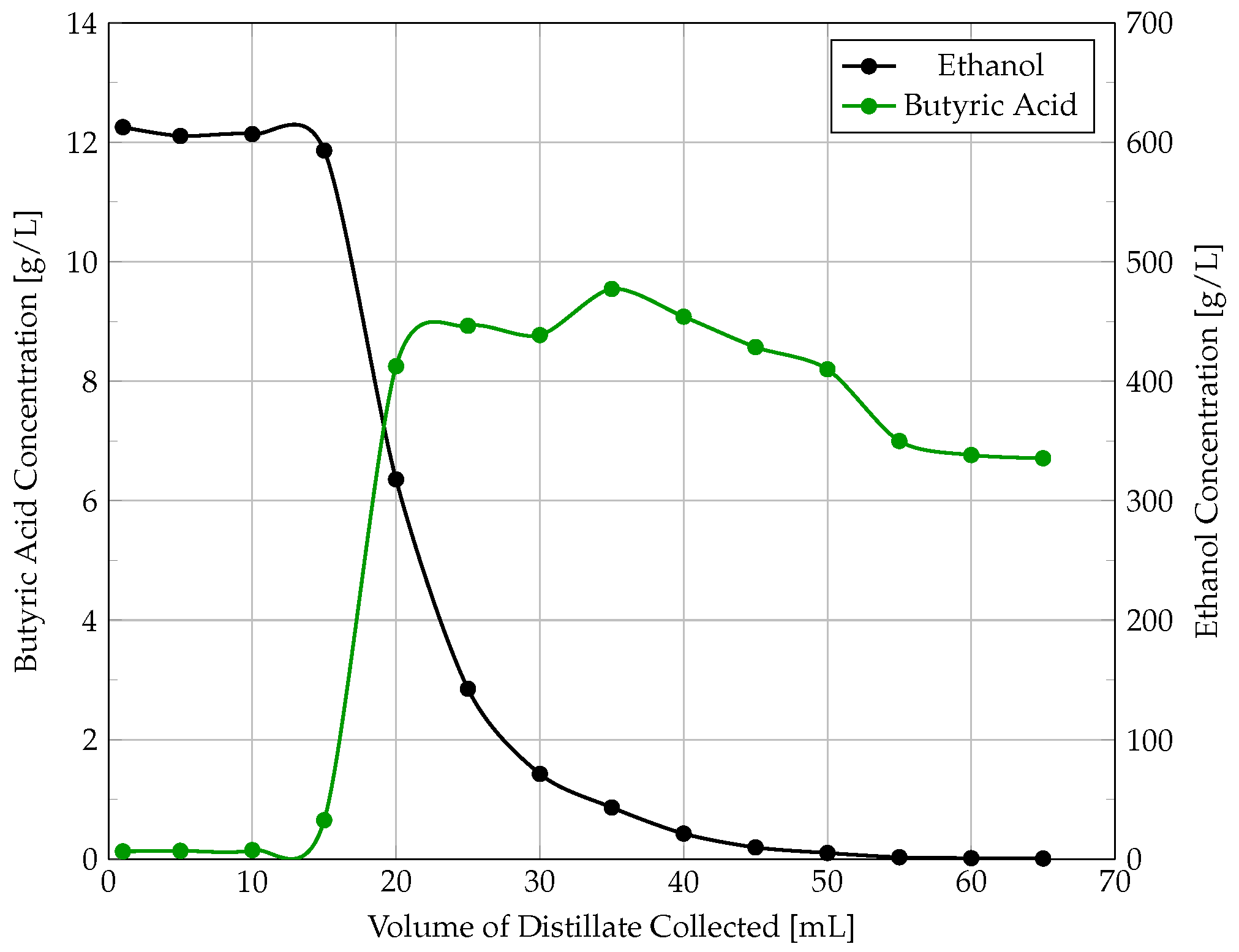
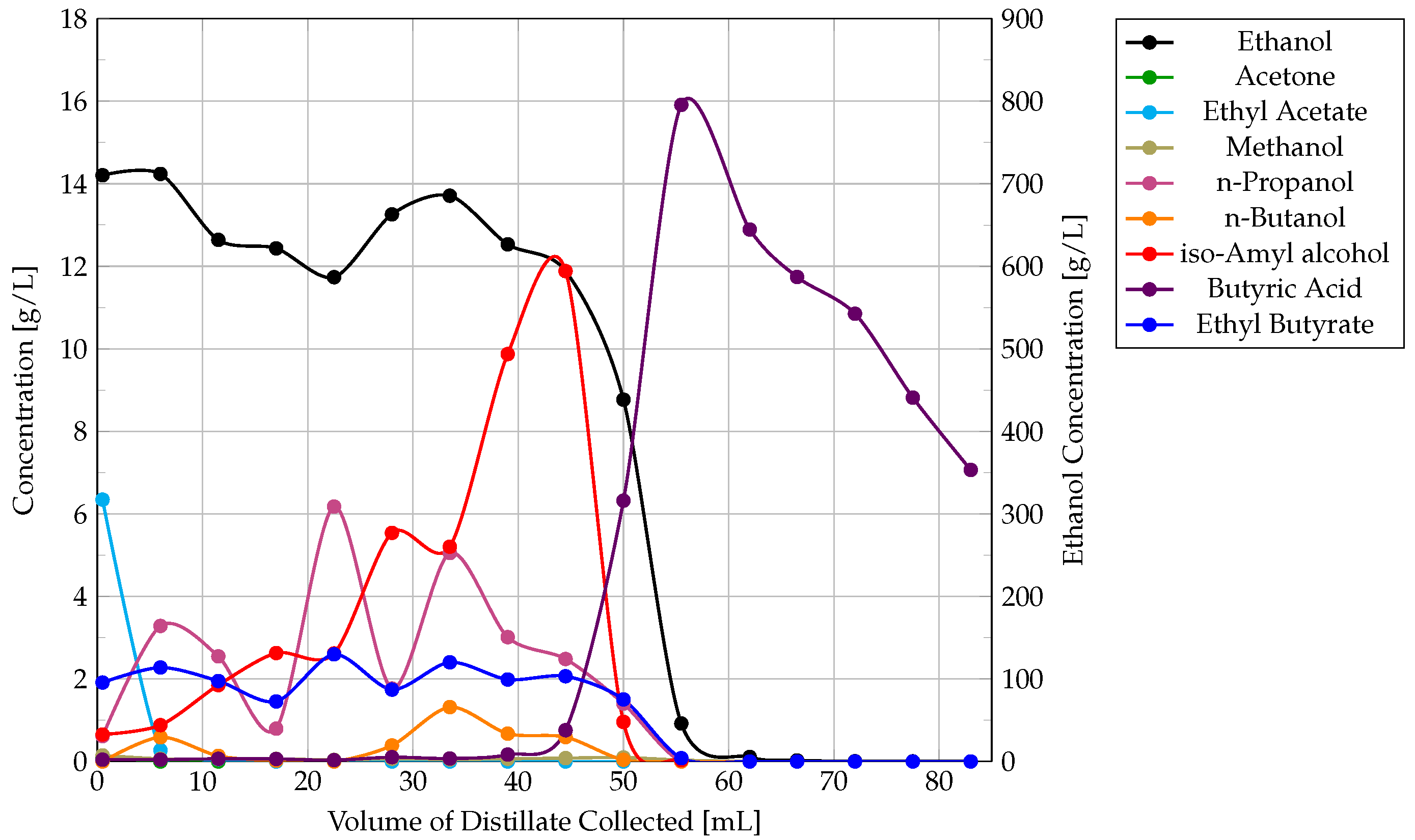
Distilled alcoholic beverages have been produced through fermentation and distillation for centuries but have not purposefully involved a chemical reaction to produce a flavoring. Introducing a microorganism to produce butyric acid along with the typical yeast ethanol fermentation sets up a reactive distillation system to flavor a spirit with ethyl butyrate and butyric acid. The ternary interactions of water, ethanol, and butyric acid allow all three to vaporize in the stripping distillation, thus they are concentrated in the low wines and give a large excess of ethanol compared to butyric acid for better reaction completion. The stripping distillation has also been modeled on Aspen Plus® V9 software (by Aspen Technology, Inc. Bedford, MA, USA) and coincides well with a test stripping distillation at the bench scale. Amberlyst® 15 wet catalyst was added to a subsequent distillation, resulting in the production of the desired ethyl butyrate in the distillate, measured by gas chromatography. Primary sensory evaluation has determined that this process has a profound effect on the smell of the spirit with the main flavor being similar to fruity bubble gum. The current results will provide a pathway for creating spirits with a desired flavor on demand without acquiring a heavy capital cost if a beverage distillation column is already purchased.
Keywords: reactive distillation; esterification; spirits; ethyl butyrate; butyric acid; ethanol reactive distillation; esterification; spirits; ethyl butyrate; butyric acid; ethanol