Article

Exploratory Assessment of Native Starmerella bacillaris and Hanseniaspora uvarum Under Different Fermentation Strategies in Chilean Sauvignon Blanc

by
Consuelo Ceppi De Lecco
1,
Wendy Franco
2,
Alejandra Urtubia
3,
Reynier Baez
4 and
Sergio Benavides-Valenzuela
5,*
1
Departamento de Fruticultura y Enología, Pontificia Universidad Católica de Chile, Ave. Vicuña Mackenna 4860, Santiago 7820436, Chile
2
Departamento de Ingeniería Química y Bioprocesos, Pontificia Universidad Católica de Chile, Ave. Vicuña Mackenna 4860, Santiago 7820436, Chile
3
Departamento de Ingeniería Química y Ambiental, Universidad Técnica Federico Santa María, Ave. España 1680, Valparaíso 2390123, Chile
4
Núcleo de Investigación de Agroalimentos y Nutrición Aplicada, Universidad Adventista de Chile, Cam. Las Mariposas km 12, Chillán 3780000, Chile
5
Escuela de Nutrición y Dietética, Facultad de Ciencias de la Rehabilitación y Calidad de Vida, Universidad San Sebastián, Lientur 1457, Concepción 4081339, Chile
*
Author to whom correspondence should be addressed.
Beverages 2026, 12(6), 71; https://doi.org/10.3390/beverages12060071 (registering DOI)
Submission received: 15 April 2026 / Revised: 20 May 2026 / Accepted: 26 May 2026 / Published: 8 June 2026
(This article belongs to the Section Beverage Technology Fermentation and Microbiology)

Abstract

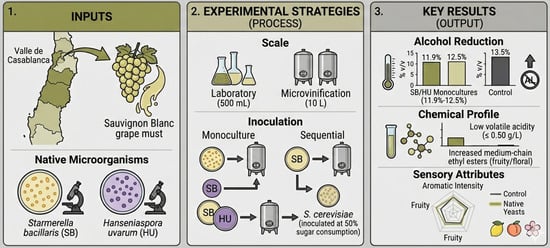
Non-Saccharomyces yeasts (NSY) are increasingly investigated as biotechnological tools to diversify wine profiles and modulate fermentation outcomes. This study evaluated the enological behavior of two Chilean isolates, Starmerella bacillaris (SB) and Hanseniaspora uvarum (HU), in Sauvignon Blanc must from the Casablanca Valley under monoculture and sequential inoculation (NSY → Saccharomyces cerevisiae) at laboratory (500 mL) and microvinification (10 L) scales. In synthetic medium (150 g/L sugars), SB and HU showed incomplete sugar consumption, producing 4.25% and 8.50% v/v ethanol, respectively, compared with 9.16% v/v for S. cerevisiae. In laboratory-scale fermentation in real must, both strains completed fermentation in monoculture, with moderate reductions in ethanol production relative to the control. At the microvinification scale, monocultures yielded lower ethanol concentrations (11.90–12.50% v/v) than S. cerevisiae (13.50% v/v), whereas sequential fermentations converged toward control values. NSY treatments showed higher relative abundances of medium-chain ethyl esters associated with fruity and floral sensory attributes while maintaining acetic acid concentrations ≤ 0.50 g/L. These findings indicate that the effects of SB and HU depended primarily on fermentation strategy and process scale under the evaluated conditions.

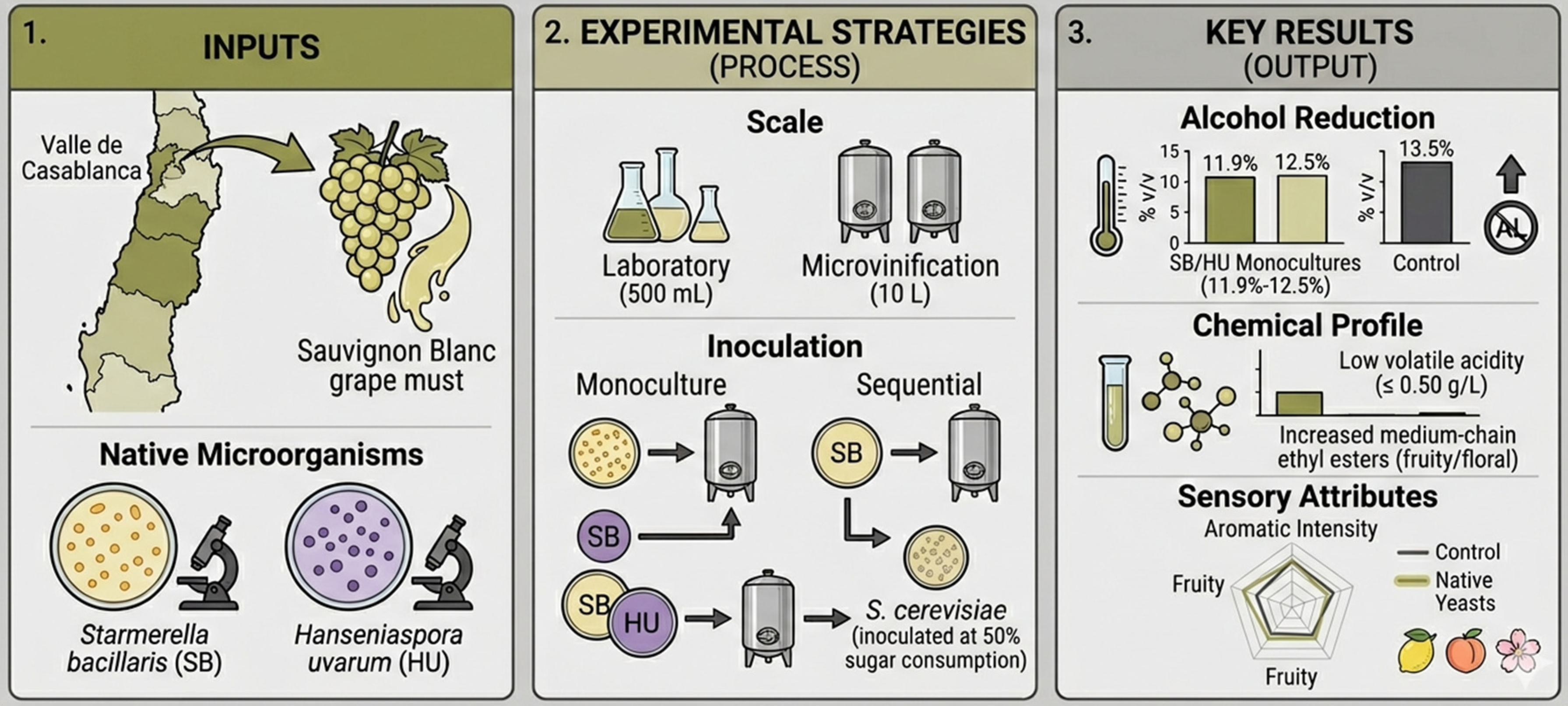
Graphical Abstract

1. Introduction

One of the current frontiers in modern oenology is the exploration of microbial resources capable of diversifying wine styles and modulating fermentation outcomes. In this context, non-Saccharomyces yeasts (NSY) have gained increasing attention as promising biotechnological tools [1,2] that expand metabolic possibilities and influence the sensory and chemical properties of wines [1]. Their controlled application has been proposed as a strategy to enhance aromatic complexity [3,4,5,6,7,8] and, under specific conditions, to contribute to moderate ethanol reduction [8,9], although these effects are strongly dependent on strain identity, fermentation conditions, and fermentation design.
Unlike Saccharomyces cerevisiae (SC), many NSY species exhibit distinct carbon flux distributions and metabolomic profiles, frequently leading to altered production of esters, higher alcohols, organic acids, and other secondary metabolites of sensory relevance [2,10]. Among them, Starmerella bacillaris is commonly associated with high glycerol production, fructophilic behavior, and comparatively low ethanol yields [6,10], whereas Hanseniaspora uvarum has been linked to early-stage fermentation activity and the production of acetate esters and other aroma-active compounds, despite its limited ethanol tolerance [6,10,11]. Over the past decade, several NSY species—including Starmerella bacillaris, Hanseniaspora uvarum, Lachancea thermotolerans, Metschnikowia pulcherrima, and Torulaspora delbrueckii—have been investigated for their potential to modulate acidity, influence glycerol production, and enhance fruity and floral attributes, particularly when applied in sequential or mixed fermentations with SC [12,13].
At the strain level, NSY displays considerable metabolic variability, which may be influenced by ecological origin and local viticultural conditions. This variability has contributed to the broader concept of microbial terroir, in which indigenous microbial communities are considered potential contributors to wine differentiation [14]. Nevertheless, most experimental evaluations remain focused on commercial starters or isolates from temperate Northern Hemisphere regions, while fewer studies have examined the fermentation-related behavior of Chilean NSY isolates at laboratory scale under controlled conditions [8,10,15]. In addition, the extent to which fermentation strategy influences NSY metabolic outputs in defined must systems remains incompletely understood.
Chile offers a wide diversity of viticultural environments and native microbial resources, creating favorable conditions to investigate fermentation responses associated with different native yeast isolates in locally relevant systems [16,17]. Nevertheless, studies addressing Chilean isolates of Starmerella bacillaris (SB) and Hanseniaspora uvarum (HU) under monoculture and sequential inoculation with S. cerevisiae remain scarce, particularly those integrating physiological, chemical, and sensory responses within a unified experimental approach [18].
In this context, we hypothesized that the enological behavior of NSY changes according to fermentation strategy and process scale, leading to differential effects on ethanol production, metabolite formation, and aromatic expression within a controlled experimental system. Accordingly, this study evaluates Chilean NSY isolates under two fermentation strategies (monoculture and sequential inoculation) in Sauvignon Blanc must from Casablanca Valley.
This study characterizes treatment-associated responses observed under defined experimental conditions at laboratory and microvinification scales by integrating fermentation kinetics, metabolite production, volatile profiles, and sensory attributes. Although dynamic population monitoring was not performed, the combined physiological, chemical, and sensory approach provides a controlled framework for interpreting treatment-associated oenological responses under the evaluated inoculation conditions.

2. Materials and Methods

2.1. Yeast Strains and Stabilization

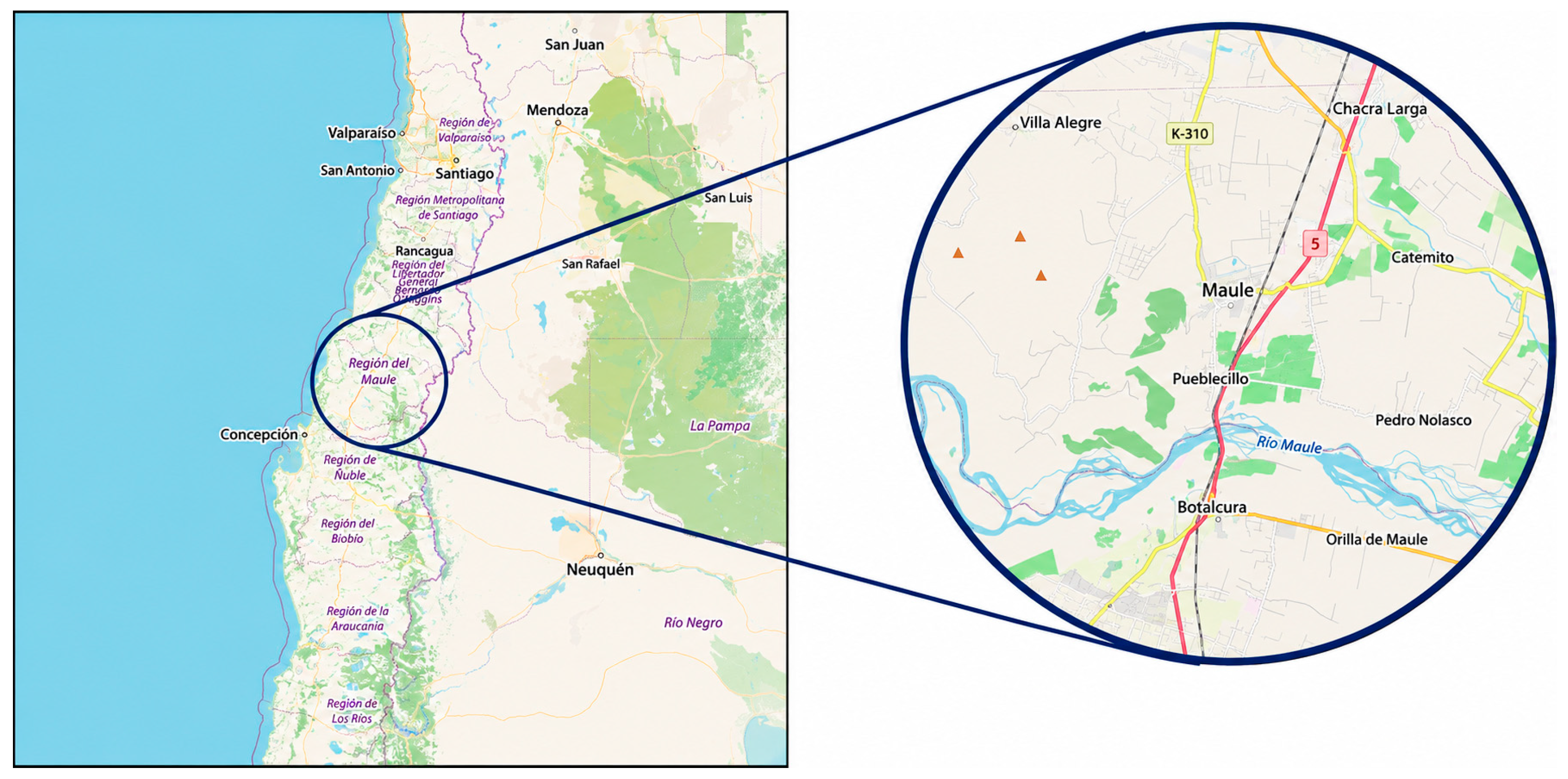
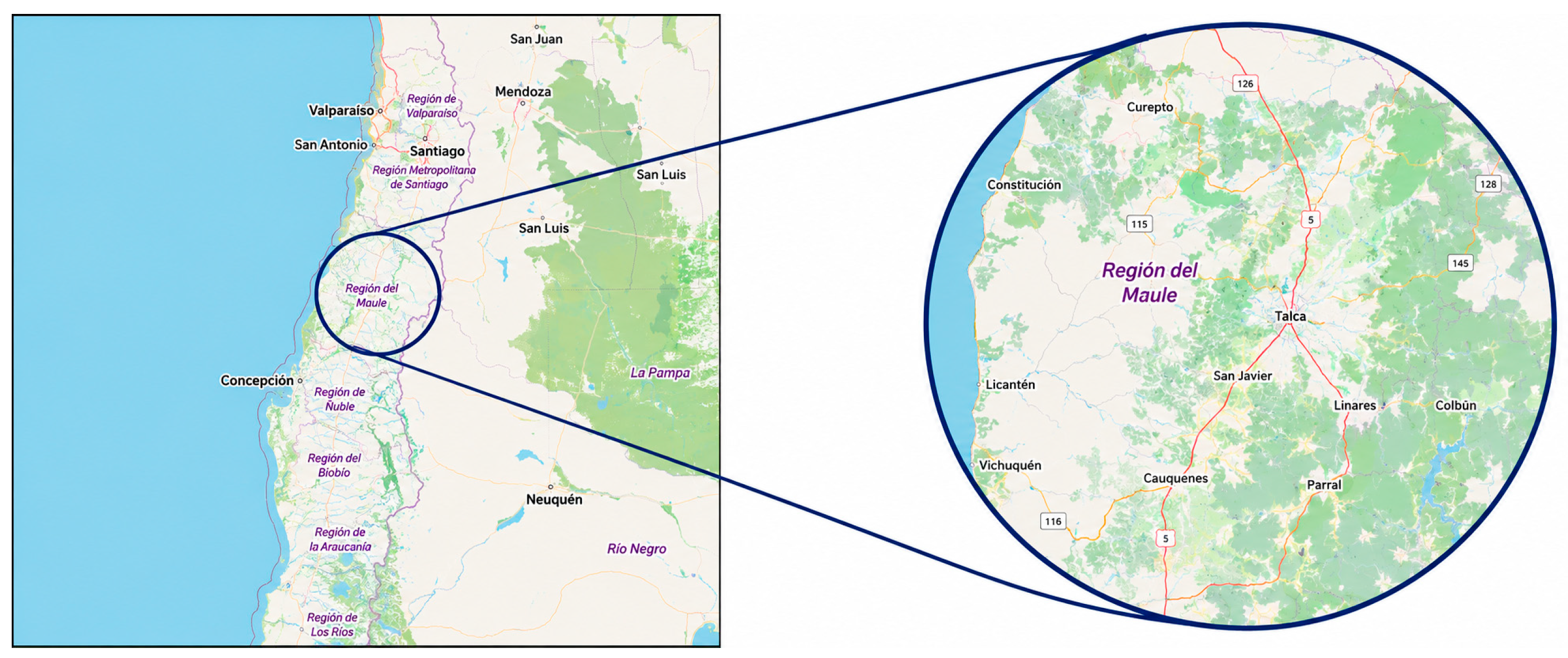
SB and HU were obtained from the microbiological culture collection of the Food Fermentation Laboratory (Pontifical Catholic University of Chile). Both strains were originally isolated from grapes harvested in the Maule Region, Chile (Figure 1), and identified by partial sequencing of the 26S rDNA [12].
Strain identification was performed through sequencing of the D1/D2 domain of the 26S rRNA gene, and sequence similarity (≥99%) was confirmed by comparison with reference sequences available in the NCBI GenBank database (Bethesda, MD, USA), ensuring reliable species-level taxonomic assignment. Considering the known intraspecific variability among NSY, the metabolic behavior observed in this study should be interpreted as associated with the evaluated inoculation treatments rather than as representative of the species as a whole.
The yeasts were maintained in YMA (Yeast and mould agar) medium (Oxoid Ltd., Hampshire, UK) and freeze-dried for stabilization and storage prior to inoculation [13]. Cultures were grown in Sabouraud broth (Biokar Diagnostics, France) at 28 °C for 24 h, centrifuged (5660× g; 5 min), washed with 0.9% saline solution, frozen at −40 °C for 48 h, and freeze-dried (Liobras L108, São Carlos, Brazil) at −50 °C and 100 µm Hg for 24 h. The dried yeast was stored at room temperature, protected from light, until use.

2.2. Preliminary Evaluation of Fermentative Viability

2.2.1. Activation of Yeast Strains

Lyophilized Starmerella bacillaris (SB) and Hanseniaspora uvarum (HU) cultures were rehydrated in sterile saline solution (0.9% w/v) at 25 °C for 30 min. Cell suspensions were then streaked onto YMA agar plates and incubated at 28 °C for 24 h to obtain isolated colonies [13]. Single colonies were transferred into 100 mL of Sabouraud broth (and incubated under the same temperature conditions for 24 h. Cell concentration was initially estimated spectrophotometrically at 600 nm (Optizen POP, Mecasys, Daejeon, Republic of Korea) and adjusted to approximately 107 cells/mL and verified by direct counting using a Neubauer hemocytometer. Cultures were centrifuged (6810× g, 15 min), and the recovered biomass was washed and resuspended in sterile saline solution prior to inoculation.
Synthetic-medium fermentations were conducted at 18 °C until density stabilization was observed for 48 h. The synthetic fermentation medium contained 75 g/L glucose and 75 g/L fructose, corresponding to 150 g/L total fermentable sugars. Before fermentation, final inocula were standardized by OD600 and verified by direct counting using a Neubauer hemocytometer (Marienfeld Superior, Lauda-Königshofen, Germany).

2.2.2. Synthetic Fermentation Medium

A synthetic medium was used as a simplified fermentation system prior to grape must experiments to evaluate fermentative performance under controlled conditions. The medium contained yeast extract at 7 g/L as a complex nutrient source, supplying assimilable nitrogen, amino acids, peptides, vitamins, minerals, and growth factors required to support yeast metabolism. Glucose and fructose were added as carbon sources at 75 g/L each, corresponding to 150 g/L total fermentable sugars, and the pH was adjusted to 3.5 [19]. After sterilization at 121 °C for 15 min, the pH was readjusted to 3.5 using 1 M HCl. Fermentations were performed in triplicate, and final ethanol concentration, ethanol yield, and residual sugar were determined at the end of fermentation.

2.3. Laboratory-Scale Fermentations

Grape Must Preparation and Fermentation Conditions

Sauvignon Blanc grapes harvested in the Casablanca Valley, Chile, were used for laboratory-scale fermentations. Grapes were manually cleaned, pressed, and filtered through fine mesh to remove pomace [20]. Initial must characteristics were density 1.088 g/mL, 21.1 °Brix, and expected alcohol content (EAC) 12.01%. Yeast assimilable nitrogen (YAN) was adjusted to 250 mg/L using diammonium phosphate (DAP; Sigma-Aldrich, St. Louis, MO, USA), while potassium metabisulfite was added at 30 mg/L to reduce the native microbial load. Thermal sterilization was intentionally avoided to preserve the native volatile composition of the must. Free SO2 was verified by titration (HI 84500, Hanna Instruments, Woonsocket, RI, USA). This treatment was intended to reduce, but not completely eliminate, the indigenous microbiota naturally present in the must.
Monoculture fermentation was conducted in 500 mL Erlenmeyer flasks equipped with airlocks and sampling probes. Each flask contained must inoculated with SB or HU at a final concentration of 106 CFU/mL. Saccharomyces cerevisiae (Actiflore® 1118, Laffort, Bordeaux, France) was used as control and inoculated according to the manufacturer’s instructions at an equivalent final concentration. Flasks were aerated for 2 min and incubated at 15 °C under orbital agitation (200 rpm; JSSI-100C, JS Research, Gongju-si, Republic of Korea) [20]. Fermentation progress was monitored by density changes throughout the process. Mid-fermentation samples were plated on YMA agar to verify the absence of contaminant colonies, although no quantitative microbiological monitoring was performed.

2.4. Microvinification Setup

Two fermentation strategies were evaluated: monoculture and sequential inoculation. Sauvignon Blanc grapes from the Casablanca Valley were used (Figure 2). Grapes were visually inspected to exclude Botrytis sp. contamination, refrigerated at 15 ± 1 °C, destemmed, and pressed. Potassium metabisulfite (Sigma-Aldrich, St. Louis, MO, USA) was added to obtain 10–20 ppm free sulfite, and YAN was adjusted to 250 mg/L using DAP. Musts were clarified for 24 h at 4 ± 1 °C until turbidity reached 120–150 NTU. Fermentations were conducted in 15 L glass fermenters containing 10 L of must equipped with fermentation locks [20].
For monoculture fermentation, SB or HU were inoculated at 106 CFU/mL, and fermentations were maintained at 18 ± 1 °C. In sequential fermentations, SB or HU were inoculated first at the same concentration, followed by SC inoculation at approximately 50% sugar depletion, also at 106 CFU/mL. Fermentation completion was defined as stable density for more than 48 h.

2.5. Analytical Methods

2.5.1. Fermentation Parameters

All determinations were performed in triplicate using independent fermentation replicates. Ethanol was quantified by HPLC (Agilent Infinity 1260, Agilent Technologies, Waldbronn, Germany) using an Aminex HPX-87H column (Bio-Rad Laboratories, Hercules, CA, USA).coupled to diode array detection at 210 nm. The mobile phase consisted of 0.005 M H2SO4 at 0.6 mL/min, with column temperature maintained at 55 °C and injection volume of 20 µL. Quantification was performed using external calibration curves (R2 ≥ 0.99). Glucose, fructose, glycerol, and organic acids were determined using commercial enzymatic kits (Megazyme, Bray, Ireland) with spectrophotometric detection at 340 nm. These assays were selected because enzymatic methods are recognized and validated for wine analysis by the OIV, provide high compound specificity, and are suitable for reliable quantification in wine matrices.

2.5.2. Volatile Compound Analysis and Multivariate Evaluation

Volatile compounds were extracted in 20 mL headspace vials containing 3 mL of sample and 1 mL of saturated NaCl solution. Samples were incubated at 50 °C for 10 min under stirring at 300 rpm and extracted using a DVB/CAR/PDMS SPME fiber (50/30 µm). GC–MS analysis was performed using a Thermo Triplus 1310 gas chromatograph coupled to an ISQ LT mass spectrometer equipped (Thermo Fisher Scientific, Waltham, MA, USA) with an RTX-5MS column (30 m × 0.25 mm × 0.25 µm; Restek, Bellefonte, PA, USA).). Helium was used as the carrier gas at a constant flow rate of 1.0 mL/min. The oven program started at 40 °C for 5 min, increased at 10 °C/min to 250 °C, and was maintained at 250 °C for 10 min. Compounds were identified using Chromeleon 7.3 software (version 7.3, Thermo Fisher Scientific, Waltham, MA, USA) and the NIST 2017 library. Because no internal standard was used, volatile compound data were expressed as relative peak area percentages and interpreted exclusively as comparative semi-quantitative profiles among treatments rather than as absolute concentrations [21].
Principal component analysis (PCA) was performed using Minitab Statistical 21 based on the correlation matrix of volatile compounds showing relative abundance >3%, selected to retain the dominant aroma-related variables and reduce noise from minor peaks. Components with eigenvalues >1 were retained according to the Kaiser criterion, and the first two principal components explaining at least 80% of total variance were used for graphical representation.

2.6. Sensory Evaluation

A trained sensory panel (n = 11; 25–50 years old), previously trained according to ISO 8586:2012 [22] and OIV 332A/2009 [23] standards, evaluated wines under controlled conditions (22 ± 2 °C) using ISO tasting glasses. Descriptive attributes included aromatic intensity, fruity, floral, tropical notes, acidity, and overall balance, using a 9-point structured scale. Samples were evaluated in duplicate under randomized coded conditions [24]. All panelists participated voluntarily and provided informed consent.

2.7. Statistical Analysis

All experiments were performed in triplicate under a completely randomized design. Data was analyzed by ANOVA followed by Tukey’s HSD test (p ≤ 0.05) using Statgraphics Centurion XIX (version 15.2.05; Statgraphics Technologies, The Plains, VA, USA). Sensory variables were analyzed independently using the same statistical model, and results are expressed as mean ± standard deviation.

3. Results and Discussion

3.1. Fermentation in Synthetic Glucose–Fructose Medium

The oenological potential of native NSY from the Maule Valley (Chile), specifically SB and HU, was initially evaluated in synthetic glucose/fructose medium and compared with the SC (control). Fermentations were performed under controlled conditions to assess fermentative behavior prior to grape must experiments.
Table 1 summarizes the fermentative performance of SB and HU compared with SC in synthetic glucose/fructose medium. Neither SB nor HU fully consumed the available sugars, reaching approximately 90% utilization, whereas SC consumed more than 99.9%. This incomplete substrate consumption was reflected in final ethanol concentrations: SC reached 9.16% v/v, HU 8.50% v/v, and SB 4.25% v/v. These results are consistent with previous reports describing the limited fermentative capacity of several non-Saccharomyces yeasts under defined conditions [2,8].
Ethanol yields further highlighted differences among treatments. SC exhibited a yield of 0.48 g ethanol/g sugar, HU 0.44 g/g, whereas SB showed a markedly lower yield of 0.22 g/g. In practical terms, HU and SC required approximately 2.3 g of fermentable sugar to produce 1 g of ethanol, while SB required nearly 4.5 g.
The reduced conversion efficiency observed in SB suggests a distinct carbon allocation pattern, potentially involving alternative metabolic pathways beyond ethanol production. This behavior has been previously associated with Starmerella bacillaris, particularly its fructophilic metabolism and redox-balancing mechanisms linked to glycerol formation and biomass development [25]. Although metabolic fluxes were not directly quantified in the present study, the observed trend is consistent with the metabolic profile commonly described for this species.
The simplified composition of the synthetic medium, which lacks the complexity of grape must (including organic acids, micronutrients, and buffering capacity), likely contributed to the metabolic differences observed among strains. Therefore, the results should be interpreted as strain responses under controlled conditions rather than as direct predictors of winemaking performance [10].
The residual sugar pattern observed in synthetic medium should be interpreted within the simplified nature of this system. Although SB left approximately 10% of the fermentable sugars unconsumed, this result reflects its performance under a nutritionally restricted model medium and should not be directly extrapolated to grape must fermentation. The synthetic medium was used as a preliminary comparative system rather than as a predictor of finishing capacity in natural must.
For HU, the relatively high ethanol yield despite incomplete sugar consumption suggests fermentative efficiency closer to SC under the evaluated conditions, although fermentation completion may have been limited by species-specific tolerance during later stages. Overall, these findings agree with previously reported trends for both species while highlighting the variability associated with native isolates.
The observed differences in carbon-to-ethanol conversion indicate treatment-associated metabolic tendencies whose practical relevance should be interpreted within the scope of the synthetic fermentation system.
The marked difference between SB performance in synthetic medium and Sauvignon Blanc must should be interpreted within the limitations of the simplified screening system. Unlike grape must, the synthetic medium did not reproduce the full nutritional and physicochemical complexity of the natural matrix, including organic acids, vitamins, minerals, amino acid diversity, micronutrients, phenolic compounds, buffering capacity, and possible microbial interactions. Therefore, the lower ethanol production observed for SB in synthetic medium should not be considered directly predictive of its behavior in grape must, but rather as an indication of its response under a simplified and nutritionally restricted fermentation system.

3.2. Laboratory-Scale Fermentations (Monoculture)

Following the preliminary tests in synthetic medium, a laboratory-scale evaluation was performed using Sauvignon Blanc must from the Casablanca Valley (1.097 g/mL; 22.9 °Brix) under monoculture conditions. The results are presented in Table 2.
Laboratory-scale fermentations revealed differentiated behavior relative to the control and between NSY treatments. SB exhibited performance partially comparable to SC in several parameters. Residual sugar concentrations remained below 2.6 g/L for both treatments, consistent with dry wine classification. Likewise, ethanol yield (Yp/s) did not differ significantly between SB (0.374 g/g) and SC (0.368 g/g). Glycerol concentrations were also comparable, reaching 10.61 g/L for SB and 11.27 g/L for SC.
These glycerol values were slightly above the range commonly reported for S. cerevisiae under standard winemaking conditions (typically 5–10 g/L), suggesting that laboratory fermentation conditions may have favored glycerol accumulation [19,20].
No significant differences were detected in tartaric or malic acid concentrations. However, the SB-inoculated treatment displayed distinct kinetic characteristics, with a lower specific growth rate (0.014 h−1) than SC (0.021 h−1), resulting in a longer fermentation time (20 versus 13 days). Although ethanol yield remained similar, final ethanol concentration was slightly lower in the SB-inoculated treatment (13.04% v/v) than in SC (13.49% v/v), indicating moderate ethanol reduction under the evaluated conditions [5]. The higher ethanol production observed in Sauvignon Blanc must compared with synthetic medium may reflect the combined influence of matrix complexity, laboratory-scale fermentation conditions, and potential microbial interactions under non-sterile must conditions [10].
Therefore, the near-complete sugar consumption observed in the SB-inoculated laboratory-scale treatment should be interpreted cautiously and may reflect the combined influence of grape must complexity, oxygen transfer under orbital agitation, and possible microbial interactions under non-sterile conditions.
The SB-inoculated treatment also showed higher acetic acid concentrations (0.66 g/L) than SC (0.20 g/L). Although this value approached commonly reported sensory thresholds, it remained within acceptable enological limits and may reflect differences in oxygen transfer linked to the higher surface-to-volume ratio of laboratory fermenters. HU showed a specific growth rate (0.019 h−1) close to SC and completed fermentation in 15 days. Residual sugar remained slightly higher than in the control (4.7 versus 2.5 g/L), while glycerol production was markedly lower (5.85 versus 11.27 g/L), suggesting a different carbon allocation pattern under the evaluated laboratory conditions [6,10,11].
It should be noted that laboratory-scale fermentations were performed under orbital agitation at 200 rpm. This condition may have increased oxygen transfer compared with static or winery-like fermentations, potentially influencing redox-related metabolism and contributing to differences in glycerol and acetic acid production. Therefore, laboratory-scale results should be interpreted as responses obtained under controlled screening conditions rather than as direct predictors of winery-scale behavior.
Considering the freshness-oriented style of Sauvignon Blanc, moderate glycerol production by HU may remain compatible with the expected sensory profile of this wine [26].

3.3. Microvinifications (Sequential and Monoculture)

For microvinification, Sauvignon Blanc must from Casablanca Valley (central zone of Chile) was used (Figure 2), and their physicochemical characteristics are presented in Table 3.
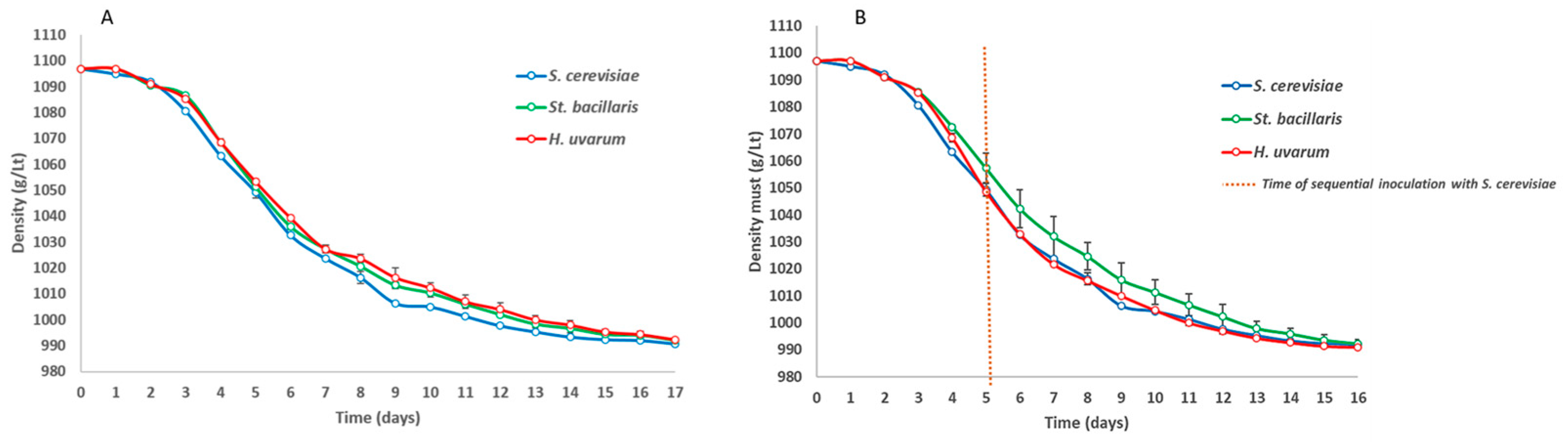
The enological behavior of SB and HU was evaluated under monoculture and sequential fermentations using must from the Casablanca Valley. Fermentation trends are presented considering the experimental conditions applied, including controlled inoculation without dynamic microbiological monitoring. Figure 3 shows the evolution of substrate consumption, monitored through density changes over time, for each yeast strain and fermentation strategy.
Microvinification trials showed generally similar fermentation kinetics among SB, HU, and the SC (control) under both monoculture and sequential inoculation strategies (Figure 3). In monoculture fermentations, all treatments exhibited a progressive density decline, reaching fermentation completion between 16 days (SC and HU) and 18 days (SB).
These fermentation times differed from those observed at laboratory scale, likely reflecting the combined influence of temperature, fermentation volume, and matrix complexity. Microvinifications were conducted at 18 °C, whereas laboratory fermentations were performed at 15 °C, and even moderate temperature increases are known to accelerate yeast metabolic activity.
Under these conditions, SB and HU displayed kinetic profiles broadly comparable to SC when fermentable sugars and nitrogen were not limiting, although this does not imply equivalent metabolic behavior.
Sequential inoculation did not substantially modify the overall fermentation pattern compared with monoculture fermentations. Comparable effects of inoculation strategy have also been described in fruit wine fermentations involving non-Saccharomyces yeasts, where simultaneous and sequential inoculations generated distinct fermentation and quality outcomes [27]. Approximately 50% of sugars were consumed by day 5, and fermentation completion occurred within a similar timeframe, indicating that prior NSY activity did not markedly delay sugar depletion after SC inoculation.
Overall, both inoculation strategies maintained stable fermentation progression during microvinification, suggesting that the evaluated inoculation treatments were compatible with sustained fermentation development and did not appear to compromise fermentation completion within the tested system.
Ethanol production during microvinification varied according to fermentation strategy (Table 4).
In monoculture fermentations, SB- and HU-inoculated treatments showed lower ethanol concentrations than the S. cerevisiae control (11.90% and 12.50% v/v versus 13.50% v/v, respectively), accompanied by lower ethanol yields (0.410 g/g for SB and 0.429 g/g for HU versus 0.471 g/g in SC). These values are consistent with previous reports describing lower ethanol formation by SB under monoculture conditions, frequently associated with fructophilic metabolism and alternative carbon allocation toward glycerol and biomass [28,29].
For HU, ethanol production remained closer to the control than commonly expected for non-Saccharomyces species, supporting the variability previously reported among HU isolates, particularly among native grape-associated strains adapted to sugar-rich fermentation matrices [30,31,32]. In sequential inoculation, ethanol concentrations converged toward control values (13.68% and 13.50% v/v for SB–SC and HU–SC, respectively), consistent with fermentation completion after S. cerevisiae became metabolically predominant, partially masking the contribution of early NSY metabolism [33,34]. Overall, these results indicate that ethanol modulation by SB and HU during microvinification depended primarily on fermentation strategy, with the clearest differences observed in monoculture fermentations. Similar strategy-dependent responses have been reported in kiwi wine fermentations, where simultaneous and sequential co-fermentations with non-Saccharomyces yeasts generated distinct physicochemical and quality-related profiles [27]. Consistently, studies on white dry wine fermentations using Torulaspora delbrueckii have shown that co-inoculation and successive fermentation can lead to different physicochemical and sensory outcomes. In particular, successive fermentation followed by Saccharomyces inoculation after partial alcohol production improved wine quality, aroma complexity, and taste balance, further supporting inoculation timing as a key determinant of non-Saccharomyces performance [35].
Organic acid and glycerol production further illustrated treatment-dependent metabolic differences during microvinification (Table 4).
In monoculture fermentations, SB and HU resulted in lower acetic acid concentrations (0.40 and 0.30 g/L, respectively) than their corresponding sequential fermentations (0.50 g/L in both SB–SC and HU–SC treatments). Although all values remained below commonly reported sensory perception thresholds (0.7–0.9 g/L), the increase observed during sequential inoculation suggests that fermentation progression and yeast succession may influence acetate accumulation within the evaluated system.
While previous studies have reported reductions in volatile acidity with certain sequential or co-inoculation strategies [34,36], the present results indicate that this response remains strongly dependent on strain combination and inoculation timing.
Lactic acid concentrations showed only minor variation among treatments, suggesting limited involvement of non-Saccharomyces strains in major acid transformations in this experimental context. Overall titratable acidity remained within the typical range for Sauvignon Blanc, indicating that NSY application did not induce destabilizing shifts in acid balance.
Glycerol production also differed slightly according to fermentation strategy. The S. cerevisiae monoculture showed 7.26 g/L glycerol, whereas “SB- and HU-inoculated monocultures showed slightly lower concentrations (6.65–6.69 g/L). Sequential fermentations showed similar values (6.51–6.74 g/L), indicating limited variation associated with inoculation strategy at this scale.
A consistent difference was observed between scales, with laboratory fermentations showing higher glycerol concentrations than microvinifications. This was likely due to differences in temperature, agitation, oxygen transfer, and surface-to-volume ratio, which can influence redox balance and glycerol synthesis. Overall, glycerol production appeared more dependent on fermentation conditions and scale than on inoculation treatment alone.

3.4. Volatile Compounds and Aromatic Differentiation During Microvinification

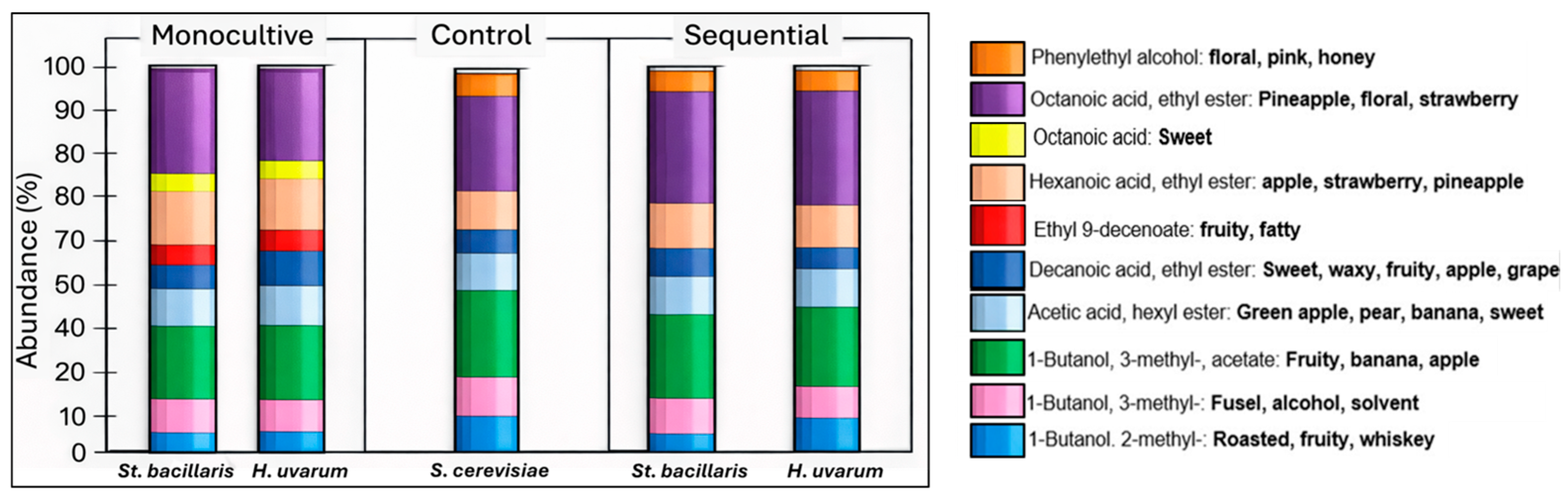
Given the differences observed in fermentation performance and metabolite production, volatile compound formation was further evaluated to assess its potential contribution to aroma differentiation. Since volatile compounds were expressed as relative peak area percentages, the volatile analysis was interpreted as a comparative profiling approach rather than as absolute quantification. Wine aroma results from the interaction of multiple volatile compounds derived from both grape matrix composition and yeast-related metabolism, whose relative abundance contributes to aromatic quality and sensory identity. Figure 4 summarizes the predominant volatile compounds detected in Sauvignon Blanc microvinifications from the Casablanca Valley.
Volatile analysis revealed differentiated aromatic tendencies associated with fermentation strategy and inoculation treatment. Monoculture treatments inoculated with SB and HU showed higher relative abundances of medium-chain ethyl esters, particularly ethyl hexanoate and ethyl octanoate, compounds commonly associated with fruity and floral descriptors in Sauvignon Blanc wines [5,6,7,8,11,15]. These esters are formed through the condensation of ethanol with medium-chain fatty acids and are commonly associated with yeast-related metabolic activity during fermentation [2,28].
Their enrichment in NSY-inoculated monocultures suggests differences in ester-forming patterns within the evaluated system, consistent with previous reports describing altered ester production in fermentations involving NSY compared with SC [37]. Similar observations have been reported in low-alcohol pear beverages, where non-Saccharomyces yeasts exhibited a higher capacity for acetate ester production than S. cerevisiae, contributing to enhanced sensory complexity [38]. Aromatic differentiation among treatments was particularly evident in monoculture fermentation, where NSY-inoculated treatments showed more distinct volatile profiles relative to the SC control. This behavior is consistent with recent evidence showing that indigenous Saccharomyces and non-Saccharomyces isolates can differentially modulate wine volatile composition [10,15,37], particularly through the formation of esters and other aroma-active compounds associated with fruity and floral sensory attributes [39].
This pattern is consistent with the expected overlap between early NSY-associated activity and the subsequent prevalence of SC-related fermentation traits in sequential fermentations, whereby part of the ester profile generated during the initial fermentation stages may remain detectable after fermentation completion.
Although yeast population dynamics were not monitored, these volatile tendencies suggest that early metabolic activity associated with the inoculation treatments may have contributed to volatile differentiation during sequential fermentation.
Overall, the volatile profile indicates that SB and HU inoculation treatments were associated with changes in ester formation during fermentation. These results support the view that aroma modulation in “fermentations involving NSY may emerge from the interaction between microbial metabolism, inoculation strategy, matrix conditions, and fermentation dynamics” [39]. Similar effects have been reported in low-alcohol pear beverages, where non-Saccharomyces yeasts showed a higher capacity for acetate ester production than S. cerevisiae, leading to enhanced sensory complexity. Interestingly, pear variety exerted a stronger influence than yeast species on key volatile compounds and aroma characteristics, supporting the idea that aroma modulation by non-Saccharomyces yeasts is strongly matrix-dependent [38].

3.5. Sensory–Chemical Correlation

PCA

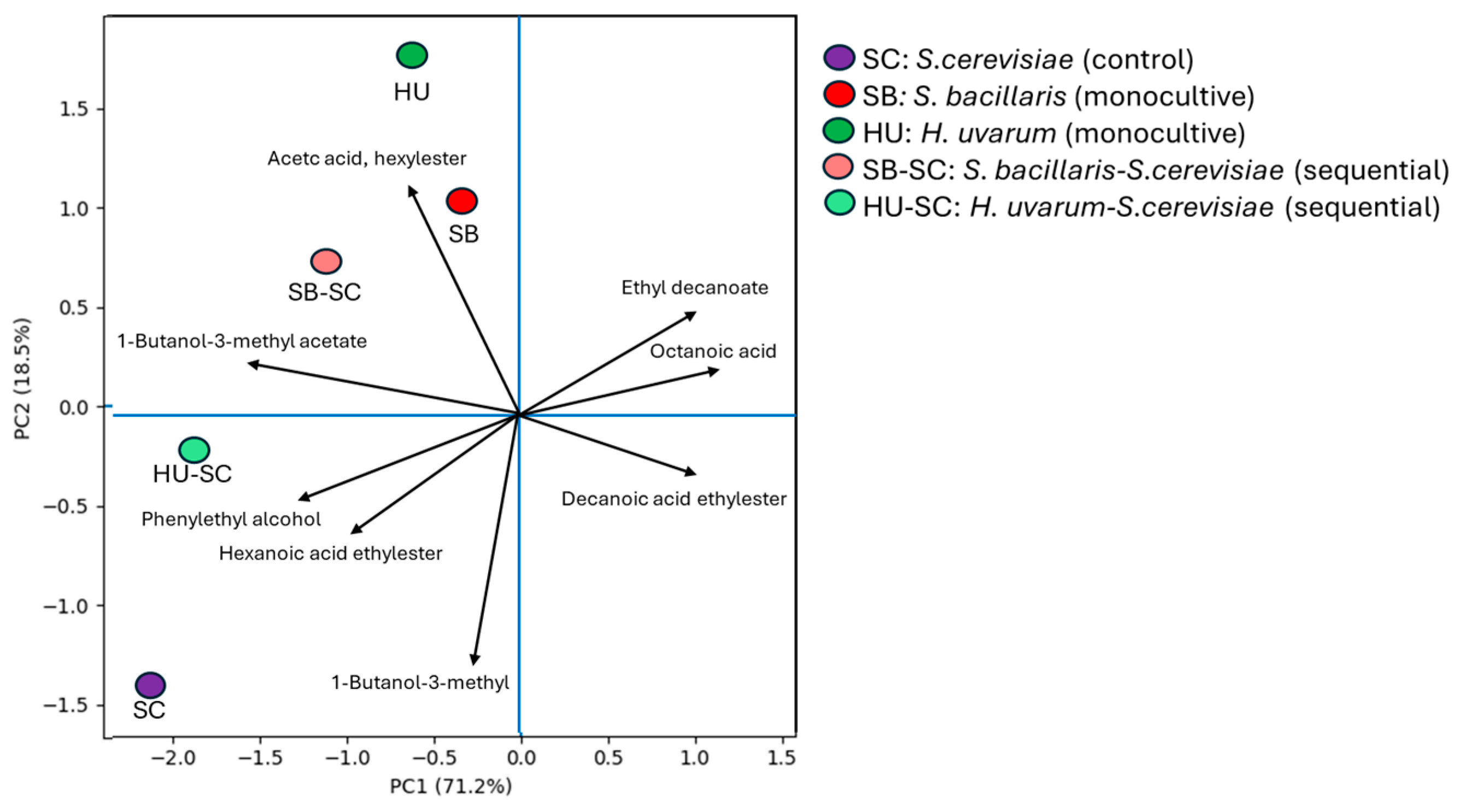
To explore whether volatile differentiation among treatments followed consistent multivariate trends, principal component analysis (PCA) was applied to the dominant aroma-related compounds. Two principal components explained 89.7% of the total variance (Figure 5), with PC1 mainly associated with ethyl decanoate and PC2 with isoamyl alcohol.
The PCA provided an exploratory overview of relationships among dominant volatile compounds and fermentation treatments, including inoculation treatment and fermentation strategy. NSY-inoculated treatments (SB and HU, under both monoculture and sequential strategies) clustered in regions associated with medium-chain ethyl esters, compounds commonly related to fruity and floral aroma descriptors and widely reported in fermentations involving NSY. This interpretation is consistent with recent evidence showing that indigenous Saccharomyces and non-Saccharomyces isolates can produce differentiated volatile profiles, including ester compounds associated with fruity and floral sensory attributes [5,6,7,8,39].
In contrast, the SC monoculture showed a tendency to associate with higher alcohol-related variables, consistent with the stronger fermentative activity typically observed for this species. Sequential fermentations generally occupied intermediate positions between NSY-inoculated monocultures and the SC control, consistent with the expected overlap between early NSY-associated activity and subsequent SC-related fermentation traits. This intermediate positioning suggests that part of the volatile signature generated during the initial fermentation stages may have remained detectable after fermentation completion. Overall, PCA trends were coherent with univariate volatile analysis and support the existence of treatment-associated differences in aromatic expression (Figure 5).

3.6. Sensory Analysis

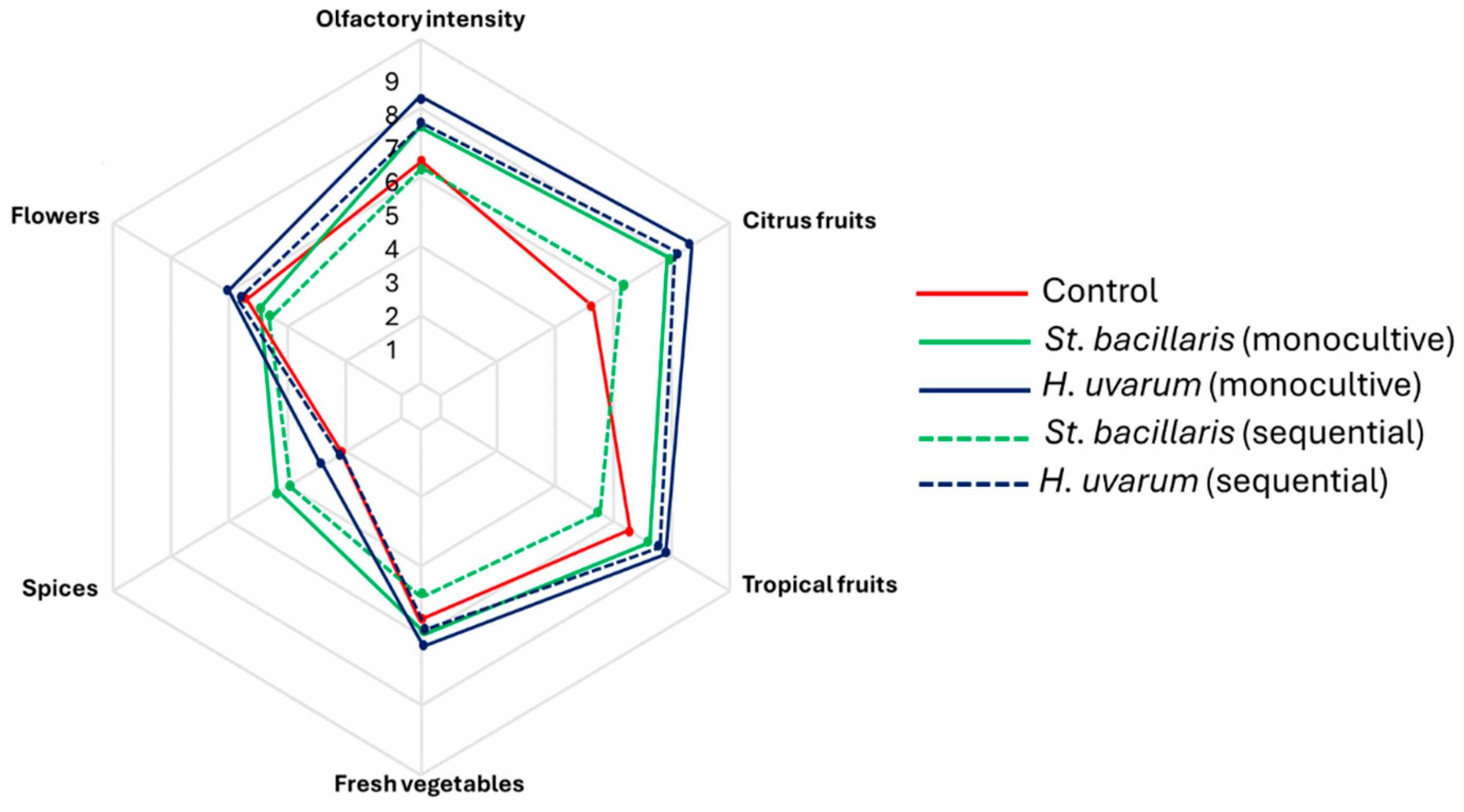
Sensory evaluation performed by a trained panel (n = 11) revealed that wines obtained from SB-inoculated monoculture and HU-inoculated treatments under both monoculture and sequential strategies exhibited significantly higher aromatic intensity than the SC control (p ≤ 0.05). HU-inoculated treatments were predominantly associated with citrus, fresh tropical fruit, and floral descriptors, whereas the SB-inoculated treatment showed a profile characterized by spicy nuances accompanied by citrus and tropical notes (Figure 6).
These sensory trends were broadly consistent with the volatile composition observed (Figure 5), where NSY-inoculated treatments displayed higher relative abundances of medium-chain ethyl esters, including ethyl octanoate, ethyl decanoate, and hexyl acetate, compared with the SC control. These compounds are widely recognized as being associated with fruity and floral aromas in white wines. Because volatile compounds were expressed as relative peak area percentages rather than absolute concentrations, odor activity values could not be calculated and direct comparison with perception thresholds was not performed. Nevertheless, the agreement between the relative ester profile and the sensory descriptors reported by the trained panel supports a qualitative association between volatile differentiation and aromatic perception under the evaluated conditions, consistent with previous studies reporting sensory modulation in wines fermented with non-Saccharomyces yeasts and sequential inoculation strategies [6,7,8,10]. Collectively, these findings indicate that NSY-inoculated treatments were associated with differences in aromatic perception, particularly in fruity and floral attributes, with effects modulated primarily by fermentation strategy.

4. Limitations

The present study should be interpreted within the scope of the experimental conditions applied. First, although inoculation conditions were designed to support the establishment of the selected non-Saccharomyces strains, dynamic microbiological monitoring was not performed during fermentation; therefore, the persistence and relative contribution of inoculated and indigenous yeast populations could not be fully resolved throughout the process.
Second, fermentations were conducted at laboratory and microvinification scales in controlled systems that do not fully reproduce industrial winery environments, particularly with respect to oxygen transfer, vessel geometry, and process dynamics.
Third, the study was based on Sauvignon Blanc must from a single harvest season within a specific experimental framework, which limits direct extrapolation to other vintages, grape varieties, or production regions. Recent evidence also suggests that vineyard- and winery-associated yeast communities may vary substantially across vintages, vineyards, and winemaking conditions, with no consistent non-Saccharomyces strains detected across fermentations. Therefore, the behavior of native SB and HU isolates observed here should not be interpreted as evidence of a stable microbial terroir signature, but rather as context-specific performance under the evaluated conditions [40].
Consequently, the results should be interpreted as context-specific evidence of strain behavior in controlled fermentation systems rather than as broadly generalizable responses across winemaking systems. These limitations should be considered when extrapolating the present findings to industrial winemaking scenarios.
Because dynamic microbiological monitoring was not performed, the implantation, persistence, and dominance of the inoculated strains throughout fermentation could not be confirmed. Therefore, a potential contribution of residual indigenous microbiota cannot be ruled out. The observed fermentative, chemical, volatile, and sensory differences should be interpreted as treatment-associated responses under the evaluated inoculation conditions rather than as definitive evidence of exclusive metabolic activity by SB or HU. Future studies should include culture-dependent and/or molecular monitoring to confirm implantation dynamics and quantify the relative contribution of inoculated and indigenous yeast populations.

5. Conclusions

This study provides a multi-scale exploratory evaluation of two Chilean isolates of Starmerella bacillaris (SB) and Hanseniaspora uvarum (HU) under monoculture and sequential fermentation strategies in Sauvignon Blanc must instead of under controlled experimental settings. The results suggest that strain-associated responses were influenced by fermentation design and scale, with differences observed among synthetic, laboratory, and microvinification systems.
In synthetic medium, both strains showed incomplete sugar consumption and lower ethanol yields than SC, indicating differentiated metabolic behavior under simplified conditions instead of confirming differentiated metabolic behavior in a simplified system. At laboratory scale, both strains completed fermentation in monoculture, with SB showing a moderate reduction in ethanol production and HU producing lower glycerol than the control.
During microvinification, NSY-inoculated monocultures showed lower ethanol concentrations than SC, whereas sequential fermentations tended to converge toward control values while retaining some treatment-associated aromatic differentiation. Volatile and sensory analyses indicated that NSY treatments were associated with higher relative abundances of medium-chain ethyl esters related to fruity and floral attributes.
Overall, SB and HU may represent promising native biotechnological resources for aroma modulation in Sauvignon Blanc. However, their practical performance “appears to depend strongly on fermentation strategy and process conditions. Further studies including molecular monitoring, multiple vintages, and broader production conditions are required to more precisely assess their industrial applicability.

Author Contributions

Conceptualization, C.C.D.L., A.U., W.F. and S.B.-V.; methodology, C.C.D.L., A.U., W.F. and S.B.-V.; software, S.B.-V.; validation, C.C.D.L. and S.B.-V.; formal analysis, S.B.-V., C.C.D.L., W.F. and R.B.; investigation, S.B.-V. and C.C.D.L.; data curation, S.B.-V.; writing—original draft preparation, C.C.D.L. and R.B.; writing—review and editing, S.B.-V.; supervision, A.U. and S.B.-V.; project administration, A.U. and W.F.; funding acquisition, A.U. and W.F. All authors have read and agreed to the published version of the manuscript.

Funding

This research was funded by the Agencia Nacional de Investigación y Desarrollo (ANID), Chile, through the FONDEF IDeA Program, grant number ID19I10340.

Institutional Review Board Statement

Human participation in this study was limited exclusively to sensory evaluation of wine samples by adult volunteer participants under standard enological tasting conditions. No clinical intervention, biological sampling, collection of sensitive personal data, or inclusion of vulnerable populations was involved. All participants were informed about the nature and purpose of the study and provided written informed consent prior to participation. Under the Chilean legal framework, Law No. 20.120 establishes that scientific research involving human beings requires ethical review when biomedical intervention or procedures affecting the physical or psychological integrity of participants are involved. Since the present study consisted solely of voluntary sensory evaluation under minimal-risk conditions, without biomedical intervention or collection of sensitive personal data, formal approval by an Ethics Committee (Comité Ético-Científico) was not required under the applicable national legislation.

Informed Consent Statement

Informed consent was obtained from all subjects involved in the study.

Data Availability Statement

The data presented in this study are available on request from the corresponding author due to the need for additional harmonization, organization, and curation of primary datasets generated across multiple institutions and analytical laboratories before public repository deposition.

Acknowledgments

The authors would like to thank the National Agency for Research and Development of Chile (ANID), FONDEF IDeA Project ID19I10340, and Viña La Recova and Viña Miguel Torres for providing grape berries for the experiments.

Conflicts of Interest

The authors declare no conflicts of interest.

Abbreviations

The following abbreviations are used in this manuscript:
NSYNon-Saccharomyces Yeasts
SCSaccharomyces cerevisiae
SBStarmerella bacillaris
HUHanseniaspora uvarum

References

  1. Maicas, S.; Mateo, J.J. The life of Saccharomyces and non-Saccharomyces yeasts in drinking wine. Microorganisms 2023, 11, 1178. [Google Scholar] [CrossRef]
  2. Wang, X.; Fan, G.; Peng, Y.; Xu, N.; Xie, Y.; Zhou, H.; Liang, H.; Zhan, J.; Huang, W.; You, Y. Mechanisms and effects of non-Saccharomyces yeast fermentation on the aromatic profile of wine. J. Food Compos. Anal. 2023, 124, 105660. [Google Scholar] [CrossRef]
  3. Englezos, V.; Rantsiou, K.; Cravero, F.; Torchio, F.; Ortiz-Julien, A.; Gerbi, V.; Cocolin, L. Volatile and sensory profiles of wines from Nebbiolo grapes fermented with the flocculent Starmerella bacillaris (synonym Candida zemplinina) and Saccharomyces cerevisiae. Food Microbiol. 2019, 82, 118–126. [Google Scholar]
  4. Peris, M.L. Characterization and Improvement of Non-Conventional Saccharomyces Yeasts to Solve New Challenges in the Wine Industry: Application of Omics Technologies. Ph.D. Thesis, Universitat de València, Valencia, Spain, 2021. [Google Scholar]
  5. Chen, Y.; Wang, C.; Zhang, Z.; Wu, C.; Song, A.; Wu, Y. Enhancing fruity aroma of Cabernet Sauvignon wine by mixed culture fermentation with Schizosaccharomyces japonicus, Saccharomyces cerevisiae, and Starmerella bacillaris. Food Microbiol. 2025, 132, 104846. [Google Scholar] [CrossRef]
  6. Wang, X.; Chen, J.; Ge, X.; Fu, X.; Dang, C.; Wang, J.; Liu, Y. Sequential fermentation with indigenous non-Saccharomyces yeasts and Saccharomyces cerevisiae for flavor and quality enhancement of Longyan dry white wine. Food Biosci. 2023, 55, 102952. [Google Scholar] [CrossRef]
  7. Nzoyisaba, D.; Yu, Y.; Liu, J.; Ndayishimiye, L.; Zhang, X. Improvement of flavor and quality of chardonnay wine by using co-fermentation of non-Saccharomyces yeasts and Saccharomyces cerevisiae. World J. Microbiol. Biotechnol. 2025, 41, 484. [Google Scholar] [CrossRef]
  8. Sánchez-Suárez, F.; Martínez-García, R.; Peinado, R.A. Climate Change Adaptation in Winemaking: Combined Use of Non-Saccharomyces Yeasts to Improve the Quality of Pedro Ximénez Wines. Microorganisms 2025, 13, 1908. [Google Scholar] [CrossRef]
  9. Sekhon, K.; Sun, Q. Opportunities and challenges for low-alcohol wine. In Global Warming and the Wine Industry: Challenges, Innovations and Future Prospects; Academic Press: London, UK, 2024. [Google Scholar]
  10. Thivijan, S.; Pavalakumar, D.; Gunathunga, C.J.; Undugoda, L.J.; Manage, P.M.; Nugara, R.N.; Bandara, P.C.; Promputtha, I. Influence of indigenous non-Saccharomyces yeast strains on the physicochemical and sensory properties of wine fermentation: A promising approach to enhancing wine quality. Front. Cell. Infect. Microbiol. 2024, 14, 1495177. [Google Scholar] [CrossRef]
  11. Guan, X.; Li, Y.; Ma, W.; Zhang, J.; Tao, Y. Fermentation biological protection and aroma characteristics of selected non-Saccharomyces yeasts in wine fermentation. Food Biosci. 2025, 68, 106707. [Google Scholar] [CrossRef]
  12. Franco, W.; Benavides, S.; Valencia, P.; Ramírez, C.; Urtubia, A. Native yeasts and lactic acid bacteria isolated from spontaneous fermentation of seven grape cultivars from the Maule region, Chile. Foods 2021, 10, 1737. [Google Scholar] [CrossRef]
  13. Benavides, S.; Franco, W.; Ceppi De Lecco, C.; Durán, A.; Urtubia, A. Evaluation of indigenous Candida oleophila and Candida boidinii in monoculture and sequential fermentations: Impact on ethanol reduction and chemical profile in Chilean Sauvignon Blanc wines. J. Fungi 2022, 8, 259. [Google Scholar] [CrossRef]
  14. Fan, L.; Doucette, C.; McSweeney, M.B.; English, M.; Song, J.; Vinqvist-Tymchuk, M.; Kernaghan, G. Non-traditional yeasts from cool-climate vineyards for novel low-alcohol wines. Plants People Planet 2025, 7, 776–788. [Google Scholar] [CrossRef]
  15. Boban, A.; Vrhovsek, U.; Carlin, S.; Milanović, V.; Gajdoš, K.J.; Jurun, Z.; Mucalo, A.; Budić-Leto, I. Impact of indigenous non-Saccharomyces yeasts on early volatile fermentation metabolites of white Maraština grape must. Eur. Food Res. Technol. 2025, 251, 2125–2141. [Google Scholar] [CrossRef]
  16. Knezevic, T.; Villarreal, P.; Cubillos, F.A.; Varela, C. The Southern Hemisphere yeast frontier: From nature dwellers to accomplished fermenters. FEMS Yeast Res. 2025, 25, foaf063. [Google Scholar] [CrossRef]
  17. Serra, I.; Calderón-Orellana, A.; Hidalgo, M. Heroic viticulture in Itata Valley, Chile. In Latin American Viticulture Adaptation to Climate Change; Springer: Cham, Switzerland, 2024; pp. 215–228. [Google Scholar]
  18. Alcalá-Jiménez, M.T.; García-Martínez, T.; Mauricio, J.C.; Moreno, J.; Peinado, R.A. Influence of terroir on microbial diversity and wine volatilome. Appl. Sci. 2025, 15, 3237. [Google Scholar] [CrossRef]
  19. Zinnai, A.; Venturi, F.; Sanmartin, C.; Andrich, G. Kinetics of alcoholic fermentation by two yeast strains in high sugar concentration media. J. Bioprocess. Biotech. 2013, 3, 1–5. [Google Scholar]
  20. Pszczólkowski, P.; Ceppi De Lecco, C. Manual de Microvinificación: Guía Práctica para la Elaboración de Vinos; Ediciones Universidad Católica: Santiago, Chile, 2012. [Google Scholar]
  21. Ueta, I. Gas chromatographic determination of volatile compounds. Anal. Sci. 2022, 38, 737–738. [Google Scholar] [CrossRef]
  22. ISO 8586:2012; Sensory Analysis—General Guidelines for the Selection, Training and Monitoring of Selected Assessors and Expert Sensory Assessors. International Organization for Standardization: Geneva, Switzerland, 2012.
  23. OIV/CONCOURS 332A/2009; OIV Standard for International Wine and Spirituous Beverages of Vitivinicultural Origin Competitions. International Organisation of Vine and Wine: Paris, France, 2009.
  24. Tempere, S.; Cuzange, E.; Malak, J.; Bougeant, J.C.; De Revel, G.; Sicard, G. The training level of experts influences their detection thresholds for key wine compounds. Chemosens. Percept. 2011, 4, 99–115. [Google Scholar] [CrossRef]
  25. Paissoni, M.A.; Motta, G.; Giacosa, S.; Rolle, L.; Gerbi, V.; Río Segade, S. Mouthfeel subqualities in wines: A current insight on sensory descriptors and physical-chemical markers. Compr. Rev. Food Sci. Food Saf. 2023, 22, 3328–3365. [Google Scholar] [CrossRef]
  26. Binati, R.L.; Lemos Junior, W.J.F.; Luzzini, G.; Slaghenaufi, D.; Ugliano, M.; Torriani, S. Contribution of non-Saccharomyces yeasts to wine volatile and sensory diversity. Int. J. Food Microbiol. 2020, 318, 108470. [Google Scholar] [CrossRef]
  27. Zhang, J.; Li, P.; Zhang, P.; Wang, T.; Sun, J.; Wang, L.; Bai, Z.; Yuan, J.; Zhao, L.; Gu, S. Effects of different non-Saccharomyces strains in simultaneous and sequential co-fermentations with Saccharomyces cerevisiae on the quality characteristics of Kiwi wine. Foods 2024, 13, 2599. [Google Scholar] [CrossRef]
  28. Rodicio, R.; Heinisch, J.J. Sugar metabolism by Saccharomyces and non-Saccharomyces yeasts. In Biology of Microorganisms on Grapes, in Must and in Wine; Springer: Berlin, Germany, 2009; pp. 113–134. [Google Scholar]
  29. Su, Y.; Seguinot, P.; Sanchez, I.; Ortiz-Julien, A.; Heras, J.M.; Querol, A.; Guillamón, J.M.; Camarasa, C. Nitrogen sources and sugar concentration modulate the metabolic activities of non-Saccharomyces yeasts in wine fermentation. Food Microbiol. 2023, 110, 104172. [Google Scholar]
  30. Borren, E.; Tian, B. The important contribution of non-Saccharomyces yeasts to the aroma complexity of wine: A review. Foods 2021, 10, 13. [Google Scholar] [CrossRef]
  31. Onetto, C.; Ward, C.; Varela, C.; Hale, L.; Schmidt, S.; Borneman, A. Genetic and phenotypic diversity of wine-associated Hanseniaspora species. FEMS Yeast Res. 2025, 25, foaf031. [Google Scholar] [CrossRef] [PubMed]
  32. Badura, J.; van Wyk, N.; Brezina, S.; Pretorius, I.S.; Rauhut, D.; Wendland, J.; von Wallbrunn, C. Development of genetic modification tools for Hanseniaspora uvarum. Int. J. Mol. Sci. 2021, 22, 1943. [Google Scholar] [CrossRef] [PubMed]
  33. Li, L.; Yuan, C.; Zhang, L.; Chu, R.; Yu, Q.; Cai, J.; Yang, T.; Zhang, M. The impact of simultaneous inoculation with Torulaspora delbrueckii and Hanseniaspora uvarum combined with Saccharomyces cerevisiae on chemical and sensory quality of Sauvignon Blanc wines. Front. Microbiol. 2024, 15, 1413650. [Google Scholar] [CrossRef]
  34. Testa, B.; Coppola, F.; Lombardi, S.J.; Iorizzo, M.; Letizia, F.; Di Renzo, M.; Tremonte, P. Influence of Hanseniaspora uvarum AS27 on chemical and sensorial characteristics of Aglianico wine. Processes 2021, 9, 326. [Google Scholar] [CrossRef]
  35. Duka, G.; Soldatenco, G.O.; Taran, N. The impact of non-saccharomyces yeasts on grape must fermentation: Comprehensive study. Bull. Transilv. Univ. Bras. Ser. II For. Wood Ind. Agric. Food Eng. 2024, 17, 141–152. [Google Scholar]
  36. Zhang, Z.; Wang, H.; Xia, H.; Sun, L.; Zhang, Q.; Yang, H.; Zhang, J. Wine aroma modification by Hanseniaspora uvarum: A multiple-step strategy for screening potential mixed starters. Food Chem. X 2023, 20, 100690. [Google Scholar] [CrossRef]
  37. Saerens, S.M.; Delvaux, F.R.; Verstrepen, K.J.; Thevelein, J.M. Production and biological function of volatile esters in Saccharomyces cerevisiae. Microbiol. Biotechnol. 2010, 3, 165–177. [Google Scholar] [CrossRef]
  38. Zhang, Z.; Wen, X.; Chen, X.; Liu, X.; Gao, Z.; Bi, P.; Sun, W.; Li, S.; Guo, J. Comparison of volatile compounds and sensory profiles of low-alcohol pear beverages fermented with Saccharomyces cerevisiae and different non-Saccharomyces cerevisiae. Food Microbiol. 2024, 124, 104600. [Google Scholar] [CrossRef]
  39. Kordowska-Wiater, M.; Stój, A.; Komoń-Janczara, E.; Pytka, M.; Staniszewski, A.; Walasek, M.; Czernecki, T.; Kapłan, M. Oenological Characteristics of Selected Saccharomyces and Non-Saccharomyces Isolates Obtained from Polish Grape Wines of Spontaneous Fermentation and Their Potential as Wine Starter Cultures. Molecules 2026, 31, 1274. [Google Scholar] [CrossRef]
  40. Benito-Castellanos, A.; Larreina, B.; de La Banda, M.T.C.; Ojeda, S.; González-Arenzana, L.; Gutiérrez, A.R. Wine yeast terroir: Presence and persistence of different oenological yeast clones (Saccharomyces and non-Saccharomyces) in spontaneous fermentations. Food Microbiol. 2025, 136, 105019. [Google Scholar] [CrossRef]
Figure 1. Geographical origin of the native yeast collection (35°21′50.0″ S, 71°30′05.0″ W). Source: OpenStreetMap contributors (https://www.openstreetmap.org/, accessed on 3 December 2025), licensed under ODbL.
Beverages 12 00071 g001
Figure 2. Geographical origin of Sauvignon Blanc must (33°19′00″ S, 71°25′00″ W). Source: OpenStreetMap contributors (https://www.openstreetmap.org/, accessed on 27 March 2026), licensed under ODbL.
Beverages 12 00071 g002
Figure 3. Evolution of substrate consumption during monoculture (A) and sequential inoculation (B) fermentations in Casablanca Sauvignon Blanc must.
Beverages 12 00071 g003
Figure 4. Relative abundance of predominant volatile compounds in Sauvignon Blanc microvinifications from the Casablanca Valley.
Beverages 12 00071 g004
Figure 5. Principal component analysis (PCA) score plot based on dominant volatile compounds under different fermentation strategies.
Beverages 12 00071 g005
Figure 6. Sensory profile of the wines evaluated by a trained panel. Attribute intensity was rated on a structured 9-point scale, ranging from 1 (absence or extremely low intensity) to 9 (very high intensity).
Beverages 12 00071 g006
Table 1. Fermentative performance of Starmerella bacillaris and Hanseniaspora uvarum in synthetic glucose/fructose medium (150 g/L total sugars).
Yeast Ethanol
(% v/v)
Yield
(g Ethanol/g Sugar)
Sugar Intake
(%)
Starmerella bacillaris4.25 ± 0.35 a0.22 ± 0.03 a90.30 ± 2.77 a
Hanseniaspora uvarum8.50 ± 0.73 b0.44 ± 0.02 b90.40 ± 5.75 a
Saccharomyces cerevisiae9.16 ± 0.25 b0.48 ± 0.04 b99.92 ± 1.11 b
Data are presented as mean ± standard deviation (n = 3). Different lowercase letters within a column indicate significant differences (p < 0.05).
Table 2. Fermentative potential of the NSY Starmerella bacillaris and Hanseniaspora uvarum in Sauvignon Blanc must monoc ulture (Casablanca Valley 1.097 g/mL at a laboratory scale).
Oenological ParameterYeast Strains
Saccharomyces cerevisiae
(Control)
Non-Saccharomyces Yeast
Starmerella bacillarisHanseniaspora uvarum
Fermentation duration (days)132015
Specific growth rate µ (1/h)0.021 ± 0.002 a0.014 ± 0.001 b0.019 ± 0.002 a
Final sugar concentration (g/L)2.50 ± 0.17 a2.59 ± 0.90 a4.70 ± 0.90 b
Yp/s (g ethanol/g sugars) 0.37 ± 0.00 a0.37 ± 0.01 a0.41 ± 0.01 b
Ethanol production (%v/v)13.49 ± 0.06 a13.04 ± 0.35 b12.36 ± 0.14 c
Glycerol (g/L)11.27 ± 0.46 a10.61 ± 1.00 a5.85 ± 0.54 b
Organic acids (g/L)Acetic0.20 ± 0.20 a0.66 ± 0.01 b0.34 ± 0.14 a
Malic2.68 ± 0.07 a1.82 ± 0.09 a2.34 ± 0.05 a
Tartaric3.15 ± 0.36 a3.57 ± 0.31 a2.87 ± 0.95 a
Data are presented as mean ± standard deviation (n = 3). Different lowercase letters within a column indicate significant differences (p < 0.05).
Table 3. Characteristics of the Sauvignon Blanc must used in the microvinifications.
HarvestDensity
g/mL
BrixEAC *pHTitratable Acidity g/L **
May/211.09722.913.2–13.43.08.64
* EAC: Expected alcohol content (theoretical). ** Titratable acidity was reported as Tartaric acid YAN adjusted to 250 mg/L prior to inoculation.
Table 4. Fermentative potential of Starmerella bacillaris and Hanseniaspora uvarum (microvinifications).
Fermentation StrategyYeastEthanol
(%v/v)
Residual Sugar
(g/L)
Yp/s Organic Acids (g/L)Glycerol
(g/L)
TartaricLacticAceticMalic
Control Saccharomyces cerevisiae13.50 ± 0.18 a1.00 ± 0.10 a0.471 ± 0.03 a3.38 ± 0.09 a0.09 ± 0.03 a0.29 ± 0.12 a2.42 ± 0.28 a7.26 ± 0.27 a
MonocultureStarmerella bacillaris11.90 ± 0.12 b1.80 ± 0.40 b0.410 ± 0.03 b3.51 ± 0.04 a0.25 ± 0.00 b0.40 ± 0.01 b2.17 ± 0.04 a6.74 ± 0.11 b
Hanseniaspora uvarum12.50 ± 0.17 c1.50 ± 0.35 b0.429 ± 0.01 c3.42 ± 0.14 ab0.19 ± 0.01 b0.30 ± 0.06 a2.23 ± 0.04 a6.51 ± 0.24 b
SequentialStarmerella bacillaris13.68 ± 0.12 a1.10 ± 0.35 a0.470 ± 0.02 a3.31 ± 0.09 b0.18 ± 0.16 b0.50 ± 0.10 b2.27 ± 0.05 a6.65 ± 0.21 b
Hanseniaspora uvarum13.50 ± 0.10 a0.90 ± 0.00 a0.464 ± 0.02 a3.39 ± 0.09 bBDL *0.50 ± 0.00 b2.18 ± 0.01 a6.69 ± 0.20 b
* BDL: Below Detection Limit. Data represents the mean ± standard deviation of three replicates. Different lowercase letters within each fermentation treatment indicate significant differences (p < 0.05). The same Saccharomyces cerevisiae control was used as reference for both fermentation strategies.
Disclaimer/Publisher’s Note: The statements, opinions and data contained in all publications are solely those of the individual author(s) and contributor(s) and not of MDPI and/or the editor(s). MDPI and/or the editor(s) disclaim responsibility for any injury to people or property resulting from any ideas, methods, instructions or products referred to in the content.