

Use of Pecan Shell Extract and Green Tea in a Kombucha-Vinegar-Based Beverage with Enhanced Antioxidant Properties

 , , and
Highlights
- A new beverage was developed using agro-industrial waste (pecan nut shells).
- Kombucha vinegar was used to formulate a drink inspired by switchel.
- The kombucha fermentation process increased the availability of antioxidants in the beverage.
- To offer the pecan shell market an opportunity to obtain a new product with antioxidant properties from the residual fractions.
Abstract
1. Introduction
2. Materials and Methods
2.1. Obtaining Pecan Shell Extract (PSE)—Step 1
2.2. Kombucha-Vinegar Production—Step 2
2.3. Development Kombucha-Vinegar Beverages Inspired by Switchel—Step 3
2.4. Analytical Determinations
2.4.1. Total Titratable Acidity, pH, and Total Soluble Solids
2.4.2. Total Reducing Sugars
2.4.3. Total Phenolic Compounds
2.4.4. Antioxidant Activity
2.5. Sensory Evaluation—Step 4
2.6. Statistical Analysis
3. Results and Discussion
3.1. Characterization of Pecan Shell Extract—Step 1
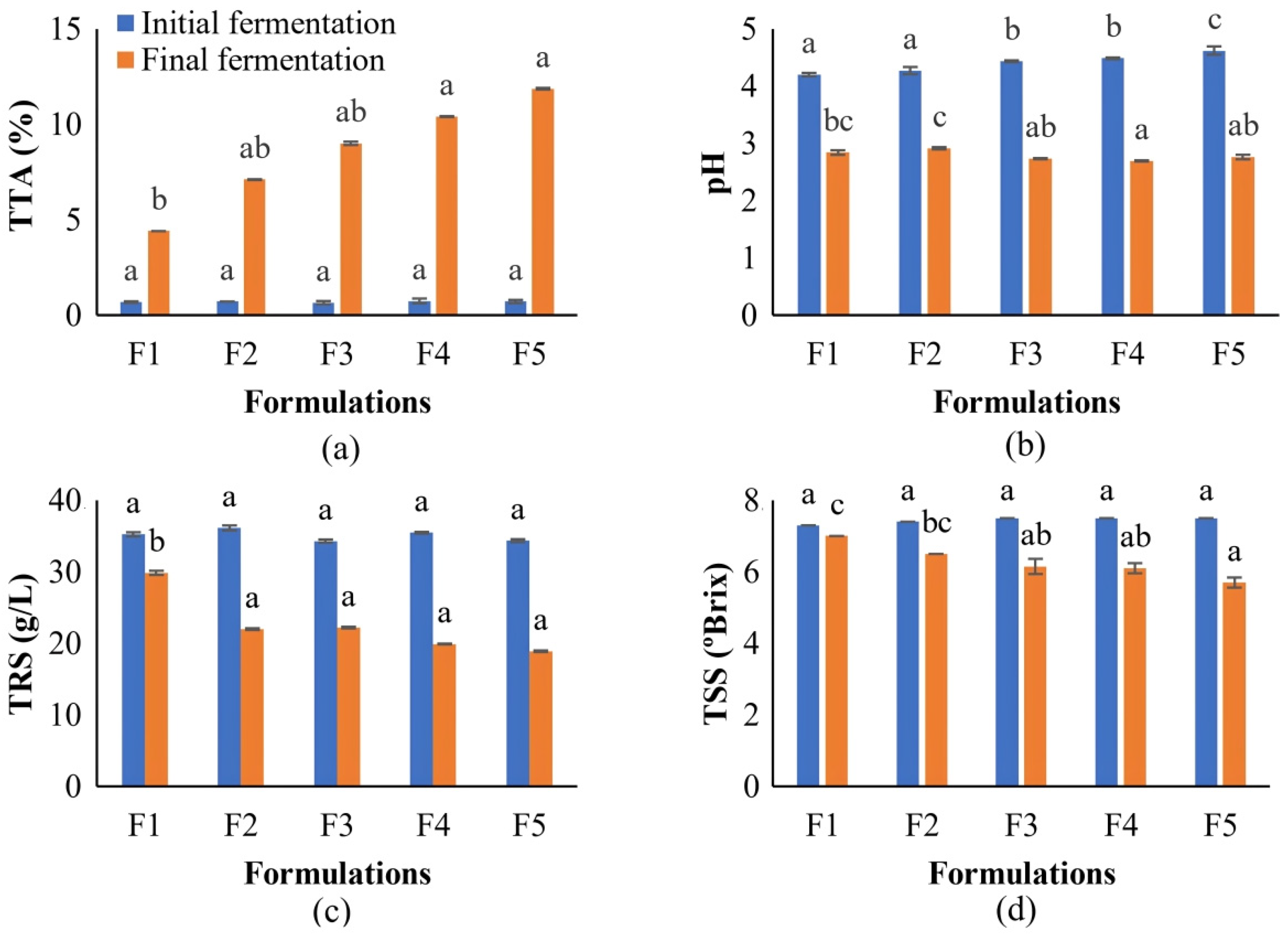
3.2. Production of Kombucha Vinegar—Step 2
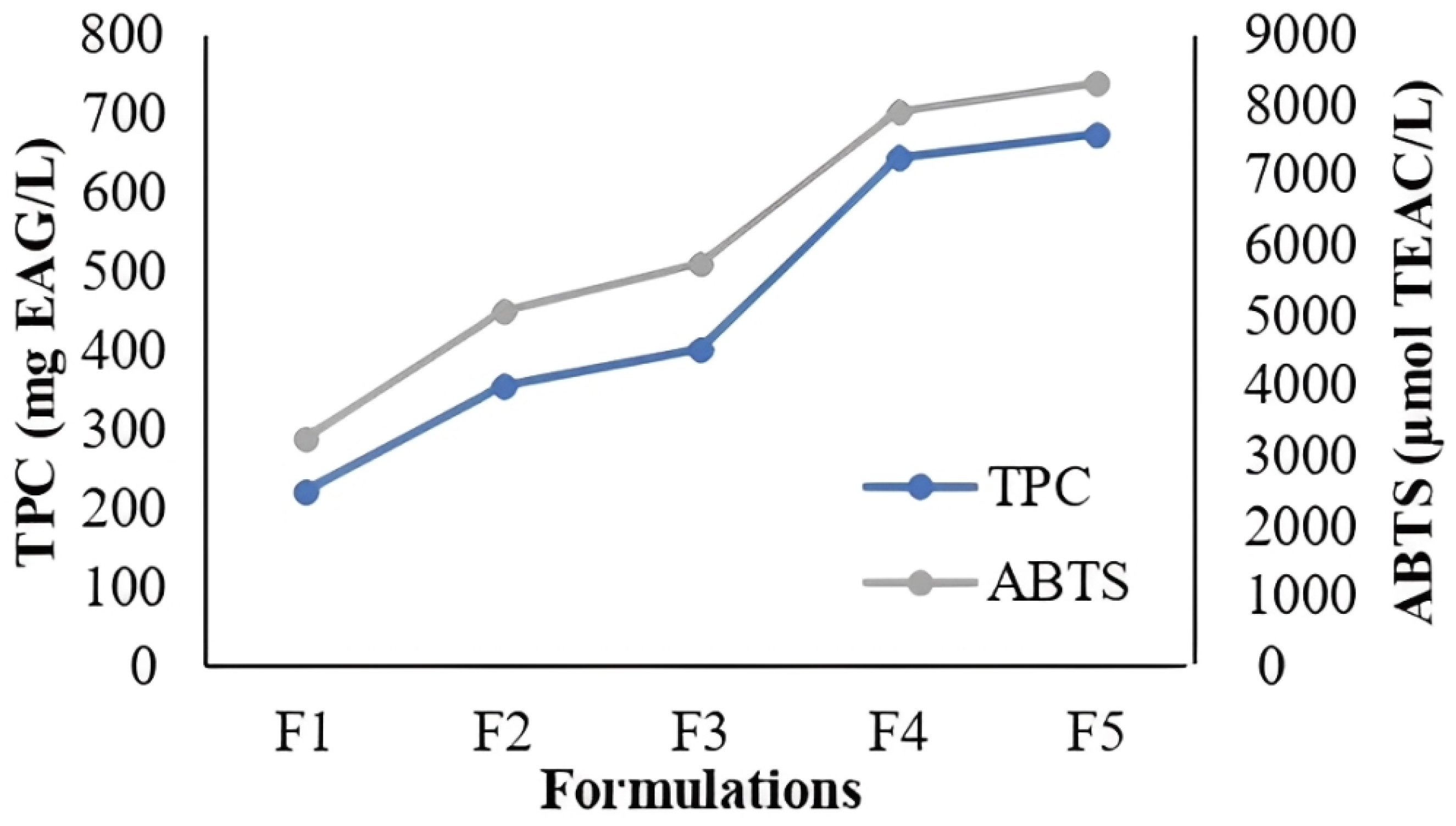
3.2.1. Results of Experiment 1—Step 2
3.2.2. Results of Experiment 2—Step 2
3.3. Results of Development Kombucha-Vinegar Beverages Inspired by Switchel—Step 3
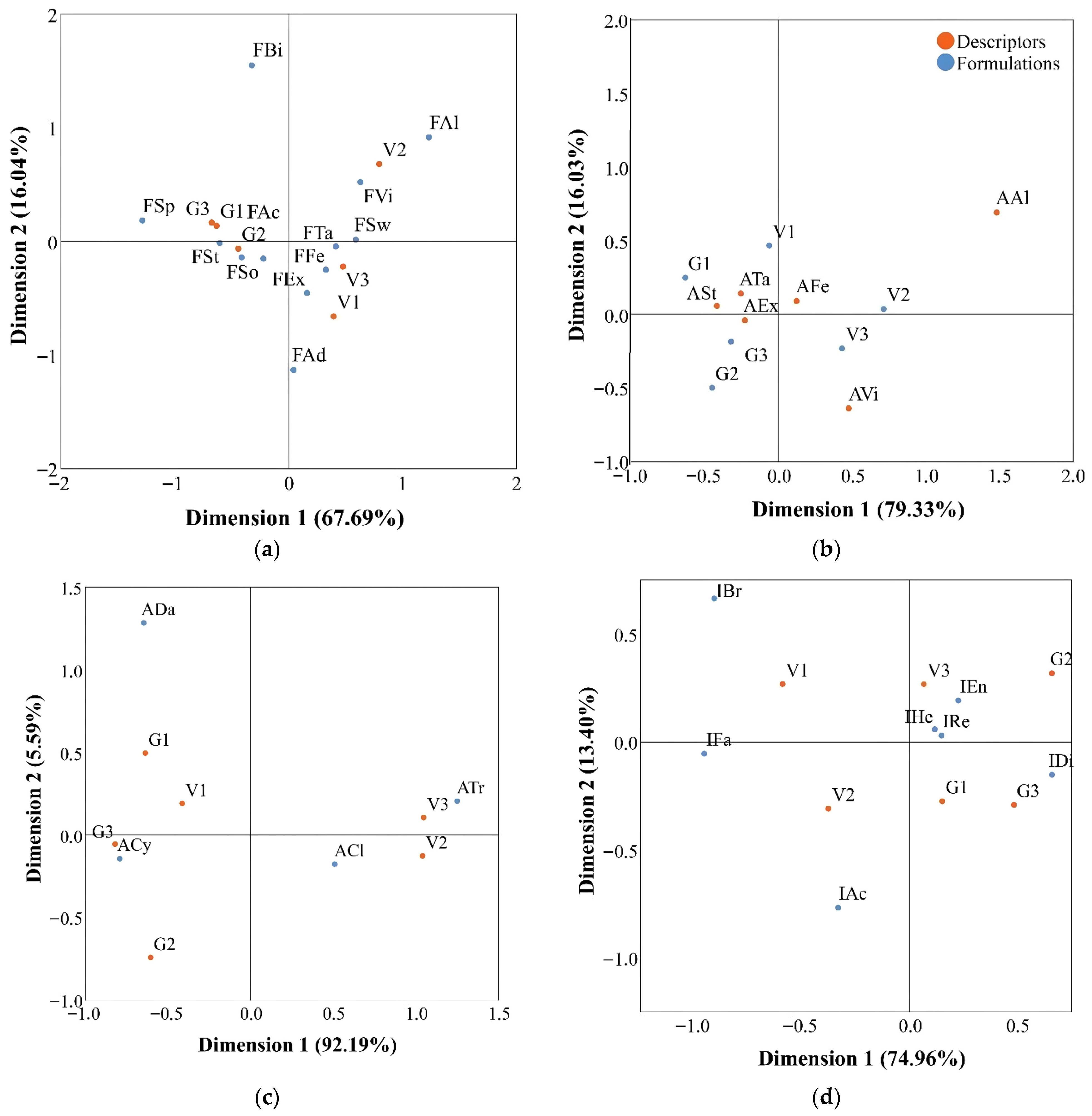
3.4. Sensory Evaluation—Step 4
4. Limitations
5. Conclusions
Author Contributions
Funding
Institutional Review Board Statement
Informed Consent Statement
Data Availability Statement
Conflicts of Interest
References
- Ghoshal, G.; Kansal, S.K. The emerging trends in functional and medicinal beverage research and its health implication. In Functional and Medicinal Beverages: Volume 11: The Science of Beverages; Elsevier Inc.: Amsterdam, The Netherlands, 2019; pp. 41–71. [Google Scholar] [CrossRef]
- Urtasun, R.; Díaz-Gómez, J.; Araña, M.; Pajares, M.J.; Oneca, M.; Torre, P.; Jiménez, M.; Munilla, G.; Barajas, M.; Encío, I. A combination of apple vinegar drink with Bacillus coagulans ameliorates high fat diet-induced body weight gain, insulin resistance and hepatic steatosis. Nutrients 2020, 12, 2504. [Google Scholar] [CrossRef] [PubMed]
- Cantadori, E.; Brugnoli, M.; Centola, M.; Uffredi, E.; Colonello, A.; Gullo, M. Date fruits as raw material for vinegar and non-alcoholic fermented beverages. Foods 2022, 11, 1972. [Google Scholar] [CrossRef] [PubMed]
- Kiro. Switchel (Bebida de Vinagre). Available online: https://bebakiro.com/products/kiro-gengibre-12un-lataaa?_pos=2&_sid=1b3dc5d86&_ss=r (accessed on 8 May 2026).
- Dartora, B.; Crepalde, L.T.; Hickert, L.R.; Fabricio, M.F.; Ayub, M.A.Z.; Veras, F.F.; Brandelli, A.; Perez, K.J.; Sant’Anna, V. Kombuchas from black tea, green tea, and yerba-mate decocts: Perceived sensory map, emotions, and physicochemical parameters. Int. J. Gastron. Food Sci. 2023, 33, 100789. [Google Scholar] [CrossRef]
- Antolak, H.; Piechota, D.; Kucharska, A. Kombucha tea—A double power of bioactive compounds from tea and symbiotic culture of bacteria and yeasts (SCOBY). Antioxidants 2021, 10, 1541. [Google Scholar] [CrossRef]
- Sinir, G.Ö.; Tamer, C.E.; Suna, S. Kombucha tea: A promising fermented functional beverage. In Fermented Beverages: Volume 5. The Science of Beverages; Woodhead Publishing: Cambridge, UK, 2019; pp. 401–432. [Google Scholar]
- Ariff, R.M.; Chai, X.Y.; Chang, L.S.; Fazry, S.; Othman, B.A.; Babji, A.S.; Lim, S.J. Recent trends in kombucha: Conventional and alternative fermentation in development of novel beverage. Food Biosci. 2023, 53, 102714. [Google Scholar] [CrossRef]
- Muhialdin, B.J.; Osman, F.A.; Muhamad, R.; Sapawi, C.W.N.S.C.W.; Anzian, A.; Voon, W.W.Y.; Meor Hussin, A.S. Effects of sugar sources and fermentation time on the properties of tea fungus (Kombucha) beverage. Int. Food Res. J. 2019, 26, 481–487. [Google Scholar]
- Durães, G.C.S.; Pires, B.A.M.; Lins, T.C.L. Kombucha based synbiotic beverage using yacon (Smallanthus sonchifolius) as a fermentation substrate: Development and sensorial analysis. Food Res. 2021, 5, 66–71. [Google Scholar] [CrossRef]
- Kapp, J.M.; Sumner, W. Kombucha: A systematic review of the empirical evidence of human health benefit. Ann. Epidemiol. 2019, 30, 66–70. [Google Scholar] [CrossRef] [PubMed]
- Yao, L.; Zhang, J.; Lu, J.; Chen, D.; Song, S.; Wang, H.-T.; Sun, M.; Feng, T. Revealing the influence of microbiota on the flavor of kombucha during natural fermentation process by metagenomic and GC-MS analysis. Food Res. Int. 2023, 169, 112909. [Google Scholar] [CrossRef]
- Trivunović, Z.; Vitas, J.; Puškaš, V.; Zahović, I.; Zeljko, M.; Malbaša, R.; Dodić, J. Herbal kombucha vinegar: Biotechnological perspective, biological potential and sensory evaluation. Innov. Food Sci. Emerg. Technol. 2025, 10, 103955. [Google Scholar] [CrossRef]
- Codjia, F.S.; Dabadé, D.S.; Agbobatinkpo, P.; Collombel, I.; Achir, N.; Azokpota, P.; Dossou, J. Fermented cashew apple beverages: Current state of knowledge and prospects. Beverages 2025, 11, 49. [Google Scholar] [CrossRef]
- Öztürk, B.E.T.; Eroğlu, B.; Delik, E.; Çiçek, M.; Çiçek, E. Comprehensive evaluation of three important herbs for kombucha fermentation. Food Technol. Biotechnol. 2023, 61, 127–137. [Google Scholar] [CrossRef] [PubMed] [PubMed Central]
- Mendonça, G.R.; Pinto, R.A.; Praxedes, É.A.; Abreu, V.K.G.; Dutra, R.P.; Pereira, A.F.; Lemos, T.O.; Reis, A.S.; Pereira, A.L.F. Kombucha based on unconventional parts of the Hibiscus sabdariffa L.: Microbiological, physico-chemical, antioxidant activity, cytotoxicity and sensorial characteristics. Int. J. Gastron. Food Sci. 2023, 34, 100804. [Google Scholar] [CrossRef]
- Treviso, R.L.; Sant’Anna, V.; Fabricio, M.F.; Ayub, M.A.Z.; Brandelli, A.; Hickert, L.R. Time and temperature influence on physicochemical, microbiological, and sensory profiles of yerba mate kombucha. J. Food Sci. Technol. 2024, 61, 1733–1742. [Google Scholar] [CrossRef]
- Arciello, A.; Panzella, L.; Dell’Olmo, E.; Abdalrazeq, M.; Moccia, F.; Gaglione, R.; Agustin-Salazar, S.; Napolitano, A.; Mariniello, L.; Giosafatto, C.V.L. Development and characterization of antimicrobial and antioxidant whey protein-based films functionalized with pecan (Carya illinoinensis) nut shell extract. Food Packag. Shelf Life 2021, 29, 100710. [Google Scholar] [CrossRef]
- Villasante, J.; Martin-Lujano, A.; Almajano, M.P. Characterization and application of gelatin films with pecan walnut and shell extract (Carya illinoiensis). Polymers 2020, 12, 1424. [Google Scholar] [CrossRef]
- Villasante, J.; Espinosa-Ramírez, J.; Pérez-Carrillo, E.; Heredia-Olea, E.; Metón, I.; Almajano, M.P. Evaluation of non-extruded and extruded pecan (Carya illinoinensis) shell powder as functional ingredient in bread and wheat tortilla. LWT-Food Sci. Technol. 2022, 160, 113299. [Google Scholar] [CrossRef]
- Flores-Estrada, R.A.; Gámez-Meza, N.; Medina-Juárez, L.A.; Castillón-Campaña, L.G.; Molina-Domínguez, C.C.; Rascón-Valenzuela, L.A.; García-Galaz, A. Chemical composition, antioxidant, antimicrobial and antiproliferative activities of wastes from pecan nut [Carya illinoinensis (Wangenh) K. Koch]. Waste Biomass Valorization 2020, 11, 3419–3432. [Google Scholar] [CrossRef]
- Cason, C.; Yemmireddy, V.K.; Moreira, J.; Adhikari, A. Antioxidant properties of pecan shell bioactive components of different cultivars and extraction methods. Foods 2021, 10, 713. [Google Scholar] [CrossRef] [PubMed]
- Trevizol, F.; Benvegnú, D.M.; Barcelos, R.C.S.; Pase, C.S.; Segat, H.J.; Dias, V.T.; Dolci, G.S.; Boufleur, N.; Reckziegel, P.; Bürger, M.E. Comparative study between two animal models of extrapyramidal movement disorders: Prevention and reversion by pecan nut shell aqueous extract. Behav. Brain Res. 2011, 221, 13–18. [Google Scholar] [CrossRef]
- Instituto Adolfo Lutz. Métodos Físico-Químicos para Análise de Alimentos; ANVISA: São Paulo, Brazil, 2008.
- AOAC. Official Methods of Analysis of AOAC International, 17th ed.; Association of Official Analytical Collaboration (AOAC) International: Rockville, MD, USA, 2000. [Google Scholar]
- Miller, G.L. Use of dinitrosalicylic acid reagent for determination of reducing sugar. Anal. Chem. 1959, 31, 426–428. [Google Scholar] [CrossRef]
- Singleton, V.L.; Orthofer, R.; Lamuela-Raventós, R.M. Analysis of total phenols and other oxidation substrates and antioxidants by means of Folin-Ciocalteu reagent. Methods Enzymol. 1999, 299, 152–178. [Google Scholar] [CrossRef]
- Re, R.; Pellegrini, N.; Proteggente, A.; Pannala, A.; Yang, M.; Rice-Evans, C. Antioxidant activity applying an improved ABTS radical cation decolorization assay. Free Radic. Biol. Med. 1999, 26, 1231–1237. [Google Scholar] [CrossRef]
- Apak, R.; Özyürek, M.; Güçlü, K.; Çapanoğlu, E. Antioxidant activity/capacity measurement. 1. Classification, physicochemical principles, mechanisms, and electron transfer (ET)-based assays. J. Agric. Food Chem. 2016, 64, 997–1027. [Google Scholar] [CrossRef]
- Dartora, B.; Hickert, L.R.; Fabricio, M.F.; Ayub, M.A.Z.; Furlan, J.M.; Wagner, R.; Perez, K.J.; Sant’Anna, V. Understanding the effect of fermentation time on physicochemical characteristics, sensory attributes, and volatile compounds in green tea kombucha. Food Res. Int. 2023, 174, 113569. [Google Scholar] [CrossRef] [PubMed]
- Dalla Nora, F.M. Análise Sensorial Clássica: Fundamentos e Métodos; Mérida Publishers: Canoas, Brazil, 2021. [Google Scholar]
- Bottari, N.B.; Lopes, L.Q.S.; Pizzuti, K.; Alves, C.F.D.S.; Corrêa, M.S.; Bolzan, L.P.; Zago, A.; Vaucher, R.A.; Boligon, A.A.; Giongo, J.L.; et al. Antimicrobial activity and phytochemical characterization of Carya illinoensis. Microb. Pathog. 2017, 104, 190–195. [Google Scholar] [CrossRef]
- Vazquez-Flores, A.A.; Wong-Paz, J.E.; Lerma-Herrera, M.A.; Martinez-Gonzalez, A.I.; Olivas-Aguirre, F.J.; Aguilar, C.N.; Wall-Medrano, A.; Gonzalez-Aguilar, G.A.; Alvarez-Parrilla, E.; de la Rosa, L.A. Proanthocyanidins from the kernel and shell of pecan (Carya illinoinensis): Average degree of polymerization and effects on carbohydrate, lipid, and peptide hydrolysis in a simulated human digestive system. J. Funct. Foods 2017, 28, 227–234. [Google Scholar] [CrossRef]
- Do Prado, A.C.P.; Aragão, A.M.; Fett, R.; Block, J.M. Phenolic compounds and antioxidant activity of pecan [Carya illinoinensis (Wangenh.) C. Koch] kernel cake extracts. Grasas Aceites 2009, 60, 458–467. [Google Scholar]
- Villarreal-Lozoya, J.E.; Lombardini, L.; Cisneros-Zevallos, L. Phytochemical constituents and antioxidant capacity of different pecan (Carya illinoinensis (Wangenh.) K. Koch) cultivars. Food Chem. 2007, 102, 1241–1249. [Google Scholar] [CrossRef]
- Müller, L.G.; Pase, C.S.; Reckziegel, P.; Barcelos, R.C.S.; Boufleur, N.; Prado, A.C.P.; Fett, R.; Block, J.M.; Pavanato, M.A.; Bauermann, L.F.; et al. Hepatoprotective effects of pecan nut shells on ethanol-induced liver damage. Exp. Toxicol. Pathol. 2013, 65, 165–171. [Google Scholar] [CrossRef]
- Reckziegel, P.; Boufleur, N.; Barcelos, R.C.S.; Benvegnú, D.M.; Pase, C.S.; Muller, L.G.; Teixeira, A.M.; Zanella, R.; Prado, A.C.P.; Fett, R.; et al. Oxidative stress and anxiety-like symptoms related to withdrawal of passive cigarette smoke in mice: Beneficial effects of pecan nut shells extract, a by-product of the nut industry. Ecotoxicol. Environ. Saf. 2011, 74, 1770–1778. [Google Scholar] [CrossRef]
- Kureck, I.; de Policarpi, P.B.; Toaldo, I.M.; Maciel, M.V.O.B.; Bordignon-Luiz, M.T.; Barreto, P.L.M.; Block, J.M. Chemical characterization and release of polyphenols from pecan nut shell [Carya illinoinensis (Wangenh) C. Koch] in zein microparticles for bioactive applications. Plant Foods Hum. Nutr. 2018, 73, 137–145. [Google Scholar] [CrossRef]
- Babu, D.; Crandall, P.G.; Johnson, C.L.; O’Bryan, C.A.; Ricke, S.C. Efficacy of antimicrobials extracted from organic pecan shell for inhibiting the growth of Listeria spp. J. Food Sci. 2013, 78, 10–14. [Google Scholar] [CrossRef]
- Caxambu, S.; Biondo, E.; Kolchinski, E.M.; Padilha, R.L.; Brandelli, A.; Sant’Anna, V. Evaluation of the antimicrobial activity of pecan nut [Carya illinoinensis (Wangenh) C. Koch] shell aqueous extract on minimally processed lettuce leaves. Food Sci. Technol. 2016, 36, 42–45. [Google Scholar] [CrossRef]
- Chong, A.Q.; Chin, N.L.; Talib, R.A.; Basha, R.K. Modelling pH dynamics, SCOBY biomass formation, and acetic acid production of kombucha fermentation using black, green, and oolong teas. Processes 2024, 12, 1301. [Google Scholar] [CrossRef]
- Barbosa, C.D.; Uetanabaro, A.P.T.; Santos, W.C.R.; Caetano, R.G.; Albano, H.; Kato, R.; Cosenza, G.P.; Azeredo, A.; Góes-Neto, A.; Rosa, C.A.; et al. Microbial–physicochemical integrated analysis of kombucha fermentation. LWT 2021, 148, 111788. [Google Scholar] [CrossRef]
- Geraris Kartelias, I.; Karantonis, H.C.; Giaouris, E.; Panagiotakopoulos, I.; Nasopoulou, C. Kombucha fermentation of olympus mountain tea (Sideritis scardica) sweetened with thyme honey: Physicochemical analysis and evaluation of functional properties. Foods 2023, 12, 3496. [Google Scholar] [CrossRef] [PubMed]
- Kaewkod, T.; Bovonsombut, S.; Tragoolpua, Y. Efficacy of kombucha obtained from green, oolong, and black teas on inhibition of pathogenic bacteria, antioxidation, and toxicity on colorectal cancer cell line. Microorganisms 2019, 7, 700. [Google Scholar] [CrossRef]
- Cardoso, R.R.; Neto, R.O.; D’Almeida, C.T.S.; do Nascimento, T.P.; Pressete, C.G.; Azevedo, L.; Martino, H.S.D.; Cameron, L.C.; Ferreira, M.S.L.; de Barros, F.A.R. Kombuchas from green and black teas have different phenolic profile, which impacts their antioxidant capacities, antibacterial and antiproliferative activities. Food Res. Int. 2020, 128, 108782. [Google Scholar] [CrossRef]
- Yemmireddy, V.K.; Cason, C.; Moreira, J.; Adhikari, A. Effect of pecan variety and the method of extraction on the antimicrobial activity of pecan shell extracts against different foodborne pathogens and their efficacy on food matrices. Food Control 2020, 112, 107097. [Google Scholar] [CrossRef]
- Jayabalan, R.; Waisundara, V.Y. Kombucha as a functional beverage. In Functional and Medicinal Beverages; Elsevier Ltd.: Rourkela, India, 2019; pp. 413–446. Available online: https://linkinghub.elsevier.com/retrieve/pii/B9780128163979000121 (accessed on 8 May 2026).
- Gaggìa, F.; Baffoni, L.; Galiano, M.; Nielsen, D.S.; Jakobsen, R.R.; Castro-Mejía, J.L.; Bosi, S.; Truzzi, F.; Musumeci, F.; Dinelli, G.; et al. Kombucha beverage from green, black and rooibos teas: A comparative study looking at microbiology, chemistry and antioxidant activity. Nutrients 2018, 11, 1. [Google Scholar] [CrossRef] [PubMed] [PubMed Central]
- Tu, C.; Tang, S.; Azi, F.; Hu, W.; Dong, M. Use of kombucha consortium to transform soy whey into a novel functional beverage. J. Funct. Foods 2019, 52, 81–89. [Google Scholar] [CrossRef]
- Yuliana, N.; Nurainy, F.; Sari, G.W.; Sumardi; Widiastuti, E.L. Total microbe, physicochemical property, and antioxidative activity during fermentation of cocoa honey into kombucha functional drink. Appl. Food Res. 2023, 3, 100297. [Google Scholar] [CrossRef]
- Gomes, R.J.; Borges, M.F.; Rosa, M.F.; Castro-Gómez, R.J.H.; Spinosa, W.A. Acetic acid bacteria in the food industry: Systematics, characteristics and applications. Food Technol. Biotechnol. 2018, 56, 139–151. [Google Scholar] [CrossRef] [PubMed]
- Tamer, C.E.; Temel, Ş.G.; Suna, S.; Karabacak, A.Ö.; Özcan, T.; Ersan, L.Y.; Kaya, B.T.; Çopur, Ö.U. Evaluation of bioaccessibility and functional properties of kombucha beverages fortified with different medicinal plant extracts. Turk. J. Agric. For. 2021, 45, 13–32. [Google Scholar] [CrossRef]
- Wang, X.; Wang, D.; Wang, H.; Jiao, S.; Wu, J.; Hou, Y.; Sun, J.; Yuan, J. Chemical profile and antioxidant capacity of kombucha tea by the pure cultured kombucha. LWT-Food Sci. Technol. 2022, 168, 113931. [Google Scholar] [CrossRef]
- Jakubczyk, K.; Łopusiewicz, Ł.; Kika, J.; Janda-Milczarek, K.; Skonieczna-Żydecka, K. Fermented tea as a food with functional value—Its microbiological profile, antioxidant potential and phytochemical composition. Foods 2023, 13, 50. [Google Scholar] [CrossRef]
- Bortolomedi, B.M.; Paglarini, C.S.; Brod, F.C.A. Bioactive compounds in kombucha: A review of substrate effect and fermentation conditions. Food Chem. 2022, 385, 132719. [Google Scholar] [CrossRef] [PubMed]
- Cleverdon, R.; Elhalaby, Y.; McAlpine, M.D.; Gittings, W.; Ward, W.E. Total polyphenol content and antioxidant capacity of tea bags: Comparison of black, green, red rooibos, chamomile and peppermint over different steep times. Beverages 2018, 4, 15. [Google Scholar] [CrossRef]
- Wang, D.; Gao, Q.; Wang, T.; Kan, Z.; Li, X.; Hu, L.; Peng, C.-Y.; Qian, F.; Wang, Y.; Granato, D. Green tea polyphenols and epigallocatechin-3-gallate protect against perfluorodecanoic acid induced liver damage and inflammation in mice by inhibiting NLRP3 inflammasome activation. Food Res. Int. 2020, 127, 108628. [Google Scholar] [CrossRef]
- Dunford, N.T.; Gumus, Z.P.; Gur, C.S. Chemical composition and antioxidant properties of pecan shell water extracts. Antioxidants 2022, 11, 1127. [Google Scholar] [CrossRef]
- Porto, L.C.S.; da Silva, J.; Sousa, K.; Ambrozio, M.L.; de Almeida, A.; dos Santos, C.E.I.; Dias, J.F.; Allgayer, M.C.; dos Santos, M.S.; Pereira, P.; et al. Evaluation of toxicological effects of an aqueous extract of shells from the pecan nut [Carya illinoinensis (Wangenh) K. Koch] and the possible association with its inorganic constituents and major phenolic compounds. Evid.-Based Complement. Altern. Med. 2016, 2016, 4910493. [Google Scholar] [CrossRef]
- Peng, X.; Yang, S.; Liu, Y.; Ren, K.; Tian, T.; Tong, X.; Dai, S.; Lyu, B.; Yu, A.; Wang, H.; et al. Application of kombucha combined with fructo-oligosaccharides in soy milk: Colony composition, antioxidant capacity, and flavor relationship. Food Biosci. 2023, 53, 102527. [Google Scholar] [CrossRef]
- Vitas, J.S.; Cvetanović, A.D.; Mašković, P.Z.; Švarc-Gajić, J.V.; Malbaša, R.V. Chemical composition and biological activity of novel types of kombucha beverages with yarrow. J. Funct. Foods 2018, 44, 95–102. [Google Scholar] [CrossRef]
- Kasapoğlu, K.N.; Dikmen, C.D.; Yavuz-Düzgün, M.; Karaça, A.C. Enrichment of beverages with health beneficial ingredients. In Value-Added Ingredients and Enrichments of Beverages: Volume 14: The Science of Beverages; Academic Press: Cambridge, MA, USA, 2019; pp. 63–99. [Google Scholar]
- Da Cunha, M.A.A.; Turmina, J.A.; Ivanov, R.C.; Barroso, R.R.; Marques, P.T.; Fonseca, E.A.I.; Fortes, Z.B.; Dekker, R.F.H.; Khaper, N.; Barbosa, A.M. Lasiodiplodan, an exocellular (1 → 6)-β-D-glucan from Lasiodiplodia theobromae MMPI: Production on glucose, fermentation kinetics, rheology and anti-proliferative activity. J. Ind. Microbiol. Biotechnol. 2012, 39, 1179–1188. [Google Scholar] [CrossRef] [PubMed]
- Aslam, M.N.I.; Sohaib, M.I.; Khan, A.U.I.; Ali, S.I.I.; Amjad, A.; Ahmed, S.I.V. Lipids oxidative stability and microbial shelf life quality of licorice (Glycyrrhiza glabra L.) extract supplemented chicken patties. Braz. J. Poult. Sci. 2020, 22, eRBCA-2020-1316. [Google Scholar] [CrossRef]
- Tran, T.; Grandvalet, C.; Verdier, F.; Martin, A.; Alexandre, H.; Tourdot-Maréchal, R. Microbiological and technological parameters impacting the chemical composition and sensory quality of kombucha. Compr. Rev. Food Sci. Food Saf. 2020, 19, 2050–2070. [Google Scholar] [CrossRef] [PubMed]
- Benedek, C.; Szakolczi, O.; Makai, G.; Kiskó, G.; Kókai, Z. Evaluation of physicochemical, sensory, and antimicrobial properties of small-scale produced fruit vinegars. Acta Aliment. 2022, 51, 1–10. [Google Scholar] [CrossRef]
- Setyawati, R.; Haryanti, P. Addition of selected ginger extract on total phenolic, antioxidant and sensory properties of the syrup coconut sap (Ginger—SCS). Food Res. 2021, 5, 283–289. [Google Scholar]
- Sales, A.L.; Cunha, S.C.; Morgado, J.; Cruz, A.; Santos, T.F.; Ferreira, I.M.P.L.V.O.; Fernandes, J.O.; Miguel, M.A.L.; Farah, A. Volatile, microbial, and sensory profiles and consumer acceptance of coffee cascara kombuchas. Foods 2023, 12, 2710. [Google Scholar] [CrossRef]
- Ogori, A.F.; Amove, J.; Aduloju, P.; Sardo, G.; Okpala, C.O.R.; Bono, G.; Korzeniowska, M. Functional and quality characteristics of ginger, pineapple, and turmeric juice mix as influenced by blend variations. Foods 2021, 10, 525. [Google Scholar] [CrossRef]
- Sun, X.; Follett, P.A.; Wall, M.M.; Duff, K.S.; Wu, X.; Shu, C.; Plotto, A.; Liang, P.; Stockton, D.G. Physical, chemical, and sensory properties of a turmeric-fortified pineapple juice beverage. Foods 2023, 12, 2323. [Google Scholar] [CrossRef]
- Salehi, F. Physico-chemical properties of fruit and vegetable juices as affected by ultrasound: A review. Int. J. Food Prop. 2020, 23, 1748–1765. [Google Scholar] [CrossRef]
- Andronic, P.; Bem, M.; Boistean, A. Development of technology for the production of non-alcoholic beverage with natural vinegar as a natural conservant. In Proceedings of the Black Sea Science, Odesa, Ukraine, 28 February 2022; pp. 6–15. Available online: https://www.researchgate.net/publication/364646847_DEVELOPMENT_OF_TECHNOLOGY_FOR_THE_PRODUCTION_OF_NON-ALCOHOLIC_BEVERAGE_WITH_NATURAL_VINEGAR_AS_A_NATURAL_CONSERVANT (accessed on 8 May 2026).
- Bang, S.I.; Kim, H.Y.; Seo, W.T.; Lee, A.Y.; Cho, E.J. Mulberry vinegar attenuates lipopolysaccharide and interferon gamma-induced inflammatory responses in C6 glial cells. J. Food Biochem. 2022, 46, e14197. [Google Scholar] [CrossRef]
- Mohamad, N.E.; Yeap, S.K.; Ky, H.; Liew, N.W.C.; Beh, B.K.; Boo, S.Y.; Ho, W.Y.; Sharifuddin, S.A.; Long, K.; Alitheen, N.B. Pineapple vinegar regulates obesity-related genes and alters the gut microbiota in high-fat diet (HFD) C57BL/6 obese mice. Evid.-Based Complement. Altern. Med. 2020, 2020, 1257962. [Google Scholar] [CrossRef] [PubMed]
- Feng, N.; Feng, Y.; Zhang, F.; Yan, J.; Niu, M.; Shi, L.; Xiong, H.; Zhou, M.; Wu, Q. Inhibition mechanism of mango vinegar on protein-AGEs digestion in vitro gastrointestinal environment. LWT-Food Sci. Technol. 2023, 186, 115246. [Google Scholar] [CrossRef]
- Kumar, S.; Sharma, S.K.; Mudgal, S.K.; Gaur, R.; Agarwal, R.; Singh, H.; Kalra, S. Comparative effectiveness of six herbs in the management of glycemic status of type 2 diabetes mellitus patients: A systematic review and network meta-analysis of randomized controlled trials. Diabetes Metab. Syndr. Clin. Res. Rev. 2023, 17, 102826. [Google Scholar] [CrossRef]
- Mintel. Mintel’s 2024 Global Food and Drink Trends. 2023. Available online: https://www.mintel.com/press-centre/mintel-announces-global-food-and-drink-trends-for-2024/ (accessed on 8 May 2026).



| Experiment 1 for Kombucha-Vinegar Production | |||||
| Substrates | F1 | F2 | F3 | F4 | F5 |
| PSE (%, v/v) | 100 | 75 | 50 | 25 | 0 |
| GTI (%, v/v) | 0 | 25 | 50 | 75 | 100 |
| Sucrose (g/L) | 80 (in all formulations of Experiment 1) | ||||
| Experiment 2 for Kombucha-Vinegar Production | |||||
| Substrates | F6 | F7 | F8 | F9 | |
| PSE (%, v/v) | 50 | 50 | 25 | 25 | |
| GTI (%, v/v) | 50 | 50 | 75 | 75 | |
| Sucrose (g/L) | 80 | 60 | 80 | 60 | |
| Formulation | KV (% v/v) | GE (% v/v) | PAJ (% v/v) | AJ (% v/v) | WGJ (% v/v) |
|---|---|---|---|---|---|
| G1 | 20 | 20 | 60 | 0 | 0 |
| G2 | 20 | 20 | 0 | 60 | 0 |
| G3 | 20 | 20 | 0 | 0 | 60 |
| V1 | 20 | 0 | 80 | 0 | 0 |
| V2 | 20 | 0 | 0 | 80 | 0 |
| V3 | 20 | 0 | 0 | 0 | 80 |
| Form. | F1 | F2 | F3 | F4 | F5 |
|---|---|---|---|---|---|
| TFC (mg EAG/L) | |||||
| 0 days | 293.59 ± 6.58 c | 408.70 ± 3.61 a | 440.63 ± 4.48 a | 654.28 ± 3.13 b | 681.09 ± 5.96 b |
| 35 days | 222.25 ± 5.81 c | 386.08 ± 44.08 a | 462.67 ± 13.67 a | 575.76 ± 8.20 b | 667.09 ± 36.91 b |
| ABTS (µmol TEAC/L) | |||||
| 0 days | 1125.56 ± 142.40 c | 2020.00 ± 179.00 a | 3342.22 ± 259.27 a | 4975.56 ± 218.54 b | 6528.89 ± 117.85 b |
| 35 days | 3253.33 ± 36.14 a | 5064.44 ± 13.35 ab | 5747.78 ± 75.42 b | 7920.00 ± 62.85 c | 8320.00 ± 29.07 c |
| Var (%) | 189.04 (+) | 150.72 (+) | 71.97 (+) | 59.18 (+) | 32.93 (+) |
| Parameter Evaluated | Formulation | |||
|---|---|---|---|---|
| F6 | F7 | F8 | F9 | |
| TTA (expressed as % acetic acid) | 1.86 ± 0.11 a | 1.80 ± 0.11 a | 1.98 ± 0.12 a | 1.84 ± 0.12 a |
| TRS (g/L) | 10.65 ± 0.55 a | 16.96 ± 0.08 b | 8.10 ± 1.27 a | 16.50 ± 0.68 b |
| TSS (ºBrix) | 3.65 ± 0.07 c | 5.25 ± 0.07 a | 3.15 ± 0.21 b | 4.95 ± 0.07 a |
| pH | 2.68 ± 0.05 a | 2.62 ± 0.03 a | 2.76 ± 0.04 a | 2.72 ± 0.02 a |
| TPC (mg EAG/L) | 538.39 ± 15.05 a | 522.03 ± 1.39 a | 645.41 ± 3.62 b | 640.88 ± 14.49 b |
| ABTS (µmol TEAC/L) | 5361.64 ± 26.32 a | 5081.11 ± 133.56 a | 7078.30 ± 113.92 b | 7031.11 ± 47.14 b |
| Ingredient | Physicochemical and Antioxidant Parameters | |||||
|---|---|---|---|---|---|---|
| TTA | TRS | TSS | pH | TPC mg EAG/L | ABTS | |
| % Acetic Acid | g/L | ºBrix | (µmol TEAC/L) | |||
| GE | 0.15 ± 0.04 a | 4.79 ± 0.02 b | 1.45 ± 0.21 c | 6.44 ± 0.01 d | 393.76 ± 1.37 c | 4521.11 ± 217.52 a |
| PAJ | 0.51 ± 0.04 b | 54.04 ± 0.92 a | 11.90 ± 0.01 b | 3.85 ± 0.01 b | 310.78 ± 12.69 b | 980.33 ± 4.41 c |
| AJ | 0.27 ± 0.04 a | 55.26 ± 0.50 a | 12.70 ± 0.02 b | 3.89 ± 0.02 c | 489.11 ± 4.48 d | 4018.33 ± 267.84 a |
| WGJ | 0.51 ± 0.04 b | 74.49 ± 0.65 c | 15.20 ± 0.02 a | 3.24 ± 0.02 a | 234.90 ± 1.90 a | 1978.33 ± 129.64 b |
| Formulation | Physicochemical and Antioxidant Parameters | |||||
|---|---|---|---|---|---|---|
| TAA (Expressed as % Acetic Acid) | TRS (g/L) | TSS (ºBrix) | pH | TPC (mg EAG/L) | ABTS (µmol TEAC/L) | |
| G1 | 0.57 ± 0.40 abc | 30.81 ± 0.71 a | 7.25 ± 0.07 a | 3.55 ± 0.05 a | 374.64 ± 10.51 c | 2104.32 ± 293.09 a |
| G2 | 0.45 ± 0.40 a | 41.26 ± 0.32 b | 8.60 ± 0.14 a | 3.44 ± 0.17 e | 297.38 ± 7.85 b | 2329.17 ± 514.98 a |
| G3 | 0.63 ± 0.40 bcd | 32.22 ± 0.92 a | 10.15 ± 0.21 a | 3.11 ± 0.20 c | 213.81 ± 6.26 a | 2204.44 ± 114.97 a |
| V1 | 0.78 ± 0.40 d | 44.16 ± 1.30 c | 9.85 ± 0.07 a | 3.52 ± 1.55 a | 485.80 ± 7.82 e | 2798.59 ± 528.65 b |
| V2 | 0.51 ± 0.40 ab | 56.58 ± 1.38 d | 10.40 ± 0.00 a | 2.39 ± 1.43 d | 404.99 ± 20.66 d | 3348.89 ± 226.7 b |
| V3 | 0.72 ± 0.40 cd | 42.14 ± 0.98 bc | 13.10 ± 0.00 a | 3.01 ± 1.71 b | 272.54 ± 4.92 b | 2204.44 ± 103.53 a |
| Formulation | Attributes | Acceptability Index (%) | ||||
|---|---|---|---|---|---|---|
| Appearance | Color | Aroma | Flavor | Overall Impression | ||
| G1 | 6.58 ± 1.80 a | 6.58 ± 1.72 a | 7.12 ± 2.13 ab | 6.70 ± 2.13 a | 6.94 ± 1.93 a | 77.11 |
| G2 | 6.68 ± 1.57 a | 6.70 ± 1.54 a | 6.76 ± 1.82 ab | 6.50 ± 1.82 a | 6.78 ± 1.84 a | 75.33 |
| G3 | 6.38 ± 1.76 a | 6.48 ± 1.63 a | 6.54 ± 2.04 ab | 6.52 ± 2.04 a | 6.70 ± 1.96 a | 74.44 |
| V1 | 6.72 ± 1.92 a | 6.44 ± 2.05 a | 7.46 ± 1.64 b | 7.54 ± 1.64 a | 7.56 ± 1.61 a | 84.00 |
| V2 | 7.30 ± 1.72 a | 7.30 ± 1.63 a | 6.46 ± 1.86 ab | 7.48 ± 1.86 a | 7.48 ± 1.69 a | 83.11 |
| V3 | 7.18 ± 1.79 a | 7.12 ± 1.79 a | 6.34 ± 1.80 a | 6.92 ± 1.80 a | 7.08 ± 2.08 a | 78.67 |
| Attributes | Descriptive Terms | Formulations | Total | |||||
|---|---|---|---|---|---|---|---|---|
| G1 | G2 | G3 | V1 | V2 | V3 | |||
| Flavor | Acid | 35 ab | 30 ab | 37 a | 32 ab | 22 b | 33 ab | 189 |
| Sweet | 16 bc | 19 b | 14 bc | 31 a | 37 a | 33 a | 151 | |
| Alcoholic | 2 ab | 1 ab | 0 b | 1 ab | 7 a | 7 a | 18 | |
| Bitter | 9 ab | 4 ab | 9 ab | 1 b | 11 a | 1 b | 35 | |
| Tasty | 19 b | 25 b | 20 b | 40 a | 40 a | 28 ab | 172 | |
| Vinegar | 5 b | 10 b | 11 ab | 11 ab | 24 a | 18 ab | 79 | |
| Strong | 35 a | 28 ab | 23 ab | 14 bc | 10 c | 20 b | 130 | |
| Sour | 7 a | 7 a | 13 a | 7 a | 4 a | 8 a | 46 | |
| Fermented | 12 ab | 12 ab | 10 b | 17 ab | 15 ab | 23 a | 89 | |
| Exotic | 11 a | 13 a | 8 a | 14 a | 9 a | 20 a | 75 | |
| Astringent | 3 ab | 3 ab | 5 ab | 10 a | 2 b | 3 ab | 26 | |
| Spicy | 25 a | 27 a | 31 a | 6 b | 2 b | 5 b | 96 | |
| Aroma | Strong | 18 a | 16 a | 16 a | 22 a | 12 a | 16 a | 100 |
| Alcoholic | 1 b | 0 b | 2 b | 9 a | 14 a | 9 a | 35 | |
| Tasty | 30 ab | 28 ab | 28 ab | 40 a | 31 ab | 24 b | 181 | |
| Vinegar | 7 b | 15 b | 13 b | 13 b | 24 a | 22 a | 94 | |
| Fermented | 12 a | 10 a | 10 a | 17 a | 16 a | 17 a | 82 | |
| Exotic | 13 a | 14 a | 11 a | 17 a | 13 a | 13 a | 81 | |
| Appearance | Clear | 17 b | 18 b | 16 b | 16 b | 38 a | 35 a | 141 |
| Translucent | 1 b | 0 b | 1 b | 8 b | 24 a | 26 a | 60 | |
| Dark | 10 a | 2 ab | 4 ab | 7 ab | 1 b | 0 b | 26 | |
| Cloudy | 38 a | 39 a | 31 a | 41 a | 5 b | 5 b | 159 | |
| Impressions | Energizing | 19 a | 27 a | 21 a | 26 a | 28 a | 25 a | 146 |
| For the whole family | 10 b | 4 b | 6 b | 24 a | 23 a | 13 ab | 80 | |
| Good for breakfast | 3 b | 4 ab | 2 b | 13 a | 10 ab | 7 ab | 39 | |
| A healthy option | 25 ab | 25 ab | 28 a | 14 b | 31 a | 31 a | 174 | |
| Good for physical activities | 11 ab | 6 b | 11 ab | 14 ab | 21 a | 9 ab | 72 | |
| Perfect for dieting | 11 a | 12 a | 14 a | 8 a | 14 a | 12 a | 75 | |
| Refreshing | 33 a | 33 a | 35 a | 44 a | 43 a | 40 a | 228 | |
Disclaimer/Publisher’s Note: The statements, opinions and data contained in all publications are solely those of the individual author(s) and contributor(s) and not of MDPI and/or the editor(s). MDPI and/or the editor(s) disclaim responsibility for any injury to people or property resulting from any ideas, methods, instructions or products referred to in the content. |
© 2026 by the authors. Licensee MDPI, Basel, Switzerland. This article is an open access article distributed under the terms and conditions of the Creative Commons Attribution (CC BY) license.
Share and Cite
Berwanger, C.; Monteiro, E.d.L.; Colvero, G.L.; Reinehr, C.O.; Colla, L.M. Use of Pecan Shell Extract and Green Tea in a Kombucha-Vinegar-Based Beverage with Enhanced Antioxidant Properties. Beverages 2026, 12, 60. https://doi.org/10.3390/beverages12050060
Berwanger C, Monteiro EdL, Colvero GL, Reinehr CO, Colla LM. Use of Pecan Shell Extract and Green Tea in a Kombucha-Vinegar-Based Beverage with Enhanced Antioxidant Properties. Beverages. 2026; 12(5):60. https://doi.org/10.3390/beverages12050060
Chicago/Turabian StyleBerwanger, Cinthia, Emily da Luz Monteiro, Gabriel Lanza Colvero, Christian Oliveira Reinehr, and Luciane Maria Colla. 2026. "Use of Pecan Shell Extract and Green Tea in a Kombucha-Vinegar-Based Beverage with Enhanced Antioxidant Properties" Beverages 12, no. 5: 60. https://doi.org/10.3390/beverages12050060
APA StyleBerwanger, C., Monteiro, E. d. L., Colvero, G. L., Reinehr, C. O., & Colla, L. M. (2026). Use of Pecan Shell Extract and Green Tea in a Kombucha-Vinegar-Based Beverage with Enhanced Antioxidant Properties. Beverages, 12(5), 60. https://doi.org/10.3390/beverages12050060