Review

Plant-Derived Anti-Cancer Therapeutics and Biopharmaceuticals

by
Ghyda Murad Hashim
1,
Mehdi Shahgolzari
2,
Kathleen Hefferon
1,
Afagh Yavari
3 and
Srividhya Venkataraman
1,*
1
Department of Cell & Systems Biology, University of Toronto, Toronto, ON M5S 3B2, Canada
2
Dental Research Center, Hamadan University of Medical Sciences, Hamadan 65175-4171, Iran
3
Department of Biology, Payame Noor University, Tehran P.O. Box 19395-3697, Iran
*
Author to whom correspondence should be addressed.
Bioengineering 2025, 12(1), 7; https://doi.org/10.3390/bioengineering12010007

Submission received: 13 November 2024 / Revised: 13 December 2024 / Accepted: 19 December 2024 / Published: 25 December 2024
(This article belongs to the Section Biomedical Engineering and Biomaterials)

Abstract

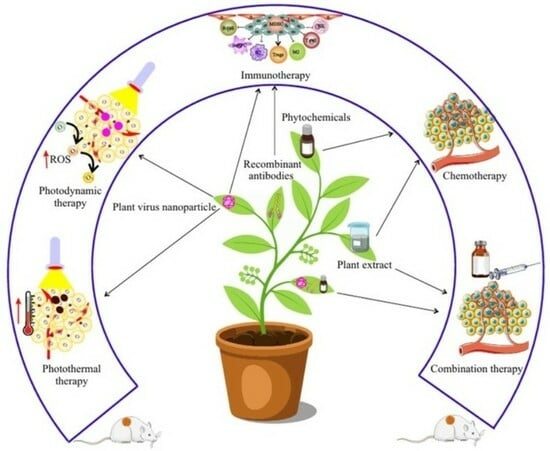
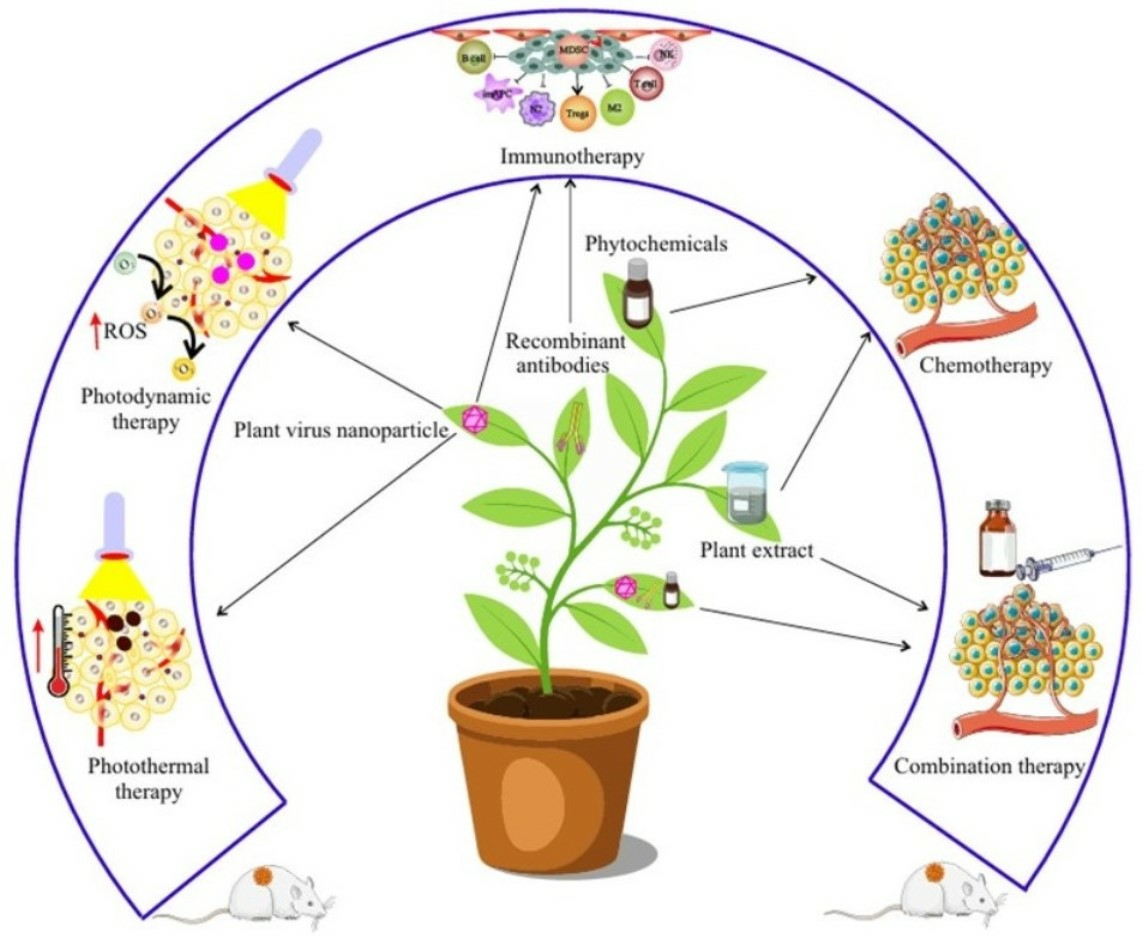
In spite of significant advancements in diagnosis and treatment, cancer remains one of the major threats to human health due to its ability to cause disease with high morbidity and mortality. A multifactorial and multitargeted approach is required towards intervention of the multitude of signaling pathways associated with carcinogenesis inclusive of angiogenesis and metastasis. In this context, plants provide an immense source of phytotherapeutics that show great promise as anticancer drugs. There is increasing epidemiological data indicating that diets rich in vegetables and fruits could decrease the risks of certain cancers. Several studies have proved that natural plant polyphenols, such as flavonoids, lignans, phenolic acids, alkaloids, phenylpropanoids, isoprenoids, terpenes, and stilbenes, could be used in anticancer prophylaxis and therapeutics by recruitment of mechanisms inclusive of antioxidant and anti-inflammatory activities and modulation of several molecular events associated with carcinogenesis. The current review discusses the anticancer activities of principal phytochemicals with focus on signaling circuits towards targeted cancer prophylaxis and therapy. Also addressed are plant-derived anti-cancer vaccines, nanoparticles, monoclonal antibodies, and immunotherapies. This review article brings to light the importance of plants and plant-based platforms as invaluable, low-cost sources of anti-cancer molecules of particular applicability in resource-poor developing countries.
Keywords: cancer; phytochemicals; PVNPs; VLPs; MABs; phototherapy; plant viruses cancer; phytochemicals; PVNPs; VLPs; MABs; phototherapy; plant viruses
Graphical Abstract