
Article

The Role of Bedload Transport in the Development of a Proglacial River Alluvial Fan (Case Study: Scott River, Southwest Svalbard)

Institute of Earth and Environmental Sciences, Faculty of Earth Sciences and Spatial Management, Maria Curie-Sklodowska University in Lublin, al. Krasnicka 2 D, 20-718 Lublin, Poland
Hydrology 2021, 8(4), 173; https://doi.org/10.3390/hydrology8040173

Submission received: 30 June 2021 / Revised: 29 October 2021 / Accepted: 10 November 2021 / Published: 22 November 2021
(This article belongs to the Special Issue Observations in Water Resources)

Abstract

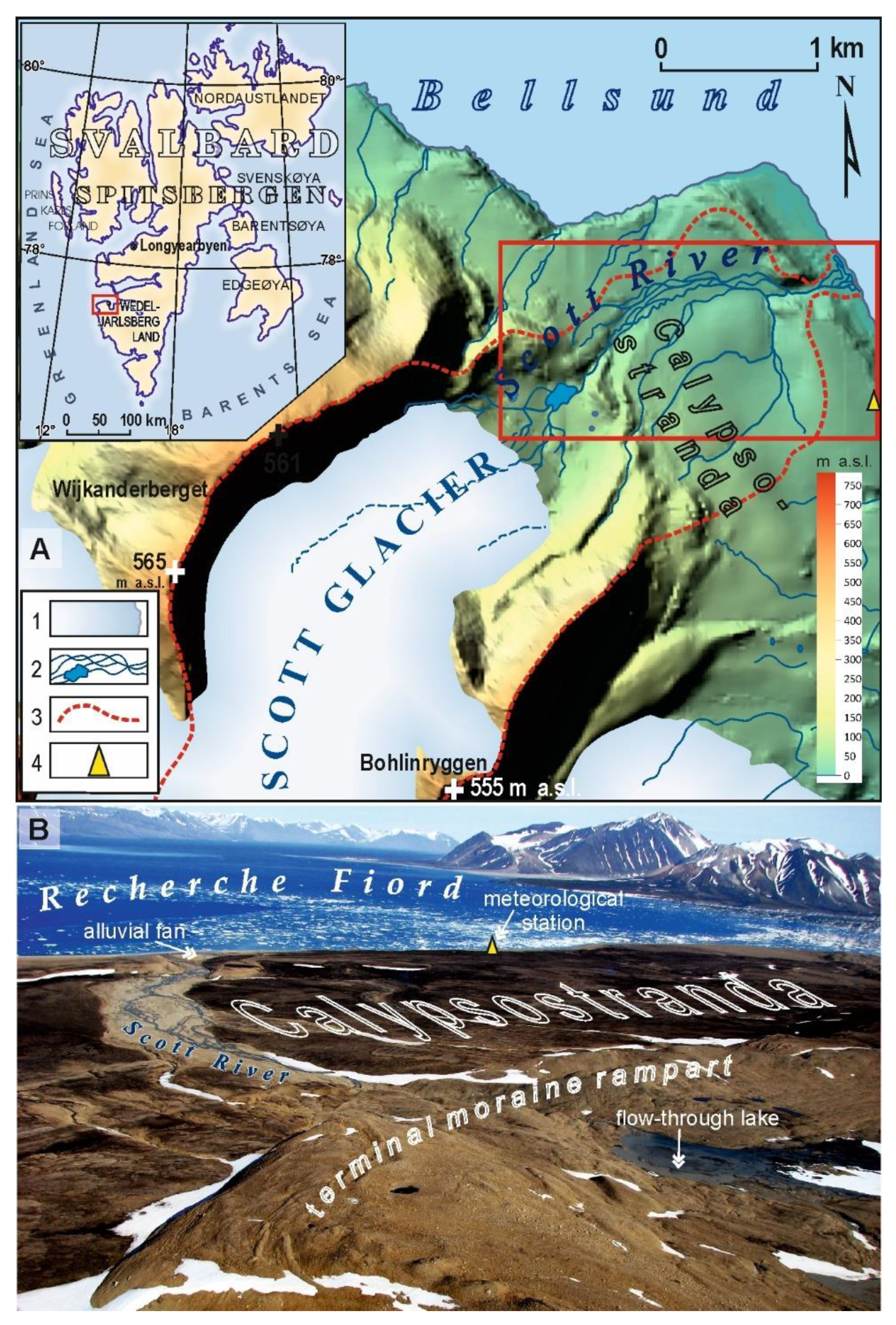
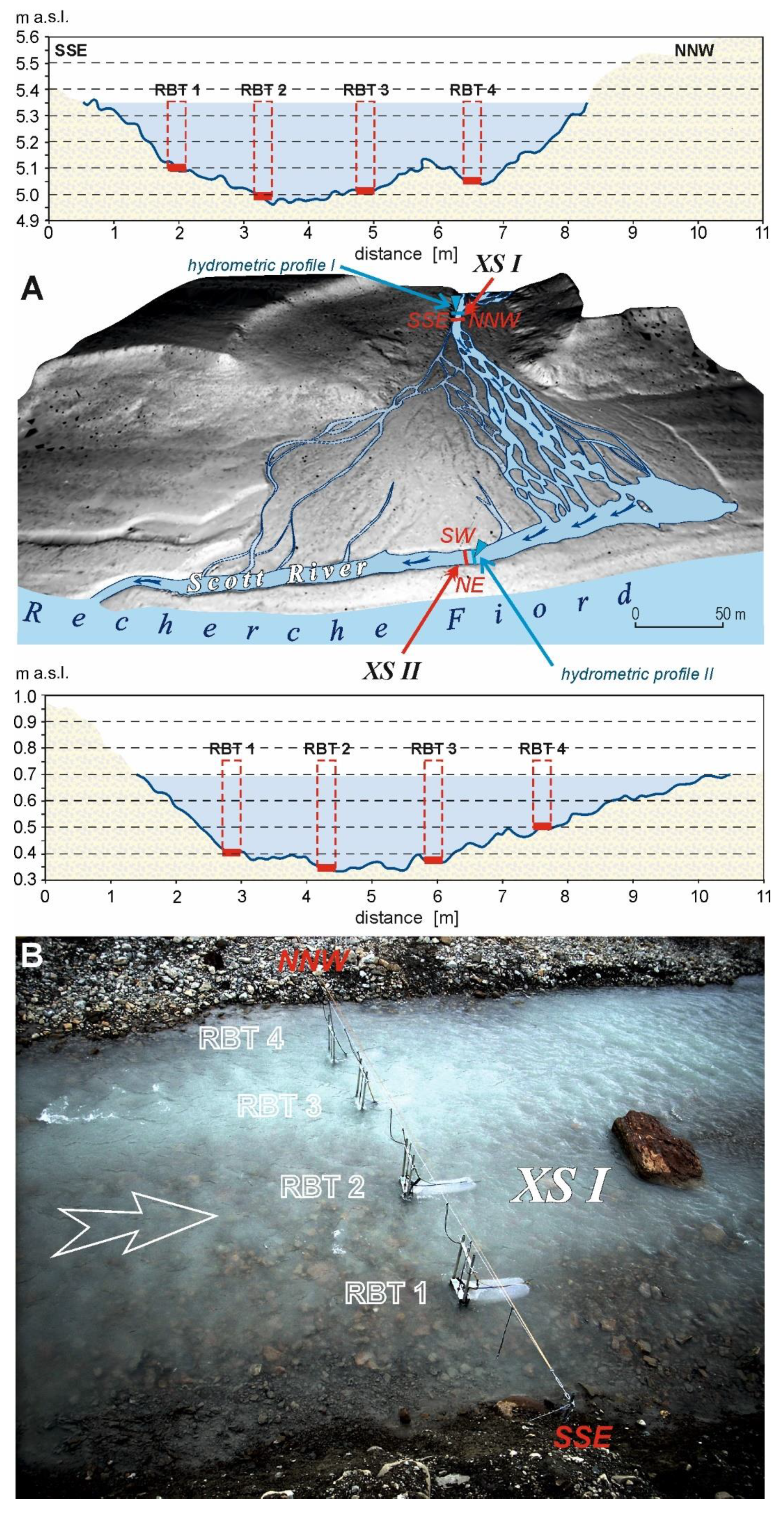
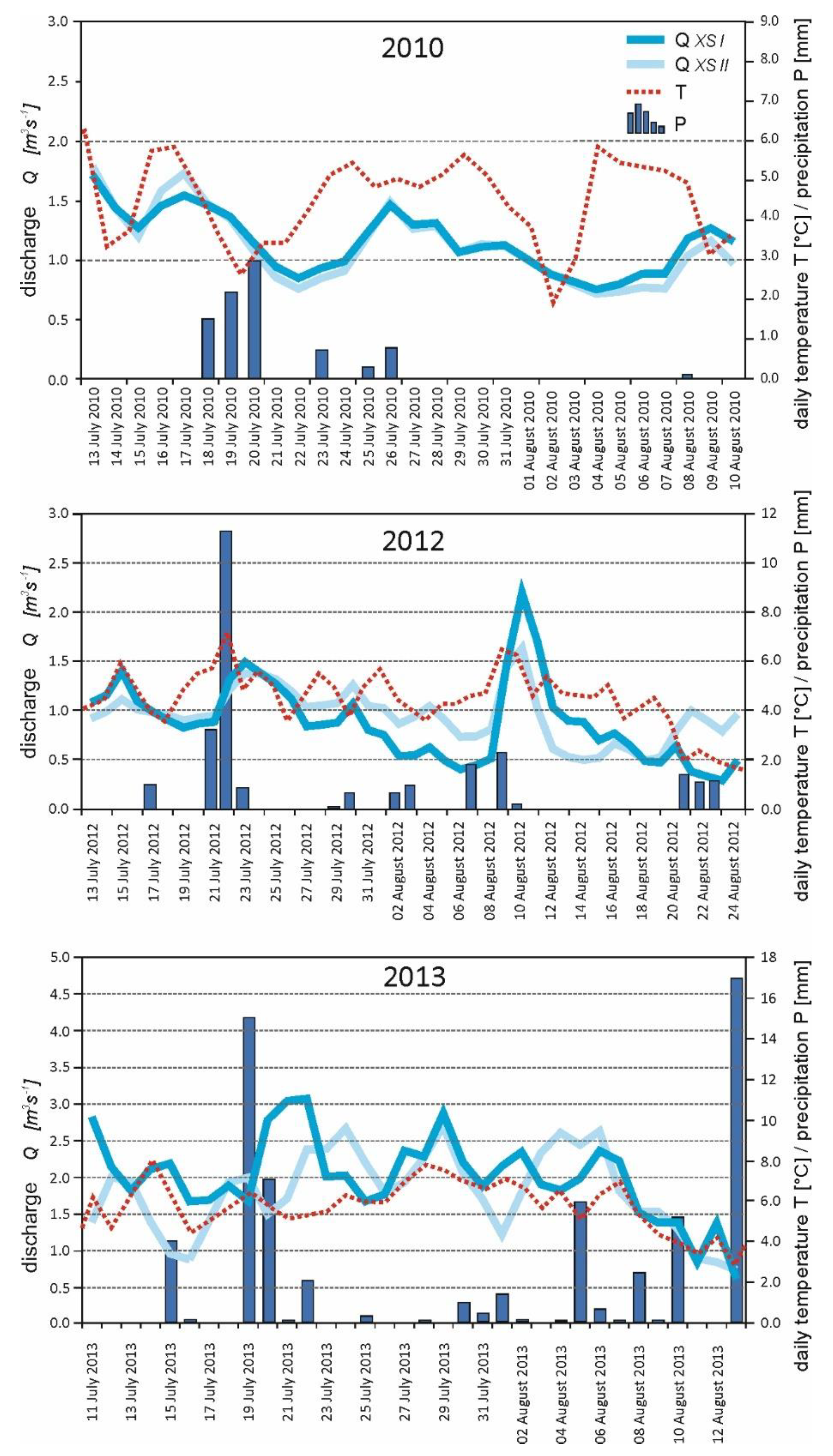
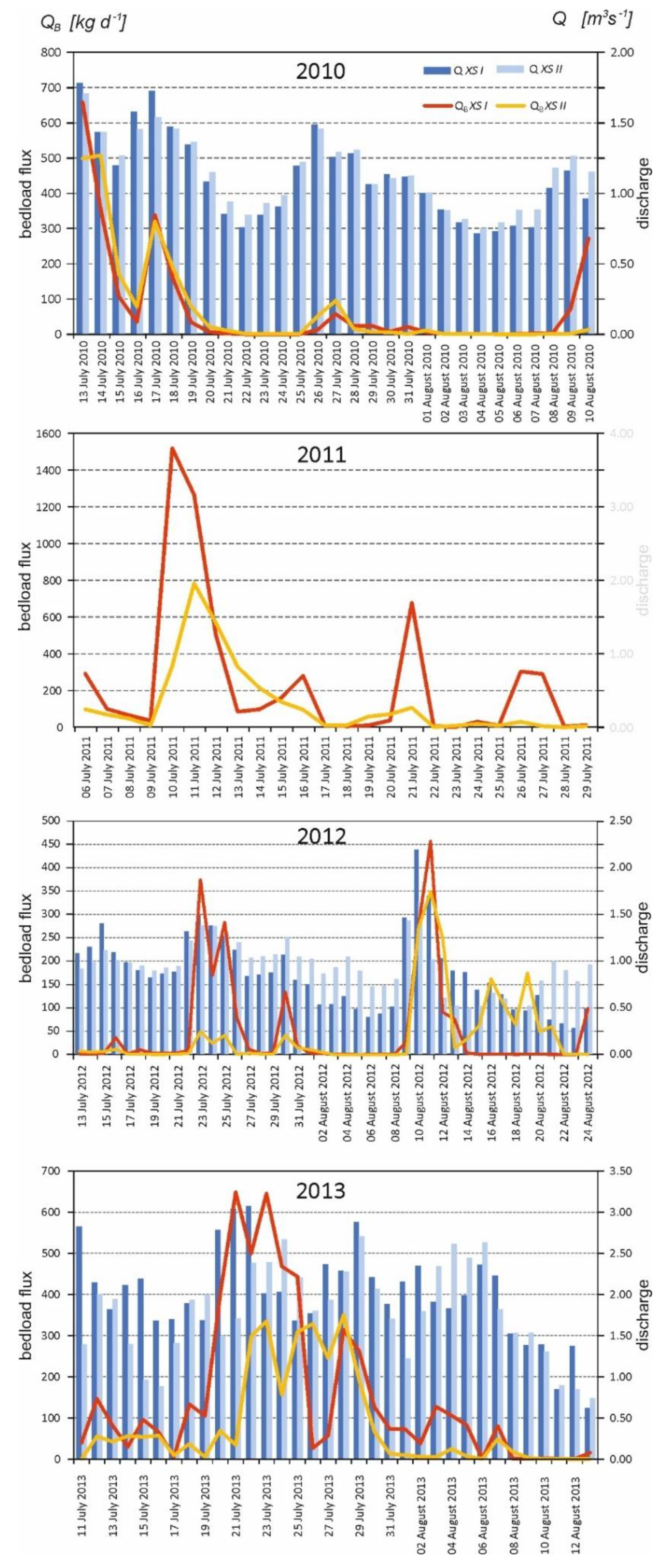
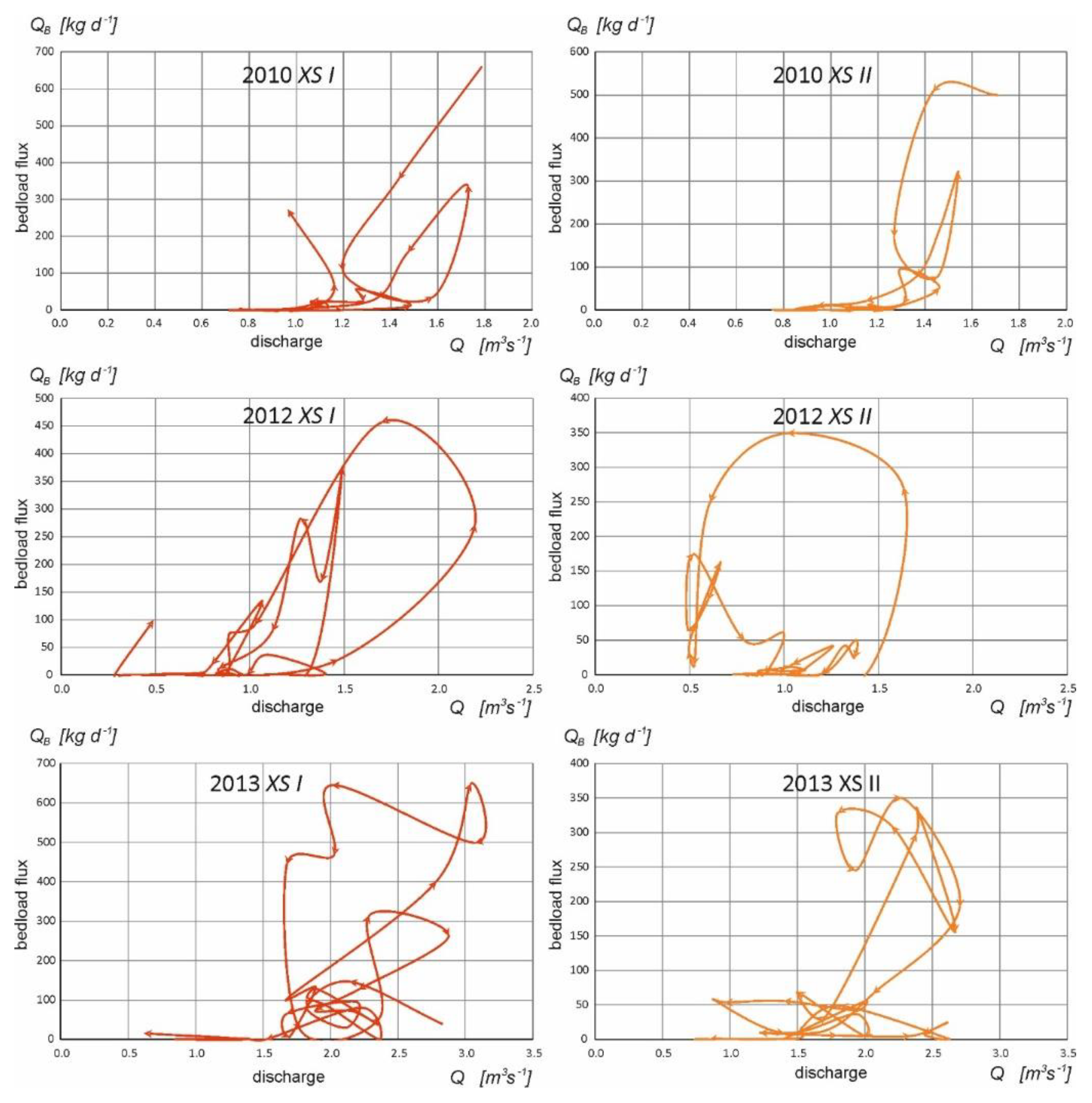
This study, which was conducted between 2010 and 2013, presents the results of direct, continuous measurements of the bedload transport rate at the mouth section of the Scott River catchment (NW part of Wedel-Jarlsberg Land, Svalbard). In four consecutive melt seasons, the bedload flux was analyzed at two cross-sections located in the lower reaches of the gravel-bed proglacial river. The transported bedload was measured using two sets of River Bedload Traps (RBTs). Over the course of 130 simultaneous measurement days, a total of 930 bedload samples were collected. During this period, the river discharged about 1.32 t of bedload through cross-section I (XS I), located at the foot of the alluvial fan, and 0.99 t through cross-section II (XS II), located at the river mouth running into the fjord. A comparison of the bedload flux showed a distinctive disproportion between cross-sections. Specifically, the average daily bedload flux QB was 130 kg day−1 (XS I) and 81 kg day−1 (XS II) at the individual cross-profiles. The lower bedload fluxes that were recorded at specified periods in XS II, which closed the catchment at the river mouth from the alluvial cone, indicated an active role of aggradation processes. Approximately 40% of all transported bedload was stored at the alluvial fan, mostly in the active channel zone. However, comparative Geomorphic Change Detection (GCD) analyses of the alluvial fan, which were performed over the period between August 2010 and August 2013, indicated a general lowering of the surface (erosion). It can be assumed that the melt season’s average flows in the active channel zone led to a greater deposition of bedload particles than what was discharged with high intensity during floods (especially the bankfull stage, effectively reshaping the whole surface of the alluvial fan). This study documents that the intensity of bedload flux was determined by the frequency of floods. Notably, the highest daily rates recorded in successive seasons accounted for 12–30% of the total bedload flux. Lastly, the multi-seasonal analysis showed a high spatio-temporal variability of the bedload transport rates, which resulted in changes not only in the channel but also on the entire surface of the alluvial fan morphology during floods.
Keywords: bedload sampling; bedload flux; river bedload trap; proglacial gravel-bed river; sediment budgeting; Svalbard bedload sampling; bedload flux; river bedload trap; proglacial gravel-bed river; sediment budgeting; Svalbard