Review

Friedel–Crafts: A Key Step in the Synthesis of Pharmaceutical Compounds

by
Konstantinos Anthopoulos
1,
Stefanos Michailidis
1,
Zafeiro Thomaidou
1,
Lydia Vogiatzaki
1 and
Nikolaos C. Kokkinos
1,2,3,*
1
Department of Chemistry, School of Sciences, Democritus University of Thrace, Ag. Loukas, 654 04 Kavala, Greece
2
Petroleum Institute, Democritus University of Thrace, Ag. Loukas, 654 04 Kavala, Greece
3
Hephaestus Laboratory, School of Sciences, Democritus University of Thrace, Ag. Loukas, 654 04 Kavala, Greece
*
Author to whom correspondence should be addressed.
ChemEngineering 2026, 10(3), 36; https://doi.org/10.3390/chemengineering10030036

Submission received: 10 January 2026 / Revised: 13 February 2026 / Accepted: 25 February 2026 / Published: 4 March 2026

Abstract

This comprehensive review provides a consolidated and practically oriented overview of the Friedel–Crafts reaction in pharmaceutical synthesis, bringing together data from 93 peer-reviewed studies published between 1962 and 2025. Through a structured and comparative analysis of the literature retrieved from the Scopus and PubMed databases, this work integrates scattered information into a single, accessible resource, designed to guide researchers in drug discovery and development. The findings identify alkylation and acylation as the dominant Friedel–Crafts transformations, often enabling the synthesis of pharmacologically relevant scaffolds depending on substrate structure and the efficiency and selectivity of the catalytic system. These include compounds with anticancer, anti-inflammatory, and antimicrobial potential. Trends in catalyst and solvent selection highlight both the persistent reliance on classical Lewis acids in chlorinated media and a gradual interest in more sustainable alternatives, although their adoption remains system-dependent. By consolidating 63 years of research into a unified reference, this review underscores the versatility and enduring relevance of Friedel–Crafts methodologies in medicinal chemistry but also offers a data-driven foundation for their optimized and more sustainable application in future pharmaceutical development.

1. Introduction

The Friedel–Crafts reaction, first reported in 1877, is fundamental to electrophilic aromatic substitution. It serves as a versatile tool for modifying aromatic compounds and certain activated heteroaromatics (e.g., indole, pyrrole, furan, thiophene), as it is generally unsuitable for heteroatom-rich systems due to Lewis acid coordination and deactivation. Its main variants, alkylation and acylation, have long enabled the efficient construction of structurally diverse molecules of high relevance to medicinal chemistry. The reaction remains a highly valuable tool in pharmaceutical synthesis, enabling the formation of C-C bonds that contribute to the construction and diversification of complex molecular frameworks present in many bioactive scaffolds of drugs and natural product analogs. Although traditionally dependent on Lewis acids and chlorinated solvents, recent advances—such as electrochemical activation, heterogeneous catalysis, and solvent-free protocols—have broadened its synthetic scope. Over the past decades, the pharmaceutical industry has increasingly capitalized on this versatility to access both simple intermediates and highly complex bioactive frameworks.
However, while classical Friedel–Crafts methodologies provide robust and powerful synthetic strategies, they also pose environmental and sustainability concerns, stemming largely from the use of toxic solvents and corrosive catalysts. These challenges highlight the need for continuous assessment and refinement. Modern research has responded by introducing greener solvents, recyclable catalytic systems, and milder operational conditions, thereby aligning Friedel–Crafts chemistry more closely with sustainability principles and green chemistry objectives.
Recognizing these evolving demands in pharmaceutical development, recent trends indicate that the field requires not only environmentally conscious methodologies, but also systematic, practically oriented guidance. The Friedel–Crafts reaction represents a versatile and frequently employed transformation in medicinal chemistry. However, it still lacks, to the best of our knowledge, a unified, comprehensive, and practically informative reference framework that systematically addresses optimal conditions as well as catalyst and reagent selection. This gap underscores the need for the present review, which aims to provide an up-to-date and concise overview that is currently missing from the field.
Following a thorough examination and comparative analysis of 93 peer-reviewed articles published between 1962 and 2025, this review critically evaluates the application of the Friedel–Crafts reaction in the industrial synthesis of pharmaceutical molecules and bioactive compounds. It focuses on reaction types, substrate and product profiles, solvent and catalyst choices, reaction efficiency, and the integration of sustainable practices. In doing so, this review compiles the continued significance and synthetic utility of the reaction in the pharmaceutical sector, while also documenting the expanding research interest surrounding its potential.
Significantly, the findings collectively suggest that the Friedel–Crafts reaction remains a dynamic and evolving synthetic tool, with clear potential for further development in pharmaceutical and medicinal chemistry applications. Ongoing methodological innovations, together with the growing emphasis on sustainability, are expected to expand its applicability even further in the coming years, reinforcing its enduring relevance in modern drug discovery and development.

2. Methods

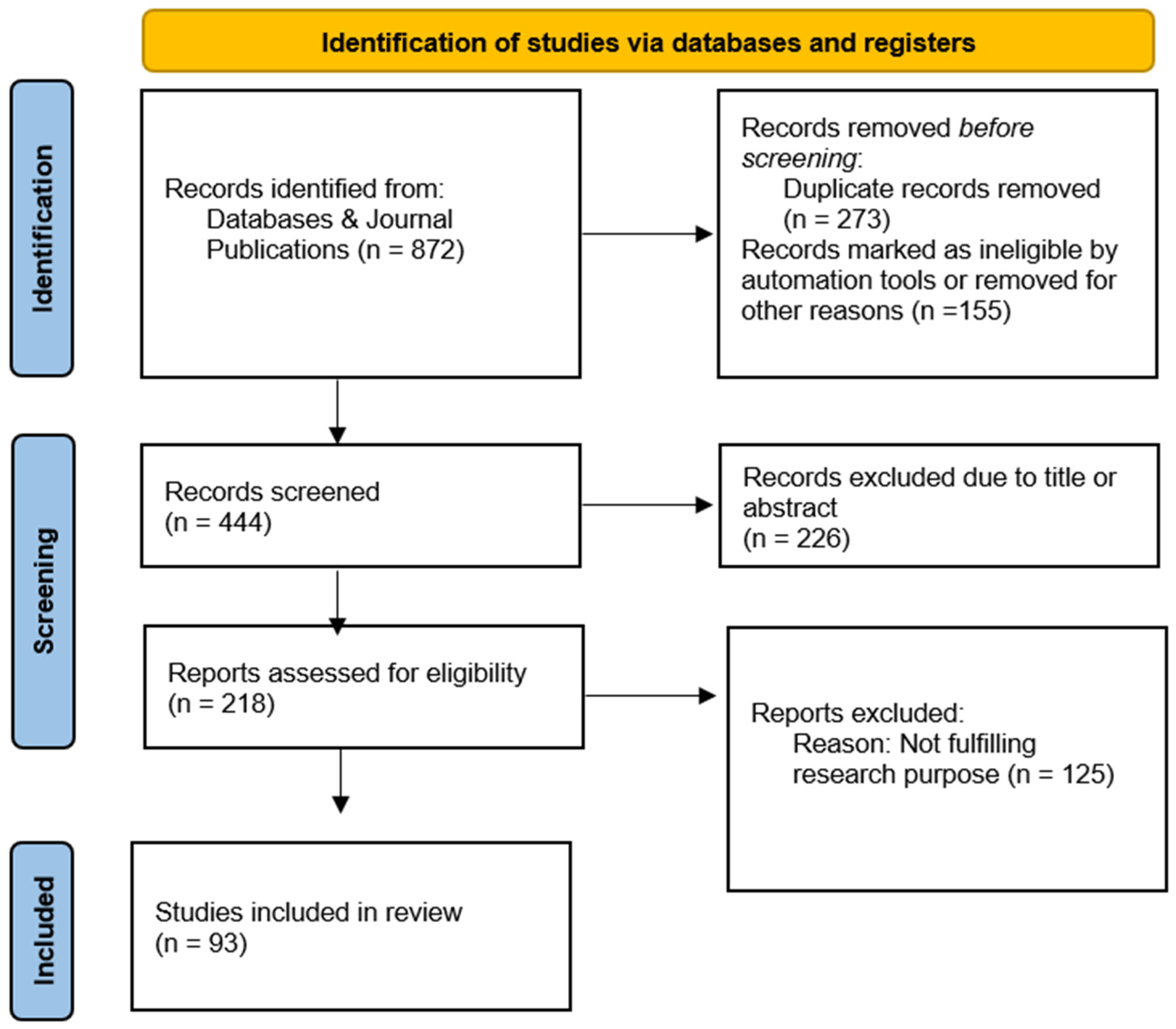
This comprehensive review was conducted using the Preferred Reporting Items for Systematic Reviews and Meta-Analyses (PRISMA), as shown in Figure 1. The literature search was performed using the Scopus and PubMed databases, along with articles published by MDPI. Restricting the search to three platforms allowed for a focused yet thorough coverage of relevant publications, while maintaining the manageability of the dataset. Publication screening was conducted for article titles, abstracts, and keywords with publication dates between 1962 and 2025. The search strategy used the keyword “Friedel–Crafts” in combination with each of the following terms: “pharmaceutical”, “bioactive”, “medication”, “medical”, “drug”, “API”, “clinical”, “biochemical”, “biochemistry” and “biomolecule”. Keywords were searched in either the title, abstract or keywords of the articles, while the “AND” operator was used on all searches in all of the three sources. The search was limited to articles published in English and in their final publication stage. Moreover, the dataset consisted solely of articles with full-text availability as this was a deliberate inclusion criterion to allow a comprehensive evaluation of experimental methodologies and results. In summary, 872 papers were found (624 from Scopus, 234 from PubMed and 14 from MDPI) and exported from the databases to a spreadsheet, including the document title, abstract, authors, and year. Among them, 273 duplicates were found and removed. Furthermore, 155 records were excluded as ineligible by automation tools, for reasons such as having unavailable full text and incomplete or inconsistent bibliographic information, thus leaving 444 records for screening. Moreover, 226 records were removed before screening, because the titles and/or abstracts did not correspond to the subject area. Specifically, either the final product was not a pharmaceutical compound, or the Friedel–Crafts reaction was not employed in the synthetic process. Thereafter, the most resource-intensive stage of the screening of the records began, wherein all selected articles underwent thorough full-text examination and detailed analytical assessment. All 218 remaining articles were screened to ensure that the Friedel–Crafts reaction was both actively employed in the synthesis and served as the main synthetic transformation leading to the production of a pharmaceutical compound. Studies in which the reaction was only briefly mentioned or used in a peripheral step of the synthesis were excluded. Based on this criterion, 125 articles were excluded. After applying all inclusion and exclusion criteria, the final dataset of this review consisted of 93 articles; all of these were relevant to the topic and met the scope of investigating the Friedel–Crafts reaction in pharmaceutical synthesis.

3. Results and Discussion

3.1. Friedel–Crafts Variants

The Friedel–Crafts reaction includes multiple variants, several of which were identified in the articles examined. Overall, it is safe to conclude that the most frequently employed type of the Friedel–Crafts reaction is alkylation, which appears a total of 45 times across the 93 articles studied (~42%)—representing just under half of all cases. This proportion was expected, given that alkylation stands as one of the two key variants of the Friedel–Crafts reaction. The next most frequently reported reaction type corresponds to acylation, the other key variant of the Friedel–Crafts reaction, which appears in 34 articles (~32%). Acylation is distinguished from alkylation by the nature of the introduced group, incorporating an acyl rather than an alkyl moiety. Another noteworthy type, observed in 12 out of 93 articles (~11%), is cyclization. The fundamental distinction of cyclization from alkylation and acylation lies in its ability to form cyclic aromatic compounds which are not accessible by typical Friedel–Crafts reactions.
Beyond the two main reaction types—alkylation and acylation—and cyclization, isolated Friedel–Crafts-inspired transformations, such as arylation and trifluoromethylthiolation, were also identified, owing to their mechanistic divergence from the classical Friedel–Crafts reaction. While significantly less common than the key Friedel–Crafts reaction types, arylation has also been reported in one study, highlighting the ability of the Friedel–Crafts manifold to engage in C-C bond formation through mechanisms beyond traditional electrophilic substitution. This approach involves the nucleophilic addition of (hetero)arenes to highly electrophilic N-acylimines, prepared in situ from aldehydes and amides, enabling the direct synthesis of α-arylglycines—key intermediates for the synthesis of α-arylglycines—through bismuth, or iron-catalyzed multicomponent reactions with water as the only by-product [1]. Notably, the yields of the reaction (54–95%) suggest that, when applicable, this approach can be synthetically useful; however, the scope is limited to highly reactive arenes and often requires stoichiometric Brønsted or Lewis acids.
The latter—trifluoromethylthiolation—does not involve the formation of a carbocation intermediate, and proceeds via direct electrophilic attack, enabling the functionalization of less activated aromatic rings. These features mechanistically differentiate trifluoromethylthiolation from Friedel–Crafts alkylation and acylation, which install simple alkyl or acyl groups through carbocation intermediates and are typically limited to electron-rich substrates. More precisely, in the study by Gregorc et al., trifluoromethylthiolation enabled the introduction of CF3S groups onto tryptophan—and tyrosine-based substrates under Brønsted acid catalysis [1]. Although reported only once, this transformation illustrates the growing interest in incorporating highly electron-withdrawing and lipophilicity-enhancing substituents—features of increasing importance in modern medicinal chemistry. The broad yield range of this reaction (29–96%) further indicates that substrate electronics play a significant role in determining reaction efficiency. The wide yield range (29–96%) stems from the combined effects of N-protection and the nature of the catalyst (TsOH, TfOH, or BF3·OEt2), as these parameters critically dictate electrophile activation and the cyclization/ring-opening equilibrium, with Lewis acid activation under thermal conditions favoring the quantitative formation of CF3S-Trp. The lowest yield (29%) obtained with TsOH at room temperature (RT) is attributed to limited electrophile activation, which disfavors the efficient formation of the ring-opened CF3S-Trp., whereas the high yields (96%) obtained with TfOH under thermal activation result from efficient ring opening and full conversion to CF3S-Trp.
It should be noted that all of the aforementioned variants of the Friedel–Crafts reaction occur either intramolecularly or intermolecularly; however, emphasis is placed on the type of Friedel–Crafts reaction itself rather than on this classification criterion.

3.1.1. Friedel–Crafts Alkylation

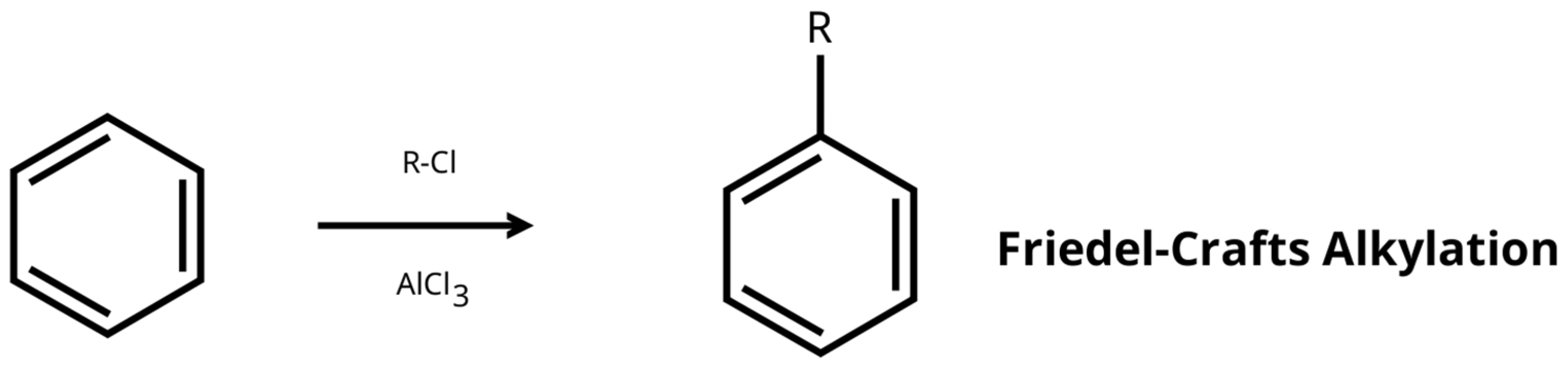
Friedel–Crafts alkylation is a catalyzed electrophilic aromatic substitution specifically used to install alkyl groups onto aromatic rings, as shown in Figure 2. Alkylation commonly involves carbocationic intermediates, with some systems operating via stabilized π-complexes, thereby increasing the likelihood of rearrangements (hydride or alkyl shifts) that lead to isomerized products. Despite these challenges, the reaction remains an important tool in industrial processes. In pharmaceutical and biomolecule synthesis, Friedel–Crafts alkylation is particularly valuable for modifying aromatic cores, as it serves as an important step in various synthetic methodologies, since several pharmaceutical, pioneering and otherwise noteworthy pathways have been reported, as illustrated in Table 1.
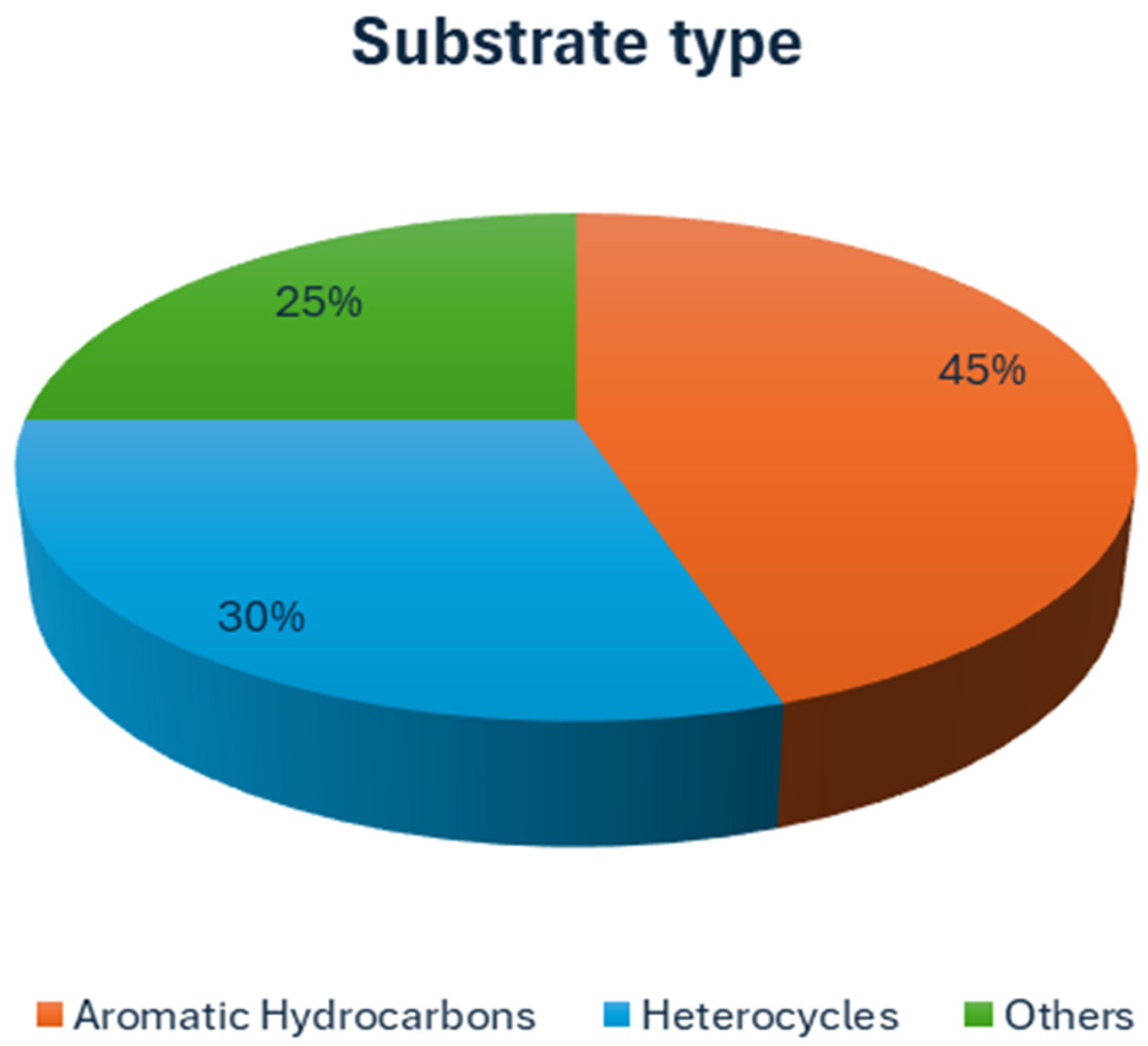
This reaction yields a diverse set of products, often with high synthetic efficiency and selectivity. The diversity of products in terms of bioactivity naturally necessitates the use of different substrates and reagents depending on the target molecule. Based on the conducted analysis, it is observed that aromatic hydrocarbons and heterocyclic compounds [2,3,4,5,6] are preferred for alkylation processes, due to their increased nucleophilicity. Benzene and its derivatives are widely employed as substrates, not only due to their commercial availability but, more importantly, because their reactivity is governed by the aromatic ring’s nucleophilicity and the regioselective influence of substituents. The presence of electron-donating groups activates the ring by increasing π-electron density, which stabilizes the positively charged σ-complex (arenium ion) intermediate during the rate-determining electrophilic attack. On the other hand, electron-withdrawing groups significantly diminish reactivity [7]. The general prevalence of both of the aforementioned substrate types, in all types of the Friedel–Crafts reaction, is illustrated in Figure 3. Moreover, compounds such as skatole (3-methylindole) [8] incorporate heteroatoms (e.g., N, O) into the final product framework, potentially enhancing pharmacological profiles and facilitating subsequent structural modifications. In some cases, substrates are combined with multifunctional molecules (e.g., azodicarboxylic derivatives) to construct complex molecular frameworks [9]. In several instances, substituted aromatic substrates are combined with electron-withdrawing agents such as ketones or anhydrides (e.g., benzoic anhydride) [10] for the direct introduction of pharmaceutically relevant functionalities.
Regarding solvents, DCM (CH2Cl2) and DCE ((CH2)2Cl2) represent the predominant choice and they are used with Lewis acid catalysts, such as AlCl3 and FeCl3 [3,4]. The moderate polarity of DCM, combined with its compatibility with Lewis acids and its ability to effectively dissolve aromatic substrates and key reaction intermediates, establish it as the solvent of choice for reactions requiring precise reaction control. Conversely, solvent-free conditions represent an emerging trend toward sustainable catalytic processes, with yields up to 95%, demonstrating that extensive solvent volumes are unnecessary in numerous applications. Finally, specialized solvents, such as N,N-dimethylformamide (DMF) [11], appear in limited applications, typically for reactions with sensitive substrates requiring mild conditions. It is also worth mentioning that many reactions are found to be carried out at 0 °C [12], at room temperature (RT) [5], and a few under intermediate conditions [13]. That can be explained since Lewis acids (e.g., AlCl3, FeCl3, ZnCl2, SnCl4) promote the reactions efficiently under mild conditions.
Apart from conventional Lewis acids, catalytic systems featuring synergistic ionic modulation and chiral, organic elements have been identified, affording enhanced selectivity and catalytic efficiency, such as Ca(NTf2)2/NBu4PF6 [14]. In multiple reactions, several enzymes are employed as catalysts (e.g., DMATS [15], PyrF [16], Ptases and AerPT [13]) in alkylation reactions due to their remarkable selectivity, which enables the highly controlled incorporation of alkyl groups with notable precision. Specifically, aromatic prenyltransferases (PTases) are enzymes that catalyze the Friedel–Crafts reaction, transferring prenyl groups from isoprenoid diphosphates to aromatic acceptors [13]. This enzymatic prenylation represents a biologically mediated Friedel–Crafts alkylation, enabling regioselective C-C, C-O, or C-N bond formation on complex aromatic scaffolds, such as flavonoids or hapalindole derivatives. The formation of a carbocation intermediate from the prenyl donor (e.g., DMAPP) drives an electrophilic attack on the electron-rich aromatic ring, with the local electronic environment of the target carbon significantly influencing regioselectivity. For instance, in hapalindole biosynthesis, AmbP1 and AmbP3 PTases display notable plasticity in prenyl group transfer, with site selectivity modulated by factors such as metal ions or the stereochemistry of the substrate [17]. Similarly, the prenylation of flavonoids by PTases contributes to the structural diversity and bioactivity of these natural products [17].
A study worth highlighting demonstrated a green, metal-free strategy that highlights the deliberate use of electrochemical oxidation in benzyl alcohol as a sustainable alternative to commonly used catalysts [18]. Notably, electrochemical methods, including the aforementioned, operate at an ambient temperature (25 °C), aligning with emerging trends in energy-efficient synthesis. This thermal flexibility reveals the wide-ranging utility of Friedel–Crafts chemistry across diverse catalytic systems. Of particular significance is that electrochemical methods reduce catalyst loading via paired oxidation–reduction, slashing waste. Future advancements will likely focus on engineering enzymes for active pharmaceutical ingredient (API) synthesis, as exemplified in the work of Metzger et al. [15], as well as on scaling photoelectrochemical methods [9] to minimize the reliance on toxic catalysts while maintaining high efficiency.
Friedel–Crafts alkylation processes yield a broad spectrum of products with pharmaceutical and biochemical relevance, including compounds exhibiting anti-inflammatory [19,20,21,22], antimicrobial [17,23,24], antioxidant [25], antidiabetic [12] and neurological [26] activity. Notably, Friedel–Crafts alkylation appears to be directly linked to the synthesis of compounds that display antitumor and anticancer activity [5,9,11,14,16,19,25,27,28,29,30,31,32,33,34,35,36,37,38,39]. Furthermore, the use of Friedel–Crafts alkylation positively contributes to the enhancement of the absorptivity of pharmaceutical molecules such as salicylic acid [40], further underscoring the close relationship between the Friedel–Crafts reaction and pharmaceutical compounds. It has also been highlighted that the asymmetric Friedel–Crafts alkylation of indoles, catalyzed by either chiral metal complexes or chiral organocatalysts, represents one of the most powerful and atom-economical strategies for accessing optically active indole derivatives [35], which are important bioactive molecules [41]. Finally, a number of examples demonstrate that simple Friedel–Crafts alkylation can also be a key step. For instance, in the study by Suri et al. [12], the synthetic route that is followed incorporates Friedel–Crafts alkylation and it ultimately affords diarylmethanol derivatives. Table 1 presents a summary of the catalytic systems, substrates, reaction parameters and yields reported in the literature with alkylation entries arranged and grouped systematically according to the specific catalysts used in the reactions.
Table 1. Overview of alkylation transformations classified by catalyst.
CatalystSubstrateProductsSolventConditionsYieldRef.
AlCl3Aromatic natural products & R–COClHeterocyclic estradiol derivativesCH2Cl2, CS260 °C93%[2]
Ethyl α-chloro-α-(methylthio)acetateEthyl α-(methylthio)arylacetateCH2Cl2 or solvent-free0 °C or RT,
10–90 min
5–92%[20]
Substituted benzenesBenzophenone derivativesN/ART-120 °C, overnight31–97%[32]
IndoleCelastrol derivatives CH2Cl2RT, overnight99%[19]
N-phenylmaleimide & thiophene1-Phenyl-3-(thiophen-2-yl)pyrrolidine-2,5-dioneCH2Cl2RT, 24 h85%[5]
p-xylene & CHCl3Diarylmethanol derivativesCHCl30 °C, 6 hUp to 94%[12]
Aromatic diphenols & 4,4′-difluorobenzophenoneHyperbranched Poly(ether ketone)s (HBPEKs)(CH2)2Cl260 °CN/A[4]
Aromatic ringsPoly(p-phenylene), hyperbranched, ladder polymers(CH2)2Cl2Reflux, 70 °C, 48 h75–80%[3]
FeCl3Aromatic natural products & R–COClHeterocyclic estradiol derivativesCH2Cl2, CS260 °C93%[2]
Aromatic ringsPoly(p-phenylene), hyperbranched, ladder polymers(CH2)2Cl2Reflux, 70 °C, 48 h75–80%[3]
Aromatic diphenols & 4,4′-difluorobenzophenoneHyperbranched Poly(ether ketone)s (HBPEKs)(CH2)2Cl260 °CN/A[4]
Aromatic compounds & 1,2,3-triazoles4-(4-substitutedaryl)-1H-1,2,3-triazoles THF50 °C, overnight70–91%[10]
Poly(AN-co-EGDMA-co-VBC) & nitrobenzeneHXL poly(AN-co-EGDMA-co-VBC)C6H5NO280 °C, overnight48%[40]
H3PO4Benzoxazinone derivatives & pyrrole derivativesPyrrolyl & trifluoromethyl dihydrobenzoxazinonesC3H8O3RT, overnight93–99%[37]
Indole derivatives & α-iminophosphonatesEnantioenriched α-aminophosphonate-functionalized indole derivativesCH2Cl2RT, overnight64–75%[39]
Indoles, pyrroles, acyclic α-ketimino estersEnantioenriched α-amino acid derivativesCH2Cl2−78 °C, overnight53–99%[24]
ZnCl2Aromatic natural products & R–COClHeterocyclic estradiol derivativesCH2Cl2, CS260 °C93%[2]
Aromatic ringsPoly(p-phenylene), hyperbranched, ladder polymers(CH2)2Cl2Reflux, 70 °C, 48 h75–80%[3]
Ethyl α-chloro-α-(methylthio)acetateEthyl α-(methylthio) arylacetateCH2Cl2 or solvent-free0 °C or RT,
10–90 min
5–92%[20]
Aromatic aldehydes2,4,5-trisubstituted-1H-pyrrol-3(2H)-ones EtOHReflux, overnight68–89%[33]
TiCl4Aromatic ringsPoly(p-phenylene), hyperbranched, ladder polymers(CH2)2Cl2Reflux, 70 °C, 48 h75–80%[3]
Ethyl α-chloro-α-(methylthio)acetateEthyl α-(methylthio) arylacetateCH2Cl2 or solvent-free0 °C or RT,
10–90 min
5–92%[20]
Hydroquinone dimethyl etherErbstatin methyl etherCH2Cl20 °C71% & 74%[23]
TfOH1-(3,4-dimethoxybenzyl)-6,7-methylenedioxy-1,2,3,4-tetrahydroisoquinoline (for berberine), 1-(benzo[d][1,3]dioxol-5-ylmethyl)-6,7-methylenedioxy-1,2,3,4-tetrahydroisoquinoline (for coptisine), 6-hydroxy-7-methoxy-1-(dimethoxymethyl)-2-(3,4-dimethoxybenzyl)-1,2,3,4-tetrahydroisoquinoline (for jatrorrhizine)Alkaloids: berberine, coptisine, jatrorrhizineCH2Cl20 °C79%, 57% & 60% respectively[8]
Aromatic hydrocarbons & benzyl fluoridesDiarylmethanesCH2Cl2 or neatRT-40 °C,
2–4 h
93%[42]
Catalyst-freeElectron-rich arenes & benzoic anhydrideAcylated aromatic compoundsSolvent-free140 °C, 2–3 h65–90%[6]
Aromatic rings & dicationic compoundsDiarylmethaneCH2Cl20 °C or RT99%[9]
H2SO44-Hydroxybenzoic acid3,5-Diisopropyl-4-hydroxybenzoic acidH2SO4/H2O (9:1)60 °C84%[22]
Yb(OTf)32-furfuryl, 2-thienylDiheteroarylmethanesCH3NO2RT, 3–15 min54–78%[36]
(R)-α,α-Bis[3,5-bis(trifluoromethyl)phenyl]-2-pyrrolidinemethanol tert-butyldimethylsilyl ether(E)-6-(3,5-Dimethoxyphenyl)hex-2-enalBicyclic resorcinols & CBD analogsCHCl350 °C, 7 h31–78%[26]
(S)-DTE-BPAImines & Indolesα-aminoalkyl indolesN/AN/AN/A[43]
AgSbF6C3-bromo diketopiperazine (+)(+)-luteoalbusin A and (+)-luteoalbusin B CH2Cl2RT77%[27]
Sc(OTf)3, BF3·Et2OAromatic natural products & R–COClHeterocyclic estradiol derivativesCH2Cl2, CS260 °C93%[2]
Bi(OTf)3Aromatic hydrocarbons & N,N-dimethylanilineBis(aryl methyl)anilinesSolvent-free80 °C, 1–3 h72–95%[44]
C25H31NOSiIndole & nitroalkene3-(1-nitroalkyl)indoleDMFRT, overnight90–96%[11]
Ca(NTf2)2 & NBu4PF6Activated cyclopropanes & Benzo[b]furanγ-Benzo[b]furanylC7H870 °C, overnight36–89%[14]
Camphor-10sulfonic acid (CSA)4-methylphenol & ethyl 2-[hydroxy(phenyl)methyl] acrylate3-hydroxycoumarins Solvent-free100 °C, 2 h80%[7]
Chiral iridium catalyst with (R)-prophos ligand1,3,5-trimethoxybenzene & methacroleinEnantioselective monoalkylated adducts from aromatics/heteroaromatics with enals or nitroalkenesCH2Cl2−10 °C,
6–72 h
15–58% & 98%[45]
Cu(MeCN)4BF4Electron-rich arenes & α-diazoestersBenzyl esters(CH2)2Cl2RT, overnight52–94%[46]
DHQD, DHQ2-naphthols & azodicarboxylic compoundsAxially chiral anilidesCH2Cl2RT98%[47]
DMATS enzymeDMAPP & L-Tryptophan4-(dimethylallyl)-L-tryptophanN/AN/AN/A[15]
Enzyme PyrFAromatic compoundMeroterpenoid Pyrrocidine BN/AN/AN/A[16]
Enzymes AmbP1 & AmbP3cis-indolylvinyl isonitrile & dimethylallyl diphosphate (DMAPP)Hapalindole U & derivativesN/ApH = 6–8N/A[17]
Fe–Pd bimetallic catalyst systemSubstituted indole Bis-heteroaryl indole derivativesMeOH60 °CHigh[28]
g-C3N4N-aryl glycinesDiarylmethaneMeCNRT, overnight82%[34]
HFIP & PFTBIndoles, pyrroles, electron-rich arenesβ-Nitroalkylated indoles, pyrroles, arenesHFIPRT, overnight62–99%[38]
Hg(OTf)2 or Hg(SO3C4F9)2THCElisapterosin BC6H6 & C7H870 °C, 15 min N/A[31]
K2CO3 & n-Bu4PBrIndoles & trifluoromethyl ketonesTrifluoromethyl
(indolyl)
phenylmethanol
H2ORT, overnight63–99%[35]
Li/NH3Benzoic acids & carbonyl compounds1,3-cyclohexadienesLiquid NH3−78 °C, RT65–93%[21]
Not used (via electrochemical oxidation)Benzyl alcohols1,1-Disubstituted tetrahydronaphthalene derivativesMeCNRTUp to 85% [18]
Pd(OAc)2 & MPAAAromatic compounds with an amide directing group & olefinsArylethylene derivatives(CH2)2Cl2, Ag2CO3100 °C, overnight55–85%[25]
Ptases & AerPTFlavonoid ringMaIDT and CtIDTHCl30 °C, 30 min, pH = 924–30%[13]
PTSAIndolyl alcoholsFused-polycyclic IndolesMeCNRT or 50 °C, overnight55–90%[30]
SnCl4Ethyl α-chloro-α-(methylthio)
acetate
Ethyl α-(methylthio)arylacetateCH2Cl2 or solvent-free0 °C or RT,
10–90 min
5–92%[20]
Y(OTf)3p-tolualdehyde and morpholine C3-alkylated imidazo [1,2-a]pyridinesC7H8110 °C, overnight90%[29]

3.1.2. Friedel–Crafts Acylation

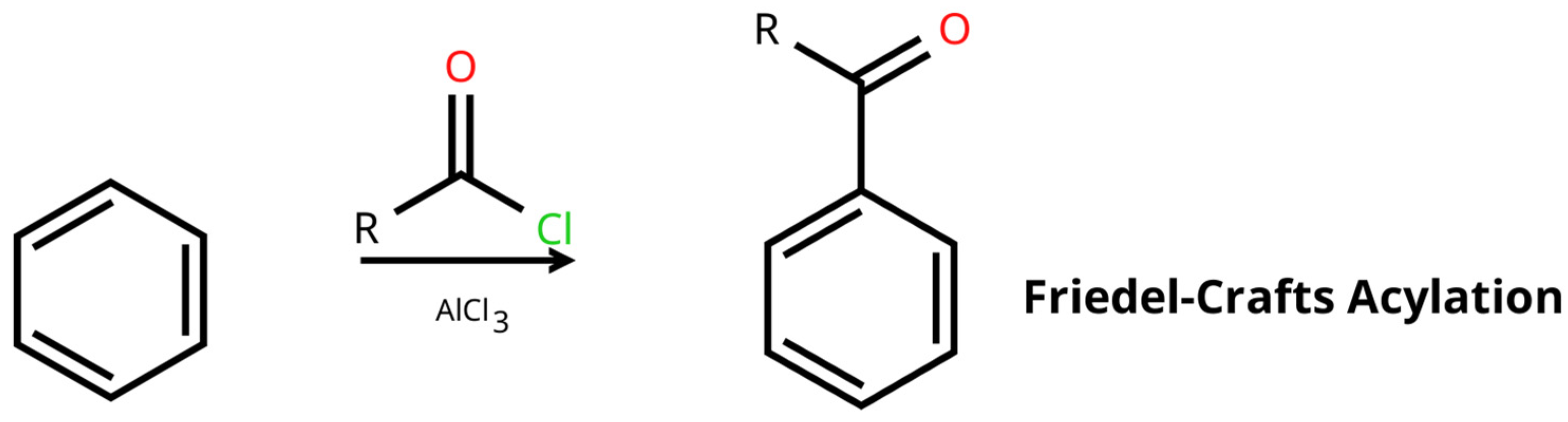
The Friedel–Crafts acylation reaction entails the catalyzed introduction of an acyl group (R-CO-) onto an aromatic ring, as shown in Figure 4, and represents an important transformation in the synthesis of structurally diverse bioactive compounds.
In addition to the general preference for electron-rich [6], substituted aromatics, the substrate scope reported in these studies demonstrates that acylation is broadly tolerated across a wide range of nucleophilic aromatic systems. Highly activated arenes (e.g., 1,4-dihydroxy-2,6-dimethoxybenzene [48], 3-methyl-1,4-dimethoxy-naphthalene [49]), heteroaromatic scaffolds (furan [50], benzofurans [51], indoles, pyrroles, thiophenes [52]), and benzylic or aniline-type electron donors all promote regioselective acylation by stabilizing the σ-complex and lowering the activation barrier. Nonetheless, regioselectivity in these systems—particularly in heteroarenes such as furans and indoles—is influenced not only by electronic effects but also by steric blocking and prior modifications, such as esterification. Moreover, substrates containing weakly activating groups (toluene [53] and acetanilide [54]) or bulkier π-systems (perylene [55], phenyl(hetaryl)silanes/germanes/stannanes [56]) were also successfully acylated as shown in Figure 3. However, it should be noted that for these less reactive or sterically demanding substrates, the reaction efficiency is often compromised, leading to moderate or variable yields (e.g., 52–70%) and potential selectivity issues compared to highly activated systems. Heterocyclic ester precursors [57] and activated amides [58] further expand the scope, demonstrating that both classical and non-classical aromatic nucleophiles can participate in Friedel–Crafts acylation under the reported conditions. Reaction efficiency and yields, however, vary depending on the substrate (Figure 3), with certain less-nucleophilic or structurally demanding systems leading to comparatively low yields in some cases.
Friedel–Crafts acylation reactions are usually performed at low-to-moderate temperatures, most commonly between 0 °C [59,60,61] and RT [55,62,63], with mild heating applied when required. Notably, a few studies report Friedel–Crafts acylation at temperatures above the typical range (Table 2). In the case of indanone formation [64], the reported temperature range spans 0–250 °C, with the reaction carried out under reflux to prevent solvent evaporation. In another study, relatively high temperatures reaching up to 120 °C, which are above the boiling point of DCE, indicate the use of a closed reaction setup. That is necessary in order to maintain the solvent in the liquid phase and accommodate the requirements of the radiochemical transformation [65]. In a specific example, the use of a high-boiling solvent, DMF [66], enabled elevated reaction temperatures within the range of 40–101 °C without solvent loss. Overall, acylation may be performed at elevated temperatures when dictated by the choice of solvent or specific reaction conditions.
While AlCl3 remains the most frequently employed catalyst, accounting for approximately 44% of reported acylation reactions, a variety of other catalysts have been explored and demonstrated to be effective in promoting Friedel–Crafts acylation under diverse conditions. However, the strong Lewis acidity and moisture sensitivity of AlCl3 may limit its compatibility with hydrolysis-sensitive functional groups. Thus anhydrous conditions are employed (e.g., [2,3,4]) so that its applicability is not restricted in certain substrate classes (Figure 3). It is evident that the appropriate choice of catalyst is decisive in achieving efficient and selective acylation. Strong Brønsted acids and superacids, such as TfOH [49,57,67], CF3SO3H [58], or Tf2O [68], facilitate the generation of acylium ions from acyl precursors, allowing reactions to proceed on less reactive substrates while minimizing side reactions with a reduced formation of by-products, although the potential for acid-catalyzed rearrangements or polyacylations must be considered. More specialized catalysts, including TMSOTf [52], AgNTf2 [69], NbCl5 [64], Cu(OTf)2 [62], or combinations with anhydrides and Lewis acids, are employed to activate particularly inert or sensitive substrates under milder conditions. Solid-supported acids or reagents such as silica sulfuric acid [70] and POCl3 [65] offer alternative, potentially more sustainable approaches.
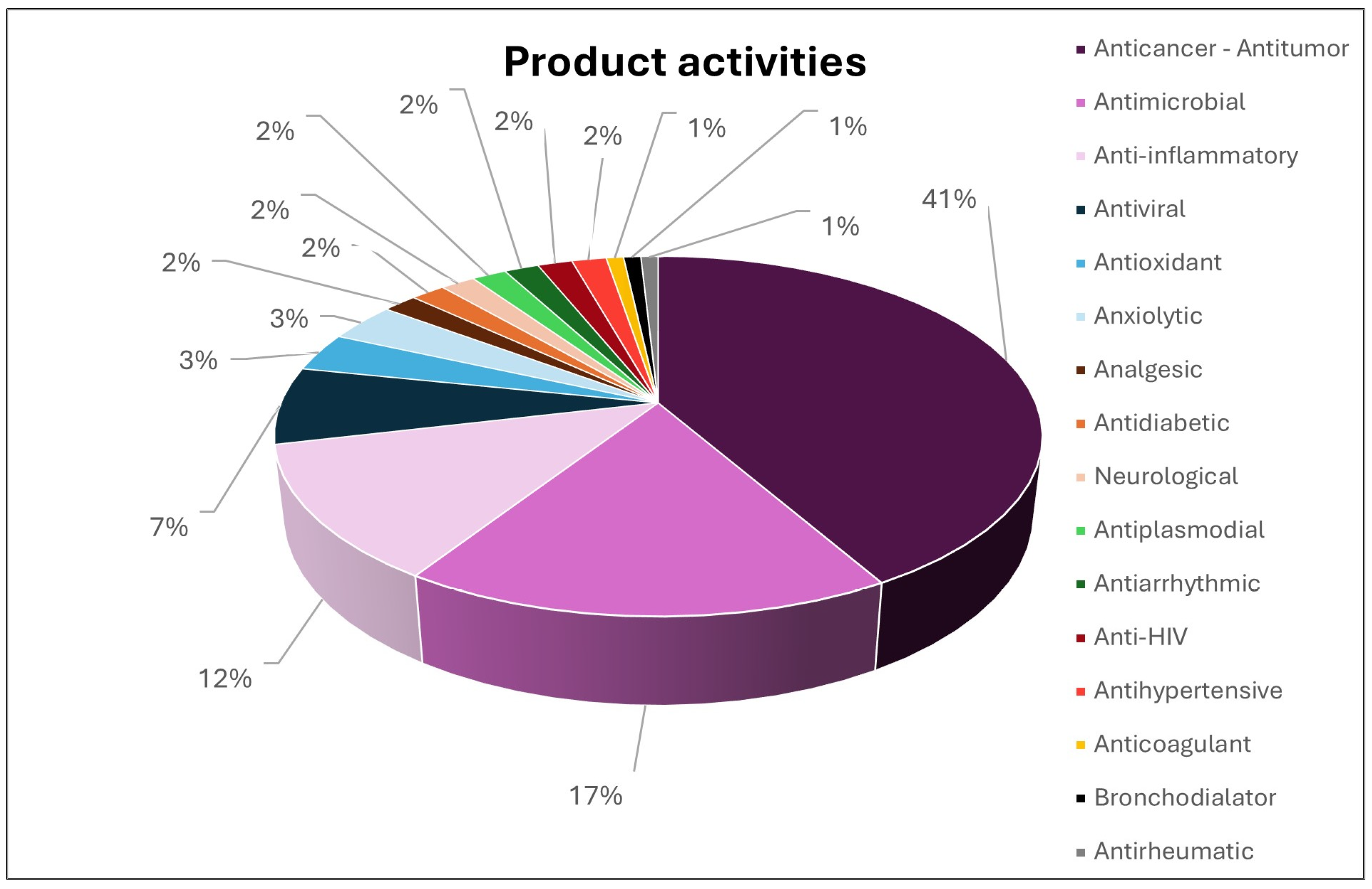
As illustrated in Figure 5, the various Friedel–Crafts reaction variants exhibit a broad spectrum of bioactivities. Acylation in particular constitutes a key step in the synthesis of the widely known Ibuprofen [71]. Moreover, numerous chemical entities exhibiting antiplasmodial [59], antiviral [55,58,72], antitumor/anticancer [56,60,63], antiarrhythmic [73], anti-HIV [61], antimicrobial [70,74], antioxidant [74], antihypertensive [66], anti-inflammatory [75,76], and anticoagulant [76] activities, include as an essential step in their synthesis the Friedel–Crafts acylation. The synthetic routes employed for the preparation of the aforementioned compounds vary in terms of sustainability. For example, the synthesis of 2,4-diacetylphloroglucinol (DAPG) [70] was conducted under solvent-free conditions, whereas the synthesis of (2-butyl-5-nitrobenzofuran-3-yl)(4-hydroxyphenyl)methanone [73] relied on a conventional solvent, CH2Cl2. It is also worth noting the study by Kamma et al., which presents the first total synthesis of pedalitin with full characterization, wherein Friedel–Crafts acylation is employed as a key step [48].
Table 2 collates the catalytic systems, substrates, reaction parameters, and yields documented across the literature, structuring the acylation entries according to the corresponding catalyst.
Table 2. Overview of acylation transformations classified by catalyst.
CatalystSubstrateProductsSolventConditionsYieldRef.
AlCl3Aromatic amines with ortho-position[11C]DHI, [11C]L1-L11(CH2)2Cl280–120 °C,
≤2 min
2–56%[65]
Heterocyclic ester precursorsBenzo- or pyrido-fused tetracyclic N,S-heterocyclesCH2Cl2 & (CH2)2Cl2RT, overnight & 50–80 °C,
7–10 h
70–85%[57]
3-Arylpropanoic acids, 4-Arylbutanoic acids, Phenylpropionic acid chloride, Arylpropanoic/butanoic acids1-indanonesCH2Cl2, CS2, MeNO2, MeOH0–250 °Cup to 99%[64]
Tosyl derivativeOxazolobenzazepineCH2Cl20 °C, overnight23–90%[77]
1-oxo-4-indancarboxylic acid6-Aroyl-1-Indancarboxylic acid & 4-Aroyl-1-Indancarboxylic acidN/AN/A75% & 90%[75]
Toluene Esonarimod: (R,S)-2-acetylthiomethyl-4-(4-methylphenyl)-4-oxobutanoic acidCH2Cl2 & (CH2)2Cl2RT52% & 53%[53]
Acetanilide Clenbuterol (bronchodilatator)(CH2)2Cl260 °C, 24 h70%[54]
Furan1,4-difuranyl-1,4-diketone (DOD), 1,4-dithienyl-1,4diketone (DSD) & 1,4-diselenophene-1,4-diketone (DSeD)CH2Cl20 °C25% & 50%[60]
Benzene derivatives2,4-Dichloro-pyrimidine-6-carbonylchlorideN/A0 °C, 5–6 h70–87%[61]
n-octylbenzeneFingolimod C6H14RT85%[78]
Perylene3-acetyl-9(10)-alkylperylenesC6H5ClRT70–95%[55]
Squaric acid dichlorideN-unsubstituted bisindolylcyclobutenedionesC4H10O0 °C-RT, overnight<12%[59]
3,4-dichloro-2-hydroxy-acetophenone2,3-Dihydro-1,4-benzodioxin & 5(or 6)-AcyI 2,3-Dihydro-l,4-benzodioxin derivativesNaOH, CH2Cl2, CCl4, (CH2Cl2)2, CH3NO2, Cyclohexane40–101 °C0–83%[66]
Aspartic acid azlactoneβ-acylamino-γ-ketoesters C6H6 & C7H8RT, overnight49–70%[79]
Phthalic anhydride & cumene2-(4-isopropylbenzoyl)benzoic acidC9H12RT, overnight65%[80]
Phenylacetyl chloride & 4-bromobiphenyl1-(p-bromobiphenyl-4-yl)-2-phenylethanoneCH2Cl2−10 °C, overnight80%[76]
Chloride of N-Phthaloyl-1-acetyltryptophan1-Acetyltryptophan(CH2)2Cl2Reflux, 2 h20–24%[81]
2-Phenylbenzofurans3-/4-/6-aroylbenzofuransCH2Cl2RTNot mentioned[51]
TfOHHeterocyclic ester precursorsBenzo- or pyrido-fused tetracyclic N,S-heterocyclesCH2Cl2 & (CH2)2Cl2RT, overnight & 50–80 °C,
7–10 h
70–85%[57]
3-methyl-1,4-dimethoxy-naphthalene & benzoic acids3-aroylmenadionesCH2Cl20 °C to RT, overnight63–97%[49]
3-(3-Methoxyphenyl)-3-(trifluoromethyl)-3H-diazirinehPheTfOH0 °C, 2 h71%[67]
N/ABenzylamineN-Benzyl-2,2,2-trifluoroacetamideN/AN/AN/A[74]
1,4-dihydroxy-2,6-dimethoxybenze & 3,4,5-trimethoxyphenolPedalitinCH3COOHN/A71.2% & 75.7%[48]
Aryl(hetaryl)silanes, aryl(hetaryl)germanes, aryl(hetaryl)stannanesTrifluoroacetylfuransN/A20–70 °C,
1–32 h
26–72%[56]
SnCl4Tosyl derivativeOxazolobenzazepineCH2Cl20 °C, overnight23–90%[77]
2-butyl-5-nitrobenzofuran(2-butyl-5-nitrobenzofuran-3-yl)(4-hydroxyphenyl)
methanone
CH2Cl2N/A82%[73]
Not usedtrans-4-carboxy-3,4-dihydro-3-phenyl-1(2H)isoquinolonesIndenoisoquinolinesCHCl3RT, 4 h84%[63]
Trifluoroacetic anhydride (TFAA)Polycyclic spiro lignansC2H5OC2H50 °C, 30 min93%[72]
TMSOTfIndoles, pyrroles, furans, thiophenes, electron-rich arenesHeteroaryl sulfondiimines2-Me-THFRT, overnight29–96%[52]
(F3CCO)2O, Ac2O/TiCl4, P4O10Tosyl derivativeOxazolobenzazepineCH2Cl20 °C, overnight23–90%[77]
AgNTf2 & PdCl2N-(2-Alkynylaryl) lactamsKetone-fused indoles & pyrrolesDCEReflux, overnight40–70%[69]
NbCl5, ZnCl2, metal triflate, ClSO3H, PPA, metal trifluoromethanesulfonates 3-Arylpropanoic acids, 4-Arylbutanoic acids, Phenylpropionic acid chloride, Arylpropanoic/butanoic acids1-indanonesCH2Cl2, CS2, MeNO2, MeOH0–250 °Cup to 99%[64]
CH3NO2 complexHeterocyclic ester precursorsBenzo- or pyrido-fused tetracyclic N,S-heterocyclesCH2Cl2 & (CH2)2Cl2RT, overnight & 50–80 °C,
7–10 h
70–85%[57]
CF3SO3HActivated amides, ArenesAromatic ketonesCHCl3 & CH2Cl2 25–60 °C, overnight55–99%[58]
CTAB/NH4OHFuran & acetic anhydride2-AcetylfuranSolvent-free80 °CN/A[50]
Cu(OTf)2Aniline derivativesAminobenzophenonesCH2Cl2RTN/A[62]
HFIsobutyl benzene IbuprofenN/AN/AN/A[71]
POCl3Aromatic amines with ortho-position[11C]DHI, [11C]L1-L11(CH2)2Cl280–120 °C,
≤2 min
2–56%[65]
Silica sulphuric acid (SSA)Phloroglucinol2,4-diacetylphloroglucinol (DAPG)Solvent-free60 °C,
15–20 min
95%[70]
Tf2OElectron-rich arenesArenecarboxamidesCH2Cl20 °C-RT,
30–48h
31–90%[68]
TFAA3-methyl-1,4-dimethoxy-naphthalene & benzoic acids3-aroylmenadionesCH2Cl20 °C to RT, overnight63–97%[49]
Pharmaceutical relevance can be clarified by hierarchically classifying the synthesized molecules into approved drugs (APIs), natural products, and bioactive lead compounds. At the top of this classification are established drugs such as Ibuprofen [71], Fingolimod [78], Clenbuterol [54], and Esonarimod [53], which are distinguished from complex natural products with known biological activities, like Berberine [6] and Marmycin A [82]. These are further separated from bioactive scaffolds and tool molecules, such as diarylmethanol derivatives [12] or celastrol derivatives [18], which primarily serve as leads for drug discovery. The ability of the Friedel–Crafts reaction to correlate molecular structure with biological activity through the controlled modification of aromatic scaffolds is apparent, for example, in the synthesis of Ibuprofen [71], where acylation ensures para-regioselectivity on the aromatic core. This geometry is a crucial requirement for the drug’s binding affinity to cyclooxygenase (COX) enzymes, as any other isomer would lack pharmacological potency. Similarly, in the synthesis of Fingolimod [78], the Friedel–Crafts approach is the preferred strategic choice over modern cross-coupling methods. This preference arises from its ability to offer superior atom economy and allow for the direct functionalization of unactivated aromatics through a concise synthetic sequence.

3.1.3. Friedel–Crafts Cyclization

The Friedel–Crafts cyclization reaction was found to primarily facilitate the construction of C-C bonds within aromatic frameworks. However, in some cases—such as in the synthesis of quinolones or peptidomimetics—the cyclization may also involve heteroatoms (e.g., N or O) as part of the newly formed ring. It enables intramolecular electrophilic aromatic substitution, effectively generating cyclic and polycyclic structures. Consequently, it provides important synthetic pathways to complex molecules of relevance in medicinal chemistry.
The reaction demonstrates considerable versatility, being performed under a broad variety of conditions: from room temperature [83,84] to 150 °C [85], with times varying, and from conventional solvents such as CH2Cl2 [83,86,87] and MeCN [82] to solvent-free environments (Table 3). In particular, CH2Cl2 is the solvent most frequently applied in the cyclization reaction. Cyclization also accommodates diverse catalytic systems ranging from strong Lewis acids (AlCl3 [85], SnCl4/TMSOTf [86]) to Brønsted acids (H3PO4 [88], TfOH [84]) or even catalyst-free [89] protocols. This flexibility is mirrored in the wide yield distribution reported (10–93%), suggesting that substrate structure and ring-closure predisposition significantly influence efficiency. Moreover, the substantial differences in methodologies among studies result in a wide range of reported yields. For instance, in the study by Belasri et al., the yield of the desired product ranged from only 10% under neat conditions at 80 °C, increasing slightly to 19% at 100 °C, with side products observed. Switching the solvent to acetonitrile at reflux improved the yield to 49%, while microwave-assisted conditions at 100 °C further enhanced the yield to 67% in 10 min and up to 82% after 20 min, illustrating the significant influence of solvent, temperature, and reaction time on efficiency [90].
It should also be mentioned that Friedel–Crafts cyclization processes afford a diverse array of products with pharmaceutical and biochemical relevance encompassing antimicrobial [83,84,89,90], anti-inflammatory [85,87], anticancer [82], analgesic [88], antiviral [89] and anxiolytic [91,92] activity. More specifically, the study by Zaghouani et al. reports analogs with antibiotic activity [83], while the studies by Bai et al. and Belasri et al. describe products exhibiting antibacterial activity [90,93]. Collectively, these studies report in vitro evaluations of the synthesized compounds. Antibacterial activity was examined using standard in vitro assays against Gram-positive bacteria [84], as well as coupled enzyme-based colorimetric tests [83], while anticancer potential was assessed through DNA-targeting and related cellular assays [88]. Combined, the aforementioned conclusions underscore that, although less prevalent than alkylation and acylation, Friedel–Crafts cyclization remains a valuable tool for constructing challenging architectures with notable medicinal relevance.
A consolidated overview of the catalytic systems, substrates, conditions and yields reported across the literature is presented in Table 3, which organizes the available cyclization data according to the catalyst employed.
Table 3. Overview of cyclization transformations classified by catalyst.
CatalystSubstrateProductsSolventConditionsYieldRef.
AlCl3Phenol & chromarolAsperjinone, asperimide C(CH2)2Cl280 °C, 6 h & 150 °C, 1 h25%, 37%, 54%[85]
Various(±)-naphthacemycin A9N/ART68%, 83%, 93%[84]
Isoindole-1-acetyl chlorideIsoindolo[2,l-a]quinoline derivatives(CH2)2Cl2N/AN/A[92]
N/ASubstituted hydrazide derivative Thienodiazepine derivatives MeOHN/A86%[91]
Protected seco-marmycin intermediateMarmycin AMeCN82 °C, 8 h13%[82]
SnCl4Tertiary alcohol & othersPelorolCH2Cl2−20 °C76%[86]
TMSOTfTertiary alcoholPelorolCH2Cl225 °C75–81%[87]
H3PO4Ketone & Diolent-KetorfanolSolvent-free105 °C or 125 °C69%[88]
Not used9-phenanthrolAminophenanthrolsNeat & CH3CN80–100 °C, 20–120 min10–82%[90]
PPA or catalyst-freeEnamino diesterQuinolone derivativesC12H10O or solvent-free 130 °C, overnight40–93%[89]
Tf2NHMalonate derivative (triester)(±)-fumimycinCH2Cl2RT24%[83]
TfOH, MsOHN-acylated tryptophan derivatives & tyrosineMacrocyclic peptidomimeticsCH2Cl2RT, 16 h57–73%[93]

3.2. Sustainable Approaches

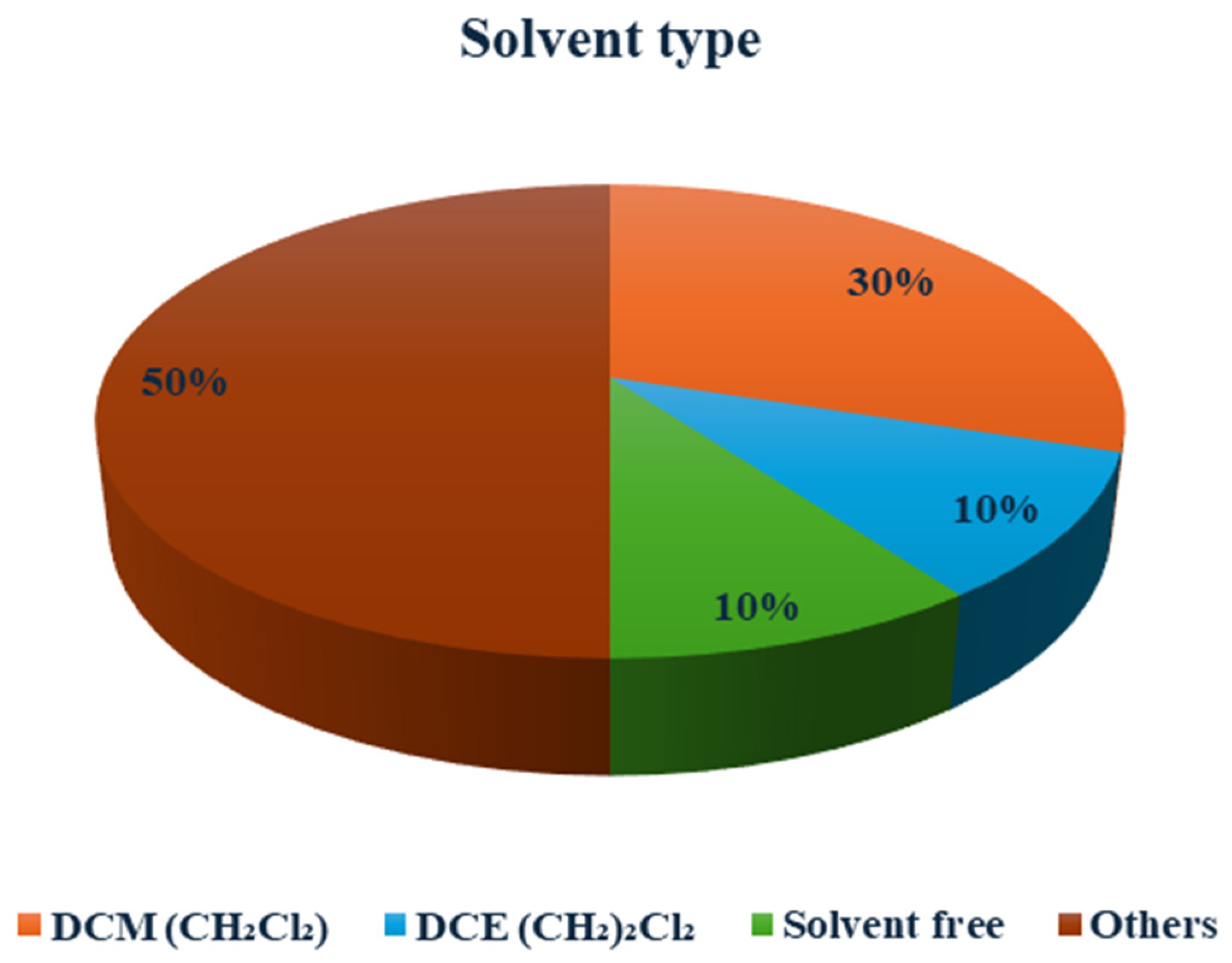
There are several modifications that can improve the sustainability of many pharmaceutical synthesis processes. The choice of an appropriate solvent or the elimination of solvent use altogether could be a very advantageous approach to making a technique more environmentally friendly, given that the overall process outcome remains sustainable. Therefore, the use of solvent-free conditions can be considered a sustainable approach only when the overall reaction parameters—such as temperature, time, and reagent choice—align with the principles of green chemistry, ensuring both efficiency and minimal environmental impact. Analysis revealed that DCM and DCE are employed as solvents in about 40% of the reported studies, as shown in Figure 6. DCM and DCE are often selected for their ability to dissolve a wide range of organic substrates, including aromatic hydrocarbons and many Lewis acid catalysts. Although generally considered inert under standard Friedel–Crafts conditions, DCE is highly volatile and flammable, and both solvents can potentially react with strong Lewis acids or electrophiles under forcing conditions (e.g., transesterification for DMC or ether cleavage for DCE). DCM is primarily used in reactions conducted at lower temperatures, typically around 0 °C [8,23,60] or room temperature [19,27,63]—due to its low boiling point of 39.6 °C—especially with AlCl3 as a catalyst. In contrast, DCE is preferred for reactions performed at higher temperatures [25,54,85], approximately above 80 °C, owing to its higher boiling point of 83.5 °C.
DCM and DCE are considered toxic, since they are reactive chlorinated solvents that can produce toxic degradation products. They are also persistent in the environment and prone to volatilization, which requires careful handling and disposal. Such concerns have prompted several studies to explore greener solvents. Admittedly, while glycerol is compatible with a wide range of compounds, its high polarity can lead to miscibility issues with nonpolar substrates [37]. This could limit its applicability in Friedel–Crafts transformations, unless specific conditions are employed to facilitate phase contact. Additionally, there are reports (~10%) conducted on the reactions under solvent-free conditions. In the research of Bai et al. [89], the reaction of benzoylacetic acid ethyl ester, triethyl orthoformate and aniline takes place and a number of solvents are examined such as EtOH, AcOH and Ac2O to optimize the reaction conditions. All of the solvents lead to either a low yield or Schiff base formation. However, solvent-free conditions with the right reagents increase conversion up to 86% and reduce reaction time by approximately 4 h too. In the research of Kusumaningsih, Prasetyo, and Firdaus [70], where DAPG is synthesized, solvent-free conditions are also preferred since they enhance the reaction rate and selectivity, minimize by-product formation, and improve the yield due to better miscibility and higher concentrations of the reactants. This approach improves reaction efficiency while lowering the environmental impact and costs, and may reduce the need for strict temperature control. Nevertheless, as already mentioned above, solvent-free conditions are not universally beneficial, as they can sometimes complicate temperature management or promote the formation of undesired by-products.
Another important strategy involves replacing toxic catalysts—such as AlCl3 and Lewis acids in general, which are corrosive and difficult to recycle—with easily recyclable and reusable catalytic systems like mpg-CN [34], or biopolymer-based, metal-free catalysts such as piperazine [6]. In addition, non-toxic and more benign alternatives like Bi(OTf)3 [94] and H3PO4 [88] have been successfully employed, providing practical catalysis while avoiding the drawbacks of classical Lewis acids.
To substantiate the sustainability claims of modern Friedel–Crafts protocols that are implied throughout the review, metrics such as the environmental factor (E-factor) and atom economy (AE) were employed (Table 4). The traditional Friedel–Crafts reaction, utilizing stoichiometric amounts of AlCl3 or H2SO4, typically suffers from high E-factors (often >50) due to the generation of significant aqueous waste during workup and the consumption of non-recyclable reagents [95]. In contrast, the methodologies reviewed in this section demonstrate a noteworthy shift towards lower mass intensity. For instance, studies utilizing reusable heterogeneous catalysts (e.g., [37]) report successful recovery and reuse for up to 5–10 cycles, which drastically reduces the E-factor by minimizing catalyst-related waste. Furthermore, solvent-free protocols (e.g., [63]) contribute to higher Process Mass Intensity (PMI) efficiency by eliminating or recycling the largest component of chemical waste. When compared to alternative synthetic disconnections like cross-coupling reactions, Friedel–Crafts transformations often exhibit superior atom economy; while cross-couplings require the pre-functionalization of substrates, the direct C-H functionalization inherent in Friedel–Crafts chemistry minimizes the number of synthetic steps and auxiliary reagents. Therefore, a quantifiable reduction in the environmental footprint of pharmaceutical synthesis is demonstrated.
Regarding product purification, the replacement of chromatographic techniques with crystallization or simple filtration has proven beneficial. Chromatography typically requires large amounts of toxic organic solvents, generating chemical waste. By employing simpler purification methods, the use of organic solvents (and solvents in general) is avoided, notably reducing chemical waste [35,89].
The study by Pillaiyar, Sedaghati, and Schnakenburg [35] is a great example of a sustainable method. The synthesis of multiple halogen-substituted indoles’ derivatives via Friedel–Crafts alkylation is reported, with multiple modifications aimed at rendering the reaction more environmentally friendly. These include using water as a solvent (replacement of toxic organic solvents), incorporating t-BuPBr as a catalyst, something that allows catalyst recycling, employing a mild inorganic base like K2CO3 that eliminates the need for corrosive Lewis acids and avoiding extensive chromatographic purification that minimizes waste.
A comparative analysis of Friedel–Crafts methodologies is demonstrated in Table 4, which reveals a gradual transition from classical to green approaches, although this shift remains heavily dependent on the specific reaction type. Despite environmental concerns, traditional Lewis acid catalysts (e.g., AlCl3, FeCl3) remain dominant, particularly in acylation reactions [5,46,50]. Similarly, chlorinated solvents continue to be the preferred media as they efficiently solubilize a wide spectrum of organic substrates and stabilize intermediate carbocations [10,25,64]. The successful implementation of solvent-free conditions has achieved yields reaching 95%, proving the viability of reducing organic waste in pharmaceutical synthesis [32,54]. Furthermore, the emergence of biocatalysis through enzymes such as PTases and DMATS, allows for reactions to occur under mild conditions (30 °C, pH 6.8–7.5), offering a greener alternative for producing complex bioactive intermediates [13,15,17]. Finally, the trend towards lower temperatures (RT or 0 °C) and the use of alternative energy sources, such as electrochemistry, could reduce the energy footprint of the process [69,92].
For the activation of aromatic hydrocarbons and simple heterocycles, strong Lewis acids remain the primary choice. AlCl3, for instance, is used for the acylation of p-xylene and the synthesis of heterocyclic estradiol derivatives with high yields [5,46]. In cases where the generation of reactive acylium ions from carboxylic acids is required, Brønsted acids such as TfOH are preferred, enabling the synthesis of complex alkaloids like berberine (79% yield) [22], as is H2SO4 for the alkylation of 4-hydroxybenzoic acid [50]. For sensitive substrates such as furan and thiophene, milder catalysts like Yb(OTf)3 are employed [28]. Additionally, Bi(OTf)3 allows for the rapid synthesis of bis(aryl methyl)anilines in as little as 3–15 minutes under solvent-free conditions [32]. A particularly noteworthy trend is the use of indoles as substrates; due to their high activation, they can react with trifluoromethyl ketones in the presence of K2CO3 in water, achieving yields of up to 99% [64].
In conclusion, these examples highlight that combining greener solvents, recyclable or non-toxic catalysts, and simplified purification strategies can improve the sustainability profile of the Friedel–Crafts reaction. The data supports the conclusion that Friedel–Crafts transformations represent a versatile and widely applied strategy in the design of bioactive molecules and pharmaceutical materials, offering reliable access to both simple intermediates and highly sophisticated structures. Emerging methodologies show considerable promise. However, they still require further validation to achieve parity with traditional strategies. Their adoption necessitates rigorous benchmarking against the classical Friedel–Crafts reaction to ensure reproducibility and scalability. For instance, increasing the structural knowledge of PTases through X-ray crystallography could advance both the enzymology of Friedel–Crafts biocatalysis and chemoenzymatic strategies for the synthesis of bioactive compounds [17].

4. Conclusions

This study demonstrates that the Friedel–Crafts reaction remains a versatile tool in pharmaceutical synthesis, enabling efficient access to a broad range of bioactive and pharmacologically relevant structures. Alkylation and acylation continue to dominate the field. Within this context, acylation has gained greater relevance over alkylation, primarily because the formation of stable acylium ions avoids the carbocation rearrangements often associated with alkyl chains, thereby ensuring higher synthetic predictability and precision. At the same time, less frequently employed transformations including Friedel–Crafts cyclization, trifluoromethylthiolation and arylation, account for a smaller proportion of reported applications yet contribute notably by enabling the construction of complex cyclic architectures and introducing functionalities with high medicinal relevance (such as electron-modulating groups).
The selection of catalyst in the Friedel–Crafts reaction is crucially substrate-dependent and should be guided primarily by the electronic nature of the aromatic system. For highly electron-rich heteroarenes like indoles and pyrroles [37,39,64], mild Lewis or Brønsted acids, such as H3PO4 and ZnCl2, are preferred to ensure activation while avoiding overreaction or polymerization. Strongly electron-rich arenes, such as methoxy- or phenol-substituted benzenes [40], require similar catalysts to prevent excessive polyalkylation due to their high nucleophilicity. Consequently, neutral or moderately activated aromatic hydrocarbons, which are less nucleophilic, such as p-xylene [12] or benzene derivatives [61,78], typically require stronger Lewis acids (e.g., AlCl3) to achieve an efficient reaction. Electron-deficient aromatics, such as substituted benzenes bearing electron-withdrawing groups [40,67], require more potent Lewis or Brønsted acids (e.g., TfOH), while carefully considering functional group compatibility.
Although the Friedel–Crafts reaction is typically conducted under mild conditions, elevated temperatures were involved in several articles. In order to maintain the solvent in the liquid phase and ensure efficient reaction kinetics, specific conditions are required. The ones commonly employed are either closed systems, allowing the reaction to be conducted above the solvent’s normal boiling point by containing the vapors, or reflux, enabling continuous heating while condensing and returning evaporated solvent. High-boiling-point solvents also provide a thermally stable medium that can sustain elevated temperatures without degradation. Thus, while the classical Friedel–Crafts reaction is typically performed at low temperatures, higher ones are generally manageable under suitable experimental conditions.
When choosing a solvent for a Friedel–Crafts reaction, the substrate type, reaction conditions, and desired selectivity must be taken into account. Nonpolar chlorinated solvents, such as DCM or DCE, are optimal for neutral or moderately activated arenes [12,45], providing good solubility and moderate thermal stability, but toxicity and environmental concerns cause the elimination of their use. Polar, protic solvents, such as HFIP or PFTB [38], can be effective for electron-rich heteroarenes, as they stabilize carbocation intermediates and enable high yields under certain conditions. Additionally, high-boiling-point polar aprotic solvents, such as DMF [66], are advantageous when elevated temperatures are required, preventing solvent loss and decomposition.
A critical evaluation of catalytic systems and solvents reveals a continued reliance on traditional Lewis acids, operating in halogenated media. Nevertheless, a clear methodological shift is emerging. An increasing use of recyclable catalysts, greener solvents, solvent-free protocols, and alternative activation modes reflects a growing emphasis on sustainability in modern synthetic design. Admittedly, the industrial-scale application of these methods remains currently limited, as the transition to large-scale production necessitates rigorous, case-by-case validation to ensure efficiency and safety beyond the laboratory setting. Nevertheless, these developments signal a gradual but tangible evolution toward environmentally responsible Friedel–Crafts chemistry.
Looking forward, future progress could potentially arise from advancements in catalyst design—particularly tailored Lewis and Brønsted acid systems—as well as from the broader integration of photochemical and electrochemical strategies. These activation modes may offer more sustainable synthetic pathways, as evidenced by recent developments in photoelectrochemical transformations, photocatalytic systems [34], and electrochemical oxidation protocols [18] providing enhanced selectivity and energy efficiency. Moreover, enzymatic Friedel–Crafts alkylation (e.g., by aromatic prenyltransferases) demonstrate that biocatalysts enable the selective formation of C-C, C-O, and C-N bonds under mild reaction conditions [13,17]. These findings provide a blueprint for the future design of more selective and sustainable synthetic methodologies. Equally important is the continued incorporation of green chemistry principles, which will shape the practical feasibility of these transformations in industrial pharmaceutical contexts.
The comprehensive synthesis of existing knowledge enhances accessibility to scattered information and helps researchers quickly navigate the breadth of the Friedel–Crafts reaction, from classical electrophilic aromatic substitutions to modern catalytic variants. This study highlights the enduring utility and versatility of these transformations, while simultaneously showcasing the extent of their application in pharmaceutical chemistry.

Author Contributions

Conceptualization, N.C.K.; methodology, K.A., S.M., Z.T., L.V. and N.C.K.; validation, N.C.K.; formal analysis, K.A., S.M., Z.T., L.V. and N.C.K.; investigation, K.A., S.M., Z.T., L.V. and N.C.K.; resources, N.C.K.; data curation, K.A., S.M., Z.T., L.V. and N.C.K.; writing—original draft preparation, K.A., S.M., Z.T. and L.V.; writing—review and editing, N.C.K.; supervision, N.C.K.; project administration, N.C.K. All authors have read and agreed to the published version of the manuscript.

Funding

“Industrial Catalysis and Sustainable Energy” in the framework of the subproject “Internationalization of the educational services of the Higher Education Institutions” of the project SUB2 “Universities of Excellence” with MIS code TA 5180665, funded by the Recovery and Resilience Fund “Greece 2.0” (Code: Action 16289).

Data Availability Statement

The original contributions presented in this study are included in the article. Further inquiries can be directed to the corresponding author.

Acknowledgments

Special thanks are due to the Petroleum Institute at the Democritus University of Thrace, Greece, for its research support.

Conflicts of Interest

The authors declare no conflicts of interest.

Abbreviations

APIActive Pharmaceutical Ingredient
AEAtom Economy
COXCyclooxygenase
CSACamphorsulfonic acid
DAPG 2,4Diacetylphloroglucinol
DCEDichloroethane
DCMDichloromethane
DMATSDimethylallyl tryptophan synthase
DMCDimethyl Carbonate
DMEDimethoxyethane
DMFN,N-dimethylformamide
DSD 1,4Dithienyl-1,4diketone
DseD 1,4Diselenophene-1,4-diketone
HIVHuman Immunodeficiency Virus
mpg-CNMesoporous graphitic carbon nitride
PMIProcess Mass Intensity
RTRoom Temperature
t-BuPBrTert-Butylphosphine bromide
TMSOTfTrimethylsilyl trifluoromethanesulfonate

References

  1. Gregorc, J.; Lensen, N.; Chaume, G.; Iskra, J.; Brigaud, T. Trifluoromethylthiolation of Tryptophan and Tyrosine Derivatives: A Tool for Enhancing the Local Hydrophobicity of Peptides. J. Org. Chem. 2023, 88, 13169–13177. [Google Scholar] [CrossRef]
  2. Molnár, B.; Gopisetty, M.K.; Adamecz, D.I.; Kiricsi, M.; Frank, É. Multistep Synthesis and In Vitro Anticancer Evaluation of 2-Pyrazolyl-Estradiol Derivatives, Pyrazolocoumarin-Estradiol Hybrids and Analogous Compounds. Molecules 2020, 25, 4039. [Google Scholar] [CrossRef]
  3. Mohamed, M.G.; El-Mahdy, A.F.M.; Meng, T.-S.; Samy, M.M.; Kuo, S.-W. Multifunctional Hypercrosslinked Porous Organic Polymers Based on Tetraphenylethene and Triphenylamine Derivatives for High-Performance Dye Adsorption and Supercapacitor. Polymers 2020, 12, 2426. [Google Scholar] [CrossRef]
  4. Gamal Mohamed, M.; Tsai, M.-Y.; Wang, C.-F.; Huang, C.-F.; Danko, M.; Dai, L.; Chen, T.; Kuo, S.-W. Multifunctional Polyhedral Oligomeric Silsesquioxane (POSS) Based Hybrid Porous Materials for CO2 Uptake and Iodine Adsorption. Polymers 2021, 13, 221. [Google Scholar] [CrossRef] [PubMed]
  5. Calvo-Martín, G.; Plano, D.; Sanmartín, C. New Experimental Conditions for Diels–Alder and Friedel-Crafts Alquilation Reactions with Thiophene: A New Seleno-Cyanate with Potent Activity Against Cancer. Molecules 2022, 27, 982. [Google Scholar] [CrossRef]
  6. Mori-Quiroz, L.M.; Hedrick, S.L.; De Los Santos, A.R.; Clift, M.D. A Unified Strategy for the Syntheses of the Isoquinolinium Alkaloids Berberine, Coptisine, and Jatrorrhizine. Org. Lett. 2018, 20, 4281–4284. [Google Scholar] [CrossRef] [PubMed]
  7. Choudhary, M.K.; Ansari, K.; Junghare, V.; Nayak, S.K.; Hazra, S.; Mula, S. A Facile Synthesis of 3-Substituted Coumarins and Investigation of Their 3CLpro Inhibition Activity Against SARS-CoV-2. ChemistryOpen 2025, 14, e202400319. [Google Scholar] [CrossRef]
  8. Bosica, G.; Abdilla, R. Novel Biopolymer-Based Catalyst for the Multicomponent Synthesis of N-Aryl-4-Aryl-Substituted Dihydropyridines Derived from Simple and Complex Anilines. Molecules 2024, 29, 1884. [Google Scholar] [CrossRef]
  9. Holmin, G.P.; Hood, J.C.; Scanlon, N.; Klumpp, D.A. Phosphonium-Carbenium and Oxophosphonium-Carbenium Dications in Friedel-Crafts Reactions. Tetrahedron 2022, 121, 132928. [Google Scholar] [CrossRef]
  10. Lyu, X.; Kanda, R.; Tsuda, S.; Hashimoto, Y.; Fujii, T.; Kashiwagi, K. Novel Carboxylation Method for Polyetheretherketone (PEEK) Surface Modification Using Friedel–Crafts Acylation. Int. J. Mol. Sci. 2023, 24, 15651. [Google Scholar] [CrossRef]
  11. Ahmad, T.; Khan, S.; Ullah, N. Recent Advances in the Catalytic Asymmetric Friedel–Crafts Reactions of Indoles. ACS Omega 2022, 7, 35446–35485. [Google Scholar] [CrossRef]
  12. Suri, G.; Liang, F.; Hu, M.; Wang, M.; Bu, R.; Zhang, X.; Wang, H.; Dong, W.; Eerdun, C.; Tsuda, A. Direct Syntheses of Diphenylmethanol Derivatives from Substituted Benzenes and CHCl3 through Friedel-Crafts Alkylation and Post-Synthetic Hydrolysis or Alcoholysis Catalyzed by Alumina. ChemistryOpen 2022, 11, e202200042. [Google Scholar] [CrossRef]
  13. Wang, R.; Chen, R.; Li, J.; Liu, X.; Xie, K.; Chen, D.; Yin, Y.; Tao, X.; Xie, D.; Zou, J.; et al. Molecular Characterization and Phylogenetic Analysis of Two Novel Regio-Specific Flavonoid Prenyltransferases from Morus alba and Cudrania tricuspidata. J. Biol. Chem. 2014, 289, 35815–35825. [Google Scholar] [CrossRef]
  14. Maloney, T.P.; Murphy, K.L.; Mainsah, T.L.; Nolin, K.A. Friedel-Crafts Alkylation of Benzo[b]Furan with Activated Cyclopropanes Catalyzed by a Calcium(II) Complex. Tetrahedron Lett. 2018, 59, 18–21. [Google Scholar] [CrossRef]
  15. Metzger, U.; Schall, C.; Zocher, G.; Unsöld, I.; Stec, E.; Li, S.-M.; Heide, L.; Stehle, T. The Structure of Dimethylallyl Tryptophan Synthase Reveals a Common Architecture of Aromatic Prenyltransferases in Fungi and Bacteria. Proc. Natl. Acad. Sci. USA 2009, 106, 14309–14314. [Google Scholar] [CrossRef]
  16. Bracken, A.K.; Gekko, C.E.; Suss, N.O.; Lueders, E.E.; Cui, Q.; Fu, Q.; Lui, A.C.W.; Anderson, E.T.; Zhang, S.; Abbasov, M.E. Biomimetic Synthesis and Chemical Proteomics Reveal the Mechanism of Action and Functional Targets of Phloroglucinol Meroterpenoids. J. Am. Chem. Soc. 2024, 146, 2524–2548. [Google Scholar] [CrossRef] [PubMed]
  17. Awakawa, T.; Abe, I. Molecular Basis for the Plasticity of Aromatic Prenyltransferases in Hapalindole Biosynthesis. Beilstein J. Org. Chem. 2019, 15, 1545–1551. [Google Scholar] [CrossRef]
  18. Lunghi, E.; Ronco, P.; Della Negra, F.; Trucchi, B.; Verzini, M.; Merli, D.; Casali, E.; Kappe, C.O.; Cantillo, D.; Zanoni, G. Electrifying Friedel–Crafts Intramolecular Alkylation toward 1,1-Disubstituted Tetrahydronaphthalenes. J. Org. Chem. 2023, 88, 16783–16789. [Google Scholar] [CrossRef]
  19. Zhu, Y.; Chen, Z.; Huang, Z.; Yan, S.; Li, Z.; Zhou, H.; Zhang, X.; Su, Y.; Zeng, Z. AlCl3·6H2O-Catalyzed Friedel-Crafts Alkylation of Indoles by the Para-Quinone Methide Moiety of Celastrol. Molecules 2017, 22, 742. [Google Scholar] [CrossRef]
  20. Tamura, Y.; Choi, H.D.; Shindo, H.; Ishibashi, H. Synthesis of Ethyl Arylacetates by Means of Friedel-Crafts Reaction of Aromatic Compounds with Ethyl α-Chloro-α-(Methylthio)Acetate. Chem. Pharm. Bull. 1982, 30, 915–921. [Google Scholar] [CrossRef]
  21. Krüger-Braunert, T.; Linker, T. One-Pot Synthesis of 1,3-Cyclohexadienes by Birch Reduction in the Presence of Carbonyl Compounds. Angew. Chem.-Int. Ed. 2024, 63, e202407568. [Google Scholar] [CrossRef]
  22. Mougeot, R.; Jubault, P.; Legros, J.; Poisson, T. Continuous Flow Synthesis of Propofol. Molecules 2021, 26, 7183. [Google Scholar] [CrossRef]
  23. Ishibashi, H.; Takamuro, I.; Okano, M.; Kenri, T.; Ikeda, M. A New, Convenient Route to Erbstatin and N-Acetyl-1,2-Didehydrodopamine. Chem. Pharm. Bull. 1989, 37, 2214–2216. [Google Scholar] [CrossRef][Green Version]
  24. Hatano, M.; Toh, K.; Ishihara, K. Enantioselective Aza-Friedel-Crafts Reaction of Indoles and Pyrroles Catalyzed by Chiral C1-Symmetric Bis(Phosphoric Acid). Org. Lett. 2020, 22, 9614–9620. [Google Scholar] [CrossRef]
  25. Rose, T.E.; Curtin, B.H.; Lawson, K.V.; Simon, A.; Houk, K.N.; Harran, P.G. On the Prevalence of Bridged Macrocyclic Pyrroloindolines Formed in Regiodivergent Alkylations of Tryptophan. Chem. Sci. 2016, 7, 4158–4166. [Google Scholar] [CrossRef] [PubMed]
  26. Bryant, L.A.; Shankland, K.; Straker, H.E.; Johnston, C.D.; Lees, N.R.; Cobb, A.J.A. Enantioselective Organocatalytic Synthesis of Bicyclic Resorcinols via an Intramolecular Friedel-Crafts-Type 1,4-Addition: Access to Cannabidiol Analogues. Adv. Synth. Catal. 2021, 363, 4067–4074. [Google Scholar] [CrossRef] [PubMed]
  27. Adams, T.C.; Payette, J.N.; Cheah, J.H.; Movassaghi, M. Concise Total Synthesis of (+)-Luteoalbusins A and B. Org. Lett. 2015, 17, 4268–4271. [Google Scholar] [CrossRef]
  28. Islam, M.S.; Ali, M.; Al-Majid, A.M.; Alamary, A.S.; Alshahrani, S.; Yousuf, S.; Choudhary, M.I.; Barakat, A. Bimetallic Iron–Palladium Catalyst System as a Lewis-Acid for the Synthesis of Novel Pharmacophores Based Indole Scaffold as Anticancer Agents. Molecules 2021, 26, 2212. [Google Scholar] [CrossRef] [PubMed]
  29. Yang, K.; Chen, C.-B.; Liu, Z.-W.; Li, Z.-L.; Zeng, Y.; Wang, Z.-Y. C3-Alkylation of Imidazo[1,2-a]Pyridines via Three-Component Aza-Friedel-Crafts Reaction Catalyzed by Y(OTf)3. Molecules 2024, 29, 3463. [Google Scholar] [CrossRef] [PubMed]
  30. Suárez, A.; Gohain, M.; Fernández-Rodríguez, M.A.; Sanz, R. Synthesis of Fused Polycyclic Indoles by Brønsted Acid-Catalyzed Intramolecular Alkylation of Indoles with Alcohols. J. Org. Chem. 2015, 80, 10421–10430. [Google Scholar] [CrossRef]
  31. Ying, W.; Barnes, C.L.; Harmata, M. Toward the Total Synthesis of Elisapterosin B: A Hg(OTf)2-Promoted Diastereoselective Intramolecular Friedel-Crafts Alkylation Reaction. Tetrahedron Lett. 2011, 52, 177–180. [Google Scholar] [CrossRef] [PubMed]
  32. Kumazawa, E.; Hirotani, K.; Burford, S.C.; Kawagoe, K.; Miwa, T.; Mitsui, I.; Ejima, A. Synthesis and Antitumor Activity of Novel Benzophenone Derivatives. Chem. Pharm. Bull. 1997, 45, 1470–1474. [Google Scholar] [CrossRef]
  33. Jin, Y.; Sun, Y.; Yu, Y.; Zhao, J.; Zheng, M.; Wang, L.; Jin, Y. Organocatalytic Enantioselective Friedel-Crafts Reaction of Phenanthrenequinones and Indoles. Molecules 2025, 30, 172. [Google Scholar] [CrossRef] [PubMed]
  34. Poletti, L.; Ragno, D.; Bortolini, O.; Presini, F.; Pesciaioli, F.; Carli, S.; Caramori, S.; Molinari, A.; Massi, A.; Di Carmine, G. Photoredox Cross-Dehydrogenative Coupling of N-Aryl Glycines Mediated by Mesoporous Graphitic Carbon Nitride: An Environmentally Friendly Approach to the Synthesis of Non-Proteinogenic α-Amino Acids (NPAAs) Decorated with Indoles. J. Org. Chem. 2022, 87, 7826–7837. [Google Scholar] [CrossRef] [PubMed]
  35. Pillaiyar, T.; Sedaghati, M.; Schnakenburg, G. Reaction of Indoles with Aromatic Fluoromethyl Ketones: An Efficient Synthesis of Trifluoromethyl(Indolyl)Phenylmethanols Using K2CO3/n-Bu4PBr in Water. Beilstein J. Org. Chem. 2020, 16, 778–790. [Google Scholar] [CrossRef] [PubMed]
  36. Dhiman, S.; Ramasastry, S.S.V. Di- and Triheteroarylalkanes via Self-Condensation and Intramolecular Friedel-Crafts Type Reaction of Heteroaryl Alcohols. Org. Biomol. Chem. 2013, 11, 8030–8035. [Google Scholar] [CrossRef]
  37. Tan, L.; Rahman, A. From Technical Efficiency to Economic Efficiency: Development of Aza-Friedel-Crafts Reaction Using Phosphoric Acid Immobilized in Glycerol as a Sustainable Approach. Sustainability 2017, 9, 1176. [Google Scholar] [CrossRef]
  38. Tang, R.-J.; Milcent, T.; Crousse, B. Friedel-Crafts Alkylation Reaction with Fluorinated Alcohols as Hydrogen-Bond Donors and Solvents. RSC Adv. 2018, 8, 10314–10317. [Google Scholar] [CrossRef]
  39. Maestro, A.; De Marigorta, E.M.; Palacios, F.; Vicario, J. Enantioselective α-Aminophosphonate Functionalization of Indole Ring through an Organocatalyzed Friedel-Crafts Reaction. J. Org. Chem. 2019, 84, 1094–1102. [Google Scholar] [CrossRef]
  40. Shaipulizan, N.S.; Jamil, S.N.A.M.; Kamaruzaman, S.; Subri, N.N.S.; Adeyi, A.A.; Abdullah, A.H.; Abdullah, L.C. Preparation of Ethylene Glycol Dimethacrylate (EGDMA)-Based Terpolymer as Potential Sorbents for Pharmaceuticals Adsorption. Polymers 2020, 12, 423. [Google Scholar] [CrossRef]
  41. Kumar, S.; Ritika. A Brief Review of the Biological Potential of Indole Derivatives. Future J. Pharm. Sci. 2020, 6, 121. [Google Scholar] [CrossRef]
  42. Seki, M.; Tapkir, S.R.; Nadiveedhi, M.R.; Mulani, S.K.; Mashima, K. New Synthesis of Diarylmethanes, Key Building Blocks for SGLT2 Inhibitors. ACS Omega 2023, 8, 17288–17295. [Google Scholar] [CrossRef]
  43. Krishnan, C.G.; Kondo, M.; Yasuda, O.; Fan, D.; Nakamura, K.; Wakabayashi, Y.; Sasai, H.; Takizawa, S. Light-Controlled pKa Value of Chiral Brønsted Acid Catalysts in Enantioselective Aza-Friedel-Crafts Reaction. Chem. Commun. 2023, 59, 9956–9959. [Google Scholar] [CrossRef] [PubMed]
  44. Wang, B.; Zhang, Q.; Luo, J.; Gan, Z.; Jiang, W.; Tang, Q. One-Step Regioselective Synthesis of Benzofurans from Phenols and α-Haloketones. Molecules 2019, 24, 2187. [Google Scholar] [CrossRef]
  45. Carmona, D.; Lamata, M.P.; Sánchez, A.; Viguri, F.; Oro, L.A. Enantioselective Friedel-Crafts Alkylations Catalysed by Well-Defined Iridium and Rhodium Half-Sandwich Complexes. Tetrahedron Asymmetry 2011, 22, 893–906. [Google Scholar] [CrossRef][Green Version]
  46. Kumar, M.P.; Mahantesh, G.; Amaladass, P.; Manikandan, C.; Dhayalan, V. Recent Synthetic Strategies for the Construction of Functionalized Carbazoles and Their Heterocyclic Motifs Enabled by Lewis Acids. RSC Adv. 2023, 13, 32596–32626. [Google Scholar] [CrossRef] [PubMed]
  47. Bencivenni, G. Organocatalytic Strategies for the Synthesis of Axially Chiral Compounds. Synlett 2015, 26, 1915–1922. [Google Scholar] [CrossRef]
  48. Kamma, K.R.; Cho, J.; Won, H.J.; Nam, S.-Y.; Le, N.H.; Jung, J.H.; Lee, K.-I. Synthetic Studies toward 5,6,7,3′,4′-Monomethoxytetrahydroxyflavones: Synthesis of Pedalitin. Molecules 2024, 29, 513. [Google Scholar] [CrossRef] [PubMed]
  49. Cotos, L.; Donzel, M.; Elhabiri, M.; Davioud-Charvet, E. A Mild and Versatile Friedel–Crafts Methodology for the Diversity-Oriented Synthesis of Redox-Active 3-Benzoylmenadiones with Tunable Redox Potentials. Chem.-Eur. J. 2020, 26, 3314–3325. [Google Scholar] [CrossRef] [PubMed]
  50. Martins, A.; Amaro, B.; Santos, M.S.C.S.; Nunes, N.; Elvas-Leitão, R.; Carvalho, A.P. Hierarchical Zeolites Prepared Using a Surfactant-Mediated Strategy: ZSM-5 vs. Y as Catalysts for Friedel–Crafts Acylation Reaction. Molecules 2024, 29, 517. [Google Scholar] [CrossRef] [PubMed]
  51. Begala, M.; Mancinelli, M.; Quezada, E.; Delogu, G.L. GC/MSn Analysis of the Crude Reaction Mixtures from Friedel–Crafts Acylation: Unambiguous Identification and Differentiation of 3-Aroylbenzofurans from Their 4- and 6-Regioisomers. Rapid Commun. Mass Spectrom. 2021, 35, e9082. [Google Scholar] [CrossRef]
  52. Wei, M.-K.; Zhang, Z.-X.; Ding, M.; Willis, M.C. Friedel–Crafts Reactivity with Sulfondiimidoyl Fluorides for the Synthesis of Heteroaryl Sulfondiimines. Angew. Chem.-Int. Ed. 2025, 64, e202416638. [Google Scholar] [CrossRef]
  53. Noguchi, T.; Onodera, A.; Tomisawa, K.; Yokomori, S. A Practical Procedure for the Synthesis of Esonarimod, (R,S)-2-Acetylthiomethyl-4-(4-Methylphenyl)-4-Oxobutanoic Acid, an Antirheumatic Agent (Part 1). Chem. Pharm. Bull. 2002, 50, 1407–1412. [Google Scholar] [CrossRef]
  54. González-Antuña, A.; Lavandera, I.; Rodríguez-González, P.; Rodríguez, J.; García Alonso, J.I.; Gotor, V. A Straightforward Route to Obtain 13C1-Labeled Clenbuterol. Tetrahedron 2011, 67, 5577–5581. [Google Scholar] [CrossRef]
  55. Mikhnovets, I.E.; Holoubek, J.; Panina, I.S.; Kotouček, J.; Gvozdev, D.A.; Chumakov, S.P.; Krasilnikov, M.S.; Zhitlov, M.Y.; Gulyak, E.L.; Chistov, A.A.; et al. Alkyl Derivatives of Perylene Photosensitizing Antivirals: Towards Understanding the Influence of Lipophilicity. Int. J. Mol. Sci. 2023, 24, 16483. [Google Scholar] [CrossRef] [PubMed]
  56. Ignatovich, L.; Zarina, D.; Shestakova, I.; Germane, S.; Lukevics, E. Synthesis and Biological Activity of Silyl- and Germylsubstituted Trifluoroacetylfurans. Met.-Based Drugs 2001, 8, 211–214. [Google Scholar] [CrossRef]
  57. Abd El-Aal, H.A.K.; Khalaf, A.A. Design and Diversity-Oriented Synthesis of Benzo- And Pyrido-Annulated Medium-Sized N,S-Heterocycles via Thio-Michael and Friedel-Crafts Approaches. Arkivoc 2019, 2019, 212–227. [Google Scholar] [CrossRef]
  58. Raja, E.K.; DeSchepper, D.J.; Lill, S.O.N.; Klumpp, D.A. Friedel-Crafts Acylation with Amides. J. Org. Chem. 2012, 77, 5788–5793. [Google Scholar] [CrossRef]
  59. Lande, D.H.; Nasereddin, A.; Alder, A.; Gilberger, T.W.; Dzikowski, R.; Grünefeld, J.; Kunick, C. Synthesis and Antiplasmodial Activity of Bisindolylcyclobutenediones. Molecules 2021, 26, 4739. [Google Scholar] [CrossRef]
  60. Luo, Y.; Li, X.; Huang, X.; Wong, Y.-S.; Chen, T.; Zhang, Y.; Zheng, W. 1,4-Diselenophene-1,4-Diketone Triggers Caspase-Dependent Apoptosis in Human Melanoma A375 Cells through Induction of Mitochondrial Dysfunction. Chem. Pharm. Bull. 2011, 59, 1227–1232. [Google Scholar] [CrossRef]
  61. Sultana, T.; Wahab Khan, M. A Facile Synthesis of 5-Iodo-6-Substituted Pyrimidines from Uracil-6-Carboxylic Acid (Orotic Acid). Dhaka Univ. J. Pharm. Sci. 2013, 12, 97–102. [Google Scholar] [CrossRef]
  62. Tran, P.H.; Phung, H.Q.; Hansen, P.E.; Tran, H.N.; Le, T.N. Efficient Friedel–Crafts Benzoylation of Aniline Derivatives with 4-Fluorobenzoyl Chloride Using Copper Triflate in the Synthesis of Aminobenzophenones. Synth. Commun. 2016, 46, 893–901. [Google Scholar] [CrossRef]
  63. Xiao, X.; Cushman, M. A Facile Method to Transform trans-4-Carboxy-3,4-dihydro-3-phenyl- 1(2H)-isoquinolones to Indeno[1,2-c]isoquinolines. J. Org. Chem. 2005, 70, 6496–6498. [Google Scholar] [CrossRef] [PubMed]
  64. Turek, M.; Szczęsna, D.; Koprowski, M.; Bałczewski, P. Synthesis of 1-Indanones with a Broad Range of Biological Activity. Beilstein J. Org. Chem. 2017, 13, 451–494. [Google Scholar] [CrossRef] [PubMed]
  65. Ozenil, M.; Kogler, L.; Mair, B.A.; Hacker, M.; Wadsak, W.; Rotstein, B.H.; Pichler, V. Intramolecular Friedel-Crafts Acylation of [11C]Isocyanates Enabling the Radiolabeling of [Carbonyl-11C]DPQ. Chem.-Eur. J. 2024, 30, e202400581. [Google Scholar] [CrossRef]
  66. Itazaki, H.; Hayashi, K.; Matsuura, M.; Yonetani, Y.; Nakamura, M. Synthesis of 2,3-Dihydro-1,4-Benzodioxin Derivatives. II. 5(or 6)-AcyI 2,3-Dihydro-1,4-Benzodioxin Derivatives: New Phenoxyacetic Acid Diuretics. Chem. Pharm. Bull. 1988, 36, 3404–3432. [Google Scholar] [CrossRef]
  67. Murashige, R.; Murai, Y.; Hatanaka, Y.; Hashimoto, M. Effective Synthesis of Optically Active Trifluoromethyldiazirinyl Homophenylalanine and Aroylalanine Derivatives with the Friedel-Crafts Reaction in Triflic Acid. Biosci. Biotechnol. Biochem. 2009, 73, 1377–1380. [Google Scholar] [CrossRef]
  68. Ying, W.; Gamage, L.S.R.; Lovro, L.R.; Herndon, J.W., 3rd; Jenkins, N.W.; Herndon, J.W. Direct Synthesis of Arenecarboxamides through Friedel-Crafts Acylation Using Ureas. Tetrahedron Lett. 2014, 55, 4541–4544. [Google Scholar] [CrossRef] [PubMed]
  69. Luo, H.; Cao, T.; Zhu, S. Divergent Synthesis of Ketone-Fused Indoles/Pyrroles via Metal-Guided Friedel-Crafts Cyclization. Chin. J. Org. Chem. 2021, 41, 3521–3531. [Google Scholar] [CrossRef]
  70. Kusumaningsih, T.; Prasetyo, W.E.; Firdaus, M. A Greatly Improved Procedure for the Synthesis of an Antibiotic-Drug Candidate 2,4-Diacetylphloroglucinol over Silica Sulphuric Acid Catalyst: Multivariate Optimisation and Environmental Assessment Protocol Comparison by Metrics. RSC Adv. 2020, 10, 31824–31837. [Google Scholar] [CrossRef] [PubMed]
  71. Hamdan, A.I.; Sukmana, D.D.; Nordin, N.A. SYNTHESIS AND BIOLOGICAL ACTIVITIES OF ACETAMINOPHEN AND IBUPROFEN METAL COMPLEXES OR DERIVATIVES: A REVIEW. Malays. J. Sci. 2024, 43, 86–112. [Google Scholar] [CrossRef]
  72. Ali, G.; Cuny, G.D. Synthesis of the Tetracyclic Framework of Polycyclic Spiro Lignan Natural Products. ACS Omega 2020, 5, 9007–9012. [Google Scholar] [CrossRef] [PubMed]
  73. Gopal, P.R.; Chandrashekar, E.R.R.; Saravanan, M.; Bhaskar, B.V.; Somaiah, P.V. An Alternative Approach to Synthesis of 2-n-Butyl-5-Nitrobenzofuran Derivative: A Key Starting Material for Dronedarone Hydrochloride. J. Chem. Sci. 2012, 124, 1077–1085. [Google Scholar] [CrossRef]
  74. Balachandran, C.; Kumar, P.S.; Arun, Y.; Duraipandiyan, V.; Sundaram, R.L.; Vijayakumar, A.; Balakrishna, K.; Ignacimuthu, S.; Al-Dhabi, N.A.; Perumal, P.T. Antimicrobial, Antioxidant, Cytotoxic and Molecular Docking Properties of N-Benzyl-2,2,2-Trifluoroacetamide. Appl. Nanosci. 2015, 5, 207–216. [Google Scholar] [CrossRef][Green Version]
  75. Aono, T.; Araki, Y.; Imanishi, M.; Noguchi, S. 1-Indancarboxylic Acids. II. Synthesis of 4- and 6-Aroyl-1-Indancarboxylic Acids as Potential Antiinflammatory Agents. Chem. Pharm. Bull. 1978, 26, 1153–1161. [Google Scholar] [CrossRef] [PubMed]
  76. Jung, J.-C.; Oh, S. Practical Synthesis of Hydroxychromenes and Evaluation of Their Biological Activity. Molecules 2012, 17, 240–247. [Google Scholar] [CrossRef]
  77. Markus, A.; Schepmann, D.; Wünsch, B. Synthesis of Oxazolo-Annulated 3-Benzazepines Designed by Merging Two Negative Allosteric NMDA Receptor Modulators. Arch. Pharm. 2022, 355, e2200020. [Google Scholar] [CrossRef] [PubMed]
  78. Yan, N.; Chen, K.; Bai, X.; Bi, L.; Yao, L. A Concise Synthesis of Fingolimod: An Orally Available Drug for Treating Multiple Sclerosis. Chem. Cent. J. 2015, 9, 5. [Google Scholar] [CrossRef] [PubMed][Green Version]
  79. Seki, M.; Kubota, H.; Moriya, T.; Matsumoto, K.; Yamagishi, M.; Nishimoto, S. Useful Syntheses of β-Amino-γ-Ketobutyric Acid Derivatives from Aspartic Acid. Chem. Pharm. Bull. 1986, 34, 4516–4522. [Google Scholar] [CrossRef][Green Version]
  80. Mourad, A.K.; Makhlouf, A.A.; Soliman, A.Y.; Mohamed, S.A. Phthalazines and Phthalazine Hybrids as Antimicrobial Agents: Synthesis and Biological Evaluation. J. Chem. Res. 2020, 44, 31–41. [Google Scholar] [CrossRef]
  81. Ohki, S.; Nagasaka, T. Indoles. I. Syntheses of 1-Acetyltryptophan and Its Derivatives, and Their Friedel-Crafts Reaction. Chem. Pharm. Bull. 1971, 19, 545–551. [Google Scholar] [CrossRef][Green Version]
  82. Cañeque, T.; Gomes, F.; Mai, T.T.; Maestri, G.; Malacria, M.; Rodriguez, R. Synthesis of Marmycin A and Investigation into Its Cellular Activity. Nat. Chem. 2015, 7, 744–751. [Google Scholar] [CrossRef] [PubMed]
  83. Zaghouani, M.; Bögeholz, L.A.K.; Mercier, E.; Wintermeyer, W.; Roche, S.P. Total Synthesis of (±)-Fumimycin and Analogues for Biological Evaluation as Peptide Deformylase Inhibitors. Tetrahedron 2019, 75, 3216–3230. [Google Scholar] [CrossRef] [PubMed]
  84. Hirose, T.; Kojima, Y.; Matsui, H.; Hanaki, H.; Iwatsuki, M.; Shiomi, K.; Omura, S.; Sunazuka, T. Total Synthesis of (±)-Naphthacemycin A9, Possessing Both Antibacterial Activity against Methicillin-Resistant Staphylococcus aureus and Circumventing Effect of β-Lactam Resistance. J. Antibiot. 2017, 70, 574–581. [Google Scholar] [CrossRef]
  85. Thongpat, K.; Milehman, N.; Rojanaverawong, W.; Holasut, P.; Soodvilai, S.; Vaddhanaphuti, C.S.; Tadpetch, K. Total Synthesis and Anti-Inflammatory Activity of Asperjinone and Asperimide C. J. Nat. Prod. 2024, 87, 2045–2054. [Google Scholar] [CrossRef] [PubMed]
  86. Rosales Martínez, A.; Rodríguez-García, I. Synthesis of Marine (−)-Pelorol and Future Perspectives. Mar. Drugs 2024, 22, 425. [Google Scholar] [CrossRef] [PubMed]
  87. Sumita, A.; Ohwada, T. Friedel-Crafts-Type Acylation and Amidation Reactions in Strong Brønsted Acid: Taming Superelectrophiles. Molecules 2022, 27, 5984. [Google Scholar] [CrossRef] [PubMed]
  88. Phillips, E.M.; Mesganaw, T.; Patel, A.; Duttwyler, S.; Mercado, B.Q.; Houk, K.N.; Ellman, J.A. Synthesis of Ent-Ketorfanol via a C-H Alkenylation/Torquoselective 6π Electrocyclization Cascade. Angew. Chem. Int. Ed. Engl. 2015, 54, 12044–12048. [Google Scholar] [CrossRef] [PubMed]
  89. Bai, H.; Liu, F.; Wang, X.; Wang, P.; Huang, C. Three-Component One-Pot Approach to Highly Efficient and Sustainable Synthesis of the Functionalized Quinolones via Linear/Branched Domino Protocols, Key Synthetic Methods for the Floxacin of Quinolone Drugs. ACS Omega 2018, 3, 11233–11251. [Google Scholar] [CrossRef] [PubMed]
  90. Belasri, K.; Topal, L.; Heydenreich, M.; Koch, A.; Kleinpeter, E.; Fülöp, F.; Szatmári, I. Synthesis and Conformational Analysis of Naphthoxazine-Fused Phenanthrene Derivatives. Molecules 2020, 25, 2524. [Google Scholar] [CrossRef] [PubMed]
  91. Ohtake, K.; Tsuda, J.; Takatori, K.; Nagumo, S.; Yasui, E. Chemical Switching in Reaction Behavior of Azine: Synthesis of a Novel Thienodiazepine Derivative. Tetrahedron Lett. 2021, 71, 153043. [Google Scholar] [CrossRef]
  92. Kiyota, Y. Synthesis of Isoindolo[2, 1-a]Quinoline Derivatives and Their Effects on N2-Induced Hypoxia. Chem. Pharm. Bull. 1990, 38, 3024–3030. [Google Scholar] [CrossRef]
  93. Lawson, K.V.; Rose, T.E.; Harran, P.G. Template-Induced Macrocycle Diversity through Large Ring-Forming Alkylations of Tryptophan. Tetrahedron 2013, 69, 7683–7691. [Google Scholar] [CrossRef] [PubMed]
  94. Halli, J.; Schneider, A.E.; Beisel, T.; Kramer, P.; Shemet, A.; Manolikakes, G. Bismuth- and Iron-Catalyzed Three-Component Synthesis of α-Amino Acid Derivatives: A Simple and Convenient Route to α-Arylglycines. Synthesis 2017, 49, 849–879. [Google Scholar] [CrossRef][Green Version]
  95. Kolagkis, P.X.; Galathri, E.M.; Kokotos, C.G. Green and Sustainable Approaches for the Friedel–Crafts Reaction between Aldehydes and Indoles. Beilstein J. Org. Chem. 2024, 20, 379–426. [Google Scholar] [CrossRef] [PubMed]
Figure 1. PRISMA flowchart of the comprehensive review study.
Chemengineering 10 00036 g001
Figure 2. Introduction of an alkyl group into the aromatic ring (Friedel–Crafts alkylation).
Chemengineering 10 00036 g002
Figure 3. Substrates employed in all variants of the Friedel–Crafts reaction.
Chemengineering 10 00036 g003
Figure 4. Introduction of an acyl group into the aromatic ring (Friedel–Crafts acylation).
Chemengineering 10 00036 g004
Figure 5. Distribution of bioactivities among products generated across all variants of the Friedel–Crafts reaction.
Chemengineering 10 00036 g005
Figure 6. Solvents utilized in all variants of the Friedel–Crafts reaction.
Chemengineering 10 00036 g006
Table 4. Comparison table between conventional and green Friedel–Crafts conditions.
ParameterConventional ConditionsGreen Conditions
CatalystsStrong Lewis acids (AlCl3, FeCl3, ZnCl2, TiCl4)
Enzymes (PTases, DMATS)
Recyclable catalysts (e.g., Yb(OTf)3, Bi(OTf)3)
Catalyst-free systems
SolventsMostly chlorinated solvents (DCM, DCE)
Solvent-free
Water
Ethanol
Glycerin
ActivationThermal activation (reflux up to 70 °C for 48 h) [3,32,69]
Electrochemical oxidation
Photoelectrochemical methods
Mild enzymatic processes
SustainabilityHigh catalyst loading & toxic waste
Reduced catalyst loading
High AE
Water as the only by-product
Disclaimer/Publisher’s Note: The statements, opinions and data contained in all publications are solely those of the individual author(s) and contributor(s) and not of MDPI and/or the editor(s). MDPI and/or the editor(s) disclaim responsibility for any injury to people or property resulting from any ideas, methods, instructions or products referred to in the content.