


Advanced Oxidation of PET-Derived Monomers Using Excimer Radiation and Hydrogen Peroxide: Kinetic and Operational Insights

 ,
,  , ,
, ,  , and
, and 
Abstract
1. Introduction
2. Materials and Methods
2.1. Materials
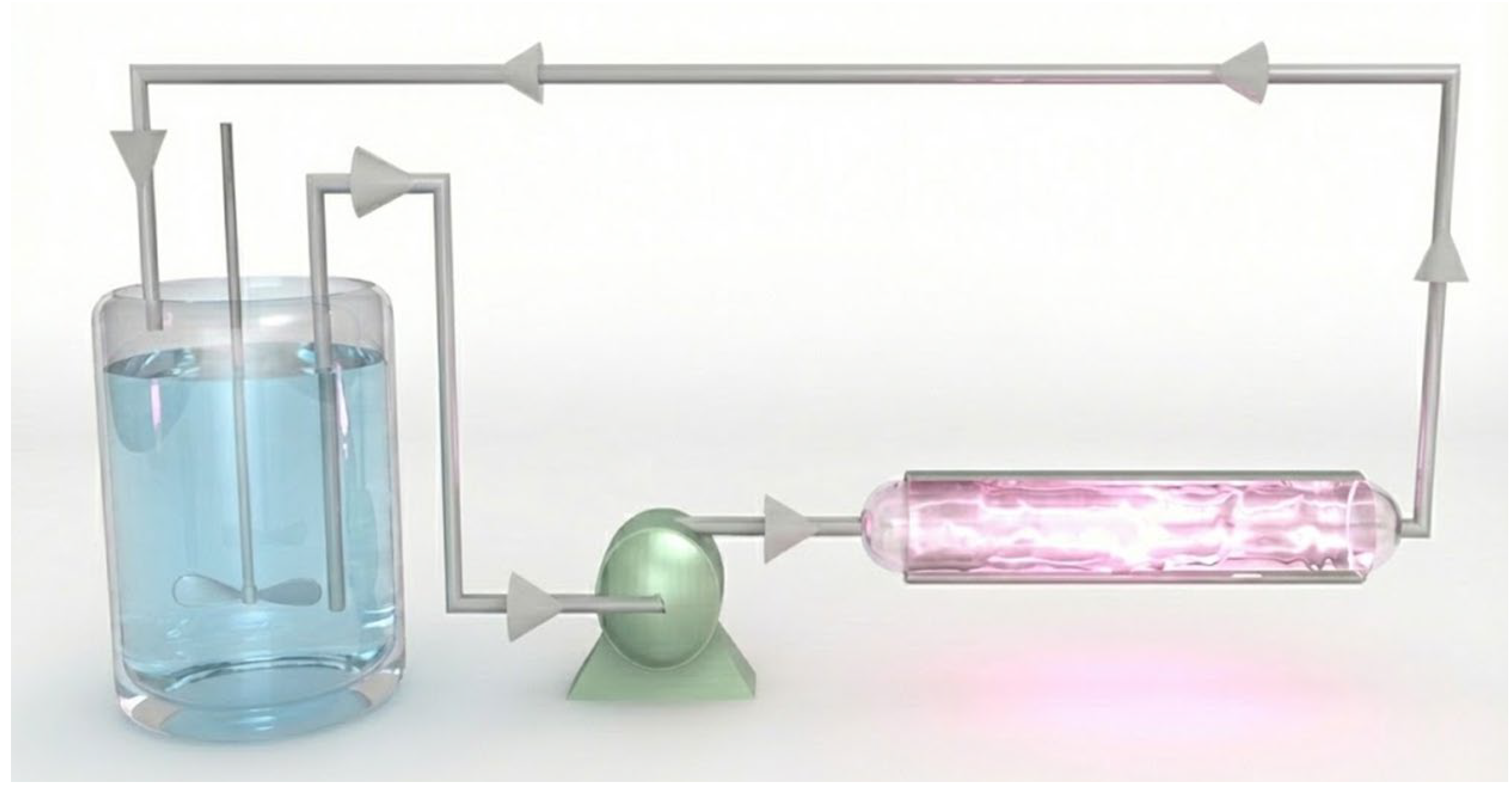
2.2. Experimental Setup
2.3. Experimental Design
2.4. Analytical Methods
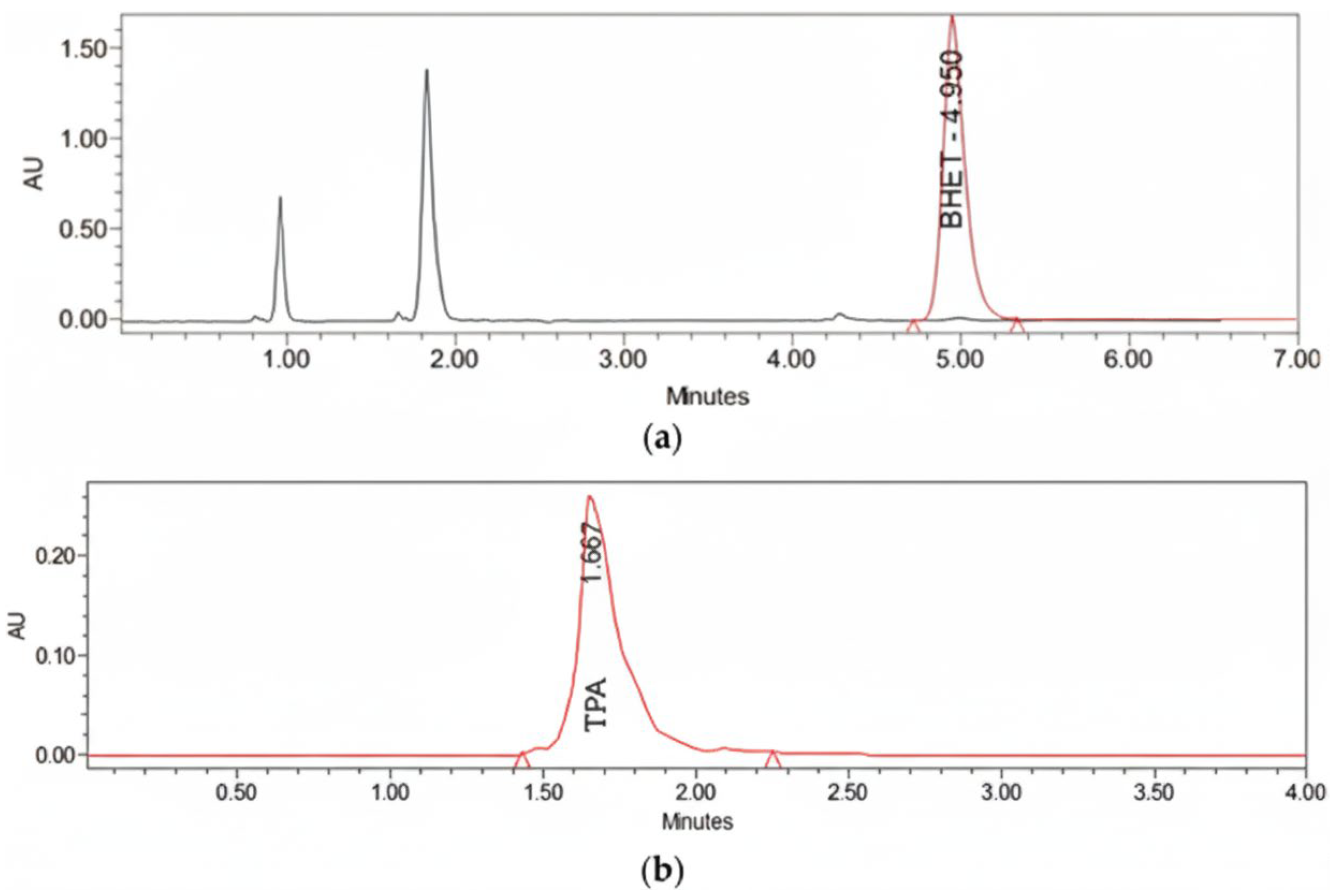
2.4.1. Monomer Quantification
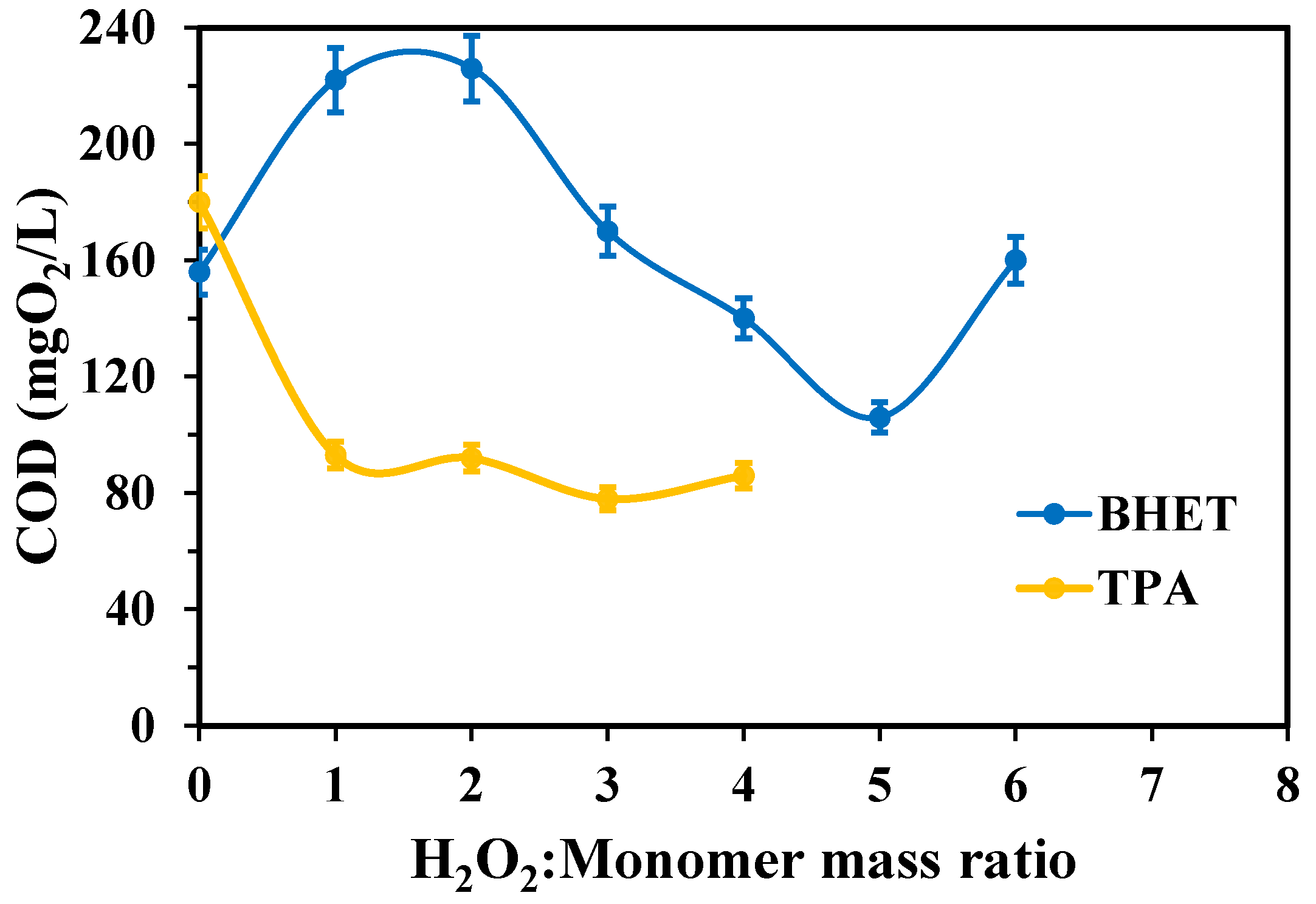
2.4.2. Chemical Oxygen Demand Quantification
3. Results and Discussion
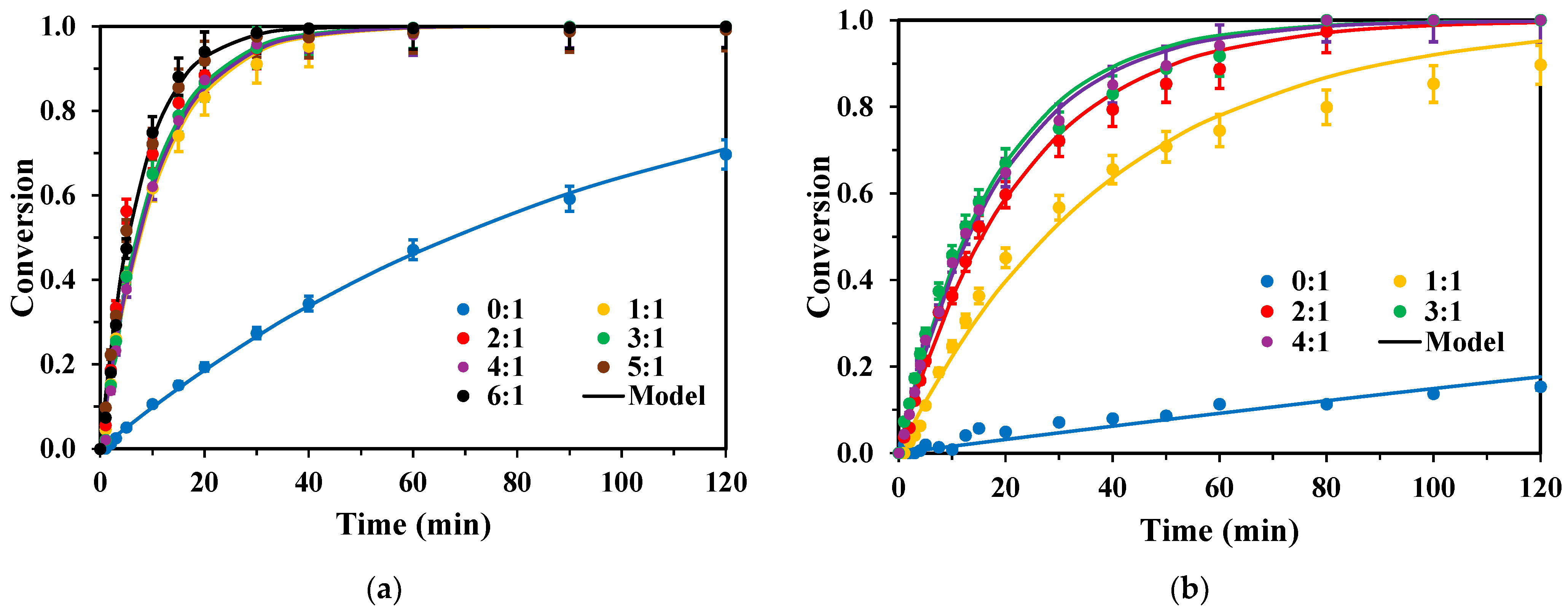
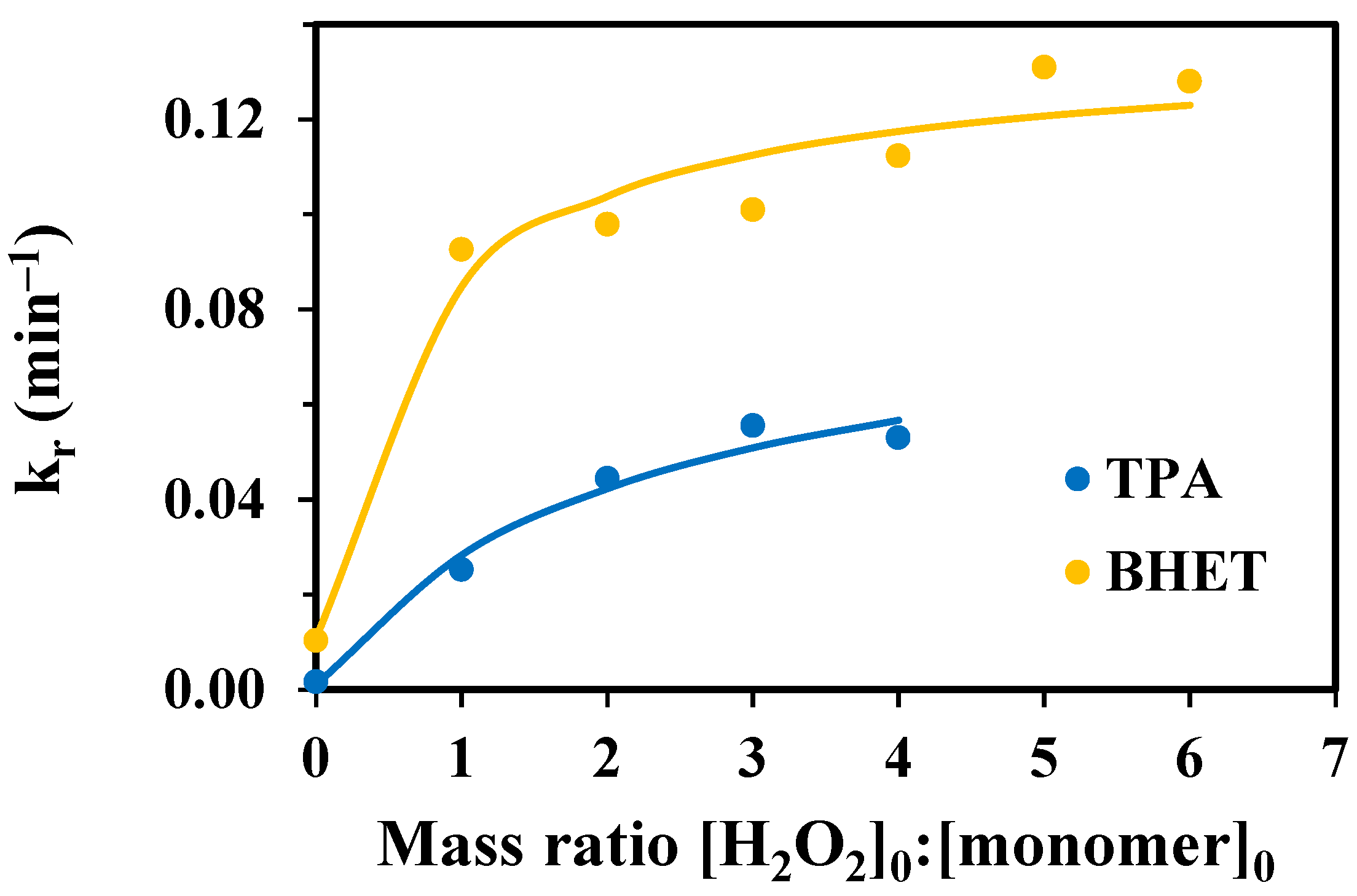
3.1. Effect of H2O2–Monomer Mass Ratio
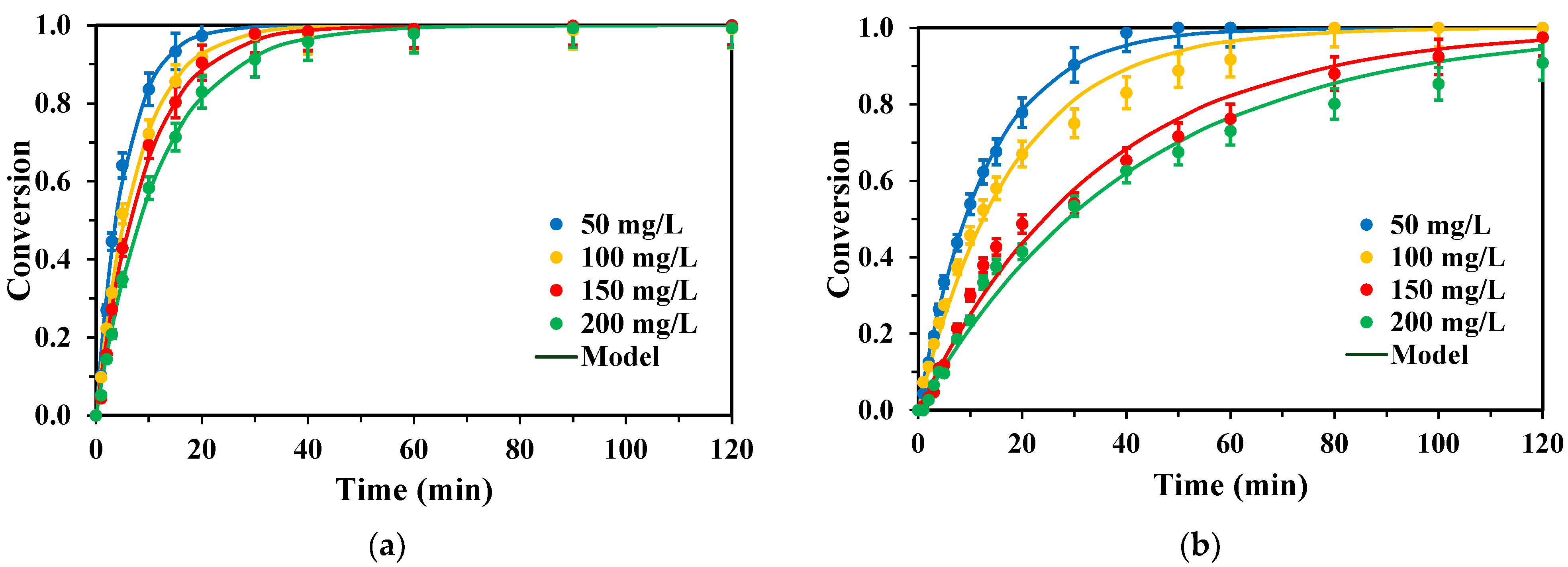
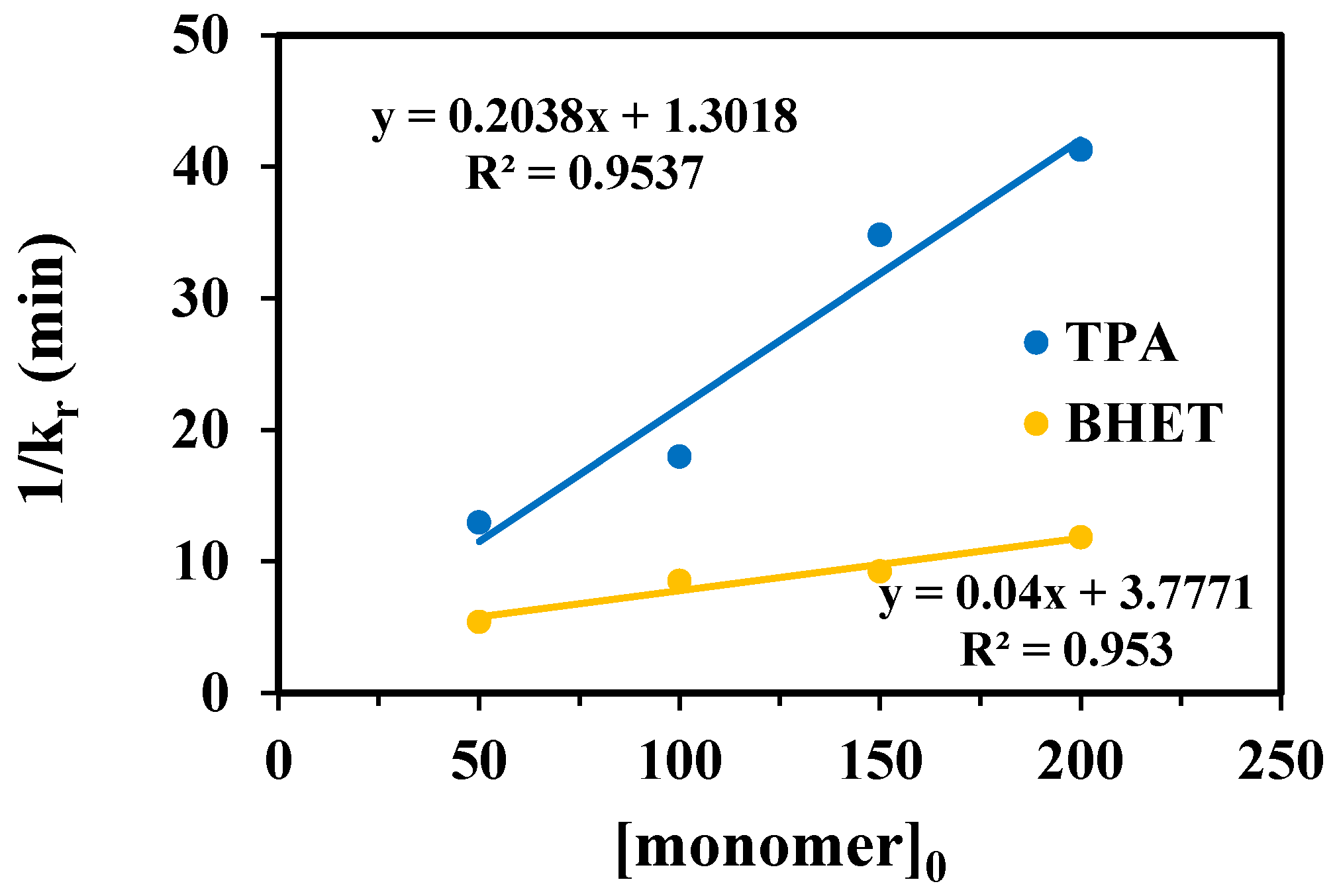
3.2. Effect of Initial Monomer Concentration
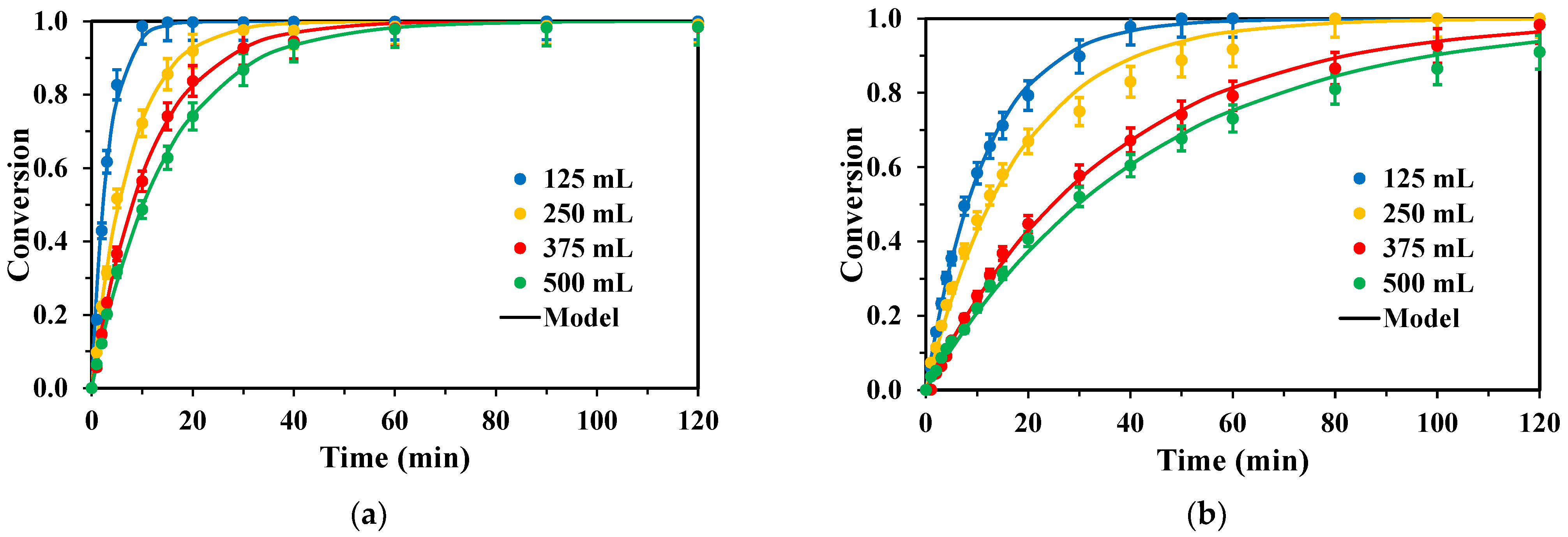
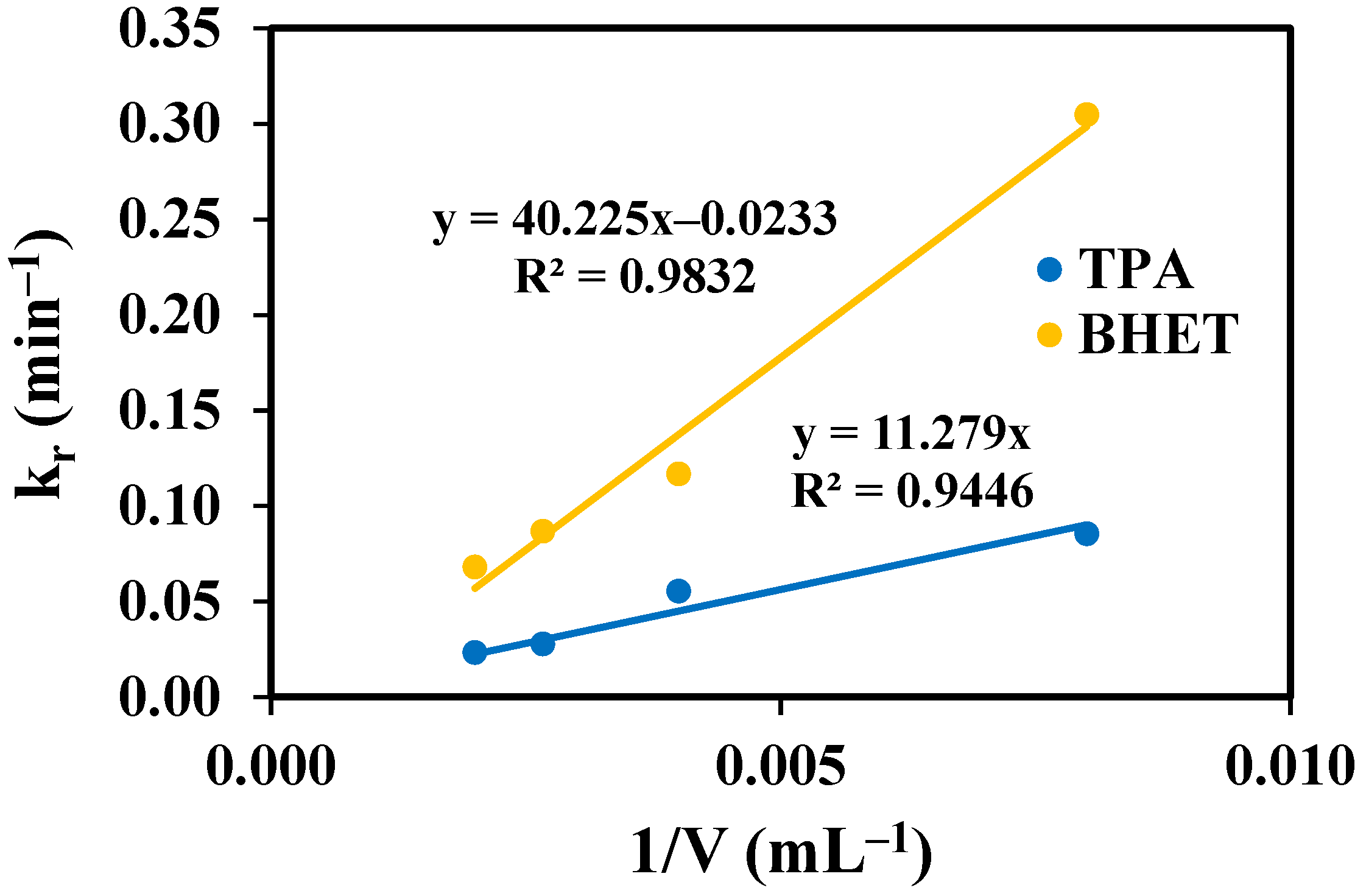
3.3. Effect of Reaction Volume
3.4. Model Fitting of the KrCl Flow-Through Photoreactor Results
4. Conclusions
Author Contributions
Funding
Data Availability Statement
Conflicts of Interest
Abbreviations
| a | Parameter of Equation (3), (mg L−1 min−2) |
| b | Parameter of Equation (3), (mg L−1 min−2) |
| c | Parameter of Equation (3), (mg L−1 min−1) |
| d | Parameter of Equation (3), (mg L−1 min−1) |
| ε | Quantum yield, (mg L−1 W−1) |
| I | Intensity of radiation, (w) |
| kc1 | Kinetic constant of direct photolysis in the film, (min−1) |
| kc2 | Kinetic constant with hydrogen peroxide in the film, (mg−1L−1min−1) |
| kE | Proportionality constant, (dimensionless) |
| kLa | Volumetric mass transfer coefficient, (min−1) |
| klim | Proportionality constant between initial H2O2 concentration and H2O2 concentration in the film |
| kr | Pseudo first order kinetic constant, (min−1) |
| t | Reaction time, (min) |
| V | Volume of bulk solution, (mL) |
| Vr | Volume of photoreaction zone in the film, (mL) |
| X | Conversion of monomer, (dimensionless) |
| C0 | Initial concentration of monomer, (mgL−1) |
| Initial concentration of hydrogen peroxide, (mgL−1) | |
| Concentration of hydrogen peroxide in the film, (mgL−1) |
References
- Tournier, V.; Topham, C.M.; Gilles, A.; David, B.; Folgoas, C.; Moya-Leclair, E.; Kamionka, E.; Desrousseaux, M.L.; Texier, H.; Gavalda, S.; et al. An engineered PET depolymerase to break down and recycle plastic bottles. Nature 2020, 580, 216–219. [Google Scholar] [CrossRef]
- Volpe, V.; Lanzillo, M.S.; Molaro, A.; Affinita, G.; Pantani, R. Characterization of recycled/virgin polyethylene terephthalate composite reinforced with glass fiber for automotive applications. J. Compos. Sci. 2022, 6, 59. [Google Scholar] [CrossRef]
- Koshti, R.; Mehta, L.; Samarth, N. Biological recycling of polyethylene terephthalate: A mini-review. J. Polym. Environ. 2018, 26, 3520–3529. [Google Scholar] [CrossRef]
- Gewert, B.; Plassmann, M.M.; MacLeod, M. Pathways for degradation of plastic polymers floating in the marine environment. Environ. Sci. Process. Impacts 2015, 17, 1513–1521. [Google Scholar] [CrossRef]
- Sharma, S.; Bhardwaj, A.; Thakur, M.; Saini, A. Understanding microplastic pollution of marine ecosystem: A Review. Environ. Sci. Pollut. Res. 2024, 31, 41402–41445. [Google Scholar] [CrossRef] [PubMed]
- Li, B.; Wang, Z.W.; Lin, Q.B.; Hu, C.Y. Study of the migration of stabilizer and plasticizer from polyethylene terephthalate into food simulants. J. Chromatogr. Sci. 2016, 54, 939–951. [Google Scholar] [CrossRef] [PubMed]
- Thoden van Velzen, E.U.; Brouwer, M.T.; Stärker, C.; Welle, F. Effect of recycled content and rPET quality on the properties of PET bottles, Part II: Migration. Packag. Technol. Sci. 2020, 33, 359–371. [Google Scholar] [CrossRef]
- Petrović, M.; Barceló, D. Introduction—Emerging pollutants in water: Threats, challenges, and research needs. In Emerging Pollutants; Barceló, D., Ed.; Springer: Cham, Switzerland, 2025; pp. 1–34. [Google Scholar] [CrossRef]
- Abbas-Abadi, M.S.; Ureel, Y.; Eschenbacher, A.; Vermeire, F.H.; Varghese, R.J.; Oenema, J.; Stefanidis, G.D.; Van Geem, K.M. Challenges and opportunities of light olefin production via thermal and catalytic pyrolysis of end-of-life polyolefins: Towards full recyclability. Prog. Energy Combust. Sci. 2023, 96, 101046. [Google Scholar] [CrossRef]
- Mudondo, J.; Lee, H.S.; Jeong, Y.; Kim, T.H.; Kim, S.; Sung, B.H.; Park, S.H.; Park, K.; Cha, H.G.; Yeon, Y.J.; et al. Recent advances in the chemobiological upcycling of polyethylene terephthalate (PET) into value-added chemicals. J. Microbiol. Biotechnol. 2022, 33, 1–14. [Google Scholar] [CrossRef]
- He, L.; Yang, S.S.; Ding, J.; He, Z.L.; Pang, J.W.; Xing, D.F.; Zhao, L.; Zheng, H.S.; Ren, N.Q.; Wu, W.M. Responses of gut microbiomes to commercial polyester polymer biodegradation in Tenebrio molitor Larvae. J. Hazard. Mater. 2023, 457, 131759. [Google Scholar] [CrossRef]
- Ali, S.S.; Elsamahy, T.; Zhu, D.; Sun, J. Biodegradability of polyethylene by efficient bacteria from the guts of plastic-eating waxworms and investigation of its degradation mechanism. J. Hazard. Mater. 2023, 443, 130287. [Google Scholar] [CrossRef]
- Gao, Y.; Zheng, Y.; Qi, Z.; Pan, Y.; Zhou, Y.; You, S.; Su, R.; Qi, W.; Wang, M. Enhancing the biodegradation of bis(2-hydroxyethyl) terephthalate by an IsPETasePA and MHETase dual-enzyme system. J. Chem. Technol. Biotechnol. 2024, 99, 1860–1870. [Google Scholar] [CrossRef]
- Ermis, H. A mini-review on the role of PETase in polyethylene terephthalate degradation. Rev. Environ. Sci. Biotechnol. 2025, 24, 545–555. [Google Scholar] [CrossRef]
- Świderek, K.; Velasco-Lozano, S.; Galmés, M.A.; Olazabal, I.; Sardon, H.; López-Gallego, F.; Moliner, V. Mechanistic studies of a lipase unveil effect of pH on hydrolysis products of small PET modules. Nat. Commun. 2023, 14, 3556. [Google Scholar] [CrossRef] [PubMed]
- Aristizábal-Lanza, L.; Mankar, S.V.; Tullberg, C.; Zhang, B.; Linares-Pastén, J.A. Comparison of the enzymatic depolymerization of polyethylene terephthalate and AkestraTM using Humicola insolens cutinase. Front. Chem. Eng. 2022, 4, 1048744. [Google Scholar] [CrossRef]
- Veeramalli, N.S.; Aravind Kumar, J.; Vasamsetti, S.S.; Sathish, S.; Venkatesan, D.; Prabu, D.; Samrot, A.V. Microbial and enzymatic biodegradation of microplastics and nanoplastics: Advances, challenges, and sustainable solutions for environmental remediation. Desalin. Water Treat. 2025, 324, 101450. [Google Scholar] [CrossRef]
- Raoufi, H.; Taqwa, S.; Fagiryaar, F. Enzymatic degradation of polyethylene and polyethylene terephthalate: A mini review. Am. J. Environ. Clim. 2023, 2, 41–50. [Google Scholar] [CrossRef]
- Li, X.; Wang, J.; Zhang, T.; Yang, S.; Sun, M.; Qian, X.; Wang, T.; Zhao, Y. Sustainable catalytic strategies for the transformation of plastic wastes into valued products. Chem. Eng. Sci. 2023, 276, 118729. [Google Scholar] [CrossRef]
- Pandis, P.K.; Kalogirou, C.; Kanellou, E.; Vaitsis, C.; Savvidou, M.G.; Sourkouni, G.; Zorpas, A.A.; Argirusis, C. Key points of advanced oxidation processes (AOPs) for Wastewater, organic pollutants and pharmaceutical waste treatment: A mini review. ChemEngineering 2022, 6, 8. [Google Scholar] [CrossRef]
- Kim, S.; Sin, A.; Nam, H.; Park, Y.; Lee, H.; Han, C. Advanced oxidation processes for microplastics degradation: A recent trend. Chem. Eng. J. Adv. 2022, 9, 100213. [Google Scholar] [CrossRef]
- Bule Možar, K.; Miloloža, M.; Martinjak, V.; Radovanović-Perić, F.; Bafti, A.; Ujević Bošnjak, M.; Markić, M.; Bolanča, T.; Cvetnić, M.; Kučić Grgić, D.; et al. Evaluation of fenton, photo-fenton and fenton-like processes in degradation of PE, PP, and PVC microplastics. Water 2024, 16, 673. [Google Scholar] [CrossRef]
- Topkaya, E.; Arslan, A.; Veli, S.; Kuru, S.; Sezer, M. Removal of microplastics by ozone oxidation from urban wastewater using taguchi experimental design. Water Air Soil Pollut. 2025, 236, 606. [Google Scholar] [CrossRef]
- Xiao, Y.; Tian, Y.; Xu, W.; Zhu, J. Photodegradation of microplastics through nanomaterials: Insights into photocatalysts modification and detailed mechanisms. Materials 2024, 17, 2755. [Google Scholar] [CrossRef] [PubMed]
- Roy, H.; Mahmud, F.; Sarker, D.; Banhi, T.S.; Sharmin, U.; Roy, B.N.; Islam, M.S. Degradation of Microplastics in Aquatic Environments through an Advanced Oxidation Process. In Handbook of Microplastic Pollution in the Environment, 1st ed.; CRC Press: Boca Raton, FL, USA, 2025; p. 31. [Google Scholar]
- Kumar, A.; Indhur, R.; Bux, F.; Kumari, S. Recent advances in mechanistic insights into microplastics mitigation strategies via emerging advanced oxidation processes: Legislation, challenges, and future direction. Sci. Total Environ. 2024, 957, 177150. [Google Scholar] [CrossRef]
- Navarro-García, Á.; Gómez, M.; Murcia, M.D.; Gómez, E.; Hidalgo, A.M.; Dorado, L.A.; Bastida, J. Photodegradation of Polyethylene Terephthalate and Bis(2-hydroxyethyl) Terephthalate Using Excimer Lamps and Hydrogen Peroxide: A Strategy for PET–Derived Waste Treatment. Molecules 2025, 30, 3302. [Google Scholar] [CrossRef]
- Sosnin, E.A.; Oppenländer, T.; Tarasenko, F.V. Applications of capacitive and barrier discharge excilamps in photoscience. J. Photochem. Photobiol. C 2006, 7, 145–163. [Google Scholar] [CrossRef]
- Matafonova, G.; Christofi, N.; Batoev, V.; Sosnin, E. Degradation of chlorophenols in aqueous media using UV XeBr excilamp in a flow-through reactor. Chemosphere 2008, 70, 1124–1127. [Google Scholar] [CrossRef]
- Murcia, M.D.; Gómez, M.; Gómez, E.; Gómez, J.L.; Christofi, N. Photodegradation of congo red using XeBr, KrCl and Cl2 barrier discharge excilamps: A kinetics study. Desalination 2011, 281, 364–371. [Google Scholar] [CrossRef]
- Murcia, M.D.; Gómez, M.; Gómez, E.; Gómez, J.L.; Hidalgo, A.M.; Murcia, S.; Campos, D. Comparison of two excilamps and two reactor configurations in the UV-H2O2 removal process of amaranth. J. Water Process Eng. 2020, 33, 101051. [Google Scholar] [CrossRef]
- Tchaikovskaya, O.N.; Karetnikova, E.; Murcia, M.D.; Gómez, M.; Gómez, J.L. Photodegradation of 2-methyl-4-chlorophenol in a KrCl exciplex flow-Through photoreactor: A kinetic study. Desalin. Water Treat. 2015, 54, 1862–1871. [Google Scholar] [CrossRef]
- Gonzalez, D.H.; Kwang, X.M.; Scott, J.A.; Paulson, S.E. Terephthalate Probe for Hydroxyl Radicals: Yield of 2-Hydroxyterephthalic Acid and Transition Metal Interference. Anal. Letters 2018, 51, 2488–2497. [Google Scholar] [CrossRef]
- Camacho-Gonzalez, M.A.; Hernandez-Reyes, A.; Garrido-Hernandez, A.; Olivares-Xometi, O.; Likhanova, N.V.; Lijanova, I.V. TPA and PET Photo-Degradation by Heterogeneous Catalysis Using a (Al2O3)0.75TiO2 Coating. Water. Sci. Technol. 2025. [Google Scholar] [CrossRef]
- Brame, J.; Long, M.; Li, Q.; Alvarez, P. Inhibitory effect of natural organic matter or other background constituents on photocatalytic advanced oxidation processes: Mechanistic model development and validation. Wat. Res. 2015, 84, 362–371. [Google Scholar] [CrossRef]

| Monomer | Experiment Number | Mass Ratio [H2O2]: [Monomer] | [Monomer]0 (mg/L) | [H2O2]0 (mg/L) | V (mL) |
|---|---|---|---|---|---|
| BHET | 1 | 0:1 | 100 | 0 | 250 |
| 2 | 1:1 | 100 | |||
| 3 | 2:1 | 200 | |||
| 4 | 3:1 | 300 | |||
| 5 | 4:1 | 400 | |||
| 6 | 5:1 | 500 | |||
| 7 | 6:1 | 600 | |||
| 8 | 5:1 | 50 | 250 | 250 | |
| 9 | 100 | 500 | |||
| 10 | 150 | 750 | |||
| 11 | 200 | 1000 | |||
| 12 | 5:1 | 100 | 500 | 125 | |
| 13 | 250 | ||||
| 14 | 375 | ||||
| 15 | 500 | ||||
| TPA | 1 | 0:1 | 100 | 0 | 250 |
| 2 | 1:1 | 100 | |||
| 3 | 2:1 | 200 | |||
| 4 | 3:1 | 300 | |||
| 5 | 4:1 | 400 | |||
| 6 | 3:1 | 50 | 150 | 250 | |
| 7 | 100 | 300 | |||
| 8 | 150 | 450 | |||
| 9 | 200 | 600 | |||
| 10 | 3:1 | 100 | 300 | 125 | |
| 11 | 250 | ||||
| 12 | 375 | ||||
| 13 | 500 |
| BHET | TPA | ||||
|---|---|---|---|---|---|
| Experiment Number | kr (min−1) | r | Experiment Number | kr (min−1) | r |
| 1 | 0.0103 | 0.9994 | 1 | 0.0016 | 0.9427 |
| 2 | 0.0926 | 0.9984 | 2 | 0.0253 | 0.9927 |
| 3 | 0.0979 | 0.9946 | 3 | 0.0444 | 0.9978 |
| 4 | 0.1010 | 0.9981 | 4 | 0.0556 | 0.9956 |
| 5 | 0.1123 | 0.9981 | 5 | 0.0530 | 0.9985 |
| 6 | 0.1310 | 0.9977 | 6 | 0.0771 | 0.9993 |
| 7 | 0.1280 | 0.9982 | 7 | 0.0566 | 0.9956 |
| 8 | 0.0184 | 0.9972 | 8 | 0.0287 | 0.9926 |
| 9 | 0.1310 | 0.9977 | 9 | 0.0242 | 0.9923 |
| 10 | 0.1080 | 0.9988 | 10 | 0.0855 | 0.9993 |
| 11 | 0.0843 | 0.9994 | 11 | 0.0556 | 0.9956 |
| 12 | 0.3050 | 0.9966 | 12 | 0.0280 | 0.9987 |
| 13 | 0.1310 | 0.9977 | 13 | 0.0233 | 0.9975 |
| 14 | 0.0869 | 0.9992 | |||
| 15 | 0.0682 | 0.9994 | |||
| Parameter | TPA | BHET |
|---|---|---|
| a | 0.0054 | 0.0211 |
| b | 0.0227 | 0.3880 |
| c | 5.5517 | 1.9400 |
| d | 2.6257 | 2.8500 |
| r | 0.9880 | 0.9800 |
Disclaimer/Publisher’s Note: The statements, opinions and data contained in all publications are solely those of the individual author(s) and contributor(s) and not of MDPI and/or the editor(s). MDPI and/or the editor(s) disclaim responsibility for any injury to people or property resulting from any ideas, methods, instructions or products referred to in the content. |
© 2026 by the authors. Licensee MDPI, Basel, Switzerland. This article is an open access article distributed under the terms and conditions of the Creative Commons Attribution (CC BY) license.
Share and Cite
Gómez, M.; Montiel, M.C.; Gómez, E.; Hidalgo, A.M.; Máximo, F.; Murcia, M.D. Advanced Oxidation of PET-Derived Monomers Using Excimer Radiation and Hydrogen Peroxide: Kinetic and Operational Insights. ChemEngineering 2026, 10, 19. https://doi.org/10.3390/chemengineering10020019
Gómez M, Montiel MC, Gómez E, Hidalgo AM, Máximo F, Murcia MD. Advanced Oxidation of PET-Derived Monomers Using Excimer Radiation and Hydrogen Peroxide: Kinetic and Operational Insights. ChemEngineering. 2026; 10(2):19. https://doi.org/10.3390/chemengineering10020019
Chicago/Turabian StyleGómez, María, María Claudia Montiel, Elisa Gómez, Asunción María Hidalgo, Fuensanta Máximo, and María Dolores Murcia. 2026. "Advanced Oxidation of PET-Derived Monomers Using Excimer Radiation and Hydrogen Peroxide: Kinetic and Operational Insights" ChemEngineering 10, no. 2: 19. https://doi.org/10.3390/chemengineering10020019
APA StyleGómez, M., Montiel, M. C., Gómez, E., Hidalgo, A. M., Máximo, F., & Murcia, M. D. (2026). Advanced Oxidation of PET-Derived Monomers Using Excimer Radiation and Hydrogen Peroxide: Kinetic and Operational Insights. ChemEngineering, 10(2), 19. https://doi.org/10.3390/chemengineering10020019

