

Calculation, Measurement and Validation for Estimating the Biomass of the Biofilm on Microcarriers


Abstract
1. Introduction
2. Literature Summary
2.1. Biofilm Thickness
2.2. Surface Coverage
2.3. Volumetric Density of the Biofilm
2.4. Biomass
2.5. Summarising the Available Techniques and Their Applicability
3. Materials, Methods and Mathematical Formulas
3.1. Biofilm Thickness
3.2. Surface Coverage
3.3. Volumetric Density of the Biofilm
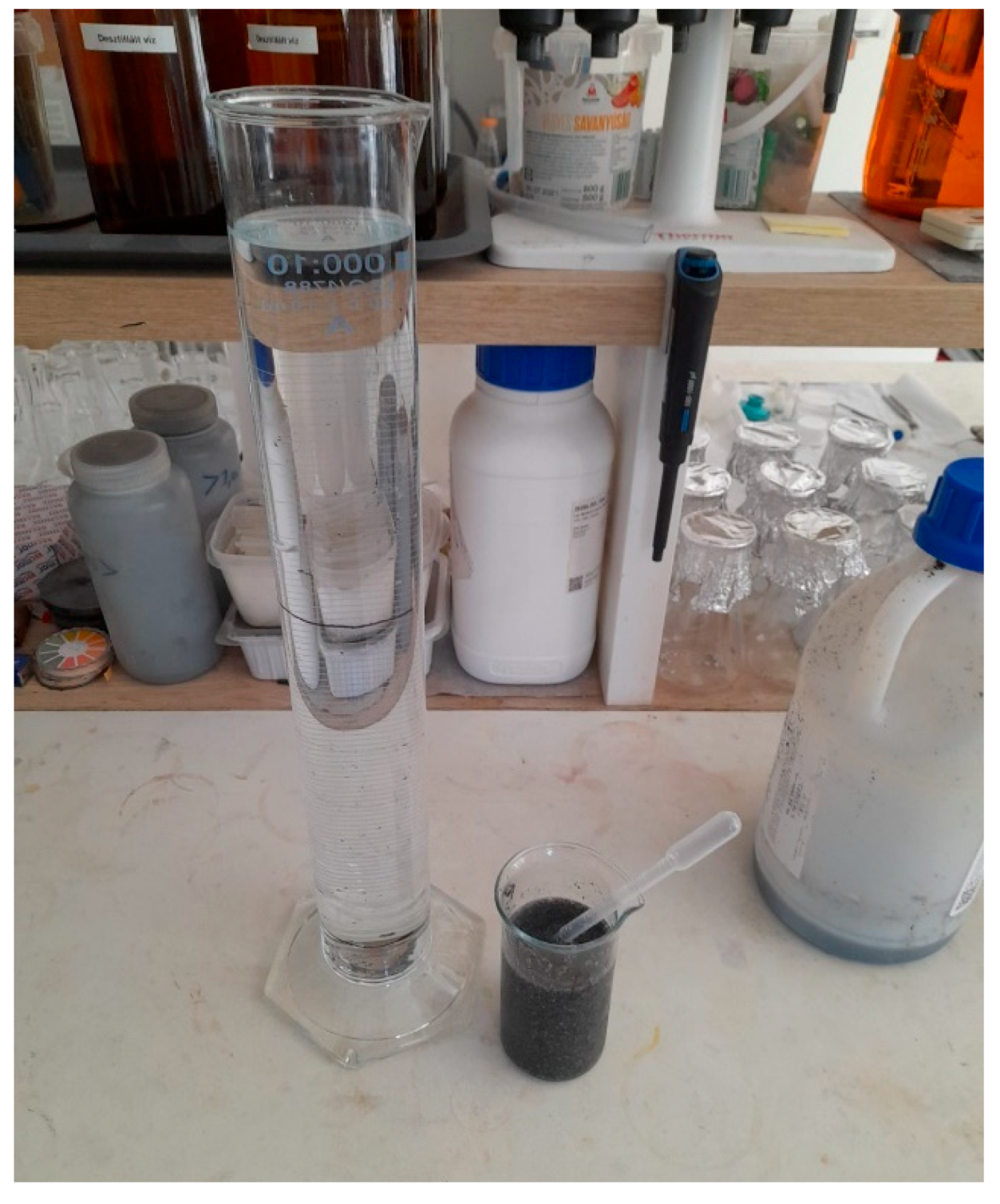
- One is measuring the sedimentation velocity. A 1000 mL measuring cylinder was used. Two marks were put on the cylinder, leaving enough space at the top for the carriers to reach terminal velocity, and measured the time it takes for the carriers to sink from the upper mark to the lower. Only a few were added each time, so they would not interfere with each other while settling, and these were added around the axis of the cylinder to minimise the effect of the friction caused by the wall of the cylinder (Figure 4). Fourteen attempts were made to determine their settling speed both on colonised and freshly produced, noncolonised media.
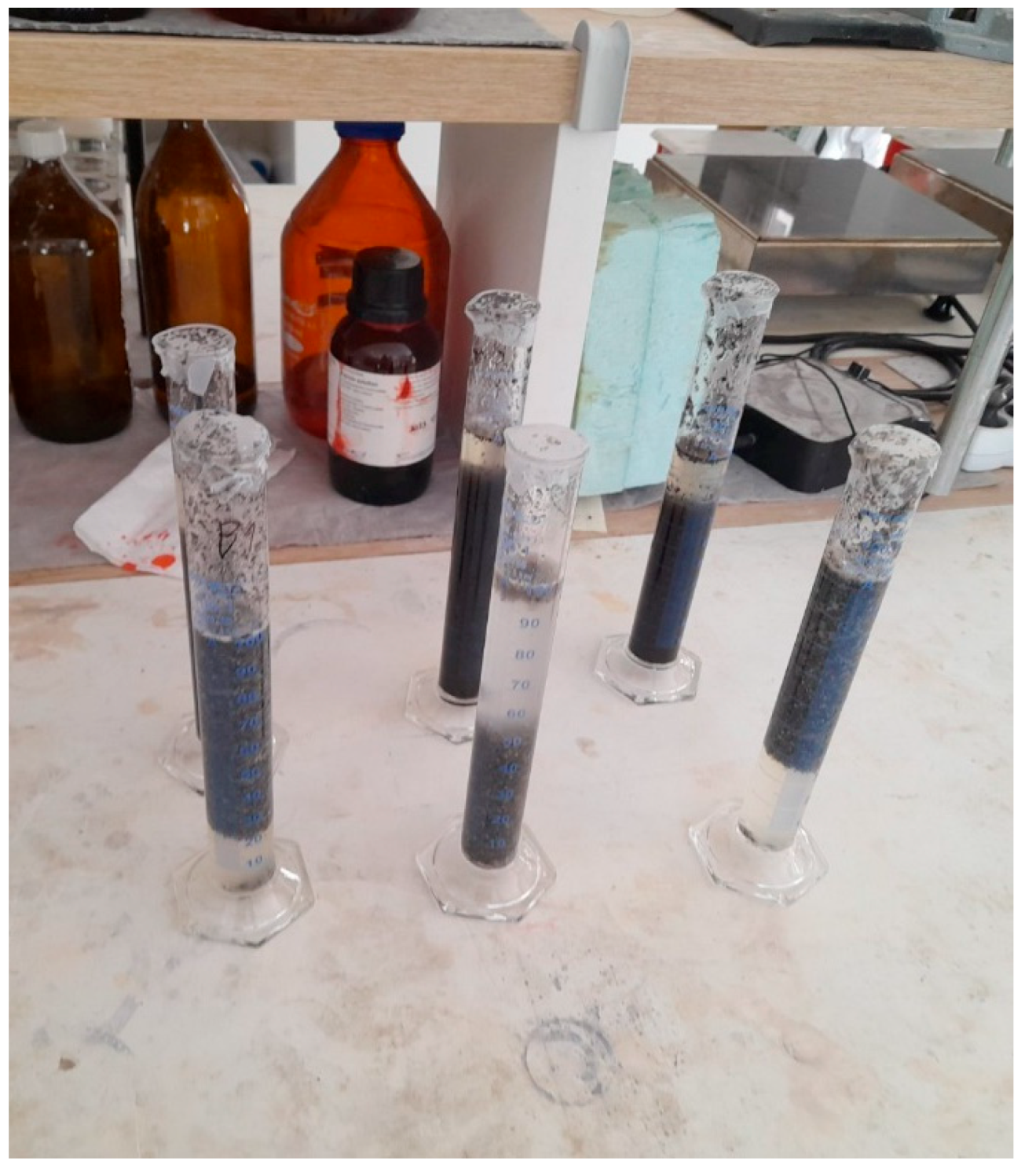
- The second measurement involved determining the proportion of carrier volume occupied by biofilm. This was achieved through acidic charring. Carriers were placed into 100-mL graduated cylinders; water was added to a total volume of approximately 99 mL; and the suspension was allowed to settle before recording the volume displaced by the carriers. Subsequently, 1 mL of concentrated sulfuric acid was added (after testing several volumes, this amount proved optimal); the mixture was gently homogenised, allowed to settle again, and the carrier volume was re-measured. Both measurements were performed on biofilm-covered carriers and on clean, unused carriers for comparison (Figure 5). To ensure accuracy and scientific reliability, two independent experiments were conducted, each with three replicates.
3.4. Amount of Carriers in the Reactor
3.5. Dry Biofilm Density
3.6. Biomass
- The first is that we no longer estimate the biofilm density from relative and absolute biofilm thickness based on the proportions other articles found but instead have a measurement well suited for our media.
- The second is that a more reliable method to measure the amount of carriers in the reactor was developed.
- The third is an update made to the calculation to fit the geometry of the biofilm (biofilm developed on a quasi-spherical carrier) better by encapsulating the curvature of the surface more accurately:
4. Experimental Results
- We treat our carriers (both colonised and non-colonised) as spheres.
- The neglection of the media’s non-vertical movement during settling.
5. Conclusions
Author Contributions
Funding
Data Availability Statement
Acknowledgments
Conflicts of Interest
Abbreviations
References
- Lariyah, M.S.; Mohiyaden, H.A.; Hayder, A.G.; Ahmad, H.B.; Basri, H.; Sabri, A.F.; Noh, M.N. Application of Moving Bed Biofilm Reactor (MBBR) and Integrated Fixed Activated Sludge (IFAS) for Biological River Water Purification System: A Short Review. In Proceedings of the IOP Conference Series: Earth and Environmental Science 32, International Conference on Advances in Renewable Energy and Technologies (ICARET 2016), Putrajaya, Malaysia, 23–25 February 2016. [Google Scholar] [CrossRef]
- Lariyah, M.S.; Mohiyaden, H.A.; Gasim Hayder, A.S.; Ahmad, H.B.; Zuraidah, A.; Ahmad, F.M.S.; Nasir, M.N. Experimental Comparison between Moving Bed Biofilm Reactor (MBBR) and Conventional Activated Sludge (CAS) for River Purification Treatment Plant. Adv. Mater. Res. 2015, 1113, 806–811. [Google Scholar] [CrossRef]
- Achinas, S.; Yska, S.K.; Charalampogiannis, N.; Krooneman, J.; Euverink, G.J.W. A Technological Understanding of Biofilm Detection Techniques: A Review. Materials 2020, 13, 3147–3209. [Google Scholar] [CrossRef]
- Fonseca, D.L.; Bassin, J.P. Investigating the Most Appropriate Methods for Attached Solids Determination in Moving-Bed Biofilm Reactors. Bioprocess Biosyst. Eng. 2019, 42, 1867–1878. [Google Scholar] [CrossRef]
- Herrling, M.P.; Guthausen, G.; Wagner, M.; Lackner, S.; Horn, H. Determining the Flow Regime in a Biofilm Carrier by Means of Magnetic Resonance Imaging. Biotechnol. Bioeng. 2015, 112, 1023–1032. [Google Scholar] [CrossRef]
- Li, C.; Felz, S.; Wagner, M.; Lackner, S.; Horn, H. Investigating Biofilm Structure Developing on Carriers from Lab-Scale Moving Bed Biofilm Reactors Based on Light Microscopy and Optical Coherence Tomography. Bioresour. Technol. 2016, 200, 128–136. [Google Scholar] [CrossRef] [PubMed]
- Bjornberg, C.; Lin, W.; Zimmerman, R. Effect of Temperature on Biofilm Growth Dynamics and Nitrification Kinetics in a Full-Scale MBBR System. In Proceedings of the Water Environment Federation, Orlando, FL, USA, 10–14 October 2009; pp. 4407–4426. [Google Scholar] [CrossRef]
- Schaefer, S.; Walther, J.; Strieth, D.; Ulber, R.; Bröckel, U. Insights into the Development of Phototrophic Biofilms in a Bioreactor by a Combination of X-Ray Microtomography and Optical Coherence Tomography. Microorganisms 2021, 9, 1743–1756. [Google Scholar] [CrossRef] [PubMed]
- Wilson, C.; Lukowicz, R.; Merchant, S.; Valquier-Flynn, H.; Caballero, J.; Sandoval, J.; Okuom, M.; Huber, C.; Brooks, T.D.; Wilson, E.; et al. Quantitative and Qualitative Assessment Methods for Biofilm Growth: A Mini-Review. Res. Rev. J. Eng. Technol. 2017, 6, 1–42. [Google Scholar] [PubMed] [PubMed Central]
- Hassimi, H.A.; Mohd Saharuddin, S.N.D.; Muhamad, M.H. Unlocking the Potential of Polyvinyl Alcohol (PVA) as a Biocarrier for Enhanced Wastewater Treatment: A Comprehensive Review. J. Water Process Eng. 2025, 74, 107780. [Google Scholar] [CrossRef]
- Kreth, J.; Hagerman, E.; Tam, K.; Merritt, J.; Wong, D.T.W.; Wu, B.M.; Myung, N.V.; Shi, W.; Qi, F. Quantitative Analyses of Streptococcus Mutans Biofilms with Quartz Crystal Microbalance, Microjet Impingement and Confocal Microscopy. Biofilms 2004, 1, 277–284. [Google Scholar] [CrossRef]
- Mueller, G.; Waldeck, W.; Braun, K. From Green to Red—To More Dead? Autofluorescent Proteins as Photosensitizers. J. Photochem. Photobiol. B: Biol. 2010, 98, 95–98. [Google Scholar] [CrossRef]
- Chuanwu, X.; Marks, D.; Schlachter, S.; Luo, W.; Boppart, S.A. High-Resolution Three-Dimensional Imaging of Biofilm Development Using Optical Coherence Tomography. J. Biomed. Opt. 2006, 11, 034001. [Google Scholar] [CrossRef]
- Peyton Brent, M. Effects of shear stress and substrate loading rate on Pseudomonas aeruginosa biofilm thickness and density. Water Res. 1996, 30, 29–36. [Google Scholar] [CrossRef]
- Mohsin, U.; Islam, K.M.; Dev, S. Investigation of the Performance of the Combined Moving Bed Bioreactor-Membrane Bioreactor (MBBR-MBR) for Textile Wastewater Treatment. Heliyon 2024, 10, e31358. [Google Scholar] [CrossRef]
- Kloknicer, T.; Szabó, A.; Sándor, D.B.; Filipcsei, G. Challenges and Disadvantages of PVA-Based Media Application in Wastewater Treatment: A Mini-Review. Environments 2025, 12, 294. [Google Scholar] [CrossRef]
- Kloknicer, T.; Sándor, D.B.; Szabó, A. Determining Biofilm Biomass Based on Image Processing for PVA Based Media. In Proceedings of the 2025 IEEE 19th International Symposium on Applied Computational Intelligence and Informatics (SACI), Timisoara, Romania, 19–24 May 2025; pp. 000657–000662. [Google Scholar] [CrossRef]
- Katalin, K.; Miklós, P. Nyersiszap ülepedési és biodegradálhatósági tulajdonságainak vizsgálata. VÍZMŰ PANORÁMA Víz- és Csatornaművek Országos Szakmai Szövetsége Lapja 2022, 2, 25–36. [Google Scholar]
- Hu, X.-B.; Xu, K.; Wang, Z.; Ding, L.-L.; Ren, H.-Q. Characteristics of Biofilm Attaching to Carriers in Moving Bed Biofilm Reactor Used to Treat Vitamin C Wastewater. Scanning 2013, 35, 283–291. [Google Scholar] [CrossRef]
- Saini, S.; Tewari, S.; Dwivedi, J.; Sharma, V. Biofilm-mediated wastewater treatment: A comprehensive review. Mater. Adv. 2023, 4, 1415–1443. [Google Scholar] [CrossRef]
- Shieh, W.K.; Sutton, P.M.; Kos, P. Predicting Reactor Biomass Concentration in a Fluidized-Bed System. J. Water Pollut. Control. Fed. 1981, 53, 1574–1584. Available online: https://www.jstor.org/stable/25041166 (accessed on 8 August 2025).
- Hoehn, R.C.; Ray, A.D. Effects of thickness on bacterial film. J. Water Pollut. Control. Fed. 1973, 45, 2302–2320. [Google Scholar]
- Onuma, M.; Omura, T. Mass-Transfer Characteristics within Microbial Systems. Water Sci. Technol. 1982, 14, 553–568. [Google Scholar] [CrossRef]
- Harald, H.; Hempel, D.C. Growth and decay in an auto-/heterotrophic biofilm. Water Res. 1997, 31, 2243–2252. [Google Scholar] [CrossRef]
- Timmermans, P.; Van Haute, A. Influence of the Type of Organisms on the Biomass Hold-up in a Fluidized-Bed Reactor. Appl. Microbiol. Biotechnol. 1984, 19, 36–43. [Google Scholar] [CrossRef]
- Şeker, Ş.; Beyenal, H.; Tanyolaç, A.M. The Effects of Biofilm Thickness on Biofilm Density and Substrate Consumption Rate in a Differential Fluidizied Bed Biofilm Reactor (DFBBR). J. Biotechnol. 1995, 41, 39–47. [Google Scholar] [CrossRef]
- Jaeger, H.M.; Nagel, S.R. Physics of the Granular State. Science 1992, 255, 1523–1531. [Google Scholar] [CrossRef] [PubMed]





| Measurement | Method | Advantages | Disadvantages |
|---|---|---|---|
| Biofilm thickness | Light microscopy | Cheap and easy sample preparation, Imaging larger areas of the sample | Limited resolution, Using stains might be necessary |
| Fluorescence microscopy/CLSM | High resolution, Decent penetration depth, 3D imaging | Expensive fluorophores are required, Interference from the biofilm, Expensive equipment | |
| OCT | High resolution, Good penetration depth, 3D imaging, No staining required | Expensive equipment | |
| SEM | High resolution, Ability to image complex samples | Sample preparation is time consuming, Cannot scan large sample area, Low penetration depth, Expensive equipment | |
| MRI | High penetration depth, No staining required | Low resolution, Expensive equipment | |
| Surface coverage | Light microscopy | Cheap and easy sample preparation, Imaging larger areas of the sample | Limited resolution, Using stains might be necessary |
| µCT | High precision | Using a contrast agent is necessary, Expensive specialised equipment | |
| Volumetric density | TAS | Cheap and easy sample preparation and measurement | Not applicable to heat-sensitive materials |
| VAS | Same as TAS but can deal with more complex geometries | bit more expensive than TAS | |
| Biomass | TAS | Cheap and easy sample preparation and measurement | Not applicable to heat-sensitive materials |
| VAS | Same as TAS but can deal with more complex geometries | bit more expensive than TAS | |
| TOC | Faster, more automated | Indirect measurement, Expensive specialised equipment |
| Measurement Method | Experience Traditional Media | Experience PVA-Based Media | Advantages PVA | Disadvantages PVA |
|---|---|---|---|---|
| Biofilm thickness | ||||
| Light microscopy | Extensive; widely documented. | Very limited. | Simple, cheap, non-destructive. | Insufficient resolution; difficult to stabilise microcarriers. |
| Fluorescence microscopy | Well-established. | Scarce; no standard protocols. | High contrast; improved visualisation. | Dye toxicity; diffusion into PVA matrix. |
| CLSM | Extensive for 3D biofilm mapping. | Exploratory only. | 3D structure possible if immobilised. | Hard to stabilise; requires fluorophores. |
| OCT | Used in multiple studies. | No reports. | Non-destructive; no staining needed. | Resolution too low for microcarriers. |
| SEM | Common for morphology. | Minimal due to deformation. | High-resolution dry imaging. | PVA collapses during drying; destructive. |
| MRI | Limited; low resolution. | None. | Non-invasive (theoretical). | Resolution far too low for micro-scale. |
| Surface coverage | ||||
| Light microscopy | Frequently used. | Very limited. | Cheap, accessible. | Clumping prevents accurate coverage. |
| µCT | Demonstrated for complex carriers. | No reports. | Potential 3D quantification. | Voxel size too large; expensive. |
| Volumetric density | ||||
| TAS/VAS | Gold-standard. | Not usable. | None. | Heat destroys PVA; incompatible. |
| Settling velocity + acidic charring | Rarely used. | Developed specifically for PVA. | Non-thermal; compatible with heat-sensitive media. | Requires modelling; shape assumptions. |
| Biomass in reactor | ||||
| TAS/VAS | Gold-standard. | Not usable. | None. | Heat destroys PVA; incompatible. |
| TOC | Occasionally used. | Limited. | Non-thermal; avoids PVA degradation. | Expensive; indirect biomass proxy. |
| Computed biomass | Rarely necessary. | Increasingly used. | Non-destructive; integrates multiple parameters. | Error propagation across inputs. |
| Amount of media in reactor | ||||
| Media amount tracking | Typically unnecessary. | Required due to abrasion. | Ensures biomass accuracy. | Frequent measurement needed. |
| [s] | Colonised | Not Colonised |
|---|---|---|
| t1 | 34 | 44 |
| t2 | 45 | 38 |
| t3 | 39 | 27 |
| t4 | 37 | 27 |
| t5 | 48 | 42 |
| t6 | 38 | 34 |
| t7 | 35 | 28 |
| t8 | 38 | 31 |
| t9 | 36 | 32 |
| t10 | 46 | 37 |
| t11 | 42 | 36 |
| t12 | 48 | 40 |
| t13 | 35 | 27 |
| t14 | 33 | 35 |
| Mean | 39.56 | 34.05 |
| Std. Deviation | 5.02 | 5.48 |
| [mL] | Colonised | Not Colonised |
|---|---|---|
| first sample before acidic charring | 90 | 88 |
| second sample before acidic charring | 72 | 95 |
| third sample before acidic charring | 80 | 87 |
| Mean | 80.67 | 90.00 |
| Std. Deviation | 7.36 | 3.56 |
| first sample after acidic charring | 74 | 81 |
| second sample after acidic charring | 54 | 87 |
| third sample after acidic charring | 64 | 79 |
| Mean | 64.00 | 82.33 |
| Std. Deviation | 8.16 | 3.40 |
| Sample | Total Volume | Media Volume | Vessel Mass | Total Mass | Void Ratio |
|---|---|---|---|---|---|
| [mL] | [g] | [-] | |||
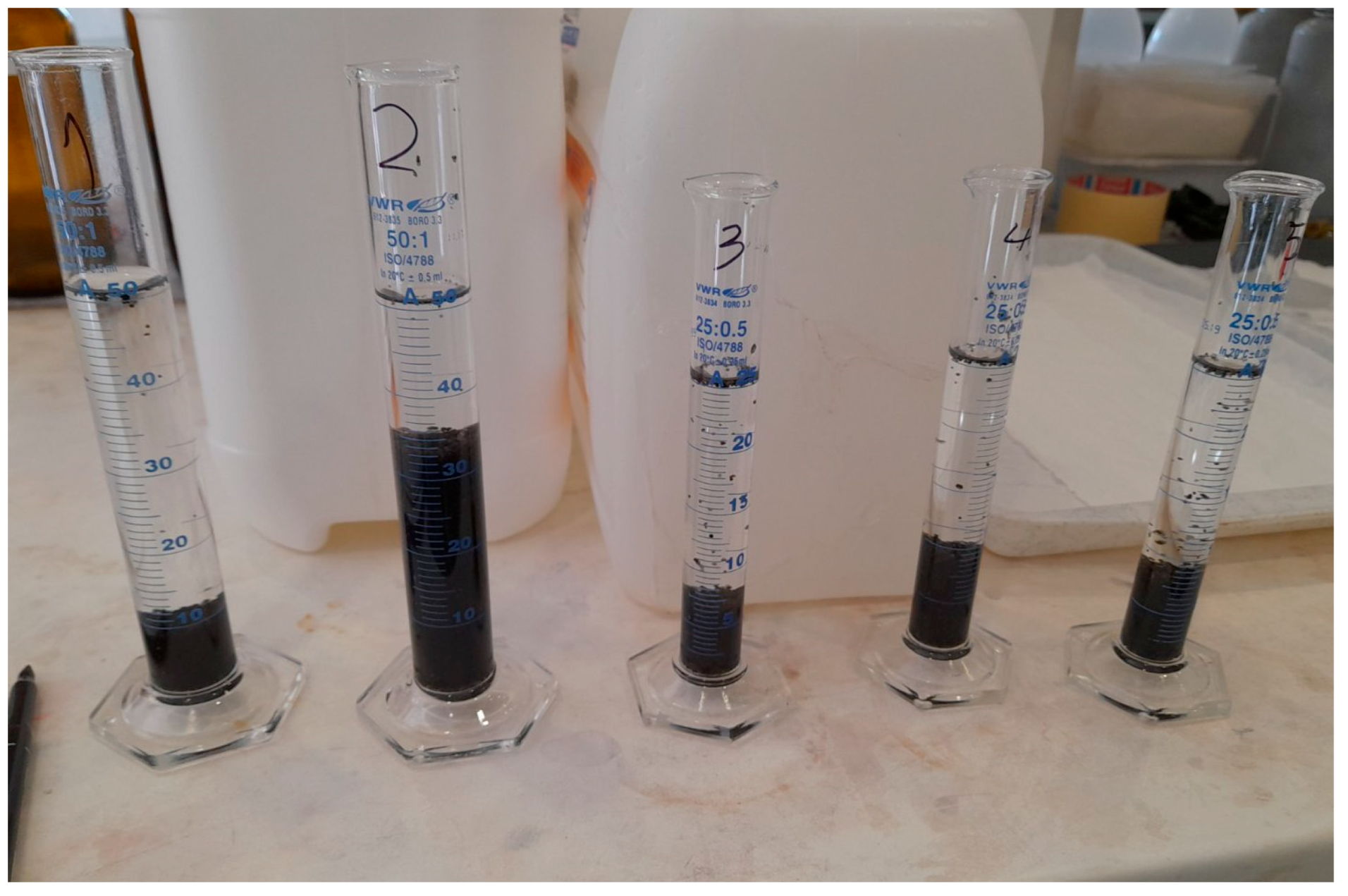
| 1 | 50 | 9 | 77.2940 | 121.1557 | 0.330 |
| 2 | 50 | 33 | 80.0581 | 109.8078 | 0.389 |
| 3 | 25 | 6.5 | 77.3891 | 98.0065 | 0.334 |
| 4 | 25 | 9 | 77.8872 | 97.1944 | 0.373 |
| 5 | 25 | 8 | 76.1014 | 96.2474 | 0.400 |
| Mean | 0.365 | ||||
| Std. Deviation | 0.032 | ||||
| Reactor | Shear Stress [µN] | Culture |
|---|---|---|
| 1 | 0.16 | autotroph |
| 2 | 0.11 | autotroph |
| 3 | 0.09 | autotroph |
| 4 | 0.16 | heterotroph |
| 5 | 0.11 | heterotroph |
| 6 | 0.09 | heterotroph |
| Reactor | Days After Experiment Start [-] | Number of Media [-] | Std. Diameter [μm] | Margin of Error [µm] | Relative Margin of Error [%] |
|---|---|---|---|---|---|
| 4 | 3 | 63 | 241.75 | 23.24 | 4.07 |
| 10 | 46 | 274.02 | 25.34 | 4.10 | |
| 14 | 29 | 181.69 | 15.27 | 2.04 | |
| 17 | 44 | 283.20 | 23.61 | 3.11 | |
| 21 | 33 | 201.91 | 16.52 | 2.10 | |
| 23 | 35 | 207.35 | 16.72 | 2.06 | |
| 5 | 3 | 46 | 276.76 | 23.09 | 3.05 |
| 10 | 36 | 295.43 | 22.95 | 2.63 | |
| 14 | 32 | 209.74 | 17.16 | 2.18 | |
| 17 | 41 | 276.29 | 22.34 | 2.77 | |
| 21 | 35 | 268.94 | 20.16 | 2.15 | |
| 23 | 20 | 207.23 | 16.47 | 1.97 | |
| 6 | 3 | 40 | 268.75 | 23.12 | 3.24 |
| 10 | 45 | 295.34 | 26.58 | 4.08 | |
| 14 | 42 | 194.44 | 17.88 | 2.87 | |
| 17 | 52 | 250.37 | 22.70 | 3.54 | |
| 21 | 60 | 186.55 | 15.66 | 2.09 | |
| 23 | 42 | 170.47 | 14.51 | 1.99 | |
| 1 | 3 | 46 | 166.15 | 15.85 | 2.73 |
| 10 | 40 | 269.61 | 23.29 | 3.29 | |
| 14 | 48 | 206.31 | 17.91 | 2.56 | |
| 17 | 40 | 261.90 | 22.88 | 3.31 | |
| 21 | 35 | 199.60 | 15.33 | 1.71 | |
| 23 | 30 | 180.53 | 13.62 | 1.47 | |
| 2 | 3 | 55 | 324.61 | 30.03 | 4.87 |
| 10 | 44 | 277.59 | 24.61 | 3.67 | |
| 14 | 37 | 229.60 | 19.96 | 2.86 | |
| 17 | 43 | 273.86 | 22.15 | 2.74 | |
| 21 | 34 | 215.93 | 16.39 | 1.79 | |
| 23 | 36 | 267.58 | 21.05 | 2.47 | |
| 3 | 3 | 33 | 396.43 | 28.89 | 2.91 |
| 10 | 37 | 337.58 | 28.41 | 3.81 | |
| 14 | 37 | 236.62 | 19.39 | 2.47 | |
| 17 | 40 | 247.59 | 20.95 | 2.84 | |
| 21 | 35 | 255.92 | 19.48 | 2.14 | |
| 23 | 32 | 218.85 | 16.05 | 1.64 | |
| Container | 3 | 68 | 265.49 | 24.31 | 3.86 |
| 8 | 53 | 243.20 | 22.96 | 3.88 | |
| 10 | 54 | 280.65 | 23.60 | 3.16 | |
| 13 | 49 | 244.45 | 21.01 | 2.94 | |
| 17 | 47 | 240.64 | 21.50 | 3.25 | |
| 28 | 91 | 161.77 | 19.14 | 5.08 | |
| 34 | 50 | 229.99 | 22.64 | 4.16 | |
| 38 | 61 | 223.05 | 23.24 | 4.78 | |
| 41 | 60 | 189.07 | 20.09 | 4.30 | |
| 44 | 65 | 266.11 | 27.72 | 5.70 | |
| 51 | 49 | 246.37 | 24.77 | 4.75 | |
| 57 | 46 | 313.49 | 30.09 | 5.25 | |
| 59 | 54 | 286.41 | 27.07 | 4.58 | |
| 62 | 45 | 279.49 | 25.83 | 4.18 | |
| 66 | 41 | 388.77 | 35.50 | 5.61 | |
| 3 | 23 | 312.37 | 28.99 | 4.73 | |
| 15 | 27 | 190.31 | 19.47 | 3.86 | |
| 17 | 30 | 261.81 | 26.23 | 4.99 | |
| 22 | 33 | 218.25 | 21.59 | 4.01 | |
| 36 | 24 | 307.03 | 30.65 | 5.79 | |
| 64 | 11 | 219.25 | 21.23 | 3.77 |
| Reactor | Days Since Experiment Start | Biomass | Reactor | Days Since Experiment Start | Biomass |
|---|---|---|---|---|---|
| [d] | [kg/m3] | [d] | [kg/m3] | ||
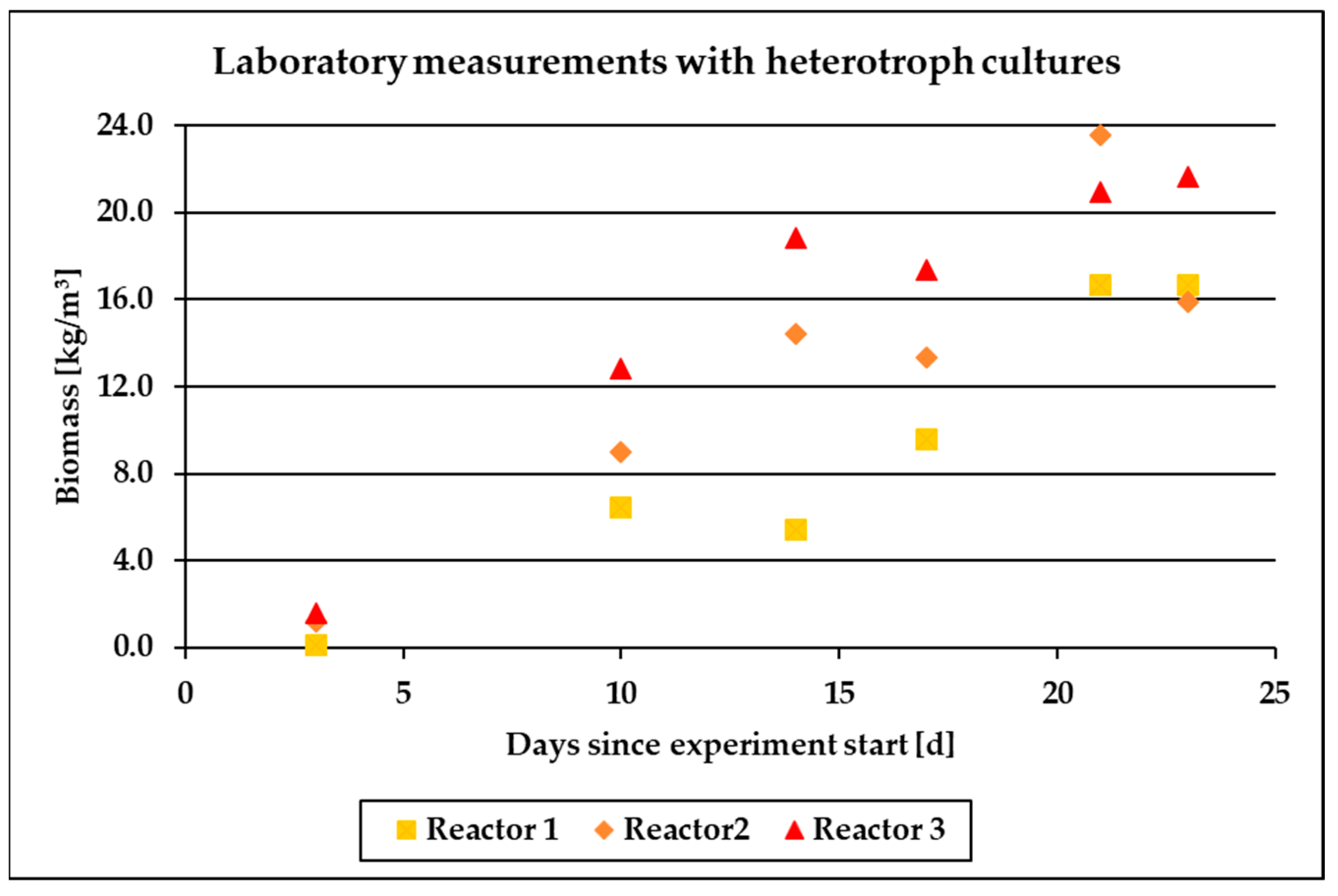
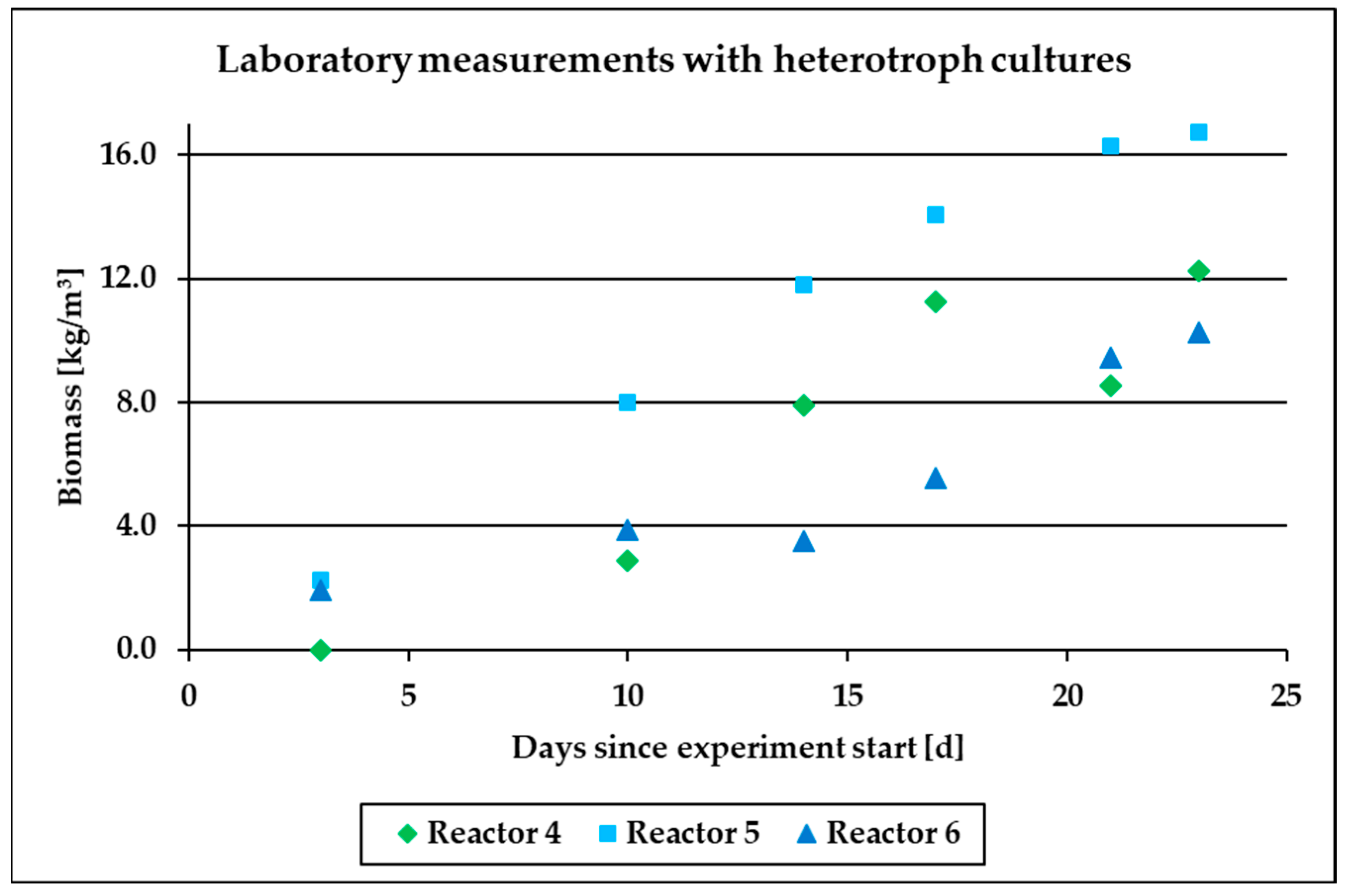
| 4 | 3 | 0.0 | 1 | 3 | 0.1 |
| 10 | 2.9 | 10 | 6.5 | ||
| 14 | 7.9 | 14 | 5.4 | ||
| 17 | 11.3 | 17 | 9.5 | ||
| 21 | 8.5 | 21 | 16.6 | ||
| 23 | 12.3 | 23 | 16.6 | ||
| 5 | 3 | 2.3 | 2 | 3 | 1.2 |
| 10 | 8.0 | 10 | 9.0 | ||
| 14 | 11.8 | 14 | 14.4 | ||
| 17 | 14.1 | 17 | 13.4 | ||
| 21 | 16.3 | 21 | 23.5 | ||
| 23 | 16.8 | 23 | 15.9 | ||
| 6 | 3 | 1.9 | 3 | 3 | 1.6 |
| 10 | 3.9 | 10 | 12.8 | ||
| 14 | 3.5 | 14 | 18.9 | ||
| 17 | 5.6 | 17 | 17.3 | ||
| 21 | 9.4 | 21 | 21.0 | ||
| 23 | 10.3 | 23 | 21.7 |
| Season | Days Since Experiment Start | Biomass |
|---|---|---|
| [d] | [kg/m3] | |
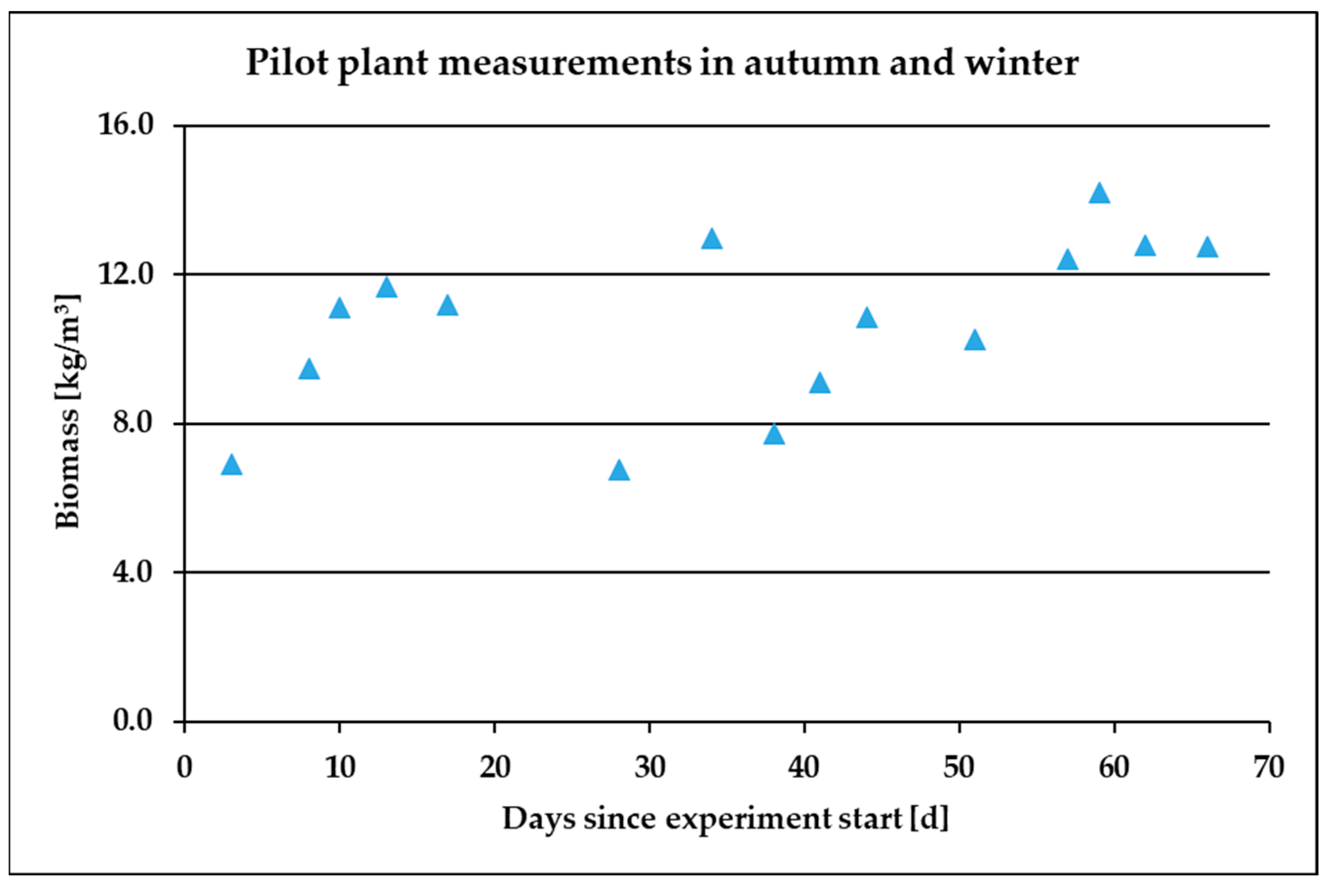
| autumn | 3 | 6.9 |
| 8 | 9.5 | |
| 10 | 11.1 | |
| 13 | 11.7 | |
| 17 | 11.2 | |
| 28 | 6.8 | |
| 34 | 13.0 | |
| 38 | 7.7 | |
| 41 | 9.1 | |
| 44 | 10.8 | |
| 51 | 10.3 | |
| 57 | 12.4 | |
| winter | 59 | 14.2 |
| 62 | 12.8 | |
| 66 | 12.7 | |
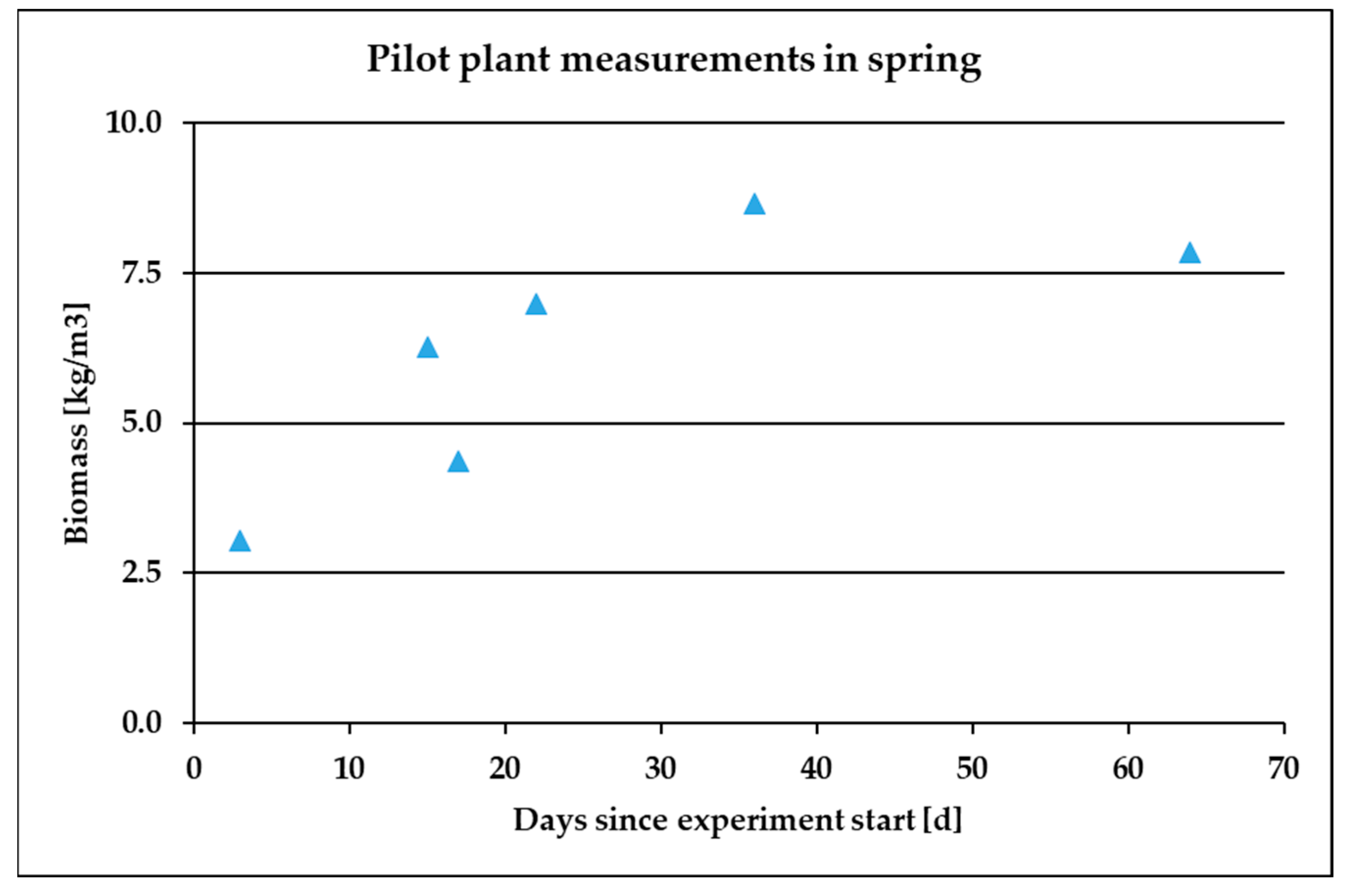
| spring | 3 | 3.0 |
| 15 | 6.3 | |
| 17 | 4.4 | |
| 22 | 7.0 | |
| 36 | 8.7 | |
| 64 | 7.9 |
Disclaimer/Publisher’s Note: The statements, opinions and data contained in all publications are solely those of the individual author(s) and contributor(s) and not of MDPI and/or the editor(s). MDPI and/or the editor(s) disclaim responsibility for any injury to people or property resulting from any ideas, methods, instructions or products referred to in the content. |
© 2026 by the authors. Licensee MDPI, Basel, Switzerland. This article is an open access article distributed under the terms and conditions of the Creative Commons Attribution (CC BY) license.
Share and Cite
Kloknicer, T.; Sárfi, G.B.; Sándor, D.B.; Szabó, A. Calculation, Measurement and Validation for Estimating the Biomass of the Biofilm on Microcarriers. ChemEngineering 2026, 10, 23. https://doi.org/10.3390/chemengineering10020023
Kloknicer T, Sárfi GB, Sándor DB, Szabó A. Calculation, Measurement and Validation for Estimating the Biomass of the Biofilm on Microcarriers. ChemEngineering. 2026; 10(2):23. https://doi.org/10.3390/chemengineering10020023
Chicago/Turabian StyleKloknicer, Tamás, Gergő Bálint Sárfi, Dániel Benjámin Sándor, and Anita Szabó. 2026. "Calculation, Measurement and Validation for Estimating the Biomass of the Biofilm on Microcarriers" ChemEngineering 10, no. 2: 23. https://doi.org/10.3390/chemengineering10020023
APA StyleKloknicer, T., Sárfi, G. B., Sándor, D. B., & Szabó, A. (2026). Calculation, Measurement and Validation for Estimating the Biomass of the Biofilm on Microcarriers. ChemEngineering, 10(2), 23. https://doi.org/10.3390/chemengineering10020023