1. Introduction
Post-mining landscapes affected by heavy metal contamination are among the most environmentally vulnerable anthropogenic ecosystems. Mining residues, waste rock deposits, flotation tailings and abandoned industrial substrates frequently exhibit altered physicochemical properties, low biological activity, poor structural stability and elevated concentrations of potentially toxic elements. In many former mining regions, these degraded lands remain insufficiently rehabilitated decades after mine closure, generating persistent ecological and environmental risks associated with metal mobility, wind erosion, dust generation and surface runoff [
1,
2,
3,
4].
The ecological rehabilitation of contaminated mining land remains particularly challenging because conventional remediation technologies are often associated with high implementation costs, major landscape disturbance and limited applicability at large spatial scales. Excavation, soil replacement and physicochemical treatments may be technically effective under specific conditions; however, their long-term sustainability is frequently constrained in extensive post-mining environments characterised by heterogeneous contamination, limited accessibility and reduced economic viability. Consequently, low-impact, scalable and ecologically compatible remediation strategies are increasingly needed for the long-term management of degraded mining areas [
5,
6,
7,
8].
In recent years, phytomanagement has emerged as a realistic and sustainable approach for contaminated land rehabilitation. Unlike remediation strategies focused exclusively on pollutant removal, phytomanagement aims to establish stable and functional vegetation systems capable of reducing environmental risks while also supporting ecological recovery and potential socioeconomic benefits [
9,
10]. This approach includes phytostabilisation, assisted revegetation, erosion control, improvement of soil structure and the controlled utilisation of biomass generated on contaminated substrates. Therefore, phytomanagement should be understood primarily as a risk-reduction and ecological-stabilisation strategy rather than as a complete decontamination technique [
9,
10,
11,
12].
The success of phytomanagement strategies depends strongly on the selection of plant species capable of tolerating environmental stress associated with metal contamination, low nutrient availability, reduced organic matter content and degraded substrate conditions [
1,
5]. Species characterised by rapid establishment, relatively high biomass production, extensive root development and adaptability to marginal soils may contribute to the progressive stabilisation of post-mining landscapes. In this context, crops such as sorghum (
Sorghum bicolor), soybean (
Glycine max) and maize (
Zea mays) have attracted increasing attention due to their physiological adaptability, biomass potential and possible integration into sustainable land management systems [
1,
5,
13,
14].
Sorghum is widely recognised for its tolerance to drought stress, extensive root system and capacity to grow under relatively poor soil conditions [
5,
15]. Maize is characterised by high biomass productivity and broad agronomic adaptability, including under contaminated or marginal soil conditions [
3,
16]. Soybean may provide additional ecological value through biological nitrogen fixation and contribution to soil biological functionality, although its performance can be affected by heavy metal stress and degraded substrate conditions [
17,
18]. However, these species may respond differently to mining-related stress, depending on substrate quality, metal occurrence, water availability and plant-specific tolerance mechanisms. Their comparative performance under real post-mining field conditions remains insufficiently documented, particularly in Eastern European mining regions [
1,
5,
13].
Despite the increasing interest in phytomanagement of contaminated soils, field-based evaluations under real post-mining conditions remain limited. Most existing studies have focused on controlled pot experiments, single-species phytoremediation trials or short-term assessments of plant tolerance, while comparative Living Lab approaches integrating crop adaptability, vegetation establishment, soil stabilisation potential and cautious biomass reuse are still insufficiently explored. This knowledge gap is particularly relevant for former coal mining regions, where large degraded surfaces require remediation strategies that are technically feasible, economically realistic and compatible with local ecological and socioeconomic conditions [
5,
19,
20,
21].
The Jiu Valley, Romania, represents one of the most important historical coal mining regions in the country and includes numerous degraded mining areas affected by waste storage, industrial residues and long-term land disturbance. Following mining decline and progressive mine closure, large surfaces remain environmentally degraded and require sustainable rehabilitation approaches adapted to local post-mining landscapes. In this regional context, field-based pilot platforms can provide useful evidence regarding the feasibility of vegetation-based remediation strategies under real environmental conditions [
22].
From a toxicological and environmental risk perspective, phytomanagement of metal-contaminated mining soils should not be evaluated only through contaminant removal. In many post-mining environments, the main short- and medium-term objective is to reduce exposure pathways by limiting bare soil surfaces, wind-driven dust generation, surface runoff and particle-bound contaminant redistribution. Therefore, vegetation establishment and surface stabilisation may represent relevant risk-reduction endpoints, particularly where complete soil removal or intensive physicochemical remediation is technically or economically unrealistic. In this context, field-based assessments are needed to identify plant species capable of tolerating multi-metal stress while contributing to soil cover formation and long-term ecological stabilisation [
1,
2,
4,
8].
Therefore, this study aimed to assess the preliminary field-based feasibility of sorghum, soybean and maize as candidate crops for the phytomanagement of heavy metal-contaminated mining soils from the Jiu Valley, Romania. The working hypothesis was that the three crops would differ in their capacity to establish vegetation cover, produce aboveground biomass and tolerate degraded substrate conditions, with sorghum expected to show higher stabilisation-oriented performance than maize and soybean. The study addressed three research questions: (i) which crop showed the strongest establishment and vegetation cover under mining-affected field conditions; (ii) how did aboveground biomass, plant height and plant density change across the monitored cultivation years; and (iii) whether aboveground plant metal concentrations and simple accumulation indicators support cautious interpretation of controlled non-food biomass management. By using a pilot Living Lab platform, this research supports the development of practical, nature-based remediation approaches, while recognising that complete phytostabilisation or contaminant removal cannot be demonstrated without additional root, bioavailability and post-cultivation soil assessments.
2. Materials and Methods
2.1. Study Area
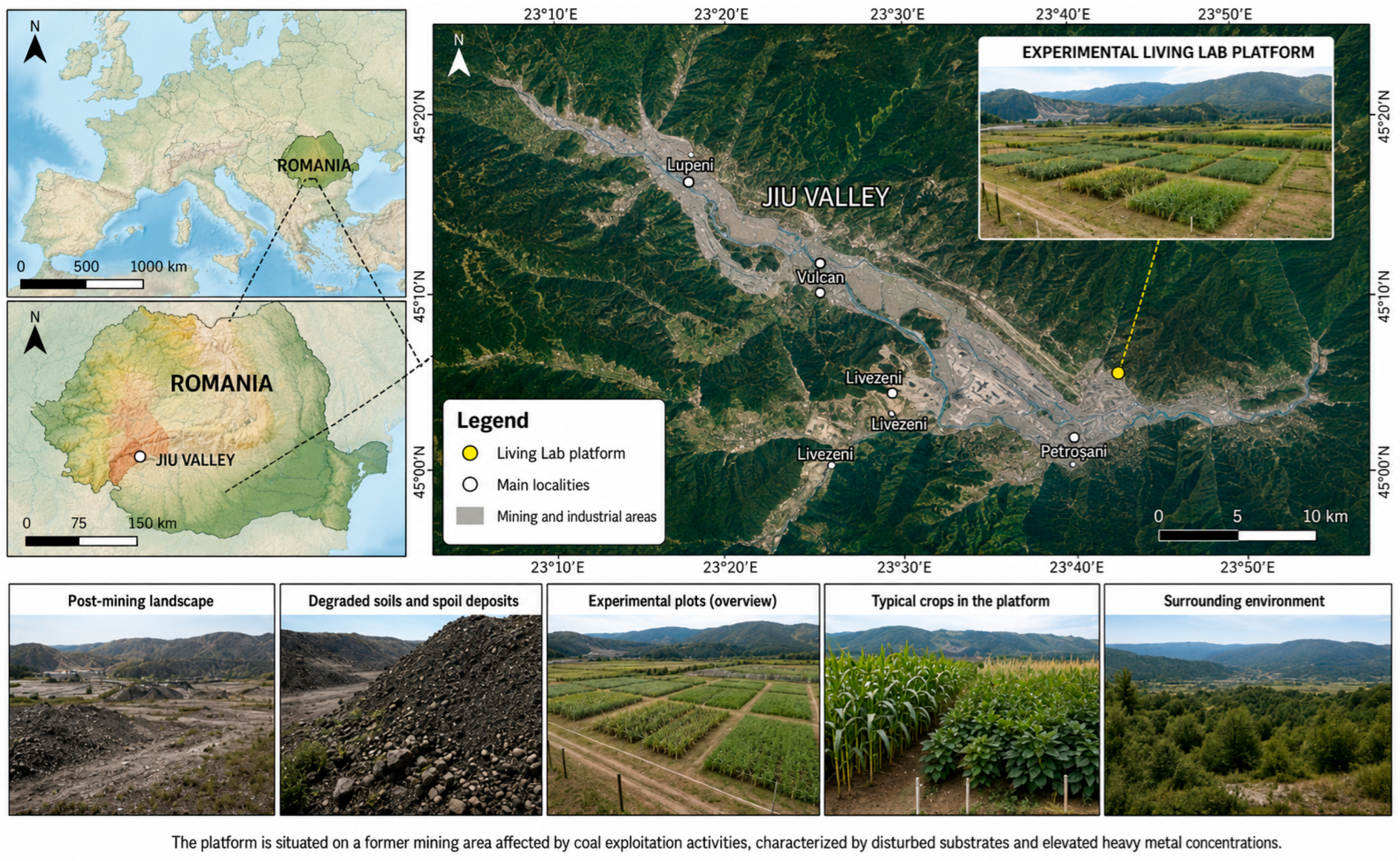
The experimental study was conducted within a pilot Living Lab platform established on a mining-affected site located in the Jiu Valley, Romania. The region has a long history of coal extraction and associated industrial activities, which have generated extensive areas affected by waste deposits, tailings accumulation and progressive land degradation. The investigated site is representative of post-mining substrates characterised by disturbed soil structure, heterogeneous granulometry, limited vegetation cover and residual heavy metal contamination [
8,
22].
The regional climate is temperate continental, with seasonal thermal variability characteristic of mountain depression environments. For the Living Lab platform, the growing season was considered to extend from April to September, corresponding to the main period of crop establishment, vegetative development and aboveground biomass formation. For the 2024 growing season, representative local climatic data for the Petroșani area indicated a mean air temperature of approximately 18.6 °C and total precipitation of approximately 362 mm. These conditions suggest a moderate seasonal water constraint during the active vegetation period and are relevant for interpreting crop establishment, visible stress symptoms and differences in biomass production among the tested species. Because complete plot-scale meteorological records were not available for all three cultivation years, climatic information was used only to contextualise field performance and was not included as an explanatory variable in the statistical analysis.
Prior to the establishment of the experimental platform, the investigated land exhibited sparse spontaneous vegetation and reduced ecological functionality, including poor surface stability and limited soil cover. These characteristics made the site suitable for evaluating vegetation-based rehabilitation strategies under real post-mining field conditions.
The Living Lab platform was designed as a pilot field-based system for assessing the feasibility of phytomanagement as a nature-based remediation strategy focused on vegetation establishment, surface stabilisation, potential erosion risk and ecological rehabilitation of contaminated mining soils [
5,
9,
14,
19,
20]. The location and regional context of the experimental Living Lab platform are shown in
Figure 1.
2.2. Experimental Living Lab Design
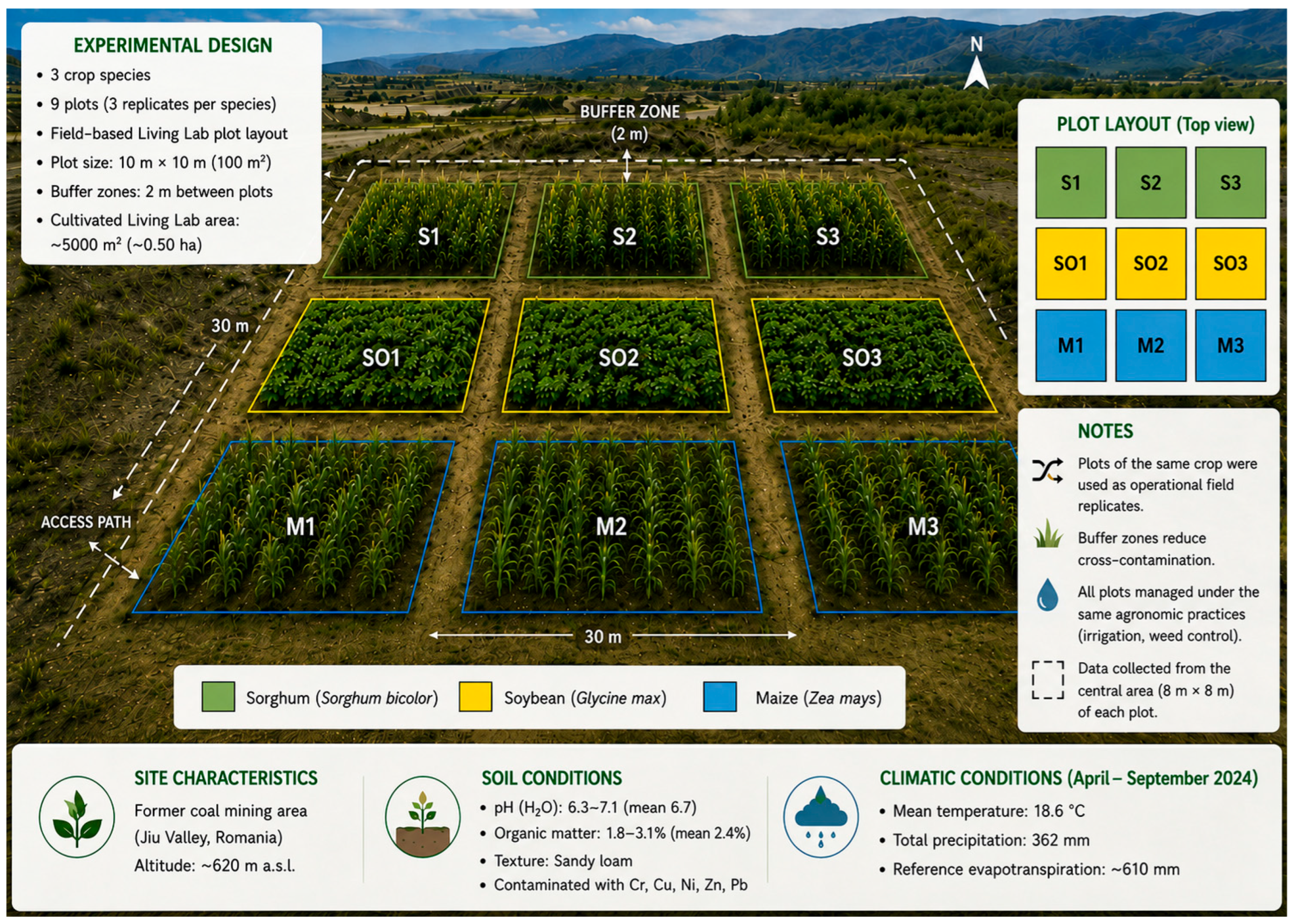
The cultivated Living Lab experimental platform covered approximately 5000 m2 and included nine cultivation plots distributed among three crop species: sorghum (Sorghum bicolor), soybean (Glycine max) and maize (Zea mays). Each crop species was cultivated in three individual plots, coded as S1–S3 for sorghum, SO1–SO3 for soybean and M1–M3 for maize. Each cultivation plot measured 10 × 10 m (100 m2), while a central 8 × 8 m assessment area was used within each plot for standardised vegetation and biomass evaluation in order to reduce edge effects. The plots were treated as operational field replicates for the comparative assessment of crop establishment, vegetation development, biomass production and phytomanagement suitability.
The experimental layout followed an operational Living Lab arrangement rather than a fully randomised agronomic block design. The plots were organised systematically within the available field surface to allow access, monitoring and management under real post-mining conditions. Therefore, the three plots assigned to each species were considered operational spatial replicates for exploratory comparison, not fully independent experimental replicates. This design choice reflects the applied character of the platform, but it also limits the strength of inferential statistical conclusions and was considered when interpreting the results.
The field assessment was conducted over three consecutive cultivation years. In the manuscript, Year I, Year II and Year III refer to the first, second and third cultivation years of the Living Lab experiment, respectively. The three cultivation years correspond to 2023, 2024 and 2025. This notation was used to maintain consistency across biomass, growth and vegetation monitoring datasets.
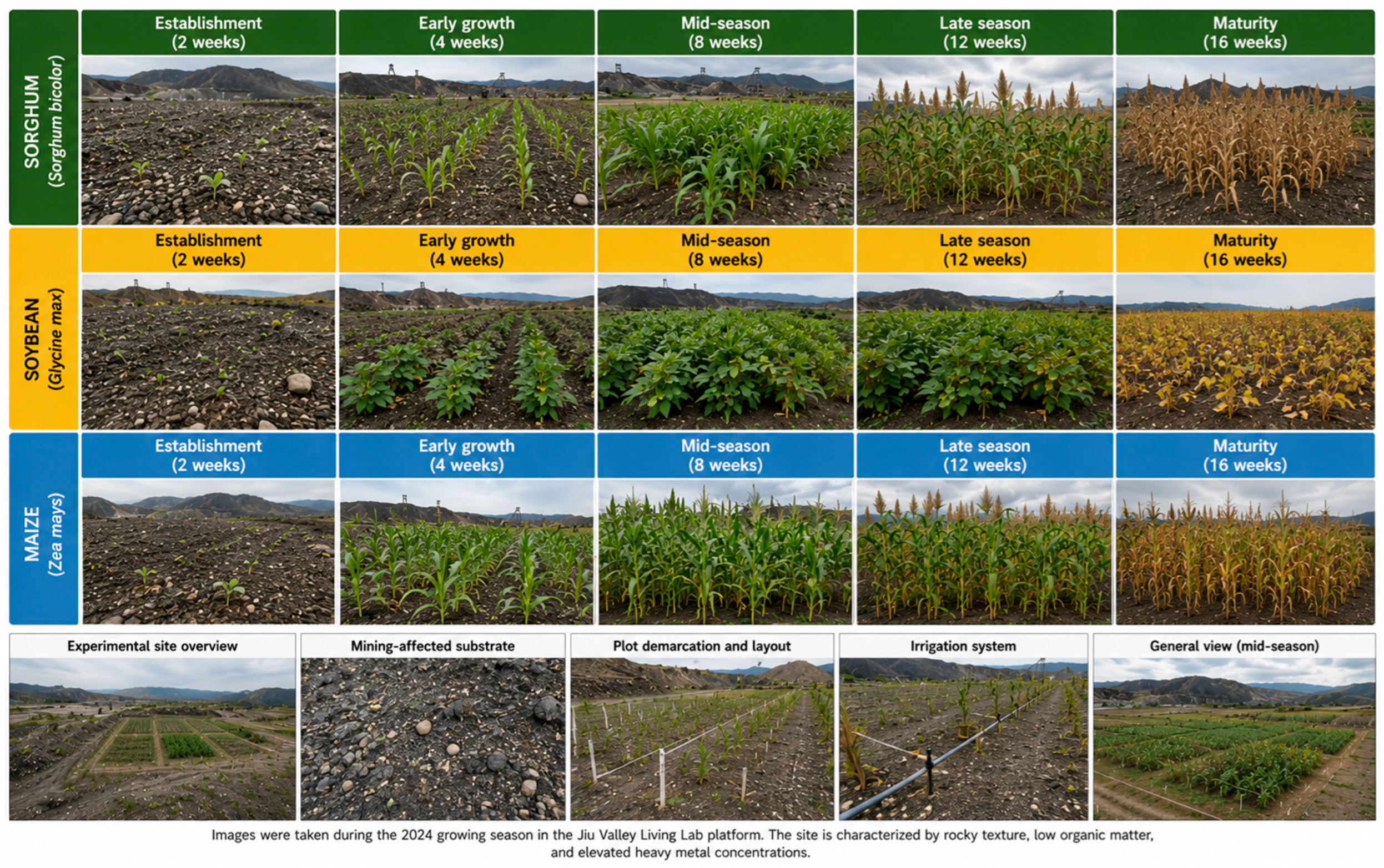
Biomass production, plant height, plant density and vegetation cover were monitored across the three cultivation years, whereas aboveground plant tissue metal concentrations were determined at the final harvest of the third cultivation year. Representative field photographs were used only for visual documentation of crop establishment and vegetation development and were not used as quantitative evidence. Where photographs correspond to a specific growing season, this is indicated in the figure caption to avoid confusion between photographic documentation and the full three-year monitoring dataset.
The cultivated field units were established within the 5000 m2 Living Lab surface. For standardised monitoring and sampling, internal assessment areas were delimited within each plot, while the remaining surfaces functioned as cultivated area, access corridors and buffer zones. This design allowed repeated vegetation observations and biomass measurements under comparable post-mining field conditions while preserving the applied Living Lab character of the platform.
The platform was conceived as a pilot Living Lab rather than as a fully controlled agronomic trial. Therefore, the three plots assigned to each species were used for comparative interpretation and exploratory statistical screening, while acknowledging the inherent heterogeneity of the post-mining substrate. The results are interpreted as a field-based feasibility assessment for phytomanagement and not as a definitive agronomic productivity trial.
The three species were cultivated under similar management conditions during the monitored vegetation cycles, without food- or feed-oriented production objectives. Sowing was performed manually in mid-May of each cultivation year, generally between 10 and 20 May, depending on soil moisture and field accessibility. Seeds were sown in rows spaced approximately 0.50 m apart. The target-sowing densities were approximately 25 seeds m
−2 for sorghum, 20 seeds m
−2 for maize and 30 seeds m
−2 for soybean. These densities were selected to favour rapid vegetation cover formation rather than conventional food- or feed-oriented yield optimisation. Sowing depth was approximately 3–4 cm for sorghum and soybean and 4–5 cm for maize. Before sowing, the plots were subjected only to minimal surface preparation, consisting of manual levelling, removal of coarse surface residues and shallow loosening of the upper soil layer. No mineral or organic fertilisers, soil amendments, pesticides or herbicides were applied. Supplemental irrigation was applied uniformly to all plots only during crop establishment and during visibly dry periods, using the installed field irrigation system. Weed control was performed manually during the early growth stages to maintain plot accessibility and reduce competition. The focus was placed on ecological rehabilitation, surface stabilisation, quantitative crop performance and the preliminary evaluation of controlled non-food biomass potential [
5,
9,
14]. The spatial arrangement of the nine cultivation plots and the main operational design features of the Living Lab platform are illustrated in
Figure 2.
2.3. Soil Sampling and Physicochemical Characterisation
Soil sampling was performed before vegetation establishment in order to characterise the initial substrate conditions of the Living Lab platform. Composite soil samples were collected from the upper 0–20 cm soil horizon using a stainless-steel Edelman auger (Eijkelkamp Soil & Water, Giesbeek, The Netherlands), corresponding to the main rooting zone for early crop establishment and the soil layer most directly involved in surface stabilisation processes. For each experimental plot, multiple subsamples were collected from different positions within the plot and homogenised to obtain one representative composite sample per plot. In total, nine composite soil samples were obtained, corresponding to the nine cultivation plots [
23].
The collected samples were transported to the laboratory in polyethylene bags, air-dried at room temperature, manually homogenised, gently disaggregated and prepared for laboratory analysis according to standard soil sample preparation procedures [
23]. Soil pH was determined potentiometrically in aqueous suspension using a WTW Multi 3630 IDS multiparameter instrument equipped with a pH electrode (WTW/Xylem Analytics, Weilheim, Germany), calibrated with standard pH 4.00, 7.00 and 10.00 buffer solutions (WTW/Xylem Analytics, Weilheim, Germany) [
24]. Organic matter content was estimated by loss on ignition using pre-dried soil material, after oven drying at 105 °C in a laboratory drying oven (Memmert GmbH + Co. KG, Schwabach, Germany) and ignition at 550 °C in a laboratory muffle furnace (Nabertherm GmbH, Lilienthal, Germany) available in the laboratory facilities of the University of Petroșani, Petroșani, Romania [
25]. The investigated metals were chromium (Cr), copper (Cu), nickel (Ni), zinc (Zn) and lead (Pb), selected based on their environmental relevance for mining-affected soils and their potential contribution to ecological risk [
22,
26].
2.4. Heavy Metal Analysis and Quality Assurance
Heavy metal occurrence was evaluated after acid digestion of the prepared soil samples. The digestion procedure, performed using a microwave digestion system (Milestone ETHOS UP, Milestone Srl, Sorisole, Italy), followed microwave-assisted acid digestion, adapted from U.S. EPA Method 3051A, commonly applied for the determination of pseudo-total metal concentrations in soils, sediments, sludges and related solid matrices [
27]. Analytical-grade reagents, including nitric acid (HNO
3, 65%; Merck KGaA, Darmstadt, Germany) and hydrochloric acid (HCl, 37%; Merck KGaA, Darmstadt, Germany), were used throughout the digestion procedure. Accordingly, the obtained values were interpreted as indicators of the overall contamination status of the investigated substrate rather than as direct measures of metal bioavailability.
After digestion, the extracts were filtered through Whatman Grade 42 ashless filter papers (Cytiva, Marlborough, MA, USA), diluted to a known volume with deionised water obtained using a Milli-Q water purification system (Merck Millipore, Burlington, MA, USA) and analysed for Cr, Cu, Ni, Zn and Pb using inductively coupled plasma optical emission spectrometry, ICP-OES (PerkinElmer Avio 200/500 series, PerkinElmer, Waltham, MA, USA), following the analytical principles of U.S. EPA Method 6010D [
28]. Metal concentrations were expressed as mg kg
−1 dry weight [
28].
Analytical quality assurance and quality control included external calibration, calibration verification, procedural blanks and replicate measurements. Calibration was performed using Merck Certipur multi-element calibration standards (Merck KGaA, Darmstadt, Germany), selected according to the analysed elements and expected concentration ranges. Calibration verification standards were analysed during the analytical sequence to check instrumental stability. Procedural blanks were processed through the same preparation, digestion and analytical steps as the soil samples in order to identify potential contamination during sample handling and digestion. Replicate measurements were used to evaluate analytical precision and to verify the consistency of the obtained concentrations.
The QA/QC procedure ensured that the analytical results were suitable for baseline contamination characterisation of the Living Lab substrate and for supporting the exploratory interpretation of crop performance under mining-affected field conditions. However, matrix-matched certified reference material results, element-specific recovery values and complete method detection and quantification limits were not available for all soil and plant tissue analyses. Therefore, the metal concentration data were interpreted as screening-level analytical evidence rather than as regulatory-grade certification data. Because the digestion procedure provides pseudo-total concentrations, the results were not interpreted as direct indicators of metal bioavailability or plant-available fractions.
2.5. Vegetation Monitoring and Biomass Assessment
Vegetation development was monitored periodically over three consecutive cultivation years, from crop establishment to final harvest in each growing season. Monitoring focused on indicators directly relevant to phytomanagement under degraded post-mining conditions, including emergence and establishment success, plant height, plant density, vegetation cover, canopy development, visible stress symptoms and aboveground biomass formation [
5,
9,
19,
20]. In the results, the three monitoring years are reported as Year I, Year II and Year III, corresponding to the first, second and third cultivation cycles of the Living Lab platform. The three cultivation years correspond to 2023, 2024 and 2025.
The main field evaluations were carried out at emergence, at approximately 4, 8 and 12 weeks after emergence, and at maturity/harvest. Plant height was measured using a graduated field measuring rod or measuring tape (Stanley Black & Decker, New Britain, CT, USA), while plant density was expressed as plants m−2. Vegetation cover was estimated as the percentage of soil surface covered by vegetation using 1 m2 field quadrat frames custom-made from PVC and prepared at the University of Petroșani, Petroșani, Romania, positioned in representative areas of each plot; the final value was expressed as the mean percentage cover recorded for the assessed surfaces. For each plot, vegetation cover was estimated using five 1 m2 quadrats positioned within the central 8 × 8 m assessment area of the plot. The quadrats were arranged systematically in a fixed five-point pattern, consisting of one central quadrat and four quadrats placed towards the internal corners of the assessment area. This arrangement was selected to avoid margin effects, access corridors and disturbed plot edges, while maintaining comparable assessment conditions across all plots. The quadrat observations were used only for estimating vegetation cover and visible stress, whereas fresh biomass was recorded separately according to the harvested area specified for the biomass assessment. The same quadrat-positioning scheme was maintained during the monitoring campaigns at approximately 4, 8 and 12 weeks after emergence and at maturity/harvest. The final vegetation cover value for each plot was calculated as the mean percentage cover recorded from the five quadrat-level observations.
Visible stress symptoms were assessed in the same central assessment area by two field observers, considering chlorosis, uneven emergence, reduced vigour, low plant density and growth reduction. Stress was classified using a four-level qualitative scale: absent (0), low (1), moderate (2) and severe (3). Low stress corresponded to slight or localised symptoms, moderate stress to clearly visible symptoms affecting plant vigour or uniformity, and severe stress to extensive symptoms associated with poor establishment or strong growth reduction. When observer assessments differed, the plot was jointly re-evaluated and the final category was assigned by consensus as the dominant plot-level stress class.
Fresh aboveground biomass was determined by weighing the harvested aerial material for each species and, where plot-level data were available, for each experimental plot, using a KERN field/laboratory balance (KERN & Sohn GmbH, Balingen, Germany). Because a complete dry-mass dataset was not available for all monitoring years, fresh biomass was used as the main quantitative biomass endpoint. Drying-bed observations were used only as supporting information and were not used for interannual statistical comparison.
Two biomass reporting scales were distinguished. Multi-year biomass values were reported at the species level as total fresh aboveground biomass harvested from the cultivated Living Lab plots during each cultivation year. In contrast, plot-level biomass values were used for standardised plot-level comparison in the last monitoring year. Therefore, these values were not interpreted as the same biomass accounting scale. To improve comparability, values were also expressed per unit area where the harvested area was known.
2.6. Plant Tissue Sampling and Heavy Metal Determination
Aboveground plant material was sampled at harvest for the determination of metal concentrations in plant tissues. The analysed material consisted of the total aerial biomass, represented by leaves and stems, and was processed as species-level composite samples for sorghum, maize and soybean. Root tissues were not analysed in this stage of the study. Chlorophyll content, ROS levels, programmed cell death markers, soil oxygen status and root tissue metal concentrations were not determined in the present field assessment; these parameters were therefore considered as limitations and future research needs.
Plant samples were manually cleaned to remove coarse impurities, rapidly washed with tap water followed by distilled/deionised water, drained on filter paper, dried in a laboratory drying oven (Memmert GmbH + Co. KG, Schwabach, Germany), ground using a laboratory plant mill/grinder (Retsch GmbH, Haan, Germany) and homogenised prior to digestion. Sample weighing was performed using an analytical balance (Mettler Toledo, Greifensee, Switzerland). The dried plant material was subjected to acid digestion using an oxidising digestion protocol based on hydrogen peroxide, H2O2, analytical grade (Merck KGaA, Darmstadt, Germany). The resulting solutions were analysed by inductively coupled plasma mass spectrometry, ICP-MS (PerkinElmer NexION 2000, PerkinElmer, Waltham, MA, USA), using Merck Certipur multi-element calibration standards (Merck KGaA, Darmstadt, Germany). Although the analytical protocol allowed multi-element screening, the present manuscript reports and interprets only Cr, Cu, Ni, Zn and Pb, because these elements were common to both the soil and plant datasets and were directly relevant to the phytomanagement assessment of the investigated mining-affected substrate. Concentrations were expressed as mg kg−1 dry weight.
2.7. Comparative Phytomanagement Suitability Assessment
The phytomanagement suitability of sorghum, maize and soybean was evaluated using a semi-quantitative field scoring framework designed for preliminary crop prioritisation under post-mining conditions. The assessment included five criteria directly relevant to risk-reduction-oriented phytomanagement: vegetation establishment, stress tolerance, biomass stability, contribution to ecological stabilisation and potential suitability for controlled non-food biomass use [
5,
9,
19,
20].
Potential suitability for controlled non-food biomass use was scored conservatively by considering both biomass production and aboveground plant metal concentrations. Because root accumulation, ash composition and contaminant fate during biomass conversion were not determined, this criterion was interpreted as a preliminary non-food management indicator rather than as proof of biomass safety [
10,
12,
29,
30].
Each criterion was scored from 1 to 5, where 1 indicated very low suitability and 5 indicated very high suitability. To reduce subjectivity, scores were assigned using predefined descriptors, as presented in
Table 1. The overall phytomanagement suitability score was calculated as the sum of the five criterion scores, according to Equation (1):
where S
1–S
5 represent the scores assigned to vegetation establishment, stress tolerance, biomass stability, contribution to ecological stabilisation and potential controlled non-food biomass use, respectively. The maximum possible score was 25.
The five criteria were assigned equal weight because the aim was to provide a simple and transparent screening tool for preliminary crop prioritisation, rather than to develop a validated multi-criteria decision model. The selected criteria were chosen to represent complementary but partly related dimensions of early-stage phytomanagement feasibility: establishment capacity, visible stress response, biomass development, surface cover contribution and cautious non-food biomass management. Because some of these dimensions are not fully independent, particularly vegetation establishment, biomass stability and contribution to ecological stabilisation, the resulting score may partially reflect overlapping field responses. Therefore, the score was used only for comparative screening within this pilot Living Lab platform and was not interpreted as an independently validated suitability index.
The scoring framework was used as a preliminary decision-support tool for comparing crop performance under real field conditions. It was not intended as a regulatory remediation index or as a toxicological risk index. Instead, it was designed to support the identification of candidate crops suitable for further phytomanagement trials by integrating field observations related to establishment capacity, stress response, vegetation development, surface stabilisation potential and cautious biomass reuse perspectives.
Given the pilot nature of the Living Lab platform, the limited number of field replicates and the descriptive character of the suitability framework, no inferential statistical testing was applied to the suitability scores. The results were interpreted descriptively and comparatively, with emphasis on crop prioritisation for remediation-oriented phytomanagement rather than on definitive statistical ranking.
2.8. Data Interpretation and Study Limitations
The results were interpreted in relation to the initial contamination status of the soil, crop establishment capacity, vegetation development and the potential contribution of each species to ecological stabilisation. The study focused on the feasibility of establishing tolerant biomass crops on mining-affected soils under real field conditions, rather than on complete contaminant removal or quantitative remediation efficiency.
Because the present assessment did not include detailed bioavailable or plant-available metal fractions, rhizosphere metal speciation, root metal accumulation, ash composition or contaminant fate during biomass conversion, the potential reuse of biomass generated on contaminated land was considered only as a prospective controlled non-food option. Aboveground plant metal concentrations were used as a first screening indicator of biomass contamination, but further analyses of roots, conversion residues and reuse scenarios are required before practical biomass valorisation pathways can be recommended [
10,
12,
29,
30].
Accordingly, all results are interpreted within the limits of a pilot field feasibility assessment. The study does not aim to quantify complete metal removal or long-term remediation efficiency, but to identify crop species capable of supporting vegetation establishment, biomass production, surface stabilisation and controlled non-food biomass perspectives under real post-mining conditions.
2.9. Statistical Analysis
The quantitative dataset was analysed using descriptive and exploratory statistics suitable for a pilot Living Lab design. For biomass, plant height, plant density and vegetation cover, mean values, standard deviations, ranges and percentage changes between monitoring years were calculated. Because the number of operational field replicates was limited (n = 3 plots per species) and the study was designed as a feasibility assessment rather than as a fully controlled agronomic experiment, non-parametric Kruskal–Wallis tests were used for exploratory comparisons among species where plot-level data were available. Spearman’s rank correlation was used to evaluate the association between fresh biomass and vegetation cover. Descriptive statistics, percentage changes, exploratory non-parametric comparisons and correlation analyses were performed using Microsoft Excel for Microsoft 365, Version 2505, 64-bit (Microsoft Corporation, Redmond, WA, USA). Statistical results were interpreted as screening evidence supporting crop prioritisation, not as definitive agronomic or toxicological rankings.
3. Results
3.1. Physicochemical Characteristics and Contamination Status of the Investigated Soils
The investigated soils displayed characteristics typical of mining-affected substrates, including heterogeneous structure, reduced organic matter content and detectable multi-metal contamination. Soil pH ranged from slightly acidic to near-neutral conditions, with values between 6.3 and 7.1 and a mean value of 6.7. These pH conditions may influence metal mobility and plant establishment, particularly in degraded substrates with limited buffering capacity and low biological activity [
2,
8,
22].
Organic matter content ranged from 1.8 to 3.1%, with a mean value of 2.4%, indicating reduced organic enrichment compared with undisturbed productive soils. This limited organic matter content reflects the degraded status of the substrate and may contribute to lower nutrient availability, reduced microbial activity and constrained vegetation development [
25].
The analysed soils contained pseudo-total concentrations of Cr, Cu, Ni, Zn and Pb, confirming the mining-related contamination context of the Living Lab platform. Among the investigated elements, Zn showed the highest mean concentration and the widest range, varying from 156 to 287 mg kg
−1, while Cr ranged from 82 to 146 mg kg
−1 and Pb from 64 to 121 mg kg
−1. The occurrence of multiple metals indicates that the investigated substrate represents a relevant field context for testing vegetation-based remediation strategies [
1,
22].
The initial soil conditions across the nine composite samples collected before vegetation establishment are summarised in
Table 2 using mean values and observed ranges.
To provide a national regulatory context, the measured pseudo-total metal concentrations were compared with the Romanian soil pollution assessment framework established by Order No. 756/1997 [
26]. This comparison was used only to contextualise the contamination status of the Living Lab substrate and not to infer metal bioavailability or remediation efficiency. The analysed soils showed concentrations above the normal values for all investigated metals. Cr exceeded the alert threshold for sensitive land use in part of the samples, while remaining below the alert threshold for less sensitive land use. Cu exceeded the normal value but remained below the alert and intervention thresholds for both land-use categories. Ni was generally below the sensitive-use alert threshold, although the upper range slightly exceeded this value. Zn exceeded the normal value but remained below the alert thresholds for both land-use categories. Pb exceeded the alert threshold for sensitive land use, and the upper range locally exceeded the intervention threshold for sensitive land use, while remaining below the alert and intervention thresholds for less sensitive land use. The regulatory interpretation of the measured pseudo-total metal concentrations in relation to Romanian threshold values is summarised in
Table 3 [
26].
Overall, the soil dataset confirms that the Living Lab platform was established on a degraded mining-affected substrate with low organic matter content and multi-metal enrichment. The comparison with Romanian regulatory thresholds further supports the relevance of the site for testing phytomanagement under field conditions, particularly as a risk-reduction approach aimed at vegetation establishment, surface stabilisation and limitation of contaminant dispersion [
2,
4,
9].
However, these soil data should be interpreted as a baseline contamination characterisation rather than as a complete agronomic diagnosis of the substrate, because additional parameters controlling plant growth, such as texture, nutrient status, salinity, moisture regime and compaction, were not determined in this stage of the study [
1,
13].
3.2. Establishment and Vegetation Development Under Mining-Affected Conditions
The three investigated crop species showed different responses to the degraded mining substrate during the monitoring period. These differences were reflected not only in qualitative field observations, but also in measurable growth indicators, including plant height, plant density, vegetation cover and fresh aboveground biomass.
Across the monitored years, sorghum showed the strongest growth response. Mean plant height increased from 75 cm in Year I to 130 cm in Year III, while plant density increased from 14 to 20 plants m−2. Maize also improved over time, with plant height increasing from 60 to 125 cm and density from 16.5 to 19 plants m−2. Soybean remained the most sensitive crop, with substantially lower plant height values, increasing only from 8 to 12 cm, although plant density improved from 11 to 17 plants m−2.
Expressed as relative changes between Year I and Year III, plant height increased by approximately 73.3% for sorghum, 108.3% for maize and 50.0% for soybean. Plant density increased by approximately 42.9% for sorghum, 15.2% for maize and 54.5% for soybean. These percentage changes provide additional quantitative support for the observed interannual improvement in crop establishment and growth, while the absolute values still indicate stronger overall field performance for sorghum and maize compared with soybean.
Plot-level vegetation cover confirmed the same performance gradient. Sorghum provided the highest surface cover, ranging from 55% in S1 to 86% in S3, followed by soybean (30–70%) and maize (25–60%). Stronger cover formation observed for sorghum is directly relevant to preliminary phytostabilisation potential, because rapid and persistent vegetation cover may reduce exposed soil surfaces and may limit wind erosion, dust dispersion and runoff-related contaminant redistribution [
2,
4,
8].
Sorghum bicolor showed the most favourable field response among the investigated species, combining high vegetation density, increasing plant height, strong surface cover and limited visible stress symptoms. Zea mays displayed intermediate to good performance, with substantial height and biomass increases but less uniform cover. Glycine max showed weaker field performance, particularly in relation to plant height and early visible stress, suggesting higher sensitivity to the combined effects of substrate degradation, low organic matter and metal-related stress.
Overall, the quantitative field indicators support the following adaptability gradient under the tested mining-affected soil conditions: sorghum > maize > soybean. This ranking indicates that sorghum is the most suitable candidate for early-stage phytomanagement, while maize can be considered a complementary biomass crop and soybean may require substrate improvement measures before wider application on degraded mining soils [
15,
16].
The qualitative field assessment is presented in
Table 4, while the quantitative biomass, growth and vegetation cover indicators are detailed in
Table 5 and
Table 6. Plant tissue metal concentrations are reported separately in
Table 7.
Because the platform had an applied Living Lab design, these quantitative values should be interpreted as operational field indicators rather than conventional agronomic yield parameters.
Representative field images from the 2024 growing season are presented in
Figure 3 to illustrate the visual development of the three crops from early establishment to maturity. These images are used as qualitative documentation of field conditions, whereas the quantitative interpretation of crop performance is based on the multi-year biomass, growth and vegetation cover data reported in
Table 5 and
Table 6.
3.3. Biomass Development and Implications for Surface Stabilisation
The biomass dataset showed a clear increase in total fresh aboveground biomass across the monitored years. Total fresh biomass increased from 85 kg in Year I to 263 kg in Year II and 487 kg in Year III, corresponding to an overall increase of approximately 473% between Year I and Year III. This trend indicates progressive improvement of vegetation establishment and biomass formation on the Living Lab platform [
5,
14].
Sorghum produced the highest amount of fresh biomass in all three monitoring years, increasing from 46 kg in Year I to 125 kg in Year II and 230 kg in Year III. Maize increased from 13 to 126 kg, while soybean increased from 26 to 131 kg. In Year III, sorghum accounted for approximately 47.2% of the total fresh biomass, confirming its role as the dominant biomass-producing crop under the investigated post-mining field conditions.
Descriptive statistics across the three monitoring years further support the stronger biomass performance of sorghum. Mean fresh biomass was 133.7 ± 92.3 kg for sorghum, compared with 72.3 ± 56.7 kg for maize and 72.3 ± 53.6 kg for soybean. At the plot level, sorghum also showed the highest mean fresh biomass (15.33 ± 8.86 kg), followed by soybean (5.67 ± 1.26 kg) and maize (4.33 ± 4.07 kg).
Exploratory non-parametric testing, applied cautiously because of the low number of operational spatial replicates, did not indicate statistically significant differences among species for plot-level fresh biomass at the conventional p < 0.05 threshold (Kruskal–Wallis H = 5.60, p = 0.061). However, the observed ranking suggested a biomass trend that requires confirmation in a larger, randomised and spatially replicated field experiment.
Spearman’s rank correlation indicated a strong positive association between plot-level fresh biomass and vegetation cover (ρ = 0.917, p = 0.0005). This result supports the interpretation that higher aboveground biomass formation was generally associated with stronger surface cover development across the Living Lab plots. However, because the analysis was based on a limited number of operational field replicates, the correlation should be interpreted as exploratory screening evidence rather than as definitive proof of surface stabilisation efficiency.
Taken together, the biomass and vegetation cover results indicate that stronger aboveground biomass formation was generally associated with higher surface cover, especially in the sorghum plots. This relationship should be interpreted as screening-level evidence of potential surface stabilisation rather than as direct proof of reduced erosion, dust dispersion or contaminant redistribution, because these processes were not directly measured in the present study [
2,
4].
3.4. Aboveground Plant Metal Concentrations
The analysis of aboveground biomass confirmed the occurrence of metals in plant tissues, but the observed concentrations remained species-specific and substantially lower than the pseudo-total concentrations measured in soil. Because only aerial biomass composites were analysed, the results should be interpreted as screening indicators of aboveground metal occurrence and not as complete metal uptake or phytoextraction efficiency [
6,
31].
Among the investigated elements, Zn showed the highest concentrations in plant tissues, ranging from 38.01 mg kg−1 dry weight in sorghum to 47.11 mg kg−1 dry weight in maize. Ni ranged from 7.48 mg kg−1 in soybean to 12.92 mg kg−1 in maize, while Cr ranged from 6.21 mg kg−1 in sorghum to 8.06 mg kg−1 in soybean. Pb concentrations were between 4.32 and 6.46 mg kg−1, and Cu ranged from 8.77 to 10.64 mg kg−1.
The plant tissue data support a cautious phytomanagement interpretation. Sorghum combined the highest biomass production with the lowest aboveground Cr concentration among the tested crops, while maize showed the highest aboveground Cu, Ni, Zn and Pb concentrations. Soybean presented the highest Cr concentration but the weakest growth response. Therefore, none of the tested crops should be considered suitable for food or feed use on contaminated mining soils, and any non-food utilisation must remain conditional upon residue-level metal assessment [
12,
29,
30]. The species-level concentrations of the selected metals in aboveground biomass are presented in
Table 7.
3.5. Screening-Level Accumulation Indicators in Aboveground Biomass
To provide an additional screening-level interpretation of metal transfer to aboveground biomass, an aboveground accumulation ratio (AR) was calculated for each species and metal using Equation (2):
where C
plant represents the metal concentration measured in aboveground plant biomass (mg kg
−1 dry weight), and C
soil represents the mean pseudo-total concentration of the same metal in soil (mg kg
−1 dry weight).
Because C
soil was based on pseudo-total soil concentrations rather than plant-available metal fractions, AR values were not interpreted as true bioaccumulation factors. Instead, they were used only as preliminary screening indicators of the relative transfer of metals from the contaminated substrate to aboveground biomass [
6,
7,
31]. The calculated AR values for the three tested crops are presented in
Table 8.
All calculated aboveground accumulation ratios were below 1, indicating that aboveground tissues contained substantially lower metal concentrations than the mean pseudo-total concentrations measured in soil. Maize showed the highest screening-level ratios for Cu, Ni, Zn and Pb, whereas soybean showed the highest ratio for Cr. These results should be interpreted cautiously because root tissues and plant-available metal fractions were not analysed. Therefore, the ratios do not allow distinction between phytoextraction and phytostabilisation, but they support a more transparent preliminary comparison of aboveground metal occurrence among the tested crops [
6,
7,
31].
Total aboveground metal loads were not calculated because complete measured dry biomass data were not available, and plant tissue concentrations were obtained from species-level composite samples rather than from plot-level replicated samples. Since plant metal concentrations were expressed on a dry weight basis, calculating total metal loads from fresh biomass would have introduced additional uncertainty related to species-specific water content, harvest timing and moisture variability. Therefore, metal load estimation was considered a future analytical step requiring measured dry biomass, plot-level plant tissue data and root–shoot metal partitioning [
12,
29].
3.6. Semi-Quantitative Phytomanagement Suitability Assessment
The comparative suitability assessment indicated a higher preliminary phytomanagement potential of sorghum under the investigated field conditions. The scoring approach integrated field observations with quantitative indicators related to biomass production, growth performance, vegetation cover and aboveground plant metal concentrations.
Sorghum obtained the highest overall suitability due to its stable establishment, reduced visible stress, strong vegetation cover, highest biomass production and comparatively favourable aboveground metal profile. Maize showed moderate to high suitability, reflecting its strong biomass increase but lower cover uniformity and higher aboveground concentrations of several metals. Soybean obtained the lowest suitability score because of weaker growth, reduced plant height and greater sensitivity during early development. The overall suitability scores followed the order of Sorghum bicolor > Zea mays > Glycine max, with scores of 24/25, 19/25 and 14/25, respectively.
The scoring system should be interpreted as a preliminary decision-support tool rather than as a quantitative remediation index or an independently validated suitability model. It does not replace detailed measurements of bioavailable metal fractions, root–shoot metal partitioning, ash composition or long-term contaminant dynamics. Because the five criteria were equally weighted and partially related to one another, especially vegetation establishment, biomass stability and contribution to ecological stabilisation, the overall score may include some degree of overlap among field-performance indicators. Therefore, the score was used only to organise the observed field evidence and to support preliminary crop prioritisation within this pilot Living Lab platform [
9,
31].
The results are intended to support crop prioritisation for further phytomanagement trials, not to provide definitive remediation efficiency rankings. The resulting semi-quantitative phytomanagement suitability scores are summarised in
Table 9.
To increase transparency in the semi-quantitative scoring approach, the field and quantitative evidence used to justify each assigned score is presented in
Table 10. This table links the scores to the main visual observations, biomass results, vegetation cover indicators and aboveground plant metal data recorded during the field assessment. However,
Table 10 should not be interpreted as an independent validation of the scoring system, because the same field observations and quantitative indicators informed the score allocation.
3.7. Implications for Phytomanagement-Oriented Rehabilitation
The results indicated that the tested crops may contribute differently to phytomanagement strategies for contaminated post-mining soils. Sorghum appears to be the most promising species for early vegetation establishment and surface stabilisation, especially where the primary objective is to reduce bare soil exposure and support ecological recovery. Maize may be suitable as a complementary biomass crop under moderate substrate stress, while soybean appears less appropriate as a primary stabilisation species under the investigated conditions [
5,
9].
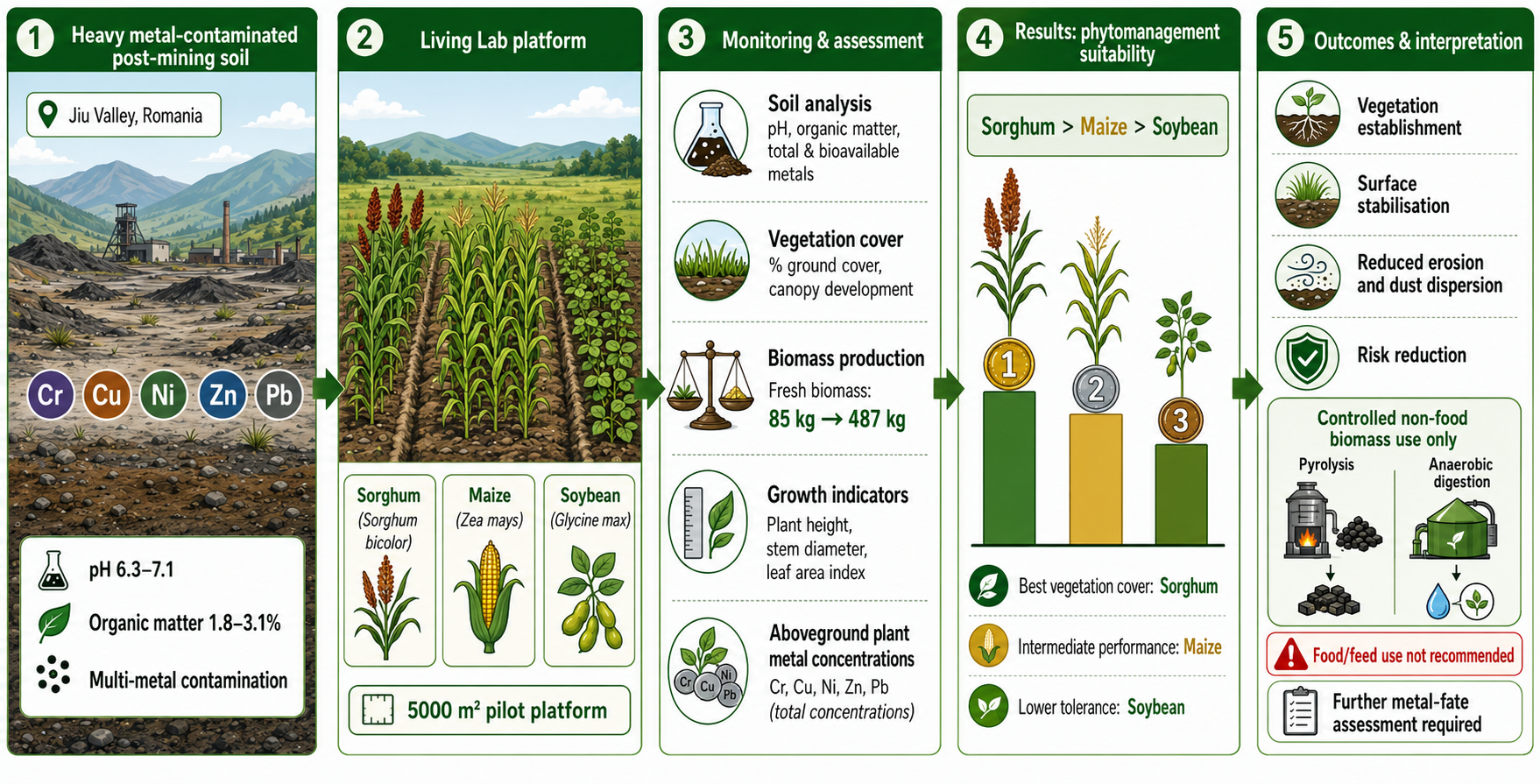
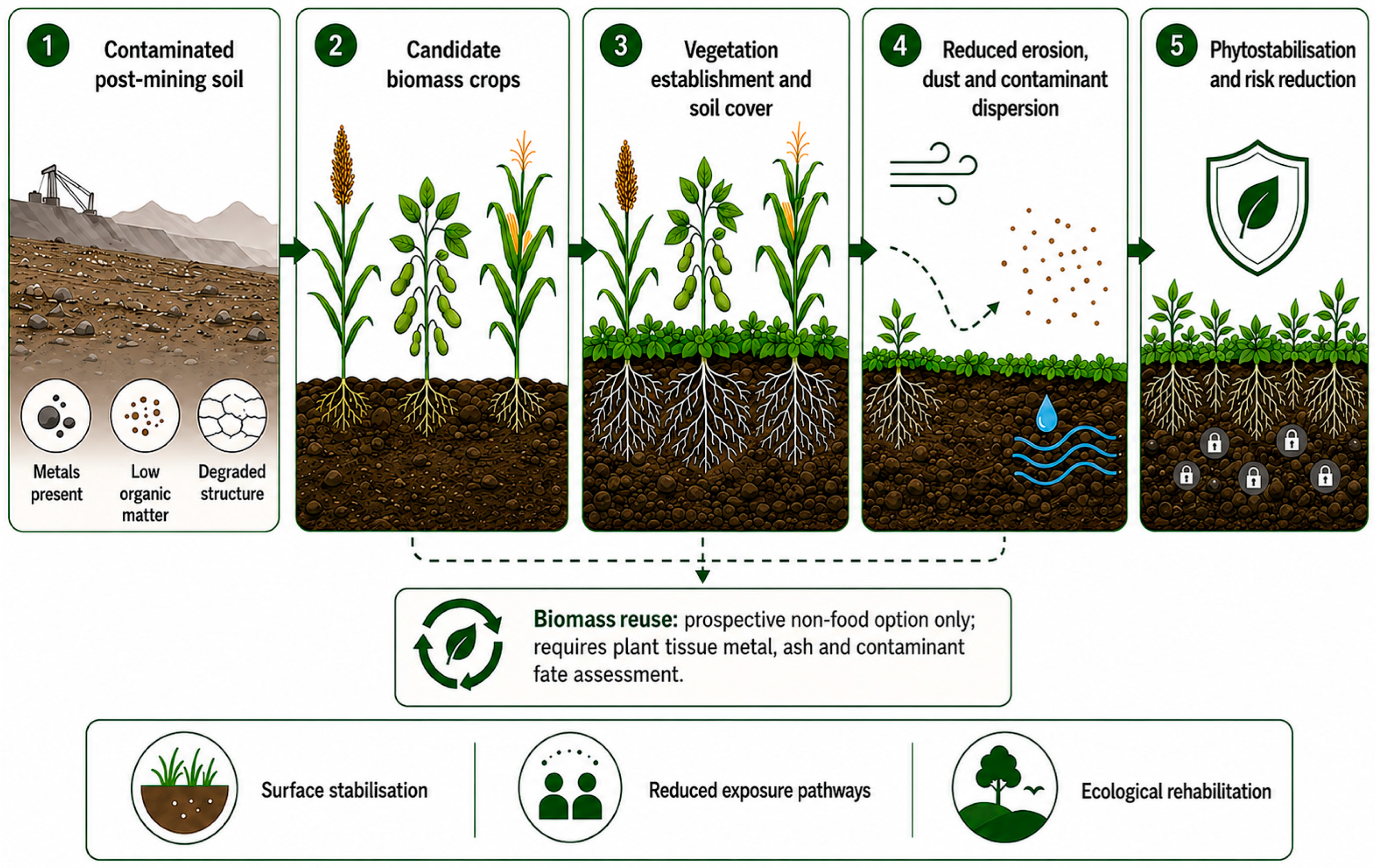
The comparative phytomanagement framework presented in
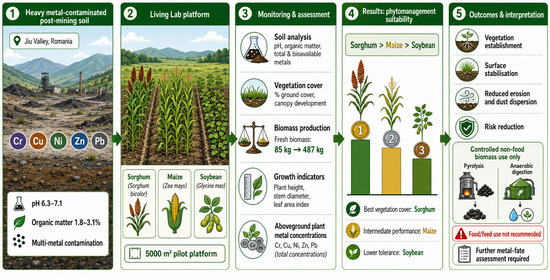
Figure 4 summarises the main processes through which tolerant biomass crops may contribute to the rehabilitation of contaminated mining soils. These include vegetation establishment, soil surface protection, potential reduction of erosion susceptibility and dust dispersion risk, gradual improvement of ecological functionality and the prospective generation of biomass for controlled non-food uses [
2,
9].
The suitability gradient discussed in this section is supported by the field and quantitative evidence summarised in
Table 10, but it should be interpreted within the exploratory scope of the Living Lab assessment. Sorghum obtained the highest score because it combined uniform establishment, low visible stress, stable canopy development, the highest multi-year biomass production and the strongest vegetation cover. Maize showed good but less uniform performance and higher aboveground concentrations of several metals, whereas soybean was more sensitive to the degraded substrate conditions. The score assigned to the controlled non-food biomass use criterion was therefore differentiated among species and interpreted conservatively, because only aboveground composite plant metal data were available, and root accumulation, ash composition and contaminant fate during biomass conversion were not assessed. Because the scoring framework was not independently validated and because some criteria partially overlap, the resulting ranking should be interpreted only as a preliminary field-based prioritisation under the specific conditions of this Living Lab platform, not as a definitive suitability classification.
The workflow illustrates the transition from contaminated substrate to vegetation establishment, soil cover development, potential reduction of erosion- and dust-related contaminant dispersion risk, and phytostabilisation-oriented risk reduction.
The framework supports the interpretation of tolerant biomass crops primarily as tools for vegetation establishment, surface stabilisation and remediation-oriented land management. Under contaminated soil conditions, biomass generation should be regarded as a secondary and conditional output, suitable only for carefully controlled non-food pathways after metal-fate assessment [
10,
12].