
Implications of Endocrine-Disrupting Chemicals for Human Health and Effective Methods for Prevention and Reduction

 ,
,  , ,
, , 
Abstract
1. Introduction
2. Materials and Methods
3. Results
3.1. Main Characteristics of Exposure to EDC’s
3.1.1. Age at Exposure to EDC’s
3.1.2. Latency Time and Duration of Exposure to EDC’s
3.1.3. Doses Accumulated
3.1.4. Persistence of EDC’s
3.1.5. Critical Windows of Susceptibility
3.2. Major Pathways of Exposure to EDC’s
3.2.1. Exposure Through Ingestion
3.2.2. Exposure Through Inhalation
3.2.3. Exposure Through Dermal Absorption
3.3. The Mechanistic Molecular Action of the EDC’s
3.4. Associated Human Health Risks Posed by EDC’s
3.4.1. Metabolic Disorders
3.4.2. Cardiovascular Diseases
3.4.3. Reproductive Dysfunction and Infertility
3.4.4. Hormone-Dependent Cancers
3.4.5. Immune System and Thyroid Hormone Dysfunction
3.5. Reducing the Exposure and Exposure Effects of the Most Harmful Categories of EDC’s
3.5.1. Selected EDC Classes of Public Health Concern
- (a)
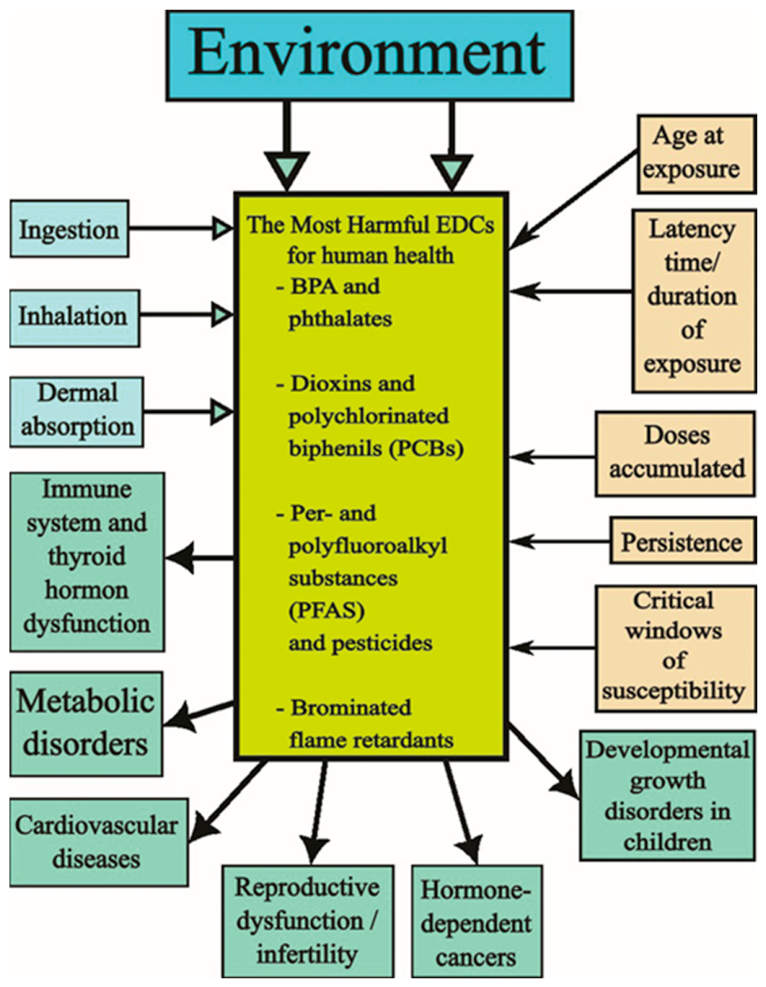
- Bisphenols and phthalates are commonly found in plastics, food packaging, personal care products, and consumer materials. These compounds have been frequently investigated in relation to reproductive, metabolic, developmental, and neurodevelopmental outcomes, although interpretation depends on compound, dose, exposure window, and endpoint assessed [1,9,141,142].
- (b)
- Dioxins and polychlorinated biphenyls (PCBs), many of which are classified as persistent organic pollutants, are characterized by environmental persistence, lipophilicity, and bioaccumulation. They have been discussed in relation to thyroid-related, reproductive, developmental, immune, and carcinogenic outcomes, but endocrine disruption may not represent the critical effect for all congeners or regulatory contexts [1,24,143,144].
- (c)
- Per- and polyfluoroalkyl substances (PFAS) and pesticides represent heterogeneous chemical groups with diverse uses, exposure routes, and toxicological profiles. Some compounds within these groups have been evaluated for endocrine-related endpoints, including thyroid, reproductive, developmental, and metabolic outcomes; however, evidence strength and critical effects vary substantially across substances and assessments [141,145,146,147].
- (d)
- Brominated flame retardants include compounds used in furniture, electronics, textiles, and other consumer products. Some members of this class have been investigated for thyroid, neurodevelopmental, reproductive, and metabolic effects, particularly in relation to indoor dust exposure and early-life vulnerability, although the endocrine relevance of critical effects differs by compound [1,148].
3.5.2. Assessing Variations in Health Impact Following EDC Exposure
3.5.3. Strategies to Reduce EDC Exposure and Mitigate Health Effects Post-Exposure
3.5.4. Preventive and Exposure-Reduction Strategies for BPA and Phthalates
3.5.5. Preventive and Exposure-Reduction Strategies for Dioxins and Polychlorinated Biphenyls
3.5.6. Preventive and Exposure-Reduction Strategies for per- and Polyfluoroalkyl Substances and Pesticides
3.5.7. Preventive and Exposure-Reduction Strategies for Brominated Flame Retardants
4. Discussion
5. Limitations
6. Conclusions
Author Contributions
Funding
Institutional Review Board Statement
Informed Consent Statement
Data Availability Statement
Conflicts of Interest
Abbreviations
| EDCs | Endocrine-disrupting chemicals |
| BPA | Bisphenol A |
| PFAS | Per- and polyfluoroalkyl substances |
| PCBs | Polychlorinated biphenyls |
| BFRs | Brominated flame retardants |
| PVC | Polyvinyl chloride |
| HEPA | High-efficiency particulate air |
| DNA | Deoxyribonucleic acid |
| RNA | Ribonucleic acid |
| ATP | Adenosine triphosphate |
| T3 | Triiodothyronine |
| T4 | Thyroxine |
| NHANES | National Health and Nutrition Examination Survey |
| MEDLINE | Medical Literature Analysis and Retrieval System Online |
| BPA-free | Bisphenol A-free |
| PFAS-treated | Treated with per- and polyfluoroalkyl substances |
| Phthalate-free | Free of phthalates |
References
- Yilmaz, B.; Terekeci, H.; Sandal, S.; Kelestimur, F. Endocrine disrupting chemicals: Exposure, effects on human health, mechanism of action, models for testing and strategies for prevention. Rev. Endocr. Metab. Disord. 2020, 21, 127–147. [Google Scholar] [CrossRef] [PubMed]
- Vos, J.G.; Dybing, E.; Greim, H.A.; Ladefoged, O.; Lambré, C.; Tarazona, J.V.; Brandt, I.; Vethaak, A.D. Health effects of endocrine-disrupting chemicals on wildlife, with special reference to the European situation. Crit. Rev. Toxicol. 2000, 30, 71–133. [Google Scholar] [CrossRef]
- Zlatnik, M.G. Endocrine-Disrupting Chemicals and Reproductive Health. J. Midwifery Women’s Health 2016, 61, 442–455. [Google Scholar] [CrossRef]
- Braun, J.M. Early-life exposure to EDCs: Role in childhood obesity and neurodevelopment. Nat. Rev. Endocrinol. 2017, 13, 161–173. [Google Scholar] [CrossRef]
- Kirkley, A.G.; Sargis, R.M. Environmental endocrine disruption of energy metabolism and cardiovascular risk. Curr. Diab Rep. 2014, 14, 494. [Google Scholar] [CrossRef] [PubMed]
- Modica, R.; Benevento, E.; Colao, A. Endocrine-disrupting chemicals (EDCs) and cancer: New perspectives on an old relationship. J. Endocrinol. Investig. 2023, 46, 667–677. [Google Scholar] [CrossRef]
- Lobstein, T.; Brownell, K.D. Endocrine-disrupting chemicals and obesity risk: A review of recommendations for obesity prevention policies. Obes. Rev. 2021, 22, e13332. [Google Scholar] [CrossRef]
- Lisco, G.; Giagulli, V.A.; Iovino, M.; Guastamacchia, E.; Pergola, G.; Triggiani, V. Endocrine-Disrupting Chemicals: Introduction to the Theme. Endocr. Metab. Immune Disord. Drug Targets 2022, 22, 677–685. [Google Scholar] [CrossRef]
- Anne, B.; Raphael, R. Endocrine Disruptor Chemicals. In Endotext; Feingold, K.R., Ahmed, S.F., Anawalt, B., Blackman, M.R., Chrousos, G., Corpas, E., de Herder, W.W., Dhatariya, K., Hamilton, E., Hofland, J., et al., Eds.; MDText.com, Inc.: South Dartmouth, MA, USA, 2000. Available online: https://www.ncbi.nlm.nih.gov/books/NBK569327/ (accessed on 7 October 2025).
- La Merrill, M.A.; Vandenberg, L.N.; Smith, M.T.; Goodson, W.; Browne, P.; Patisaul, H.B.; Guyton, K.Z.; Kortenkamp, A.; Cogliano, V.J.; Woodruff, T.J.; et al. Consensus on the key characteristics of endocrine-disrupting chemicals as a basis for hazard identification. Nat. Rev. Endocrinol. 2020, 16, 45–57. [Google Scholar] [CrossRef] [PubMed]
- David, S.; Amandine, A. Endocrine-disrupting effects of contaminants on communication and behaviors of insects: From molecular effects to ecological consequences. Curr. Opin. Insect Sci. 2025, 72, 101431. [Google Scholar] [CrossRef]
- Lanphear, B.P.; Hornung, R.; Khoury, J.; Yolton, K.; Baghurst, P.; Bellinger, D.C.; Canfield, R.L.; Dietrich, K.N.; Bornschein, R.; Greene, T.; et al. Low-level environmental lead exposure and children’s intellectual function: An international pooled analysis. Environ. Health Perspect. 2005, 113, 894–899. [Google Scholar] [CrossRef]
- Buttke, D.E.; Sircar, K.; Martin, C. Exposures to endocrine-disrupting chemicals and age of menarche in adolescent girls in NHANES (2003–2008). Environ. Health Perspect. 2012, 120, 1613–1618. [Google Scholar] [CrossRef]
- Endocrine Society. Endocrine-Disrupting Chemicals in the European Union. 2023. Available online: https://www.endocrine.org/advocacy/position-statements/endocrine-disrupting-chemicals-in-the-european-union (accessed on 7 October 2025).
- Xin, F.; Susiarjo, M.; Bartolomei, M.S. Multigenerational and transgenerational effects of endocrine disrupting chemicals: A role for altered epigenetic regulation? Semin. Cell Dev. Biol. 2015, 43, 66–75. [Google Scholar] [CrossRef] [PubMed]
- Brehm, E.; Flaws, J.A. Transgenerational Effects of Endocrine-Disrupting Chemicals on Male and Female Reproduction. Endocrinology 2019, 160, 1421–1435. [Google Scholar] [CrossRef]
- Greenspan, L.C.; Lee, M.M. Endocrine disrupters and pubertal timing. Curr. Opin. Endocrinol. Diabetes Obes. 2018, 25, 49–54. [Google Scholar] [CrossRef]
- Ho, V.; Pelland-St-Pierre, L.; Gravel, S.; Bouchard, M.F.; Verner, M.-A.; Labrèche, F. Endocrine disruptors: Challenges and future directions in epidemiologic research. Environ. Res. 2022, 204, 111969. [Google Scholar] [CrossRef]
- Vandenberg, L.N. Low-dose effects of hormones and endocrine disruptors. Vitam. Horm. 2014, 94, 129–165. [Google Scholar] [CrossRef]
- Rhomberg, L.R.; Goodman, J.E. Low-dose effects and nonmonotonic dose-responses of endocrine disrupting chemicals: Has the case been made? Regul. Toxicol. Pharmacol. 2012, 64, 130–133. [Google Scholar] [CrossRef] [PubMed]
- Vandenberg, L.N.; Colborn, T.; Hayes, T.B.; Heindel, J.J.; Jacobs, D.R., Jr.; Lee, D.-H.; Shioda, T.; Soto, A.M.; vom Saal, F.S.; Welshons, W.V.; et al. Hormones and endocrine-disrupting chemicals: Low-dose effects and nonmonotonic dose responses. Endocr. Rev. 2012, 33, 378–455. [Google Scholar] [CrossRef] [PubMed]
- Welshons, W.V.; Thayer, K.A.; Judy, B.M.; Taylor, J.A.; Curran, E.M.; vom Saal, F.S. Large effects from small exposures. I. Mechanisms for endocrine-disrupting chemicals with estrogenic activity. Environ. Health Perspect. 2003, 111, 994–1006. [Google Scholar] [CrossRef]
- Hayes, T.B.; Anderson, L.L.; Beasley, V.R.; de Solla, S.R.; Iguchi, T.; Ingraham, H.; Kestemont, P.; Kniewald, J.; Kniewald, Z.; Langlois, V.S.; et al. Demasculinization and feminization of male gonads by atrazine: Consistent effects across vertebrate classes. J. Steroid Biochem. Mol. Biol. 2011, 127, 64–73. [Google Scholar] [CrossRef]
- Encarnação, T.; Pais, A.A.; Campos, M.G.; Burrows, H.D. Endocrine disrupting chemicals: Impact on human health, wildlife and the environment. Sci. Prog. 2019, 102, 3–42. [Google Scholar] [CrossRef] [PubMed]
- Tyagi, P.; James-Todd, T.; Mínguez-Alarcón, L.; Ford, J.B.; Keller, M.; Petrozza, J.; Calafat, A.M.; Hauser, R.; Williams, P.L.; Bellavia, A. Identifying windows of susceptibility to endocrine disrupting chemicals in relation to gestational weight gain among pregnant women attending a fertility clinic. Environ. Res. 2021, 194, 110638. [Google Scholar] [CrossRef]
- Calkins, K.; Devaskar, S.U. Fetal origins of adult disease. Curr. Probl. Pediatr. Adolesc. Health Care 2011, 41, 158–176. [Google Scholar] [CrossRef] [PubMed]
- Harding, J.E. The nutritional basis of the fetal origins of adult disease. Int. J. Epidemiol. 2001, 30, 15–23. [Google Scholar] [CrossRef]
- Wadhwa, P.D.; Buss, C.; Entringer, S.; Swanson, J.M. Developmental origins of health and disease: Brief history of the approach and current focus on epigenetic mechanisms. Semin. Reprod. Med. 2009, 27, 358–368. [Google Scholar] [CrossRef]
- Papalou, O.; Kandaraki, E.A.; Papadakis, G.; Diamanti-Kandarakis, E. Endocrine Disrupting Chemicals: An Occult Mediator of Metabolic Disease. Front. Endocrinol. 2019, 10, 112. [Google Scholar] [CrossRef]
- Liang, Y.; Lu, Q.; Chen, M.; Zhao, X.; Chu, C.; Zhang, C.; Yuan, J.; Liu, H.; Lash, G.E. Impact of endocrine disrupting chemicals (EDCs) on epigenetic regulation in the uterus: A narrative review. Reprod. Biol. Endocrinol. 2025, 23, 80. [Google Scholar] [CrossRef]
- Amato, A.A.; Wheeler, H.B.; Blumberg, B. Obesity and endocrine-disrupting chemicals. Endocr. Connect. 2021, 10, R87–R105. [Google Scholar] [CrossRef] [PubMed]
- Ledesma, K.N.Z.; Hernández, M.A.; Chávez, K.R.; Barajas, A.F.A.; Vázquez, D.P.A.; Santiago, G.G.; Castro, A.A.; Barrera, T.D.R. Endocrine Disruptors and Their Impact on Quality of Life: A Literature Review. Cureus 2025, 17, e83890. [Google Scholar] [CrossRef]
- Matos, D.M.; Ramos, J.; Brandão, A.; Baeta, A.; Rodrigues, I.; dos Santos, I.; Coentro, J.; Fernandes, J.; de Carvalho, L.B.; Marques, M.; et al. Microplastics ingestion and endocrine disrupting chemicals (EDCs) by breeding seabirds in the east tropical Atlantic: Associations with trophic and foraging proxies (δ15N and δ13C). Sci. Total Environ. 2024, 912, 168664. [Google Scholar] [CrossRef]
- Peivasteh-Roudsari, L.; Barzegar-Bafrouei, R.; Sharifi, K.A.; Azimisalim, S.; Karami, M.; Abedinzadeh, S.; Asadinezhad, S.; Tajdar-Oranj, B.; Mahdavi, V.; Alizadeh, A.M.; et al. Origin, dietary exposure, and toxicity of endocrine-disrupting food chemical contaminants: A comprehensive review. Heliyon 2023, 9, e18140. [Google Scholar] [CrossRef] [PubMed]
- Plunk, E.C.; Richards, S.M. Endocrine-Disrupting Air Pollutants and Their Effects on the Hypothalamus-Pituitary-Gonadal Axis. Int. J. Mol. Sci. 2020, 21, 9191. [Google Scholar] [CrossRef] [PubMed]
- Annamalai, J.; Namasivayam, V. Endocrine disrupting chemicals in the atmosphere: Their effects on humans and wildlife. Environ. Int. 2015, 76, 78–97. [Google Scholar] [CrossRef]
- Mogus, J.P.; Marin, M.; Arowolo, O.; Salemme, V.; Suvorov, A. Developmental exposures to common environmental pollutants result in long-term Reprogramming of hypothalamic-pituitary axis in mice. Environ. Pollut. 2024, 361, 124890. [Google Scholar] [CrossRef]
- Anderson, S.E.; Meade, B.J. Potential health effects associated with dermal exposure to occupational chemicals. Environ. Health Insights 2014, 8, 51–62. [Google Scholar] [CrossRef]
- Ju, Q.; Zouboulis, C.C. Endocrine-disrupting chemicals and skin manifestations. Rev. Endocr. Metab. Disord. 2016, 17, 449–457. [Google Scholar] [CrossRef] [PubMed]
- Skinner, M. Epigenetic transgenerational inheritance. Nat. Rev. Endocrinol. 2016, 12, 68–70. [Google Scholar] [CrossRef]
- Shafei, A.; Ramzy, M.M.; Hegazy, A.I.; Husseny, A.K.; El-Hadary, U.G.; Taha, M.M.; Mosa, A.A. The molecular mechanisms of action of the endocrine disrupting chemical bisphenol A in the development of cancer. Gene 2018, 647, 235–243. [Google Scholar] [CrossRef]
- Shanle, E.K.; Xu, W. Endocrine disrupting chemicals targeting estrogen receptor signaling: Identification and mechanisms of action. Chem. Res. Toxicol. 2011, 24, 6–19. [Google Scholar] [CrossRef]
- Li, Y.; Luh, C.J.; Burns, K.A.; Arao, Y.; Jiang, Z.; Teng, C.T.; Tice, R.R.; Korach, K.S. Endocrine-Disrupting Chemicals (EDCs): In Vitro Mechanism of Estrogenic Activation and Differential Effects on ER Target Genes. Environ. Health Perspect. 2013, 121, 459–466. [Google Scholar] [CrossRef] [PubMed]
- Wallis, D.J.; Truong, L.; La Du, J.; Tanguay, R.L.; Reif, D.M. Uncovering Evidence for Endocrine-Disrupting Chemicals That Elicit Differential Susceptibility through Gene-Environment Interactions. Toxics 2021, 9, 77. [Google Scholar] [CrossRef] [PubMed]
- Lee, H.R.; Jeung, E.B.; Cho, M.H.; Kim, T.H.; Leung, P.C.; Choi, K.C. Molecular mechanism(s) of endocrine-disrupting chemicals and their potent oestrogenicity in diverse cells and tissues that express oestrogen receptors. J. Cell Mol. Med. 2013, 17, 1–11. [Google Scholar] [CrossRef] [PubMed]
- Combarnous, Y.; Nguyen, T.M.D. Comparative Overview of the Mechanisms of Action of Hormones and Endocrine Disruptor Compounds. Toxics 2019, 7, 5. [Google Scholar] [CrossRef]
- Stepulak, A.; Rzeski, W.; Sifringer, M.; Brocke, K.; Gratopp, A.; Kupisz, K.; Turski, L.; Ikonomidou, C. Fluoxetine inhibits the extracellular signal regulated kinase pathway and suppresses growth of cancer cells. Cancer Biol. Ther. 2008, 7, 1685–1693. [Google Scholar] [CrossRef]
- Ahn, C.; Jeung, E.-B. Endocrine-Disrupting Chemicals and Disease Endpoints. Int. J. Mol. Sci. 2023, 24, 5342. [Google Scholar] [CrossRef]
- Fitz-James, M.H.; Cavalli, G. Molecular mechanisms of transgenerational epigenetic inheritance. Nat. Rev. Genet. 2022, 23, 325–341. [Google Scholar] [CrossRef]
- Endocrine Society. Common EDCs and Where They Are Found. 2023. Available online: https://www.endocrine.org/topics/edc/what-edcs-are/common-edcs (accessed on 7 October 2025).
- Alavian-Ghavanini, A.; Rüegg, J. Understanding Epigenetic Effects of Endocrine Disrupting Chemicals: From Mechanisms to Novel Test Methods. Basic. Clin. Pharmacol. Toxicol. 2017, 122, 38–45. [Google Scholar] [CrossRef]
- Manikkam, M.; Tracey, R.; Guerrero-Bosagna, C.; Skinner, M.K. Plastics derived endocrine disruptors (BPA, DEHP and DBP) induce epigenetic transgenerational inheritance of obesity, reproductive disease and sperm epimutations. PLoS ONE 2013, 8, e55387. [Google Scholar] [CrossRef] [PubMed]
- Cheong, A.; Zhang, X.; Cheung, Y.-Y.; Tang, W.-Y.; Chen, J.; Ye, S.-H.; Medvedovic, M.; Leung, Y.-K.; Prins, G.S.; Ho, S.-M. DNA methylome changes by estradiol benzoate and bisphenol A links early-life environmental exposures to prostate cancer risk. Epigenetics 2016, 11, 674–689. [Google Scholar] [CrossRef]
- Zhao, M.; Niu, Y.; Huang, Q.; Li, W. Exploring the Mechanisms of EDCs-Induced Metabolic Disorders in Humans Using Network Toxicology and Molecular Docking. NAM J. 2025, 1, 100041. [Google Scholar] [CrossRef]
- Jaskulak, M.; Zimowska, M.; Rolbiecka, M.; Zorena, K. Understanding the role of endocrine disrupting chemicals as environmental obesogens in the obesity epidemic: A comprehensive overview of epidemiological studies between 2014 and 2024. Ecotoxicol. Environ. Saf. 2025, 299, 118401. [Google Scholar] [CrossRef]
- Janesick, A.S.; Blumberg, B. Obesogens: An emerging threat to public health. Am. J. Obstet. Gynecol. 2016, 214, 559–565. [Google Scholar] [CrossRef] [PubMed]
- Lee, H.K.; Shim, E.B. Extension of the mitochondria dysfunction hypothesis of metabolic syndrome to atherosclerosis with emphasis on the endocrine-disrupting chemicals and biophysical laws. J. Diabetes Investig. 2013, 4, 19–33. [Google Scholar] [CrossRef]
- Boix-Castejón, M.; Roche, E.; Olivares-Vicente, M.; Álvarez-Martínez, F.J.; Herranz-López, M.; Micol, V. Plant compounds for obesity treatment through neuroendocrine regulation of hunger: A systematic review. Phytomedicine 2023, 113, 154735. [Google Scholar] [CrossRef]
- Furukawa, S.; Fujita, T.; Shimabukuro, M.; Iwaki, M.; Yamada, Y.; Nakajima, Y.; Nakayama, O.; Makishima, M.; Matsuda, M.; Shimomura, I. Increased oxidative stress in obesity and its impact on metabolic syndrome. J. Clin. Investig. 2004, 114, 1752–1761. [Google Scholar] [CrossRef] [PubMed]
- Gálvez-Ontiveros, Y.; Páez, S.; Monteagudo, C.; Rivas, A. Endocrine Disruptors in Food: Impact on Gut Microbiota and Metabolic Diseases. Nutrients 2020, 12, 1158. [Google Scholar] [CrossRef]
- Francis, C.E.; Allee, L.; Nguyen, H.; Grindstaff, R.D.; Miller, C.N.; Rayalam, S. Endocrine disrupting chemicals: Friend or foe to brown and beige adipose tissue? Toxicology 2021, 463, 152972. [Google Scholar] [CrossRef] [PubMed]
- The Institute for Functional Medicine. Endocrine-Disrupting Chemicals and Type 2 Diabetes. 2025. Available online: https://www.ifm.org/articles/endocrine-disruptors-type-2-diabetes (accessed on 7 October 2025).
- Dagar, M.; Kumari, P.; Mirza, A.M.W.; Singh, S.; Ain, N.U.; Munir, Z.; Javed, T.; Virk, M.F.I.; Javed, S.; Qizilbash, F.H.; et al. The Hidden Threat: Endocrine Disruptors and Their Impact on Insulin Resistance. Cureus 2023, 15, e47282. [Google Scholar] [CrossRef]
- Schulz, M.C.; Sargis, R.M. Inappropriately sweet: Environmental endocrine-disrupting chemicals and the diabetes pandemic. Adv. Pharmacol. 2021, 92, 419–456. [Google Scholar] [CrossRef]
- Aayush, M.V.; Nikthesh, G.; Rajmohan, D.; Ravindran, C.P.; Vasantharekha, R.; Thangavelu, S.; Seetharaman, B. Redefining the pathogenesis of Gestational Diabetes Mellitus: The cumulative impact of endocrine disrupting environmental chemicals in key metabolic pathways. Med. Hypotheses 2025, 201, 111693. [Google Scholar] [CrossRef]
- Haverinen, E.; Fernandez, M.F.; Mustieles, V.; Tolonen, H. Metabolic Syndrome and Endocrine Disrupting Chemicals: An Overview of Exposure and Health Effects. Int. J. Environ. Res. Public Health 2021, 18, 13047. [Google Scholar] [CrossRef] [PubMed]
- Küblbeck, J.; Vuorio, T.; Niskanen, J.; Fortino, V.; Braeuning, A.; Abass, K.; Rautio, A.; Hakkola, J.; Honkakoski, P.; Levonen, A.-L. The EDCMET Project: Metabolic Effects of Endocrine Disruptors. Int. J. Mol. Sci. 2020, 21, 3021. [Google Scholar] [CrossRef]
- Pan, K.; Xu, J.; Xu, Y.; Wang, C.; Yu, J. The association between endocrine disrupting chemicals and nonalcoholic fatty liver disease: A systematic review and meta-analysis. Pharmacol. Res. 2024, 205, 107251. [Google Scholar] [CrossRef]
- Le Magueresse-Battistoni, B. Endocrine disrupting chemicals and metabolic disorders in the liver: What if we also looked at the female side? Chemosphere 2021, 268, 129212. [Google Scholar] [CrossRef]
- Maradonna, F.; Carnevali, O. Lipid Metabolism Alteration by Endocrine Disruptors in Animal Models: An Overview. Front. Endocrinol. 2018, 9, 654. [Google Scholar] [CrossRef]
- Fan, Y.; Tao, C.; Li, Z.; Huang, Y.; Yan, W.; Zhao, S.; Gao, B.; Xu, Q.; Qin, Y.; Wang, X.; et al. Association of Endocrine-Disrupting Chemicals with All-Cause and Cause-Specific Mortality in the U.S.: A Prospective Cohort Study. Environ. Sci. Technol. 2023, 57, 2877–2886. [Google Scholar] [CrossRef]
- Guo, X.; Li, N.; Wang, H.; Su, W.; Song, Q.; Liang, Q.; Liang, M.; Sun, C.; Li, Y.; Lowe, S.; et al. Combined exposure to multiple metals on cardiovascular disease in NHANES under five statistical models. Environ. Res. 2022, 215, 114435. [Google Scholar] [CrossRef] [PubMed]
- Fenercioglu, A.K.; Unal, D.O. The Role of Endocrine Disrupting Chemicals in the Development of Atherosclerosis. Cardiovasc. Toxicol. 2025, 25, 1706–1717. [Google Scholar] [CrossRef] [PubMed]
- Lin, T.A.; Zhou, C. Epigenetic impact of endocrine-disrupting chemicals on atherosclerosis. Essays Biochem. 2025, 69, 251–268. [Google Scholar] [CrossRef] [PubMed]
- Fu, X.; Xu, J.; Zhang, R.; Yu, J. The association between environmental endocrine disruptors and cardiovascular diseases: A systematic review and meta-analysis. Environ. Res. 2020, 187, 109464. [Google Scholar] [CrossRef]
- Carpenter, D.O. Polychlorinated biphenyls (PCBs): Routes of exposure and effects on human health. Rev. Environ. Health 2006, 21, 1–23. [Google Scholar] [CrossRef]
- Rubin, B.S. Bisphenol A: An endocrine disruptor with widespread exposure and multiple effects. J. Steroid Biochem. Mol. Biol. 2011, 127, 27–34. [Google Scholar] [CrossRef]
- Meeker, J.D.; Sathyanarayana, S.; Swan, S.H. Phthalates and other additives in plastics: Human exposure and associated health outcomes. Philos. Trans. R. Soc. Lond. B Biol. Sci. 2009, 364, 2097–2113. [Google Scholar] [CrossRef]
- Newbold, R.R. Lessons learned from perinatal exposure to diethylstilbestrol. Toxicol. Appl. Pharmacol. 2004, 199, 142–150. [Google Scholar] [CrossRef]
- Park, S.H.; Lim, J.E.; Park, H.; Jee, S.H. Body burden of persistent organic pollutants on hypertension: A meta-analysis. Environ. Sci. Pollut. Res. Int. 2016, 23, 14284–14293. [Google Scholar] [CrossRef]
- Wu, W.; Ziglioli, F.; Maestroni, U. (Eds.) Male Reproductive Health; IntechOpen: London, UK, 2020. [Google Scholar] [CrossRef]
- Marques-Pinto, A.; Carvalho, D. Human infertility: Are endocrine disruptors to blame? Endocr. Connect. 2013, 2, R15–R29. [Google Scholar] [CrossRef]
- Inoshita, H.; Masuyama, H.; Hiramatsu, Y. The different effects of endocrine-disrupting chemicals on estrogen receptor-mediated transcription through interaction with coactivator TRAP220 in uterine tissue. J. Mol. Endocrinol. 2003, 31, 551–561. [Google Scholar] [CrossRef]
- Lahimer, M.; Diwan, M.A.; Montjean, D.; Cabry, R.; Bach, V.; Ajina, M.; Ben Ali, H.; Benkhalifa, M.; Khorsi-Cauet, H. Endocrine disrupting chemicals and male fertility: From physiological to molecular effects. Front. Public Health 2023, 11, 1232646. [Google Scholar] [CrossRef]
- Henriques, M.C.; Loureiro, S.; Fardilha, M.; Herdeiro, M.T. The role of endocrine-disrupting Chemicals in Male Fertility Decline. In Male Reproductive Health; IntechOpen: London, UK, 2019; Available online: https://www.intechopen.com/chapters/68354 (accessed on 7 October 2025).
- Dobrzyńska, M.M.; Radzikowska, J. Genotoxicity and reproductive toxicity of bisphenol A and X-ray/bisphenol A combination in male mice. Drug Chem. Toxicol. 2013, 36, 19–26. [Google Scholar] [CrossRef]
- Tiwari, D.; Vanage, G. Mutagenic effect of Bisphenol A on adult rat male germ cells and their fertility. Reprod. Toxicol. 2013, 40, 60–68. [Google Scholar] [CrossRef]
- El-Beshbishy, H.A.; Aly, H.A.; El-Shafey, M. Lipoic acid mitigates bisphenol A-induced testicular mitochondrial toxicity in rats. Toxicol. Ind. Health 2013, 29, 875–887. [Google Scholar] [CrossRef]
- Rahman, M.S.; Kwon, W.S.; Lee, J.S.; Yoon, S.J.; Ryu, B.Y.; Pang, M.G. Bisphenol-A affects male fertility via fertility-related proteins in spermatozoa. Sci. Rep. 2015, 5, 9169. [Google Scholar] [CrossRef]
- Harper, A.P.; Finger, B.J.; Green, M.P. Chronic Atrazine Exposure Beginning Prenatally Impacts Liver Function and Sperm Concentration With Multi-Generational Consequences in Mice. Front. Endocrinol. 2020, 11, 580124. [Google Scholar] [CrossRef]
- Tricotteaux-Zarqaoui, S.; Lahimer, M.; Diwan, M.A.; Corona, A.; Candela, P.; Cabry, R.; Bach, V.; Khorsi-Cauet, H.; Benkhalifa, M. Endocrine disruptor chemicals exposure and female fertility declining: From pathophysiology to epigenetic risks. Front. Public Health 2024, 12, 1466967. [Google Scholar] [CrossRef]
- Hassan, S.; Thacharodi, A.; Priya, A.; Meenatchi, R.; Hegde, T.A.; R, T.; Nguyen, H.; Pugazhendhi, A. Endocrine disruptors: Unravelling the link between chemical exposure and Women’s reproductive health. Environ. Res. 2024, 241, 117385. [Google Scholar] [CrossRef]
- Crain, D.A.; Janssen, S.J.; Edwards, T.M.; Heindel, J.; Ho, S.-M.; Hunt, P.; Iguchi, T.; Juul, A.; McLachlan, J.A.; Schwartz, J.; et al. Female reproductive disorders: The roles of endocrine-disrupting compounds and developmental timing. Fertil. Steril. 2008, 90, 911–940. [Google Scholar] [CrossRef]
- Cao, L.-L.; Yan, C.-H.; Yu, X.-D.; Tian, Y.; Zhao, L.; Liu, J.-X.; Shen, X.-M. Relationship between serum concentrations of polychlorinated biphenyls and organochlorine pesticides and dietary habits of pregnant women in Shanghai. Sci. Total Environ. 2011, 409, 2997–3002. [Google Scholar] [CrossRef]
- Zama, A.M.; Bhurke, M.A.; Uzumcu, M. Effects of Endocrine-disrupting Chemicals on Female Reproductive Health. Open Biotechnol. J. 2016, 10, 54. [Google Scholar] [CrossRef]
- Iguchi, T.; Takasugi, N. Polyovular follicles in the ovary of immature mice exposed prenatally to diethylstilbestrol. Anat. Embryol. 1986, 175, 53–55. [Google Scholar] [CrossRef]
- Suzuki, A.; Sugihara, A.; Uchida, K.; Sato, T.; Ohta, Y.; Katsu, Y.; Watanabe, H.; Iguchi, T. Developmental effects of perinatal exposure to bisphenol-A and diethylstilbestrol on reproductive organs in female mice. Reprod. Toxicol. 2002, 16, 107–116. [Google Scholar] [CrossRef] [PubMed]
- Hunt, P.A.; Sathyanarayana, S.; Fowler, P.A.; Trasande, L. Female Reproductive Disorders, Diseases, and Costs of Exposure to Endocrine Disrupting Chemicals in the European Union. J. Clin. Endocrinol. Metab. 2016, 101, 1562–1570. [Google Scholar] [CrossRef]
- Chiaffarino, F.; Parazzini, F.; La Vecchia, C.; Chatenoud, L.; Di Cintio, E.; Marsico, S. Diet and uterine myomas. Obstet. Gynecol. 1999, 94, 395–398. [Google Scholar] [CrossRef]
- Dogan, S.; Simsek, T. Possible relationship between endocrine disrupting chemicals and hormone dependent gynecologic cancers. Med. Hypotheses 2016, 92, 84–87. [Google Scholar] [CrossRef]
- Rutkowska, A.Z.; Szybiak, A.; Serkies, K.; Rachoń, D. Endocrine disrupting chemicals as potential risk factor for estrogen-dependent cancers. Pol. Arch. Med. Wewn. 2016, 126, 562–570. [Google Scholar] [CrossRef] [PubMed]
- Buoso, E.; Masi, M.; Racchi, M.; Corsini, E. Endocrine-Disrupting Chemicals’ (EDCs) Effects on Tumour Microenvironment and Cancer Progression: Emerging Contribution of RACK1. Int. J. Mol. Sci. 2020, 21, 9229. [Google Scholar] [CrossRef]
- Khan, N.G.; Correia, J.; Adiga, D.; Rai, P.S.; Dsouza, H.S.; Chakrabarty, S.; Kabekkodu, S.P. A comprehensive review on the carcinogenic potential of bisphenol A: Clues and evidence. Environ. Sci. Pollut. Res. Int. 2021, 28, 19643–19663. [Google Scholar] [CrossRef]
- Winz, C.; Zong, W.X.; Suh, N. Endocrine-disrupting compounds and metabolomic reprogramming in breast cancer. J. Biochem. Mol. Toxicol. 2023, 37, e23506. [Google Scholar] [CrossRef]
- Boudalia, S.; Bousbia, A.; Boumaaza, B.; Oudir, M.; Canivenc Lavier, M.C. Relationship between endocrine disruptors and obesity with a focus on bisphenol A: A narrative review. Bioimpacts 2021, 11, 289–300. [Google Scholar] [CrossRef] [PubMed]
- Bateman, M.E.; Strong, A.L.; McLachlan, J.A.; Burow, M.E.; Bunnell, B.A. The Effects of Endocrine Disruptors on Adipogenesis and Osteogenesis in Mesenchymal Stem Cells: A Review. Front. Endocrinol. 2017, 7, 171. [Google Scholar] [CrossRef]
- Soto, A.M.; Sonnenschein, C. Environmental causes of cancer: Endocrine disruptors as carcinogens. Nat. Rev. Endocrinol. 2010, 6, 363–370. [Google Scholar] [CrossRef]
- Umar, M.I.; Hassan, W.; Murtaza, G.; Buabeid, M.; Arafa, E.; Irfan, H.M.; Asmawi, M.Z.; Huang, X. The Adipokine Component in the Molecular Regulation of Cancer Cell Survival, Proliferation and Metastasis. Pathol. Oncol. Res. 2021, 27, 1609828. [Google Scholar] [CrossRef]
- Singh, D.D. Epigenetic Mechanisms of Endocrine-Disrupting Chemicals in Breast Cancer and Their Impact on Dietary Intake. J. Xenobiotics 2025, 15, 1. [Google Scholar] [CrossRef] [PubMed]
- Akanbi, C.A.; Rotimi, D.E.; Ojo, A.B.; Ojo, O.A. Endocrine-disrupting chemicals (EDCs) and epigenetic regulation in embryonic development: Mechanisms, impacts, and emerging trends. Toxicol. Rep. 2025, 14, 101885. [Google Scholar] [CrossRef]
- Xing, J.S.; Bai, Z.M. Is testicular dysgenesis syndrome a genetic, endocrine, or environmental disease, or an unexplained reproductive disorder? Life Sci. 2018, 194, 120–129. [Google Scholar] [CrossRef] [PubMed]
- Macedo, S.; Teixeira, E.; Gaspar, T.B.; Boaventura, P.; Soares, M.A.; Miranda-Alves, L.; Soares, P. Endocrine-disrupting chemicals and endocrine neoplasia: A forty-year systematic review. Environ. Res. 2023, 218, 114869. [Google Scholar] [CrossRef]
- Pan, J.; Liu, P.; Yu, X.; Zhang, Z.; Liu, J. The adverse role of endocrine disrupting chemicals in the reproductive system. Front. Endocrinol. 2024, 14, 1324993. [Google Scholar] [CrossRef]
- Bräuner, E.V.; Lim, Y.-H.; Koch, T.; Uldbjerg, C.S.; Gregersen, L.S.; Pedersen, M.K.; Frederiksen, H.; Petersen, J.H.; A Coull, B.; Andersson, A.-M.; et al. Endocrine Disrupting Chemicals and Risk of Testicular Cancer: A Systematic Review and Meta-analysis. J. Clin. Endocrinol. Metab. 2021, 106, e4834–e4860. [Google Scholar] [CrossRef] [PubMed]
- Corti, M.; Lorenzetti, S.; Ubaldi, A.; Zilli, R.; Marcoccia, D. Endocrine Disruptors and Prostate Cancer. Int. J. Mol. Sci. 2022, 23, 1216. [Google Scholar] [CrossRef]
- Alsen, M.; Sinclair, C.; Cooke, P.; Ziadkhanpour, K.; Genden, E.; van Gerwen, M. Endocrine Disrupting Chemicals and Thyroid Cancer: An Overview. Toxics 2021, 9, 14. [Google Scholar] [CrossRef]
- Guarnotta, V.; Amodei, R.; Frasca, F.; Aversa, A.; Giordano, C. Impact of Chemical Endocrine Disruptors and Hormone Modulators on the Endocrine System. Int. J. Mol. Sci. 2022, 23, 5710. [Google Scholar] [CrossRef]
- Bokobza, E.; Hinault, C.; Tiroille, V.; Clavel, S.; Bost, F.; Chevalier, N. The Adipose Tissue at the Crosstalk Between EDCs and Cancer Development. Front. Endocrinol. 2021, 12, 691658. [Google Scholar] [CrossRef] [PubMed]
- Veiga-Lopez, A.; Pu, Y.; Gingrich, J.; Padmanabhan, V. Obesogenic Endocrine Disrupting Chemicals: Identifying Knowledge Gaps. Trends Endocrinol. Metab. 2018, 29, 607–625. [Google Scholar] [CrossRef] [PubMed]
- Zhou, J.X.; Chen, S.S.; Zheng, Z.Y.; Yuan, W.B.; Liu, X.B.; Ni, H.G. Mechanisms of three typical endocrine-disrupting chemicals causing myocardial infarction: Gene-level computational modeling. J. Environ. Chem. Ecotoxicol. 2025, 7, 1761–1773. [Google Scholar] [CrossRef]
- Rochefort, H. Endocrine disruptors (EDs) and hormone-dependent cancers: Correlation or causal relationship? Comptes Rendus Biol. 2017, 340, 439–445. [Google Scholar] [CrossRef]
- Meeker, J.D. Exposure to environmental endocrine disruptors and child development. Arch. Pediatr. Adolesc. Med. 2012, 166, E1–E7. [Google Scholar] [CrossRef]
- Bali, D.; Scaltrito, F.; Grimaldi, M.T.; Giardino, I.; Pettoello-Mantovani, M.; Pastore, M. The impact of the endocrine disruptors on child health. Glob. Pediatr. 2023, 5, 100069. [Google Scholar] [CrossRef]
- Di Pietro, G.; Forcucci, F.; Chiarelli, F. Endocrine Disruptor Chemicals and Children’s Health. Int. J. Mol. Sci. 2023, 24, 2671. [Google Scholar] [CrossRef] [PubMed]
- The Lancet Child & Adolescent Health. EDCs: A threat to child health. Lancet Child. Adolesc. Health 2024, 8, 773. [Google Scholar] [CrossRef]
- Schug, T.T.; Blawas, A.M.; Gray, K.; Heindel, J.J.; Lawler, C.P. Elucidating the links between endocrine disruptors and neurodevelopment. Endocrinology 2015, 156, 1941–1951. [Google Scholar] [CrossRef]
- Predieri, B.; Iughetti, L.; Bernasconi, S.; Street, M.E. Endocrine Disrupting Chemicals’ Effects in Children: What We Know and What We Need to Learn? Int. J. Mol. Sci. 2022, 23, 11899. [Google Scholar] [CrossRef]
- Lucaccioni, L.; Trevisani, V.; Marrozzini, L.; Bertoncelli, N.; Predieri, B.; Lugli, L.; Berardi, A.; Iughetti, L. Endocrine-Disrupting Chemicals and Their Effects during Female Puberty: A Review of Current Evidence. Int. J. Mol. Sci. 2020, 21, 2078. [Google Scholar] [CrossRef] [PubMed]
- Scsukova, S.; Rollerova, E.; Bujnakova Mlynarcikova, A. Impact of endocrine disrupting chemicals on onset and development of female reproductive disorders and hormone-related cancer. Reprod. Biol. 2016, 16, 243–254. [Google Scholar] [CrossRef] [PubMed]
- Pearce, E.N. Endocrine Disruptors and Thyroid Health. Endocr. Pract. 2024, 30, 172–176. [Google Scholar] [CrossRef]
- Arriagada, A.A.; Albornoz, E.; Opazo, M.C.; Becerra, A.; Vidal, G.; Fardella, C.; Michea, L.; Carrasco, N.; Simon, F.; Elorza, A.A.; et al. Excess iodide induces an acute inhibition of the sodium/iodide symporter in thyroid male rat cells by increasing reactive oxygen species. Endocrinology 2015, 156, 1540–1551. [Google Scholar] [CrossRef]
- Jang, H.; Calder, L.; Choi, J.W.; Kwon, B.R.; Pearce, E.N.; Shin, H.M. Associations between exposure to sodium/iodide symporter inhibitors and markers of thyroid function: A systematic review and meta-analysis. Chemosphere 2025, 372, 144098. [Google Scholar] [CrossRef]
- Diamanti-Kandarakis, E.; Bourguignon, J.-P.; Giudice, L.C.; Hauser, R.; Prins, G.S.; Soto, A.M.; Zoeller, R.T.; Gore, A.C. Endocrine-disrupting chemicals: An Endocrine Society scientific statement. Endocr. Rev. 2009, 30, 293–342. [Google Scholar] [CrossRef] [PubMed]
- Schjenken, J.E.; Green, E.S.; Overduin, T.S.; Mah, C.Y.; Russell, D.L.; Robertson, S.A. Endocrine Disruptor Compounds-A Cause of Impaired Immune Tolerance Driving Inflammatory Disorders of Pregnancy? Front. Endocrinol. 2021, 12, 607539. [Google Scholar] [CrossRef]
- Bansal, A.; Henao-Mejia, J.; Simmons, R.A. Immune System: An Emerging Player in Mediating Effects of Endocrine Disruptors on Metabolic Health. Endocrinology 2018, 159, 32–45. [Google Scholar] [CrossRef]
- Huang, R.-G.; Li, X.-B.; Wang, Y.-Y.; Wu, H.; Li, K.-D.; Jin, X.; Du, Y.-J.; Wang, H.; Qian, F.-Y.; Li, B.-Z. Endocrine-disrupting chemicals and autoimmune diseases. Environ. Res. 2023, 231, 116222. [Google Scholar] [CrossRef]
- Nowak, K.; Jabłońska, E.; Ratajczak-Wrona, W. Immunomodulatory effects of synthetic endocrine disrupting chemicals on the development and functions of human immune cells. Environ. Int. 2019, 125, 350–364. [Google Scholar] [CrossRef] [PubMed]
- Chanemougavally, J.; Thotakura, B.; Shruthy, K.M.; Janaki, C.S.; Chanemougavally, J., III. Effects of Endocrine Disrupting Chemicals (EDCs) on Skeletal System Development: A Review. Cureus 2023, 15, e46109. [Google Scholar] [CrossRef] [PubMed]
- Kuo, C.H.; Yang, S.N.; Kuo, P.L.; Hung, C.H. Immunomodulatory effects of environmental endocrine disrupting chemicals. Kaohsiung J. Med. Sci. 2012, 28, S37–S42. [Google Scholar] [CrossRef]
- Chalubinski, M.; Kowalski, M.L. Endocrine disrupters—Potential modulators of the immune system and allergic response. Allergy 2006, 61, 1326–1335. [Google Scholar] [CrossRef]
- Hilz, E.N.; Gore, A.C. Endocrine-Disrupting Chemicals: Science and Policy. Policy Insights Behav. Brain Sci. 2023, 10, 142–150. [Google Scholar] [CrossRef]
- Ghassabian, A.; Vandenberg, L.; Kannan, K.; Trasande, L. Endocrine-Disrupting Chemicals and Child Health. Annu. Rev. Pharmacol. Toxicol. 2022, 62, 573–594. [Google Scholar] [CrossRef]
- Kumar, M.; Sarma, D.K.; Shubham, S.; Kumawat, M.; Verma, V.; Prakash, A.; Tiwari, R. Environmental Endocrine-Disrupting Chemical Exposure: Role in Non-Communicable Diseases. Front. Public Health 2020, 8, 553850. [Google Scholar] [CrossRef]
- Kahn, L.G.; Philippat, C.; Nakayama, S.F.; Slama, R.; Trasande, L. Endocrine-disrupting chemicals: Implications for human health. Lancet Diabetes Endocrinol. 2020, 8, 703–718. [Google Scholar] [CrossRef]
- Leung, Y.K. A Silent Threat: Exploring the Impact of Endocrine Disruption on Human Health. Int. J. Mol. Sci. 2023, 24, 9790. [Google Scholar] [CrossRef]
- Lind, T.; Dunder, L.; Lejonklou, M.H.; Lind, P.M.; Melhus, H.; Lind, L. Developmental low-dose bisphenol A exposure leads to extensive transcriptome female masculinization and male feminization later in life. Commun. Med. 2025, 410, 5. [Google Scholar] [CrossRef] [PubMed]
- Klingelhöfer, D.; Braun, M.; Dröge, J.; Brüggmann, D.; Groneberg, D.A. Global research on endocrine disruptors as emerging hazards for human health and the environment. Front. Endocrinol. 2025, 16, 1561711. [Google Scholar] [CrossRef]
- Mita, D.G. Endocrine Disruptors: A Real Concern for Humans? Open Biotechnol. J. 2016, 10, 13–19. [Google Scholar] [CrossRef]
- Wright, R.O. Environment, susceptibility windows, development, and child health. Curr. Opin. Pediatr. 2017, 29, 211–217. [Google Scholar] [CrossRef]
- Ribeiro, E.; Ladeira, C.; Viegas, S. EDCs Mixtures: A Stealthy Hazard for Human Health? Toxics 2017, 5, 5. [Google Scholar] [CrossRef]
- Conolly, R.B.; Lutz, W.K. Nonmonotonic dose-response relationships: Mechanistic basis, kinetic modeling, and implications for risk assessment. Toxicol. Sci. 2004, 77, 151–157. [Google Scholar] [CrossRef]
- Balu, U.R.; Vasantharekha, R.; Paromita, C.; Ali, K.; Mudgal, G.; Kesari, K.K.; Seetharaman, B. Linking EDC-laden food consumption and modern lifestyle habits with preeclampsia: A non-animal approach to identifying early diagnostic biomarkers through biochemical alterations. Food Chem. Toxicol. 2024, 194, 115073. [Google Scholar] [CrossRef]
- Heindel, J.J.; Vandenberg, L.N. Developmental origins of health and disease: A paradigm for understanding disease cause and prevention. Curr. Opin. Pediatr. 2015, 27, 248–253. [Google Scholar] [CrossRef]
- Toft, G.; Liew, Z. Health Effects Associated with Exposures to Endocrine Disrupting Chemicals. Toxics 2022, 10, 425. [Google Scholar] [CrossRef]
- Stiefel, C.; Stintzing, F. Endocrine-active and endocrine-disrupting compounds in food—Occurrence, formation and relevance. NFS J. 2023, 31, 57–92. [Google Scholar] [CrossRef]
- Chen, L.; Giesy, J.P.; Xie, P. The dose makes the poison. Sci. Total Environ. 2018, 621, 649–653. [Google Scholar] [CrossRef]
- NIEHS. Endocrine Disruptors. 2024. Available online: https://www.niehs.nih.gov/health/topics/agents/endocrine (accessed on 7 October 2025).
- Tripathi, D.; Singh, S.; Ahamad, K.U. Understanding the plastic-associated endocrine-disrupting chemicals in India: Environmental contamination, health impacts and regulatory challenges. J. Environ. Chem. Eng. 2025, 13, 118453. [Google Scholar] [CrossRef]
- EDC FREE EUROPE. Seven Priorities to Protect People and Environment from Endocrine-Disrupting Chemicals. 2024. Available online: https://www.edc-free-europe.org/articles/position-papers/seven-priorities-to-protect-people-and-environment-from-endocrine-disrupting-chemicals (accessed on 7 October 2025).
- Metcalfe, C.D.; Bayen, S.; Desrosiers, M.; Muñoz, G.; Sauvé, S.; Yargeau, V. An introduction to the sources, fate, occurrence and effects of endocrine disrupting chemicals released into the environment. Environ. Res. 2022, 207, 112658. [Google Scholar] [CrossRef]
- Kelley, A.S.; Banker, M.; Goodrich, J.M.; Dolinoy, D.C.; Burant, C.; Domino, S.E.; Smith, Y.R.; Song, P.X.K.; Padmanabhan, V. Early pregnancy exposure to endocrine disrupting chemical mixtures are associated with inflammatory changes in maternal and neonatal circulation. Sci. Rep. 2018, 5422, 9. [Google Scholar] [CrossRef]
- Warner, G.R.; Flaws, J.A. Bisphenol A and Phthalates: How Environmental Chemicals Are Reshaping Toxicology. Toxicol. Sci. 2018, 166, 246–249. [Google Scholar] [CrossRef]
- Carnevali, O.; Giorgini, E.; Canuti, D.; Mylonas, C.C.; Forner-Piquer, I.; Maradonna, F. Diets contaminated with Bisphenol A and Di-isononyl phtalate modify skeletal muscle composition: A new target for environmental pollutant action. Sci. Total Environ. 2019, 658, 250–259. [Google Scholar] [CrossRef]
- Bernier, M.R.; Vandenberg, L.N. Handling of thermal paper: Implications for dermal exposure to bisphenol A and its alternatives. PLoS ONE 2017, 12, e0178449. [Google Scholar] [CrossRef]
- Alharbi, M.H.; Mumena, W.A.; Hammouda, S.A. Use of Plastics with Hot Food among Saudi Pregnant Women Is Associated with Increased Concentrations of A1C, Thyroid-Stimulating Hormone, and Homocysteine and Decreased Concentrations of Vitamins and Minerals. Nutrients 2020, 12, 2609. [Google Scholar] [CrossRef]
- Harley, K.G.; Kogut, K.; Madrigal, D.S.; Cardenas, M.; Vera, I.A.; Meza-Alfaro, G.; She, J.; Gavin, Q.; Zahedi, R.; Bradman, A.; et al. Reducing Phthalate, Paraben, and Phenol Exposure from Personal Care Products in Adolescent Girls: Findings from the HERMOSA Intervention Study. Environ. Health Perspect. 2016, 124, 1600–1607. [Google Scholar] [CrossRef]
- Trasande, L.; Sargis, R.M. Endocrine-disrupting chemicals: Mainstream recognition of health effects and implications for the practicing internist. J. Intern. Med. 2024, 295, 259–274. [Google Scholar] [CrossRef]
- Kim, J.H.; Kwak, J.M.; Kang, H. Web-based behavioral intervention to reduce exposure to phthalate metabolites, bisphenol A, triclosan, and parabens in mothers with young children: A randomized controlled trial. Int. J. Hyg. Environ. Health 2021, 236, 113798. [Google Scholar] [CrossRef]
- Martin, L.; Zhang, Y.; First, O.; Mustieles, V.; Dodson, R.; Rosa, G.; Coburn-Sanderson, A.; Adams, C.D.; Messerlian, C. Lifestyle interventions to reduce endocrine-disrupting phthalate and phenol exposures among reproductive age men and women: A review and future steps. Environ. Int. 2022, 170, 107576. [Google Scholar] [CrossRef]
- Luo, R.; Zhang, T.; Wang, L.; Feng, Y. Emissions and mitigation potential of endocrine disruptors during outdoor exercise: Fate, transport, and implications for human health. Environ. Res. 2023, 236, 116575. [Google Scholar] [CrossRef]
- Madore, M.P.; Sakaki, J.R.; Chun, O.K. Protective effects of polyphenols against endocrine disrupting chemicals. Food Sci. Biotechnol. 2022, 31, 905–934. [Google Scholar] [CrossRef] [PubMed]
- Babić Leko, M.; Gunjača, I.; Pleić, N.; Zemunik, T. Environmental Factors Affecting Thyroid-Stimulating Hormone and Thyroid Hormone Levels. Int. J. Mol. Sci. 2021, 22, 6521. [Google Scholar] [CrossRef] [PubMed]
- Rahul, C.M.; Gayathri, K.; Kesavachandran, C.N. Global trends of dioxin and dioxin-like PCBs in animal-origin foods: A systematic review and gap areas. Environ. Monit. Assess. 2024, 196, 529. [Google Scholar] [CrossRef] [PubMed]
- Tahir, E.; Cordier, S.; Courtemanche, Y.; Forget-Dubois, N.; Desrochers-Couture, M.; Bélanger, R.E.; Ayotte, P.; Jacobson, J.L.; Jacobson, S.W.; Muckle, G. Effects of polychlorinated biphenyls exposure on physical growth from birth to childhood and adolescence: A prospective cohort study. Environ. Res. 2020, 189, 109924. [Google Scholar] [CrossRef]
- Institute of Medicine (US) Committee on the Implications of Dioxin in the Food Supply. Dioxins and Dioxin-like Compounds in the Food Supply: Strategies to Decrease Exposure; 5 Human Foods and Food-Consumption Patterns; National Academies Press: Washington, DC, USA, 2003. Available online: https://www.ncbi.nlm.nih.gov/books/NBK221713/ (accessed on 7 October 2025).
- Mikołajczyk, S.; Warenik-Bany, M.; Maszewski, S.; Pajurek, M. Farmed Fish as a Source of Dioxins and PCBs for Polish Consumers. J. Vet. Res. 2020, 64, 427–431. [Google Scholar] [CrossRef]
- Korrick, S.A.; Altshul, L. High breast milk levels of polychlorinated biphenyls (PCBs) among four women living adjacent to a PCB-contaminated waste site. Environ. Health Perspect. 1998, 106, 513–518. [Google Scholar] [CrossRef]
- Judd, N.; Griffith, W.C.; Faustman, E.M. Contribution of PCB exposure from fish consumption to total dioxin-like dietary exposure. Regul. Toxicol. Pharmacol. 2004, 40, 125–135. [Google Scholar] [CrossRef]
- Baron, C.P.; Børresen, T.; Jacobsen, C. Comparison of methods to reduce dioxin and polychlorinated biphenyls contents in fishmeal: Extraction and enzymatic treatments. J. Agric. Food Chem. 2007, 55, 1620–1626. [Google Scholar] [CrossRef]
- Li, H.; Chen, Y.; Crittenden, J.; Hand, D.; Taylor, R. Modeling of indoor air treatment of polychlorinated dibenzo-p-dioxins and dibenzofurans using high-efficiency particulate air-carbon filtration. J. Air Waste Manag. Assoc. 2006, 56, 1155–1166. [Google Scholar] [CrossRef]
- Muzembo, B.A.; Iwai-Shimada, M.; Isobe, T.; Arisawa, K.; Shima, M.; Fukushima, T.; Nakayama, S.F. Dioxins levels in human blood after implementation of measures against dioxin exposure in Japan. Environ. Health Prev. Med. 2019, 24, 6. [Google Scholar] [CrossRef]
- Jin, W.; Otake, M.; Eguchi, A.; Sakurai, K.; Nakaoka, H.; Watanabe, M.; Todaka, E.; Mori, C. Dietary Habits and Cooking Methods Could Reduce Avoidable Exposure to PCBs in Maternal and Cord Sera. Sci. Rep. 2017, 7, 17357. [Google Scholar] [CrossRef] [PubMed]
- Zabik, M.E.; Zabik, M.J. Polychlorinated biphenyls, polybrominated biphenyls, and dioxin reduction during processing/cooking food. Adv. Exp. Med. Biol. 1999, 459, 213–231. [Google Scholar] [CrossRef]
- Mochida, Y.; Fukata, H.; Matsuno, Y.; Mori, C. Reduction of dioxins and polychlorinated biphenyls (PCBs) in human body. Fukuoka Igaku Zasshi 2007, 98, 106–113. [Google Scholar] [PubMed]
- Kim, M.J.; Marchand, P.; Henegar, C.; Antignac, J.-P.; Alili, R.; Poitou, C.; Bouillot, J.-L.; Basdevant, A.; Le Bizec, B.; Barouki, R.; et al. Fate and complex pathogenic effects of dioxins and polychlorinated biphenyls in obese subjects before and after drastic weight loss. Environ. Health Perspect. 2011, 119, 377–383. [Google Scholar] [CrossRef] [PubMed]
- Leijs, M.M.; ten Tusscher, G.W.; Olie, K.; van Teunenbroek, T.; van Aalderen, W.M.; de Voogt, P.; Vulsma, T.; Bartonova, A.; von Krauss, M.K.; Mosoiu, C.; et al. Thyroid hormone metabolism and environmental chemical exposure. Environ. Health 2012, 11, S10. [Google Scholar] [CrossRef]
- Food Safety Commission of Japan. Per- and Poly-fluoroalkyl Substances (PFAS) (Chemicals and Contaminants). Food Saf. 2025, 13, 19–21. [Google Scholar] [CrossRef]
- NIEHS. Perfluoroalkyl and Polyfluoroalkyl Substances (PFAS). 2025. Available online: https://www.niehs.nih.gov/health/topics/agents/pfc (accessed on 7 October 2025).
- Ramesh, A.; Balasubramanian, M. The impact of household preparations on the residues of pesticides in selected agricultural food commodities available in India. J. AOAC Int. 1999, 82, 725–737. [Google Scholar] [CrossRef]
- National Academies of Sciences, Engineering, and Medicine; Health and Medicine Division; Division on Earth and Life Studies; Board on Population Health and Public Health Practice; Board on Environmental Studies and Toxicology; Committee on the Guidance on PFAS Testing and Health Outcomes. Guidance on PFAS Exposure, Testing, and Clinical Follow-Up. 4 PFAS Exposure Reduction; National Academies Press: Washington, DC, USA, 2022. Available online: https://www.ncbi.nlm.nih.gov/books/NBK584691/ (accessed on 7 October 2025).
- Papini, M.P.; Senofonte, M.; Cuzzola, R.A.; Remmani, R.; Pettiti, I.; Riccardi, C.; Simonetti, G. Adsorption Technology for PFAS Removal in Water: Comparison between Novel Carbonaceous Materials. Materials 2024, 17, 4169. [Google Scholar] [CrossRef]
- Lee, T.; Speth, T.F.; Nadagouda, M.N. High-pressure membrane filtration processes for separation of Per- and polyfluoroalkyl substances (PFAS). Chem. Eng. J. 2022, 431, 134023. [Google Scholar] [CrossRef] [PubMed]
- LaPier, J.; Blum, A.; Brown, B.R.; Kwiatkowski, C.F.; Phillips, B.; Ray, H.; Sun, G. Evaluating the Performance of Per- and Polyfluoroalkyl Substance Finishes on Upholstery Fabrics. AATCC J. Res. 2023, 10, 205–213. [Google Scholar] [CrossRef]
- Yang, S.-J.; Mun, S.; Kim, H.J.; Han, S.J.; Kim, D.W.; Cho, B.-S.; Kim, A.G.; Park, D.W. Effectiveness of Different Washing Strategies on Pesticide Residue Removal: The First Comparative Study on Leafy Vegetables. Foods 2022, 11, 2916. [Google Scholar] [CrossRef]
- Srivani Maddala, V.K. Green pest management practices for sustainable buildings: Critical review. Sci. Prog. 2019, 102, 141–152. [Google Scholar] [CrossRef]
- Yiin, L.M.; Lioy, P.J.; Rhoads, G.G. Impact of home carpets on childhood lead intervention study. Environ. Res. 2003, 92, 161–165. [Google Scholar] [CrossRef]
- Lipinski, T.; Ahmad, D.; Serey, N.; Jouhara, H. Review of ventilation strategies to reduce the risk of disease transmission in high occupancy buildings. Int. J. Thermofluids 2020, 7, 100045. [Google Scholar] [CrossRef]
- Oshingbade, O.S.; Moda, H.M.; Akinsete, S.J.; Adejumo, M.; Hassan, N. Determinants of Safe Pesticide Handling and Application Among Rural Farmers. Int. J. Environ. Res. Public Health 2025, 22, 211. [Google Scholar] [CrossRef] [PubMed]
- Pesaresi, P.; Loit, E. Editorial: Options for transition of land towards intensive and sustainable agricultural systems, volume II. Front. Plant Sci. 2024, 15, 1437911. [Google Scholar] [CrossRef]
- Millán, R.; Schröder, P.; Sæbø, A. Editorial: Options for Transition of Land Towards Intensive and Sustainable Agricultural Systems. Front. Plant Sci. 2019, 10, 346. [Google Scholar] [CrossRef] [PubMed]
- Martins, T.; Barros, A.N.; Rosa, E.; Antunes, L. Enhancing Health Benefits through Chlorophylls and Chlorophyll-Rich Agro-Food: A Comprehensive Review. Molecules 2023, 28, 5344. [Google Scholar] [CrossRef]
- Lykkebo, C.A.; Nguyen, K.H.; Niklas, A.A.; Laursen, M.F.; Bahl, M.I.; Licht, T.R.; Mortensen, M.S. Diet rich in soluble dietary fibres increases excretion of perfluorooctane sulfonic acid (PFOS) in male Sprague-Dawley rats. Food Chem. Toxicol. 2024, 193, 115041. [Google Scholar] [CrossRef] [PubMed]
- Coperchini, F.; Croce, L.; Ricci, G.; Magri, F.; Rotondi, M.; Imbriani, M.; Chiovato, L. Thyroid Disrupting Effects of Old and New Generation PFAS. Front. Endocrinol. 2021, 11, 612320. [Google Scholar] [CrossRef]
- Xia, Z.; Chen, S.; Liu, Y.; Li, J.; Liu, X.; Zhang, L.; Xiang, Q.; Wu, Y. In utero exposure to per- and polyfluoroalkyl substances and neonatal sex hormone levels: Implications of endocrine disrupting effects during critical development windows. J. Environ. Chem. Ecotoxicol. 2025, 7, 1587–1597. [Google Scholar] [CrossRef]
- National Academies of Sciences, Engineering, and Medicine; Health and Medicine Division; Division on Earth and Life Studies; Board on Population Health and Public Health Practice; Board on Environmental Studies and Toxicology; Committee on the Guidance on PFAS Testing and Health Outcomes. Guidance on PFAS Exposure, Testing, and Clinical Follow-Up. Appendix E, White Paper: Review of the PFAS Personal Intervention Literature; National Academies Press: Washington, DC, USA, 2022. Available online: https://www.ncbi.nlm.nih.gov/sites/books/NBK584698/ (accessed on 7 October 2025).
- Morf, L.S.; Tremp, J.; Gloor, R.; Huber, Y.; Stengele, M.; Zennegg, M. Brominated flame retardants in waste electrical and electronic equipment: Substance flows in a recycling plant. Environ. Sci. Technol. 2005, 39, 8691–8699. [Google Scholar] [CrossRef]
- Hoffman, K.; Tang, X.; Cooper, E.M.; Hammel, S.C.; Sjodin, A.; Phillips, A.L.; Webster, T.F.; Stapleton, H.M. Children’s exposure to brominated flame retardants in the home: The TESIE study. Environ. Pollut. 2024, 352, 124110. [Google Scholar] [CrossRef]
- Gibson, E.A.; Stapleton, H.M.; Calero, L.; Holmes, D.; Burke, K.; Martinez, R.; Cortes, B.; Nematollahi, A.; Evans, D.; Herbstman, J.B. Flame retardant exposure assessment: Findings from a behavioral intervention study. J. Expo. Sci. Environ. Epidemiol. 2019, 29, 33–48. [Google Scholar] [CrossRef] [PubMed]
- Betts, K.S. New thinking on flame retardants. Environ. Health Perspect. 2008, 116, A210–A213. [Google Scholar] [CrossRef] [PubMed]
- Lucas, D.; Petty, S.M.; Keen, O.; Luedeka, B.; Schlummer, M.; Weber, R.; Barlaz, M.; Yazdani, R.; Riise, B.; Rhodes, J.; et al. Methods of Responsibly Managing End-of-Life Foams and Plastics Containing Flame Retardants: Part I. Environ. Eng. Sci. 2018, 35, 573–587. [Google Scholar] [CrossRef] [PubMed]
- National Research Council (US) Subcommittee on Flame-Retardant Chemicals. Toxicological Risks of Selected Flame-Retardant Chemicals. 2 Assessment of Health Risks from the Use of Flame Retardants; National Academies Press: Washington, DC, USA, 2000. Available online: https://www.ncbi.nlm.nih.gov/books/NBK225631/ (accessed on 7 October 2025).
- Chen, C.F.; Hsu, C.H.; Chang, Y.J.; Lee, C.H.; Lee, D.L. Efficacy of HEPA Air Cleaner on Improving Indoor Particulate Matter 2.5 Concentration. Int. J. Environ. Res. Public Health 2022, 19, 11517. [Google Scholar] [CrossRef]
- Piérard, G.E.; Arrese, J.E.; Dowlati, A.; Daskaleros, P.A.; Rodriguez, C. Effects of softened and unsoftened fabrics on infant skin. Int. J. Dermatol. 1994, 33, 138–141. [Google Scholar] [CrossRef]
- Wilson, J.M.; Platts-Mills, T.A.E. Home Environmental Interventions for House Dust Mite. J. Allergy Clin. Immunol. Pract. 2018, 6, 1–7. [Google Scholar] [CrossRef]
- Nussbaum, G.F. Alternative Waste Management Strategies. Perioper. Nurs. Clin. 2008, 3, 63–72. [Google Scholar] [CrossRef]
- Li, X.; Liao, J.; Chen, Z.; Wang, H.; Long, L. Oxidative stress mediates the association between brominated flame retardants and hyperlipidemia in US adults. Int. J. Environ. Health Res. 2025, 36, 877–888. [Google Scholar] [CrossRef]
- Vail, G.M.; Walley, S.N.; Yasrebi, A.; Maeng, A.; Conde, K.M.; Roepke, T.A. The interactions of diet-induced obesity and organophosphate flame retardant exposure on energy homeostasis in adult male and female mice. J. Toxicol. Environ. Health A 2020, 83, 438–455. [Google Scholar] [CrossRef]
- Knutsen, H.K.; Kvalem, H.E.; Thomsen, C.; Frøshaug, M.; Haugen, M.; Becher, G.; Alexander, J.; Meltzer, H.M. Dietary exposure to brominated flame retardants correlates with male blood levels in a selected group of Norwegians with a wide range of seafood consumption. Mol. Nutr. Food Res. 2008, 52, 217–227. [Google Scholar] [CrossRef] [PubMed]
- Han, F.; Xu, R.; Wang, H.; Gao, X.; Guo, M. Tea Polyphenols Mitigate TBBPA-Induced Renal Injury Through Modulation of ROS-PI3K/AKT-NF-κB Signalling in Carp (Cyprinus carpio). Animals 2025, 15, 2307. [Google Scholar] [CrossRef]
- Liu, C.; Hou, H. Physical exercise and persistent organic pollutants. Heliyon 2023, 9, e19661. [Google Scholar] [CrossRef]
- Zota, A.R.; Singla, V.; Adamkiewicz, G.; Mitro, S.D.; Dodson, R.E. Reducing chemical exposures at home: Opportunities for action. J. Epidemiol. Community Health 2017, 71, 937–940. [Google Scholar] [CrossRef] [PubMed]
- Lyche, J.L.; Rosseland, C.; Berge, G.; Polder, A. Human health risk associated with brominated flame-retardants (BFRs). Environ. Int. 2015, 74, 170–180. [Google Scholar] [CrossRef] [PubMed]
- Institute of Medicine (US) Committee on Medicare Coverage of Routine Thyroid Screening. Medicare Coverage of Routine Screening for Thyroid Dysfunction. Appendix B, Screening for Thyroid Disease: Systematic Evidence Review; Stone, M.B., Wallace, R.B., Eds.; National Academies Press: Washington, DC, USA, 2003. Available online: https://www.ncbi.nlm.nih.gov/books/NBK221542/ (accessed on 7 October 2025).
- Srivastava, R.; Singh, Y.; White, J.C.; Dhankher, O.P. Mitigating toxic metals contamination in foods: Bridging knowledge gaps for addressing food safety. Trends Food Sci. Technol. 2024, 153, 104725. [Google Scholar] [CrossRef]
- Yu, S. Formation, Occurrence and Mitigation Strategies of Food Contaminants and Natural Toxicants: Challenges and Prospects. Foods 2024, 13, 617. [Google Scholar] [CrossRef]
- Corbett, G.A.; Lee, S.; Woodruff, T.J.; Hanson, M.; Hod, M.; Charlesworth, A.M.; Giudice, L.; Conry, J.; McAuliffe, F.M.; International Federation of Gynecology and Obstetrics (FIGO) Committee on Impact of Pregnancy on Long-term Health and the FIGO Committee on Climate Change and Toxic Environmental Exposures. Nutritional interventions to ameliorate the effect of endocrine disruptors on human reproductive health: A semi-structured review from FIGO. Int. J. Gynaecol. Obstet. 2022, 157, 489–501. [Google Scholar] [CrossRef]
- Ning, J.; Akhter, T.; Sarfraz, M.; Afridi, H.I.; Albasher, G.; Unar, A. The importance of monitoring endocrine-disrupting chemicals and essential elements in biological samples of fertilizer industry workers. Environ. Res. 2023, 231, 116173. [Google Scholar] [CrossRef]
- Coman, L.I.; Ianculescu, M.; Paraschiv, E.A.; Alexandru, A.; Bădărău, I.A. Smart Solutions for Diet-Related Disease Management: Connected Care, Remote Health Monitoring Systems, and Integrated Insights for Advanced Evaluation. Appl. Sci. 2024, 14, 2351. [Google Scholar] [CrossRef]
- Okman, E.; Yalçın, S.S. Awareness and Knowledge of Endocrine-Disrupting Chemicals Among Pregnant Women and New Mothers: A Cross-Sectional Survey Study. Toxics 2024, 12, 890. [Google Scholar] [CrossRef]
- Leipold, B.; Klier, K.; Dapperger, E.; Schmidt, A. Physical activity and nutrition in relation to resilience: A cross-sectional study. Sci. Rep. 2024, 14, 2272. [Google Scholar] [CrossRef]
- Vandenberg, L.N.; Rayasam, S.D.G.; Axelrad, D.A.; Bennett, D.H.; Brown, P.; Carignan, C.C.; Chartres, N.; Diamond, M.L.; Joglekar, R.; Shamasunder, B.; et al. Addressing systemic problems with exposure assessments to protect the public’s health. Environ. Health 2023, 21, 121. [Google Scholar] [CrossRef]
- Seligman, H.K.; Berkowitz, S.A. Aligning Programs and Policies to Support Food Security and Public Health Goals in the United States. Annu. Rev. Public Health 2019, 40, 319–337. [Google Scholar] [CrossRef]



| EDC Class | Representative Compounds | Main Target Populations/Settings | Main Mechanisms/Adverse Pathways | Main Reported Health Outcomes |
|---|---|---|---|---|
| Bisphenols and phthalates | Bisphenol A, alternative bisphenols, DEHP, DBP and other phthalates | Pregnant women, children, reproductive-age women and men, general population exposed through plastics, food packaging, cosmetics, and personal care products | Estrogen receptor modulation, anti-androgenic effects, altered steroidogenesis, thyroid receptor interference, epigenetic changes, oxidative stress, PPARγ activation, altered adipogenesis | Female reproductive dysfunction, reduced oocyte quality, endometriosis, polycystic ovary syndrome, altered puberty, adverse pregnancy outcomes, reduced semen quality, DNA damage in spermatozoa, obesity, insulin resistance, type 2 diabetes, thyroid disruption |
| Dioxins and PCBs | TCDD, dioxin-like PCBs, non-dioxin-like PCBs | Pregnant women, fetuses, children, adults, occupationally or accidentally exposed populations | Aryl hydrocarbon receptor activation, anti-estrogenic effects, altered steroidogenesis, thyroid hormone transport and metabolism disruption, oxidative stress, immune modulation, bioaccumulation in adipose tissue | Neurodevelopmental impairment, thyroid dysfunction, reproductive toxicity, altered fertility, metabolic disorders, diabetes risk, immune dysfunction, hormone-sensitive cancers |
| Organochlorine pesticides and other pesticides | DDT, endosulfan, lindane, chlordane, dieldrin, atrazine, organophosphates, carbamates, pyrethroids | Agricultural workers, occupationally exposed adults, residents in agricultural areas, pregnant women, children exposed through food residues or contaminated environments | Estrogenic, anti-estrogenic, androgenic and anti-androgenic activity, AHR activation, altered cytochrome P450 activity, disruption of hypothalamic–pituitary–gonadal and thyroid axes, mitochondrial dysfunction, oxidative stress | Male and female infertility, altered semen parameters, ovarian dysfunction, adverse pregnancy outcomes, obesity, metabolic disorders, thyroid dysfunction, hormone-sensitive cancers |
| PFAS | PFOA, PFOS and related compounds | General population exposed through contaminated water, food, non-stick cookware, treated textiles and indoor environments; pregnant women and children | Thyroid hormone disruption, altered lipid metabolism, immune modulation, oxidative stress, interference with reproductive hormone signaling | Thyroid dysfunction, dyslipidemia, metabolic alterations, reproductive hormone changes, developmental effects, immune-related effects |
| Brominated flame retardants | PBDEs, HBCDD, TBBPA | Infants and children exposed through indoor dust, pregnant women, electronics/recycling workers, residents exposed to treated furniture and textiles | Thyroid hormone disruption, neuroendocrine interference, oxidative stress, developmental toxicity, bioaccumulation | Neurodevelopmental effects, thyroid dysfunction, altered growth and development, reproductive effects, metabolic alterations |
| Heavy metals | Cadmium, lead, mercury, arsenic | Children, pregnant women, adults with contaminated food/water exposure, occupationally exposed populations | Oxidative stress, interference with steroidogenesis, receptor signaling disruption, epigenetic changes, testicular and ovarian toxicity | Developmental toxicity, reproductive dysfunction, testicular damage, thyroid/metabolic effects, cardiovascular risk |
| Pharmaceuticals, nonylphenols and personal care-related EDCs | Diethylstilbestrol, triclosan, parabens, nonylphenols, selected pharmaceuticals | Women, men, children, consumers exposed through personal care products, detergents, industrial oils, and pharmaceutical residues | Estrogenic or anti-estrogenic activity, altered hormone metabolism, receptor-mediated signaling, antimicrobial-related endocrine and immune effects | Reproductive dysfunction, developmental abnormalities, hormone-sensitive outcomes, possible thyroid and immune effects |
| Microplastics | Plastic particles containing additives or adsorbed pollutants | General population, children, pregnant women; exposure through food, water, air, and indoor dust | Potential vector or source of bisphenols, phthalates, flame retardants, pesticides, POPs, metals and other adsorbed contaminants; oxidative stress and inflammation | Emerging evidence; potential endocrine, metabolic, reproductive, thyroid, immune, and developmental effects, depending on particle composition and associated chemicals |
| Evidence Domain | Number of Sources Identified in the Final Synthesis | Most Frequent Type of Evidence | Main Outcomes/Mechanisms Covered | Interpretation of Evidence Coverage |
|---|---|---|---|---|
| Bisphenols and phthalates | 21 | Human biomonitoring studies, epidemiological studies, experimental studies, mechanistic reviews, systematic reviews/meta-analyses | Reproductive dysfunction, altered steroidogenesis, pregnancy outcomes, obesity, insulin resistance, type 2 diabetes, thyroid disruption, developmental outcomes, hormone-sensitive cancers | High evidence coverage; findings are relatively consistent for reproductive and metabolic outcomes, although causality remains limited by observational designs, continuous low-level exposure, and co-exposure to other chemicals |
| Dioxins, PCBs, and persistent organic pollutants | 18 | Epidemiological studies, accidental/occupational exposure studies, food-chain exposure studies, toxicological models, reviews | Thyroid dysfunction, neurodevelopmental outcomes, reproductive toxicity, immune dysfunction, metabolic disorders, cardiovascular risk, cancer-related endpoints | High evidence coverage; persistence, lipophilicity, bioaccumulation, placental/lactational transfer, and long latency support concern for long-term and developmental effects |
| Organochlorine pesticides and other pesticides | 11 | Occupational and residential exposure studies, biomonitoring studies, experimental models, reviews | Male and female fertility, altered semen parameters, ovarian dysfunction, thyroid disruption, metabolic disorders, hormone-sensitive cancers, developmental outcomes | Moderate-to-high evidence coverage; stronger evidence exists for organochlorine pesticides, whereas findings for other pesticide classes are more heterogeneous |
| PFAS | 10 | Biomonitoring studies, cohort and cross-sectional studies, exposure-reduction studies, reviews and guidance documents | Thyroid dysfunction, lipid metabolism, immune effects, reproductive hormone changes, developmental outcomes, exposure reduction | Moderate evidence coverage; findings are suggestive but vary according to individual PFAS compound, exposure metric, biological matrix, and target population |
| Brominated flame retardants | 12 | Indoor exposure studies, biomonitoring studies, developmental and toxicological studies, occupational/recycling exposure studies, reviews | Thyroid disruption, neurodevelopmental outcomes, growth and developmental effects, reproductive effects, metabolic alterations, oxidative stress | Moderate evidence coverage; children, indoor dust exposure, and occupational exposure are particularly relevant, but exposure assessment remains heterogeneous |
| Heavy metals | 5 | Epidemiological, occupational, biomonitoring, and mechanistic studies | Reproductive toxicity, developmental toxicity, thyroid/metabolic effects, cardiovascular risk, food contamination | Moderate evidence coverage; endocrine effects are biologically plausible but often coexist with broader toxic effects |
| Pharmaceuticals, nonylphenols, triclosan, parabens, and personal care-related EDCs | 8 | Experimental studies, biomonitoring studies, intervention studies, selected epidemiological studies, reviews | Estrogenic/anti-estrogenic effects, reproductive outcomes, hormone-sensitive effects, thyroid and immune effects, exposure reduction | Low-to-moderate evidence coverage; evidence differs substantially across compounds and exposure settings |
| Microplastics and microplastic-associated chemicals | 2 | Emerging exposure studies and narrative/environmental reviews | Potential vector or source of endocrine-active additives and adsorbed pollutants; possible endocrine, metabolic, reproductive, thyroid, immune, and developmental effects | Emerging evidence; interpretation depends on polymer composition, additives, adsorbed contaminants, particle size, and exposure route |
| Reproductive and fertility outcomes | 35 | Human epidemiological studies, fertility studies, experimental studies, systematic reviews/meta-analyses | Male fertility, semen quality, sperm DNA damage, ovarian function, oocyte quality, puberty, pregnancy outcomes, hormone-sensitive reproductive disorders | Highest outcome-specific evidence coverage in the present synthesis |
| Metabolic outcomes, obesity, diabetes, liver and lipid metabolism | 22 | Epidemiological studies, experimental studies, systematic reviews/meta-analyses, mechanistic reviews | Obesity, adipogenesis, insulin resistance, type 2 diabetes, NAFLD, lipid metabolism, mitochondrial dysfunction, oxidative stress | High evidence coverage, especially for bisphenols, phthalates, POPs, PCBs, pesticides, PFAS, and selected metals |
| Developmental, neurodevelopmental, and child-health outcomes | 30 | Cohort studies, developmental toxicology studies, child-health reviews, mechanistic studies | Prenatal growth, neurodevelopment, thyroid-mediated developmental effects, puberty, childhood obesity, immune and metabolic programming | High evidence coverage; prenatal life, infancy, and childhood are repeatedly identified as vulnerable windows |
| Thyroid, adrenal, and hypothalamic–pituitary axis outcomes | 11 | Mechanistic studies, systematic reviews, endocrine-axis reviews, biomonitoring studies | Thyroid hormone synthesis, transport, metabolism, receptor signaling, NIS inhibition, adrenal steroidogenesis, hypothalamic–pituitary axis disruption | Moderate evidence coverage; evidence is biologically plausible but varies by compound and exposure window |
| Cancer-related outcomes | 17 | Mechanistic studies, cancer-focused reviews, systematic reviews/meta-analyses | Breast, ovarian, testicular, prostate, thyroid cancers, testicular dysgenesis syndrome, epigenetic and metabolic reprogramming | Moderate-to-high evidence coverage; causal inference remains limited by long latency and mixture exposure |
| Cardiovascular outcomes | 8 | Epidemiological studies, systematic reviews/meta-analyses, mechanistic studies | Cardiovascular mortality, hypertension, endothelial dysfunction, atherosclerosis, cardiometabolic risk | Moderate evidence coverage, mostly for metals, POPs, BPA, phthalates, and pesticide-related metabolites |
| Immune and inflammatory outcomes | 5 | Mechanistic reviews, immunotoxicology studies, pregnancy-related immune studies | Immunosuppression, altered cytokines, regulatory T-cell effects, allergic/inflammatory responses, autoimmune-related effects | Lower evidence coverage compared with reproductive, metabolic, developmental, and thyroid outcomes |
Disclaimer/Publisher’s Note: The statements, opinions and data contained in all publications are solely those of the individual author(s) and contributor(s) and not of MDPI and/or the editor(s). MDPI and/or the editor(s) disclaim responsibility for any injury to people or property resulting from any ideas, methods, instructions or products referred to in the content. |
© 2026 by the authors. Licensee MDPI, Basel, Switzerland. This article is an open access article distributed under the terms and conditions of the Creative Commons Attribution (CC BY) license.
Share and Cite
Gherman-Lencu, C.-C.; Alexescu, T.-G.; Mureșanu, C.; Gerdanovics, C.A.; Milaciu, M.-V.; Iancu, D.-M. Implications of Endocrine-Disrupting Chemicals for Human Health and Effective Methods for Prevention and Reduction. Toxics 2026, 14, 515. https://doi.org/10.3390/toxics14060515
Gherman-Lencu C-C, Alexescu T-G, Mureșanu C, Gerdanovics CA, Milaciu M-V, Iancu D-M. Implications of Endocrine-Disrupting Chemicals for Human Health and Effective Methods for Prevention and Reduction. Toxics. 2026; 14(6):515. https://doi.org/10.3390/toxics14060515
Chicago/Turabian StyleGherman-Lencu, Codruța-Claudia, Teodora-Gabriela Alexescu, Cristian Mureșanu, Cezara Andreea Gerdanovics, Mircea-Vasile Milaciu, and Dana-Monica Iancu. 2026. "Implications of Endocrine-Disrupting Chemicals for Human Health and Effective Methods for Prevention and Reduction" Toxics 14, no. 6: 515. https://doi.org/10.3390/toxics14060515
APA StyleGherman-Lencu, C.-C., Alexescu, T.-G., Mureșanu, C., Gerdanovics, C. A., Milaciu, M.-V., & Iancu, D.-M. (2026). Implications of Endocrine-Disrupting Chemicals for Human Health and Effective Methods for Prevention and Reduction. Toxics, 14(6), 515. https://doi.org/10.3390/toxics14060515