Article

Quantification of Pharmaceuticals in Sludge Produced from Wastewater Treatment Plants in Jordan and Environmental Risk Assessment

by
Othman Almashaqbeh
1,
Christina Emmanouil
2,* and
Layal Alsalhi
1
1
Emerging Pollutants Research Unit, Royal Scientific Society, P.O. Box 1438, Amman 11941, Jordan
2
School of Spatial Planning and Development, Aristotle University of Thessaloniki, 54124 Thessaloniki, Greece
*
Author to whom correspondence should be addressed.
Toxics 2026, 14(1), 62; https://doi.org/10.3390/toxics14010062
Submission received: 15 December 2025 / Revised: 3 January 2026 / Accepted: 6 January 2026 / Published: 8 January 2026
(This article belongs to the Special Issue Antibiotics and Resistance Genes in Environment)

Highlights

What are the main findings?
  • Pharmaceuticals were found in environmentally relevant concentrations in sludge samples from Jordan.
  • The studied antibiotics, NSAIDs, anticonvulsants, and biocides showed strong spatial variations.
  • The risks for soil organisms were also varied, and for the maximum biosolids dose of 20 t/ha was in some cases non-acceptable.
What is the implication of the main finding?
  • The main findings highlighted that (a) the presence of pharmaceuticals in sludge is strongly affected by influent origin, (b) calculated risk to biota is high in many cases, and (c) reliable data on terrestrial biota are urgently needed.

Abstract

Sewage sludge is increasingly recognized as a major reservoir for pharmaceuticals and emerging contaminants that are only partially removed by conventional wastewater treatment. This study provides the first comprehensive assessment of these contaminants in biosolids generated from ten major wastewater treatment plants (WWTPs) across Jordan. Different pharmaceuticals were quantified in the sludge samples generated. The results revealed concentrations ranging from 10 to over 2000 µg kg−1, with antibiotics typically showing the highest enrichment (e.g., ciprofloxacin up to 2165 µg kg−1, ofloxacin up to 303 µg kg−1). Anti-inflammatory compounds such as diclofenac reached 196 µg kg−1, while the antimicrobial triclosan exceeded 4700 µg kg−1 in some sludge samples. Carbamazepine, a recalcitrant antiepileptic drug, ranged between 50 and 223 µg kg−1, reflecting both widespread use and strong persistence. Elevated levels of quaternary ammonium compounds (QACs) were also detected. The highest levels were generally associated with large urban WWTPs and plants receiving industrial discharges. Environmental risk assessment (ERA) indicated that the risk for soil biota was acceptable for most cases for low application doses (5–10 t/ha) except for WWTP6-MD, WWTP8-S, and WWTP9-IC, where the risk was non-acceptable. Severe limitations in the risk assessment were noted: reliable toxicity endpoints in terrestrial soil organisms such as microbiota, collembola, and earthworms are few, while deriving endpoints via aquatic available data is not always reliable. Overall, the findings demonstrate that Jordanian sewage sludge contains environmentally relevant levels of pharmaceuticals and QACs and that risk assessment is, therefore, pertinent before any stabilization and realistic land application scenarios are chosen.

1. Introduction

Urban wastewater consists of liquid waste generated from everyday household activities (such as sanitation, cooking, laundry, dishwashing, etc.), offices, institutions, commercial facilities, and small industries. Its main components are water, pathogens, and mixtures of inorganic and organic pollutants, which render it unsuitable for use and potentially harmful to aquatic organisms in receiving waters. Collected urban wastewater is treated in Wastewater Treatment Plants (WWTPs), critical technical infrastructures for any city. The vast majority of WWTPs employ biological treatment processes—specifically the activated sludge method—where the sludge is dispersed in tanks or attached to a solid substrate through which wastewater flows. The activated sludge process is essentially synonymous with the term “secondary treatment” [1,2].
Wastewater treatment plants (WWTPs) are increasingly receiving wastewater containing complex mixtures of emerging contaminants, including pharmaceuticals and personal care products (PPCPs), disinfectants, endocrine-active compounds, and a variety of industrial chemicals [3,4]. Emerging contaminants may be partially removed by secondary treatment and through other advanced treatment processes [5,6,7]. However, it is also possible that pharmaceuticals and their metabolites may accumulate in sewage sludge, the excess sludge produced by the increased biomass of the activated sludge, due to their high persistence, strong sorption affinity, or limited biodegradability. Consequently, sludge from WWTPs has become a major environmental reservoir for emerging organic contaminants [8], and vast research is performed on its contamination with antibiotics, analgesics, anti-inflammatory drugs, antiepileptics, antimicrobials, and quaternary ammonium compounds (QACs) [9,10,11,12].
Non-stabilized sludge is potentially hazardous due to its pathogenic content; therefore, sludge must undergo a series of treatments to ensure its safe removal from the WWTP and possible reuse, either within or outside the facility [2,13]. Properly treated sludge is referred to as biosolids (BS) [14]. This is not considered waste anymore; it is a substrate full of nutrients that can potentially aid plant development and augment crop yield [15]. The BS application is particularly suitable for poor agricultural lands, helping restore soil organic content. Increasing organic matter boosts crop productivity, and it can also stimulate microbial populations and soil biological activity [16].
Furthermore, BS contain significant quantities of nitrogen and phosphorus derived from nitrification–denitrification processes. These nutrients can support plant growth and reduce or eliminate the need for synthetic fertilizers.
It is, therefore, evident that BS land spreading is a double-edged sword, possessing both advantages and disadvantages [17]. Recognizing this risk of pollutant recycling within the environment, the USA has established regulatory requirements under the Part 503 Rule, addressing the impacts of BS land application [18]. Within the European Union, Directive 86/278/EEC on the “use of sewage sludge in agriculture” (adopted in 1986) prescribes maximum allowable metal concentrations in sludge intended for agricultural use, along with maximum annual loadings of those metals that may be applied to soils. Since then, several Member States have adopted national laws with stricter or additional limits than those in the Directive. These limits may be pertinent to metals but they may also refer to other persistent pollutants such as Halogenated Aromatic Compounds (HACs) due to their persistence, bioaccumulation, and toxicity. The original Directive made no mention of HACs [19] A future revision of the Directive at the EU level is expected [20] and HACs are of particular concern [21].
Regarding Jordan, national legislative limits for sludge use make an important distinction between uses; there is a distinction between soil improvement (organic amendment) and application or disposal in landfills, as well as a categorization of sludges (Class I to III) (Jordanian Standard JS 1145:2016) [22]. Therefore, the landfilling option is still available in Jordan, while essentially in the EU it is now extinct [23]. Landfilling can help dispose of problematic and highly polluted batches; however, it does not exploit the high resource potential of this biodegradable waste [24]. It would be ideal to minimize final disposal options while utilizing waste as a substrate for new and important exports [25,26].
To summarize, the application of sludge in the form of BS as fertilizer on agricultural land is an appealing solution because of its agronomic benefits [27,28]. However, this use must comply with strict specifications to safeguard the environment and public health, since toxic contaminants—such as metals, dioxins, organochlorine derivatives, emerging pollutants, and pathogenic microorganisms—may be released from partially treated BS under certain conditions [29]. Hence, quantification of priority pollutants in BS before land application is imperative [30]. However, the actual effect of pollution on ecosystems is quantified through the method of risk assessment, which is defined according to USEPA as “the process for evaluating how likely it is that the environment might be impacted as a result of exposure to one or more environmental stressors, such as chemicals, land-use change, disease, and invasive species”. Risk assessment has been a valuable tool for scientists and policy makers, enabling them to identify, quantify, and manage risks to safeguard human health and the environment.
In this context, the present research quantifies numerous emerging pollutants (antibiotics, analgesics, other pharmaceuticals, QACs, and other antibacterial drugs) commonly found in sludge, and it assesses their ecotoxicological potential for soil species, for several WWTPs in Jordan. This is the first report on emerging contaminants in sludge in Jordan, which also includes different treatment processes of the sludge produced. This research can also enrich the ever-expanding database on biosolids hazard and risk characterization to enable more sustainable use patterns of biodegradable waste.

2. Materials and Methods

2.1. WWTPs Characteristics and Sampling Procedure

Collection of Sludge Samples

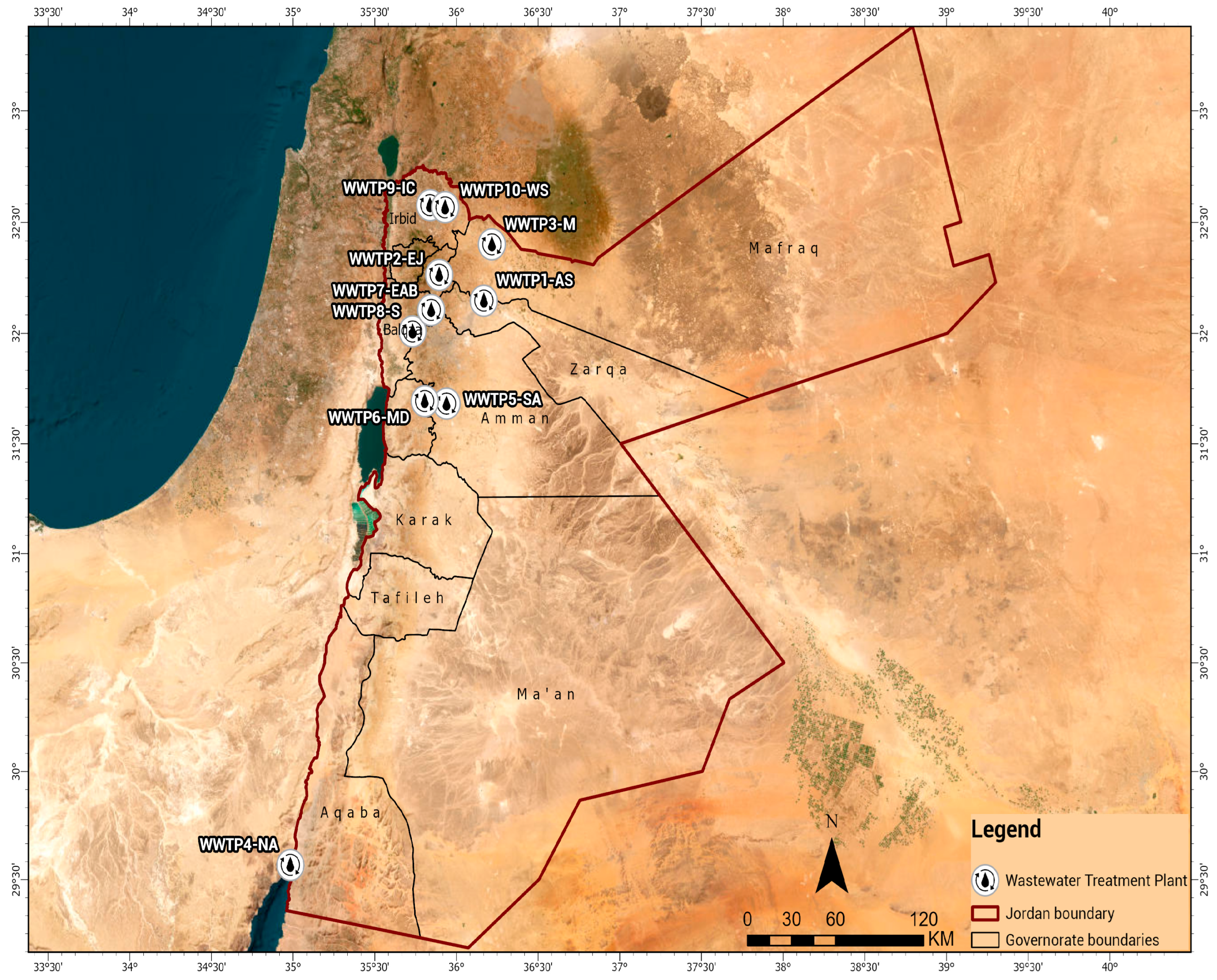
Sludge samples were collected from ten municipal wastewater treatment plants (WWTPs) distributed across different climatic and geographical regions of Jordan, as shown in Figure 1. The selected WWTPs represent a wide range of treatment capacities and operational technologies, including biological activated sludge systems, drying beds, and thickener-based dewatering units. Each facility serves a distinct population and hydrological basin, providing a representative overview of sludge characteristics across the country. Some characteristics of the WWTPs are shown in Table 1, and a map of all examined WWTPs is shown in Figure 1.
Sampling was conducted in April 2022, a period characterized by moderate climatic conditions and stable operational performance of the WWTPs. A single composite sludge sample was collected from each plant at the final sludge treatment stage, including dewatering outlets, drying beds, thickeners, or filter press outlets (Table 2). These points were selected to represent the final stabilized sludge typically destined for reuse or disposal.
Sludge annual production was derived from data from Table 1, applying the following formula
S l u d g e   p r o d u c t i o n   C t y = F l o w m 3 y · T S S m g L · 10 6
with
  • Flow: the influent rate per year
  • TSS: total suspended solids in the inflow
  • 10−6 conversion factor (L to m3, mg to t)
At each sampling location, sludge (approximately 1 kg) was collected, taking all necessary precautions (gloves, mask) with pre-cleaned stainless-steel scoops into acid-washed high-density polyethylene (HDPE) containers. Samples were immediately sealed, labeled, and stored at 4 ± 1 °C in insulated ice boxes during transport to the laboratory.

2.2. Sample Extraction

The collected sludge samples were freeze-dried for 24 h (DC401, Yamato, Tokyo, Japan) before the extraction of pharmaceuticals following the method specified by [31]. To make the samples homogeneous, all dried sludge samples were mixed using a blender (Geepas, Ningbo, China). In brief, dried sludge samples (1.0 g) were extracted with methanol (20 mL) and formic acid (0.1 mL) under ultrasonic treatment (VWR, USC-THD, Radolfzell, Germany) for 30 min at 10 °C. All extracted samples were centrifuged at 3000 rpm for 20 min (Centurion K2015R Refrigerated Centrifuge, Chichester, UK). The supernatant was decanted into 20 mL glass test tubes, and the residue was extracted once more using fresh solvent. The decanted supernatant was evaporated (Biotage, Turbo-Vap LV, South Wales, UK) until 1 mL final volume. Deionized water (20 mL) was added to the evaporated samples. The polymeric Hydrophilic–lipophilic balance (HLB) Oasis 6cc cartridge (Oasis, Milford, MA, USA) was conditioned by passing 6 mL of acetone and 6 mL of methanol sequentially, followed by 6 mL of distilled deionized water. Then, the prepared sample passed through the solid phase extraction (SPE) cartridge at a flow rate of 10 mL/min or less. After the end of the extraction, the cartridge was rinsed with 5 mL of deionized water, and room air was allowed to flow through the cartridge by continued suction for at least 5 min to dry the cartridge. All extracted samples were eluted by adding methanol (10 mL). The supernatant was collected in a glass test tube and evaporated using Turbo-Vap (Biotage, South Wales, UK) to a 5 mL final volume.
For quantification of quaternary ammonium compounds, each sample was weighed exactly (50 ± 1 mg). The solid material was extracted twice using a mixture of acetonitrile and aqueous hydrochloric acid at 50 °C in a sonication bath. Each time, the supernatant was collected after centrifugation at 4500 rpm and underwent a dispersive SPE with primary-secondary-amine (PSA) as a clean-up step, followed by a phase separation with anhydrous MgSO4. The solvent was removed by applying a nitrogen stream at 40 °C, and the sample was reconstituted in 80% v/v aqueous methanol.

2.3. Chemical Analysis

Pharmaceutical compounds were quantified using a SCIEX Triple Quad 5500 LC–MS/MS system (AB SCIEX Triple Quad 5500, Framingham, MA, USA) equipped with an electrospray ionization (ESI) source operating in both positive and negative ion modes, depending on the analyte. Chromatographic separation was achieved on a C18 column (2.1 × 100 mm × 30 mm, 2.7 μm particle size) maintained at 30 °C. The mobile phase consisted of Solvent A: water with 0.1% formic acid and Solvent B: acetonitrile with 0.1% formic acid, delivered under a 13 min gradient program at a flow rate of 0.4 mL min−1. The injection volume was 10 μL.
Mass spectrometric parameters were optimized as follows: ion spray voltage 5500 V, curtain gas 60, gas 1 and gas 2 at 60 psi, and ion source temperature 550 °C. Instrumental detection capability of the LC–MS/MS system was 1 ppb under optimized operating conditions. Compound-specific LOQ values were determined separately for water and soil matrices as shown in Supplementary Materials. Method performance and analytical accuracy were assessed using external solvent-based calibration curves, demonstrating satisfactory linearity for all analytes, in the absence of matrix-matched calibration for sludge samples.
Quantification of quaternary ammonium compounds was conducted with a QTrap 4500 Triple-Quadrupole MS/MS detector from SCIEX (Framingham, MA, USA) equipped with a Shimadzu HPLC system (Shimadzu Corp, Dubai, United Arab Emirates).

2.4. Risk Assessment Calculations

A probabilistic risk assessment was performed for most of the substances that consistently gave concentrations above the limit of quantitation according to the formula below:
R Q = P E C s o i l P N E C s o i l
with RQ: risk quotient. PEC: Predicted Environmental Concentration in soil. PNEC: Predicted. No Effect Environmental Concentration for soil biota
PEC soil is calculated specifically for BS land spreading according to the following formula [32].
P E C s o i l = C s l u d g e · A R · ( 1 D F ) B D · D E P T H
with Csludge: concentration measured in the biosolid (mg/kg dw). AR: application rate in kg dw/m2. DF: degradation fraction. BD: soil bulk density in t/m3. DEPTH: depth of incorporation in soil in m
AR was calculated as a series of possible scenarios of 5, 10, and 20 t/ha, values frequently examined in ecotoxicity experiments on biosolids [13].
BD was equal to 1.3 t/m3 and DEPTH equal to 20 cm [32]. Since no data on degradation was available, a worst-case scenario of DF = 0 was assumed.
However, in order to refine the assessment, a time-weighted PECsoil was calculated for the substances carbamazepine, ciprofloxacin, diclofenac, lincomycin, ofloxacin, and triclosan according to the following formulas [32].
P E C s o i l _ t w a = P E C s o i l · ( 1 e k t ) / k t
k = l n 2 / D T 50
with k: first-order degradation rate constant. DT50: dissipation time in days. t: time duration in days equal to 30 days (approximately a short-term bioassay).
DT50 values that ideally correspond to field data of soil amended with BS were used, and they are shown in Table 2.
Table 2. DT50 values used for PECsoil_TWA derivation and related references.
SubstanceDT50 Value in Soil (d)References
Carbamazepine97.6[33]
Ciprofloxacin5 years[34]
Diclofenac8.56[35]
Lincomycin19.4[36]
Triclosan-[37]
Carbamazepine DT50 was quoted from [33] from a field study, which, however, was less conservative than lab-based studies [38]. Ciprofloxacin DT50 was quoted from [34] based on an extensive search on ciprofloxacin dissipation in BS amended soils and it was assumed as “conservative”. Diclofenac DT50 was derived from a lab-based study on BS amended soil, and it was equal to 8.56 d [35]. This is considered appropriate since similar values were found for agricultural soils spiked with diclofenac [39]. Lincomycin DT50 was calculated from a field experiment (the worst of both values) with manure applied data [36]. In a 366-day field experiment in South Australia, no significant dissipation of triclosan was noted in BS-amended soils [37], so here triclosan was also assumed stable.
Regarding PNECs, terrestrial toxicity databases are notoriously less populated than aquatic ones [40] as such, PNECs were calculated through conservative steps. PNECsoil was derived from PNECaquatic according to the simplified equilibrium partitioning (EqP) method [41,42].
P N E C s o i l = P N E C a q u a t i c · K d R H O s o i l
with Kd, the solid–water partition coefficient. RHOsoil the bulk density of wet soil (1.7 kg/L).
Kd values used are shown in Table 3.
Table 3. Kd values used for PNECsoil derivation and related references.
SubstanceKoc ValueKd Value in Soil (L/kg)References
Carbamazepine 13[43]
Ciprofloxacin 427[44]
Diclofenac 9[43]
Lincomycin 18.8–26.10.44[45]
Ofloxacin 309[46]
Pyrimethamine590–154019.06[47]
Sulfapyridine 8[43]
Triclosan 127[46]
With fOC = 0.02.
Experimentally derived Kd values were selected whenever possible. Two PhD theses also cited some Kd values from the bibliography. Whenever data were scarce, gray literature was sought, and Kd was calculated as Koc fOC. PNECaquatic values were found from NORMAN [48]. Due to very strong sorption [49] of QACs in soil, PNECsoil could not be calculated through the EqP method, and their risk was therefore not calculated.
For well-studied substances such as triclosan, PNECterrestrial was also calculated from toxicity endpoints for soil biota (plants and animals) following a tiered approach, USEPA ECOTOX KNOWLEDGE database [50] was consulted. If data were few or if they were not expressed in units/soil, additional reliable data from individual peer-reviewed studies were considered. NOECs and EC10s were preferred to EC50s, and the geometric mean of toxicity endpoints on different species was calculated. A Species Sensitivity Distribution calculation was performed on the ETX 2.0 software (RIVM, Bilthoven, The Netherlands), and the HC5 ratio was chosen with a safety factor of 5 to derive a PNECterrestrial.
It is noted that calculations were performed without considering further bioavailability of the soil pollutant towards soil-dwelling organisms, so as not to increase perplexity and uncertainty of calculations.

3. Results and Discussion

3.1. Sludge Production and Plant Characteristics

The ten investigated wastewater treatment plants (WWTPs) collectively treated approximately 167.3 Mm3 of wastewater per year, producing an estimated 70,431 t of dry sludge solids annually (Table 4). Considerable variation was observed among the plants in both treatment capacity and sludge yield, reflecting differences in population served, treatment technology, and operational conditions.
WWTP1-AS is the largest centralized treatment facility in Jordan, accounting for over three-quarters (76.7%) of the total national sludge production. In contrast, small to medium WWTPs such as MA, S, and WS each contributed less than 2% of the total sludge production, typically treating less than 5 Mm3/year of wastewater.
The sheer volume of nationally produced sludge annually (approximately 70,000 t) shows that large quantities of organic matter and nutrients can be produced and potentially be applied to Jordanian soils affected by desertification, low fertility, and increased salinity [51]. This application may positively affect crop production in the country [52,53], and it can also deter the unsustainable solution of landfilling [54].
It is noted once more that sludge hygienisation is imperative so that dangerous pathogens cannot reach humans through the food chain via crops or grazing animals [55]. As such, the present samples cannot be used as BS without further processing, and all data produced herein are applicable only after proper sanitization of the substrates. Previous research (2007) in Jordanian WWTPs utilizing drying beds showed that fecal coliform numbers prevented this sludge from being characterized as Class A (according to [18]) but it could well be classified as Class B. Subsequent analyses (2016–2019) from another WWTP showed high coliform numbers for the samples from the sludge thickener and lower but varied numbers for digested sludge [52].

3.2. Pollutant Load in Examined Sludge Samples

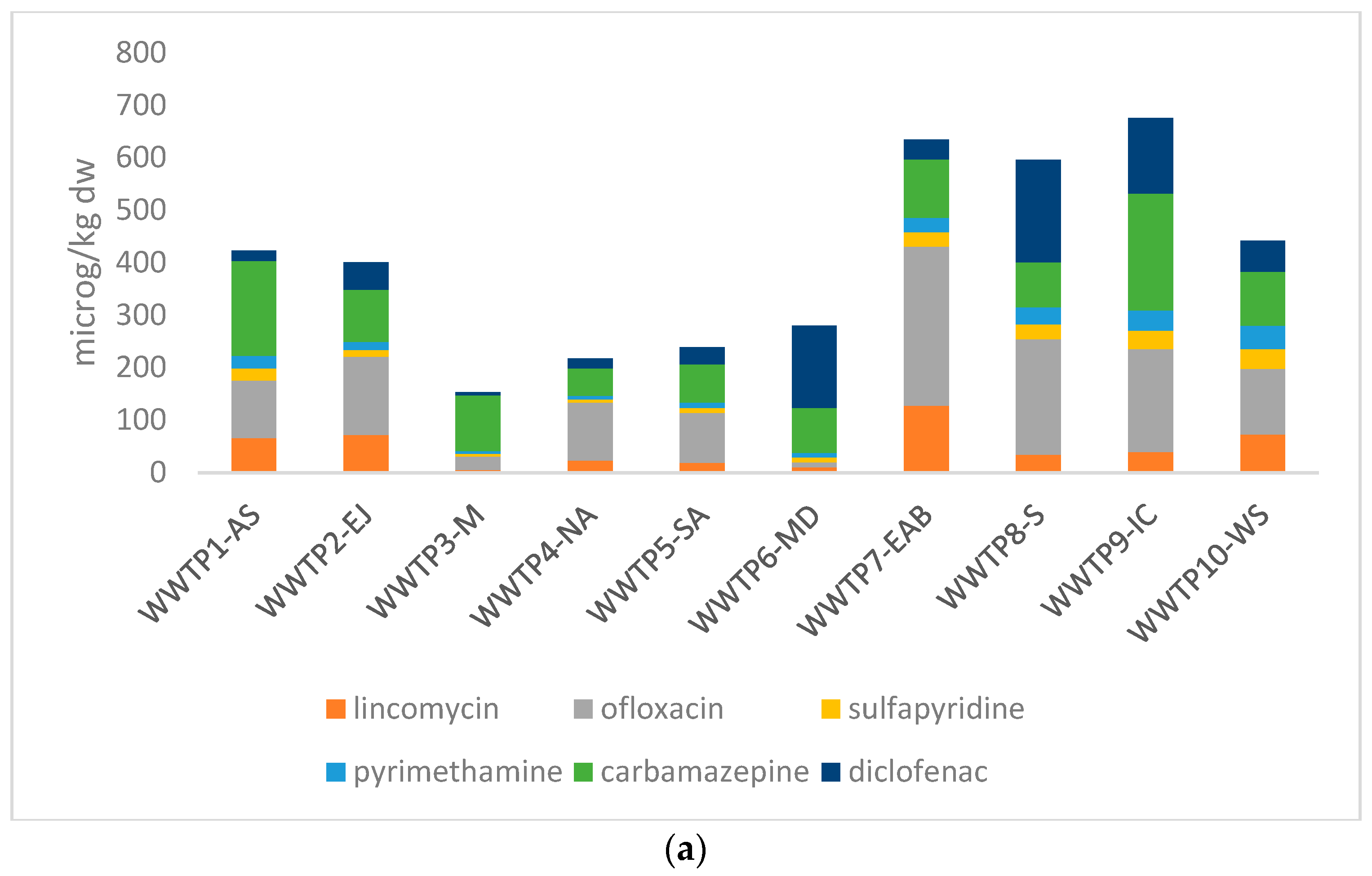
As in other cases of sludge of municipal origin [25], historical samples from WWTPs in Jordan did not show elevated concentrations of metals of toxicological concern [52,53]. Nevertheless, organic emerging pollutants are now rightfully considered as additional agents of concern in biosolids, and this is mirrored in national legislation of EU members and possibly in the future amendment of Directive 86/278/EEC [8]. For this reason, a total of eleven pharmaceutical compounds representing major antibiotic classes were analyzed in sludge samples collected from the examined WWTPs) across Jordan. The detected compounds included fluoroquinolones (ciprofloxacin, norfloxacin, ofloxacin, danofloxacin, flumequine, and nalidixic acid), lincosamide (lincomycin), sulfonamides (sulfadimidine, sulfamethoxazole, sulfapyridine), and trimethoprim. Other common drugs (one anticonvulsant, one NSAID) and several antimicrobial agents were also detected and quantified. Similar pollutants have been detected in sludge worldwide, as shown in Table 5. A visual representation of the present results is found in Figure 2.
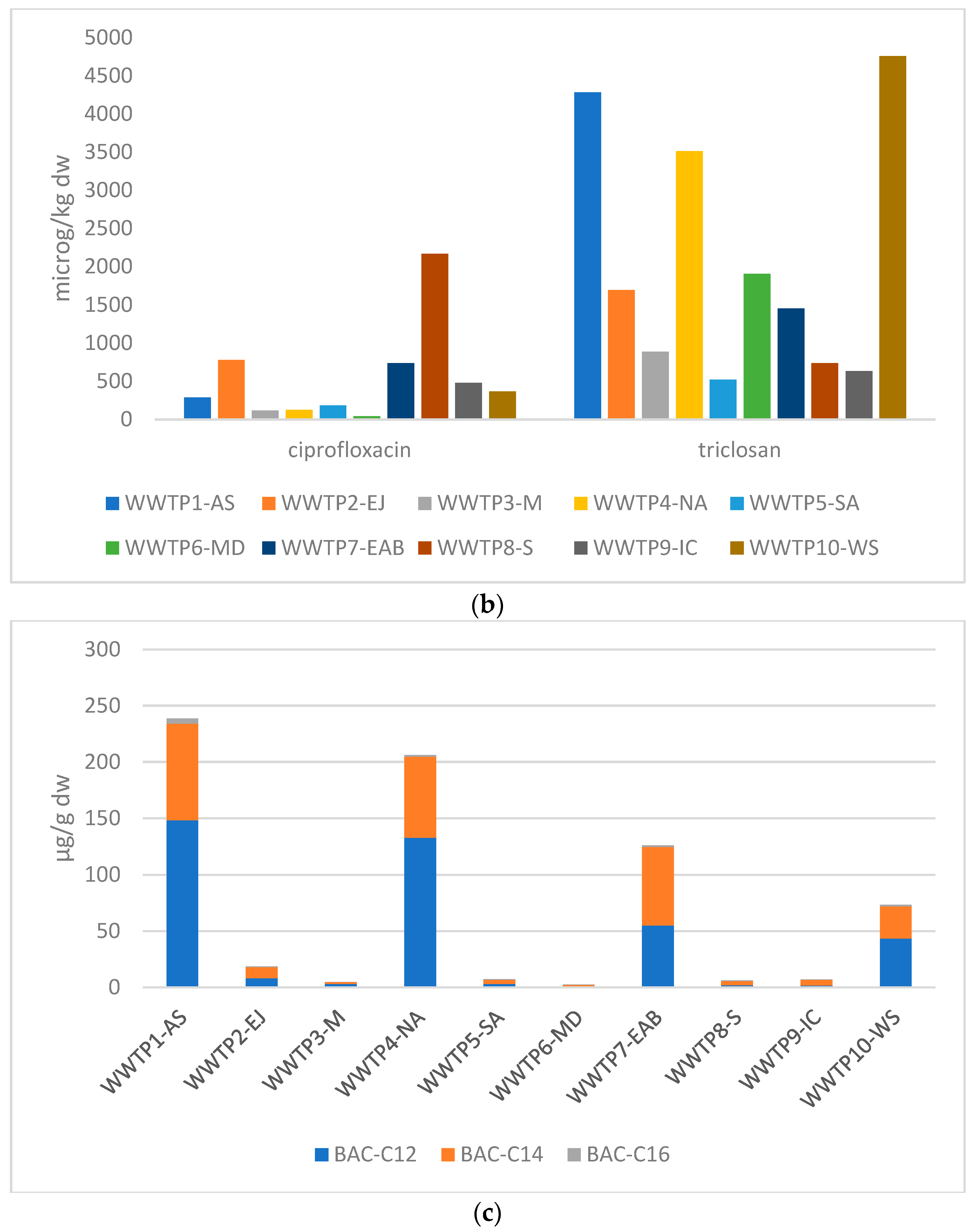
Most antibiotics analyzed were detected at varying concentrations across the sampled WWTPs, ranging from below detection (<5 µg/kg) to 2165.6 µg/kg. The highest overall concentrations were observed in sludge from WWTP8-S (2165.6 µg/kg ciprofloxacin), WWTP7-EAB (302.9 µg/kg ofloxacin), and WWTP9-IC (480.2 µg/kg ciprofloxacin). In contrast, the lowest levels were recorded at WWTP6-MD (43.9 µg/kg ciprofloxacin) and WWTP3-M (<5 µg/kg for most antibiotics). These results indicate strong spatial variability. The present mean value of ciprofloxacin (329 µg/kg) is comparable to that found in Spain [56]. Very high to very low concentrations of this substance have been found in the USA (see Table 5). The predominance of fluoroquinolones agrees with global observations, where these compounds are known to adsorb strongly to sludge solids due to their cationic functional groups and high affinity for organic matter [57]. Their persistence in sludge reflects limited biodegradation during secondary and tertiary treatment. Lincomycin was also widely detected (10.3–127.4 µg/kg), with the highest concentration again found in WWTP7-EAB, followed by WWTP2-EJ and WWTP1-AS. Nalidixic acid was detected only in two sites (MD and EAB). Similar values of lincomycin have been found across the USA, but also around the world (see Table 5). These discrepancies for compounds such as fluoroquinolones, diclofenac, ibuprofen, sertraline, gemfibrozil, caffeine, and others between studies may be explained by the different prescription rates related to human health, sampling regions, or climate conditions. It has also been noted for large countries such as China that differences can be found within regions of the same country. Finally, for some countries, the representativeness of samples is low, with samplings from only one or a few WWTPs [58].
In the present samples, flumequine and danofloxacin occurred infrequently and at low concentrations, likely reflecting limited use. Sulfonamide antibiotics and trimethoprim were detected less frequently and typically at low concentrations. Among these, sulfapyridine was the most prevalent, detected in most sludge samples (6.1–37.6 µg/kg), while sulfamethoxazole and sulfadimidine appeared mainly in sludge from WWTP8-S and WWTP9-IC with maximum values of 47.4 µg/kg and 275 µg/kg, respectively. Higher but comparable concentrations of sulfapyridine have been found across the EU (see Table 3). Trimethoprim was only quantified in two WWTPs (22.1 µg/kg in WWTP7-EAB and 63.7 µg/kg in WWTP8-S), showing a similar distribution pattern to the sulfonamides. The extremely high concentrations of several antibiotics observed in WWTP8-S and WWTP9-IC may be attributed to partial influent from some pharmaceutical factories in the area. The presence of these industrial effluents introduces high-strength antibiotic residues into the municipal wastewater stream, leading to elevated levels in the final sludge. Industrial wastewater management enforcement is challenging in Jordan. Some factories operate on-site wastewater treatment plants to treat their industrial effluents, while others discharge their raw wastewater directly into municipal sewer networks and subsequently to domestic WWTPs. Moreover, pharmaceutical manufacturing facilities treat their wastewater to comply with the requirements of Jordanian Standard JS 202/2007 [59]; their treated effluents can contain elevated concentrations of substances not explicitly regulated under JS 202/2007. On the contrary, rural and less industrialized regions such as WWTP3-M and WWTP4-NA exhibited the lowest pharmaceutical levels, with many compounds below analytical detection limits.
Carbamazepine was detected in sludge samples from all ten investigated wastewater treatment plants (WWTPs), with concentrations ranging from 51.8 µg kg−1 (WWTP4-NA) to 223.4 µg kg−1 (WWTP9-IC). The compound showed relatively consistent distribution among the plants, confirming its ubiquitous presence and environmental relevance [60] (see also Table 5). Diclofenac is also a very environmentally relevant drug [60] (see also Table 5) and it was also detected in all sludge samples, with concentrations ranging from 6.0 µg kg−1 in WWTP3-M to 195.7 µg kg−1 in WWTP8-S. Intensive domestic consumption of diclofenac is noted, since this is one of the most widely used NSAIDs in Jordan for the treatment of pain, inflammation, and chronic diseases such as arthritis. WWTP3-M and WWTP4-NA exhibited markedly lower concentrations, consistent with their rural character, smaller resident population, and lower medical prescription rates.
Triclosan was detected in all sludge samples, with concentrations ranging from 521 µg kg−1 at WWTP5-SA to 4756 µg kg−1 at WWTP10-WS. The mean value noted here (1542 µg kg−1) is lower but comparable to other values found around the world (see Table 5). Triclosan is highly hydrophobic and exhibits a strong sorption affinity for organic matter, leading to its preferential accumulation in sewage sludge rather than remaining dissolved in the liquid effluent.
In parallel, quaternary ammonium compounds (QACs) are widely used in disinfectants, personal care products, fabric softeners, food-processing facilities, and healthcare institutions. Therefore, high concentrations of these compounds were detected in biosolids due to their strong cationic charge, which facilitates sorption onto negatively charged sludge particles, resulting in very low removal efficiencies through conventional treatment. QACs such as benzyldodecyldimethylammonium chloride (BAC-C12) and benzyldimethyltetradecylammonium chloride (BAC-C14) were the most abundant, with maximum concentrations of 148.4 µg g−1 and 85.8 µg g−1, respectively, both detected at WWTP-AS. Benzylhexadecyldimethylammonium chloride (BAC-C16) ranged from 0.13 to 4.62 µg g−1, whereas tetrabutylammonium bromide remained below the detection limit in all samples. QACs possess high sorption coefficients, leading to strong partitioning to sludge solids. Their persistence is enhanced by limited biodegradability under anaerobic or low-oxygen conditions [61], typical of thickening and dewatering processes. Overall, concentrations measured in this study (up to 148 µg g−1) are comparable with international reports, where total QACs in municipal sludge range between 22 and 343 µg g−1. The elevated levels in the large centralized WWTPs (AS, NA) reflect greater disinfectant usage and industrial contributions, while rural plants (M, MD) show minimal inputs consistent with lower cleaning-chemical consumption. Consequently, the reuse of sludge in agriculture containing QAC residues might be serving as a secondary reservoir for ARG dissemination into soil and crops.
The sampling locations across the ten wastewater treatment plants (WWTPs) represented different sludge processing stages, including dewatering outlets, drying beds, filter presses, thickeners, and secondary clarifiers. These operational differences play an important role in determining the final concentration of pharmaceuticals detected in the sludge. Overall, the variation in pharmaceutical concentrations among WWTPs reflects the combined effects of sludge treatment stage, local climate, and industrial or domestic inputs. Samples from mechanically thickened or dewatered sludge generally show higher accumulation of persistent compounds, while open drying beds may exhibit lower values due to natural attenuation processes such as sunlight exposure, volatilization, and microbial degradation. This pattern highlights the significant role of socio-economic and industrial factors in determining the occurrence and magnitude of pharmaceutical contamination in wastewater and sludge, a trend consistent with findings from other developing regions [62,63].
Table 5. Mean values of pollutants in sludge and some of their bibliographic values.
SubstancePresent Median Value (μg kg−1)Bibliographic Value (μg kg−1)Country/RegionReferences
ciprofloxacin3292400–2700Switzerland[64]
74.5–47,500USA[65]
105–599Spain[56]
11.33–145.42 Poland[42]
153.21China[10]
60–12,858Worldwide [58]
0.9–778Worldwide[66]
lincomycin3613.9–33.4USA[65]
3.8India[58]
ofloxacin117.573.9–58,000USA[65]
1000Sweden[67]
10–1000Worldwide[58]
12.57–232.40Poland[42]
2982.6China[10]
0.1–510EU[66]
sulfapyridine 17.9524–197EU[66]
carbamazepine101.13.84–12,860Worldwide [58]
69.6Canada[68]
20.3–460Spain[41]
4.7–89.7Worldwide[66]
diclofenac44.854.1–330EU[58]
10.4–424.7Worldwide[66]
triclosan15422600–30,000 USA[69]
10–10,000Sweden [67]
5580 Australia[70]
19100 Italy[71]
865–5940Worldwide [58]
10–1508Worldwide[66]
various QACs13.03 (sum) (µg/g)not detected–6000 (µg/g)Worldwide[72]
Data for non-stabilized sludge unless otherwise stated.

3.3. Calculated Risk to Terrestrial Organisms

The present risk assessment was performed under the following caveats.
  • The present sludge samples cannot be used as BS unless hygienization is verified.
  • Risk assessment was performed for worst-case scenarios assuming no degradation of the pollutant at the time point of soil incorporation. However, whenever reliable data were available, TWA PECs instead of initial PECs were used as refinement.
  • As stated in Section 2.4, toxicity data on terrestrial organisms are very scarce for most of the emerging pollutants. As such, the EqP method was used based on aquatic data, as also performed in [41]. For triclosan, PNEC was calculated through terrestrial data and compared to the value deriving from PNECaquatic via the EqP method, and to the PNECterrestrial calculated by [73].
  • It was a priori assumed that each pollutant exerts its toxicity individually [74] as such, the total risk is the sum of all individual risks. In reality, synergy or antagonism may also be present; however, the concentration-addition approach as a Tier-1 screening option was adopted here [75]. It can be assumed that chemicals with similar actions (in this case the fluoroquinolones) can act in an independent-addition model. Furthermore, for pesticides and for metals, true synergistic effects have been rare in ecological models. Nevertheless, when different chemicals have effects on various taxonomic groups, this can lead to structural and functional changes in the ecosystem, which may supersede (be greater) than the added toxicities of the chemicals [75]. This is especially true for triclosan, a multi-stressor agent that showed a synergistic toxic effect with carbendazim on D. magna [76]. However, in other aquatic tests, chemical mixtures that include triclosan exerted either sub-additive or additive toxicity [77].
PEC values were calculated according to Formula (3). When a reliable DT50 in soil was available (carbamazepine, ciprofloxacin, lincomycin, diclofenac, triclosan), PEC values were calculated according to Formula (4).
Utilizing the proxy of aquatic data for the pollutants that were systematically above the LOQ, PNEC values were calculated for the substances shown in Table 2. A similar strategy was followed in [41,42]. Triclosan is a substance of particular concern because it is widely used and there are different opinions upon its safety [78]. Due to this heightened interest, several data were found in [50] database. However, after close inspection, out of 171 entries, the data on birds and mammals were excluded. Endpoints not expressed in kg or g of soil were also excluded. The remaining entries all corresponded to [79] and the actual study was retrieved and examined. Additional data was found in other peer-reviewed papers. All relevant references and the chosen NOECs are shown in Table 6.
It is possible that other short- or long-term studies for soil organisms and microorganisms or even plants are available for some other chemical substances if they are registered under the REACH Regulation in the EU, because there are legislatively binding requirements for their environmental risk assessment under some circumstances. Furthermore, veterinary medicinal products are required to undergo an environmental risk assessment as part of their authorization process under Regulation (EU) 2019/6. It is therefore possible that data that is not publicly available may substantially refine terrestrial toxicity assessment for some pollutants. It is important that whenever possible, these data become available to a wider audience for further research.
PNECterrestrial for triclosan was found as described in Section 2.4 and it was equal to 0.086 μg triclosan/kg soil.
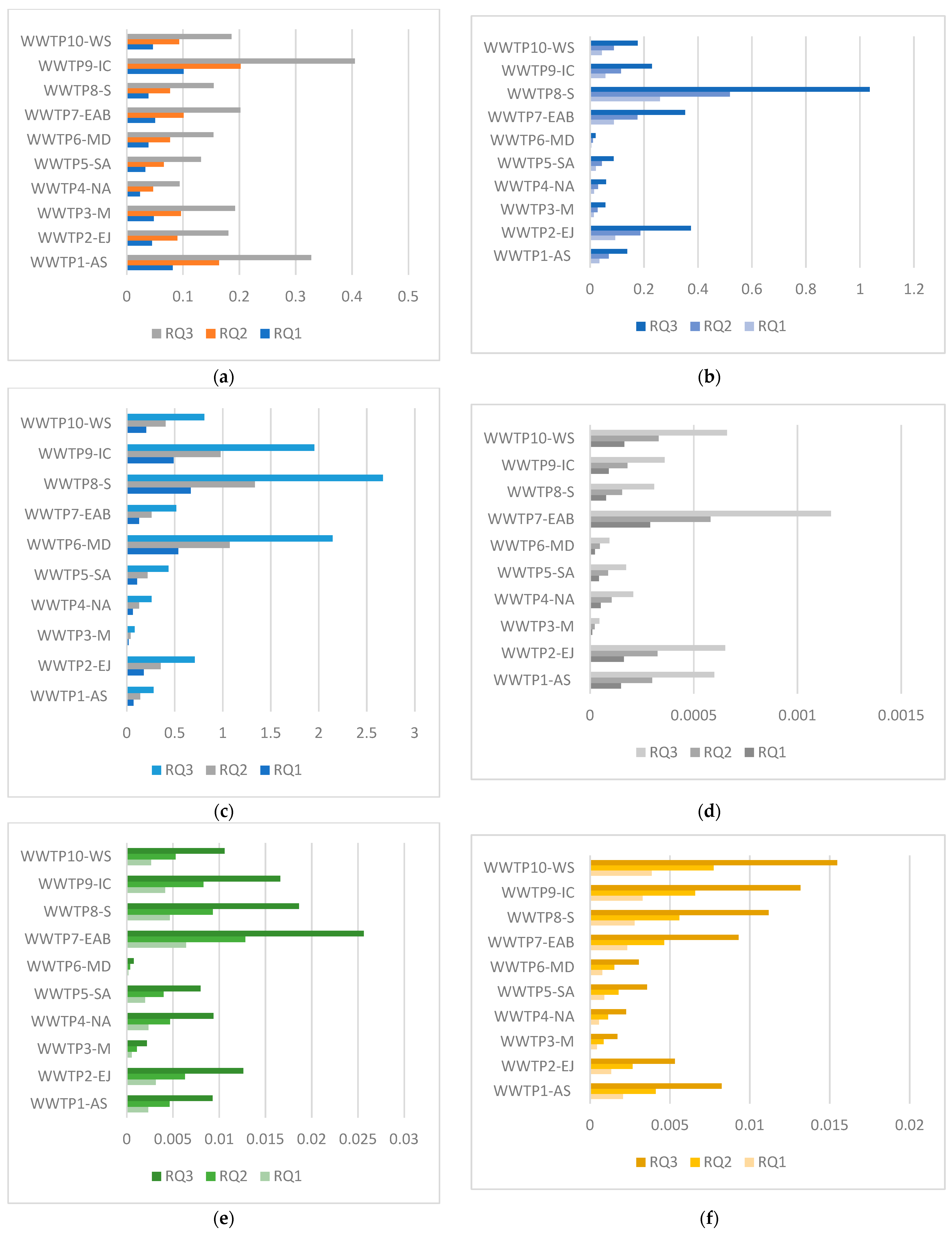
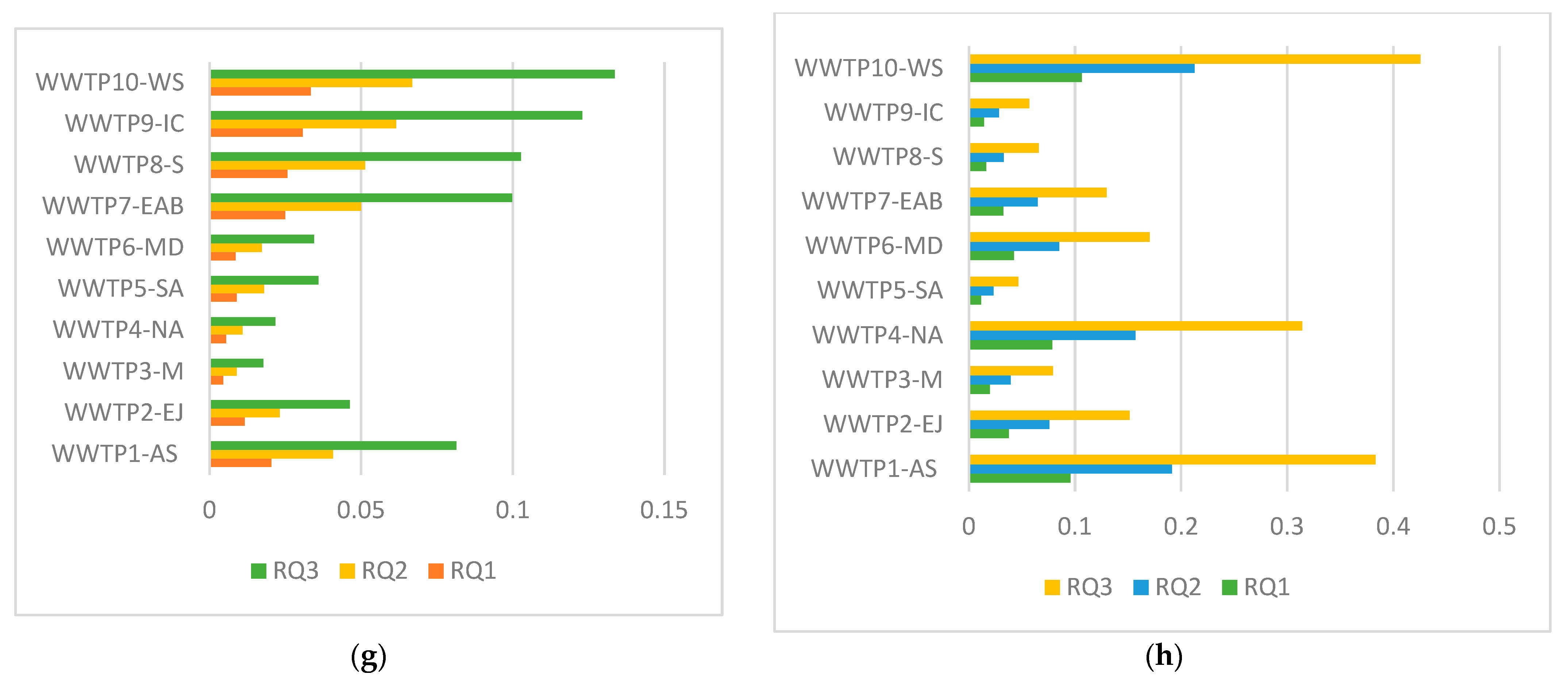
The risk quotient PEC/PNEC for each substance is shown in Figure 3.
As deduced from Figure 3, risk is acceptable for substances with higher PNECaquatic (above 1 μg/L), such as pyrimethamine (PNECaquatic = 2 μg/L), which exhibits a modest calculated kd (19.06 L/kg). Carbamazepine (PNECaquatic = 0.5 μg/L) and sulfapyridine (PNECaquatic = 0.46 μg/L) also do not pose a significant risk since PEC values were quite modest even at the putative scenario of 20 t/ha. Ofloxacin (PNECaquatic = 0.5 μg/L) is also much less mobile (kd = 309 L/kg) and did not pose a significant risk.
Triclosan shows a PNECaquatic = 1.04 μg/L and a kd = 127 L/kg); however, it should be noted that the PNECterrestrial used for Figure 3 was derived from terrestrial data, and it was equal to 0.086 μg/kg. The PNECterrestrial calculated via the EqP method was very similar and equal to 0.077 μg/kg. An interesting study by [73] calculated the PNECterrestrial using real data from toxicity assays on terrestrial organisms (chronic exposure; earthworms, and five plant species). The proposed PNECs varied from 0.04 to 0.021 μg/kg when a log-logistic SSD was used and from 0.09 to 0.44 μg/kg when a log-normal SSD was used. The lowest values were calculated utilizing a safety factor of five, as also performed here, and the value 0.09 μg/kg is very close to the PNECterrestrial proposed here. Nevertheless, triclosan is a ubiquitous chemical that already demonstrates a significant library of ecotoxicity studies; this is not the case for other emerging chemicals, especially for soil-based ecosystems.
The remaining pollutants, ciprofloxacin and especially diclofenac, produced RQs above the value of 1 for WWTP6-MD, WWTP7-EAB, and WWTP8-S for some possible scenarios of fertilization (5–20 t/ha).
The cumulative risk is shown in Table 7 for all 10 WWTPs, and it is assumed that the risk is additive.
As can be seen from the data, WWTP3-M, WWTP4-NA, and WWTP5-SA consistently gave sludge of low environmental risk. These WWTPs are situated in rural areas with a smaller resident population, as stated before. On the contrary, WTTP8-S and WWTP9-IC showed high risk, which may be attributed to partial influents from some pharmaceutical factories in the area. The sludge from these areas should therefore not be used as fertilizers. It is not advisable to continue the landfilling of this waste either; it should be considered whether a nation-wide investment in an incineration or co-incineration facility is feasible [89]. The maintenance costs could be partially covered through heat production, while the produced ash can be incorporated in cement. In any case, it is imperative that new technologies, such as tertiary treatment, are applied to the pharmaceutical industries of the examined areas so that their effluents are less encumbered when leaving the plant. It is also interesting to note that sludge, which was partially treated in drying beds, was of low risk in the cases of WWTP3-M and WWTP-5, but the risk was high for WWTP6-MD, which also uses this process. It is not always possible to sequester pollutants during sludge processing; for example, sludge-derived biochar showed varied toxicity to earthworms relative to the temperature at which the biochar was produced [90]. Furthermore, additional treatment of biosolids from a WWTP in Northern Greece caused a small increase in leaching of Ni and Zn [25]. Data on the largest WWTP (AS), which furnishes a large city and produces high amounts of sludge, showed that this waste can indeed become a good substrate for BS, if properly treated, sanitized, and used at low doses and/or at low frequency for the same soil. In any case, it is very important to periodically assess the ecotoxicity of these sludges before their application [8,91].
The limitations of the present research have been mentioned in other parts of the present paper (reproducibility and representativeness of samples, restrictions in chemical analysis, and in available databases). As such, the present results can be characterized as preliminary, and recommendations for future work can be summarized as follows:
  • The sludges deemed as suitable should be properly sanitized and checked for heavy metal content and HACs such as PCBs and PAHs, before applied to land.
  • More sludge sampling campaigns are necessary to ensure repeatability and reproducibility of results and to enable spatial statistical comparisons for the WWTPs.
  • Information on the fate and ecotoxicity of pharmaceuticals in sludge-amended soils should be actively sought and made publicly available, particularly if such data are included in regulatory registration dossiers submitted to competent authorities.
  • The additive toxicity model can be used as a Tier I evaluation; however, reliable data on possible antagonism or synergy should also be sought.


4. Conclusions

The present research investigated the pollutant load in sewage sludge samples from 10 WWTPs in Jordan. Some of the samples were not treated, such as those taken from the secondary clarifier, while others were minimally treated, such as those that were thickened, pressed, or dried. The WWTPs included ones from large urban agglomerations, from rural areas, while some of them also received inlets from industry. The pollutants that consistently gave values above the limit of quantitation in an LC–MS/MS system were carbamazepine, ciprofloxacin, diclofenac, lincomycin, ofloxacin, pyrimethamine, sulfapyridine, and triclosan. QACs were also detected via HPLC-MS/MS, and BAC-C12, BAC-C14, and BAC-C16 were found in all WWTPs examined. The level of pollution in sludge samples was comparable to findings worldwide, at the lower end of the data. Risk to soil-dwelling organisms (flora and fauna) was calculated for all eight chemicals from aquatic data based on the EqP method for three putative levels of fertilizing use (5, 10, and 20 t/ha), while for QACs, this method cannot be reliably applied. Especially for triclosan, risk was also calculated using data on terrestrial (non-mammalian and non-avian) organisms. Results show that the risk is mainly driven by the NSAID diclofenac and that it was non-acceptable, particularly for 3 out of the 10 WWTPs. On the contrary, sludges from three rural areas were of lower risk and they could possibly be applied to nearby agricultural land if they are stabilized and sanitized. This is the first study to assess the environmental impact of sludge application in Jordan and it also highlights the data gaps still present in terrestrial risk assessment for many circular economy initiatives.

Supplementary Materials

The following supporting information can be downloaded at: https://www.mdpi.com/article/10.3390/toxics14010062/s1, Table S1: Limit of Quantification (LOQ) for Target Pharmaceutical Compounds in Soil Samples (LC–MS/MS). Table S2: Limit of Quantification (LOQ) for Target Pharmaceutical Compounds in Water Samples (LC–MS/MS).

Author Contributions

Conceptualization, O.A. and C.E.; methodology, C.E.; software, C.E.; validation, O.A.; formal analysis, C.E. and L.A.; investigation, C.E. and L.A.; resources, O.A. and L.A.; writing—original draft preparation, C.E. and O.A.; writing—review and editing, O.A., C.E. and L.A.; visualization, C.E.; supervision, O.A.; project administration, L.A.; funding acquisition, O.A. All authors have read and agreed to the published version of the manuscript.

Funding

The authors gratefully acknowledge the Ministry of Water and Irrigation (MWI) and DORSCH International Consultants for providing access to wastewater treatment plant data and for granting permission to publish the findings of this study. This work was funded through the generous support of both the Ministry of Water and Irrigation and DORSCH International Consultants.

Institutional Review Board Statement

Not applicable.

Informed Consent Statement

Not applicable.

Data Availability Statement

The raw data supporting the conclusions of this article will be made available by the authors on request.

Acknowledgments

Special thanks are extended to Sultan Al-Mashaqbah at MWI, for his continuous guidance and facilitation throughout the project. The authors also acknowledge Johann Pichler-Stainern of DORSCH International and Sultan Al-Mashaqbah for their valuable coordination and support.

Conflicts of Interest

The authors declare no conflicts of interest.

Abbreviations

The following abbreviations are used in this manuscript:
BAC-C12Benzyldodecyldimethylammonium chloride
BAC-C14Benzyltetradecyldimethylammonium chloride
BAC-C16Benzylhexadecyldimethylammonium chloride
HACsHalogenated aromatic compounds
QACsQuaternary ammonium compounds
PECPredicted environmental concentration
PNECPredicted no effect environmental concentration
RQRisk quotient
SSDSpecies sensitivity distribution
WWTPWastewater treatment plant

References

  1. Qasim, S.R. Wastewater Treatment Plants: Planning, Design, and Operation, 2nd ed.; Routledge: Oxfordshire, UK, 2017; ISBN 978-0-203-73420-9. [Google Scholar]
  2. Giannakis, I.; Emmanouil, C.; Kungolos, A. Evaluation of Effects of Municipal Sludge Leachates on Water Quality. Water 2020, 12, 2046. [Google Scholar] [CrossRef]
  3. Deblonde, T.; Cossu-Leguille, C.; Hartemann, P. Emerging Pollutants in Wastewater: A Review of the Literature. Int. J. Hyg. Environ. Health 2011, 214, 442–448. [Google Scholar] [CrossRef]
  4. Gavrilescu, M.; Demnerová, K.; Aamand, J.; Agathos, S.; Fava, F. Emerging Pollutants in the Environment: Present and Future Challenges in Biomonitoring, Ecological Risks and Bioremediation. New Biotechnol. 2015, 32, 147–156. [Google Scholar] [CrossRef]
  5. Bernabeu, A.; Vercher, R.F.; Santos-Juanes, L.; Simón, P.J.; Lardín, C.; Martínez, M.A.; Vicente, J.A.; González, R.; Llosá, C.; Arques, A.; et al. Solar Photocatalysis as a Tertiary Treatment to Remove Emerging Pollutants from Wastewater Treatment Plant Effluents. Catal. Today 2011, 161, 235–240. [Google Scholar] [CrossRef]
  6. Burch, K.D.; Han, B.; Pichtel, J.; Zubkov, T. Removal Efficiency of Commonly Prescribed Antibiotics via Tertiary Wastewater Treatment. Environ. Sci. Pollut. Res. 2019, 26, 6301–6310. [Google Scholar] [CrossRef]
  7. Mahmood, T.; Momin, S.; Ali, R.; Naeem, A.; Khan, A. Technologies for Removal of Emerging Contaminants from Wastewater. In Wastewater Treatment; Ince, M., Kaplan Ince, O., Eds.; IntechOpen: London, UK, 2022; ISBN 978-1-80355-846-2. [Google Scholar]
  8. Emmanouil, C.; Giannakis, I.; Kyzas, G.Z. Terrestrial Bioassays for Assessing the Biochemical and Toxicological Impact of Biosolids Application Derived from Wastewater Treatment Plants. Sci. Total Environ. 2024, 931, 172718. [Google Scholar] [CrossRef] [PubMed]
  9. Li, W.; Shi, Y.; Gao, L.; Liu, J.; Cai, Y. Occurrence, Distribution and Potential Affecting Factors of Antibiotics in Sewage Sludge of Wastewater Treatment Plants in China. Sci. Total Environ. 2013, 445–446, 306–313. [Google Scholar] [CrossRef]
  10. Meng, F.; Sun, S.; Geng, J.; Ma, L.; Jiang, J.; Li, B.; Yabo, S.D.; Lu, L.; Fu, D.; Shen, J.; et al. Occurrence, Distribution, and Risk Assessment of Quinolone Antibiotics in Municipal Sewage Sludges throughout China. J. Hazard. Mater. 2023, 453, 131322. [Google Scholar] [CrossRef] [PubMed]
  11. Aydın, S.; Ulvi, A.; Bedük, F.; Aydın, M.E. Pharmaceutical Residues in Digested Sewage Sludge: Occurrence, Seasonal Variation and Risk Assessment for Soil. Sci. Total Environ. 2022, 817, 152864. [Google Scholar] [CrossRef] [PubMed]
  12. Habimana, E.; Sauvé, S. A Review of Properties, Occurrence, Fate, and Transportation Mechanisms of Contaminants of Emerging Concern in Sewage Sludge, Biosolids, and Soils: Recent Advances and Future Trends. Front. Environ. Chem. 2025, 6, 1547596. [Google Scholar] [CrossRef]
  13. Giannakis, I.; Emmanouil, C.; Mitrakas, M.; Manakou, V.; Kungolos, A. Chemical and Ecotoxicological Assessment of Sludge-Based Biosolids Used for Corn Field Fertilization. Environ. Sci. Pollut. Res. 2021, 28, 3797–3809. [Google Scholar] [CrossRef]
  14. Elgarahy, A.M.; Eloffy, M.G.; Priya, A.K.; Yogeshwaran, V.; Yang, Z.; Elwakeel, K.Z.; Lopez-Maldonado, E.A. Biosolids Management and Utilizations: A Review. J. Clean. Prod. 2024, 451, 141974. [Google Scholar] [CrossRef]
  15. Giannakis, I.; Manitsas, C.; Eleftherohorinos, I.; Menexes, G.; Emmanouil, C.; Kungolos, A.; Lagopodi, A.L. Use of Biosolids to Enhance Tomato Growth and Tolerance to Fusarium oxysporum f. sp. radicis-lycopersici. Environ. Process. 2021, 8, 1415–1431. [Google Scholar] [CrossRef]
  16. Stavridou, E.; Giannakis, I.; Karamichali, I.; Kamou, N.N.; Lagiotis, G.; Madesis, P.; Emmanouil, C.; Kungolos, A.; Nianiou-Obeidat, I.; Lagopodi, A.L. Biosolid-Amended Soil Enhances Defense Responses in Tomato Based on Metagenomic Profile and Expression of Pathogenesis-Related Genes. Plants 2021, 10, 2789. [Google Scholar] [CrossRef] [PubMed]
  17. Kanteraki, A.E.; Isari, E.A.; Svarnas, P.; Kalavrouziotis, I.K. Biosolids: The Trojan Horse or the Beautiful Helen for Soil Fertilization? Sci. Total Environ. 2022, 839, 156270. [Google Scholar] [CrossRef] [PubMed]
  18. USEPA. A Plain English Guide to the EPA Part 503 Biosolids Rule; U.S. Environmental Protection Agency, Office of Wastewater Management: Washington, DC, USA, 1994. [Google Scholar]
  19. Collivignarelli, M.; Abbà, A.; Frattarola, A.; Carnevale Miino, M.; Padovani, S.; Katsoyiannis, I.; Torretta, V. Legislation for the Reuse of Biosolids on Agricultural Land in Europe: Overview. Sustainability 2019, 11, 6015. [Google Scholar] [CrossRef]
  20. European Commission. Commission Staff Working Document Evaluation Council Directive 86/278/EEC of 12 June 1986 on the Protection of the Environment, and in Particular of the Soil, When Sewage Sludge Is Used in Agriculture; European Commission: Brussels, Belgium, 2023. [Google Scholar]
  21. Clarke, R.M.; Cummins, E. Evaluation of “Classic” and Emerging Contaminants Resulting from the Application of Biosolids to Agricultural Lands: A Review. Hum. Ecol. Risk Assess. Int. J. 2015, 21, 492–513. [Google Scholar] [CrossRef]
  22. JS 1145:2016; Sludge. Uses of Biosolid and Disposal. Jordan Standards and Metrology Organization: Amman, Jordan, 2016.
  23. Official Journal of the European Union. Directive (EU) 2018/850. 2018. Available online: https://eur-lex.europa.eu/eli/dir/2018/850/oj/eng (accessed on 10 February 2025).
  24. Tyagi, V.K.; Lo, S.-L. Sludge: A Waste or Renewable Source for Energy and Resources Recovery? Renew. Sustain. Energy Rev. 2013, 25, 708–728. [Google Scholar] [CrossRef]
  25. Steppas, C.; Giannakis, I.; Golia, E.E.; Papadimou, S.G.; Manakou, V.; Emmanouil, C.; Lagopodi, A.; Kungolos, A. Assessment of Biosolids Produced in Northern Greece Applied to Agricultural Soils as Phytoprotective Agents. Sustain. Chem. Pharm. 2025, 47, 102111. [Google Scholar] [CrossRef]
  26. Capodaglio, A.G. Biorefinery of Sewage Sludge: Overview of Possible Value-Added Products and Applicable Process Technologies. Water 2023, 15, 1195. [Google Scholar] [CrossRef]
  27. Zaman, M.; Kim, M.; Nakhla, G.; Singh, A.; Yang, F. Enhanced Biological Phosphorus Removal Using Thermal Alkaline Hydrolyzed Municipal Wastewater Biosolids. J. Environ. Sci. 2019, 86, 164–174. [Google Scholar] [CrossRef]
  28. Gianico, A.; Braguglia, C.; Gallipoli, A.; Montecchio, D.; Mininni, G. Land Application of Biosolids in Europe: Possibilities, Con-Straints and Future Perspectives. Water 2021, 13, 103. [Google Scholar] [CrossRef]
  29. Raheem, A.; Sikarwar, V.S.; He, J.; Dastyar, W.; Dionysiou, D.D.; Wang, W.; Zhao, M. Opportunities and Challenges in Sustainable Treatment and Resource Reuse of Sewage Sludge: A Review. Chem. Eng. J. 2018, 337, 616–641. [Google Scholar] [CrossRef]
  30. Lasaridi, K.E.; Stentiford, E.I.; Evans, T. Windrow Composting of Wastewater Biosolids: Process Performance and Product Stability Assessment. Water Sci. Technol. 2000, 42, 217–226. [Google Scholar] [CrossRef]
  31. Wu, C.; Spongberg, A.L.; Witter, J.D.; Sridhar, B.B.M. Transfer of Wastewater Associated Pharmaceuticals and Personal Care Products to Crop Plants from Biosolids Treated Soil. Ecotoxicol. Environ. Saf. 2012, 85, 104–109. [Google Scholar] [CrossRef] [PubMed]
  32. European Chemicals Bureau. Technical Guidance Document on Risk Assessment in Support of Commission Directive 93/67/EEC on Risk Assessment for New Notified Substances, Commission Regulation (EC) No 1488/94 on Risk Assessment for Existing Substances, Directive 98/8/EC of the European Parliament and of the Council Concerning the Placing of Biocidal Products on the Market. Part III. 2003. Available online: https://op.europa.eu/de/publication-detail/-/publication/212940b8-3e55-43f8-8448-ba258d0374bb (accessed on 10 December 2025).
  33. Al-Rajab, A.J.; Sabourin, L.; Lapen, D.R.; Topp, E. Dissipation of Triclosan, Triclocarban, Carbamazepine and Naproxen in Agricultural Soil Following Surface or Sub-Surface Application of Dewatered Municipal Biosolids. Sci. Total Environ. 2015, 512–513, 480–488. [Google Scholar] [CrossRef]
  34. Sidhu, H.; O’Connor, G.; McAvoy, D. Risk Assessment of Biosolids-Borne Ciprofloxacin and Azithromycin. Sci. Total Environ. 2019, 651, 3151–3160. [Google Scholar] [CrossRef]
  35. Santos, J.L.; Martín, J.; Aparicio, I.; Alonso, E. Occurrence of Pharmaceutically Active Compounds, Parabens, and Their Main Metabolites in Soils Amended with Sludge and Compost. Water Emerg. Contam. Nanoplastics 2023, 2, 11. [Google Scholar] [CrossRef]
  36. Kuchta, S.L.; Cessna, A.J.; Elliott, J.A.; Peru, K.M.; Headley, J.V. Transport of Lincomycin to Surface and Ground Water from Manure-amended Cropland. J. Environ. Qual. 2009, 38, 1719–1727. [Google Scholar] [CrossRef]
  37. Langdon, K.A.; Warne, M.S.J.; Smernik, R.J.; Shareef, A.; Kookana, R.S. Field Dissipation of 4-Nonylphenol, 4-t-Octylphenol, Triclosan and Bisphenol A Following Land Application of Biosolids. Chemosphere 2012, 86, 1050–1058. [Google Scholar] [CrossRef]
  38. Wu, C.; Spongberg, A.L.; Witter, J.D.; Fang, M.; Czajkowski, K.P.; Ames, A. Dissipation and Leaching Potential of Selected Pharmaceutically Active Compounds in Soils Amended with Biosolids. Arch. Environ. Contam. Toxicol. 2010, 59, 343–351. [Google Scholar] [CrossRef]
  39. Xu, J.; Wu, L.; Chang, A.C. Degradation and Adsorption of Selected Pharmaceuticals and Personal Care Products (PPCPs) in Agricultural Soils. Chemosphere 2009, 77, 1299–1305. [Google Scholar] [CrossRef] [PubMed]
  40. Gambardella, C.; Pinsino, A. Nanomaterial Ecotoxicology in the Terrestrial and Aquatic Environment: A Systematic Review. Toxics 2022, 10, 393. [Google Scholar] [CrossRef] [PubMed]
  41. Martín, J.; Camacho-Muñoz, D.; Santos, J.L.; Aparicio, I.; Alonso, E. Occurrence of Pharmaceutical Compounds in Wastewater and Sludge from Wastewater Treatment Plants: Removal and Ecotoxicological Impact of Wastewater Discharges and Sludge Disposal. J. Hazard. Mater. 2012, 239–240, 40–47. [Google Scholar] [CrossRef]
  42. Urbaniak, M.; Baran, A.; Giebułtowicz, J.; Bednarek, A.; Serwecińska, L. The Occurrence of Heavy Metals and Antimicrobials in Sewage Sludge and Their Predicted Risk to Soil—Is There Anything to Fear? Sci. Total Environ. 2024, 912, 168856. [Google Scholar] [CrossRef]
  43. Barron, L.; Havel, J.; Purcell, M.; Szpak, M.; Kelleher, B.; Paull, B. Predicting Sorption of Pharmaceuticals and Personal Care Products onto Soil and Digested Sludge Using Artificial Neural Networks. Analyst 2009, 134, 663. [Google Scholar] [CrossRef] [PubMed]
  44. Nightingale, J.H. Managing the Release of Emerging Agricultural Contaminants into the Environmen. Ph.D. Thesis, The University of Leeds, Leeds, UK, 2022. [Google Scholar]
  45. United Kingdom Veterinary Medicines Directorate. Publicly Available Assessment Report for a Veterinary Medicinal Product. Lismay 222 mg/g + 444.7 mg/g Powder for Use in Drinking Water; Veterinary Medicines Directorate: Surrey, UK, 2022. [Google Scholar]
  46. Lees, K.E. The Sorption Fate of Active Pharmaceutical Ingredients in Soils Receiving High Wastewater Inputs and Implications for Risk Assessments. Ph.D. Thesis, Plymouth University, Plymouth, UK, 2018. [Google Scholar]
  47. Chemical Book. Chemical Safety Data Sheet MSDS/SDS-Pyrimethamine. Available online: https://www.chemicalbook.com/msds/pyrimethamine.pdf (accessed on 10 December 2025).
  48. NORMAN Dataset. Available online: https://www.norman-network.com/nds/ecotox/lowestPnecsIndex.php (accessed on 10 December 2025).
  49. Arnold, W.A.; Blum, A.; Branyan, J.; Bruton, T.A.; Carignan, C.C.; Cortopassi, G.; Datta, S.; DeWitt, J.; Doherty, A.-C.; Halden, R.U.; et al. Quaternary Ammonium Compounds: A Chemical Class of Emerging Concern. Environ. Sci. Technol. 2023, 57, 7645–7665. [Google Scholar] [CrossRef]
  50. USEPA. USEPA ECOTOX Database. Available online: https://cfpub.epa.gov/ecotox/search.cfm (accessed on 10 December 2025).
  51. Haddad, N.; Al Tawaha, A.R.; Alassaf, R.; Alkhoury, W.; Al-Sharif, R.; Abusalem, M. Sustainable Agriculture in Jordan: A Review for the Potential of Biochar from Agricultural Waste for Soil and Crop Improvement. J. Ecol. Eng. 2024, 25, 190–202. [Google Scholar] [CrossRef]
  52. AL-Hmoud, N.; Alrwashdeh, M.; Hayek, B. Assessing Biosolids Quality at the Mu’ta-Mazar Wastewater Treatment Plant for the Years 2016–2019. J. Water Health 2023, 21, 166–177. [Google Scholar] [CrossRef]
  53. Athamenh, B.M.; Salem, N.M.; El-Zuraiqi, S.M.; Suleiman, W.; Rusan, M.J. Combined Land Application of Treated Wastewater and Biosolids Enhances Crop Production and Soil Fertility. Desalination Water Treat. 2015, 53, 3283–3294. [Google Scholar] [CrossRef]
  54. Suleiman, W.; Gerba, W. Management Practices of Sludge and Biosolid Treatment and Disposal in Jordan. J. Residuals Sci. Technol. 2010, 7, 63–67. [Google Scholar]
  55. Arthurson, V. Proper Sanitization of Sewage Sludge: A Critical Issue for a Sustainable Society. Appl. Environ. Microbiol. 2008, 74, 5267–5275. [Google Scholar] [CrossRef]
  56. Barreiro, A.; Cela-Dablanca, R.; Nebot, C.; Rodríguez-López, L.; Santás-Miguel, V.; Arias-Estévez, M.; Fernández-Sanjurjo, M.; Núñez-Delgado, A.; Álvarez-Rodríguez, E. Occurrence of Nine Antibiotics in Different Kinds of Sewage Sludge, Soils, Corn and Grapes After Sludge Spreading. Span. J. Soil Sci. 2022, 12, 10741. [Google Scholar] [CrossRef]
  57. Golet, E.M.; Strehler, A.; Alder, A.C.; Giger, W. Determination of Fluoroquinolone Antibacterial Agents in Sewage Sludge and Sludge-Treated Soil Using Accelerated Solvent Extraction Followed by Solid-Phase Extraction. Anal. Chem. 2002, 74, 5455–5462. [Google Scholar] [CrossRef]
  58. Mejías, C.; Martín, J.; Santos, J.L.; Aparicio, I.; Alonso, E. Occurrence of Pharmaceuticals and Their Metabolites in Sewage Sludge and Soil: A Review on Their Distribution and Environmental Risk Assessment. Trends Environ. Anal. Chem. 2021, 30, e00125. [Google Scholar] [CrossRef]
  59. JS 202/2007; Jordan Standard for Industrial Reclaimed Wastewater. Jordan Standards and Metrology Organization: Amman, Jordan, 2007.
  60. Zhang, Y.; Geißen, S.-U.; Gal, C. Carbamazepine and Diclofenac: Removal in Wastewater Treatment Plants and Occurrence in Water Bodies. Chemosphere 2008, 73, 1151–1161. [Google Scholar] [CrossRef] [PubMed]
  61. Zhang, C.; Cui, F.; Zeng, G.; Jiang, M.; Yang, Z.; Yu, Z.; Zhu, M.; Shen, L. Quaternary Ammonium Compounds (QACs): A Review on Occurrence, Fate and Toxicity in the Environment. Sci. Total Environ. 2015, 518–519, 352–362. [Google Scholar] [CrossRef]
  62. Verlicchi, P.; Al Aukidy, M.; Zambello, E. Occurrence of Pharmaceutical Compounds in Urban Wastewater: Removal, Mass Load and Environmental Risk after a Secondary Treatment—A Review. Sci. Total Environ. 2012, 429, 123–155. [Google Scholar] [CrossRef]
  63. Kümmerer, K. The Presence of Pharmaceuticals in the Environment Due to Human Use—Present Knowledge and Future Challenges. J. Environ. Manag. 2009, 90, 2354–2366. [Google Scholar] [CrossRef]
  64. Golet, E.M.; Xifra, I.; Siegrist, H.; Alder, A.C.; Giger, W. Environmental Exposure Assessment of Fluoroquinolone Antibacterial Agents from Sewage to Soil. Environ. Sci. Technol. 2003, 37, 3243–3249. [Google Scholar] [CrossRef]
  65. USEPA. Targeted National Sewage Sludge Survey Sampling and Analysis Technical Report; USEPA: Washington, DC, USA, 2009. [Google Scholar]
  66. Díaz-Cruz, M.S.; García-Galán, M.J.; Guerra, P.; Jelic, A.; Postigo, C.; Eljarrat, E.; Farré, M.; López De Alda, M.J.; Petrovic, M.; Barceló, D. Analysis of Selected Emerging Contaminants in Sewage Sludge. TrAC Trends Anal. Chem. 2009, 28, 1263–1275. [Google Scholar] [CrossRef]
  67. Östman, M. Antimicrobials in Sewage Treatment Plants Occurrence, Fate and Resistance. Ph.D. Thesis, Umeå University, Umeå, Sweden, 2018. [Google Scholar]
  68. Miao, X.-S.; Yang, J.-J.; Metcalfe, C.D. Carbamazepine and Its Metabolites in Wastewater and in Biosolids in a Municipal Wastewater Treatment Plant. Environ. Sci. Technol. 2005, 39, 7469–7475. [Google Scholar] [CrossRef] [PubMed]
  69. Heidler, J.; Halden, R.U. Mass Balance Assessment of Triclosan Removal during Conventional Sewage Treatment. Chemosphere 2007, 66, 362–369. [Google Scholar] [CrossRef]
  70. Ying, G.-G.; Kookana, R.S. Triclosan in Wastewaters and Biosolids from Australian Wastewater Treatment Plants. Environ. Int. 2007, 33, 199–205. [Google Scholar] [CrossRef] [PubMed]
  71. Lozano, N.; Rice, C.P.; Ramirez, M.; Torrents, A. Fate of Triclocarban, Triclosan and Methyltriclosan during Wastewater and Biosolids Treatment Processes. Water Res. 2013, 47, 4519–4527. [Google Scholar] [CrossRef]
  72. Mohapatra, S.; Yutao, L.; Goh, S.G.; Ng, C.; Luhua, Y.; Tran, N.H.; Gin, K.Y.-H. Quaternary Ammonium Compounds of Emerging Concern: Classification, Occurrence, Fate, Toxicity and Antimicrobial Resistance. J. Hazard. Mater. 2023, 445, 130393. [Google Scholar] [CrossRef]
  73. Wang, X.; Zhang, C.; Liu, Z.; Wang, W.; Chen, L. Development of Predicted No Effect Concentration (PNEC) for TCS to Terrestrial Species. Chemosphere 2015, 139, 428–433. [Google Scholar] [CrossRef]
  74. Li, Q.; Zhang, D.; Yin, S.; Li, Y.; Gao, X.; Wu, X.; Jiang, L. Feasibility of Using Animal Manure and Manure-Based Fertilizer as Soil Amendments: Veterinary Drugs Occurrence and Ecological Risk. Toxics 2025, 14, 32. [Google Scholar] [CrossRef]
  75. EFSA Scientific Committee; More, S.J.; Bampidis, V.; Benford, D.; Bennekou, S.H.; Bragard, C.; Halldorsson, T.I.; Hernández-Jerez, A.F.; Koutsoumanis, K.; Naegeli, H.; et al. Guidance on Harmonised Methodologies for Human Health, Animal Health and Ecological Risk Assessment of Combined Exposure to Multiple Chemicals. EFSA J. 2019, 17, e05634. [Google Scholar] [CrossRef] [PubMed]
  76. Silva, A.R.R.; Cardoso, D.N.; Cruz, A.; Lourenço, J.; Mendo, S.; Soares, A.M.V.M.; Loureiro, S. Ecotoxicity and Genotoxicity of a Binary Combination of Triclosan and Carbendazim to Daphnia Magna. Ecotoxicol. Environ. Saf. 2015, 115, 279–290. [Google Scholar] [CrossRef]
  77. Fuchsman, P.; Lyndall, J.; Bock, M.; Lauren, D.; Barber, T.; Leigh, K.; Perruchon, E.; Capdevielle, M. Terrestrial Ecological Risk Evaluation for Triclosan in Land-Applied Biosolids. Integr. Environ. Assess. Manag. 2010, 6, 405–418. [Google Scholar] [CrossRef]
  78. Papavasilopoulos, R.K.; Kang, S. Bibliometric Analysis: The Effects of Triclosan on Human Health. Toxics 2022, 10, 523. [Google Scholar] [CrossRef]
  79. Schnug, L.; Jensen, J.; Scott-Fordsmand, J.J.; Leinaas, H.P. Toxicity of Three Biocides to Springtails and Earthworms in a Soil Multi-Species (SMS) Test System. Soil Biol. Biochem. 2014, 74, 115–126. [Google Scholar] [CrossRef]
  80. Lin, D.; Li, Y.; Zhou, Q.; Xu, Y.; Wang, D. Effect of Triclosan on Reproduction, DNA Damage and Heat Shock Protein Gene Expression of the Earthworm Eisenia Fetida. Ecotoxicology 2014, 23, 1826–1832. [Google Scholar] [CrossRef] [PubMed]
  81. Ramires, P.F.; Tavella, R.A.; Escarrone, A.L.; Volcão, L.M.; Honscha, L.C.; de Lima Brum, R.; da Silva, A.B.; da Silva Júnior, F.M.R. Ecotoxicity of Triclosan in Soil: An Approach Using Different Species. Environ. Sci. Pollut. Res. 2021, 28, 41233–41241. [Google Scholar] [CrossRef]
  82. Pannu, M.W.; O’Connor, G.A.; Toor, G.S. Toxicity and Bioaccumulation of Biosolids-Borne Triclosan in Terrestrial Organisms. Environ. Toxicol. Chem. 2012, 31, 646–653. [Google Scholar] [CrossRef]
  83. Reiss, R.; Lewis, G.; Griffin, J. An Ecological Risk Assessment for Triclosan in the Terrestrial Environment. Environ. Toxicol. Chem. 2009, 28, 1546–1556. [Google Scholar] [CrossRef] [PubMed]
  84. Lin, D.; Zhou, Q.; Xie, X.; Liu, Y. Potential Biochemical and Genetic Toxicity of Triclosan as an Emerging Pollutant on Earthworms (Eisenia fetida). Chemosphere 2010, 81, 1328–1333. [Google Scholar] [CrossRef] [PubMed]
  85. Ma, L.; Xie, Y.; Han, Z.; Giesy, J.P.; Zhang, X. Responses of Earthworms and Microbial Communities in Their Guts to Triclosan. Chemosphere 2017, 168, 1194–1202. [Google Scholar] [CrossRef]
  86. Chevillot, F.; Guyot, M.; Desrosiers, M.; Cadoret, N.; Veilleux, É.; Cabana, H.; Bellenger, J.-P. Accumulation and Sublethal Effects of Triclosan and Its Transformation Product Methyl-Triclosan in the Earthworm Eisenia andrei Exposed to Environmental Concentrations in an Artificial Soil. Environ. Toxicol. Chem. 2018, 37, 1940–1948. [Google Scholar] [CrossRef]
  87. Jiang, Y.; Liu, L.; Jin, B.; Liu, Y.; Liang, X. Critical Review on the Environmental Behaviors and Toxicity of Triclosan and Its Removal Technologies. Sci. Total Environ. 2024, 932, 173013. [Google Scholar] [CrossRef] [PubMed]
  88. Wang, X.; Liu, Z.; Wang, W.; Yan, Z.; Zhang, C.; Wang, W.; Chen, L. Assessment of Toxic Effects of Triclosan on the Terrestrial Snail (Achatina fulica). Chemosphere 2014, 108, 225–230. [Google Scholar] [CrossRef] [PubMed]
  89. Schnell, M.; Horst, T.; Quicker, P. Thermal Treatment of Sewage Sludge in Germany: A Review. J. Environ. Manag. 2020, 263, 110367. [Google Scholar] [CrossRef] [PubMed]
  90. Godlewska, P.; Jośko, I.; Oleszczuk, P. Ecotoxicity of Sewage Sludge- or Sewage Sludge/Willow-Derived Biochar-Amended Soil. Environ. Pollut. 2022, 305, 119235. [Google Scholar] [CrossRef]
  91. Huguier, P.; Manier, N.; Chabot, L.; Bauda, P.; Pandard, P. Ecotoxicological Assessment of Organic Wastes Spread on Land: Towards a Proposal of a Suitable Test Battery. Ecotoxicol. Environ. Saf. 2015, 113, 103–111. [Google Scholar] [CrossRef]
Figure 1. Geographical distribution of the ten WWTPs.
Toxics 14 00062 g001
Figure 2. (a) Cumulative concentrations of 6 of the pollutants detected per WWTP; (b) comparison of ciprofloxacin and of triclosan concentrations per WWTP; (c) Cumulative concentrations of QACs (Benzyldodecyldimethylammonium chloride, Benzyltetradecyldimethylammonium chloride, Benzylhexadecyldimethylammonium chloride) detected per WWTP.
Toxics 14 00062 g002aToxics 14 00062 g002b
Figure 3. Risk quotients for the 8 pollutants detected in sludge. RQ above 1 is not acceptable (a) carbamazepine, (b) ciprofloxacin, (c) diclofenac, (d) lincomycin, (e) ofloxacin, (f) pyrimethamine, (g) sulfapyridine, (h) triclosan. RQ1 is the calculated risk for a dose of 5 t BS/ha, RQ2 is for 10 t/ha, and RQ3 is for 20 t/ha.
Toxics 14 00062 g003aToxics 14 00062 g003b
Table 1. Main characteristics of the examined WWTP in Jordan.
WWTP SiteWW Flow (Mm3/y)Sampling PointTSS (mg/L) (Influent)
WWTP1-AS125.8Dewatering outlet429
WWTP2-EJ1.8Dewatering outlet772
WWTP3-M2.1Drying beds321
WWTP4-NA8.8Filter press outlet268
WWTP5-SA8.4Drying beds323
WWTP6-MD2.9Drying beds958
WWTP7-EAB5.8Thickener outlet457
WWTP8-S3.8Secondary Clarifier outlet309
WWTP9-IC3.2Thickener outlet430
WWTP10-WS4.7Dewatering outlet285
WW flow: influent rate to the WWTP per year. TSS: total suspended solids in the influent.
Table 4. Produced annual quantities of sludge from the examined WWTPs.
WWTP SiteSludge Production t/y (Dry Solid)Percent %
WWTP1-AS54,00176.7
WWTP2-EJ13902.0
WWTP3-M6841.0
WWTP4-NA23433.3
WWTP5-SA27033.8
WWTP6-MD27974.0
WWTP7-EAB26393.7
WWTP8-S11621.6
WWTP9-IC13872.0
WWTP10-WS13251.9
Table 6. Reliable toxicological endpoints for soil biota for triclosan.
SubstanceOrganismEndpoint Type NOECEndpoint ValueReferences
triclosanjuvenile Eisenia fetidaweight gain100 μmol/kg (28.9 mg/kg)[79]
Eisenia fetidaweight gain10 mg/kg (lowest of 4 exp. conditions)
Eisenia fetidagrowth rate10 mg/kg
Eisenia fetidanumber of juveniles10 mg/kg[80]
A. vulgarealkaline phosphatase enzyme activity1.35 mg/kg[81]
L. sativaseedling length1.35 mg/kg
S. albaseedling length1.35 mg/kg
E. fetidalethality1 mg/kg[82]
Microbiotarespiration10 mg/kg soil[83]
Microbiotarespiration2 mg/kg soil
Cucurbita pepoplant biomass increase1 mg/kg soil
E. fetidaDNA damage1 mg/kg soil[84]
E. fetidagrowth inhibition rate10 mg/kg soil[85]
E. andreijuvenile weight<35 mg/kg soil *[86]
microbiotaN cycle efficacy5 mg/kg soil[87]
microbiotarespiration10 mg/kg soil
Achatina fulicabiomass, shell diameter growth, and total food intake24 mg/kg soil[88]
* Only concentration tested.
Table 7. Cumulative risk to soil organisms for 5, 10, and 20 t BS/ha.
WWTP SiteRQ1 (Total)RQ2 (Total)RQ3 (Total)
WWTP1-AS0.310.611.23
WWTP2-EJ0.370.741.48
WWTP3-M0.110.220.44
WWTP4-NA0.190.380.76
WWTP5-SA0.190.370.75
WWTP6-MD0.631.262.53
WWTP7-EAB0.330.671.34
WWTP8-S1.012.034.06
WWTP9-IC0.701.42.80
WWTP10-WS0.440.881.76
Values in bold are above the risk threshold of 1.
Disclaimer/Publisher’s Note: The statements, opinions and data contained in all publications are solely those of the individual author(s) and contributor(s) and not of MDPI and/or the editor(s). MDPI and/or the editor(s) disclaim responsibility for any injury to people or property resulting from any ideas, methods, instructions or products referred to in the content.