Review

Contaminants of Emerging Concern (CECs) and Male Reproductive Health: Challenging the Future with a Double-Edged Sword


1
School of Biological Sciences, University of East Anglia, Norwich NR4 7TJ, UK
2
Comparative Spermatology Laboratory, Department of Medical Bioscience, University of the Western Cape, Private Bag X17, Bellville 7535, South Africa
3
Environmental and Nano Sciences Group, Department of Chemistry, University of the Western Cape, Private Bag X17, Bellville 7535, South Africa
4
Department of Epidemiology and Public Health, Swiss Tropical and Public Health Institute (Swiss TPH), 4123 Allschwil, Switzerland
*
Authors to whom correspondence should be addressed.
These authors contributed equally to this work.
Toxics 2023, 11(4), 330; https://doi.org/10.3390/toxics11040330

Submission received: 13 February 2023 / Revised: 10 March 2023 / Accepted: 15 March 2023 / Published: 30 March 2023
(This article belongs to the Section Reproductive and Developmental Toxicity)

Abstract

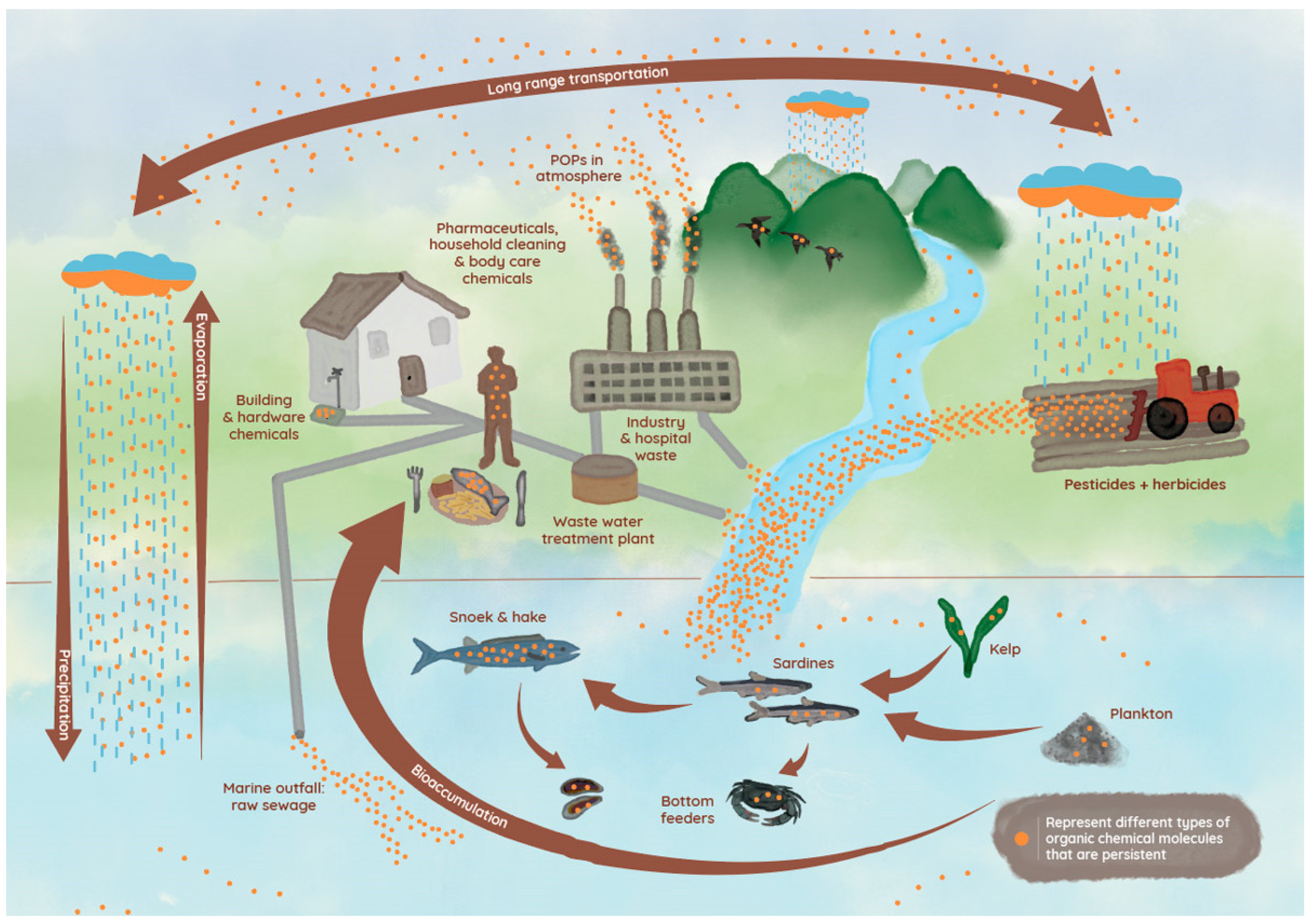
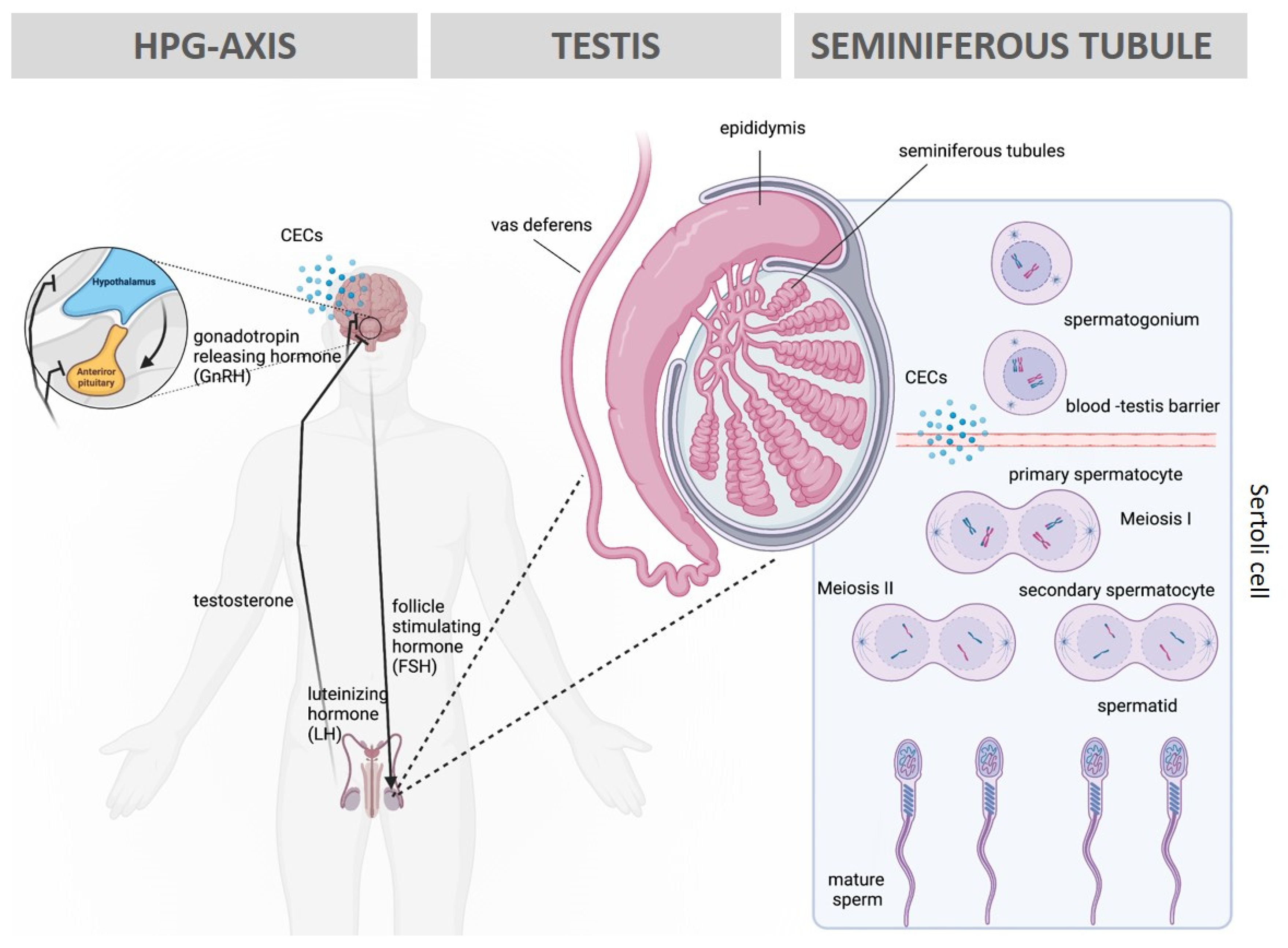
Approximately 9% of couples are infertile, with half of these cases relating to male factors. While many cases of male infertility are associated with genetic and lifestyle factors, approximately 30% of cases are still idiopathic. Contaminants of emerging concern (CECs) denote substances identified in the environment for the first time or detected at low concentrations during water quality analysis. Since CEC production and use have increased in recent decades, CECs are now ubiquitous in surface and groundwater. CECs are increasingly observed in human tissues, and parallel reports indicate that semen quality is continuously declining, supporting the notion that CECs may play a role in infertility. This narrative review focuses on several CECs (including pesticides and pharmaceuticals) detected in the nearshore marine environment of False Bay, Cape Town, South Africa, and deliberates their potential effects on male fertility and the offspring of exposed parents, as well as the use of spermatozoa in toxicological studies. Collective findings report that chronic in vivo exposure to pesticides, including atrazine, simazine, and chlorpyrifos, is likely to be detrimental to the reproduction of many organisms, as well as to sperm performance in vitro. Similarly, exposure to pharmaceuticals such as diclofenac and naproxen impairs sperm motility both in vivo and in vitro. These contaminants are also likely to play a key role in health and disease in offspring sired by parents exposed to CECs. On the other side of the double-edged sword, we propose that due to its sensitivity to environmental conditions, spermatozoa could be used as a bioindicator in eco- and repro-toxicology studies.
Keywords: contaminants of emerging concern; environmental pollution; male fertility; pesticides; pharmaceuticals; semen quality; sexual development; spermatozoa contaminants of emerging concern; environmental pollution; male fertility; pesticides; pharmaceuticals; semen quality; sexual development; spermatozoa