

Active Edible Polysaccharide-Based Coating for Preservation of Fresh Figs (Ficus carica L.)

 ,
,  ,
, 
Abstract
1. Introduction
2. Materials and Methods
2.1. Materials
2.1.1. Chemicals
2.1.2. Plant Material
2.2. Sample Preparation
2.3. Fig Preservation
2.4. Weight Measurement
2.5. pH Determination
2.6. Microbiological Analyses
2.7. Mechanical Analysis
2.8. Polar Compound Extraction
2.9. Total Polyphenol Content
2.10. Total Flavonoid Content
2.11. Antioxidant Activity
2.12. Statistical Analysis
3. Results and Discussion
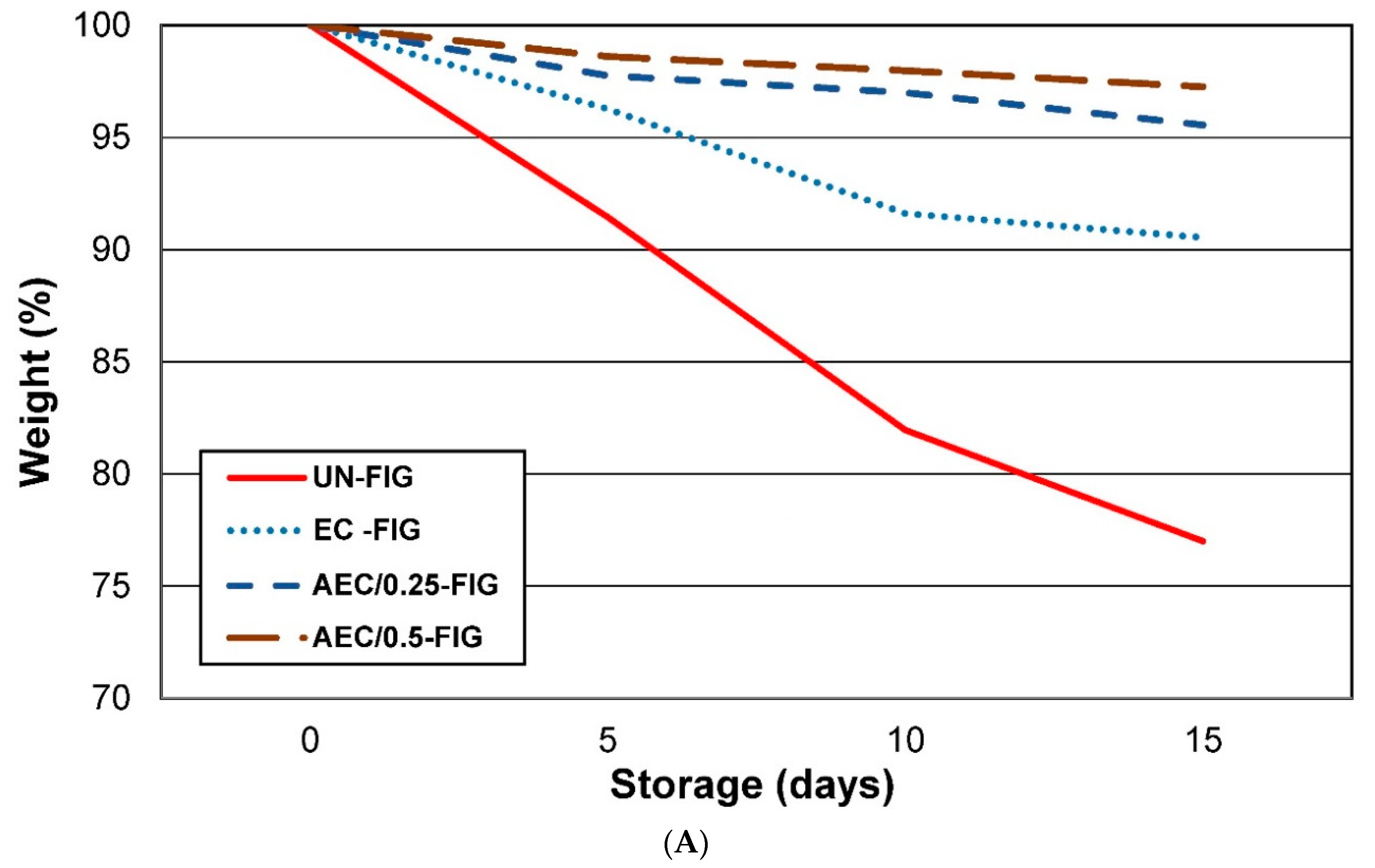
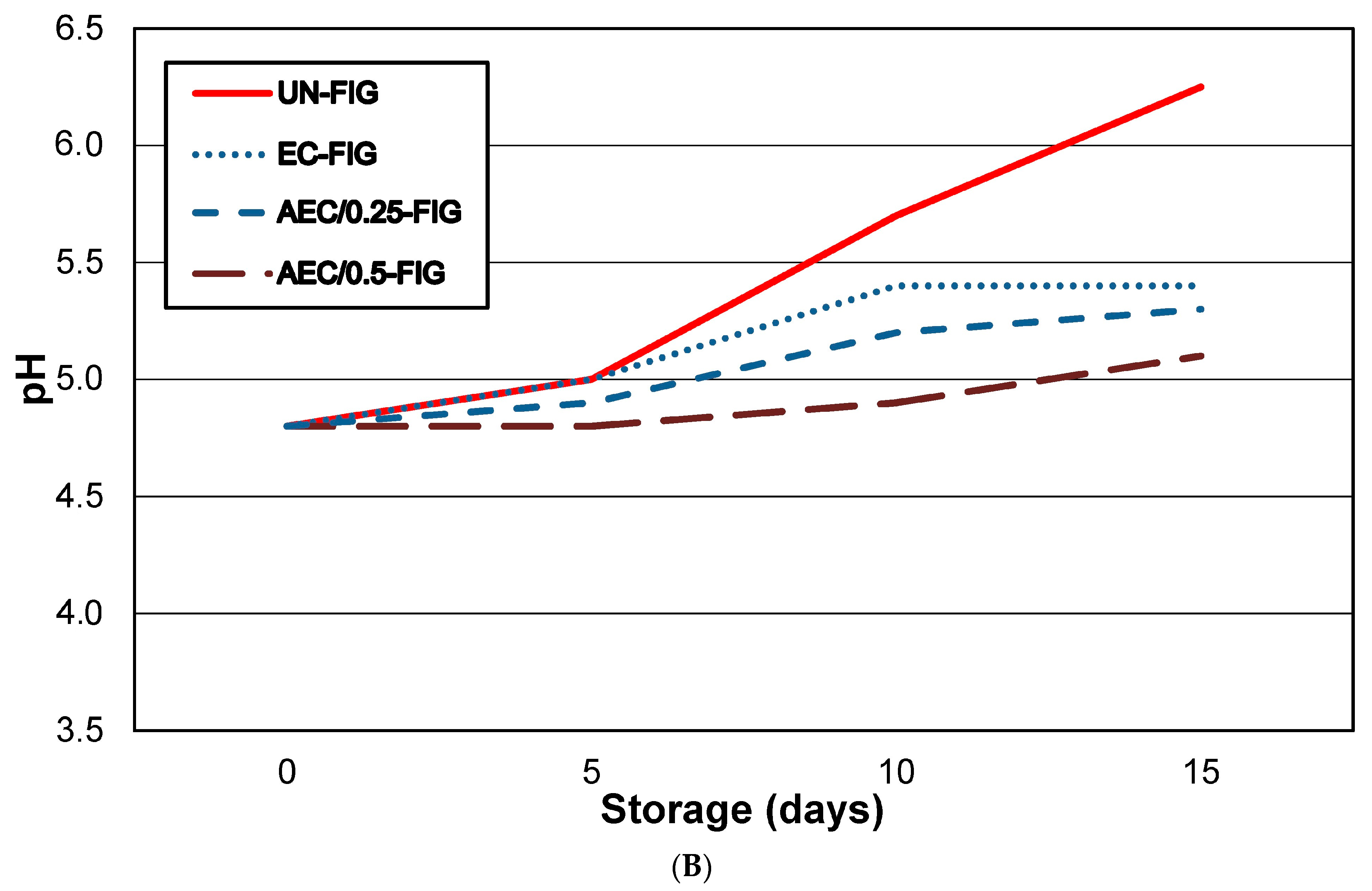
3.1. Weight Loss and pH Values
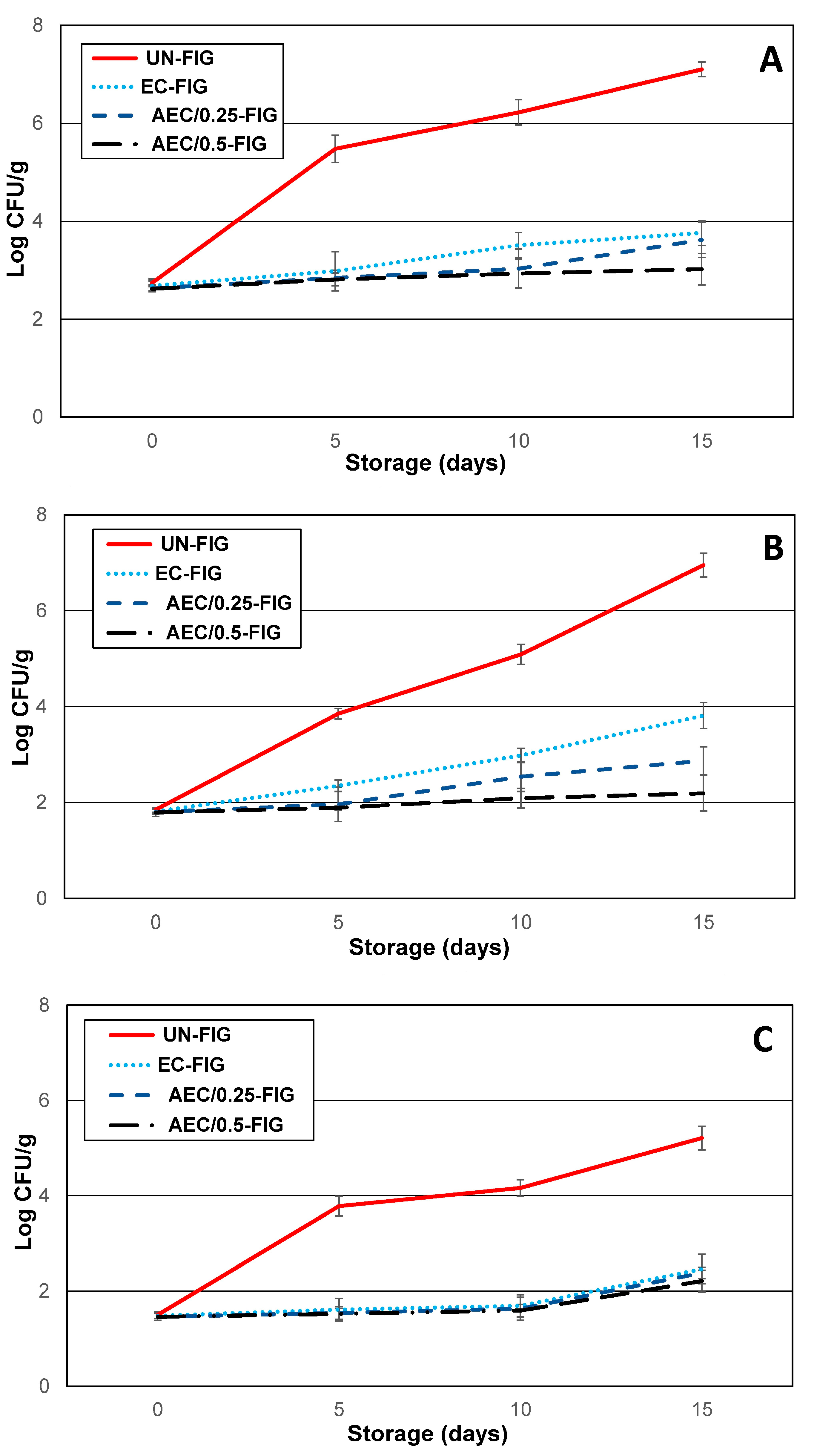
3.2. Microbiological Analyses
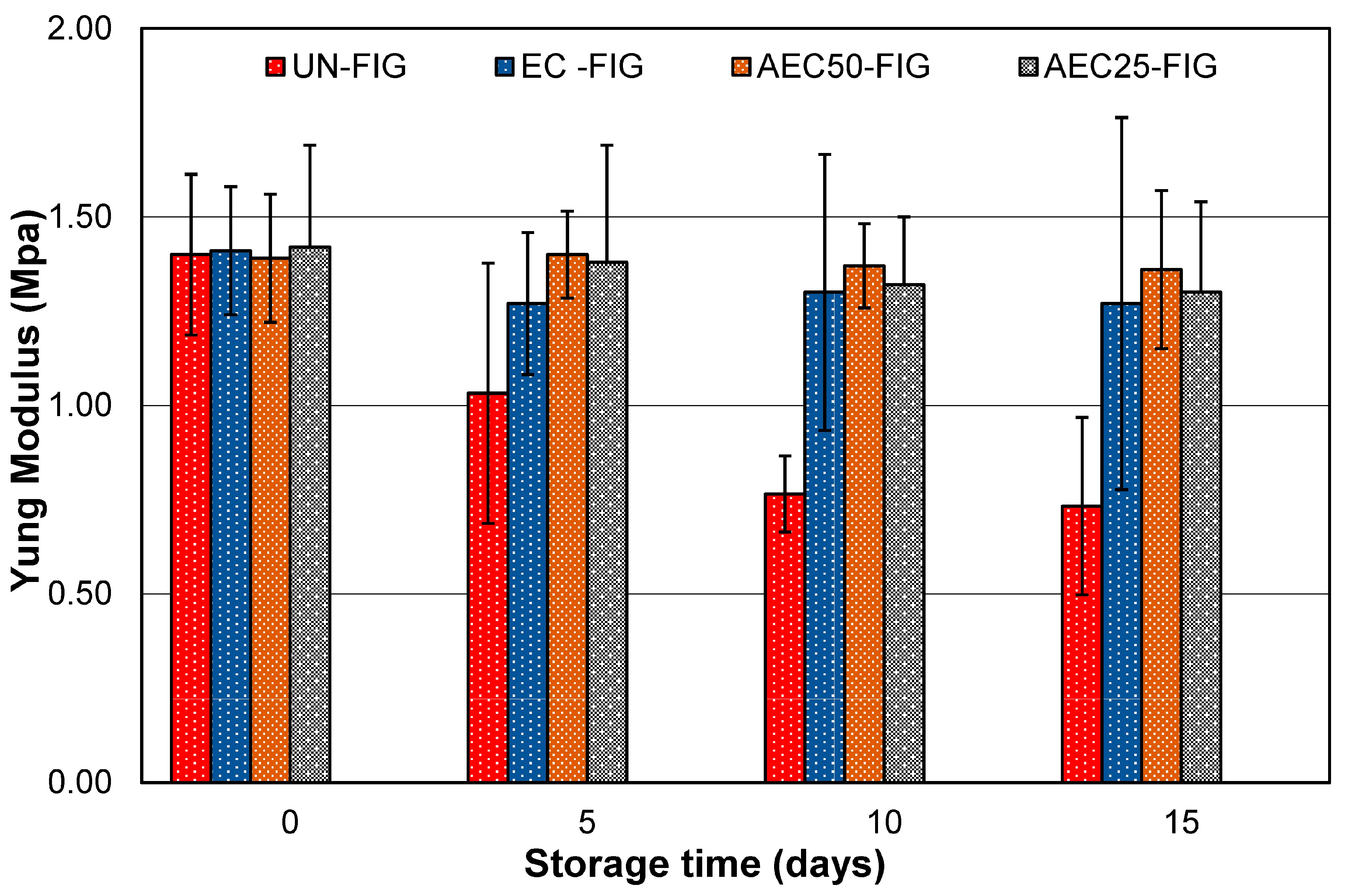
3.3. Mechanical Properties
3.4. Total Polyphenols, Flavonoids and DPPH
3.4.1. Total Polyphenols
3.4.2. Total Flavonoids
3.4.3. Antioxidant Activity
4. Conclusions
Author Contributions
Funding
Conflicts of Interest
References
- Arvaniti, O.S.; Samaras, Y.; Gatidou, G.; Thomaidis, N.S.; Stasinakis, A.S. Review on fresh and dried figs: Chemical analysis and occurrence of phytochemical compounds, antioxidant capacity and health effects. Food Res. Int. 2019, 119, 244–267. [Google Scholar] [CrossRef] [PubMed]
- Veberic, R.; Jakopic, J.; Stampar, F. Internal fruit quality of figs (Ficus carica L.) in the Northern Mediterranean Region. Ital. J. Food Sci. 2008, 20, 255–262. [Google Scholar]
- Viuda-Martos, M.; Barber, X.; Perez-Alvarez, J.A.; Fernandez-Lopez, J. Assessment of chemical, physico-chemical, techno-functional and antioxidant properties of fig (Ficus carica L.) powder co-products. Ind. Crop. Prod. 2015, 69, 472–479. [Google Scholar] [CrossRef]
- Maghsoudlou, E.; Esmaeilzadeh Kenari, R.; Raftani Amiri, Z. Evaluation of Antioxidant Activity of Fig (Ficus carica) Pulp and Skin Extract and Its Application in Enhancing Oxidative Stability of Canola Oil. J. Food Process. Preserv. 2017, 41, e13077. [Google Scholar] [CrossRef]
- ISTAT. Available online: https://www.istat.it/it/agricoltura (accessed on 20 November 2020).
- Crisosto, H.; Ferguson, L.; Bremer, V.; Stover, E.; Colelli, G. Fig (Ficus carica L.). Postharvest Biology and Technology of Tropical and Subtropical Fruits Cocona to Mango. Woodhead Publ. Ser. Food Sci. Technol. Nutr. 2011, 3, 134e–160e. [Google Scholar]
- Villalobos, M.C.; Serradilla, M.J.; Martín, A.; Ruíz-Moyano, S.; Casquete, R.; Hernández, A.; Córdoba, M.G. Use of efficient drying methods to improve the safety and quality of dried fig. J. Food Process Preserv. 2019, 43, e13853. [Google Scholar] [CrossRef]
- Ertan, B.; Şenkayas, H.; Tuncay, Ö. Postharvest logistics performance of fresh fig varieties in Turkey. Sci. Hortic. 2019, 257, 108769. [Google Scholar] [CrossRef]
- Reyes-Avalos, M.C.; Femenia, A.; Minjares-Fuentes, R.; Contreras-Esquivel, J.C.; Aguilar-González, C.N.; Esparza-Rivera, J.R.; Meza-Velázquez, J.; Minjares, R. Improvement of the Quality and the Shelf Life of Figs (Ficus carica) Using an Alginate–Chitosan Edible Film. Food Bioprocess Technol. 2016, 9, 2114–2124. [Google Scholar] [CrossRef]
- Sperber, W.H.; Doyle, M.P. Compendium of the Microbiological Spoilage of Foods and Beverages; Springer: New York, NY, USA, 2009. [Google Scholar]
- Kaczmarek, M.S.; Avery, V.; Singleton, I. Microbes associated with fresh produce: Sources, types and methods to reduce spoilage and contamination. Adv. Appl. Microbiol. 2019, 107, 29–87. [Google Scholar]
- Mousavi, S.A.; Hasanzadeh, N.; Abdollahi, P. Identification and Characterization of Bacterial Agents Causing Moderate Damage and Souring of the Fig Fruits. J. Plant Pathol. Microbiol. 2020, 11, 514. [Google Scholar]
- Villalobos, M.C.; Serradilla, M.J.; Martín, A.; Hernandez-Leon, A.; Ruíz-Moyano, S.; Cordoba, M.G. Characterization of microbial population of breba and main crops (Ficus carica) during cold storage: Influence of passive modified atmospheres (MAP) and antimicrobial extract application. Food Microbiol. 2017, 63, 35–46. [Google Scholar] [CrossRef] [PubMed]
- Song, C.; Li, A.; Chai, Y.; Li, Q.; Lin, Q.; Duan, Y. Effects of 1-Methylcyclopropene Combined with Modified Atmosphere on Quality of Fig (Ficus carica L.) during Postharvest Storage. J. Food Qual. 2019. [Google Scholar] [CrossRef]
- Opara, U.; Caleb, O.; Belay, Z. Modified atmosphere packaging for food preservation. In Food Quality and Shelf Life; Academic Press: Cambridge, MA, USA, 2019; pp. 235–259. [Google Scholar]
- Pelissari, F.M.; Ferreira, D.C.; Louzada, L.B.; Santos, F.C.; Corrêa, A.C.; Moreira, F.K.; Mattoso, L. Starch-Based Edible Films and Coatings: An Eco-friendly Alternative for Food Packaging. In Starches for Food Application: Chemical, Technological and Health Properties; Clerici, M.T.P.S., Schmiele, M., Eds.; Academic Press: Cambridge, MA, USA, 2019; pp. 359–420. [Google Scholar]
- Saki, M.; ValizadehKaji, B.; Abbasifar, A.; Shahrjerdi, I. Effect of chitosan coating combined with thymol essential oil on physicochemical and qualitative properties of fresh fig (Ficus carica L.) fruit during cold storage. Food Meas. 2019, 13, 1147–1158. [Google Scholar] [CrossRef]
- Adiletta, G.; Zampella, L.; Coletta, C.; Petriccione, M. Chitosan Coating to Preserve the Qualitative Traits and Improve Antioxidant System in Fresh Figs (Ficus carica L.). Agriculture 2019, 9, 84. [Google Scholar] [CrossRef]
- Laurienzo, P.; Malinconico, M.; Pizzano, R.; Manzo, C.; Piciocchi, N.; Sorrentino, A.; Volpe, M.G. Natural Polysaccharides-Based Gels for Dairy Food Preservation. Int. J. Dairy Sci. 2006, 89, 2856–2864. [Google Scholar] [CrossRef]
- Ferrazzano, G.F.; Scioscia, E.; Sateriale, D.; Pastore, G.; Colicchio, R.; Pagliuca, C.; Cantile, T.; Alcidi, B.; Coda, M.; Ingenito, A.; et al. In vitro antibacterial activity of Pomegranate juice and peel extracts on cariogenic bacteria. BioMed. Res. Int. 2017, 2152749. [Google Scholar] [CrossRef] [PubMed]
- Pagliarulo, C.; De Vito, V.; Picariello, G.; Colicchio, R.; Pastore, G.; Salvatore, P.; Volpe, M.G. Inhibitory effect of pomegranate (Punica granatum L.) polyphenol extracts on the bacterial growth and survival of clinical isolates of pathogenic Staphylococcus aureus and Escherichia coli. Food Chem. 2016, 190, 824–831. [Google Scholar] [CrossRef]
- Singleton, V.L.; Orthofer, R.; LamuelaRaventos, R.M. Analysis of total phenols and other oxidation substrates and antioxidants by means of FolinCiocalteu reagent. Oxid. Antioxid. Part A 1999, 299, 152–178. [Google Scholar]
- Picariello, G.; De Vito, V.; Ferranti, P.; Paolucci, M.; Volpe, M.G. Species- and cultivar-dependent patterns of Prunus avium and Prunus cerasus phenolic: Preliminary indications. J. Food Compos. Anal. 2015, 45, 50–57. [Google Scholar] [CrossRef]
- Zhishen, J.; Mengcheng, T.; Jianming, W. The determination of flavonoid contents in mulberry and their scavenging effects on superoxide radicals. Food Chem. 1999, 64, 555–559. [Google Scholar] [CrossRef]
- Von Gadow, A.; Joubert, E.; Hansmann, C.F. Comparison of the antioxidant activity of rooibos tea (Aspalathus linearis) with green, oolong and black tea. Food Chem. 1997, 60, 73–77. [Google Scholar] [CrossRef]
- Kumar, P.; Sethi, S.; Sharma, R.; Srivastav, M.K.; Varghese, E. Effect of chitosan coating on postharvest life and quality of plum during storage at low temperature. Sci. Hortic. 2017, 226, 104–109. [Google Scholar] [CrossRef]
- Mgaya-Kilima, B.; Remberg, S.F.; Chove, B.E.; Wicklund, T. Physicochemical and antioxidant properties of roselle-mango juice blends; effects of packaging materials, storage temperature and time. J. Food Sci. Nutr. 2015, 3, 100–109. [Google Scholar]
- Valdés, A.; Ramos, M.; Beltrán, A.; Jiménez, A.; Garrigós, M.C. State of the Art of Antimicrobial Edible Coatings for Food Packaging Applications. Coatings 2017, 7, 56. [Google Scholar]
- Yossef, M.A. Comparison of Different Edible Coatings Materials For Improvement of Quality And Shelf Life of Perishable Fruits. Middle East J. Appl. Sci. 2014, 4, 416–424. [Google Scholar]
- Sousa-Gallagher, M.J.; Tank, A.; Sousa, R. Emerging Technologies to Extend the Shelf Life and Stability of Fruits and Vegetables. In The Stability and Shelf Life of Food, 2nd ed.; Subramaniam, P., Kilcast, D., Eds.; Woodhead Publishing: Sawston, UK; Cambridge, UK, 2016; pp. 399–430. [Google Scholar]
- Brovelli, E.A. Pre- and postharvest factors affecting nutraceutical properties of horticultural products. Stewart Postharvest Rev. 2006, 2, 1–6. [Google Scholar] [CrossRef]
- Fellah, B.; Bannour, M.; Rocchetti, G.; Lucini, L.; Ferchichi, A. Phenolic profiling and antioxidant capacity in flowers, leaves and peels of Tunisian cultivars of Punica granatum L. J. Food Sci. Technol. 2018, 55, 3606–3615. [Google Scholar] [CrossRef]
- Solomon, A.; Golubowicz, S.; Yablowicz, Z.; Grossman, S.; Bergman, M.; Gottlieb, H.E.; Altman, A.; Kerem, Z.; Flaishman, M.A. Antioxidant Activities and Anthocyanin Content of Fresh Fruits of Common Fig (Ficus carica L.). J. Agric. Food Chem. 2006, 54, 7717–7723. [Google Scholar] [CrossRef]

| Storage Time | Sample | |||
|---|---|---|---|---|
| UN-FIG | EC-FIG | AEC/0.25-FIG | AEC/0.50-FIG | |
| Day 0 | 95.27 ± 4.1 | 95.37 ± 0.31 (ns) | 94.8 ± 2.3 (ns) | 94.70 ± 0.46 (ns) |
| Day 5 | 91.17 ± 0.39 | 93.17 ± 0.40 (ns) | 94 ± 4.4 (ns) | 97.95 ± 0.74 (ns) |
| Day 10 | 89.27 ± 0.83 | 92.1 ± 52.31 (ns) | 97 ± 1.8 * | 105.14 ± 0.31 * |
| Day 15 | 84.91 ± 0.81 | 90.21 ± 0.30 * | 102 ± 5.1 * | 107.04 ± 0.48 ** |
| Storage Time | Sample | |||
|---|---|---|---|---|
| UN-FIG | EC-FIG | AEC/0.25-FIG | AEC/0.50-FIG | |
| Day 0 | 41.2 ± 2.0 | 41.5 ± 1.5 (ns) | 42.7 ± 6.4 (ns) | 43.3 ± 2.0 (ns) |
| Day 5 | 42.3 ± 3.7 | 40.2 ± 5.3 (ns) | 42.8 ± 5.9 (ns) | 44.8 ± 3.2 (ns) |
| Day 10 | 38.6 ± 4.3 | 38.2 ± 4.6 (ns) | 41.9 ± 8.3 ** | 44.1 ± 4.1 ** |
| Day 15 | 34.7 ± 7.4 | 39.3 ± 5.1 * | 42.0 ± 2.8 ** | 43.6 ± 7.5 ** |
| Storage Time | Sample | |||
|---|---|---|---|---|
| UN-FIG | EC-FIG | AEC/0.25-FIG | AEC/0.5-FIG | |
| Day 0 | 8.2 ± 0.6 | 8.3 ± 0.5 (ns) | 8.1 ± 0.2 (ns) | 8.5 ± 0.4 (ns) |
| Day 5 | 7.6 ± 0.2 | 8.0 ± 0.7 (ns) | 8.1 ± 08 (ns) | 8.3 ± 0.3 (ns) |
| Day 10 | 6.9 ± 0.6 | 7.6 ± 0.3 * | 7.9 ± 0.2 * | 8.1 ± 0.1 ** |
| Day 15 | 6.3 ± 0.3 | 7.5 ± 0.1 * | 7.8 ± 0.8 * | 8.0 ± 0.9 ** |
Publisher’s Note: MDPI stays neutral with regard to jurisdictional claims in published maps and institutional affiliations. |
© 2020 by the authors. Licensee MDPI, Basel, Switzerland. This article is an open access article distributed under the terms and conditions of the Creative Commons Attribution (CC BY) license (http://creativecommons.org/licenses/by/4.0/).
Share and Cite
Paolucci, M.; Di Stasio, M.; Sorrentino, A.; La Cara, F.; Volpe, M.G. Active Edible Polysaccharide-Based Coating for Preservation of Fresh Figs (Ficus carica L.). Foods 2020, 9, 1793. https://doi.org/10.3390/foods9121793
Paolucci M, Di Stasio M, Sorrentino A, La Cara F, Volpe MG. Active Edible Polysaccharide-Based Coating for Preservation of Fresh Figs (Ficus carica L.). Foods. 2020; 9(12):1793. https://doi.org/10.3390/foods9121793
Chicago/Turabian StylePaolucci, Marina, Michele Di Stasio, Alida Sorrentino, Francesco La Cara, and Maria Grazia Volpe. 2020. "Active Edible Polysaccharide-Based Coating for Preservation of Fresh Figs (Ficus carica L.)" Foods 9, no. 12: 1793. https://doi.org/10.3390/foods9121793
APA StylePaolucci, M., Di Stasio, M., Sorrentino, A., La Cara, F., & Volpe, M. G. (2020). Active Edible Polysaccharide-Based Coating for Preservation of Fresh Figs (Ficus carica L.). Foods, 9(12), 1793. https://doi.org/10.3390/foods9121793

