1. Introduction
Circadian rhythms are endogenous, approximately 24-h oscillations that coordinate behavior and physiology with the external light–dark cycle. In mammals, these rhythms are orchestrated by a central pacemaker located in the suprachiasmatic nucleus (SCN) of the hypothalamus and by peripheral clocks present in nearly all tissues, including liver, adipose tissue and skeletal muscle [
1]. At the molecular level, circadian clocks are driven by interconnected transcription–translation feedback loops involving core clock components, such as Brain and Muscle ARNT-Like 1 (BMAL1), Circadian Locomotor Output Cycles Kaput (CLOCK), Period (PER) and Cryptochrome (CRY) proteins [
2]. These molecular oscillators regulate a large fraction of the transcriptome in metabolic tissues, thereby temporally coordinating pathways involved in glucose homeostasis, lipid metabolism, mitochondrial function and energy expenditure [
3].
Metabolic homeostasis is tightly linked to circadian timing. Disruption of circadian rhythms through genetic manipulation, shift work, or altered feeding schedules predisposes to obesity, insulin resistance, dyslipidemia and nonalcoholic fatty liver disease [
4]. Conversely, nutritional cues act as potent zeitgebers for peripheral clocks. Feeding time, caloric intake and macronutrient composition can reset or modulate clock gene expression in metabolic tissues independently of the SCN [
5]. High-fat feeding, in particular, has been shown to dampen circadian amplitude, alter rhythmic gene expression, and impair metabolic flexibility [
6,
7].
Ketone bodies are metabolic substrates produced primarily in the liver during periods of low carbohydrate availability, prolonged fasting, or ketogenic diets [
8]. β-Hydroxybutyrate (BHB) is the most abundant circulating ketone body and serves not only as an alternative energy source but also as a signaling metabolite [
9]. Beyond its classical bioenergetic role, BHB modulates cellular signaling pathways, including AMP-activated protein kinase (AMPK), mammalian target of rapamycin (mTOR), and insulin/AKT signaling, all of which are central regulators of nutrient sensing and metabolic adaptation [
9,
10]. Moreover, BHB has been shown to inhibit class I histone deacetylases (HDACs), thereby influencing gene expression through epigenetic mechanisms [
9,
11].
Emerging evidence indicates that ketone bodies may interact with the circadian system [
12]. Nutrient-sensing pathways such as AMPK and mTOR directly regulate core clock components, including BMAL1 and CRY1, linking cellular energy status to clock function [
5,
13,
14]. Additionally, fasting, which robustly elevates circulating BHB, alters peripheral clock gene expression and phase [
15,
16]. However, whether BHB itself directly modulates circadian oscillations in metabolic tissues under conditions of nutrient excess remains poorly understood. Given that BHB exerts anti-inflammatory effects through inhibition of the NLRP3 inflammasome [
17,
18] and regulates key metabolic signaling cascades, it is plausible that BHB supplementation could modulate circadian and metabolic pathways, particularly in the context of diet-induced metabolic stress.
Importantly, several of the above-mentioned pathways directly interact with the molecular circadian clock. AMPK promotes the degradation of CRY proteins, thereby resetting clock timing, whereas mTOR signaling has been implicated in the regulation of circadian translation and rhythmic protein synthesis. In addition, epigenetic regulation via HDAC inhibition by BHB may influence transcription of core clock genes. These interactions suggest a mechanistic framework through which BHB could modulate circadian rhythms via metabolic signaling pathways.
Despite growing evidence linking ketone bodies to metabolic signaling and circadian regulation, it remains unclear whether BHB directly modulates peripheral clock function under conditions of nutrient excess, such as high-fat diet feeding. In particular, the extent to which BHB influences the amplitude, phase, and tissue-specific coordination of circadian rhythms alongside metabolic signaling pathways has not been systematically examined. Therefore, the aim of this study was to determine whether BHB supplementation modulates metabolic signaling pathways and circadian clock oscillations in liver, skeletal muscle and adipose tissue under chow and high-fat diet conditions. Understanding the interplay between ketone body signaling, dietary composition and circadian regulation may reveal novel mechanisms linking metabolic state to temporal control of physiology.
2. Materials and Methods
2.1. Animals, Treatments and Tissue Collection
Ninety-six 9-week-old male C57BL/6 mice were housed in a temperature- and humidity-controlled facility (23–24 °C, 60% humidity) under a 12 h light/12 h dark cycle (12:12 LD). Animals were acclimated for 10 days with ad libitum (AL) access to food and water. Following acclimation, mice were randomly assigned to one of four experimental groups (
n = 24 per group): Chow, Chow + BHB, high-fat diet (HF), and HF + BHB. BHB was incorporated into the diet at a dose of 500 mg/kg body weight, based on our previous study with a very similar molecule, β-hydroxymethyl butyrate, demonstrating metabolic signaling effects at this range [
19]. Animals were maintained on their respective diets for 7 weeks with ad libitum access to food. At the end of the experimental period, circadian sampling was performed over a 24 h cycle. Mice were transferred to constant darkness (DD) conditions prior to tissue collection, and all procedures were conducted under dim red light to avoid light-induced circadian disruption. Samples were collected at six evenly spaced time points (every 4 h), with 3–4 mice per group at each time point. At each time point, mice were anesthetized using isoflurane, and blood samples were collected, followed by rapid dissection of liver, epididymal adipose tissue, and gastrocnemius muscle. Tissues were immediately frozen in liquid nitrogen and stored at −80 °C until further analysis. Mice were subsequently euthanized following tissue collection. Fasting blood β-hydroxybutyrate (β-HB) levels were measured using a glucometer (Optium Xceed; Abbott Laboratories, Maidenhead, UK).
2.2. Ethical Approval
All experimental procedures were conducted in accordance with the Guide for the Care and Use of Laboratory Animals (NIH publication 86-23, revised 1985). The study was approved by the Institutional Animal Care and Use Committee (IACUC) of the Hebrew University and Hadassah Medical Center (approval number: AG-20-16417-4).
2.3. Assessment of Metabolic Parameters
Indirect calorimetry, energy expenditure, locomotion and activity were measured using the Promethion Metabolic Cage System (Sable Systems, North Las Vegas, NV, USA). Mice were habituated to the metabolic cages for 3 days prior to data collection. Water was available throughout the study and lighting conditions matched those of the home cages. Respiratory gases were analyzed using an integrated fuel-cell oxygen analyzer and a spectrophotometric carbon dioxide analyzer. Oxygen consumption (VO2) and carbon dioxide production (VCO2) were calculated in mL/min. The respiratory exchange ratio (RER) was determined as VCO2/VO2. Locomotor activity was quantified as the sum of all directed ambulatory movements ≥1 cm/s, detected using a three-dimensional (x, y, z) infrared beam-break system.
2.4. Diet Composition
The control diet consisted of a standard low-fat (LF) chow containing 53% cornstarch, 20% casein, 10% sucrose, 7% soybean oil, 5% cellulose, 4% mineral mix, 1% vitamin mix and 0.3% methionine. The HF diet contained 38% cornstarch, 20% casein, 10% sucrose, 7% soybean oil, 15% coconut oil, 5% cellulose, 4% mineral mix, 1% vitamin mix and 0.3% methionine. Overall, the HF diet provided 22% fat by weight (42% kcal from fat), primarily derived from soybean oil and coconut oil, compared with 7% fat by weight (16% kcal from fat) in the chow diet. The caloric density of the HF diet was 4.7 kcal/g versus 3.95 kcal/g for the chow diet. Mice in the BHB-supplemented groups received 500 mg BHB per kg body weight.
2.5. Serum Analyses and ELISA
Blood was collected from the inferior vena cava at sacrifice. Samples were allowed to clot at room temperature for 30 min and then centrifuged at 2000× g for 15 min. Serum was collected, frozen and stored at −20 °C until analysis. Serum alanine aminotransferase (ALT/SGPT), aspartate aminotransferase (AST/SGOT), HDL, total cholesterol, and triglycerides were measured using ELISA (American Medical Laboratories, Herzliya, Israel).
2.6. Western Blot Analysis
Tissues were homogenized in 200 μL lysis buffer (pH 7.8) containing 20 mM Tris, 145 mM NaCl, 5% glycerol, 1% Triton X-100, 50 nM PMSF, 50 μM NaF, 10 μM Na3VO4, 50 ng/mL aprotinin, 100 ng/mL leupeptin and 0.8 μg/mL trypsin inhibitor (Sigma, Rehovot, Israel). Protein samples were separated on 12% SDS-polyacrylamide gels and semi-dry transferred onto nitrocellulose membranes. Membranes were incubated with primary antibodies against AMPK and pAMPK, BMAL1 and pBMAL1, AKT and pAKT, P70S6K and pP70S6K, S6 and pS6, ACC and pACC, fatty acid synthase (FASN) (Cell Signaling Technology, Danvers, MA, USA), ACTIN, mTOR, MYOGENIN, CLOCK, CRY1 and NF-κB (Santa Cruz Biotechnology, Dallas, TX, USA). After washing, membranes were incubated with horseradish peroxidase-conjugated secondary antibodies (Pierce, Rockford, IL, USA). Actin was used as a loading control and detected with an anti-mouse antibody (MP Biomedicals, Solon, OH, USA). Immunoreactive bands were visualized by enhanced chemiluminescence and quantified by densitometry. Protein expression levels were expressed in arbitrary units.
2.7. RNA Extraction and Quantitative Real-Time PCR
Total RNA was extracted using TRI Reagent (Sigma, Rehovot, Israel). RNA samples were treated with RQ1 DNase (Promega, Madison, WI, USA) and reverse-transcribed using the qScript cDNA synthesis kit (Quanta BioSciences, Gaithersburg, MD, USA) with random hexamers (Promega). Quantitative real-time PCR was performed using exon-exon spanning primers [
20] and the ABI Prism 7300 Sequence Detection System (Applied Biosystems, Foster City, CA, USA). Gene expression was normalized to actin. PCR conditions were as follows: 3 min at 95 °C, followed by cycles of 10 s at 95 °C and 45 s at 60 °C. Relative gene expression was calculated using the 2
−ΔΔCt method.
2.8. Statistical Analysis
Data are presented as mean ± SE. Differences in average protein expression were analyzed using Student’s t-test or Tukey’s honestly significant difference (HSD) test, as appropriate. Circadian and group differences were analyzed using two-way ANOVA (diet × time), followed by Tukey’s post hoc test where appropriate. One-way ANOVA was used for single-factor comparisons. Circadian patterns across multiple time points were analyzed using one-way ANOVA (time of day). Statistical significance was set at p < 0.05. Analyses were performed using JMP Pro 18 (SAS Institute Inc., Cary, NC, USA). Circadian rhythmicity (amplitude, phase, and mesor) was further analyzed using CircWave software (version 1.4; Circadian Rhythm Laboratory, University of Groningen, The Netherlands) by applying harmonic regression or Fourier-curve fit analyses to biological data.
4. Discussion
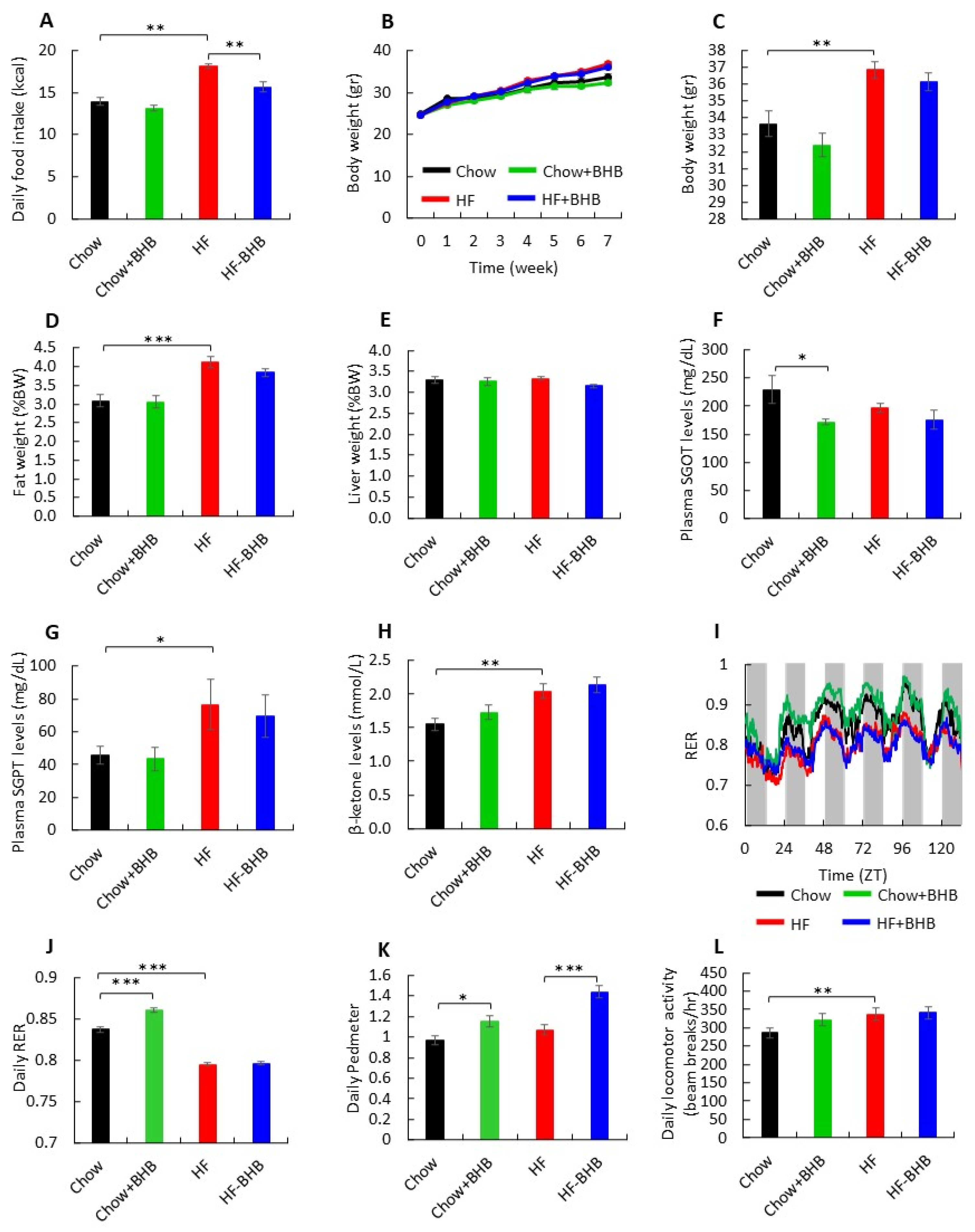
The present study extends previous findings by providing a comprehensive 24-h, multi-tissue analysis of metabolic and circadian responses to BHB under high-fat diet conditions. While prior studies have reported individual effects of BHB on metabolic signaling pathways, the integration of circadian profiling across multiple peripheral tissues represents a novel contribution. Our results suggest that BHB exerts multi-tissue metabolic and circadian regulatory effects under both chow and HF dietary conditions. HF feeding induced classical metabolic disturbances, including increased adiposity, reduced AMPK activation, enhanced AKT signaling, elevated inflammatory markers and disrupted peripheral clock gene oscillations. BHB supplementation partially reversed many of these alterations, particularly in adipose tissue and skeletal muscle, suggesting that ketone signaling modulates both metabolic and circadian homeostasis. However, these effects should be interpreted in the context of the significant reduction in food intake observed in the HF + BHB group, which may independently influence metabolic and circadian pathways. Reduced caloric intake is well known to activate AMPK, suppress mTOR signaling and modulate inflammatory and circadian pathways [
21]. Therefore, some of the observed effects in the HF + BHB group may be partially attributable to reduced energy intake rather than direct effects of BHB alone.
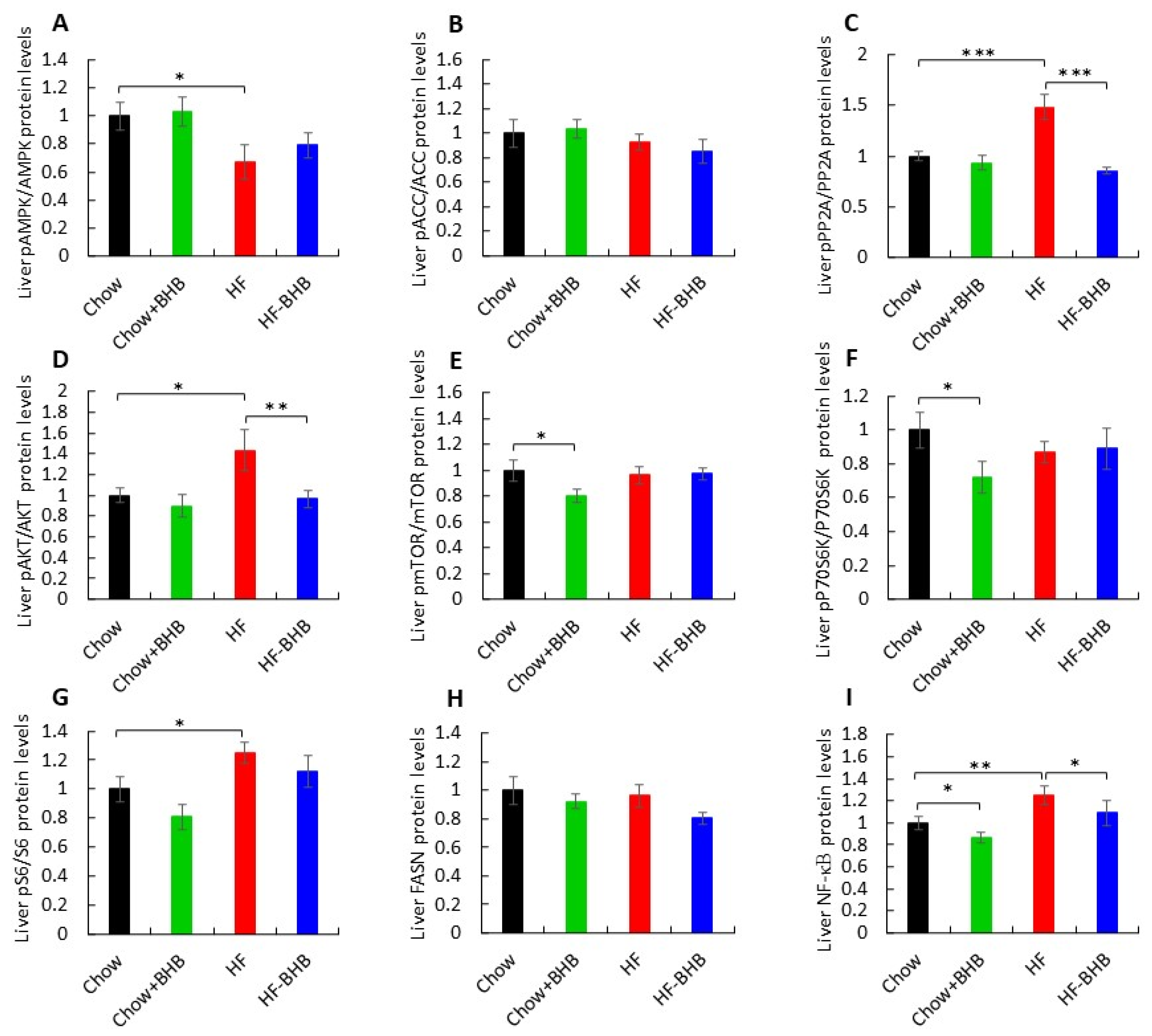
HF feeding induced clear hepatic metabolic dysregulation, characterized by reduced AMPK activation and increased AKT signaling, alongside elevated NF-κB expression. Suppression of hepatic AMPK is a well-established feature of nutrient excess and insulin resistance, and its reduction promotes anabolic processes while impairing fatty acid oxidation [
22,
23]. The increased pAKT/AKT ratio in HF-fed mice likely reflects compensatory hyperinsulinemia and altered insulin signaling dynamics commonly observed in early diet-induced obesity. BHB supplementation attenuated HF-induced AKT hyperactivation and reduced NF-κB levels, suggesting improved inflammatory and metabolic signaling, as has been demonstrated [
11,
18]. The reduction in pmTOR/mTOR in Chow + BHB mice further supports a shift toward a more energy-conserving state, consistent with the known interaction between AMPK and mTOR pathways [
24]. Although hepatic ACC and P70S6K signaling were not markedly altered, the overall pattern indicates that BHB is associated with changes in metabolic signaling pathways, primarily through anti-inflammatory actions and modulation of insulin-related signaling rather than robust activation of lipid oxidation pathways.
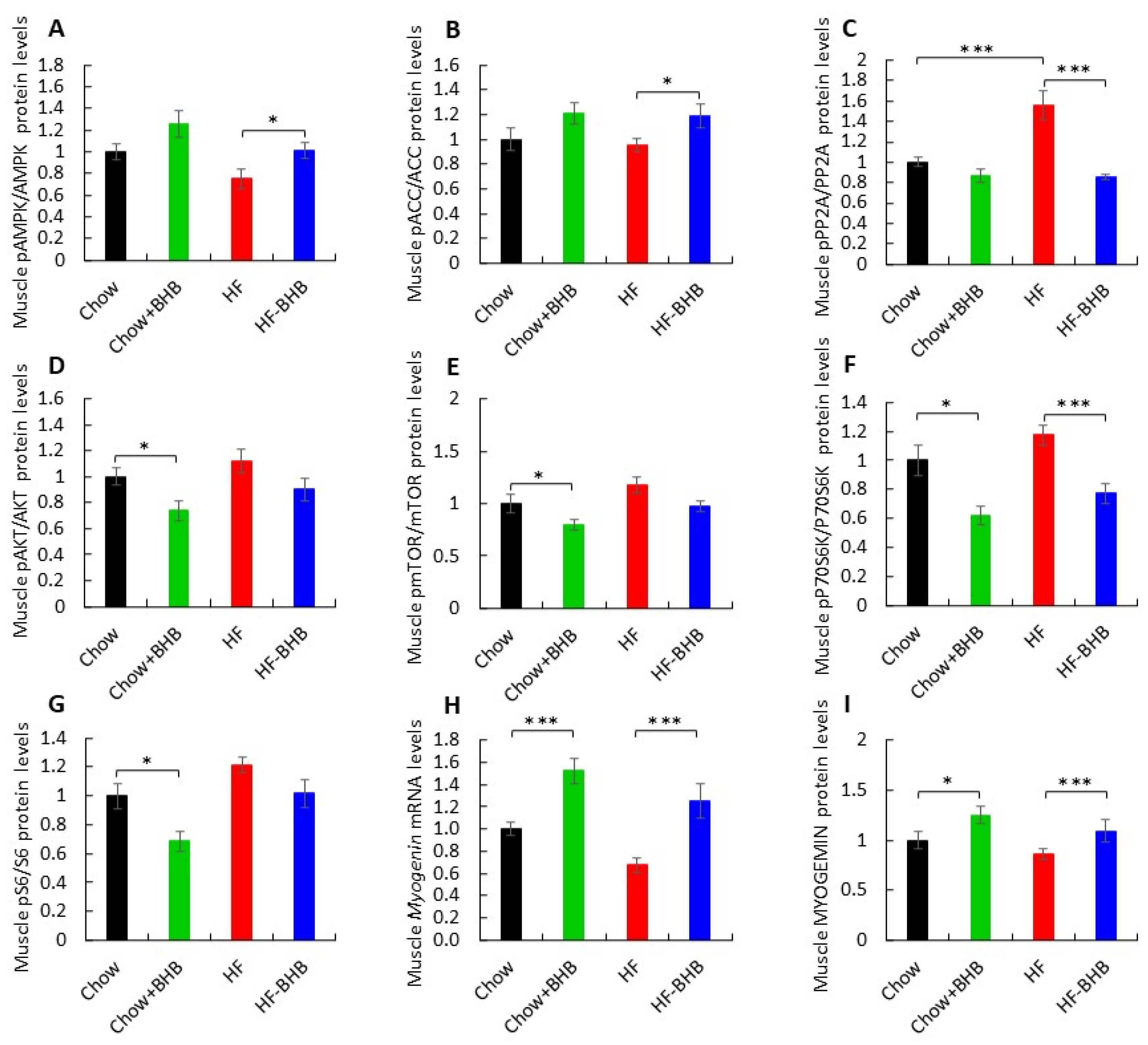
Skeletal muscle exhibited a pronounced metabolic response to BHB. HF feeding reduced AMPK activity, whereas BHB supplementation significantly increased the pAMPK/AMPK ratio and enhanced ACC phosphorylation, indicating stimulation of fatty acid oxidation. The observed increase in AMPK activation may reflect both BHB-related signaling and the effects of reduced caloric intake. Previous studies using caloric restriction paradigms have demonstrated similar activation of AMPK and improvements in metabolic flexibility, supporting this interpretation [
21]. AMPK activation in muscle is central to improving metabolic flexibility and mitochondrial function [
25]. Restoration of AMPK phosphorylation by BHB, especially in skeletal muscle and adipose tissue, aligns with growing evidence that ketone bodies act as signaling metabolites rather than merely oxidative substrates [
9]. BHB has been shown to activate AMPK indirectly through alterations in cellular energy charge and redox state [
12], which may explain the improved ACC phosphorylation and suppression of anabolic mTOR signaling observed here. The reduction in pmTOR/mTOR and pP70S6K/P70S6K ratios in BHB-treated groups further supports a shift toward a catabolic, energy-conserving phenotype [
10]. This shift may reflect a substrate transition toward lipid and ketone utilization. In addition, the increase in myogenin expression further indicates that BHB promotes a transcriptional environment supportive of muscle remodeling and metabolic adaptation. Collectively, these findings suggest that skeletal muscle is particularly sensitive to BHB-induced metabolic reprogramming, likely due to its high oxidative capacity and role as a major site of ketone utilization.
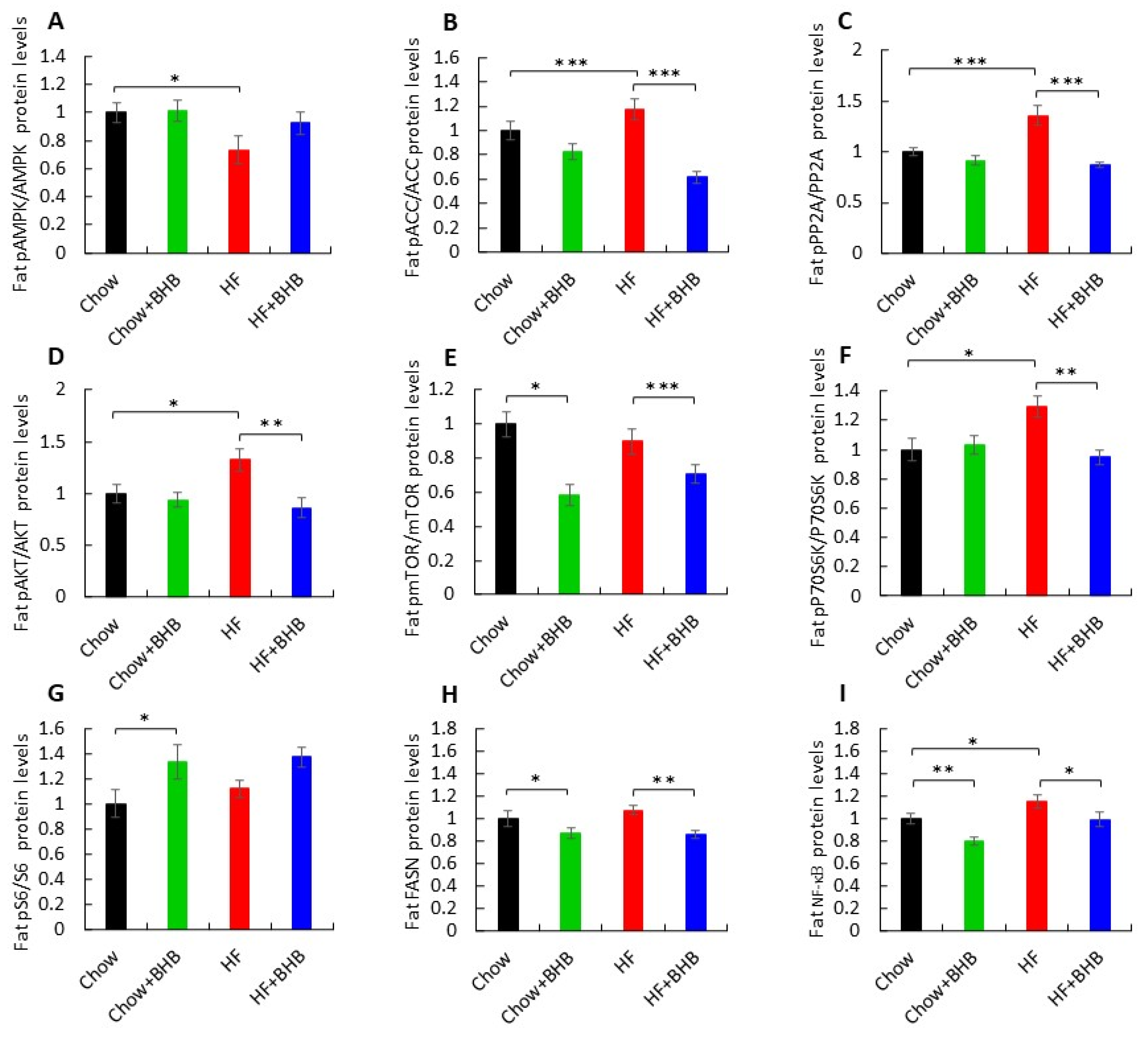
Adipose tissue displayed substantial HF-induced metabolic impairment, including reduced AMPK activation and increased ACC, AKT, mTOR, and inflammatory signaling. These alterations are consistent with enhanced lipogenesis, suppressed lipid oxidation and chronic inflammation characteristic of obese adipose tissue [
26]. BHB supplementation restored AMPK activation and reduced pACC/ACC, pAKT/AKT, pmTOR/mTOR and pP70S6K/P70S6K ratios, indicating suppression of anabolic and lipogenic pathways. The reduction in FASN levels with BHB further supports decreased lipogenesis. Importantly, NF-κB levels were markedly reduced by BHB under both chow and HF conditions, reinforcing its anti-inflammatory role [
17]. Changes observed in adipose tissue and inflammatory markers may be influenced by the combined effects of BHB supplementation and reduced caloric intake. Because adipose tissue inflammation directly contributes to systemic insulin resistance, these findings suggest that BHB-mediated metabolic improvements in adipose tissue may have whole-body consequences.
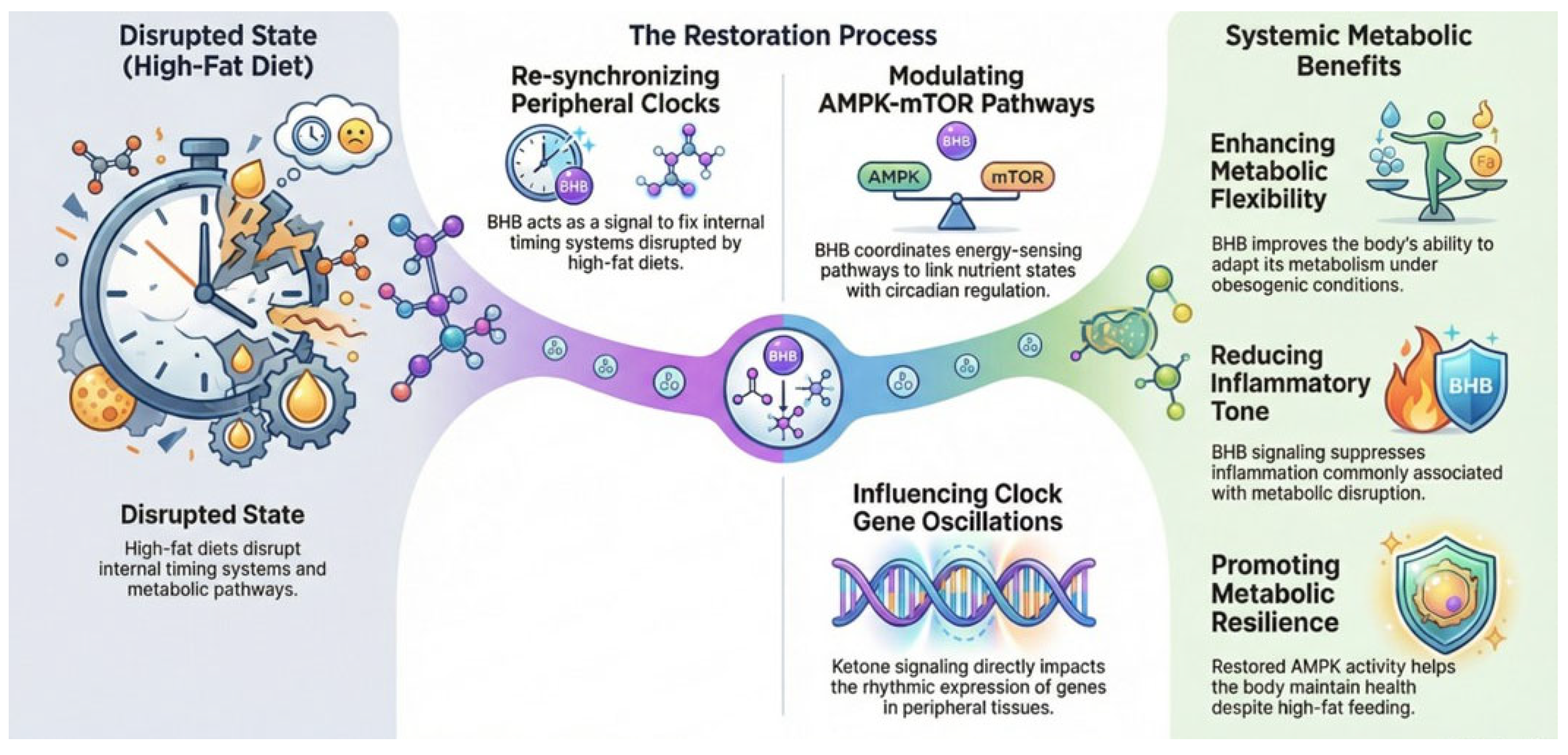
When integrating these tissue-specific responses, a coordinated pattern emerges. HF feeding drives a systemic shift toward anabolic, inflammatory and metabolically inflexible states, characterized by reduced AMPK signaling and enhanced AKT/mTOR activity. BHB supplementation counteracts many of these effects in a tissue-dependent manner. In skeletal muscle and adipose tissue, BHB robustly activates AMPK and suppresses mTOR signaling, promoting a catabolic and oxidative phenotype. In the liver, BHB primarily attenuates inflammatory and insulin-related signaling abnormalities rather than strongly activating AMPK. Across tissues, the suppression of NF-κB suggests that reduced inflammation may be a unifying mechanism underlying improved metabolic signaling [
17]. Inflammation is a key driver of metabolic dysfunction in obesity. The marked increase in NF-κB expression in HF-fed mice and its reversal by BHB are consistent with previous findings demonstrating that BHB suppresses inflammatory signaling, including inhibition of the NLRP3 inflammasome and NF-κB activity [
17,
18]. Thus, BHB supplementation may mitigate HF-induced metabolic impairment in part through anti-inflammatory mechanisms.
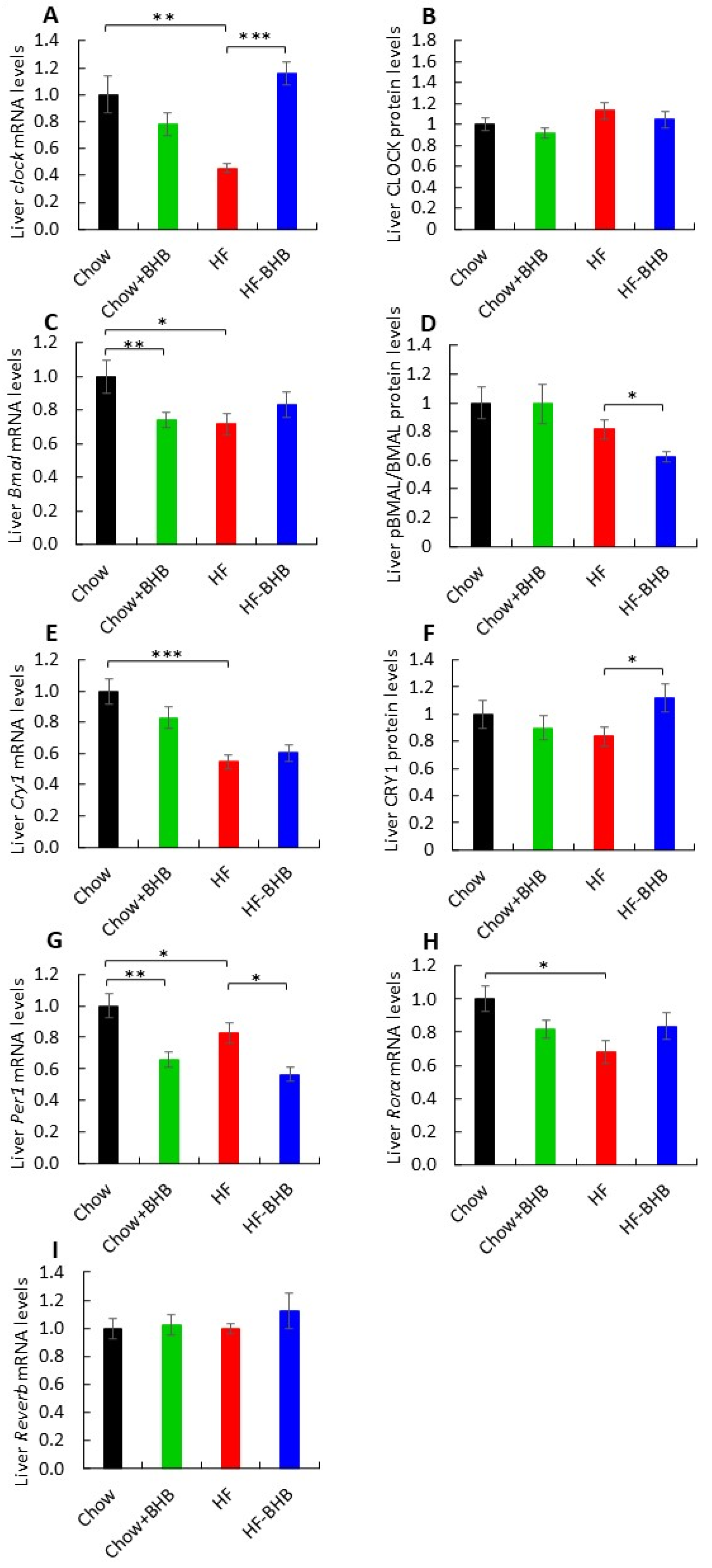
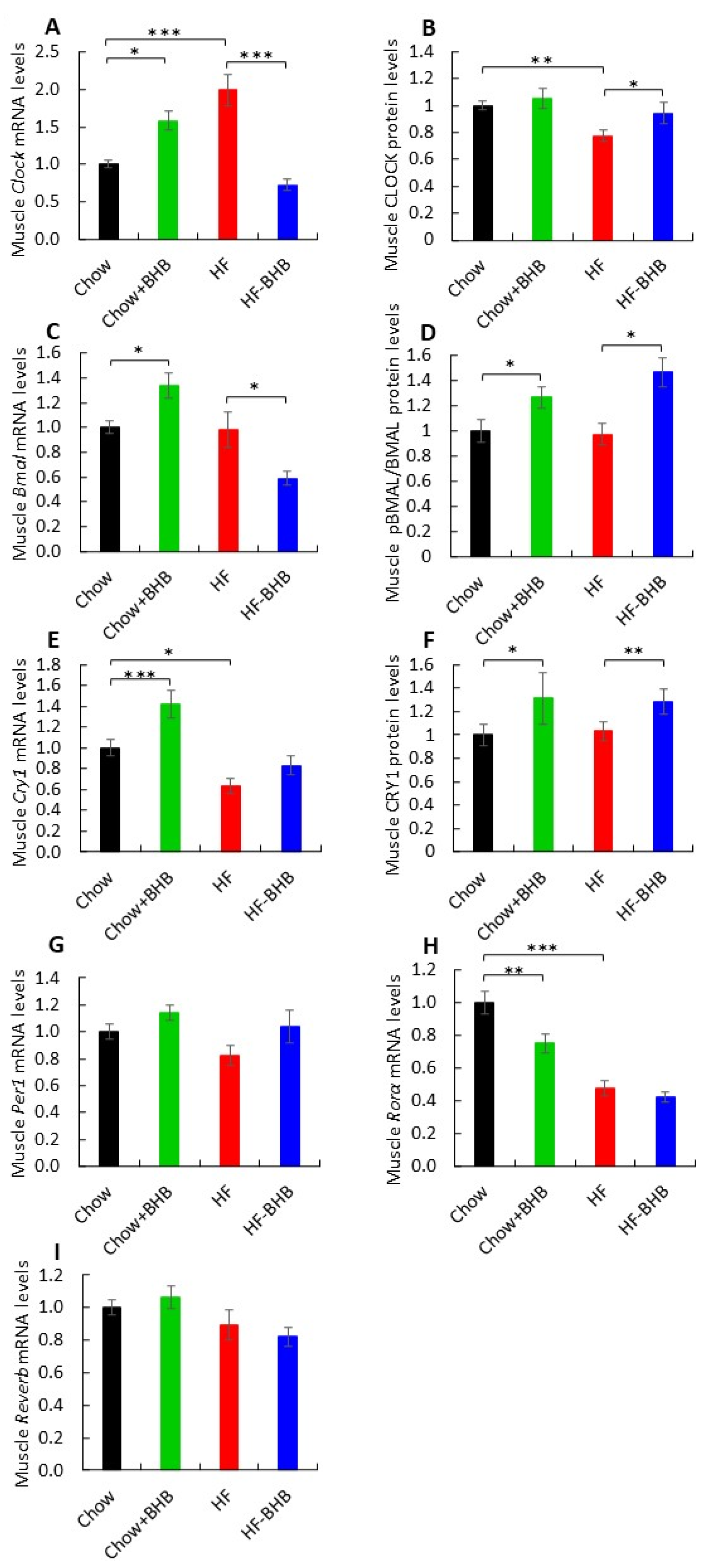
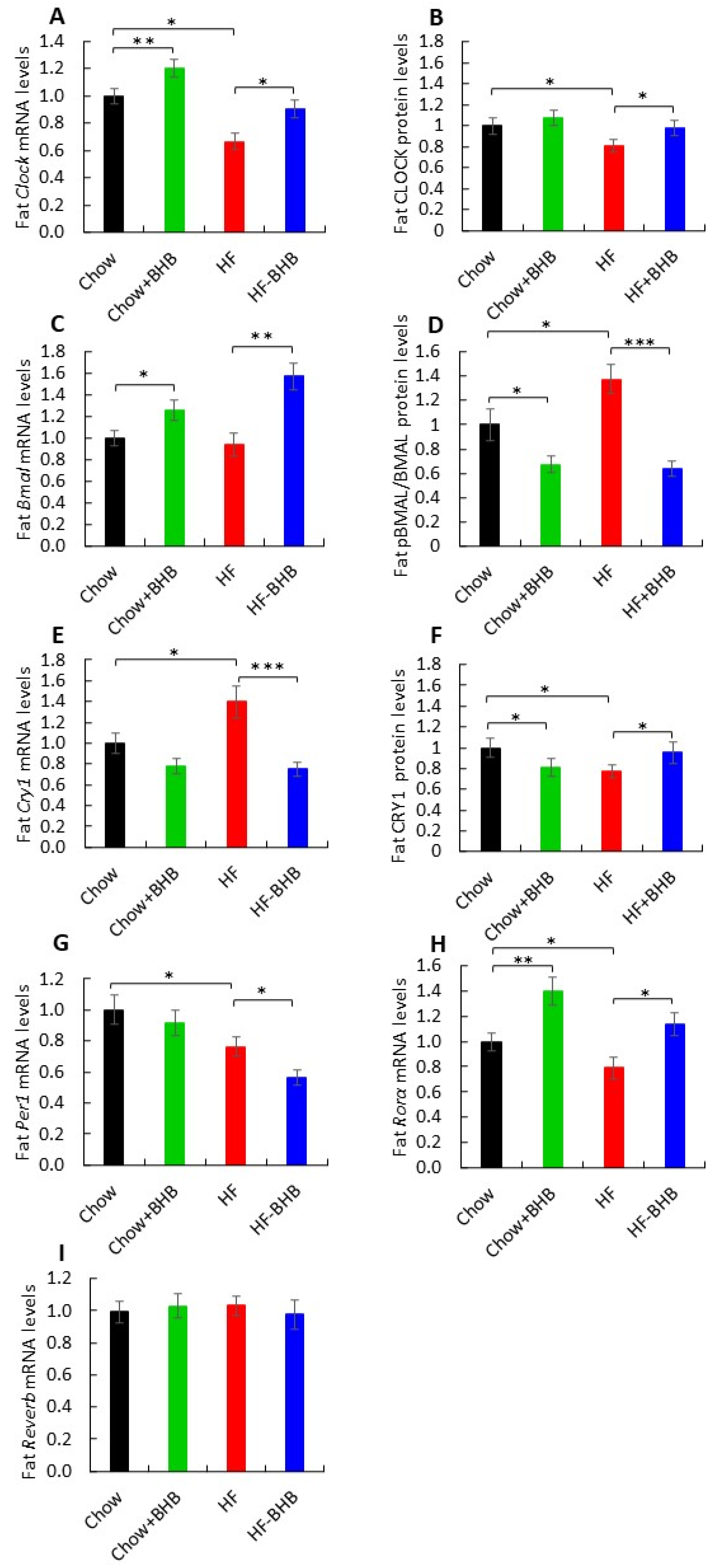
A central finding of this study is the disruption of peripheral circadian rhythms by HF feeding and their partial restoration by BHB. Obesity and HF diets are known to blunt the amplitude and alter the phase of clock gene expression in metabolic tissues [
5,
6,
7]. Here, HF feeding reduced the expression and/or rhythmicity of key positive-arm clock components, including
Clock and
Bmal1, particularly in adipose tissue. These findings are consistent with reports that metabolic overload dampens peripheral clock oscillations and desynchronizes tissue-specific rhythms [
27]. BHB supplementation partially restored
Clock and
Bmal1 expression and normalized BMAL1 phosphorylation in adipose tissue, suggesting improved clock protein stability and turnover. Importantly, BHB modulated both amplitude and phase of oscillations in genes such as
Per1 and
Rorα. Interestingly, the effects of BHB were tissue-specific. While adipose tissue showed robust restoration of positive-arm clock components, hepatic responses were more modest and included phase shifts rather than full amplitude recovery. This differential sensitivity may reflect tissue-specific ketone utilization rates or distinct clock-metabolism coupling mechanisms. The observed discrepancies between mRNA and protein levels for certain clock components may be explained by post-transcriptional regulation, differences in protein stability, or temporal delays between transcription and translation [
28].
The interaction between cellular metabolism and the molecular clock is bidirectional: AMPK directly phosphorylates CRY proteins, promoting their degradation and thereby resetting clock timing [
29]. Moreover, ketone bodies have been shown to function as epigenetic regulators via histone deacetylase (HDAC) inhibition [
9,
30], which may influence circadian gene transcription. Therefore, the clock-modulating effects of BHB observed here may result from combined AMPK activation, altered redox signaling and epigenetic regulation. In addition, BHB enhanced muscle myogenin expression and modified circadian gene rhythmicity, suggesting coordinated regulation of myogenic and clock pathways. Muscle clock genes are tightly linked to metabolic flexibility and mitochondrial function [
31]. Thus, BHB-mediated improvements in muscle AMPK signaling and clock amplitude may contribute to enhanced metabolic adaptability.
An important limitation of this study is the significant reduction in food intake observed in the HF + BHB group. Reduced caloric intake alone can influence metabolic signaling pathways, including activation of AMPK, suppression of mTOR signaling and modulation of inflammatory pathways. Therefore, it is difficult to fully distinguish between direct effects of BHB and secondary effects due to reduced energy intake. Future studies employing pair-feeding designs will be necessary to isolate the specific contribution of BHB. Another limitation is that circulating BHB levels were assessed only under fasting conditions at a single time point. Although BHB supplementation was administered in the diet, circulating BHB levels were not elevated under fasting conditions at the time of measurement. This limits our ability to confirm direct systemic effects of BHB in the present dataset. Several alternative explanations should be considered. First, BHB levels may increase transiently in the postprandial state and therefore not be captured in fasting measurements. Second, BHB may be rapidly taken up and metabolized by peripheral tissues, resulting in tissue-specific effects without sustained elevation in circulation. Third, some observed effects may be indirectly mediated through changes in feeding behavior and energy balance. Thus, the observed metabolic and circadian changes may reflect a combination of direct and indirect mechanisms. Continuous or time-resolved measurements would be required to better characterize systemic exposure. While parallel changes in metabolic signaling and circadian gene expression were observed, the present study does not establish a causal relationship between these processes. The findings should therefore be interpreted as correlative.