The Wild Plants from the Family Asteraceae That Are Traditionally Used for Food in Sicily and Bulgaria and Their Health Benefits

 ,
,  ,
,  ,
,  , , and
Abstract
1. Introduction
2. Materials and Methods
3. Results and Discussion
3.1. Ethnobotanical Data
3.2. Bioactive Compounds and Pharmacological Effects

| Taxon | Major Bioactive Compounds | Therapeutic Activity | Toxicity |
|---|---|---|---|
| Artemisia vulgaris L. | Sesquiterpenoid lactones (psilostachyin, psilostachyin C, vulgarin, and artemisinin), flavonoids (kaempferol, quercetin, apigenin, chrysoeriol, rutin, tricin, and vitexin); coumarins (esculin, umbelliferone, and scopoletin); organic acid (quinic acid); phenolic acids (protocatechuic acid glucoside and caffeic acid); sterols (sitosterol and stigmasterol); polyacetylenes; carotenoids; vitamins (ascorbic acid); cyanogenic glycosides (prunasin); and essential oils (1,8-cineole, sabinene, camphor, camphene, caryophyllene oxide, α-thujone, and β -thujone) [23,24,25]. | Antioxidant activity: IC50: 0.031 mg/mL (DPPH assay) [24]; IC50: 4.3 μg/mL (DPPH assay) [25]; IC50: 11.4 µg/mL (DPPH assay) [26]; IC50: 125 mg/mL (NO assay) [26]. Analgesic activity (in vivo). Effective doses: 200 and 400 mg/kg [25]. Antihypertensive activity (in vivo). Effective doses: 10 mg/mL and 1 mg/mL [23]. Cytotoxic activity: MCF-7 (breast cancer) IC50: 190 ng/mL; HeLa (cervical cancer) IC50: 284 ng/mL; A7R5 (smooth muscle cells) IC50: 382 ng/mL; 293T (transformed kidney cells) IC50: 317 ng/mL; A549 (lung carcinoma) IC50: 778 ng/mL [26]. Antispasmodic/ antinociceptive activity (in vivo). Effective doses: 500 mg/kg and 1000 mg/kg. Anti-inflammatory/hypolipidemic/hepatoprotective (in vivo). Effective dose: 100–600 mg/kg [26]. Estrogenic, antimicrobial, antiallergic, antimalarial, and gastrointestinal digestion stimulation [26]. Cytotoxicity via mitochondrial dysfunction and caspase activation [27]. | Toxic after prolonged use [26]. |
| Bellis perennis L. | Flavonoids (apigenin 7-O-β-D-glucoside, apigenin 7-O-β-D-glucuronide, kaempferol, kaempferol 3-O-β-D-glucoside, isorhamnetin 3-O-β-D-galactoside, and quercetin) [28], essential oils (methyl dec-4,6-diynoate and dec-4,6-diynoic acid) [29], and hydroxycinnamates (caffeic acid, rosmarinic acid, chlorogenic acid, neochlorogenic acid, 3,5-dicaffeoylquinic acid, 3,4-dicaffeoylquinic acid, 4,5-dicaffeoylquinic acid, and 3,4-dicaffeoylquinic acid methyl ester) [30]. | Antimicrobial, wound healing, nephroprotective, and insulin mimetic effects, as well as an effect on lipid metabolism [31,32]. Anxiolytic/antidepressant-like effects (in vivo). Effective doses: 50, 100, and 150 mg/kg [31]. Antioxidant activity: IC50: 168.4 µg/mL (DPPH assay); IC50: 74.69 µg/mL (ABTS assay); IC50: 78.45 µg/mL (β-Carotene test) [32]. Cytotoxic activity: MCF-7 (breast cancer) IC50: 71.6 µg/mL; HepG2 (liver cancer) IC50: 73.9 µg/mL [32]. | No toxic symptoms [31], but details are still needed [33]. |
| Carduus nutans L. | Phenolic compounds such as chlorogenic acid, cryptochlorogenic acid, dicaffeoylquinic acids, kaempferol 3-O-glucoside, kaempferol 3-O-rhamnoside, luteolin, apigenin, kaempferol, diosmetin, tricin, and luteolin O-arabinosyl-glucoside, apigenin O-rhamnosyl-glucoside, and apigenin 7-O-glucoside, and diosmetin acetyl glycosides [34]. | Gastrointestinal disorders, liver depurative [35]. | Not reported. |
| Carlina gummifera (L.) Less. | Sesquiterpene compounds and acetylenic compound (carlina oxide and 13-methoxy-carlina oxide) [36,37]. | 100% fidelity level in the local population in Tamalous (north-east of Algeria), specifically to treat a single category of disease (dermatological disorders) [38]) and antioxidant and antifungal activities [36]. | Toxicity resides in atractyloside and carboxyatractyloside, two diterpenoid glucosides capable of inhibiting mitochondrial oxidative phosphorylation [39]. |
| Carlina sicula Ten. | Terpenoids (sesquiterpene lactones—elemanolides, eudesmanolides, and germacranolides groups), polyphenols, and an alkaloid named siculamide [40]. | Assessed is the potential activity on metabolic syndrome; dihydrocnicin and the lignan salicifoliol demonstrate remarkable stimulation of glucose uptake [40]. | Not reported. |
| Centaurea calcitrapa L. | Phenolic acids (p-hydroxybenzoic acid, protocatechuic acid, gallic acid, gentisic acid, p-coumaric acid, ferulic acid, caffeic acid, and chlorogenic acid), flavonoids (kaempferol, kaempferol 3-O-glucoside, apigenin, luteolin, chrysoeriol, quercetin 3-O-glucoside, and isorhamnetin 3-O-glucoside) [41], essential oils (β-caryophyllene, 6,10,14-trimethylpentadecan-2-one, and (Z)-β-farnesene, heptanal) [42], sesquiterpene lactones, and lignans [43,44,45]. | Antibacterial activity: S. aureus; E. amylovora; and X. campestris pv. campestris MIC: 13–25 µg/mL [41]. Antioxidant activity: IC50: 0.84 mg/mL (DPPH assay) [41]; IC50: 0.88 mg/mL (ABTS assay) [41]. Cytotoxic activity: MCF-7 (breast cancer) IC50: 127.6 µg/mL [44]. | All tested concentrations considered as non-toxic [41]. |
| Centaurea cyanus L. | Flavonoids (apigenin, luteolin, galangin, kaempferol, catechin, hesperidin, naringenin, quercetin, isorhamnetin, isoquercitrin, naringin, rutin, and pinobanksin); phenolic acids (benzoic, p-aminobenzoic, ferulic, syringic, chlorogenic, salicylic, p-coumaric, vanillic, gallic, and caffeic and sinapinic acids); tocopherols (α-, β-, γ-, and δ-tocopherols); carotenoids (β-carotene and luteolin), lactones, lignans alkaloids, terpenes, and amino acids [46,47]. | Anti-inflammatory, skin cleansing, regulating digestion and kidney, gall bladder, liver disorders, and increasing immunity [48]. | Photoactive thiophenes, which are potentially toxic [49]. Non-toxic [50]. |
| Centaurea napifolia L. | Sesquiterpene lactones (cnicin, 4′-O-acetylcnicin, melitensin, and dehydromelitensin), sesquilignans (lappaol A) [51] and flavonoids (quercetin, hispidulin, cirsimaritin, cirsilineol, and 5-hydroxy-6,7,3′,4′-tetramethoxyflavone) [52]. Essential oil with a low concentration of volatiles and dominating constituents such as palmitic acid and fatty acid methyl esters [53]. | Low antimicrobial activity of the essential oil [53]. | Not reported. |
| Cichorium intybus L. | Carotenoids (lutein, violaxanthin, antheraxanthin, neoxanthin, and β-carotene), phenolic acids (chlorogenic acid, caffeic acid, and chicoric acid) [54,55]; tannins, saponins [56], sesquiterpene lactones (15-deoxylactucin-8-sulfate, dihydrolactucin-8-sulfate, 11-β,13-dihydrolactucin, lactucin, 8-deoxylactucin, jacquinelin, dihydrolactucopicrin, and lactucopicrin) [57], and inulin [58,59,60]. | Traditionally used for loss of appetite, liver disorders, diarrhea, strengthening the prostate and other reproductive organs, pulmonary cancer, hangover, and purification of biliary tract, etc. [61,62]. Antioxidant activity associated with the presence of inulin, caffeic acid derivatives, ferulic acid, caftaric acid, chicoric acid, chlorogenic and isochlorogenic acids, dicaffeoyl tartaric acid, sugars, proteins, hydroxycoumarins, flavonoids, and sesquiterpene lactones [60]. Anti-inflammatory [63], as well as anti-hepatotoxic activity, anti-diabetic, and antimicrobial effects [58], and antiviral properties with potential against SARS-CoV-2 [59]. Cytotoxic activities in vitro and antitumor action in vivo; anticancer potential— C. intybus modulates NF-κB and Wnt/β-catenin pathways to inhibit proliferation [27]. | The root extract containing sesquiterpene lactones is non-toxic and non-mutagenic even at 1000 mg/kg/day [58]. |
| Crepis vesicaria L. | Phenolic compounds with chicoric acid as a major constituent [64]; xanthophylls (violaxanthin, neoxanthin, lutein, zeaxanthin, and β-cryptoxanthin); carotenes (α-carotene, β-carotene, 9-cis-βcarotene, and 13-cis-β-carotene); tocols (in particular about 2–3 mg/100 g of α-tocopherol); thiamine; riboflavin [65]; sesquiterpenes such as 8-deoxylactucin and 11β,13-dihydro-8-deoxylactucin; flavonoids such as luteolin, luteolin 7-O-glucoside, and luteolin 4′-O-glucoside; phenolic compounds; chlorogenic acid; and 4,4′-dihydroxy-stilbene [57,66]. | The traditional use is reported in cases of abdominal colic and anemia, as well as diuretic, hypoglycemic, hypertensive, and laxative effects [63]. Antioxidant activity is reported in DPPH, ABTS, and FRAP assays [65] | Not reported. |
| Crepis sancta (L.) Bornm. | Eudesmane-type sesquiterpenoids (3-oxo-γ-costic acid and its methyl ester); flavonoids (kumatakenin, penduletin, pachypodol, chrysosplenetin, jaceidin, casticin, and quercetin); phenolic acids (3-O-caffeoylquinic acid, 5-O-caffeoylquinic acid, and chicoric and caftaric acids) [67,68,69]). | Antimicrobial, antiviral, antiproliferative, antioxidant, analgesic, vasodilator, and anti-inflammatory activity [68]. Gastroprotective effect (in vivo). Effective doses: 100, 200 mg/kg [68]. | Non-toxic [68]. |
| Crepis leontodontoides All. | Sesquisterpene lactones (15-deoxylactucin-8-sulfate, dihydrolactucin-8-sulfate, 11β,13-dihydrolactucin, lactucin, 8-deoxylactucin, and jacquinelin) [57,66]. | Laxative effect [63,66]. | Not reported. |
| Cynara cardunculus L. | Total polyphenols, hydroxycinnamic acids, anthocyanins, chlorophyll, ortho-diphenols, terpenoids, and triterpenoids [70]. Phenolic compounds (chlorogenic acid, p-coumaroylquinic acid, 5-O-feruloylquinic acid, luteolin-7-O-rutinoside, cynaroside, 3,4-dicaffeoylquinic acid, cynarin, luteolin-7-O-malonyl-glucoside, and 4,5-dicaffeoylquinic acid) [71] | Hepatoprotective [72,73], anti-inflammatory [70,74,75,76], and hypoglycemic activity [63]. Anti-angiogenic effects: IC50 ≈ 40 µg/embryo (zebrafish) [76]. Antioxidant activity: IC50: 20.04 ± 2.52 µg/mL [73]. | Absence of toxicity [73]. |
| Doronicum orientale Hoffm. | Flavonoids (catechin, kaempferol, rutin, isorhamnetin-3-O-rutinoside, quercetin, hesperidin, and hyperoside and its glucoside derivatives); phenolic acids (p-coumaric, caffeic, ferulic, gallic, chlorogenic, rosmarinic, syringic, dicaffeoylquinic, 4,5-/3,5-/3,4-di-O-caffeoylquinic acid, and 3- and 4-hydroxybenzoic acids); and essential oils ((E)-β-farnesene, α-zingiberene, germacrene D, (E)-caryophyllene, β-elemene, 2-pentylfuran, and decanal) [77]. Click or tap here to enter text. | Antimicrobial and analgesic activity. Beneficial in he treatment of rheumatic pain, possessing wound healing properties [77]. Antioxidant activity: IC50: 2.38 mg/mL (DPPH assay); IC50: 1.11 mg/mL (FRAP assay) [77]. | Not reported. |
| Helminthotheca echioides (L.) Holub | Sesquiterpene lactones—guaianolides jacquinelin, 11-epi-jacquinelin, achillin, and eudesmanolide telekin; and monoterpene glucosides [78,79], as well as phenolic compounds with the most abundant luteolin and apigenin derivates [80]. | Antioxidant [78] and antimicrobial [80]. Antibacterial activity: B. cereus (MIC 0.15 mg/mL); S. aureus (MIC 0.30 mg/mL); S. typhimurium (MIC 0.20 mg/mL) [80]. | Not reported. |
| Hyoseris radiata L. | Hydroxycinnamic acids, flavonoids, megastigmane glucosides, coumarins, and lignans, together with several unsaturated fatty acids. | Diuretic [63]. Antioxidant activity: IC50: 2.43 mM (DPPH assay); IC50: 3.13 mM (ABTS assay) [81]. Anti-inflammatory activity: Inhibited COX-2 expression (50 µg/mL vs. LPS) [81]. Hypolipidemic activity: IC50: 39.8 μg/mL [82]. | Not reported. |
| Hypochaeris achyrophorus L. | Sesquiterpenoids (8α-hydroxyhypoglabric acid and its 12,8-olide) [83]. | Not reported. | Not reported. |
| Hypochaeris cretensis (L.) Bory & Chaub. | Terpenes (taraxasterol, lupeol and its acetate and Δ12-isomer, phytol, isoalantolactone, hypocretenofide, and methyl hypocretenoate) [84] and sesquiterpene lactones, namely, the rare class hypocretenolides [85]. | Cytotoxic and potential to induce apoptosis [85]. | Not reported. |
| Hypochaeris radicata L. | Alkaloids (nicotine, colchicine, and strychnine), phenolic compounds (isoquercetin, chlorogenic acid, kaempferol, and quercetin, coumarin), glycosides, saponins, and terpenoids (lupeol) [86]. | Anti-diabetic effect. α-glucosidase inhibitory activity IC50: 37.6 µg/mL; α-amylase inhibitory activity IC50: 56.9 µg/mL; and lipase inhibitory activity IC50: 52.4 µg/mL [82]. | Not reported. |
| Inula helenium L. | Eudesmane-type sesquiterpenes [87], phenolic acid, flavonoids, and inulin [88]. | Digestive and respiratory diseases, anti-inflammatory, antioxidant. and neuroprotective [17,88]. Anti-proliferation activity as isoalantolactone on pancreatic cancer and cells: PANC-1 IC50: 3.75 µg/mL and SW1990 IC50: 3.15 µg/mL [89]. Anthelmintic, antistaphylococcal, and antibacterial [90]. | Not reported. |
| Lactuca serriola L. | Essential oil with hexadecanoic and oleic acid as dominant components [91], triterpenoid compounds, fatty acids, fatty acid esters, dicarboxylic acid esters [92], sesquiterpene lactones in the latex—lactucin-type guaianolides (lactucin, lactucopicrin, 11β,13-dihydrolactucin, and 11β,13-dihydrolactucopicrin) [93]. | Sedative [63,93]; treatment of headache, insomnia, nervousness, hypertension, palpitation, fever, etc.; sedative, hypnotic, diuretic, antioxidant, anesthetic, antispasmodic, anticancer, bronchodilator, and vasorelaxant effects [94]. Antibacterial activity: S. aureus, P. aeruginosa, and C. albicans (MIC 0.94 μL/mL); C. parapsilosis (MIC 0.47 μL/mL); K. pneumoniae (MIC 1.87 μL/mL) [91]. Analgesic, anti-inflammatory, and antioxidant properties [91,93]. | Not reported. |
| Lapsana communis L. | Flavonoids (quercetin-3-O-(2″-O-rhamnosyl)rutinoside, kaempferol-3-O-(2″-O-rhamnosyl)rutinoside, quercetin-3-O-rutinoside, quercetin-3-O-hexoside, quercetin-3-O-(6″-O-malonyl)-glucoside, kaempferol-3-O-rutinoside, kaempferol-3-O-glucoside, and kaempferol-3-O-(6″-O-malonyl)-glucoside); phenolic acids (3-O-caffeoylquinic, cis-3-O-p-coumaroylquinic, trans-3-O-p-coumaroylquinic, and 4- and 5-O-caffeoylquinic acids); calcones (xanthohumol); essential oils (α-humulene, β-caryophyllene, γ- and δ-cadinene, β-farnesene, and borneol); α- and β-bitter acids (cohumulone, humulone, colupulone, lupulone [95,96], triterpene alcohols, and the fatty acids of nonsaponifiable matter [97]) and sesquiterpene lactone glycosides: crepiside E, tectoroside, lapsanoside A, lapsanoside B, and lapsanoside C in the latex of young stems [98]. | Antibacterial but no cytotoxic activity [98] and volatile oils reveal powerful anti-inflammatory activity [96]. | Not reported. |
| Leontodon tuberosus L. | Phenolic compounds (chlorogenic acid, 3,5-dicaffeoylquinic acid, and lignan glicosides such as 2,4,6-trihydroxyacetophenone, 2-O-β-D-glucopyranoside, and syringaresinol 4′-O-β-D-glucopyranoside) and sesquisterpenes (1,2-dehydro-3-oxocostic acid β-D-glucopyranosyl ester) [99]. | Not reported. | Not reported. |
| Onopordum acanthium L. | Saponins, alkaloids, sesquiterpene lactones (4β,14-dihydro-3-dehydrozaluzanin C, zaluzanin C, and 4β,15,11β,13-tetrahydrozaluzanin C), triterpenes, sterols, nitrogen-containing compounds, phenolic compounds—lignans (serotonin derivatives, arctiin, arctigenin, and matairesinol), the neolignan nitidanin-diisovalerianate, flavonoids, phenolic acids with hydroxycinnamic acids as major compounds, coumarins, inulin, soluble sugars, proteins, and oils [100,101,102,103]. | Used traditionally as bactericide, cardiotonic and hemostatic, and diuretic to treat nervousness, inflammation of the bladder, and the respiratory and urinary systems. Anti-inflammatory, analgesic, antipyretic, antiepileptic, and wound healing activities [102,104,105,106]. Antibacterial activity: S. epidermidis, M. luteus (MIC ~612 μg/mL) [104]. Hypotensive activity: IC50: 180–300 µM [105]. Antioxidant activity: IC50: ~2.6 μg/mL (DPPH assay) [105,106]. Cytotoxic activity: U-373 (glioblastoma); IC50: ~309 μg/mL [105,106]. | Safe and non-toxic [105,107]. |
| Onopordum illyricum L. | Sesquiterpene lactones, triterpenes, polyphenols—flavones and caffeoylquinic acids and their derivatives, hydroxycinnamic acid, flavonol derivatives, cynarin, 1-succinyl, 3,5-dicaffeoylquinic acid, arctiin, hispidulin, luteolin, apigenin, apigenin 4′-O-methyl ether, apigenin rutinoside, chlorogenic acid, rhamnetin, rhamnetin rutinoside, kaempferide glucoside, and sesquisterpenes (vernomelitensin, 8-(4′-hydroxymethacryloyl)-dehydromelitensin, elemacarmanin, onopordopicrin, carmanin, 8α-(5-hydroxy)-angeloylsalonitenolide, and onopordopicrin) [108,109,110,111,112,113,114]. | Antioxidant, antiradical, and anticholinergic properties [110]. Anti-inflammatory activity: Reduced TNFα-induced IL-8 secretion; IC50: ~12 μg/mL; Reduced NF-κB activity in gastric AGS cells (IC50: 0.65 μM [111,113]. Anti-HIV-1: IC50: 8.8 μg/mL [112]. | Lack of toxicity [108]. |
| Reichardia picroides (L.) Roth | Polyphenols, flavonoids, and the isolated pure compound luteolin 7-O-β-D-glucoside [115]. | Antioxidant, hypoglycemiant, diuretic, depurative, galactagogue and tonic agent, and anti-hemolytic protective [63,115,116]. Gastroprotective activity (in vivo). Effective dose: 500 mg/kg reduced ulceration index and increased protection percentage [116]. | Toxicity assays reveal a lethal dose of chloroform extract superior to 5000 mg/kg [115]. |
| Scolymus grandiflorus Desf. | Stigmasterol, γ-sitosterol, lupeol, lupeol acetate, and β-amyrin. Phytochemicals, such as 2-linoleoylglycerol, γ-sitosterol, β-amyrin, lupeol, (3α)-12-oleanen-3-yl acetate, and lupenyl acetate [94], as well as essential oil with davanone and davanol D1 and 2-hydroxy-davanone as dominant constituents [117]. | Essential oil rich in davanone and davanol D-1 and 2-hydroxy-davanone may be a new source of non-toxic anticancer agents [94,117]. Antioxidant cctivity: IC50: 0.75 mg/mL (DPPH assay) [94]; IC50: 0.61 mg/mL (ABTS assay) [94]. Antibacterial activity: S. aureus; C. albicans (MIC 2.5 mg/mL); and E. coli (MIC 5 mg/mL) [117,118]. | Not reported. |
| Scorzoneroides cichoriacea (Ten.) Greuter | Germacrane-type sesquiterpenoids (glucozaluzanin C and 15-β-D-glucopyranosyl-8-[p-(β-D-glucopyranosyloxy) phenylacetyl]-salonitenolide) [119]. | No cytotoxic activity [119]. | Not reported. |
| Silybum marianum L. Gaertn. | Milk thistle is mostly known for the flavonolignans silymarin, silibinin (silybin A and silybin B), isosilibinin, silychristin, silydianin, and others [120,121,122] and flavonoids (taxifolin, quercetin, etc.) [122,123], as well as phenolic acids [122]. | Antioxidant activity: IC50: 19.2 μg/mL (DPPH assay); IC50: 7.2 μg/mL (ABTS assay); IC50: 22.2 μg/mL (CUPRAC assay); IC50: 24.1 μg/mL (FRAP assay) [122]. Antidiabetic effects: α-glucosidase inhibitory activity IC50: 18.1 µg/m; α-amylase inhibitory activity IC50: 26.5 µg/mL [122]. Gastrointestinal disorders—relief of dyspepsia and digestive complaints of hepatic origin [124]. | Non-toxic [49]. |
| Sonchus arvensis L. | Steroids (ergost-6,22-diene-3β,5α,8α-triol, ergost-5,22-diene-3β,7α-diol, stigmasterol-5-ene-3β,7α-diol, stigmasterol-7,22-diene-3β,5α,6β-triol, β-sitosterol, daucosterol, and stigmasterol-4,22-diene-6β-ol-3-one); sesquiterpenes (sonchuside-E, sonchuside-F, sonchuside-G, sonchuside-H, sonchuside I, sonchuside A, and pirciside C); and vitamin C [123,125]. | Antioxidant activity: IC50: 341.2 μg/mL aqueous extract (DPPH assay) [126]. IC50: 366.6 μg/mL methanol extract (DPPH assay) [126]. Xanthine oxidase inhibitory activities: IC50: 81.73 μg/mL aqueous extract; IC50: 78.81 μg/mL methanol extract [126]. | Non-toxic [127]. |
| Sonchus asper (L.) Hill | Fatty acids; vitamins; phenolic acids (gallic, caffeic, coumaric, and acids); flavonoids (luteolin, rutin, and quercetin and its derivatives); sesquiterpene lactons; alkaloids; and phytic acid [128,129]. | Anti-inflammatory, antimicrobial, antioxidant, antidiabetic, and cardioprotective [130]. | Non-toxic [130]. |
| Sonchus oleraceus L. | Sesquiterpene glycosides (glucozaluzanin C, macrocliniside A, crepidiaside A, picriside B, picriside C, and sonchusides A-D) [131]; flavonoids (luteolin, luteolin-7-O-β-D-glucoside, apigenin, kaempferol, quercetin, apigetrin, astragalin, and isoquercetin), phenolic acids, and essential oils [132]. | Not reported. | Not reported. |
| Taraxacum officinale aggr. | Sesquiterpenoids (tetrahydroridentin B, taraxacolide 1-O-β-D-glucopyranoside, taraxinic acid β-D-glucopyranosyl ester, and ixerin D); steroids and triterpenoids (sitosterol, stigmasterol, campesterol, and taraxasteryl acetate); phenolic acids (quinic, caftaric, coutaric, chicoric, caffeoylquinic, and chlorogenic acids); flavonoids (luteolin, chrysoeriol, and apigenin and its derivatives); wax and latex; tocopherols; carotenoids; fibers; and minerals [133]. | Diuretic [63]. | Non-toxic [134] but the excessive consumption of officinale could be contra-indicated, due to a particular sesquiterpene lactone [63]. |
| Tragopogon dubius Scop. | Terpenes, phenolic compounds, flavonoids, phenolic acids (including chlorogenic and rosmarinic acids), tannins, alkaloids, and carbohydrates [135,136,137]. | Ethyl acetate extract—potent inhibitor of acetylcholinesterase butyrylcholinesterase, and noteworthy activity against α-glucosidase [135]. Antioxidant activity [136]: IC50: ~132.52 μg/mL (DPPH assay); IC50: ~173.87 μg/mL (ABTS assay); IC50: ~ 128.28 μg/mL (Superoxide assay). Cytotoxic activity [136]: A549 (lung carcinoma) IC50: 31.62 μg/mL. | Not reported. |
| Tussilago farfara L. | Phenolic compounds including chlorogenic and rosmarinic acids; flavonoids and flavonols (kaempferol and its 3-O-β-glucopyranoside, 3-O-α-rhamnopyranosyl(1→6)-β-glucopyranoside, and quercetin derivatives: 3-O-β-arabinopyranoside, 3-O-β-glucopyranoside, and 3-O-α-rhamnopyranosyl(1→6)-β-glucopyranoside) [135,138,139]; sesquiterpenoids (including norsesquiterpenoid—tussfarfarin A) [140,141], patchoulane, 17-pentatriacontene less m-cymene, 5-tridecene, cubebene, germacrene D, (−)-spathulenol, bisabolene epoxide, dibutyl phthalate, 2-hexadecanol, dehydro-aromadendrene, campesterol, and stigmasterol, where the quantities of the components vary between leaves and flowers [142]); pyrrolizidine alkaloids (senkirkine, senecionine and saturated otonecine-type tussilagine, and isotussilagine) [143,144,145,146]; prenylated indole alkaloids; and lignans (flower buds) [147]. | Traditionally used for treating respiratory, digestive, and circulatory ailments; neuroprotective, anti-inflammatory, antioxidant, and anticancer activities [141]; and ethyl acetate extract—potent inhibitor of acetylcholinesterase and butyrylcholinesterase, as well as noteworthy activity against α-glucosidase of methanol extract [135,139]. Sesquiterpenoids isolated from the flower buds inhibit diacylglycerol acyltransferase [148]. | A relatively low level of toxic pyrrolizidine alkaloids [138,145]. |
| Urospermum dalechampii (L.) Scop. ex F.W. Schmidt | Terpenes (urospermal A, l1βH,13-dihydrourospermal A, loliolide, rospermal A 15-O-glucoside 6′-p-hydroxyphenylacetate, and zaluzanin C), flavonoids (naringenin, aromadendrin, and dihydroflavonol 3-O-methyltaxifolin) [149,150], and essential oils (palmitic acid, henecosane, 2-methyl-Z,Z-3,13-octadecadienol, tricosane, dill apiole, myristic acid, myristicin, 2-pentadenanone-6,10,14-trimethyl, lauric acid, elemicin, isobutyl phlatate, caryophyllene oxide, epicubenol-1, β-guaiene, α-bisabolol, and 3,7-dimethyl-octa-1,6-diene) [151]. | Analgesic activity (in vivo): 200 mg/kg 68.4% inhibition of writhing response. Anti-inflammatory (carrageenan-induced pleurisy): 200 mg/kg reduced neutrophil migration [152]. | No signs of acute toxicity in vivo (test dose of 2000 mg/kg) [152]. |
3.3. Toxicity Assays
4. Conclusions
Author Contributions
Funding
Institutional Review Board Statement
Informed Consent Statement
Data Availability Statement
Conflicts of Interest
References
- Samtiya, M.; Aluko, R.E.; Dhewa, T.; Moreno-Rojas, J. Potential Health Benefits of Plant Food-Derived Bioactive Components: An Overview. Foods 2021, 10, 839. [Google Scholar] [CrossRef]
- Shen, J.; Shan, J.; Zhong, L.; Liang, B.; Zhang, D.; Li, M.; Tang, H. Dietary Phytochemicals that Can Extend Longevity by Regulation of Metabolism. Plant Foods Hum. Nutr. 2022, 77, 12–19. [Google Scholar] [CrossRef]
- Salas-Salvadó, J.; Becerra-Tomás, N.; García-Gavilán, J.F.; Bulló, M.; Barrubés, L. Mediterranean Diet and Cardiovascular Disease Prevention: What Do We Know? Prog. Cardiovasc. Dis. 2018, 61, 62–67. [Google Scholar] [CrossRef]
- Rosato, V.; Temple, N.J.; La Vecchia, C.; Castellan, G.; Tavani, A.; Guercio, V. Mediterranean diet and cardiovascular disease: A systematic review and meta-analysis of observational studies. Eur. J. Nutr. 2019, 58, 173–191. [Google Scholar] [CrossRef]
- Burlingame, B.; Dernini, S. Sustainable diets: The Mediterranean diet as an example. Public Health Nutr. 2011, 14, 2285–2287. [Google Scholar] [CrossRef] [PubMed]
- Leonti, M.; Nebel, S.; Rivera, D.; Heinrich, M. Wild gathered food plants in the European Mediterranean: A comparative analysis. Econ. Bot. 2006, 60, 130–142. [Google Scholar] [CrossRef]
- Valdes, B.; Kozuharova, E.; Stoycheva, C. A Review of Edible Wild Plants Recently Introduced into Cultivation in Spain and Their Health Benefits. Int. J. Plant Biol. 2025, 16, 5. [Google Scholar] [CrossRef]
- Ivanova, T.; Marchev, A.; Chervenkov, M.; Bosseva, Y.; Georgiev, M.; Kozuharova, E.; Dimitrova, D. Catching the Green—Diversity of Ruderal Spring Plants Traditionally Consumed in Bulgaria and Their Potential Benefit for Human Health. Diversity 2023, 15, 435. [Google Scholar] [CrossRef]
- Raimondo, F.M.; Domina, G.; Spadaro, V. Checklist of the vascular flora of Sicily. Quad. Bot. Amb. Appl. 2010, 21, 189–252. [Google Scholar]
- Stoyanov, N.; Kitanov, B. Wild Useful Plants; Bulgarian Academy of Sciences Publ. House: Sofia, Bulgaria, 1960; p. 480. [Google Scholar]
- Cheshmedzhiev, I.; Genchev, S.; Dimitrova, D.; Varbanova, K. Wild Plants on Our Table; Zemizdat: Sofia, Bulgaria, 1999; p. 147. [Google Scholar]
- Nedelcheva, A. An ethnobotanical study of wild edible plants in Bulgaria. EurAsian J. Biosci. 2013, 7, 77–94. [Google Scholar] [CrossRef]
- Raimondo, F.M.; Lentini, F. Indagini entnobotaniche in Sicilia. I. Le piante della flora locale nella tradizione popolare delle Madonie (Palermo). Nat. Sicil. 1990, 14, 77–99. [Google Scholar]
- Giardina, G.; Raimondo, F.M.; Spadaro, V. A catologue of the plants growing in Sicily. Bocconea 2007, 20, 5–582. [Google Scholar]
- Mazzola, P. Le piante selvatiche nella tradizione alimentare dei Monti Nebrodi (Sicilia); Università di Palermo e Parco dei Nebrodi: Palermo, Italy, 2020; p. 174. [Google Scholar]
- Schicchi, R.; Geraci, A. Verdure Spontanee per l’alimentazione e la Salute; Palermo University Press: Palermo, Italy, 2021. [Google Scholar]
- Gierlikowska, B.; Gierlikowski, W.; Bekier, K.; Skalicka-Woźniak, K.; Czerwińska, M.E.; Kiss, A.K. Inula helenium and Grindelia squarrosa as a source of compounds with anti-inflammatory activity in human neutrophils and cultured human respiratory epithelium. J. Ethnopharmacol. 2020, 249, 112311. [Google Scholar] [CrossRef]
- Mauromicale, G.; Pesce, G.R.; Curt, M.D.; Fernández, J.; González, J.; Gominho, J.; Gominho, J.; Tabla, R.; Roa, I.; Ezio Portis, E. Cynara cardunculus as a Multiuse Crop. In The Globe Artichoke Genome; Springer International Publishing: Cham, Switzerland, 2019; pp. 65–98. [Google Scholar] [CrossRef]
- Kozuharova, E.; Malfa, G.A.; Acquaviva, R.; Valdés, B.; Batovska, D.; Stoycheva, C.; Rejdali, M.; Marino, P.; Spadaro, V. Wild Species from the Asteraceae Family, Traditionally Consumed in Some Mediterranean Countries. Plants 2025, 14, 2006. [Google Scholar] [CrossRef]
- Jiang, K.; Ning, N.; Huang, J.; Chang, Y.; Wang, R.; Ma, J. Psilostachyin C reduces malignant properties of hepatocellular carcinoma cells by blocking CREBBP-mediated transcription of GATAD2B. Funct. Integr. Genom. 2024, 24, 75. [Google Scholar] [CrossRef]
- Amorim, M.H.R.; Gil da Costa, R.M.; Lopes, C.; Bastos, M.M. Sesquiterpene lactones: Adverse health effects and toxicity mechanisms. Crit. Rev. Toxicol. 2013, 43, 559–579. [Google Scholar] [CrossRef]
- Padilla-Gonzalez, G.F.; dos Santos, F.A.; Da Costa, F.B. Sesquiterpene lactones: More than protective plant compounds with high toxicity. Crit. Rev. Plant Sci. 2016, 35, 18–37. [Google Scholar] [CrossRef]
- Tigno, X.T.; de Guzman, F.; Flora, A.M.a.T.V. Phytochemical Analysis and Hemodynamic Actions of Artemisia vulgaris L. Clin. Hemorheol. Microcirc. 2000, 23, 167–175. [Google Scholar]
- Melguizo-Melguizo, D.; Diaz-de-Cerio, E.; Quirantes-Piné, R.; Švarc-Gajić, J.; Segura-Carretero, A. The Potential of Artemisia Vulgaris Leaves as a Source of Antioxidant Phenolic Compounds. J. Funct. Foods 2014, 10, 192–200. [Google Scholar] [CrossRef]
- Thangjam, N.M.; Taijong, J.; Kumar, A. Phytochemical and Pharmacological Activities of Methanol Extract of Artemisia vulgaris L. Leaves. Clin. Phytosci. 2020, 6, 72. [Google Scholar] [CrossRef]
- Ekiert, H.; Pajor, J.; Klin, P.; Rzepiela, A.; Slesak, H.; Szopa, A. Significance of Artemisia vulgaris L. (Common Mugwort) in the History of Medicine and Its Possible Contemporary Applications Substantiated by Phytochemical and Pharmacological Studies. Molecules 2020, 25, 4415. [Google Scholar] [CrossRef]
- Choubey, S.; Sharma, V.; Anand, S.; Shahi, S. Comparative Anticancer Potential of Artemisia vulgaris, Cichorium intybus, and Smilax glabra: A Review. Cuest. Fisioter. 2024, 53, 555–562. [Google Scholar]
- Nazaruk, J.; Gudej, J. Qualitative and quantitative chromatographic investigation of flavonoids in Bellis perennis L. Acta Pol. Pharm. 2001, 58, 401–405. [Google Scholar]
- Avato, P.; Vitali, C.; Mongelli, P.; Tava, A. Antimicrobial activity of polyacetylenes from Bellis perennis and their synthetic derivatives. Planta Medica 1997, 63, 503–507. [Google Scholar] [CrossRef]
- Scognamiglio, M.; Esposito, A.; D’Abrosca, B.; Pacifico, S.; Fiumano, V.; Tsafantakis, N.; Monaco, P.; Fiorentino, A. Isolation, distribution and allelopathic effect of caffeic acid derivatives from Bellis perennis L. Biochem. Syst. Ecol. 2012, 43, 108–113. [Google Scholar] [CrossRef]
- Marques, T.H.C.; Melo, C.H.S.D.; Freitas, R.M.D. In vitro evaluation of antioxidant, anxiolytic and antidepressant-like effects of the Bellis perennis extract. Rev. Bras. Farmacogn. 2012, 22, 1044–1052. [Google Scholar] [CrossRef]
- Albien, A.L.; Stark, T.D. (Bio) active Compounds in Daisy Flower (Bellis perennis). Molecules 2023, 28, 7716. [Google Scholar] [CrossRef]
- Marques, T.H.C.; de Almeida, A.A.C.; dos Santos, P.S.; Melo, C.H.S.; de Freitas, R.M. Agronomic, genetic, morphoanatomic, phytochemical, toxicological and pharmacological studies of Bellis perennis L. (daisy). Rev. Cuba. Plantas Med. 2014, 19, 85–100. [Google Scholar]
- Marengo, A.; Maxia, A.; Sanna, C.; Bertea, C.M.; Bicchi, C.; Ballero, M.; Cagliero, C.; Rubiolo, P. Characterization of four wild edible Carduus species from the Mediterranean region via phytochemical and biomolecular analyses. Food Res. Int. 2017, 100, 822–831. [Google Scholar] [CrossRef]
- Tetik, F.; Civelek, S.; Cakilcioglu, U. Traditional uses of some medicinal plants in Malatya (Turkey). J. Ethnopharmacol. 2013, 146, 331–346. [Google Scholar] [CrossRef] [PubMed]
- Mejdoub, K.; Mami, I.R.; Belabbes, R.; Dib, M.E.A.; DJabou, N.; Tabti, B.; Benyelles, N.G.; Costa, J.; Muselli, A. Chemical variability of Atractylis gummifera essential oils at three developmental stages and investigation of their antioxidant, antifungal and insecticidal activities. Curr. Bioact. Compd. 2020, 16, 489–497. [Google Scholar] [CrossRef]
- Amina, T.Z.; Amina, H.; Nawel, B.N. Analysis of the Chemical Composition and Evaluation of Antioxidant and Anti-Inflammatory Properties of Hydrosol Extract and Its Principal Component (Carlina Oxide) in Aerial Parts of Atractylis gummifera from Western Algeria. Chem. Proc. 2023, 14, 66. [Google Scholar] [CrossRef]
- Belaidi, A.; Pardo, F.M.V.; Márquez-García, F. Medicinal plant diversity and uses in the region of Tamalous (Northeast of Algeria). Agrar. Acad. J. 2025, 8, 78–92. [Google Scholar] [CrossRef]
- Daniele, C.; Dahamna, S.; Firuzi, O.; Sekfali, N.; Saso, L.; Mazzanti, G. Atractylis gummifera L. poisoning: An ethnopharmacological review. J. Ethnopharmacol. 2005, 97, 175–181. [Google Scholar] [CrossRef]
- Serino, E.; Rigano, D.; Bruno, M.; Pastore, A.; Stornaiuolo, M.; Formisano, C.; Taglialatela-Scafati, O. Glucose uptake-stimulating metabolites from aerial parts of Centaurea sicula. J. Nat. Prod. 2024, 87, 1179–1186. [Google Scholar] [CrossRef]
- Dimkić, I.; Petrović, M.; Gavrilović, M.; Gašić, U.; Ristivojević, P.; Stanković, S.; Janaćković, P. New perspectives of purple starthistle (Centaurea calcitrapa) leaf extracts: Phytochemical analysis, cytotoxicity and antimicrobial activity. AMB Express 2020, 10, 183. [Google Scholar] [CrossRef]
- Dob, T.; Dahmane, D.; Gauriat-Desrdy, B.; Daligault, V. Essential oil composition of Centaurea calcitrapa L. from Algeria. J. Essent. Oil Res. 2009, 21, 216–219. [Google Scholar] [CrossRef]
- Senatore, F.; Landolfi, S.; Celik, S.; Bruno, M. Volatile components of Centaurea calcitrapa L. and Centaurea sphaerocephala L. ssp. sphaerocephala, two Asteraceae growing wild in Sicily. Flavour Fragr. J. 2006, 21, 282–285. [Google Scholar] [CrossRef]
- Aboul-Soud, M.A.; Ennaji, H.; Kumar, A.; Alfhili, M.A.; Bari, A.; Ahamed, M.; Giesy, J.P. Antioxidant, anti-proliferative activity and chemical fingerprinting of centaurea calcitrapa against breast cancer cells and molecular docking of caspase-3. Antioxidants 2022, 11, 1514. [Google Scholar] [CrossRef]
- Mekky, A.E.; Saied, E.; Abdelmouty, E.S.; Haggag, M.I.; Khedr, M.; Khalel, A.F.; Mahmoud, N.N. Phytochemical Analysis of Centaurea calcitrapa L. Aerial Flowering Parts Serial Solvent Extracts and Its Antibacterial and Antioxidant Activities. Life 2024, 14, 900. [Google Scholar] [CrossRef] [PubMed]
- Litvinenko, V.I.; Bubenchikova, V.N. Phytochemical Study of Centaurea cyanus. Chem. Nat. Compd. 1988, 24, 672–674. [Google Scholar] [CrossRef]
- Sharonova, N.; Nikitin, E.; Terenzhev, D.; Lyubina, A.; Amerhanova, S.; Bushmeleva, K.; Rakhmaeva, A.; Fitsev, I.; Sinyashin, K. Comparative Assessment of the Phytochemical Composition and Biological Activity of Extracts of Flowering Plants of Centaurea cyanus L., Centaurea jacea L. and Centaurea scabiosa L. Plants 2021, 10, 1279. [Google Scholar] [CrossRef] [PubMed]
- Fernandes, L.; Pereira, J.A.; Saraiva, J.A.; Ramalhosa, E.; Casal, S. Phytochemical Characterization of Borago officinalis L. and Centaurea cyanus L. during Flower Development. Food Res. Int. 2019, 123, 771–778. [Google Scholar] [CrossRef]
- Tosi, B.; Bonora, A.; Dall’Olio, G.; Bruni, A. Screening for Toxic Thiophene Compounds from Crude Drugs of the Family Compositae Used in Northern Italy. Phytother. Res. 1991, 5, 59–62. [Google Scholar] [CrossRef]
- Escher, G.B.; Santos, J.S.; Rosso, N.D.; Marques, M.B.; Azevedo, L.; do Carmo, M.A.V.; Daguer, H.; Molognoni, L.; do Prado-Silva, L.; Sant’Ana, A.S.; et al. Chemical Study, Antioxidant, Anti-Hypertensive, and Cytotoxic/Cytoprotective Activities of Centaurea cyanus L. Petals Aqueous Extract. Food Chem. Toxicol. 2018, 118, 439–453. [Google Scholar] [CrossRef]
- Bruno, M.; Fazio, C.; Paternostro, M.P.; Díaz, J.G.; Herz, W. Sesquiterpene lactones and other constituents of Centaurea napifolia. Planta Medica 1995, 61, 374–375. [Google Scholar] [CrossRef]
- Akkal, S.; Benayache, F.; Bentamene, A.; Medjroubi, K.; Seguin, E.; Tillequin, F. Flavonoid aglycones from Centaurea napifolia. Chem. Nat. Compd. 2003, 39, 219–220. [Google Scholar] [CrossRef]
- Senatore, F.; Rigano, D.; De Fusco, R.; Bruno, M. Volatile components of Centaurea cineraria L. subsp. umbrosa (Lacaita) Pign. and Centaurea napifolia L. (Asteraceae), two species growing wild in Sicily. Flavour Fragr. J. 2003, 18, 248–251. [Google Scholar] [CrossRef]
- Jancic, D.; Todorovic, V.; Sircelj, H.; Dodevska, M.; Beljkas, B.; Znidarcic, D.; Sobajic, S. Biologically active compounds and antioxidant capacity of Cichorium intybus L. leaves from Montenegro. Ital. J. Food Sci. 2017, 29, 627–643. [Google Scholar]
- Innocenti, M.; Gallori, S.; Giaccherini, C.; Ieri, F.; Vincieri, F.F.; Mulinacci, N. Evaluation of the phenolic content in the aerial parts of different varieties of Cichorium intybus L. J. Agric. Food Chem. 2005, 53, 6497–6502. [Google Scholar] [CrossRef]
- Shad, M.A.; Nawaz, H.; Rehman, T.; Ikram, N. Determination of some biochemicals, phytochemicals and antioxidant properties of different parts of Cichorium intybus L.: A comparative study. J. Anim. Plant Sci. 2013, 23, 1060–1066. [Google Scholar]
- Giambanelli, E.; D’Antuono, L.F.; Ferioli, F.; Frenich, A.G.; Romero-González, R. Sesquiterpene lactones and inositol 4-hydroxyphenylacetic acid derivatives in wild edible leafy vegetables from Central Italy. J. Food Compos. Anal. 2018, 72, 1–6. [Google Scholar] [CrossRef]
- Perović, J.; Tumbas Šaponjac, V.; Kojić, J.; Krulj, J.; Moreno, D.A.; García-Viguera, C.; Bodroža-Solarov, M.; Ilić, N. Chicory (Cichorium intybus L.) as a food ingredient—Nutritional composition, bioactivity, safety, and health claims: A review. Food Chem. 2021, 336, 127676. [Google Scholar] [CrossRef]
- Janda, K.; Gutowska, I.; Geszke-Moritz, M.; Jakubczyk, K. The common cichory (Cichorium intybus L.) as a source of extracts with health-promoting properties-a review. Molecules 2021, 26, 1814. [Google Scholar] [CrossRef]
- Birsa, M.L.; Sarbu, L.G. Health benefits of key constituents in Cichorium intybus L. Nutrients 2023, 15, 1322. [Google Scholar] [CrossRef]
- Street, R.A.; Sidana, J.; Prinsloo, G. Cichorium intybus: Traditional uses, phytochemistry, pharmacology, and toxicology. Evid.-Based Complement. Altern. Med. 2013, 2013, 579319. [Google Scholar] [CrossRef] [PubMed]
- Živković, J.; Ilić, M.; Zdunić, G.; Jovanović-Lješković, N.; Menković, N.; Šavikin, K. Traditional use of medicinal plants in Jablanica district (South-Eastern Serbia): Ethnobotanical survey and comparison with scientific data. Genet. Resour. Crop Evol. 2021, 68, 1655–1674. [Google Scholar] [CrossRef]
- Guarrera, P.M.; Savo, V. Perceived health properties of wild and cultivated food plants in local and popular traditions of Italy: A review. J. Ethnopharmacol. 2013, 146, 659–680. [Google Scholar] [CrossRef]
- Pedreiro, S.; da Ressurreição, S.; Lopes, M.; Cruz, M.T.; Batista, T.; Figueirinha, A.; Ramos, F. Crepis vesicaria L. subsp. taraxacifolia Leaves: Nutritional Profile, Phenolic Composition and Biological Properties. Int. J. Environ. Res. Public Health 2020, 18, 151. [Google Scholar] [CrossRef]
- Panfili, G.; Niro, S.; Bufano, A.; D’Agostino, A.; Fratianni, A.; Paura, B.; Falasca, L.; Cinquanta, L. Bioactive Compounds in Wild Asteraceae Edible Plants Consumed in the Mediterranean Diet. Plant Foods Hum. Nutr. 2020, 75, 540–546. [Google Scholar] [CrossRef] [PubMed]
- Màñez, S.; Recio, M.C.; Giner, R.M.; Sanz, M.J.; Terencio, M.C.; Peris, J.B.; Stübing, G.; Rios, J.L. A chematoxonomic review of the subtribe crepidinase based on its phenol constituents. Biochem. System. Ecol. 1994, 22, 297–305. [Google Scholar] [CrossRef]
- Mikropoulou, E.V.; Vougogiannopoulou, K.; Kalpoutzakis, E.; Sklirou, A.D.; Skaperda, Z.; Houriet, J.; Wolfender, J.L.; Trougakos, I.P.; Kouretas, D.; Halabalaki, M.; et al. Phytochemical Composition of the Decoctions of Greek Edible Greens (Chórta) and Evaluation of Antioxidant and Cytotoxic Properties. Molecules 2018, 23, 1541. [Google Scholar] [CrossRef] [PubMed]
- Ebada, S.S.; Al-Jawabri, N.A.; Youssef, F.S.; Albohy, A.; Aldalaien, S.M.; Disi, A.M.; Proksch, P. In Vivo Antiulcer Activity, Phytochemical Exploration, and Molecular Modelling of the Polyphenolic-Rich Fraction of Crepis Sancta Extract. Inflammopharmacology 2019, 28, 321–331. [Google Scholar] [CrossRef]
- Boskabadi, J.; Askari, Z.; Zakariaei, Z.; Fakhar, M.; Tabaripour, R. Mild-to-Severe Poisoning Due to Conium Maculatum as Toxic Herb: A Case Series. Clin. Case Rep. 2021, 9, e04509. [Google Scholar] [CrossRef]
- Nechchadi, H.; Kacimi, F.E.; McDonald, A.; Boulbaroud, S.; Berrougui, H.; Ramchoun, M. Phytochemical content, antioxidant, and anti-inflammatory activities of Morrocan Cynara cardunculus L. var. ferocissima leaf methanolic extract. Plant Foods Hum. Nutr. 2024, 79, 886–892. [Google Scholar] [CrossRef] [PubMed]
- Pistón, M.; Machado, I.; Branco, C.S.; Cesio, V.; Heinzen, H.; Ribeiro, D.; Fernandes, E.; Chisté, R.C.; Freitas, M. Infusion, decoction and hydroalcoholic extracts of leaves from artichoke (Cynara cardunculus L. subsp. cardunculus) are effective scavengers of physiologically relevant ROS and RNS. Food Res. Int. 2014, 64, 150–156. [Google Scholar] [CrossRef]
- Baali, N.; Belloum, Z.; Benayache, F.; Benayache, S. Cynara cardunculus flavonoids-rich fraction alleviates liver injury in mice overconsumed fructose model. Recent. Adv. Food Nutr. Agric. 2024, 15, 74–82. [Google Scholar] [CrossRef]
- Acquaviva, R.; Malfa, G.A.; Santangelo, R.; Bianchi, S.; Pappalardo, F.; Taviano, M.F.; Miceli, N.; Di Giacomo, C.; Tomasello, B. Wild artichoke (Cynara cardunculus subsp. sylvestris, Asteraceae) leaf extract: Phenolic profile and oxidative stress inhibitory effects on HepG2 cells. Molecules 2023, 28, 2475. [Google Scholar] [CrossRef] [PubMed]
- Piccinini, A.; Oliveira, M.P.; Silva, M.; Bett, G.S.; Becker, I.B.; Mendes, T.F.; Salla, D.H.; Silva, L.E.; Vilela, T.C.; Moraes, F.M.; et al. Effects of Ethanolic Extract of Cynara cardunculus (Artichoke) Leaves on Neuroinflammatory and Neurochemical Parameters in a Diet-Induced Mice Obesity Model. Neurochem. Res. 2022, 47, 1888–1903. [Google Scholar] [CrossRef]
- Meliani, N.; Achiri, R.; Dib, M.E.A.; Muselli, A. Assessment of Chemical Composition and Investigation into the Antioxidant, Anti-inflammatory, and Hemolytic Properties of Hexane Extracts from Cynara cardunculus subsp. Cardunculus and Cynara cardunculus subsp. sylvestris. Curr. Chem. Biol. 2024, 18, 46–52. [Google Scholar] [CrossRef]
- Cacciola, A.; D’Angelo, V.; De Gaetano, F.; Fais, A.; Germanò, M.P.; Masala, V.; Olla, S.; Pistarà, V.; Stancanelli, R.; Tuberoso, C.I.G.; et al. The Anti-Angiogenic Effect of Cynara cardunculus L. subsp. cardunculus Waste Product. Foods 2025, 14, 2656. [Google Scholar] [CrossRef] [PubMed]
- Arumugam, R.; Sarikurkcu, C.; Ozer, M.S. Comparison of Methanolic Extracts of Doronicum orientale and Echium angustifolium in Terms of Chemical Composition and Antioxidant Activities. Biocatal. Agric. Biotechnol. 2021, 33, 101984. [Google Scholar] [CrossRef]
- Milovanović, M.; Pićurić-Jovanović, K.; Đermanović, M.; Đermanović, V.; Stefanović, M. Sesquiterpene lactones and monoterpene glucosides from plant species Picris echoides. J. Serbian Chem. Soc. 2000, 65, 763–767. [Google Scholar] [CrossRef]
- Zidorn, C. Sesquiterpene lactones and their precursors as chemosystematic markers in the tribe Cichorieae of the Asteraceae. Phytochemistry 2008, 69, 2270–2296. [Google Scholar] [CrossRef]
- Petropoulos, S.A.; Fernandes, Â.; Tzortzakis, N.; Sokovic, M.; Ciric, A.; Barros, L.; Ferreira, I.C.F.R. Bioactive compounds content and antimicrobial activities of wild edible Asteraceae species of the Mediterranean flora under commercial cultivation conditions. Food Res. Int. 2019, 119, 859–868. [Google Scholar] [CrossRef]
- Vitiello, M.; Pecoraro, M.; De Leo, M.; Camangi, F.; Parisi, V.; Donadio, G.; Braca, A.; Franceschelli, S.; De Tommasi, N. Chemical Profiling, Antioxidant, and Anti-Inflammatory Activities of Hyoseris radiata L., a Plant Used in the Phytoalimurgic Tradition. Antioxidants 2024, 13, 111. [Google Scholar] [CrossRef]
- Sicari, V.; Loizzo, M.R.; Sanches Silva, A.; Romeo, R.; Spampinato, G.; Tundis, R.; Leporini, M.; Musarella, C.M. The effect of blanching on phytochemical content and bioactivity of Hypochaeris and Hyoseris species (Asteraceae), vegetables traditionally used in Southern Italy. Foods 2021, 10, 32. [Google Scholar] [CrossRef]
- Zidorn, C.; Ellmerer, E.P.; Schwingshackl, E.; Ongania, K.H.; Stuppner, H. An unusual sesquiterpenoid from Hypochaeris achyrophorus (Asteraceae). Nat. Prod. Res. 2007, 21, 1165–1170. [Google Scholar] [CrossRef]
- Bohlmann, F.; Singh, P. A guaian-5, 12-olide from Hypochoeris cretensis. Phytochemistry 1982, 21, 2119–2120. [Google Scholar] [CrossRef]
- Zidorn, C.; Ellmerer, E.P.; Konwalinka, G.; Ongania, K.H.; Schwaha, R.; Greil, R.; Joehrer, K.; Perry, N.B.; Stuppner, H. 1, 10-Epoxyhypocretenolides from the Azorean endemic Leontodon rigens (Asteraceae). Lett. Org. Chem. 2005, 2, 461–464. [Google Scholar] [CrossRef]
- Senguttuvan, J.; Subramaniam, P. HPTLC Fingerprints of Various Secondary Metabolites in the Traditional Medicinal Herb Hypochaeris radicata L. J. Bot. 2016, 2016, 5429625. [Google Scholar] [CrossRef]
- Zheng, X.; Wu, Z.; Xu, J.; Zhang, X.; Tu, Y.; Lei, J.; Yuan, R.; Cheng, H.; Wang, Q.; Yu, J. Bioactive sesquiterpenes from Inula helenium. Bioorg. Chem. 2021, 114, 105066. [Google Scholar] [CrossRef]
- Buza, V.; Matei Lațiu, M.C.; Ștefănuț, L.C. Inula helenium: A literature review on ethnomedical uses, bioactive compounds and pharmacological activities. Lucr. Ştiinţifice Ser. Med. Vet. 2020, 63, 53–95. [Google Scholar]
- Yan, Y.Y.; Zhang, Q.; Zhang, B.; Yang, B.; Lin, N.M. Active ingredients of Inula helenium L. exhibits similar anti-cancer effects as isoalantolactone in pancreatic cancer cells. Nat. Prod. Res. 2020, 34, 2539–2544. [Google Scholar] [CrossRef]
- Seca, A.M.; Grigore, A.; Pinto, D.C.; Silva, A.M. The genus Inula and their metabolites: From ethnopharmacological to medicinal uses. J. Ethnopharmacol. 2014, 154, 286–310. [Google Scholar] [CrossRef]
- Unver, T.; Gurhan, I. Chemical composition and antimicrobial activity of an apolar extract from Lactuca serriola L. leaves. Biochem. Syst. Ecol. 2024, 114, 104832. [Google Scholar] [CrossRef]
- Shukurlu, E.N. Chemical content of Lactuca serriola L.: Fatty acid esters and triterpene compounds from the roots. Plant Fungal Res. 2020, 3, 61–65. [Google Scholar] [CrossRef]
- Ilgün, S.; Küpeli Akkol, E.; Ilhan, M.; Çiçek Polat, D.; Baldemir Kılıç, A.; Coşkun, M.; Sobarzo-Sánchez, E. Sedative effects of latexes obtained from some Lactuca L. species growing in Turkey. Molecules 2020, 25, 1587. [Google Scholar] [CrossRef] [PubMed]
- Abu-Lafi, S.; Rayan, M.; Masalha, M.; Abu-Farich, B.; Al-Jaas, H.; Abu-Lafi, M.; Rayan, A. Phytochemical composition and biological activities of wild Scolymus maculatus L. Medicines 2019, 6, 53. [Google Scholar] [CrossRef]
- Fontanel, D.; Galtier, C.; Viel, C.; Gueiffier, A. Caffeoyl Quinic and tartaric acids and flavonoids from Lapsana communis L. subsp. communis (Asteraceae). Z. Fur Naturforschung Sect. C 1998, 53, 1090–1092. [Google Scholar] [CrossRef]
- Stanciu, G.; Lupsor, S.; Arcus, M. The GC-MS characterization of the volatile oil from Lapsana communis L. Ovidius Univ. Ann. Chem. 2007, 18, 72–75. [Google Scholar]
- Fontanel, D.; Kargol, M.; Gueiffier, A.; Viel, C. Triterpene alcohols and fatty acids in lipids and nonsaponifiable matter of Lapsana communis L. subspecies communis (Asteraceae). J. Am. Oil Chem. Soc. 1998, 75, 1457–1459. [Google Scholar] [CrossRef]
- Fontanel, D.; Galtier, C.; Debouzy, J.C.; Gueiffier, A.; Viel, C. Sesquiterpene lactone glycosides from Lapsana communis L. subsp. communis. Phytochemistry 1999, 51, 999–1004. [Google Scholar] [CrossRef]
- Spitaler, R.; Ellmerer, E.P.; Zidorn, C.; Stuppner, H. A new eudesmane derivative from Leontodon tuberosus. Z. Für Naturforschung B 2004, 59, 95–99. [Google Scholar] [CrossRef]
- Csupor-Löffler, B.; Zupkó, I.; Molnár, J.; Forgo, P.; Hohmann, J. Bioactivity-guided isolation of antiproliferative compounds from the roots of Onopordum acanthium. Nat. Prod. Commun. 2014, 9, 1934578X1400900313. [Google Scholar] [CrossRef]
- Oueslati, M.A.; Gunenc, A.; Rigane, G.; Ghazghazi, H.; Valencia, C.; Salem, R.B.; Hosseinian, F. Chemical composition, antioxidant and cytotoxic activities of Onopordum acanthium L. Crude oil and defatted meal. Rev. Roum. Chim. 2019, 64, 503–510. [Google Scholar] [CrossRef]
- Al-Snafi, A.E. Constituents and pharmacology of Onopordum acanthium. IOSR J. Pharm. 2020, 202, 3. [Google Scholar]
- Mohammadi, S.; Movafeghi, A.; Delazar, A.; Hamedeyazdan, S.; Bahadori, M.B.; Nazemiyeh, H. Isolation and Characterization of Bioactive Compounds from Scotch Thistle (Onopordum acanthium L.) Seeds. Pharm. Sci. 2025, 31, 288–293. [Google Scholar] [CrossRef]
- Zare, K.; Nazemyeh, H.; Lotfipour, F.; Farabi, S.; Ghiamirad, M.; Barzegari, A. Antibacterial activity and total phenolic content of the Onopordon acanthium L. seeds. Pharm. Sci. 2014, 20, 6–11. [Google Scholar]
- Garsiya, E.R.; Konovalov, D.A.; Shamilov, A.A.; Glushko, M.P.; Orynbasarova, K.K. Traditional medicine plant, Onopordum acanthium L. (Asteraceae): Chemical composition and pharmacological research. Plants 2019, 8, 40. [Google Scholar] [CrossRef]
- Mouffouk, C.; Mouffouk, S.; Mouffouk, S.; Haba, H. Traditional use, phytochemistry and pharmacological properties of the genus Onopordum. Curr. Chem. Biol. 2023, 17, 124–139. [Google Scholar] [CrossRef]
- Vlasheva, M.; Katsarova, M.; Gardjeva, P.; Zlatanova, H.; Kandilarov, I.; Filipov, V.; Dimitrova, S. Non-toxicity and anti-inflammatory effect of extracts from Echinacea purpurea and Onopordum acanthium. Maced. Pharm. Bull. 2022, 68, 341–342. [Google Scholar] [CrossRef]
- Verotta, L.; Sala, E.; Bertacche, V.; Navarrete, C.; Muñoz, E.; Loi, M.C. Health-promoting potential of Onopordum illyricum L. (Asteraceae). In 53rd Annual Meeting of the Society of Medicinal PlantResearch (GA). 2005. Available online: https://iris.unica.it/handle/11584/56201 (accessed on 10 August 2025).
- Verotta, L.; Belvisi, L.; Bertacche, V.; Loi, M.C. Complete characterization of extracts of Onopordum illyricum L. (Asteraceae) by HPLC/PDA/ESIMS and NMR. Nat. Prod. Commun. 2008, 3, 1934578X0800301219. [Google Scholar] [CrossRef]
- Topal, M.; Gocer, H.; Topal, F.; Kalin, P.; Köse, L.P.; Gülçin, İ.; Alwasel, S.H. Antioxidant, antiradical, and anticholinergic properties of cynarin purified from the Illyrian thistle (Onopordum illyricum L.). J. Enzym. Inhib. Med. Chem. 2016, 31, 266–275. [Google Scholar] [CrossRef] [PubMed]
- Sanna, C.; Rigano, D.; Cortis, P.; Corona, A.; Ballero, M.; Parolin, C.; Del Vecchio, C.; Chianese, G.; Saccon, E.; Formisano, C.; et al. Anti-inflammatory sesquiterpene lactones from Onopordum illyricum L. (Asteraceae), an Italian medicinal plant. Fitoterapia 2017, 116, 61–65. [Google Scholar] [CrossRef] [PubMed]
- Sanna, C.; Rigano, D.; Cortis, P.; Corona, A.; Ballero, M.; Parolin, C.; Esposito, F. Onopordum illyricum L., a Mediterranean plant, as a source of anti HIV-1 compounds. Plant Biosyst.-Int. J. Deal. All Asp. Plant Biol. 2018, 152, 1274–1281. [Google Scholar]
- Marengo, A.; Fumagalli, M.; Sanna, C.; Maxia, A.; Piazza, S.; Cagliero, C.; Rubiolo, P.; Sangiovanni, E.; Dell’Agli, M. The hydro-alcoholic extracts of Sardinian wild thistles (Onopordum spp.) inhibit TNFα-induced IL-8 secretion and NF-κB pathway in human gastric epithelial AGS cells. J. Ethnopharmacol. 2018, 210, 469–476. [Google Scholar] [CrossRef]
- Caddeo, C.; Tuberoso, C.I.G.; Floris, S.; Masala, V.; Sanna, C.; Pintus, F. A Nanotechnological approach to exploit enhance the bioactivity of an extract from Onopordum illyricum L. leaves. Plants 2023, 12, 1453. [Google Scholar] [CrossRef] [PubMed]
- Aouachria, S. Contribution to the Phytochemical Study and Evaluation of the In Vitro and In Vivo Antioxidant Activity of Reichardia picroides. Ph.D. Thesis, Ferhat Abbas University, Algeria, North Africa, 2018. [Google Scholar]
- Oueslati, S.; Serairi Beji, R.; Zar Kalai, F.; Soufiani, M.; Zorrig, W.; Aissam, S.; Msaada, K.; El Modafar, C. Antioxidant potentialities and gastroprotective effect of Reichardia picroides extracts on Ethanol/HCl induced gastric ulcer rats. Int. J. Environ. Health Res. 2024, 34, 1088–1099. [Google Scholar] [CrossRef]
- Semaoui, M.; Mesli, F.; Dib, M.E.A.; Tabti, B.; Achiri, R.; Costa, J.; Muselli, A. Statistical analysis/theoretical investigations of novel vascular endothelial growth factor of Davanoide from Scolymus grandifloras Desf as potent anti-angiogenic drug properties. J. Biomol. Struct. Dyn. 2022, 40, 3850–3870. [Google Scholar] [CrossRef]
- Lafri, I.; Chikhi, I.; Kerzabi, R.; Semaoui, M.; Dib, M.E.A.; Muselli, A. Antimicrobial, Antifungal, and Insecticidal Activities of Scolymus grandiflorus Essential Oil Rich in Davanoid Compounds. Anti-Infect. Agents 2025, 23, E22113525339409. [Google Scholar] [CrossRef]
- Zidorn, C.; Ellmerer-Müller, E.P.; Dobner, M.J.; Stuppner, H. A highly substituted germacranolide from Leontodon cichoraceus. Z. Für Naturforschung C 2001, 56, 904–908. [Google Scholar] [CrossRef]
- Bijak, M. Silybin, a Major Bioactive Component of Milk Thistle (Silybum marianum L. Gaernt.)—Chemistry, Bioavailability, and Metabolism. Molecules 2017, 22, 1942. [Google Scholar] [CrossRef]
- Azoz, S.N.; Farag, H.M.; Salama, A.M. Comparative botanical studies two varieties of Silybum marianum (L.) Gaertn. (Asteraceae) in Egypt. Int. J. Adv. Res. Biol. Sci. 2019, 6, 154–168. [Google Scholar]
- Lekmine, S.; Benslama, O.; Ola, M.S.; Touzout, N.; Moussa, H.; Tahraoui, H.; Amrane, A. Preliminary data on Silybum marianum metabolites: Comprehensive characterization, antioxidant, antidiabetic, antimicrobial activities, LC-MS/MS profiling, and predicted ADMET analysis. Metabolites 2025, 15, 13. [Google Scholar] [CrossRef]
- Sulas, L.; Re, G.A.; Bullitta, S.; Piluzza, G. Chemical and productive properties of two Sardinian milk thistle (Silybum marianum (L.) Gaertn.) populations as sources of nutrients and antioxidants. Genet. Resour. Crop Evol. 2016, 63, 315–326. [Google Scholar] [CrossRef]
- EMA. Silybi mariani Fructus–Herbal Medicinal Product 2013. Available online: https://www.ema.europa.eu/en/medicines/herbal/silybi-mariani-fructus (accessed on 10 August 2025).
- Seal, T. Quantitative HPLC Analysis of Phenolic Acids, Flavonoids and Ascorbic Acid in Four Different Solvent Extracts of Two Wild Edible Leaves, Sonchus Arvensis and Oenanthe Linearis of North-Eastern Region in India. J. Appl. Pharm. Sci. 2016, 6, 157–166. [Google Scholar] [CrossRef]
- Itam, A.; Ismail, A.M.S.A.M.; Ismail, Z. Antioxidant and Antiangiogenic Properties, and Gas Chromatographic-Time of Flight Analysis of Sonchus Arvensis Leaves Extracts. J. Chem. Soc. Pak. 2015, 37, 1239. [Google Scholar]
- Asif, A.; Saeed, M.A. Exploring Irritant Activity of Some of the Phytochemical Components from Wild Sonchus arvensis (L.) ssp Arvensis (D.C.) Kirp Herb. Acta Pharm. Sci. 2020, 58, 305–319. [Google Scholar] [CrossRef]
- De Paula Filho, G.X.; Barreira, T.F.; Pinheiro-Sant’Ana, H.M. Chemical Composition and Nutritional Value of Three Sonchus Species. Int. J. Food Sci. 2022, 2022, 4181656. [Google Scholar] [CrossRef] [PubMed]
- Jimoh, F.; Adedapo, A.A.; Afolayan, A.J. Comparison of the Nutritive Value, Antioxidant and Antibacterial Activities of Sonchus Asper and Sonchus Oleraceus. Rec. Nat. Prod. 2011, 5, 29–42. [Google Scholar]
- Wang, L.; Xu, M.L.; Liu, J.; Wang, Y.; Hu, J.H.; Wang, M.H. Sonchus Asper Extract Inhibits LPS-Induced Oxidative Stress and pro-Inflammatory Cytokine Production in RAW264.7 Macrophages. Nutr. Res. Pr. 2015, 9, 579–585. [Google Scholar] [CrossRef]
- Miyase, T.; Fukushima, S. Studies on sesquiterpene glycosides from Sonchus oleraceus L. Chem. Pharm. Bull. 1987, 35, 2869–2874. [Google Scholar] [CrossRef]
- Yin, J.; Si, C.L.; Wang, M.H. Antioxidant activity of flavonoids and their glucosides from Sonchus oleraceus L. J. Appl. Biol. Chem. 2008, 51, 57–60. [Google Scholar] [CrossRef]
- Biel, W.; Jaroszewska, A.; Łysoń, E.; Telesiński, A. The Chemical Composition and Antioxidant Properties of Common Dandelion Leaves Compared with Sea Buckthorn. Can. J. Plant Sci. 2017, 97, 1165–1174. [Google Scholar] [CrossRef]
- Grauso, L.; Emrick, S.; de Falco, B.; Lanzotti, V.; Bonanomi, G. Common Dandelion: A Review of Its Botanical, Phytochemical and Pharmacological Profiles. Phytochem. Rev. 2019, 18, 1115–1132. [Google Scholar] [CrossRef]
- Uysal, S.; Senkardes, I.; Mollica, A.; Zengin, G.; Bulut, G.; Dogan, A.; Glamočlija, J.; Soković, M.; Lobine, D.; Mahomoodally, F.M. Biologically active compounds from two members of the Asteraceae family: Tragopogon dubius Scop. And Tussilago farfara L. J. Biomol. Struct. Dyn. 2019, 37, 3269–3281. [Google Scholar] [CrossRef]
- Ahmad, S.S.; Garg, C.; Kour, R.; Bhat, A.H.; Raja, V.; Gandhi, S.G.; Ataya, F.S.; Fouad, D.; Radhakrishnan, A.; Kaur, S. Metabolomic insights and bioactive efficacies of Tragopogon dubius root fractions: Antioxidant and antiproliferative assessments. Heliyon 2024, 19, e34746. [Google Scholar] [CrossRef] [PubMed]
- Ahmad, S.S.; Garg, C.; Kaur, S. Metabolite profiling and cytotoxicity of Tragopogon dubius fractions against MCF-7 cells. Biochem. Syst. Ecol. 2025, 123, 105065. [Google Scholar] [CrossRef]
- Chanaj-Kaczmarek, J.; Wojcińska, M.; Matlawska, I. Phenolics in the Tussilago farfara leaves. Herba Pol. 2013, 59, 35–43. [Google Scholar] [CrossRef][Green Version]
- Ferrer, D.B.; Venskutonis, P.R.; Talou, T.; Zebib, B.; Ferrer, J.M.B.; Merah, O. Identification and in vitro activity of bioactive compounds extracted from Tussilago farfara (L.) plant grown in Lithuania and France. Free Radic. Antioxid. 2018, 8, 40–47. [Google Scholar]
- Liu, L.L.; Yang, J.L.; Shi, Y.P. Sesquiterpenoids and other constituents from the flower buds of Tussilago farfara. J. Asian Nat. Prod. Res. 2011, 13, 920–929. [Google Scholar] [CrossRef]
- Ahmad, I.; Kudaibergenova, B.; Ahmad, M.; Sadia, M.; Choudhary, M.I.; Hafez-Ghoran, S. Coltsfoot (Tussilago farfara L.; Asteraceae): Modern methods of extraction, phytochemistry, nanoparticles synthesis, ethnopharmacology, and biological activities. Nat. Prod. Res. 2025, 1–20. [Google Scholar] [CrossRef] [PubMed]
- Xue, S.Y.; Li, Z.Y.; Zhi, H.J.; Sun, H.F.; Zhang, L.Z.; Guo, X.Q.; Qin, X.M. Metabolic fingerprinting investigation of Tussilago farfara L. by GC–MS and multivariate data analysis. Biochem. Syst. Ecol. 2012, 41, 6–12. [Google Scholar] [CrossRef]
- Lebada, R.; Schreier, A.; Scherz, S.; Resch, C.; Krenn, L.; Kopp, B. Quantitative analysis of the pyrrolizidine alkaloids senkirkine and senecionine in Tussilago farfara L. by capillary electrophoresis. Phytochem. Anal. Int. J. Plant Chem. Biochem. Tech. 2000, 11, 366–369. [Google Scholar] [CrossRef]
- Adamczak, A.; Opala, B.; Gryszczynska, A.; Buchwald, W. Content of pyrrolizidine alkaloids in the leaves of coltsfoot (Tussilago farfara L.) in Poland. Acta Soc. Bot. Pol. 2013, 82, 289–293. [Google Scholar] [CrossRef]
- Nedelcheva, A.; Kostova, N.; Sidjimov, A. Pyrrolizidine alkaloids in Tussilago farfara from Bulgaria. Biotechnol. Biotechnol. Equip. 2015, 29, S1–S7. [Google Scholar] [CrossRef]
- Smyrska-Wieleba, N.; Wojtanowski, K.K.; Mroczek, T. Comparative HILIC/ESI-QTOF-MS and HPTLC studies of pyrrolizidine alkaloids in flowers of Tussilago farfara and roots of Arnebia euchroma. Phytochem. Lett. 2017, 20, 339–349. [Google Scholar] [CrossRef]
- Song, X.Q.; Sun, J.; Yu, J.H.; Zhang, J.S.; Bao, J.; Zhang, H. Prenylated indole alkaloids and lignans from the flower buds of Tussilago farfara. Fitoterapia 2020, 146, 104729. [Google Scholar] [CrossRef]
- Park, H.R.; Yoo, M.Y.; Seo, J.H.; Kim, I.S.; Kim, N.Y.; Kang, J.Y.; Lee, H.S. Sesquiterpenoids isolated from the flower buds of Tussilago farfara L. inhibit diacylglycerol acyltransferase. J. Agric. Food Chem. 2008, 56, 10493–10497. [Google Scholar] [CrossRef]
- Rychłewska, U.; Hodgson, D.J.; Grabarczyk, H.; Drożdż, B.; Daniewski, W.M.; Kroszczyṅski, W.; Buděšínský, M.; Holub, M. Sesquiterpene lactones of Urospermum dalechampii Schmidt. Collect. Czechoslov. Chem. Commun. 1986, 51, 1698–1709. [Google Scholar] [CrossRef]
- Marco, J.A.; Sanz-Cervera, J.F.; Yuste, A.; Oriola, M.C. Sesquiterpene lactones and dihydroflavonols from Andryala and Urospermum species. Phytochemistry 1994, 36, 725–729. [Google Scholar] [CrossRef]
- Ramdani, M.; Lograda, T.; Chalard, P.; Figueredo, G.; Laidoudi, H.; Ounoughi, A. Chemical composition, antimicrobial activity and chromosome number of Urospermum dalechampii from Algeria. Sch. Acad. J. Pharm. 2014, 3, 477–482. [Google Scholar]
- Bouzid, W.; Yahia, M.; Benkiki, N.; Hachemi, M.; Meziti, A.; Haba, H. Antioxidant, anti-inflammatory, analgesic, and antipyretic effects of Urospermum dalechampii (L.) Scop. ex FW Schmidt. Curr. Bioact. Compd. 2018, 14, 264–272. [Google Scholar] [CrossRef]
- Rambaud, C.; Croy, M.; Choque, E. The great diversity of products from Cichorium intybus L. culture: How to valorize chicory byproducts: A review. Discov. Plants 2025, 2, 107. [Google Scholar] [CrossRef]
- Licata, M.; Tuttolomondo, T.; Leto, C.; Virga, G.; Bonsangue, G.; Cammalleri, I.; Gennaro, M.C.; La Bella, S. A survey of wild plant species for food use in Sicily (Italy)–results of a 3-year study in four regional parks. J. Ethnobiol. Ethnomed. 2016, 12, 12. [Google Scholar] [CrossRef]
- Geraci, A.; Amato, F.; Di Noto, G.; Bazan, G.; Schicchi, R. The wild taxa utilized as vegetables in Sicily (Italy): A traditional component of the Mediterranean diet. J. Ethnobiol. Ethnomed. 2018, 14, 14. [Google Scholar] [CrossRef]
- Casado, N.; Casado-Hidalgo, G.; González-Gómez, L.; Morante-Zarcero, S.; Sierra, I. Insight into the Impact of Food Processing and Culinary Preparations on the Stability and Content of Plant Alkaloids Considered as Natural Food Contaminants. Appl. Sci. 2023, 13, 1704. [Google Scholar] [CrossRef]
- Torrents-Masoliver, B.; Terriente-Palacios, C.; Bover-Cid, S.; Jofré, A.; Castellari, M.; Ribas-Agustí, A. Effect of pH and temperature on tropane alkaloids within a processing strategy to provide safe infant cereal-based food. Food Res. Int. 2024, 188, 114439. [Google Scholar] [CrossRef]
- Saroglou, V.; Demetzos, C.; Skaltsa, H. Effects of pH and temperature on the stability of sesquiterpene lactones. Planta Medica 2008, 74, PC102. [Google Scholar] [CrossRef]
- Wulfkuehler, S.; Gras, C.; Carle, R. Sesquiterpene lactone content and overall quality of fresh-cut witloof chicory (Cichorium intybus L. var. foliosum Hegi) as affected by different washing procedures. J. Agric. Food Chem. 2013, 61, 7705–7714. [Google Scholar] [CrossRef] [PubMed]

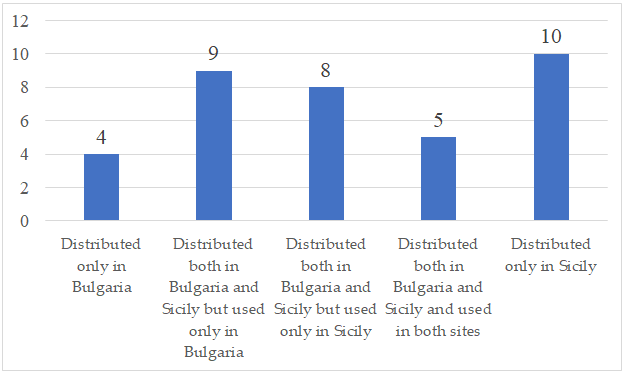
| Taxon | Distribution in the Study Sites | Used in the Study Sites | Used Parts and Modes of Application as Food |
|---|---|---|---|
| Artemisia vulgaris L. | BG, Sicily | BG | Leaves, pastries. |
| Bellis perennis L. | BG, Sicily | BG Sicily | Leaves, raw salad, soup. Tender leaves of the basal rosette, raw in salads, simply stewed or as an ingredient in soups. |
| Carduus nutans L. | BG, Sicily | BG | Sprouts, young herbage spines removed, stew. |
| Carlina gummifera (L.) Less. (Syn. Atractylis gummifera L.) | Sicily | Sicily | Fleshy receptacle of the capitula (inflorescences), raw or stewed. |
| Carlina sicula Ten. | Sicily | Sicily | Tender stems, stewed, seasoned with oil and lemon, or fried with eggs. |
| Centaurea calcitrapa L. | BG, Sicily | Sicily | Tender leaves of the basal rosette, boiled and simply seasoned with salt and olive oil. |
| Centaurea cyanus L. | BG, Sicily | BG | Young herbage. |
| Centaurea napifolia L. | Sicily | Sicily | Boiled basal leaves, alone or with other wild greens, eaten with olive oil, salt, and lemon juice. |
| Cichorium intybus L. | BG, Sicily | BG Sicily | Roots, leaves, shoots, raw salad, soup, coffee surrogate/beverage. Basal rosette leaves, raw in salads or stewed. |
| Crepis leontodontoides All. | Sicily | Sicily | Basal rosette leaves boiled and simply seasoned with salt and olive oil. |
| Crepis sancta (L.) Bornm. | BG, Sicily | BG | Young herbage. |
| Crepis vesicaria L. subsp. vesicaria | Sicily | Sicily | Basal rosette leaves, raw in salads or simply stewed or as an ingredient in soups and omelets. |
| Cynara cardunculus L. | Sicily | Sicily | Tender leaves and parts of the stem, stewed or fried in batter; capitula (inflorescences) for preserves in olive oil or vinegar. |
| Doronicum orientale Hoffm. | BG, Sicily | BG | Leaves. |
| Helminthotheca echioides (L.) Holub (Syn. Picris echioides L.) | BG, Sicily | Sicily | Basal leaves, stewed with other vegetables, then sautéed and seasoned with garlic, olive oil, chilli, and lemon juice. |
| Hyoseris radiata L. | Sicily | Sicily | Basal leaves, boiled and simply seasoned with salt and olive oil, or as an ingredient in soups. |
| Hypochaeris achyrophorus L. | Sicily | Sicily | Basal rosette leaves, boiled and simply seasoned with salt and olive oil. |
| Hypochaeris cretensis (L.) Bory & Chaub. | BG, Sicily | Sicily | Basal rosette leaves, boiled and simply seasoned with salt and olive oil. |
| Hypochaeris radicata L. | BG, Sicily | Sicily | Basal rosette leaves, raw in salads, blanched or stewed as an ingredient in soups; omelets. |
| Inula helenium L. | BG | BG | Roots, soup, beverage. |
| Lactuca serriola L. | BG, Sicily | BG | Sprouts, young leaves, raw salad, soup. |
| Lapsana communis L. | BG, Sicily | BG | Leaves. |
| Leontodon tuberosus L. | BG, Sicily | Sicily | Basal rosette leaves boiled and simply seasoned with salt and olive oil. |
| Onopordum acanthium L. | BG | BG | Roots, leaves, shoots (less than 20 cm tall), raw salad, soup, coffee surrogate/beverage. |
| Onopordum illyricum L. | BG, Sicily | Sicily | Leaf veins and the basal part of the tuft of leaves and roots stewed or fried in batter. |
| Reichardia picroides (L.) Roth | BG, Sicily | Sicily | Basal rosette leaves, raw in salads, stewed or as an ingredient in soups. |
| Scolymus grandiflorus Desf. | Sicily | Sicily | Tufts of basal leaves simply stewed or fried in batter. |
| Scorzoneroides cichoriacea (Ten.) Greuter [Syn. Leontodon cichoraceus (Ten.) Sanguin.] | BG, Sicily | Sicily | Basal rosette leaves boiled and simply seasoned with salt and olive oil. |
| Silybum marianum (L.) Gaertn. | BG, Sicily | BG Sicily | Leaves, sprouts, young anthodia, salad, soup, stewed. Tender shoots, raw in salads or as an ingredient in soups; capitula (inflorescences) receptacles stewed. |
| Sonchus arvensis L. | BG | BG | Leaves, raw salad, soup. |
| Sonchus asper (L.) Hill | BG, Sicily | BG Sicily | Leaves, raw salad, soup. Basal leaves, raw in salads or boiled and simply seasoned with salt and olive oil. |
| Sonchus oleraceus L. | BG, Sicily | BG Sicily | Leaves, raw salad, soup. Whole young plant or tender shoots of the adult stem, raw in salads or boiled and simply seasoned with salt and olive oil. |
| Taraxacum officinale aggr. | BG, Sicily | BG | Leaves, young anthodia, salad, marinated anthodia. |
| Tragopogon dubius Scop. | BG | BG | Leaves, raw salad, soup, stew. |
| Tussilago farfara L. | BG, Sicily | BG | Young leaves, sprouts, anthodia, salad blanched, soup, pastry. |
| Urospermum dalechampii (L.) Scop. ex F.W. Schmidt (Syn. Tragopogon dalechampii L.) | Sicily | Sicily | Basal rosette leaves, boiled and simply seasoned with salt and olive oil. |
| Subclass/Main Compounds | Plant Species | Biological Activities | Toxicity |
|---|---|---|---|
| Flavonoids: apigenin, luteolin, kaempferol, quercetin, rutin, chrysoeriol, vitexin, hesperidin, naringenin, catechin, galangin, and isorhamnetin [28,30,41], | Artemisia vulgaris, Bellis perennis, Carduus nutans, Centaurea calcitrapa, Centaurea cyanus, Centaurea napifolia, Cichorium intybus, Crepis vesicaria, Crepis sancta, Doronicum orientale, Helminthotheca echioides, Hypochaeris radicata, Inula helenium, Lapsana communis, Onopordum acanthium, Onopordum illyricum, Reichardia picroides, Silybum marianum, Sonchus asper, Sonchus oleraceus, Taraxacum officinale, Tragopogon dubius, Tussilago farfara, and Urospermum dalechampii | Antioxidant activity: IC50: 11.4 µg/mL (DPPH assay) [26]; IC50: 125 mg/mL (NO assay) [26]. Cytotoxic activity: MCF-7 (breast cancer) IC50: 190 ng/mL; HeLa (cervical cancer) IC50: 284 ng/mL; A7R5 (smooth muscle cells) IC50: 382 ng/mL; 293T (transformed kidney cells) IC50: 317 ng/mL; A549 (lung carcinoma) IC50: 778 ng/mL [26]. Antispasmodic/ antinociceptive activity (in vivo). Effective doses: 500 mg/kg and 1000 mg/kg. Anti-inflammatory/hypolipidemic/hepatoprotective (in vivo). Effective dose: 100–600 mg/kg [26]. Estrogenic, antimicrobial, antiallergic, antimalarial, and gastrointestinal digestion stimulation [26]. Anxiolytic/antidepressant-like effects (in vivo). Effective doses: 50, 100, and 150 mg/kg [31]. | Generally non-toxic; LD50 5000 mg/kg for Reichardia picroides [115] |
| Phenolic acids: chlorogenic acid, caffeic acid, rosmarinic acid, chicoric acid, dicaffeoylquinic acids, cynarin, ferulic acid, p-coumaric acid, and gallic acid [30,34,41] | Artemisia vulgaris, Bellis perennis, Carduus nutans, Centaurea calcitrapa, Centaurea cyanus, Cichorium intybus, Crepis vesicaria, Crepis sancta, Cynara cardunculus, Doronicum orientale, Helminthotheca echioides, Hyoseris radiata, Leontodon tuberosus, Onopordum acanthium, Onopordum illyricum, Sonchus asper, Sonchus oleraceus, Taraxacum officinale, Tragopogon dubius, Tussilago farfara, and Urospermum dalechampii | Antioxidant, anti-inflammatory, hepatoprotective, and antimicrobial. | Non-toxic at tested concentrations; non-mutagenic |
| Subclass/Main Compounds | Plant Species | Biological Activities | Toxicity |
|---|---|---|---|
| Generic and specific alkaloids: siculamide (unique alkaloid from Carlina sicula), nicotine, colchicine, strychnine, pyrrolizidine alkaloids (senkirkine, senecionine, tussilagine, and isotussilagine), and prenylated indole alkaloids [40,135] | Carlina sicula [siculamide], Centaurea cyanus, Hypochaeris radicata [nicotine, colchicine, and strychnine], Onopordum acanthium, Sonchus asper, Tragopogon dubius, and Tussilago farfara [pyrrolizidine alkaloids and prenylated indoles] | Anti-inflammatory, antidiabetic, antitumor, acetylcholinesterase inhibition, and glucose uptake stimulation (siculamide and dihydrocnicin) [40]. | Very low toxicity; Tussilago farfara contains low levels of toxic pyrrolizidines; and Onopordum is safe and non-toxic [105] |
| Subclass/Main Compounds | Plant Species | Biological Activities | Toxicity |
|---|---|---|---|
| Guaianolides: lactucin, lactucopicrin, 11β,13-dihydrolactucin, jacquinelin, 8-deoxylactucin, and dihydrolactucopicrin. Elemanolides, eudesmanolides, germacranolides: cnicin, 4′-O-acetylcnicin, melitensin, dehydromelitensin, zaluzanin C, and vernomelitensin. Hypocretenolides (a rare class). Others: crepiside E, tectoroside, lapsanoside A–C, ixerin D, and urospermals [51,57,68] | Artemisia vulgaris [psilostachyin, psilostachyin C, vulgarin, and artemisinin], Carlina gummifera, Carlina sicula, Centaurea calcitrapa, Centaurea cyanus, Centaurea napifolia, Cichorium intybus, Crepis vesicaria, Crepis sancta, Crepis leontodontoides, Helminthotheca echioides, Hypochaeris cretensis, Lactuca serriola, Lapsana communis, Onopordum acanthium, Onopordum illyricum, Scorzoneroides cichoriacea, Sonchus asper, Sonchus oleraceus, Taraxacum officinale, and Urospermum dalechampii | Antimicrobial, antiviral, and laxative [57]. Antioxidant activity: IC50: 11.4 µg/mL (DPPH assay) [26]; IC50: 125 mg/mL (NO assay) [26]. Cytotoxic activity: MCF-7 (breast cancer) IC50: 190 ng/mL; HeLa (cervical cancer) IC50: 284 ng/mL; A7R5 (smooth muscle cells) IC50: 382 ng/mL; 293T (transformed kidney cells) IC50: 317 ng/mL; A549 (lung carcinoma) IC50: 778 ng/mL [26]. Antispasmodic/ antinociceptive activity (in vivo). Effective doses: 500 mg/kg and 1000 mg/kg. Anti-inflammatory/hypolipidemic/hepatoprotective (in vivo). Effective dose: 100–600 mg/kg [26]. Estrogenic, antimicrobial, antiallergic, antimalarial, and gastrointestinal digestion stimulation [26]. | Variable: Carlina gummifera is toxic (atractyloside and carboxyatractyloside inhibit oxidative phosphorylation) [39]; Cichorium intybus is non-toxic and non-mutagenic up to 1000 mg/kg/day [58] |
| Triterpenes: taraxasterol, lupeol, sitosterol, stigmasterol, and campesterol. Sesquiterpenoids: tussfarfarin A and eudesmane-type. Coumarins: esculin, umbelliferone, and scopoletin. Essential oils: 1,8-cineole, sabinene, camphor, camphene, caryophyllene oxide, α-thujone, and β-thujone [23,24,25] | Artemisia vulgaris, Bellis perennis, Carlina gummifera [carlina oxide and 13-methoxy-carlina oxide], Centaurea calcitrapa, Centaurea napifolia, Doronicum orientale, Hypochaeris cretensis, Hypochaeris radicata, Inula helenium, Lapsana communis, Scolymus grandiflorus, Sonchus arvensis, Taraxacum officinale, Tussilago farfara, and Urospermum dalechampii | Antitumoral, antioxidant, wound healing, and anticancer [117,152]. Antibacterial activity: S. aureus, C. albicans (MIC 2.5 mg/mL); and E. coli (MIC 5 mg/mL) [117]. Analgesic activity (in vivo): 200 mg/kg 68.4% inhibition of writhing response. Anti-inflammatory (carrageenan-induced pleurisy). 200 mg/kg reduced neutrophil migration [152]. | Artemisia vulgaris is toxic after prolonged use [26]; Carlina gummifera is toxic; others are generally non-toxic [117,152] |
Disclaimer/Publisher’s Note: The statements, opinions and data contained in all publications are solely those of the individual author(s) and contributor(s) and not of MDPI and/or the editor(s). MDPI and/or the editor(s) disclaim responsibility for any injury to people or property resulting from any ideas, methods, instructions or products referred to in the content. |
© 2026 by the authors. Licensee MDPI, Basel, Switzerland. This article is an open access article distributed under the terms and conditions of the Creative Commons Attribution (CC BY) license.
Share and Cite
Kozuharova, E.; Malfa, G.A.; Acquaviva, R.; Spadaro, V.; Ionkova, I.; Statti, G.; Raimondo, F.M. The Wild Plants from the Family Asteraceae That Are Traditionally Used for Food in Sicily and Bulgaria and Their Health Benefits. Foods 2026, 15, 988. https://doi.org/10.3390/foods15060988
Kozuharova E, Malfa GA, Acquaviva R, Spadaro V, Ionkova I, Statti G, Raimondo FM. The Wild Plants from the Family Asteraceae That Are Traditionally Used for Food in Sicily and Bulgaria and Their Health Benefits. Foods. 2026; 15(6):988. https://doi.org/10.3390/foods15060988
Chicago/Turabian StyleKozuharova, Ekaterina, Giuseppe Antonio Malfa, Rosaria Acquaviva, Vivienne Spadaro, Iliana Ionkova, Giancarlo Statti, and Francesco M. Raimondo. 2026. "The Wild Plants from the Family Asteraceae That Are Traditionally Used for Food in Sicily and Bulgaria and Their Health Benefits" Foods 15, no. 6: 988. https://doi.org/10.3390/foods15060988
APA StyleKozuharova, E., Malfa, G. A., Acquaviva, R., Spadaro, V., Ionkova, I., Statti, G., & Raimondo, F. M. (2026). The Wild Plants from the Family Asteraceae That Are Traditionally Used for Food in Sicily and Bulgaria and Their Health Benefits. Foods, 15(6), 988. https://doi.org/10.3390/foods15060988