Preparation, Characterization, and Anti-Colitis Activity of Low-Viscosity EDTA-Soluble Polysaccharides from Almond Gum

Abstract
1. Introduction
2. Materials and Methods
2.1. Materials
2.2. Extraction and Preparation of AGP
2.3. Preparation of EAGP
2.4. Single-Factor Experiment
2.5. Response-Surface Optimization Experiment
2.5.1. Response-Surface Methodology Experimental Design
2.5.2. Response Surface Optimization Validation Experiment
2.6. Sugar Content Testing
2.7. Measurement of Intrinsic Viscosity
2.8. Scanning Electron Microscope (SEM) and Elemental Analysis
2.9. Fractionation and Purification of EAGP
2.10. Monosaccharide Composition Analysis
2.11. Methods for Evaluating the Protective Effects of EAGP-W1 in a DSS-Induced Colitis Model
2.11.1. Animal Model and Experimental Groups
2.11.2. Sample Harvesting and Histological Evaluation
2.11.3. Gut Microbiota Analysis
2.11.4. SCFAs Content Determination
2.12. Statistical Analysis
3. Results and Discussion
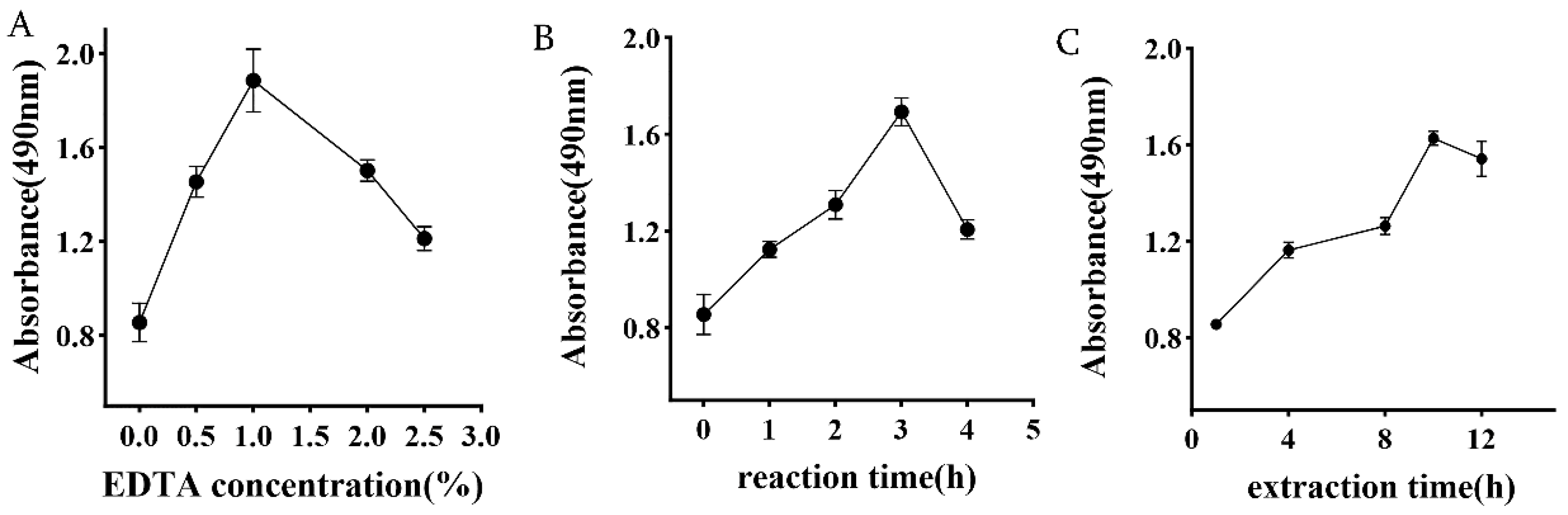
3.1. Effects of Individual Factors on the Preparation Process of EDTA-Modified Almond Gum Polysaccharides
3.1.1. Effect of EDTA Concentration
3.1.2. Impact of Reaction Time
3.1.3. Effect of Extraction Time
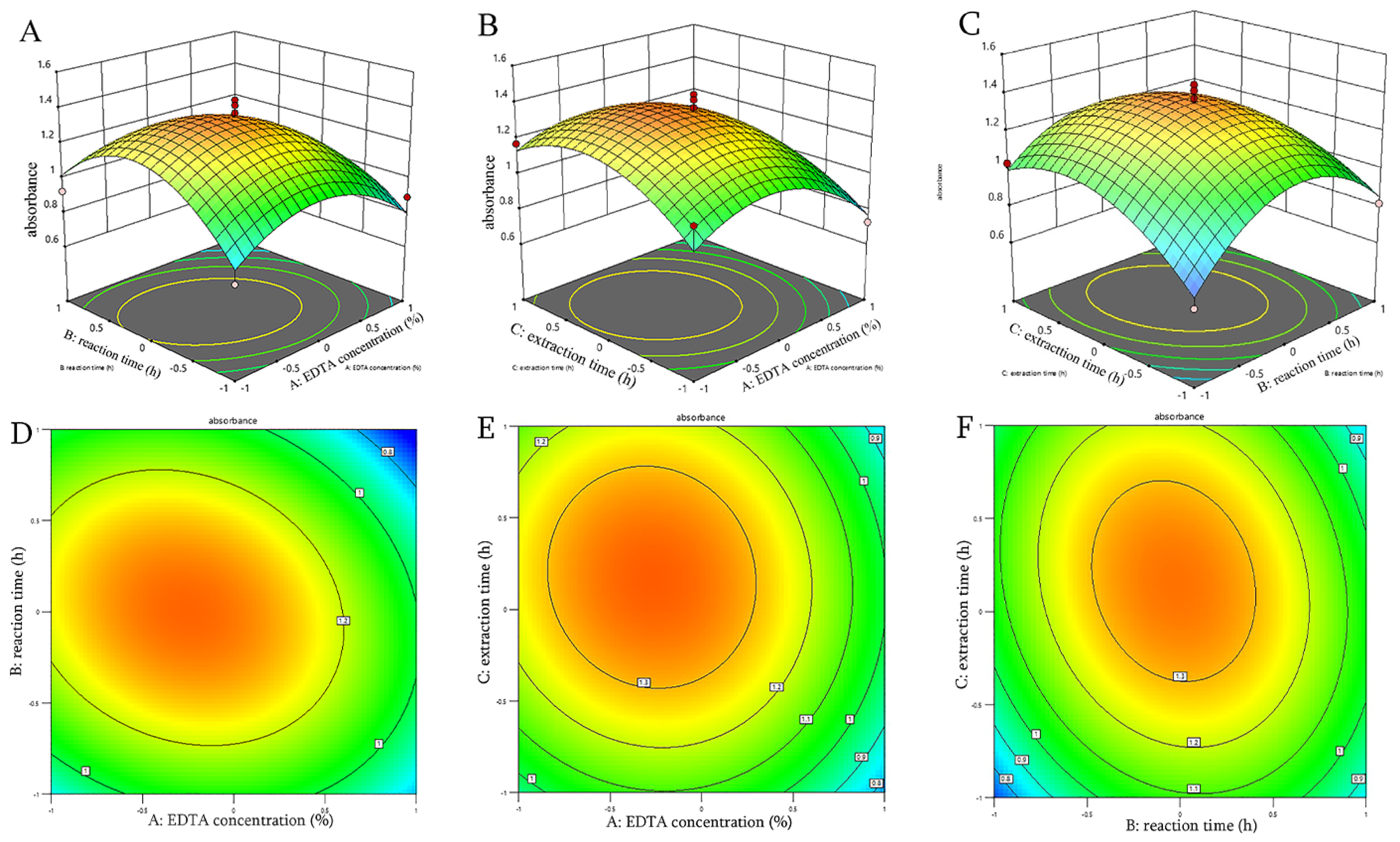
3.2. Analysis of Response Surface Optimization Experiment Results
3.2.1. Model Building and Significance Tests
3.2.2. Response Surface and Contour Analysis
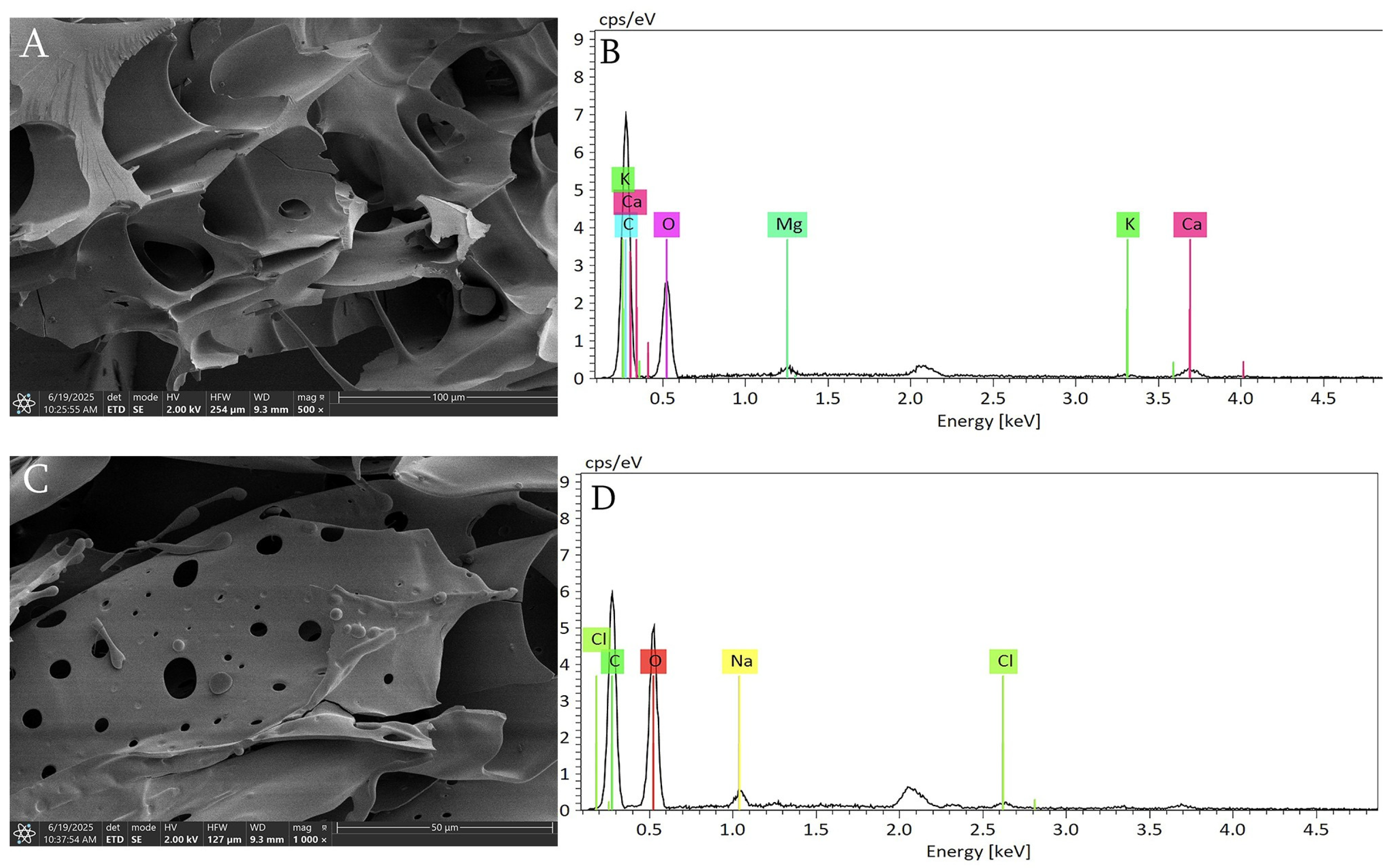
3.3. SEM and Elemental Analysis
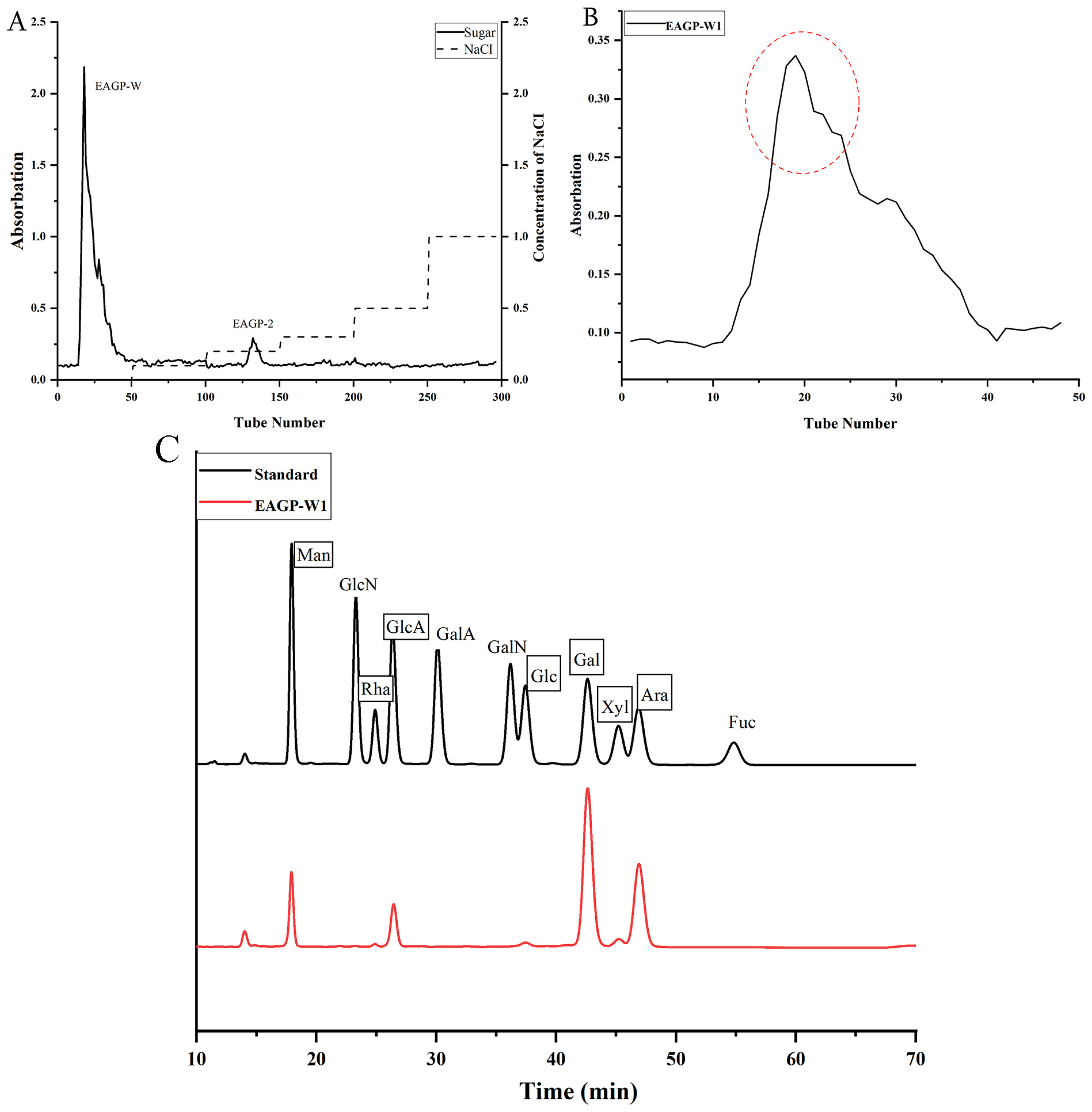
3.4. Fractionation and Purification Results of EAGP
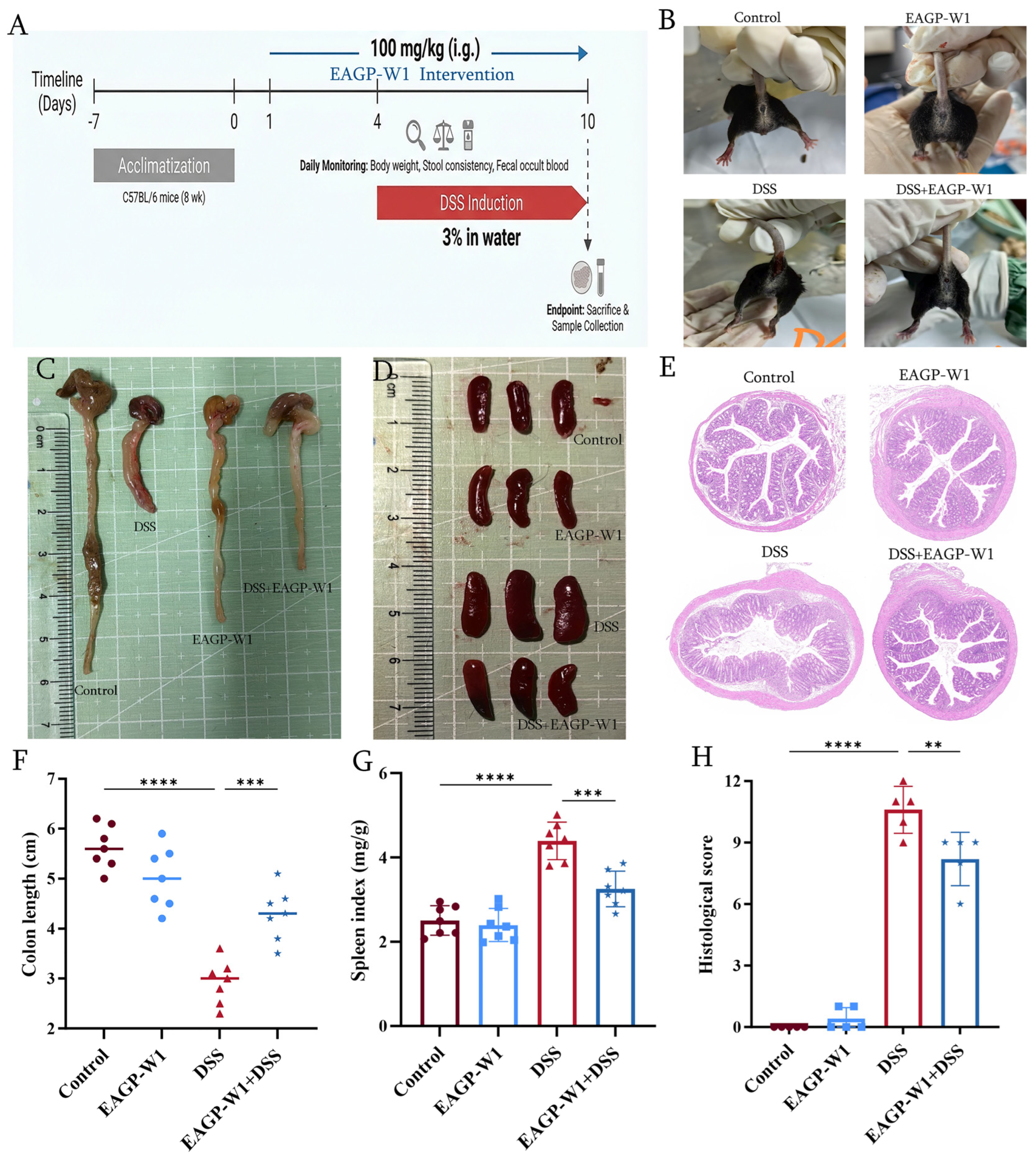
3.5. Evaluation of the Protective Effects of EAGP-W1 in a DSS-Induced Colitis Model
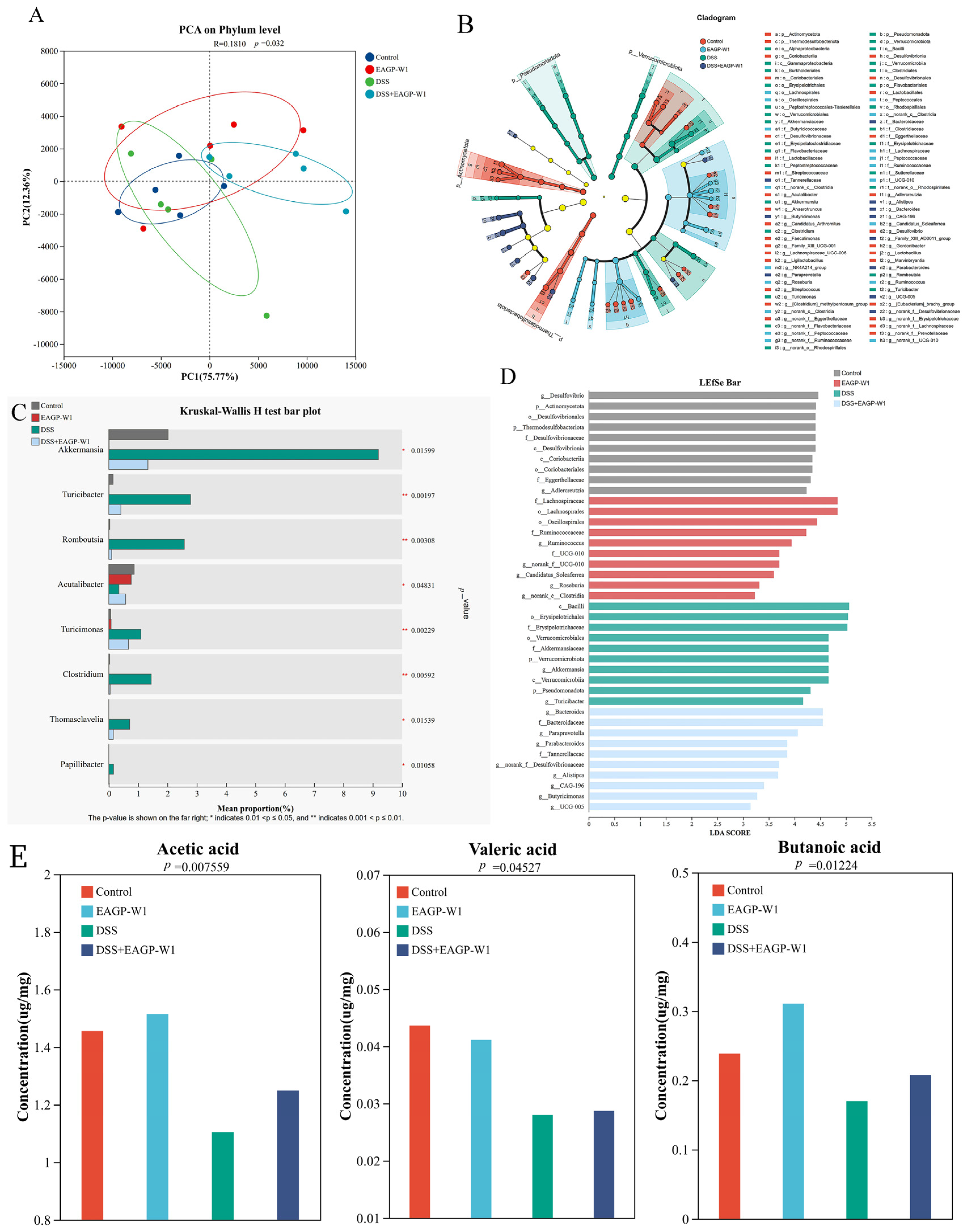
3.6. The Role of EAGP-W1 in Reshaping the Gut Microbiota Structure of Colitis Mice
3.7. EAGP-W1 Promotes the Generation of SCFAs
4. Conclusions
Author Contributions
Funding
Institutional Review Board Statement
Informed Consent Statement
Data Availability Statement
Acknowledgments
Conflicts of Interest
Abbreviations
| EDTA | Ethylenediaminetetraacetic acid |
| AGP | Almond gum polysaccharides |
| EAGP | EDTA-soluble polysaccharides from almond gum |
| EAGP-W1 | Purified fraction of EAGP |
| DSS | Dextran sulfate sodium |
| SCFAs | Short-chain fatty acids |
| TFA | Trifluoroacetic acid |
| PMP | 1-phenyl-3-methyl-5-pyrazolone |
| RSM | Response Surface Methodology |
| BBD | Box–Behnken design |
| SEM | Scanning electron microscope |
| EDX | Energy-dispersive X-ray detector |
| HPLC | High-performance liquid chromatography |
| GC-MS | Gas chromatography–mass spectrometry |
| PCR | Polymerase chain reaction |
| rRNA | Ribosomal ribonucleic acid |
| DAI | Disease Activity Index |
| H&E | Hematoxylin and eosin staining |
| UC | Ulcerative colitis |
| IBD | Inflammatory bowel disease |
| SPF | Specific pathogen-free |
| PCA | Principal component analysis |
| ANOVA | Analysis of variance |
| LEfSe | Linear discriminant analysis effect size |
| LDA | Linear discriminant analysis |
References
- Kamilijiang, M.; Abudukelimu, N.; Bakri, M.; Zang, D.; Xu, N.N.; Zhao, J.Y.; Aisa, H.A. Anti-melanogenic effect of a novel oligosaccharide derived from almond on forskolin-stimulated melanogenesis in B16F10 melanoma cells. Food Biosci. 2024, 62, 105013. [Google Scholar] [CrossRef]
- Yadav, H.; Gupta, L.; Dubey, S.; Maiti, S.; Yadav, N. 2—Economical importance, structural diversity, and properties of natural gums. In Natural Gums; Ahmed, S., Ali, A., Eds.; Elsevier: Amsterdam, The Netherlands, 2023; pp. 23–53. [Google Scholar]
- Bashir, M.; Haripriya, S. Assessment of physical and structural characteristics of almond gum. Int. J. Biol. Macromol. 2016, 93, 476–482. [Google Scholar] [CrossRef] [PubMed]
- Fanwa, M.N.; Cheumani, A.M.Y.; Gügi, B.; Hucher, N.; Malhiac, C.; Ndikontar, M.K.; Grisel, M. Extraction, characterization and concentration regimes of the natural gum from Triumfetta cordifolia stem bark. Food Hydrocoll. 2024, 152, 109862. [Google Scholar] [CrossRef]
- Eghbaljoo, H.; Sani, I.K.; Sani, M.A.; Rahati, S.; Mansouri, E.; Molaee-Aghaee, E.; Fatourehchi, N.; Kadi, A.; Arab, A.; Sarabandi, K.; et al. Advances in plant gum polysaccharides; Sources, techno-functional properties, and applications in the food industry-A review. Int. J. Biol. Macromol. 2022, 222, 2327–2340. [Google Scholar] [CrossRef] [PubMed]
- Paranthaman, S. Almond gum (Prunus amygdalus var. dulcis) as a multi-functional bio-polymer: A recent progress on properties, applications, and future opportunities. Int. J. Biol. Macromol. 2025, 315, 144511. [Google Scholar] [CrossRef]
- Bouaziz, F.; Koubaa, M.; Ellouz Ghorbel, R.; Ellouz Chaabouni, S. Biological properties of water-soluble polysaccharides and hemicelluloses from almond gum. Int. J. Biol. Macromol. 2017, 95, 667–674. [Google Scholar] [CrossRef]
- Hashemi, K.; Hosseini, E. The stabilizing and prebiotic potential of water-soluble phase of bitter almond gum exudate in probiotic yogurt drink. Carbohydr. Polym. 2021, 255, 117395. [Google Scholar] [CrossRef]
- Rasamani, P. Formulation of a probiotic product using Almond gum. J. Sci. Food Agric. 2024, 104, 4201–4205. [Google Scholar] [CrossRef]
- Rezaei, A.; Nasirpour, A.; Tavanai, H. Fractionation and some physicochemical properties of almond gum (Amygdalus communis L.) exudates. Food Hydrocoll. 2016, 60, 461–469. [Google Scholar] [CrossRef]
- Bouaziz, F.; Ben Romdhane, M.; Boisset Helbert, C.; Buon, L.; Bhiri, F.; Bardaa, S.; Driss, D.; Koubaa, M.; Fakhfakh, A.; Sahnoun, Z.; et al. Healing efficiency of oligosaccharides generated from almond gum (Prunus amygdalus) on dermal wounds of adult rats. J. Tissue Viability 2014, 23, 98–108. [Google Scholar] [CrossRef]
- Bouaziz, F.; Koubaa, M.; Helbert, C.B.; Kallel, F.; Driss, D.; Kacem, I.; Ghorbel, R.; Chaabouni, S.E. Purification, structural data and biological properties of polysaccharide from Prunus amygdalus gum. Int. J. Food Sci. Technol. 2015, 50, 578–584. [Google Scholar] [CrossRef]
- Al Sheidi, A.S.A.; Dyer, L.G.; Tadesse, B. Leaching Efficacy of Ethylenediaminetetraacetic Acid (EDTA) to Extract Rare-Earth Elements from Monazite Concentrate. Crystals 2024, 14, 829. [Google Scholar] [CrossRef]
- Guo, X.J.; Duan, H.Y.; Wang, C.; Huang, X.S. Characteristics of Two Calcium Pectinates Prepared from Citrus Pectin Using Either Calcium Chloride or Calcium Hydroxide. J. Agric. Food Chem. 2014, 62, 6354–6361. [Google Scholar] [CrossRef]
- Vriesmann, L.C.; Petkowicz, C.L.d.O.; Carneiro, P.I.B.; Costa, M.E.; Beleski-Carneiro, E. Acidic Polysaccharides from Psidium cattleianum (Araçá). Braz. Arch. Biol. Technol. 2009, 52, 259–264. [Google Scholar] [CrossRef][Green Version]
- Zheng, Y.; Yang, G.; Zhao, Z.H.; Guo, T.; Shi, H.M.; Zhou, Y.F.; Sun, L. Structural analysis of ginseng polysaccharides extracted by EDTA solution. RSC Adv. 2016, 6, 2724–2730. [Google Scholar] [CrossRef]
- Bezerra, M.A.; Santelli, R.E.; Oliveira, E.P.; Villar, L.S.; Escaleira, L.A. Response surface methodology (RSM) as a tool for optimization in analytical chemistry. Talanta 2008, 76, 965–977. [Google Scholar] [CrossRef] [PubMed]
- Bas, D.; Boyaci, I.H. Modeling and optimization I: Usability of response surface methodology. J. Food Eng. 2007, 78, 836–845. [Google Scholar] [CrossRef]
- Perse, M.; Cerar, A. Dextran Sodium Sulphate Colitis Mouse Model: Traps and Tricks. J. Biomed. Biotechnol. 2012, 2012, 718617. [Google Scholar] [CrossRef] [PubMed]
- Ye, Y.; Ze, L.; Duan, M.; Tan, Z.; Wang, Y.; Zhang, H.; Shang, P. Protective effects of plant polysaccharides on intestinal health via targeted regulation of gut microbiota. J. Sci. Food Agric. 2025, 105, 8346–8358. [Google Scholar] [CrossRef]
- Silva, F.C.O.; Araújo, M.I.F.d.; Silva, S.P.; Coelho, E.; Santos, A.T.d.; González, A.; Salvador, A.F.F.; Cahú, T.B.; Vieira, A.T.; Souza, M.P.d.; et al. Structural characterization and in vitro gut microbiota fermentation of a polysaccharide extracted from Cenostigma nordestinum gum. Carbohydr. Polym. 2025, 363, 123738. [Google Scholar] [CrossRef]
- Silva, F.C.O.; Malaisamy, A.; Cahú, T.B.; de Araújo, M.I.F.; Soares, P.A.G.; Vieira, A.T.; dos Santos Correia, M.T. Polysaccharides from exudate gums of plants and interactions with the intestinal microbiota: A review of vegetal biopolymers and prediction of their prebiotic potential. Int. J. Biol. Macromol. 2024, 254, 127715. [Google Scholar] [CrossRef]
- Xu, B.; Feng, T.; Song, S.; Wang, H.; Yao, L.; Zhuang, H.; Zhang, X.; Liu, Q.; Yu, C.; Sun, M. Effects of complex polysaccharides by Ficus carica Linn. polysaccharide and peach gum on the development and metabolites of human gut microbiota. Food Hydrocoll. 2024, 154, 110061. [Google Scholar] [CrossRef]
- Zhang, Y.; Gao, M.; Dai, Y.; Su, L.; Wang, Q. Optimization of process conditions for extraction of polysaccharides from Lyophyllum decastes fruiting body by EDTA-2Na using response surface methodology. J. Jilin Agric. Univ. 2025, 47, 281–288. [Google Scholar] [CrossRef]
- Dubios, M.; Gilles, K.A.; Hamilton, J.K.; Rebers, P.A.; Smith, F. Colorimetric method for determination of sugar and related substances. Anal. Chem. 1956, 28, 250–256. [Google Scholar] [CrossRef]
- Wei, C.; Zhang, Y.; Zhang, H.; Li, J.; Tao, W.; Linhardt, R.J.; Chen, S.; Ye, X. Physicochemical properties and conformations of water-soluble peach gums via different preparation methods. Food Hydrocoll. 2019, 95, 571–579. [Google Scholar] [CrossRef]
- Iqbal, W.; Andalib, S.; Mohani, S.N.U.; Hasan, M.M.; Arman, M.; Ali, L. Elemental analysis of carrageenans isolated from Hypnea musciformis red algae of Karachi coast using SEM-EDX. Pak. J. Pharm. Sci. 2022, 35, 561–570. [Google Scholar] [PubMed]
- Chen, X.; Wang, Y.; Ye, Y.; Yu, H.; Wu, B. The Pre- and Post-Column Derivatization on Monosaccharide Composition Analysis, a Review. Chem. Biodivers. 2024, 21, 1612–1880. [Google Scholar] [CrossRef]
- Chassaing, B.; Aitken, J.D.; Malleshappa, M.; Vijay-Kumar, M. Dextran Sulfate Sodium (DSS)-Induced Colitis in Mice. Curr. Protoc. Immunol. 2014, 104, 15.25.1–15.25.14. [Google Scholar] [CrossRef] [PubMed]
- Mou, J.; Yang, J.; Sun, Y.; Liu, J.; Zhao, Y.; Lin, H.; Yang, J. An arabinogalactan from Lycium barbarum mitigated DSS caused intestinal injury via inhibiting mucosal damage and regulating the gut microbiota disorder. Carbohydr. Polym. 2025, 352, 123155. [Google Scholar] [CrossRef] [PubMed]
- Qiu, Z.C.; Xiang, L.; Han, Y.H.; Zhang, B.; Qiao, X.G.; Zheng, Z.J.; Xiao, H. Structure-anti-inflammatory activity relationship of garlic fructans in mice with dextran sulfate sodium-induced colitis: Impact of chain length. Carbohydr. Polym. 2024, 346, 122582. [Google Scholar] [CrossRef]
- Shi, J.H. Optimization of extraction process and anti-fatigue effect of black garlic polysaccharides. J. Food Saf. Qual. 2025, 16, 303–312. [Google Scholar] [CrossRef]
- Shibaev, A.V.; Muravlev, D.A.; Muravleva, A.K.; Matveev, V.V.; Chalykh, A.E.; Philippova, O.E. pH-Dependent Gelation of a Stiff Anionic Polysaccharide in the Presence of Metal Ions. Polymers 2020, 12, 868. [Google Scholar] [CrossRef]
- Chen, L.; Ge, M.-D.; Zhu, Y.-J.; Song, Y.; Cheung, P.C.K.; Zhang, B.-B.; Liu, L.-M. Structure, bioactivity and applications of natural hyperbranched polysaccharides. Carbohydr. Polym. 2019, 223, 115076. [Google Scholar] [CrossRef]
- Martínez, M.; Beltrán, O.; Rincón, F.; León de Pinto, G.; Igartuburu, J.M. New structural features of Acacia tortuosa gum exudate. Food Chem. 2015, 182, 105–110. [Google Scholar] [CrossRef]
- Wei, C.; Zhang, Y.; He, L.; Cheng, J.; Li, J.; Tao, W.; Mao, G.; Zhang, H.; Linhardt, R.J.; Ye, X.; et al. Structural characterization and anti-proliferative activities of partially degraded polysaccharides from peach gum. Carbohydr. Polym. 2019, 203, 193–202. [Google Scholar] [CrossRef] [PubMed]
- Dogra, S.A.-O.; Yadav, D.A.-O.; Koul, B.A.-O.; Rabbee, M.A.-O. Plant-Based Polysaccharide Gums as Sustainable Bio-Polymers: Focus on Tragacanth Gum and Its Emerging Applications. Polymers 2025, 27, 3163. [Google Scholar] [CrossRef]
- Zhang, S.; Ding, C.; Liu, X.; Zhao, Y.; Li, S.; Ding, Q.; Zhao, T.; Ma, S.; Li, W.; Liu, W. New resource food-arabinogalactan improves DSS-induced acute colitis through intestinal flora and NLRP3 signaling pathway. Int. J. Biol. Macromol. 2024, 258, 129118. [Google Scholar] [CrossRef]
- Zhang, D.; Liu, J.; Cheng, H.; Wang, H.; Tan, Y.; Feng, W.; Peng, C. Interactions between polysaccharides and gut microbiota: A metabolomic and microbial review. Food Res. Int. 2022, 160, 111653. [Google Scholar] [CrossRef]
- Keung, W.-S.; Zhang, W.-H.; Luo, H.-Y.; Chan, K.-C.; Chan, Y.-M.; Xu, J. Correlation between the structures of natural polysaccharides and their properties in regulating gut microbiota: Current understanding and beyond. Carbohydr. Polym. 2025, 352, 123209. [Google Scholar] [CrossRef]
- Liu, X.; Su, S.; Yao, J.; Zhang, X.; Wu, Z.; Jia, L.; Liu, L.; Hou, R.; Farag, M.A.; Liu, L. Research advance about plant polysaccharide prebiotics, benefit for probiotics on gut homeostasis modulation. Food Biosci. 2024, 59, 103831. [Google Scholar] [CrossRef]
- Huang, X.J.; Nie, S.P.; Xie, M.Y. Interaction between gut immunity and polysaccharides. Crit. Rev. Food Sci. Nutr. 2017, 57, 2943–2955. [Google Scholar] [CrossRef]
- Kawashima, K.; Onizawa, M.; Fujiwara, T.; Gunji, N.; Imamura, H.; Katakura, K.; Ohira, H. Evaluation of the relationship between the spleen volume and the disease activity in ulcerative colitis and Crohn disease. Medicine 2022, 101, e28515. [Google Scholar] [CrossRef] [PubMed]
- Liu, X.X.; Zhou, H.J.; Yang, N.; Yang, L.J.; Zi, Z.Y.; Han, Y.L.; He, J.S.; Su, L.Y. Parishin from Gastrodia elata ameliorates DSS induced colitis and anxiety-like behavior in mice by regulating intestinal barrier function and microviota-gut-brain axis. Phytomedicine 2025, 145, 157019. [Google Scholar] [CrossRef]
- Yu, Z.T.; Li, D.G.; Sun, H.X. Herba Origani alleviated DSS-induced ulcerative colitis in mice through remolding gut microbiota to regulate bile acid and short-chain fatty acid metabolisms. Biomed. Pharmacother. 2023, 161, 114409. [Google Scholar] [CrossRef]
- Ding, G.A.; Yang, X.Z.; Li, Y.; Wang, Y.; Du, Y.J.; Wang, M.; Ye, R.X.; Wang, J.J.; Zhang, Y.K.; Chen, Y.J.; et al. Gut microbiota regulates gut homeostasis, mucosal immunity and influences immune-related diseases. Mol. Cell. Biochem. 2025, 480, 1969–1981. [Google Scholar] [CrossRef] [PubMed]
- Shin, N.R.; Whon, T.W.; Bae, J.W. Proteobacteria: Microbial signature of dysbiosis in gut microbiota. Trends Biotechnol. 2015, 33, 496–503. [Google Scholar] [CrossRef]
- Rooney, A.M.; Cochrane, K.; Fedsin, S.; Yao, S.M.T.; Anwer, S.; Dehmiwal, S.; Hota, S.; Poutanen, S.; Allen-Vercoe, E.; Coburn, B.; et al. A microbial consortium alters intestinal Pseudomonadota and antimicrobial resistance genes in individuals with recurrent Clostridioides difficile infection. mBio 2023, 14, e0348222. [Google Scholar] [CrossRef]
- Kumar, R.; Hasselwander, O.; Kane, H.; Hibberd, A.A. Akkermansia beyond muciniphila- emergence of new species Akkermansia massiliensis sp. nov. Microbiome Res. Rep. 2024, 3, 37. [Google Scholar] [CrossRef]
- Duncan, S.H.; Hold, G.L.; Barcenilla, A.; Stewart, C.S.; Flint, H.J. Roseburia intestinalis sp nov., a novel saccharolytic, butyrate-producing bacterium from human faeces. Int. J. Syst. Evol. Microbiol. 2002, 52, 1615–1620. [Google Scholar] [CrossRef]
- Dziarski, R.; Park, S.Y.; Kashyap, D.R.; Dowd, S.E.; Gupta, D. Pglyrp-Regulated Gut Microflora Prevotella falsenii, Parabacteroides distasonis and Bacteroides eggerthii Enhance and Alistipes finegoldii Attenuates Colitis in Mice. PLoS ONE 2016, 11, e0146162. [Google Scholar] [CrossRef]
- Naito, Y.; Uchiyama, K.; Takagi, T. A next-generation beneficial microbe: Akkermansia muciniphila. J. Clin. Biochem. Nutr. 2018, 63, 33–35. [Google Scholar] [CrossRef]
- Harris, H.C.; Edwards, C.A.; Morrison, D.J. Impact of Glycosidic Bond Configuration on Short Chain Fatty Acid Production from Model Fermentable Carbohydrates by the Human Gut Microbiota. Nutrients 2017, 9, 26. [Google Scholar] [CrossRef]
- Xi, Y.; Sun, W.; Ding, L.K.; Yan, M.; Sun, C.; Zhang, M.; Li, S.Y.; Qian, X.; Ma, J.; Wu, L. Three important short-chain fatty acids (SCFAs) attenuate the inflammatory response induced by 5-FU and maintain the integrity of intestinal mucosal tight junction. BMC Immunol. 2022, 23, 19. [Google Scholar] [CrossRef]
- Kullberg, R.F.J.; van Linge, C.C.A.; de Vos, A.F.; Brands, X.; Bui, T.P.N.; Butler, J.M.; Faber, D.R.; Verhoeven, A.; van den Wijngaard, R.M.; de Jonge, W.J.; et al. Butyrate-producing gut bacterium Faecalibacterium prausnitzii bacterial. Eur. Respir. J. 2025, 66, 2402208. [Google Scholar] [CrossRef]



| Level | Factors | ||
|---|---|---|---|
| EDTA Concentration (%) | Reaction Time (h) | Extraction Time (h) | |
| −1 | 0.5 | 2 | 8 |
| 0 | 1 | 3 | 10 |
| 1 | 2 | 4 | 12 |
| Experiment Number | Independent Variable | Dependent Variable | ||
|---|---|---|---|---|
| EDTA Concentration (%) | Reaction Time (h) | Extraction Time (h) | Absorbance (nm) | |
| 1 | −1 | −1 | 0 | 0.7896 |
| 2 | 0 | 0 | 0 | 1.4141 |
| 3 | 0 | −1 | 1 | 1.0311 |
| 4 | 0 | 1 | 1 | 0.8821 |
| 5 | −1 | 0 | −1 | 1.0802 |
| 6 | −1 | 1 | 0 | 0.9243 |
| 7 | 0 | 1 | −1 | 0.8144 |
| 8 | 0 | 0 | 0 | 1.3722 |
| 9 | 1 | −1 | 0 | 0.8907 |
| 10 | 0 | −1 | −1 | 0.6647 |
| 11 | −1 | 0 | 1 | 1.1719 |
| 12 | 0 | 0 | 0 | 1.4439 |
| 13 | 0 | 0 | 1 | 0.7082 |
| 14 | 0 | 0 | 0 | 1.3222 |
| 15 | 1 | 0 | −1 | 0.7265 |
| 16 | 0 | 0 | 0 | 1.208 |
| 17 | 1 | 1 | 0 | 0.6827 |
| Source | Sum of Squares | df | Mean Squares | F-Value | p-Value |
|---|---|---|---|---|---|
| Model | 1.06 | 9 | 0.1183 | 7.63 | 0.0069 |
| EDTA concentration | 0.1147 | 1 | 0.1147 | 7.40 | 0.0298 |
| B- reaction time | 0.0007 | 1 | 0.0007 | 0.0425 | 0.8426 |
| C- extraction time | 0.0322 | 1 | 0.0322 | 2.08 | 0.1928 |
| AB | 0.0294 | 1 | 0.0294 | 1.89 | 0.2112 |
| AC | 0.0030 | 1 | 0.0030 | 0.1951 | 0.6721 |
| BC | 0.0223 | 1 | 0.0223 | 1.44 | 0.2694 |
| A2 | 0.2195 | 1 | 0.2195 | 14.15 | 0.0071 |
| B2 | 0.3839 | 1 | 0.3839 | 24.75 | 0.0016 |
| C2 | 0.1719 | 1 | 0.1719 | 11.09 | 0.0126 |
| Residual | 0.1086 | 7 | 0.0155 | ||
| Lack of Fit | 0.0742 | 3 | 0.0247 | 2.88 | 0.1664 |
| Pure Emor | 0.0343 | 4 | 0.0086 | ||
| Cor Total | 1.17 | 16 | |||
| R2 = 0.9075 | |||||
Disclaimer/Publisher’s Note: The statements, opinions and data contained in all publications are solely those of the individual author(s) and contributor(s) and not of MDPI and/or the editor(s). MDPI and/or the editor(s) disclaim responsibility for any injury to people or property resulting from any ideas, methods, instructions or products referred to in the content. |
© 2026 by the authors. Licensee MDPI, Basel, Switzerland. This article is an open access article distributed under the terms and conditions of the Creative Commons Attribution (CC BY) license.
Share and Cite
Dilixiati, M.; Abudureyim, Z.; Abudukelimu, N.; Wali, A.; Gao, Y.; Yili, A. Preparation, Characterization, and Anti-Colitis Activity of Low-Viscosity EDTA-Soluble Polysaccharides from Almond Gum. Foods 2026, 15, 1103. https://doi.org/10.3390/foods15061103
Dilixiati M, Abudureyim Z, Abudukelimu N, Wali A, Gao Y, Yili A. Preparation, Characterization, and Anti-Colitis Activity of Low-Viscosity EDTA-Soluble Polysaccharides from Almond Gum. Foods. 2026; 15(6):1103. https://doi.org/10.3390/foods15061103
Chicago/Turabian StyleDilixiati, Munisa, Zumrat Abudureyim, Nuermaimaiti Abudukelimu, Ahmidin Wali, Yanhua Gao, and Abulimiti Yili. 2026. "Preparation, Characterization, and Anti-Colitis Activity of Low-Viscosity EDTA-Soluble Polysaccharides from Almond Gum" Foods 15, no. 6: 1103. https://doi.org/10.3390/foods15061103
APA StyleDilixiati, M., Abudureyim, Z., Abudukelimu, N., Wali, A., Gao, Y., & Yili, A. (2026). Preparation, Characterization, and Anti-Colitis Activity of Low-Viscosity EDTA-Soluble Polysaccharides from Almond Gum. Foods, 15(6), 1103. https://doi.org/10.3390/foods15061103