Natural Ingredients to Enhance the Antioxidant Capacity in Different Meat Products: A Review
 , , and
Abstract
1. Introduction
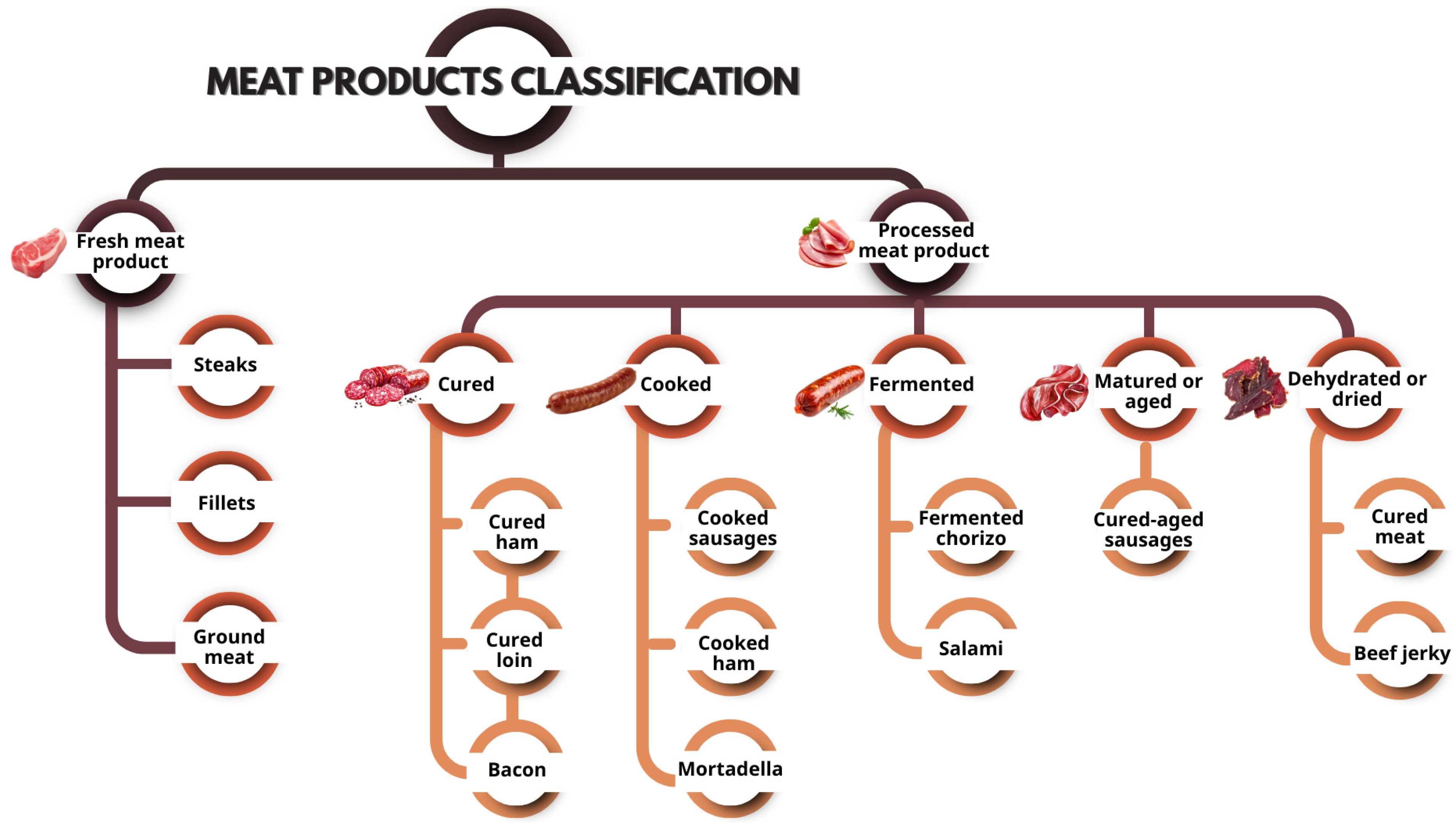
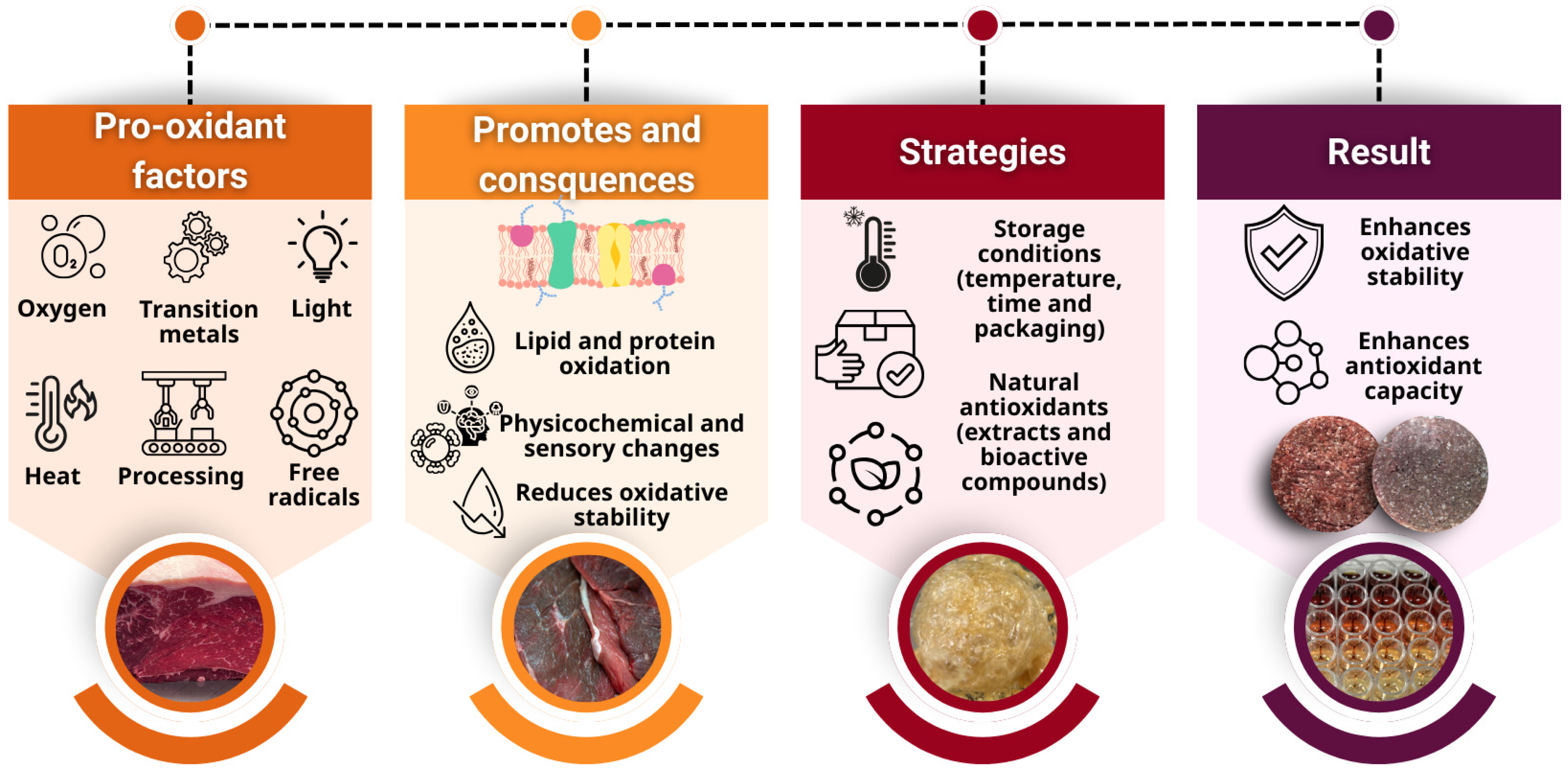
2. Oxidative Stability of Meat Products
3. Analytical Assays for the Measurement of AOC in Meat Products
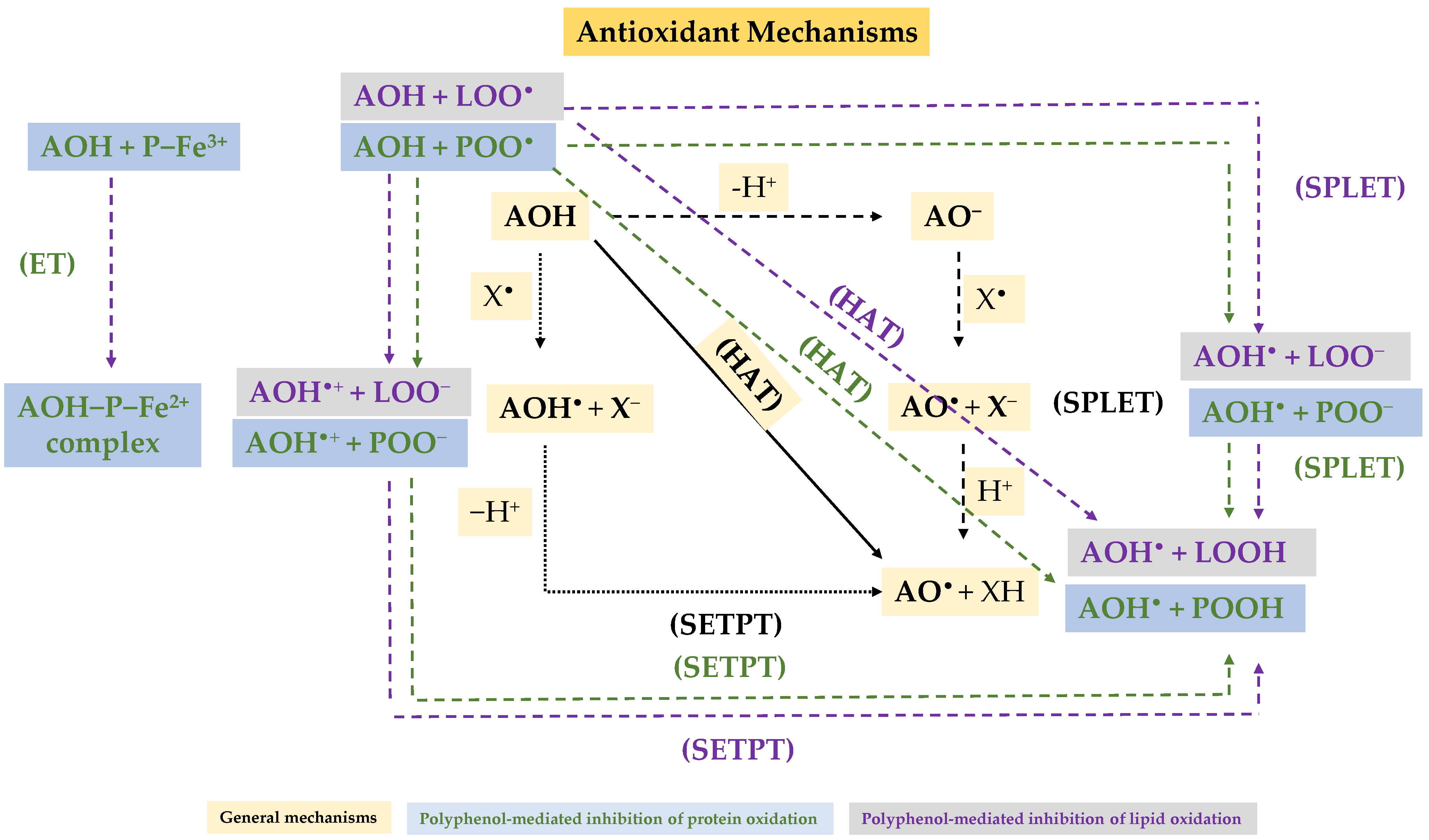
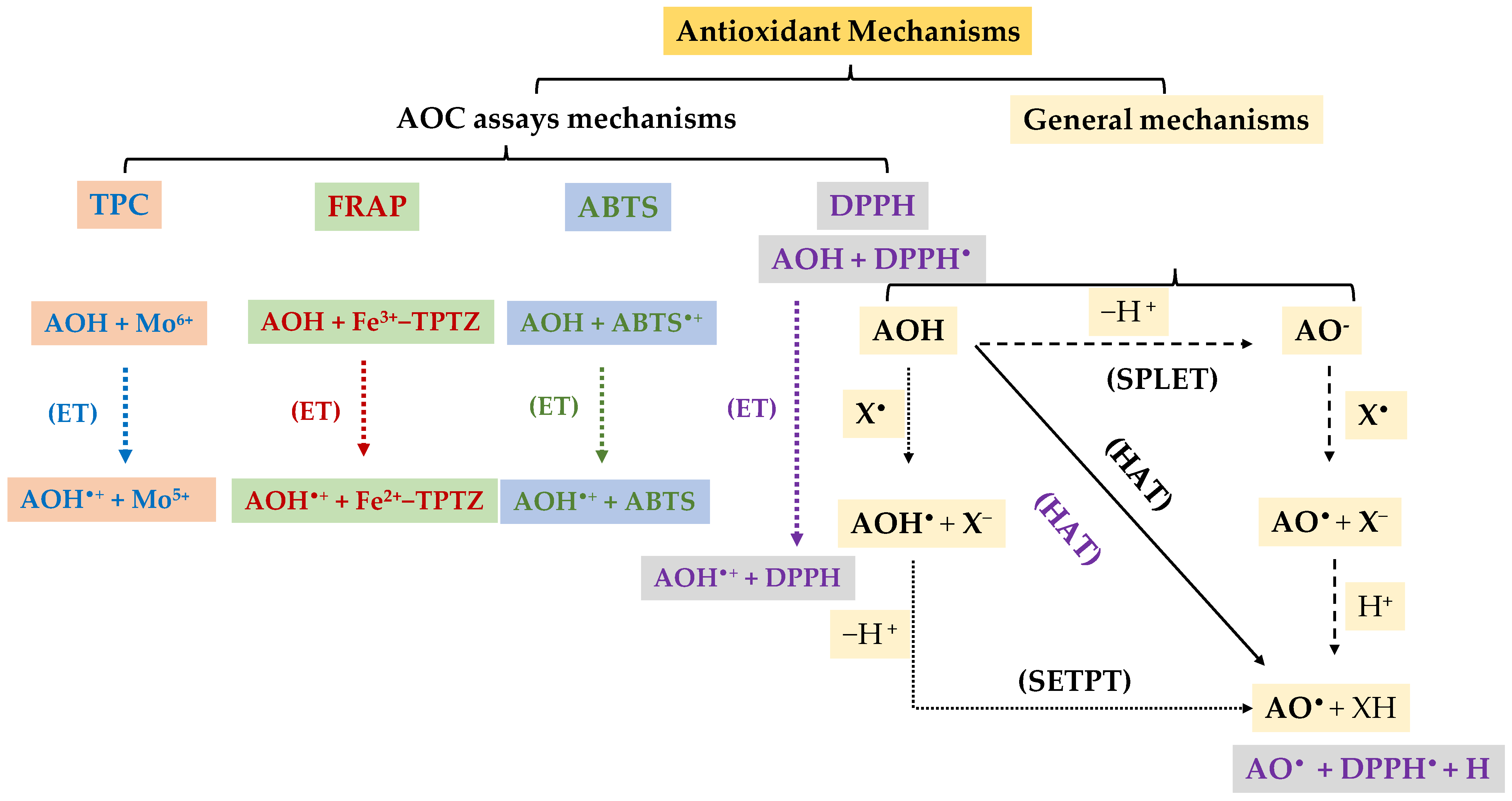
3.1. AOC Assays and Antioxidant Mechanism
3.2. Use of the AOC Assays in Meat and Meat Products
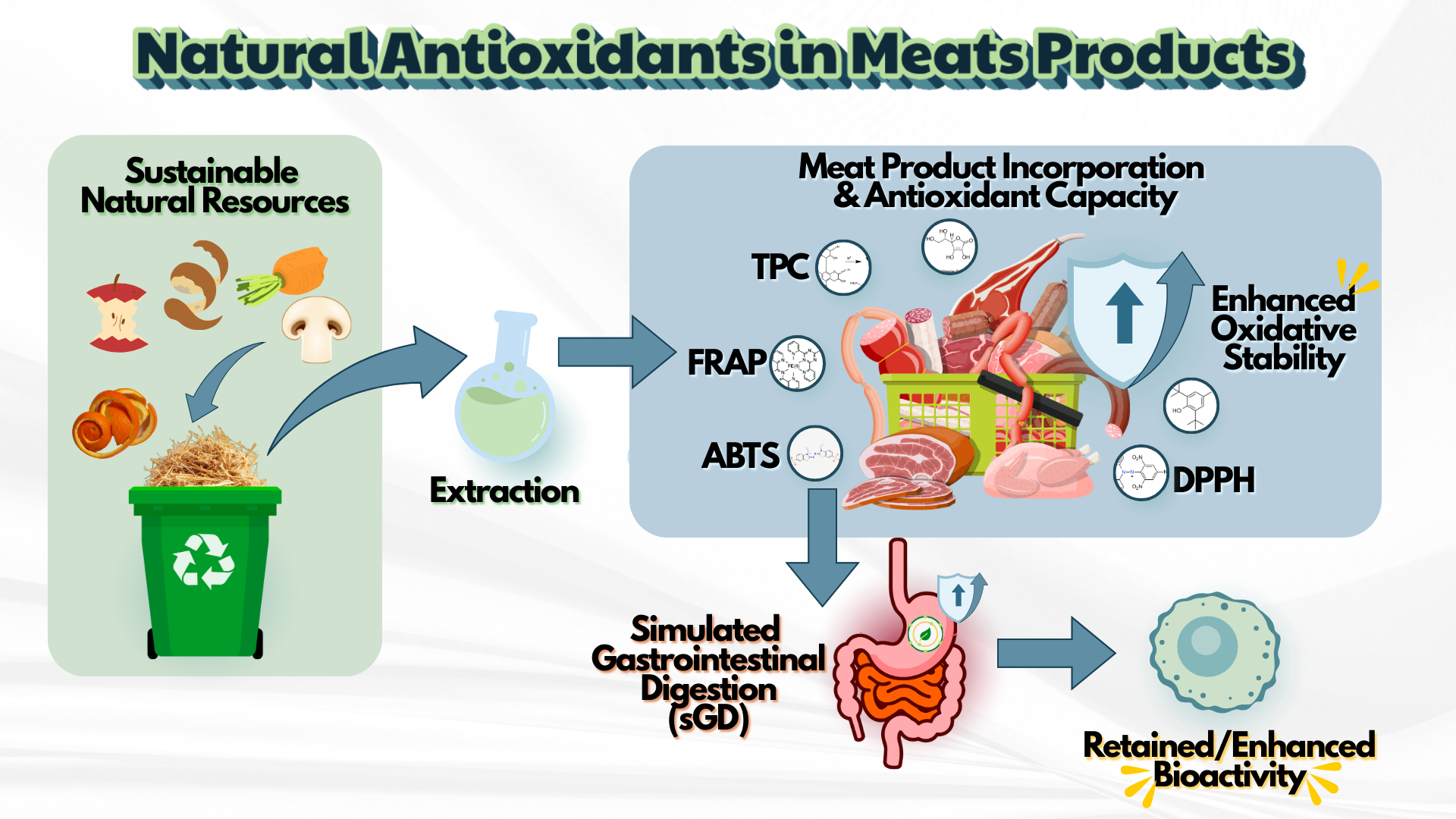
4. Enhancing the AOC of Meat Products Using Natural Ingredients
4.1. Antioxidants of Natural Ingredients and Their Stability
4.2. AOC of Natural Ingredient-Treated Meat Products During Storage
4.3. AOC of Natural Ingredient-Treated Meat Products Subjected to Gastrointestinal Digestion
5. Conclusions
Author Contributions
Funding
Institutional Review Board Statement
Informed Consent Statement
Data Availability Statement
Acknowledgments
Conflicts of Interest
Abbreviations
| AOC | Antioxidant capacity |
| AOH | Phenolic antioxidant |
| AO• | Phenoxyl radical |
| AOH• | Phenol radical cation |
| ABTS | 2,2′-azino-bis(3-ethylbenzothiazoline-6-sulfonic acid |
| DPPH | 2,2-diphenyl-1-picrylhydrazyl |
| ET | Single electron transfer |
| EtOH | Ethanol |
| FRAP | Ferric reducing antioxidant power |
| HAT | Hydrogen atom transfer |
| LOOH | Lipid hydroperoxide |
| LOO• | Lipid peroxyl radical |
| MeOH | Methanol |
| POOH | Protein hydroperoxide |
| POO• | Protein peroxyl radical |
| P−Fe3+ | Protein-bound ferric ion |
| P−Fe2+ | Protein-bound ferreous ion |
| sGD | Simulated gastrointestinal digestion |
| SETPT | Sequential electron-proton transfer |
| SPLET | Sequential proton-electron transfer |
| TPC | Total phenolic content |
| TPTZ | 2,4,6-tris(2-pyridyl)-1,3,5-triazine acid |
References
- NOM-213-SSA1-2018—Processed Meat Products and Establishments Dedicated to Their Process. Available online: https://www.dof.gob.mx/normasOficiales/7665/salud13_C/salud13_C.html (accessed on 5 January 2026).
- Echegaray, N.; Pateiro, M.; Munekata, P.E.; Lorenzo, J.M.; Chabani, Z.; Farag, M.A.; Domínguez, R. Measurement of antioxidant capacity of meat and meat products: Methods and applications. Molecules 2021, 26, 3880. [Google Scholar] [CrossRef]
- Olvera-Aguirre, G.; Piñeiro-Vázquez, Á.T.; Sanginés-García, J.R.; Zárate, A.S.; Ochoa-Flores, A.A.; Segura-Campos, M.R.; Vargas-Bello-Pérez, E.; Chay-Canul, A.J. Using plant-based compounds as preservatives for meat products: A review. Heliyon 2023, 9, e17071. [Google Scholar] [CrossRef]
- Rațu, R.N.; Veleșcu, I.D.; Stoica, F.; Usturoi, A.; Arsenoaia, V.N.; Crivei, I.C.; Postolache, A.N.; Lipșa, F.D.; Filipov, F.; Florea, A.M.; et al. Application of agri-food by-products in the food industry. Agriculture 2023, 13, 1559. [Google Scholar] [CrossRef]
- Singh, U.; Tiwari, P.; Kelkar, S.; Kaul, D.; Tiwari, A.; Kapri, M.; Sharma, S. Edible mushrooms: A sustainable novel ingredient for meat analogs. Efood 2023, 4, e122. [Google Scholar] [CrossRef]
- Mancini, S.; Paci, G.; Fratini, F.; Torracca, B.; Nuvoloni, R.; Dal Bosco, A.; Roscini, V.; Preziuso, G. Improving pork burgers quality using Zingiber officinale Roscoe powder (ginger). Meat Sci. 2017, 129, 161–168. [Google Scholar] [CrossRef]
- Antonini, E.; Torri, L.; Piochi, M.; Cabrino, G.; Meli, M.A.; De Bellis, R. Nutritional, antioxidant and sensory properties of functional beef burgers formulated with chia seeds and goji puree, before and after in vitro digestion. Meat Sci. 2020, 161, 108021. [Google Scholar] [CrossRef]
- Mounir, S.; Mohamed, R.; Sunooj, K.V.; El-Saidy, S.; Farid, E. Assessing the effects of partially substituting chicken breast meat with oyster mushroom stalk powder on the quality attributes of mushroom-chicken burgers. Sci. Rep. 2025, 15, 4361. [Google Scholar] [CrossRef] [PubMed]
- Willian, K. Lipids and lipid oxidation. In The Science of Meat Quality; Wiley-Blackwell Publishing: Oxford, UK, 2013; pp. 147–175. [Google Scholar]
- Domínguez, R.; Pateiro, M.; Munekata, P.E.S.; Zhang, W.; Garcia-Oliveira, P.; Carpena, M.; Prieto, M.A.; Bohrer, B.; Lorenzo, J.M. Protein oxidation in muscle foods: A comprehensive review. Antioxidants 2022, 11, 60. [Google Scholar] [CrossRef]
- Gheisari, H.R.; Møller, J.K.; Adamsen, C.E.; Skibsted, L.H. Sodium chloride or heme protein induced lipid oxidation in raw, minced chicken meat and beef. Czech J. Food Sci. 2010, 28, 364. [Google Scholar] [CrossRef]
- Min, B.; Cordray, J.C.; Ahn, D.U. Effect of NaCl, myoglobin, Fe (II), and Fe (III) on lipid oxidation of raw and cooked chicken breast and beef loin. J. Agric. Food Chem. 2010, 58, 600–605. [Google Scholar] [CrossRef]
- Ju, J.; Mittal, G.S. Relationships of physical properties of fat-substitutes, cooking methods and fat levels with quality of ground beef patties. J. Food Process. Preserv. 2000, 24, 125–142. [Google Scholar] [CrossRef]
- Wang, X.; Yu, Q.; He, L.; Zhang, Q.; Ma, J. Effects of nitrite concentrations on the quality and protein oxidation of salted meat. J. Food Sci. 2022, 87, 3978–3994. [Google Scholar] [CrossRef]
- Radzik-Rant, A.; Rant, W.; Świątek, M.; Sosnowiec-Wierzchoń, G.; Niżnikowski, R. Analysis of the physico-chemical characteristics and content of selected bioactive components in lamb meat, depending on the type of muscle and vacuum aging time. Ann. Anim. Sci. 2025, 25, 363–372. [Google Scholar] [CrossRef]
- Wójciak, K.M.; Dolatowski, Z.J. Oxidative stability of fermented meat products. Acta Sci. Pol. Technol. Aliment. 2012, 11, 99–109. [Google Scholar] [PubMed]
- Echegaray, N.; Gómez, B.; Barba, F.J.; Franco, D.; Estévez, M.; Carballo, J.; Marszałek, K.; Lorenzo, J.M. Chestnuts and by-products as source of natural antioxidants in meat and meat products: A review. Trends Food Sci. Technol. 2018, 82, 110–121. [Google Scholar] [CrossRef]
- Mancini, S.; Preziuso, G.; Dal Bosco, A.; Roscini, V.; Szendrő, Z.; Fratini, F.; Paci, G. Effect of turmeric powder (Curcuma longa L.) and ascorbic acid on physical characteristics and oxidative status of fresh and stored rabbit burgers. Meat Sci. 2015, 110, 93–100. [Google Scholar] [CrossRef]
- Tran, T.T.T.; Ton, N.M.N.; Nguyen, T.T.; Le, V.V.M.; Sajeev, D.; Schilling, M.W.; Dinh, T.T. Application of natural antioxidant extract from guava leaves (Psidium guajava L.) in fresh pork sausage. Meat Sci. 2020, 165, 108106. [Google Scholar] [CrossRef] [PubMed]
- Ainsworth, E.A.; Gillespie, K.M. Estimation of total phenolic content and other oxidation substrates in plant tissues using Folin–Ciocalteu reagent. Nat. Protoc. 2007, 2, 875–877. [Google Scholar] [CrossRef]
- Berker, K.I.; Ozdemir Olgun, F.A.; Ozyurt, D.; Demirata, B.; Apak, R. Modified Folin–Ciocalteu antioxidant capacity assay for measuring lipophilic antioxidants. J. Agric. Food Chem. 2013, 61, 4783–4791. [Google Scholar] [CrossRef]
- Kupina, S.; Fields, C.; Roman, M.C.; Brunelle, S.L. Determination of total phenolic content using the Folin-C assay: Single-laboratory validation, first action 2017.13. J. AOAC Int. 2018, 101, 1466–1472. [Google Scholar] [CrossRef]
- Berker, K.I.; Güçlü, K.; Demirata, B.; Apak, R. A novel antioxidant assay of ferric reducing capacity measurement using ferrozine as the colour forming complexation reagent. Anal. Methods 2010, 2, 1770–1778. [Google Scholar] [CrossRef]
- Biskup, I.; Golonka, I.; Gamian, A.; Sroka, Z. Antioxidant activity of selected phenols estimated by ABTS and FRAP methods. Postepy Hig. Med. Dosw. 2013, 67, 958–963. [Google Scholar] [CrossRef]
- Kut, K.; Cieniek, B.; Stefaniuk, I.; Bartosz, G.; Sadowska-Bartosz, I. A modification of the ABTS• decolorization method and an insight into its mechanism. Processes 2022, 10, 1288. [Google Scholar] [CrossRef]
- Wołosiak, R.; Drużyńska, B.; Derewiaka, D.; Piecyk, M.; Majewska, E.; Ciecierska, M.; Worobiej, E.; Pakosz, P. Verification of the conditions for determination of antioxidant activity by ABTS and DPPH assays—A practical approach. Molecules 2022, 27, 50. [Google Scholar] [CrossRef] [PubMed]
- Gulcin, İ.; Alwasel, S.H. DPPH radical scavenging assay. Processes 2023, 11, 2248. [Google Scholar] [CrossRef]
- Martínez, J.; Nieto, G.; Ros, G. Total antioxidant capacity of meat and meat products consumed in a reference ‘Spanish standard diet’. Int. J. Food Sci. Technol. 2014, 49, 2610–2618. [Google Scholar] [CrossRef]
- Sacchetti, G.; Di Mattia, C.; Pittia, P.; Martino, G. Application of a radical scavenging activity test to measure the total antioxidant activity of poultry meat. Meat Sci. 2008, 80, 1081–1085. [Google Scholar] [CrossRef]
- López-Hernández, L.H.; Navarro-Olivera, A.A.; Calderón-Oliver, M.; Villalobos-Delgado, L.H. Incorporation of Cactus berry (Myrtillocactus geometrizans) and Red prickly pear (Opuntia ficus-indica L. Mill) mixtures on sausages elaborated from white-striped broiler breast as possible natural antioxidants. Foods 2025, 14, 4179. [Google Scholar] [CrossRef] [PubMed]
- Mora, L.; Bolumar, T.; Heres, A.; Toldrá, F. Effect of cooking and simulated gastrointestinal digestion on the activity of generated bioactive peptides in aged beef meat. Food Funct. 2017, 8, 4347–4355. [Google Scholar] [CrossRef]
- Liu, D.; Chen, X.; Huang, M.; Zhou, G. Antioxidant activity of peptides in postmortem aged duck meat as affected by cooking and in vitro digestion. Int. J. Food Prop. 2019, 22, 727–736. [Google Scholar] [CrossRef]
- Carrillo, C.; Barrio, Á.; del Mar Cavia, M.; Alonso-Torre, S. Global antioxidant response of meat. J. Sci. Food Agric. 2017, 97, 2358–2365. [Google Scholar] [CrossRef]
- Gallego, M.; Mora, L.; Hayes, M.; Reig, M.; Toldrá, F. Effect of cooking and in vitro digestion on the antioxidant activity of dry-cured ham by-products. Food Res. Int. 2017, 97, 296–306. [Google Scholar] [CrossRef]
- Grassi, G.; Capasso, G.; Rando, A.; Perna, A.M. Antioxidant activity of beef, pork and chicken burgers before and after cooking and after in vitro intestinal digestion. Foods 2023, 12, 4100. [Google Scholar] [CrossRef]
- Yadav, A.S. Antioxidant and antimicrobial profile of chicken sausages prepared after fermentation of minced chicken meat with Lactobacillus plantarum and with additional dextrose and starch. LWT 2017, 77, 249–258. [Google Scholar] [CrossRef]
- Abdullah, F.A.A.; Dordevic, D.; Kabourkova, E.; Zemancová, J.; Dordevic, S. Antioxidant and sensorial properties: Meat analogues versus conventional meat products. Processes 2022, 10, 1864. [Google Scholar] [CrossRef]
- Aminzare, M.; Hashemi, M.; Ansarian, E.; Bimakr, M.; Hassanzad Azar, H.; Mehrasbi, M.R.; Daneshamooz, S.; Raeisi, M.; Jannat, B.; Afshari, A. Using natural antioxidants in meat and meat products as preservatives: A review. Adv. Anim. Vet. Sci. 2019, 7, 417–426. [Google Scholar] [CrossRef]
- Selani, M.M.; Contreras-Castillo, C.J.; Shirahigue, L.D.; Gallo, C.R.; Plata-Oviedo, M.; Montes-Villanueva, N.D. Wine industry residues extracts as natural antioxidants in raw and cooked chicken meat during frozen storage. Meat Sci. 2011, 88, 397–403. [Google Scholar] [CrossRef] [PubMed]
- Packer, V.G.; Melo, P.S.; Bergamaschi, K.B.; Selani, M.M.; Villanueva, N.D.; de Alencar, S.M.; Contreras-Castillo, C.J. Chemical characterization, antioxidant activity and application of beetroot and guava residue extracts on the preservation of cooked chicken meat. J. Food Sci. Technol. 2015, 52, 7409–7416. [Google Scholar] [CrossRef]
- Kim, J.H.; Ahn, D.U.; Eun, J.B.; Moon, S.H. Antioxidant effect of extracts from the coffee residue in raw and cooked meat. Antioxidants 2016, 5, 21. [Google Scholar] [CrossRef] [PubMed]
- Turgut, S.S.; Soyer, A.; Işıkçı, F. Effect of pomegranate peel extract on lipid and protein oxidation in beef meatballs during refrigerated storage. Meat Sci. 2016, 116, 126–132. [Google Scholar] [CrossRef]
- Cruz-Trinidad, B.; Sánchez-Burgos, J.A.; Juscelino, T.; Sáyago-Ayerdi, S.G.; Zamora-Gasga, V.M. In vitro gastrointestinal digestion of mango by-product snacks: Potential absorption of polyphenols and antioxidant capacity. Int. J. Food Sci. Technol. 2019, 54, 3091–3098. [Google Scholar]
- Bedrníček, J.; Kadlec, J.; Laknerová, I.; Mráz, J.; Samková, E.; Petrášková, E.; Hasoňová, L.; Vachá, F.; Kron, V.; Smetana, P. Onion peel powder as an antioxidant-rich material for sausages prepared from mechanically separated fish meat. Antioxidants 2020, 9, 974. [Google Scholar] [CrossRef] [PubMed]
- Villasante, J.; Ouerfelli, M.; Bobet, A.; Metón, I.; Almajano, M.P. The effects of pecan shell, roselle flower and red pepper on the quality of beef patties during chilled storage. Foods 2020, 9, 1692. [Google Scholar] [CrossRef] [PubMed]
- Barkhordari, P.; Bazargani-Gilani, B. Effect of apple peel extract and zein coating enriched with ginger essential oil on the shelf life of chicken thigh meat. J. Food Meas. Charact. 2021, 15, 2727–2742. [Google Scholar] [CrossRef]
- Boeira, C.P.; Alves, J.D.S.; Flores, D.C.B.; de Moura, M.R.; Melo, P.T.S.; da Rosa, C.S. Antioxidant and antimicrobial effect of an innovative active film containing corn stigma residue extract for refrigerated meat conservation. J. Food Process. Preserv. 2021, 45, e15721. [Google Scholar] [CrossRef]
- De Santana Neto, D.C.; Cordeiro, Â.M.; Meireles, B.R.; Araújo, Í.B.; Estévez, M.; Ferreira, V.C.; Silva, F.A. Inhibition of protein and lipid oxidation in ready-to-eat chicken patties by a Spondias mombin L. bagasse phenolic-rich extract. Foods 2021, 10, 1338. [Google Scholar] [CrossRef]
- Abdel-Naeem, H.H.; Elshebrawy, H.A.; Imre, K.; Morar, A.; Herman, V.; Pașcalău, R.; Sallam, K.I. Antioxidant and antibacterial effect of fruit peel powders in chicken patties. Foods 2022, 11, 301. [Google Scholar] [CrossRef]
- Timón, M.; Andrés, A.I.; Sorrentino, L.; Cardenia, V.; Petrón, M.J. Effect of phenolic compounds from almond skins obtained by water extraction on pork patty shelf life. Antioxidants 2022, 11, 2175. [Google Scholar] [CrossRef]
- Cava, R.; Ladero, L. Pomegranate peel as a source of antioxidants for the control of lipid and protein oxidation during the ripening of Iberian dry uncured sausages. Meat Sci. 2023, 202, 109198. [Google Scholar] [CrossRef]
- Glišić, M.; Bošković Cabrol, M.; Čobanović, N.; Starčević, M.; Samardžić, S.; Veličković, I.; Maksimović, Z. The effects of sunflower and maize crop residue extracts as a new ingredient on the quality properties of pork liver pâtés. Foods 2024, 13, 788. [Google Scholar] [CrossRef]
- Xu, Y.; Li, G.; Mo, L.; Li, M.; Luo, J.; Shen, Q.; Quan, W. Citrus peel extracts: Effective inhibitors of heterocyclic amines and advanced glycation end products in grilled pork meat patties. Foods 2023, 13, 114. [Google Scholar] [CrossRef]
- Sirini, N.; Echegaray, N.; Moraga-Babiano, L.; Lucas-González, R.; Dominguez-Valencia, R.; Pateiro, M.; Lorenzo, J.M. Application of encapsulated kiwifruit peel extract as a sustainable antioxidant in refrigerated beef patties. Food Biosci. 2025, 64, 105889. [Google Scholar] [CrossRef]
- Żyżelewicz, D.; Oracz, J. Bioavailability and bioactivity of plant antioxidants. Antioxidants 2022, 11, 2336. [Google Scholar] [CrossRef]
- Carneiro, T.S.; Dutra, M.D.C.P.; Lima, D.A.; de Brito Araújo, A.J.; Constant, P.B.L.; dos Santos Lima, M. Phenolic compounds in peel, seed and cold pressed pink pepper (Schinus terebinthifolia R.) oil and bioaccessibility of peel using a digestion model with intestinal barrier simulation. Food Biosci. 2022, 49, 101930. [Google Scholar] [CrossRef]
- Zeng, Q.; Xu, Z.; Dai, M.; Cao, X.; Xiong, X.; He, S.; Yuan, Y.; Zhang, M.; Dong, L.; Zhang, R.; et al. Effects of simulated digestion on the phenolic composition and antioxidant activity of different cultivars of lychee pericarp. BMC Chem. 2019, 13, 27. [Google Scholar] [CrossRef] [PubMed]
- Inada, K.O.P.; Silva, T.B.R.; Lobo, L.A.; Domingues, R.M.C.P.; Perrone, D.; Monteiro, M. Bioaccessibility of phenolic compounds of jaboticaba (Plinia jaboticaba) peel and seed after simulated gastrointestinal digestion and gut microbiota fermentation. J. Funct. Foods 2020, 67, 103851. [Google Scholar] [CrossRef]
- Cao, Q.; Teng, J.; Wei, B.; Huang, L.; Xia, N. Phenolic compounds, bioactivity, and bioaccessibility of ethanol extracts from passion fruit peel based on simulated gastrointestinal digestion. Food Chem. 2021, 356, 129682. [Google Scholar] [CrossRef]
- Bas-Bellver, C.; Barrera, C.; Betoret, N.; Seguí, L. Effect of processing and in vitro digestion on bioactive constituents of powdered IV range carrot (Daucus carota, L.) wastes. Foods 2023, 12, 731. [Google Scholar] [CrossRef]
- Cañas, S.; Rebollo-Hernanz, M.; Bermúdez-Gómez, P.; Rodríguez-Rodríguez, P.; Braojos, C.; Gil-Ramírez, A.; Benítez, V.; Aguilera, Y.; Martín-Cabrejas, M.A. Radical scavenging and cellular antioxidant activity of the cocoa shell phenolic compounds after simulated digestion. Antioxidants 2023, 12, 1007. [Google Scholar] [CrossRef]
- Mercatante, D.; Ansorena, D.; Taticchi, A.; Astiasarán, I.; Servili, M.; Rodriguez-Estrada, M.T. Effects of in vitro digestion on the antioxidant activity of three phenolic extracts from olive mill wastewaters. Antioxidants 2022, 12, 22. [Google Scholar] [CrossRef]
- Wang, Q.; Yuan, T.; Zhu, X.; Song, G.; Wang, D.; Li, L.; Huang, M.; Gong, J. The phenolics, antioxidant activity and in vitro digestion of pomegranate (Punica granatum L.) peels: An investigation of steam explosion pre-treatment. Front. Nutr. 2023, 10, 1161970. [Google Scholar] [CrossRef]
- Wang, Z.T.; Liu, Y.P.; Ma, Y.L.; Pan, S.Y.; Li, J.K.; Shi, S.J.; Wu, S.F.; Zhang, Y.F.; Wei, Z.J. Insight into the phenolics and antioxidant activity of Indian jujube (Ziziphus mauritiana Lamk) peel and pulp subjected to the simulated digestion. Heliyon 2023, 9, e16226. [Google Scholar] [CrossRef]
- Elejalde, E.; Villarán, M.C.; Esquivel, A.; Alonso, R.M. Bioaccessibility and antioxidant capacity of grape seed and grape skin phenolic compounds after simulated in vitro gastrointestinal digestion. Plant Foods Hum. Nutr. 2024, 79, 432–439. [Google Scholar] [CrossRef]
- Soares, C.M.D.S.; Morais, R.A.; Oliveira, M.O.D.S.; Silva, R.R.D.; Sousa, H.M.S.; Queiroz, F.; Martins, G.A.D.S. Systemic characterization of the pulp, peels, and seeds of the Yellow Puçá (Mouriri grandiflora) and impacts of simulated in vitro gastrointestinal digestion on the chemical, biological, and antioxidant properties of polyphenols. ACS Omega 2025, 10, 27363–27379. [Google Scholar] [CrossRef]
- Reyes-Padilla, E.; Valenzuela-Melendres, M.; Camou, J.P.; Sebranek, J.G.; Alemán-Mateo, H.; Dávila-Ramírez, J.L.; Cumplido-Barbeitia, G.; González-Ríos, H. Quality evaluation of low fat bologna-type meat product with a nutritional profile designed for the elderly. Meat Sci. 2018, 135, 115–122. [Google Scholar] [CrossRef]
- Mancini, S.; Preziuso, G.; Dal Bosco, A.; Roscini, V.; Parisi, G.; Paci, G. Modifications of fatty acids profile, lipid peroxidation and antioxidant capacity in raw and cooked rabbit burgers added with ginger. Meat Sci. 2017, 133, 151–158. [Google Scholar] [CrossRef]
- Mancini, S.; Mattioli, S.; Nuvoloni, R.; Pedonese, F.; Dal Bosco, A.; Paci, G. Effects of garlic powder and salt additions on fatty acids profile, oxidative status, antioxidant potential and sensory properties of raw and cooked rabbit meat burgers. Meat Sci. 2020, 169, 108226. [Google Scholar] [CrossRef]
- Martínez Zamora, L.; Peñalver, R.; Ros, G.; Nieto, G. Innovative natural functional ingredients from olive and citrus extracts in Spanish-type dry-cured sausage “fuet”. Antioxidants 2021, 10, 180. [Google Scholar] [CrossRef] [PubMed]
- Yang, D.; Zhang, L.; Luo, Y.; Luo, R.; Hou, Y. Grape seed proanthocyanidin and sesbania gum: A successful strategy to enhance antioxidant capacity and reduce fat while maintaining the physicochemical, sensory, and processability of lamb sausage. Meat Sci. 2026, 231, 109973. [Google Scholar] [CrossRef] [PubMed]
- Zająç, M.; Duda, I.; Skoczylas, Ł.; Tabaszewska, M. Potential use of Hyssopus officinalis and Borago officinalis as curing ingredients in pork meat formulations. Animals 2020, 10, 2327. [Google Scholar] [CrossRef] [PubMed]
- Hawashin, M.D.; Al-Juhaimi, F.; Ahmed, I.A.M.; Ghafoor, K.; Babiker, E.E. Physicochemical, microbiological and sensory evaluation of beef patties incorporated with destoned olive cake powder. Meat Sci. 2016, 122, 32–39. [Google Scholar] [CrossRef]
- Ouerfelli, M.; Villasante, J.; Ben Kaâb, L.B.; Almajano, M. Effect of neem (Azadirachta indica L.) on lipid oxidation in raw chilled beef patties. Antioxidants 2019, 8, 305. [Google Scholar] [CrossRef]
- Ramírez-Rojo, M.I.; Vargas-Sánchez, R.D.; Torres-Martínez, B.D.M.; Torrescano-Urrutia, G.R.; Lorenzo, J.M.; Sánchez-Escalante, A. Inclusion of ethanol extract of mesquite leaves to enhance the oxidative stability of pork patties. Foods 2019, 8, 631. [Google Scholar] [CrossRef]
- Vargas-Sánchez, R.D.; Torrescano-Urrutia, G.R.; Torres-Martínez, B.D.M.; Pateiro, M.; Lorenzo, J.M.; Sánchez-Escalante, A. Propolis extract as antioxidant to improve oxidative stability of fresh patties during refrigerated storage. Foods 2019, 8, 614. [Google Scholar] [CrossRef] [PubMed]
- Al-Juhaimi, F.; Babtain, I.A.; Ahmed, I.A.M.; Alsawmahi, O.N.; Ghafoor, K.; Adiamo, O.Q.; Babiker, E.E. Assessment of oxidative stability and physicochemical, microbiological, and sensory properties of beef patties formulated with baobab seed (Adansonia digitata) extract. Meat Sci. 2020, 162, 108044. [Google Scholar] [CrossRef] [PubMed]
- Prommachart, R.; Belem, T.S.; Uriyapongson, S.; Rayas-Duarte, P.; Uriyapongson, J.; Ramanathan, R. The effect of black rice water extract on surface color, lipid oxidation, microbial growth, and antioxidant activity of beef patties during chilled storage. Meat Sci. 2020, 164, 108091. [Google Scholar] [CrossRef]
- Bellucci, E.R.B.; Munekata, P.E.; Pateiro, M.; Lorenzo, J.M.; da Silva Barretto, A.C. Red pitaya extract as natural antioxidant in pork patties with total replacement of animal fat. Meat Sci. 2021, 171, 108284. [Google Scholar] [CrossRef] [PubMed]
- Vargas-Sánchez, R.D.; Torres-Martínez, B.D.M.; Huerta-Leidenz, N.; Ibarra-Arias, F.J.; Fernández-López, J.; Torrescano-Urrutia, G.R.; Perez-Alvarez, J.A.; Sánchez-Escalante, A. Antioxidant and antibacterial effect of Agaricus brasiliensis extract on raw and cooked pork patties during storage. Agriculture 2023, 13, 346. [Google Scholar] [CrossRef]
- Murillo-Hernández, J.L.; Vargas-Sánchez, R.D.; Torres-Martínez, B.D.M.; Huerta-Leidenz, N.; Torrescano-Urrutia, G.R.; Sánchez-Escalante, A. Effect of spent coffee grounds aqueous extract as an antioxidant in raw pork patties during refrigerated storage. Rev. Mex. Cienc. Pecu. 2024, 15, 8335–8847. [Google Scholar]
- Vargas-Sanchez, R.D.; Torres-Martínez, B.M.; Huerta-Leidenz, N.; Sarturi, J.O.; Fernandez-Lopez, J.; Pérez-Alvarez, J.A.; Ibarra-Arias, F.J.; Torrescano-Urrutia, G.R.; Sánchez-Escalante, A. Effects of Ganoderma lucidum extract on the antioxidant status of pork patties during storage and gastrointestinal digestion. Food Biosci. 2024, 62, 105579. [Google Scholar] [CrossRef]
- Ngongoni, K.N.; Pfukwa, T.M.; Mapiye, C. Keeping quality of raw ground beef patties fortified with polyphenols extracted from Acacia mearnsii bark and leaves. Meat Sci. 2025, 219, 109665. [Google Scholar] [CrossRef]
- Jin, S.K.; Ha, S.R.; Choi, J.S. Effect of Caesalpinia sappan L. extract on physico-chemical properties of emulsion-type pork sausage during cold storage. Meat Sci. 2015, 110, 245–252. [Google Scholar] [CrossRef]
- Van Ba, H.; Seo, H.W.; Cho, S.H.; Kim, Y.S.; Kim, J.H.; Ham, J.S.; Park, B.Y.; Pil-Nam, S. Effects of extraction methods of shiitake by-products on their antioxidant and antimicrobial activities in fermented sausages during storage. Food Control 2017, 79, 109–118. [Google Scholar] [CrossRef]
- Alnoumani, H.; Ataman, Z.A.; Were, L. Lipid and protein antioxidant capacity of dried Agaricus bisporus in salted cooked ground beef. Meat Sci. 2017, 129, 9–19. [Google Scholar] [CrossRef]
- Yim, D.G.; Seo, J.K.; Yum, H.W.; Zahid, M.A.; Park, J.Y.; Parvin, R.; Go, J.; Koo, O.K.; Yang, H.S. Effects of Caesalpinia sappan L. extract on the color stability, antioxidant and antimicrobial activity in cooked pork sausages during cold storage. LWT 2019, 112, 108235. [Google Scholar] [CrossRef]
- Manzoor, A.; Ahmad, S.; Yousuf, B. Effect of bioactive-rich mango peel extract on physicochemical, antioxidant and functional characteristics of chicken sausage. Appl. Food Res. 2022, 2, 100183. [Google Scholar] [CrossRef]
- Yaghoubi, M.; Alirezalu, K.; Hesari, J.; Peighambardoust, S.H.; Marcinkowska-Lesiak, M.; Barzegar, Y.; Hoseinian-Khosrowshahi, S.R.; Marszałek, K.; Khaneghah, A.M. Application of oleaster leaves (Elaeagnus angustifolia L.) essential oil and natural nanoparticle preservatives in frankfurter-type sausages: An assessment of quality attributes and stability during refrigerated storage. Meat Sci. 2023, 198, 109097. [Google Scholar] [CrossRef]
- Pešić, M.B.; Milinčić, D.D.; Kostić, A.Ž.; Stanisavljević, N.S.; Vukotić, G.N.; Kojić, M.O.; Gašić, U.M.; Barać, M.B.; Stanojević, S.P.; Popović, D.A.; et al. In vitro digestion of meat-and cereal-based food matrix enriched with grape extracts: How are polyphenol composition, bioaccessibility and antioxidant activity affected? Food Chem. 2019, 284, 28–44. [Google Scholar] [CrossRef] [PubMed]
- Martínez, J.; Nieto, G.; Castillo, J.; Ros, G. Influence of in vitro gastrointestinal digestion and/or grape seed extract addition on antioxidant capacity of meat emulsions. LWT 2014, 59, 834–840. [Google Scholar] [CrossRef]
- Lucas-González, R.; Pérez-Álvarez, J.Á.; Viuda-Martos, M.; Fernández-López, J. Pork liver pâté enriched with persimmon coproducts: Effect of in vitro gastrointestinal digestion on its fatty acid and polyphenol profile stability. Nutrients 2021, 13, 1332. [Google Scholar] [CrossRef]
- Vahid, F.; Wagener, L.; Leners, B.; Bohn, T. Pro-and antioxidant effect of food items and matrices during simulated in vitro digestion. Foods 2023, 12, 1719. [Google Scholar] [CrossRef]
- Wang, L.; Li, X.; Li, Y.; Liu, W.; Jia, X.; Qiao, X.; Qu, C.; Cheng, X.; Wang, S. Antioxidant and angiotensin I-converting enzyme inhibitory activities of Xuanwei ham before and after cooking and in vitro simulated gastrointestinal digestion. R. Soc. Open Sci. 2018, 5, 180276. [Google Scholar] [CrossRef]
- Takeda, S.; Ahhmed, A.M.; Sogawa, K.; Mouri, S.; Kaneko, S.; Sakata, R.; Mizunoya, W. Antioxidant activity of venison subjected to in vitro cooking and gastrointestinal digestion and isolation of its 2, 2-diphenyl-1-picrylhydrazyl radical scavenging peptides. Anim. Sci. J. 2023, 94, e13870. [Google Scholar] [CrossRef] [PubMed]
- Biasi, V.; Huber, E.; Goldoni, T.S.H.; de Melo, A.P.Z.; Hoff, R.B.; Verruck, S.; Barreto, P.L.M. Goldenberry flour as a natural antioxidant in Bologna-type mortadella during refrigerated storage and in vitro digestion. Meat Sci. 2023, 196, 109041. [Google Scholar] [CrossRef] [PubMed]
- Torres-Martínez, B.D.M.; Vargas-Sánchez, R.D.; Torrescano-Urrutia, G.R.; González-Ávila, M.; Rodríguez-Carpena, J.G.; Huerta-Leidenz, N.; Pérez-Alvarez, J.A.; Fernández-López, J.; Sánchez-Escalante, A. Use of Pleurotus ostreatus to enhance the oxidative stability of pork patties during storage and in vitro gastrointestinal digestion. Foods 2022, 11, 4075. [Google Scholar] [CrossRef]
- Ansorena, D.; Astiasaran, I. Natural antioxidants (rosemary and parsley) in microwaved ground meat patties: Effects of in vitro digestion. J. Sci. Food Agric. 2024, 104, 4465–4472. [Google Scholar] [CrossRef]
- Lavado, G.; Cava, R. Antioxidant potential of pomegranate peel and acorn cupule extracts: A comparative analysis in simulated in vitro digestion of uncured dry sausages. LWT 2024, 203, 116371. [Google Scholar] [CrossRef]
- Khamzaeva, N.; Hieronimus, B.; Kunz, C.; Pferdmenges, L.E.; Briviba, K. Plant-based vs. pork sausages: Protein nutritional quality and antioxidant potential in the bioaccessible fraction. Foods 2025, 14, 4271. [Google Scholar] [CrossRef]
- Torres-Martínez, B.D.M.; Vargas-Sánchez, R.D.; Pérez-Alvarez, J.Á.; Fernández-López, J.; Esqueda, M.C.; Rodríguez-Carpena, J.G.; Ibarra-Arias, F.J.; Torrescano-Urrutia, G.R.; Sánchez-Escalante, A. Recovery of an additive for pork meat from Pleurotus ostreatus grown in agro-industrial wastes. Biotecnia 2025, 27, e2396. [Google Scholar] [CrossRef]



| Reference | Natural Ingredient | Extraction of the Antioxidant Material | Bioactive Compounds Linked to AOC | Results of AOC |
|---|---|---|---|---|
| Selani et al. [39] | Grape (Vitis labrusca) | Material: seed and peel Method: maceration extraction (ø) Solvent: hydroalcoholic (80% EtOH; 48 h/25 °C) Separation: filtration (Whatman No. 1) Concentration: under vacuum at 65 °C | Flavonoids: (≠) Phenolic acids: (≠) | The extract exhibited high TPC |
| Packer et al. [40] | Beetroot (Beta vulgaris L.) Guava (Psidium guajava L.) | Material: stems and pomace, respectively Method: ultrasound-assisted extraction (15 min) Solvent: hydroalcoholic (80% ethanol) Separation: centrifugation (5000× g) | Flavonoids: epicatechin and quercetin Phenolic acid: 2,6-dihydroxybenzoic, isovanillic, syringic, p-coumaric, m-coumaric, gallic, ferulic, caffeic, and sinapic | The extract exhibited TPC, ABTS•+, and DPPH• values (Beetroot stems > guava pomace) |
| Kim et al. [41] | Coffee (Coffea sp.) | Material: spent grounds Method: maceration extraction (ø) Solvent: H2O and EtOH-96% (1 h/80 °C) Concentration: under vacuum (ø) | Flavonoids: (≠) Phenolic acids: (≠) | The extract exhibited TPC and DPPH• values (EtOH > H2O) |
| Turgut et al. [42] | Pomegranate (Punica granatum L.) | Material: peel Method: reflux-extraction (ø) Solvent: H2O (1:10 proportion) for 1 h Separation: filtration and centrifugation (1200× g/20 min) Concentration: under vacuum (40 °C) Drying: freeze-drying (0.120 mbar/72 h/−40 °C) | Flavonoids: (≠) Phenolic acids: (≠) | The extract exhibited TPC and DPPH• values |
| Cruz-Trinidad et al. [43] | Mango (Mangifera indica L.) | Material: peel, seed, and paste Method: maceration extraction (ø) Solvent: H2O | Flavonoids: quercetin, gallocatechin, catechin, mangiferin, and gallocatechin gallate Phenolic acids: gallic and ellagic | The extract exhibited TPC, FRAP, ABTS•+, and DPPH• |
| Antonini et al. [6] | Chia (Salvia hispanica L.) | Material: seed Method: maceration extraction (ø) Solvent: hydroalcoholic solution (80% EtOH; 160 rpm/24 h/room temperature) Separation: centrifugation (3000 rpm/5 min) | Flavonoids: quantified (≠) Phenolic acids: (≠) | The extract exhibited TPC, ABTS•+, and DPPH• values |
| Bedrníček et al. [44] | Onion (Allium cepa L.) | Material: peel Method: maceration extraction (ø) Solvent: hydroalcoholic (90% MeOH; 10 min) Separation: centrifugation (7000 rpm/15 min/5 °C) | Flavonoids: quercetin, Quercetin-4-O-glucoside, and Quercetin-3,4-O-diglucoside Phenolic acids: (≠) | The extract exhibited TPC, FRAP, and DPPH• values |
| Villasante et al. [45] | Pecan (Carya illinoinensis) | Material: shell Method: ultrasound-assisted extraction (ø) Solvent: hydroalcoholic (50% EtOH; 30 min/50 °C) | Flavonoids: (≠) Phenolic acids: (≠) | The extract exhibited TPC and DPPH• values |
| Barkhordari & Bazargani-Gilani [46] | Apple (Malus domestica L.) | Material: peel Method: ultrasound-assisted extraction (ø) Solvent: H2O and EtOH solution (96%; 20 kHz/30 min/25 °C) Separation: filtration and concentration (50 °C) | Flavonoids: (≠) Phenolic acids: (≠) | The extract exhibited DPPH• activity (EtOH > H2O) |
| Boeira et al. [47] | Corn (Zea mays L.) | Material: stigma Method: ultrasound-assisted extraction (ø) Solvent: hydroalcoholic (70% EtOH; 20 kHz/5 min/60 °C) Separation: centrifugation (202× g/15 min) Concentration: under vacuum (45 °C) | Flavonoids: quantified (≠) Phenolic acids: (≠) | The extract exhibited TPC and DPPH• values |
| de Santana Neto et al. [48] | Yellow mombin (Spondias mombin L.) | Material: bagasse (husk, seed, and residual pulp) Method: maceration extraction (ø) Solvent: hydroalcoholic (55% EtOH; 35 min/70 °C) Separation: centrifugation (8960 × g/10 min/10 °C) Concentration: under vacuum (180 mbar/45 °C) | Flavonoids: rutin, catechin, and myricetin Phenolic acids: gentisic, salicylic, hydroxybenzoic, ellagic, p-coumaric, ferulic, and caffeic | The extract exhibited TPC |
| Abdel-Naeem et al. [49] | Lemon (Citrus limon) Orange (Citrus sinensis) Grapefruit (Citrus paradisi) Banana (Musa spp.) | Material: peel Method: maceration extraction (ø) Solvent: hydroalcoholic (80% MetOH) Separation: centrifugation (10,000 rpm/15 min/4 °C) | Flavonoids: quantified (≠) Phenolic acids: (≠) | The extract exhibited TPC and DPPH• (Lemon > Orange > Grapefruit > Banana) |
| Timón et al. [50] | Almond (Prunus dulcis) | Material: skin Method: maceration extraction (60 min/30 °C) Solvent: H2O (1:20 proportion) Separation: centrifugation (3000× g/10 min/4 °C) | Flavonoids: catechin, eriodictyol-7-O-glucoside, quercetin-3-O-rutinoside, Kaempferol-3-O-rutinoside, Isorhamnentin-3-O-rutinoside, and Kaempferol-3-O-glucoside Phenolic acids: protocatechuic, hydroxybenzoic, 4-coumaric | The extract exhibited TPC values (Antoñeta = Belona = Soleta ≥ Guara) The extract exhibited ABTS•+ and DPPH• values (Antoñeta = Belona = Soleta ≥ Guara) |
| Cava & Ladero [51] | Pomegranate (Punica granatum L.) | Material: peel Method: maceration extraction (60 rpm/120 min/21 °C) Solvent: H2O, EtOH, and hydroalcoholic (50% EtOH) | Flavonoids: quantified (≠) Phenolic acids: (≠) | The extract exhibited TPC, FRAP, ABTS•+, and DPPH• values (H2O > EtOH and H2O-EtOH) |
| Glišić et al. [52] | Sunflower (Helianthus annuus L.) Corn (Zea mays L.) | Material: stalk Method: reflux-extraction (ø) Solvent: hexane (1:6 proportion; 1 h/40 °C) Separation: filtration and centrifugation (ø) Concentration: under vacuum (60 rpm/150 min/60 °C). | Flavonoids: tricin Phenolic acids: p-coumaric and ferulic | Both extracts exhibited TPC, FRAP, ABTS•+, and DPPH• values |
| Xu et al. [53] | Citrus (Citrus sinensis) | Material: peel Method: ultrasound-assisted extraction (45 kHz/1 h/45 °C) Solvent: H2O, EtOH, and hydroalcoholic (80% EtOH; 1:25 proportion) Separation: centrifugation (10,000× g/10 min) | Flavonoids: quantified (≠) Phenolic acids: (≠) | The extract exhibited TPC values (80%EtOH > H2O > EtOH) The extract exhibited FRAP and ABTS•+ values (H2O > 80%EtOH > EtOH) |
| Sirini et al. [54] | Kiwifruit peel (Actinidia deliciosa) | Method: ultrasound-assisted extraction (150–180 W/6 min) Solvent: hydroalcoholic (60% EtOH; 1:35 proportion) Separation: centrifugation (3398× g/5 min/22 °C) Concentration: under vacuum at 44 °C | Flavonoids: (≠) Phenolic acids: (≠) | The extract exhibited TPC, ABTS•+, and DPPH• values |
| Reference | Natural Ingredient | Extraction of the Antioxidant Material | Bioactive Compounds Linked to AOC | Results of AOC After sGD |
|---|---|---|---|---|
| Zeng et al. [57] | Lychee (Litchi sp.) | Material: pericarp Method: maceration extraction (ø) Solvent: H2O (1:30 proportion) | Flavonoids: procyanidin B2, epicatechin, procyanidin A2, Quercetin-3-rutinose-7-rhamnoside, and isoquercitrin Phenolic acids: caffeic, ferulic | TPC and ABTS•+ values decreased, while FRAP values increased |
| Inada et al. [58] | Jaboticaba (Plinia jaboticaba) | Material: peel and seed Drying: freeze-drying (0.021 mbar/72 h/−51 °C) | Flavonoids: myricetin, myricetin-3-O-rhamnoside, quercetin, quercetin-3-O-rutinoside, cyanidin-3-O-glucoside, and delphinidin-3-O-glucoside Phenolic acids: gallic, m-coumaric, ellagic, and 3,4-dihydroxybenzoic | TPC values increased |
| Cao et al. [59] | Passion fruit (Passiflora edulis) | Material: peel Method: maceration extraction (ø) Solvent: hydroalcoholic (70% EtOH; 1:20 proportion) Separation: filtration (0.45 µm) Concentration: under vacuum (55 °C) Drying: freeze-drying (ø) | Flavonoids: apigenin 5-O-glucoside, rutin, and syringetin Phenolic acids: p-coumaraldehyde and 4-O-p-coumaroylquinic acid | TPC, FRAP, and DPPH• values decreased |
| Bas-Bellver et al. [60] | Carrot (Daucus carota L.) | Material: whole waste Drying: freeze-drying (0.1 mbar/24 h/–45 °C) | Flavonoids: quantified (≠) Phenolic acids: (≠) | TPC and ABTS•+ values increased, while DPPH• decreased |
| Cañas et al. [61] | Cocoa (Theobroma sp.) | Material: shell Method: maceration extraction (ø) Solvent: H2O (0.02 mg/mL; 90 min/100 °C) Separation: filtration (ø) Drying: freeze-drying at –20 °C | Flavonoids: apigenin-6,8-di-C-glucoside, catechin, epicatechin, quercetin 3-O-glucoside, and quercetin 3-O-arabinoside Phenolic acids: gallic and protocatechuic | TPC, FRAP, and ABTS•+ values increased (extract > powder) |
| Mercatante et al. [62] | Olive (Olea sp.) | Material: mill wastewaters Pre-treatment: enzymatic hydrolysis (12 h/20 °C) Drying: spray-dried (ø) | Flavonoids: (≠) Phenolic acids: (≠) | TPC and ABTS•+ values decreased |
| Wang et al. [63] | Pomegranate (Punica granatum L.) | Material: peel Method: ultrasound-assisted extraction (40 kHz/20 min/35 °C) Solvent: hydroalcoholic (70% MeOH; 1:50 proportion) Separation: centrifugation (8000× g/15 min) | Flavonoids: (≠) Phenolic acids: gallic and ellagic | TPC, FRAP, ABTS•+, and DPPH• values were decreased |
| Wang et al. [64] | Jujube (Ziziphus mauritiana) | Material: peel and pulp Method: maceration extraction (ø) Solvent: H2O (1:5 proportion) | Flavonoids: naringenin tri-glycoside, quercetin-3-O-[(2-hexosyl)-6-rhamnosyl]-hexoside, quercetin 3-O-pentosylhexoside, and quercetin-3-O-(2-pentosyl-rhamnoside)-4′-O-rhamnoside Phenolic acids: (≠) | TPC, FRAP, and DPPH• values increased |
| Elejalde et al. [65] | Grape (Vitis sp.) | Material: seed Method: ultrasound-assisted extraction (20 min) Solvent: hydroalcoholic (50% EtOH; 1:50 proportion) Separation: centrifugation (4000 rpm/5 min) and filtration (0.5 µ) | Flavonoids: catechin, epicatechin, epicatechin gallate, quercetin-3-glucoside, quercetin-3-rutinoside, malvidin-3-O-glucoside, delphinidin-3-O-glucoside, and cyanidin-3-O-glucoside Phenolic acids: (≠) | TPC and DPPH• values increased |
| Soares et al. [66] | Yellow Puçá (Mouriri grandiflora) | Material: pulp, peel, and seed Method: ultrasound-assisted extraction (40 kHz/1 h/40 °C) Solvent: hydroalcoholic (80% EtOH; 1:4 proportion) Separation: filtration (ø) | Flavonoids: catechin Phenolic acids: gallic, chlorogenic, caffeic, p-coumaric, m-coumaric, o-coumaric, ferulic, rosmarinic, and trans-cinnamic | FRAP and DPPH• values decreased |
| Reference | Natural Ingredient | Meat Product and Conditions | Extraction of the Antioxidant Material from the Uncooked Meat Product | Bioactive Compounds Linked to AOC | Results of AOC After Storage |
|---|---|---|---|---|---|
| Zajaç et al. [72] | Hyssop (Hyssopus officinalis) Borage (Borago officinalis) | Product: ground pork Addition: powder (0.5%) Storage: 15 days/4 °C | Material: whole plant Method: ultrasound-assisted extraction Solvent: EtOH (95%; 5 g of sample) Separation: centrifugation (3200× g/20 min) and filtration (Whatman No. 1) | Flavonoids: quercetin and rutin Phenolic acids: t-cinnamic, chlorogenic, p-coumaric, ferulic, caffeic, and hippuric | (↑) AOC (as measured by FRAP and DPPH•); [C] not demonstrated |
| Mancini et al. [18] | Turmeric (Curcuma longa L.) | Product: rabbit patties Addition: powder (3.5%) Storage: 7 days/4 °C | Method: maceration extraction Solvent: EtOH (9000 rpm/45 s; 5 g of sample) Separation: centrifugation (10,000 rpm/10 min) and filtration (Whatman No. 4) | Flavonoids: (≠) Phenolic acids: (≠) | (↑) AOC (FRAP, ABTS•+, and DPPH•); [C] not demonstrated |
| Hawashin et al. [73] | Olive (Olea europea) | Product: beef patties Addition: cake powder (2%, 4% and 6%) Storage: 6 days/4 °C | Method: maceration extraction Solvent: H2O (overnight/4 °C; 1:10 proportion) Separation: centrifugation (4500× g/30 min) | Flavonoids: (≠) Phenolic acids: (≠) | (↑) AOC (TPC and DPPH•); [C] |
| Ouerfelli et al. [74] | Neem (Azadirachta indica L.) Chilli (Capsicum baccatum) | Product: beef patties Addition: leaf powder (0.7%) Storage: 11 days/4 °C | Method: maceration extraction Solvent: H2O (5 g of sample) Separation: centrifugation (30 min/4 °C) and filtration (folded filter) | Flavonoids: (≠) Phenolic acids: (≠) | (↑) AOC (DPPH•) for both extracts; [C] not demonstrated |
| Ramírez-Rojo et al. [75] | Mesquite (Prosopis velutina) | Product: pork patties Addition: leaf H2O-EtOH extract (0.05% and 0.1%) Storage: 10 days/4 °C | Method: maceration extraction Solvent: H2O (1:10 proportion) Separation: centrifugation (4200× g/10 min/4 °C) | Flavonoids: (≠) Phenolic acids: (≠) | (↑) AOC (RPA and DPPH•); [C] |
| Vargas-Sánchez et al. [76] | Propolis | Product: beef and pork patties Addition: extract (2%) Storage: 9 days/4 °C | Method: maceration extraction Solvent: H2O (4500 rpm/1 min; 1:10 proportion) Separation: centrifugation (4200× g/10 min/4 °C) | Flavonoids: naringenin, quercetin, luteolin, kaempferol, apigenin, pinocembrin, pinobanksin 3-acetate, chrysin, galangin, acacetin, and pinostrobin Phenolic acids: gallic, cinnamic, and p-coumaric | (↑) AOC (TPC, RPA, and DPPH•) for both products; [C] not demonstrated |
| Al-Juhaimi et al. [77] | Baobab (Adansonia digitata) | Product: beef patties Addition: seed extract (2% and 3%) Storage: 21 days/4 °C | Method: maceration extraction Solvent: H2O (1:10 proportion) | Flavonoids: (≠) Phenolic acids: (≠) | (↑) AOC (TPC and DPPH•); [C] for TPC |
| Prommachart et al. [78] | Black rice (Oryza sativa L.) | Product: beef patties Addition: extract (0.4%, 0.8%, and 1.2%) Storage: 6 days/2 °C | Method: maceration extraction Solvent: MeOH (30 min/25 °C; 1:3 proportion) Separation: centrifugation (3000× g/15 min/4 °C) | Flavonoids: (≠) Phenolic acids: (≠) | (↑) AOC (DPPH•); [C] |
| Bellucci et al. [79] | Red pitaya (Hylocereus monacanthus) | Product: pork patties Addition: H2O extract (250, 500, and 1000 mg/kg) Storage: 18 days/2 °C | Method: maceration extraction Solvent: MeOH (1:20 proportion) Separation: centrifugation (10,000× g/10 min) and filtration | Flavonoids: (≠) Phenolic acids: (≠) | (↑) AOC (DPPH•); [C] |
| Vargas-Sánchez et al. [80] | Sun mushroom (Agaricus brasiliensis) | Product: pork patties Addition: H2O-EtOH extract (0.5% and 1%) Storage: 9 days/2 °C | Method: maceration extraction Solvent: hydroalcoholic (90%/4500 rpm/10 min; 1:10 proportion) Re-extraction: ultrasound-assisted extraction (42 kHz/1 h/25 °C) Separation: centrifugation (2300× g/10 min/4 °C) and filtration (0.22 µm) | Flavonoids: (≠) Phenolic acids: (≠) | (↑) AOC (TPC, RPA, ABTS•+, and DPPH•) for both products; [C] |
| Murillo-Hernández et al. [81] | Coffee (Coffea sp.) | Product: pork patties Addition: spent coffee grounds H2O-EtOH extract (0.5% and 1%) Storage: 9 days/4 °C | Method: maceration extraction Solvent: H2O (1:10 proportion) Separation: centrifugation (4500× g/10 min/4 °C) | Flavonoids: quantified (≠) Phenolic acids: (≠) | (↑) AOC (TPC, FRAP, RPA, ABTS•+, and DPPH); [C] |
| Vargas-Sánchez et al. [82] | Reishi (Ganoderma lucidum | Product: pork patties Addition: H2O-EtOH extract (0.5% and 1%) Storage: 9 days/2 °C | Method: maceration extraction Solvent: hydroalcoholic (50%/4500 rpm/1 min; 1:10 proportion) Re-extraction: ultrasound-assisted extraction (42 kHz/1 h/24 °C) Separation: centrifugation (2300× g/30 min/5 °C) and filtration (0.20 µm) | Flavonoids: chrysin Phenolic acids: gallic and protocatechuic | (↑) AOC (TPC, RPA, ABTS•+, and DPPH•) for both products; [C] |
| Ngongoni et al. [83] | Black wattle (Acacia mearnsii) | Product: pork patties Addition: bark and leaves (0.045%) Storage: 9 days/4 °C | Method: maceration extraction Solvent: PBS (10,000 rpm/30 s; 1:5 proportion) Separation: centrifugation (2575× g/10 min/4 °C) and filtration (Whatman No. 1) | Flavonoids: kaempferol 3- sophoroside, myricetin-3- rutinoside, myricetin-3- galactoside, myricetin 3- arabinoside, myricitrin, quercitrin, myricetin, epicatechin, catechin, and procyanidin A1-B1-B5, Phenolic acids: gallic, gentinsic, glucosyringic, and p-coumaroyltrifolin B | (↑) AOC (FRAP, ABTS•+, and DPPH•); [C] not demonstrated |
| Jin et al. [84] | Sappanwood (Caesalpinia sappan) | Product: pork sausage Addition: heartwood extract (0.05%, 0.1%, and 0.2%) Storage: 120 days/10 °C | Method: maceration extraction Solvent: EtOH (1:1 proportion) | Flavonoids: (≠) Phenolic acids: (≠) | (↑) AOC (DPPH•); [C] |
| Van Ba et al. [85] | Shiitake (Lentinula edodes) | Product: pork sausage Addition: H2O and EtOH extract (100 mL) Storage: 40 days/15 °C | Method: maceration extraction Solvent: H2O (1:1 proportion) | Flavonoids: (≠) Phenolic acids: (≠) | (↑) AOC (TPC and DPPH•) |
| Tran et al. [19] | Guava (Psidium guajava L.) | Product: pork sausages Addition: leaf extract (3000, 4000, 5000, and 6000 ppm) Storage: 14 days/4 °C | Method: maceration extraction Solvent: MeOH (1:4 proportion) Separation: centrifugation (3000× g/10 min/20 °C) | Flavonoids: (≠) Phenolic acids: (≠) | (↑) AOC (FRAP and DPPH); [C] for DPPH• |
| Reference | Natural Ingredient | Meat Product and Conditions | Extraction of the Antioxidant Material from the Cooked Meat Product | Bioactive Compounds Linked to AOC | Results of AOC After Storage |
|---|---|---|---|---|---|
| Alnoumani et al. [86] | White button (Agaricus bisporus) | Product: ground beef Addition: powder (1%, 2%, and 4%) Storage: 16 days/4 °C | Method: maceration extraction Solvent: PBS (5 g of sample) Separation: centrifugation (127.8× g/15 min/4 °C) and filtration (cheesecloth) | Flavonoids: (≠) Phenolic acids: gallic, p-coumaric, and caffeic | (↑) AOC (TPC); [C] |
| Vargas-Sánchez et al. [80] | Sun mushroom (Agaricus brasiliensis) | Product: pork patties Addition: H2O-EtOH extract (0.5% and 1%) Storage: 9 days/2 °C | Method: maceration extraction Solvent: hydroalcoholic (90%/4500 rpm/10 min; 1:10 proportion) Re-extraction: ultrasound-assisted extraction (42 kHz/1 h/25 °C) Separation: centrifugation (2300× g/10 min/4 °C) and filtration (0.22 µm) | Flavonoids: (≠) Phenolic acids: (≠) | (↑) AOC (TPC, RPA, ABTS•+, and DPPH•) for both products; [C] |
| Vargas-Sánchez et al. [82] | Reishi (Ganoderma lucidum) | Product: pork patties Addition: H2O-EtOH extract (0.5% and 1%) Storage: 9 days/2 °C | Method: maceration extraction Solvent: hydroalcoholic (50%/4500 rpm/1 min; 1:10 proportion) Re-extraction: ultrasound-assisted extraction (42 kHz/1 h/24 °C) Separation: centrifugation (2300× g/30 min/5 °C) and filtration (0.20 µm) | Flavonoids: chrysin Phenolic acids: gallic and protocatechuic | (↑) AOC (TPC, RPA, ABTS•+, and DPPH•) for both products; [C] |
| Yim et al. [87] | Sappanwood (Caesalpinia sappan) | Product: pork sausage Addition: heartwood extract (0.007%, 0.0035% and 0.1%) Storage: 28 days/4 °C | Method: maceration extraction Solvent: H2O (1:2 proportion) | Flavonoids: (≠) Phenolic acids: (≠) | (↑) AOC (DPPH•); [C] |
| Bedrníček et al. [44] | Onion (Allium sp.) | Product: fish sausages Addition: powder (1%, 2%, and 3%) Storage: 28 days/5 °C | Method: maceration extraction Solvent: hydroalcoholic (90%; 1:10 proportion) Separation: centrifugation (7000 rpm/15 min/5 °C) | Flavonoids: quercetin, Quercetin-4-O-glucoside, and Quercetin-3,4-O-diglucoside Phenolic acids: (≠) | (↑) AOC (TPC, FRAP, and DPPH•); [C] |
| Manzoor et al. [88] | Mango (Mangifera indica L.) | Product: chicken sausages Addition: H2O peel extract (2%, 4%, and 6%) Storage: 10 days/4 °C | Method: maceration extraction Solvent: MeOH (1:33 proportion) Separation: centrifugation (10,000× g/10 min/4 °C) | Flavonoids: (≠) Phenolic acids: (≠) | (↑) AOC (DPPH•); [C] |
| Yaghoubi et al. [89] | Oleaster (Elaeagnus angustifolia L.) | Product: frankfurter-type sausages Addition: essential oil leaf (1000 and 2000 ppm) Storage: 45 days/4 °C | Method: maceration extraction Solvent: H2O (1:2 proportion) | Flavonoids: (≠) Phenolic acids: (≠) | (↑) AOC (TPC); [C] |
| López-Hernández et al. [30] | Cactus berry (Myrtillocactus geometrizans) Red prickly pear (Opuntia ficus-indica L.) | Product: chicken sausages Addition: powder in mixtures (75% + 25%, 25–75%, and 50–50%, respectively) Storage: 28 days/1.5 °C | Method: maceration extraction Solvent: EtOH (1:4 proportion) Separation: centrifugation (5000 rpm/15 min) | Flavonoids: quantified (≠) Phenolic acids: (≠) | (↑) AOC (FRAP, ABTS•+, and DPPH•) |
| Reference | Natural Ingredients | Meat Product and Conditions | Bioactive Compounds Linked to AOC | Results of AOC After sGD |
|---|---|---|---|---|
| Torres-Martínez et al. [97] | Oyster mushroom (Pleurotus ostreatus) | Product: pork patties Formulation: pork meat was replaced with back fat (10%), salt (1.5%), and the powder (0%, 2% and 5%; T1–T3). | Flavonoids: quantified (≠) Phenolic acids: (≠) | T2 and T3 showed the highest TPC, ABTS•+, and DPPH• values, while T2 showed the highest FRAP values. |
| Ansorena and Astiasaran [98] | Rosemary (Rosmarinus officinalis L.) Parsley (Petroselinum crispum) | Product: ground beef patties Formulation: beef meat replaced with back fat (19.8%), salt (0.8%), and the extract (0% or 0.71; T1–T3) | Flavonoids: (≠) Phenolic acids: (≠) | T2 and T3 showed the highest DPPH• values. |
| Lavado & Cava [99] | Pomegranate (Punica granatum L.) | Product: uncured dry sausages Formulation: pork meat was replaced with the aqueous extracts peel of each (0, 0.5, and 12.5 mg; T1–T3) | Flavonoids: quantified (≠) Phenolic acids: (≠) | T3 showed the highest FRAP, ABTS•+, and DPPH• values. |
| Vargas-Sánchez et al. [82] | Reishi (Ganoderma lucidum) | Product: pork patties Formulation: pork meat was replaced with back fat (10%), salt (1.5%), and a hydroalcoholic extract (50%) (0%, 0.5% or 1%; T1–T3). | Flavonoids: chrysin Phenolic acids: gallic and protocatechuic | T2 and T3 showed the highest TPC values at the different concentrations used. T2 showed the highest DPPH• values. |
| Khamzaeva et al. [100] | Soy (Glycine max L.) Wheat (Triticum aestivum L.) | Product: beef patties Formulation: pork meat was replaced with plant proteins (0% or 23%; T1–T3). | Flavonoids: (≠) Phenolic acids: (≠) | T3 showed the highest FRAP values. |
| Torres-Martínez et al. [101] | Oyster mushroom (Pleurotus ostreatus) | Product: minced pork Formulation: pork meat was replaced with back fat (20%), salt (1.5%), and water extract (0 or 500 µg/g; T1 and T2) | Flavonoids: quantified (≠) Phenolic acids: quantified (≠) | T2 showed the highest TPC, FRAP, ABTS•+, and DPPH• values. |
Disclaimer/Publisher’s Note: The statements, opinions and data contained in all publications are solely those of the individual author(s) and contributor(s) and not of MDPI and/or the editor(s). MDPI and/or the editor(s) disclaim responsibility for any injury to people or property resulting from any ideas, methods, instructions or products referred to in the content. |
© 2026 by the authors. Licensee MDPI, Basel, Switzerland. This article is an open access article distributed under the terms and conditions of the Creative Commons Attribution (CC BY) license.
Share and Cite
Torres-Martínez, B.d.M.; Sánchez-Escalante, A.; Torrescano-Urrutia, G.R.; Vargas-Sánchez, R.D. Natural Ingredients to Enhance the Antioxidant Capacity in Different Meat Products: A Review. Foods 2026, 15, 852. https://doi.org/10.3390/foods15050852
Torres-Martínez BdM, Sánchez-Escalante A, Torrescano-Urrutia GR, Vargas-Sánchez RD. Natural Ingredients to Enhance the Antioxidant Capacity in Different Meat Products: A Review. Foods. 2026; 15(5):852. https://doi.org/10.3390/foods15050852
Chicago/Turabian StyleTorres-Martínez, Brisa del Mar, Armida Sánchez-Escalante, Gastón Ramón Torrescano-Urrutia, and Rey David Vargas-Sánchez. 2026. "Natural Ingredients to Enhance the Antioxidant Capacity in Different Meat Products: A Review" Foods 15, no. 5: 852. https://doi.org/10.3390/foods15050852
APA StyleTorres-Martínez, B. d. M., Sánchez-Escalante, A., Torrescano-Urrutia, G. R., & Vargas-Sánchez, R. D. (2026). Natural Ingredients to Enhance the Antioxidant Capacity in Different Meat Products: A Review. Foods, 15(5), 852. https://doi.org/10.3390/foods15050852