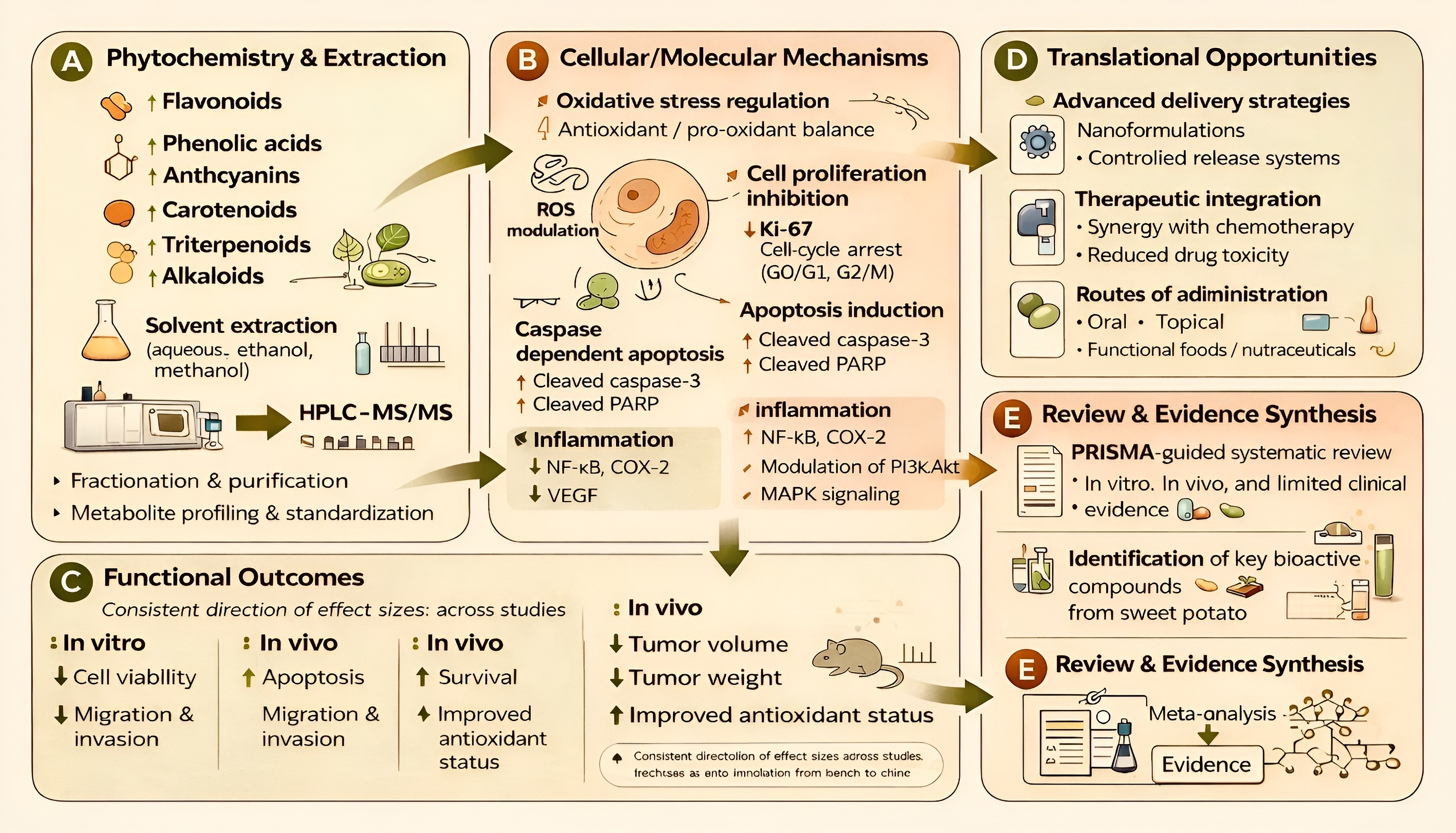
Anticancer Mechanisms of Bioactive Compounds from Sweet Potato (Ipomoea batatas L.) Leaves: A Systematic Review



Abstract
1. Introduction
2. Materials and Methods
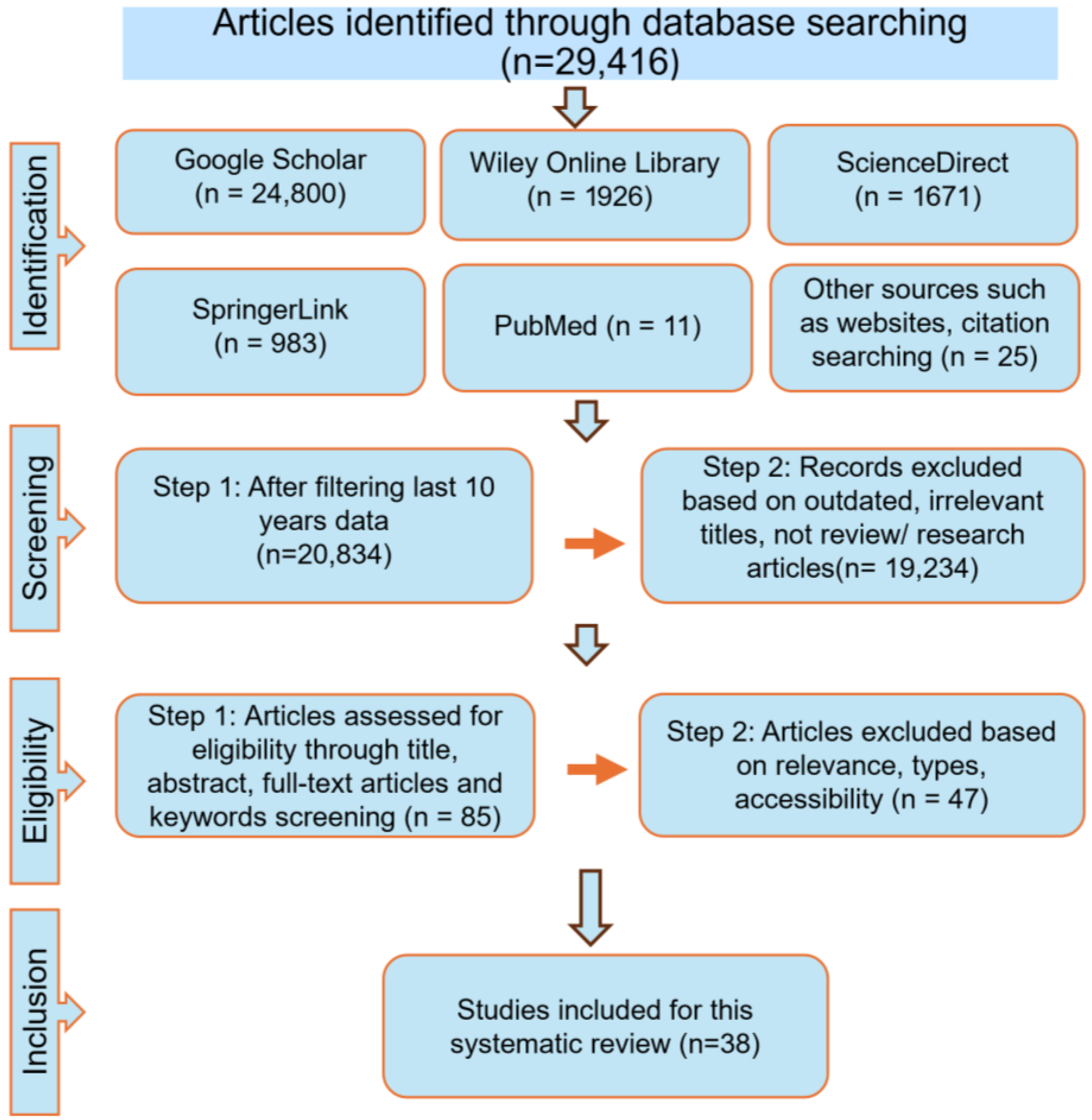
2.1. Search Strategy
2.2. Data Selection
2.3. Search and Selection Summary
3. Bioactive Compounds in SPL and Their Anticancer Mechanism
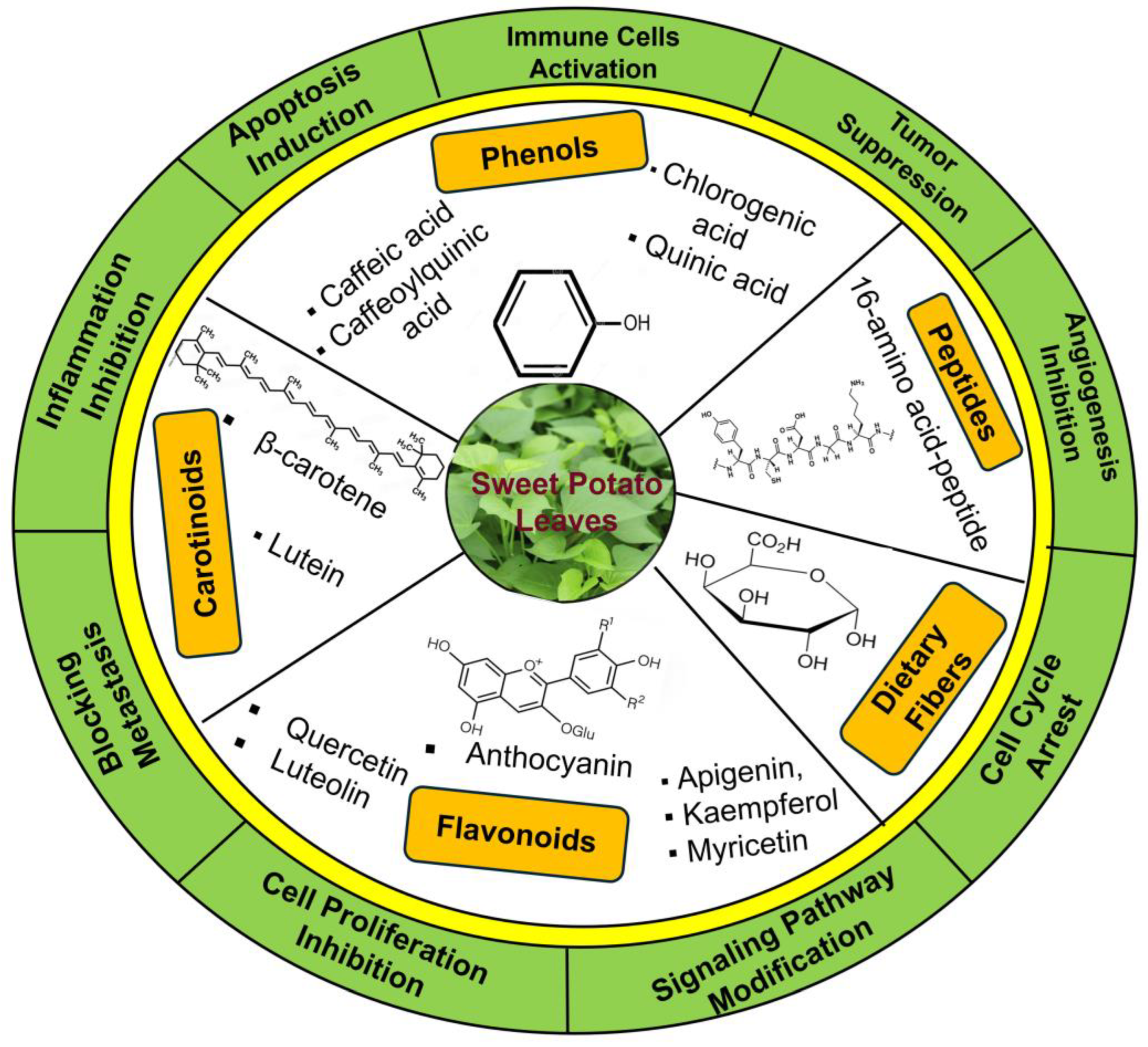
3.1. Bioactive Anticancer Compound in SPL
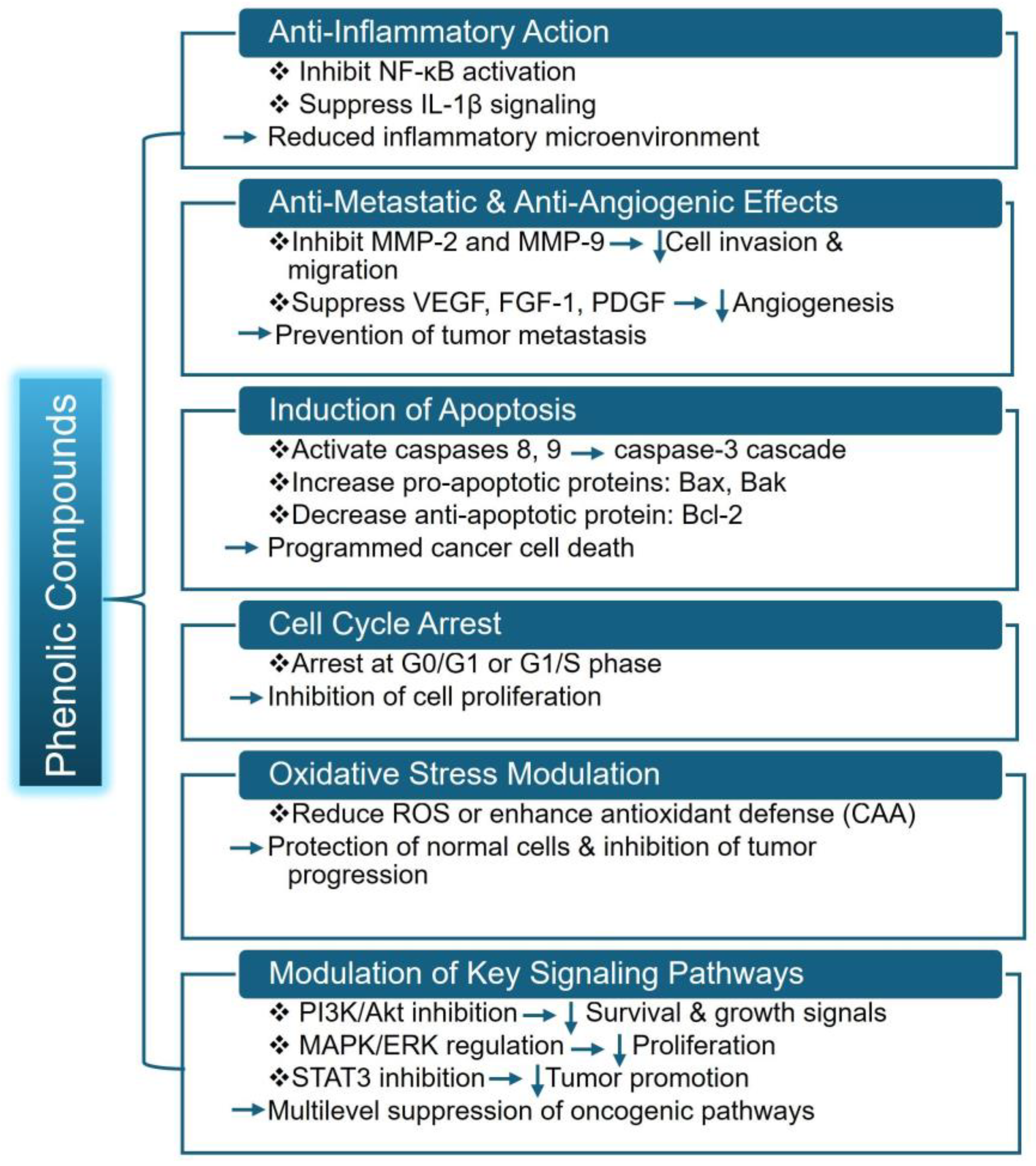
3.2. Anticancer Mechanism of Phenolic Compounds in SPL
3.2.1. Apoptosis Induction
3.2.2. Modulation of Oncogenic Signaling Pathways
3.2.3. Inhibition of Metastasis and Oxidative Stress Modulation
3.2.4. Enzyme Regulation, Cell Proliferation Inhibition, and Cell-Cycle Arrest
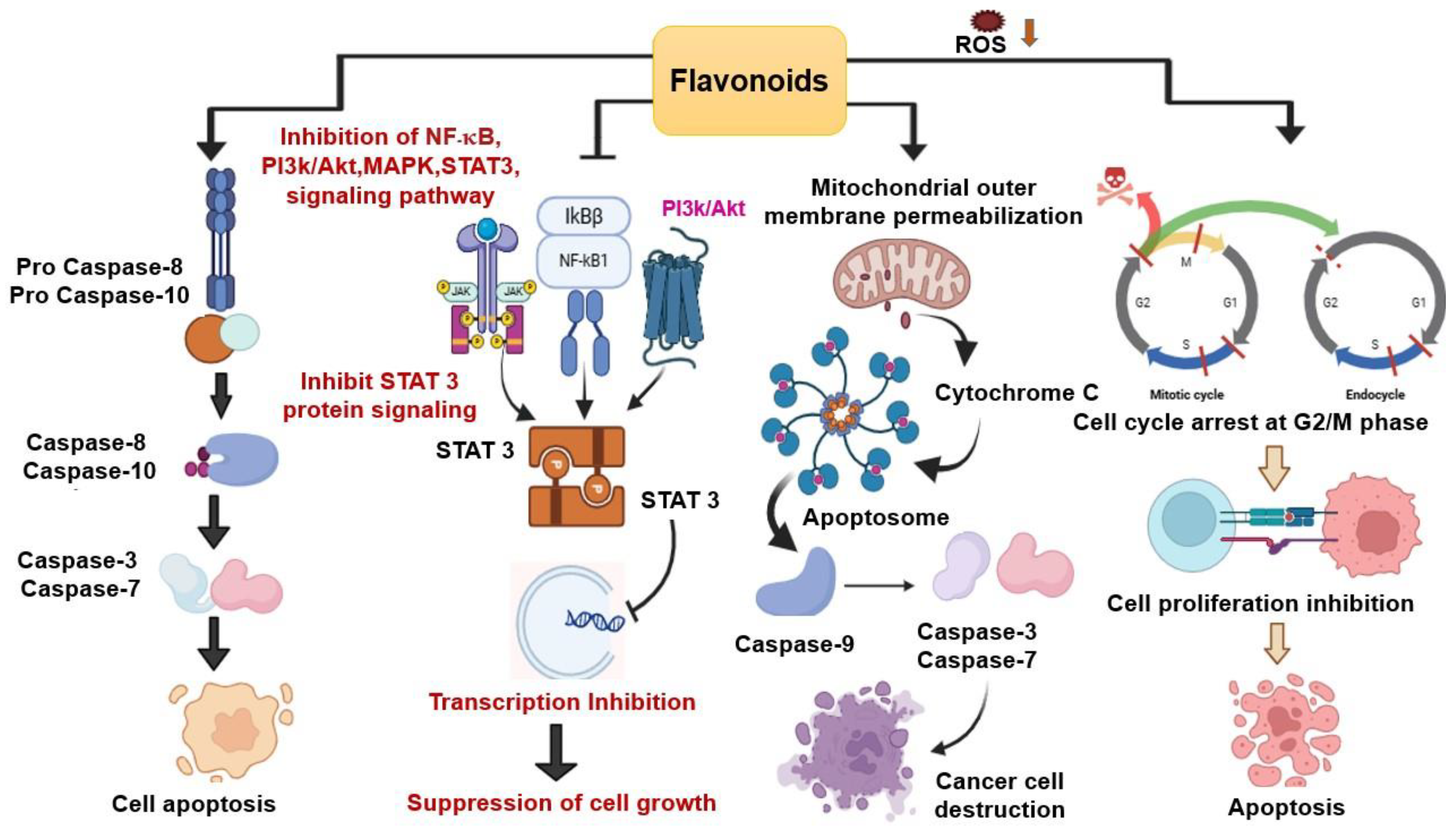
3.3. Anticancer Mechanism of Flavonoid Derivatives in SPL
3.3.1. Cell-Cycle Regulation and Antioxidant Activities
3.3.2. Inhibit Proliferation
3.3.3. Apoptosis Induction
3.3.4. Modulation of Signaling Pathways
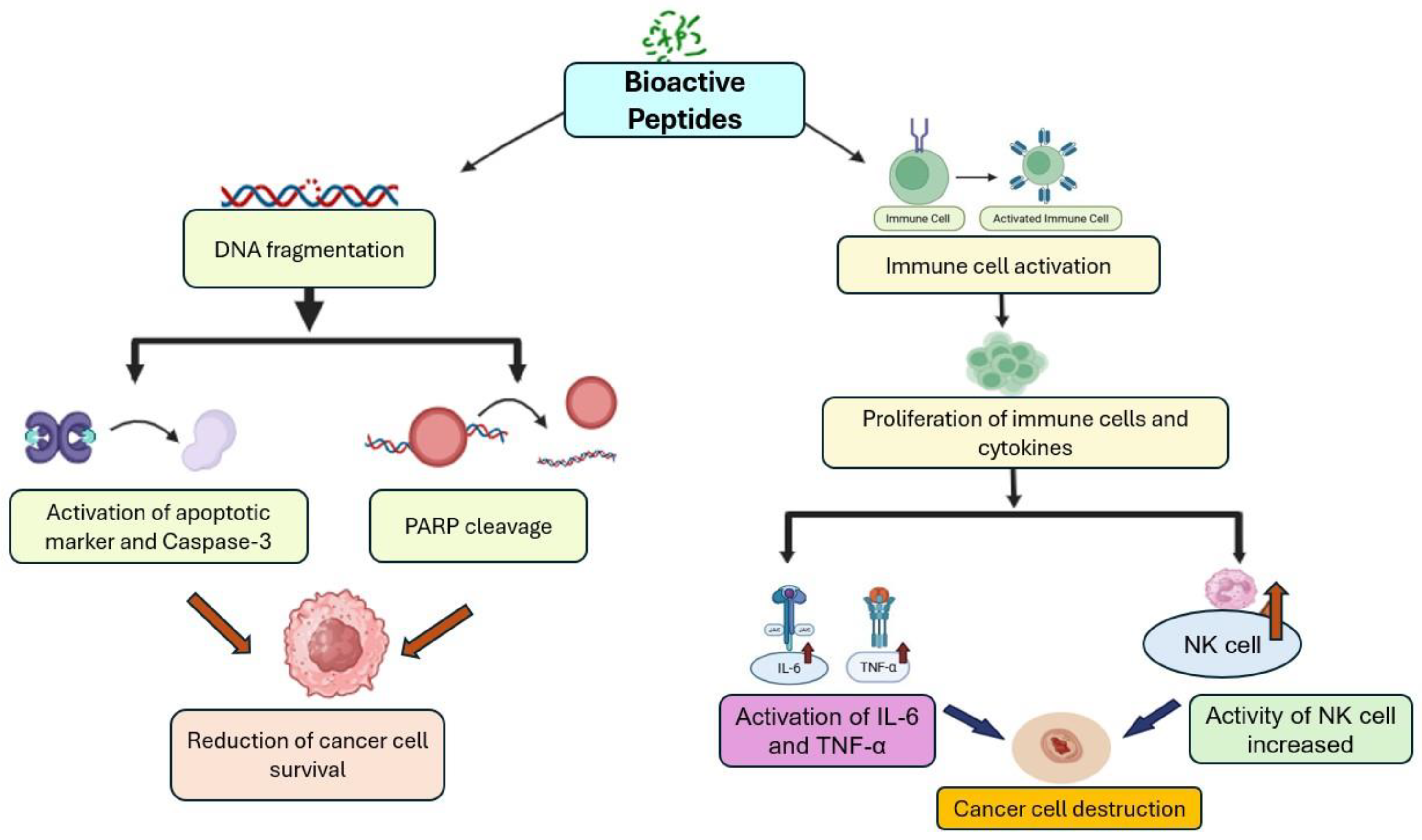
3.4. Bioactive Peptides in SPL
3.4.1. Cancer Cell Proliferation Inhibition
3.4.2. Immune Cell Activation
3.5. Dietary Fiber Anticancer Mechanism
3.6. Carotenoids Anticancer Mechanism
4. Enhancing Conventional Cancer Therapies with Bioactive Compounds from SPL
Industrial Scalability, Applicability, and Sustainability
5. Limitations and Scope
6. Conclusions
Supplementary Materials
Author Contributions
Funding
Institutional Review Board Statement
Informed Consent Statement
Data Availability Statement
Acknowledgments
Conflicts of Interest
Abbreviations
| AML | Acute Myeloid Leukemia |
| Akt | Protein Kinase B |
| BAX | Bcl-2 Associated X Protein |
| Bcl-2 | B Cell Lymphoma/Leukemia-2 Protein |
| DW | Dry Weight |
| ECM | Extracellular Matrix |
| EGFR | Epidermal Growth Factor Receptor |
| EMT | Epithelial–Mesenchymal Transition |
| ERK | Extracellular Signal-Regulated Kinase |
| FGF-1 | Fibroblast Growth Factor 1 |
| IbACP | Ipomoea batatas Anti-Cancer Peptide |
| IKK-α | IκB Kinase Alpha |
| IL-1β | Interleukin-1 Beta |
| iNOS | Inducible Nitric Oxide Synthase |
| IκB-α | Inhibitor of NF-κB Alpha |
| JNK | c-Jun N-Terminal Kinase |
| MAPK | Mitogen-Activated Protein Kinase |
| MMP-2 | Matrix Metalloproteinase-2 |
| NF-κB | Nuclear Factor Kappa-Light-Chain-Enhancer of Activated B Cells |
| NO | Nitric Oxide |
| NRF2 | Nuclear Factor Erythroid 2-Related Factor |
| PARP | Poly ADP-Ribose Polymerase |
| PDGF | Platelet-Derived Growth Factor |
| PI3K | Phosphatidylinositide 3-Kinase |
| ROS | Reactive Oxygen Species |
| SPL | Sweet Potato Leaves |
| STAT-3 | Signal Transducer and Activator of Transcription 3 |
| TFC | Total Flavonoid Content |
| TPC | Total Polyphenol Content |
| VEGF | Vascular Endothelial Growth Factor |
References
- Edo, G.I.; Moses, R.J.; Ali, A.B.M.; Yousif, E.; Jikah, A.N.; Isoje, E.F.; Igbuku, U.A.; Akpoghelie, P.O.; Zainulabdeen, K.; Essaghah, A.E.A.; et al. Natural Phenolic Compounds for the Potential Treatment of Cancer, Mechanistic Insights and Advances in Delivery Systems. Next Res. 2025, 2, 100834. [Google Scholar] [CrossRef]
- Chaachouay, N.; Zidane, L. Plant-derived natural products: A source for drug discovery and development. Drugs Drug Candidates 2024, 3, 184–207. [Google Scholar] [CrossRef]
- Laveriano-Santos, E.P.; López-Yerena, A.; Jaime-Rodríguez, C.; González-Coria, J.; Lamuela-Raventós, R.M.; Vallverdú-Queralt, A.; Romanyà, J.; Pérez, M. Sweet potato is not simply an abundant food crop: A comprehensive review of its phytochemical constituents, biological activities, and the effects of processing. Antioxidants 2022, 11, 1648. [Google Scholar] [CrossRef]
- Noreen, S.; Niazi, M.K.; Shehzadi, S.; Ikram, A.; Arshad, M.T.; Gnedeka, K.T. Extend the emphasis to encompass sweet potatoes health advantages, industrial applications, and nutritional qualities. CyTA–J. Food 2024, 22, 2390994. [Google Scholar] [CrossRef]
- Chang, V.H.-S.; Yang, D.H.-A.; Lin, H.-H.; Pearce, G.; Ryan, C.A.; Chen, Y.-C. IbACP, a sixteen-amino-acid peptide isolated from Ipomoea batatas leaves, induces carcinoma cell apoptosis. Peptides 2013, 47, 148–156. [Google Scholar] [CrossRef] [PubMed]
- George, J.; Reddy, G.V.P.; Wadl, P.A.; Rutter, W.; Culbreath, J.; Lau, P.W.; Rashid, T.; Allan, M.C.; Johaningsmeier, S.D.; Nelson, A.M.; et al. Sustainable sweetpotato production in the United States: Current status, challenges, and opportunities. Agron. J. 2024, 116, 630–660. [Google Scholar] [CrossRef]
- Islam, S. Sweetpotatoes [Ipomoea batatas (L.) Lam]: The super food of the next century? An intensive review on their potential as a sustainable and versatile food source for future generations. CyTA–J. Food 2024, 22, 2397553. [Google Scholar] [CrossRef]
- Sun, H.; Mu, T.; Xi, L.; Zhang, M.; Chen, J. Sweet potato (Ipomoea batatas L.) leaves as nutritional and functional foods. Food Chem. 2014, 156, 380–389. [Google Scholar] [CrossRef]
- Elgabry, R.M.; Sedeek, M.S.; Meselhy, K.M.; Fawzy, G.A. A review on the potential health benefits of sweet potato: Insights into its preclinical and clinical studies. Int. J. Food Sci. Technol. 2023, 58, 2866–2872. [Google Scholar] [CrossRef]
- Gundala, S.R.; Yang, C.; Lakshminarayana, N.; Asif, G.; Gupta, M.V.; Shamsi, S.; Aneja, R. Polar biophenolics in sweet potato greens extract synergize to inhibit prostate cancer cell proliferation and in vivo tumor growth. Carcinogenesis 2013, 34, 2039–2049. [Google Scholar] [CrossRef]
- Kurata, R.; Adachi, M.; Yamakawa, O.; Yoshimoto, M. Growth suppression of human cancer cells by polyphenolics from sweetpotato (Ipomoea batatas L.) leaves. J. Agric. Food Chem. 2007, 55, 185–190. [Google Scholar] [CrossRef]
- Sultana, T.; Islam, S.; Azad, M.A.K.; Akanda, M.J.H.; Rahman, A.; Rahman, M.S. Phytochemical profiling and antimicrobial properties of various sweet potato (Ipomoea batatas L.) leaves assessed by RP-HPLC-DAD. Foods 2024, 13, 2787. [Google Scholar] [CrossRef]
- Vishnu, V.R.; Renjith, R.S.; Mukherjee, A.; Anil, S.R.; Sreekumar, J.; Jyothi, A.N. Comparative study on the chemical structure and in vitro antiproliferative activity of anthocyanins in purple root tubers and leaves of sweet potato (Ipomoea batatas). J. Agric. Food Chem. 2019, 67, 2467–2475. [Google Scholar] [CrossRef]
- Kang, H.-G.; Jeong, S.-H.; Cho, J.-H. Antimutagenic and anticarcinogenic effect of methanol extracts of sweetpotato (Ipomea batatas) leaves. Toxicol. Res. 2010, 26, 29–35. [Google Scholar] [CrossRef]
- Karna, P.; Gundala, S.R.; Gupta, M.V.; Shamsi, S.A.; Pace, R.D.; Yates, C.; Narayan, S.; Aneja, R. Polyphenol-rich sweet potato greens extract inhibits proliferation and induces apoptosis in prostate cancer cells in vitro and in vivo. Carcinogenesis 2011, 32, 1872–1880. [Google Scholar] [CrossRef]
- Xu, L.; Zeng, K.; Duan, Z.; Liu, J.; Zeng, Y.; Zhang, M.; Yang, Y.; Guo, Q.; Jin, Y.; Liu, W.; et al. Screening potential antileukemia ingredients from sweet potato: Integration of metabolomics analysis, network pharmacology, and experimental validation. Front. Nutr. 2025, 12, 1518525. [Google Scholar] [CrossRef]
- Nakachi, S.; Tokeshi, A.; Takamatsu, R.; Arakaki, K.; Uehara, M.; Iguchi, A.; Taira, J.; Yoshimi, N. Abstract 840: The modifying effects of the extract from Okinawan sweet potato leaves in mouse colon carcinogenesis. Cancer Res. 2016, 76, 840. [Google Scholar] [CrossRef]
- Zhang, N.; Ren, Y.; Xu, Y. From laboratory to clinic: Opportunities and challenges of functional food active ingredients in cancer therapy. Front. Nutr. 2025, 12, 1627949. [Google Scholar] [CrossRef] [PubMed]
- Meng, X.; Dong, T.; Li, Z.; Zhu, M. First systematic review of the last 30 years of research on sweetpotato: Elucidating the frontiers and hotspots. Front. Plant Sci. 2024, 15, 1428975. [Google Scholar] [CrossRef] [PubMed]
- Alam, M.K. A comprehensive review of sweet potato (Ipomoea batatas [L.] Lam): Revisiting the associated health benefits. Trends Food Sci. Technol. 2021, 115, 512–529. [Google Scholar] [CrossRef]
- Nwosisi, S.; Nandwani, D.; Myles, E.L. Antiproliferative potential of sweetpotato in breast (BT549) and lung (A549) cancer cell lines. BMC Complement. Med. Ther. 2025, 25, 47. [Google Scholar] [CrossRef]
- Page, M.J.; McKenzie, J.E.; Bossuyt, P.M.; Boutron, I.; Hoffmann, T.C.; Mulrow, C.D.; Shamseer, L.; Tetzlaff, J.M.; Akl, E.A.; Brennan, S.E.; et al. The PRISMA 2020 Statement: An Updated Guideline for Reporting Systematic Reviews. Rev. Esp. Cardiol. 2021, 74, 790–799. [Google Scholar] [CrossRef] [PubMed]
- Suhendy, H.; Fidrianny, I.; Insanu, M. Phytochemical compounds and pharmacological activities of Ipomoea batatas L.: An Updated. review. Pharmacia 2023, 70, 1283–1294. [Google Scholar] [CrossRef]
- Krochmal-Marczak, B.; Cebulak, T.; Kapusta, I.; Oszmiański, J.; Kaszuba, J.; Żurek, N. The Content of Phenolic Acids and Flavonols in the Leaves of Nine Varieties of Sweet Potatoes (Ipomoea batatas L.) Depending on Their Development, Grown in Central Europe. Molecules 2020, 25, 3473. [Google Scholar] [CrossRef] [PubMed]
- Rajaram, S. Health benefits of plant-derived α-linolenic acid. Am. J. Clin. Nutr. 2014, 100, 443S–448S. [Google Scholar] [CrossRef]
- Suárez, S.; Mu, T.; Sun, H.; Añón, M.C. Antioxidant Activity, Nutritional, and Phenolic Composition of Sweet Potato Leaves as Affected by Harvesting Period. Int. J. Food Prop. 2020, 23, 178–188. [Google Scholar] [CrossRef]
- Hapke, K.L.; Azad, M.A.K.; Sultana, T.; Islam, S. Comparison of Antioxidant, β-Carotene, and Phenolic Levels between Roots and Leaves across Three Popular Sweet Potato (Ipomoea batatas L.) Varieties. Agric. Food Secur. 2024, 13, 62. [Google Scholar] [CrossRef]
- Islam, S.; Adam, Z.; Akanda, J.H. Quinic and Caffeic Acid Derivatives: Influencing Antioxidant Capacities and Phenolic Contents of Selected Therapeutic and Specialty Crops Using Water and Ethanolic Extracts. Food Chem. Adv. 2024, 4, 100693. [Google Scholar] [CrossRef]
- Johnson, M.; Pace, R.D. Sweet potato leaves: Properties and synergistic interactions that promote health and prevent disease. Nutr. Rev. 2010, 68, 604–615. [Google Scholar] [CrossRef]
- Su, X.; Griffin, J.; Xu, J.; Ouyang, P.; Zhao, Z.; Wang, W. Identification and quantification of anthocyanins in purple-fleshed sweet potato leaves. Heliyon 2019, 5, e01964. [Google Scholar] [CrossRef]
- Fu, Z.-F.; Tu, Z.-C.; Zhang, L.; Wang, H.; Wen, Q.-H.; Huang, T. Antioxidant Activities and Polyphenols of Sweet Potato (Ipomoea batatas L.) Leaves Extracted with Solvents of Various Polarities. Food Biosci. 2016, 15, 11–18. [Google Scholar] [CrossRef]
- Anastácio, A.; Carvalho, I.S. Spotlight on PGI sweet potato from Europe: Study of plant part, time and solvent effects on antioxidant activity. J. Food Biochem. 2013, 37, 628–637. [Google Scholar] [CrossRef]
- Ji, H.; Zhang, H.; Li, H.; Li, Y. Analysis on the Nutrition Composition and Antioxidant Activity of Different Types of Sweet Potato Cultivars. Food Nutr. Sci. 2015, 6, 161–167. [Google Scholar] [CrossRef]
- Wang, S.; Nie, S.; Zhu, F. Chemical Constituents and Health Effects of Sweet Potato. Food Res. Int. 2016, 89, 90–116. [Google Scholar] [CrossRef]
- Pochapski, M.T.; Fosquiera, E.C.; Esmerino, L.A.; Dos Santos, E.B.; Farago, P.V.; Santos, F.A.; Groppo, F.C. Phytochemical Screening, Antioxidant, and Antimicrobial Activities of the Crude Leaf Extract from Ipomoea batatas (L.) Lam. Pharmacogn. Mag. 2011, 7, 165–170. [Google Scholar] [CrossRef]
- Choi, J.-S.; Lee, S.; Park, Y.; Kim, H.; Lee, J. Effects of Solvent Partitioning on Polyphenol Composition and Antioxidant Properties of Sweet Potato (Ipomoea batatas L.) Leaf and Petiole Extracts. Foods 2019, 9, 15. [Google Scholar] [CrossRef]
- Chen, C.M.; Li, S.C.; Lin, Y.L.; Hsu, C.Y.; Shieh, M.J.; Liu, J.F. Consumption of purple sweet potato leaves modulates human immune response: T-lymphocyte functions, lytic activity of natural killer cell and antibody production. World J. Gastroenterol. 2005, 11, 5777–5781. [Google Scholar] [CrossRef]
- Ishida, H.; Suzuno, H.; Sugiyama, N.; Innami, S.; Tadokoro, T.; Maekawa, A. Nutritive evaluation on chemical components of leaves, stalks and stems of sweet potatoes (Ipomoea batatas Poir). Food Chem. 2000, 68, 359–367. [Google Scholar] [CrossRef]
- Zou, J.-Y.; Xu, Y.; Wang, X.-H.; Jiang, Q.; Zhu, X.-M. Improvement of constipation in leukemia patients undergoing chemotherapy using sweet potato. Cancer Nurs. 2016, 39, 181–186. [Google Scholar] [CrossRef]
- Jahurul, M.H.A.; Islam, S. Emerging Techniques for the Recovery of Bioactive Compounds from Sweet Potato Leaves (Ipomoea batatas (L.) Lam) and Their Functional Health Benefits. Food Bioeng. 2025, 4, 318–339. [Google Scholar] [CrossRef]
- Nguyen, H.C.; Chen, C.-C.; Lin, K.-H.; Chao, P.-Y.; Lin, H.-H.; Huang, M.-Y. Bioactive compounds, antioxidants, and health benefits of sweet potato leaves. Molecules 2021, 26, 1820. [Google Scholar] [CrossRef] [PubMed]
- Luo, D.; Mu, T.; Sun, H. Profiling of phenolic acids and flavonoids in sweet potato (Ipomoea batatas L.) leaves and evaluation of their antioxidant and hypoglycemic activities. Food Biosci. 2021, 39, 100801. [Google Scholar] [CrossRef]
- Kimsa-Dudek, M.; Synowiec-Wojtarowicz, A.; Krawczyk, A.; Kosowska, A.; Kimsa-Furdzik, M.; Francuz, T. The apoptotic effect of caffeic or chlorogenic acid on the C32 cells that have simultaneously been exposed to a static magnetic field. Int. J. Mol. Sci. 2022, 23, 3859. [Google Scholar] [CrossRef]
- Lee, D.; Kim, J.; Baek, S.; Lee, J.W.; Lee, C.; Kang, K.S.; Shim, S.H. 1,3,5-tricaffeoylquinic acid from Ipomoea batatas vines induced ovarian cancer cell apoptosis and inhibited endothelial tube formation. Biomol. Ther. 2025, 33, 483–493. [Google Scholar] [CrossRef]
- Aouad, S.M.; Cohen, L.Y.; Sharif-Askari, E.; Haddad, E.K.; Alam, A.; Sekaly, R.-P. Caspase-3 is a component of Fas death-inducing signaling complex in lipid rafts and its activity is required for complete caspase-8 activation during Fas-mediated cell death. J. Immunol. 2004, 172, 2316–2323. [Google Scholar] [CrossRef]
- Scorrano, L.; Korsmeyer, S.J. Mechanisms of cytochrome c release by proapoptotic BCL-2 family members. Biochem. Biophys. Res. Commun. 2003, 304, 437–444. [Google Scholar] [CrossRef]
- Zeng, A.; Liang, X.; Zhu, S.; Liu, C.; Wang, S.; Zhang, Q.; Song, L. Chlorogenic acid induces apoptosis, inhibits metastasis and improves antitumor immunity in breast cancer via the NF-κB signaling pathway. Oncol. Rep. 2021, 45, 717–727. [Google Scholar] [CrossRef]
- Anantharaju, P.G.; Gowda, P.C.; Vimalambike, M.G.; Madhunapantula, S.V. An overview on the role of dietary phenolics for the treatment of cancers. Nutr. J. 2016, 15, 99. [Google Scholar] [CrossRef] [PubMed]
- Cho, H.D.; Brownmiller, C.; Sorker, H.; Islam, S.; Lee, S.O. Sweetpotato leaves inhibit lipopolysaccharide-induced inflammation in RAW 264.7 macrophages via suppression of NF-κB signaling pathway. Foods 2021, 10, 2051. [Google Scholar] [CrossRef] [PubMed]
- Zhang, H.; Zhang, L.; Gao, F.; Yang, S.; Deng, Q.; Shi, K.; Li, S. Purification, composition, and anti-inflammatory activity of polyphenols from sweet potato stems and leaves. Foods 2025, 14, 2903. [Google Scholar] [CrossRef]
- Nishida, A.; Andoh, A. The role of inflammation in cancer: Mechanisms of tumor initiation, progression, and metastasis. Cells 2025, 14, 488. [Google Scholar] [CrossRef]
- Zappavigna, S.; Cossu, A.M.; Grimaldi, A.; Bocchetti, M.; Ferraro, G.A.; Nicoletti, G.F.; Filosa, R.; Caraglia, M. Anti-inflammatory drugs as anticancer agents. Int. J. Mol. Sci. 2020, 21, 2605. [Google Scholar] [CrossRef]
- Lee, S.-L.; Chin, T.-Y.; Tu, S.-C.; Wang, Y.-J.; Hsu, Y.-T.; Kao, M.-C.; Wu, Y.-C. Purple sweet potato leaf extract induces apoptosis and reduces inflammatory adipokine expression in 3T3-L1 differentiated adipocytes. Evid.-Based Complement. Altern. Med. 2015, 2015, 126302. [Google Scholar] [CrossRef] [PubMed]
- Silva-Correa, C.R.; Hilario-Vargas, J.; Villarreal-La Torre, V.E.; Calderón-Peña, A.A.; González-Siccha, A.D.; Aspajo-Villalaz, C.L.; Cruzado-Razco, J.L. Potential anticancer activity of bioactive compounds from Ipomoea batatas. Pharmacogn. J. 2022, 14, 650–659. [Google Scholar] [CrossRef]
- Ezzati, M.; Yousefi, B.; Velaei, K.; Safa, A. A review on anti-cancer properties of quercetin in breast cancer. Life Sci. 2020, 248, 117463. [Google Scholar] [CrossRef] [PubMed]
- Kaushik, S.; Shyam, H.; Agarwal, S.; Sharma, R.; Nag, T.C.; Dwivedi, A.K.; Balapure, A.K. Genistein potentiates Centchroman induced antineoplasticity in breast cancer via PI3K/Akt deactivation and ROS-dependent induction of apoptosis. Life Sci. 2019, 239, 117073. [Google Scholar] [CrossRef] [PubMed]
- Jin, S.; Zhang, Q.Y.; Kang, X.M.; Wang, J.X.; Zhao, W.H. Daidzein induces MCF-7 breast cancer cell apoptosis via the mitochondrial pathway. Ann. Oncol. 2010, 21, 263–268. [Google Scholar] [CrossRef]
- Yu, Y. The Function of NK Cells in Tumor Metastasis and NK Cell-Based Immunotherapy. Cancers 2023, 15, 2323. [Google Scholar] [CrossRef]
- Sun, H.; Mu, B.; Song, Z.; Ma, Z.; Mu, T. The In Vitro Antioxidant Activity and Inhibition of Intracellular Reactive Oxygen Species of Sweet Potato Leaf Polyphenols. Oxidative Med. Cell Longev. 2018, 2018, 9017828. [Google Scholar] [CrossRef]
- Feng, R.; Lu, Y.; Bowman, L.L.; Qian, Y.; Castranova, V.; Ding, M. Inhibition of activator protein-1, NF-κB, and MAPKs and induction of phase 2 detoxifying enzyme activity by chlorogenic acid. J. Biol. Chem. 2005, 280, 27888–27895. [Google Scholar] [CrossRef]
- Kato, K.; Nagane, M.; Aihara, N.; Kamiie, J.; Miyanabe, M.; Hiraki, S.; Luo, X.; Nakanishi, I.; Shoji, Y.; Matsumoto, K.I.; et al. Lipid-soluble polyphenols from sweet potato exert antitumor activity and enhance chemosensitivity in breast cancer. J. Clin. Biochem. Nutr. 2021, 68, 193–200. [Google Scholar] [CrossRef]
- Kopustinskiene, D.M.; Jakstas, V.; Savickas, A.; Bernatoniene, J. Flavonoids as anticancer agents. Nutrients 2020, 12, 457. [Google Scholar] [CrossRef]
- Dev, S.S.; Farghadani, R.; Zainal Abidin, S.A.; Othman, I.; Naidu, R. Flavonoids as receptor tyrosine kinase inhibitors in lung cancer. J. Funct. Foods 2023, 110, 105845. [Google Scholar] [CrossRef]
- Chen, X.; Zhang, W.; Xu, X. Cyanidin-3-glucoside suppresses the progression of lung adenocarcinoma by downregulating TP53I3 and inhibiting PI3K/AKT/mTOR pathway. World J. Surg. Oncol. 2021, 19, 232. [Google Scholar] [CrossRef] [PubMed]
- Li, X.; Zhou, N.; Wang, J.; Liu, Z.; Wang, X.; Zhang, Q.; Liu, Q.; Gao, L.; Wang, R. Quercetin Suppresses Breast Cancer Stem Cells (CD44+/CD24−) by Inhibiting the PI3K/Akt/mTOR Signaling Pathway. Life Sci. 2018, 196, 56–62. [Google Scholar] [CrossRef]
- Wang, L.S.; Stoner, G.D. Anthocyanins and their role in cancer prevention. Cancer Lett. 2008, 269, 281–290. [Google Scholar] [CrossRef]
- Tsai, M.C.; Chen, C.C.; Tseng, T.H.; Chang, Y.C.; Lin, Y.J.; Tsai, I.N.; Wang, C.C.; Wang, C.J. Hibiscus anthocyanins extracts induce apoptosis by activating AMP-activated protein kinase in human colorectal cancer cells. Nutrients 2023, 15, 3972. [Google Scholar] [CrossRef] [PubMed]
- Park, S.; Lim, W.; Bazer, F.W.; Song, G. Naringenin suppresses growth of human placental choriocarcinoma via reactive oxygen species-mediated P38 and JNK MAPK pathways. Phytomedicine 2018, 50, 238–246. [Google Scholar] [CrossRef]
- Pham, T.N.D.; Stempel, S.; Shields, M.A.; Spaulding, C.; Kumar, K.; Bentrem, D.J.; Matsangou, M.; Munshi, H.G. Quercetin Enhances the Anti-Tumor Effects of BET Inhibitors by Suppressing hnRNPA1. Int. J. Mol. Sci. 2019, 20, 4293. [Google Scholar] [CrossRef]
- Silva-Correa, C.R.; Hilario-Vargas, J.; Calderón-Peña, A.A.; Torre, V.E.V.-L.; Aspajo-Villalaz, C.L.; Bailon-Moscoso, N.; Romero-Benavides, J.C.; Herrera-Calderon, O.; Sagástegui-Guarniz, W.A.; Castañeda-Carranza, J.A.; et al. Protective effect of purple sweet potatoes (Ipomoea batatas L.) against rat breast cancer. Vet. World 2025, 18, 1137–1146. [Google Scholar] [CrossRef]
- Chen, P.-N.; Chu, S.-C.; Chiou, H.-L.; Chiang, C.-L.; Yang, S.-F.; Hsieh, Y.-S. Cyanidin 3-glucoside and peonidin 3-glucoside inhibit tumor cell growth and induce apoptosis in vitro and suppress tumor growth in vivo. Nutr. Cancer 2005, 53, 232–243. [Google Scholar] [CrossRef]
- Huang, L.; Jin, K.; Lan, H. Luteolin Inhibits Cell Cycle Progression and Induces Apoptosis of Breast Cancer Cells through Downregulation of Human Telomerase Reverse Transcriptase. Oncol. Lett. 2019, 17, 3842–3850. [Google Scholar] [CrossRef]
- Chinnadurai, R.K.; Khan, N.; Meghwanshi, G.K.; Ponne, S.; Althobiti, M.; Kumar, R. Current research status of anti-cancer peptides: Mechanism of action, production, and clinical applications. Biomed. Pharmacother. 2023, 164, 114996. [Google Scholar] [CrossRef]
- Ghadiri, N.; Javidan, M.; Sheikhi, S.; Taştan, Ö.; Parodi, A.; Liao, Z.; Tayybi Azar, M.; Ganjalıkhani-Hakemi, M. Bioactive peptides: An alternative therapeutic approach for cancer management. Front. Immunol. 2024, 15, 1310443. [Google Scholar] [CrossRef]
- Tepkeeva, I.I.; Moiseeva, E.V.; Chaadaeva, A.V.; Zhavoronkova, E.V.; Kessler, Y.V.; Semushina, S.G.; Demushkin, V.P. Evaluation of antitumor activity of peptide extracts from medicinal plants on the model of transplanted breast cancer in CBRB-Rb(8.17)1Iem mice. Bull. Exp. Biol. Med. 2008, 145, 464–466. [Google Scholar] [CrossRef]
- Pan, X.; Zhao, Y.-Q.; Hu, F.-Y.; Chi, C.-F.; Wang, B. Anticancer activity of a hexapeptide from skate (Raja porosa) cartilage protein hydrolysate in HeLa cells. Mar. Drugs 2016, 14, 153. [Google Scholar] [CrossRef] [PubMed]
- Hori, K.; Sato, Y.; Ito, K.; Fujiwara, Y.; Iwamoto, Y.; Makino, H.; Kawakubo, A. Strict specificity for high-mannose type N-glycans and primary structure of a red alga Eucheuma serra lectin. Glycobiology 2007, 17, 479–491. [Google Scholar] [CrossRef]
- Ding, J.; Hou, G.G.; Nemzer, B.V.; Xiong, S.; Dubat, A.; Feng, H. Effects of controlled germination on selected physicochemical and functional properties of whole-wheat flour and enhanced γ-aminobutyric acid accumulation by ultrasonication. Food Chem. 2018, 243, 214–221. [Google Scholar] [CrossRef]
- Soares, R.A.M.; Mendonça, S.; De Castro, L.Í.A.; Menezes, A.C.C.C.; Arêas, J.A.G. Major peptides from amaranth (Amaranthus cruentus) protein inhibit HMG-CoA reductase activity. Int. J. Mol. Sci. 2015, 16, 4150–4160. [Google Scholar] [CrossRef] [PubMed]
- De Mejía, E.G.; Prisecaru, V.I. Lectins as bioactive plant proteins: A potential in cancer treatment. Crit. Rev. Food Sci. Nutr. 2005, 45, 425–445. [Google Scholar] [CrossRef] [PubMed]
- Gattringer, J.; Gruber, C.W.; Hellinger, R. Peptide modulators of cell migration: Overview, applications and future development. Drug Discov. Today 2023, 28, 103554. [Google Scholar] [CrossRef]
- Wu, W.; Zhang, M.; Ren, Y.; Cai, X.; Yin, Z.; Zhang, X.; Min, T.; Wu, H. Characterization and immunomodulatory activity of a novel peptide, ECFSTA, from wheat germ globulin. J. Agric. Food Chem. 2017, 65, 5561–5569. [Google Scholar] [CrossRef]
- Cruz-Chamorro, I.; Álvarez-Sánchez, N.; Santos-Sánchez, G.; Pedroche, J.; Fernández-Pachón, M.-S.; Millán, F.; Millán-Linares, M.C.; Lardone, P.J.; Bejarano, I.; Guerrero, J.M.; et al. Immunomodulatory and antioxidant properties of wheat gluten protein hydrolysates in human peripheral blood mononuclear cells. Nutrients 2020, 12, 1673. [Google Scholar] [CrossRef]
- Dahm, C.C.; Keogh, R.H.; Spencer, E.A.; Greenwood, D.C.; Key, T.J.; Fentiman, I.S.; Shipley, M.J.; Brunner, E.J.; Cade, J.E.; Burley, V.J.; et al. Dietary fiber and colorectal cancer risk: A nested case-control study using food diaries. J. Natl. Cancer Inst. 2010, 102, 614–626. [Google Scholar] [CrossRef] [PubMed]
- Hu, J.; Wang, J.; Li, Y.; Xue, K.; Kan, J. Use of dietary fibers in reducing the risk of several cancer types: An umbrella review. Nutrients 2023, 15, 2545. [Google Scholar] [CrossRef]
- Li, Q.; Holford, T.R.; Zhang, Y.; Boyle, P.; Mayne, S.T.; Dai, M.; Zheng, T. Dietary fiber intake and risk of breast cancer by menopausal and estrogen receptor status. Eur. J. Nutr. 2013, 52, 217–223. [Google Scholar] [CrossRef] [PubMed]
- Reynolds, A.; Mann, J.; Cummings, J.; Winter, N.; Mete, E.; Te Morenga, L. Carbohydrate quality and human health: A series of systematic reviews and meta-analyses. Lancet 2019, 393, 434–445. [Google Scholar] [CrossRef]
- Wang, C.; Li, P.; Xuan, J.; Zhu, C.; Liu, J.; Shan, L.; Du, Q.; Ren, Y.; Ye, J. Cholesterol enhances colorectal cancer progression via ROS elevation and MAPK signaling pathway activation. Cell. Physiol. Biochem. 2017, 42, 729–742. [Google Scholar] [CrossRef] [PubMed]
- Zhang, Z.; Xu, G.; Ma, M.; Yang, J.; Liu, X. Dietary fiber intake reduces risk for gastric cancer: A meta-analysis. Gastroenterology 2013, 145, 113–120.e3. [Google Scholar] [CrossRef]
- Cohen, L.A.; Zhao, Z.; Zang, E.A.; Wynn, T.T.; Simi, B.; Rivenson, A. Wheat bran and psyllium diets: Effects on N-methylnitrosourea-induced mammary tumorigenesis in F344 rats. J. Natl. Cancer Inst. 1996, 88, 899–907. [Google Scholar] [CrossRef]
- Dong, J.Y.; He, K.; Wang, P.; Qin, L.Q. Dietary fiber intake and risk of breast cancer: A meta-analysis of prospective cohort studies. Am. J. Clin. Nutr. 2011, 94, 900–905. [Google Scholar] [CrossRef]
- Dehnavi, M.K.; Ebrahimpour-Koujan, S.; Lotfi, K.; Azadbakht, L. The association between circulating carotenoids and risk of breast cancer: A systematic review and dose-response meta-analysis of prospective studies. Adv. Nutr. 2024, 15, 100135. [Google Scholar] [CrossRef]
- Ramel, F.; Birtic, S.; Cuiné, S.; Triantaphylidès, C.; Ravanat, J.-L.; Havaux, M. Chemical quenching of singlet oxygen by carotenoids in plants. Plant Physiol. 2012, 158, 1267–1278. [Google Scholar] [CrossRef] [PubMed]
- Fiedor, J.; Burda, K. Potential role of carotenoids as antioxidants in human health and disease. Nutrients 2014, 6, 466–488. [Google Scholar] [CrossRef]
- Rowles, J.L.; Erdman, J.W. Carotenoids and their role in cancer prevention. Biochim. Biophys. Acta Mol. Cell Biol. Lipids 2020, 1865, 158613. [Google Scholar] [CrossRef]
- Sowmya Shree, G.; Yogendra Prasad, K.; Arpitha, H.S.; Deepika, U.R.; Nawneet Kumar, K.; Mondal, P.; Ganesan, P. β-Carotene at physiologically attainable concentration induces apoptosis and down-regulates cell survival and antioxidant markers in human breast cancer (MCF-7) cells. Mol. Cell. Biochem. 2017, 436, 1–12. [Google Scholar] [CrossRef] [PubMed]
- Mia, M.A.R.; Dey, D.; Sakib, M.R.; Biswas, M.Y.; Prottay, A.A.S.; Paul, N.; Rimti, F.H.; Abdullah, Y.; Biswas, P.; Iftehimul, M.; et al. The Efficacy of Natural Bioactive Compounds against Prostate Cancer: Molecular Targets and Synergistic Activities. Phytother. Res. 2023, 37, e8017. [Google Scholar] [CrossRef] [PubMed]
- Li, Y.; Wang, Z.; Jin, J.; Zhu, S.-X.; He, G.-Q.; Li, S.-H.; Wang, J.; Cai, Y. Quercetin Pretreatment Enhances the Radiosensitivity of Colon Cancer Cells by Targeting the Notch-1 Pathway. Biochem. Biophys. Res. Commun. 2020, 521, 597–603. [Google Scholar] [CrossRef]
- Demiroglu-Zergeroglu, A.; Basara-Cigerim, B.; Kilic, E.; Yanikkaya-Demirel, G. The Investigation of Effects of Quercetin and Its Combination with Cisplatin on Malignant Mesothelioma Cells In Vitro. J. Oncol. 2010, 2010, 851589. [Google Scholar] [CrossRef]
- Du, G.; Lin, H.; Yang, Y.; Zhang, S.; Wu, X.; Wang, M.; Ji, L.; Lu, L.; Yu, L.; Han, G. Dietary Quercetin Combining Intratumoral Doxorubicin Injection Synergistically Induces Rejection of Established Breast Cancer in Mice. Int. Immunopharmacol. 2010, 10, 819–826. [Google Scholar] [CrossRef]
- Chung, S.S.; Dutta, P.; Austin, D.; Wang, P.; Awad, A.; Vadgama, J.V. Combination of Resveratrol and 5-Fluorouracil Enhanced Anti-Telomerase Activity and Apoptosis by Inhibiting STAT3 and Akt Signaling Pathways in Human Colorectal Cancer Cells. Oncotarget 2018, 9, 32943–32957. [Google Scholar] [CrossRef]
- Kweon, S.H.; Song, J.H.; Kim, T.S. Resveratrol-Mediated Reversal of Doxorubicin Resistance in Acute Myeloid Leukemia Cells via Downregulation of MRP1 Expression. Biochem. Biophys. Res. Commun. 2010, 395, 358–363. [Google Scholar] [CrossRef] [PubMed]
- Jeon, Y.W.; Ahn, Y.E.; Chung, W.S.; Choi, H.J.; Suh, Y.J. Synergistic Effect between Celecoxib and Luteolin Is Dependent on Estrogen Receptor in Human Breast Cancer Cells. Tumour Biol. 2015, 36, 6349–6359. [Google Scholar] [CrossRef]
- Ren, L.-Q.; Li, Q.; Zhang, Y. Luteolin Suppresses the Proliferation of Gastric Cancer Cells and Acts in Synergy with Oxaliplatin. J. Oncol. 2020, 2020, 9396512. [Google Scholar] [CrossRef] [PubMed]
- Uwineza, P.A.; Waśkiewicz, A. Recent Advances in Supercritical Fluid Extraction of Natural Bioactive Compounds from Natural Plant Materials. Molecules 2020, 25, 3847. [Google Scholar] [CrossRef]
- Truong, V.D.; Avula, R.Y.; Pecota, K.V.; Yencho, G.C. Sweetpotato Production, Processing, and Nutritional Quality. In Handbook of Vegetables and Vegetable Processing; Siddiq, M., Uebersax, M.A., Eds.; Wiley-Blackwell: Hoboken, NJ, USA, 2018. [Google Scholar] [CrossRef]
- Antunes, N.; Kundu, B.; Kundu, S.C.; Reis, R.L.; Correlo, V. In Vitro Cancer Models: A Closer Look at Limitations on Translation. Bioengineering 2022, 9, 166. [Google Scholar] [CrossRef]
- Rudrapal, M.; Rakshit, G.; Singh, R.P.; Garse, S.; Khan, J.; Chakraborty, S. Dietary Polyphenols: Review on Chemistry/Sources, Bioavailability/Metabolism, Antioxidant Effects, and Their Role in Disease Management. Antioxidants 2024, 13, 429. [Google Scholar] [CrossRef] [PubMed]
- Di Lorenzo, C.; Colombo, F.; Biella, S.; Stockley, C.; Restani, P. Polyphenols and Human Health: The Role of Bioavailability. Nutrients 2021, 13, 273. [Google Scholar] [CrossRef]
- Lila, M.A.; Burton-Freeman, B.; Grace, M.; Kalt, W. Unraveling Anthocyanin Bioavailability for Human Health. Annu. Rev. Food Sci. Technol. 2016, 7, 375–393. [Google Scholar] [CrossRef]
- Tshilongo, L.; Mianda, S.M.; Seke, F.; Laurie, S.M.; Sivakumar, D. Influence of Harvesting Stages on Phytonutrients and Antioxidant Properties of Leaves of Five Purple-Fleshed Sweet Potato (Ipomoea batatas) Genotypes. Foods 2024, 13, 1640. [Google Scholar] [CrossRef]
- Mottaghipisheh, J.; Doustimotlagh, A.H.; Irajie, C.; Tanideh, N.; Barzegar, A.; Iraji, A. The promising therapeutic and preventive properties of anthocyanidins/anthocyanins on prostate cancer. Cells 2022, 11, 1070. [Google Scholar] [CrossRef] [PubMed]
- Asnaashari, S.; Amjad, E.; Sokouti, B. Synergistic effects of flavonoids and paclitaxel in cancer treatment: A systematic review. Cancer Cell Int. 2023, 23, 211. [Google Scholar] [CrossRef] [PubMed]
- Phahlane, C.J.; Laurie, S.M.; Shoko, T.; Manhivi, V.E.; Sivakumar, D. An Evaluation of Phenolic Compounds, Carotenoids, and Antioxidant Properties in Leaves of South African Cultivars, Peruvian 199062.1 and USA’s Beauregard. Front. Nutr. 2021, 8, 773550. [Google Scholar] [CrossRef] [PubMed]
- Huang, D.-J.; Lin, C.-D.; Chen, H.-J.; Lin, Y.-H. Antioxidant and antiproliferative activities of sweet potato (Ipomoea batatas [L.] Lam ‘Tainong 57’) constituents. Bot. Bull. Acad. Sin. 2004, 45, 179–186. [Google Scholar]



| Criteria | Inclusion Criteria | Exclusion Criteria |
|---|---|---|
| Study Type | Peer-reviewed original research articles, literature, and systematic reviews. | Non-peer-reviewed sources, editorials, conference abstracts, book chapters, or blogs. |
| Time Frame | Published within the last 10 years (2015–2025). | Published before 2015 unless highly relevant and widely cited. |
| Language | English | Non-English articles without an English translation. |
| Full Text | Studies with full text available (free or via institutional access). | Studies where only abstracts are available, or the full text is not accessible. |
| Relevance | Articles that specifically investigate anticancer or antiproliferative effects of SPL. | Studies focusing on other parts of sweet potato (e.g., root, stem) or general dietary/nutritional benefits only. |
| Subjects/Models | Studies involving in vitro, in vivo, or human clinical trials related to SPL and cancer. | Studies on SPL but not related to cancer, or studies using unrelated models (e.g., soil studies). |
| Mechanism Studied | Studies investigating bioactive compounds (e.g., polyphenols, flavonoids), apoptosis, and caspase activation. | Studies lacking data on mechanisms or without relevance to cancer pathway modulation. |
| Plant Parts | Leaves only | Other parts, except leaves, such as the potato, stem, vines, and peels. |
| Type of Extract | Bioactive Compounds | Type of Cancer Evaluated | IC50 | Results | Reference |
|---|---|---|---|---|---|
| Methanolic Extract | 1,3,5-Tricaffeoylquinic Acid | A2780 human ovarian cancer cells | 47.43 ± 2.43 μM | Apoptotic death above 37% cells and reduced sustainability to below 25%. | [44] |
| Methanolic Extract | Flavonoids | acute myeloid leukemia cell line | 31.77 μM (HL60 cells) and 18.46 μM (Thp1 cells) | Notable inhibition of AML cell growth. | [16] |
| Aqueous/ethanolic | Polyphenols, anthocyanins | BT-549 (breast cancer), A549 (lung cancer) cell lines | 0.002 µg/µL (BT549 cancer cell line) and 0.0014 µg/mL (A549 cancer cell line) | Apoptosis; anti-proliferative effects. | [21] |
| Methanol, Ethanol, TFA, Water Extract | Anthocyanins | MCF-7 (breast cancer cells), cervical cancer cells, HeLa, and HCT-116 (colon cancer cell lines) | No IC50 value is reported | The highest anticancer activity through apoptosis was observed against HeLa cells. | [13] |
| Boiling water-extracted PSPL | Flavonoids | Differentiated 3T3-L1 cells | No IC50 value is reported | Apoptosis, increase expression of caspase pathway, downregulate inflammation-associated genes. | [53] |
| 16-amino-acid peptide | Peptides | Antiproliferative assay: pancreatic cancer | Not reported | Genomic DNA fragmentation and apoptosis of cancer cells by activation of caspase-3 and poly (ADP-ribose) polymerase. | [5] |
| Methanolic | Anthocyanins and Polyphenolic Compounds | Antiproliferative assay: Human prostate cancer cell lines | 145 µg/mL (prostate cancer C4-2 cells) | Genomic DNA fragmentation and apoptosis of cancer cells. The highest anticancer potency was observed against C4-2 cells. | [15] |
| Methanolic | Polyphenols | Colon cancer cell, Lung cancer cell, Stomach cancer cell, and Uterus cancer cell | 244 µg/mL (human stomach cancer cells), 2125 µg/mL (liver cancer cell), 2495 µg/mL (lung cancer cell) | The strongest anticancer effect was found against stomach cancer cells. | [14] |
| Research Gaps | Significance | Suggested Future Direction | Evidences |
|---|---|---|---|
| Limited mechanistic insight into molecular targets | The majority of research describes growth inhibition or apoptosis without verifying the precise biochemical mechanisms involved. | To find direct molecular targets (such as PI3K/Akt and MAPK), leverage transcriptomics, proteomics, and gene-silencing studies. | [13,16,70] |
| Variability across cultivars and growth conditions | Variation makes reproducibility challenging and may cause inconsistent biological result | Perform broad, systematic screening across various cultivars and growth condition | [12,21,29,111] |
| Lack of human clinical validation | Existing research is limited to in vitro or in vivo models; translational validation for consumption by humans is lacking. | Conduct controlled human trials to determine the pharmacokinetics, safety, and therapeutic effects of SPL bioactive. | [13,16,54] |
| Inconsistent phytochemical profiling and extraction protocols | Differences in cultivar, solvent, and extraction procedure lead to variations in composition and biological outcomes. | Establish standardized extraction and analytical procedures (HPLC/LC-MS) to ensure consistent characterization. | [44] |
| Lack of combinatory or synergistic studies | The adjuvant potential of SPL compounds with chemotherapeutics is unknown. | Analyze the synergistic effects of SPL substances with current medications utilizing the combination index or isobologram analysis. | [112,113] |
Disclaimer/Publisher’s Note: The statements, opinions and data contained in all publications are solely those of the individual author(s) and contributor(s) and not of MDPI and/or the editor(s). MDPI and/or the editor(s) disclaim responsibility for any injury to people or property resulting from any ideas, methods, instructions or products referred to in the content. |
© 2025 by the authors. Licensee MDPI, Basel, Switzerland. This article is an open access article distributed under the terms and conditions of the Creative Commons Attribution (CC BY) license.
Share and Cite
Chowdhury, S.S.; Azad, M.A.K.; Ibnat, N.; Islam, S. Anticancer Mechanisms of Bioactive Compounds from Sweet Potato (Ipomoea batatas L.) Leaves: A Systematic Review. Foods 2026, 15, 93. https://doi.org/10.3390/foods15010093
Chowdhury SS, Azad MAK, Ibnat N, Islam S. Anticancer Mechanisms of Bioactive Compounds from Sweet Potato (Ipomoea batatas L.) Leaves: A Systematic Review. Foods. 2026; 15(1):93. https://doi.org/10.3390/foods15010093
Chicago/Turabian StyleChowdhury, Saleh Shafique, Muhammad Abul Kalam Azad, Nanziba Ibnat, and Shahidul Islam. 2026. "Anticancer Mechanisms of Bioactive Compounds from Sweet Potato (Ipomoea batatas L.) Leaves: A Systematic Review" Foods 15, no. 1: 93. https://doi.org/10.3390/foods15010093
APA StyleChowdhury, S. S., Azad, M. A. K., Ibnat, N., & Islam, S. (2026). Anticancer Mechanisms of Bioactive Compounds from Sweet Potato (Ipomoea batatas L.) Leaves: A Systematic Review. Foods, 15(1), 93. https://doi.org/10.3390/foods15010093