Antimicrobial Effect of Clove Against Foodborne Pathogens in Ground Buffalo Meat During Refrigerated Storage

 ,
,  ,
, 
Abstract
1. Introduction
2. Materials and Methods
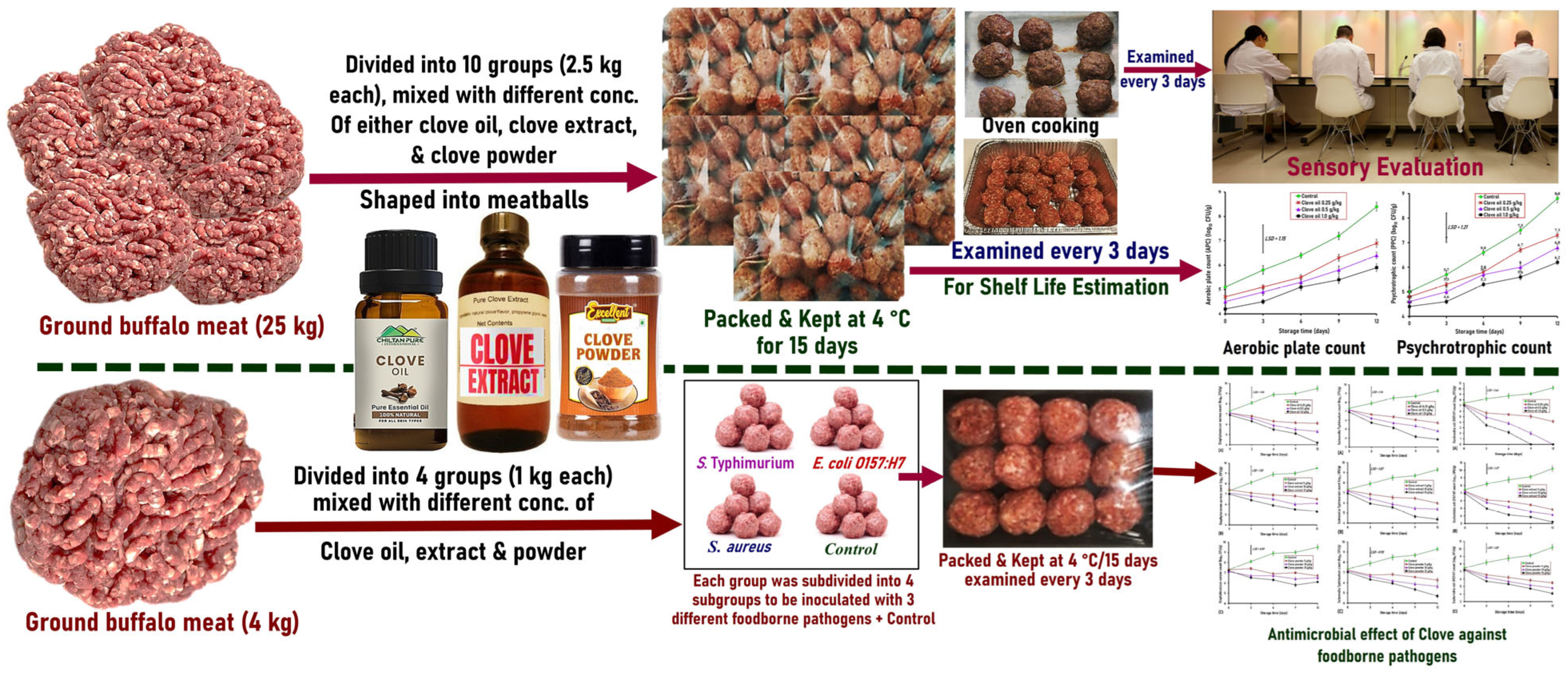
2.1. Preparation of Sample for Sensory Evaluations and Shelf Life Determination
2.2. Sensory Evaluation
2.3. Shelf Life Estimation by Determination of Aerobic Plate Counts (APCs) and Psychotropic Plate Counts (PPCs)
2.4. Effect of Clove Oil, Extract, and Powder on Food Poisoning Bacteria
2.4.1. Pathogenic Strains and Inoculum Preparation
2.4.2. Inoculation of Clove-Treated Ground Buffalo Meat with Foodborne Pathogens
2.4.3. Recovery of the Inoculated Specific Food Poisoning Bacteria
2.5. Statistical Analysis
3. Results and Discussion
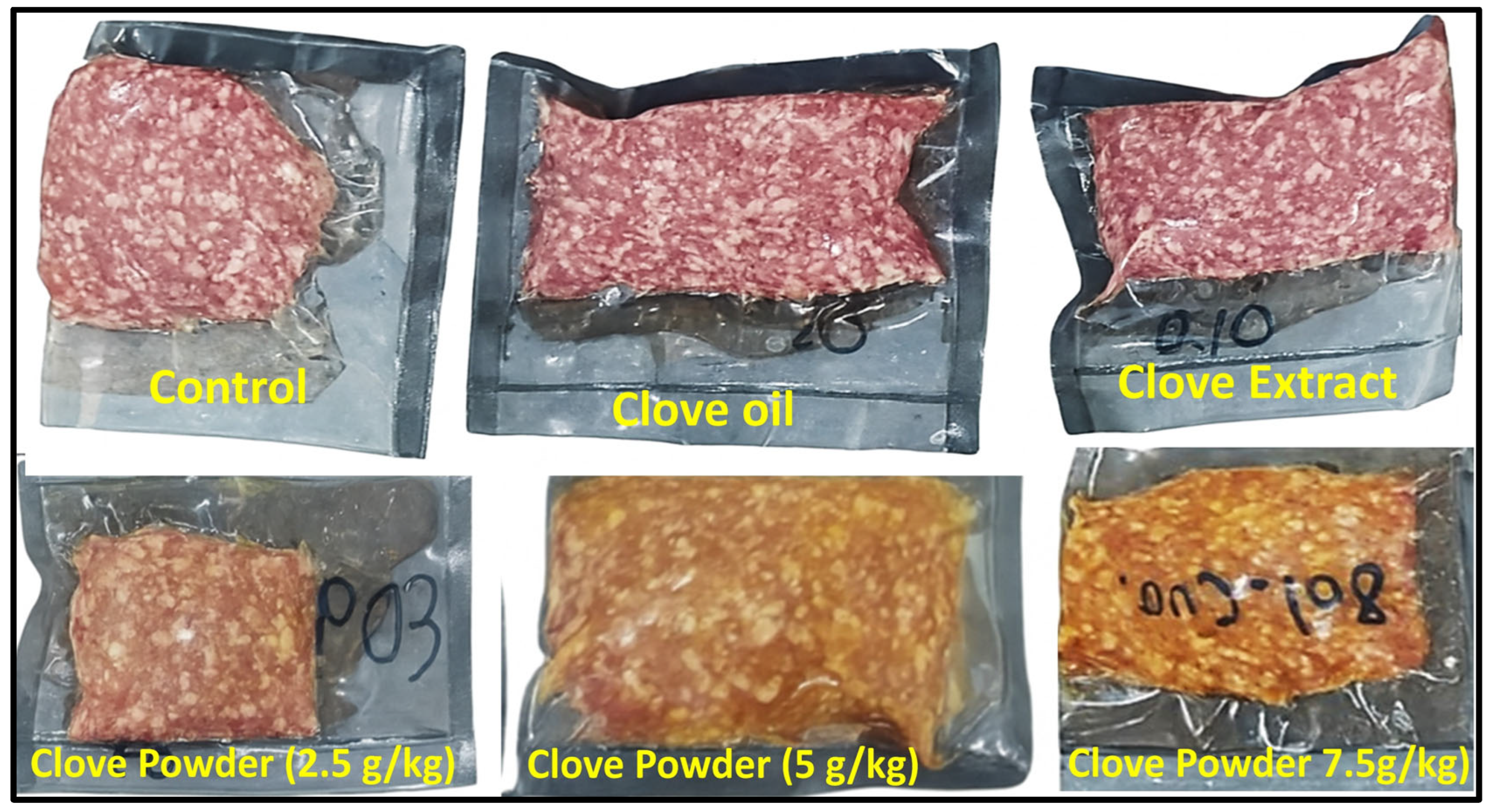
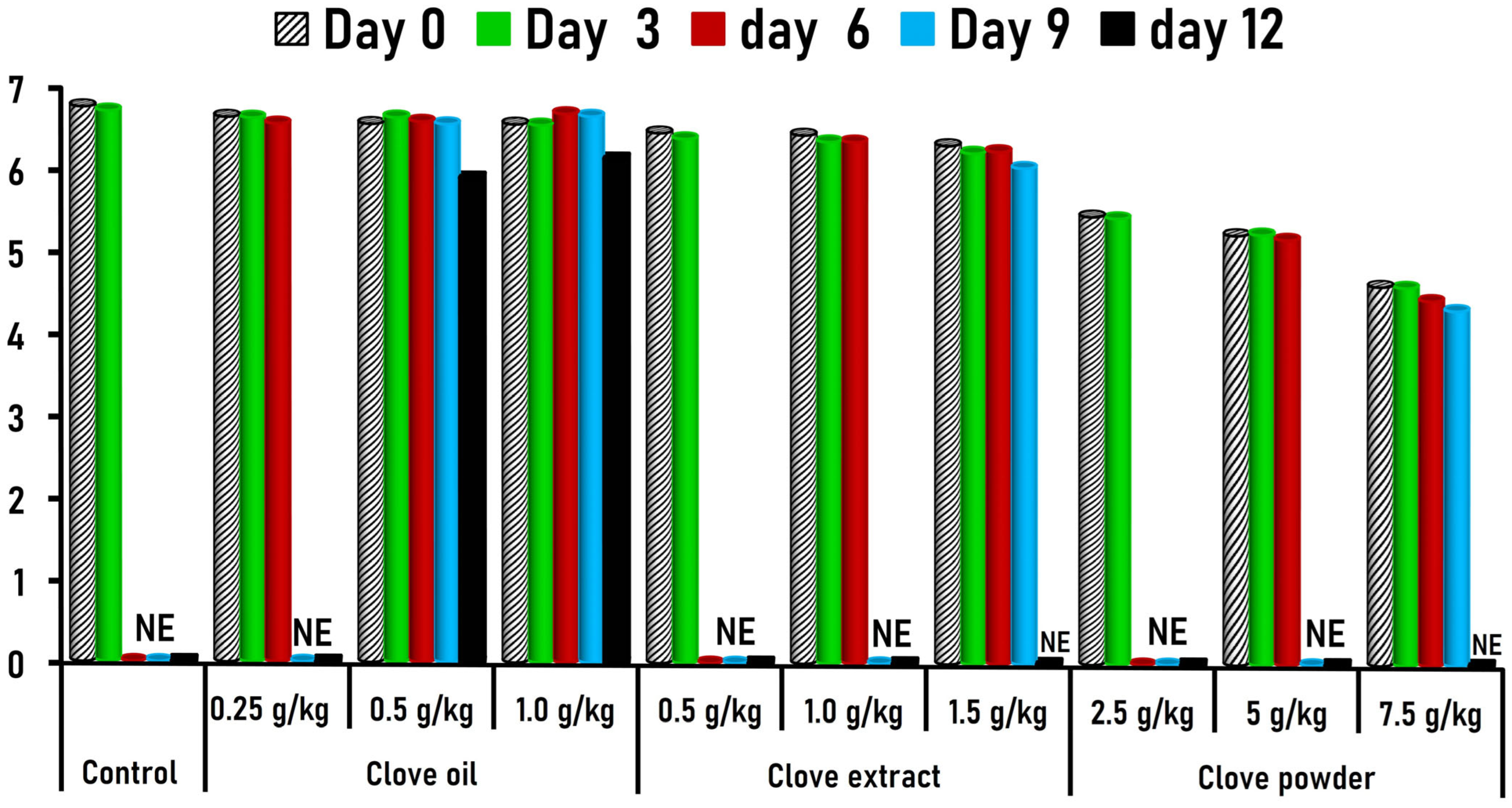
3.1. Sensory Attributes and Consumer Acceptance
3.2. Microbial Quality of Buffalo Meatballs Treated with Clove Oil, Extract, and Powder During Refrigerated Storage
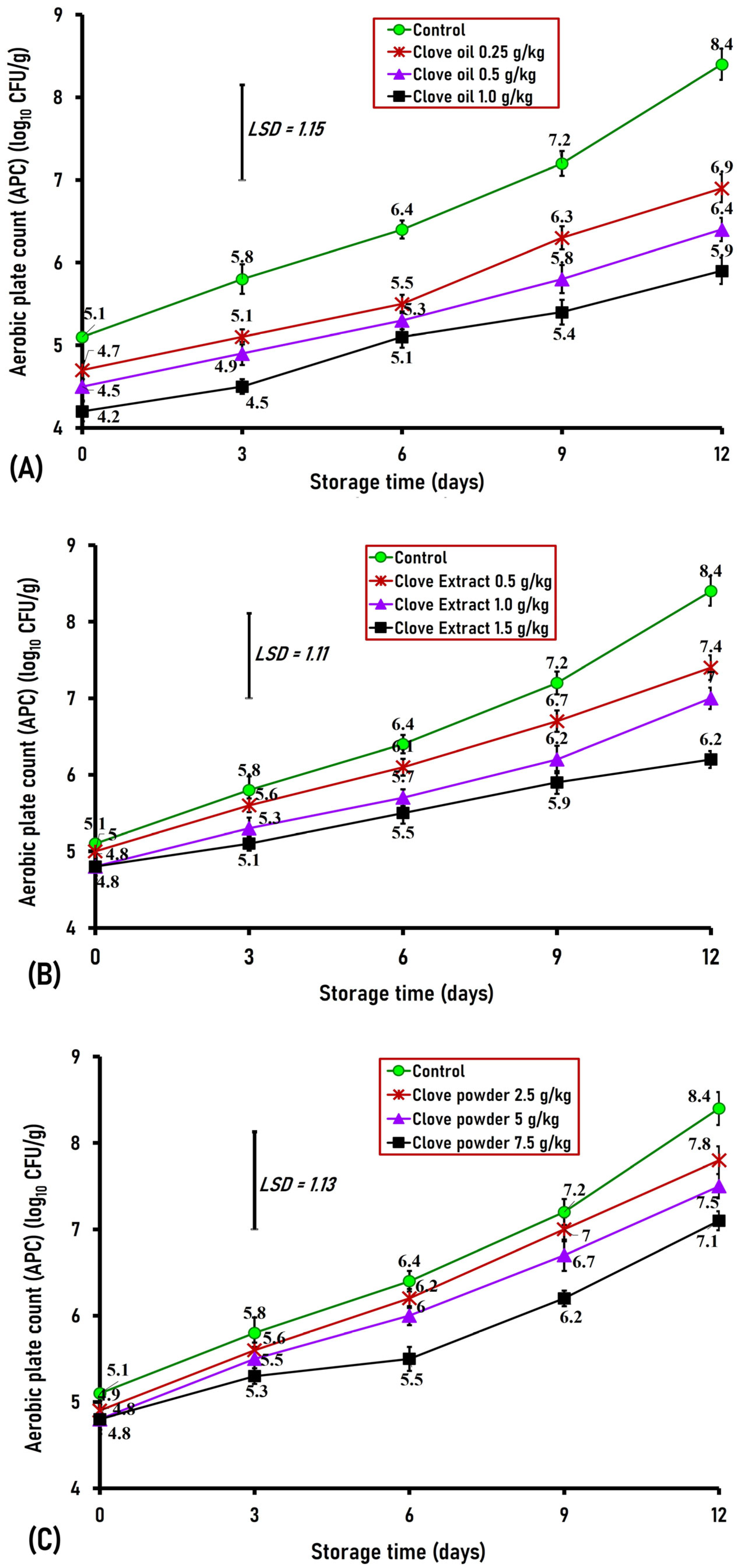
3.2.1. Effect of Clove Oil, Clove Extract, and Clove Powder on APCs
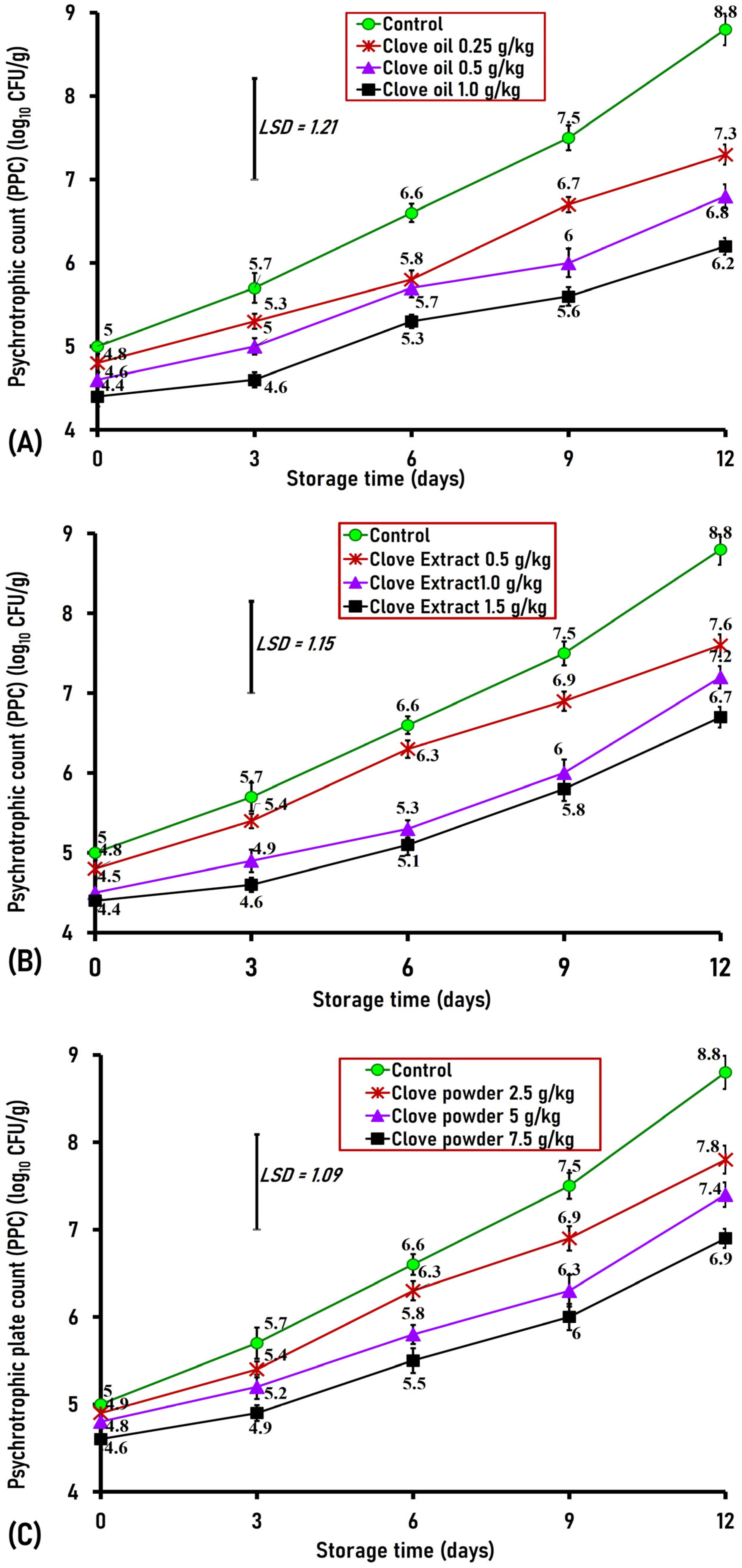
3.2.2. Effect of Clove Oil, Clove Extract, and Clove Powder on PPCs
3.3. Effect of Clove Oil, Extract, and Powder on Foodborne Pathogens Artificially Inoculated into Ground Buffalo Meat During Refrigerated Storage
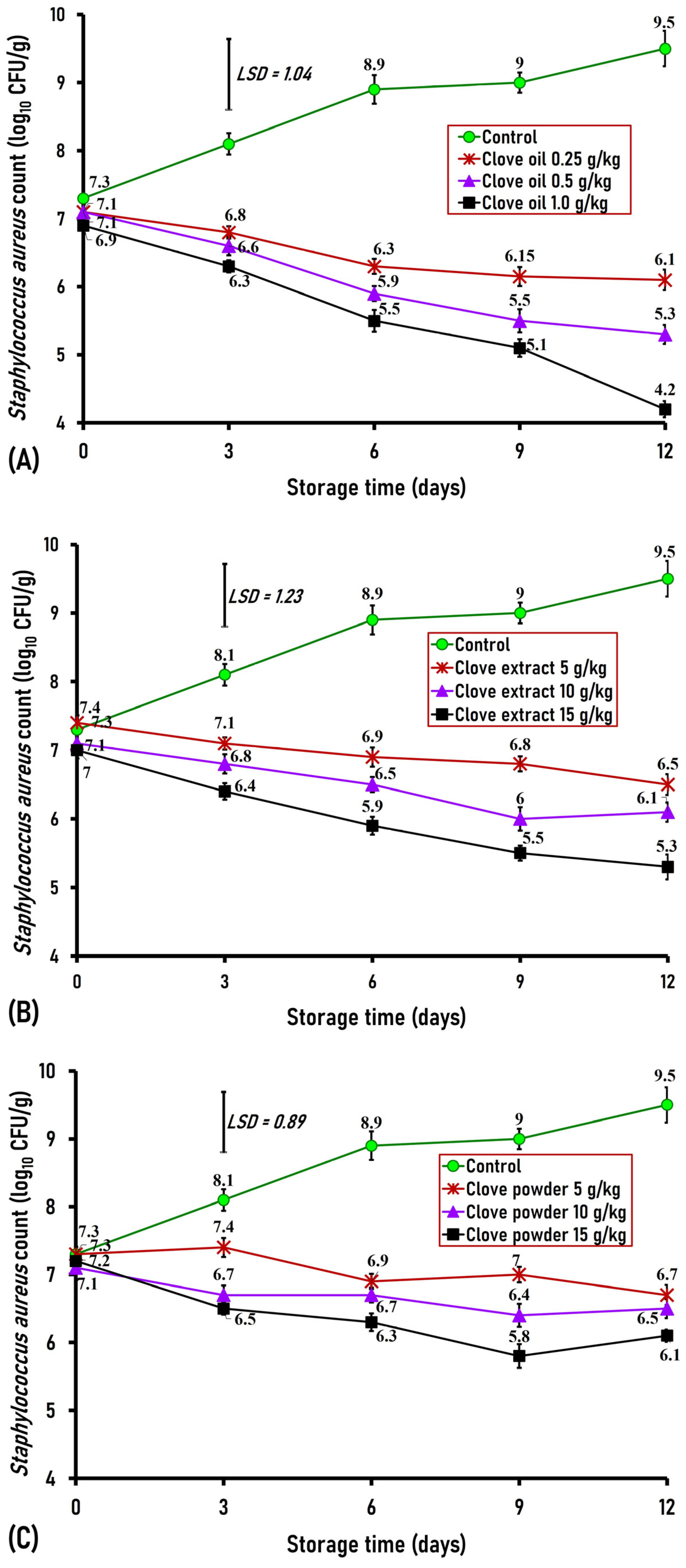
3.3.1. Effect of Clove Oil, Extract, and Powder on Methicillin-Resistant S. aureus (MRSA)
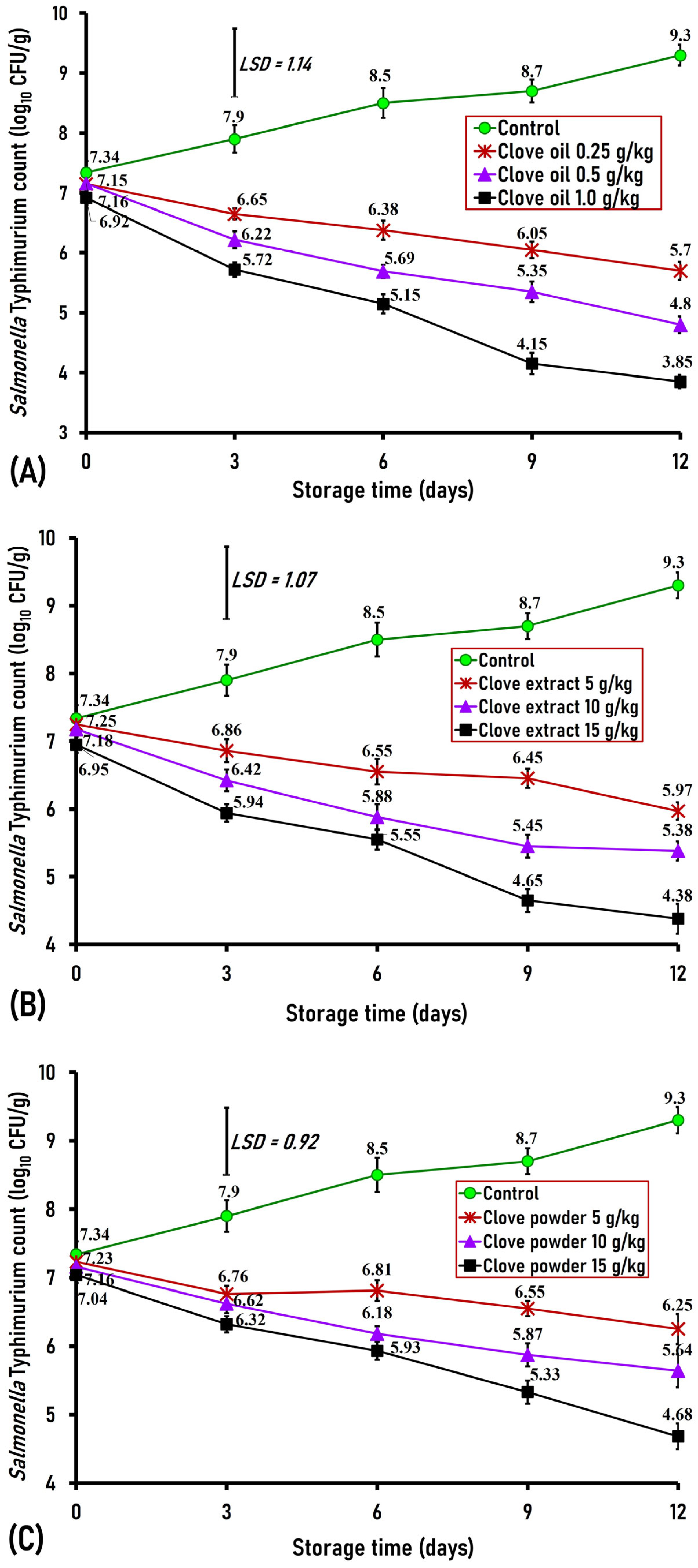
3.3.2. Effect of Clove Oil, Extract, and Powder on S. enterica Serovar Typhimurium
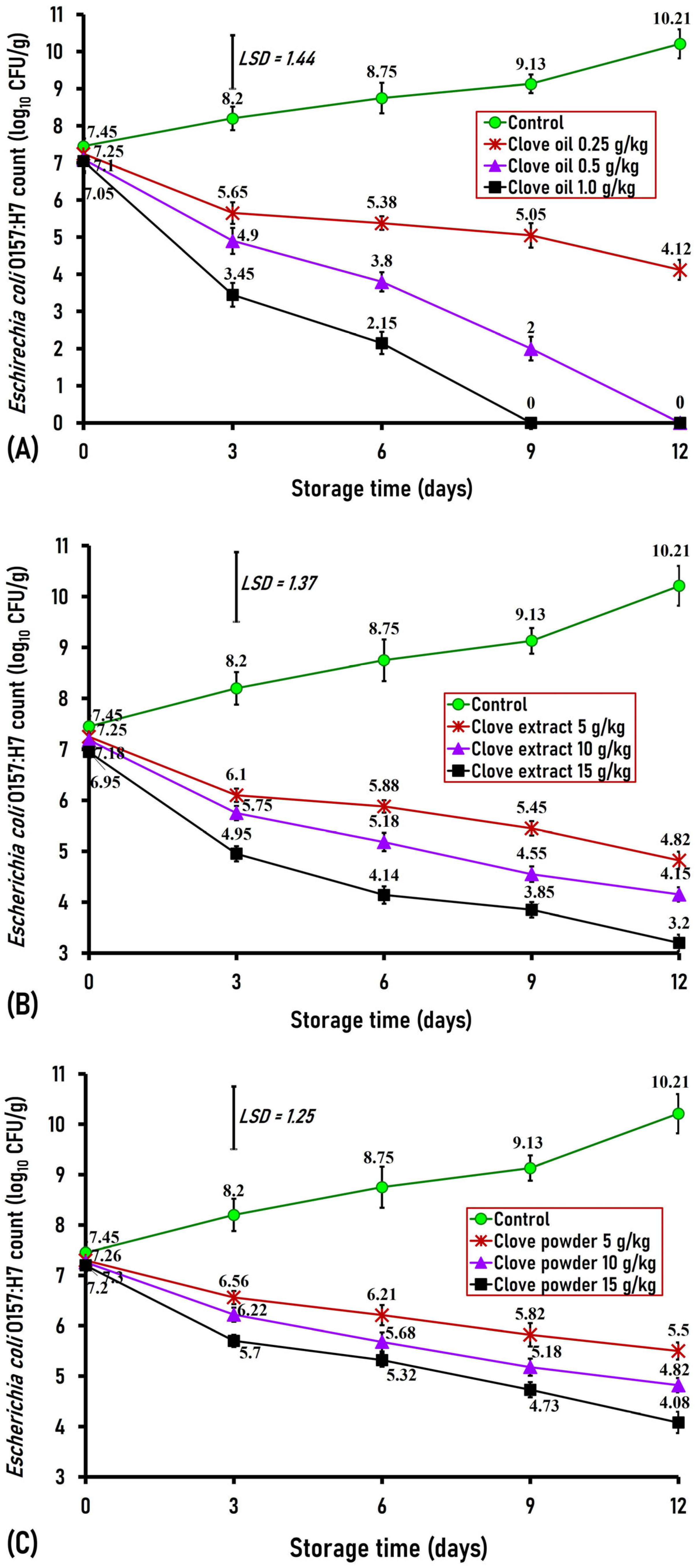
3.3.3. Effect of Clove Oil, Clove Extract, and Clove Powder on Escherichia coli O157:H7
4. Conclusions
Supplementary Materials
Author Contributions
Funding
Institutional Review Board Statement
Informed Consent Statement
Data Availability Statement
Conflicts of Interest
References
- Sung, S.Y.; Sin, L.T.; Tee, T.T.; Bee, S.T.; Rahmat, A.R.; Rahman, W.A.W.A.; Tan, A.-C.; Vikhraman, M. Antimicrobial agents for food packaging applications. Trends Food Sci. Technol. 2013, 33, 110–123. [Google Scholar] [CrossRef]
- Ahmed, S.A.; Sarangi, S.K. Analysis of bacterial contamination in fresh and finished meat products and their molecular identification. Int. J. Pharm. Sci. Invent. 2013, 2, 27–32. [Google Scholar]
- Hait, J.; Bennett, R. Staphylococcus aureus. In Bad Bug Book, Foodborne Pathogenic Microorganisms and Natural Toxins; Lampel, K.A., Al-Khaldi, S., Cahill, S.M., Eds.; Center for Food Safety and Applied Nutrition (CFSAN) of the Food and Drug Administration (FDA): College Park, MD, USA, 2012. [Google Scholar]
- Hait, J.; Tallent, S.; Melka, D.; Keys, C.; Bennett, R. Staphylococcus aureus Outbreak Investigation of an Illinois Bakery. J. Food Saf. 2012, 32, 435–444. [Google Scholar] [CrossRef]
- Synge, B.A. Verocytotoxin-producing Escherichia coli: A veterinary view. Symp. Ser. Soc. Appl. Microbiol. 2000, 29, 31S–37S. [Google Scholar] [CrossRef] [PubMed]
- Jaybhaye, A.; Deb, M. Pathogenesis of Escherichia coli: A Clinical Findings. J. Pharm. Res. Int. 2021, 33, 3185–3191. [Google Scholar] [CrossRef]
- Carocho, M.; Morales, P.; Ferreira, I.C. Natural food additives: Quo vadis? Trends Food Sci. Technol. 2015, 45, 284–295. [Google Scholar] [CrossRef]
- Cortes-Rojas, D.F.; de Souza, C.R.; Oliveira, W.P. Clove (Syzygium aromaticum): A precious spice. Asian Pac. J. Trop. Biomed. 2014, 4, 90–96. [Google Scholar] [CrossRef]
- El-Maati, M.F.A.; Mahgoubb, S.A.; Labiba, S.M.; Al-Gabya, A.M.A.; Ramadan, M.F. Phenolic extracts of clove (Syzygium aromaticum) with novel antioxidant and antibacterial activities. Eur. J. Integr. Med. 2016, 8, 494–504. [Google Scholar] [CrossRef]
- Lee, K.G.; Shibamoto, T. Antioxidant property of aroma extract isolated from clove buds [Syzygium aromaticum (L.) Merr. et Perry]. Food Chem. 2001, 74, 443–448. [Google Scholar] [CrossRef]
- Bakkali, F.; Averbeck, S.; Averbeck, D.; Idaomar, M. Biological effects of essential oils. Food Chem. Toxicol. 2008, 46, 446–475. [Google Scholar] [CrossRef]
- Nunez, L.; Aquino, M.D. Microbicide activity of clove essential oil (Eugenia caryophyllata). Braz. J. Microbiol. 2012, 43, 1255–1260. [Google Scholar] [CrossRef]
- Xu, J.G.; Liu, T.; Hu, Q.P.; Cao, X.M. Chemical composition, antibacterial properties and mechanism of action of essential oil from clove buds against Staphylococcus aureus. Molecules 2016, 21, 1194. [Google Scholar] [CrossRef]
- Shan, B.; Cai, Y.Z.; Sun, M.; Corke, H. Antioxidant capacity of 26 spice extracts and characterization of their phenolic constituents. J. Agric. Food Chem. 2005, 53, 7749–7759. [Google Scholar] [CrossRef] [PubMed]
- Sallam, K.I.; Ishioroshi, M.; Samejima, K. Antioxidant and antimicrobial effects of garlic in chicken sausage. LWT 2004, 37, 849–855. [Google Scholar] [CrossRef] [PubMed]
- ISO 4833-1:2013; Microbiology of the Food Chain—Horizontal Method for the Enumeration of Microorganisms. Part 1: Colony count at 30 °C by the pour plate technique. International Organization for Standardization (ISO): Geneva, Switzerland, 2013. Available online: https://www.iso.org/standard/53728.html (accessed on 3 May 2025).
- ISO 17410:2019; Microbiology of the Food Chain—Horizontal Method for the Enumeration of Psychrotrophic Microorganisms. International Organization for Standardization (ISO): Geneva, Switzerland, 2019. Available online: https://www.iso.org/standard/67437.html (accessed on 3 May 2025).
- Rahn, K.; De Grandis, S.A.; Clarke, R.C.; McEwen, S.A.; Galan, J.E.; Ginocchio, C.; Curtiss, R.; Gyles, C.L. Amplification of an invA gene sequence of Salmonella typhimurium by polymerase chain reaction as a specific method of detection of Salmonella. Mol. Cell. Probes 1992, 6, 271–279. [Google Scholar] [CrossRef] [PubMed]
- Sallam, K.I.; Abd-Elghany, S.M.; Elhadidy, M.; Tamura, T. Molecular characterization and antimicrobial resistance profile of methicillin-resistant Staphylococcus aureus in retail chicken. J. Food Prot. 2015, 78, 1879–1884. [Google Scholar] [CrossRef]
- Sallam, K.I.; Mohammed, M.A.; Ahdy, A.M.; Tamura, T. Prevalence, genetic characterization and virulence genes of sorbitol-fermenting Escherichia coli O157: H-and E. coli O157: H7 isolated from retail beef. Int. J. Food Microbiol. 2013, 165, 295–301. [Google Scholar] [CrossRef]
- Sharma, H.; Mendiratta, S.K.; Agarwal, R.; Goswami, M. Optimization of various essential oils and their effect on the microbial and sensory attributes of chicken sausages. Agric. Res. 2019, 8, 374–382. [Google Scholar] [CrossRef]
- Zhang, H.; Peng, X.; Li, X.; Wu, J.; Guo, X. The application of clove extract protects Chinese-style sausages against oxidation and quality deterioration. Korean J. Food Sci. Anim. Resour. 2017, 37, 114–122. [Google Scholar] [CrossRef]
- Ahmed, B.H.; Mohammed, N.A.M. Effects of Adding Clove (Syzygium aromaticum L.) Seed Extract on Oxidative Stability, Microbial Activity, and Sensory Attributes in Beef Patties During Refrigerated Storage. Kurd. J. Appl. Res. 2024, 9, 131–140. [Google Scholar] [CrossRef]
- Jay, J.M. A review of aerobic and psychrotrophic plate count procedures for fresh meat and poultry products. J. Food Prot. 2002, 65, 1200–1206. [Google Scholar] [CrossRef] [PubMed]
- International Commission on Microbiological Specifications for Foods (ICMSF). Microorganisms in Foods. 2. Sampling for Microbiological Analysis: Principles and Specific Applications, 2nd ed.; University of Toronto Press: Toronto, ON, Canada, 1986; Available online: https://seafood.oregonstate.edu/sites/agscid7/files/snic/sampling-for-microbiological-analysis-principles-and-specific-applications-icmsf.pdf (accessed on 22 April 2025).
- Salehi, B.; Zakaria, Z.A.; Gyawali, R.; Ibrahim, S.A.; Rajkovic, J.; Shinwari, Z.K.; Khan, T.; Sharifi-Rad, J.; Ozleyen, A.; Turkdonmez, E.; et al. Piper species: A comprehensive review on their phytochemistry, biological activities and applications. Molecules 2019, 24, 1364. [Google Scholar] [CrossRef]
- Sharma, H.; Mendiratta, S.K.; Agarwal, R.K.; Kumar, S.; Soni, A. Evaluation of anti-oxidant and anti-microbial activity of various essential oils in fresh chicken sausages. J. Food Sci. Technol. 2017, 54, 279–292. [Google Scholar] [CrossRef]
- Ali, F.; Abdel-Atty, N.; Helmy, E. Improving the quality and extending the shelf life of chilled fresh sausages using natural additives and their extracts. J. Microbiol. Biotechnol. Food Sci. 2018, 7, 580–585. [Google Scholar] [CrossRef]
- Omuero, R.O.; Tanny, P.C.; Chikwem, U.J.; Chikwem, N.J.; Chikwem, J.O. Determination of the antimicrobial effect of cloves for extending the shelf life of chicken meat. IHE Lincoln Univ. J. Sci. 2017, 6, 16–24. [Google Scholar]
- Holzapfel, W.H. The gram-positive bacteria associated with meat and meat products. In The Microbiology of Meat and Poultry; Davies, A., Board, R., Eds.; Blackie Academic & Professional: London, UK, 1998; pp. 35–74. [Google Scholar]
- Jirovetz, L.; Buchbauer, G.; Stoilova, I.; Stoyanova, A.; Krastanov, A.; Schmidt, E. Chemical Composition and Antioxidant Properties of Clove Leaf Essential Oil. J. Agric. Food Chem. 2006, 54, 6303–6307. [Google Scholar] [CrossRef]
- Vieira, B.B.; de Carvalho, E.A.; da Rocha Bispo, A.S.; Ferreira, M.A.; Evangelista-Barreto, N.S. Efficiency of chitosan synergism with clove essential oil in the coating of intentionally contaminated Tambaqui fillets. Semin. Ciências Agrárias 2020, 41, 2793–2802. [Google Scholar] [CrossRef]
- Tajik, H.; Farhangfar, A.; Moradi, M.; Razavi Rohani, S.M. Effectiveness of clove essential oil and grape seed extract combination on microbial and lipid oxidation characteristics of raw buffalo patty during storage at abuse refrigeration temperature. J. Food Process. Preserv. 2014, 38, 31–38. [Google Scholar] [CrossRef]
- Kuang, X.; Li, B.; Kuang, R.; Zheng, X.; Zhu, B.O.; Xu, B.; Ma, M. Granularity and antibacterial activities of ultra-fine cinnamon and clove powders. J. Food Saf. 2011, 31, 291–296. [Google Scholar] [CrossRef]
- Keskin, D.; Toroglu, S. Studies on antimicrobial activities of solvent extracts of different spices. J. Environ. Biol. 2011, 32, 251–256. Available online: https://europepmc.org/article/med/21882663 (accessed on 21 December 2025).
- Nassan, M.; Mohamed, E.; Abdelhafez, S.; Ismail, T. Effect of clove and cinnamon extracts on experimental model of acute hematogenous pyelonephritis in albino rats: Immunopathological and antimicrobial study. Int. J. Immunopathol. Pharmacol. 2015, 28, 60–68. [Google Scholar] [CrossRef]
- Shan, B.; Cai, Y.Z.; Brooks, J.D.; Corke, H. The in vitro antibacterial activity of dietary spice and medicinal herb extracts. Int. J. Food Microbiol. 2007, 117, 112–119. [Google Scholar] [CrossRef]
- Billah, M.M.; Rahman, M.S. Salmonella in the environment: A review on ecology; antimicrobial resistance, seafood contaminations, and human health implications. J. Hazard Mater. Adv. 2024, 13, 100407. [Google Scholar] [CrossRef]
- Zengin, H.; Baysal, A.H. Antioxidant and antimicrobial activities of thyme and clove essential oils and application in minced beef. J. Food Process. Preserv. 2015, 39, 1261–1271. [Google Scholar] [CrossRef]
- Angienda, P.O.; Onyango, D.M.; Hill, D.J. Potential application of plant essential oils at sub-lethal concentrations under extrinsic conditions that enhance their antimicrobial effectiveness against pathogenic bacteria. Afr. J. Microbiol. Res. 2010, 4, 1678–1684. Available online: https://academicjournals.org/journal/AJMR/article-full-text-pdf/49D9DF714087 (accessed on 21 December 2025).
- Shan, B.; Cai, Y.Z.; Brooks, J.D.; Corke, H. Antibacterial and antioxidant effects of five spice and herb extracts as natural preservatives of raw pork. J. Sci. Food Agric. 2009, 89, 1879–1885. [Google Scholar] [CrossRef]



| Component | Clove Oil | Clove Extract | Clove Powder |
|---|---|---|---|
| Volatile Oil Content | 70–90% | 5–12% | 12–18% |
| Eugenol | 70–90% | 35–60% | 50–70% of oil |
| Eugenyl acetate | 5–20% | 1–8% | 1–5% |
| β-Caryophyllene | 5–12% | 2–10% | 5–10% |
| α-Humulene | 0.5–3% | 0.2–4% | 1–3% |
| Caryophyllene oxide | 0.3–1.5% | 0.3–1.5% | 0.3–1.0% |
| Tannins | Trace | 5–20% | 10–15% |
| Total Phenolics (as GAE) | <1% | 150–350 mg GAE/g | 10–15% |
| Total Flavonoids (as QE) | Trace | 20–80 mg QE/g | 1–2% |
| Crude Fiber | — | <5% | 10–12% |
| Ash | — | <3% | 5–7% |
| Carbohydrates | — | <5% | 10–15% |
| Heavy Metals (Pb, Cd, As, Hg) | ≤10 ppm | ≤10 ppm | ≤10 ppm |
| Microbial Load | <102 CFU/g | <103 CFU/g | <103 CFU/g |
| Day of Storage | Sensory Characteristics | Control Ground Buffalo Meat | Clove Oil-Treated Ground Buffalo Meat | Clove Extract-Treated Ground Buffalo Meat | Clove Powder-Treated Ground Buffalo Meat | |||||||
|---|---|---|---|---|---|---|---|---|---|---|---|---|
| 0.25 g/kg | 0.5 g/kg | 1.0 g/kg | 0.5 g/kg | 1.0 g/kg | 1.5 g/kg | 2.5 g/kg | 5 g/kg | 7.5 g/kg | ||||
| Day 0 | Clove flavor intensity x | 1.38 a | 4.16 c | 4.53 c | 5.07 c | 3.23 b | 3.42 b | 3.65 b | 5.53 d | 6.31 e | 7.23 f | |
| Characteristic buffalo flavor x | 6.88 a | 6.67 a | 6.61 a | 6.54 a | 6.44 a | 6.33 a | 6.19 ab | 5.66 b | 5.42 b | 5.23 b | ||
| Tenderness x | Initial | 6.79 a | 6.71 a | 6.79 a | 6.83 a | 6.51 a | 6.42 a | 6.36 a | 6.14 ab | 5.82 ab | 5.44 b | |
| Sustained | 6.75 a | 6.66 a | 6.69 a | 6.64 a | 6.65 a | 6.58 a | 6.71 a | 6.56 a | 6.45 a | 6.45 a | ||
| Juiciness x | Initial | 6.79 a | 6.75 a | 6.65 a | 6.66 a | 6.65 a | 6.61 a | 6.52 a | 6.15 ab | 5.69 b | 5.52 b | |
| Sustained | 6.84 a | 6.72 a | 6.56 a | 6.63 a | 6.58 a | 6.46 a | 6.45 a | 6.03 ab | 5.58 b | 5.37 b | ||
| Off-flavor y | 1.15 a | 1.21 a | 1.18 a | 1.21 a | 1.22 a | 1.25 a | 1.33 a | 1.3 a | 1.2 a | 1.5 a | ||
| Overall acceptability z | 6.75 a | 6.63 a | 6.55 a | 6.55 a | 6.45 a | 6.43 a | 6.31 a | 5.45 b | 5.23 b | 4.61 c | ||
| Day 3 | Clove flavor intensity x | 1.35 a | 4.05 c | 4.23 c | 4.77 c | 3.03 b | 3.12 b | 3.35 b | 5.37 d | 6.01 d | 6.82 d | |
| Characteristic buffalo flavor x | 6.63 a | 6.51 a | 6.45 a | 6.43 a | 6.43 a | 6.39 a | 6.27 ab | 5.55 b | 5.31 b | 5.02 b | ||
| Tenderness x | Initial | 6.69 a | 6.62 a | 6.69 a | 6.65 a | 6.49 a | 6.35 a | 6.29 a | 6.09 ab | 5.75 ab | 5.39 b | |
| Sustained | 6.58 a | 6.52 a | 6.59 a | 6.65 a | 6.39 a | 6.25 a | 6.21 a | 6.02 ab | 5.64 ab | 5.27 b | ||
| Juiciness x | Initial | 6.68 a | 6.67 a | 6.62 a | 6.69 a | 6.65 a | 6.61 a | 6.52 a | 6.03 ab | 5.49 b | 5.32 b | |
| Sustained | 6.58 a | 6.57 a | 6.60 a | 6.65 a | 6.58 a | 6.52 a | 6.43 a | 5.83 ab | 5.42 b | 5.25 b | ||
| Off-flavor y | 1.18 a | 1.25 a | 1.19 a | 1.21 a | 1.41 a | 1.35 a | 1.42 a | 1.42 a | 1.52 a | 1.75 a | ||
| Overall acceptability z | 6.70 a | 6.62 a | 6.63 a | 6.54 a | 6.38 a | 6.35 a | 6.22 a | 5.43 ab | 5.24 b | 4.60 c | ||
| Day 6 | Clove flavor intensity x | NE | 3.78 a | 4.09 ab | 4.59 b | NE | 3.05 c | 3.24 c | NE | 5.66 d | 6.22 d | |
| Characteristic buffalo flavor x | 6.40 a | 6.35 a | 6.35 a | 6.23 a | 6.18 a | 5.21 b | 4.78 b | |||||
| Tenderness x | Initial | 6.49 a | 6.55 a | 6.55 a | 6.19 a | 6.15 a | 5.68 ab | 5.28 b | ||||
| Sustained | 6.45 a | 6.50 a | 6.55 a | 6.12 a | 6.10 a | 5.55 ab | 5.18 b | |||||
| Juiciness x | Initial | 6.65 a | 6.59 a | 6.62 a | 6.42 a | 6.46 a | 5.39 b | 5.30 b | ||||
| Sustained | 6.60 a | 6.55 a | 6.60 a | 6.45 a | 6.50 a | 5.33 b | 5.15 b | |||||
| Off-flavor y | 1.25 a | 1.18 a | 1.09 a | 1.32 a | 1.45 a | 1.44 a | 1.65 a | |||||
| Overall acceptability z | 6.55 a | 6.58 a | 6.68 a | 6.35 a | 6.24 a | 5.18 b | 4.44 c | |||||
| Day 9 | Clove flavor intensity x | NE | NE | 4.04 b | 4.44 b | NE | NE | 3.17 a | NE | NE | 6.12 c | |
| Characteristic buffalo flavor x | 6.28 a | 6.22 a | 6.15 a | 4.72 b | ||||||||
| Tenderness x | Initial | 6.42 a | 6.51 a | 6.10 a | 5.21 b | |||||||
| Sustained | 6.45 a | 6.49 a | 6.05 a | 5.18 b | ||||||||
| Juiciness x | Initial | 6.63 a | 6.66 a | 6.40 a | 5.21 b | |||||||
| Sustained | 6.58 a | 6.62 a | 6.33 a | 5.22 b | ||||||||
| Off-flavor y | 1.1 a | 1.1 a | 1.50 ab | 1.72 b | ||||||||
| Overall acceptability y | 6.55 a | 6.65 a | 6.04 a | 4.32 b | ||||||||
| Day 12 | Clove flavor intensity x | NE | NE | NE | NE | NE | NE | NE | NE | NE | NE | |
| Characteristic buffalo flavor x | 6.12 a | 6.14 a | ||||||||||
| Tenderness x | Initial | 6.29 a | 6.58 a | |||||||||
| Sustained | 6.21 a | 6.52 a | ||||||||||
| Juiciness x | Initial | 6.38 a | 6.61 a | |||||||||
| Sustained | 6.41 a | 6.58 a | ||||||||||
| Off-flavor y | 1.3 a | 1.2 a | ||||||||||
| Overall acceptability z | 5.89 a | 6.13 a | ||||||||||
Disclaimer/Publisher’s Note: The statements, opinions and data contained in all publications are solely those of the individual author(s) and contributor(s) and not of MDPI and/or the editor(s). MDPI and/or the editor(s) disclaim responsibility for any injury to people or property resulting from any ideas, methods, instructions or products referred to in the content. |
© 2025 by the authors. Licensee MDPI, Basel, Switzerland. This article is an open access article distributed under the terms and conditions of the Creative Commons Attribution (CC BY) license.
Share and Cite
Saadeldeen, R.M.; Zakaria, A.I.; Imre, M.; Imre, K.; Abd-Elghany, S.M.; Sallam, K.I. Antimicrobial Effect of Clove Against Foodborne Pathogens in Ground Buffalo Meat During Refrigerated Storage. Foods 2026, 15, 113. https://doi.org/10.3390/foods15010113
Saadeldeen RM, Zakaria AI, Imre M, Imre K, Abd-Elghany SM, Sallam KI. Antimicrobial Effect of Clove Against Foodborne Pathogens in Ground Buffalo Meat During Refrigerated Storage. Foods. 2026; 15(1):113. https://doi.org/10.3390/foods15010113
Chicago/Turabian StyleSaadeldeen, Rawan Mohammed, Amira Ibrahim Zakaria, Mirela Imre, Kálmán Imre, Samir Mohammed Abd-Elghany, and Khalid Ibrahim Sallam. 2026. "Antimicrobial Effect of Clove Against Foodborne Pathogens in Ground Buffalo Meat During Refrigerated Storage" Foods 15, no. 1: 113. https://doi.org/10.3390/foods15010113
APA StyleSaadeldeen, R. M., Zakaria, A. I., Imre, M., Imre, K., Abd-Elghany, S. M., & Sallam, K. I. (2026). Antimicrobial Effect of Clove Against Foodborne Pathogens in Ground Buffalo Meat During Refrigerated Storage. Foods, 15(1), 113. https://doi.org/10.3390/foods15010113