


Review

Research Progress on Shrimp Allergens and Allergenicity Reduction Methods

Institute of Crop Breeding and Cultivation, Shanghai Academy of Agricultural Science, Shanghai 201403, China
*
Authors to whom correspondence should be addressed.
These authors contributed equally to this work.
Foods 2025, 14(5), 895; https://doi.org/10.3390/foods14050895
Submission received: 21 January 2025 / Revised: 27 February 2025 / Accepted: 4 March 2025 / Published: 6 March 2025
(This article belongs to the Special Issue Marine Food: Development, Quality and Functionality)

Abstract

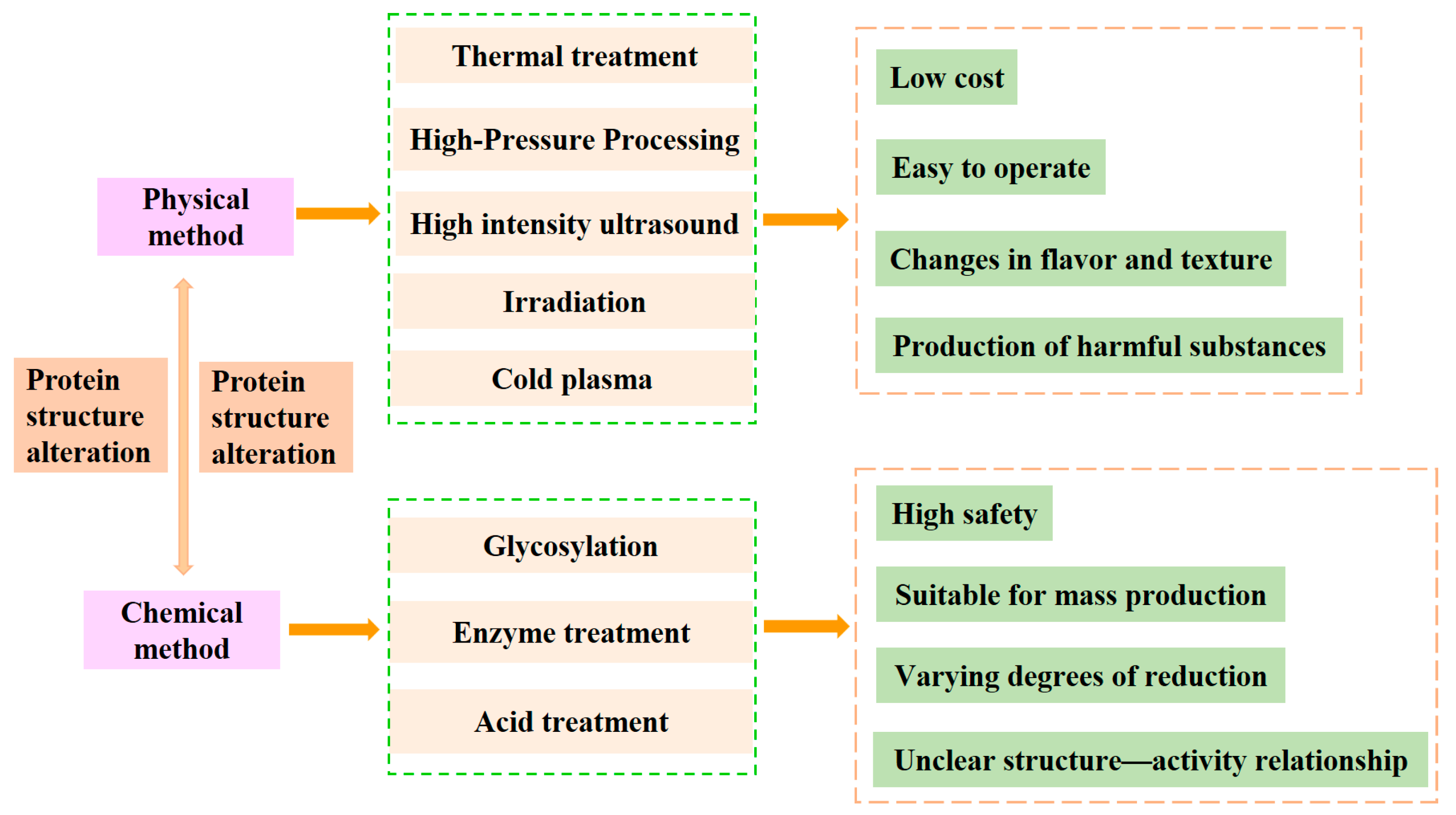
Shrimp are highly favored by consumers for their delicious taste and rich nutritional value. However, reports of allergic reactions caused by shrimp and its derivatives have been increasing, significantly impacting consumer health and posing a growing global food safety concern. This article introduces the structure and biochemical characteristics of major allergenic proteins in shrimp, including tropomyosin (TM), arginine kinase, sarcoplasmic calcium-binding protein, myosin light chain, troponin C, and hemocyanin. Currently, there is no effective treatment for shrimp allergies, and prevention is mainly achieved by avoiding consumption. The study of shrimp allergen sensitization reduction technology is of great significance to the development of hypoallergenic or desensitized products. The article provides a detailed overview of the effects of common processing techniques, including physical, chemical, biological, and combined methods, on the allergenicity of shrimp allergens; for instance, the binding rate to immunoglobulin E (IgE) was reduced by 73.59% after treating TM with high pressure (500 MPa) at 55 °C for 10 min and the recognition rate of TM to IgE decreased by 89.4% on average after treating TM with pepsin (30 μg/mL, pH 2) for 2 h. These techniques provide references for the development of hypoallergenic aquatic products or desensitized foods.
Keywords: shrimp; allergens; allergenicity reduction; research progress shrimp; allergens; allergenicity reduction; research progress

