Article

The Mineral Oil Hydrocarbon Paradox in Olive Pomace Oils

by
Raquel B. Gómez-Coca
*,
María del Carmen Pérez-Camino
and
Wenceslao Moreda
Department of Characterization and Quality of Lipids, Instituto de la Grasa–CSIC, Ctra. Utrera km 1, Building 46, E-41013 Sevilla, Spain
*
Author to whom correspondence should be addressed.
Foods 2023, 12(3), 434; https://doi.org/10.3390/foods12030434
Submission received: 16 December 2022 / Revised: 5 January 2023 / Accepted: 10 January 2023 / Published: 17 January 2023
(This article belongs to the Section Food Quality and Safety)

Abstract

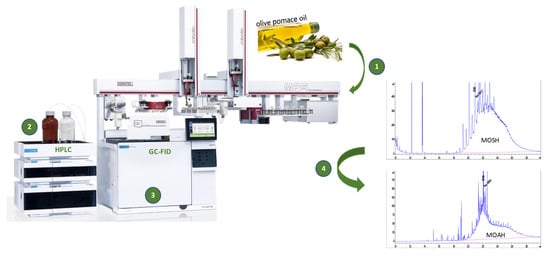
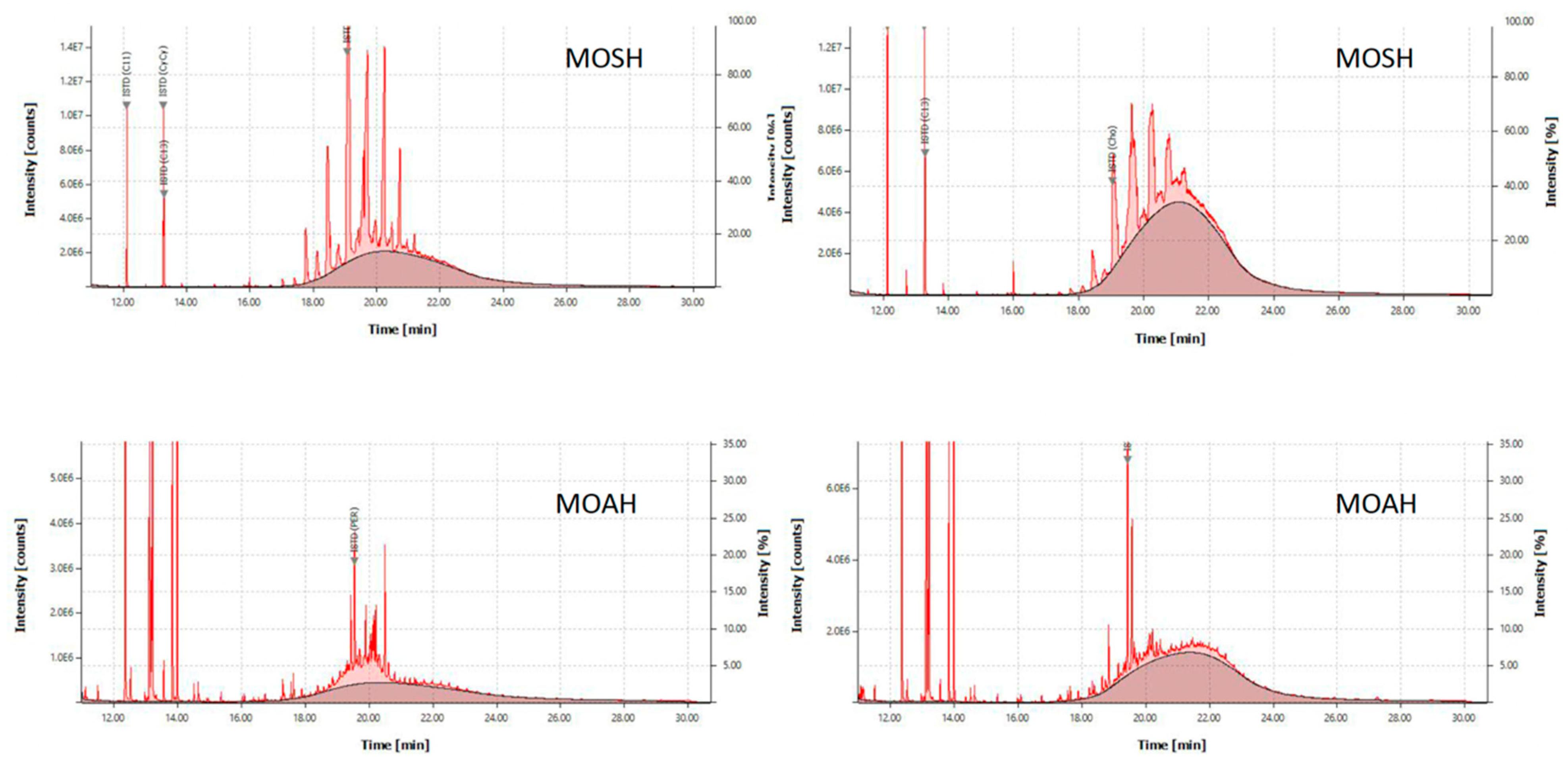
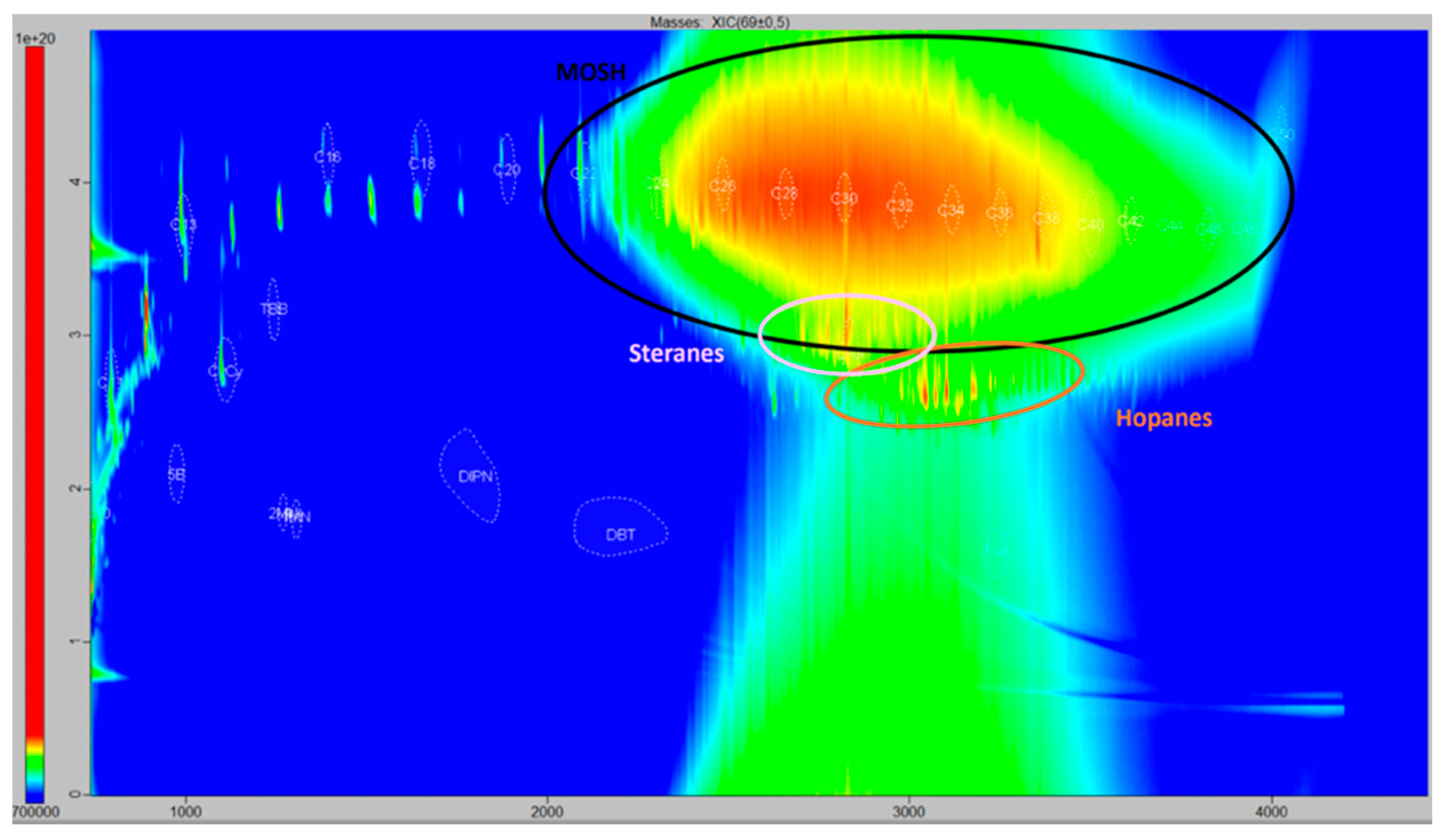
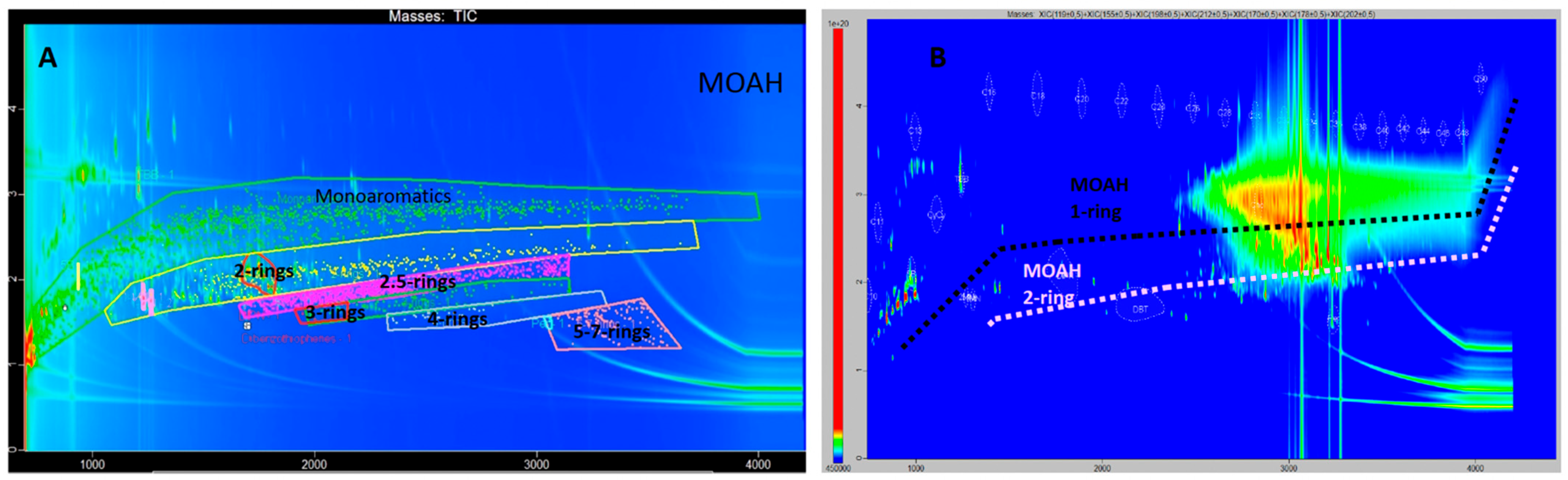
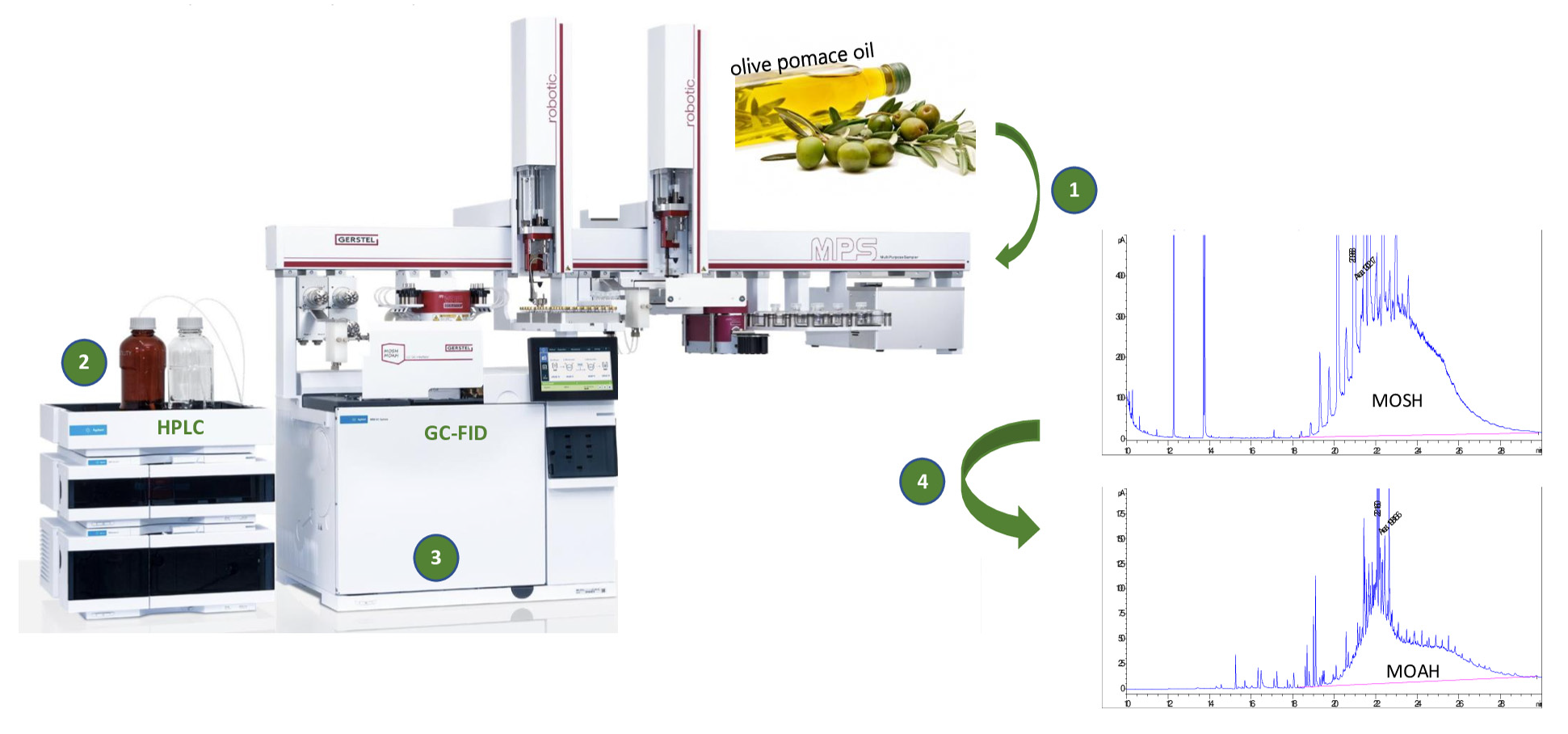
The aim of this work was to understand the actual content of mineral oil hydrocarbons (MOH) in olive pomace oil in order to contribute to the monitoring requested by EFSA for the food groups making a relevant impact on human background exposure. Such information will complement both the information inferred from the limits established by the EU and the interpretation of the coming toxicological risk assessment. At the same time, the origin of such a group of compounds is discussed. From the raw material to the commercial product, olive pomace oils were sampled and analyzed at different points and/or conditions. Through the ultimate online HPLC-GC-FID system, we gathered information on the MOH concentrations and molecular mass profiles (C-fractions), and through GCxGC-TOF/MS, we identified the key structures that prove the innocuousness of the mineral oil aromatic hydrocarbon (MOAH) fraction. Our approaches provided chromatographic signals on the C10-C50 range, rendering 33–205 mg/kg mineral oil saturated hydrocarbon (MOSH) and 2–55 mg/kg MOAH in the commercial product. The results confirmed that the C25-C35 cut is the main fraction to which humans are exposed via olive pomace oil, showing concentrations highly dependent on the extraction process. Moreover, the identification of the main MOAH groups showed that in olive pomace oil, mainly 1- and 2-ring species were present, being virtually free of the carcinogenic 3–7 ring aromatics.
Keywords: GCxGC-TOF/MS; hydrocarbons; mineral oil; MOSH–MOAH; olive pomace oil; online HPLC-GC-FID GCxGC-TOF/MS; hydrocarbons; mineral oil; MOSH–MOAH; olive pomace oil; online HPLC-GC-FID
Graphical Abstract