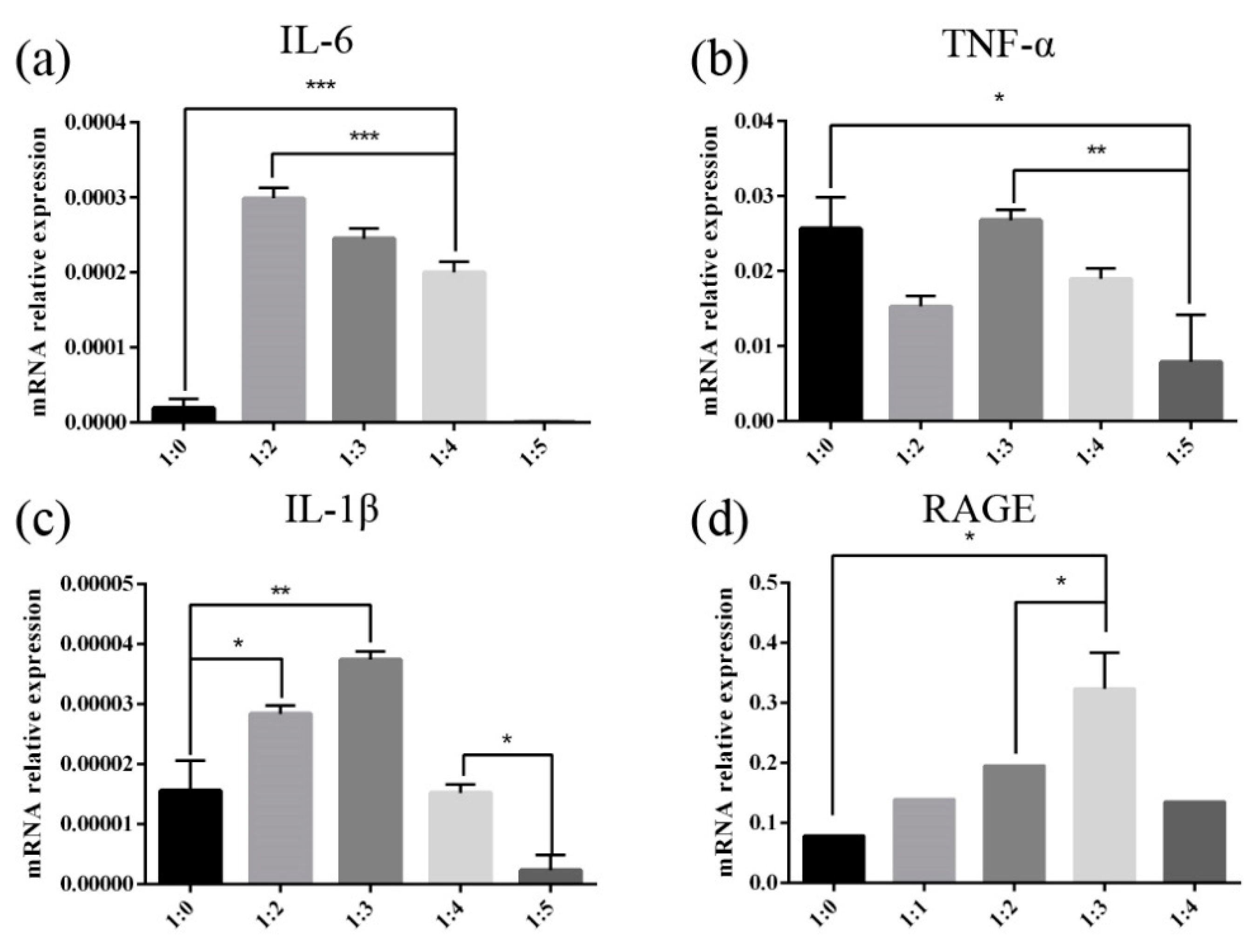
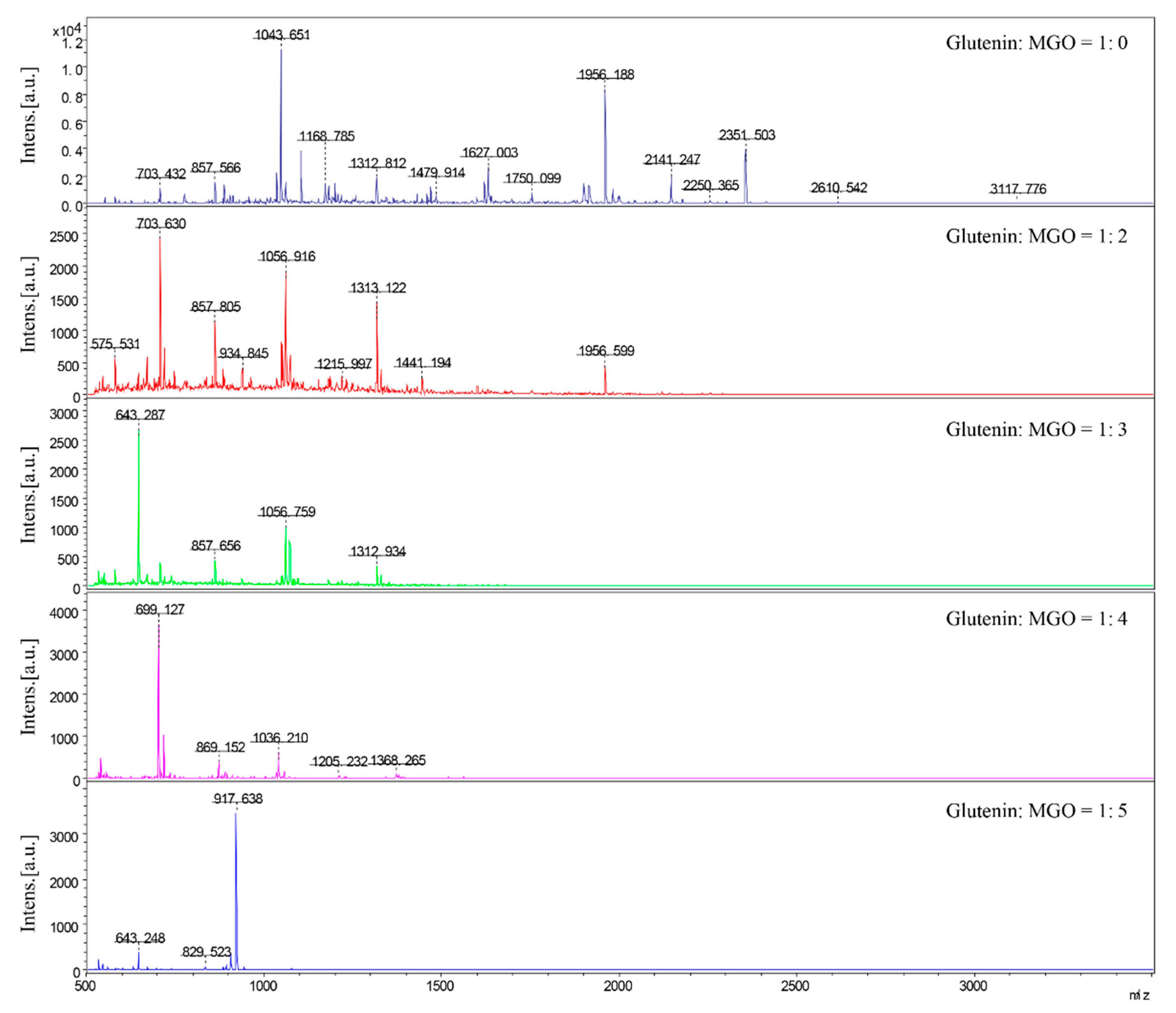
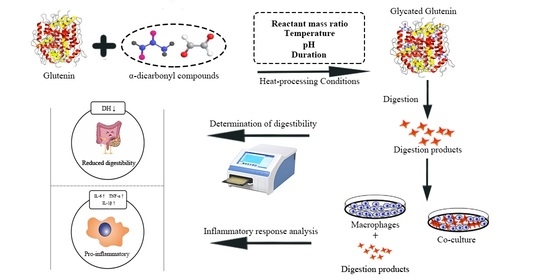
Effects of Glycated Glutenin Heat-Processing Conditions on Its Digestibility and Induced Inflammation Levels in Cells


Abstract
Share and Cite
Wang, Y.; Dong, L.; Zhang, Y.; Wang, J.; Wang, J.; Pang, W.; Wang, S. Effects of Glycated Glutenin Heat-Processing Conditions on Its Digestibility and Induced Inflammation Levels in Cells. Foods 2021, 10, 1365. https://doi.org/10.3390/foods10061365
Wang Y, Dong L, Zhang Y, Wang J, Wang J, Pang W, Wang S. Effects of Glycated Glutenin Heat-Processing Conditions on Its Digestibility and Induced Inflammation Levels in Cells. Foods. 2021; 10(6):1365. https://doi.org/10.3390/foods10061365
Chicago/Turabian StyleWang, Yaya, Lu Dong, Yan Zhang, Junping Wang, Jin Wang, Wenwen Pang, and Shuo Wang. 2021. "Effects of Glycated Glutenin Heat-Processing Conditions on Its Digestibility and Induced Inflammation Levels in Cells" Foods 10, no. 6: 1365. https://doi.org/10.3390/foods10061365
APA StyleWang, Y., Dong, L., Zhang, Y., Wang, J., Wang, J., Pang, W., & Wang, S. (2021). Effects of Glycated Glutenin Heat-Processing Conditions on Its Digestibility and Induced Inflammation Levels in Cells. Foods, 10(6), 1365. https://doi.org/10.3390/foods10061365