Article

Arsenates of Divalent Metals Comprising Arsenic Acid—An Update


Institute for Chemical Technologies and Analytics, Division of Structural Chemistry, TU Wien, Getreidemarkt 9/164-SC, A-1060 Vienna, Austria
Inorganics 2019, 7(10), 122; https://doi.org/10.3390/inorganics7100122

Submission received: 6 September 2019 / Revised: 30 September 2019 / Accepted: 1 October 2019 / Published: 9 October 2019
(This article belongs to the Special Issue Oxido Compounds)

Abstract

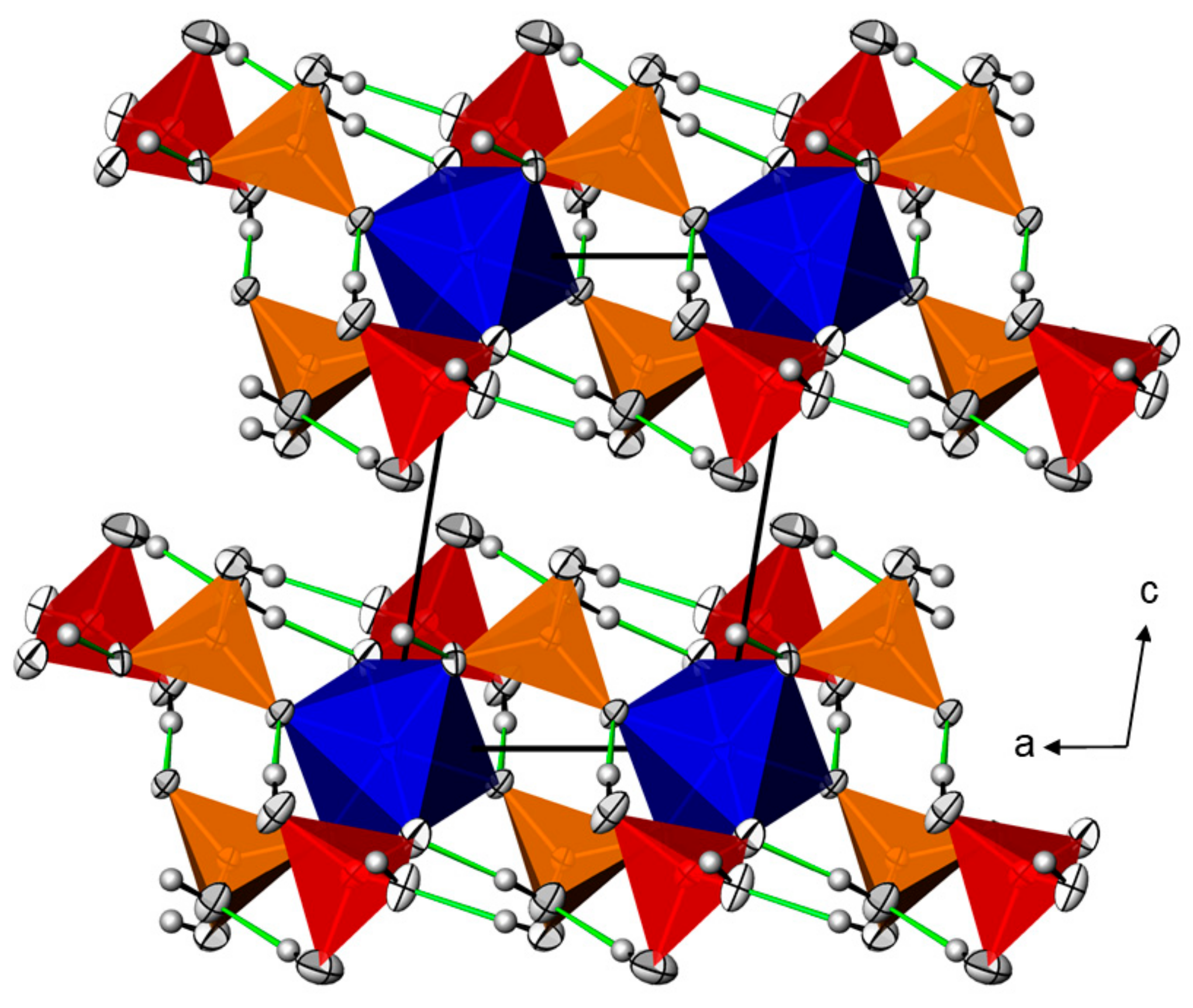
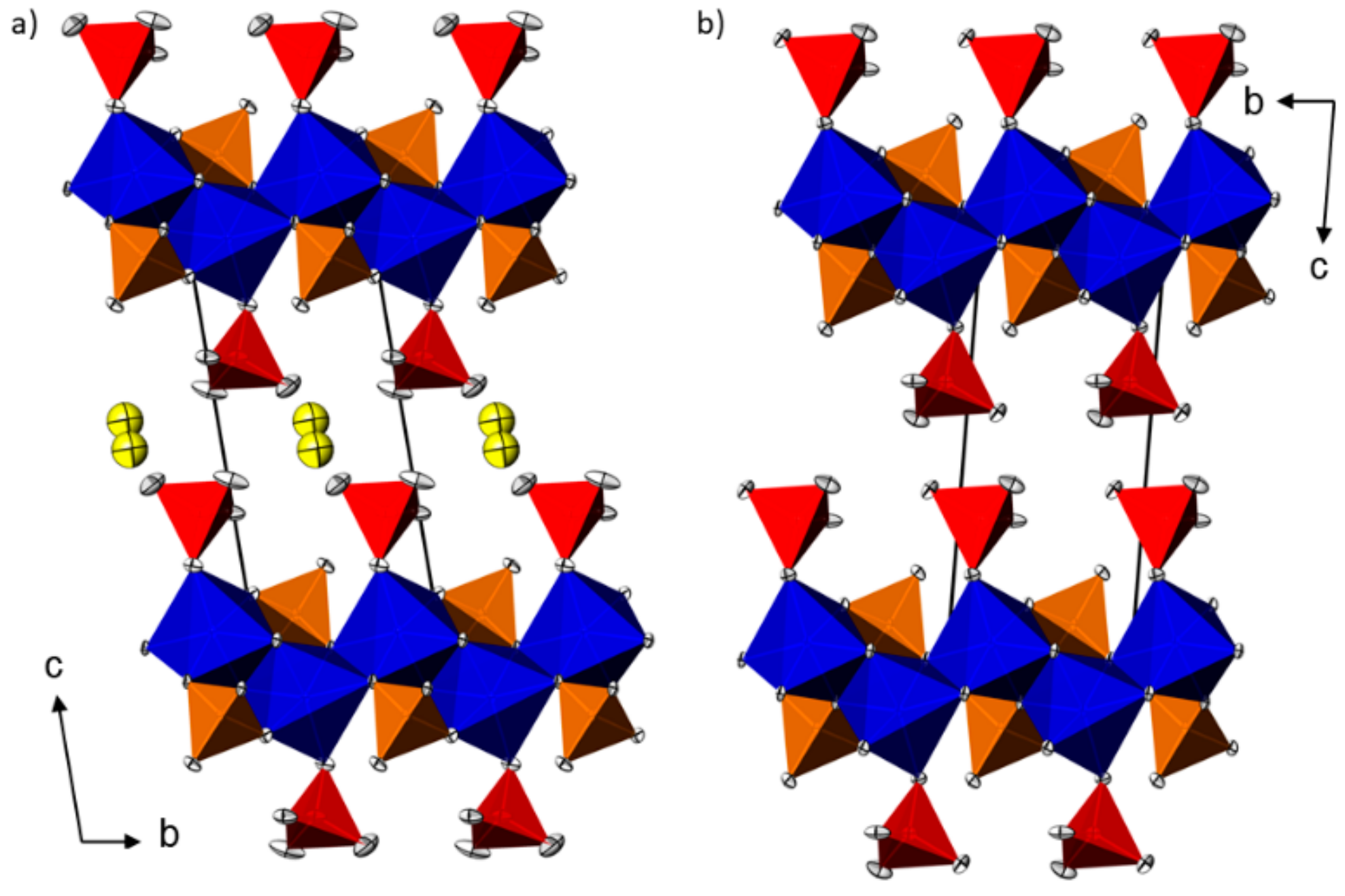
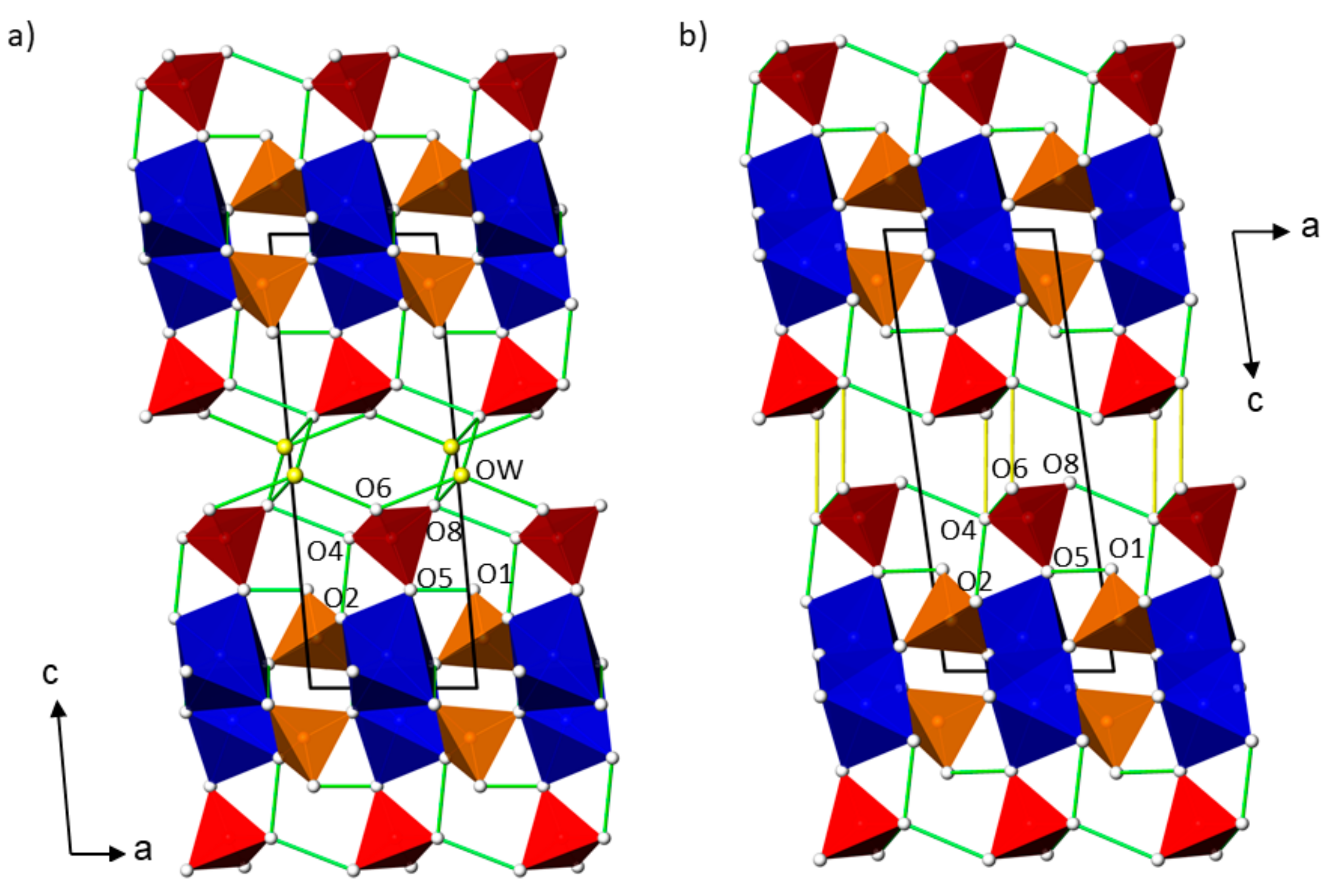
Divalent metal oxidoarsenates(V) with compositions M(H2AsO4)2(H3AsO4)2 (M = Mg, Mn, Co, Ni), M(HAsO4)(H3AsO4)(H2O)0.5 (M = Mn, Cd) and Zn(HAsO4)(H3AsO4) were obtained from solutions containing an excess of arsenic acid. Single crystal X-ray diffraction revealed isotypism of the M(H2AsO4)2(H3AsO4)2 (M = Mg, Mn, Co, Ni) structures with the known Cu and Zn members of this series whereas M(HAsO4)(H3AsO4)(H2O)0.5 (M = Mn, Cd) and Zn(HAsO4)(H3AsO4) crystallize in novel structure types. The two isotypic M(HAsO4)(H3AsO4)(H2O)0.5 (M = Mn, Cd) structures are closely related with that of Zn(HAsO4)(H3AsO4). Both comprise undulating centrosymmetric [ 1 MO4/2O2/1] chains that share corners with HAsO42 tetrahedra and H3AsO4 tetrahedra to build up layers extending along (001). Intermediate water molecules (occupancy 0.5) link adjacent layers in the water-containing compound whereas the linkage in the Zn-compound is mediated by weak hydrogen bonding interactions between the layers. Results of a quantitative comparison between all known structures of the M(H2XO4)2(H3XO4)2 (M = Mg, Mn, Co, Ni, Cu, Zn; X = P, As) series as well as between the two M(HAsO4)(H3AsO4)(H2O)0.5 (M = Mn, Cd) structures are presented.
Keywords: arsenates; arsenic acid; crystal structure; hydrogen bonding; isotypism; structure comparison arsenates; arsenic acid; crystal structure; hydrogen bonding; isotypism; structure comparison