


Abstract
This preliminary study explored circadian variations in meridian-associated skin temperature using infrared thermal imaging (IRTI). Four healthy adults receive a two-hour IRTI measurement alternately over a 24 h period, with thermal images acquired every 15 min. Within the 24 h monitoring period, two-hour intervals corresponding to the predicted peak activity of each meridian according to the ziwu-liuzhu theory were selected for detailed analysis. Specifically, jing-well acupoints exhibited an early increase in temperature at the onset of their predicted active intervals, whereas terminal acupoints showed a decline in temperature, suggesting the initiation and completion of meridian activity. A progressive increase followed by a decrease was observed along both the spleen meridian (9:00–11:00 a.m.) and heart meridian (11:00–1:00 p.m.), suggesting a temporal trend that may be consistent with traditional Chinese medicine (TCM) predictions. These preliminary results indicate that IRTI may provide a non-invasive approach for visualizing circadian features of meridian function, offering potential to bridge TCM concepts with modern biomedical approaches.
1. Introduction
Photobiomodulation therapy (PBMT) has gained widespread global attention. Numerous factors affect the effectiveness of PBMT. Beyond the known physical factors, it remains unclear whether additional determinants could further enhance treatment outcomes. It is hypothesized that circadian rhythms, as fundamental regulators of physiological processes, may represent an important yet underexplored modulator of therapeutic response.
Traditional Chinese medicine (TCM) describes the human body as interconnected through a network of meridians, which regulate physiological circulation and form the theoretical foundation of acupuncture, moxibustion, and other therapeutic practices [1,2,3,4,5]. Classical texts such as the Huang Di Nei Jing describe each acupoint as a spatial node for physiological regulation, and disruptions in meridian function are believed to contribute to various pathological conditions [2]. Among these principles, the circadian regulation of meridian activity has received particular attention. The ziwu-liuzhu (midnight–noon ebb–flow) theory states that each of the twelve principal meridians reaches peak activity during a specific two-hour interval within a 24 h cycle. For example, the lung meridian can be modulated to be most active between 3:00 and 5:00 a.m., whereas the spleen meridian reaches its peak between 9:00 and 11:00 a.m. [2,6,7,8]. This temporal rhythm is considered essential for maintaining physiological balance, and its disruption has been associated with conditions such as insomnia and metabolic disorders [7,9].
Modern biomedical research has similarly emphasized the role of circadian rhythms in physiology, including endocrine regulation, vascular dynamics, and metabolic processes [10,11,12,13]. These findings suggest potential points of convergence between TCM theories and contemporary chronobiology. Nevertheless, direct empirical validation of circadian variations in meridian activity remains scarce. Most previous studies have focused on isolated acupoint temperature measurements or localized responses at specific time points, without capturing continuous changes across the entire 24 h cycle [14,15,16,17,18]. For example, a systematic review indicated that acupoint temperature may be associated with clinical conditions such as primary dysmenorrhea [15]. Moreover, acupoint-specific skin temperature differences have been reported between health and disease states [16]. Furthermore, acupuncture or moxibustion has been shown to induce measurable thermal changes along targeted meridians [17,18]. While these findings highlight the sensitivity of acupoint temperature as a physiological indicator, the lack of continuous monitoring limits the ability to assess circadian dynamics.
Infrared thermal imaging (IRTI) has emerged as a non-invasive and real-time technique for visualizing skin surface temperature and its spatial distribution [14,15,16,17,18]. By enabling continuous monitoring, IRTI offers a potential approach to characterize temporal patterns of meridian activity and to provide quantitative evidence linking TCM theory with biomedical methodology. The present study was conducted to assess whether IRTI could capture time-dependent thermal variations along meridian pathways. Particular attention was given to the spleen meridian between 9:00 and 11:00 a.m., a key interval predicted by TCM theory. By comparing observed thermal fluctuations with the ziwu-liuzhu framework, this preliminary exploratory study proposes that IRTI may serve as an objective and non-invasive tool for characterizing circadian features of meridian activity, thereby facilitating integrative research between traditional Chinese medicine and modern chronobiology.
2. Materials and Methods
This study included four healthy adults (three males aged 36, 40, and 46 years, and one female aged 30 years). All participants were screened to exclude chronic disease, acute illness, and dermatological conditions that might influence skin temperature measurements. All participants provided written informed consent prior to enrollment, and the study was conducted in accordance with the principles of the Declaration of Helsinki.
IRTI was used to continuously monitor skin surface temperature over a 24 h period. Every participant received a two-hour measurement alternately. Thermal images were acquired at 15 min intervals throughout the 24 h monitoring period, providing continuous temporal data across the circadian cycle of the twelve meridians. From the 24 h monitoring data, two-hour intervals corresponding to the activity of each meridian based on the ziwu-liuzhu theory were analyzed. Specifically, the temperature values were extracted from the IRTI using the proprietary analysis software provided with the IRTI system. All acupoint locations were determined according to the WHO standard acupuncture point locations, which define each acupoint using fixed proportional measurements and anatomical landmarks [19]. The ROI was determined according to WHO-standardized acupoint locations. The average temperature within the ROI was recorded at each acquisition time point (every 15 min). A calibrated IRTI camera (Digital Infrared Thermal Image System, Model 9000 MB-500, United Integrated Services, New Taipei City, Taiwan) with a thermal sensitivity of ≤0.07 °C and a measurement range of 10~40 °C was employed. Imaging was performed at a fixed distance and angle, following established protocols for acupoint temperature measurement.
Participants remained in a controlled laboratory environment with stable ambient temperature (24 ± 1 °C) and relative humidity (50 ± 5%) to minimize external interference. Maintaining a narrow temperature range and stable humidity helps reduce external thermal fluctuations and ensures that the recorded temperature changes primarily reflect physiological variations rather than environmental influences. In addition, the measurements were conducted in an enclosed laboratory with minimal air movement and consistent lighting conditions to further stabilize the thermal environment. Before imaging, participants rested for 10 min in a seated position and were instructed to avoid caffeine, alcohol, and vigorous physical activity [20] within 12 h prior to the experiment in order to minimize autonomic or metabolic effects that could transiently alter peripheral blood flow and skin temperature.
Meridian pathways and acupoint locations were identified according to classical TCM references [1,2]. The circadian peak periods of the twelve meridians were defined based on the ziwu-liuzhu (midnight–noon ebb–flow) theory [6,7]. Comparative analyses were conducted to evaluate temperature variations within each predicted two-hour interval.
3. Results
Table 1 summarizes the predicted two-hour activity intervals of the twelve meridians based on the ziwu-liuzhu theory [6,7]. These intervals were used as reference time windows for evaluating circadian variations in meridian-associated skin temperature.
Table 1.
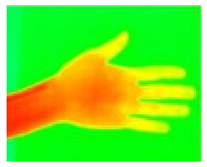
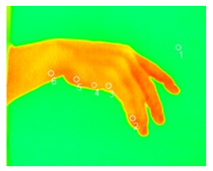
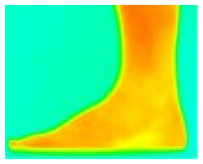
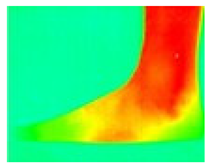
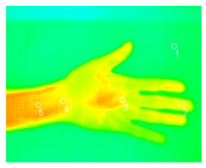
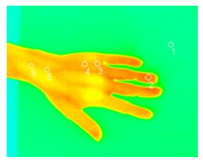
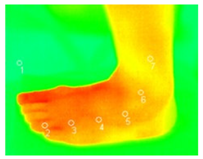
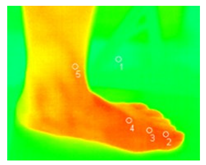
The twelve meridians of the hands and feet were measured using IRTI.
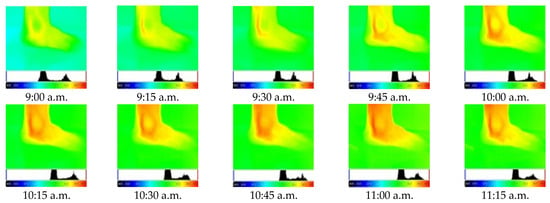
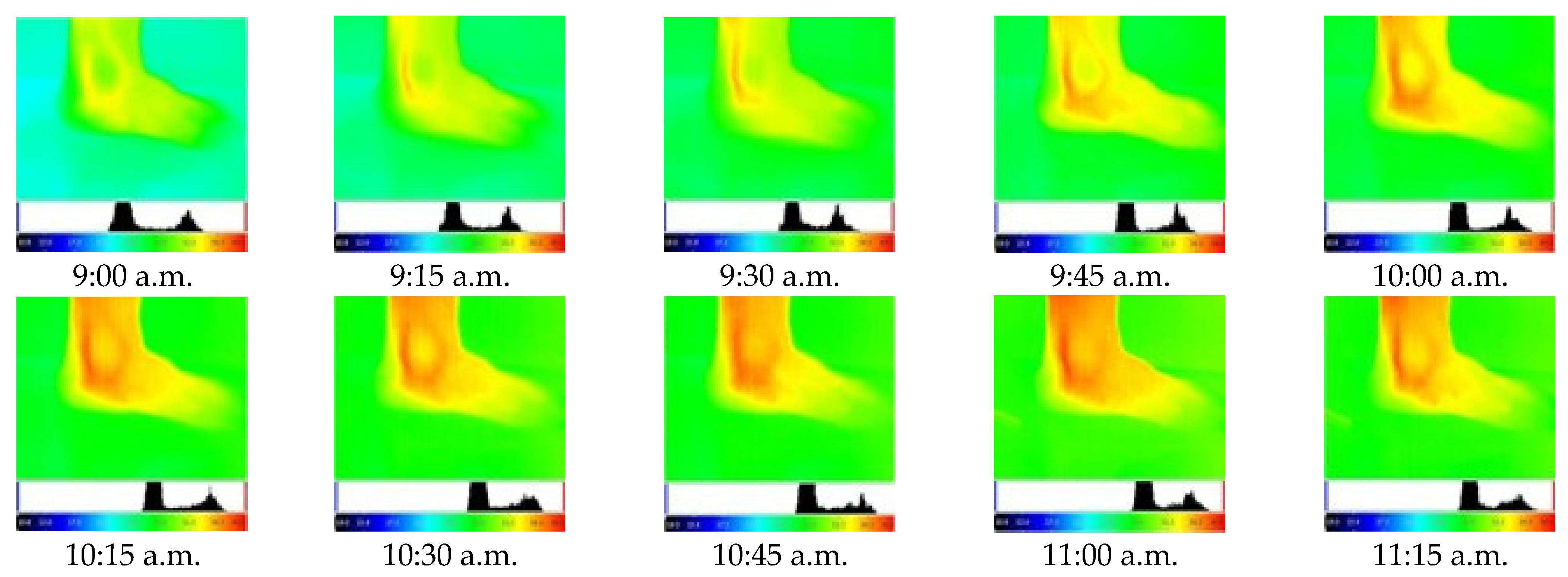
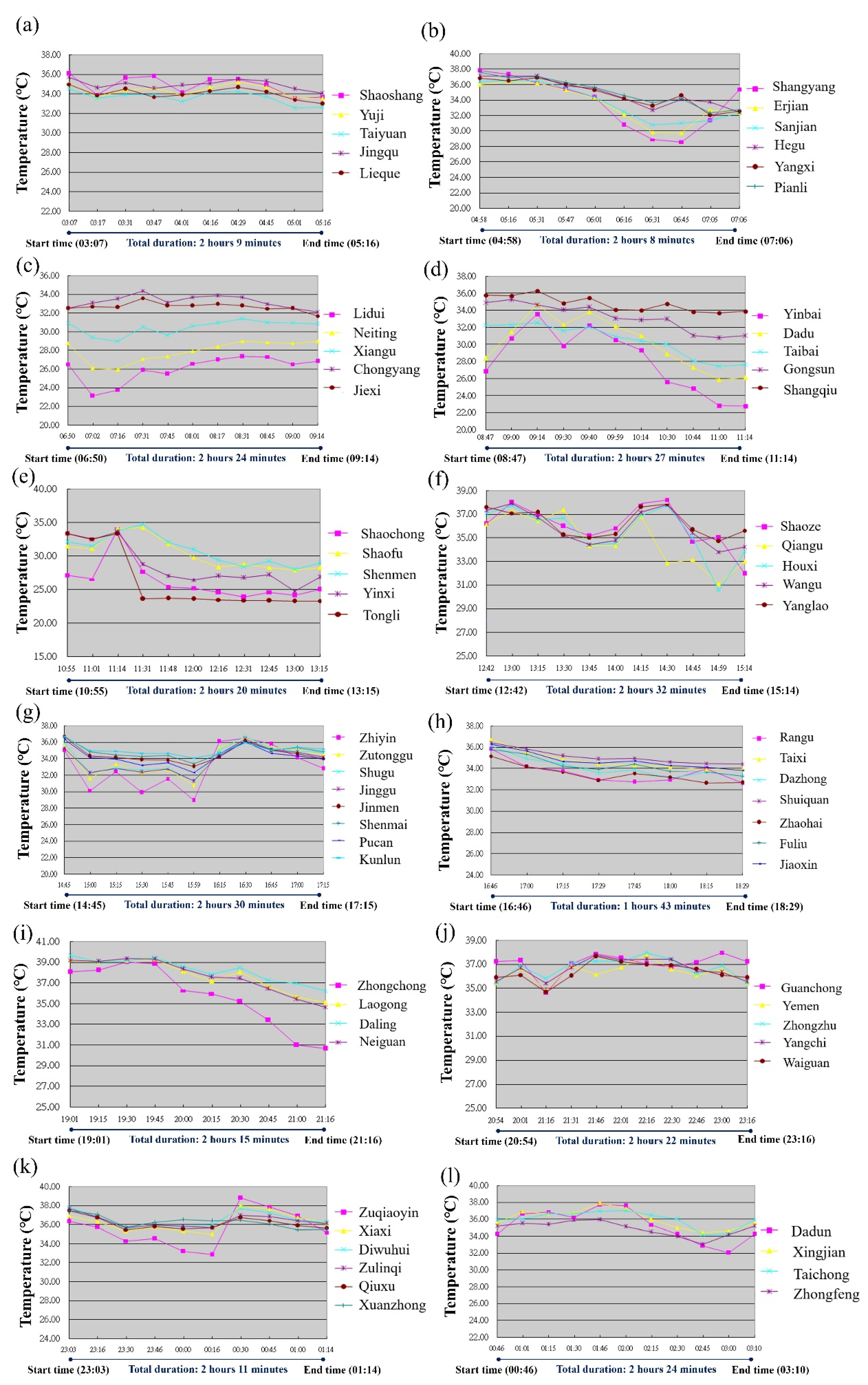
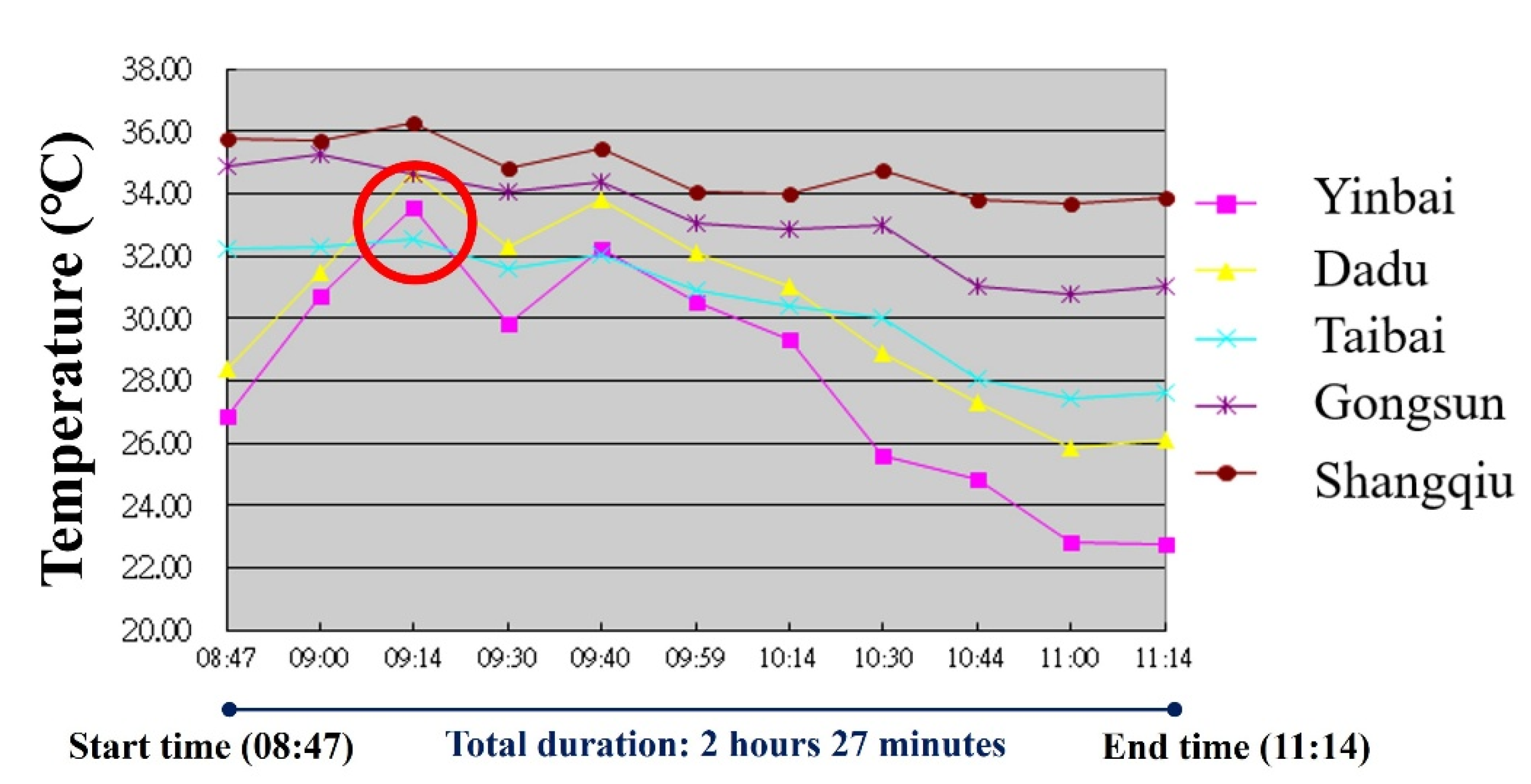
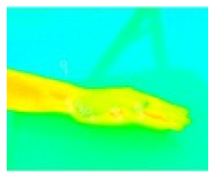
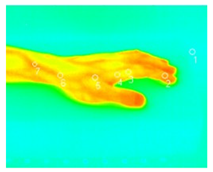
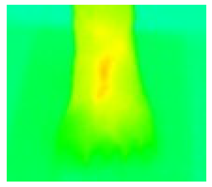
Continuous IRTI demonstrated dynamic thermal fluctuations across the twelve meridians. The analysis focused on the spleen meridian during its predicted activity period (9:00–11:00 a.m.), with average temperature changes examined to explore potential temporal trends relative to the theoretical predictions. The sequential changes along the spleen meridian between 9:00 and 11:00 a.m. corresponded to its predicted peak interval, as shown in Figure 1. Compared with baseline images at 9:00 a.m., thermal signals progressively increased to peak value at 9:14, especially at the Yinbai acupoint, as shown in Figure 2d. This rise was followed by stabilization and a gradual decline toward 10:45–11:15 a.m. The spatial distribution of the thermal signals also shifted, with more pronounced increases in the proximal segments of the spleen meridian compared to distal portions. This observation suggests that not only the magnitude but also the location of temperature elevation varied over time.
Figure 1.
Changes in IRTI of the skin surface along the spleen meridian between 9:00 a.m. and 11:00 a.m. were measured.
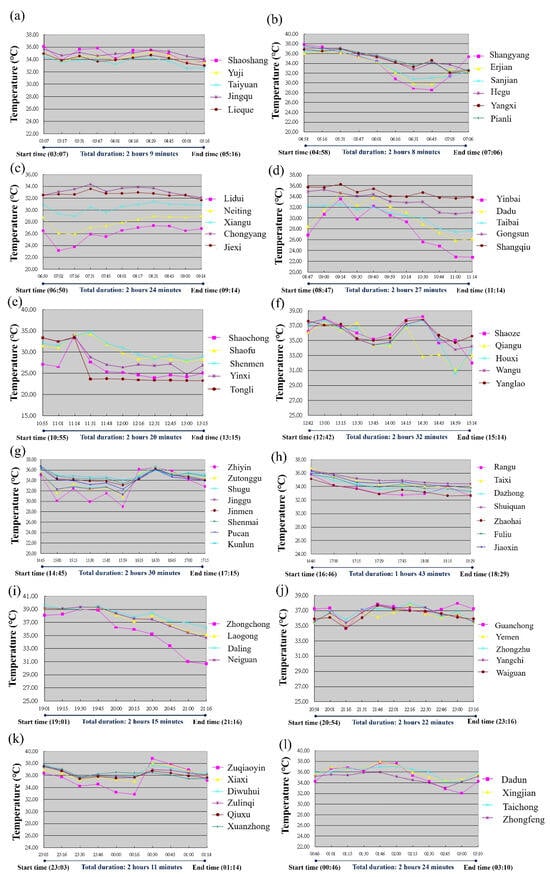
Figure 2.
Temperature variations measured by IRTI for each meridian: (a) lung, (b) large intestine, (c) stomach, (d) spleen, (e) heart, (f) small intestine, (g) bladder, (h) kidney, (i) pericardium, (j) triple energizer, (k) gallbladder and (l) liver meridians. Each trend line on the right side of the figure represents the IRTI variation in the acupoints along the corresponding meridian.
Figure 2a–l depicts the average temperature profiles of all twelve meridians during their corresponding two-hour intervals. Several meridians, including the spleen and heart, demonstrated distinct unimodal patterns, with temperature peaks occurring early in the interval and declining thereafter. Others, such as the stomach and kidney meridians, exhibited flatter or slightly declining curves. The triple energizer and gallbladder meridians exhibited intermediate patterns, with moderate rises but less pronounced peaks. These results highlight inter-meridian variability in thermal behavior, suggesting that while circadian trends were observable in most meridians, the amplitude and timing of changes differed.
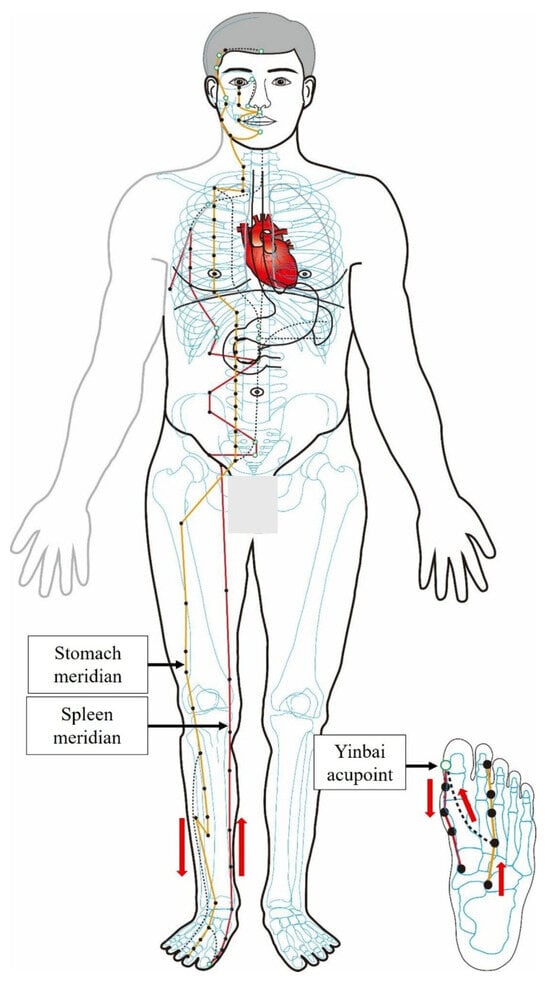
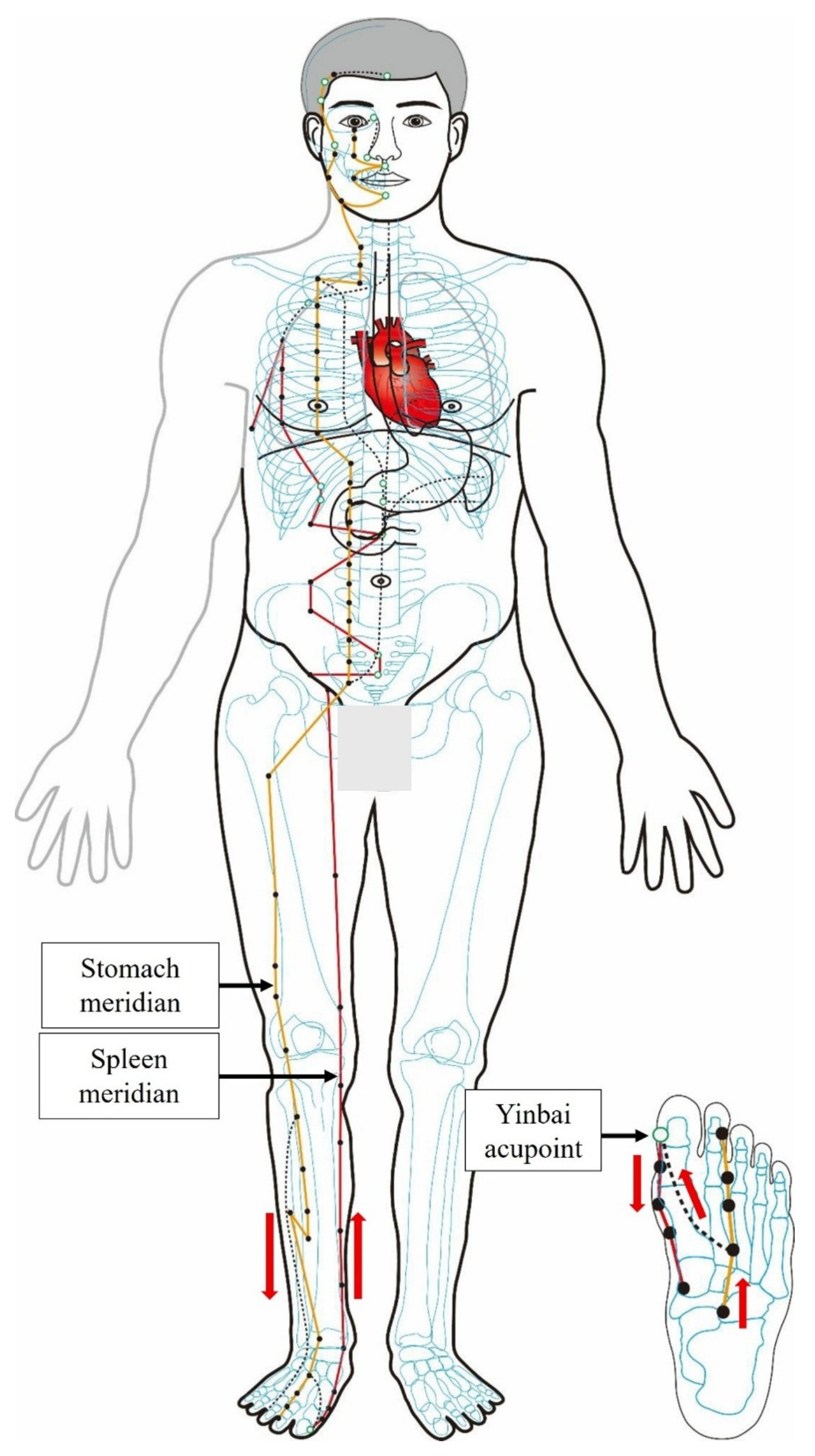
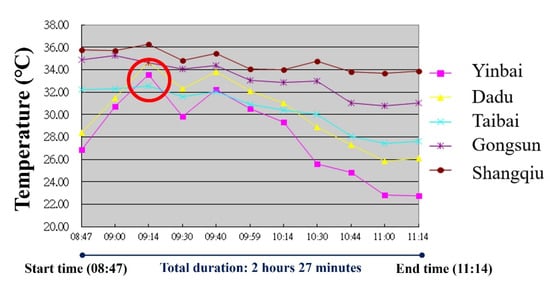
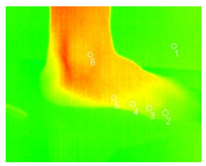
In particular, the spleen meridian exhibited the most consistent temporal increase across participants (Figure 2d), while a similar phenomenon was observed in the heart meridian (Figure 2e). These findings are consistent with prior reports that acupoints and meridians exhibit measurable thermal sensitivity under both physiological and clinical conditions [6,7,8,9]. In Figure 2d, within the theoretical framework of TCM, this pattern may be interpreted as a transition of meridian activity from the stomach meridian to the spleen meridian. This is the reason why the Yinbai acupoint’s temperature increased from 8:45 and reached its highest value at 9:14. The circadian rhythm dynamics of the stomach and spleen meridians are shown in Figure 3. The temperature variations measured by IRTI along the spleen meridian within a specific 2 h period are enlarged in Figure 4 for improved readability. The peak temperature was observed at the Yinbai acupoint at 9:14.
Figure 3.
The dynamics of the stomach and spleen meridians follow a circadian rhythm.
Figure 4.
Temperature variations measured by IRTI for spleen meridian. The red circle indicates the highest value recorded during the measurement.
Overall, this study provides preliminary results that meridian-associated skin temperature undergoes circadian modulation, with distinct but heterogeneous patterns across different meridians.
4. Discussion
This preliminary exploratory study investigated circadian variations in skin surface temperature along the twelve meridians using IRTI. The results demonstrated dynamic temporal changes that, in several meridians, corresponded to the predicted two-hour activity intervals of the ziwu-liuzhu theory [6,7,8]. The temperature increases were frequently observed at jing-well acupoints during the early phase of their predicted intervals, while reductions were noted at terminal sites. These observations are consistent with TCM descriptions of meridian activity transitions at specific acupoints, suggesting that IRTI may provide a non-invasive approach to visualizing such temporal changes.
Skin temperature is strongly influenced by cutaneous blood flow, which exhibits circadian oscillations regulated by the suprachiasmatic nucleus and the autonomic nervous system [10,11,12,13]. Surface temperature reflects the balance of heat exchange between the body and the environment, which is regulated through cutaneously mediated blood flow and autonomic thermoregulatory processes, including reflex vasoconstriction and vasodilation mediated by sympathetic neural control and local vascular factors [21]. Changes in these systems can dramatically alter perfusion and surface temperature, particularly during thermal homeostatic responses. In addition, there is evidence that cutaneous blood flow and skin temperature exhibit circadian rhythmicity, with perfusion and temperature patterns varying across the day [22].
In our study, the temporal increase observed in the spleen and heart meridians across participants may suggest that the pattern is dependent on the circadian regulation of TCM. Localized increases at initiating acupoints may correspond to transient vasodilation and enhanced perfusion, whereas reductions at terminal sites may indicate diminished microvascular activity. Prior studies have reported that acupoints exhibited thermal sensitivity under both physiological and pathological conditions [14,15,16], and interventions such as acupuncture and moxibustion can induce measurable thermal responses [17,18]. These findings imply that changes in skin temperature may be related to alterations in local microcirculation and metabolic activity (such as sleep and food intake), which could serve as indirect indicators of meridian in TCM. Some measurements were conducted after food intake or under sleep-deprived conditions. These conditions may explain why some meridians did not exhibit the phenomenon predicted by the ziwu-liuzhu theory. The spleen and heart meridians showed the most consistent temporal increase, whereas the liver and gallbladder meridians exhibited greater inter-individual variability. Based on the results, PBMT could be scheduled according to the predicted peak activity period of a target meridian. For example, if treatment is intended to modulate functions associated with the spleen meridian, light therapy may be applied preferentially during 9:00–11:00 a.m. for laser acupuncture applications in TCM. The enhanced effects should be further verified in randomized controlled trials in the future. Such heterogeneity may reflect differences in local vascular dynamics, tissue metabolism, or responsiveness to circadian regulation, and warrants further investigation. Further studies incorporating multimodal physiological measurement will be necessary to understand the general vascular or autonomic influences from meridian-specific effects.
There are several limitations in this study. First, the small sample size (n = 4) restricts generalizability and statistical power. Second, IRTI only measures surface temperature, which may be influenced by vascular tone, sweat gland activity, and ambient conditions, rather than directly reflecting physiological processes. Third, the measurements were performed sequentially in a continuous 24 h monitoring schedule, and slight differences in the exact start and end times of the recording windows occurred. In addition, the measurement error may still be affected by factors such as minor environmental fluctuations. Validation of circadian rhythm would require more rigorous chronobiological designs (e.g., constant routine protocols). Fourth, future studies should recruit larger and more diverse populations across different age groups and health conditions, and combine thermographic measurements with multimodal physiological monitoring (e.g., laser Doppler flowmetry, core temperature, and heart rate variability). Future studies will require larger sample sizes and appropriate statistical analyses to achieve sufficient statistical power. Longitudinal investigations may also clarify whether circadian thermal fluctuations along with meridians are associated with clinical conditions such as fatigue, stress, or metabolic disorders. By integrating IRTI with biomedical chronobiology, future research may help establish a scientific framework to objectively evaluate meridian activity and its clinical relevance.
5. Conclusions
This case series provides preliminary observations that IRTI can capture temporal variations in skin temperature along the twelve meridians. Among these, the spleen and heart meridians exhibit the most consistent temporal trend during their predicted activity period, whereas other meridians demonstrate heterogeneous patterns with varying degrees of inter-individual variability. These observations may reflect general circadian or vascular influences rather than meridian-specific physiological regulation. This study demonstrated the potential of IRTI as a complementary approach for investigating meridian activity. Future studies with larger populations and multimodal physiological monitoring are required to further validate these observations and to explore their potential clinical relevance. In addition, the integration of PBMT with the ziwu-liuzhu theory may enhance the therapeutic effectiveness of PBMT, particularly with the increasing availability of wearable technologies. Further investigations are required to explore the role of circadian rhythm in this approach and to evaluate its potential applications in disease management.
Author Contributions
Conceptualization, J.-H.W.; literature review, F.-C.C. and C.-T.S.; writing—original draft preparation, C.-T.S.; methodology, J.-H.W. and Y.-C.S.; writing—review and editing, F.-C.C., J.-H.W., and C.-T.S.; project administration, J.-H.W. All authors have read and agreed to the published version of the manuscript.
Funding
This research received no external funding.
Data Availability Statement
The data used to support the findings of this study are included within the article.
Conflicts of Interest
The authors declare no conflicts of interest.
References
- Zhang, W.B. What Are the Meridians; China Science and Technology Publishing House: Beijing, China, 1997. [Google Scholar]
- Unschuld, P.U. Huang Di Nei Jing Ling Shu: The Ancient Classic on Needle Therapy; University of California Press: Oakland, CA, USA, 2016. [Google Scholar]
- Zhou, W.; Benharash, P. Effects and mechanisms of acupuncture based on the principle of meridians. Innov. Acupunct. Med. 2014, 7, 190–193. [Google Scholar] [CrossRef] [Scilit] [PubMed]
- Deng, H.; Shen, X. The mechanism of moxibustion: Ancient theory and modern research. Evid. Based Complement. Altern. Med. 2013, 2013, 379291. [Google Scholar] [CrossRef] [Scilit] [PubMed]
- Chen, Y.; Zheng, X.; Li, H.; Zhang, Q.; Wang, T. Effective acupuncture practice through diagnosis based on distribution of meridian pathways & related syndromes. Acupunct. Electro-Ther. Res. 2011, 36, 1–18. [Google Scholar]
- Ben, H.; Rong, P.J.; Gao, X.Y.; Li, L.; He, W. Clinical application and research on ziwu-liuzhu (midnight-noon ebb-flow) acupuncture therapy. Zhen Ci Yan Jiu Acupunct. Res. 2010, 35, 229–231. [Google Scholar]
- Yang, D.D.; Chen, H.B. Treatment of insomnia based on the midnight-noon ebb-flow. J. Tradit. Chin. Med. 2010, 30, 228–231. [Google Scholar] [CrossRef] [Scilit] [PubMed]
- Lee, B.Y.; LaRiccia, P.J.; Newberg, A.B. Acupuncture in theory and practice part 1: Theoretical basis and physiologic effects. Hosp. Physician 2004, 40, 11–18. [Google Scholar]
- Maury, E.; Ramsey, K.M.; Bass, J. Circadian rhythms and metabolic syndrome: From experimental genetics to human disease. Circ. Res. 2010, 106, 447–462. [Google Scholar] [CrossRef] [Scilit] [PubMed]
- Aoki, K.; Kondo, N.; Shibasaki, M.; Takano, S.; Katsuura, T. Circadian variation in skin blood flow responses to passive heat stress. Physiol. Behav. 1997, 63, 1–5. [Google Scholar] [CrossRef] [Scilit] [PubMed]
- Kräuchi, K.; Wirz-Justice, A. Circadian clues to sleep onset mechanisms. Neuropsychopharmacology 2001, 25, S92–S96. [Google Scholar] [CrossRef] [Scilit] [PubMed]
- VanSomeren, E.J. More than a marker: Interaction between the circadian regulation of temperature and sleep, age-related changes, and treatment possibilities. Chronobiol. Int. 2000, 17, 313–354. [Google Scholar] [CrossRef] [Scilit] [PubMed]
- Bracci, M.; Ciarapica, V.; Copertaro, A.; Barbaresi, M.; Manzella, N.; Tomasetti, M.; Gaetani, S.; Monaco, F.; Amati, M.; Valentino, M.; et al. Peripheral skin temperature and circadian biological clock in shift nurses after a day off. Int. J. Mol. Sci. 2016, 17, 623. [Google Scholar] [CrossRef] [Scilit] [PubMed]
- Wei, H.-N.; Jiang, L.-P.; Xiong, B.; Zhou, S.; Yu, L.; Huang, Y.-M.; Liu, D.-G.; Ling, W.; Song, X.-N.; Zhang, X.-X.; et al. Characteristic patterns of normal meridian acupoint temperature. J. Chin. Med. Assoc. 2017, 80, 419–426. [Google Scholar] [CrossRef] [Scilit] [PubMed]
- Wang, X.; Zuo, G.; Liu, J.; Zhang, J.; Shi, X.; Fan, X.; Li, X.; Gao, Y.; Chen, H.; Liu, C.-Z.; et al. Skin temperature of acupoints in health and primary dysmenorrhea patients: A systematic review and meta-analysis. J. Pain Res. 2023, 16, 2027–2046. [Google Scholar] [CrossRef] [Scilit] [PubMed]
- Yang, E.; Lu, W.; Muñoz-Vergara, D.; Goldfinger, E.; Kaptchuk, T.J.; Napadow, V.; Ahn, A.C.; Wayne, P.M. Skin temperature of acupoints in health and disease: A systematic review. J. Integr. Complement. Med. 2022, 28, 552–568. [Google Scholar] [CrossRef] [Scilit] [PubMed]
- Trinh, D.T.T.; Vo, C.T.; Bui, M.M.P.; Vuong, N.L. Change in skin surface temperature at the posterior neck when using acupuncture at houxi acupoint in healthy volunteers. Cureus 2024, 16, e52068. [Google Scholar] [CrossRef] [Scilit] [PubMed]
- Li, X.; Jiang, Y.; Hu, H.; Lou, J.; Zhang, Y.; He, X.; Fang, J. The moxibustion-induced thermal transport effect between the heart and lung meridians with infrared thermography. Front. Cardiovasc. Med. 2022, 9, 817901. [Google Scholar] [CrossRef] [Scilit] [PubMed]
- World Health Organization, Regional Office for the Western Pacific. WHO Standard Acupuncture Point Locations in the Western Pacific Region; World Health Organization: Geneva, Switzerland, 2008. [Google Scholar]
- Rojas-Valverde, D.; Tomás-Carús, P.; Timón, R.; Batalha, N.; Sánchez-Ureña, B.; Gutiérrez-Vargas, R.; Olcina, G. Short-term skin temperature responses to endurance exercise: A systematic review of methods and future challenges in the use of infrared thermography. Life 2021, 11, 1286. [Google Scholar] [CrossRef] [Scilit] [PubMed]
- Charkoudian, N. Skin blood flow in adult human thermoregulation: How it works, when it does not, and why. In Mayo Clinic Proceedings; Elsevier: Amsterdam, The Netherlands, 2003; Volume 78, pp. 603–612. [Google Scholar]
- Stephenson, L.A.; Wenger, C.B.; O’Donovan, B.H.; Nadel, E.R. Circadian rhythm in sweating and cutaneous blood flow. Am. J. Physiol. Regul. Integr. Comp. Physiol. 1984, 246, R321–R324. [Google Scholar] [CrossRef] [Scilit] [PubMed]

Disclaimer/Publisher’s Note: The statements, opinions and data contained in all publications are solely those of the individual author(s) and contributor(s) and not of MDPI and/or the editor(s). MDPI and/or the editor(s) disclaim responsibility for any injury to people or property resulting from any ideas, methods, instructions or products referred to in the content. |
© 2026 by the authors. Licensee MDPI, Basel, Switzerland. This article is an open access article distributed under the terms and conditions of the Creative Commons Attribution (CC BY) license.