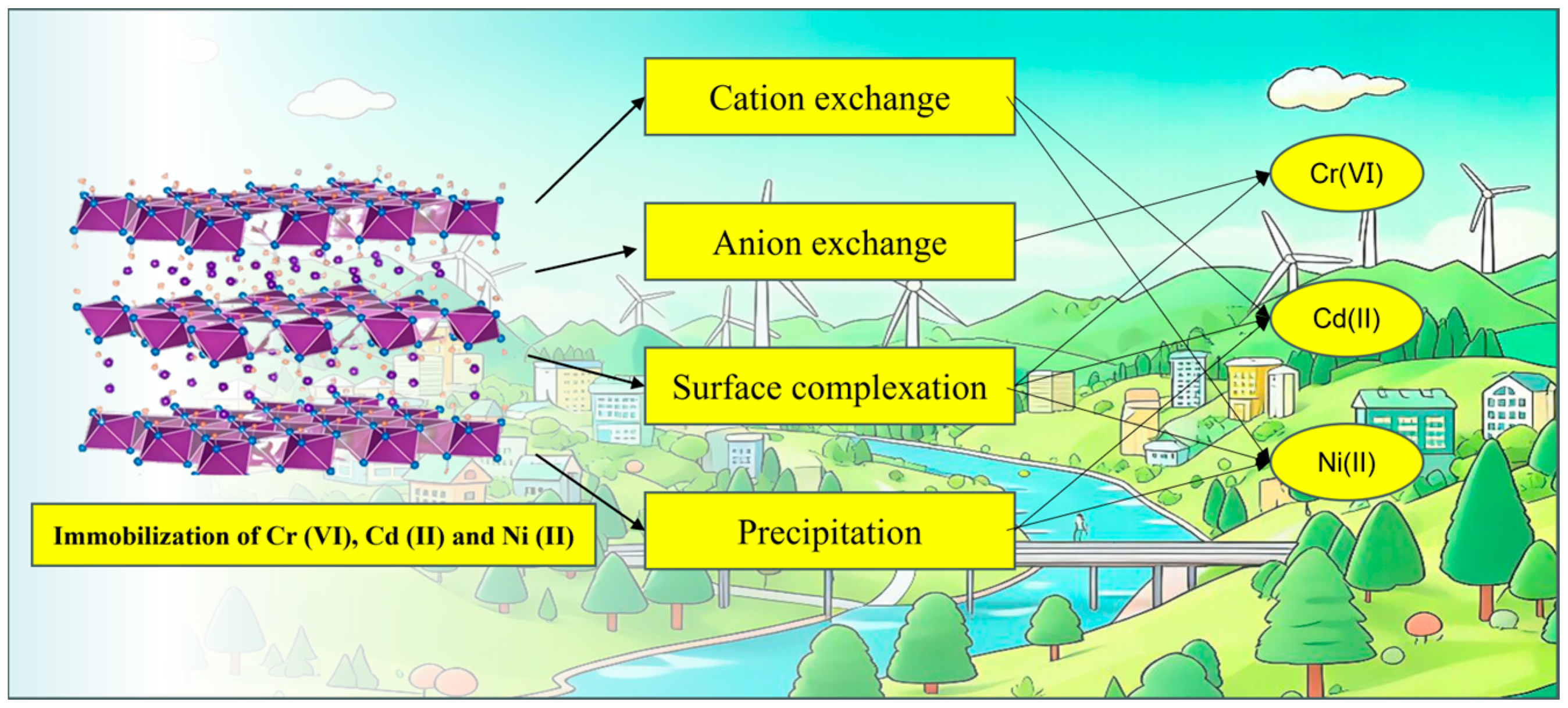

Article

Upcycling Coal Gangue and Phosphate Tailings into Layered Double Hydroxides for Simultaneous Remediation of Cr (VI), Cd (II) and Ni (II) in Contaminated Soils
School of Chemistry and Environmental Engineering, Wuhan Institute of Technology, Wuhan 430205, China
*
Author to whom correspondence should be addressed.
Separations 2026, 13(4), 112; https://doi.org/10.3390/separations13040112
Submission received: 5 March 2026 / Revised: 30 March 2026 / Accepted: 2 April 2026 / Published: 4 April 2026
(This article belongs to the Special Issue Separation Technology for Metal Extraction and Removal)

Abstract

Two mineral-based solid residues, namely coal gangue (CG) and phosphorus tailings (PT), two of the largest solid waste streams in the mining industry, were used as the sole metal feedstocks to fabricate a novel MgCaFeAl layered double hydroxide (LDH-GT) via a 700 °C calcination, acid leaching and hydrothermal coprecipitation route, with simultaneous synthesis of white carbon black from the reaction byproducts. Under optimized conditions (total metal load is 150 mg kg−1, LDH-GT dose is 0.09 g, pH from 6 to 7), the synthesized material achieved concurrent immobilization efficiencies of 76.28%, 99.96%, and 99.95% for Cr (VI), Cd (II) and Ni (II), respectively, within a 24 h reaction period. TCLP leachability decreased by 82 to 91% relative to the untreated soil. After three wetting, drying and freeze–thaw cycles, the leached concentrations of all three metals remained below 0.3 mg L−1, confirming excellent long-term stability. Mechanistic analyses revealed that Cr (VI) was mainly sequestered through interlayer anion exchange and surface complexation, whereas Cd (II) and Ni (II) were immobilized via isomorphic substitution into the LDH lattice, precipitation as carbonates, and incorporation into Fe/Mn oxides. A 7-day mung bean bioassay showed that LDH-GT amendment increased seed germination from 50% to 73%, enhanced root and shoot biomass by 1.1- to 1.6-fold, and decreased plant Cr, Cd, and Ni contents by over 80%. The 16S rRNA sequencing further demonstrated that LDH-GT reversed the decline in microbial α diversity induced by heavy metal stress, restored aerobic chemoheterotrophic and sulfur cycling functional guilds, and reduced pathogenic signatures. This study provides the demonstration of a waste-to-resource LDH that achieves efficient, durable remediation of multi-metal-contaminated soils, offering a scalable route for coupling solid waste valorization with in situ site restoration.

1. Introduction

As the cornerstone of the global fossil energy structure, coal production has remained high for extended periods. However, coal gangue (CG), the byproduct of coal mining and utilization, has emerged as a formidable challenge in transboundary environmental governance. Statistics indicate that global coal gangue accumulations have exceeded ten billion tons [1], with annual discharge volumes continuing to escalate. Once improperly stockpiled, coal gangue causes cascading compound pollution of the regional atmosphere, water bodies, and soil, with environmental impacts extending beyond mining areas to threaten downstream ecosystems and human health. In parallel, driven by global agricultural modernization and food security demands, phosphate consumption has surged. Phosphate tailings (PTs), the predominant solid residue from phosphate ore beneficiation (primarily via flotation), are being generated globally at a rate exceeding several hundred million metric tons per annum [2]. This solid waste creates enormous storage pressures within major phosphate-producing countries such as Morocco, China, and the United States, while also posing transboundary ecological risks [3]. Regrettably, these two categories of bulk industrial solid waste are still predominantly disposed of through open air dumping in most mining areas worldwide, with comprehensive utilization rates remaining chronically low. The reduction, resource recovery, and high-value conversion of these wastes have become common challenges for the green transformation of global mining cities within the Sustainable Development Goals framework.
The global industrialization process has accelerated the spread of heavy metal-contaminated soils. Statistics indicate that over 10 million hectares of soil worldwide suffer from varying degrees of heavy metal contamination. Despite the abundance of heavy metal species in the natural environment, merely a limited subset fulfills essential roles in maintaining human physiological homeostasis. Among these, nickel, chromium, and cadmium have attracted global public health attention due to their low-dose high-risk toxic characteristics. To address this global challenge, academia has developed diverse technological pathways including passivation, immobilization, phytoremediation, microbial transformation, chemical washing, and electrokinetic remediation. Zhang et al. employed ryegrass phytoremediation to treat multi-metal-contaminated sediments [4]. Liu et al. utilized high-voltage pulse burst electrokinetic methods to remediate chromium–cadmium-co-contaminated soil [5]. Wang et al. used core shell structured bioactive calcium carbonate to immobilize heavy metals from acidic contaminated water bodies [6]. Synthesizing global engineering practices, passivation remediation is particularly suitable due to its ability to simultaneously immobilize both cationic and anionic heavy metals, along with unique advantages, and has been recommended by the United Nations Environment Programme as a priority soil remediation strategy for developing countries [7].
Hydrotalcite-type compounds, designated as layered double hydroxides (LDHs), constitute a class of naturally abundant, cost-effective, and ecofriendly clay minerals. The general formula for layered double hydroxides is [M2+1−xM3+x(OH)2]x+(An−)x/n·mH2O [8]. This material system was systematically characterized by European and American scholars in the 1960s and has now become a global research hotspot in environmental materials. M2+ and M3+ denote divalent and trivalent metal cations hosted in the layer sheets. An− represents exchangeable interlayer anions. The x value typically ranges from 0.2 to 0.4 to maintain crystal structure stability. Due to their unique structure and properties, LDHs exhibit excellent performance in heavy metal immobilization, anionic pollutant capture, and catalytic transformation. Al/Mg LDH–zeolite composites were fabricated by Dang et al. for the effective remediation of Cd and Pb in polluted soils [9]. Meanwhile, MgCaAl ternary LDHs were utilized by Zong et al. to concurrently sequester Eu (III) and fulvic acid from contaminated matrices [10]. Spanish researchers have further explored the application potential of LDH-based materials in acid mine drainage treatment in EU mining areas [11].
Given the escalating global crisis of heavy metal contamination, the scalability of high-performance adsorbents in developing nations remains limited by conventional synthesis methodologies and associated costs [12]. CG and PT, as abundant aluminosilicate-rich industrial residues, offer promising alternative precursors for adsorbent construction. Recent investigations have explored valorization pathways for these materials. Hu et al. fabricated mullite–spinel composite porous ceramics from CG via high-temperature sintering for flue gas filtration [13]. Zhao et al. extracted calcium from CG and PT to develop calcium silicate-based solidifying agents for single metal remediation of Cr (VI) and Cd (II) [14]. Nevertheless, existing approaches predominantly address single metal contamination scenarios or rely on simple thermal activation. The strategic extraction of reactive metal species (Ca2+, Mg2+, Al3+, Fe3+) from CG and PT for the precise assembly of LDH adsorbents with controllable layered structures and tunable compositions targeting multi-metal co-contaminated soils remains unexplored. Consequently, utilizing these solid wastes as composite metal sources for the development of functionalized layered double hydroxides is beneficial for the sustainable control of heavy metal contamination.
This study presents an approach to pollution control utilizing solid waste, preparing LDH-GT from abundant CG and PT via green chemistry for Cr (VI), Cd (II) and Ni (II) soil immobilization. Using XRD, SEM, EDS, FTIR and XPS, we reveal immobilization mechanisms at molecular scales. Through wet–dry and freeze–thaw aging, we evaluate durability under extreme climates. Phytotoxicity bioassays and microbial experiments assess soil quality and community responses, providing scientific basis for practical applications. Silica fume can be recovered from the reaction residue, offering potential for material reuse.

2. Experimental Procedures

2.1. Source Materials

The raw materials were CG and PT, sourced from Changzhi, Shanxi Province and Yichang, Hubei Province, China, respectively. Their major oxide compositions are summarized in Table 1. CG exhibits high contents of SiO2 (64.70%), Al2O3 (14.54%), CaO (3.07%), and Fe2O3 (1.71%), whereas PT is predominantly composed of CaO (57.81%), MgO (19.79%), and SiO2 (7.69%).

2.2. LDH-GT Fabrication

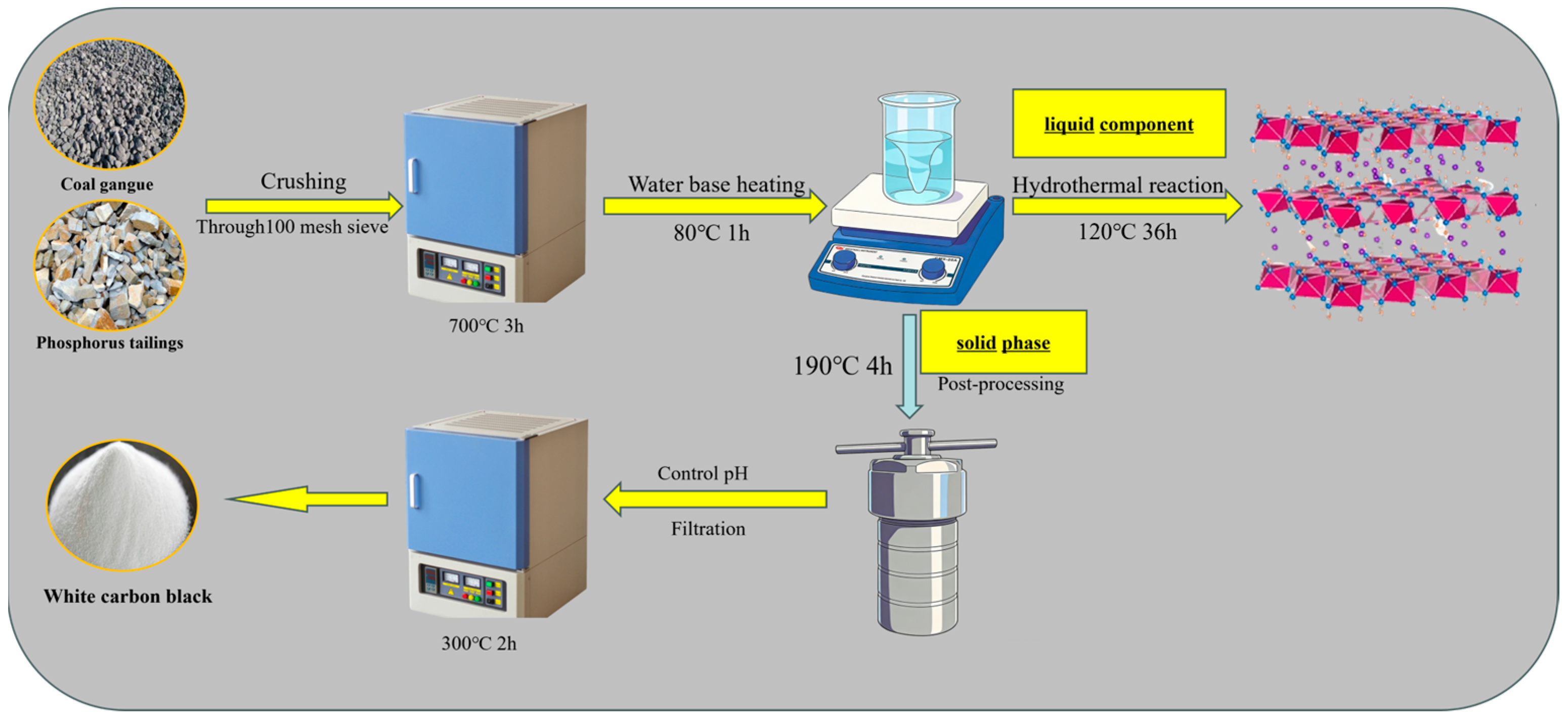
The procedure illustrated in Figure 1 commenced with size reduction of CG and PT powders to below 150 μm (100 mesh). Subsequent thermal activation at 700 °C for 3 h in a muffle furnace rendered the mineral matrix into reactive oxide forms amenable to acid attack. Following calcination, the product was transferred to a reaction vessel and subjected to acid leaching with 8 mol/L hydrochloric acid for 1 h under magnetic stirring at 80 °C to ensure complete dissolution of metal ions. Detailed reagent information is provided in Supplementary Materials Text S1. The leachate was then purified via highspeed centrifugation and precision filtration to obtain a clear acid-extracted solution containing the target metal ions Ca2+, Mg2+, Al3+, and Fe3+. In accordance with the experimental design, the ion concentrations in the leachate were precisely adjusted to maintain a strict molar ratio of 3 to 1 between divalent (Ca2+ + Mg2+) and trivalent (Al3+ + Fe3+) metal ions. The control method was as follows: ICP-OES was used to determine the average concentrations of Ca, Mg, Al, and Fe in the acid leachates of coal gangue and phosphate tailings. Based on the measured data, the CG and PT acid leachates were mixed in specific proportions to strictly maintain a molar ratio of 3:1. Under continuous stirring, 4 mol L−1 sodium hydroxide solution was slowly added dropwise to accurately regulate the system pH to 12 ± 0.02, thereby forming an alkaline reaction precursor. This adjusted slurry was subsequently transferred to a polytetrafluoroethylene-lined autoclave (Parr Instrument Company, Moline, IL, USA), sealed, and hydrothermally treated at 120 °C under autonomous pressure for 36 h to promote crystallization. Upon completion of the reaction, the system was cooled to ambient temperature, and the precipitated product was collected, washed by centrifugation with ultrapure water (three times) and absolute ethanol (once), dried overnight in a vacuum oven (Yamato, Tokyo, Japan) at 50 °C, and finally ground to yield LDH-GT powder.

2.3. Synthesis of Silica White

As shown in Figure 1, white carbon black was prepared from CG and PT acid leaching residue using the precipitation method. The acid leaching residue was dried at 105 °C for 12 h, and 10 g of residue was mixed with a 30% NaOH solution at a liquid-to-solid ratio of 5 to 1, followed by thorough grinding. The mixture was transferred to a reaction kettle and placed in an oven at 190 ± 5 °C for 4 h. After the reaction, the kettle was removed and cooled to ambient temperature, and the mixture was filtered. The filtrate was a sodium silicate solution for preparing white carbon black, and the residue was unreacted impurities. Then 30 mL of the prepared sodium silicate solution was measured with a measuring cylinder and transferred to a beaker, then diluted with 10 mL of distilled water (3 to 1). A magnetic stirrer was placed in the beaker, and the beaker was placed in a water bath at 85 ± 2 °C for constant temperature heating with magnetic stirring at 500 rpm. A prepared 10% of sulfuric acid was gradually added dropwise to the beaker until the pH reached 7.0, followed by aging for 30 min. The flocculent hydrated silica formed was filtered and washed with distilled water until neutral. The filter cake was dried at 105 °C for 12 h and then decomposed in a muffle furnace (Yamato, Tokyo, Japan) at 300 °C for 2 h to obtain white carbon black.

2.4. Immobilization Experiments

Batch tests were conducted to investigate the effects of LDH-GT dosage, initial heavy metal concentration and initial pH. When the heavy metal concentration ranged from 0.05 to 0.3 mg/g, 1.0 g of contaminated soil and 0.01 to 0.09 g of LDH-GT were placed in a 10 mL centrifuge tube, to which 5 mL of ultrapure water was added. Detailed preparation steps for contaminated soil are provided in Supplementary Materials Text S2. The suspension was subsequently shaken at 30 ± 2 rpm for a predetermined time period. After centrifugation at 6000 rpm for 5 min, the supernatant was filtered through a 0.45 µm membrane. The supplementary role of membrane filtration involves the elimination of fine particulates, thus safeguarding the measurement apparatus from potential damage. Cr (VI) was determined by UV–visible spectrophotometry with diphenyl carbazide, and Cd (II) and Ni (II) by flame atomic absorption spectrophotometry (FAAS). Solid residues were dried at 50 °C for subsequent TCLP and speciation analyses. All treatments were performed in duplicate along with blanks. The adsorption efficiency of Cr (VI), Cd (II) and Ni (II) onto LDH-GT was quantified using the equation below.
P = (GO    Gi)/GO  ×  100%
Here, P denotes the immobilization percentage, while GO and Gi represent the initial and residual concentrations of respective heavy metal ions (Cr (VI), Cd (II), or Ni (II)) in the soil leachate at equilibrium, respectively.

2.5. TCLP Leaching Test

For leaching tests, we implemented the TCLP framework specified in EPA Method 1311 of the SW-846 compendium. Prior experiments confirmed the suitability of extraction fluid #1 (acetic acid and sodium hydroxide buffer), buffered to pH 4.93 ± 0.05. We combined the extracting medium with soil materials encompassing both amended and unamended variants at a 20 to 1 fluid-to-soil proportion, then subjected the mixtures to end-over-end rotation at 30 ± 2 rpm for 18 h at 23 ± 2 °C [15]. Upon completing centrifugation at 4000 rpm for 5 min and filtration through a 0.45 µm membrane, we determined the concentrations of Cr (VI), Cd (II) and Ni (II) in the final extracts through the aforementioned quantification approach.

2.6. Phytotoxicity Bioassay

Thirty uniform mung bean seeds were surface-sterilized with 10% H2O2 for 10 min, rinsed with deionized water, and pregerminated in the dark for 24 h. Germinated seeds were placed in Petri dishes on 5 g of soil (S1 equals clean, S2 equals contaminated, S3 equals LDH-GT-amended) moistened with 25 mL deionized water, with three replicates per treatment. Dishes were incubated at 25 °C and 65% relative humidity under a 14 h light, 10 h dark photoperiod for 7 days. Root and shoot lengths were measured, and tissues were dried at 80 °C, weighed to obtain dry biomass, washed at 550 °C for 6 h, and digested using 2 mL concentrated HNO3 and 1 mL 30% H2O2 at 100 °C for 4 h. Total Cr, Cd and Ni in the digest were determined by FAAS against certified reference materials to assess the reduction in metal bioavailability.

2.7. Microbial Community Analysis

One gram of each soil (S1 clean, S2 contaminated, S3 LDH-GT-treated) was suspended in 5 mL ultrapure water, shaken at 30 ± 2 rpm, and centrifuged, and the residual soil was incubated at 25 °C and 65% RH for two weeks to allow microflora stabilization. Genomic DNA was extracted and the V4 region of 16S rRNA was sequenced on an Illumina platform to evaluate changes in bacterial diversity and community structure.

3. Results and Discussion

3.1. Synthesis and Characterization of LDH-GT

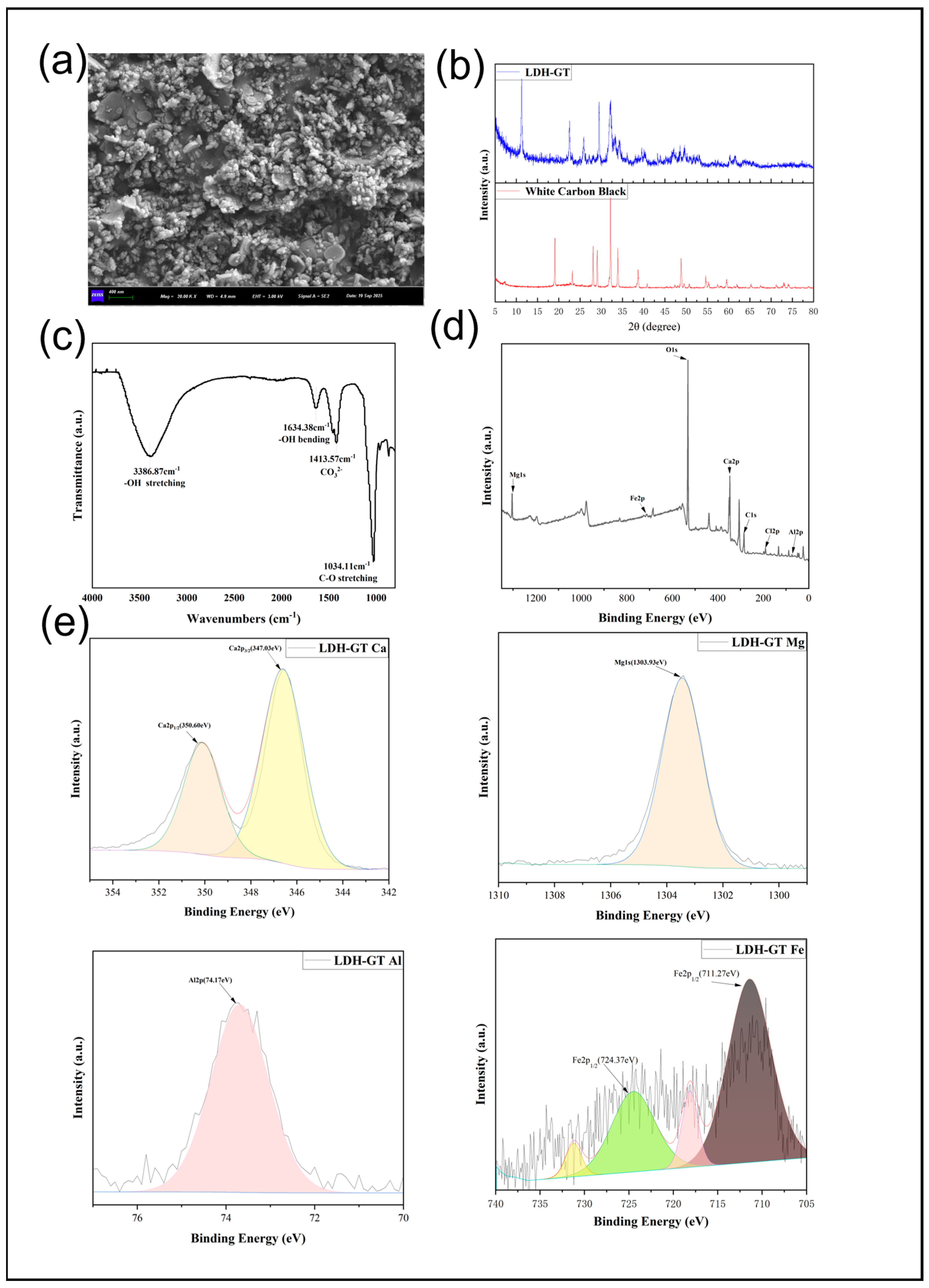
Figure 2 compiles the morphology and structural information of LDH-GT [16]. Detailed experimental procedures are provided in Supplementary Materials Text S5. The SEM image (Figure 2a) reveals that the product consists of stacked, ultra-thin hexagonal platelets with well-defined edges [17]. In the XRD pattern (Figure 2b), the intense and sharp reflections at 11.65°, 23.42° and 34.88° are indexed to the (003), (006) and (012) planes of hydrotalcite (JCPDS No.89-0460) [18], giving interlayer spacings of d(003) equal 7.88 Å and d(006) equaling 3.93 Å, as calculated by Bragg’s equation. Weak additional peaks at 28.48°, 40.05°, 49.63° (CaCO3) [19] and 25.88°, 32.25° (Ca(OH)2) indicate the coexistence of minor by-phases [20]. In the XRD results for the silica, a wide and diffuse steamed bun peak appears near 2θ at approximately 22°, so the synthesized silica is amorphous silica. However, due to the presence of some crystalline silica, there are quite a few sharp peaks [21]. The FTIR spectrum (Figure 2c) shows a broad band at 3386 cm−1 assigned to ν(O-H) stretching of the adsorbed water layer. The band at 1634 cm−1 corresponds to δ(H-O-H) bending of interlayer H2O. The strong absorption at 1413 cm−1 evidences CO32− incorporation, likely from atmospheric CO2 during synthesis. The 1034 cm−1 signal is related to C-O stretching [22]. Elemental signals at 285.24, 531.71, 347.25, 1304.02, 74.27, 711.14, and 198.32 eV were detected in the survey spectrum (Figure 2d), corresponding to C 1s, O 1s, Ca 2p, Mg 1s, Al 2p, Fe 2p, and Cl 2p transitions, respectively. High-resolution spectra (Figure 2e) exhibit Ca 2p1/2 (350.60 eV) and 2p3/2 (347.03 eV), Mg 1s (1303.93 eV), Al 2p (74.17 eV), and Fe 2p1/2 (724.37 eV) and 2p3/2 (711.27 eV), all consistent with Fe3+ [23], thereby elucidating the elemental composition and chemical valence states of LDH-GT.

3.2. Immobilization of Cr (VI), Cd (II), and Ni (II) in Soil

3.2.1. Influence of Initial Soil Concentration on the Immobilization of Cr (VI)/Cd (II)/Ni (II) in Soil

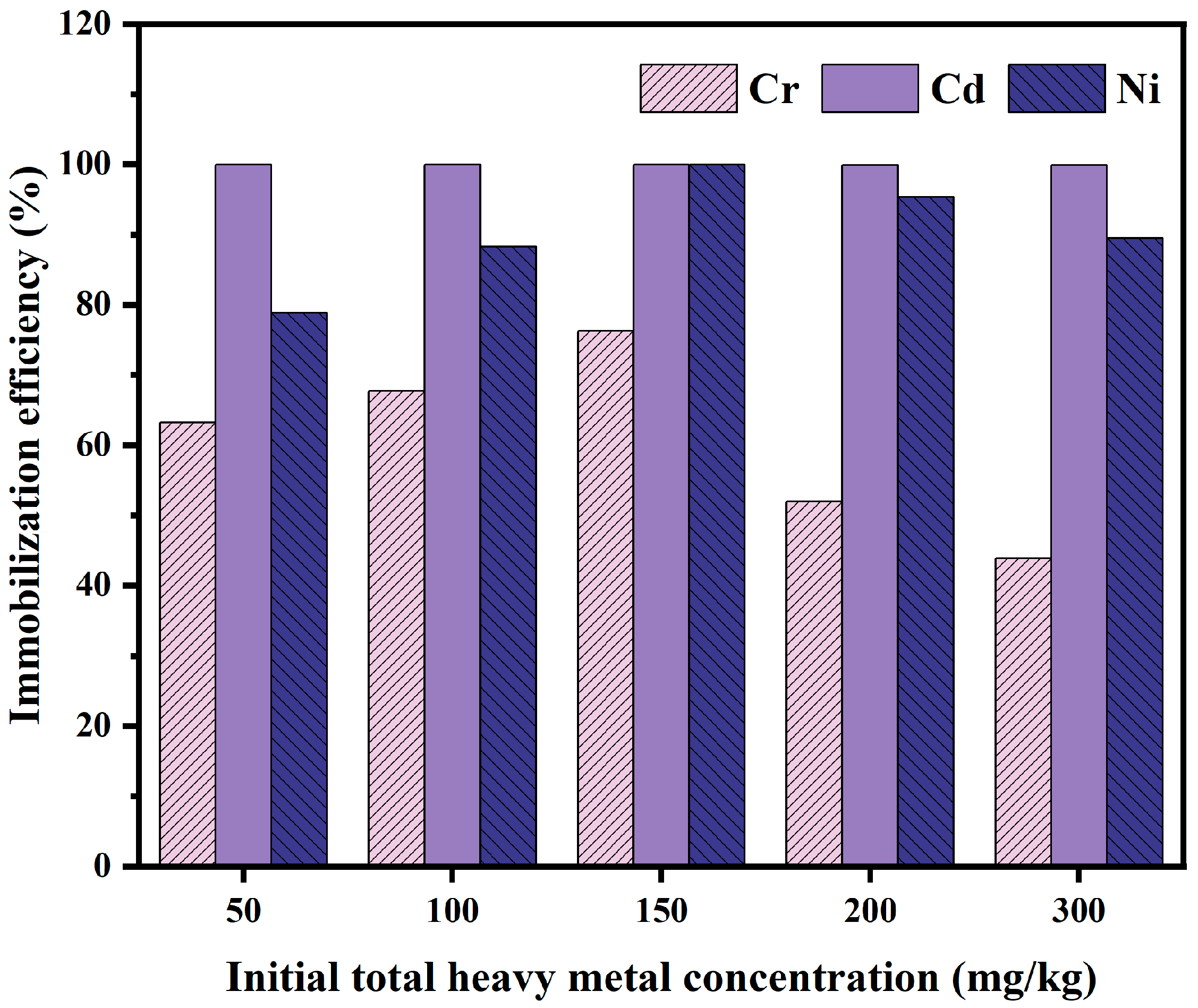
The influence of initial total heavy metal concentration on immobilization efficiency is shown in Figure 3. As the total heavy metal concentration rose stepwise from 50 mg kg−1 to 300 mg kg−1, the immobilization efficiency of LDH-GT toward Cr (VI) and Ni (II) first increased and then declined, whereas that toward Cd (II) remained essentially constant. Specifically, Cr (VI) immobilization climbed from 63.25% to 76.28% before dropping to 43.92%. Ni (II) efficiency increased from 78.87% to 99.95% and subsequently slipped to 89.51%. Cd (II) efficiency only marginally decreased from 99.96% to 99.91%. This trend is mainly ascribed to the limited number of adsorption sites on LDH-GT [24]. Its active sites gradually approach saturation once a certain concentration is reached. When the concentration of heavy metal ions in the system exceeds this saturation level, the immobilization capacity of LDH-GT for Cr (VI), Cd (II), and Ni (II) begins to weaken. Consequently, further raising the initial total heavy metal concentration does not enhance immobilization efficiency. Instead, it may reduce the overall passivation performance of the material because of intensified competitive adsorption.

3.2.2. Dose-Dependent Immobilization of Heavy Metals in Contaminated Soil

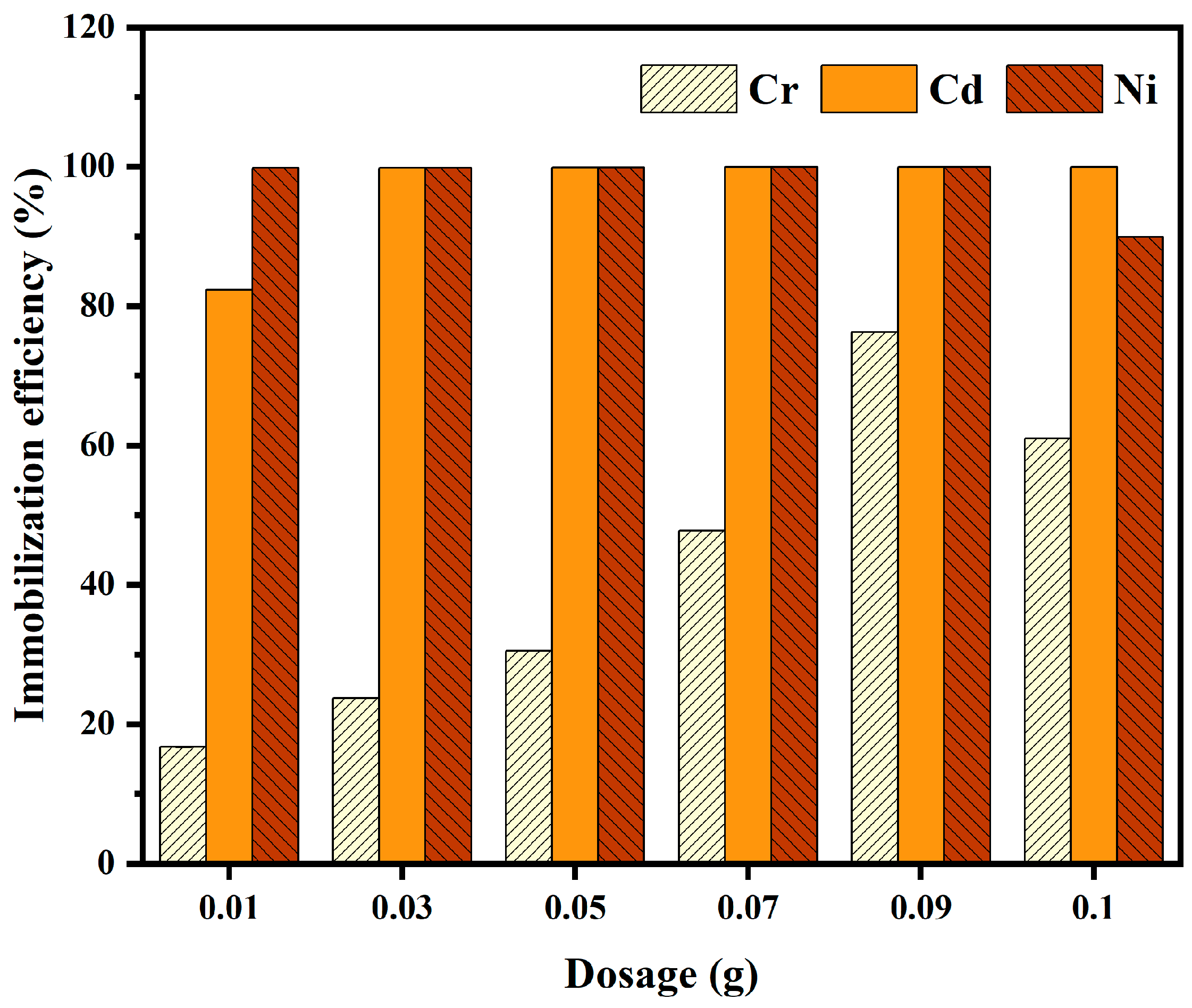
The effect of amendment dosage on immobilization efficiency is illustrated in Figure 4. When the dosage was raised from 0.01 g to 0.09 g per 100 g soil, the immobilization efficiency of Cr (VI) in soil increased sharply from 16.72% to 76.28%. Cd (II) exhibited an initial rise followed by a plateau, climbing from 82.31% to 99.96%, whereas the efficiency for Ni (II) remained above 98%. These results indicate that the majority of labile Cr (VI), Cd (II), and Ni (II) had been effectively adsorbed and immobilized. However, further increases in dosage caused the efficiency curves to level off or even decline slightly. This is likely because at higher LDH-GT loading, the majority of contaminants are rapidly immobilized in the initial stage, leading to low residual concentrations and weakened mass transfer driving force for further adsorption. Consequently, additional migration of contaminants to the material surface becomes limited [25].

3.2.3. Influence of Initial Soil pH on the Immobilization of Cr (VI), Cd (II), and Ni (II) in Soil

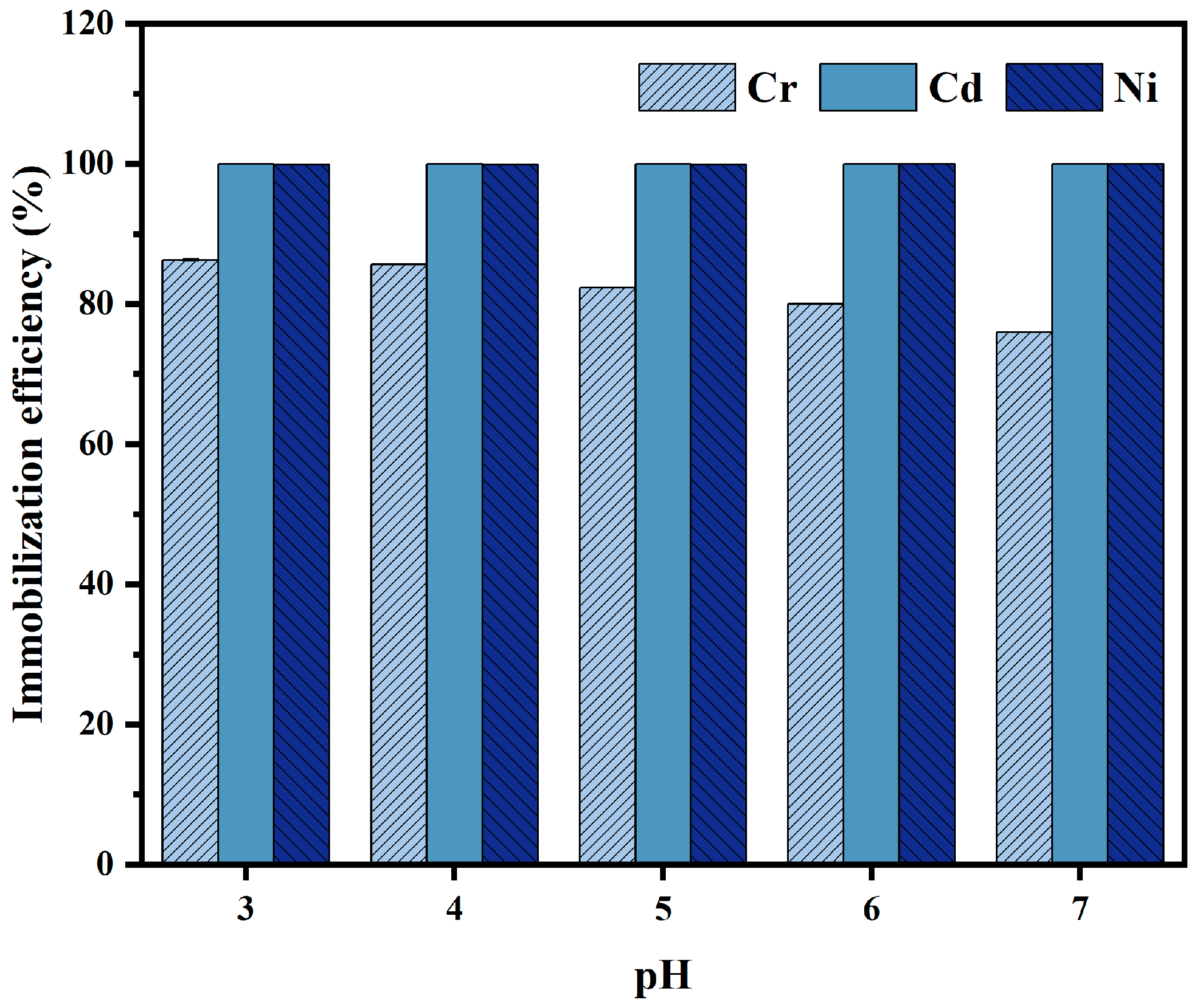
The pH-dependent immobilization behaviors are illustrated in Figure 5. Elevating the system pH from acidic to alkaline conditions resulted in a marked reduction in Cr (VI) fixation, with efficiencies decreasing from 86.26% to 76.01%. Conversely, the adsorption capacities for Cd (II) and Ni (II) exhibited negligible variation across the investigated pH range. The drop in Cr (VI) immobilization is likely attributable to the rise in pH increasing the zeta potential of the LDH-GT surface, rendering the surface more negatively charged. This intensifies electrostatic repulsion toward Cr (VI) anions and suppresses their further adsorption and fixation on the material [26].
In summary, in the immobilization of combined Cr (VI), Cd (II), and Ni (II) contamination by LDH-GT, the stabilization of Cr (VI) is significantly influenced by initial concentration, dosage, and soil pH. In contrast, the immobilization of Cd (II) and Ni (II) shows minimal variation under different conditions, indicating that Cr (VI) removal by LDH-GT is more susceptible to environmental factors. Specifically, the optimal heavy metal immobilization efficiency is achieved when 0.09 g of LDH-GT is added to 1 g of soil with a combined contamination level of 150 mg/kg. Regarding soil pH, lower pH values result in higher immobilization efficiency of Cr (VI) by LDH-GT; at pH 3, the immobilization efficiency of Cr (VI) reaches a maximum of 86.26%, with Cd (II) and Ni (II) immobilization efficiencies of 99.96% and 99.95%, respectively. However, typical soil pH ranges from 6 to 7. Under these conditions, the immobilization efficiencies for Cr (VI), Cd (II), and Ni (II) are 76.28%, 99.96%, and 99.95%, respectively, which still represent satisfactory levels. Therefore, soil within this pH range was selected for subsequent experiments.

3.3. Toxicity Characteristic Leaching Procedure (TCLP)

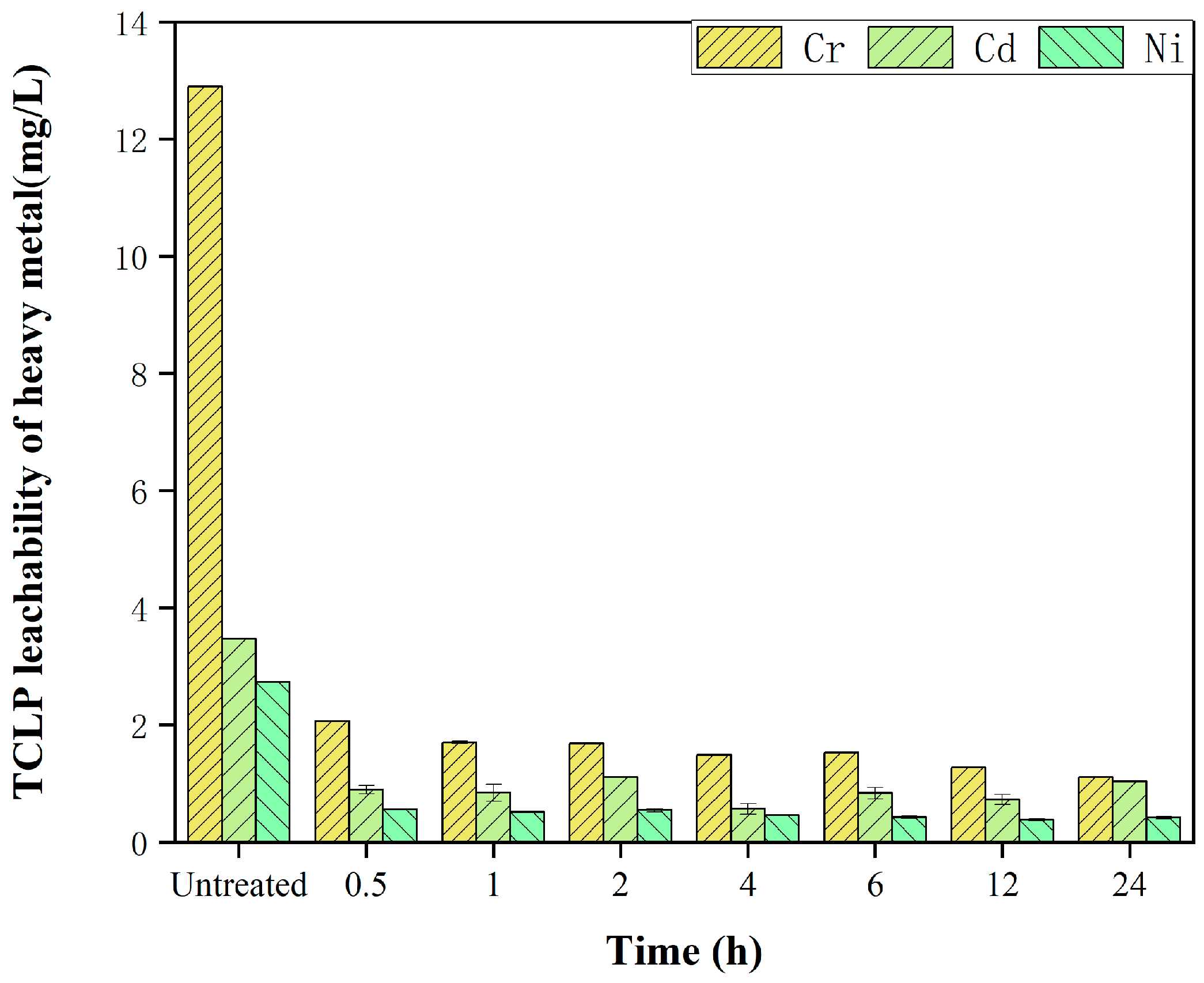
Figure 6 presents the TCLP leaching results for the co-contaminated soil treated with LDH-GT at different reaction times. In the untreated soil, the leachate concentrations of Cr (VI), Cd (II) and Ni (II) were 12.90 mg L−1, 3.85 mg L−1, and 2.53 mg L−1, respectively, indicating a high potential for migration. After LDH-GT amendment, the leachate concentrations of all metals dropped markedly. Within the initial 0.5 h, aqueous Cr (VI) concentrations plummeted to 2.07 mg L−1, whereas Cd (II) and Ni (II) were attenuated to 1.11 and 0.56 mg L−1, respectively. Over the subsequent 23.5 h, further diminution was observed. Cr (VI) declined to 1.11 mg L−1, Cd (II) decreased to 0.57 mg L−1 and Ni (II) stabilized at 0.38 mg L−1. Overall, LDH-GT immobilizes Cr (VI), Cd (II) and Ni (II) rapidly, and the final leachate concentrations remain low, demonstrating that the material can effectively reduce the bioavailability and environmental risk of heavy metals in multi-metal-contaminated soils [27].

3.4. Influence of Wet–Dry Alternation and Freeze–Thaw Cycles on the Leaching of Cr (VI), Cd (II) and Ni (II) from Soil

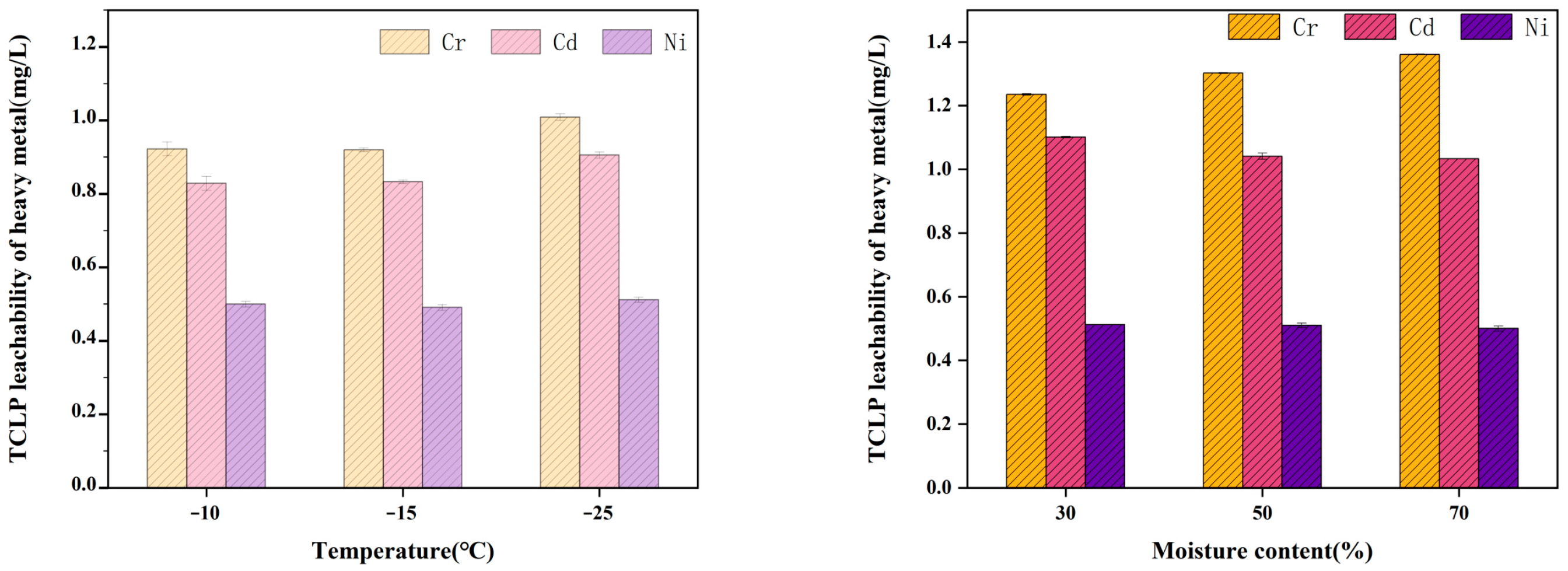
Accelerated aging protocols, encompassing wet–dry and freeze–thaw cycling [28], were implemented to assess the long-term stability of Cr (VI), Ni (II) and Cd (II) sequestered by LDH-GT [29]. Detailed experimental procedures are provided in Supplementary Materials Text S3. The influence of natural aging on metal release from the amended soil after three cycles is shown in Figure 7. In LDH-GT-treated soils maintained at 30%, 50%, and 70% water content, the leachate concentrations of Cr (VI) were 1.235, 1.302, and 1.361 mg L−1, respectively. Those of Cd (II) were 1.10, 1.04, and 1.03 mg L−1. Ni (II) values were 0.512, 0.510, and 0.500 mg L−1. Under different freeze–thaw temperatures, LDH-GT-amended soils subjected to minus 10 °C, minus 15 °C, and minus 25 °C released 0.923, 0.920 and 1.010 mg L−1 of Cr (VI), 0.830, 0.833 and 0.906 mg L−1 of Cd (II), and 0.500, 0.491 and 0.512 mg L−1 of Ni (II), respectively. These data reveal negligible differences in metal leaching across the various moisture contents and freeze–thaw temperatures, suggesting that fluctuations in soil moisture or freeze–thaw cycles exert negligible influence on LDH-GT efficacy for remediating Cr (VI)-, Ni (II)- and Cd (II)-contaminated soil.

3.5. Fractionation of Cr (VI), Cd (II) and Ni (II) in Soil

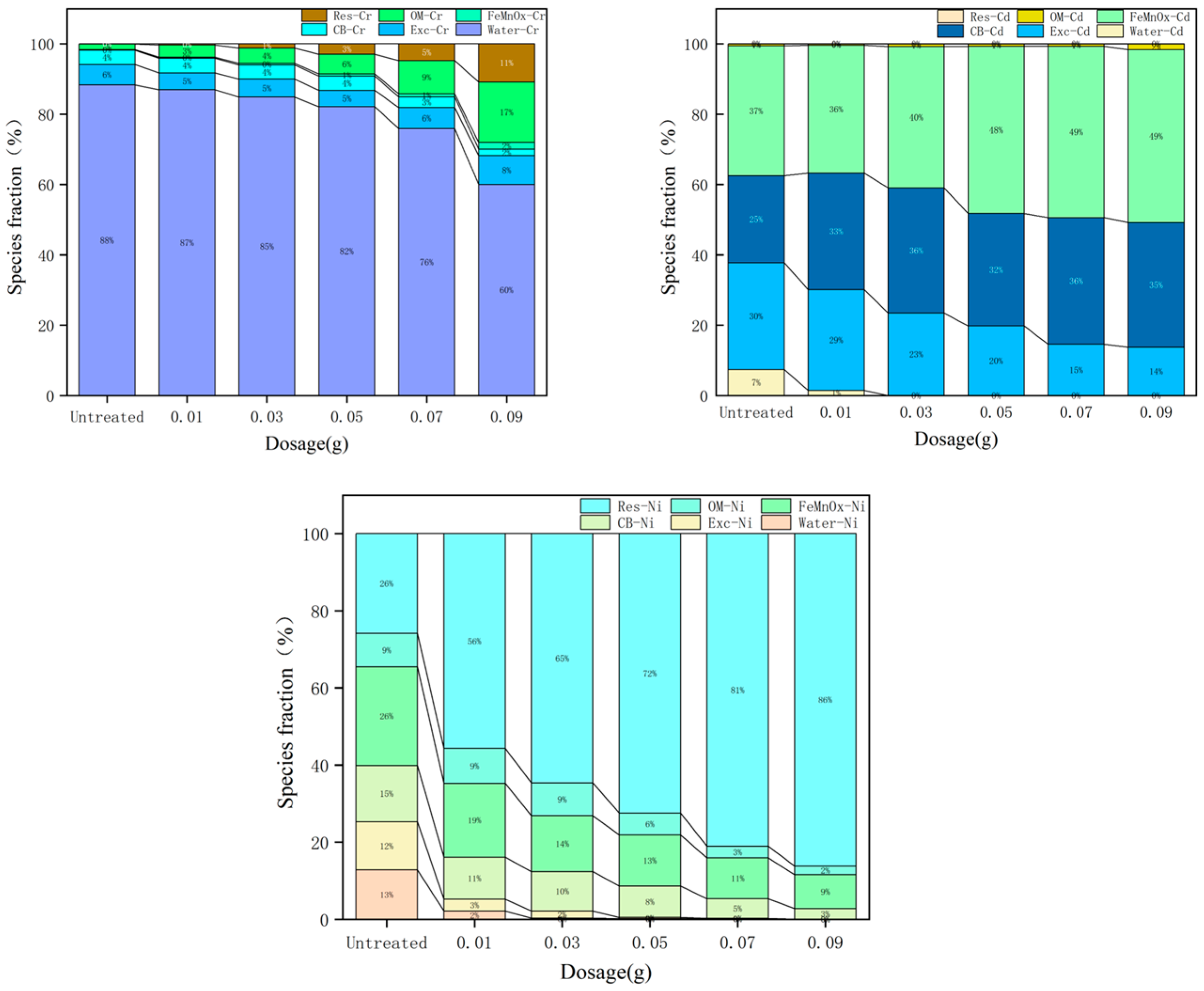
The phytotoxicity of heavy metals in soil is governed not only by their TCLP leachability but also by their chemical speciation, which dictates their environmental behavior. To quantify the geochemical partitioning of Cr (VI), Cd (II), and Ni (II) prior to and following LDH-GT treatment, aqueous leaching coupled with a Tessier sequential extraction protocol [30] was employed. Detailed experimental procedures are provided in Supplementary Materials Text S4. The results are shown in Figure 8. Metals were operationally defined as residual (Res), organic matter-bound (OM), Fe/Mn oxide-bound (FeMnOx), carbonate-bound (CB), exchangeable (Exc) and water-soluble (Water).
With increasing LDH-GT dosage, the water-soluble fraction of Cr dropped from 88.31% to 59.99%, whereas the exchangeable fraction rose slightly from 5.84% to 8.17%. The carbonate-bound fraction decreased from 4.03% to 1.88%, while the organic-bound and residual fractions increased from 0% to 17.22% and from 0.23% to 10.86%, respectively. The FeMnOx fraction showed a minor increase. These alterations demonstrate that LDH-GT treatment induces a geochemical transformation of Cr from highly labile species (water and CB) toward more recalcitrant phases (OM and Res) [31].
For Cd, the exchangeable fraction declined from 15.38% to 2.28%, whereas the CB and FeMnOx fractions increased from 24.72% to 35.47% and from 39.60% to 49.18%, respectively. The organic-bound fraction also rose slightly, while water-soluble and residual Cd remained low. The transformation is attributed to (i) the abundance of soil carbonates that promote formation of sparingly soluble CdCO3 and (ii) the high Fe/Mn oxide content that favors surface complexation or coprecipitation of Cd [32].
In untreated soil, Ni occurred mainly as Fe/Mn oxide-bound (25.62%) and residual (25.83%) fractions, implying moderate mobility and potential bioavailability. After LDH-GT treatment, the FeMnOx fraction dropped sharply to 8.75%, whereas the residual fraction soared to 86.18%. Simultaneously, water-soluble and exchangeable Ni decreased from 12.81% and 12.48% to less than or equal to 0.01%. These results demonstrate that Ni is sequestered through structural reconstruction of the layered double hydroxide [33]. Most Ni isomorphically substitutes into the brucite-like sheets or is intercalated, thereby being locked into the mineral lattice as a residual phase.
Collectively, LDH-GT not only decreases the labile fractions of Cr, Cd, and Ni but also markedly enhances their geochemical stability, providing a reliable strategy for contaminated soil remediation.

3.6. Soil Phytotoxicity Bioassay

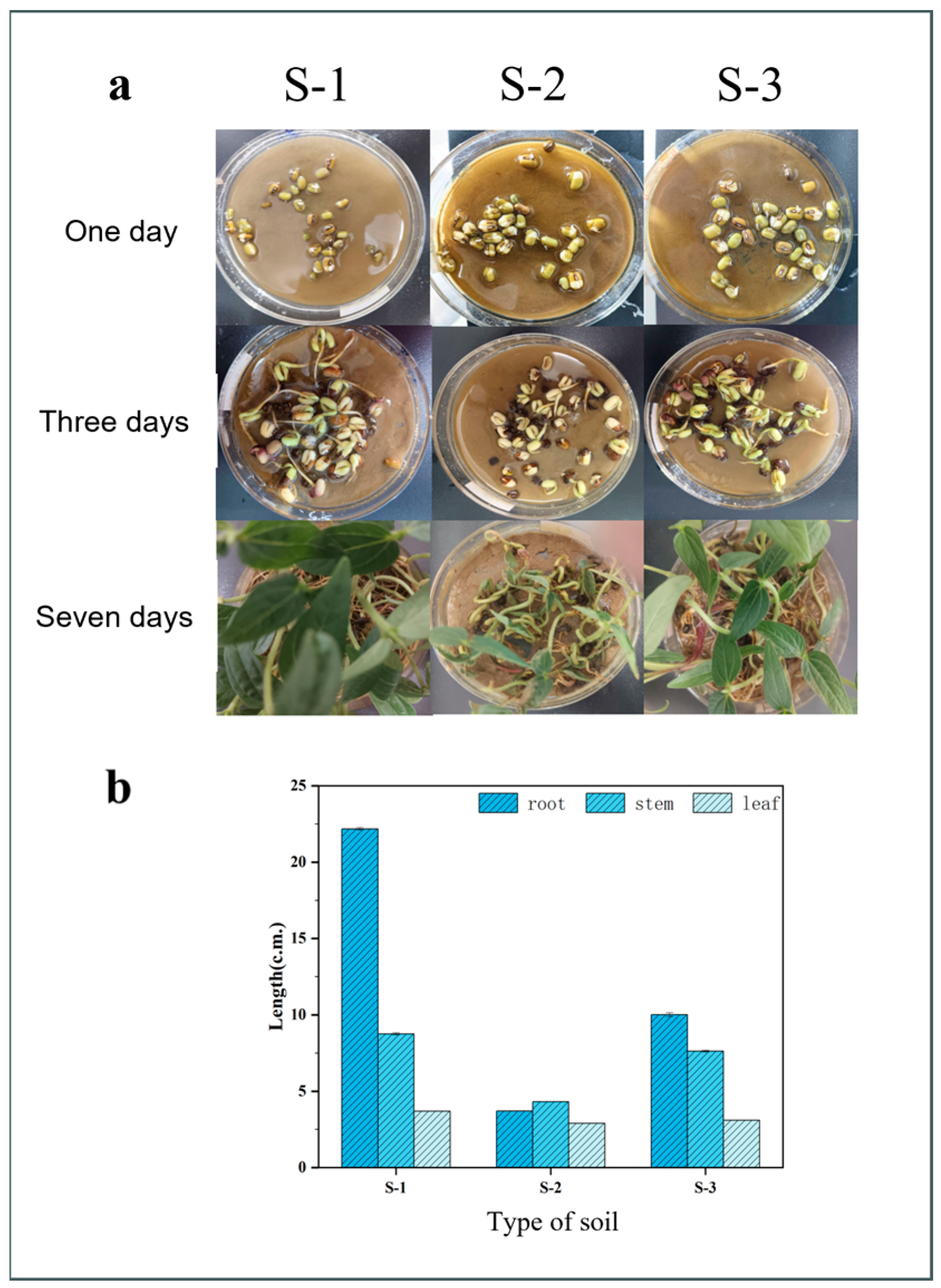
We established a 7-day seedling emergence assay employing selected mung bean seeds (uniform, plump) to assess both the remedial performance of LDH-GT in contaminated soil and its subsequent impact on plant germination and growth. Germination percentage, root and shoot lengths, total dry biomass, and Cr (VI), Ni (II) and Cd (II) concentrations in seedlings were recorded. The appearance of mung beans in different soils is shown in Figure 9a. Germination and dry weight data are summarized in Table 2. As shown in Figure 9b, seedlings in the uncontaminated control (S1) produced roots 221.8 mm and shoots 87.6 mm long, whereas those grown in Cr (VI)-, Cd (II)- and Ni (II)-spiked soil (S2) were severely stunted (root 37.1 mm and shoot 43.1 mm), evidencing strong phytotoxicity. In LDH-GT-amended soil (S3), root and shoot lengths recovered to 100.1 mm and 76.3 mm, respectively, with 87.3% and 61.9% increases relative to S2. Germination (Table 2) dropped from 97.7% in S1 to 50.0% in S2, but rose to 73.0% in S3, confirming effective detoxification. Total root plus shoot dry weights were 1.156 g (S1), 0.416 g (S2), and 0.813 g (S3), further demonstrating the growth-promoting effect of remediation. Cr (VI), Cd (II) and Ni (II) in tissues were below detection in S1 seedlings, whereas concentrations in S2 roots, stems, and leaves were markedly higher. Metal levels in S3 plants were substantially lower than in S2, corroborating reduced bioavailability after treatment. In summary, combined Cr (VI), Cd (II) and Ni (II) stress strongly inhibited mung bean germination, root elongation, and biomass accumulation. LDH-GT amendment significantly lowered metal toxicity and bioavailability, restoring plant performance and indicating promising potential for alleviating heavy metal phytotoxicity [34].

3.7. Soil Microbial Community Composition

3.7.1. Microbial Community Structure and Diversity

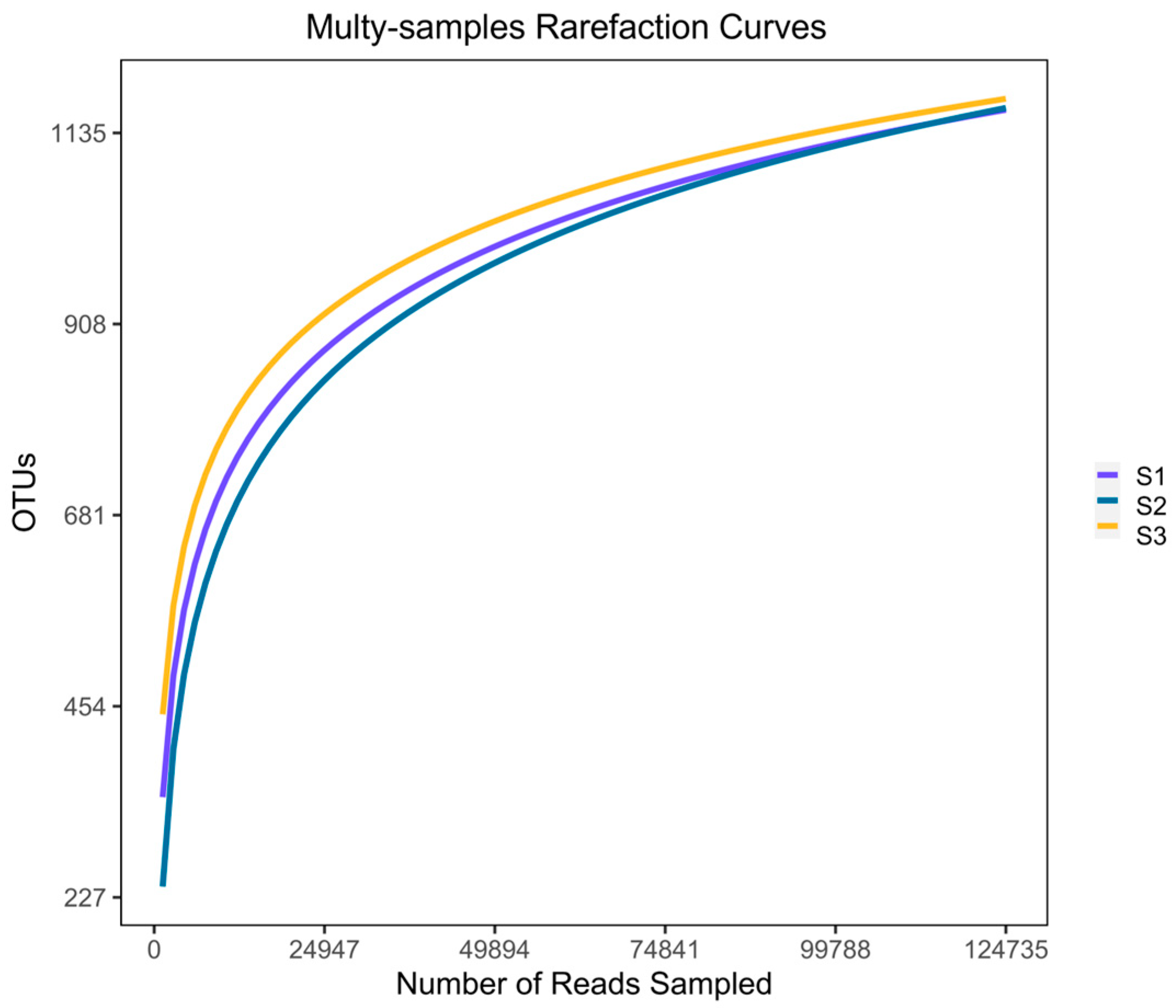
As shown in Figure 10, in the dual dimensions of plateau magnitude and slope in rarefaction curves, S1 (uncontaminated clean soil) entered the horizontal asymptotic region first at approximately 1135 OTUs, with its curvature converging at the shallowest sequencing depth. This indicates that the pristine soil, possessing high initial diversity and even community structure, required only 2.5 multiplied by 10 to the power of 4 reads to fully capture species richness, reflecting the co-saturation of functional redundancy and rare species pools characteristic of stable ecosystems. Following exposure to Cr (VI), Cd (II) and Ni (II) stress, the S2 curve showed an overall depression and maintained a steep ascending trajectory, with expected OTU numbers compressed to 908 and failure to reach the plateau even at 1.25 multiplied by 10 to the power of 5 reads. This implies that heavy metals selectively eliminated sensitive taxa and suppressed proliferation of low-abundance bacteria, resulting in significant attenuation of alpha diversity, and the microbiome transitioned from high phylotype richness with even abundance distribution toward low phylotype richness with uneven abundance distribution characterized by a dominant taxa monopoly, with insufficient sampling depth further amplifying the risk of underestimating true diversity. After LDH-GT remediation, the S3 curve recovered to approximately 1080 OTUs, with slope markedly decreasing and an inflection point appearing near 9 multiplied by 10 to the power of 4 reads. This demonstrates that lattice entrapment of Cd by layered double hydroxides and pH micro-buffering effectively alleviated toxic selection pressure, enabling suppressed rare taxa to reenter detectable ranges and driving community reversion toward the native high-richness low-dominance state. However, the plateau height remained slightly below that of S1, suggesting that certain functionally specialized bacteria or symbiotic networks remain incompletely reconstructed, requiring extended ecological succession or secondary regulation for complete restoration of the soil microbial potential diversity pool. Alpha diversity metrics for the complete set of soil samples are summarized in Table 3. Across all experimental groups, goods coverage values surpassed 0.999, thereby confirming uniform microbial coverage among treatments and attesting to the high taxonomic resolution achieved in this sequencing endeavor. S2 exhibited reduced values across all diversity metrics relative to both S1 and S3, suggesting diminished microbial abundance and taxonomic diversity as a consequence of Cr (VI), Ni (II) and Cd (II) exposure. After LDH-GT treatment, all indices showed varying degrees of recovery, with the richness and ACE indices even exceeding S1 levels, suggesting an overcompensation effect of LDH-GT in remediating soil heavy metal contamination [35].

3.7.2. Analysis of Microbial Community Functional Composition

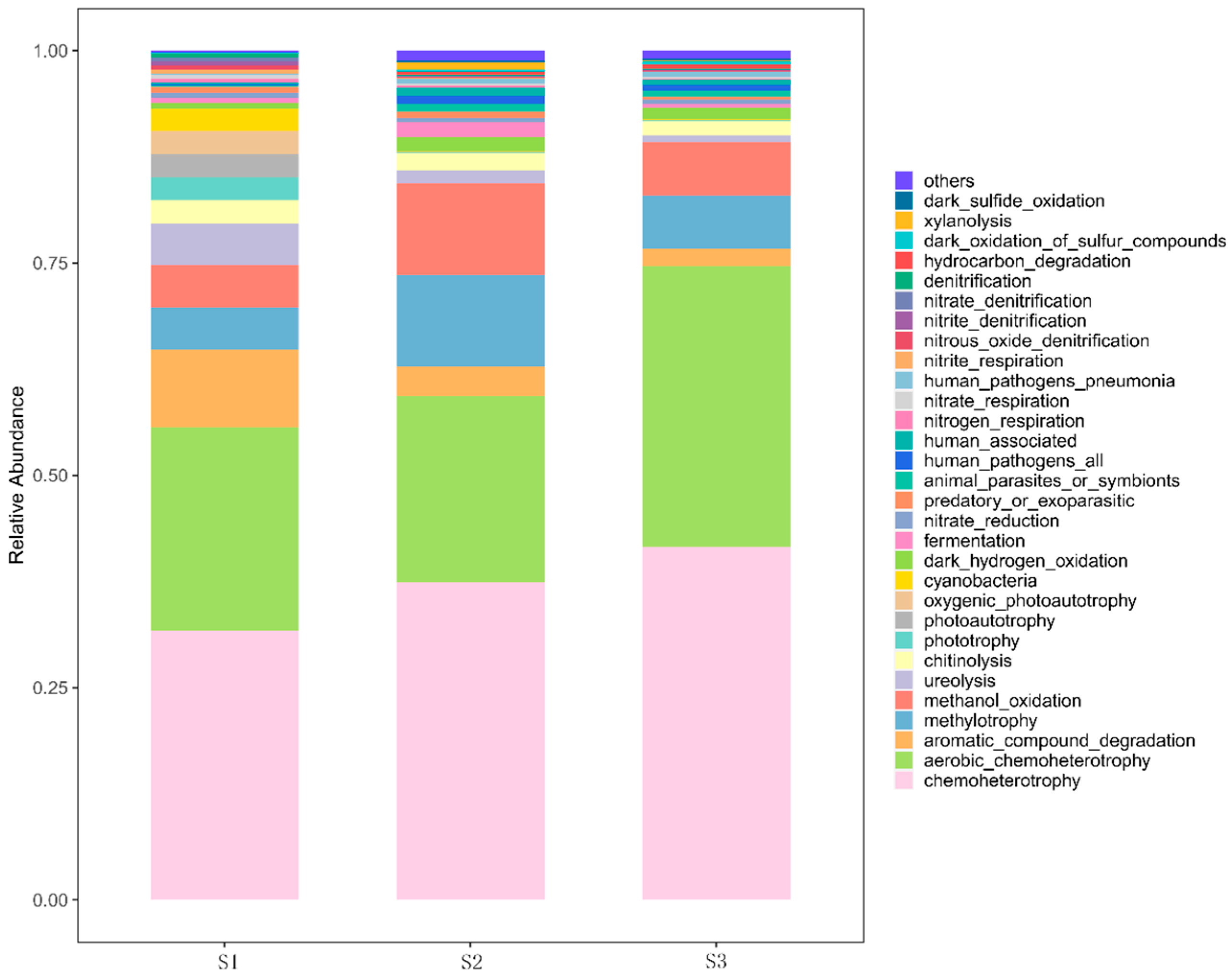
Figure 11 quantifies the relative abundances of functional genes at the phylum level across soil treatments. Comparative analysis of the functional profiles reveals that S1 maintains a stratified functional architecture characterizing pristine soil [36]. Aerobic chemoheterotrophy and nitrate respiration dominate the upper functional strata (0.90 to 1.00 relative abundance), functioning as primary drivers of soil carbon and nitrogen transformation. Intermediate functional tiers (0.60 to 0.75) comprise dark hydrogen oxidation, fermentation, and chitin degradation, constituting a sequential enzymatic cascade for the catabolism of complex organic polymers. Basal functional tiers (0.40 to 0.50) encompass photoautotrophy and aromatic hydrocarbon degradation, indicating that the native soil microbiome retains physiological plasticity to photic energy inputs and xenobiotic compounds, with high functional redundancy and intact biogeochemical processing capacity. In contrast, heavy metal contamination (S2) induced a 35% reduction in aerobic chemoheterotrophy and decreased nitrate respiration to 0.65, indicating cadmium-mediated inhibition of basal respiratory electron transport chain activity. Specifically, dark sulfur compound oxidation and hydrocarbon degradation declined precipitously from 0.80 to less than 0.30, whereas the terminal denitrification step (N2O to N2) increased aberrantly to 0.70. This metabolic perturbation manifests as disrupted electron flux allocation, wherein heavy metal chelation of cytochrome aa3 and nitrate reductase (NAR) active sites diverts electron flow from aerobic respiration to incomplete denitrification pathways with concomitant N2O efflux. Simultaneously, the enzymatic coupling between sulfur oxidation and recalcitrant hydrocarbon mineralization becomes disrupted, potentially compromising the soil’s oxidative capacity for both reduced sulfur species and organic pollutants. Concomitantly, markers for human pathogens and animal parasites increased from near zero to 0.25, suggesting that stress-selected taxa harbor virulence-associated gene clusters, thereby elevating ecological health hazards. LDH-GT amendment (S3) restored aerobic chemoheterotrophy and nitrate respiration to 0.85 and 0.80, respectively, approaching S1 values. This restoration occurs through lattice entrapment of Cd2+ within the LDH interlayers and gradual OH release, which concomitantly reduces free cadmium ion activity and reestablishes cytochrome oxidase enzymatic function. Dark sulfur oxidation and hydrocarbon degradation recovered synchronously to 0.65 to 0.70, reestablishing the metabolic coupling between sulfur cycling and long chain carbon mineralization, while the terminal denitrification step declined to 0.45, indicating normalized electron partitioning and cessation of N2O leakage. Notably, aromatic degradation and urea hydrolysis exceeded S1 levels by 0.05 to 0.10, implying that interlayer CO32− and NH4+ release from LDH-GT provides ephemeral nutrient pulses that stimulate aromatic hydrocarbon degrading and ureolytic microbial populations, generating measurable overcompensation. Although pathogen and parasite markers persisted at 0.10 to 0.15, these values remained significantly below S2 levels, indicating that remediation reconstructs both biogeochemical cycling functions and microbial community safety. Mechanistically, LDH-GT mediates remediation through sequential, quantifiable processes. First, Cd2+ lattice immobilization and localized pH buffering alleviate metal toxicity. Second, cytochrome oxidase reactivation restores aerobic respiratory capacity. Third, functional redundancy reassembly reinstates the native metabolic network perturbed by heavy metal stress, thereby demonstrating the specific material efficacy and ecological engineering applicability of LDH-GT in soil microbiome management.

3.8. Mechanistic Insights

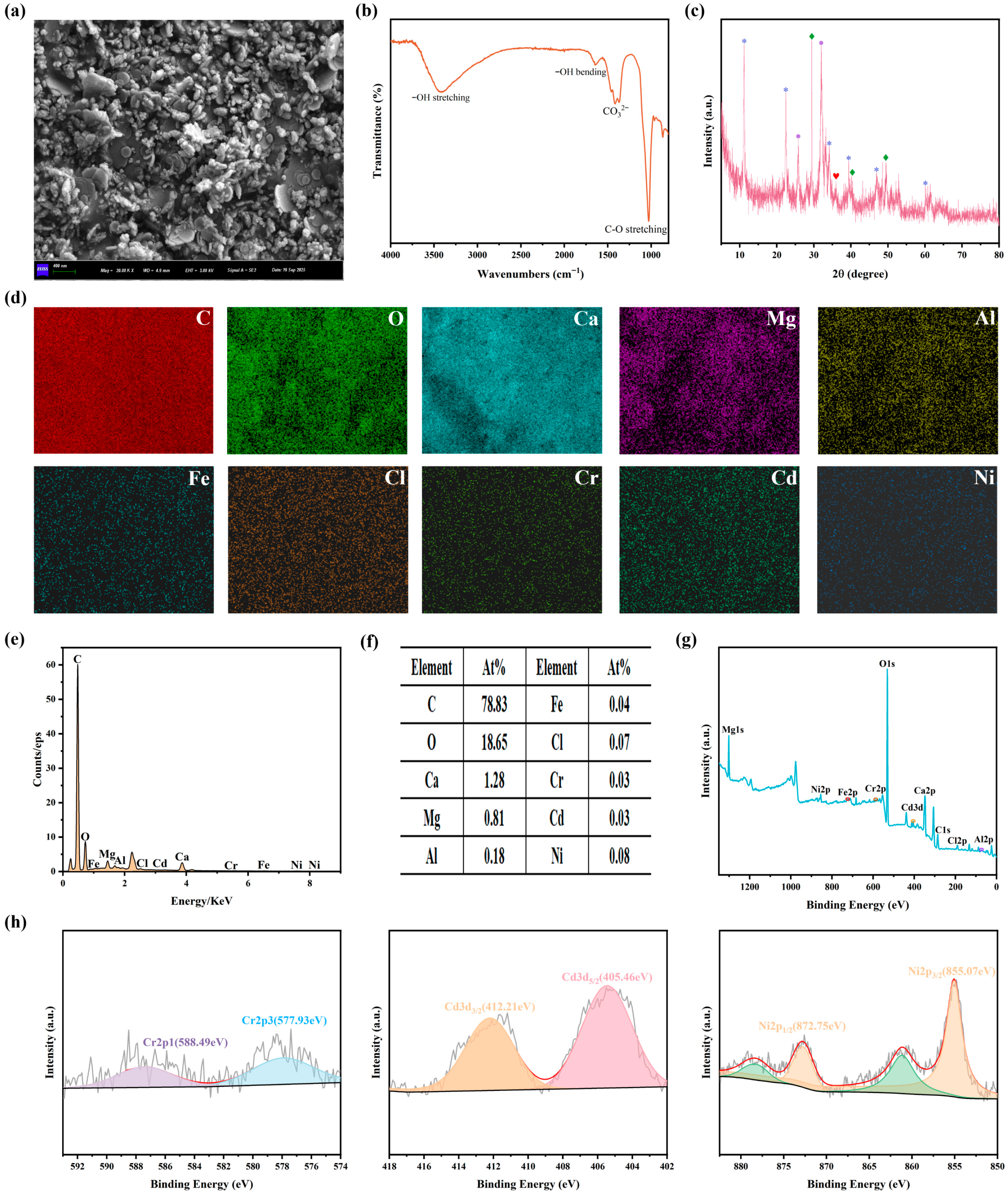
Figure 12a,b present the post-reaction SEM morphology and FTIR spectrum of LDH-GT, respectively. The surface microstructure and the positions of all characteristic functional group peaks remain almost unchanged, indicating that the macroscopic framework is not destroyed during the reaction [37]. XRD results (Figure 12c), however, reveal evident crystal level adjustments. After Cd (II) and Ni (II) adsorption, new reflections at 35.98° correspond to CdCO3 and NiCO3, demonstrating that interlayer CO32− participates in precipitation [38]. Meanwhile, owing to the endogenous CaCO3 in LDH-GT, part of the Cd (II) and Ni (II) can enter the CaCO3 lattice via isomorphic substitution or precipitate on its surface. In addition, the abundant surface hydroxyl groups of LDH can complex both metal ions, enable rapid immobilization and suppress their migration. For Cr (VI), XRD shows that it is captured mainly through interlayer anion exchange. After 24 h, the (003), (006), and (012) peaks are located at 11.17°, 22.42° and 34.15°, respectively, and the basal spacing d(003) is 7.98 Å and repeat distance d(006) is 3.97 Å, both slightly increased, indicating that Cr2O72− replaces Cl in the interlayer [39]. EDS elemental mapping (Figure 12d,e) shows that Cr, Cd, and Ni are homogeneously co-distributed with carbon, oxygen, and chlorine along with metallic species encompassing magnesium, calcium, iron and aluminum. EDS overlays further confirm coordination of the three metals with surface O–H groups [40]. The XPS survey spectrum (Figure 12g) detects lattice metals (Ca, Mg, Al, Fe) and non-metals (C, O, Cl). In the high-resolution spectra (Figure 12h), the Cr2p3/2 (577.93 eV) and Cr2p1/2 (588.49 eV) signals indicate that chromium remains in the form of Cr (VI) after adsorption, with no obvious valence reduction occurring. The characteristic peaks of Cd3d5/2 (405.46 eV) and Cd3d3/2 (412.21 eV), as well as Ni2p3/2 (855.07 eV) and Ni2p1/2 (872.75 eV), demonstrate that Cd2+ and Ni2+ have participated in structural binding [41]. Collectively, these findings demonstrate that Cr (VI) immobilization is predominantly governed by interlayer anion exchange in conjunction with surface adsorption, whereas immobilization of Cd (II) and Ni (II) proceeds via isomorphic substitution, surface complexation and precipitation (Figure 13). Thus, LDH-GT simultaneously fixes Cd (II), Ni (II) and Cr (VI) through a synergistic combination of precipitation, isomorphic substitution, complexation, and anion exchange.

4. Conclusions

In this study, MgCaFeAl layered double hydroxide (LDH-GT) was prepared from coal gangue and phosphate tailings via a 700 °C calcination acid leaching hydrothermal coprecipitation process for simultaneous immobilization of Cr (VI), Cd (II) and Ni (II) in soil. Under the conditions of a total metal load of 150 mg kg−1, dosage of 0.09 g, and pH 6 to 7, the fixation rates of LDH-GT for the three heavy metals were 76.28%, 99.96%, and 99.95%, respectively. The TCLP leaching test showed that the dissolution of heavy metals remained at low levels after treatment, indicating that this material can reduce environmental risks. After three wet–dry alternation and freeze–thaw cycles, the leaching concentrations remained below 0.3 mg L−1, indicating good stability of the material. Speciation analysis results revealed that Cr (VI) was mainly immobilized through interlayer anion exchange and surface complexation, while Cd (II) and Ni (II) were immobilized via isomorphic substitution, surface complexation and precipitation binding mechanisms. Mung bean phytotoxicity tests showed that LDH-GT remediation increased the seed germination rate from 50% to 73%. Root and shoot lengths increased by 1.1- to 1.6-fold, and heavy metal contents in plant tissues decreased by more than 80%. The 16S rRNA sequencing results demonstrated that LDH-GT remediation reversed the decline in microbial diversity caused by heavy metal stress and restored chemoheterotrophic and sulfur cycling functional guilds. This study provides a feasible method for preparing LDH materials from solid waste to remediate multi-heavy-metal-contaminated soil. This method can alleviate the pressure caused by the accumulation of environmental solid pollutants, and its material can be produced on a large scale, possessing certain industrial value. Moreover, this material exhibits excellent remediation performance in heavy metal contamination, providing a feasible route for heavy metal pollution control. Beyond these advantages, the synthesis cost of LDH-GT material by this method is very low, and both the product and byproducts have certain value, offering considerable economic benefits. However, this method also has certain limitations, as it is not possible to precisely control the identical composition content of materials synthesized in different batches.

Supplementary Materials

The following supporting information can be downloaded at: https://www.mdpi.com/article/10.3390/separations13040112/s1, Text S1: Experimental reagent information, Text S2: Preparation of soil samples, Text S3: Simulation of natural aging processes, Text S4: Extraction experiment of Cr(VI), Cd(II) and Ni(II) from soil, Text S5: Characterization and morphology.

Author Contributions

Conceptualization, Q.Y., P.Z. and X.Q.; Methodology, Q.Y.; Software, Q.Y.; Validation, Y.X.; Investigation, Q.Y., X.X. and Y.X.; Resources, P.Z. and X.Q.; Data curation, X.X.; Writing—original draft, Q.Y.; Writing—review & editing, P.Z. and X.Q.; Visualization, X.X.; Supervision, P.Z. and X.Q.; Funding acquisition, X.Q. All authors have read and agreed to the published version of the manuscript.

Funding

This research was funded by the Open Fund of Wuhan Institute of Technology Jingmen Research Institute of New Chemical Materials Industry Technology (Grant No. JM2023001), and the Natural Science Foundation of Hubei Province (2024AFD190).

Data Availability Statement

The raw data supporting the conclusions of this article will be made available by the authors on request.

Acknowledgments

The authors gratefully acknowledge the Shiyanjia Lab (www.shiyanjia.com) for providing XPS analysis.

Conflicts of Interest

The authors declare no conflict of interest.

References

  1. Liu, J.; Wang, Y.; Li, J.; Zhang, H.; Chen, X. Continuous Chamber Gangue Storage for Sustainable Mining in Coal Mines: Principles, Methods, and Environmental Benefits. Sustainability 2025, 17, 6865. [Google Scholar] [CrossRef] [Scilit]
  2. Han, R.; Leng, H.; Luo, H.; Wu, W.; Zhao, Y.; Song, B.; Liu, M.; He, B.J. Turning Waste into Treasure: Preparation, Physical Properties and Microstructure of Alkali-Activated Phosphorus Tailings-Based Fully Solid Waste Non-Sintered Lightweight Aggregates. J. Clean. Prod. 2025, 527, 146693. [Google Scholar] [CrossRef] [Scilit]
  3. Jin, C.; Liu, X.; Chen, B.; Qu, G.; Tian, Y.; Wu, F.; Yang, J.; Xu, R.; Ning, P. Improvement of Ecological Structure and Function in Phosphorus Tailings-Based Soils Through Phosphorus-Solubilizing Bacteria Inoculation and Magnetic Field Treatment. J. Environ. Chem. Eng. 2025, 13, 115239. [Google Scholar] [CrossRef] [Scilit]
  4. Zhang, Y.; Gong, J.; Cao, W.; Qin, M.; Song, B. Influence of Biochar and Fulvic Acid on the Ryegrass-Based Phytoremediation of Sediments Contaminated with Multiple Heavy Metals. J. Environ. Chem. Eng. 2023, 11, 109446. [Google Scholar] [CrossRef] [Scilit]
  5. Liu, X.; Jia, Y.; Sun, J. Experimental Study of High-Voltage Pulse Blasting-Electrokinetic Method for Remediation of Cr, Cd and Pyrene Co-Contaminated Soil. J. Hazard. Mater. 2025, 501, 140804. [Google Scholar] [CrossRef] [Scilit]
  6. Wang, S.; Xu, S.; Zhang, H.; Chen, W.; Jia, H.; Dapaah, M.F.; Cheng, L. Application of Core-Shell Structured Materials Based on Biologically Active Calcium Carbonate for Heavy Metal Management in Contaminated Water Under Acidic Conditions. J. Environ. Manag. 2025, 395, 127903. [Google Scholar] [CrossRef] [Scilit]
  7. Lu, X.; Wei, N.; Fang, H.; Hu, F.; Cheng, J.; Sun, R.; Wang, X. Passivation Remediation of Cd-Contaminated Farmland in Yongkang, China by CaAl-LDH: A Mechanism and Application Study. Agronomy 2025, 15, 2354. [Google Scholar] [CrossRef] [Scilit]
  8. Zhong, Y.; Wang, X.; Tian, W.; Wang, T.; Zou, F.; Cao, W. Active-Passive Synergistic Protection of LDH Functionalized Microcapsules in Construction Steel Coating for Enhanced Anti-Corrosion. Prog. Org. Coat. 2026, 213, 109960. [Google Scholar] [CrossRef] [Scilit]
  9. Dang, V.M.; Van, H.T.; Vinh, N.D.; Duong, T.M.H.; Nguyen, T.B.H.; Nguyen, T.T.; Chu, M.N. Enhancement of Exchangeable Cd and Pb Immobilization in Contaminated Soil Using Mg/Al LDH-Zeolite as an Effective Adsorbent. RSC Adv. 2021, 11, 17007–17019. [Google Scholar] [CrossRef] [Scilit] [PubMed]
  10. Zong, P.; Shao, M.; Cao, D.; Xu, X.; Wang, S.; Zhang, H. Synthesis of Potential Ca-Mg-Al Layered Double Hydroxides Coated Graphene Oxide Composites for Simultaneous Uptake of Europium and Fulvic Acid from Wastewater Systems. Environ. Res. 2020, 196, 110375. [Google Scholar] [CrossRef] [Scilit] [PubMed]
  11. Kouhi, R.M.; Ardejani, F.D.; Tonkaboni, S.Z.S.; Moghaddam, M.M.J.; Butscher, C.; Taherdangkoo, R. Correction: A Life Cycle Assessment Study of Acid Mine Drainage Treatment Using Steel Dust Mineralization Products. Mine Water Environ. 2025, 44, 1. [Google Scholar] [CrossRef] [Scilit]
  12. Kmita, A.; Dańko, R.; Holtzer, M.; Dańko, J.; Królikowski, M.; Garitaonandia, E.; Ibarra, A. Green Industrial Scale Casting Production Using Engineered Molding Materials: Sustainable Strategies to Reduce Process Gas Emissions. Process Saf. Environ. Prot. 2026, 206, 108238. [Google Scholar] [CrossRef] [Scilit]
  13. Hu, N.; Fu, F.; Luo, B.; Ye, Y.; Chen, D.; Ou, Z.; Li, J. Preparation, Characterization and Self-Foaming Mechanism of Total-Tailings-Based Foamed Glass-Ceramics. Ceram. Int. 2023, 49, 31881–31890. [Google Scholar] [CrossRef] [Scilit]
  14. Zhao, P.; Xia, X.; Xiao, Y.; Ye, Q.; Wu, H.; Zhu, R.; Qiu, X. Preparation of Quaternary Layered Double Hydroxides from Coal Gangue and Phosphorus Tailings for Immobilizing Cr(VI) and Cd(II) in Contaminated Soil. Colloids Surf. A 2025, 723, 137340. [Google Scholar] [CrossRef] [Scilit]
  15. Huang, X.; Liu, C.; Liu, Y.; Liu, H.; Sun, H.; Wang, L. Sulfate Concentration Gradient-Modulated the Electron Transfer Number for Efficient Pollutants Electro-Oxidation. J. Water Process Eng. 2025, 79, 109058. [Google Scholar] [CrossRef] [Scilit]
  16. Mehdinia, M.; Asgharnia, H.; Shirmardi, M.; Bahramifar, N.; Tabarinia, H.; Asgharzadeh, F. Enhanced Tetracycline Degradation via Photo-Activated Potassium Persulfate Catalyzed by Cobalt Ferrite/Carbon Nanocomposite. Sci. Rep. 2026, 16, 1852. [Google Scholar] [CrossRef] [Scilit]
  17. Li, Z.; Fang, X.; Yuan, W.; Zhang, X.; Yu, J.; Chen, J.; Qiu, X. Preparing of Layered Double Hydroxide-Alginate Microspheres for Cr(VI)-Contaminated Soil Remediation. Colloids Surf. A 2022, 656, 130655. [Google Scholar] [CrossRef] [Scilit]
  18. Chen, J.; Yang, J.; Wang, X.; Zhang, F.; Li, Y.; Liu, H. Cathode Catalyst Selection for Enhancing Oxygen Reduction Reactions of Microbial Fuel Cells: COF-300@NiAl-LDH/GO and Ti3AlC2/NiCoAl-LDH. Int. J. Hydrogen Energy 2022, 47, 15489–15500. [Google Scholar] [CrossRef] [Scilit]
  19. Profeta, D.O.; da Silva, M.A.; Faria, D.N.; Cipriano, D.F.; Freitas, J.C.; dos Santos, F.S.; Lima, T.M.; Vasconcelos, S.C.; Pietre, M.K. Zeolite/calcium carbonate composite for a synergistic adsorption of cadmium in aqueous solution. Next Mater. 2025, 6, 100493. [Google Scholar] [CrossRef] [Scilit]
  20. Futterlieb, M.; Panglisch, S. Early Detection and Control of CaCO3 Scaling in Closed-Circuit Reverse Osmosis Under Antiscalant-Free Conditions. Desalination 2026, 622, 119622. [Google Scholar] [CrossRef] [Scilit]
  21. Zhang, J.; Hu, W.; Jian, Y.; Zhang, T. The Influence of Precipitated Silica on the Hydration Process of the MgO-SiO2-H2O System. Constr. Build. Mater. 2025, 504, 144640. [Google Scholar] [CrossRef] [Scilit]
  22. Ibrahim, Q.; Gharbia, S. The Electronic Properties and Adsorption Performance of LDH/Graphene, and LDH/g-C3N4 for the Removal of Pharmaceutical Contaminants: A Molecular Dynamics Simulation. Int. J. Mol. Sci. 2024, 25, 12730. [Google Scholar] [CrossRef] [Scilit]
  23. Yan, M.; Mori, T.; Zou, J. TEM and XPS Analysis of CaxCe1−xO2−y (x = 0.05–0.5) as Electrolyte Materials for Solid Oxide Fuel Cells. Acta Mater. 2009, 57, 722–731. [Google Scholar] [CrossRef] [Scilit]
  24. Sivakumar, M.; Kunthakudee, N.; Srifa, A.; Gebreegziabher, H.G.; Rungtaweevoranit, B.; Fukuhara, C.; Ratchahat, S. Effects of Promoters (Mg, Zr, Y, Ce) on LDH-Derived NiAl Nanosheets for Low-Temperature CO2 Methanation. Int. J. Hydrogen Energy 2026, 209, 153523. [Google Scholar] [CrossRef] [Scilit]
  25. Ogata, F.; Ueta, E.; Tominaga, H.; Iwata, Y. Characteristics of a Novel Adsorbent Fe-Mg-Type Hydrotalcite and Its Adsorption Capability of As(III) and Cr(VI) from Aqueous Solution. J. Ind. Eng. Chem. 2018, 65, 243–250. [Google Scholar] [CrossRef] [Scilit]
  26. Ahmad, A.; Shoaib, M.; Zairov, R.R.; He, Y.; Zi, X.; Raziq, F.; Rahman, M.Z. Binder-Free In-Situ Grown NiFe-LDH Anode Renders Stable, Low Resistance, and High Current Density for Oxygen Evolution Reaction. Int. J. Hydrogen Energy 2026, 209, 153566. [Google Scholar] [CrossRef] [Scilit]
  27. Niu, X.J.; Qian, G.S.; Bai, Y.; Sun, S.B.; Zhou, L.; Jiao, W.Y.; Li, J.S. Electronic Modulation of Nitride/Hydroxide Heterostructure for Long-Lasting Urea Oxidation Reaction Over 1000 h. Chem. Eng. J. 2026, 529, 173038. [Google Scholar] [CrossRef] [Scilit]
  28. Gao, J.; Jin, J.; Wang, D.; Lei, S.; Lu, J.; Xiao, H.; Li, H. Mechanical and Microstructural Properties of Schist Exposed to Freeze-Thaw Cycles, Dry-Wet Cycles, and Alternating Actions. Int. J. Min. Sci. Technol. 2025, 35, 783–800. [Google Scholar] [CrossRef] [Scilit]
  29. Guo, H.; Sun, Y.; Sun, C.; Liu, J.; Zhang, P.; Wang, L. Experimental Study on Shear Strength and Deterioration Behavior of Silty Clay Under Dry-Wet-Freeze-Thaw Cycles. Sci. Rep. 2025, 15, 12466. [Google Scholar] [CrossRef] [Scilit] [PubMed]
  30. Kumkrong, P.; Mihai, O.; Mercier, P.H.J.; Tessier, A. Tessier Sequential Extraction on 17 Elements from Three Marine Sediment Certified Reference Materials (HISS-1, MESS-4, and PACS-3). Anal. Bioanal. Chem. 2021, 413, 1–11. [Google Scholar] [CrossRef] [Scilit] [PubMed]
  31. Lapp, F.; Schäfer, L.; Brück, F.; Göske, J.; Dohrmann, R.; Mansfeldt, T.; Weigand, H. Accelerated Carbonation of Fresh and Aged Chromite Ore Processing Residues (COPR): Enhanced Cr(VI) Release and Impact on Layered Double Hydroxides (LDH). J. Environ. Chem. Eng. 2026, 14, 121038. [Google Scholar] [CrossRef] [Scilit]
  32. Cui, C.; Zeng, L.; Liu, X.; Li, H.; Jiang, B.; Guo, D.; Xie, Y. A N-Doped Red Mud-Biochar Magnetic Composite for Highly Efficient Cd2+ Removal: Adsorption Performance and Mechanism. J. Anal. Appl. Pyrol. 2026, 195, 107705. [Google Scholar] [CrossRef] [Scilit]
  33. Li, Y.; Mao, X.; Liang, Y.; Liu, J.; Zhang, Y. A Comparison of Adsorption Capacity of Chitosan–Rhamnolipid–Hydrotalcite-Like Compound Composites Synthesized by Two Methods Towards Highly Efficient Removal of Cu(II) Ions. Colloids Surf. A 2025, 716, 136710. [Google Scholar] [CrossRef] [Scilit]
  34. Li, Y.; Huang, J.; Liu, S.; He, W.; Liu, Z.; Hu, J.; Li, X. A Bridge Between the Lead Release from Masterbatch Microplastics and Ecological Effects: From Surface Release to Plant Toxicity. Environ. Res. 2026, 293, 123812. [Google Scholar] [CrossRef] [Scilit]
  35. Dassen, S.; Cortois, R.; Martens, H.; de Hollander, M.; Kowalchuk, G.A.; van der Putten, W.H.; De Deyn, G.B. Differential Responses of Soil Bacteria, Fungi, Archaea and Protists to Plant Species Richness and Plant Functional Group Identity. Mol. Ecol. 2017, 26, 4085–4098. [Google Scholar] [CrossRef] [Scilit]
  36. Zhang, J.; Shen, J.L. Effects of Biochar on Soil Microbial Diversity and Community Structure in Clay Soil. Ann. Microbiol. 2022, 72, 1–14. [Google Scholar] [CrossRef] [Scilit]
  37. Wu, L.; Sun, M.; Wang, X.; Lu, Y.; Tang, N.; Gao, L.; Hu, L. Preparation and Corrosive Anion-Curing Capability of Layered Double Hydroxide (LDH)/Montmorillonite Composites. Clays Clay Miner. 2023, 71, 461–477. [Google Scholar] [CrossRef] [Scilit]
  38. Zhou, W.; Zhu, Y.; Achal, V. Biogenic Seashell Powders as Effective Adsorbents for Cadmium Removal from Aqueous Solutions. J. Water Process Eng. 2025, 76, 108221. [Google Scholar] [CrossRef] [Scilit]
  39. Hubale, V.; Dalvi, A.; Nille, O.; Kolekar, G.; Sawant, V. Zn(II)/Cd(II) MOFs as Multifunctional Fluorescent Sensors for Sensitive Detection of Al3+, Cr2O72− and Glucose. J. Mol. Struct. 2026, 1356, 145089. [Google Scholar] [CrossRef] [Scilit]
  40. Slivinska, K.; Demeshkant, V.; Zyzak, M.; Karbowiak, G. First Evidence of Elemental Accumulation Patterns in the Hard Tick Dermacentor Reticulatus Exoskeleton Using EDS Analysis: Insights into Bioindicator Potential Across Diverse Habitats in Poland and Ukraine. Sci. Total Environ. 2026, 1013, 181335. [Google Scholar] [CrossRef] [Scilit] [PubMed]
  41. Rotonnelli, B.; Brige, A.; Oshchepkov, A.G.; Gallet, J.J.; Bournel, F.; Bonnefont, A.; Asset, T. Methodological Insights into the Dip-and-Pull X-ray Photoelectron Spectroscopy Technique: Analysing Electrochemical Interfaces Under In Situ/Operando Conditions. J. Synchrotron Radiat. 2026, 33, 130–141. [Google Scholar] [CrossRef] [Scilit] [PubMed]
Figure 1. Schematic diagram of the synthesis process of LDH-GT and white carbon black.
Separations 13 00112 g001
Figure 2. (a) SEM image (morphology and structural information of LDH-GT); (b) XRD pattern; (c) FTIR spectra; (d) XPS total spectrum; (e) narrow spectrum scanning of Ca, Mg, Al and Fe elements.
Separations 13 00112 g002
Figure 3. Effect of metal concentration in soil on immobilization efficiency (reaction time: 24 h; dosage: 0.09 g).
Separations 13 00112 g003
Figure 4. Effect of different dosages on immobilization efficiency (reaction time: 24 h; metal concentration in soil: 150.0 mg/kg).
Separations 13 00112 g004
Figure 5. Effect of initial soil pH on the immobilization efficiency (reaction time: 24 h; metal concentration in soil: 150.0 mg/kg; dosage: 0.09 g).
Separations 13 00112 g005
Figure 6. TCLP leachability before and after LDH-GT treatment at different reaction times (metal concentration in soil: 150.0 mg/kg; dosage: 0.09g).
Separations 13 00112 g006
Figure 7. The leaching of Cr (VI), Cd (II) and Ni (II) after three cycles (metal concentration in soil: 150.0 mg/kg; dosage: 0.09 g).
Separations 13 00112 g007
Figure 8. Percentages of different forms of Cr, Cd and Ni (II) in soil before and after treatment (metal concentration in soil: 150.0 mg/kg).
Separations 13 00112 g008
Figure 9. (a) Photos of a 7-day plant culture process in different soil samples; (b) statistics of plant root and stem length in different soil samples (S-1, S-2, and S-3 were clean soil, polluted soil, and LDH-GT-remediated soil).
Separations 13 00112 g009
Figure 10. Sparse curves of different soil samples (S1, S2, and S3 were clean soil, polluted soil, and LDH-GT-remediated soil).
Separations 13 00112 g010
Figure 11. Relative abundances of functional guilds in soil microbial communities across treatments (S1, S2, and S3 were clean soil, polluted soil, and LDH-GT-remediated soil).
Separations 13 00112 g011
Figure 12. After the reaction: (a) SEM image (morphology and structural information of LDH-GT); (b) FTIR spectra; (c) XRD pattern; (d) EDS image; (e) surface total spectrum; (f) atomic percentage of each element; (g) XPS spectra; (h) elemental narrow-band scan.
Separations 13 00112 g012
Figure 13. Diagram of the mechanism of immobilization of Cr (VI), Cd (II) and Ni (II) by LDH-GT.
Separations 13 00112 g013
Table 1. Mass percentages (%) of major oxides in the raw materials.
CaOMgOAl2O3Fe2O3SiO2K2ONa2O
Coal gangue3.070.2314.541.7164.701.450.14
Phosphorus tailings57.8119.791.431.807.690.650.16
Table 2. Germination rates of mung beans in different soil samples, total dry weight (g) of mung beans roots and shoots, and the content of Cr (VI), Cd (II) and Ni (II) in seedlings (mg/L).
S1S2S3
Germination rate (%)96.675073.33
Dry weight (g)1.5460.6241.322
Root (Cr)056698
Stem (Cr)02.70.48
Leaf (Cr)02.20.41
Root (Cd)024248.23
Stem (Cd)016.454.23
Leaf (Cd)033.457.56
Root (Ni)019942.66
Stem (Ni)014.233.01
Leaf (Ni)029.126.64
Table 3. Statistical indices of soil microbial diversity.
Sample IDRichnessChao1ACEShannonSimpsonGoods_Coverage
S111231170.51153.284.910.97400.9994
S211211163.581152.863.560.89360.9993
S311341170.171159.884.720.95120.9995
Disclaimer/Publisher’s Note: The statements, opinions and data contained in all publications are solely those of the individual author(s) and contributor(s) and not of MDPI and/or the editor(s). MDPI and/or the editor(s) disclaim responsibility for any injury to people or property resulting from any ideas, methods, instructions or products referred to in the content.