
Comprehensive Discovery and Characterization of Chemical Constituents in Huangqintang Decoction Using Off-Line Two-Dimensional Liquid Chromatography and High-Resolution Mass Spectrometry

 ,
,
Abstract
1. Introduction
2. Results
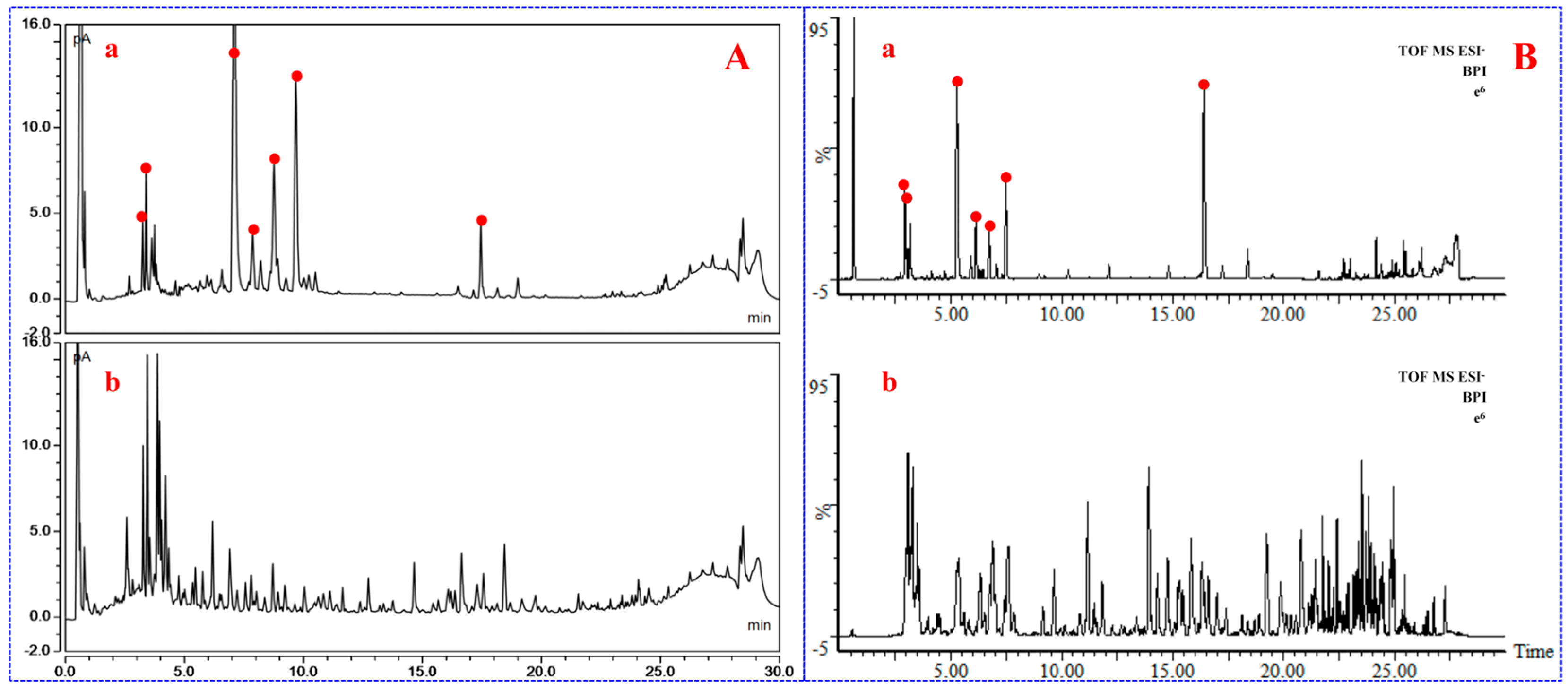
2.1. Enrichment of Trace Components
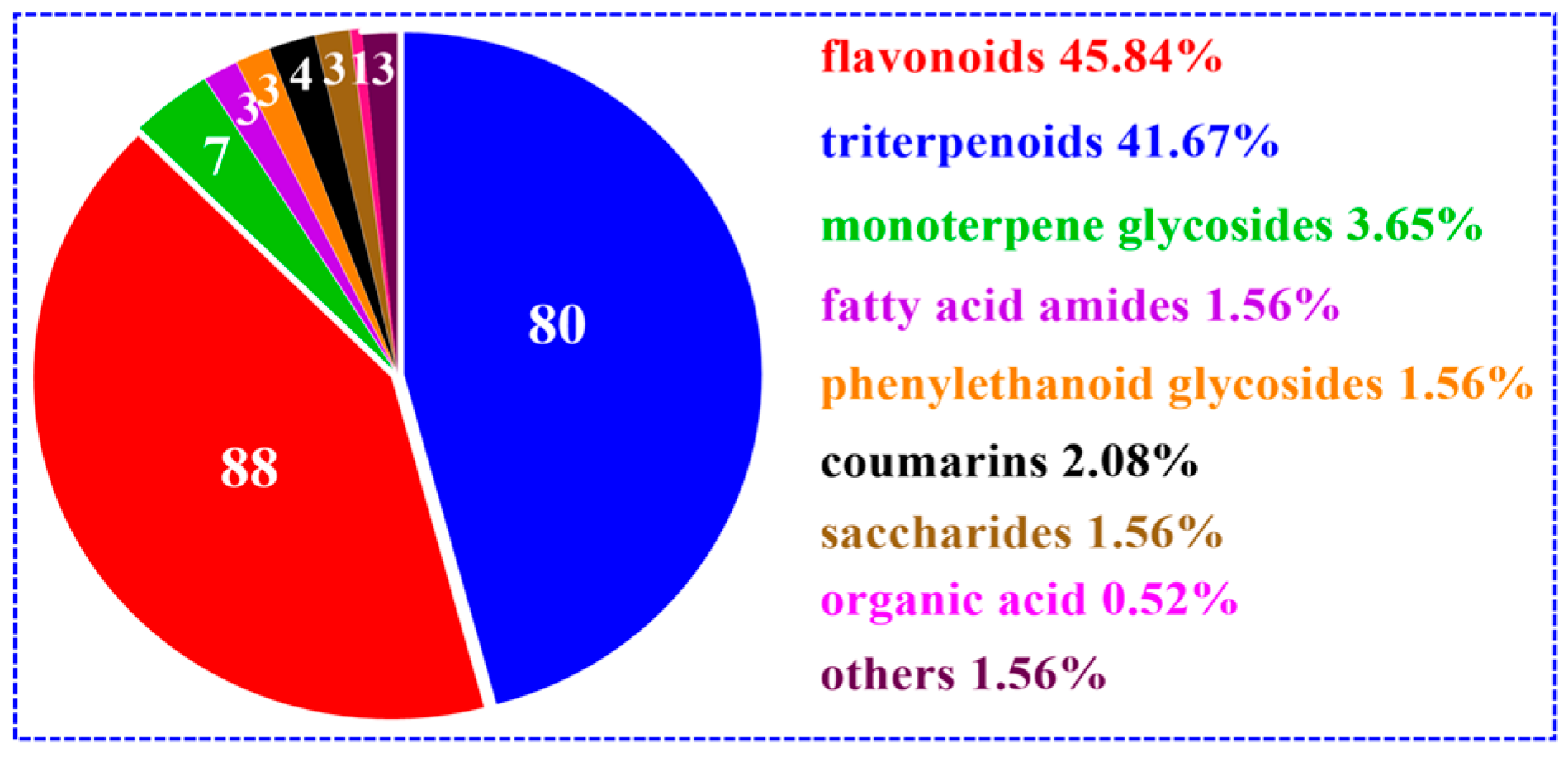
2.2. Workflow of Chemical Constituents Identification in HQD
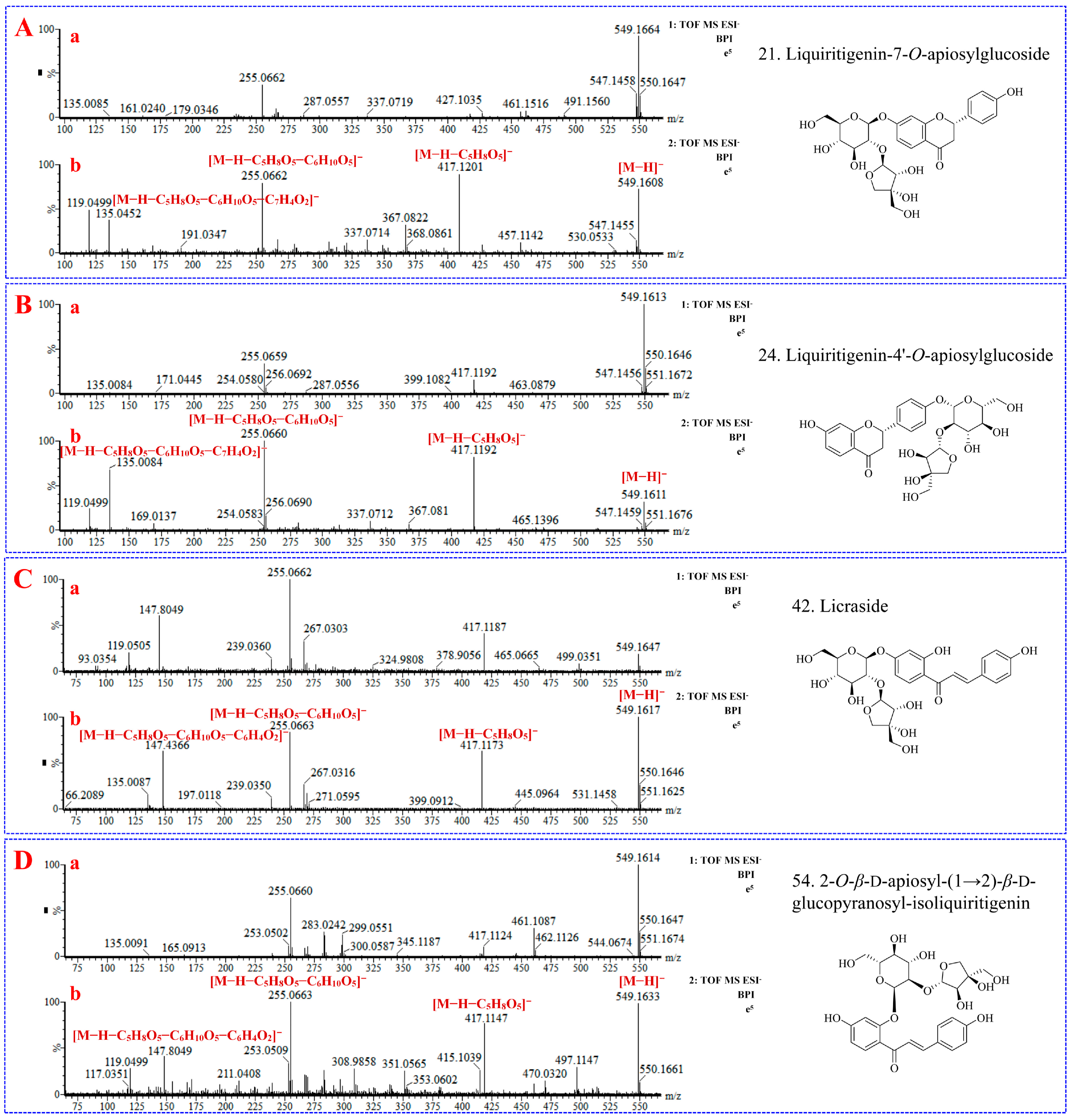
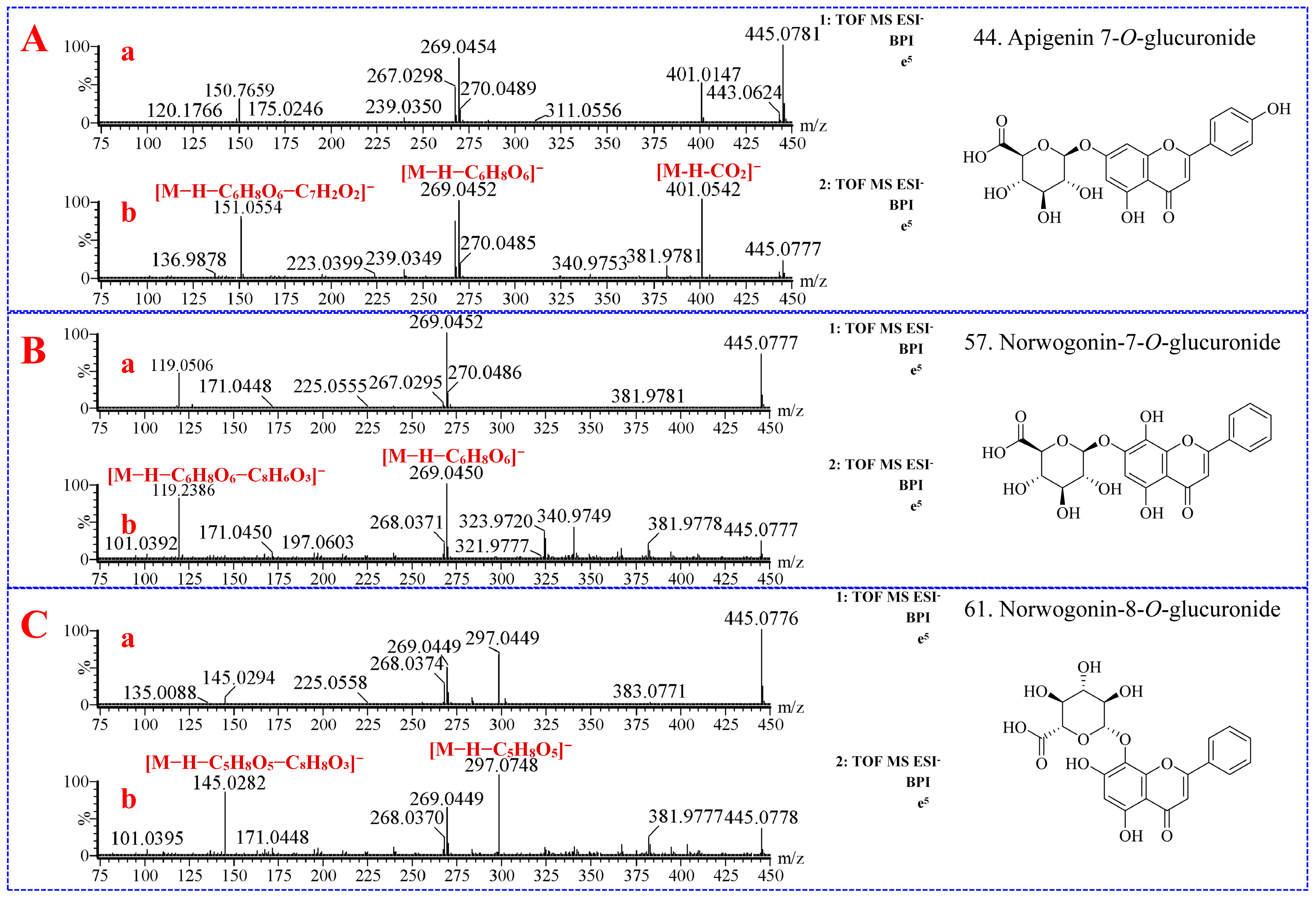
2.2.1. Characterization of Flavonoid Constituents in HQD
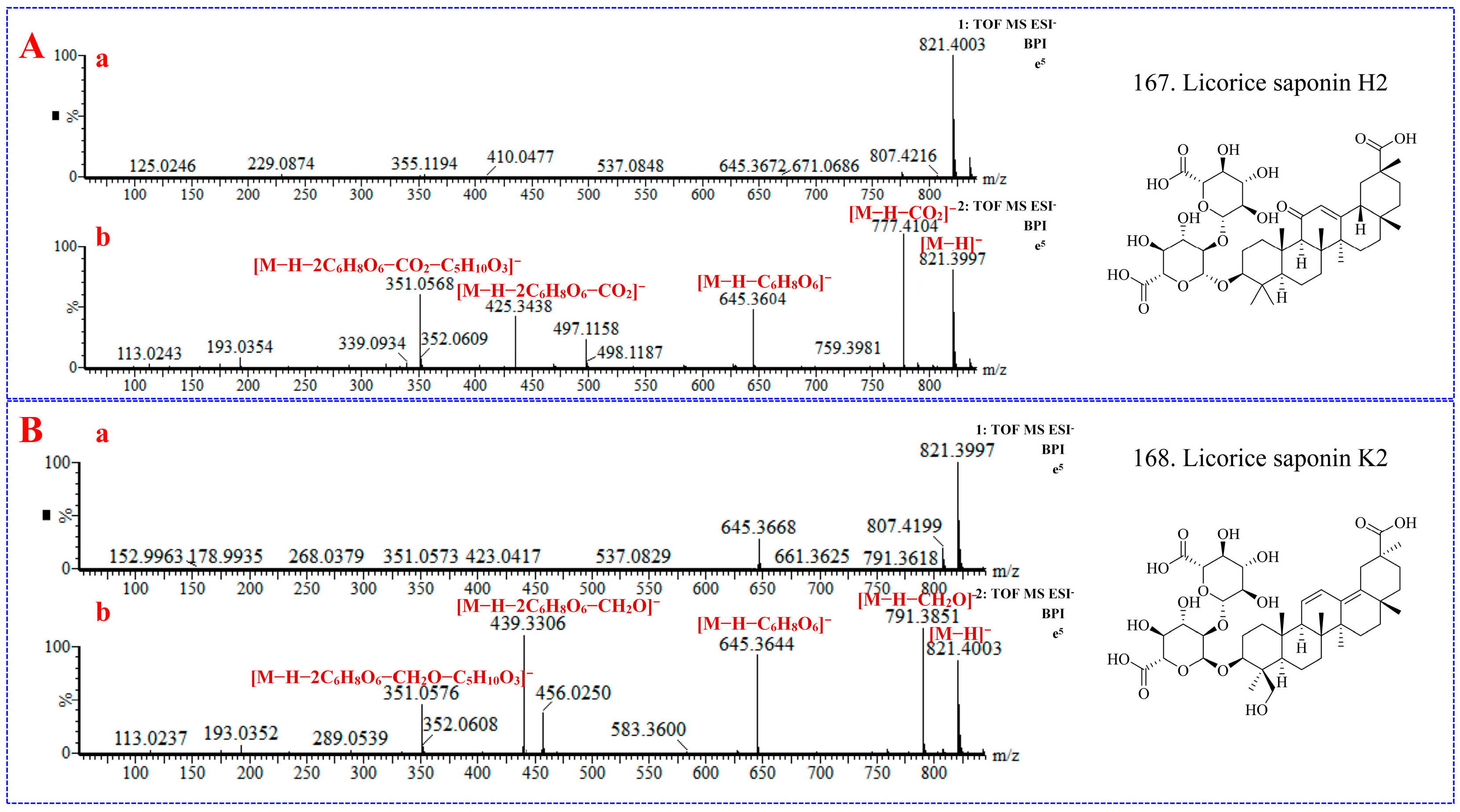
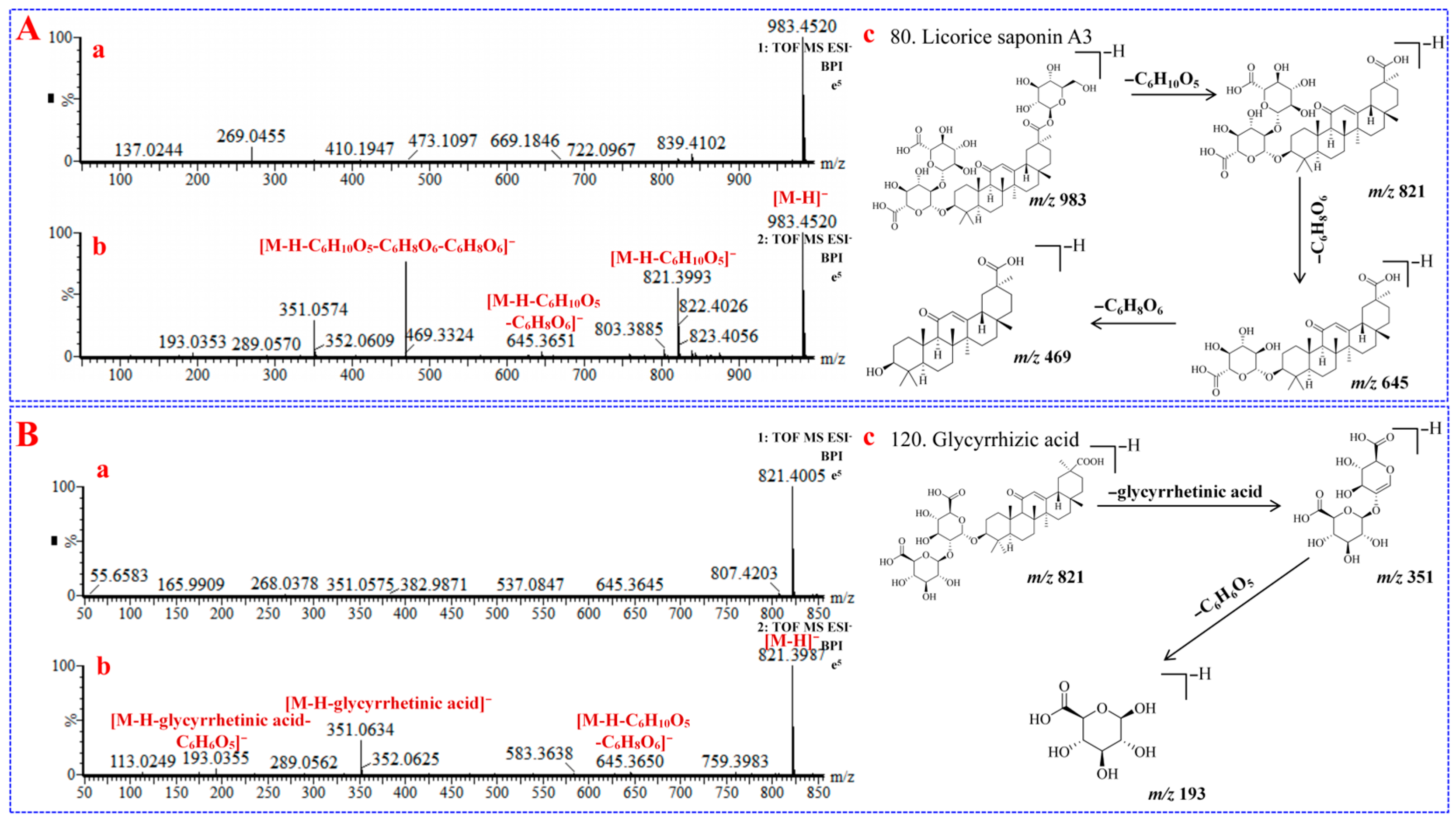
2.2.2. Characterization of Triterpenoid Constituents in HQD
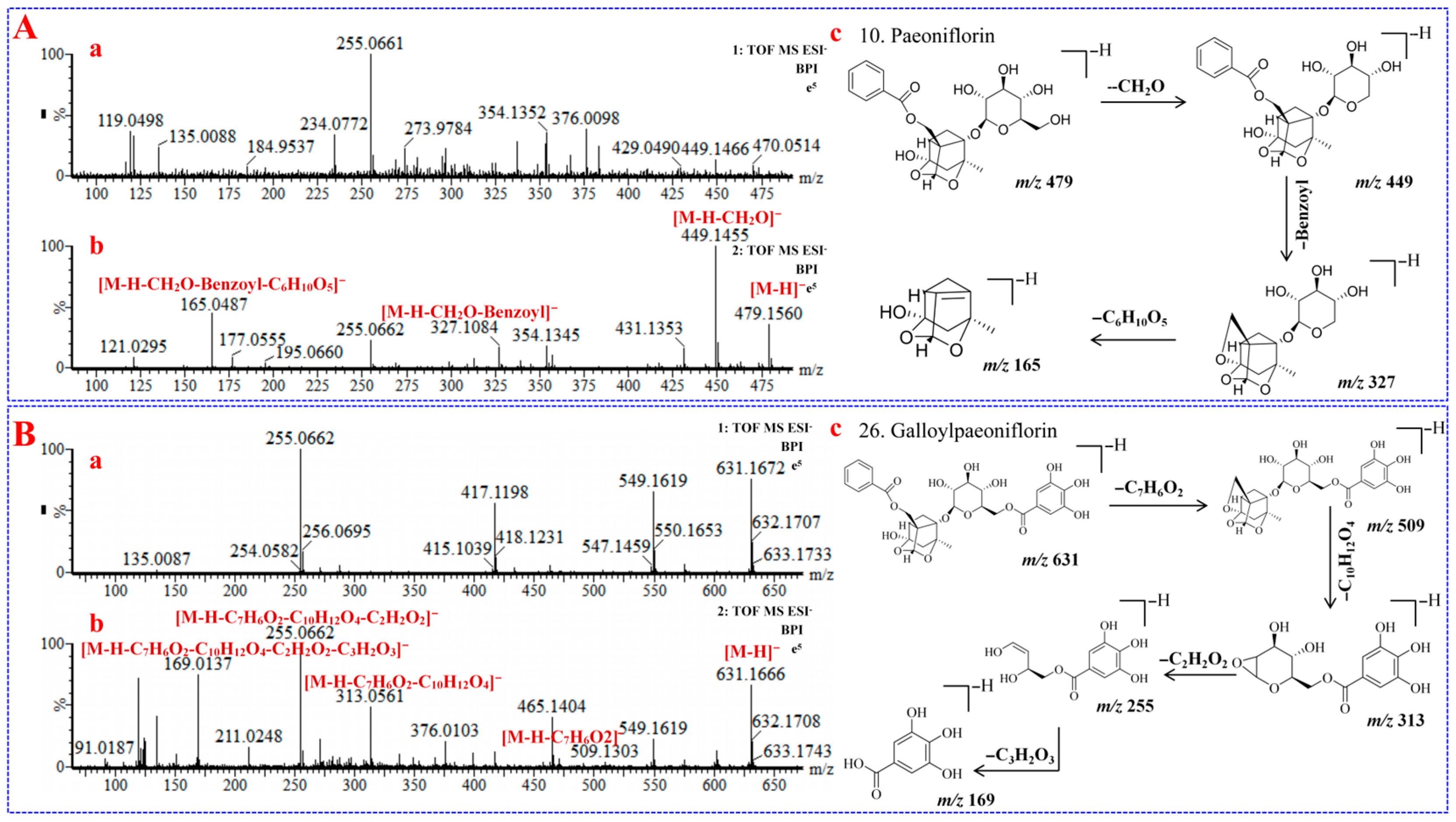
2.2.3. Characterization of Monoterpene Glycoside Constituents in HQD
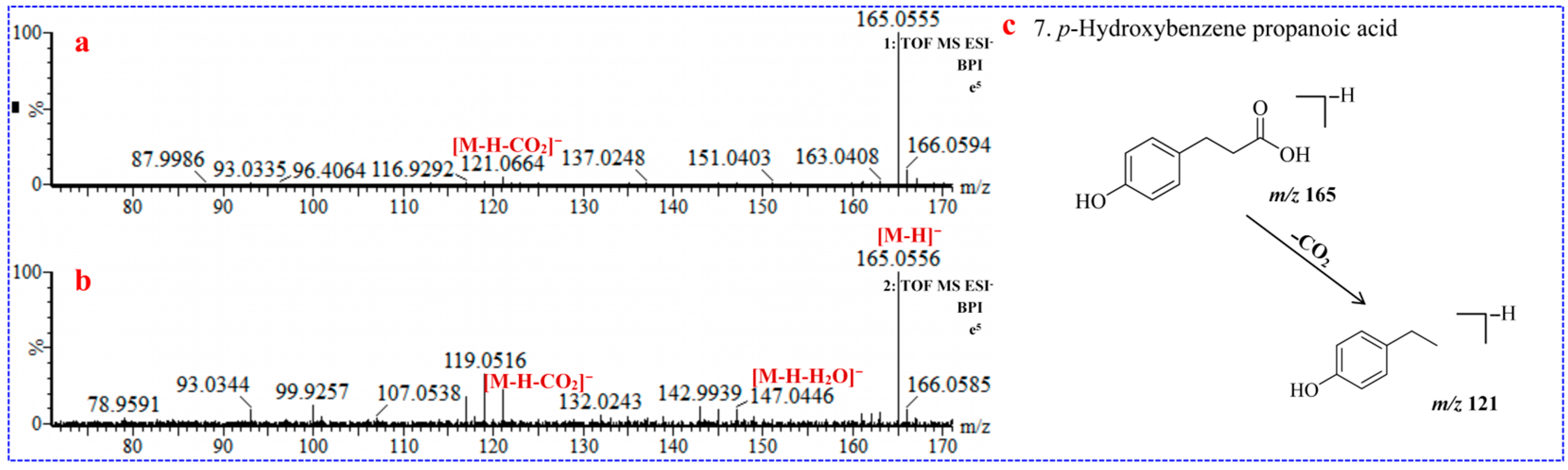
2.2.4. Characterization of Organic Acids Constituents in HQD
3. Discussion
4. Materials and Methods
4.1. Reagents, Chemicals, and Plant Materials
4.2. Preparation of Sample Solutions
4.3. Sample Preparation
4.4. UHPLC-Q-TOF/MS Analysis Conditions
4.5. Date Processing and Analysis
5. Conclusions
Supplementary Materials
Author Contributions
Funding
Institutional Review Board Statement
Informed Consent Statement
Data Availability Statement
Acknowledgments
Conflicts of Interest
Abbreviations
| TCPs | traditional Chinese prescriptions |
| TCM | traditional Chinese medicine |
| HQD | Huangqin decoction |
| SR | Scutellariae Radix |
| PRR | Paeoniae Radix Rubra |
| GRR | Glycyrrhizae Radix et Rhizoma |
| JF | Jujubae Fructus |
| CAD | charged aerosol detector |
| VFC | vanquish fraction collector |
| UV | ultraviolet |
| UHPLC-Q-TOF/MS | ultra-high performance liquid chromatography-quadrupole time-of-flight mass spectrometry |
| ESI | electrospray ionization |
| BPI | base peak ion |
| RT | retention time |
| CID | collision-induced dissociation |
| FWHM | full width at half maximum |
References
- Wang, Z.B.; Tang, W.; Tong, K.; Huang, W.J.; Chen, B.B.; Qiao, S.J.; Han, H.R.; Li, X.D.; Wang, Y. Thinking on compatibility of prescription and drugs based on perspective of combination of disease, syndrome, and symptom. J. Beijing Univ. Tradit. Chin. Med. 2024, 47, 929–933. [Google Scholar]
- Ding, Y.; Hong, Y.L.; Qi, F.J.; Gan, S.Y.; Wang, Z.J.; Zuo, X.H.; Zhao, Y. The innovative application of “Jun (emperor)—Chen (minister)—Zuo (adjuvant)—Shi (courier)” in clinical practice. Lishizhen Med. Mater. Medica Res. 2022, 33, 1178–1179. [Google Scholar] [CrossRef]
- Liu, L.W.; Tang, M.; Zhang, Z.B.; Zhou, P.P.; Xue, L.P.; Jia, Q.Q.; Zhao, L.G.; Zuo, L.H.; Sun, Z. A stepwise integrated strategy to explore quality markers of Qishen Yiqi dripping pills against myocardial ischemia. Phytomedicine 2024, 135, 156182. [Google Scholar] [CrossRef]
- Wang, X.; Zhang, X.; Li, J.; Fu, J.; Zhao, M.; Zhang, W.; Weng, W.; Li, Q. Network pharmacology and LC-MS approachs to explore the active compounds and mechanisms of Yuanjiang decoction for treating bradyarrhythmia. Comput. Biol. Med. 2023, 152, 106435. [Google Scholar] [CrossRef]
- Guo, T.J.; Yuan, X.; Zou, Y.H.; Li, H.J.; Chen, Y.H.; Qing, Y.; Zheng, Y.F.; Liao, W. Modern research progress on classic formula Huangqin Decoction. Chin. Tradit. Herb. Drugs 2025, 56, 1414–1427. [Google Scholar]
- Wang, L.F. Research progress on classical prescription of Huangqin Decoction. Chin. Med. Mod. Distance Educ. China 2020, 18, 191–194. [Google Scholar] [CrossRef]
- Gu, S.H.; He, M.; Zhu, R.H.; Li, L.; Zhang, T. Historical evolution and key information research of classic Chinese formula Huangqin Decoction. Shanghai J. Tradit. Chin. Med. 2024, 58, 23–30. [Google Scholar] [CrossRef]
- Wang, E.; Bussom, S.; Chen, J.G.; Quinn, C.; Bedognetti, D.; Lam, W.; Guan, F.; Jiang, Z.; Mark, Y.; Zhao, Y.D.; et al. Interaction of a traditional Chinese medicine (PHY906) and CPT-11 on the inflammatory process in the tumor microenvironment. BMC Med. Genom. 2011, 4, 38. [Google Scholar] [CrossRef]
- Lam, W.; Jiang, Z.; Guan, F.; Hu, R.; Liu, S.H.; Chu, E.; Cheng, Y.C. The number of intestinal bacteria is not critical for the enhancement of antitumor activity and reduction of intestinal toxicity of irinotecan by the Chinese herbal medicine PHY906 (KD018). BMC Complement. Altern. Med. 2014, 14, 490. [Google Scholar] [CrossRef]
- Lam, W.; Bussom, S.; Guan, F.; Jiang, Z.; Zhang, W.; Gullen, E.A.; Liu, S.H.; Cheng, Y.C. The four-herb Chinese medicine PHY906 reduces chemotherapy-induced gastrointestinal toxicity. Sci. Transl. Med. 2010, 2, 45–59. [Google Scholar] [CrossRef]
- Lam, W.; Jiang, Z.; Guan, F.; Huang, X.; Hu, R.; Wang, J.; Bussom, S.; Liu, S.H.; Zhao, H.; Yen, Y.; et al. PHY906(KD018), an adjuvant based on a 1800-year-old Chinese medicine, enhanced the anti-tumor activity of Sorafenib by changing the tumor microenvironment. Sci. Rep. 2015, 5, 9384. [Google Scholar] [CrossRef]
- Yang, X.; Lam, W.; Jiang, Z.; Guan, F.; Han, X.; Hu, R.; Cai, W.; Cheng, W.; Liu, S.H.; Cheng, P.; et al. YIV-906 potentiated anti-PD1 action against hepatocellular carcinoma by enhancing adaptive and innate immunity in the tumor microenvironment. Sci. Rep. 2021, 11, 13482. [Google Scholar] [CrossRef]
- Lam, W.; Hu, R.; Liu, S.H.; Cheng, P.; Cheng, Y.C. YIV-906 enhances nuclear factor of activated T-cells (NFAT) activity of T cells and promotes immune checkpoint blockade antibody action and CAR T-cell activity. Front. Pharmacol. 2023, 13, 1095186. [Google Scholar] [CrossRef]
- Li, M.X.; Li, M.Y.; Lei, J.X.; Wu, Y.Z.; Li, Z.H.; Chen, L.M.; Zhou, C.L.; Su, J.Y.; Huang, G.X.; Huang, X.Q.; et al. Huangqin decoction ameliorates DSS-induced ulcerative colitis: Role of gut microbiota and amino acid metabolism, mTOR pathway and intestinal epithelial barrier. Phytomedicine 2022, 100, 154052. [Google Scholar] [CrossRef]
- Huang, S.; He, J.; Chen, Y.; Wang, X.; Li, Y.; Su, Y.; Wen, R.; Li, X.; Yang, G.; Luo, S.; et al. Effect of Huangqin decoction on regulating intestinal flora in colitis mice characterized as inhibition of the NOD2-dependent pathway. Pharm. Biol. 2022, 60, 108–118. [Google Scholar] [CrossRef]
- Li, M.Y.; Li, M.X.; Xu, N.; Li, Z.H.; Zhang, Y.M.; Gan, Y.X.; Luo, H.J.; Zhou, C.L.; Liu, Y.H.; Su, Z.R.; et al. Effects of Huangqin Decoction on ulcerative colitis by targeting estrogen receptor alpha and ameliorating endothelial dysfunction based on system pharmacology. J. Ethnopharmacol. 2021, 271, 113886. [Google Scholar] [CrossRef] [PubMed]
- Wang, D.; Ma, X.; Guo, S.; Wang, Y.; Li, T.; Zou, D.; Song, H.; Yang, W.; Ge, Y. Effect of Huangqin Tang on urine metabolic profile in rats with ulcerative colitis based on UPLC-Q-Exactive Orbitrap MS. Evid.-Based Complement. Altern. Med. 2020, 2020, 1874065. [Google Scholar] [CrossRef]
- Yan, B.F.; Pan, L.F.; Quan, Y.F.; Sha, Q.; Zhang, J.Z.; Zhang, Y.F.; Zhou, L.B.; Qian, X.L.; Gu, X.M.; Li, F.T.; et al. Huangqin decoction alleviates lipid metabolism disorders and insulin resistance in nonalcoholic fatty liver disease by triggering Sirt1/NF-κB pathway. World J. Gastroenterol. 2023, 29, 4744–4762. [Google Scholar] [CrossRef]
- Yan, B.F.; Wang, Y.; Wang, W.B.; Ding, X.J.; Wei, B.; Liu, S.J.; Fu, T.M.; Chen, L.; Zhang, J.Z.; Liu, J.; et al. Huangqin decoction mitigates hepatic inflammation in high-fat diet-challenged rats by inhibiting TLR4/NF-κB/NLRP3 pathway. J. Ethnopharmacol. 2023, 303, 115999. [Google Scholar] [CrossRef]
- Wang, J.; Li, R.; Zhang, M.; Gu, C.; Wang, H.; Feng, J.; Bao, L.; Wu, Y.; Chen, S.; Zhang, X. Influence of Huangqin Decoction on the immune function and fecal microbiome of chicks after experimental infection with Escherichia coli O78. Sci. Rep. 2022, 12, 16632. [Google Scholar] [CrossRef]
- Xu, X.; Fang, C.; Wang, Y.; Lu, F.; Liu, S. Integrating network pharmacology and metabolomics to elucidate the mechanism of action of Huang Qin Decoction for treament of diabetic liver injury. Front. Pharmacol. 2022, 13, 899043. [Google Scholar] [CrossRef]
- Gao, L.; Zhang, A.P.; Fu, L.; Li, Q.W.; Qin, X.M.; Zhao, J. Huangqin decoction attenuates spared nerve injury (SNI)-induced neuropathic pain by modulating microglial M1/M2 polarization partially mediated by intestinal nicotinamide metabolism. Phytomedicine 2024, 129, 155594. [Google Scholar] [CrossRef]
- Gao, L.; Cao, M.; Du, G.H.; Qin, X.M. Huangqin Decoction exerts beneficial effects on rotenone-induced rat model of Parkinson’s disease by improving mitochondrial dysfunction and alleviating metabolic abnormality of mitochondria. Front. Aging Neurosci. 2022, 14, 911924. [Google Scholar] [CrossRef] [PubMed]
- Schilling, K.; Holzgrabe, U. Recent applications of the charged aerosol detector for liquid chromatography in drug quality control. J. Chromatogr. A 2020, 1619, 460911. [Google Scholar] [CrossRef]
- Wu, L.; Gong, X.; Qu, H. An optimization strategy for charged aerosol detection to linearize the detector response in the multicomponent quantitative analysis of Qishen Yiqi dripping pills. J. Sep. Sci. 2024, 47, e2300784. [Google Scholar] [CrossRef]
- Rosentreter, U.; Huber, U. Optimal fraction collecting in preparative LC/MS. J. Comb. Chem. 2004, 6, 159–164. [Google Scholar] [CrossRef] [PubMed]
- Song, J.; Liu, S.; Sun, M.; Tu, G.; Zhang, Z.; Liu, Y.; Nan, Y.; Shen, G.; Chen, X.; Liang, H.; et al. Isolation and structural elucidation of immunomodulatory oligosaccharides from Trillium tschonoskii. Glycoconj. J. 2026, 43, 8. [Google Scholar] [CrossRef] [PubMed]
- Yao, L.; Wang, X.; Nan, Y.; Liang, H.Z.; Wang, M.Y.; Song, J.; Chen, X.J.; Ma, B.P. Exploring the chemical compositions of Fufang Yinhua Jiedu granules based on ultra-high-performance liquid chromatography coupled to quadrupole time-of-flight mass spectrometry combined with multistage intelligent data annotation strategy. J. Chromatogr. A 2024, 1728, 465010. [Google Scholar] [CrossRef]
- Wang, X.; Wu, H.; Li, M.; Guo, X.; Cheng, X.; Jing, W.; Wei, F. A comprehensive analysis of Fel Ursi and its common adulterants based on UHPLC-QTOF-MSE and chemometrics. Molecules 2024, 29, 3144. [Google Scholar] [CrossRef]
- Sun, Z.R.; Jia, D.; Chen, X.F.; Chai, Y.F. Identification on components of Huangqin Tang and rats blood components after administration based on UHPLC-QTOF MS analysis. J. Instrum. Anal. 2023, 42, 960–967. [Google Scholar] [CrossRef]
- Tang, X.; Cui, Y.; Feng, B. The chemical constituents and metabolite profiles of Huangqin decoction in normal and ulcerative colitis rats by UHPLC-Q-TOF/MS analysis. J. Pharm. Biomed. Anal. 2024, 237, 115763. [Google Scholar] [CrossRef]
- Jia, L.Y.; Zheng, F.Y.; Ma, Y.; Zhang, Y.F. Studies on chemical composition, pharmacological effect, clinical application of Huangqin Decoction and its quality marker prediction analysis. J. Liaoning Univ. Tradit. Chin. Med. 2025, 27, 149–156. [Google Scholar] [CrossRef]
- Teng, X.; Wu, B.; Liang, Z.; Zhang, L.; Yang, M.; Liu, Z.; Liang, Q.; Wang, C. Three bioactive compounds from Huangqin decoction ameliorate Irinotecan-induced diarrhea via dual-targeting of Escherichia coli and bacterial β-glucuronidase. Cell Biol. Toxicol. 2024, 40, 88. [Google Scholar] [CrossRef]
- Wu, Y.; Liu, X.; Li, G. Integrated bioinformatics and network pharmacology to identify the therapeutic target and molecular mechanisms of Huangqin decoction on ulcerative Colitis. Sci. Rep. 2022, 12, 159. [Google Scholar] [CrossRef] [PubMed]
- Zhang, B.W.; Dong, Y.S.; Yu, N.; Sun, Y.M.; Xing, Y.; Yang, F.; Yua, X.X.; Sun, W.L.; Sun, J.; Lia, X.; et al. Intestinal metabolism of baicalein after oral administration in mice: Pharmacokinetics and mechanisms. J. Funct. Foods 2019, 54, 53–63. [Google Scholar] [CrossRef]
- Łukasz, M.; Maciej, S.; Michał, J.; Wieslaw, O.; Piotr, K. Fragmentation pathways of acylated flavonoid diglucuronides from leaves of Medicago truncatula. Phytochem. Anal. 2010, 21, 224–233. [Google Scholar] [CrossRef]
- Zhu, H.D.; Tian, P.; Guan, L.J.; Chen, L.M.; Liu, X.Q.; Gao, H.M.; Wang, Z.M. Analysis and structural identification of relevant substances in Breviscapine for Injection. Zhongguo Zhong Yao Za Zhi 2020, 45, 1350–1356. [Google Scholar] [CrossRef]
- Kitagawa, I.; Hori, K.; Uchida, E.; Chen, W.Z.; Yoshikawa, M.; Ren, J. Saponin and sapogenol. L. On the constituents of the roots of Glycyrrhiza uralensis Fischer from Xinjiang, China. Chemical structures of licorice-saponin L3 and isoliquiritin apioside. Chem. Pharm. Bull. 1993, 41, 1567–1572. [Google Scholar] [CrossRef]
- Batiha, G.E.-S.; Beshbishy, A.M.; El-Mleeh, A.; Abdel-Daim, M.M.; Devkota, H.P. Traditional Uses, Bioactive Chemical Constituents, and Pharmacological and Toxicological Activities of Glycyrrhiza glabra L. (Fabaceae). Biomolecules 2020, 10, 352. [Google Scholar] [CrossRef] [PubMed]
- Yang, R.; Yuan, B.C.; Ma, Y.S.; Zhou, S.; Liu, Y. The anti-inflammatory activity of licorice, a widely used Chinese herb. Pharm. Biol. 2017, 55, 5–18. [Google Scholar] [CrossRef]
- Yin, R.; Yu, X.Y.; Wei, X.X.; Shi, C.Z.; Zhao, S.; Wang, X.; Sun, Y.F.; Han, F. Analysis of chemical components and components migrating to blood of Guizhi Gancao Decoction by UHPLC-Q-Exactive Orbitrap MS method. Chin. Arch. Tradit. Chin. Med. 2025, 43, 198–207. [Google Scholar] [CrossRef]
- Yang, S.; Zhang, X.; Dong, Y.; Sun, G.; Jiang, A.; Li, Y. Cleavage rules of mass spectrometry fragments and rapid identification of chemical components of Radix Paeoniae Alba using UHPLC-Q-TOF-MS. Phytochem. Anal. 2021, 32, 836–849. [Google Scholar] [CrossRef] [PubMed]
- He, X.; Wu, H.M.; Xiong, L.L.; Jin, H.L.; Liu, Y.F.; Shen, A.J.; Liang, X.M. Monoterpenoids from Paeoniae Radix Rubra based on UPLC-Q-TOF-MS. China J. Chin. Mater. Medica 2023, 48, 1005–1013. [Google Scholar] [CrossRef]
- Ehteshami, S.; Abdollahi, F.; Ramezanian, A.; Rahimzadeh, M.; Dastjerdi, A.M. Maintenance of quality and bioactive compounds of cold stored pomegranate (Punica granatum L.) fruit by organic acids treatment. Food Sci. Technol. Int. 2021, 27, 151–163. [Google Scholar] [CrossRef] [PubMed]
- Hossain, M.B.; Rai, D.K.; Brunton, N.P.; Martin-Diana, A.B.; Barry-Ryan, C. Characterization of phenolic composition in Lamiaceae spices by LC-ESI-MS/MS. J. Agric. Food Chem. 2010, 58, 10576–10581. [Google Scholar] [CrossRef] [PubMed]
- Zheng, Y.F.; Qi, L.W.; Zhou, J.L.; Li, P. Structural characterization and identification of oleanane-type triterpene saponins in Glycyrrhiza uralensis Fischer by rapid-resolution liquid chromatography coupled with time-of-flight mass spectrometry. Rapid Commun. Mass Spectrom. 2011, 24, 3261–3270. [Google Scholar] [CrossRef]
- Dang, H.T.; Kang, G.J.; Yoo, E.S.; Hong, J.; Choi, J.S.; Kim, H.S.; Chung, H.Y.; Jun, J.H. Evaluation of endogenous fatty acid amides and their synthetic analogues as potential anti-inflammatory leads. Bioorganic Med. Chem. 2011, 19, 1520–1527. [Google Scholar] [CrossRef]
- Raboune, S.; Stuart, J.M.; Leishman, E.; Takacs, S.M.; Rhodes, B.; Basnet, A.; Jameyfield, E.; McHugh, D.; Widlanski, T.; Bradshaw, H.B. Novel endogenous N-acyl amides activate TRPV1-4 receptors, BV-2 microglia, and are regulated in brain in an acute model of inflammation. Front. Cell. Neurosci. 2014, 8, 195. [Google Scholar] [CrossRef]
- Tahara, K.; Kobayashi, M.; Yoshida, S.; Onodera, R.; Inoue, N.; Takeuchi, H. Effects of cationic liposomes with stearylamine against virus infection. Int. J. Pharm. 2018, 543, 311–317. [Google Scholar] [CrossRef]
- Zhang, Y.Y.; Li, X.L.; Li, T.Y.; Li, M.Y.; Huang, R.M.; Li, W.; Yang, R.L. 3-(4-Hydroxyphenyl)propionic acid, a major microbial metabolite of procyanidin A2, shows similar suppression of macrophage foam cell formation as its parent molecule. Rsc Adv. 2018, 8, 6242–6250. [Google Scholar] [CrossRef]
- Kiriyama, Y.; Tokumaru, H.; Sadamoto, H.; Kobayashi, S.; Nochi, H. Effects of phenolic acids produced from food-derived flavonoids and amino acids by the gut microbiota on health and disease. Molecules 2024, 29, 5102. [Google Scholar] [CrossRef] [PubMed]






Disclaimer/Publisher’s Note: The statements, opinions and data contained in all publications are solely those of the individual author(s) and contributor(s) and not of MDPI and/or the editor(s). MDPI and/or the editor(s) disclaim responsibility for any injury to people or property resulting from any ideas, methods, instructions or products referred to in the content. |
© 2026 by the authors. Licensee MDPI, Basel, Switzerland. This article is an open access article distributed under the terms and conditions of the Creative Commons Attribution (CC BY) license.
Share and Cite
Fang, Y.; Nan, Y.; Tian, X.; Zhang, J.; Chen, X.; Song, J.; Liang, H.; Ma, B. Comprehensive Discovery and Characterization of Chemical Constituents in Huangqintang Decoction Using Off-Line Two-Dimensional Liquid Chromatography and High-Resolution Mass Spectrometry. Separations 2026, 13, 110. https://doi.org/10.3390/separations13040110
Fang Y, Nan Y, Tian X, Zhang J, Chen X, Song J, Liang H, Ma B. Comprehensive Discovery and Characterization of Chemical Constituents in Huangqintang Decoction Using Off-Line Two-Dimensional Liquid Chromatography and High-Resolution Mass Spectrometry. Separations. 2026; 13(4):110. https://doi.org/10.3390/separations13040110
Chicago/Turabian StyleFang, Yan, Yi Nan, Xijie Tian, Junyu Zhang, Xiaojuan Chen, Juan Song, Haizhen Liang, and Baiping Ma. 2026. "Comprehensive Discovery and Characterization of Chemical Constituents in Huangqintang Decoction Using Off-Line Two-Dimensional Liquid Chromatography and High-Resolution Mass Spectrometry" Separations 13, no. 4: 110. https://doi.org/10.3390/separations13040110
APA StyleFang, Y., Nan, Y., Tian, X., Zhang, J., Chen, X., Song, J., Liang, H., & Ma, B. (2026). Comprehensive Discovery and Characterization of Chemical Constituents in Huangqintang Decoction Using Off-Line Two-Dimensional Liquid Chromatography and High-Resolution Mass Spectrometry. Separations, 13(4), 110. https://doi.org/10.3390/separations13040110