
Article

Gas–Liquid Coalescing Filter with Wettability-Modified Gradient Pore Structure: Achieving Low Resistance, High Efficiency and Long Service Life

College of Mechanical Engineering, Dalian University, Dalian 116622, China
*
Authors to whom correspondence should be addressed.
Separations 2026, 13(1), 32; https://doi.org/10.3390/separations13010032

Submission received: 3 December 2025 / Revised: 13 January 2026 / Accepted: 14 January 2026 / Published: 15 January 2026

Abstract

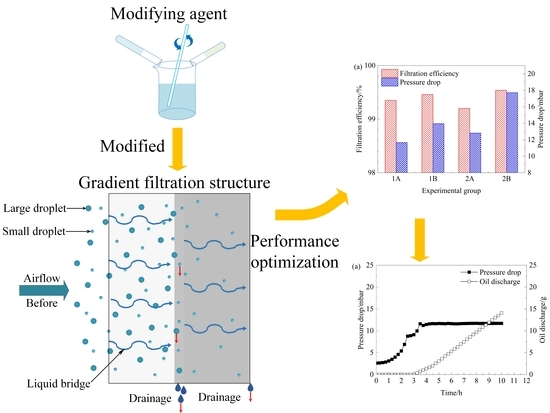
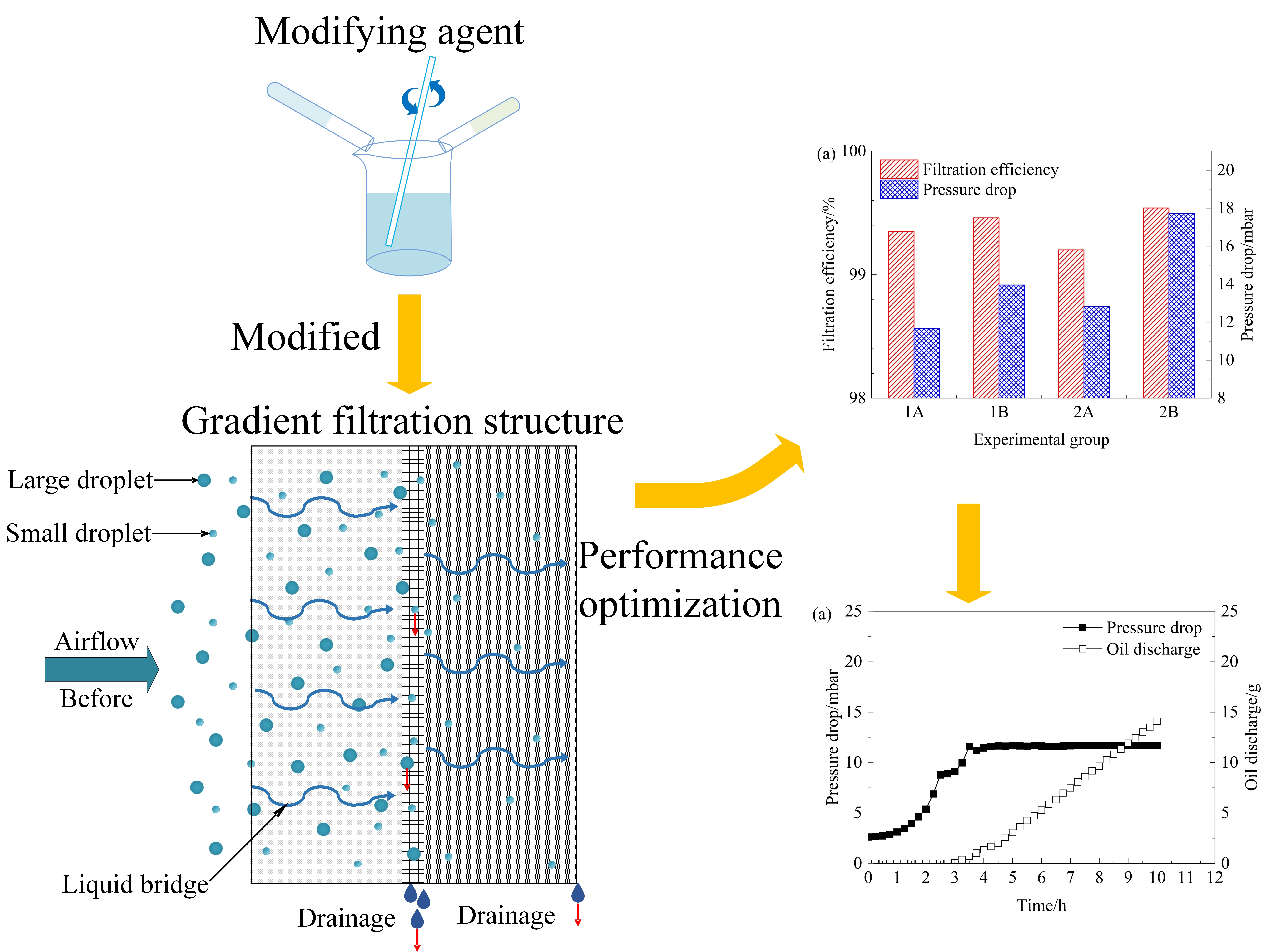
Widely used in treating oil mist aerosols generated from metalworking processes, conventional gas–liquid coalescing filters face drawbacks such as increased energy consumption, performance limitations, and shortened service life due to high steady-state pressure drop. To address these issues, this study proposes an innovative design for a filter based on wettability-regulated gradient pore structure. Using glass fiber filter media with different pore size parameters as the substrate and incorporating an intermediate mesh layer, a three-layer filtration structure of “large-pore filtration layer—mesh layer—small-pore filtration layer” was constructed. The surface wettability of each layer was regulated by a self-developed surface modifier, producing gradient pore structure filters with different wettability configurations. The variations in key performance parameters, including steady-state pressure drop, filtration efficiency, saturation, and service life, were systematically evaluated for these configurations. Experimental results demonstrated that the configuration with an “oleophobic large-pore filtration layer—mesh layer—oleophilic small-pore filtration layer” yielded the best overall performance. Analysis based on the “jump-channel” model indicated that the gradient pore structure achieves progressive droplet filtration and optimizes droplet coalescence and capture through wettability differences. Consequently, while maintaining exceptional filtration efficiency (>99%), this configuration significantly reduces the steady-state pressure drop by over 34% and effectively extends the service life by more than 66%. This wettability-regulated gradient pore structure provides a novel technical pathway for addressing the challenges of balancing pressure drop and filtration efficiency, as well as extending the service life, in gas–liquid coalescing filters.

Graphical Abstract

1. Introduction

In metal processing, a significant amount of cutting fluid is consumed for lubricating the cutting tool and cooling the workpiece [1]. Under high-pressure jetting and high-speed impact, these fluids generate significant amounts of oil mist aerosols. This mist, typically dispersing into the air as submicron-sized oil droplets, can lead to equipment corrosion, environmental pollution, and serious health hazards if not effectively removed [2,3]. Consequently, eliminating oil mist aerosols from the air is of significant importance. Current removal methods include centrifugal separation, electrostatic adsorption, and coalescing filtration [4,5]. Among these, coalescing filtration is widely adopted due to its high filtration efficiency and cost-effectiveness.
In the coalescence filtration process, oil mist droplets carried by the air stream enter the fibrous filter media and are captured by the fibers via mechanisms such as Brownian motion, direct interception, inertial impaction, electrostatic adsorption, or gravitational settling [6]. The captured droplets, under the combined actions of airflow drag force, their own gravity, and capillary forces, undergo migration, coalescence, growth, and separation, eventually forming larger droplets or liquid masses that are drained from the filter by gravity [7,8]. This process and its mechanisms are complex, influenced by multiple factors including fiber diameter, filter media porosity, surface wettability, and filter structure [9,10] The core parameters for evaluating coalescing filter performance are filtration efficiency and steady-state pressure drop: filtration efficiency reflects the ability to remove oil mist droplets, while the steady-state pressure drop is related to the filter’s energy consumption and service life; achieving both high filtration efficiency and low pressure drop remains the primary research and development goal for coalescing filters.
Numerous studies on coalescing filters have been conducted, primarily focusing on surface wettability modification of filter media, drainage layer design, and the structure of the coalescing filtration layer. Chen et al. [11] modified filter media using low-pressure plasma technology and compared filters with identical structures but different wettability, finding that oleophobic filters exhibited significantly better overall filtration performance than oleophilic ones. Wei et al. [12] prepared a superoleophobic filter surface via a coating method; compared to conventional media, the pressure drop increased by only 6%, while the concentration of downstream small droplets was reduced by 85%. Cheng et al. [13] investigated the oil mist filtration performance of surface-modified polymeric filters with asymmetric wettability; the results showed that the increase in the treated area ratio contributes to a variation in the wettability from oleophilic to oleophobic, resulting in a decrease in the jump pressure drop and an increase in filtration efficiency. Liu et al. [14] found that placing a thin layer of oil-guiding fibers on the front surface of a superoleophobic filter significantly reduced the steady-state pressure drop. Chang et al. [15] investigated the impact of a drainage layer on the saturation and liquid distribution of oleophobic coalescing filter elements. They found that assembling a drainage layer on the outside of the coalescing layer can alter the wet pressure drop, saturation, and liquid distribution. Penner et al. [16] studied the effect of downstream support structures on oleophilic and oleophobic filters, noting that mesh structures influenced liquid film formation on the downstream side of oleophilic filters, thereby affecting the steady-state pressure drop, but had minimal impact on oleophobic media. Sun et al. [17] explored the influence of a drainage layer on filter performance, demonstrating that adding a drainage layer reduced pressure drop by 16% and increased filtration efficiency by 12%, with mesh-type drainage structures outperforming woven ones. Chen Feng et al. [18] studied the evolution of pressure drop, filtration efficiency, and saturation in oleophilic oil mist filters with different pore sizes during gas–liquid filtration, finding that filters with a gradually increasing pore size distribution exhibited lower pressure drop, higher quality factor, less droplet re-entrainment, and the highest filtration efficiency for droplets larger than 0.8 μm under steady-state conditions. Penner et al. [19] investigated the performance of coalescing filters combining oleophilic and oleophobic media, concluding that placing large-pore media upstream reduced the pressure drop regardless of the combination. Chen et al. [20] constructed a three-layer filter with a gradient pore structure and found that the first layer significantly influenced the filtration process and steady-state performance; a decreasing pore-size gradient structure was most effective for reducing the steady-state pressure drop, while an increasing gradient structure achieved the best filtration efficiency for submicron droplets. The performance of coalescing filters is influenced by multiple factors working in concert. However, existing research predominantly focuses on single or dual influencing factors, such as the wettability of the filter, parameters of the filter media, or its structure. This narrow focus can lead to significant discrepancies between the theoretical performance of the filters and their actual performance, making it difficult to achieve the goals of low resistance, high filtration efficiency, and long service life.
This study comprehensively considers the main factors influencing the performance of coalescing filters and proposes an innovative filter design based on the regulation of filter media surface wettability and the design of a pore-size gradient structure. Glass fiber filter media with different pore size parameters are selected and subjected to wettability modification using a self-developed modifier, thereby constructing filters with various wettability and pore-size configurations. The filtration efficiency, steady-state pressure drop, and service life of filters with different configurations are tested experimentally, and the influence of wettability and the gradient filtration structure on filter performance is analyzed.

2. Materials and Methods

2.1. Materials and Characterization

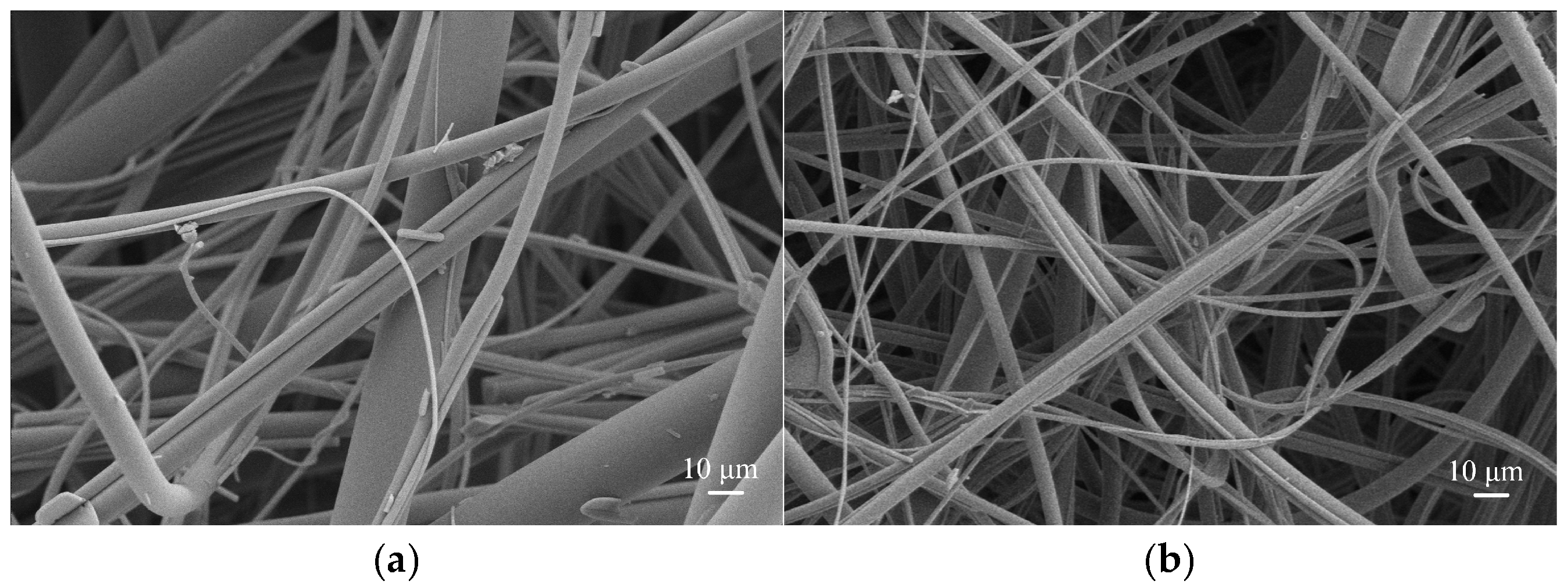
This study employed two commercial glass fiber filter media, GF01 and GF02 (Nanjing Fiberglass R&D Institute Limited, Nanjing, China), with their scanning electron microscopy (SEM) images shown in Figure 1a and b respectively; the modifying agent was prepared by mixing perfluorosilane with nano-silica particles (Shanghai Aladdin Biochemical Technology Co., Ltd., Shanghai, China) in anhydrous ethanol solvent; the test liquid was di(2-ethylhexyl) sebacate (DEHS, Shanghai Aladdin Biochemical Technology Co., Ltd., Shanghai, China); the mesh was made of polyester material (PET) with a contact angle of 60° against DEHS, featuring 2 mm square openings.
The thickness of the filter material was measured using a digital caliper (Model 500-195-30, Mitutoyo, Kawasaki, Japan). The average pore size of the filter material was determined with a pore analyzer (Model NOVA600, Quantachrome, Boynton Beach, FL, USA). The mass of the filter material was weighed using an electronic balance (Model LA203E, Mettler Toledo, Zurich, Switzerland). The porosity of the filter material was calculated using the formula:
P = ( 1 ρ ρ f ) × 100 %
In the formula, ρ represents the apparent density of the filter material (g/cm3), and ρf represents the density of the glass fiber constituting the filter material (g/cm3), with a value of 2.5 g/cm3. The contact angle between DEHS and the filter material was measured using an optical contact angle meter (Model JY-82C, Chengde Dingsheng Testing Machine & Equipment Co., Ltd., Chengde, China). All measurement data were taken from five distinct areas of the filter media, and the final results are summarized in Table 1.

2.2. Filter Media Modification and Filter Preparation

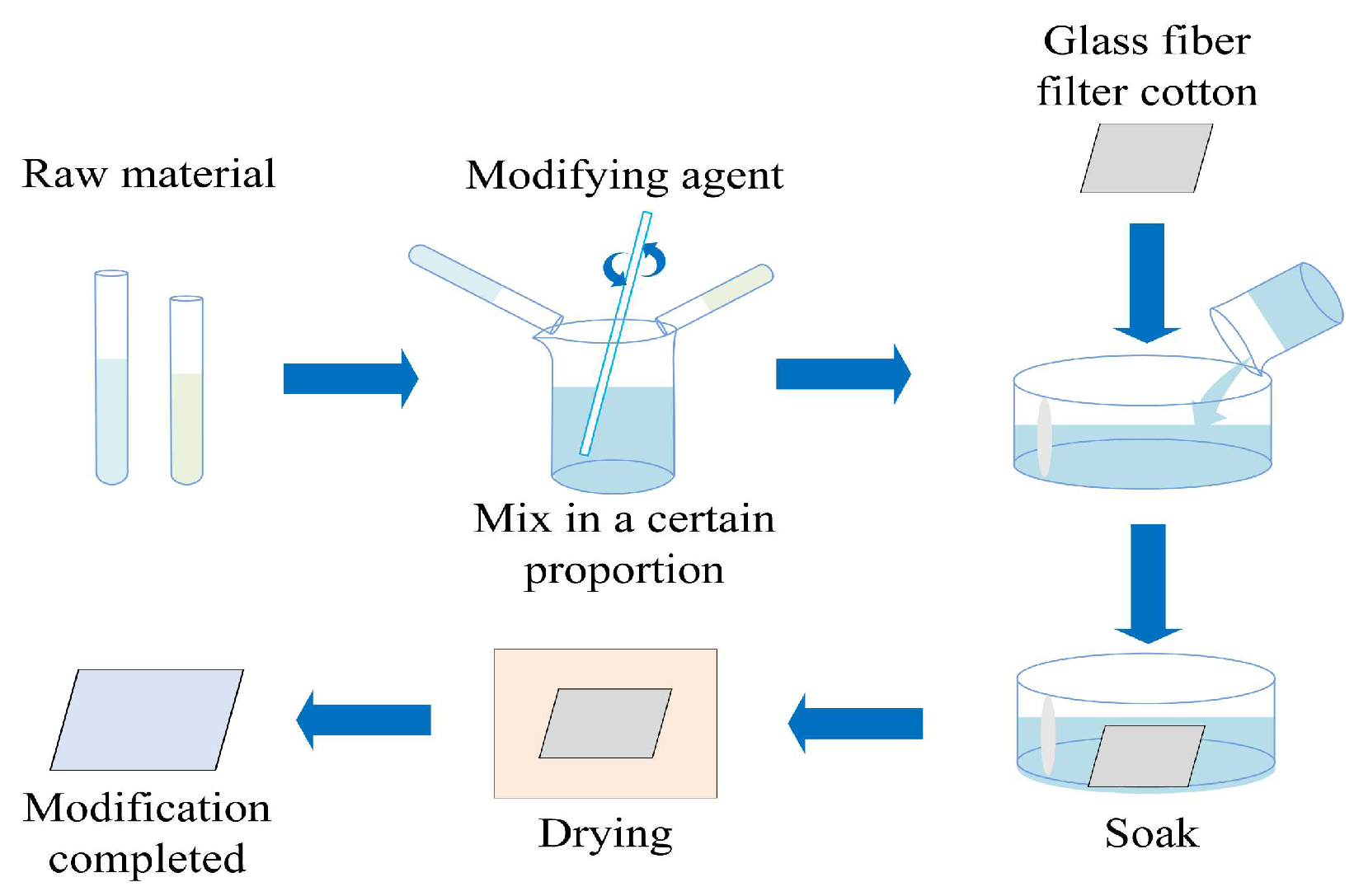
The preparation process of the modified filter media is illustrated in Figure 2. The mass ratio of the oleophobic modifier perfluorosilane to nano-silica particles was 1:3, while that of the oleophilic modifier was 1:15. Perfluorosilane and nano-silica particles were weighed according to the respective mass ratios, added to anhydrous ethanol, and stirred uniformly at room temperature to obtain a modifier solution with a constant concentration of 1.8 wt%. The glass fiber filter media were immersed in the modifier solution for 30 min, after which they were removed and dried at 110 °C for 2 h to yield the surface-wettability-modified media. Here, Phil01, Phob01 and Phil02, Phob02 represent the oleophilically and oleophobically modified media derived from GF01 and GF02, respectively. A comparison of the data in Table 1 shows that the modification treatment solely altered the surface wettability of the media, with almost no effect on other physical properties such as fiber diameter, pore size, and porosity.
The experimental filter has a square cross-section with an area of 100 cm2 and adopts a three-layer structure. Due to the relatively thin filter material composed of fine glass fibers, which results in low overall structural integrity, the second layer is designed as a grid layer to serve as a supporting structure. The filter is covered with non-woven fabric on both the front and back to ensure its structural completeness. All experimental configurations are summarized in Table 2. Among them, Experimental Groups 1A and 1B are prepared using wettability-modified filter media, with the first layer bweing a modified large-pore filter layer, the second layer being the grid layer, and the third layer being a modified small-pore filter layer, a configuration that conforms to the gradient filtration structure.

2.3. Filter Performance Testing

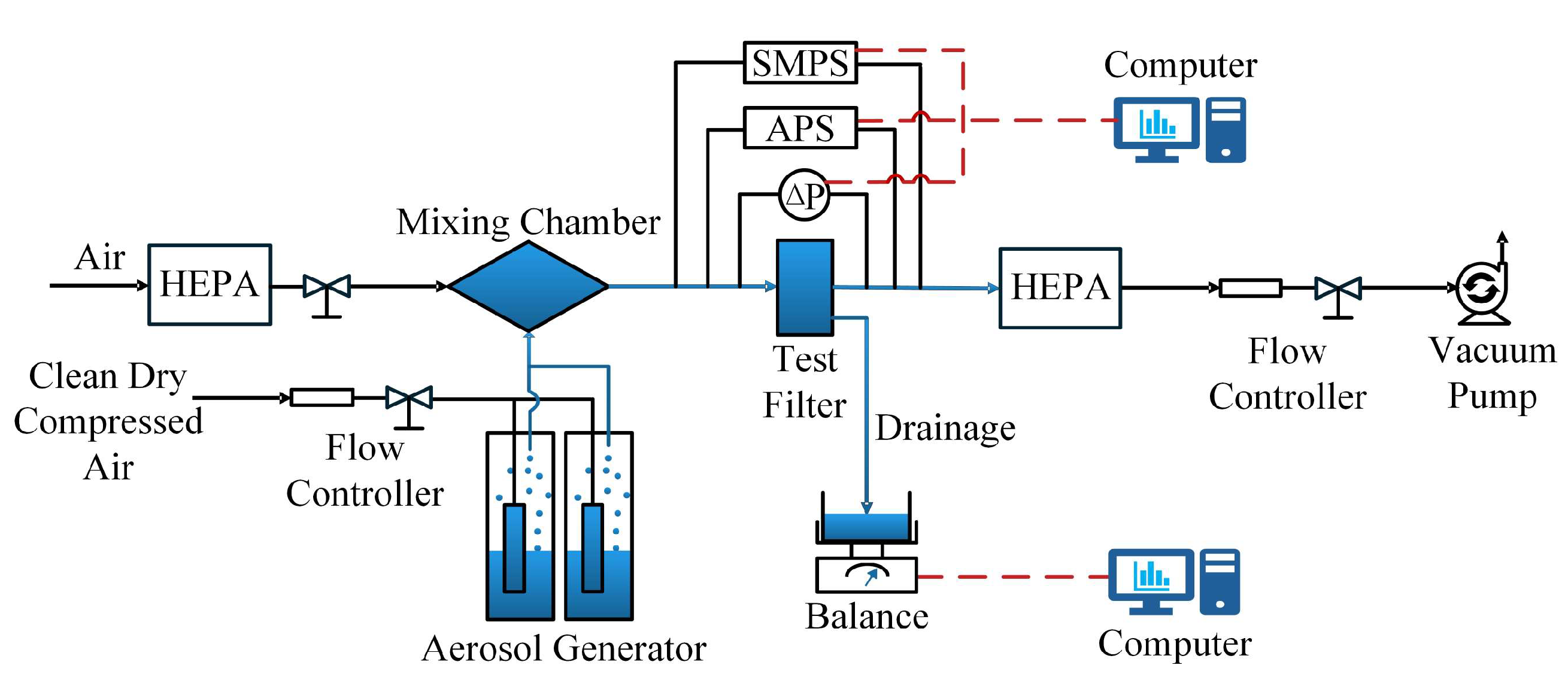
The experimental setup for filter performance testing is illustrated in Figure 3. Purified compressed air and two Collison-type aerosol generators are used to jointly generate DEHS oil mist aerosol (concentration approximately 0.3 g/m3, particle size ranging from 0.02 to 2.00 µm). This aerosol mixes with air filtered by a High-Filtration efficiency Particulate Air (HEPA) filter and then passes vertically through the filter under test. Finally, the air is filtered again by a HEPA filter before being discharged. The experiment is conducted in a constant temperature and humidity environment (temperature 25 ± 2 °C, relative humidity 60 ± 5% RH). Prior to the experiment, without installing the filter under test, the experimental equipment is run until the flow velocity and oil mist concentration stabilize. A vacuum pump and a flow control valve maintain the system under negative pressure and keep the airflow velocity stable at 0.25 m/s. Sampling ports are set before and after the filter under test. A differential pressure transmitter (Model EJX110A, Yokogawa, Musashino, Japan), a Scanning Mobility Particle Sizer (SMPS 3938, TSI, Shoreview, MN, USA), and an Aerodynamic Particle Sizer (APS 3321, TSI) are used to monitor and record in real time the pressure drop, droplet size distribution, and oil mist concentration data. An oil collection tray and an electronic balance are placed below the filter to record the oil drainage time and the drained oil mass. The filter is considered to have reached a stable state when the rate of pressure drop change remains below 1% for 30 consecutive minutes. After the experiment, the filter is immediately disassembled to measure the mass of each layer. Each set of experiments is repeated three times, and the average result is taken.
To shorten the experimental period, an accelerated testing method was employed to evaluate the service life of the filter. While keeping other experimental conditions unchanged, the aerosol flow velocity was adjusted to 1.0 m/s, and the pressure differential across the filter and the oil mist concentration were continuously monitored. Timing commenced once the pressure drop reached an equilibrium state. The failure criteria for the filter in this experiment were set as follows: a pressure drop increase to 150% of the steady-state value, a filtration efficiency decrease to 85% of the steady-state value, or the occurrence of obvious structural damage to the filter media. The filter was deemed to have failed upon meeting any one of these conditions. The cumulative operating time was recorded to calculate the service life of the filter. Each set of experiments was repeated three times, and the average result was taken.

3. Results and Discussion

3.1. Analysis of Filtration Performance of Single-Layer Filter Media

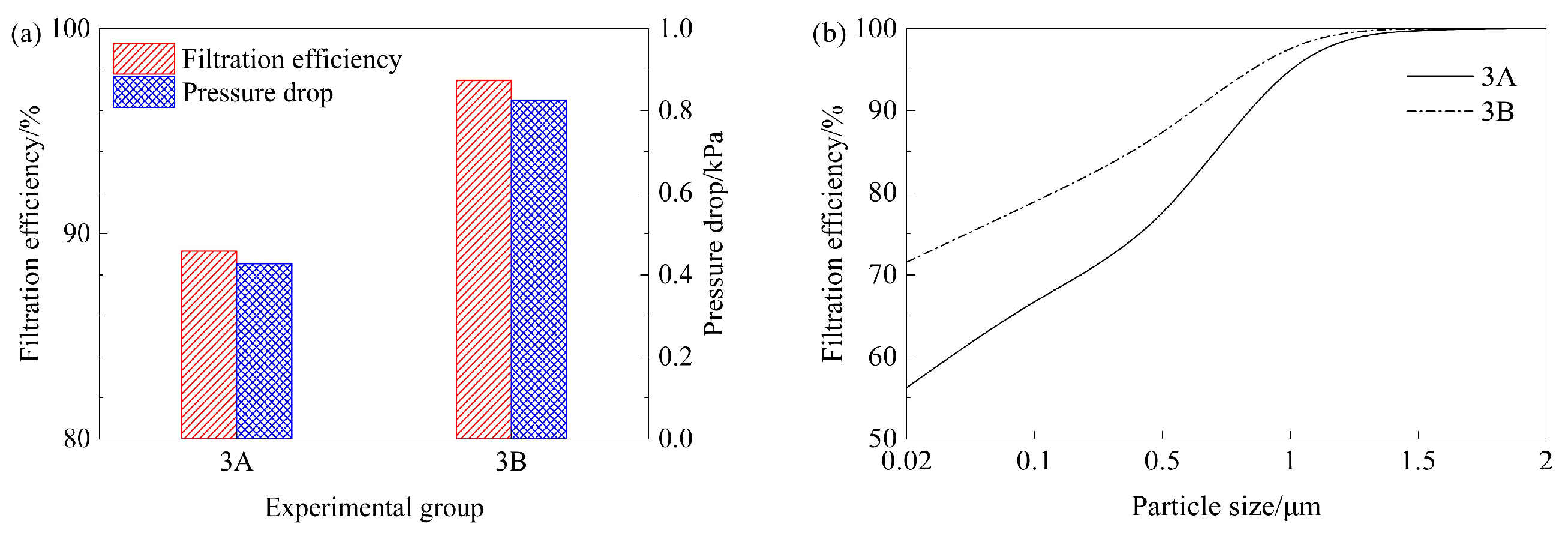
To illustrate the impact of pore size differences on the performance of glass fiber filter media, tests were conducted on the pressure drop and filtration efficiency of single-layer media under identical experimental conditions, as shown in Figure 4a. The filtration performance of the two media differed significantly: the steady-state pressure drop and filtration efficiency of the small-pore Filter 3B were markedly higher than those of the large-pore Filter 3A. Analysis of the droplet size and concentration before and after filtration for both filters, presented in Figure 4b, revealed that both Filter 3A and 3B exhibited high filtration efficiency for droplets larger than 1 micron. However, due to the difference in pore size, the smaller pores increased the interstitial velocity within the filter media, thereby enhancing the media’s interception and inertial capture filtration efficiency for submicron droplets. Consequently, the filtration efficiency of Filter 3B for submicron droplets was significantly higher than that of Filter 3A.
Based on the experimental results, GF01 exhibited high filtration efficiency only for droplets larger than 1 micrometer, but was associated with a lower pressure drop. In contrast, GF02 demonstrated high filtration efficiency for droplets across all particle sizes, which was accompanied by a higher pressure drop. Consequently, this study adopted a gradient structure with decreasing pore sizes, positioning GF01 (larger pores) upstream, followed by GF02 (smaller pores) downstream.

3.2. Performance Analysis of Gradient Pore Size Structure Filters

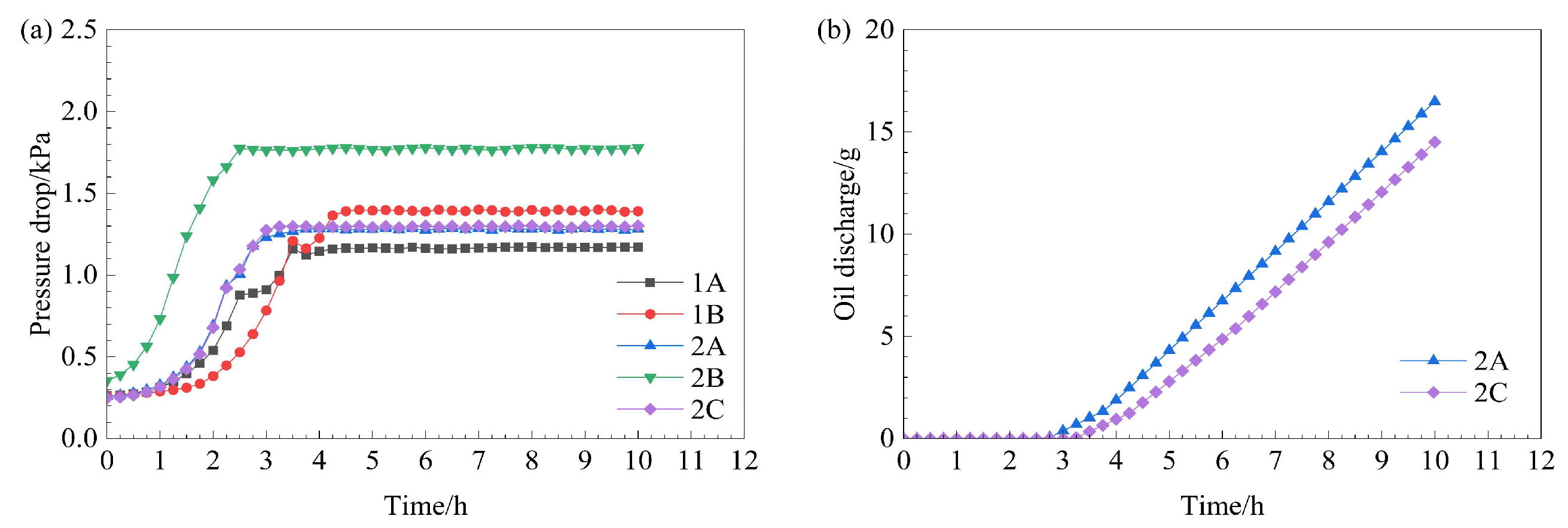
Filtration efficiency, steady-state pressure drop, and the quality factor are key parameters for evaluating filter performance. In this study, four filters with different pore size configurations were designed, and their performance parameters were systematically tested through experiments. According to the “jump-channel” model proposed by Kampa et al. [21,22], the coalescing filtration process can be divided into three stages: the channel stage, the jump stage, and the steady-state stage, corresponding to the channel pressure drop and the jump pressure drop, respectively. Figure 5a shows the pressure drop curves of the various filter configurations; the trends all conform to the characteristics of this model. Therefore, this paper provides an in-depth analysis of both the channel pressure drop and the jump pressure drop.
In coalescing filtration, where gas and liquid co-flow through the porous structure of the fibrous media, the pore size critically determines the pressure drop and filtration efficiency. Smaller pore sizes lead to higher filtration efficiency but also result in an increased pressure drop and cause the system to reach a steady state more rapidly. As shown in Figure 5a, Filters 1A, 1B, and 2A, which share an identical gradient pore size structure, exhibit similar trends in the evolution of their channel pressure drop. Compared to Filter 2B, which consists of small-pore-size media in both the front and rear layers, the filters with a gradient pore size configuration demonstrate a prolonged channel stage and a more gradual increase in pressure drop. During the jump pressure drop stage, the differing times required for the front and rear layers to reach steady state, due to the gradient structure, result in two distinct rising phases in the jump pressure drop. For the unmodified Filter 2A, where the wettability of the front and rear layers is similar, the jump pressure drop manifests only as a difference in the curvature of the rising curve. In contrast, for Filters 1A and 1B, which have a significant wettability difference between their layers, the two phases of the jump pressure drop show markedly different trends. The initial and steady-state pressure drops of Filter 2B are significantly higher than those of the gradient pore size filters. Furthermore, Filter 2B exhibits higher channel and jump pressure drops, with shorter stage durations, leading to a faster transition to the steady state. Figure 5b provides a comparison of the oil drainage curves for Filter 2A and Filter 2C. As can be seen from the figure, Filter 2A exhibits both a later initial oil drainage time and a greater total oil drainage mass compared to Filter 2C. Furthermore, as shown in Figure 5a, the steady-state pressure drop of Filter 2C is slightly higher than that of 2A, and the pressure drop is primarily caused by coalesced oil droplets and the oil film inside the filter. Since the two filter configurations differ only in the intermediate grid layer, it can be inferred that, in addition to providing structural support, the intermediate grid layer also promotes oil drainage in the filter.
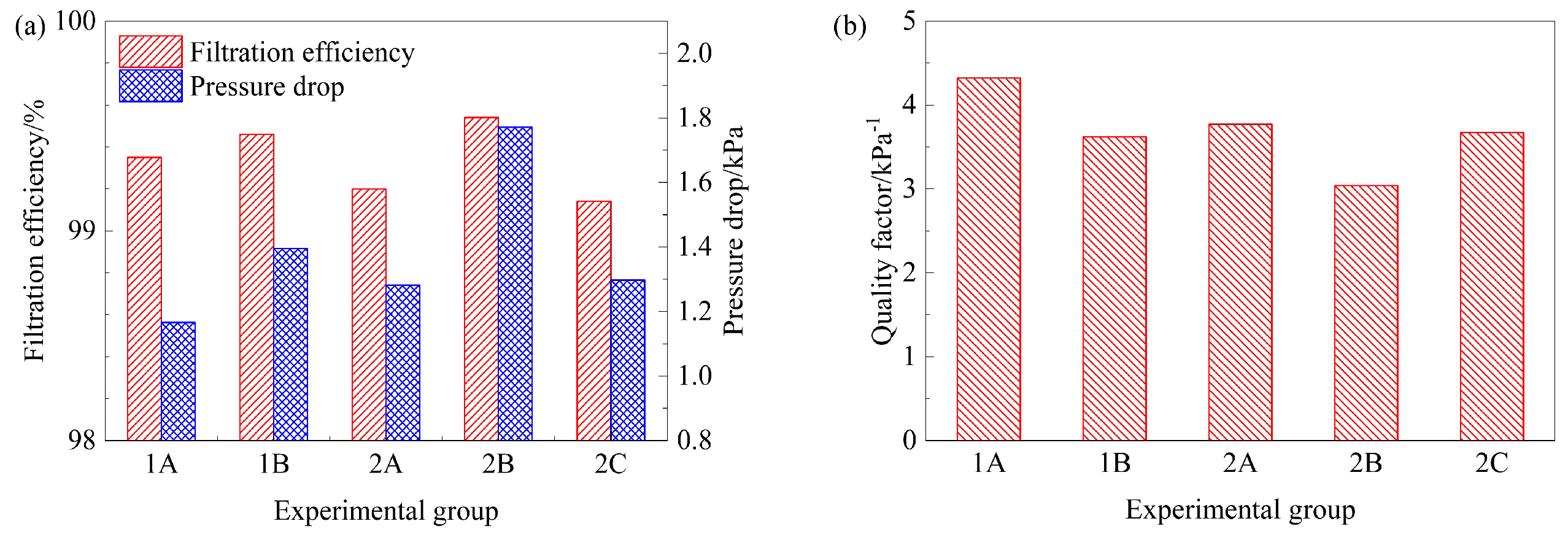
Figure 6a presents a bar chart comparing the steady-state pressure drop and filtration efficiency of filters with different configurations, allowing for a direct visual comparison of their performance differences. As shown in the figure, the filtration efficiency of all configured filters exceeds 99%, but their steady-state pressure drops differ significantly. Among them, the steady-state pressure drop of Filter 1A is 34.2% lower than that of Filter 1B. To evaluate the comprehensive performance of the filters, the quality factor QF is introduced [23]:
  Q F = ln ( 1 η ) p
In the formula, Δp is the pressure drop across the filter (kPa), and η is the filtration efficiency. Figure 6b shows the quality factors of the filters with different configurations. It can be observed that Filter 2B has the lowest quality factor, while Filter 1A, which has a lower filtration efficiency, achieves the highest quality factor, showing an improvement of approximately 42% compared to Filter 2B. Although the quality factor has certain limitations, under the experimental conditions of this study (where the filter area and structure are similar), it proves to be a reliable indicator for evaluating the overall performance of the filters [24].
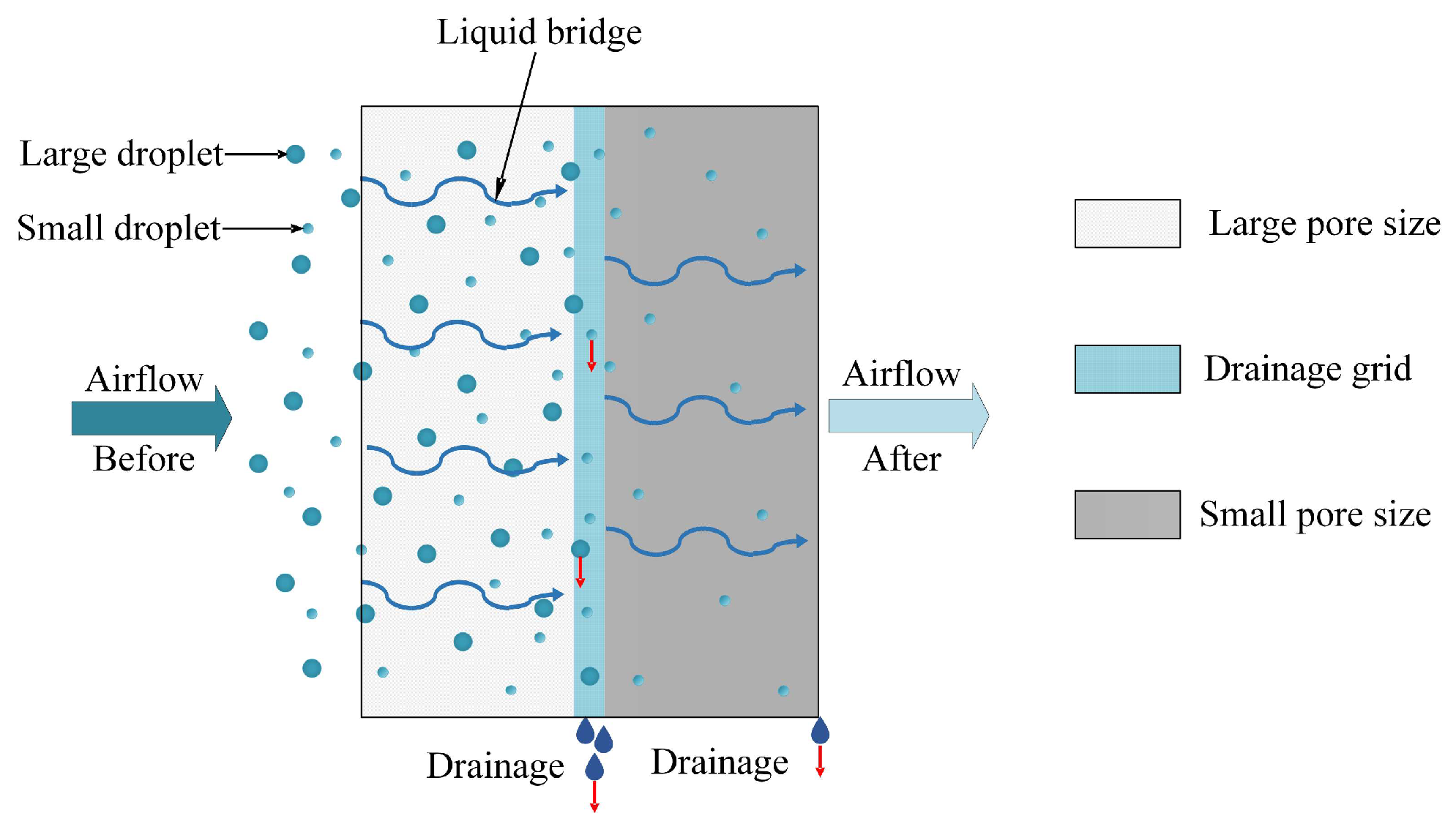
Figure 7 illustrates the filtration mechanism of the pore-size gradient structure. The front-end large-pore filter material first captures the majority of large-diameter droplets in the oil mist aerosol, while the rear-end small-pore material intercepts the remaining droplets; the intermediate grid layer not only provides structural support but also facilitates oil drainage. During the coalescence process, droplets captured on the fiber surfaces interconnect to form liquid bridges, which expand laterally into liquid films and connect longitudinally to form liquid-phase channels [2,25,26,27,28]. This mechanism is key to achieving efficient coalescence and drainage [29,30,31]. The filtration efficiency of the filter is primarily influenced by the pore size of the filter media, while the pressure drop is mainly caused by the liquid film formed on the fiber surfaces after droplet capture. A smaller pore size results in higher filtration efficiency but also a significantly increased pressure drop. For instance, Filter 2B, which uses a small-pore material in its first layer, achieves the highest filtration efficiency but also the highest pressure drop, as the rapid formation of a liquid film in the first layer causes a sharp rise in pressure drop and limits the filtration potential of subsequent layers. In contrast, the pore-size gradient structure (e.g., Filters 1A, 1B, and 2A) employs a large-pore material in the first layer and the same small-pore material as 2B in the third layer. This configuration slightly reduces the filtration efficiency of the first layer but avoids excessive liquid film thickening, enabling gradient droplet capture: the large-pore first layer intercepts the vast majority of large droplets and some small droplets, while the small-pore final layer captures the remaining droplets. This structure ensures filtration efficiency while significantly reducing the jump pressure drop in the first layer; although the pressure drop in the third layer may increase slightly, its proportion in the total pressure drop is relatively low, thereby optimizing the overall steady-state pressure drop.

3.3. Analysis of the Impact of Wettability on the Performance of Gradient Pore Size Structure Filters

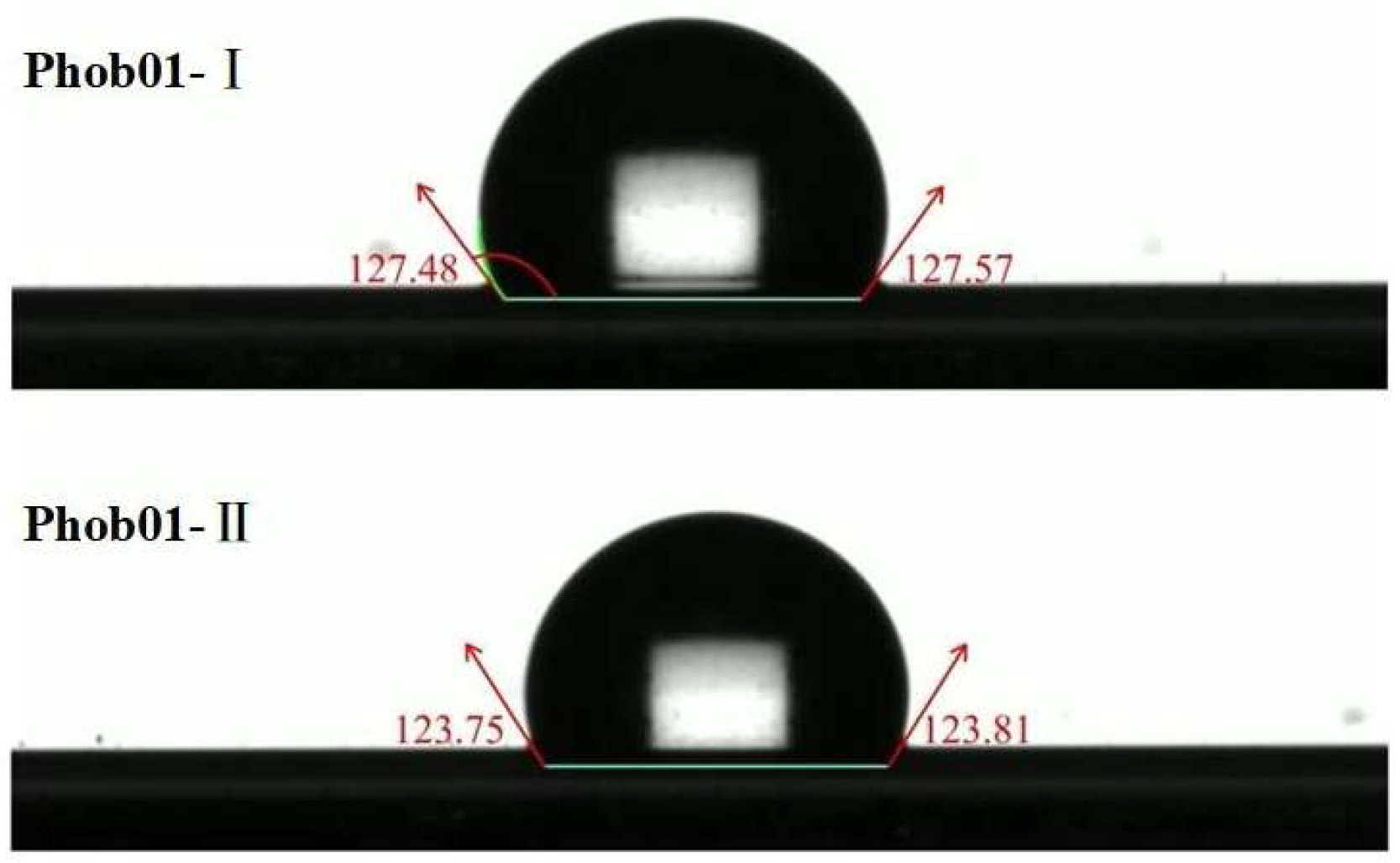
After surface modification, the wettability of filter media may change depending on the working environment and the modifier formulation. To evaluate the stability of the wettability of the modified filter media, this study immersed the modified media in a DEHS test liquid for 7 days, after which the samples were removed and drained. The contact angle with DEHS was measured at five different areas to characterize the wettability. Taking Phob01, the oleophobically modified version of GF01, as an example, Figure 8 shows the measurement data from the same area before and after immersion. The contact angle with DEHS slightly decreased from an initial value of 127.53° to 123.78°, yet maintained good oleophobic properties, indicating that the surface wettability of the filter media prepared with the self-developed modifier used in this study exhibits favorable stability.
Saturation (S) is a key parameter characterizing the liquid content within the filter media. For multi-layer composite filters, saturation can intuitively reflect the distribution of liquid inside, thereby helping to determine the filtration effectiveness of each individual layer. The mass of the filter media for each layer was weighed before and after the experiment to calculate the saturation, using the formula:
S = m o i l m o i l , m a x = m f i l t e r m f i l t e r , 0 V ρ o i l ( 1 α )
In the formula: moil and moil,max represent the liquid capture capacity within the filter media after the experiment and the theoretical maximum liquid holding capacity of the media (kg), respectively; mfilter and mfilter,0 represent the mass of the filter media after and before the experiment (kg), respectively; V is the volume of the filter media (m3); ρoil is the density of the oil, and the density of DEHS used in this experiment is 912 kg/m3; α is the material packing fraction.
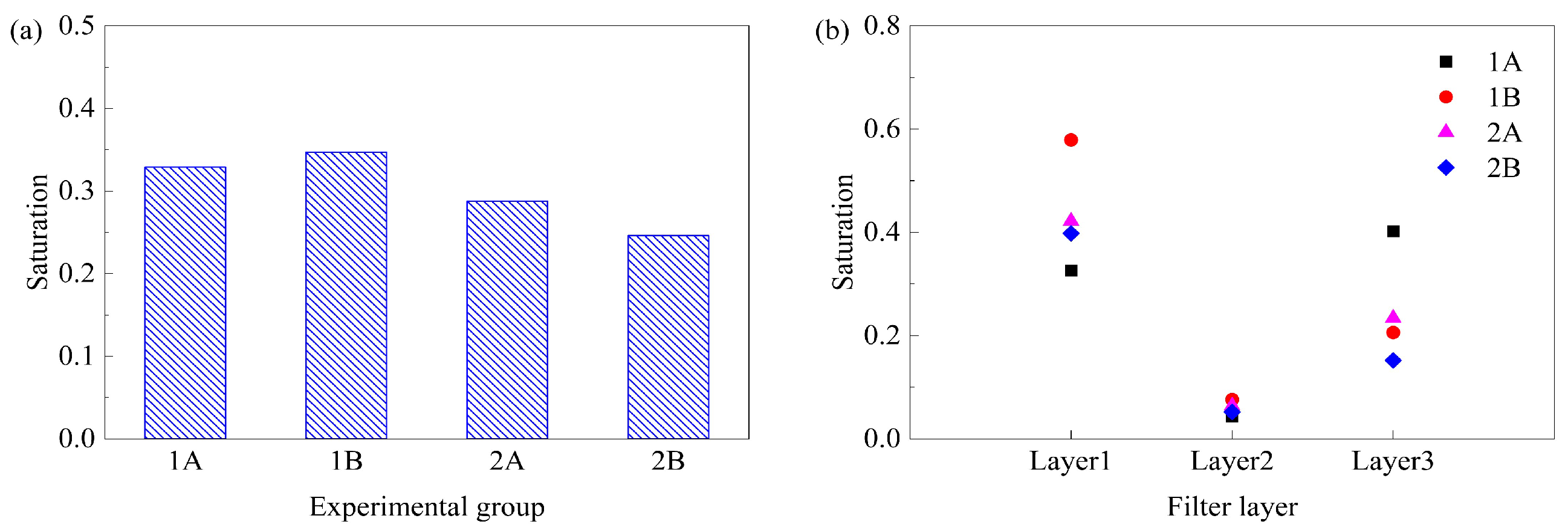
Figure 9a shows the steady-state saturation of filters with different configurations. Filter 2B (comprising oleophobic small-pore-size media in both the front and rear layers) exhibited the lowest steady-state saturation. In comparison, Filters 1A, 1B, and 2A, which share the same gradient pore size structure, showed significant differences in their steady-state saturation, primarily attributable to differences in media wettability. Figure 9b presents the distribution curves of steady-state saturation across different layers for the various filter configurations. Comparing the saturation levels in the first layer of each filter reveals that the influence of wettability on media saturation is significantly greater than that of pore size. A comparison of Filters 2A and 2B shows similar saturation levels in their respective first layers. However, due to differences in pore size and wettability (the first layer of 2A is oleophilic, whereas that of 2B is oleophobic), the filtration efficiency and pressure drop of 2B’s first layer should both be higher than those of 2A. The third-layer media configuration is identical for both filters, yet the saturation of 2A is markedly higher than that of 2B, implying that the filtration efficiency and pressure drop of 2A’s third layer are greater than those of 2B. It can therefore be inferred that the high pressure drop and high filtration efficiency of Filter 2B primarily originate from its first layer of oleophobic, small-pore-size media, where dense droplet capture leads to a high jump pressure drop, consequently increasing the overall steady-state pressure drop. Among filters with the same gradient pore size configuration, specifically 1B and 2A, both feature an oleophilic first layer and an oleophobic third layer, yet their actual wettability differs significantly due to different contact angles. This results in a much higher saturation in the first layer of 1B compared to 2A, while its third-layer saturation is lower. This outcome indicates that differences in wettability directly affect liquid film formation and pressure drop characteristics: the strongly oleophilic first layer of 1B readily forms a thicker liquid film, leading to a higher jump pressure drop. Filters 1A and 1B have opposite wettability configurations. The first layer of 1A consists of oleophobic, large-pore-size media with lower saturation and a smaller jump pressure drop, yet it remains effective at capturing large droplets. Its third layer comprises oleophilic, small-pore-size media, which exhibit higher capture filtration efficiency for fine droplets. Although this layer has slightly higher saturation and pressure drop, the overall saturation and steady-state pressure drop of Filter 1A are lower than those of 1B. Compared to 2A, 1A achieves a lower pressure drop while having a slightly higher overall saturation. Based on the experimental results and discussion, this paper proposes a hypothesis: for a filter with two media layers or a three-layer composite structure incorporating an intermediate drainage layer, a smaller difference in saturation between the front and rear layers corresponds to a more balanced distribution of filtration efficiency and pressure drop across these layers, leading to superior overall filter performance.
In summary, the configuration of “oleophobic large-pore-size filtration layer—mesh layer—oleophilic small-pore-size filtration layer” demonstrated optimal performance during the gradient filtration process. The front oleophobic large-pore-size media effectively reduced liquid film accumulation and the jump pressure drop, while the rear oleophilic small-pore-size media ensured high-filtration efficiency capture of fine droplets. Consequently, this design achieved a significant reduction in the steady-state pressure drop while maintaining high filtration efficiency. This approach to designing a gradient pore size structure, incorporating wettability modification of the filter media, provides an effective pathway for realizing high-filtration efficiency and low-resistance filtration.

3.4. Analysis of Filter Service Life

Service life is a key indicator for evaluating the performance and economic filtration efficiency of a filter. A longer service life helps reduce replacement frequency and operating costs, thereby enhancing the overall benefit of the filtration system. To assess the service life of the filters, this study employed an accelerated life testing method by increasing the concentration of the DEHS oil mist aerosol to obtain reliable lifespan data within a relatively short period. Among the selected experimental samples, Filter 1A and Filter 2B represent typical structures with the highest and lowest quality factors, respectively. Specifically, Filter 1A features a wettability-modified gradient pore size structure, while Filter 2B has a common unmodified structure, providing strong comparative representativeness. Hence, these two were selected for the service life testing.
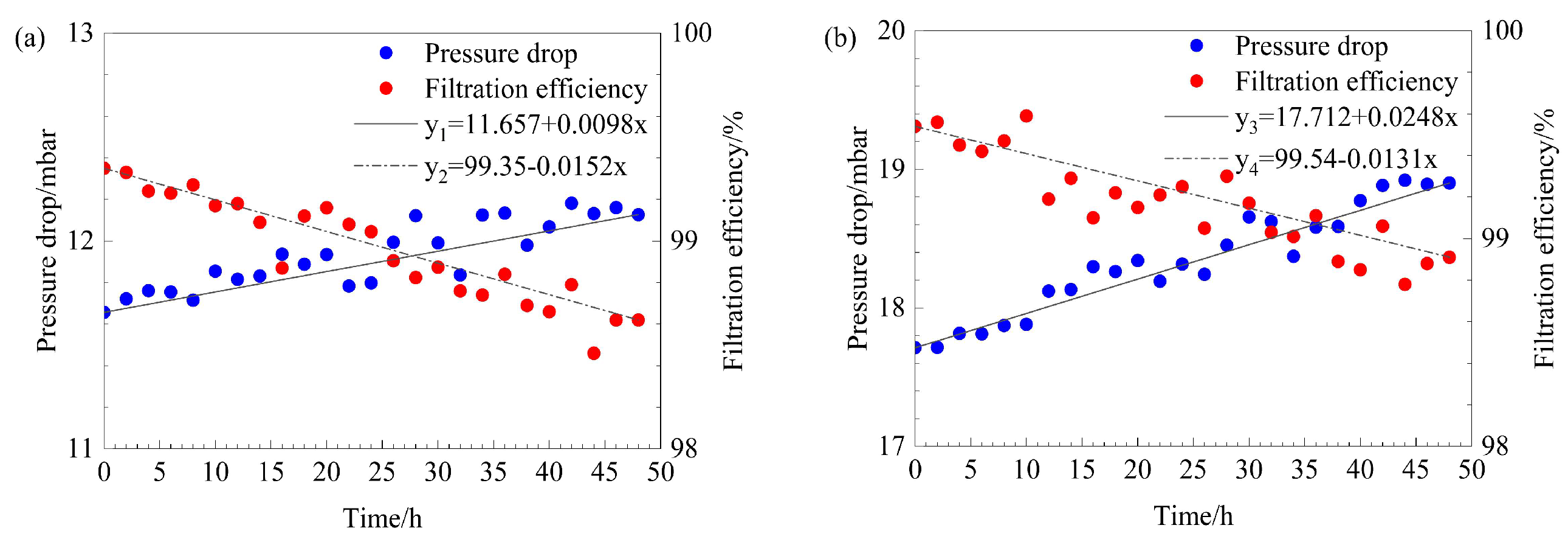
Figure 10 shows the life test and fitting curves for Filter 1A and Filter 2B. During the experiment, both filters operated continuously for 48 h without exhibiting structural damage. The test data indicated that their pressure drop increased linearly over time, while the filtration efficiency decreased correspondingly in a linear manner. Based on this observed trend, a linear fitting was performed on the experimental data. As shown in the figure, the data points from both sets of experiments are distributed close to their respective fitting curves, indicating that the fitting method possesses good reliability and can be used for life prediction. In practical industrial applications, filters are typically replaced when their performance parameters (e.g., pressure drop exceeding a set threshold or filtration efficiency falling to a critical point) no longer meet the operational requirements, rather than solely upon structural failure. Therefore, this life test primarily focused on the performance degradation pattern, and structural damage was not considered as the failure criterion for the filters.
According to the established filter failure criteria, Filters 1A and 2B were considered to have failed when their pressure drop reached 1.75 kPa and 2.66 kPa, respectively, or when their filtration efficiency dropped to 85%, indicating the end of their service life. The service life, calculated based on the fitted curves (taking the minimum value), was 596 h for Filter 1A and 358 h for Filter 2B. Since the timing for the life test started only after the filters reached a steady state, the operating time prior to reaching the steady state must be added. Consequently, the final calculated service life was 599 h for Filter 1A and 360 h for Filter 2B. The experimental results demonstrate that Filter 1A, which features a wettability-modified gradient filtration structure with an “oleophobic large-pore-size filtration layer—drainage layer—oleophilic small-pore-size filtration layer,” has a significantly longer service life compared to Filter 2B with a conventional structure, representing a 66% increase. Therefore, it is concluded that the wettability-modified gradient filtration structure can effectively enhance the service life of filters, demonstrating significant potential for engineering applications.

4. Conclusions

This study systematically investigated the effects of surface wettability, filter media parameters, and gradient structure on filter performance by constructing a gas–liquid coalescing filter with a pore-size gradient structure incorporating an intermediate grid layer and modifying the filter media surface using a self-developed wettability modifier. The results demonstrate that the pore-size gradient structure significantly reduces the pressure drop, the intermediate grid layer effectively promotes liquid drainage, and surface wettability modification further optimizes the overall performance of the filter. Specifically, the configuration of an “oleophobic large-pore filter layer—grid layer—oleophilic small-pore filter layer” best exploits the advantages of the gradient structure. While maintaining a filtration efficiency above 99%, this configuration achieves a steady-state pressure drop reduction of 34.2% and extends the service life by 66%, demonstrating excellent comprehensive performance. The study provides a novel design concept and methodology for developing industrial gas–liquid coalescing filters with low resistance, high filtration efficiency, and long service life.

Author Contributions

Z.Y.: Conceptualization, Data curation, Formal analysis, Investigation, Methodology, Resources, Validation, Visualization, Writing—original draft, Writing—review and editing. S.M.: Data curation, Visualization. J.L. and Z.W.: Conceptualization, Funding acquisition, Project administration, Resources, Supervision. All authors have read and agreed to the published version of the manuscript.

Funding

This research was funded by the Liaoning Provincial Science and Technology Program Joint Plan (Natural Science Foundation-General Program), grant number 2024-MSLH-007.

Data Availability Statement

Data will be made available upon request.

Conflicts of Interest

The authors declare no conflicts of interest.

Abbreviations

The following abbreviations are used in this manuscript:
HEPAHigh Filtration efficiency Particulate Air Filter
DEHSDi(2-ethylhexyl) sebacate
PETPolyethylene terephthalate
GFGlass Fiber

References

  1. Iwasaki, M.; Hirai, K.; Fukumori, K.; Higashi, H.; Inomata, Y.; Seto, T. Characterization of Submicron Oil Mist Particles Generated by Metal Machining Processes. Aerosol Air Qual. Res. 2020, 20, 1469–1479. [Google Scholar] [CrossRef]
  2. Mandic, R.; Meyer, J.; Dittler, A. Drainage behavior and entrainment mechanisms in oil mist separation applications—A review. Sep. Purif. Technol. 2025, 358, 130274. [Google Scholar] [CrossRef]
  3. Chen, F.; Lu, W.; Wang, Q.; Xin, H.; Ji, Z. Modification Strategy for High-Performance Coalescing Filters with a Patterned Surface and Its Application to Cartridges. Ind. Eng. Chem. Res. 2024, 63, 4557–4570. [Google Scholar] [CrossRef]
  4. Hu, X.; Peng, Z.; Chen, D.; Ma, Z.; Liu, W.; Zhao, B. Optimization of an Oil–Gas Separator of Gas Storage Compressor with Consideration of Velocity Uniformity in Filter Inlets. Energies 2023, 16, 8015. [Google Scholar] [CrossRef]
  5. Liang, L.; Lan, Y.; Yu, T.; Leng, W.; Zhang, L.; Long, Z. A Comprehensive Review of Industrial Workshop Oil Mist Control Technology Based on Electrostatic Collection. Atmosphere 2025, 16, 242. [Google Scholar] [CrossRef]
  6. Liu, Y.; Lu, J.; Ji, Z.; Linghu, C.; Liu, L.; Chang, C.; Liu, Z. Reduction in oil mist filtration resistance using novel fibrous filters with bioinspired fibrous membrane. Colloids Surf. A Physicochem. Eng. Asp. 2021, 623, 126670. [Google Scholar] [CrossRef]
  7. Dawar, S.; Chase, G.G. Correlations for transverse motion of liquid drops on fibers. Sep. Purif. Technol. 2010, 72, 282–287. [Google Scholar] [CrossRef]
  8. Charvet, A.; Gonthier, Y.; Gonze, E.; Bernis, A. Experimental and modelled efficiencies during the filtration of a liquid aerosol with a fibrous medium. Chem. Eng. Sci. 2010, 65, 1875–1886. [Google Scholar] [CrossRef]
  9. Chen, F.; Ji, Z.; Qi, Q. Effect of pore size and layers on filtration performance of coalescing filters with different wettabilities. Sep. Purif. Technol. 2018, 201, 71–78. [Google Scholar] [CrossRef]
  10. Manzo, G.; Wu, Y.; Chase, G.; Goux, A. Comparison of nonwoven glass and stainless steel microfiber media in aerosol coalescence filtration. Sep. Purif. Technol. 2016, 162, 14–19. [Google Scholar] [CrossRef]
  11. Chen, F.; Ji, Z.; Qi, Q. Effect of surface wettability on filtration performance of gas-liquid coalescing filters. Powder Technol. 2019, 357, 377–386. [Google Scholar] [CrossRef]
  12. Wei, X.; Chen, F.; Wang, H.; Zhou, H.; Ji, Z.; Lin, T. Efficient removal of aerosol oil-mists using superoleophobic filters. J. Mater. Chem. 2018, 6, 871–877. [Google Scholar] [CrossRef]
  13. Chang, C.; Lyu, Q.; Ding, Y.; Ji, Z. Investigation of oil mist filtration performance of surface modified coalescence filters with asymmetric wettability. Sep. Purif. Technol. 2024, 331, 125465. [Google Scholar] [CrossRef]
  14. Liu, J.; Zhou, H.; Wu, X.; Wang, H.; Ji, Z.; Xing, Y.; Lu, J.; Wei, X.; Lin, T. Superoleophobic Filters: Improvement of Filtration Performance by Front Attachment of Oil-Guiding Fabric. Adv. Mater. Interfaces 2020, 7, 1901808. [Google Scholar] [CrossRef]
  15. Chang, C.; Ji, Z.; Liu, J. The effect of a drainage layer on saturation and liquid distribution of oleophobic coalescence filters. Sep. Purif. Technol. 2018, 194, 355–361. [Google Scholar] [CrossRef]
  16. Penner, T.; Meyer, J.; Dittler, A. Relevance of downstream support structure design for oleophilic and oleophobic oil mist filter operating performance. Sep. Purif. Technol. 2020, 248, 117074. [Google Scholar] [CrossRef]
  17. Sun, Z.; Wang, T.; Li, Y.; Wang, C.; Zou, J.; Wang, Y.; Li, Y.; Wang, Z. Effect and mechanism of drainage measures on gas-liquid coalescence separation performance of a water mist filter. Chem. Eng. Process. Process. Intensif. 2025, 216, 110424. [Google Scholar] [CrossRef]
  18. Chen, F.; Ji, Z.; Qi, Q. Influence of pore size distribution on gas-liquid filtration performance of oleophilic filters. CIESC J. 2017, 68, 1442–1451. (In Chinese) [Google Scholar] [CrossRef]
  19. Penner, T.; Meyer, J.; Dittler, A. Oleophilic and oleophobic media combinations–Influence on oil mist filter operating performance. Sep. Purif. Technol. 2021, 261, 118255. [Google Scholar] [CrossRef]
  20. Chen, F.; Ba, Q.; Lu, W.; Liu, J.; Wu, X.; Ji, Z.; Chang, C. Preparation of combined oleophobic fibre filters with pore size gradients and their high-efficiency removal of oil mist droplets. Sep. Purif. Technol. 2023, 306, 122653. [Google Scholar] [CrossRef]
  21. Kampa, D.; Wurster, S.; Buzengeiger, J.; Meyer, J.; Kasper, G. Pressure drop and liquid transport through coalescence filter media used for oil mist filtration. Int. J. Multiph. Flow 2014, 58, 313–324. [Google Scholar] [CrossRef]
  22. Kampa, D.; Wurster, S.; Meyer, J.; Kasper, G. Validation of a new phenomenological “jump-and-channel” model for the wet pressure drop of oil mist filters. Chem. Eng. Sci. 2015, 122, 150–160. [Google Scholar] [CrossRef]
  23. Mead-Hunter, R.; King, A.J.C.; Mullins, B.J. Aerosol-mist coalescing filters–A review. Sep. Purif. Technol. 2014, 133, 484–506. [Google Scholar] [CrossRef]
  24. Mullins, B.J.; Mead-Hunter, R.; Pitta, R.N.; Kasper, G.; Heikamp, W. Comparative performance of philic and phobic oil-mist filters. AIChE J. 2014, 60, 2976–2984. [Google Scholar] [CrossRef]
  25. Lu, H.; Pan, Z.; Wang, H.; Liu, Y.; Dai, P.; Yang, Q. Fiber coalescence treatment of oily wastewater: A new theory and application. J. Hazard. Mater. 2021, 412, 125188. [Google Scholar] [CrossRef]
  26. Chaudhuri, J.; Boettcher, K.; Ehrhard, P. Numerical investigation of coalescence filtration: Multiphase flow through fibrous structures. Sep. Purif. Technol. 2021, 257, 117853. [Google Scholar] [CrossRef]
  27. Chen, F.; Ji, Z.-L.; Ba, Q.-X.; Yu, W.-H.; Wang, Q.-L.; Wang, D.-G. Oil-mist coalescence performance and optimization of filters for air filtration. J. Chem. Eng. Chin. Univ. 2022, 36, 101–109. [Google Scholar] [CrossRef]
  28. Chen, F.; Yu, W.; Ji, Z.; Lin, G.; Ding, H.; Pi, L.; Wu, X. Development and coalescence mechanism of an improved filter cartridge for oil mist separators. Chem. Eng. Res. Des. 2022, 187, 306–318. [Google Scholar] [CrossRef]
  29. Singh, C.J.; Mukhopadhyay, S.; Rengasamy, R.S. Fibrous coalescence filtration in treating oily wastewater: A review. J. Ind. Text. 2022, 51, 3648S–3682S. [Google Scholar] [CrossRef]
  30. Starnoni, M. Modeling oil–mist filtration through coalescence filter media in the presence of gravity-induced flows. J. Aerosol Sci. 2023, 169, 106129. [Google Scholar] [CrossRef]
  31. Tan, W.; Lu, T.; Bai, L.; Zhao, D.; Sang, Y.; Han, Y.; Wang, X.; Wang, Y. Coalescence behavior of oil droplets in wastewater during membrane separation. Chem. Eng. Res. Des. 2024, 204, 11–19. [Google Scholar] [CrossRef]
Figure 1. SEM image: (a) filter media GF01; (b) filter media GF02.
Separations 13 00032 g001
Figure 2. Flowchart of modified filter media preparation.
Separations 13 00032 g002
Figure 3. Filter performance testing experimental apparatus.
Separations 13 00032 g003
Figure 4. Single-layer filter media: (a) steady-state pressure drop and filtration efficiency; (b) filtering filtration efficiency for different particle sizes.
Separations 13 00032 g004
Figure 5. Filters with different configurations: (a) pressure drop comparison curve; (b) oil discharge quality comparison curve.
Separations 13 00032 g005
Figure 6. Filters with different configurations: (a) steady-state pressure drop and filtration efficiency; (b) quality factor.
Separations 13 00032 g006
Figure 7. Filtration mechanism of the pore-size gradient structure.
Separations 13 00032 g007
Figure 8. Contact angle of modified filter media before and after DEHS immersion.
Separations 13 00032 g008
Figure 9. Filters with different configurations: (a) steady-state saturation; (b) distribution of steady-state saturation across different layers.
Separations 13 00032 g009
Figure 10. Life tests and fitting curves for different configurations: (a) 1A; (b) 2B.
Separations 13 00032 g010
Table 1. Parameters of filter media before and after modification.
Sample
[-]
Thickness
[mm]
Mean Fiber
Diameter [μm]
Mean Pore Size [μm]Poriness
[%]
DEHS Contact
Angle [°]
GF012.00 ± 0.025.88 ± 0.4112.56 ± 0.0891.6385.87 ± 2.4
Phil012.00 ± 0.025.88 ± 0.4312.58 ± 0.1291.6268.22 ± 3.7
Phob012.00 ± 0.025.92 ± 0.4312.56 ± 0.0991.62127.35 ± 1.9
GF022.00 ± 0.023.16 ± 0.176.84 ± 0.0394.2596.32 ± 2.6
Phil022.00 ± 0.023.16 ± 0.196.84 ± 0.0694.2374.71 ± 3.2
Phob022.00 ± 0.023.15 ± 0.186.86 ± 0.2294.23131.43 ± 1.5
Table 2. Filter configuration.
Layer1A1B2A2B2C3A3B
FirstPhob01Phil01GF01GF02GF01GF01GF02
SecondMeshMeshMeshMeshGF02--
ThirdPhil02Phob02GF02GF02---
Disclaimer/Publisher’s Note: The statements, opinions and data contained in all publications are solely those of the individual author(s) and contributor(s) and not of MDPI and/or the editor(s). MDPI and/or the editor(s) disclaim responsibility for any injury to people or property resulting from any ideas, methods, instructions or products referred to in the content.