Review

Methods of Analysis of Phytoestrogenic Compounds: An Up-to-Date of the Present State

by
Ines Adam-Dima
1,
Andreea Alexandra Olteanu
2,*,
Octavian Tudorel Olaru
3,*,
Daniela Elena Popa
4 and
Carmen Purdel
1
1
Department of Toxicology, Faculty of Pharmacy, “Carol Davila” University of Medicine and Pharmacy, Traian Vuia 6, 020956 Bucharest, Romania
2
Department of Analytical Chemistry, Faculty of Pharmacy, “Carol Davila” University of Medicine and Pharmacy, Traian Vuia 6, 020956 Bucharest, Romania
3
Department of Pharmaceutical Botany and Cell Biology, Faculty of Pharmacy, “Carol Davila” University of Medicine and Pharmacy, Traian Vuia 6, 020956 Bucharest, Romania
4
Department of Drug Control, Faculty of Pharmacy, “Carol Davila” University of Medicine and Pharmacy, Traian Vuia 6, 020956 Bucharest, Romania
*
Authors to whom correspondence should be addressed.
Separations 2024, 11(7), 205; https://doi.org/10.3390/separations11070205

Submission received: 1 June 2024 / Revised: 27 June 2024 / Accepted: 28 June 2024 / Published: 1 July 2024

Abstract

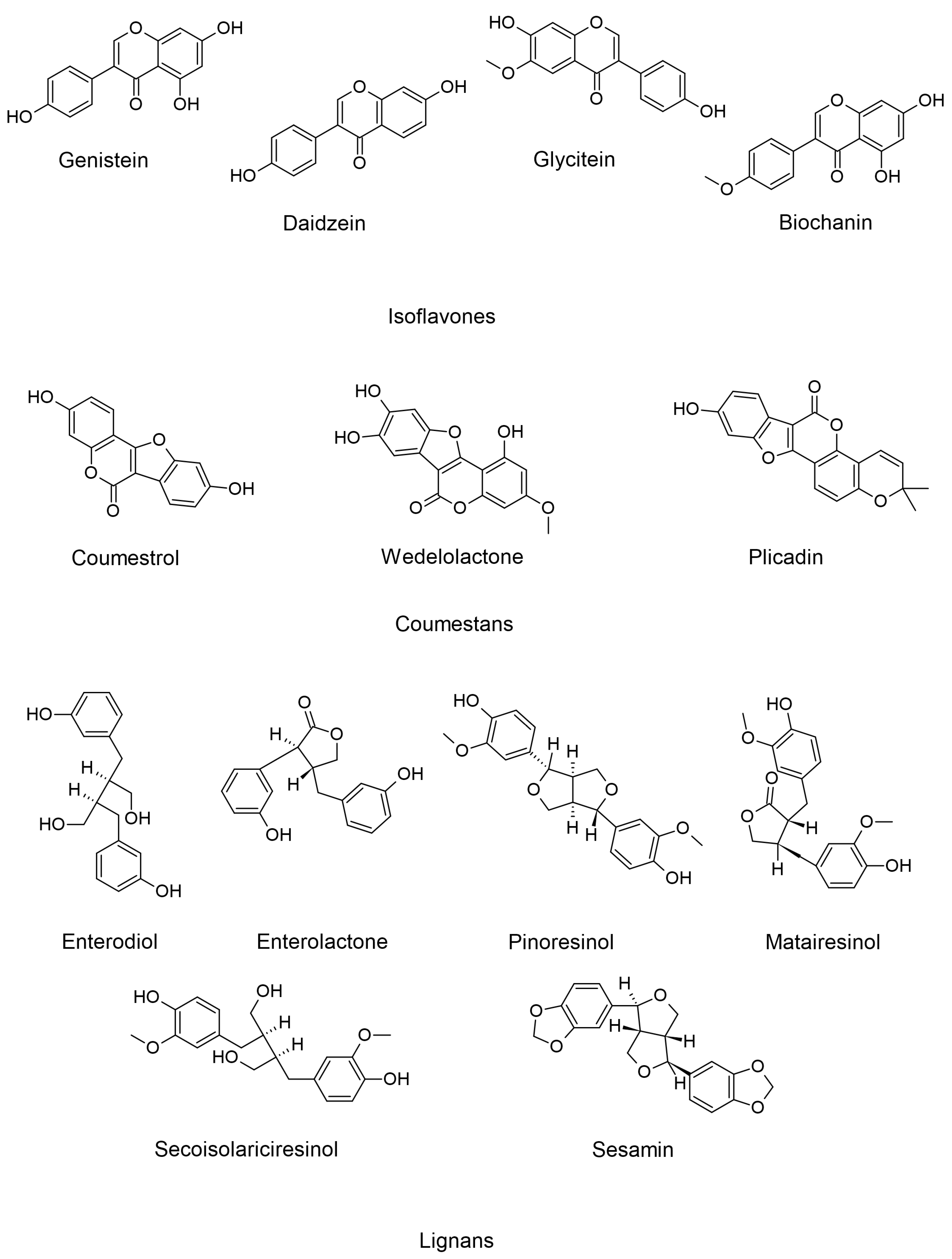
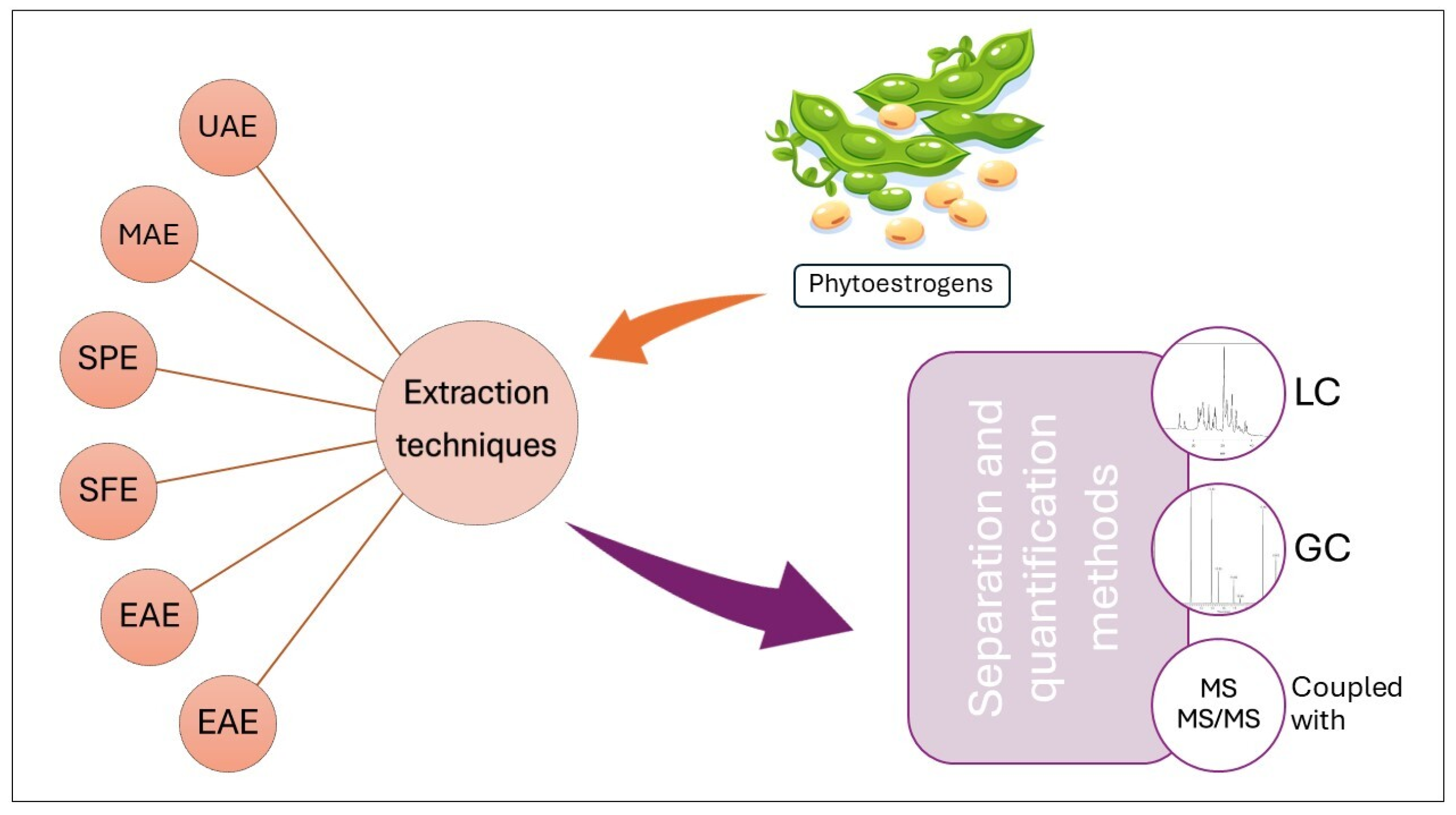
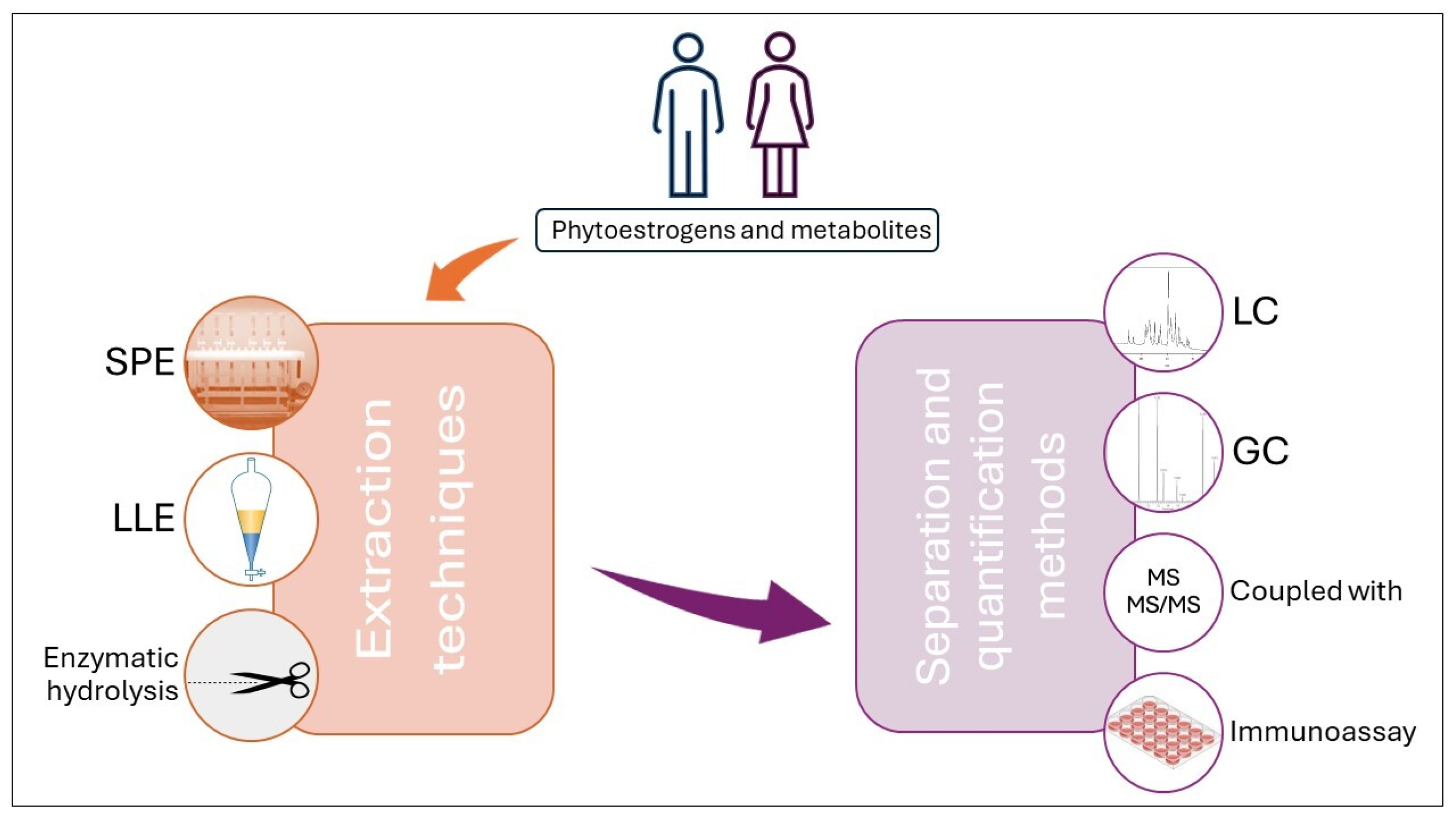
Phytoestrogens, natural compounds with structural similarity to 17-β-estradiol, are known to have potential health benefits, including in hormone-dependent malignancies. The therapeutic interest and some safety concerns observed triggered the need to develop accurate methods to assess their level in different matrices. This narrative review examines the existing analytical methods used to isolate, quantify, and characterize phytoestrogens and their metabolites in plants, foods, and biological samples. Different conventional and modern extraction techniques, such as ultrasonication-assisted extraction, supercritical fluid extraction, or enzyme-assisted extraction, were presented and compared. The advantages and limitations of the existing analytical methods, such as high-performance liquid chromatography using different sensitive detectors, gas chromatography often coupled with mass spectrometry, and immunoassay methods, are highlighted, along with the need for ongoing research to improve the sensitivity and selectivity of the analysis.
Keywords: phytoestrogens; analytical methods; plants; food; biological samples phytoestrogens; analytical methods; plants; food; biological samples