Microwave-Only Heating Concepts for Industrial CO2 Regeneration System Design


Abstract
1. Introduction
2. The Microwave-Assisted Regeneration Reactor Designs
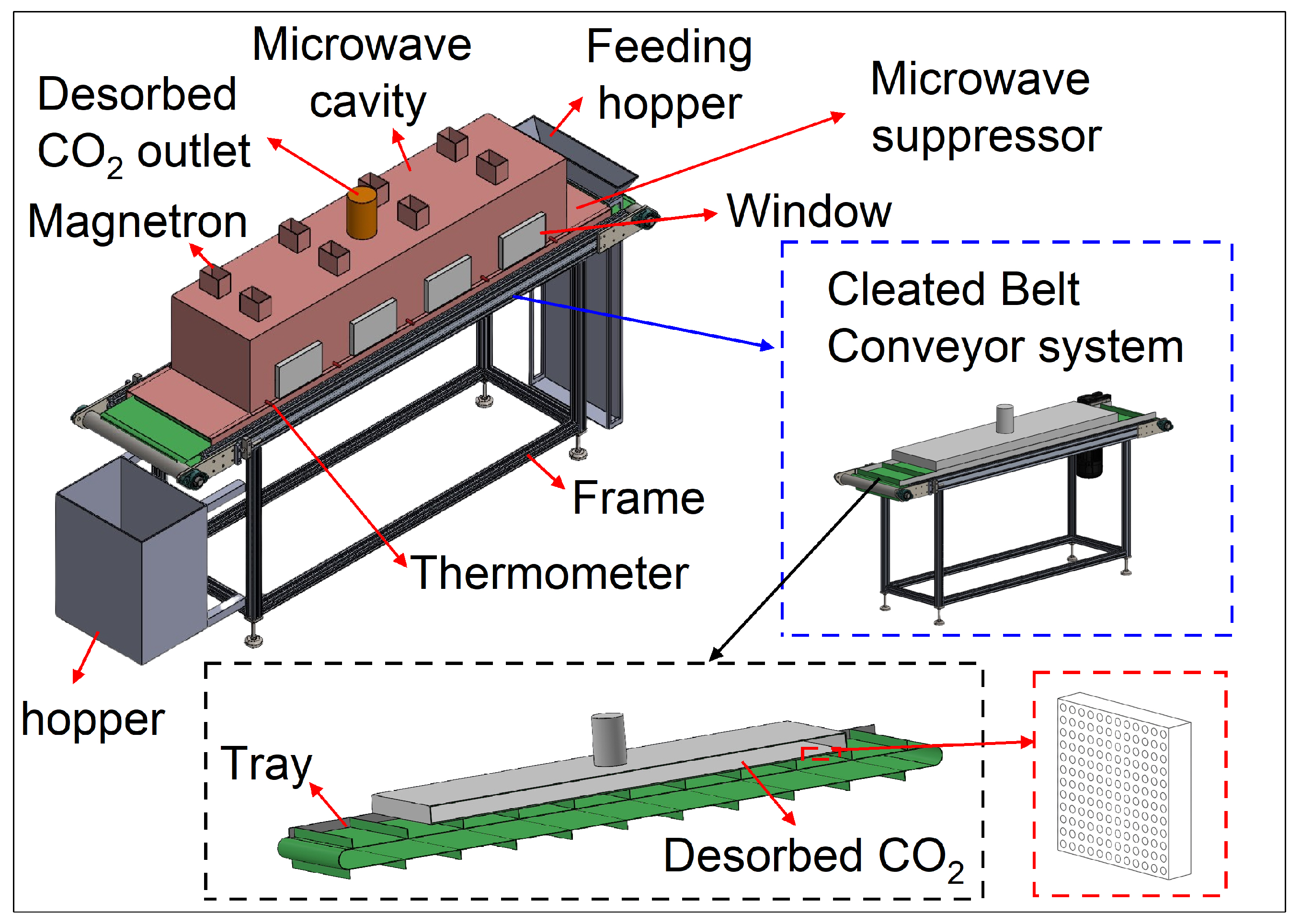
2.1. The Cleated Conveyor Belt Reactor
- The sorbent pellets are deposited onto the tray on the belt through the feeding opening.
- A variable frequency motor subsequently activates the cleated conveyor belt, advancing the trays into the microwave cavity at a meticulously regulated speed, determined by the duration required for carbon dioxide to be desorbed from the sorbent pellets.
- At the top of the microwave cavity, a specified number of magnetrons generate microwave radiation at a frequency of 2450 MHz; the multi-port design ensures uniform microwave heating patterns, thereby facilitating effective desorption.
- Under microwave irradiation, the sorbent rapidly heats up, releasing the CO2. Temperature feedback control utilizing infrared sensors modulates the forward power of the system.
- A rotary vane vacuum pump employs a negative pressure gradient to swiftly evacuate the desorbed gas via the outlet port.
- Following the desorption process, the sorbent pellets are conveyed to a collection container at the end of the belt.
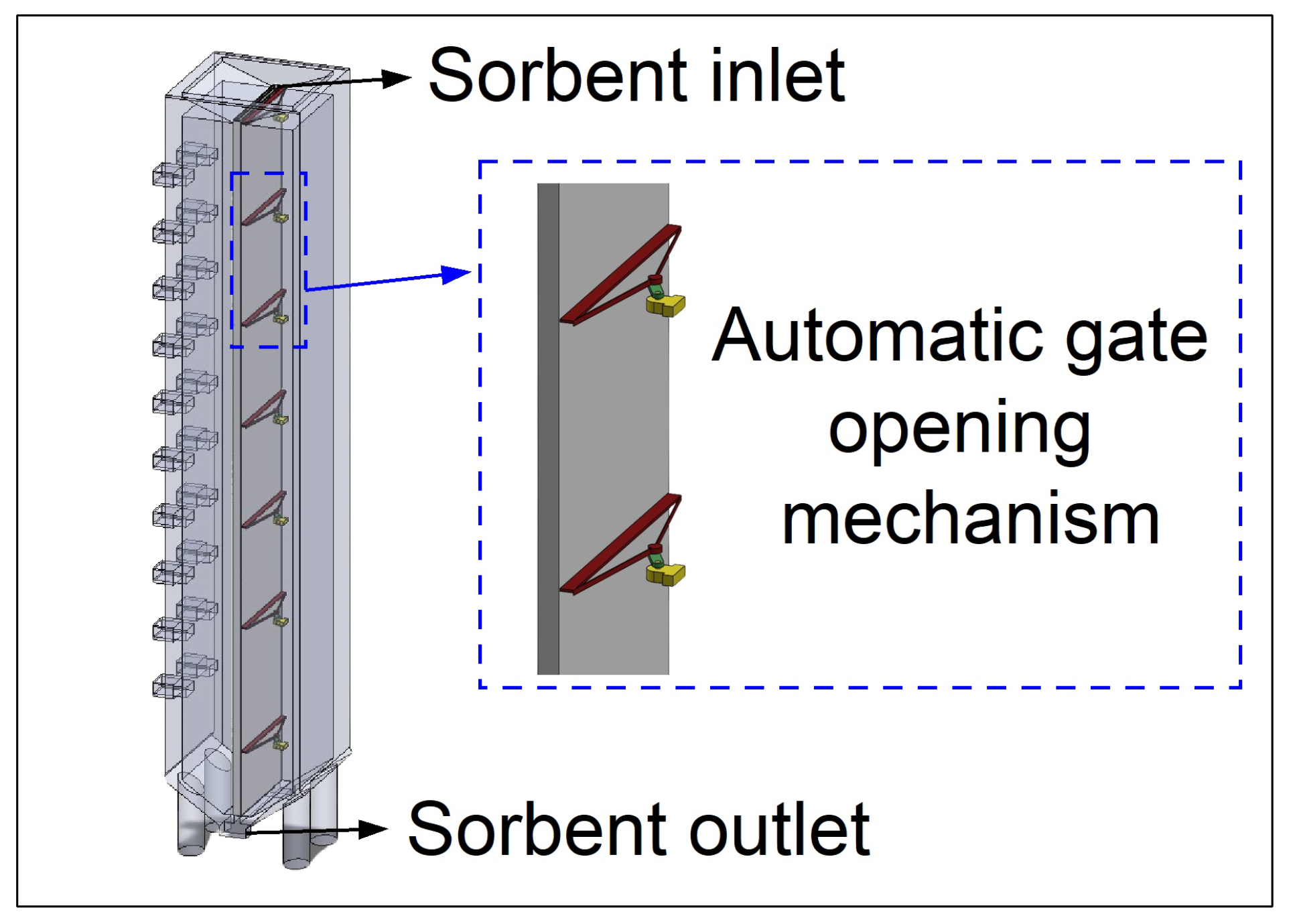
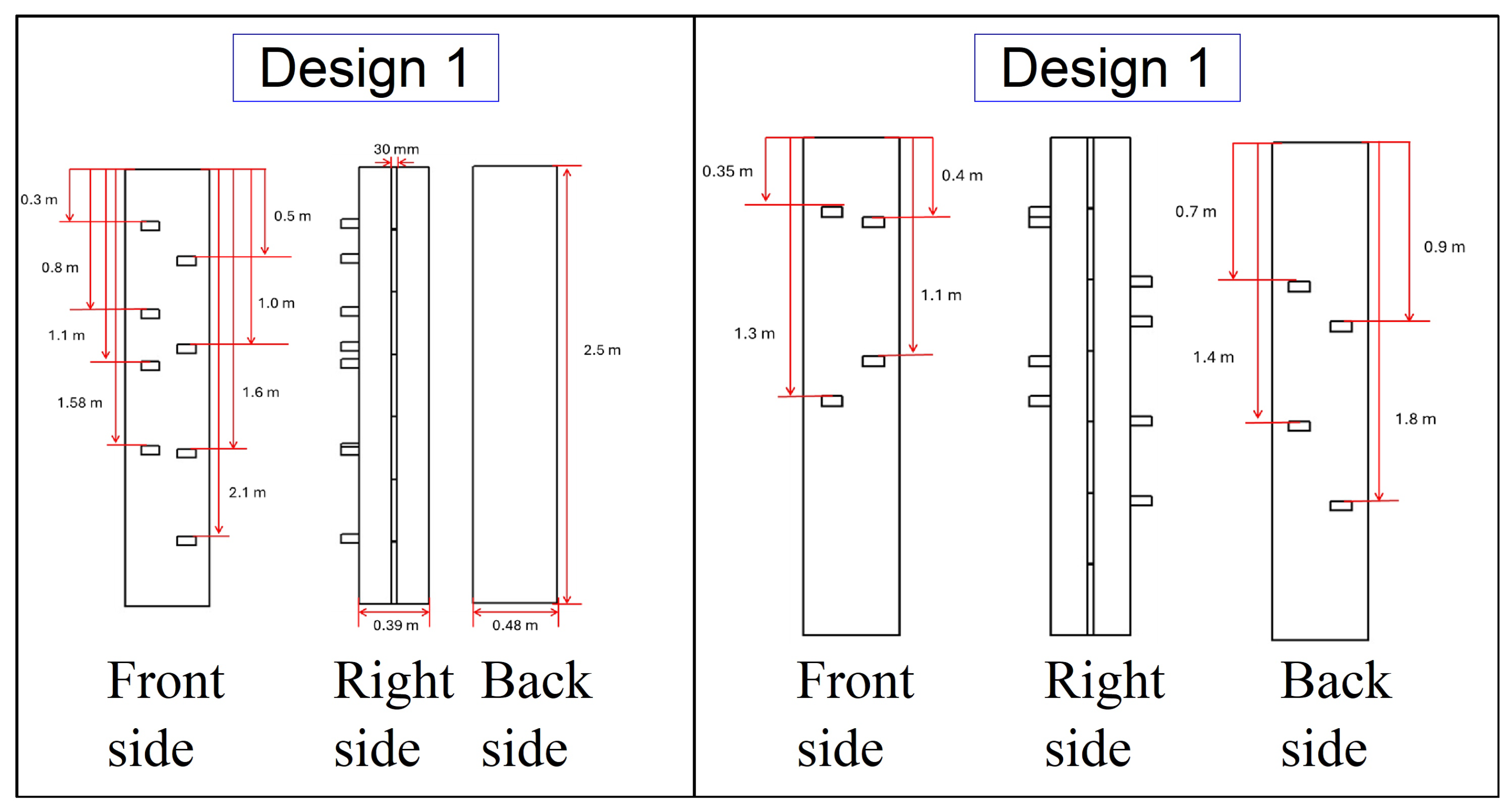
2.2. Cascade Gate Opening System
3. Numerical Method
3.1. Governing Equations
3.2. Assumptions
- Thermal properties and permittivity were assumed to be independent of temperature.
- The Teflon covering the catalyst bed within the microwave was considered fully transparent to microwaves.
- The walls of the wave cavity and waveguide were treated as perfect electrical conductors.
- Given the low movement speed of the conveyor belt, it was assumed that there is no relative motion between the sorbent pellets layer and the belt.
- Due to Teflon’s significantly lower permittivity compared to the sorbent materials, heat transfer for Teflon was not considered.
- The simulation focused solely on the sensible heating of the sorbent materials to optimize dimensions and maximize the power absorbed by the sorbent material.
3.3. Boundary Conditions
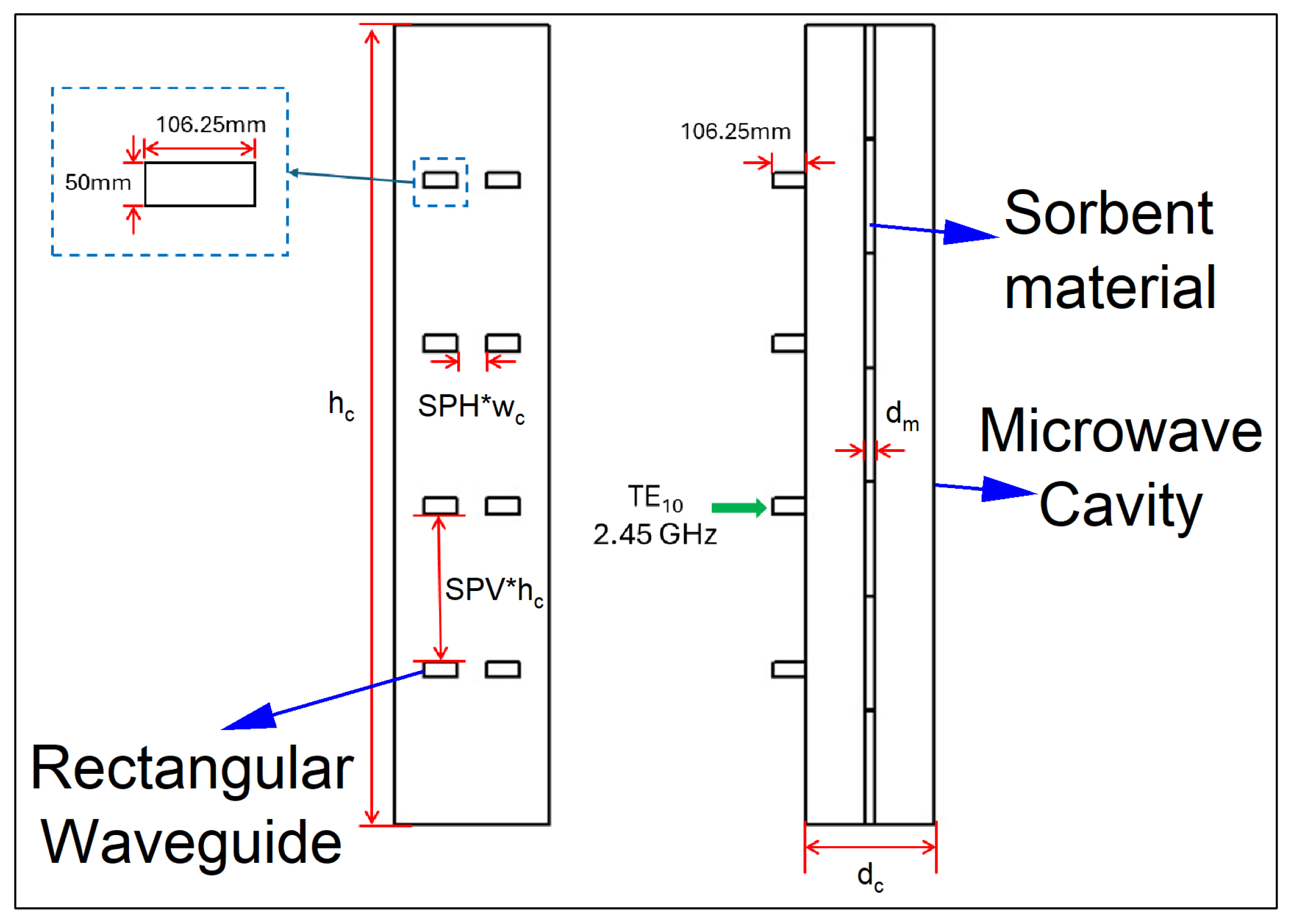
3.3.1. Electromagnetic Boundary Conditions
3.3.2. Heat Transfer
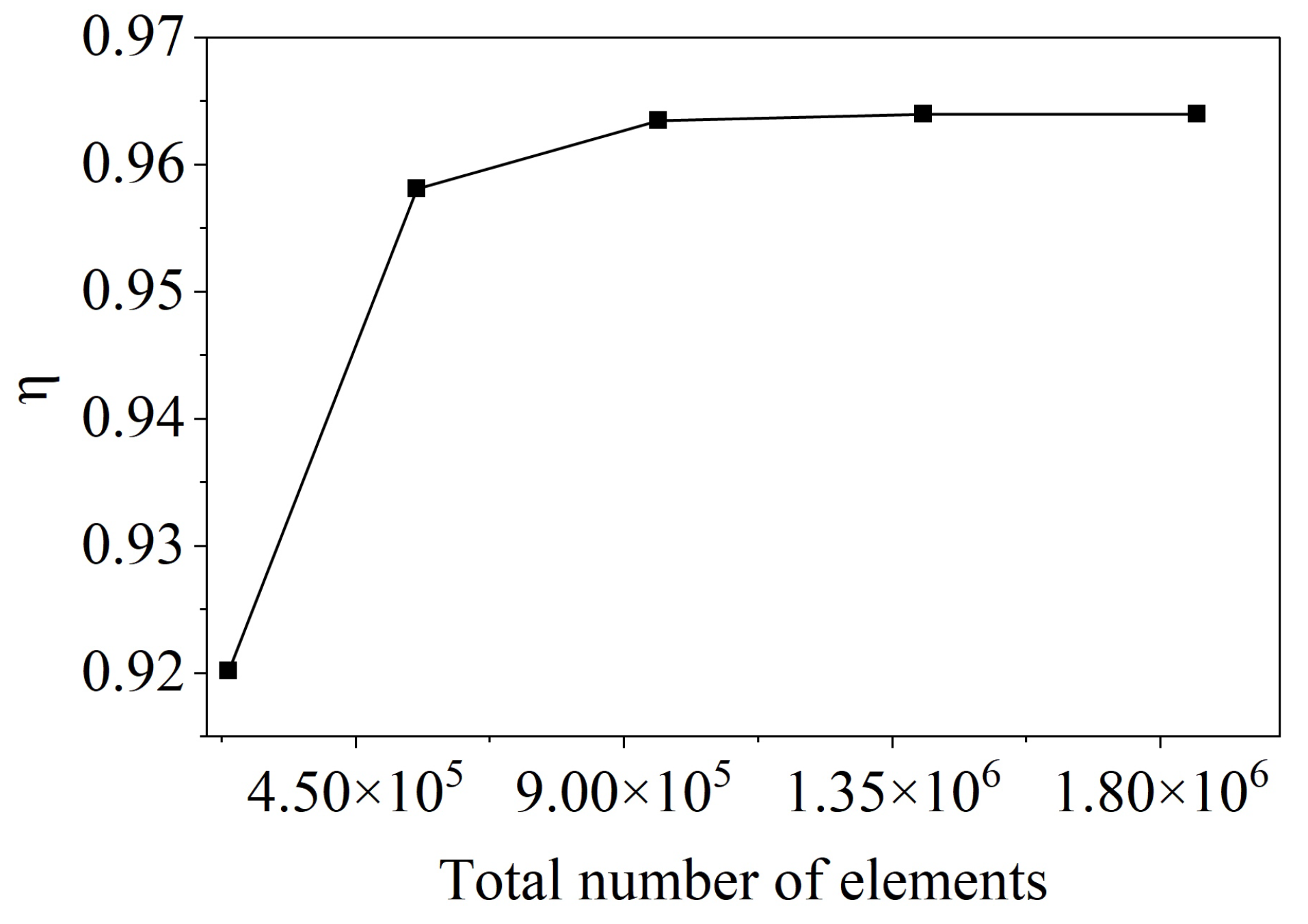
3.4. Mesh Size
4. Results
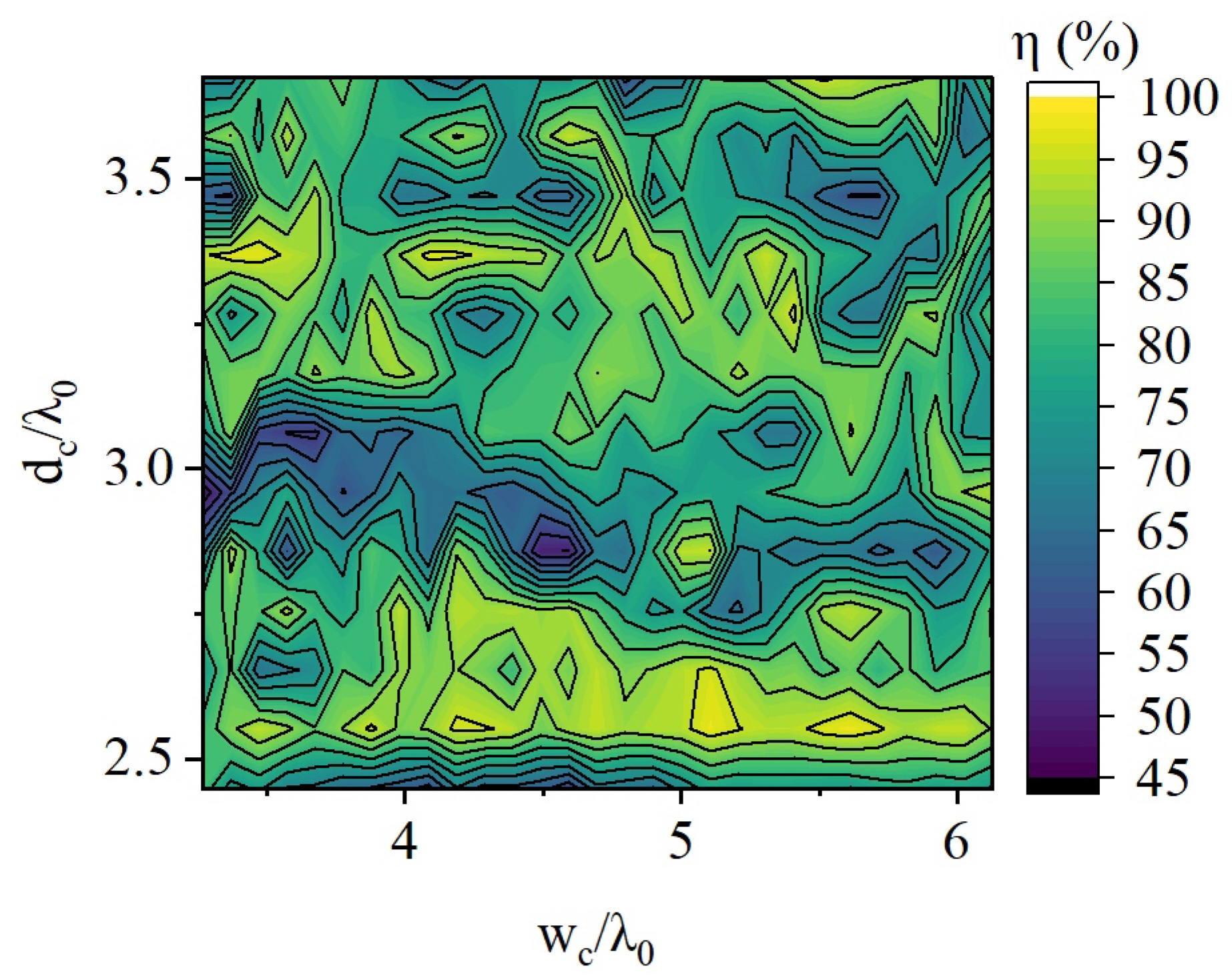
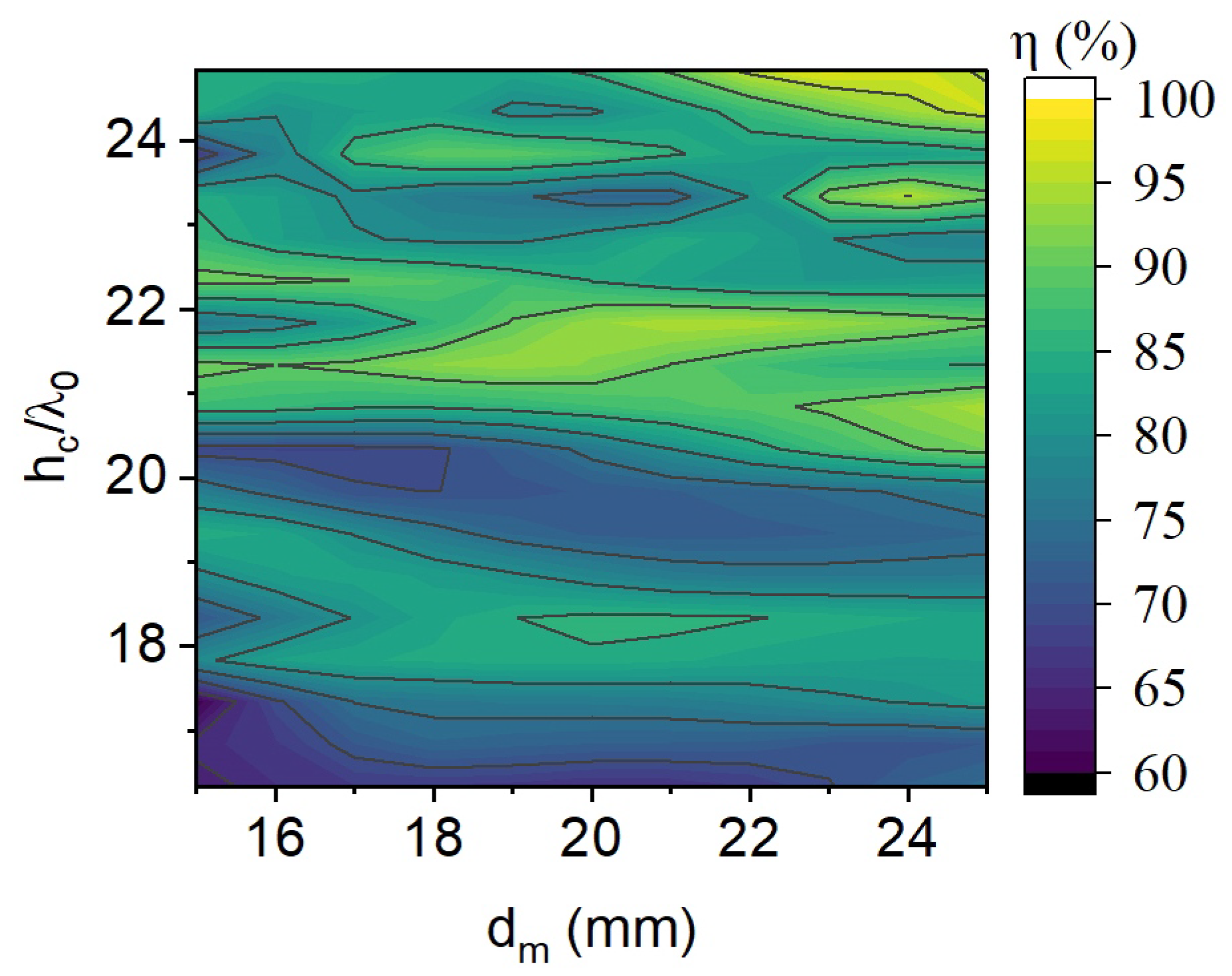
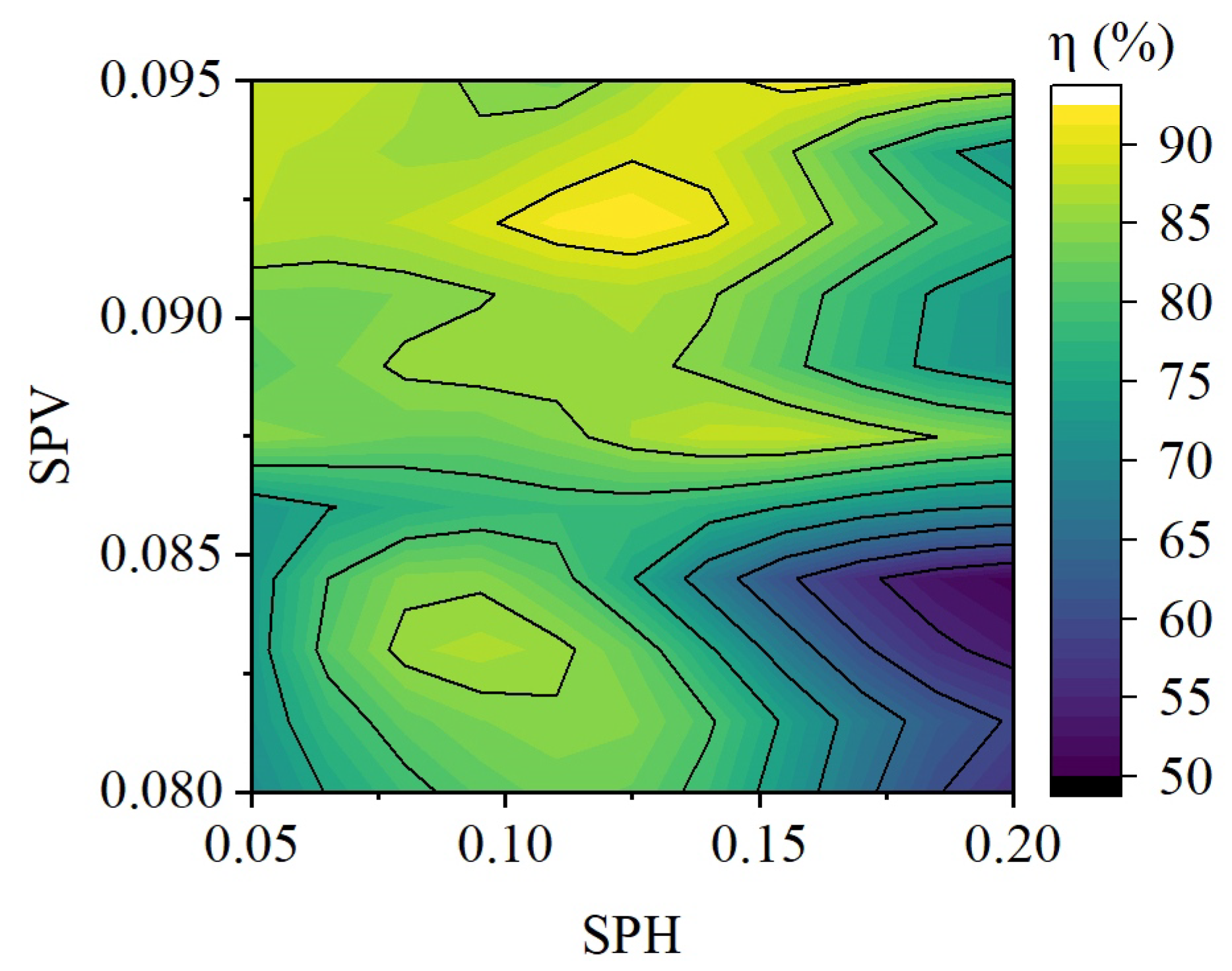
4.1. The Effect of Microwave Dimensions and Waveguides Position
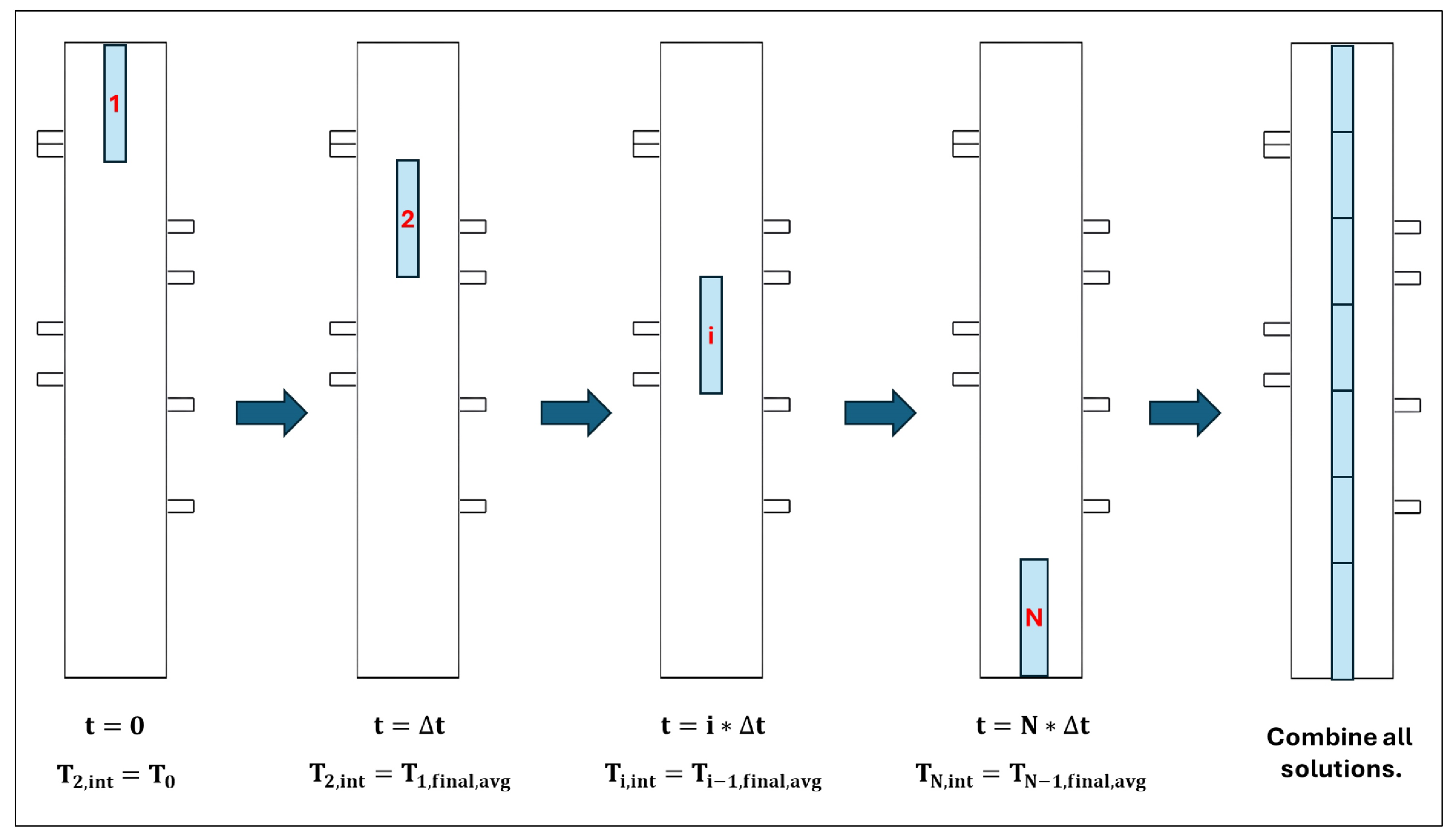
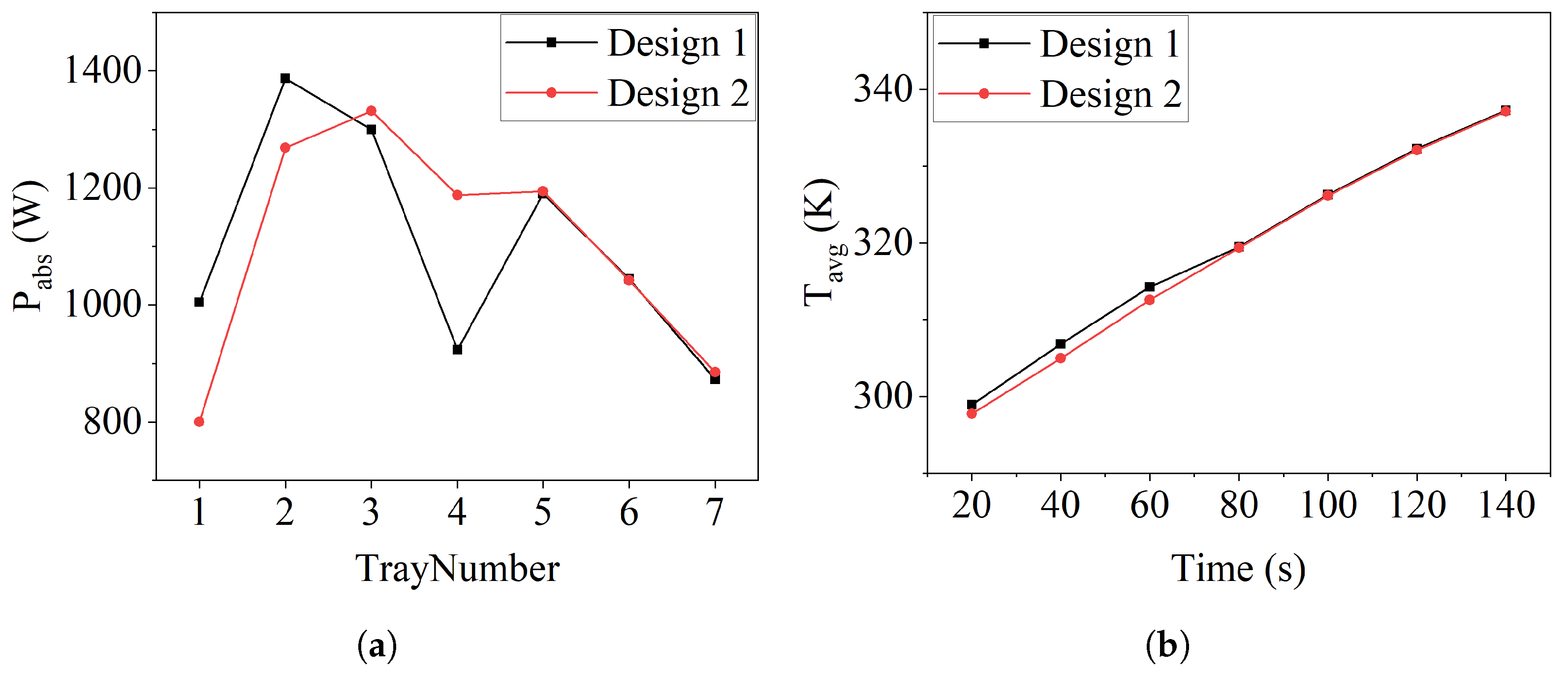
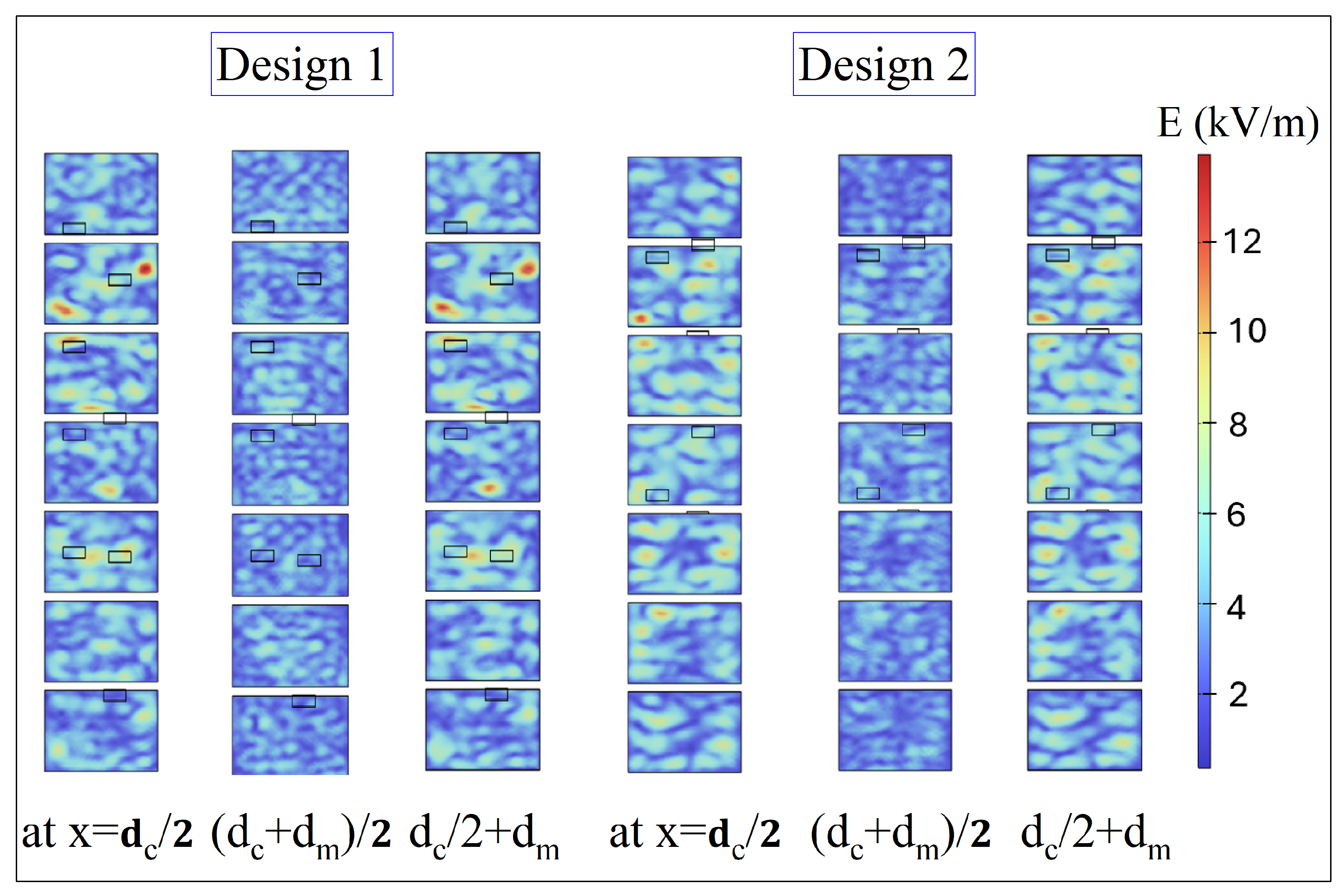
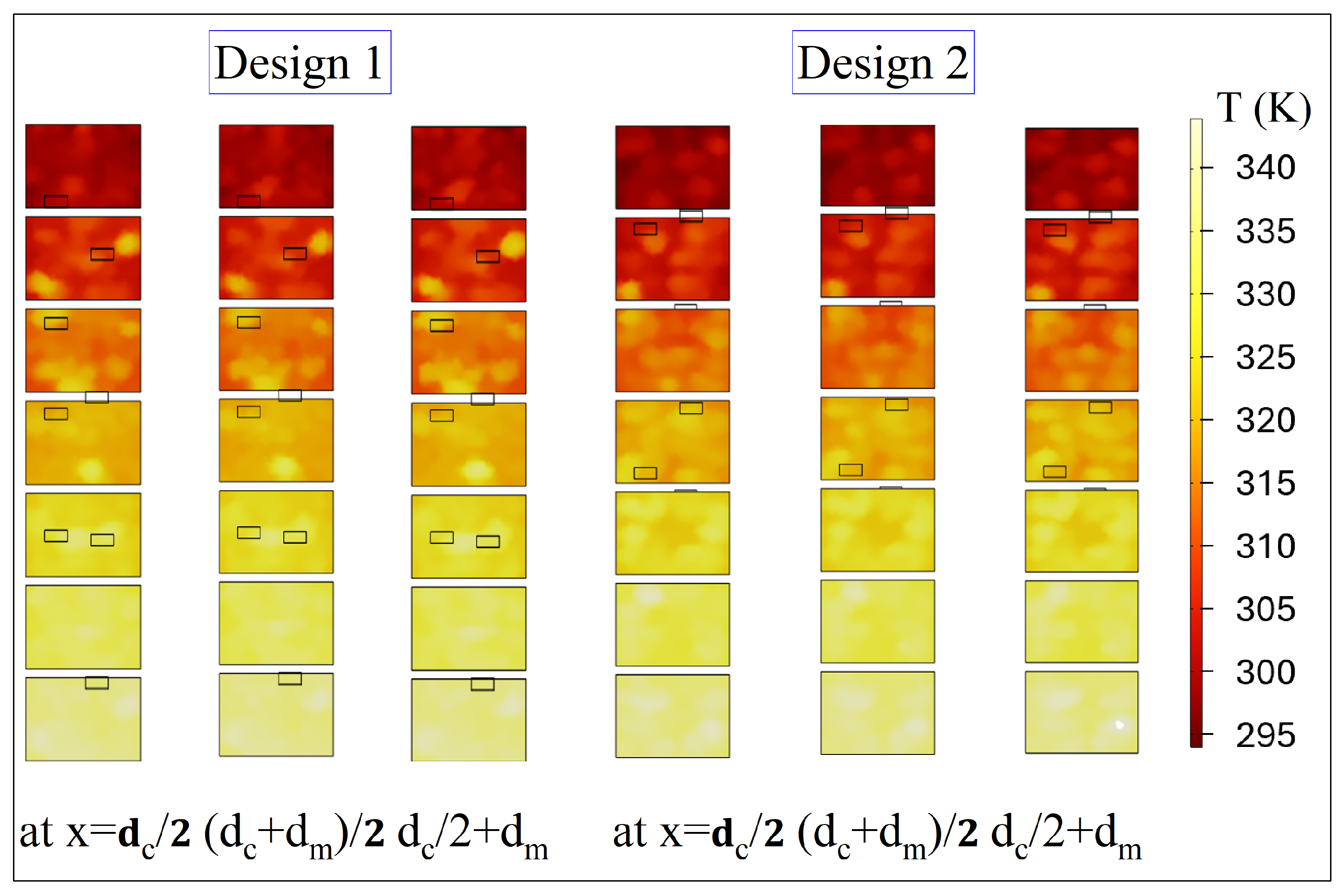
4.2. The Microwave Heating of the Optimized Microwave Designs
5. Conclusions
Author Contributions
Funding
Data Availability Statement
Conflicts of Interest
References
- Sun, J.; Wang, W.; Yue, Q. Review on microwave-matter interaction fundamentals and efficient microwave-associated heating strategies. Materials 2016, 9, 231. [Google Scholar] [CrossRef]
- Baldwin, R.E. Microwave cooking: An overview. J. Food Prot. 1983, 46, 266–269. [Google Scholar] [CrossRef]
- Zeng, S.; Li, M.; Li, G.; Lv, W.; Liao, X.; Wang, L. Innovative applications, limitations and prospects of energy-carrying infrared radiation, microwave and radio frequency in agricultural products processing. Trends Food Sci. Technol. 2022, 121, 76–92. [Google Scholar] [CrossRef]
- Siddique, I.J.; Salema, A.A.; Antunes, E.; Vinu, R. Technical challenges in scaling up the microwave technology for biomass processing. Renew. Sustain. Energy Rev. 2022, 153, 111767. [Google Scholar] [CrossRef]
- Goldblith, S.A. Basic principles of microwaves and recent developments. Adv. Food Res. 1966, 15, 277–301. [Google Scholar] [PubMed]
- Li, G.; Wang, B.; Li, M.; Wu, Y.; Lin, R.; Lv, W.; Li, B. Spouting technology in energy-carrying electromagnetic field drying of agricultural products. Food Eng. Rev. 2024, 16, 304–321. [Google Scholar] [CrossRef]
- Guzik, P.; Kulawik, P.; Zając, M.; Migdał, W. Microwave applications in the food industry: An overview of recent developments. Crit. Rev. Food Sci. Nutr. 2022, 62, 7989–8008. [Google Scholar] [CrossRef]
- Vongpradubchai, S.; Rattanadecho, P. The microwave processing of wood using a continuous microwave belt drier. Chem. Eng. Process. Process Intensif. 2009, 48, 997–1003. [Google Scholar] [CrossRef]
- Methlouthi, A.; Rouaud, O.; Boillereaux, L. Microwave applicator with conveyor belt system. In Proceedings of the COMSOL Conference, Paris, France, 17–19 November 2010. [Google Scholar]
- Sangdao, C.; Songsermpong, S.; Krairiksh, M. A continuous fluidized bed microwave paddy drying system using applicators with perpendicular slots on a concentric cylindrical cavity. Dry. Technol. 2010, 29, 35–46. [Google Scholar] [CrossRef]
- Hosseini, M.; Kaasinen, A.; Link, G.; Shoorehdeli, M.A.; Laehivaara, T.; Vauhkonen, M. Tomography-assisted control for the microwave drying process of polymer foams. J. Process Control 2022, 114, 16–28. [Google Scholar] [CrossRef]
- Bae, S.H.; Jeong, M.G.; Kim, J.H.; Lee, W.S. A continuous power-controlled microwave belt drier improving heating uniformity. IEEE Microw. Wirel. Compon. Lett. 2017, 27, 527–529. [Google Scholar] [CrossRef]
- Shen, L.; Zhu, Y.; Liu, C.; Wang, L.; Liu, H.; Kamruzzaman, M.; Liu, C.; Zhang, Y.; Zheng, X. Modelling of moving drying process and analysis of drying characteristics for germinated brown rice under continuous microwave drying. Biosyst. Eng. 2020, 195, 64–88. [Google Scholar] [CrossRef]
- Soysal, Y.; Ayhan, Z.; Eştürk, O.; Arıkan, M. Intermittent microwave–convective drying of red pepper: Drying kinetics, physical (colour and texture) and sensory quality. Biosyst. Eng. 2009, 103, 455–463. [Google Scholar] [CrossRef]
- Yassin, M.M.; Biti, S.; Afzal, W.; Martín, C.F. A systematic analysis of the dynamics of microwave-and conventionally-assisted swing adsorption on zeolite 13X and an activated carbon under post-combustion carbon capture conditions. J. Environ. Chem. Eng. 2021, 9, 106835. [Google Scholar] [CrossRef]
- Ji, T.; Zhai, H.; Wang, C.; Marin, C.M.; Wilfong, W.C.; Wang, Q.; Duan, Y.; Xia, R.; Jiao, F.; Soong, Y.; et al. Energy-efficient and water-saving sorbent regeneration at near room temperature for direct air capture. Mater. Today Sustain. 2023, 21, 100321. [Google Scholar] [CrossRef]
- Muschi, M.; Devautour-Vinot, S.; Aureau, D.; Heymans, N.; Sene, S.; Emmerich, R.; Ploumistos, A.; Geneste, A.; Steunou, N.; Patriarche, G.; et al. Metal–organic framework/graphene oxide composites for CO2 capture by microwave swing adsorption. J. Mater. Chem. A 2021, 9, 13135–13142. [Google Scholar] [CrossRef]
- Chronopoulos, T.; Fernandez-Diez, Y.; Maroto-Valer, M.M.; Ocone, R.; Reay, D.A. CO2 desorption via microwave heating for post-combustion carbon capture. Microporous Mesoporous Mater. 2014, 197, 288–290. [Google Scholar] [CrossRef]
- Van Schagen, T.; van der Wal, P.; Brilman, D. Development of a novel, through-flow microwave-based regenerator for sorbent-based direct air capture. Chem. Eng. J. Adv. 2022, 9, 100187. [Google Scholar] [CrossRef]
- Jang, G.G.; Kasturi, A.; Stamberga, D.; Custelcean, R.; Keum, J.K.; Yiacoumi, S.; Tsouris, C. Ultra-fast microwave regeneration of CO2 solid sorbents for energy-efficient direct air capture. Sep. Purif. Technol. 2023, 309, 123053. [Google Scholar] [CrossRef]
- An, K.; Li, K.; Yang, C.M.; Brechtl, J.; Nawaz, K. A comprehensive review on regeneration strategies for direct air capture. J. CO2 Util. 2023, 76, 102587. [Google Scholar] [CrossRef]
- Cherbański, R.; Molga, E. Intensification of desorption processes by use of microwaves—An overview of possible applications and industrial perspectives. Chem. Eng. Process. Process Intensif. 2009, 48, 48–58. [Google Scholar] [CrossRef]
- Kou, Z.; Zhao, Z.; Li, H.; Gao, X. A review of adsorption intensified by microwave irradiation from absorbent preparation to separation processes. Chem. Eng. Process. Process Intensif. 2023, 184, 109300. [Google Scholar] [CrossRef]
- Li, H.; Zhao, Z.; Xiouras, C.; Stefanidis, G.D.; Li, X.; Gao, X. Fundamentals and applications of microwave heating to chemicals separation processes. Renew. Sustain. Energy Rev. 2019, 114, 109316. [Google Scholar] [CrossRef]
- Sidhareddy, M.; Tiwari, S.; Phelan, P.; Bellos, E. Comprehensive review on adsorption cooling systems and its regeneration methods using solar, ultrasound, and microwave energy. Int. J. Refrig. 2023, 146, 174–201. [Google Scholar] [CrossRef]
- Yang, D.; Du, X. A review about microwave regeneration technology of waste activated carbon. In Proceedings of the IOP Conference Series: Earth and Environmental Science; IOP Publishing: Bristol, UK, 2022; Volume 983, p. 012101. [Google Scholar]
- SAIREM. Drying of Food and Industrial Products; SAIREM: Décines-Charpieu, France, 2020. [Google Scholar]
- COMSOL. What is COMSOL Multiphysics? COMSOL: Stockholm, Sweden, 2024. [Google Scholar]
- Hill, J.M.; Jennings, M.J. Formulation of model equations for heating by microwave radiation. Appl. Math. Model. 1993, 17, 369–379. [Google Scholar] [CrossRef]
- Balanis, C.A. Advanced Engineering Electromagnetics; John Wiley & Sons: Cambridge, MA, USA, 2012. [Google Scholar]
- Basak, T.; Bhattacharya, M.; Panda, S. A generalized approach on microwave processing for the lateral and radial irradiations of various Groups of food materials. Innov. Food Sci. Emerg. Technol. 2016, 33, 333–347. [Google Scholar] [CrossRef]
- Metaxas, A.; Meredith, R.J. Industrial Microwave Heating; Number 4; IET: Hertfordshire, UK, 1983. [Google Scholar]
- Meredith, R.J. Engineers’ Handbook of Industrial Microwave Heating; Number 25; IET: Hertfordshire, UK, 1998. [Google Scholar]
- Dube, D. Study of Landau-Lifshitz-Looyenga’s formula for dielectric correlation between powder and bulk. J. Phys. D Appl. Phys. 1970, 3, 1648. [Google Scholar] [CrossRef]
- Muley, P.D.; Boldor, D. Multiphysics numerical modeling of the continuous flow microwave-assisted transesterification process. J. Microw. Power Electromagn. Energy 2012, 46, 139–162. [Google Scholar] [CrossRef] [PubMed]
- Bhargava, D.; Rattanadecho, P. Effect of Different Positions of Waveguide Port on the Coupled Model of Electromagnetic Wave and Heat Transfer in Microwave Heating of Coal. Sci. Technol. Asia 2022, 27, 363–373. [Google Scholar]
- Dominguez-Tortajada, E.; Plaza-Gonzalez, P.; Diaz-Morcillo, A.; Balbastre, J. Optimisation of electric field uniformity in microwave heating systems by means of multi-feeding and genetic algorithms. Int. J. Mater. Prod. Technol. 2007, 29, 149–162. [Google Scholar] [CrossRef]
- Walker, S.J. Multi-Mode Cavity Effects on the Microwave Heating of a Ceramic Slab; New Jersey Institute of Technology: Newark, NJ, USA, 2001. [Google Scholar]
- Salema, A.A.; Afzal, M.T. Numerical simulation of heating behaviour in biomass bed and pellets under multimode microwave system. Int. J. Therm. Sci. 2015, 91, 12–24. [Google Scholar] [CrossRef]
- Thostenson, E.; Chou, T.W. Microwave processing: Fundamentals and applications. Compos. Part A Appl. Sci. Manuf. 1999, 30, 1055–1071. [Google Scholar] [CrossRef]
- Jeon, S.; Kim, J.; Yang, D. Design of large-scale microwave cavity for uniform and efficient plastic heating. Polymers 2022, 14, 541. [Google Scholar] [CrossRef]
- Campañone, L.A.; Paola, C.A.; Mascheroni, R.H. Modeling and simulation of microwave heating of foods under different process schedules. Food Bioprocess Technol. 2012, 5, 738–749. [Google Scholar] [CrossRef]
- Ciacci, T.; Galgano, A.; Di Blasi, C. Numerical simulation of the electromagnetic field and the heat and mass transfer processes during microwave-induced pyrolysis of a wood block. Chem. Eng. Sci. 2010, 65, 4117–4133. [Google Scholar] [CrossRef]




Disclaimer/Publisher’s Note: The statements, opinions and data contained in all publications are solely those of the individual author(s) and contributor(s) and not of MDPI and/or the editor(s). MDPI and/or the editor(s) disclaim responsibility for any injury to people or property resulting from any ideas, methods, instructions or products referred to in the content. |
© 2026 by the authors. Licensee MDPI, Basel, Switzerland. This article is an open access article distributed under the terms and conditions of the Creative Commons Attribution (CC BY) license.
Share and Cite
Al-Khalifah, H.; Narayanaswamy, A. Microwave-Only Heating Concepts for Industrial CO2 Regeneration System Design. Processes 2026, 14, 372. https://doi.org/10.3390/pr14020372
Al-Khalifah H, Narayanaswamy A. Microwave-Only Heating Concepts for Industrial CO2 Regeneration System Design. Processes. 2026; 14(2):372. https://doi.org/10.3390/pr14020372
Chicago/Turabian StyleAl-Khalifah, Hassan, and Arvind Narayanaswamy. 2026. "Microwave-Only Heating Concepts for Industrial CO2 Regeneration System Design" Processes 14, no. 2: 372. https://doi.org/10.3390/pr14020372
APA StyleAl-Khalifah, H., & Narayanaswamy, A. (2026). Microwave-Only Heating Concepts for Industrial CO2 Regeneration System Design. Processes, 14(2), 372. https://doi.org/10.3390/pr14020372