Article

Study on Two-Phase Flow Behavior and Analysis of Influencing Factors Based on Unsteady Oil–Water Relative Permeability Experiment


1
School of Petroleum Engineering, Yangtze University, Wuhan 430100, China
2
Key Laboratory of Drilling and Production Engineering for Oil and Gas, Yangtze University, Wuhan 430100, China
3
Downhole Technology Service Branch, CNPC Bohai Drilling Engineering Company Limited, Tianjin 300283, China
*
Author to whom correspondence should be addressed.
Processes 2026, 14(2), 346; https://doi.org/10.3390/pr14020346
Submission received: 21 December 2025 / Revised: 12 January 2026 / Accepted: 16 January 2026 / Published: 19 January 2026
(This article belongs to the Special Issue Advanced Research on Marine and Deep Oil & Gas Development)

Abstract

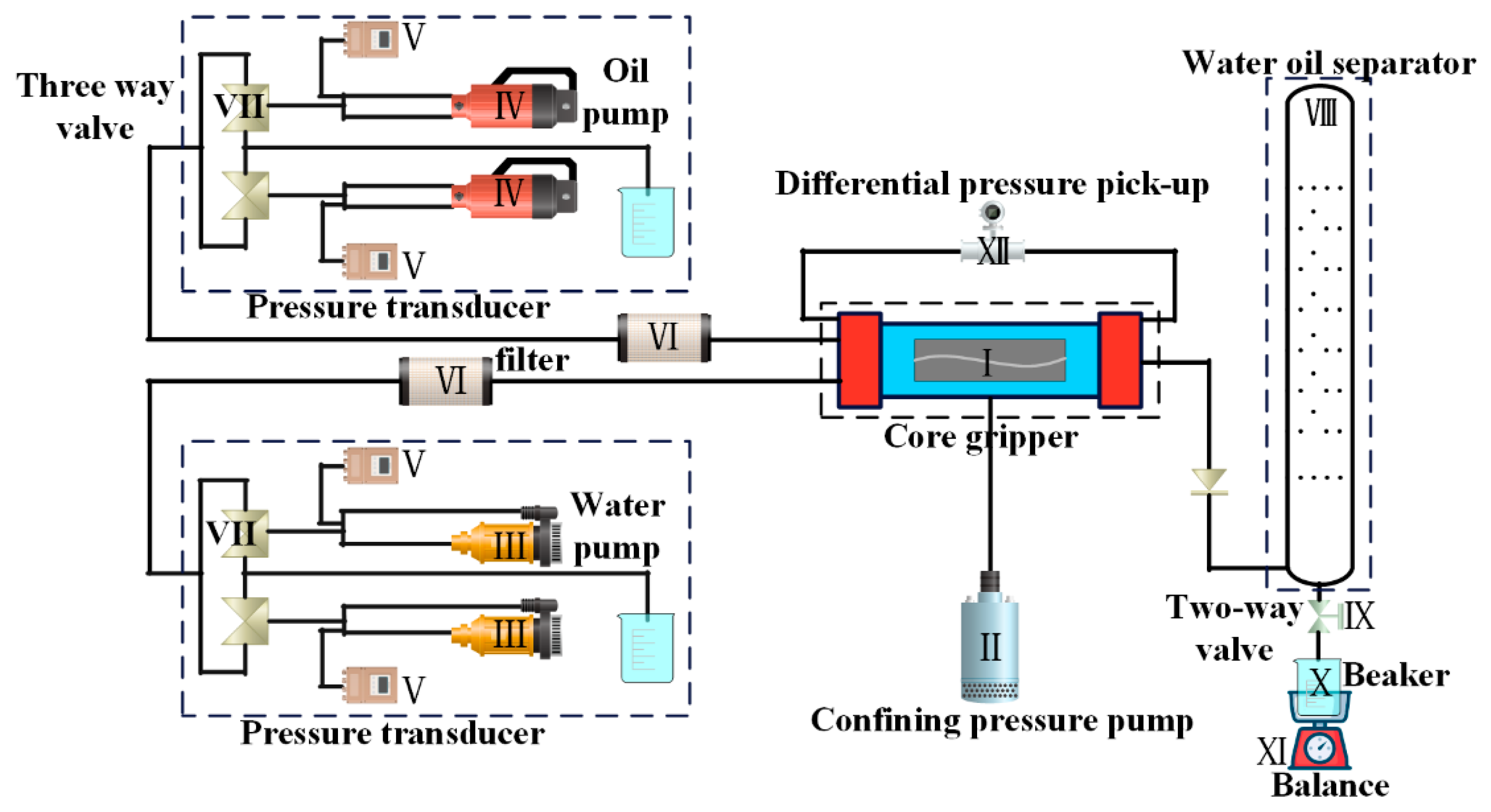
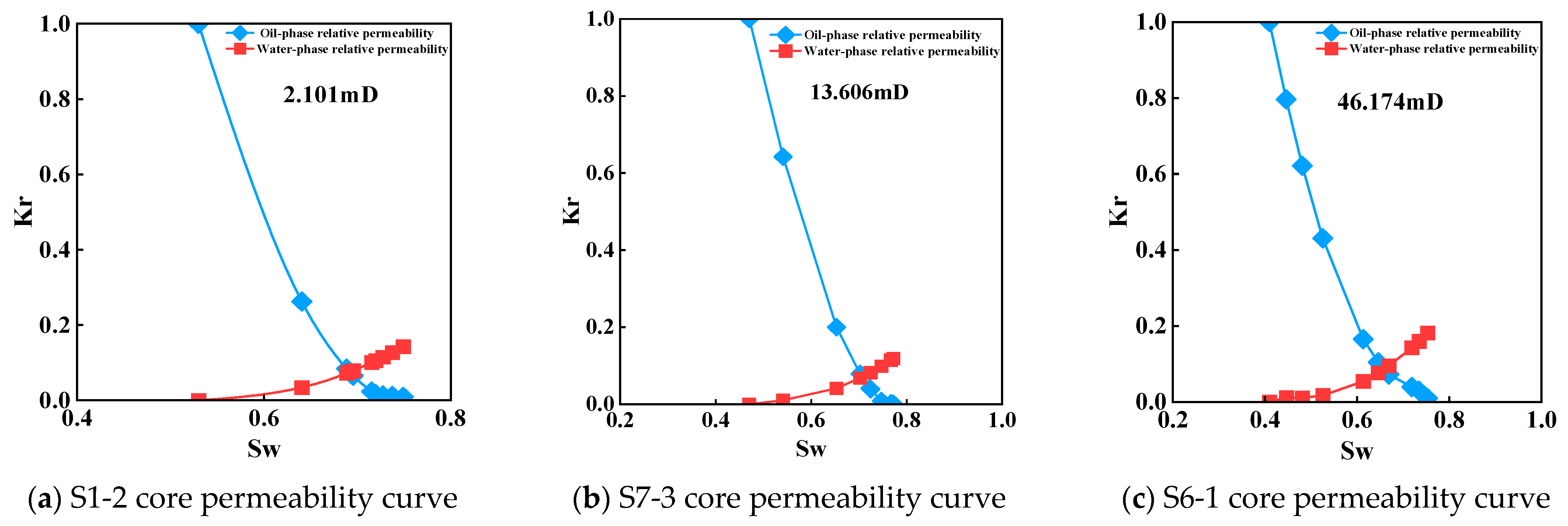
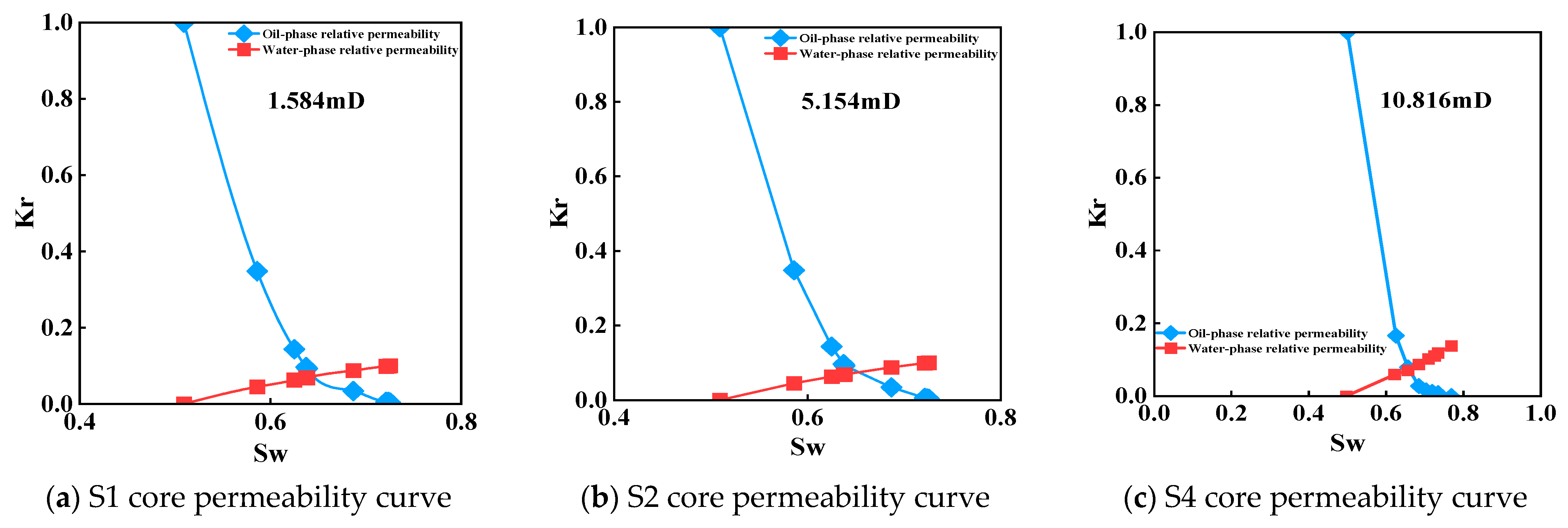
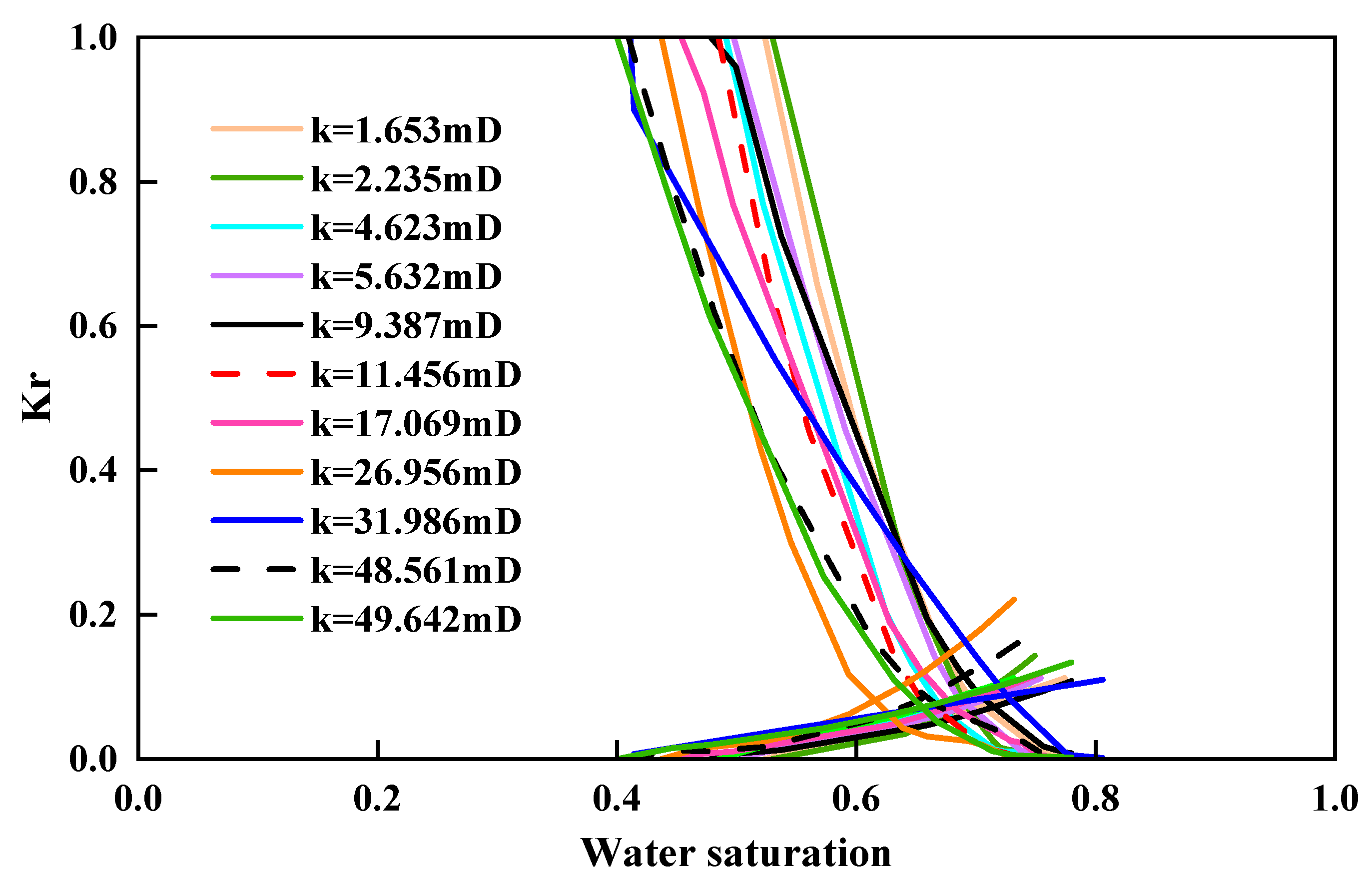
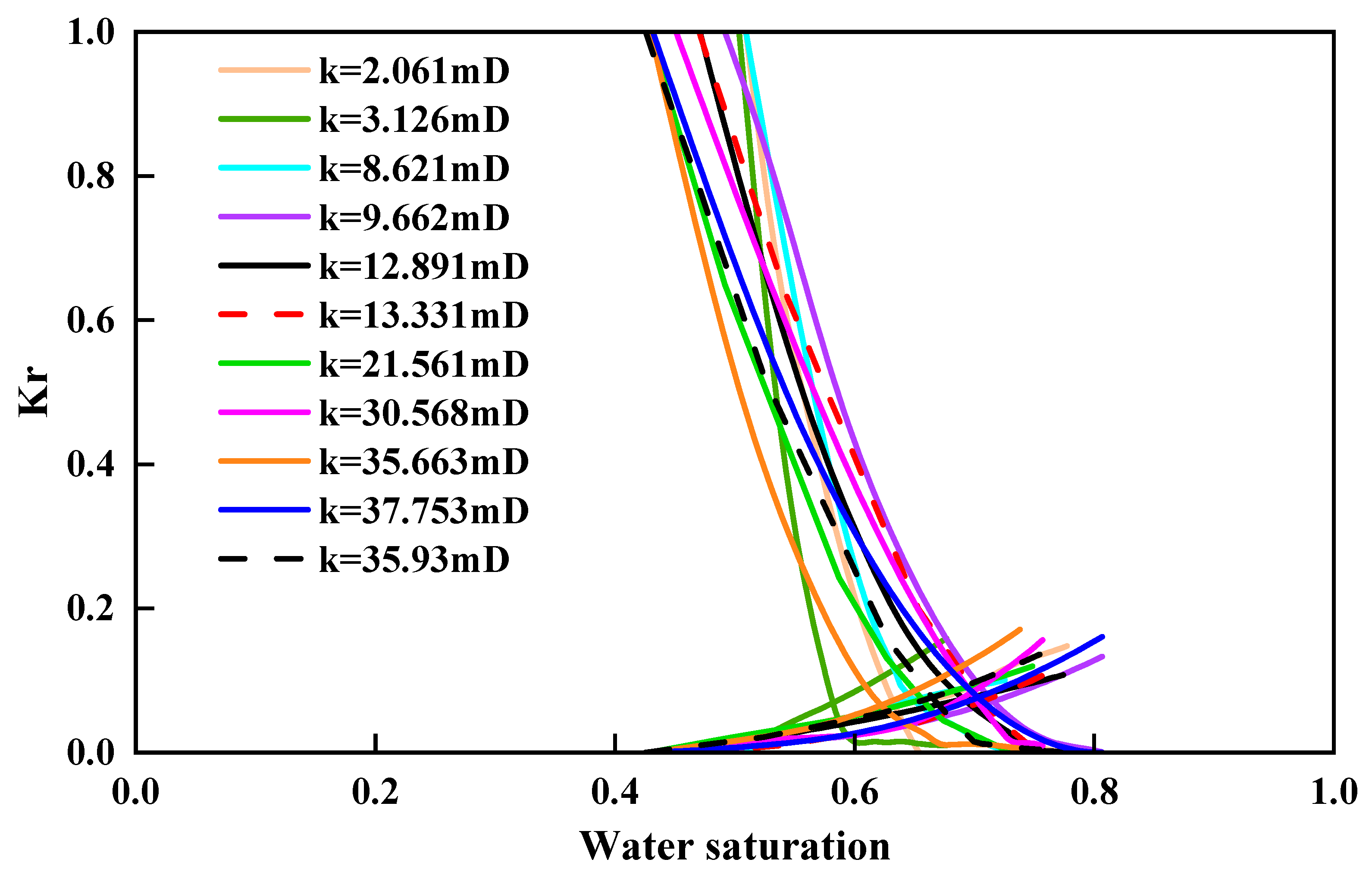
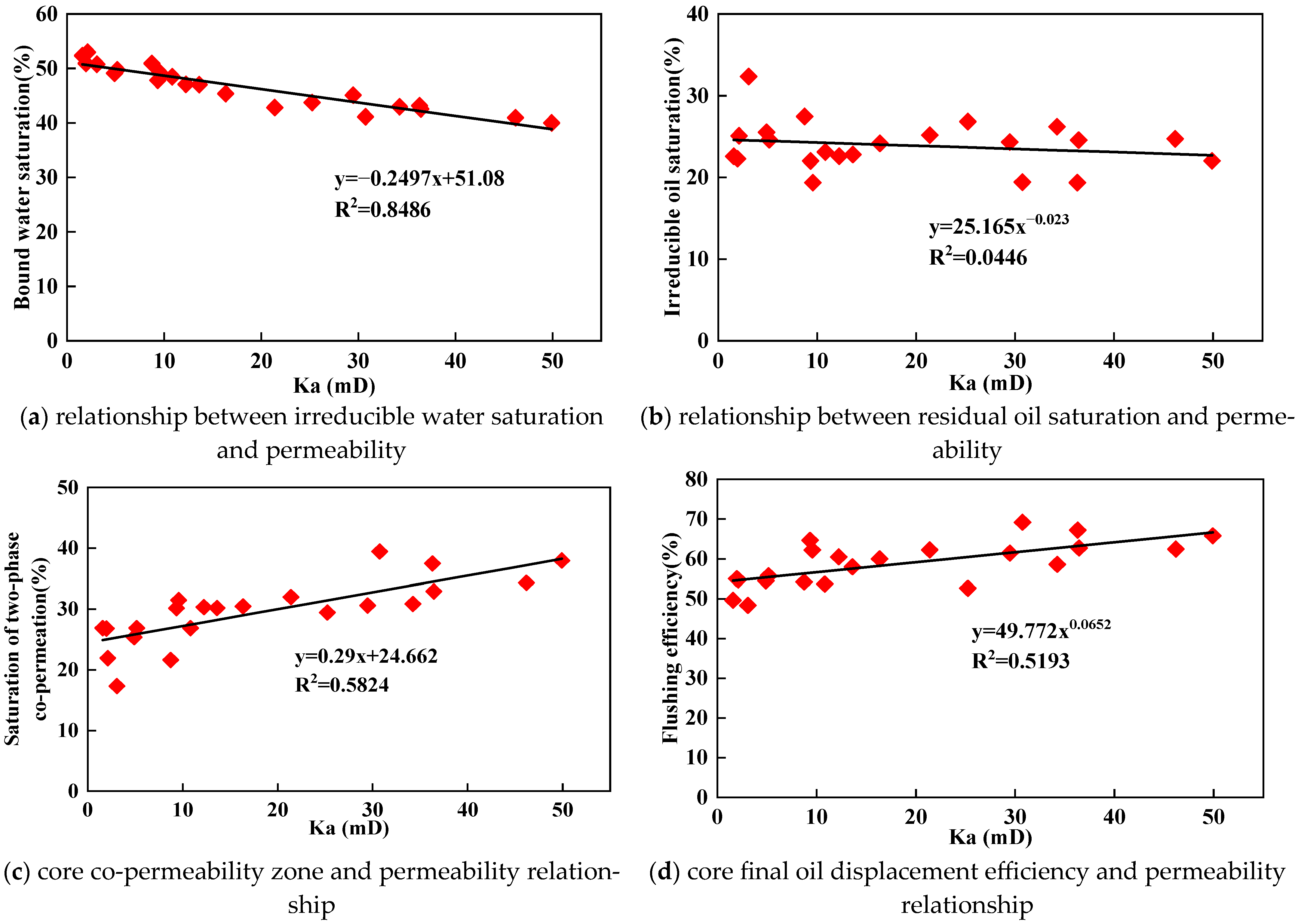
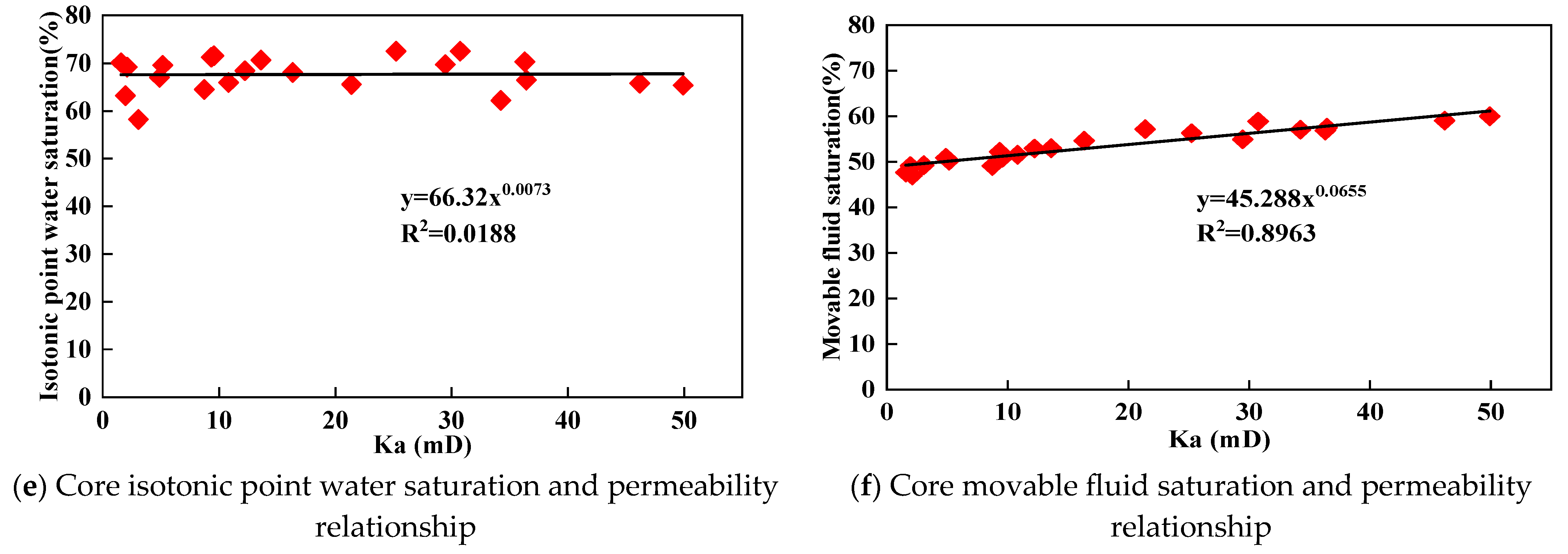
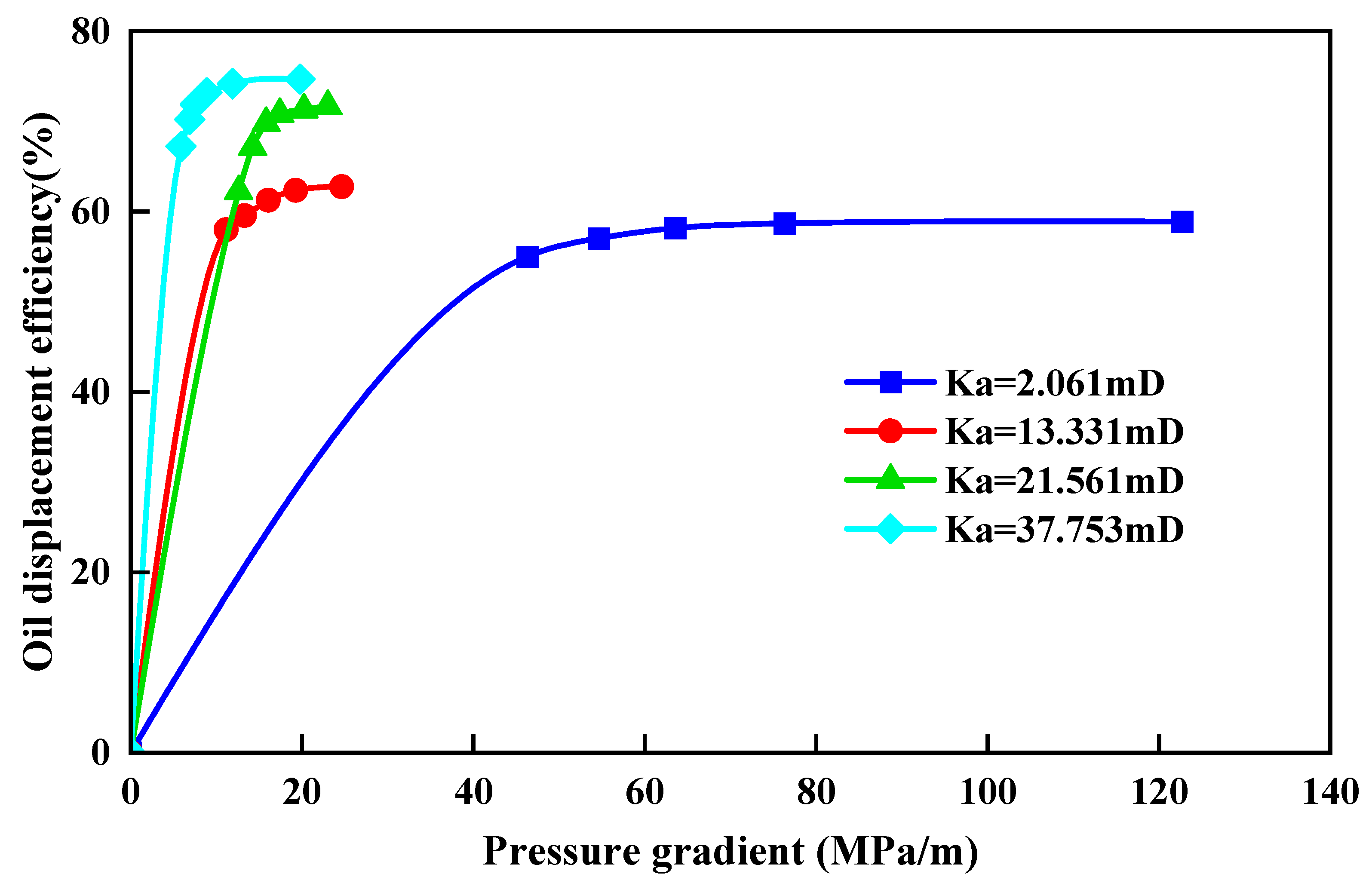
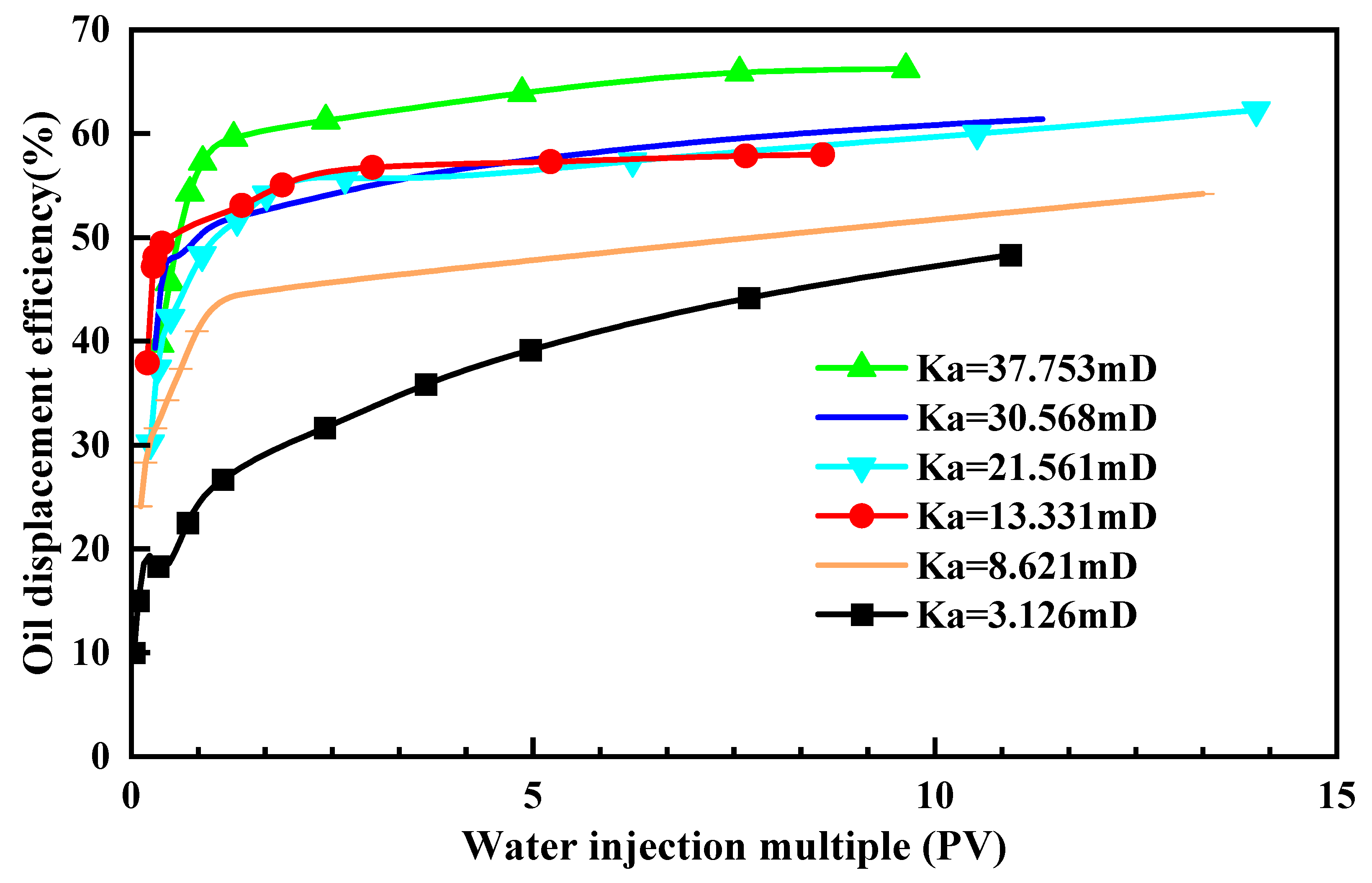
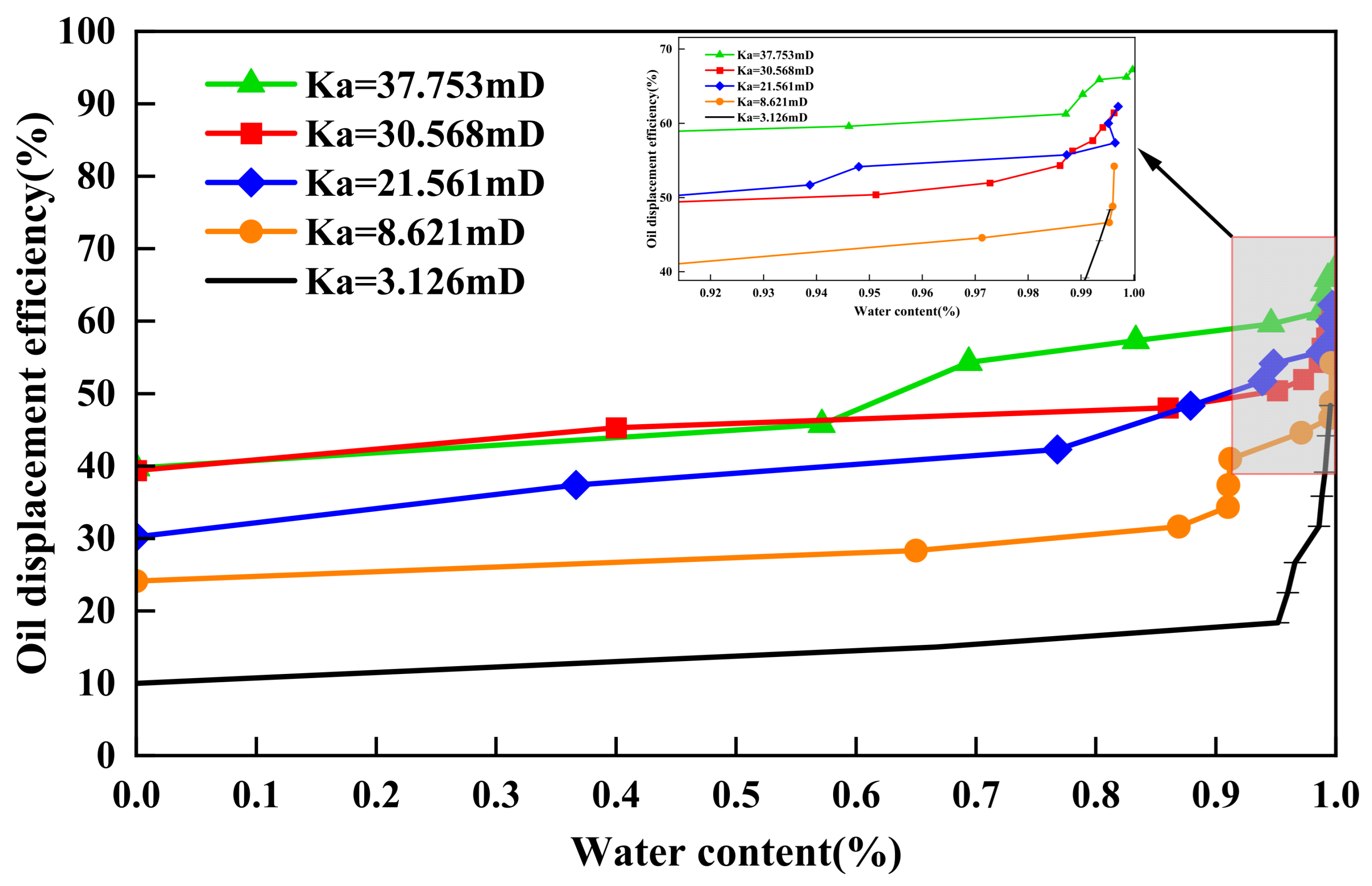
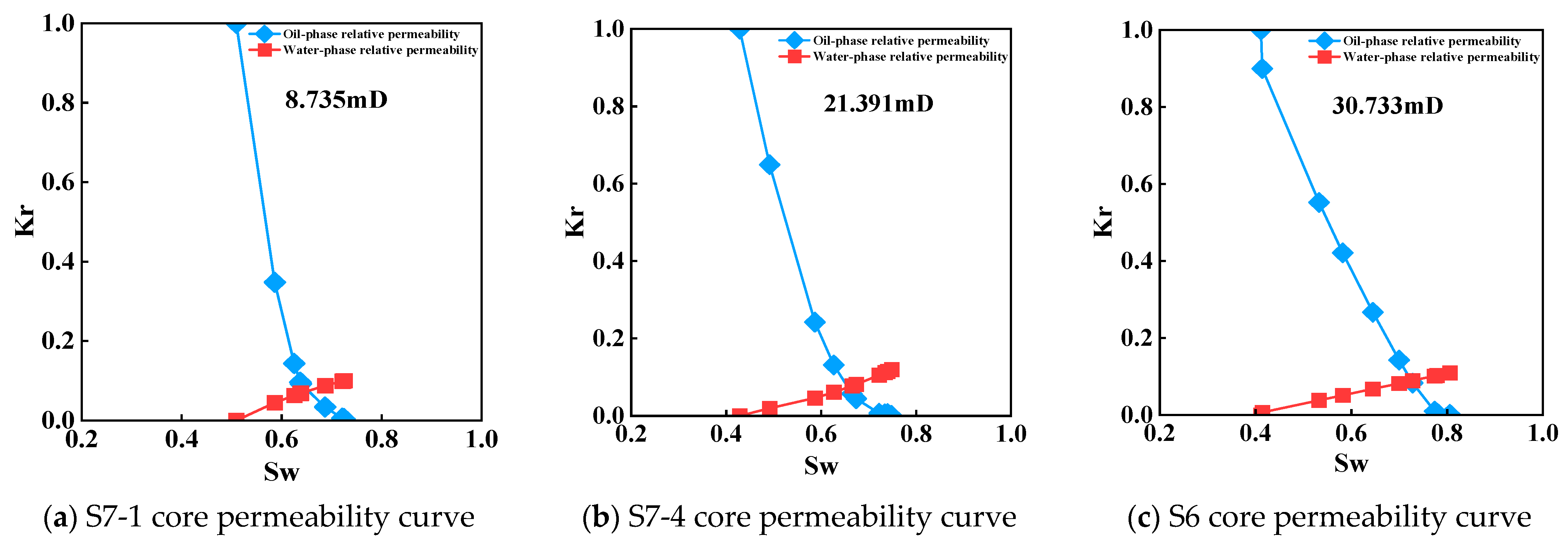
Late-stage sandstone reservoirs often exhibit flow behavior markedly different from early performance, reducing recovery. This study quantifies two-phase flow in Jilin Oilfield sandstone cores to support production optimization. An oil–water displacement apparatus was built and unsteady-state relative-permeability tests were performed on core plugs from multiple well blocks. Permeability, pressure gradient, water saturation, and displacement efficiency were tracked over a range of injection multiples. Water-phase relative-permeability curves classify three seepage types: concave-up (12 cores, 2.10–46.17 mD), linear (7 cores, 1.58–12.23 mD), and concave-down (3 cores, 8.74–30.73 mD). Permeability is strongly negatively correlated with irreducible water saturation (R2 = 0.84) and positively correlated with residual oil saturation (R2 = 0.58), two-phase flow interval (R2 = 0.51), and movable oil saturation (R2 = 0.89); other relationships are weak. An increasing pressure gradient markedly improves displacement efficiency in low-permeability cores. Higher injection multiples further raise displacement efficiency across all permeability classes, but gains diminish with increasing permeability. Displacement efficiency also increases with water cut when used as a flooding-stage indicator in these unsteady-state tests.
Keywords: low permeability reservoir; the seepage law; oil–water displacement; oil–water occurrence state; pressure gradient low permeability reservoir; the seepage law; oil–water displacement; oil–water occurrence state; pressure gradient