


Abstract
Wheat germ (WG) oil is highly used in cosmetics and pharmaceutics for its high tocopherol content. The present study explored and optimized the ultrasound-assisted extraction of oil and bioactive compounds from stabilized wheat germ at a laboratory scale. Optimum conditions were 15 s, 36% amplitude, and 10:1 solvent-to-solid ratio. The yield (5.1%) and the ether-soluble fraction (87.92%) obtained were remarkable considering the short extraction time, and the solvent used was absolute ethanol. Sonication did not have a significant impact on oil oxidation parameters (acidity and peroxide value), tocopherol content (1499 μg toc/g extract), and antiradical scavenging activity of the extracts (71% DPPH loss). The total fiber content (16%) and type of the remaining solids were not affected as well. Protein solubility increased with sonication. Altogether, these findings propose ultrasound-assisted extraction of oil from wheat germ as a promising alternative to conventional techniques.
1. Introduction
Wheat is one of the most widely produced cereals in the world. Wheat germ (WG) is removed from the endosperm during milling because of its unfavorable baking properties, as the oil is susceptible to oxidation. WG is a good source of bioactive compounds like tocopherols, sterols, and carotenoids, as well as well-balanced proteins and fiber. Currently, WG is under-exploited considering the high production level worldwide and the limited volumes in industrial applications. Evidence indicates that WG could serve as a source of natural antioxidants and nutraceuticals by using an appropriate solvent and extraction processes [1]. At present, solvent extraction and mechanical pressing are the most widely used methods for oil extraction from the feedstock, in particular WG. However, press extraction of WG oil has a low yield, recovering only half of the oil present in the germ [1,2,3]. Hexane extraction is very common despite the well-known drawbacks of these methods associated with solvent security and environmental impact [4,5]. Consequently, ethanol has been investigated as an extraction solvent. It is recognized as non-toxic and with fewer handling risks than hexane. However, ethanol co-extracts other compounds besides triacylglycerols, such as sugars, polyphenols, and pigments [6]. WG ethanol extracts were reported to have good in vitro antioxidant activity, while ethanolic extracts of defatted WG showed antioxidant activity as well [7,8].
As the environmental impact of productive practices is gaining relevance, it is important to study novel alternatives. Extraction processes should not only be selective and efficient but also sustainable, with low solvent and energy demand, and safe [9]. Emerging technologies have demonstrated great potential for accomplishing these goals. Many of these technologies were studied on WG, like supercritical carbon dioxide extraction [10], pressurized solvent extraction [11], or microwave-assisted extraction [12]. Nevertheless, ultrasound-assisted extraction (UAE) of WG oil has not yet been explored, despite positive outcomes achieved in many oleaginous seeds, herbs, and spices [4]. Some advantages of UAE include high productivity and selectivity, reduced processing time, energy consumption, and improved sustainability [13]. UAE can facilitate the extraction process by generating an acoustic cavitation phenomenon that significantly increases extraction performance. Available evidence indicates that the effects of UAE on oil quality parameters and antioxidant properties of the extracts depend strongly on extraction conditions [4,14,15].
To date, the use of UAE for WG has been insufficiently explored, particularly in relation to different solvent systems. Consequently, a knowledge gap persists regarding polar solvents like ethanol, despite their proven efficiency in recovering lipidic fractions and bioactive compounds.
From an integral point of view, the residue of the extraction of oil and tocopherols from WG still has good potential as a source of protein and fiber. Many authors have highlighted the fiber content and protein quality [16,17]. It is relevant to assess the functionality and potential technological application of the solid fraction remaining after UAE.
This work aimed to optimize the process parameters of UAE of oil and bioactive compounds from WG. This optimum yield was compared with those obtained by Soxhlet extraction and conventional passive extraction using petroleum ether, absolute ethanol, and ethanol 96%. Furthermore, the present study aimed to analyze not only the oil fraction but also the properties of the remaining solid after UAE, in order to explore its integral use in food formulations.
2. Materials and Methods
2.1. Materials
Stabilized WG was supplied by a local milling company (Marimbo SAIC, Córdoba, Argentina). The stabilization process consisted of a thermal treatment to inactivate endogenous enzymes and extend WG shelf life. The proximate composition of WG was determined by official methods [18]: moisture content 1.63 ± 0.17%, lipids 7.59 ± 0.09%, protein 32.06 ± 0.74%, ash 6.17 ± 0.46%, and carbohydrates (by difference) 52.55%. Determinations were performed in triplicate.
2.2. Ultrasound-Assisted Extraction (UAE)
The ultrasound equipment used to perform the extraction consisted of an ultrasound probe (500 W, 20 kHz, model cv23, Sonics & Materials, Inc., Newtown, CT, USA) with a titanium probe (13 mm diameter). WG (5 g) was mixed in a beaker with absolute ethanol (to prevent enzymatic hydrolysis and the formation of water-rich residue) to achieve solvent-to-solid proportion ratios of 5:1, 7.5:1, and 10:1. The tip of the probe was submerged in the liquid phase, and it was sonicated for 15–30 s. The temperature was measured before and after ultrasound treatment using a type K thermocouple. Immediately after sonication, the sample was filtered (Whatman No. 1 filter paper), and the solvent was evaporated using a rotavapor apparatus (45 °C, 150 mbar) until constant weight. The liquid obtained after evaporation was named the extract or lipid-rich fraction. The fraction retained in the filter paper was kept overnight at room temperature to allow evaporation of the remaining solvent and was considered as a solid fraction. The extract was kept in dark flasks under a nitrogen atmosphere at −18 °C. The solid fraction was kept in polypropylene bags at −18 °C until use.
2.2.1. Extraction Yield
The extraction yield (Y) of WG was defined as follows:
where Wextract is the weight of extract obtained after evaporation of the solvent (g), and Wgerm (g) is the weight of the initial sample of WG on a dry basis.
2.2.2. Optimization UAE
The optimization of operating parameters in UAE of oil and bioactive compounds from WG was performed using a response surface methodology with a Box–Behnken design (Statgraphics® Centurion XVI, StatPoint Technologies, The Plains, VA, USA). The selected independent variables were solvent-to-solid (SS) ratio, time (t), and amplitude (A), while the response variables were extraction yield (Y) and temperature variation (T). Temperature variation was considered as the temperature increment during the UAE treatment and expressed as °C/s. The experimental factors and the range of values are listed in Table 1. The principal objective was to maximize Y and minimize T (maintaining T at its lowest possible values over the indicated region to prevent thermal losses of bioactive compounds). The ranges and variables were selected according to preliminary tests. Enhanced models were generated by eliminating the non-significant terms (p > 0.05) from the quadratic equations.
Table 1.
Experimental factors and the range of values used in the experimental design.
A quadratic polynomial regression model was assumed for predicting responses. The model proposed for each response R was as follows:
where A0 is a constant; A1, A2, and A3 are linear coefficients; A12, A13, and A23 are cross-product coefficients; and A11, A22, and A33 are quadratic coefficients.
R = A0 + A1SS + A2t + A3A + A12SS t + A13SS A + A23t A + A11SS2 + A22 t2 + A33 A2
2.3. Characterization of the Lipid-Rich Fraction
Free fatty acid (FFA) determinations were performed according to official methods [19] in duplicate, and expressed as % oleic acid.
The spectrophotometric method [20] was used to calculate peroxide value (PV). It was expressed in meq O2/kg oil. Determinations were performed in duplicate.
The DPPH radical scavenging assay was performed as described by [21]. Briefly, 0.1 g of extract was mixed with 3.9 mL of DPPH• solution (10−4 M, in absolute ethanol). The reaction mixture was shaken and incubated in the dark at room temperature for 30 min, and the absorbance was read at 515 nm. Absolute ethanol was used as a reference. Blank was prepared similarly to the samples, except for the replacement of the extract with absolute ethanol. The amount of DPPH• inactivated by the sample was measured numerically as a % DPPH• loss.
2.4. Characterization of the Solid Fraction/Remaining Solids
The main characteristics of the remaining solids were evaluated. Total dietary fiber content determination was performed on the milled solid fraction, according to method 32-05 [18]. Determinations were performed in duplicate. Previous studies were performed in the protein fraction of WG [7,22], and the most relevant parameters were evaluated here to study the effect of sonication.
Protein isolates were obtained from the solid fraction after UAE and conventional extraction by solubilization (pH 9.5), followed by isoelectric precipitation (pH 4), as described in previous work. Functional properties were determined on protein isolates. Nitrogen solubility index (NSI) was determined on protein isolates as described previously [7]. Samples (0.125 g) were dispersed in 25 mL of distilled water. After pH adjustment (2–10), it was shaken for 30 min. The protein content of the supernatant [18] (Nx5.45) obtained after centrifugation (6000× g, 20 min) was considered to calculate NSI:
Water-holding capacity (WHC) and oil-holding capacity (OHC) were determined for protein isolates [7]. Suspensions were prepared using distilled water or corn oil at 10% w/v. Then, samples were stirred and held at room temperature for 30 min. After that, centrifugation was performed at 9880× g for 20 min. The supernatant was discarded, and WHC and OHC were calculated by weight difference per gram of dry sample.
where m1 is the weight of the dry sample, and m2 is the weight of the sediment.
2.5. Energy Parameters
It is important to measure the acoustic power delivered to the extraction mixture in order to ensure reproducibility of the experiment at the same or larger scale [23]. The most frequent parameters to evaluate the energy transferred to the sample and compare processes are the ones obtained by calorimetric methods, as described by [24].
The effective ultrasound power (P) was calculated as follows:
where Cp (2.44 J/g/°C) is the heat capacity of absolute ethanol at constant pressure, m (50 g) is the mass of the solvent, and dT/dt is the temperature rise per second (°C/s).
Ultrasonic intensity (UI) and acoustic energy density (AED) are related to P and were calculated as follows:
where S is the emitting surface of the transductor (cm2), and V is the volume of the liquid being sonicated (cm3).
2.6. Conventional Extraction Methods
Some traditional oil extraction techniques were assayed to compare with UAE efficiency. Different solvents were used: petroleum ether, absolute ethanol, and 96% ethanol.
2.6.1. Soxhlet Extraction
Extraction from WG samples (10 g) was conducted with a Soxhlet extractor using a solvent-to-solid ratio of 20:1 for 8 h.
2.6.2. Passive Extraction
WG oil and bioactive compounds were extracted using a 2-stage methodology described in previous work [25]. Briefly, WG samples were extracted twice with the solvent. Each extraction was performed for 30 min using an orbital shaker at 150 rpm. Then it was centrifuged (5 min, 1000× g) and evaporated in vacuum conditions at 40 °C. Two solvent-to-solid ratios were analyzed: 4.4:1 (8 g in 35 mL) and 50:1 (4 g in 200 mL). The extracted material was fractionated by phase separation with petroleum ether into the petroleum ether-soluble (ES) fraction and other compounds (petroleum ether-insoluble fraction). Briefly, 25 mL of solvent was added to the ethanolic extract and shaken vigorously to homogenize. After centrifugation (15 min, 1500 rpm), the petroleum ether was evaporated (55 °C, 120 mbar) until constant weight. The ES fraction was calculated gravimetrically and was considered an indicator of nonpolar components of the oil fraction. Each extraction was performed twice.
2.7. Scanning Electron Microscopy (SEM)
Scanning electron microscopy (SEM) was used to evaluate the surface characteristics of WG. The samples were mounted on a sample holder and coated with a 30 nm thick layer of gold using a sputter coating system. To carry out the observations, a Supra 55 VP scanning electron microscope (Carl Zeiss Co., Oberkochen, Germany) was used at an acceleration potential of 1 kV. The observations were conducted using a secondary electron detector “SE” and an “In Lens”. Photographs were taken using Zeiss Smart SEM software®.
2.8. Statistical Analysis
The analysis of variance (ANOVA) was used to evaluate the influence of the variables SS, t, and A on Y and T, as well as the differences between the extraction yields of different methods.
3. Results and Discussion
3.1. Fitting the Model
Each response variable was analyzed separately. The equations of the fitted model for Y and T, excluding non-significant terms (p > 0.05), are analyzed below:
Y = −3.57591 + 0.882269 SS + 0.118505 A − 0.0311846 SS2 − 0.0129333 SS t − 0.00163654 A2
This model explains 75.36% of the variability in Y (R-squared) with statistical parameters: R-squared (adjusted for d.f): 68.94%, standard error: 0.23, and mean absolute error: 0.16. While these values indicate a moderate degree of correlation, the lack of fit test was non-significant, with a p-value of 0.1616 (p > 0.05), suggesting that the mathematical model accurately represents the relationship between the independent variables (SS, A, and t) and the response (Y), and the unexplained variance is primarily due to random experimental error. Lipid, protein, and fiber content or residual enzymatic activity (lipases or lipoxygenases) could contribute to the inherent complexity of the WG matrix. Particle size distribution of WG could be a physical parameter to consider as a source of experimental variability since ultrasound cavitation effects are concentrated at the solid surface.
The equation of the fitted model for temperature variation, excluding non-significant terms (p > 0.05), is as follows:
T = 26.2464 − 1.08143 SS − 0.08333 t − 0.00375 A + 0.0534286 SS2 − 0.0086667 SS t + 0.0055 t A
This model explains 96.04% of the variability in T. Statistical parameters: R-squared (adjusted for d.f): 94,78%, standard error: 0.19, and mean absolute error: 0.25. The lack of fit test was non-significant, with a p-value of 0.0708 (p > 0.05).
Data obtained for the response variables are shown in Table 2. Temperature control is commonly applied to limit temperature rise during UAEs. Although the temperature variation was monitored and modeled during UAE to describe the extraction process, it was not included in the optimization analysis. This decision is justified by the experimental observation that the maximum temperature increase rate obtained was 0.31 °C/s, corresponding to a total rise of 6.9 °C (22.5 s, run 27, Table 2). As this is a relatively low value, an external control device was not considered. Given the short extraction times and intensity of the ultrasonic waves, the rate of heat generation via acoustic cavitation often exceeds the response time of external cooling systems. The bioactive profile of WG, which includes compounds such as tocopherols, phenolic acids, and unsaturated fatty acids, remains stable, in general, at the near-ambient temperatures measured at the end of the process. Since the final temperature in all experimental trials remained well below degradation thresholds, temperature fluctuation was considered to have a negligible effect on the chemical integrity of bioactive compounds of interest. To validate this assumption, specific assays were conducted to quantify tocopherol content post-sonication, confirming no significant thermal degradation. For this reason, only the response Y was optimized and is analyzed from here on.
Table 2.
Experimental conditions and experimental and fitted results of extract yields obtained by the extractions with UAE of wheat germ.
3.2. Optimization of the Extraction
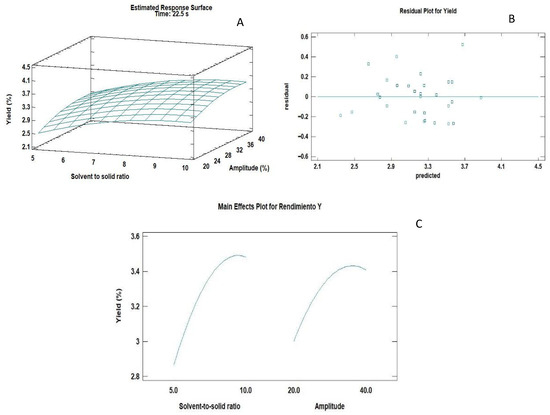
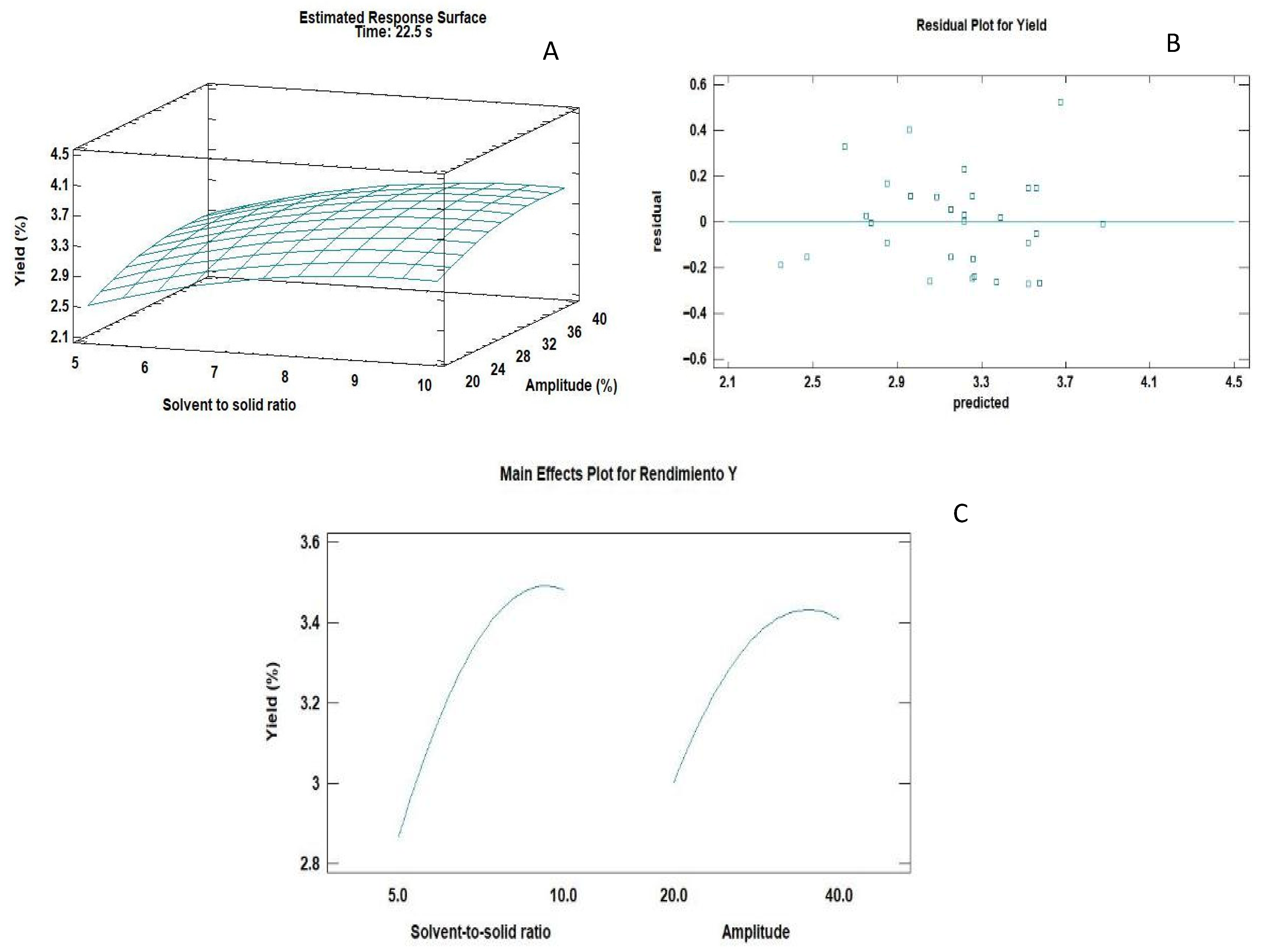
Optimal UAE conditions are a solvent-to-solid ratio of 10 for 15 s with an amplitude of 36%, with a Y of 5.15 ± 0.21% and T of 0.22 ± 0.01 °C/s (3.30 ± 0.28 °C). The main effects plots (Figure 1C) show that a higher SS and a higher A are associated with larger extraction yields. The SS ratio enhances the oil extraction by increasing the concentration gradient of oil inside the sample. This concentration gradient is the driving force during mass transfer. It is also noticeable that SS has a greater influence on UAE than time and temperature factors, which is in accordance with the results of UAE oil extraction from other vegetable sources [15].
Figure 1.
Three-dimensional response area obtained for extraction yield optimization. (A) Residual plot for Y. (B) Main effect plot of UAE of WG for yield (C).
To enhance yield, the SS ratio could not be increased indefinitely, because the effect of cavitation bubbles occurs most intensively near the boundary surface of the solid, and high amounts of solvent dissolve these bubbles and dissipate energy [26]. This could explain the parabolic form on the main effect plot at a high SS ratio (Figure 1). In many cases, the proportion of vegetable material to solvent used in phytopharmaceutical technology practice is between 1:5 and 1:10 [23]. The extraction time presented here (<1 min) is far below the general range of UAE oil extraction from oilseeds and grains (5–60 min), as reviewed by [4]. This parameter depends on the material properties, and in this case, WG is a particulate material with high porosity (0.687) [7] and has a low moisture content, which facilitates oil extraction [27]. Ultrasonic intensity is directly correlated to the amplitude of the transducer. Higher ultrasonic intensity provokes more violent bubble collapse, which could be associated with higher surface damage and better extraction yield. Nevertheless, amplitude must be optimized because high amplitudes can cause liquid agitation rather than cavitation. In this case, maximum yield does not coincide with maximum intensity, although it is near the upper limit. Similar results were observed in soy and pectin extraction [9]. The extraction time did not emerge as a significant independent linear factor within the studied range, appearing only through a negative interaction with the SS ratio. This interaction could imply that at higher solid concentrations, prolonged exposure to ultrasound becomes counterproductive, potentially due to the re-adsorption of compounds onto the matrix or minor thermal effects. Consequently, the model highlights that the extraction efficiency is primarily driven by the mechanical energy of the amplitude and the mass transfer capacity of the SS ratio rather than the duration of the treatment.
3.3. Characteristics of the Lipid-Rich Fraction
Table 3 shows the results of the quality parameters of the extracts obtained with UAE in optimal conditions and conventional passive extraction using ethanol as a solvent. The FFA in oils is an indicator of the degree of hydrolysis of triacylglycerols. FFA content was very similar between both extracts and slightly above the limit of 2% oleic acid established for edible fats and oils by the Codex Alimentarius (FAO/WHO, 2015). PV content, an indicator of hydroperoxides formed during the early stages of oxidation, was very similar between UAE and conventional extracts. These PVs were found to be below the recommended limits of 15 meq O2/kg oil established by the Codex Alimentarius (FAO/WHO, 2015).
Table 3.
Characteristics of the dry ethanolic extract and solid fraction.
Lipid oxidation follows a radical chain reaction mechanism, and the thermal history of the material is relevant to its quality. Deterioration processes that started during oven treatment could continue or be intensified in further processing. Fortunately, hot air stabilization of WG did not have a significant impact on quality indicators [25], but this depends on the particular conditions used. Under these specific mild sonication conditions, no measurable oxidation was detected by the PV and FFA tests.
In addition, the superlative content of antioxidants, especially alpha-tocopherols in WG (151–380 mg/100 g oil), in comparison with other common edible oils like coconut, sunflower, olive, corn, and soybean among many others (0.20–36 mg/100 g oil) are key factors in preserving oil quality [25,28]. The total tocopherol content obtained in the UAE extract (149 mg/100 g extract) is not significantly different (p < 0.05) from that obtained using traditional methods (Table 3). Unlikely, no tocopherols were detected in WG extracts obtained after ultrasound-assisted water extractions at more severe conditions (80% amplitude, 500 W, 6 h) [2]. Alpha-tocopherol is the most abundant isomer in WG oil, and its content was not affected by hot air stabilization [25]. Nevertheless, high temperature or extended treatments, like the ones used in classic extraction methods with n-hexane, frequently resulted in significant losses [4]. Sonication under the presented conditions stands as a propitious alternative to obtain extracts with high tocopherol content that could be an alternative to synthetic phenolic antioxidants. The radical scavenging activity of WG extracts is shown in Table 3. DPPH• loss was slightly lower for UAE samples; hence, sonication had little effect on antiradical capacity. Nevertheless, both values were relatively high (>70% DPPH• loss), meaning that most of the radicals were consumed by natural antioxidants present in the extracts, mainly tocopherols, which is a positive result. Some authors [28] found analogous results with little or no variation in oil quality indexes or tocopherol content in sonicated samples of virgin olive oils.
3.4. Characteristics of the Solid Fraction
WG is recognized as a high-quality and low-cost source of vegetable protein and dietary fiber with potential utilization in food formulation [17]. WG fiber has been briefly described in the bibliography, in contrast to the lipid fraction. Total dietary fiber content of WG is comparable to whole wheat flour, and three times higher than white flour [29].Hence, the WG solid fraction obtained after UAE may represent a potentially valuable by-product. WG fiber content of the solid fraction after conventional and UAE is high (16.7%) (Table 3). These values are higher than the ones reported in WG (9–12%), because the solid fraction analyzed here is oil-depleted [17,29,30]. The majority of the fiber of WG solid fraction is insoluble (85.7% of the total fiber), which is in accordance with other studies [16,29,30] found higher values of soluble and insoluble dietary fiber of defatted WG (24% and 3%, respectively), while comparable values were obtained from raw WG (14% and 2%, soluble and insoluble dietary fiber, respectively). Sonication did not affect the quantity or type of fiber content (p < 0.05), as shown in Table 3. In other plant materials, fiber constituents were altered by sonication, which eases their extraction. UAE dietary fiber from vegetable sources was reported to have higher water-holding, oil-holding, and swelling capacities [31].
WG proteins have a well-balanced aminoacidic profile with acceptable functionality in their native state. Nevertheless, some of them are affected by thermal treatments. The starting material of this study was a previously thermal-treated WG. Hot air-treated WG induces a considerable insolubilisation of proteins at pH 2 and 8, and strongly affects their foaming capacity and stability, compared to their native state [22].
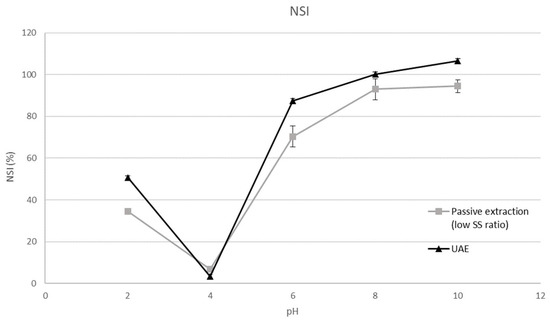
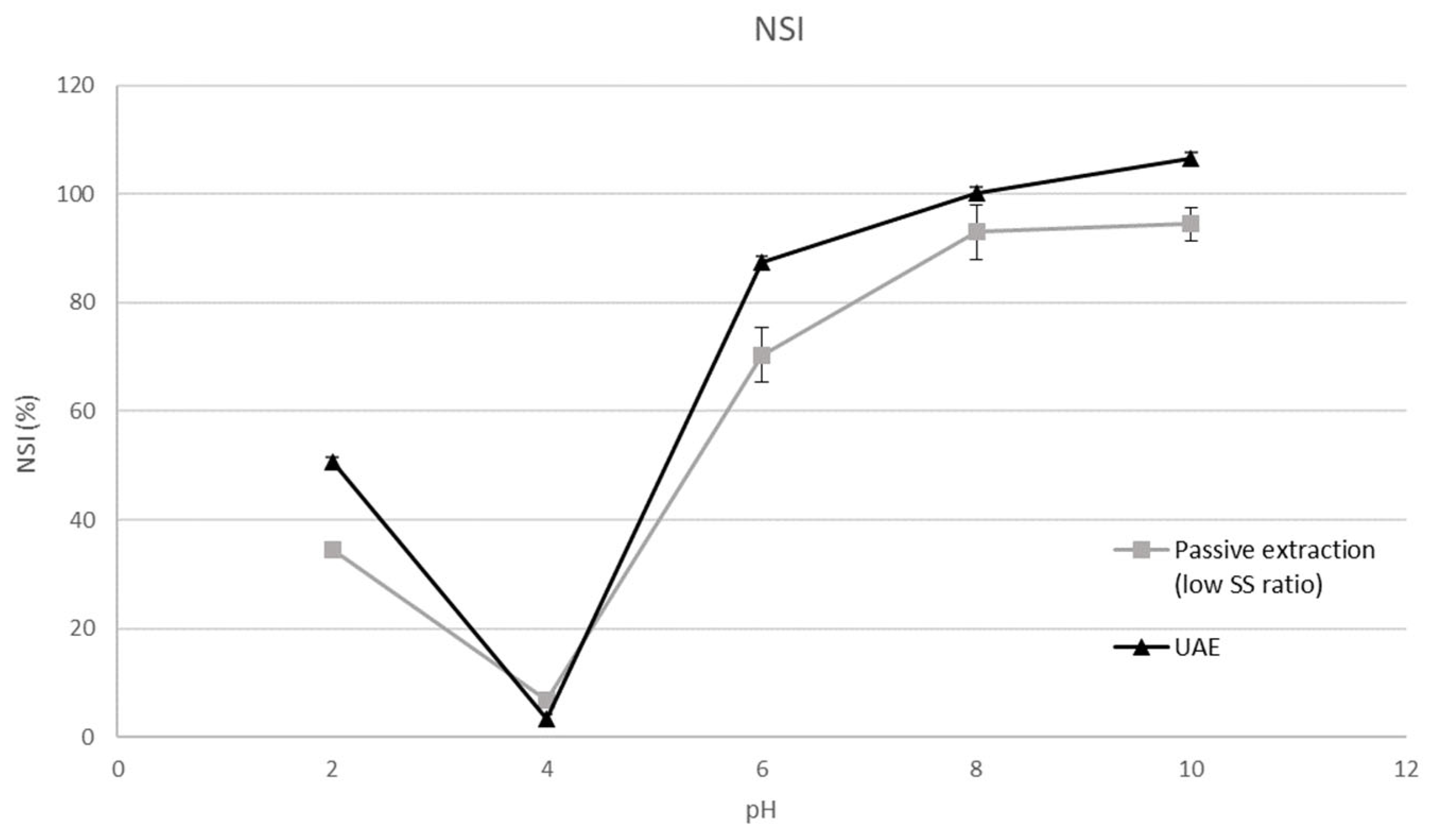
The main functional property to evaluate changes and the possible uses of the solid fraction is nitrogen solubility. In general, UAE induced the solubilization of proteins at all the pH tested (2–8) except at the isoelectric point, as shown in Figure 2.
Figure 2.
Nitrogen solubility index of WG protein isolate obtained from the solid fraction after UAE and passive extraction.
Sonication might facilitate the interaction of some protein fractions with water, with the consequent solubilization. The same effect was observed in oats, amaranth, and peas [32,33]. Sonication times > 10 min jointly with high power (amplitude > 30%) were reported to reduce particle size and affect their functional properties even more [34]. Shear forces generated during acoustic cavitation can also alter the techno-functional properties of proteins by breaking hydrogen bonds and hydrophobic interactions responsible for stabilizing the functional structures (i.e., secondary and tertiary structures) of proteins [35]. The NSI obtained in the present study is higher than that obtained for native WG protein isolates [36,37,38]; nevertheless, the U-shaped curve is sustained, with a minimum at pI. Absolute values depend on the extraction procedure and the characteristics of the starting material. This effect might be due to the shear forces generated during acoustic cavitation, which could disrupt the hydrophobic interactions or the intermolecular disulfide bonds, including protein conformational changes, increasing its solubility, as explained by [34]. Regarding other functional properties, OHC was not affected by sonication, while WHC increased after US treatment; this finding is in accordance with NSI results (Table 3). Then, it can be concluded that protein conformational changes induced by cavitation might promote hydrophobic interactions and enhance water-holding capacity. Thermal properties could not be evaluated by Differential Scanning Calorimetry of protein isolates because the starting material had undergone a previous stabilization process that provoked complete denaturation of proteins. Similarly, hot-air treatments of WG (175 °C during 20 min) were reported to cause <75% loss of native proteins [22].
3.5. Analysis of Acoustic Parameters in UAEEnergy Parameters
It is relevant to estimate the actual ultrasound energy transferred during extraction in order to explore the possible scalability of the process. The parameters obtained were 12.20 W for ultrasonic power, 9.19 W/cm2 for ultrasonic intensity, and 0.24 W/cm3 for acoustic energy density. Power values are lower than the range (25 to 200 W) commonly used in UAE of phenolic compounds [27]. As expected, UI is above 1 W/cm2, and, in conjunction with the low frequency used at 20 kHz, this situates the extraction in the high-intensity UAE category, which is very common in bioactive compound extraction. Most UAE bioactive compounds from vegetable sources are in the range of 10–100 W/cm2 [26,39], including the results presented here for WG. Increasing the intensity induces more violent implosions of the cavitation bubbles, thereby playing a great role in determining the extraction efficiency. In high-intensity extractions, physical or chemical changes are induced within the food matrix by cavitation-induced damage of cell structures [27]. In WG, oil is in inner vacuoles, and the sonication effect on the walls might be responsible for the rapid extraction. The effects of these kinds of waves are in accordance with the increment in protein solubility described before. Nevertheless, no significant changes were observed in the fiber or oil characteristics of WG, mainly due to the low-time treatment. The consequences of high-intensity extractions have been extensively studied in other materials, with varying time and temperature, as reviewed by [23,34,40], who optimized AED of UAE of phenolic compounds from grapefruit and found that with a probe of 19 mm, the maximum yield is obtained at an AED of 0.46 W/cm3, which is very close to the value obtained here. These acoustic wave intrinsic parameters allow us to compare the amount of ultrasonic energy given to the sample and evaluate their effects, considering differences in treatment times, probes, materials, and settings. In addition, these parameters indicated the feasibility of scaling up the process. At the laboratory scale, UAE from WG is recommended, as supported by the results detailed in the characterization of the lipid-rich fraction. There is ultrasonic pilot-scale equipment with comparable AED and UI values found in this study [41], which could be a good next step. With the same criteria, other authors [42] discouraged the industrial usage of UAE of protein from soybean products because the UI at laboratory scale was much higher than the pilot-scale system.
3.6. Influence of the Solvent Type and Extraction Methods on Extraction Yield and Oil Content of the Extract
Lipid content of stabilized WG (7.59%) was below the general range of 10–15% found in the bibliography [1]. Considering all the extraction methods and solvents used (Table 4), the yield varied from 21.33% to 2.47%, and the ether-soluble (ES) material from 37.29% to 100%.
Table 4.
Yield and ether-soluble fraction obtained after conventional extraction methods and UAE of wheat germ using petroleum ether, ethanol, and ethanol 96% v/v.
The extracts obtained by Soxhlet using 96% ethanol correspond to the maximum yield and the lowest ES values, meaning that more quantity of extract is obtained, but probably many other substances are co-extracted, presumably proteins, sugars, Maillard reaction products, and more phospholipids. WG lipid fraction is mainly formed by nonpolar lipids (88.3%), phospholipids (14.9%), glycolipids (1.9%) [29], and minor proportions of alcohols, esters, alkene, aldehydes, tocopherols, n-alkanols, sterols, 4-methyl sterols, triterpenols, hydrocarbons, pigments, and volatile components. Nonpolar components of WG oil are in decreasing order: triglycerides, free fatty acids, steryl esters, di- and monoglycerides [1]. Nonpolar compounds are completely extracted with petroleum ether. In addition, ethanolic extracts have a higher quantity of tocopherols and free fatty acids compared to conventional hexane ones [11,43,44]. Ethanol has a higher polarity and consequently has the ability to interact, dissolve, and extract polar, as well as nonpolar molecules. With absolute ethanol and 96% ethanol, the polarity is increased, and more polar lipids can be extracted as well. Nevertheless, many reports confirm that the solvent type did not impact the fatty acid composition of the extracted oil [43,45], although the relative proportions of mono-, di-, and triglycerides can be altered [46]. To conclude, polar solvents interact and extract polar molecules, raising the yield and lowering the ES fraction. Soxhlet extraction with ethanol (absolute and 96% v/v) produces much higher yields and reduces ES fraction (55 and 37%, respectively) than those obtained with conventional passive extraction methods. The higher yields in Soxhlet are attributed to the lower viscosity and surface tension of the solvent during reflux, which allows the solvent to penetrate more easily and dissolve compounds easily within the matrix. In addition, WG is exposed to fresh solvent during reflux; hence, the concentration gradient that is the driving force during diffusion extraction is always high. Conventional extraction using 96% ethanol and absolute ethanol is very sensitive to the SS ratio, considering yield, and to a lesser extent, considering ES. At a high SS ratio, there is a larger volume of solvent per unit of WG mass, and the diffusion is faster; there is a higher concentration gradient, and more extract is obtained. Drawbacks of a high SS ratio are the higher volumes of solvent, hence the extract is more diluted, requiring additional operations and purification costs. In general, the co-extraction of polar compounds is reinforced when 96% ethanol is used as a solvent. Absolute ethanol is preferred to ethanol 96% in conventional extraction methods. Considering the factors mentioned, a low SS ratio and absolute ethanol is recommended because the extracts contain a high amount of nonpolar compounds (<96% ES), and only a little yield is “sacrificed” (5.89% with absolute ethanol vs. 8.53% with petroleum ether).
Other authors [11] also found that ethanolic extraction yields much higher values than those obtained with hexane during pressurized solvent extraction of WG oil, as presented in the results here for Soxhlet and conventional extraction at high SS. Optimized ultrasound-assisted extraction using absolute ethanol results in Y and ES that are not significantly different from those obtained during conventional extraction with a low SS ratio (p < 0.05).
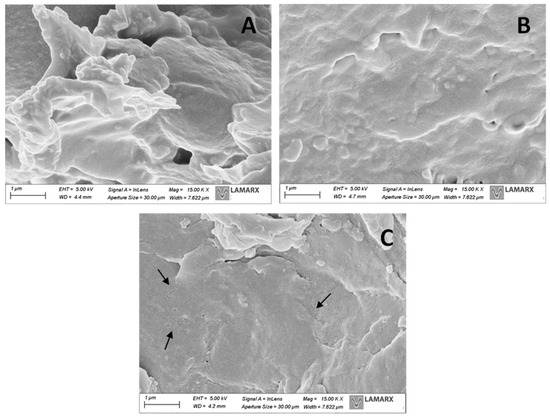
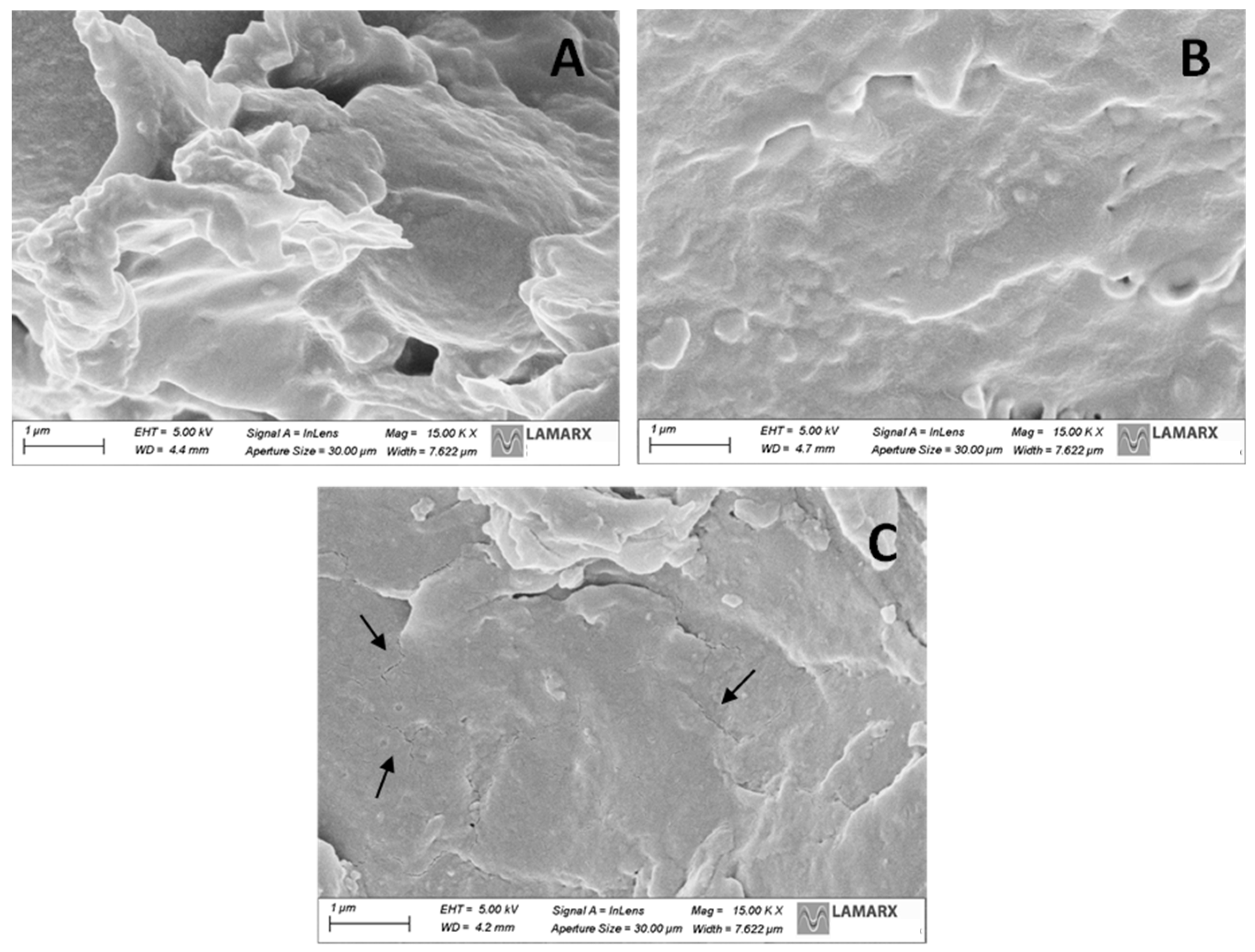
The main finding of this study is that UAE is carried out with ethanol instead of hexane, and in 15 s instead of 8 h, obtaining an extract of similar quality. The major advantage of UAE over conventional methods lies in efficiency and being environmentally friendly, as reported in the oil extraction of many other sources. Both techniques occur through different mechanisms. In conventional extractions, the lipid extraction efficiency is limited by the intact and rigid cell wall as well as the complexes formed by nonpolar and polar lipids, thus resulting in slow extraction kinetics [4]. The solvent (generally hexane) penetrates plant cells, dissolves lipids, and effuses from the cell. The major impediment to the release of cellular lipids is the resistance of the cell wall/membrane. Extraction also happens by diffusion of the lipid through the membrane due to the gradient difference. Contrarily, in UAE, the cell wall/membrane is altered due to cavitation effects, reducing the diffusion resistance, facilitating the penetration of the solvent, dissolution, and effusion of the target compounds, as explained by [4], which explains the speed of extraction in UAE. The moisture content of the starting material is also a key factor in UAE because the moisture content diffuses the solvent and alters its composition, especially in polar solvents like ethanol [23]. As stated before, WG extracts are very sensitive to the water content of the solvent, and the low initial moisture of WG (1.63%) may have been a positive aspect in the experimental design. Regarding the structure resulting from the oil extraction processes in WG, Figure 3 shows micrographs of WG subjected to different processes studied, highlighting the effects of erosion caused by ultrasound waves on the surface of the particles.
Figure 3.
Representative SEM micrographs of (A) native wheat germ, (B) wheat germ after conventional extraction, and (C) wheat germ after ultrasound-assisted extraction. Arrows in (C) show where surface morphology appears more disrupted and eroded. Arrows show the erosion caused by ultrasound.
4. Conclusions
Ultrasound-assisted extraction of WG oil, including compounds of interest like antioxidants, using absolute ethanol is possible and recommended. The results of optimal extraction conditions at laboratory scale were a solvent-to-solid ratio of 10, sonication time of 15 s, and 36% amplitude. The analysis revealed that the solid-to-solvent (SS) ratio and ultrasonic amplitude (A) are the primary drivers of extraction efficiency. The response surface identified suggests that the process is governed by a balance between mass transfer enhancement and the prevention of solvent saturation. The actual power delivered into the extraction system was 9.19 W/cm2. However, further research is required to address scalability challenges, particularly regarding energy consumption and the maintenance of cavitation uniformity at a larger scale. The thermal data collected in this study provide a foundation for future process scale-up. Consequently, further research should focus on mapping the cavitation intensity and bubble dynamics across larger volumes to ensure that the high extraction yields and thermal conditions observed in this study can be replicated at the industrial level. UAE reduced extraction time and solvent consumption without compromising the overall quality of the extract. Notably, the tocopherol content was preserved throughout the processes, evidencing excellent preservation of nutritional properties even under UAE conditions. The quantity and type of fiber in the solid residue obtained after UAE were also maintained. Small variations were observed after sonication: a slight loss of antioxidant activity (measured as DPPH• loss), increments in protein solubility, and increments in water-holding capacity due to the possible exposure of hydrophilic groups during UAE. Typical temperature rise due to sonication was not relevant. Absolute ethanol combined with ultrasound seems an interesting alternative to conventional extraction with petroleum ether. In order to reutilize the solvent, some additional studies should be conducted, since the water content of the solvent has a significant impact on the extractability of other compounds, as observed in conventional extraction experiments. The extraction of oil and bioactive compounds from WG using UAE and conventional techniques is fundamentally different, involving different mechanisms. Nevertheless, the resulting extracts had similar chemical quality, without major effects on other macromolecules like proteins and fiber. UAE offers net advantages in terms of lowering extraction time, safety, and environmental friendliness, with a consequent reduction in environmental impact.
Author Contributions
S.P.M.: investigation, methodology, writing—original draft; C.G.F.: methodology, writing—review and editing; M.L.M.: methodology, writing—review and editing; P.D.R.: formal analysis, funding acquisition; M.C.P.: conceptualization, supervision, formal analysis, writing—review and editing, funding acquisition. All authors have read and agreed to the published version of the manuscript.
Funding
This research was funded by National University of Córdoba (UNC). SECyT-UNC. PIDTA Extracción de compuestos bioactivos a partir de la revalorización de subproductos industriales y desarrollo de estrategias para su vehiculización. Director: Cecilia Penci. RESOL-2024-21-E-UNC-SECYT#ACTIP.
Data Availability Statement
The data generated during the current study are available from the corresponding author upon reasonable request.
Acknowledgments
The authors are indebted to Eng. Fernanda Quiroga (ICYTAC-CONICET) for her assistance with fiber and protein analysis.
Conflicts of Interest
The authors declare no conflicts of interest.
Abbreviations
| A | amplitude |
| AED | acoustic energy density |
| ANOVA | analysis of Variance |
| DPPH | 1,1-Diphenyl-2-picrylhydrazyl |
| CP | heat capacity |
| ES | ether-soluble fraction |
| FFA | free fatty acid |
| NSI | nitrogen solubility index |
| OHC | oil-holding capacity |
| P | effective ultrasound power |
| PV | peroxide value |
| S | emitting surface |
| SEM | scanning electron microscopy |
| SS | solvent to solid ratio |
| UAE | ultrasound-assisted extraction |
| UI | ultrasonic intensity |
| V | volume |
| WG | wheat germ |
| WHC | water-holding capacity |
| Y | extraction yield |
References
- Ghafoor, K.; Özcan, M.M.; AL-Juhaımı, F.; Babıker, E.E.; Sarker, Z.I.; Ahmed, I.A.M.; Ahmed, M.A. Nutritional composition, extraction, and utilization of wheat germ oil: A review. Eur. J. Lipid Sci. Technol. 2017, 119, 1600160. [Google Scholar] [CrossRef] [Scilit]
- Liaqat, H.; Kim, K.J.; Park, S.; Jung, S.K.; Park, S.H.; Lim, S.; Kim, J.Y. Antioxidant Effect of Wheat Germ Extracts and Their Antilipidemic Effect in Palmitic Acid-Induced Steatosis in HepG2 and 3T3-L1 Cells. Foods 2021, 10, 1061. [Google Scholar] [CrossRef] [Scilit]
- Harrabi, S.; Ferchichi, A.; Fellah, H.; Feki, M.; Hosseinian, F. Chemical Composition and in vitro Anti-inflammatory Activity of Wheat Germ Oil Depending on the Extraction Procedure. J. Oleo Sci. 2021, 70, 1051–1058. [Google Scholar] [CrossRef] [Scilit] [PubMed]
- Deng, Y.; Wang, W.; Zhao, S.; Yang, X.; Xu, W.; Guo, M.; Xu, E.; Ding, T.; Ye, X.; Liu, D. Ultrasound-assisted extraction of lipids as food components: Mechanism, solvent, feedstock, quality evaluation and coupled technologies—A review. Trends Food Sci. Technol. 2022, 122, 83–96. [Google Scholar] [CrossRef] [Scilit]
- Bakhshabadi, H.; Ganje, M.; Gharekhani, M.; Mohammadi-Moghaddam, T.; Aulestia, C.; Morshedi, A. A Review of New Methods for Extracting Oil from Plants to Enhance the Efficiency and Physicochemical Properties of the Extracted Oils. Processes 2025, 13, 1124. [Google Scholar] [CrossRef] [Scilit]
- Baümler, E.R.; Carrín, M.E.; Carelli, A.A. Diffusion of tocopherols, phospholipids and sugars during oil extraction from sunflower collets using ethanol as solvent. J. Food Eng. 2017, 194, 1–8. [Google Scholar] [CrossRef] [Scilit]
- Meriles, S.P.; Curet, S.; Boillereaux, L.; Ribotta, P.D.; Penci, M.C. Thermo-physical properties of wheat germ: Heat and mass transfer during convective heating. J. Food Process Eng. 2023, 46, e14190. [Google Scholar] [CrossRef] [Scilit]
- Zhu, K.-X.; Lian, C.-X.; Guo, X.-N.; Peng, W.; Zhou, H.-M. Antioxidant activities and total phenolic contents of various extracts from defatted wheat germ. Food Chem. 2011, 126, 1122–1126. [Google Scholar] [CrossRef] [Scilit]
- Chemat, F.; Rombaut, N.; Sicaire, A.-G.; Meullemiestre, A.; Fabiano-Tixier, A.-S.; Abert-Vian, M. Ultrasound assisted extraction of food and natural products. Mechanisms, techniques, combinations, protocols and applications. A review. Ultrason. Sonochem. 2017, 34, 540–560. [Google Scholar] [CrossRef] [Scilit]
- Shao, P.; Sun, P.; Ying, Y. Response surface optimization of wheat germ oil yield by supercritical carbon dioxide extraction. Food Bioprod. Process 2008, 86, 227–231. [Google Scholar] [CrossRef] [Scilit]
- Dunford, N.T.; Zhang, M. Pressurized solvent extraction of wheat germ oil. Food Res. Int. 2003, 36, 905–909. Available online: https://www.sciencedirect.com/science/article/abs/pii/S0963996903000991 (accessed on 5 January 2026). [CrossRef] [Scilit]
- Teslić, N.; Bojanić, N.; Rakić, D.; Takači, A.; Zeković, Z.; Fišteš, A.; Bodroža-Solarov, M.; Pavlić, B. Defatted wheat germ as source of polyphenols—Optimization of microwave-assisted extraction by RSM and ANN approach. Chem. Eng. Process 2019, 143, 107634. [Google Scholar] [CrossRef] [Scilit]
- Pereira, D.B.; Fernández Barbero, G.; Carrera, C.; Palma, M.; Epifânio, N.M.M.; Kawahito, T.C.; Júnior, V.V.; Chaves, D.S.A. Innovative Ultrasound-Assisted Extraction for Phenolic and Antioxidant Evaluation of Brazilian Green Propolis. Processes 2025, 13, 2880. [Google Scholar] [CrossRef] [Scilit]
- Gila, A.; Sánchez-Ortiz, A.; Jiménez, A.; Beltrán, G. The ultrasound application does not affect the thermal properties and chemical composition of virgin olive oils. Ultrason. Sonochem. 2021, 70, 105320. [Google Scholar] [CrossRef] [Scilit]
- Thilakarathna, R.C.N.; Siow, L.F.; Tang, T.-K.; Chan, E.-S.; Lee, Y.-Y. Physicochemical and antioxidative properties of ultrasound-assisted extraction of mahua (Madhuca longifolia) seed oil in comparison with conventional Soxhlet and mechanical extractions. Ultrason. Sonochem. 2023, 92, 106280. [Google Scholar] [CrossRef] [Scilit]
- Bansal, S.; Sudha, M.L. Nutritional, microstructural, rheological and quality characteristics of biscuits using processed wheat germ. Int. J. Food Sci. Nutr. 2011, 62, 474–479. [Google Scholar] [CrossRef] [Scilit]
- Khosroshahi, E.D.; Razavi, S.H. Wheat germ valorization by fermentation: A novel insight into the stabilization, nutritional/functional values and therapeutic potentials with emphasis on anti-cancer effects. Trends Food Sci. Technol. 2023, 131, 175–189. [Google Scholar] [CrossRef] [Scilit]
- AACC International. Approved Methods of the American Association of Cereal Chemistry, 10th ed.; AACC International: St. Paul, MN, USA, 2000; ISBN 9781891127120. Available online: https://www.cerealsgrains.org/resources/methods/Pages/default.aspx (accessed on 5 January 2026).
- AOCS. Official Methods and Recommended Practices of the American Oil Chemists’ Society, 5th ed.; AOCS Press: Champaign, IL, USA, 2009. [Google Scholar]
- Shantha, N.C.; Decker, E.A. Rapid, Sensitive, Iron-Based Spectrophotometric Methods for Determination of Peroxide Values of Food Lipids. J. AOAC Int. 1994, 77, 421–424. [Google Scholar] [CrossRef] [Scilit]
- Martínez, M.L.; Maestri, D.M. Oil chemical variation in walnut (Juglans regia L.) genotypes grown in Argentina. Eur. J. Lipid Sci. Technol. 2008, 110, 1183–1189. [Google Scholar] [CrossRef] [Scilit]
- Meriles, S.P.; Steffolani, M.E.; León, A.E.; Penci, M.C.; Ribotta, P.D. Physico-chemical characterization of protein fraction from stabilized wheat germ. Food Sci. Biotechnol. 2019, 28, 1327–1335. [Google Scholar] [CrossRef] [Scilit]
- Vinatoru, M. Ultrasonically assisted extraction (UAE) of natural products some guidelines for good practice and reporting. Ultrason. Sonochem. 2015, 25, 94–95. [Google Scholar] [CrossRef] [Scilit]
- Khadhraoui, B.; Fabiano-Tixier, A.-S.; Robinet, P.; Imbert, R.; Chemat, F. Ultrasound technology for food processing, preservation, and extraction. In Green Food Processing Techniques; Elsevier: Amsterdam, The Netherlands, 2019; pp. 23–56. [Google Scholar] [CrossRef] [Scilit]
- Meriles, S.P.; Penci, M.C.; Curet, S.; Boillereaux, L.; Ribotta, P.D. Effect of microwave and hot air treatment on enzyme activity, oil fraction quality and antioxidant activity of wheat germ. Food Chem. 2022, 386, 132760. [Google Scholar] [CrossRef] [Scilit]
- Barba, F.; Cravotto, G.; Chemat, F.; Rodriguez, J.M.L.; Sichetti Munekata, P.E. (Eds.) Design and Optimization of Innovative Food Processing Techniques Assisted by Ultrasound: Developing Healthier and Sustainable Food Products; Academic Press: Cambridge, MA, USA, 2020. [Google Scholar] [CrossRef] [Scilit]
- Herrero, M.; Plaza, M.; Cifuentes, A.; Ibañez, E. Extraction techniques for the determination of phenolic compounds in food. In Comprehensive Sampling and Sample Preparation, 1st ed.; Elsevier: Amsterdam, The Netherlands; Academic Press: Cambridge, MA, USA, 2012; Volume 4, pp. 159–180. [Google Scholar] [CrossRef] [Scilit]
- Shahidi, F.; Pinaffi-Langley, A.C.C.; Fuentes, J.; Speisky, H.; De Camargo, A.C. Vitamin E as an essential micronutrient for human health: Common, novel, and unexplored dietary sources. Free Radic. Biol. Med. 2021, 176, 312–321. [Google Scholar] [CrossRef] [Scilit] [PubMed]
- Sidhu Jiwan Al-Hooti, S.N.; Al-Saqer, J.M. Effect of adding wheat bran and germ fractions on the chemical composition of high-fiber toast bread. Food Chem. 1999, 67, 365–371. [Google Scholar] [CrossRef] [Scilit]
- Johnson, J.; Wallace, T. Whole Grains and their Bioactives: Composition and Health, 1st ed.; Wiley: Hoboken, NJ, USA, 2019. [Google Scholar] [CrossRef] [Scilit]
- Kumar, K.; Srivastav, S.; Sharanagat, V.S. Ultrasound assisted extraction (UAE) of bioactive compounds from fruit and vegetable processing by-products: A review. Ultrason. Sonochem. 2021, 70, 105325. [Google Scholar] [CrossRef] [Scilit] [PubMed]
- Li, R.; Xiong, Y.L. Ultrasound-induced structural modification and thermal properties of oat protein. LWT 2021, 149, 111861. [Google Scholar] [CrossRef] [Scilit]
- Tomé Constantino, A.B.; Garcia-Rojas, E.E. Modifications of physicochemical and functional properties of amaranth protein isolate (Amaranthus cruentus BRS Alegria) treated with high-intensity ultrasound. J. Cereal Sci. 2020, 95, 103076. [Google Scholar] [CrossRef] [Scilit]
- Yusoff, I.M.; Mat Taher, Z.; Rahmat, Z.; Chua, L.S. A review of ultrasound-assisted extraction for plant bioactive compounds: Phenolics, flavonoids, thymols, saponins and proteins. Food Res. Inte 2022, 157, 111268. [Google Scholar] [CrossRef] [Scilit]
- Ampofo, J.; Ngadi, M. Ultrasound-assisted processing: Science, technology and challenges for the plant-based protein industry. Ultrason. Sonochem. 2022, 84, 105955. [Google Scholar] [CrossRef] [Scilit]
- Ge, Y.; Sun, A.; Ni, Y.; Cai, T. Some Nutritional and Functional Properties of Defatted Wheat Germ Protein. J. Agric. Food Chem. 2000, 48, 6215–6218. [Google Scholar] [CrossRef] [Scilit]
- Hassan, H.M.M.; Afify, A.S.; Basyiony, A.E.; Ahmed Ghada, T. Nutritional and functional properties of defatted wheat protein Isolates. Aust. J. Basic. Appl. Sci. 2010, 4, 348–358. [Google Scholar]
- Hettiarachchy, N.S.; Griffin, V.K.; Gnanasambandam, R. Preparation and functional properties of a protein isolate from defatted wheat germ. Cereal Chem. 1996, 73, 363–367. [Google Scholar]
- Sicaire, A.-G.; Vian, M.A.; Fine, F.; Carré, P.; Tostain, S.; Chemat, F. Ultrasound induced green solvent extraction of oil from oleaginous seeds. Ultrason. Sonochem. 2016, 31, 319–329. [Google Scholar] [CrossRef] [Scilit] [PubMed]
- Ciğeroğlu, Z.; Aras, Ö.; Pinto, C.A.; Bayramoglu, M.; Kırbaşlar, Ş.İ.; Lorenzo, J.M.; Barba, F.J.; Saraiva, J.A.; Şahin, S. Optimization of ultrasound-assisted extraction of phenolic compounds from grapefruit (Citrus paradisi Macf.) leaves via D-optimal design and artificial neural network design with categorical and quantitative variables: Optimization of ultrasound-assisted extraction. J. Sci. Food Agric. 2018, 98, 4584–4596. [Google Scholar] [CrossRef] [Scilit] [PubMed]
- Alexandru, L.; Cravotto, G.; Giordana, L.; Binello, A.; Chemat, F. Ultrasound-assisted extraction of clove buds using batch- and flow-reactors: A comparative study on a pilot scale. Innov. Food Sci. Emerg. Technol. 2013, 20, 167–172. [Google Scholar] [CrossRef] [Scilit]
- Preece, K.E.; Hooshyar, N.; Krijgsman, A.J.; Fryer, P.J.; Zuidam, N.J. Pilot-scale ultrasound-assisted extraction of protein from soybean processing materials shows it is not recommended for industrial usage. J. Food Eng. 2017, 206, 1–12. [Google Scholar] [CrossRef] [Scilit]
- Baümler, E.R.; Carrín, M.E.; Carelli, A.A. Extraction of sunflower oil using ethanol as solvent. J. Food Eng. 2016, 178, 190–197. [Google Scholar] [CrossRef] [Scilit]
- Dias, A.L.B.; Arroio Sergio, C.S.; Santos, P.; Barbero, G.F.; Rezende, C.A.; Martínez, J. Ultrasound-assisted extraction of bioactive compounds from dedo de moça pepper (Capsicum baccatum L.): Effects on the vegetable matrix and mathematical modeling. J. Food Eng. 2017, 198, 36–44. [Google Scholar] [CrossRef] [Scilit]
- Efthymiopoulos, I.; Hellier, P.; Ladommatos, N.; Russo-Profili, A.; Eveleigh, A.; Aliev, A.; Kay, A.; Mills-Lamptey, B. Influence of solvent selection and extraction temperature on yield and composition of lipids extracted from spent coffee grounds. Ind. Crops Prod. 2018, 119, 49–56. [Google Scholar] [CrossRef] [Scilit]
- Perrier, A.; Delsart, C.; Boussetta, N.; Grimi, N.; Citeau, M.; Vorobiev, E. Effect of ultrasound and green solvents addition on the oil extraction efficiency from rapeseed flakes. Ultrason. Sonochem. 2017, 39, 58–65. [Google Scholar] [CrossRef] [Scilit]

Disclaimer/Publisher’s Note: The statements, opinions and data contained in all publications are solely those of the individual author(s) and contributor(s) and not of MDPI and/or the editor(s). MDPI and/or the editor(s) disclaim responsibility for any injury to people or property resulting from any ideas, methods, instructions or products referred to in the content. |
© 2026 by the authors. Licensee MDPI, Basel, Switzerland. This article is an open access article distributed under the terms and conditions of the Creative Commons Attribution (CC BY) license.