1. Introduction
Coalbed methane (CBM) is an important unconventional natural gas resource stored within coal seams and has attracted extensive attention owing to its abundant reserves, high combustion efficiency, and relatively low carbon emission intensity [
1]. With the progressive depletion of shallow CBM resources, exploration and development activities have increasingly expanded toward deep coal seams with burial depths generally exceeding 1000 m in China. Deep coal reservoirs are considered an important strategic target for enhancing domestic natural gas supply and improving energy security. However, deep coal reservoirs are generally characterized by high in situ stress, high gas pressure, low permeability, and strong heterogeneity, resulting in limited natural productivity and considerable challenges for reservoir stimulation, thereby restricting the efficient exploitation of deep CBM resources [
2].
Hydraulic fracturing is widely recognized as one of the most effective approaches for enhancing permeability and improving methane recovery from deep coal reservoirs. Conventional water-based fracturing fluids can generate conductive fractures; however, they may induce severe formation damage, including water blocking, clay swelling, and permeability reduction, particularly in coal reservoirs characterized by developed natural fractures and strong stress sensitivity [
3]. To overcome these limitations, CO
2-based stimulation technologies have attracted increasing attention in recent years. Supercritical CO
2 fracturing and CO
2 foam fracturing represent two distinct technical routes with different stimulation mechanisms. Supercritical CO
2 stimulation mainly relies on adsorption-induced swelling, fluid penetration, and phase-transition-related fracture generation, whereas CO
2 foam fracturing introduces additional advantages associated with foam structure, including reduced water consumption, enhanced proppant transport, improved flowback efficiency, and potentially lower formation damage [
4,
5,
6,
7,
8]. In the context of deep coalbed methane stimulation, CO
2 foam fracturing has therefore emerged as a promising technique for improving reservoir stimulation efficiency while offering additional potential for CO
2 utilization.
During CO
2 foam treatment and stimulation, coupled physicochemical interactions occur among CO
2, aqueous components, foam structure, and the coal matrix, resulting in multiscale structural evolution. Existing studies have shown that different CO
2-based treatments may induce distinct structural responses in coal. Yu et al. [
9] reported that CO
2 foam treatment modified pore structures and altered methane adsorption–diffusion behavior under different pressure conditions. Jiang et al. [
10] reviewed cross-scale coal damage and gas-migration mechanisms under supercritical CO
2 conditions, emphasizing the need to link structural damage with gas transport behavior. Niu et al. [
11] further linked multiscale pore–fracture evolution with changes in micromechanical and macromechanical responses under supercritical CO
2 conditions. Zhang et al. [
12] demonstrated that supercritical CO
2 exposure promoted pore–fracture reconstruction in coals of different ranks, suggesting strong dependence on coal structure and mineral composition. Wang et al. [
3] emphasized that fracture evolution and coal fines migration may influence permeability improvement and storage performance. In addition, several studies showed that high-pressure CO
2 stimulation can facilitate crack initiation and propagation and promote fracture network complexity [
13,
14,
15,
16]. Although these studies have improved understanding of structural evolution under CO
2 exposure, the coupled relationship between local mechanical degradation and macroscopic fracture instability under CO
2 foam treatment remains insufficiently clarified.
In addition to pore–fracture alteration, the evolution of mechanical properties is another critical factor governing fracture initiation and propagation. Previous studies have shown that CO
2 exposure may alter the mechanical behavior of coal and shale through changes in pore structure, matrix deformation, and fracture development.Zhang et al. [
16] reported that supercritical CO
2 exposure affected the mechanical properties and fracture characteristics of Longmaxi shale, and Jarboe et al. [
17] showed that supercritical CO
2 could extract hydrocarbons from high-maturity shale, indicating strong CO
2–organic matter interactions. Yang et al. [
18] observed a substantial reduction in fracture toughness of bituminous coal after supercritical CO
2 treatment, indicating increased fracture susceptibility. Niu et al. [
11] further suggested that multiscale pore–fracture evolution may contribute to both micromechanical degradation and macroscopic weakening. Existing studies, however, have mainly focused on macroscopic mechanical responses such as compressive strength and elastic modulus, while the transfer relationship between local mechanical deterioration and fracture instability across scales remains inadequately characterized, particularly under CO
2 foam treatment conditions.
With the rapid development of nanoindentation techniques, increasing attention has been devoted to quantifying the local mechanical properties of heterogeneous geological materials. The classical indentation framework by Oliver and Pharr [
19] provides an effective method for determining elastic modulus and hardness at micro-to-nanoscales. Previous nanoindentation studies demonstrated pronounced heterogeneity among different coal constituents. Zhang et al. [
20] reported significant differences in mechanical behavior among coals of different ranks, whereas Liu et al. [
21] quantified local heterogeneity using coupled nanoindentation and FESEM-EDS observations. Other studies further demonstrated that constituent composition, thermal evolution, and fluid–rock interactions may influence local mechanical responses [
22,
23,
24]. Nevertheless, most existing investigations remain limited to single-scale characterization and rarely establish quantitative links between local mechanical degradation and bulk mechanical deterioration during CO
2 foam treatment.
Coal exhibits strong heterogeneity in maceral composition, mineral occurrence, and natural fracture development, leading to substantial differences in mechanical response and fluid sensitivity. Bright coal generally contains higher vitrinite content and stronger adsorption potential but weaker structural stability, whereas semi-dull coal usually contains greater inertinite and mineral contents and exhibits relatively stronger mechanical resistance [
20,
21,
22]. Previous studies recognized that coal structure influences pore evolution and mechanical response under CO
2 treatment [
11,
12]; however, most conclusions remain based on single-scale observations. In particular, systematic investigations integrating micromechanical characterization, triaxial mechanical behavior, and fracture toughness evolution to reveal damage transfer mechanisms across scales remain limited. Therefore, the representativeness and structural sensitivity of different coal lithotypes require further investigation.
Therefore, this study investigates representative bright coal and semi-dull coal collected in the Lüliang mining area under the engineering background of deep coalbed methane stimulation. Petrographic analysis and X-ray diffraction (XRD) were first conducted to characterize coal composition and structural differences. Subsequently, nanoindentation, triaxial compression experiments, and cracked chevron-notched Brazilian disc (CCNBD) fracture toughness tests [
25,
26] were performed after CO
2 foam immersion under reservoir-relevant conditions. By integrating micromechanical characterization with macroscopic mechanical and fracture analyses, this study aims to: (1) quantify the evolution of local mechanical properties under CO
2 foam treatment; (2) reveal the coupled deterioration behavior between microscale damage and macroscopic mechanical weakening; and (3) clarify the controlling role of coal structure in damage transfer and fracture evolution. The findings may improve understanding of the multiscale response of coal subjected to CO
2 foam treatment and support the optimization of stimulation strategies for deep CBM reservoirs.
2. Materials and Methods
2.1. Sample Preparation and Basic Properties
To investigate the mechanical evolution of different coal structures under CO2 foam treatment in the context of deep coalbed methane (CBM) stimulation, four candidate coal samples were collected from the Carboniferous–Permian No. 8+9 coal seam system in the Ordos Basin, China. Two samples were obtained from deep coal seams with burial depths exceeding 1000 m, while the other two were collected from the Lüliang mining area, Shanxi Province, with burial depths of approximately 200–400 m. Although the Lüliang samples were collected from shallower depths, they originated from the same coal seam system and exhibited comparable coal lithotypes. All raw coal blocks were prepared using a high-precision wire-cutting system to minimize disturbance to the original pore–fracture structure.
Macroscopic observations were first conducted on all four candidate samples. Representative subsamples were then prepared for petrographic analysis and X-ray diffraction (XRD) mineralogical characterization. Considering coal structure, maceral composition, mineral assemblage, and specimen integrity, one bright coal sample (B2-LL-01) and one semi-dull coal sample (B2-LL-02) from the Lüliang mining area were selected for the subsequent nanoindentation, triaxial compression, and cracked chevron-notched Brazilian disc (CCNBD) fracture toughness tests. The deep coal samples exhibited poor integrity and abundant natural fractures, making it difficult to prepare standardized specimens required for mechanical testing. Therefore, the Lüliang samples were selected as representative materials to investigate structure-dependent mechanical responses under identical CO2 foam treatment conditions. It should be noted that the selected samples were intended to represent typical bright and semi-dull coal structures rather than all coals of these lithotypes.
To facilitate interpretation of the mechanical evolution, the petrographic characteristics and mineralogical compositions of all candidate samples were first comparatively evaluated. The corresponding characterization results are summarized in
Table 1.
Coal specimens were further processed according to the requirements of different mechanical tests. After machining, all specimens were carefully ground to ensure that the parallelism and perpendicularity of the loading surfaces satisfied the relevant testing standards, thereby minimizing loading-induced errors. Cylindrical specimens with a diameter of 25 mm and a height of 50 mm were prepared for conventional triaxial compression tests. For nanoindentation and cracked chevron-notched Brazilian disc (CCNBD) fracture toughness tests, disc-shaped specimens with a diameter of 25 mm and a thickness of 10 mm were prepared.
The nanoindentation specimens were progressively polished to obtain mirror-finished surfaces suitable for micromechanical testing. CCNBD specimens were prepared in accordance with the ISRM-recommended method for determining Mode-I fracture toughness using cracked chevron-notched Brazilian disc specimens [
25]. A prefabricated V-shaped notch was introduced using a precision cutting device, and geometric parameters including notch depth ratio and notch angle were controlled to satisfy the validity requirements for fracture toughness determination. Detailed geometric parameters and validity criteria are provided in
Section 2.6.
To reveal the evolution of coal mechanical properties during different stages of CO
2 foam exposure, the prepared bright coal and semi-dull coal specimens were randomly divided into four groups and subjected to CO
2 foam immersion under reservoir-relevant conditions of 50 °C, 20 MPa, and a foam quality of 65%. These conditions were selected to simulate the temperature–pressure environment commonly encountered in deep CBM reservoirs while ensuring stable foam performance. The immersion durations were set to 0, 2, 4, and 6 days, with the untreated specimens (0 d) serving as the control group. After immersion, nanoindentation tests, conventional triaxial compression tests, and CCNBD fracture toughness tests were conducted to systematically evaluate the evolution of micromechanical properties, macroscopic mechanical behavior, and fracture resistance during CO
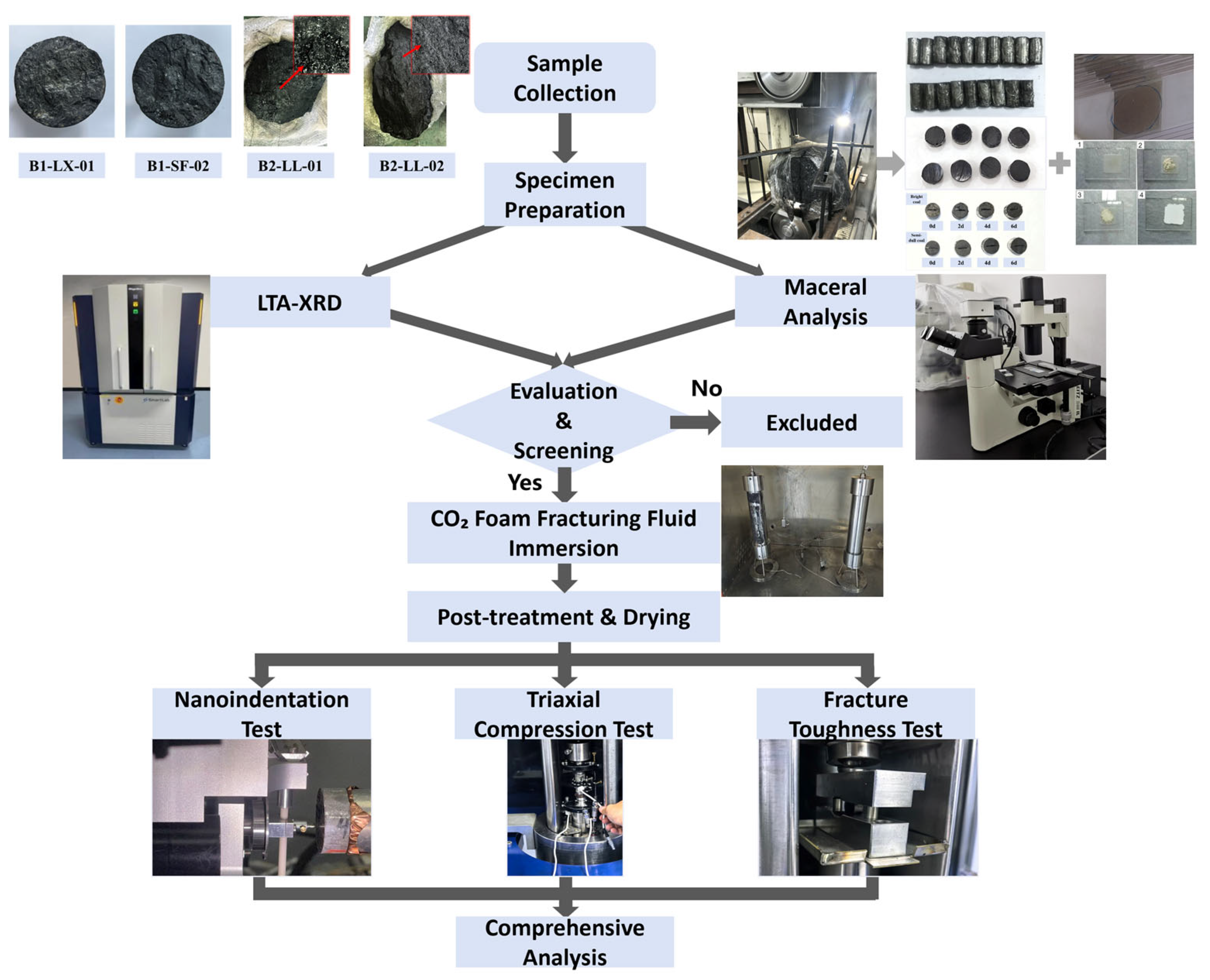
2 foam treatment. The overall experimental procedure is illustrated in
Figure 1. One independent specimen was tested for each immersion condition and test type. To account for the intrinsic microscale heterogeneity of coal, multiple valid nanoindentation measurements, including one 3 × 3 indentation array and three constituent-specific indentation locations, were performed on each specimen. The detailed experimental program and numbers of valid measurements are summarized in
Table 1. Because the objective of this study was to compare the relative deterioration behavior of different coal structures under identical treatment conditions, the experiments focused on comparative analysis rather than statistical population evaluation.
Figure 1.
Experimental procedure for investigating the evolution of mechanical properties of coal rocks under CO2 foam immersion.
Figure 1.
Experimental procedure for investigating the evolution of mechanical properties of coal rocks under CO2 foam immersion.
2.2. Petrographic Analysis and Mineral Composition Characterization
To characterize the compositional heterogeneity and structural differences that may control the mechanical response of coal under CO2 foam treatment, whole-rock petrographic analysis and low-temperature ashing coupled with X-ray diffraction (XRD) tests were conducted on the selected raw coal specimens.
Petrographic analysis was performed in accordance with the industry standard SY/T 6414–2014 Method for Maceral Analysis of Coal [
27]. Observations were conducted using a Leica DMIL LED polarized fluorescence microscope at a magnification of 500×. Polished whole-coal sections were examined under oil-immersion reflected white light and reflected fluorescence conditions. A systematic point-counting method was employed, with more than 50 fields of view analyzed for each sample. To improve statistical representativeness and reduce the influence of local heterogeneity, multiple observation regions were selected for each specimen and averaged to obtain the final maceral proportions. Based on the optical characteristics observed under reflected light and fluorescence, the maceral composition of the coal samples was determined, and the proportions of vitrinite, inertinite, and liptinite were quantitatively evaluated. The petrographic analysis provided quantitative information on coal composition and structural heterogeneity, which was further used to interpret the evolution of micromechanical properties, macroscopic mechanical deterioration, and fracture behavior during CO
2 foam treatment.
Mineral composition was determined using a combination of low-temperature plasma ashing and X-ray diffraction (XRD) analysis following the standard SY/T 5163–2018 X-ray Diffraction Analysis of Clay Minerals and Common Non-clay Minerals in Sedimentary Rocks [
28]. For each coal type, duplicate powder samples were prepared and analyzed to ensure repeatability of mineral identification and quantitative interpretation. Organic matter was first removed using a low-temperature plasma asher to minimize interference from the organic matrix during mineral identification. The ash residues were subsequently analyzed using an X-ray diffractometer. The operating conditions included an accelerating voltage of 40 kV, a current of 50 mA, a scanning step size of 0.01°, and a scanning rate of 20° min
−1. The scanning range was set to 3–45° for whole-rock mineral analysis and 2.5–30° for clay mineral characterization. The obtained diffraction patterns were processed and quantitatively analyzed using RockQuan 2020 and ClayQuan II Version 2.0 software to determine the relative abundance of major mineral phases and evaluate mineral heterogeneity among different coal structures. Mineral contents were determined through peak-position calibration, background subtraction, and integrated peak-area analysis. The mineralogical results were further integrated with subsequent nanoindentation and mechanical experiments to evaluate the influence of mineral occurrence and coal structure on damage evolution under CO
2 foam treatment.
2.3. CO2 Foam Immersion Experiment
To investigate coupled influence of CO2, foam structure, and treatment conditions on the evolution of coal mechanical properties, immersion experiments were conducted using a high-temperature and high-pressure reactor. The CO2 foam fracturing fluid was formulated based on a medium-viscosity slickwater system commonly employed in field fracturing operations. The fluid consisted of 0.60 wt% friction reducer, 0.20 wt% clay stabilizer, 0.20 wt% flowback additive, and 0.50 wt% foaming agent. This formulation provides favorable fluid mobility, foam stability, and proppant-carrying capacity, enabling a reasonable simulation of CO2 foam fracturing conditions in deep coal reservoirs. The selected formulation was designed to reproduce engineering-relevant fluid behavior rather than isolate the individual contribution of each chemical component. Therefore, the observed coal-property evolution should be interpreted as the integrated response to the CO2 foam system under reservoir conditions.
Considering engineering practices for deep coal reservoir stimulation and foam stability requirements, a CO2 foam quality of 65% was selected. Foam quality is defined as the gas volume fraction in the total gas–liquid system. Previous studies have shown that moderate-to-high foam quality can maintain effective CO2 carrying capacity while preserving sufficient foam stability and injectivity during treatment. Therefore, 65% foam quality was adopted as a representative operating condition rather than an optimized parameter.
Prior to immersion, the prepared fluid system was injected into the reactor, followed by CO2 charging until the target pressure was achieved. Experimental conditions were maintained at 50 °C and 20 MPa to simulate representative temperature–pressure conditions of deep coal seams with burial depths exceeding 1000 m. Under these conditions, CO2 remained in a supercritical state throughout treatment. The selected parameters were intended to reproduce reservoir-relevant CO2 foam–coal interaction conditions rather than represent the full range of field operations.
The prepared coal specimens were then placed in the reactor and subjected to CO2 foam immersion for 0, 2, 4, and 6 days. Immersion durations of 0–6 days were selected to capture the short-term evolution of coal mechanical deterioration under sustained CO2 foam exposure and to simulate the reservoir soaking (shut-in) stage commonly adopted after CO2 foam fracturing operations. Although these durations do not represent long-term reservoir aging behavior, they provide useful insight into the early-stage mechanical response and may offer guidance for optimizing post-fracturing shut-in periods in deep coal reservoirs. Untreated specimens (0 d) were used as the control group. During the immersion period, the temperature and pressure were continuously maintained at 50 °C and 20 MPa to ensure stable reservoir-simulated conditions. Upon completion of the designated immersion duration, the reactor was depressurized gradually, and the specimens were removed. Residual fluid on the specimen surfaces was carefully cleaned, followed by low-temperature drying at 50 °C. The treated specimens were subsequently subjected to nanoindentation tests, conventional triaxial compression tests, and cracked chevron-notched Brazilian disc (CCNBD) fracture toughness tests to evaluate the evolution of micromechanical properties, macroscopic mechanical properties, and fracture toughness under CO2 foam treatment. Because no additional control groups involving additive solution without CO2, supercritical CO2 without foam, or temperature–pressure exposure alone were included in this study, the observed deterioration behavior should be interpreted as the overall effect of the CO2 foam treatment system. The contribution of individual mechanisms will be investigated in future studies.
2.4. Multiscale Mechanical and Fracture Tests
To characterize the evolution of local mechanical properties and evaluate micromechanical heterogeneity induced by CO2 foam treatment, nanoindentation tests were conducted using a NanoTest Vantage nanoindentation system (Micro Materials Ltd., Wrexham, UK). The instrument was equipped with a Berkovich diamond indenter with a tip radius of approximately 95 nm and a face angle of 65.3°. The elastic modulus and Poisson’s ratio of the indenter were 1140 GPa and 0.07, respectively.
Prior to testing, all specimens were sequentially ground and polished to obtain smooth mirror-like surfaces. Areas free from visible fractures, pores, and surface defects were selected using the optical microscope integrated into the nanoindentation system. Considering the pronounced mechanical heterogeneity of coal and to avoid excessive penetration or local structural failure in mechanically weak regions, a depth-controlled loading mode was adopted. The target indentation depth was fixed at 1000 nm, while the maximum applied load was limited to 200 mN. The loading and unloading rates were both set to 0.4 mN s−1, and a dwell period of 5 s was applied at the maximum indentation depth to minimize the influence of creep deformation.
To evaluate the mechanical characteristics of different microstructural constituents, both targeted and grid-based nanoindentation measurements were conducted. Representative bright, dark, and highly reflective regions identified under optical observation were first selected for local mechanical characterization of different coal constituents. Subsequently, one 3 × 3 indentation array was arranged within a relatively homogeneous region of each specimen to quantify the spatial variability of local mechanical properties. In addition, three targeted indentation points were selected in representative microstructural domains to further characterize constituent-dependent mechanical responses. Therefore, a total of twelve independent indentation points was obtained for each coal type and immersion condition. The spacing between adjacent indentation points was maintained at greater than 20 μm to eliminate potential interactions between neighboring plastic deformation zones. Indentation curves exhibiting abnormal loading–unloading behavior, unstable contact conditions, excessive creep effects, or visible surface defects were excluded and replaced by supplementary measurements at adjacent locations.
The load–displacement curves were automatically recorded by the testing system. The hardness (H) and elastic modulus were determined according to the classical Oliver–Pharr indentation method [
19], and no modification to the original formulation was introduced in this study. Hardness was calculated as:
where
is hardness,
is the maximum applied load and
is the projected contact area determined from the calibrated indenter area function.
The reduced elastic modulus (
) was obtained from the unloading stiffness according to:
where
is the reduced elastic modulus,
is the unloading stiffness obtained from the initial unloading segment,
is the projected contact area, and
is the geometric correction factor accounting for the non-axisymmetric geometry of the Berkovich indenter. A constant value of
was adopted following Oliver and Pharr [
19].
The elastic modulus of the specimen was subsequently determined from the reduced elastic modulus according to:
where
and
denote the elastic Young’s modulus and Poisson’s ratio of the specimen, respectively, and
and
correspond to those of the diamond indenter (1140 GPa and 0.07). Considering the heterogeneity of coal and consistency with previous nanoindentation studies, a constant Poisson’s ratio value of
= 0.30 was adopted for all calculations. The influence of Poisson’s ratio variation on modulus calculation is considered limited compared with the observed evolution trends.
To improve statistical reliability, all reported nanoindentation results are presented as average values accompanied by standard deviations, and error bars are included where applicable in subsequent figures.
2.5. Conventional Triaxial Compression Test
To evaluate the evolution of macroscopic mechanical behavior and deformation characteristics of coal subjected to CO2 foam treatment, conventional triaxial compression tests were conducted using a servo-controlled rock triaxial testing system.
To reduce the influence of intrinsic coal heterogeneity, independent replicate specimens were prepared and tested for each immersion duration and coal type. Mechanical parameters were reported as average values with corresponding standard deviations. Prior to loading, each specimen was installed in the triaxial pressure chamber and subjected to a confining pressure of 20 MPa. After stabilization of the confining pressure, axial loading was applied under displacement-control conditions at a constant loading rate of 0.005 mm·s−1 until specimen failure. Axial load, axial displacement, and radial deformation were continuously monitored to obtain complete stress–strain responses. Testing was terminated when the post-peak load decreased to approximately 80% of the peak value to ensure adequate characterization of post-peak deformation behavior.
Based on the obtained stress–strain curves, the peak compressive strength, Young’s modulus, and Poisson’s ratio were determined. The peak compressive strength was defined as the maximum axial stress sustained by the specimen prior to failure. Young’s modulus was calculated from the slope of the approximately linear elastic segment of the stress–strain curve corresponding to 50–70% of the peak stress following conventional rock mechanics practice:
where
is the Young’s modulus (GPa),
is the stress increment (MPa), and
is the corresponding axial strain increment within the selected linear elastic interval.
Poisson’s ratio was determined based on the ratio between radial and axial strain increments within the same approximately linear elastic interval:
where
is Poisson’s ratio, and
and
are the denote radial and axial strains, respectively.
For each testing condition, statistical dispersion was evaluated using standard deviation, and the significance of observed trends was interpreted together with specimen variability caused by coal heterogeneity.
Stress–strain responses and derived mechanical parameters obtained after different immersion durations were comparatively analyzed to evaluate changes in deformation behavior and mechanical deterioration under CO2 foam treatment. Potential influences of coal structure and specimen variability were considered during interpretation.
2.6. CCNBD Fracture Toughness Test
To evaluate the evolution of fracture resistance under CO
2 foam treatment, Mode I fracture toughness tests were conducted using cracked chevron-notched Brazilian disc (CCNBD) specimens. The testing procedure followed the ISRM-recommended method for determining Mode I fracture toughness using CCNBD specimens proposed by Fowell et al. [
25] and the related fracture testing recommendations summarized by Kuruppu et al. [
26].
The tests were performed using the same servo-controlled rock testing system employed in the triaxial compression experiments. During testing, each CCNBD specimen was positioned within the loading fixture and subjected to diametral compression along the disc diameter. Displacement-controlled loading was adopted, with a constant loading rate of 0.005 mm·s−1, consistent with that used in the triaxial compression tests. Load and displacement data were continuously recorded throughout the experiment, and the peak load corresponding to unstable fracture propagation was determined from the load–displacement curve. Since coal specimens were limited and the objective of this study was comparative evaluation of deterioration trends, one independent specimen was tested under each condition. Fracture validity was assessed according to ISRM recommendations.
CCNBD specimen geometry was designed according to ISRM recommendations. Key geometric parameters included specimen radius (R), specimen thickness (B), initial notch length (a0), and chevron notch angle. The notch geometry was controlled to ensure stable crack initiation and valid fracture toughness determination. According to the ISRM-recommended method, the Mode I fracture toughness (
) was calculated as:
where
is the Mode I fracture toughness (MPa·m
1/2);
is the peak load corresponding to unstable fracture propagation (N);
is the specimen thickness (m);
is the specimen radius (m); and
is the minimum dimensionless stress intensity factor determined by specimen geometry. The
value was calculated according to the ISRM-recommended geometry correction procedure and remained constant for specimens with identical dimensions.
For the selected specimen geometry,
was obtained according to the ISRM calibration relationship for CCNBD specimens rather than empirical fitting. The corresponding geometric parameters and calculated
values are summarized in
Table 2. To satisfy the assumptions of linear elastic fracture mechanics (LEFM) and comply with the ISRM recommendations for CCNBD testing, specimen geometry and notch dimensions were strictly controlled during specimen preparation. In particular, the notch root width (
r0) was maintained at ≤ 1.5 mm, and specimen-specific geometry factors were determined based on the measured dimensions of each specimen. After testing, fracture initiation and propagation behavior were examined to confirm that failure originated from the chevron notch region and followed an identifiable fracture path. Fracture toughness results were interpreted only when specimen geometry and fracture characteristics satisfied the ISRM acceptance requirements. The obtained fracture toughness values were used to characterize changes in fracture resistance after CO
2 foam treatment and were interpreted together with micromechanical and macroscopic mechanical observations to analyze damage evolution behavior.
3. Results and Analysis
3.1. Petrographic and Mineralogical Characteristics of Coal Samples
3.1.1. Maceral Composition Characteristics
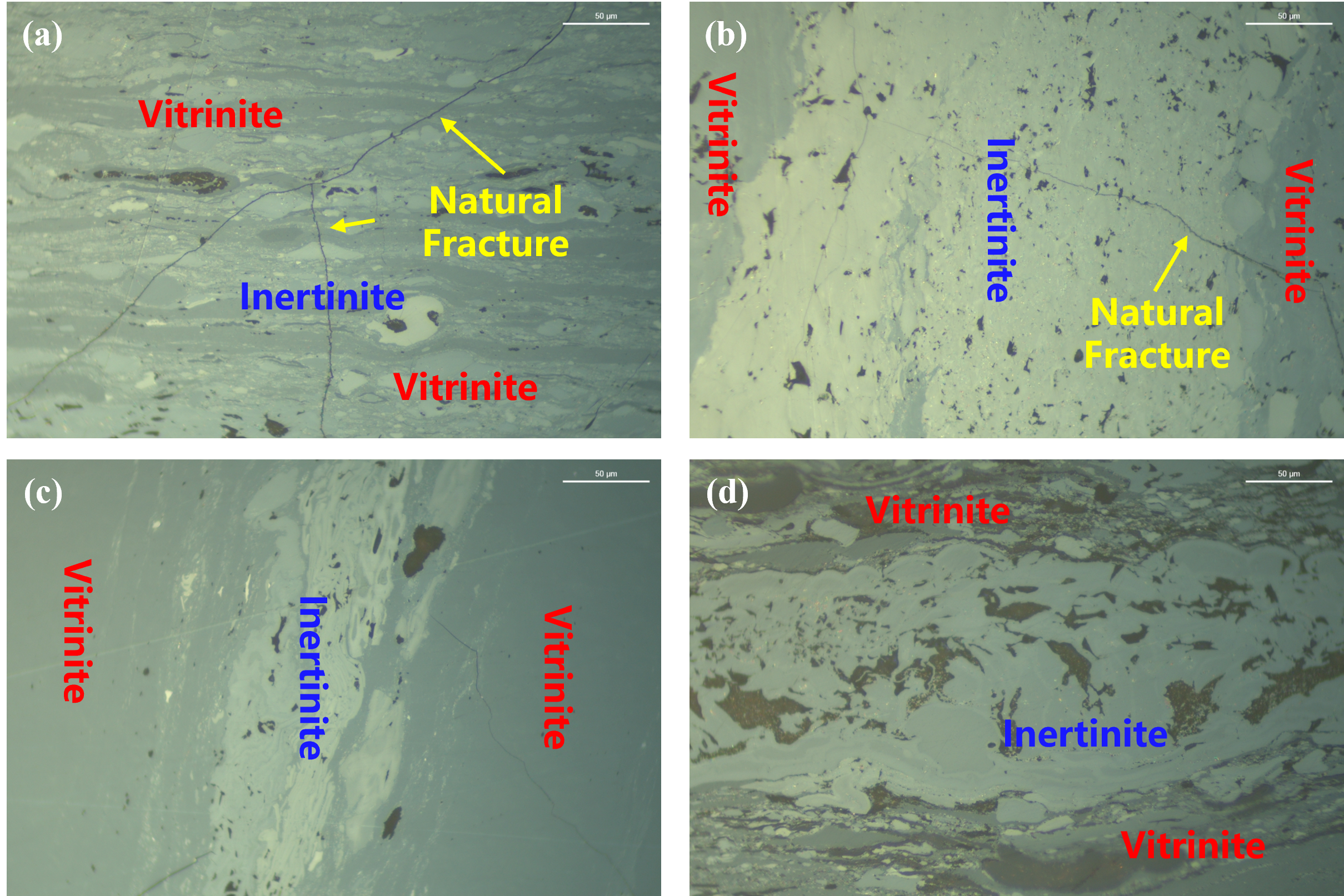
Figure 2 presents the petrographic characteristics and maceral compositions of the four candidate coal samples collected from deep coal seams. Although all samples exhibited high organic matter contents, clear differences were observed in maceral assemblages and coal structure characteristics. These differences provided the basis for selecting representative coal types for subsequent multiscale mechanical investigations.
Among the investigated samples, B1-LX-01 and B2-LL-01 were characterized by relatively high vitrinite contents, whereas B1-SF-02 and B2-LL-02 contained comparatively higher proportions of inertinite. B2-LL-01 exhibited a vitrinite content of approximately 80%, while inertinite contents in B1-SF-02 and B2-LL-02 reached 54% and 45%, respectively, indicating substantial variability in organic matter composition among candidate samples.
From the perspective of detailed maceral composition, B1-LX-01 contained minor amounts of liptinite components, including sporinite and cutinite, with a total liptinite content of approximately 3%, in addition to vitrinite and inertinite. In contrast, B1-SF-02 mainly consisted of telinite, fusinite, macrinite, and inertodetrinite, with no obvious liptinite enrichment observed.
The two coal samples collected from the Lüliang mining area exhibited representative contrasts in coal structure and maceral assemblage. B2-LL-01 was dominated by vitrinite and mainly occurred in continuous banded forms, whereas B2-LL-02 contained a more heterogeneous distribution of inertinite and liptinite. These characteristics allowed the two samples to represent typical structural end members of bright coal and semi-dull coal under similar geological backgrounds.
Combined with macroscopic coal structure observations and petrographic classification results, B2-LL-01 was identified as representative bright coal, whereas B2-LL-02 was classified as representative semi-dull coal. Although the underground samples exhibited certain differences in macroscopic appearance, their maceral compositions remained relatively comparable and were therefore not expected to produce sufficiently distinguishable mechanical responses under identical treatment conditions. In contrast, the two Lüliang samples exhibited clearer differences in both maceral composition and coal structure while maintaining geological affinity with the investigated Carboniferous–Permian No. 8+9 coal seam system. Therefore, B2-LL-01 and B2-LL-02 were selected for the subsequent experiments to facilitate comparative evaluation of structure-dependent mechanical evolution under CO2 foam treatment. This selection was based on their representativeness in coal structure, compositional characteristics, and specimen integrity rather than burial depth alone. The representative specimens used in the mechanical experiments originated from the same Carboniferous–Permian No. 8+9 coal seam system as the investigated deep coal samples and were selected following comprehensive comparative characterization. Accordingly, the subsequent experimental results primarily reflect structure-dependent mechanical evolution under CO2 foam treatment rather than the influence of burial depth itself. The deep coal samples exhibited intermediate petrographic characteristics between these two representative end members, further supporting the suitability of the selected specimens for comparative mechanical investigation.
Overall, the four candidate samples exhibited different degrees of petrographic heterogeneity. Compared with the underground samples, the Lüliang samples showed more distinguishable differences in maceral composition and structural characteristics, providing a clearer basis for subsequent comparative analysis of coal mechanical evolution under CO2 foam treatment.
3.1.2. Mineralogical Characteristics
The mineralogical compositions of the four coal samples determined by XRD analysis are summarized in
Table 3. Overall, clay minerals constituted the dominant inorganic components in all coal samples, whereas moderate differences were observed in total mineral content and mineral assemblage characteristics among different coal structures.
The two underground coal samples (B1-LX-01 and B1-SF-02) contained relatively low mineral contents of 7.2% and 8.9%, respectively. B1-LX-01 was mainly composed of ammonium illite (50.6%) and kaolinite (38.2%), accompanied by trace amounts of calcite and boehmite. In contrast, B1-SF-02 exhibited a more complex mineral assemblage, containing ammonium illite (26.3%), kaolinite (23.0%), calcite (10.6%), ankerite (3.7%), and boehmite (14.3%). Although the underground samples exhibited comparable total mineral contents, differences remained in the relative proportions of clay and non-clay minerals, indicating moderate mineralogical heterogeneity.
The two coal samples collected from the Lüliang mining area exhibited distinguishable mineral occurrence characteristics under a similar geological background. B2-LL-01 showed relatively low total mineral content (5.2%) and was primarily composed of clay minerals with minor pyrite occurrence. In contrast, B2-LL-02 contained a higher mineral fraction (19.8%), consisting predominantly of clay minerals together with detectable boehmite. These differences suggest that mineral occurrence may contribute to differences in local mechanical response and fluid–rock interaction behavior.
When mineralogical characteristics are considered together with petrographic observations, different candidate samples exhibit different levels of compositional contrast. Although the underground samples displayed certain variations in external coal structure, their mineral assemblages and total mineral contents remained relatively similar, suggesting limited differences in mineral-controlled mechanical behavior. In contrast, B2-LL-01 and B2-LL-02 exhibited more distinguishable differences in both organic composition and mineral occurrence characteristics. Such contrasts provide a more suitable basis for identifying structure-dependent responses of coal subjected to CO2 foam treatment.
Consequently, B2-LL-01 and B2-LL-02 were selected as representative bright coal and representative semi-dull coal samples, respectively, for subsequent nanoindentation, triaxial compression, and CCNBD fracture toughness experiments. This selection was intended to establish a clearer comparison of the mechanical evolution behavior associated with different coal structures and compositional characteristics under CO2 foam treatment rather than to imply universal applicability to all bright and semi-dull coals.
3.2. Micromechanical Damage Evolution Under CO2 Foam Treatment
3.2.1. Initial Mechanical Characteristics of Different Microscopic Regions
To characterize the local mechanical responses of different coal constituents, single-point nanoindentation and local grid-based indentation measurements were conducted on representative microscopic regions identified under optical observation. Based on petrographic analysis and XRD characterization, the selected dark regions were mainly associated with vitrinite-rich areas, bright regions predominantly corresponded to inertinite-rich areas, and white regions represented mineral-enriched domains. Multiple valid indentation measurements were collected for each constituent type, and abnormal indentation curves caused by surface defects or unstable loading behavior were excluded from subsequent analysis.
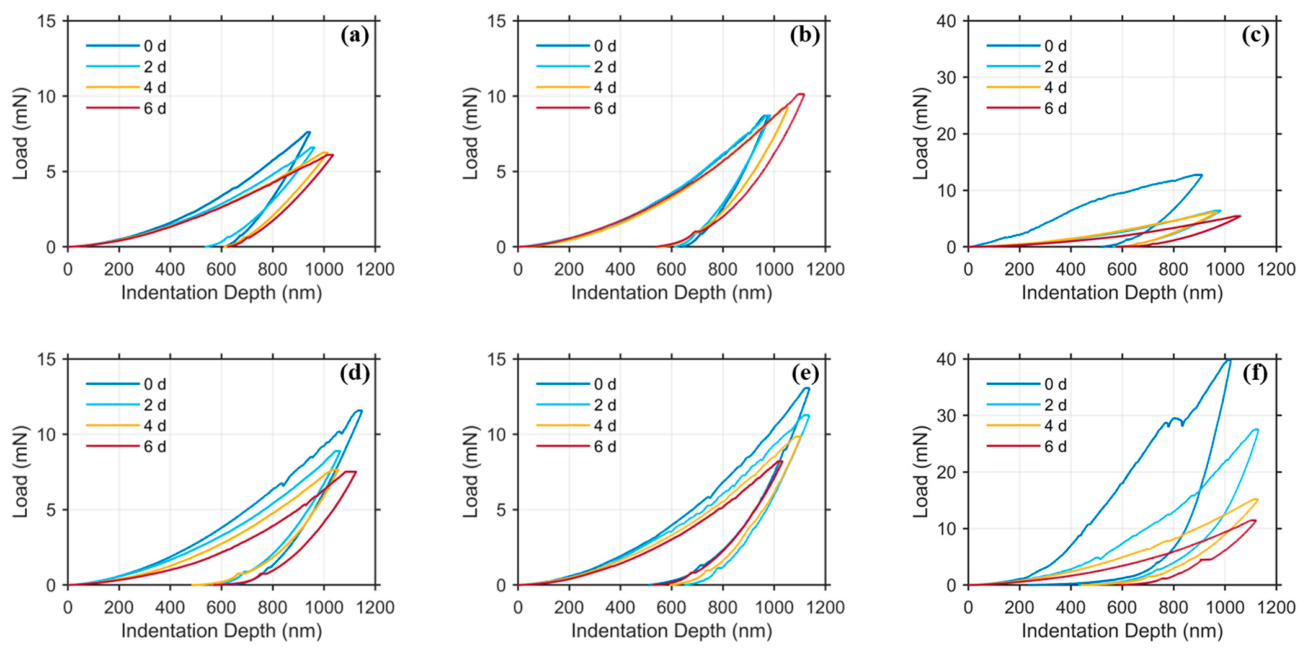
Figure 3 presents the representative load–displacement (P–h) curves obtained from different microscopic regions. Distinct indentation responses were observed among the three constituent types. The mineral-rich regions required higher loads to reach comparable indentation depth, indicating relatively greater contact stiffness and resistance to local deformation. In contrast, vitrinite-rich and inertinite-rich regions exhibited broadly similar P–h curve shapes, although inertinite-rich regions tended to sustain slightly higher loads at equivalent penetration depths.
For the untreated bright coal, the Young’s moduli of the vitrinite-rich, inertinite-rich, and mineral-rich regions were 7.19, 8.45, and 13.92 GPa, respectively, while the corresponding hardness values were 0.54, 0.56, and 0.99 GPa. For the untreated semi-dull coal, the Young’s moduli of the vitrinite-rich and inertinite-rich regions were 7.19 and 8.08 GPa, respectively, with corresponding hardness values of 0.58 and 0.67 GPa. Mineral-rich regions generally exhibited substantially higher local stiffness and hardness than the surrounding organic matrix. However, the measured values may also reflect local mineral occurrence characteristics and indentation position variability.
A comparison between the two coal types indicates that the mechanical properties of vitrinite-rich and inertinite-rich regions are generally comparable, although inertinite-rich regions consistently exhibit slightly higher Young’s modulus and hardness values. This behavior suggests that inertinite possesses a greater local load-bearing capacity and deformation resistance than vitrinite. In contrast, mineral-rich regions display mechanical properties far exceeding those of the surrounding organic matrix, particularly in semi-dull coal, where the stiffness and hardness of mineral particles are several times higher than those of adjacent organic constituents.
These differences in local mechanical properties indicate evident micromechanical heterogeneity within coal. The coexistence of relatively compliant organic matter and stiffer mineral constituents may generate local mechanical mismatches at constituent interfaces and therefore potentially influence stress redistribution during external loading. Such heterogeneity may contribute to differences in crack initiation and damage accumulation behavior observed during subsequent CO2 foam treatment.
3.2.2. Evolution of Micromechanical Properties
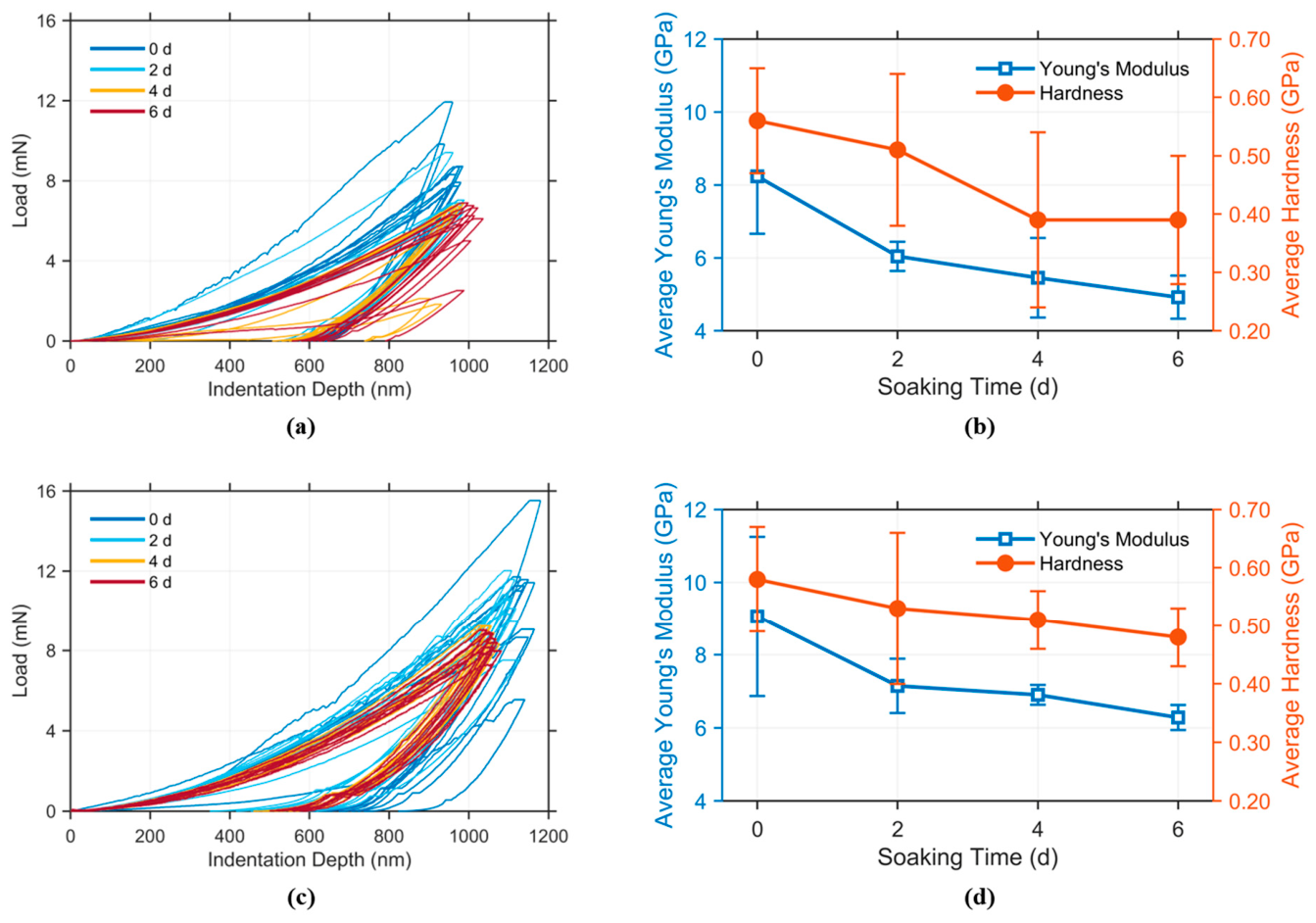
Figure 4 and
Table 4 present the nanoindentation mapping results and the evolution of micromechanical parameters for bright coal and semi-dull coal under different CO
2 foam immersion durations. Overall, both coal types exhibited decreasing trends in Young’s modulus and hardness with increasing immersion duration, suggesting progressive changes in micromechanical behavior during CO
2 foam exposure. However, the magnitude and evolution pattern of these changes differed between the two coal structure.
For bright coal, the average Young’s modulus decreased from 8.23 GPa in the untreated state to 6.04 GPa after 2 days of immersion, followed by further reductions to 5.45 GPa and 4.92 GPa after 4 and 6 days, respectively, corresponding to a total decrease of approximately 40%. Similarly, the average hardness declined from 0.56 GPa to 0.39 GPa, representing an overall reduction of about 30%. The most pronounced deterioration occurred during the first two days of immersion, when Young’s modulus and hardness decreased by 26.6% and 8.9%, respectively. Thereafter, the degradation rate gradually decreased, suggesting an apparent two-stage evolution consisting of rapid initial deterioration followed by gradual attenuation.
A similar weakening trend was observed in semi-dull coal, although the deterioration was less pronounced. The average Young’s modulus decreased from 9.06 GPa to 7.14 GPa, 6.90 GPa, and 6.28 GPa after 2, 4, and 6 days of immersion, respectively, corresponding to a total reduction of approximately 30%. The average hardness decreased from 0.58 GPa to 0.48 GPa, representing a cumulative reduction of 17%. As observed for bright coal, the majority of the mechanical degradation occurred during the initial immersion stage, whereas subsequent changes became progressively less significant.
The single-point nanoindentation results further revealed distinct responses among different microscopic constituents. In bright coal, the Young’s modulus of vitrinite-rich, inertinite-rich, and mineral-rich regions decreased by 36%, 20%, and 69%, respectively, while the corresponding hardness values decreased by 27%, 3%, and 68%. In semi-dull coal, the reductions in Young’s modulus reached 25%, 19%, and 80% for vitrinite-rich, inertinite-rich, and mineral-rich regions, respectively, accompanied by hardness reductions of 32%, 25%, and 75%. Among all constituents, mineral-rich regions exhibited the most significant mechanical degradation, whereas inertinite-rich regions maintained comparatively high mechanical stability throughout the immersion process.
Mechanical parameters were obtained from one representative specimen under each condition and should be interpreted as comparative observations rather than statistical population values.
Comparative analysis indicates that bright coal is considerably more susceptible to CO2 foam-induced deterioration than semi-dull coal. After 6 days of immersion, the reductions in average Young’s modulus and hardness of bright coal exceeded those of semi-dull coal by approximately 10% and 13%, respectively. The different deterioration responses observed between bright coal and semi-dull coal may be associated with differences in maceral composition, mineral occurrence, and structural characteristics. The relatively higher vitrinite content in bright coal could facilitate fluid accessibility and local mechanical weakening, whereas higher inertinite and mineral contents in semi-dull coal may contribute to comparatively greater structural stability. However, the present observations do not isolate the individual contributions of CO2, additives, and pressure–temperature effects.
The observed two-stage deterioration behavior indicates that micromechanical responses were more pronounced during the early immersion stage. This trend may be associated with coupled effects including fluid penetration, adsorption-induced deformation, mineral–fluid interaction, and local structural rearrangement. As immersion continued, changes in mechanical parameters gradually became less significant. Although direct observations of pore and crack evolution were not performed in this section, the micromechanical results provide indirect support for interpreting subsequent macroscopic mechanical degradation and fracture resistance evolution.
3.3. Macroscopic Mechanical Deterioration Under CO2 Foam Treatment
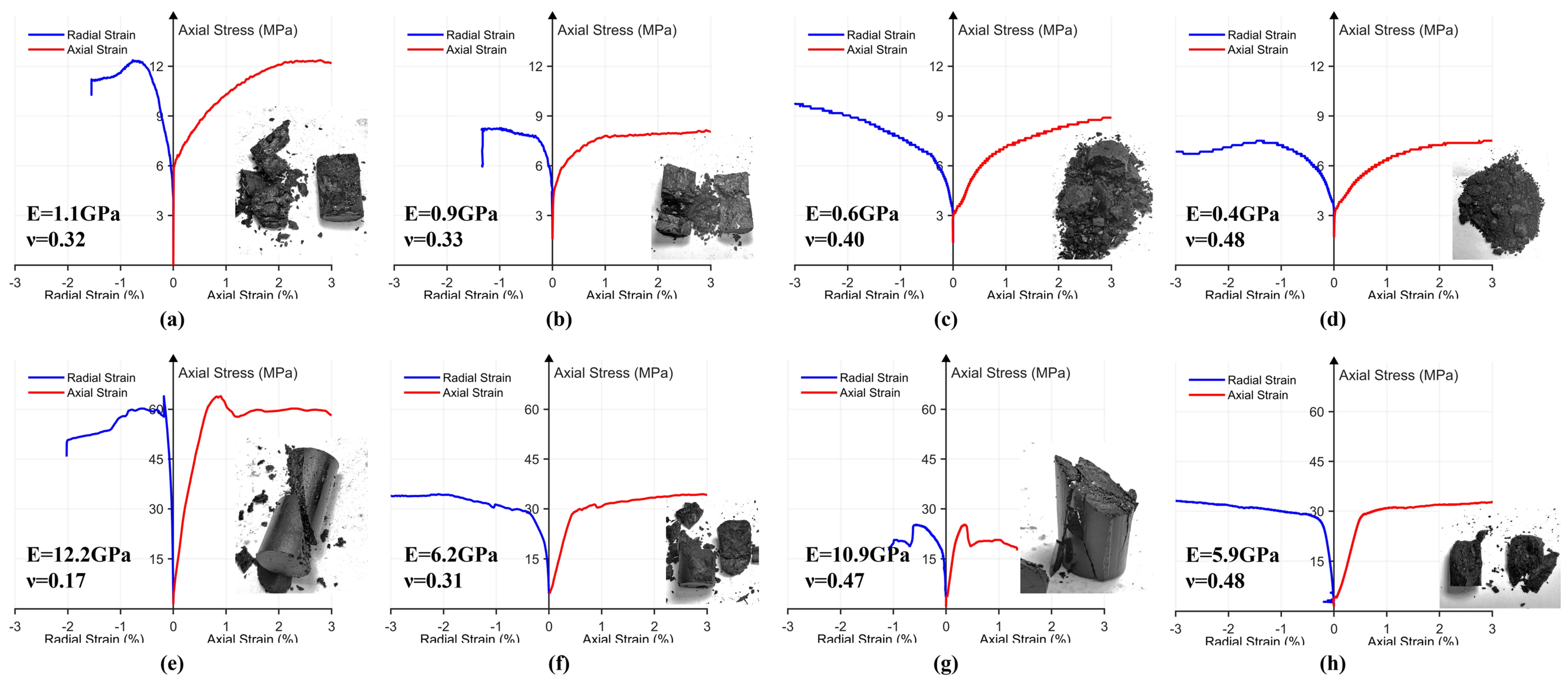
Figure 5 presents the deviatoric stress–strain curves and failure patterns of the two coal types after different CO
2 foam immersion durations, while the corresponding macroscopic mechanical parameters are summarized in
Table 5. Overall, CO
2 foam treatment resulted in progressive deterioration of the macroscopic mechanical behavior of both coal types, as reflected by reductions in peak strength, stiffness degradation, and observable changes in failure characteristics.
Prior to immersion, the two coal types exhibited significantly different mechanical behaviors. Semi-dull coal showed considerably higher peak strength and a steeper elastic deformation stage, followed by a rapid post-peak stress drop, indicating pronounced brittle failure characteristics. In contrast, bright coal exhibited substantially lower peak strength and a more gradual post-peak stress decline, suggesting a relatively higher capacity for inelastic deformation. These differences indicate that semi-dull coal possesses greater load-bearing capacity, whereas bright coal is more susceptible to deformation and failure. This large difference in initial stiffness is primarily associated with their contrasting internal structures rather than coal rank alone. According to the petrographic and XRD results, bright coal contains abundant vitrinite and well-developed banded structures with relatively low mineral content, whereas semi-dull coal contains higher proportions of inertinite and inorganic minerals, which contribute to a more stable load-bearing framework. In addition, the occurrence of natural discontinuities in bright coal may further reduce its bulk deformation resistance.
The substantial difference in initial Young’s modulus between bright coal and semi-dull coal is interpreted as the combined result of compositional heterogeneity and structural characteristics. Higher inertinite and mineral contents in semi-dull coal contribute to greater stiffness, whereas vitrinite-rich bright coal exhibits lower resistance to deformation. Natural cleats and local structural discontinuities may further amplify these differences at the specimen scale.
With increasing immersion time, the stress–strain curves of both coal types progressively shifted toward lower stress levels, accompanied by a continuous reduction in the initial slope of the elastic segment and a decline in peak stress. The most evident deterioration occurred within the first two days of immersion, suggesting that mechanical deterioration was more active during the initial stage of fluid–coal interaction. As immersion time increased to 6 days, peak strength continued to decrease, although the deterioration rate gradually diminished. Simultaneously, the magnitude of post-peak stress drop became less pronounced, suggesting a gradual transition from brittle failure toward relatively ductile deformation behavior.
The evolution of macroscopic mechanical parameters further confirms these observations. For bright coal, Young’s modulus decreased from 1.1 GPa to 0.4 GPa after 6 days of immersion, corresponding to a cumulative reduction of 64%. The compressive strength decreased from 12.4 MPa to 7.5 MPa, representing a reduction of 39%, while Poisson’s ratio increased from 0.32 to 0.48.
For semi-dull coal, Young’s modulus decreased overall from 12.2 GPa to 5.9 GPa, corresponding to a cumulative reduction of approximately 52%, whereas compressive strength decreased from 63.9 MPa to 29.2 MPa, representing a reduction of approximately 54%. Meanwhile, Poisson’s ratio increased from 0.17 to 0.48. These results indicate that CO2 foam treatment substantially reduces the stiffness and load-bearing capacity of coal while enhancing its lateral deformability. It should be noted that Young’s modulus exhibited a local increase at the intermediate immersion duration rather than a strictly monotonic decrease. Considering that only one independent specimen was tested for each condition and given the inherent heterogeneity of coal, this fluctuation is considered more likely to reflect specimen-scale variability associated with local mineral distribution, natural fractures, and structural anisotropy rather than indicating actual mechanical recovery. Nevertheless, the overall weakening trend remains evident and is further supported by the concurrent reductions in compressive strength, fracture toughness, and micromechanical properties.
The failure morphology also evolved during immersion. Untreated bright coal exhibited multiple interacting fractures accompanied by local branching. With prolonged immersion, fracture density increased and crack connectivity became more evident. After 6 days of treatment, extensive fragmentation and particle shedding occurred, indicating severe degradation of structural integrity.
In contrast, semi-dull coal maintained a relatively stable shear-dominated failure pattern throughout immersion. Although secondary fractures gradually developed, the dominant failure plane remained identifiable even after 6 days, suggesting stronger resistance to damage propagation. Notably, the deterioration observed at the macroscopic scale was greater than that measured at the micromechanical scale. For example, the average nanoindentation Young’s modulus of bright coal decreased by approximately 40%, whereas the corresponding macroscopic modulus decreased by 64%. Similarly, the reductions for semi-dull coal were approximately 30% and 52%, respectively. This discrepancy suggests that bulk mechanical weakening cannot be explained solely by local material softening. Instead, degradation at larger scales is interpreted to reflect the combined influence of constituent softening together with progressive activation and interaction of pre-existing defects and structural discontinuities. However, because direct observations of pore–fracture evolution were not conducted in this study, this interpretation should be regarded as a mechanism-based inference derived from the combined nanoindentation, triaxial compression, and fracture toughness results rather than direct experimental evidence.
Overall, both coal types exhibited substantial macroscopic mechanical deterioration under CO2 foam treatment. However, bright coal demonstrated substantially greater sensitivity to treatment and evolved toward severe structural fragmentation, whereas semi-dull coal retained a predominantly fracture-controlled failure mode. These results indicate that coal structure governs the efficiency by which local micromechanical degradation is transferred into macroscopic mechanical deterioration.
3.4. Evolution of Fracture Toughness Under CO2 Foam Treatment
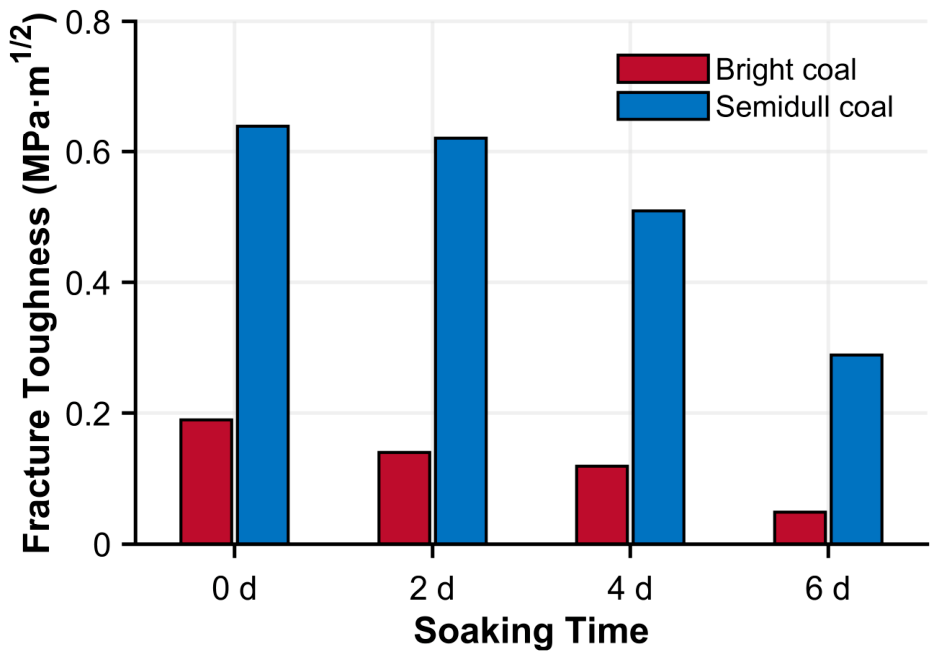
Figure 6 illustrates the evolution of Mode-I fracture toughness of the two coal types determined from CCNBD tests after different CO
2 foam immersion durations. Overall, CO
2 foam treatment led to progressive deterioration of fracture resistance in both coal types, as reflected by the gradual reduction in Mode-I fracture toughness with increasing immersion duration.
Prior to immersion, semi-dull coal exhibited a fracture toughness of 0.64 MPa·m1/2, which was substantially higher than that of bright coal (0.19 MPa·m1/2), indicating a stronger intrinsic resistance to crack propagation. As immersion time increased, the fracture toughness of both coal types continuously decreased. After 6 days of immersion, the fracture toughness of bright coal decreased to 0.05 MPa·m1/2, corresponding to a reduction of 74%, whereas that of semi-dull coal decreased to 0.29 MPa·m1/2, representing a reduction of 55%. The greater reduction observed in bright coal suggests a higher sensitivity of its fracture resistance to CO2 foam treatment. The measured fracture toughness values remain within the range reported for coal materials tested using ISRM-recommended fracture toughness methods, although the bright coal exhibited relatively low initial values. The pronounced deterioration observed after immersion therefore likely reflects the combined influence of intrinsic structural weakness and fluid-induced mechanical degradation rather than abnormal fracture behavior.
Comparison between fracture toughness and macroscopic mechanical parameters reveals that fracture resistance deteriorated more rapidly than compressive strength. For bright coal, fracture toughness decreased by 74%, whereas compressive strength decreased by only 39%. For semi-dull coal, the corresponding reductions were 55% and 54%, respectively. These results suggest that fracture resistance may be more sensitive to CO2 foam exposure than bulk compressive strength, particularly for bright coal. Consequently, the coal specimens exhibited a reduced capacity to maintain fracture stability during subsequent loading.
The observed deterioration in fracture toughness appears to be associated with the multiscale mechanical changes observed after CO2 foam treatment. As demonstrated by the nanoindentation results, prolonged immersion caused significant reductions in the Young’s modulus and hardness of both organic matter and mineral-rich regions. Simultaneously, the triaxial compression tests revealed progressive degradation of stiffness and structural integrity. The reductions in local mechanical properties together with the observed degradation in macroscopic stiffness suggest that less energy may be required for fracture propagation after immersion, which may contribute to the observed decline in fracture toughness.
Notably, semi-dull coal maintained a significantly higher fracture toughness than bright coal throughout the entire immersion process. Even after 6 days of treatment, the fracture toughness of semi-dull coal (0.29 MPa·m
1/2) remained higher than that of untreated bright coal (0.19 MPa·m
1/2). The measured fracture toughness values are generally comparable to the lower range reported for coal and rock materials determined using CCNBD-related fracture testing methods, although direct comparison may be affected by differences in coal rank, specimen geometry, structural heterogeneity, and testing procedures. Previous studies have shown that exposure to supercritical CO
2 may substantially reduce coal fracture toughness, with reported reductions reaching more than 80% after prolonged treatment durations, indicating that significant deterioration of fracture resistance under CO
2 exposure is physically reasonable. In addition, previous studies have reported that fracture toughness values obtained from CCNBD testing may be relatively conservative compared with those determined using several alternative testing geometries and evaluation approaches [
29], which may partly contribute to the comparatively low absolute KIC values observed in the present study. This phenomenon suggests that coal structure plays an important role in influencing fracture behavior. The relatively higher inertinite and mineral contents in semi-dull coal likely contribute to a more stable internal framework that impedes crack propagation, whereas the vitrinite-rich and structurally discontinuous characteristics of bright coal may increase its susceptibility to softening and damage accumulation under CO
2 foam treatment.
Overall, CO2 foam treatment substantially reduces the fracture resistance of coal, with bright coal exhibiting considerably higher fracture sensitivity than semi-dull coal. The results further suggest that differences in coal structure influence the transfer efficiency of mechanical deterioration across scales and the resulting evolution of fracture behavior, thereby affecting the fracture response of coal during CO2 foam exposure.
4. Discussion
4.1. Dominant Mechanisms Governing the Mechanical Deterioration of Coal Under CO2 Foam Treatment
The nanoindentation, triaxial compression, and fracture toughness results consistently indicate that CO2 foam immersion is associated with progressive deterioration of both micromechanical and macroscopic mechanical properties in coal. Based on the experimental observations and previous studies, the observed weakening behavior is interpreted to result from the combined influence of CO2–coal interactions, fluid exposure, matrix softening, and progressive crack development. Since the present study did not include independent control experiments for additive solution, supercritical CO2 alone, or pressure–temperature exposure, the relative contributions of each factor cannot be quantitatively separated and are discussed here as possible coupled mechanisms.
Under high-temperature and high-pressure conditions, the aqueous phase within the CO2 foam system may generate a weakly acidic environment, which could promote the dissolution or weakening of certain mineral components and intergranular bonding. Meanwhile, supercritical CO2 may diffuse into the organic matrix and induce adsorption-related deformation and molecular rearrangement. These processes have been reported to alter local mechanical responses of coal and contribute to stiffness reduction. In the present study, the decreases in Young’s modulus and hardness observed from nanoindentation measurements suggest that local material softening occurred during immersion; however, direct mineral dissolution and molecular-scale alterations were not directly measured.
However, the deterioration observed at the macroscopic scale is considerably greater than that measured at the microscale. For example, the reduction in macroscopic Young’s modulus exceeds the corresponding decrease obtained from nanoindentation measurements for both coal types. This discrepancy suggests that matrix softening alone may not fully explain the deterioration of bulk mechanical performance. Additional structural effects, including crack evolution and damage accumulation, are likely involved in amplifying the weakening response.
As immersion progresses, fluid penetration along existing cleats, pores, and constituent interfaces may gradually alter the local stress distribution and mechanical continuity of the coal matrix. Because these heterogeneous regions generally exhibit mechanical mismatch, they may act as preferential locations for localized deformation and crack initiation. Although direct observations of crack evolution were not conducted in this study, the progressive reduction in stiffness, strength, and fracture toughness implies that crack development and damage accumulation likely contributed to the observed macroscopic weakening.
The fracture toughness results provide additional insight into the damage evolution process. For both coal types, the reduction in fracture toughness was generally greater than or comparable to the corresponding reduction in compressive strength, indicating that the resistance to crack initiation and propagation deteriorated more rapidly than the overall load-bearing capacity. This observation suggests that CO2 foam immersion may preferentially weaken the fracture resistance of the coal matrix during the early stage of treatment. As a result, crack growth becomes more likely under external loading, which may contribute to the subsequent deterioration of macroscopic mechanical properties and failure stability. Although direct observations of crack evolution were not conducted in this study, the consistent reductions in fracture toughness, Young’s modulus, and compressive strength collectively support this interpretation.
Therefore, the mechanical deterioration observed during CO2 foam immersion can be interpreted as a multiscale weakening process involving local material softening and progressive structural damage accumulation. The experimental results support the existence of coupled responses across different scales; however, the detailed contributions of chemical reactions, adsorption effects, and fracture evolution require further validation through direct pore–fracture characterization and control experiments. Future studies incorporating SEM, CT, NMR, or in situ monitoring techniques may provide additional evidence for the proposed mechanism.
4.2. Controlling Effect of Coal Structure on Mechanical Response
Although both coal types experienced significant mechanical deterioration after CO2 foam treatment, bright coal and semi-dull coal exhibited markedly different responses in terms of micromechanical properties, macroscopic mechanical behavior, and fracture toughness. In general, the selected bright coal exhibited substantially greater reductions in Young’s modulus, compressive strength, and fracture toughness than the selected semi-dull coal under the same treatment conditions, suggesting that coal structure is an important factor influencing damage evolution during CO2 foam exposure.
Petrographic analysis revealed pronounced differences in maceral composition between the two coal types. Bright coal is dominated by vitrinite, accounting for approximately 80% of the organic constituents, whereas semi-dull coal contains higher proportions of inertinite and liptinite. Vitrinite-rich coal generally possesses stronger adsorption capacity and is more susceptible to adsorption-induced swelling during CO2 exposure. In contrast, inertinite-rich domains are characterized by a relatively compact and carbonized structure, resulting in weaker adsorption-induced deformation and greater resistance to physicochemical alteration. Consequently, differences in maceral composition may contribute to the distinct mechanical responses observed between the two representative coal samples during CO2 foam immersion.
The nanoindentation results further demonstrate that the initial micromechanical heterogeneity strongly influences subsequent damage development. In bright coal, the dominance of vitrinite-rich domains leads to a greater reduction in local Young’s modulus and hardness during immersion. The progressive reduction in local Young’s modulus and hardness may alter local stress transfer and deformation compatibility within the coal matrix, thereby increasing the likelihood of localized damage accumulation. With increasing immersion duration, the cumulative effect of local weakening may contribute to the deterioration of bulk mechanical performance.
At the macroscopic scale, the contrasting failure behaviors of the two coal types provide additional evidence of the controlling role of coal structure. Bright coal gradually evolved from a fracture-dominated failure mode to severe fragmentation after prolonged immersion, suggesting that more extensive internal damage accumulation may have occurred within the specimen. In contrast, semi-dull coal consistently maintained a multi-crack shear-dominated failure pattern, even after 6 days of immersion. This behavior suggests that the higher inertinite and mineral contents contributed to maintaining structural integrity and limiting the degree of structural deterioration during loading.
The different deterioration rates observed during immersion further support this interpretation. Most of the mechanical degradation occurred during the first two days of treatment, when fluid–coal interactions were most active and mechanical parameters changed most rapidly. However, the magnitude of deterioration was significantly greater in bright coal than in semi-dull coal. This finding indicates that the results suggest that coal structure may influence fluid accessibility and affect the efficiency of damage transfer from the microscale to the macroscale. Coal exhibiting higher adsorption sensitivity may be more susceptible to transforming local damage into global structural instability.
From an engineering perspective, the lower fracture toughness and higher damage sensitivity observed in the selected bright coal may facilitate for fracture initiation and the generation of complex fracture networks during CO2 foam fracturing. However, the observed tendency toward fragmentation may increase the potential risk of coal-fines generation, migration, and near-wellbore blockage. In contrast, the selected semi-dull coal maintained relatively greater structural stability and fracture resistance, which may require higher treatment pressures to achieve effective reservoir stimulation. Therefore, the optimization of CO2 foam fracturing parameters may benefit from considering coal structure characteristics to balance fracture complexity, stimulation efficiency, and reservoir damage control.
4.3. Damage Evolution Behavior of Coal Under CO2 Foam Treatment
Based on the petrographic analysis, mineralogical characterization, nanoindentation results, triaxial compression tests, and fracture toughness measurements, a conceptual damage evolution pathway associated with CO2 foam immersion is proposed. The observed deterioration behavior suggests a progressive transition from local material degradation to large-scale structural instability.
In the initial state, coal is a highly heterogeneous composite material consisting of macerals, mineral particles, and natural fracture systems. Significant mechanical contrasts exist among different constituents, with mineral-rich regions exhibiting substantially higher stiffness and hardness than organic-matter-rich domains. Meanwhile, natural fractures and interfaces between different constituents may provide preferential pathways for fluid penetration and localized mechanical heterogeneity.
Following CO2 foam immersion, fluid components containing supercritical CO2 may interact preferentially with accessible pores, fractures, and constituent boundaries the coal matrix through pre-existing pores, fractures, and constituent boundaries. During this stage, physicochemical interactions are considered to contribute substantially to the observed mechanical changes. Mineral dissolution and fluid–coal interactions may alter local bonding conditions, while CO2 adsorption may induce localized deformation and matrix rearrangement and molecular rearrangement within organic matter. These processes may contribute to a progressive reduction in local stiffness and hardness, as evidenced by the nanoindentation measurements. The deterioration is particularly pronounced in mineral-rich regions, whereas inertinite-rich domains exhibit relatively greater mechanical stability.
As immersion continues, the accumulation of local mechanical weakening may progressively influence the bulk mechanical response. The reduction in local mechanical strength promotes stress redistribution and strain localization around weak interfaces, increasing the likelihood of localized damage accumulation. With increasing crack density, damage may gradually extend across larger structural domains. Consequently, the deterioration of coal mechanical behavior is no longer controlled solely by material softening but becomes increasingly governed by the loss of structural integrity. This interpretation is supported by the observation that the reduction in macroscopic Young’s modulus (52–64%) is substantially greater than that measured at the microscale (30–40%), suggesting that structural-scale responses amplify local mechanical deterioration on bulk mechanical deterioration.
The evolution of damage further depends on coal structure characteristics. In bright coal, the dominance of vitrinite and the presence of more developed natural discontinuities may facilitate fluid interaction and contribute to more pronounced damage accumulation. As a result, local degradation rapidly propagates throughout the specimen, eventually resulting in more severe structural deterioration and leading to fragmentation-dominated failure. In contrast, the higher inertinite and mineral contents in semi-dull coal contribute to greater structural stability and may limit the extent of mechanical deterioration. Consequently, the observed weakening remained relatively limited, and failure continues to be controlled by major shear fractures even after prolonged immersion.
Based on the experimental observations and the corresponding mechanistic interpretation, the damage evolution behavior associated with CO2 foam immersion may be conceptually summarized as a four-stage process: fluid interaction → material softening → damage accumulation → structural instability. Among these stages, material softening is interpreted as an important precursor for damage initiation, whereas fracture development and structural deterioration may contribute to the subsequent reduction in macroscopic strength and fracture resistance. The structural characteristics of coal are considered to influence the efficiency of damage transfer across scales and ultimately affect the final failure behavior under CO2 foam treatment. It should be noted that the proposed damage evolution pathway is inferred from the combined mechanical responses observed in this study and has not been directly validated through pore–fracture imaging or quantitative crack characterization. Future studies integrating mechanical testing with multiscale structural characterization techniques such as SEM, CT, or NMR are needed to further verify the proposed damage transfer mechanism across different scales.




 and
and