1. Introduction
Beer is considered one of the oldest fermented beverages and remains one of the most widely consumed alcoholic drinks worldwide by production volume [
1]. Traditional brewing uses four main raw materials: water, malt, hops, and yeast [
2,
3]. In recent decades, the global beer market has undergone significant diversification due to the rapid growth of the craft brewing sector, which has increased consumer interest in product quality, sensory complexity, and raw material characterisation [
4]. In this context, increasing attention has been given to the influence of brewing ingredients on fermentation performance and final beer quality [
5,
6].
Although Albania has a long tradition of beer production, the craft brewing sector has experienced a marked expansion only in recent years, driven by increasing consumer demand for diversified beer styles and locally produced beverages. This development has stimulated interest in exploiting regional raw materials, including natural spring waters, to improve product quality and strengthen the identity of Albanian craft beers. Despite the availability of numerous natural spring water sources with distinct mineral characteristics, little scientific information is currently available regarding their suitability for brewing or their potential influence on beer quality.
Among all brewing raw materials, water represents the major component of beer, accounting for approximately 90–95% of its final composition [
2]. Therefore, the physicochemical properties of brewing water are crucial in determining mash performance, fermentation kinetics, flavour development, colloidal stability, and overall beer quality [
3,
7]. In addition to meeting drinking water standards, brewing water must have an appropriate mineral composition, as dissolved ions significantly influence wort pH, and enzymatic activity [
8].
The mineral composition of brewing water is particularly important during mashing. Calcium and magnesium ions contribute to mash acidification and regulate the enzymatic reactions responsible for starch degradation and fermentable sugar production [
9]. Calcium is considered one of the most important brewing ions because it enhances α-amylase activity, improves protein coagulation during wort boiling, and promotes yeast flocculation during fermentation [
3]. In addition, calcium contributes to beer clarification and colloidal stability by facilitating the precipitation of phosphates and oxalates during brewing operations [
10]. Magnesium also plays an important role as an essential cofactor for several yeast enzymes involved in alcoholic fermentation and cellular metabolism [
2]. Moderate magnesium concentrations support yeast growth and fermentation efficiency, while excessive levels may cause undesirable bitterness in beer (IPA) [
10]. In contrast, chloride ions contribute to sweetness perception, fullness, and malt smoothness in the final product [
3]. Historically, local water chemistry contributed significantly to the development of traditional beer styles. Sulphate-rich waters favoured strongly hopped Pale Ales, whereas soft waters supported the production of pale lagers characterised by smoother bitterness and greater clarity [
2,
10]. Not all water constituents are beneficial for brewing processes. Elevated bicarbonate concentrations can increase mash pH and negatively affect enzymatic activity, particularly in pale beer styles [
9]. High alkalinity may also contribute to harsh bitterness and reduced flavour stability [
7]. Additionally, chlorine-derived compounds may react with phenolic substances during brewing, generating chlorophenols responsible for medicinal off-flavours [
10,
11]. Heavy metals such as iron and copper are also undesirable because they promote oxidative reactions and accelerate flavour deterioration during beer storage [
2]. Consequently, modern breweries frequently use water treatment strategies to standardise mineral composition and improve brewing consistency [
3].
Several studies have demonstrated that variations in brewing water composition can significantly influence beer physicochemical properties and fermentation performance [
8,
12,
13]. However, although Albania has abundant natural spring water resources with varying mineral profiles, there is limited information about their suitability for brewing. Characterising Albanian spring waters may therefore provide valuable insights for developing local craft brewing and for understanding the relationship between water mineralisation and beer quality parameters.
To date, no systematic study has evaluated the influence of Albanian spring waters with contrasting mineral compositions on fermentation performance and the physicochemical characteristics of Pale Ale beer under standardised brewing conditions.
For these reasons, this study aimed to evaluate the influence of four Albanian spring waters (Bogova, Germenji, Selita, and Lajthiza) on the fermentation kinetics and physicochemical characteristics of Pale Ale beer produced under standardised brewing conditions. Particular attention was given to the effects of water composition on wort properties, fermentation behaviour, acidity development, and the formation of secondary metabolites associated with beer quality.
2. Materials and Methods
2.1. Water Sampling
Water samples were collected in May 2025 from four Albanian natural spring sources: Bogova (Skrapar region), Germenji (Kolonjë area), Selita (Mirditë region), and Lajthiza (Pukë region). Sampling procedures followed ISO 5667-5:2006 guidelines for drinking water sampling [
14]. Water was collected aseptically in sterile polyethylene bottles after allowing the springs to flow for several minutes to obtain representative samples. Samples were transported under refrigerated conditions and stored at 4 °C until use.
2.2. Water Analysis
The physicochemical characterisation of the spring waters included pH, turbidity, conductivity, total hardness, bicarbonates, calcium, magnesium, chlorides, sulphates, and nitrates. Water pH was measured using a calibrated digital pH metre (EDGE, Hanna Instruments, Woonsocket, RI, USA). Electrical conductivity was measured using a HI99300 conductivity metre (Hanna Instruments, Woonsocket, RI, USA) equipped with automatic temperature compensation, in accordance with Standard Methods for the Examination of Water and Wastewater (24th ed.) [
15]. Turbidity was measured using a nephelometric turbidity metre and expressed as nephelometric turbidity units (NTU) [
15]. Total hardness was determined by EDTA titration and expressed as mg/L CaCO
3 [
15]. Bicarbonates were quantified by acidimetric titration, while calcium and magnesium concentrations were determined by EDTA complexometric titration according to [
15]. Chlorides were determined by argentometric titration (Mohr method) [
16]. Sulphates and nitrates were quantified using standard spectrophotometric procedures according to [
17]. All physicochemical determinations were performed on three independent water samples, and results are expressed as mean ± standard deviation (SD).
2.3. Brewing Materials
Beer was produced using 90% Pale Ale malt and 10% Vienna malt (Château Pale Ale, Castle Malting, Lambermont, Belgium). Hallertauer hops (BarthHaas, Nürnberg, Germany) were used during wort boiling. Alcoholic fermentation was carried out with the commercial Saccharomyces cerevisiae SafAle™ US-05 (Fermentis, Marquette-lez-Lille, France). Hop additions were standardised for all brewing trials to maintain comparable bitterness and aroma characteristics among the beers produced.
2.4. Beer Production
Brewing trials were carried out at Pan’s Microbrewery (Tirana, Albania) using a BrewZilla Gen 4.1 brewing system (KegLand PTY Ltd., Victoria, Australia). Fermentation was conducted in a FermZilla All Rounder 60 L fermenter (KegLand PTY Ltd., Noble Park North, Victoria, Australia), with the temperature maintained at 20 ± 2 °C throughout the fermentation process using a Fermentation Glycol Chiller G40 (KegLand PTY Ltd., Noble Park North, Victoria, Australia) connected to the fermenter.
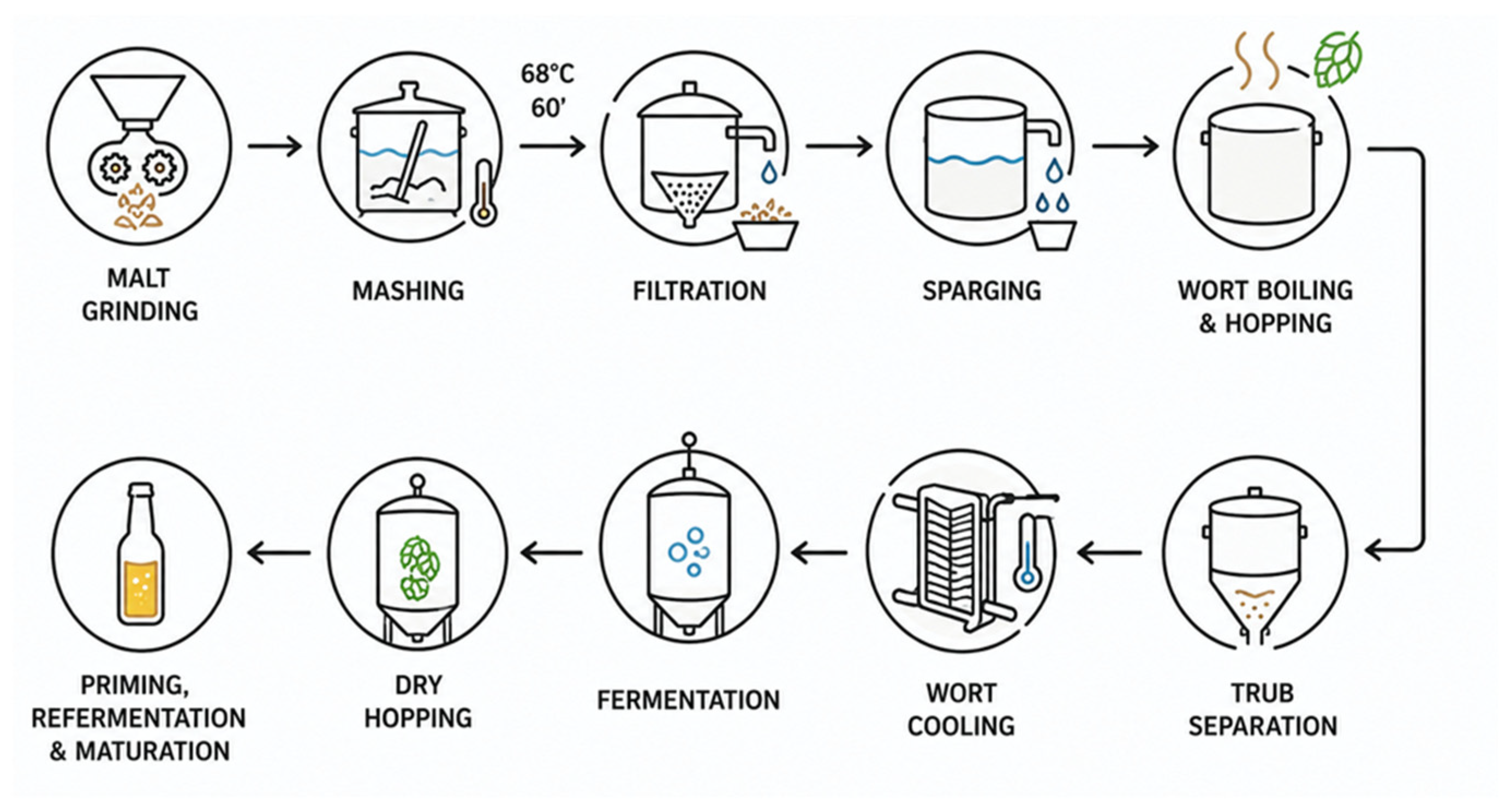
A Pale Ale-style wort was produced under standardised brewing conditions for all experimental treatments. The same base malts were used in all four experimental trials (Germenji, Bogova, Selita, and Lajthiza). After milling with a two-roller mill (0.5 mm gap setting), the malts were mashed with four different brewing waters. For each treatment, 10 kg of malt were mashed with 30 L of the respective brewing water and subsequently sparged with 25 L of the same water, yielding approximately 50 L of wort. No acidification or mineral adjustment of the brewing waters was performed prior to mashing in order to preserve their original physicochemical characteristics and evaluate their intrinsic suitability for brewing. The mashing programme consisted of the following temperature rests: 55 °C for 20 min, 65 °C for 45 min, and 72 °C for 15 min, followed by a mash-out step at 78 °C for 5 min.
The same mashing conditions were maintained for all treatments to ensure that brewing water composition was the only experimental variable.
Sparging was carried out using water at 78 °C. Wort boiling lasted 90 min, with hops added 30 min after boiling commenced and 5 min before the end of boiling.
After cooling the wort to fermentation temperature, 25 g of dried yeast (S. cerevisiae US-05) were inoculated into 50 L of wort, corresponding to a pitching rate of approximately 0.5 g/L. Before yeast inoculation, the wort was aerated by sterile air injection to provide sufficient dissolved oxygen for yeast growth during the initial phase of fermentation. Primary fermentation was considered complete when no further decrease in density was observed in two consecutive daily measurements. All brewing trials were performed in triplicate.
At the end of primary fermentation, sucrose (5 g/L) was added for priming, and the beer was then packaged in 330 mL dark brown glass bottles. Secondary fermentation and bottle conditioning were carried out at 20 °C for 40 days prior to analysis.
Figure 1 illustrates the brewing process used for the production of Pale Ale beers.
2.5. Wort and Beer Analysis
Wort and beer analyses were performed according to the analytical procedures recommended by the European Brewery Convention (EBC) [
16]. Beer density during fermentation was monitored daily using a calibrated DE40 digital density metre (Mettler Toledo, Greifensee, Switzerland) after sample degassing and temperature equilibration at 20 °C according to EBC methods. Alcohol content (%
v/
v), original extract (°P), colour (EBC), bitterness (IBU), and free amino nitrogen (FAN) were determined using EBC standard analytical methods. Beer and wort pH values were measured using a calibrated digital pH metre (EDGE, Hanna Instruments, Woonsocket, RI, USA) [
18]. Total acidity and volatile acidity were determined by titration according to Baiano et al. [
19]. Glycerol, acetaldehyde, L-malic acid, and L-lactic acid were quantified by enzymatic spectrophotometric assays using commercial kits (Steroglass, Perugia, Italy) following the manufacturer’s instructions. Absorbance measurements were carried out using a UV–Vis spectrophotometer. All analytical determinations were performed in duplicate on each biological replicate, and the average values were used for statistical analysis.
2.6. Statistical Analysis
Three independent biological replicates were prepared for each beverage. Analytical measurements were performed in duplicate for each biological replicate, and technical replicates were averaged prior to statistical analysis. The results were expressed as the mean ± SD (n = 3). Statistical analyses were performed using one-way analysis of variance (ANOVA) followed by Tukey’s post hoc test at a significance level of p < 0.05 using IBM SPSS Statistics 21.0 software.
Pearson correlation analysis was performed using the mean values obtained for each of the four spring waters and the corresponding mean beer physicochemical parameters. Therefore, the analysis was based on four independent observations (n = 4) and should be regarded as exploratory. Correlation coefficients were visualised using a heatmap generated with OriginPro 2024 software. Principal component analysis (PCA) was carried out using standardised physicochemical data to assess the multivariate relationships between brewing water composition and final beer characteristics. To enhance model interpretability and avoid redundancy among highly correlated variables, only the most relevant water mineral parameters (bicarbonates, calcium, magnesium, conductivity, and hardness) and beer characteristics showing significant differences among treatments or strong correlations with water composition (pH, total acidity, volatile acidity, glycerol, acetaldehyde, and bitterness) were included in the PCA. Variables showing limited variability among treatments (e.g., alcohol content and density) or providing redundant information were excluded from the analysis.
3. Results and Discussion
3.1. Physicochemical Characteristics of the Brewing Waters
The physicochemical characteristics of the four Albanian spring waters used for beer production are presented in
Table 1. Significant differences (
p < 0.05) were observed among the waters regarding bicarbonate, calcium, magnesium, conductivity, hardness, and chloride concentrations, confirming the distinct mineral profiles of the selected spring waters.
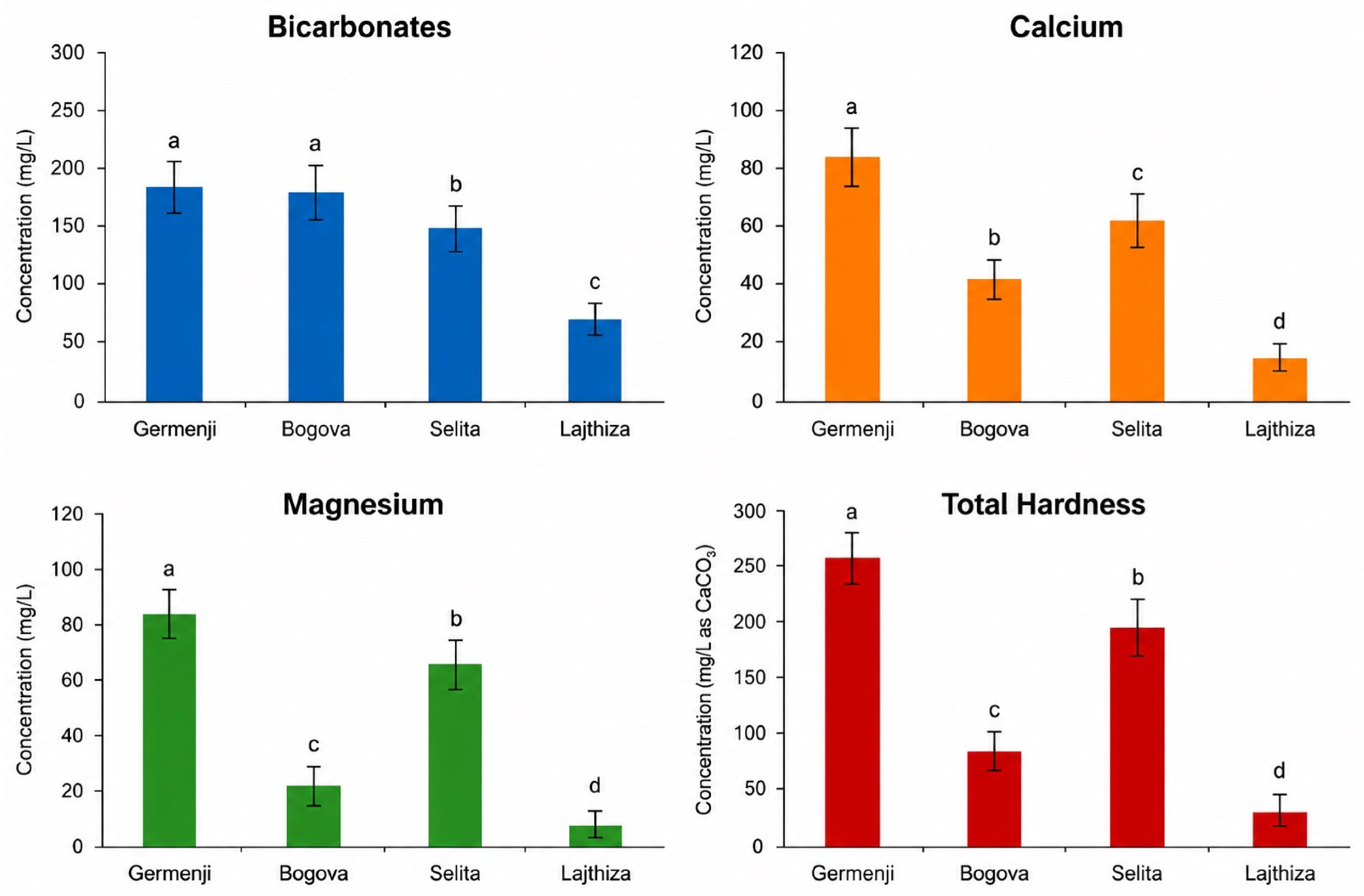
The mineral profiles of the four Albanian spring waters are illustrated in
Figure 2. For clarity,
Figure 2 presents the principal mineral constituents showing the greatest variability among the investigated spring waters, whereas the complete physicochemical characterisation is reported in
Table 1. No detectable concentrations of sulfate or nitrate were observed in any of the analysed water samples under the analytical conditions used. Marked differences were observed among the water sources, particularly regarding bicarbonate concentration, calcium, magnesium, and hardness values, confirming the distinct physicochemical characteristics of the selected waters.
Germenji water exhibited the highest mineralisation among all analysed samples, with significantly higher concentrations of calcium, magnesium, conductivity, and hardness. In particular, calcium and magnesium concentrations reached 84.30 mg/L and 83.45 mg/L, respectively. Selita water also showed elevated mineral content, especially in calcium, magnesium, chlorides, conductivity, and hardness, although values remained significantly lower than those observed in Germenji water. Conversely, Lajthiza water had the lowest mineralisation profile, with significantly lower bicarbonate, calcium, magnesium, conductivity, and hardness values. Bogova water displayed intermediate physicochemical characteristics for most measured parameters. The mineral composition of brewing water is considered one of the main factors influencing mash chemistry, fermentation kinetics, and final beer quality [
2,
3]. Calcium ions contribute to mash acidification by reacting with phosphates and releasing hydrogen ions, thus promoting optimal enzymatic activity during starch hydrolysis [
10]. The significantly higher calcium concentrations detected in Germenji and Selita waters may contribute to improved mash performance and yeast flocculation during fermentation.
Magnesium also plays an important physiological role in brewing because it acts as an essential enzymatic cofactor for yeast metabolism and alcoholic fermentation [
2]. The elevated magnesium concentrations observed in Germenji and Selita waters may be associated with differences in fermentation performance. However, excessive magnesium concentrations may also contribute to increased bitterness perception in beer [
10].
Bicarbonate concentration is another important parameter because it directly affects water alkalinity and buffering capacity. Germenji and Bogova waters showed significantly higher bicarbonate concentrations than Lajthiza water, indicating greater buffering potential. Elevated bicarbonate levels are known to increase mash pH and may negatively affect the production of pale beer styles by reducing mash acidification efficiency [
7,
9]. In contrast, the lower bicarbonate content of Lajthiza water could favour lower mash pH values and improved suitability for Pale Ale production.
Electrical conductivity and hardness values further confirmed substantial differences in mineralization among the selected waters. Germenji and Selita waters exhibited significantly higher conductivity and hardness values than Bogova and Lajthiza samples, reflecting greater concentrations of dissolved mineral salts. These differences may contribute to differences in fermentation behaviour, nutrient availability, and organic acid production during fermentation.
No significant differences were observed in water pH values, while turbidity remained generally low for all waters, indicating good physicochemical quality and suitability for brewing. Chloride concentrations were also relatively low in all samples, although Selita water showed significantly higher chloride values than Lajthiza and Bogova waters. Chloride ions are known to contribute positively to mouthfeel and malt sweetness perception in beer [
3]. Collectively, these findings confirm the marked mineral differences among the selected spring waters and their potential to influence brewing performance and beer quality.
3.2. Wort Physicochemical Characteristics
The main physicochemical parameters of the produced worts are presented in
Table 2. Significant differences (
p < 0.05) were observed only for wort pH and colour values, whereas extract (°P), FAN, bitterness, and density remained statistically comparable among the experimental trials.
The pH values of the produced worts ranged from 5.70 to 5.92. The lowest pH was observed in the wort produced with Lajthiza water (5.70), while the highest was detected in the Germenji wort (5.92). These differences are likely related to the distinct bicarbonate concentrations and buffering capacities of the brewing waters. In particular, the lower bicarbonate content of Lajthiza water may have promoted greater mash acidification, resulting in significantly lower wort pH compared to Germenji water.
Wort pH is one of the most critical technological parameters in brewing because it directly affects enzymatic activity, starch hydrolysis, protein coagulation, hop isomerization, and yeast metabolism [
2,
20]. The optimal pH range for α-amylase and β-amylase activity generally lies between 5.20 and 5.60, where starch conversion into fermentable sugars occurs most efficiently [
21]. Although the pH values observed in the present study were slightly higher, they remained within acceptable brewing ranges for Pale Ale production. No pH adjustment was performed prior to mashing because the objective of the study was to evaluate the brewing performance of the natural spring waters under their original mineral composition. Although the measured wort pH values were slightly higher than the optimum generally reported for amylase activity, fermentation proceeded efficiently in all treatments, and the beers reached comparable alcohol contents, indicating that these conditions did not compromise starch conversion or fermentation performance under the experimental conditions adopted.
The FAN content showed no significant differences among the worts produced with the four water sources, with values ranging from 217.90 mg/L to 219.1 mg/L. The comparable FAN concentrations indicate that water composition had a negligible effect on the release of yeast-assimilable nitrogen during the mashing phase. As the same malt bill was used in all treatments, FAN was primarily determined by malt proteolysis and mashing conditions rather than by differences in water chemistry [
2,
3]. The values (~218 mg/L) fall within the range considered suitable for optimal yeast nutrition and fermentation performance, implying similar fermentation potential among all worts. These findings suggest as reported in previous studies that FAN formation is mainly influenced by malt modification and enzymatic activity during mashing, while water composition generally plays a secondary role in determining wort nitrogen content [
22,
23].
Bitterness values ranged from 26.90 to 27.50 IBU and did not differ significantly among treatments, confirming that hop utilisation during wort production was highly consistent across all brewing trials.
No significant differences were observed in wort extract (°P) and density values among the experimental treatments, indicating similar extraction efficiency and sugar availability during mashing. Wort extract values ranged from 13.57 to 13.80 °P, while density values varied between 1.054 and 1.055 g/cm3. These results demonstrate that the brewing process was highly standardised and that water mineral composition did not significantly affect carbohydrate extraction from malt.
Regarding colour, Selita wort exhibited the highest value (20.83 EBC), which was significantly different from the Germenji and Lajthiza samples. Although the observed differences were relatively small from a technological perspective, they suggest that water mineral composition and mash pH may slightly influence colour extraction and Maillard-related reactions during wort production. Mash pH is known to affect polyphenol extraction, melanoidin formation, and colour stability during brewing processes [
3,
24,
25].
Overall, the results indicate that the different Albanian spring waters had only a moderate influence on the initial physicochemical characteristics of the produced worts.
3.3. Fermentation Kinetics
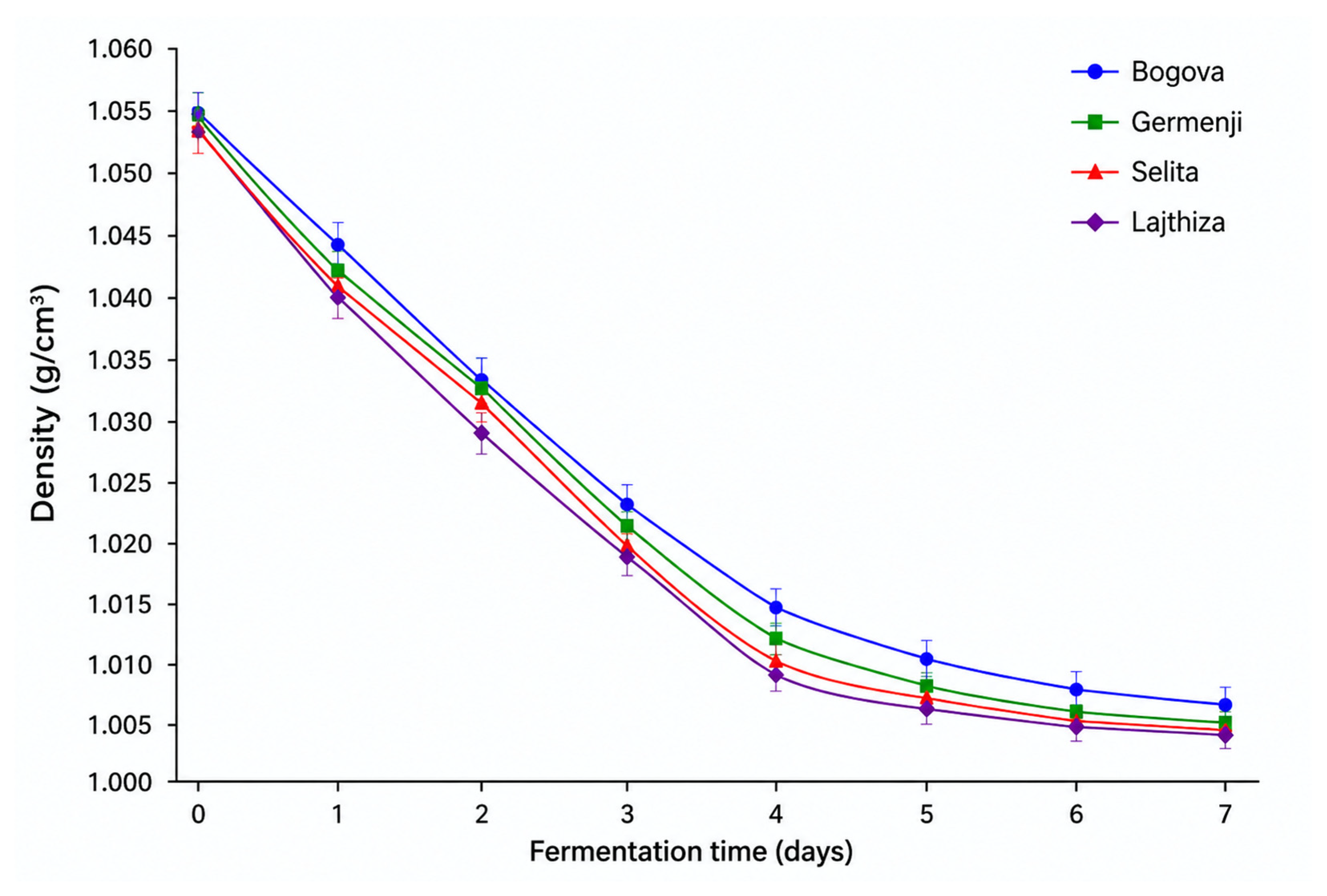
The evolution of density during alcoholic fermentation is shown in
Figure 3. All experimental fermentations began with similar original density values, ranging from 1.054 to 1.055 g/cm
3, indicating comparable wort composition among the brewing trials. Fermentation proceeded successfully in all treatments and was completed within seven days, reaching final density values between 1.006 and 1.007 g/cm
3.
The beers produced with Selita water reached the lowest final density (1.006 g/cm3), while the other samples had final densities of approximately 1.007 g/cm3. Despite slight differences observed during the intermediate fermentation stages, no significant differences were detected in final attenuation among the experimental trials.
As illustrated in
Figure 3, the beer produced using Bogova water exhibited a slightly slower decrease in density during the first two fermentation days compared to the other samples. This behaviour may reflect the normal adaptation phase preceding active fermentation. The slight differences observed among treatments may be associated with differences in the physicochemical characteristics of the brewing waters. However, as yeast growth and viability were not evaluated, this interpretation should be regarded as a possible explanation rather than direct evidence of altered yeast physiological responses [
10].
Similarly, the beer produced using Germenji water showed a slight reduction in fermentation rate during the middle stage of fermentation (days 3–4). Germenji water was characterised by significantly higher calcium and magnesium concentrations than the other waters. These differences may have contributed to the slight variation observed during the intermediate stage of fermentation; however, no measurements of yeast physiology were performed, and therefore no mechanistic interpretation can be established [
2,
3]. Nevertheless, these fluctuations were limited and did not negatively affect fermentation completion or final attenuation. Overall, all fermentations exhibited a consistent reduction in density throughout the process, demonstrating efficient sugar consumption and ethanol production by
S. cerevisiae [
26,
27].
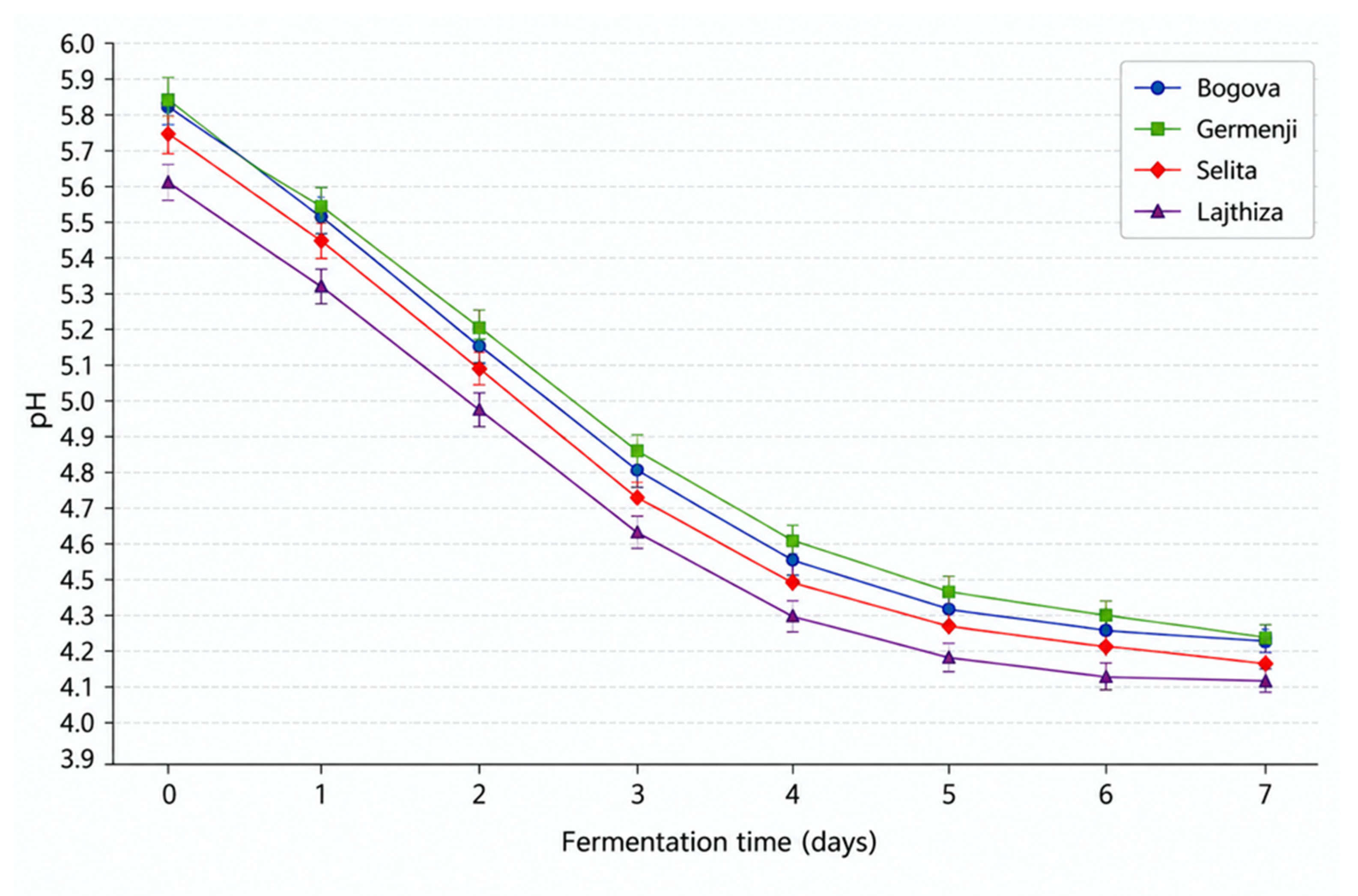
The similar final density values suggest that water mineral composition had only a moderate influence on primary fermentation performance under the brewing conditions adopted in this study. The evolution of pH during alcoholic fermentation is shown in
Figure 4. A progressive decrease in pH was observed in all samples throughout fermentation, confirming normal organic acid production during fermentation.
At the beginning of fermentation, Lajthiza wort exhibited the lowest pH value (5.70), whereas Germenji, Bogova, and Selita worts showed significantly higher initial pH values. These differences are consistent with the distinct bicarbonate concentrations and buffering capacities previously observed among the waters. During fermentation, pH values gradually decreased in all treatments, reaching final values between 4.21 and 4.32. The reduction in pH during alcoholic fermentation is associated with the formation of organic acids and the normal progression of fermentation [
28]. Final beer pH values observed in the present study were within the normal range reported for Ale beers, generally between 4.00 and 4.50 [
29]. The lowest final pH value was found in the beer produced with Lajthiza water (4.21), while Selita and Bogova beers had slightly higher final pH values (4.32 and 4.31, respectively). The relatively similar final pH values among the beers indicate that yeast acidification processes proceeded efficiently in all fermentations, despite the different mineral profiles of the brewing waters. However, the slightly lower pH values in beers produced with lower-alkalinity waters may reflect reduced buffering effects during fermentation. Bicarbonate ions are known to influence wort and beer buffering capacity, thereby affecting pH evolution during brewing processes [
30].
Overall, the obtained fermentation kinetics demonstrated that all four Albanian spring waters supported efficient alcoholic fermentation and produced beers within the expected technological parameters for Pale Ale production.
3.4. Physicochemical Characteristics of the Final Beers
The main physicochemical characteristics of the final Pale Ale beers are shown in
Table 3. All beers exhibited physicochemical parameters within the expected technological range for Pale Ale style beers, although significant differences (
p < 0.05) were observed for several fermentation-derived compounds and acidity-related parameters.
Final beer pH values ranged between 4.21 and 4.32, remaining within the typical range reported for Ale beers [
3]. The lowest pH value was observed in the beer produced with Lajthiza water, while Selita beer showed the highest value. These differences may reflect the distinct buffering capacities and bicarbonate concentrations of the brewing waters. Waters with lower alkalinity generally promote greater acidification during fermentation, resulting in lower final beer pH values [
9].
No significant differences were observed in alcohol content, which ranged from 5.56 to 5.70% v/v. These results confirm that all fermentations proceeded efficiently and that the different mineral compositions of the brewing waters did not substantially affect ethanol production or overall attenuation performance. Similar alcohol levels also indicate comparable utilisation of fermentable sugars among treatments.
Significant differences were observed in beer colour values. Selita beer showed the highest colour intensity (19.50 EBC), whereas Lajthiza beer exhibited the lowest value (16.83 EBC). These differences may be partially associated with variations in mash pH and mineral composition, which can influence Maillard reactions, polyphenol extraction, and melanoidin stability during brewing processes [
3].
Bitterness values ranged from 24.97 to 25.73 IBU. Although statistically significant differences (
p < 0.05) were detected among some treatments (
Table 3), the magnitude of these differences was relatively small (less than 1 IBU) and is therefore unlikely to be of practical technological or sensory relevance under the brewing conditions adopted. The comparable bitterness values further indicate that hop utilisation remained highly consistent among the brewing trials despite the different mineral compositions of the spring waters. Total acidity values ranged from 1.86 to 2.34 g/L, with Selita beer showing significantly higher acidity compared to Germenji beer. Similarly, volatile acidity differed markedly among treatments. The highest volatile acidity values were detected in Selita (0.93 g/L) and Lajthiza beers (0.89 g/L), whereas Germenji beer showed significantly lower concentrations (0.19 g/L) [
31].
The higher volatile acidity observed in Selita and Lajthiza beers may reflect differences in fermentation behaviour associated with the physicochemical characteristics of the respective brewing waters. Volatile acidity in beer is influenced by multiple factors, including yeast physiology, oxygen availability, fermentation conditions, and, in some cases, microbial activity [
2,
3,
32,
33,
34]. Since yeast growth, viability, and microbial populations were not evaluated in the present study, the observed differences should be interpreted as exploratory associations rather than evidence of a direct causal relationship between water mineral composition and volatile acidity formation.
Germenji beer had the highest glycerol concentration (1.24 g/L), while Selita beer had the lowest (0.88 g/L). Glycerol is an important secondary metabolite produced by Saccharomyces cerevisiae during alcoholic fermentation and contributes positively to mouthfeel and beer body [
35,
36]. The higher glycerol concentration observed in beers produced with Germenji water may be associated with the higher mineralisation of this water under the experimental conditions adopted [
37]. However, because yeast physiology was not directly evaluated, this relationship should be interpreted as an association rather than evidence of enhanced glycerol biosynthesis [
32].
Similarly, acetaldehyde concentrations remained below the sensory perception threshold generally reported for beer, suggesting that the measured differences are unlikely to generate perceptible green-apple off-flavours under the conditions of the present study.
Acetaldehyde concentrations ranged from 3.16 to 6.04 mg/L. Selita beer had the highest acetaldehyde concentration (6.04 mg/L), followed by Lajthiza (5.71 mg/L), while Germenji beer had the lowest value (3.16 mg/L). Acetaldehyde is an intermediate compound in ethanol metabolism and is generally reduced to ethanol during the final stages of fermentation [
33]. Elevated acetaldehyde levels may indicate incomplete reduction processes or an altered yeast metabolic balance during fermentation.
Although statistically significant differences were observed for glycerol and acetaldehyde, their concentrations remained within the ranges commonly reported for Pale Ale beers. Glycerol concentrations were relatively low and are therefore unlikely to produce substantial differences in mouthfeel when considered individually. Likewise, acetaldehyde concentrations remained below the sensory perception threshold generally reported for beer, suggesting that the observed differences are unlikely to result in perceptible green-apple off-flavours. Nevertheless, the overall sensory impact of these compounds depends on their interaction with other beer constituents and should be confirmed by sensory evaluation, which was beyond the scope of the present study.
L-malic acid and L-lactic acid concentrations also showed moderate but significant differences among treatments. Selita beer had the highest L-lactic acid concentration, while Bogova beer had the highest L-malic acid content. Organic acid production during fermentation contributes to beer freshness, flavour balance, and microbiological stability [
28].
Overall, the results show that the mineral composition of brewing water had limited influence on primary fermentation efficiency and alcohol production, but significantly affected secondary metabolite formation, acidity development, and final beer physicochemical characteristics. These findings confirm that brewing water chemistry is associated with differences in fermentation-derived compounds and final beer physicochemical characteristics.
3.5. Correlation Analysis Between Brewing Water Minerals and Final Beer Parameters
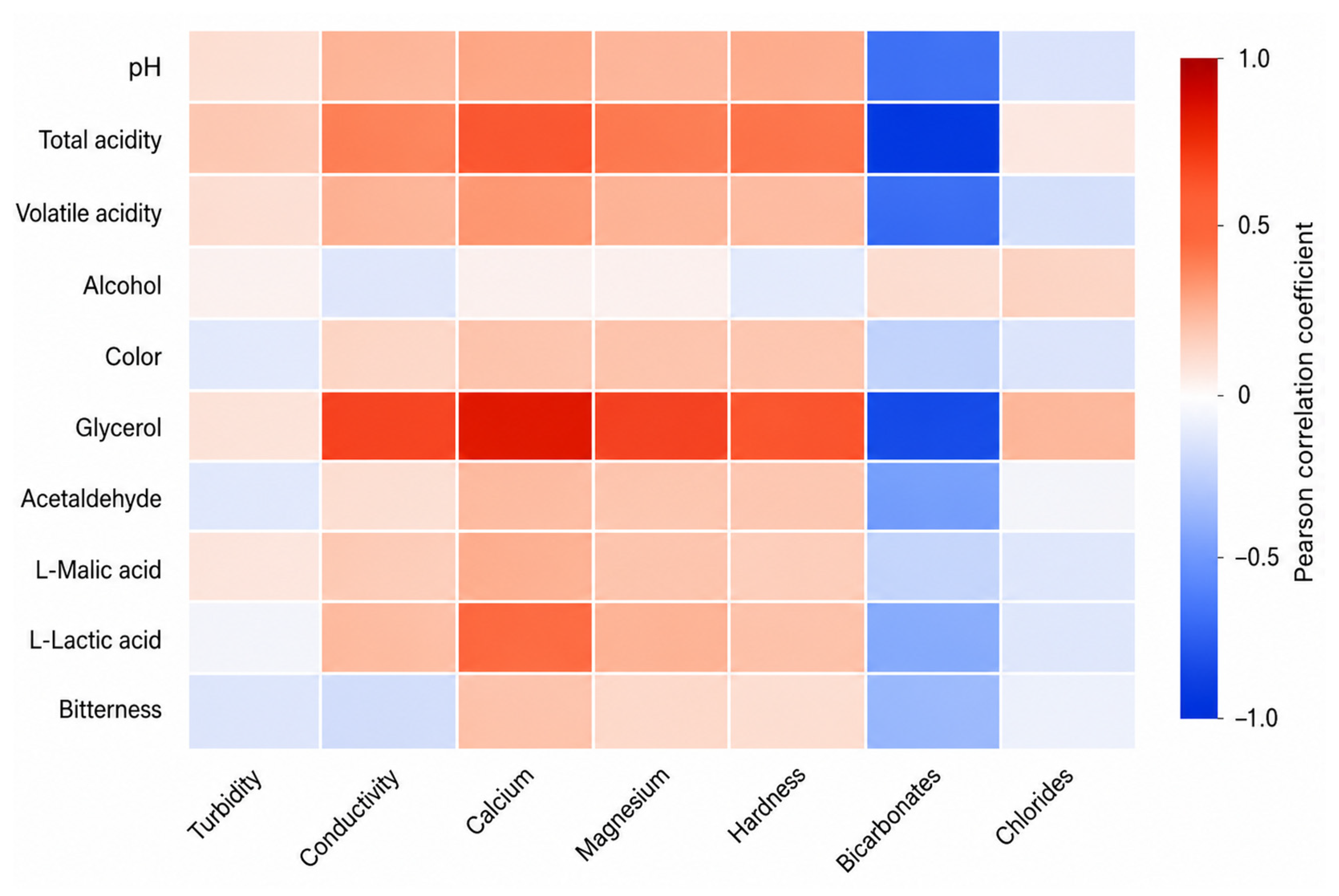
Pearson correlation analysis revealed several relationships between brewing water mineral composition and the physicochemical characteristics of the final Pale Ale beers, including acidity-related parameters, glycerol, acetaldehyde, and bitterness (
Figure 5). The complete matrix of Pearson correlation coefficients is reported in
Supplementary Table S1. Calcium, magnesium, conductivity, and hardness were positively associated with glycerol concentration. In contrast, volatile acidity and acetaldehyde were positively associated with total acidity and final beer pH, suggesting an association between water buffering capacity and selected fermentation-derived characteristics.
Bicarbonate concentration showed a negative correlation with final beer pH in the present dataset. This relationship reflects the experimental observations obtained for the four investigated spring waters and should be interpreted within the context of this limited dataset. Bicarbonates also showed negative correlations with total acidity and volatile acidity, suggesting an association between water alkalinity and acidity-related beer characteristics under the brewing conditions adopted [
2,
3]. Conversely, beers produced with lower-mineralised waters tended to have lower final pH values and increased volatile acidity [
2,
32]. The correlation matrix further indicated that bitterness exhibited only weak relationships with most water mineral parameters, confirming that hop-derived bitterness remained largely unaffected by differences in water composition under the brewing conditions used in this study [
2,
38]. Overall, the correlation analysis identified potential associations between brewing water composition and selected physicochemical characteristics of the final beers (
Table S1). Because the Pearson correlation analysis was performed using the mean values of only four independent brewing waters (
n = 4), these relationships should be interpreted as exploratory associations useful for generating hypotheses rather than establishing causal relationships. These observations were further explored by principal component analysis (PCA), which provided a complementary multivariate representation of the relationships among the investigated variables.
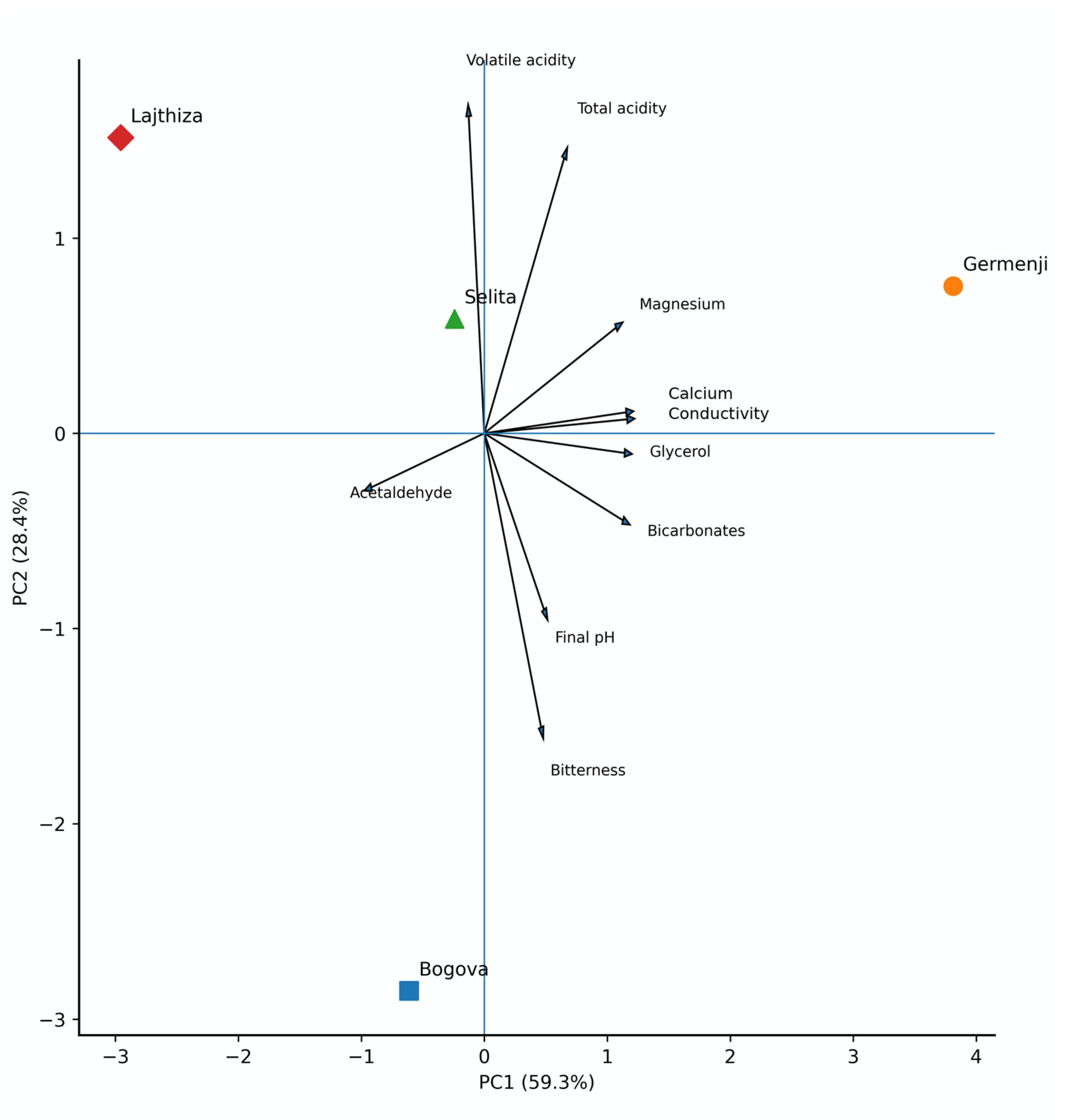
Principal component analysis (PCA) was conducted as an exploratory multivariate approach to assess the relationships between brewing water mineral composition and the physicochemical characteristics of the final beers (
Figure 6). The first two principal components accounted for 87.7% of the total variance, with PC1 and PC2 explaining 59.3% and 28.4% of the variability, respectively. The selected variables captured most of the variability related to brewing water mineralisation and fermentation-derived metabolites, providing an exploratory representation of treatment-related differences.
The PCA biplot showed a clear separation of beer samples according to the mineral composition of the brewing waters. Germenji beer was primarily associated with higher calcium, magnesium, conductivity, hardness, and glycerol concentrations. In contrast, Selita and Lajthiza beers were positioned closer to volatile acidity, acetaldehyde, and total acidity, indicating a stronger association between these waters and the formation of fermentation-derived metabolites.
The first principal component (PC1) was mainly associated with calcium, magnesium, conductivity, hardness, glycerol, and acetaldehyde, highlighting the association between water mineralisation and fermentation-derived beer characteristics. The second principal component (PC2) contributed to the differentiation of pH- and acidity-related variables, emphasising the influence of water buffering capacity on fermentation outcomes. Bitterness showed a relatively limited contribution to sample discrimination and remained weakly associated with the principal components. This result is consistent with the standardised hopping regime adopted for all brewing trials and confirms that the observed differences among beers were mainly related to water composition.
Overall, the PCA provided an exploratory multivariate visualisation of the associations identified by the Pearson correlation analysis, supporting the interpretation that differences in brewing water mineral composition were associated with variations in selected physicochemical and fermentation-derived beer characteristics. These findings suggest that differences in brewing water mineral composition are associated with distinct physicochemical and fermentation-derived characteristics of Pale Ale beers.
4. Conclusions
The present study indicated that differences in the mineral composition of Albanian spring waters were associated with variations in the physicochemical characteristics of Pale Ale beer, particularly acidity-related parameters and fermentation-derived metabolites. Although all waters supported efficient alcoholic fermentation and produced beers within the expected technological range for the style, significant differences were observed in volatile acidity, glycerol, acetaldehyde, organic acid content, and final beer pH. Pearson correlation and principal component analyses identified exploratory associations between water mineral composition and selected physicochemical and fermentation-derived beer characteristics. From an industrial perspective, these findings support the suitability of Albanian spring waters for craft beer production and highlight their potential for developing geographically distinctive beers. More broadly, the results emphasise that brewing water should not be regarded as a neutral processing medium but rather as a key technological ingredient associated with differences in the physicochemical characteristics of the final product. A limitation of the present study is that the evaluation was restricted to physicochemical and fermentation-related parameters. Sensory analysis, volatile compound profiling, and foam stability were not assessed and therefore the overall impact of the different spring waters on beer quality could not be comprehensively evaluated. Nevertheless, this study provides the first systematic evidence that Albanian spring waters with contrasting mineral compositions are associated with measurable differences in Pale Ale beer characteristics, thereby establishing a solid scientific foundation for future studies integrating sensory evaluation, volatile compound profiling, foam stability, and other quality attributes. In this context, the present study should be regarded as a foundational step towards the comprehensive technological characterisation and valorisation of Albanian spring waters for geographically distinctive craft beer production.



 ,
,