Article

Application of Freeze-Dried Olive Leaf Powder in Cracker Formulation: Effects on Phenolics, Antioxidant Activity, Volatile Profile, and Sensory Quality

1
Department of Food Technology and Biotechnology, Faculty of Chemistry and Technology, University of Split, Ruđera Boškovića 35, 21000 Split, Croatia
2
Jurin Dvor Ltd., Vukušići donji 1, 21250 Šestanovac, Croatia
*
Authors to whom correspondence should be addressed.
Processes 2026, 14(12), 1930; https://doi.org/10.3390/pr14121930 (registering DOI)
Submission received: 18 May 2026 / Revised: 10 June 2026 / Accepted: 10 June 2026 / Published: 13 June 2026
(This article belongs to the Special Issue Analysis and Processes of Bioactive Components in Natural Products)

Abstract

Crackers and cookies have become the most widely consumed snacks due to their low production costs, long shelf life, and ability to deliver essential nutrients. Increasing consumer health consciousness has shifted preferences toward foods perceived as natural and beneficial. This shift elevates demand for cracker formulations with novel, health-promoting natural ingredients. This study examined the effects of incorporating freeze-dried olive leaf powder (FDOLP) into crackers on their physicochemical properties, phenolic and volatile compound profiles, antioxidant capacity, and sensory acceptability. Total polyphenol content of crackers was determined using the Folin–Ciocalteu method, while antioxidant capacity was evaluated by FRAP and DPPH assays. The UHPLC-ESI-HRMS analysis evaluated olive-derived compounds, including tyrosol, oleuropein derivatives, and pinoresinol 4-O-glucoside, present in olive leaf-enriched crackers. The characterisation of volatile compounds in crackers was performed using headspace solid-phase microextraction coupled with gas chromatography–mass spectrometry (HS-SPME/GC-MS). A darker colour was observed in the enriched crackers compared to the control samples. Results demonstrated that increasing the proportion of FDOLP led to enhanced phenolic composition and antioxidant activity, as well as changes in the volatile profile of the crackers. Sensory analyses indicated that crackers enriched with moderate levels of FDOLP maintained acceptable overall sensory scores, suggesting a potential for the development of functional snacks. These findings demonstrate that olive leaves can be effectively utilised as a natural functional ingredient in cracker formulations to enhance their nutritional value and bioactive properties.

1. Introduction

In Mediterranean countries, olive trees (Olea europaea L.) have long been cultivated, primarily for olive oil production. In recent years, the global significance of the olive oil sector has substantially grown, driven by rising consumer demand linked to the oil’s nutritional value and numerous health benefits. However, both the pruning of olive trees and the processing of olive fruits generate large quantities of agricultural by-products that often remain underutilised [1]. The primary uses of olive oil production’s by-products are animal feed, organic fertilisers, and energy production in bioreactors [2]. Olive leaves represent one of the major by-products of olive cultivation, accounting for roughly 10% of the total olive harvest weight, with about 25 kg per tree generated during pruning [3]. There is growing awareness that this underused biomass is a potentially valuable, health-enhancing resource with considerable market prospects in the food and dietary industries if exploited efficiently [4]. They also represent one of the most abundant by-products of the olive oil industry and have the potential to provide a cost-effective source of valuable phenolic compounds [5]. In addition, olive leaf extracts are a rich natural source of bioactive compounds that exhibit a variety of health-promoting effects, including phenolics, terpenoids, polysaccharides, proteins and bioactive peptides, which can contribute to their biological activity and antioxidant potential, as well as antihypertensive, hypocholesterolemic, hypoglycemic, cardioprotective, and anti-inflammatory actions [6,7,8,9,10]. Recent studies have further highlighted the growing interest in plant-derived bioactive compounds, including antioxidant peptides, as functional ingredients with significant antioxidant potential with possible applications in food systems [11].
The phenolic content of olive leaves is significantly influenced by numerous factors, such as the olive cultivar, the harvest season, and the used leaf-drying method [12]. The major groups of phenolic compounds found in olive leaf extract include phenolic acids, phenolic alcohols, flavonoids, and secoiridoids. Key constituents are vanillic acid, caffeic acid, hydroxytyrosol, tyrosol, rutin, verbascoside, luteolin, quercetin, oleuropein, demethyloleuropein, and ligstroside [13]. Interest in these compounds is largely due to numerous studies demonstrating their health-promoting properties. In fact, olive leaves have a long history of use in traditional Mediterranean folk medicine [5,13].
While olive leaves and their extracts are commonly sold as dietary supplements, their application as food ingredients is still largely confined to research. They have been suggested as natural additives in food formulations because of their health-enhancing and functional properties, aiming to create functional foods or to extend the shelf life of products [5]. Also, recent studies have explored the use of olive leaf extract for food enrichment. Noori et al. [14] reported improved Lactobacillus casei survival in cheese without sensory deterioration, while Guglielmotti et al. [15] showed increased polyphenol content and antioxidant activity in beer, although high levels affected sensory properties [16].
According to Mustapha et al. [17], crackers are often regarded as a healthier alternative to more calorie-dense biscuits, prompting interest in incorporating novel ingredients to improve their nutritional profile and functional properties. Crackers are low-moisture bakery products formulated primarily from wheat flour and are among the most widely consumed ready-to-eat snack foods worldwide, owing to their long shelf life, affordability, and wide variety of flavours. However, their typical formulation results in high energy density but low nutritional value, which can be attributed to the high content of rapidly digestible carbohydrates and fats and the limited levels of dietary fibre [18]. Consequently, the growing demand for functional food products has encouraged the food industry to develop new bakery snacks enriched with bioactive compounds that exhibit antioxidant activity, aiming to improve nutritional quality and provide potential health benefits. Cedola et al. [16] showed that olive leaf extract, rich in health-promoting bioactive compounds, improved the nutritional quality of Southern Italy’s traditional cereal-based baked product, “taralli,” by increasing total polyphenol and flavonoid contents and antioxidant activity.
According to Medina et al. [19], olive leaves are being valued and marketed as premium herbal products or extracts due to their bioactive potential. In this context, olive leaf powder, owing to its high polyphenol content, represents a promising ingredient for producing functional, health-promoting crackers while simultaneously valorising this valuable agricultural by-product. The aim of this study was to evaluate the effects of adding olive leaf powder on the phenolic composition, antioxidant activity, volatile profile, and sensory acceptability of cracker formulations.

2. Materials and Methods

2.1. Preparation of Freeze-Dried Olive Leaf Powder

Olive leaves of the Oblica variety were picked from the local organic olive orchard in Šestanovac, Dalmatia, Croatia (43°27′31.6″ N 16°54′53.5″). Olive leaves were freeze-dried in LIO-20 FP (freeze-dry, FreezeDry GmbH, Bad Reichenhall, Germany) at a temperature of around −48 °C and pressure below 1 mbar. The leaves were ground into powder by the IKA MultiDrive control (IKA-Werke GmbH & Co. KG, Staufen, Germany) and sieved through a 500 µm RETSCH AS sieve (Retsch GmbH, Haan-Gruiten, Germany).
Freeze-dried olive leaf powder was characterised before incorporation into cracker formulations by determining moisture content, total phenolic content (TPC), FRAP, and DPPH activity.

2.2. Preparation of Crackers

For the purpose of this study, four cracker formulations were prepared: a control, and three formulations with varying amounts of freeze-dried olive leaf powder (FDOLP). All cracker samples were prepared according to the recipe listed in Table 1. Enriched crackers were prepared by partially replacing almond flour with FDOLP. The ingredients were weighed and mixed by hand, left at room temperature for 1 h, then stored in the refrigerator overnight for cold fermentation. The next day, the mixtures were left at room temperature for 20 min, then mixed again and rolled out to a thickness of approximately 3–4 mm. The crackers were cut into squares (15 pieces/dough) and baked in a ventilated electrical oven (Bosch HBA573EB0, Robert Bosch GmbH, Gerlingen, Germany) at 170 °C for 20 min (Figure 1). The crackers were cooled at room temperature, packed in zip plastic bags, and stored in a cool, dark place until further analysis.

2.3. Chemicals

For the determination of total phenolic content, the following reagents were used: Na2CO3, Folin–Ciocalteu reagent, and gallic acid (100% p.a., VWR BDH Chemicals, Rosny-sous-Bois, France). To determine antioxidant activity by the FRAP method, the following reagents were used: acetate buffer (300 mmol/L); hydrochloric acid solution (40 mM); TPTZ (2,4,6-tris(2-piridil)-s-triazinom) (Merck KGaA, Darmstadt, Germany); iron (III) chloride hexahydrate solution (20 mmol/L) (GRAM-MOL d.o.o., Zagreb, Croatia). For the antioxidant activity determined by the DPPH method, DPPH (2,2-diphenyl-1-picrylhydrazyl) solution (0.04 mg/mL) (Sigma-Aldrich, Steinheim, Germany) reagent was used. All chemicals and solvents used were of analytical or LC-MS grade (Merck KGaA, Darmstadt, Germany).

2.4. Physicochemical Evaluation of Crackers

Length (cm), width (cm), height (cm), spread ratio, and spread factor were determined for physical evaluation. Dimensions of crackers (cm) were measured using a vernier calliper, according to Kamal et al. [20].
Moisture content, water activity, pH, sodium chloride, and acidity were determined by chemical analysis. All measurements were conducted in triplicate, and all instrumental analyses (moisture content, water activity, and pH) were performed according to the manufacturers’ instruction. Moisture content was quantified using a KERN DAB 100-3 moisture analyser (KERN & SOHN GmbH, Balingen, Germany) by the thermogravimetric method. The sample was placed in the moisture analyser and heated using a halogen lamp. As the moisture evaporates, the difference between the initial and final mass is used to calculate the moisture content (%). An AquaLab Series 3 TE water activity metre (Decagon Devices, Pullman, WA, USA) was used to analyse the water activity of the cracker samples. The pH value was determined using a pH metre model FiveEasy F20 (Mettler Toledo AG, Langacher, Switzerland). At the same time, sodium chloride (salt) content was measured by the Mohr titration method, according to the procedure described by Delaš-Aždajić et al. [21].

2.5. Colour Analysis of Crackers

Colour is a particularly important indicator of product quality, and the product’s visual acceptability depends on it. Colour analysis of crackers was performed with a Konica Minolta Chroma Metre CR-5 (Konica Minolta, Inc., Tokyo, Japan) according to the manufacturer’s operating instructions. Measurements were performed using reflectance with an opening diameter of 30 mm. The results are presented in the CIELAB colour system, where L represents lightness (0 = black, 100 = white), a* shows us how similar the colour is to green or red (negative values = green, positive values = red), and b* describes how much the colour leans towards blue or yellow (negative values = blue, positive values = yellow). Measurements were conducted at room temperature in three repetitions. Cracker samples, as well as freeze-dried olive leaves, were ground before measurement.

2.6. Extraction of Crackers

Two types of extraction were performed on cracker samples, namely ultrasonic-assisted extraction (UAE) and microwave-assisted extraction (MAE), using a slightly modified method adapted from Veršić-Bratinčević et al. [22]. Briefly, 5 g of powdered samples and 50 mL of solvent (distilled water) were used for both extractions. The samples were subjected to ultrasonic extraction for an hour at 60 °C and 40 kHz, while microwave-assisted extraction was performed at 65 W for 15 min. Temperature during the microwave-assisted extraction reached a maximum of 50 °C.

2.7. Assessment of Total Phenolic Content

Total phenolic content in all extracts was determined by the Folin–Ciocalteu method as described by Singleton, with slight modification [23]. A total of 25 µL of sample, 1975 mL of distilled water, and 125 µL of Folin–Ciocalteu reagent were added to a cuvette. After 5 min, 375 µL of Na2CO3 was added, and the mixture was left in the dark for 2 h, after which the absorbance was measured at 765 nm. A spectrophotometer, SPECORD 200 Plus, Edition 2010 (Analytik Jena AG, Jena, Germany), was used to measure absorbance (UV/VIS). The results are expressed in mg GAE/100 g sample. Three measurements were performed for each sample.

2.8. Assessment of Antioxidant Capacity

The antioxidant capacity was measured using the DPPH (2,2-diphenyl-1-picryl-hydrazyl) method, as described by Brand-Williams et al. [24], and the FRAP (Ferric reducing antioxidant power) method, according to Benzie and Stain [25], both with slight modifications. For each sample and method, three measurements were performed.
For the DPPH method, 2 mL of DPPH solution is added to a cuvette, and its absorbance is measured at 517 nm (A0). Then, 50 µL of the sample is added, and, after an hour, the absorbance (At) is measured using the spectrophotometer SPECORD 200 Plus, Edition 2010 (Analytik Jena AG, Jena, Germany). DPPH radical scavenging activity is calculated according to the formula:
% i n h i b i t i o n = A 0 A t A 0   ×   100
where
A0—is the absorbance of the blank.
At—is the absorbance of the samples.
For the FRAP method, it is necessary to prepare the FRAP reagent (acetate puffer: TPTZ: FeCl3 = 10:1:1), then add it to the cuvette (3 mL) and measure its absorbance at 593 nm (A0). A total of 100 µL of the sample was added to the same cuvette along with the previously measured FRAP reagent, and, after 4 min, absorbance was measured again. For the calculation of the results, the following formula is used:
Ak = A4A0
where
Ak—is the difference between the two measured absorbances.
A4—is the absorbance of the sample and FRAP reagent after four minutes.
A0—is the absorbance of the FRAP reagent.
A spectrophotometer, SPECORD 200 Plus, Edition 2010 (Analytik Jena AG, Jena, Germany), was used to measure absorbance (UV/VIS). The results are expressed in µM Trolox per L of extract, while using the extract for the calibration curve.

2.9. UHPLC-ESI-HRMS Analysis of Phenols

UHPLC-ESI-HRMS analysis was performed according to a previously published method with slight modifications [26,27]. The chemical composition of the extracted samples by MAE was analysed using an ExionLC UHPLC system (AB Sciex, Concord, ON, Canada) coupled with a Sciex TripleTOF 6600+ high-resolution quadrupole time-of-flight (QTOF) mass spectrometer (AB Sciex, Concord, ON, Canada). Chromatographic separation was carried out on a reversed-phase ACQUITY UPLC CSH Phenyl-Hexyl column (130 Å, 1.7 µm, 2.1 × 100 mm; Waters, Milford, MA, USA) maintained at 40 °C, using a flow rate of 0.4 mL/min. The mobile phases consisted of ultrapure water containing 0.1% formic acid (A), and acetonitrile containing 0.1% formic acid (B). The gradient elution programme applied for compound separation is presented in Table 2.
Analyses were performed in positive electrospray ionisation mode (ESI+) using information-dependent acquisition (IDA) with collision-induced dissociation (CID) for MS/MS acquisition. Mass spectra were recorded in the m/z range 100–1000, while MS/MS spectra were acquired in the range 50–1000. Source parameters included a temperature of 300 °C, an ion spray voltage of 5.5 kV, and nitrogen as the curtain and collision gas. Instrument calibration was performed automatically prior to each run using an ESI Positive Calibration Solution 5600 (AB Sciex, Concord, ON, Canada). Data processing was carried out using ACD/MS Workbook Suite 2024.2.1 (ACD/Labs, Toronto, ON, Canada), and compound identification was based on accurate mass measurements, isotopic patterns, MS/MS fragmentation, and comparison with the ChEBI, PubChem, and ChemSpider databases.

2.10. Headspace Solid-Phase Microextraction

Volatile compounds were extracted by headspace solid-phase microextraction (HS-SPME) using a DVB/CAR/PDMS fibre (50/30 μm; Supelco Inc., Bellefonte, PA, USA). Prior to use, the fibre was conditioned according to the manufacturer’s instructions. For each extraction, 2 g of the ground sample was placed in a 15 mL glass vial containing 2 mL of deionised water and 1 g of sodium chloride, which was then sealed with a PTFE/silicone septum. The samples were equilibrated at 60 °C for 15 min under continuous stirring, followed by fibre exposure to the headspace for 45 min. Subsequently, the extracted analytes were thermally desorbed in the GC injector at 250 °C for 7 min. The extraction conditions were based on the method described by Wei et al. and were consistent with those employed in our previous studies [28].

2.11. Gas Chromatography–Mass Spectrometry

Volatile compounds were analysed using a gas chromatography–mass spectrometry (GC–MS) system consisting of an Agilent Technologies 8890 gas chromatograph coupled with a 5977E mass selective detector (Agilent Technologies, Inc., Santa Clara, CA, USA). Chromatographic separation was performed on an HP-5MS capillary column (5% phenyl-methylpolysiloxane; Agilent Technologies, Inc., Santa Clara, CA, USA). The oven temperature programme was initiated at 70 °C and maintained for 2 min, followed by a temperature increase to 200 °C at a rate of 3 °C/min and a final holding period of 15 min. Helium served as the carrier gas at a constant flow rate of 1.0 mL/min. Mass spectrometric detection was carried out in electron ionisation (EI) mode at 70 eV, scanning over a mass range of 30–350 m/z. The GC operating conditions were developed within the Department of Organic Chemistry, Faculty of Chemistry and Technology, University of Split, and have been reported previously [29]. Chromatographic data were processed using Enhanced Data Analysis software integrated into Agilent MSD ChemStation (version F.01.03.2357). Compound identification was achieved through comparison of the obtained mass spectra with those contained in the NIST 17 and Wiley 9 spectral libraries using the ChemStation library search algorithm. Additional confirmation was obtained by comparing experimentally determined retention indices (RI), calculated relative to a homologous series of n-alkanes (C8–C25; Fluka Chemie GmbH, Buchs, Switzerland), with the literature values [30]. Relative abundances of the identified compounds were estimated from GC peak areas using the normalisation method. The reported values represent the mean percentages obtained from triplicate HS-SPME/GC–MS analyses.

2.12. Sensory Analysis

A sensory evaluation was performed to assess consumer acceptability of the cracker samples. A total of 20 semi-trained panellists, mainly students and staff from the Faculty of Chemistry and Technology, participated in the evaluation of the sensory quality of crackers. Informed consent was obtained from all panellists before participation. The analysis was carried out according to the Ethics Committee of the Faculty of Chemistry and Technology University of Split, Croatia’s approval (Approval Number 20 May 2026, 2181-234-01-01-26-01). The panellists evaluated appearance, colour, aroma, taste, texture, and overall acceptability using a 5-point hedonic scale (1 = “dislike extremely” to 5 = “like extremely”). The samples were coded with 3-digit numbers and served to the panellists on white plates. To minimise sensory fatigue between tastings, panellists were provided with potable water for oral rinsing. The collected data were subsequently analysed to determine the acceptability of each sample among potential consumers.

2.13. Statistical Analysis

Statistical analysis was carried out using one-way analysis of variance (ANOVA), followed by Tukey’s HSD test, where differences at p < 0.05 were considered statistically significant. Statistical analyses were performed using JASP v.0.97.0 (JASP team, Amsterdam, The Netherlands, 2026) statistical software. All measurements were performed in triplicate and expressed as mean ± standard deviation.

3. Results and Discussion

3.1. Physicochemical Properties of Crackers

The results show that cracker dimensions (length, width, and height) were quite similar across all samples, although the spread ratio and spread factor tended to decrease slightly with higher levels of added FDOLP (Table 3). Nonetheless, these variations indicate that the inclusion of olive leaf powder does not markedly affect dough expansion or shape development during baking. Some of the differences could be attributed to the hand-cutting of dough before baking the crackers.
The mean chemical characteristics of the analysed crackers are summarised in Table 4. The results show that the pH decreased with increasing levels of freeze-dried olive leaf powder (FDOLP). In contrast, water activity increased, with the control sample (C-C) exhibiting the lowest aw (0.231 ± 0.00) and C-OL3 the highest aw value (0.320 ± 0.00). In line with the increase in water activity, moisture content was higher in the fortified crackers (4.92–5.31%) compared to the control (4.61%). Our results are consistent with those reported in other studies [31,32,33]. Salihu et al. [34] reported an increase in moisture content in samples enriched with fruit powder, which was attributed to the higher water-holding capacity of powdered cranberry and blueberry extracts compared with wheat flour. The addition of 7.5% olive leaf powder decreased the pH. This effect can be attributed to the presence of acidic bioactive compounds, particularly phenolic constituents, in olive leaves, which increase the overall acidity of cracker products. Additionally, salt content declined as the proportion of FDOLP increased, with the control cracker showing the highest NaCl level (1.94 ± 0.02%) and the C-OL3 sample the lowest (1.39 ± 0.05%). Incorporating FDOLP into cracker formulations can serve as a partial substitute for ingredients like flour, salt, and olive oil, while also improving the product’s nutritional profile [31].

3.2. Colour

Colourimetric analysis was conducted to determine the effect of adding freeze-dried olive leaf powder on the colour of each cracker formulation using a Konica Minolta CR-5 colourimeter (Konica Minolta, Inc., Tokyo, Japan), with results expressed in the CIELAB three-dimensional colour space (Table 5).
Instrumental colour analysis showed that the addition of freeze-dried olive leaf powder (FDOLP) significantly affected the colour parameters of crackers (p < 0.05). Lightness decreased with increasing freeze-dried olive leaf powder, indicating the development of a darker colour, which may be related to the natural pigments and phenolic compounds present in olive leaves, as well as the formation of brown pigments during baking. Similar results were reported for bakery products enriched with olive leaf powder and other plant-based ingredients [25].
The a* values decreased in all enriched samples compared to the control, indicating a shift towards greener tones due to the presence of chlorophyll pigments naturally occurring in olive leaves. In addition, thermal processing may have promoted Maillard reactions and chlorophyll degradation, contributing to the development of darker brownish-green shades during baking [35]. Cracker sample C-OL1 showed the highest b* value, whereas higher FDOLP concentrations resulted in lower yellowness values, probably due to the increasing dominance of darker pigments and brown reaction products formed during baking [13].

3.3. Total Phenol Content and Antioxidant Activity

Right before incorporation into cracker formulations, freeze-dried olive leaf powder was characterised by determining total phenolic content (TPC), FRAP, and DPPH activity. UAE and MAE extracts were analysed to compare extraction efficiency and antioxidant activity (Table 6).
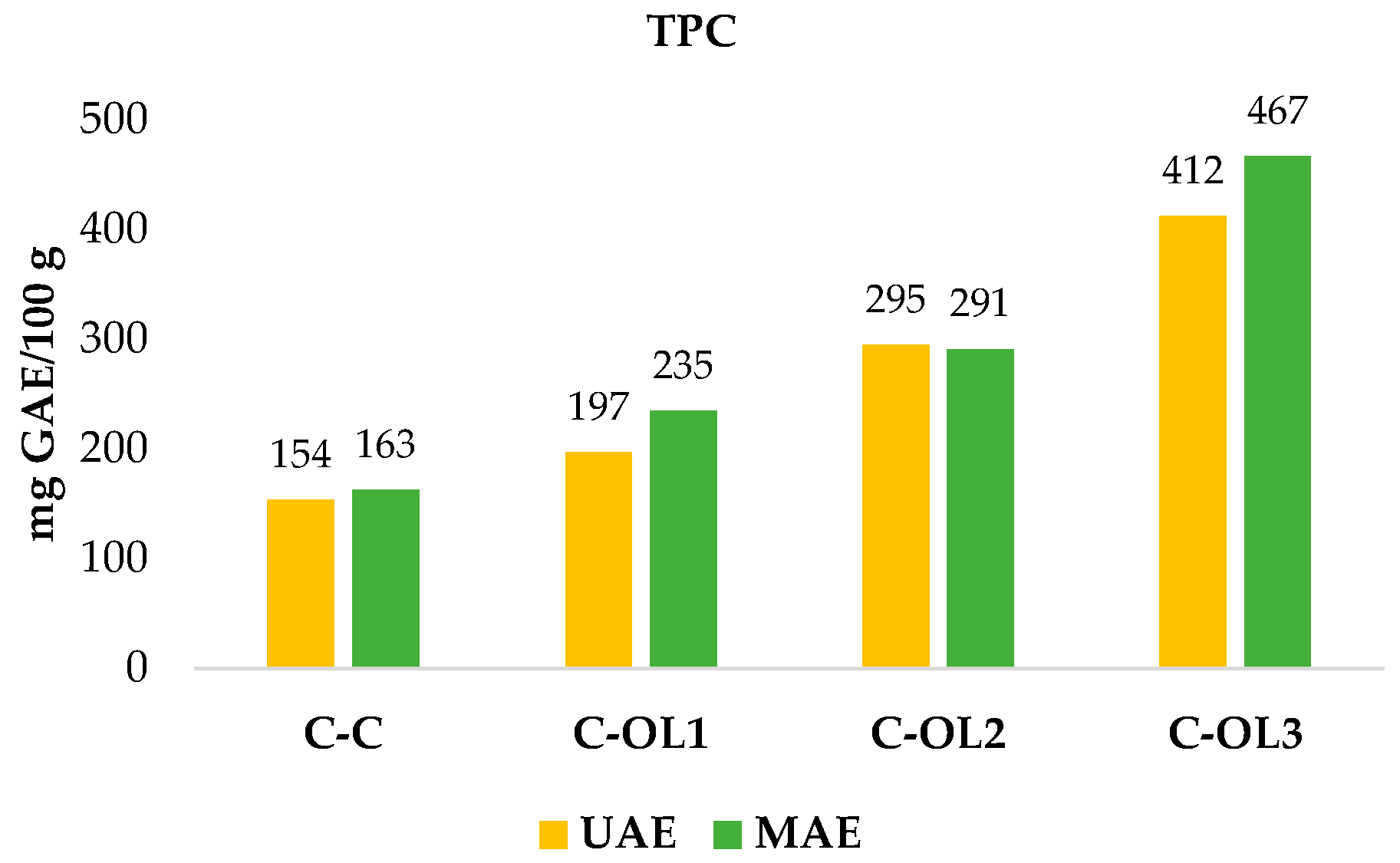
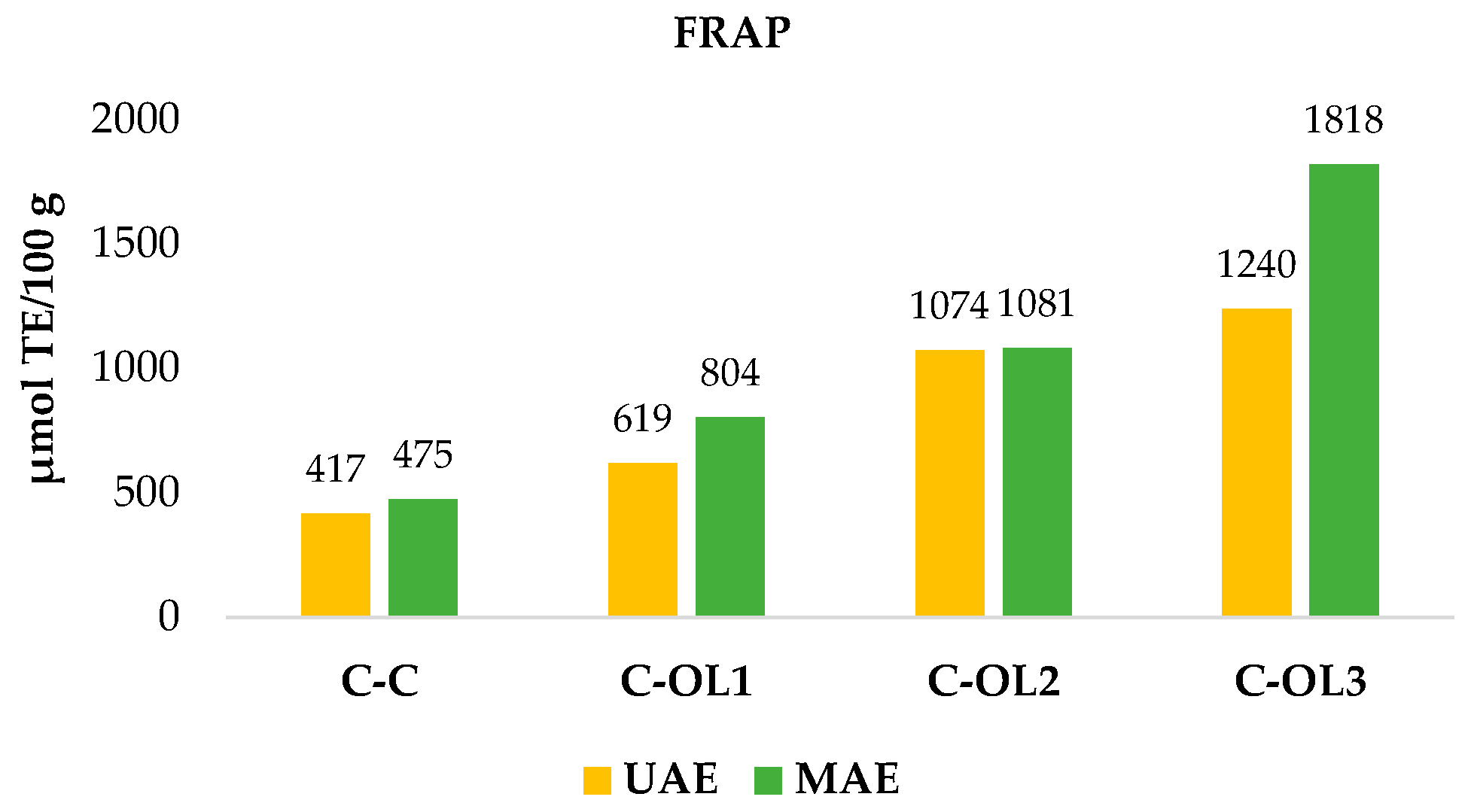
The total phenolic content of the cracker extracts is illustrated in Figure 2. The results clearly demonstrate a positive relationship between the proportion of FDOLP in the formulation and the total phenolic content of the crackers. Accordingly, the control cracker sample (C-C) exhibited the lowest total phenolic content (154–163 mg GAE/100 g), whereas an increasing amount of the FDOLP in the formulation resulted in a proportional increase in total phenols, with the highest values recorded in sample C-OL3 (412 and 467 mg GAE/100 g). Similarly, adding FDOLP resulted in increased antioxidant capacity in the crackers (417–1818 µmol TE/100 g). These findings are consistent with previous studies evaluating the effects of incorporating powders derived from various parts of olives into bakery products [31,36,37].
According to Sahin et al. [38], the biological and antioxidant activities of polyphenols greatly differ according to their composition. The variability in phenolic concentrations may arise from differences in the raw material (e.g., cultivar, harvest time, and growing conditions) and the extraction process (e.g., method and parameters), which influence the extract’s chemical profile. Recent studies have reported that ultrasound-assisted extraction (UAE) and microwave-assisted extraction (MAE) are efficient green techniques for obtaining phenolic compounds from plant matrices, due to improved mass transfer and cell disruption mechanisms [39,40].
A comparison of the extraction methods showed that both techniques (UAE and MAE) were effective for extracting phenolic compounds. However, microwave-assisted extraction (MAE) generally yielded slightly higher total phenolic values than ultrasonic extraction (UE), indicating greater extraction efficiency of microwave energy in releasing phenolics from the plant matrix [7,41,42]. Furthermore, Li et al. [43] showed that different extraction methods significantly affect both the recovery of bioactive compounds and the measured antioxidant activity, despite differences in matrices and compound classes.
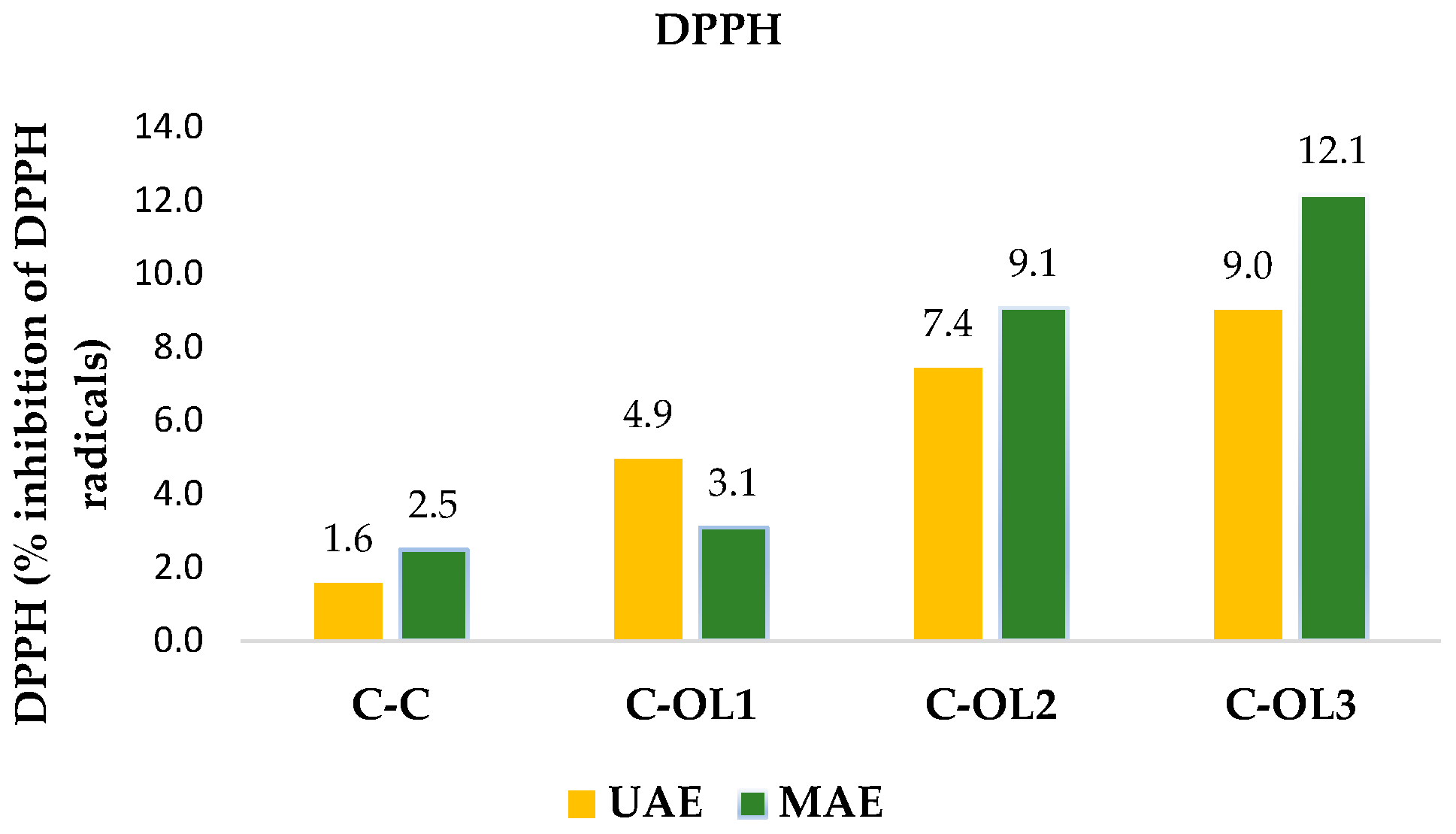
These results confirm that the inclusion of natural sources of bioactive compounds can be an effective strategy for enhancing the functional properties of bakery products by increasing their content of health-promoting constituents such as phenolic compounds and antioxidant activity (Figure 3 and Figure 4). These findings are consistent with previous studies investigating the incorporation of olive leaf extracts into bakery products [2,16], as well as the fortification of cookies with various herbal materials [44].

3.4. UHPLC-ESI-HRMS Analysis of Phenols

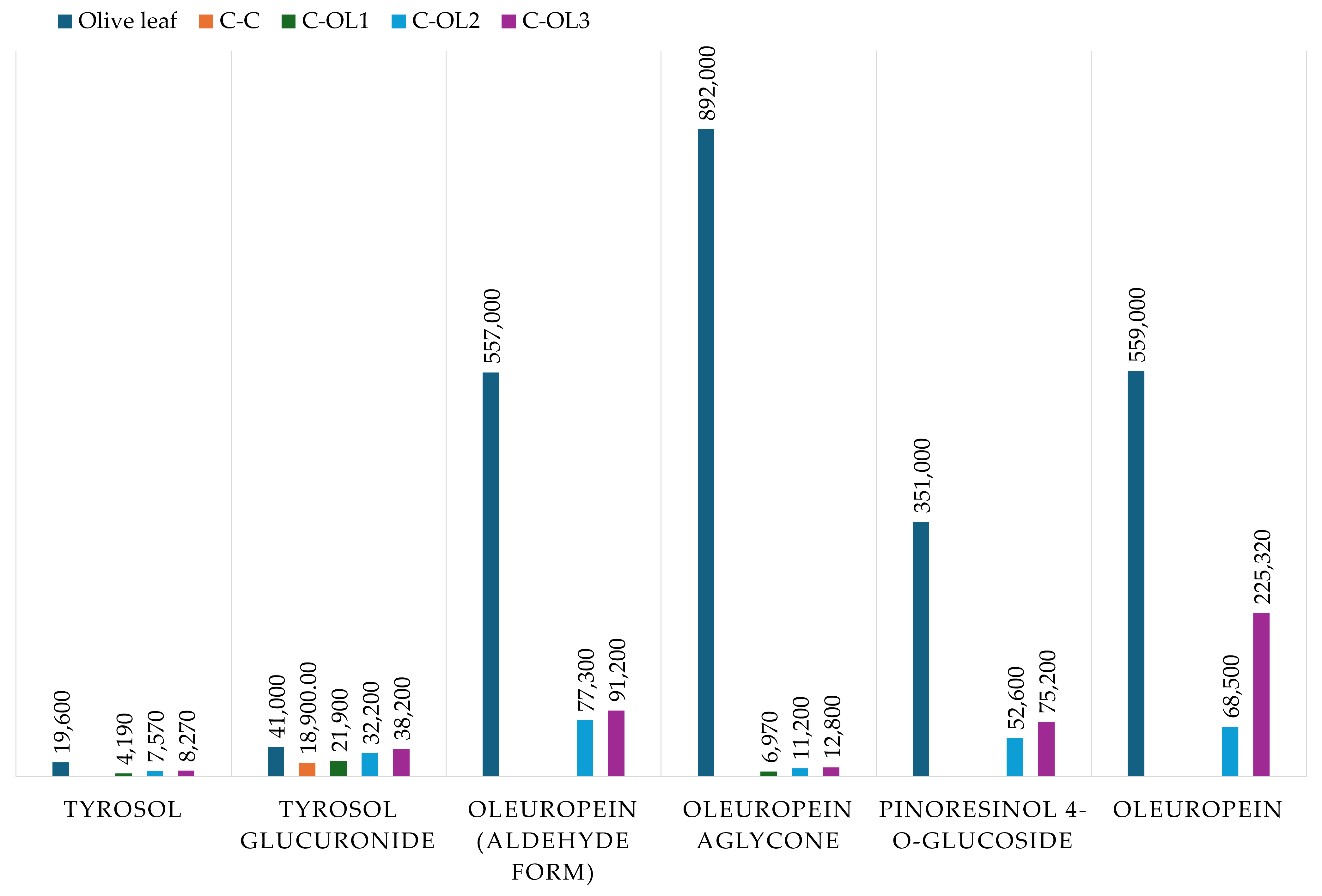
The UHPLC-ESI-HRMS analysis of samples extracted by MAE confirmed that the addition of olive leaf influenced the phenolic profile of the crackers. Compared with the control sample, which was prepared only with olive oil, the olive leaf-enriched crackers showed a broader and more diverse phenolic composition. The control cracker contained only tyrosol glucuronide, whereas the enriched samples contained several additional olive-derived compounds, including tyrosol, oleuropein derivatives, and pinoresinol 4-O-glucoside (Figure 5).
Tyrosol was detected in all crackers containing olive leaf, with an increase from C-OL1 to C-OL3. A similar trend was observed for tyrosol glucuronide, which was present in the control sample but increased with the addition of olive leaf. These results clearly indicate that olive leaf proportion increment contributed to the enrichment of the cracker with phenolic compounds.
Oleuropein, its aldehyde form, and pinoresinol 4-O-glucoside, were detected only in C-OL2 and C-OL3 samples. Among these compounds, oleuropein showed the clearest increase, particularly in C-OL3. This suggests that higher levels of olive leaf addition resulted in more pronounced enrichment of secoiridoids and lignans characteristic of olive leaf. Oleuropein aglycone was detected in all enriched crackers and showed a moderate increase with higher olive leaf content.
Overall, C-OL3 showed the richest phenolic profile, while C-OL1 exhibited enrichment with limited phenolic compounds. The results indicate that increasing the proportion of olive leaf in the cracker formulation enhanced the phenolic composition of the final product, with the strongest effect observed in the C-OL3 sample.
The phenolic profile obtained in the present study confirms that olive leaf can be considered an effective source of olive-derived phenolic compounds, which is relevant from both nutritional and technological perspectives [5,16,45,46,47,48,49]. The results are in agreement with previous studies reporting olive leaves as a particularly rich source of phenolic compounds, especially secoiridoids, simple phenols, flavonoids, and lignans, which are widely recognised for their antioxidant properties and potential health-promoting effects [4,6,45,50]. Quirantes-Piné et al. reported oleuropein as one of the major compounds in olive leaf extracts, together with other secoiridoid derivatives [51]. Various studies also described the presence of ligstroside, oleuroside, verbascoside, and several flavonoids in olive leaves [52,53]. Mir-Cerdà et al. reported more than 60 tentatively annotated phenolic compounds in olive leaf extracts obtained using natural deep eutectic solvents, with tyrosol derivatives followed by flavonoids described among the most abundant phenolic groups, with oleuropein, oleuropein aglycone and glucoside forming one of the most abundant [54]. Therefore, the presence of oleuropein, oleuropein aldehyde form, and oleuropein aglycone in the enriched crackers reflects their transfer from olive leaves into the cracker matrix and demonstrates that these characteristic olive phenolics can be retained, at least partially, after baking.
The differences between C-OL1, C-OL2, and C-OL3 indicate that the final phenolic profile depended on both the amount of olive leaf added and the behaviour of individual compounds during baking. Oleuropein and related secoiridoids are known to be affected by processing conditions, including drying, storage, and elevated temperature. Feng et al. showed that drying and storage conditions can significantly influence the phenolic composition of olive leaves [55], while Klisović et al. reported decreases in oleuropein and related secoiridoids during the heating of olive oil at 180–220 °C [56]. In the present study, the detection of oleuropein-related compounds, especially in C-OL2 and C-OL3, indicates that these compounds remained detectable after baking despite thermal processing. From a technological perspective, phenolic compounds are known to possess antioxidant activity and may contribute to limiting oxidative processes in food systems, thereby helping to maintain product quality during storage [4,5,16,49,57]. Therefore, the increased abundance of these compounds in crackers enriched with higher levels of FDOLP suggests an enhancement of the functional value of the final product by increasing its content of olive-derived bioactive compounds.

3.5. Volatile Compounds’ Composition

The volatile compounds of FDOLP as well as cracker samples are listed in Table 7. A total of 46 headspace volatile compounds were identified in FDOLP as well as in the cracker samples. Identified volatiles belong to the following chemical classes: aldehydes (17), alcohols (7), ketones (7), acids (5), furans (1), esters (1), terpenes (6), and others (2). Among the identified volatiles, aldehydes were numerous and most abundant.
Among identified volatiles in FDOLP, aldehydes were the major compounds, with (E,E)-2,4-heptadienal as the most dominant (29.33 ± 0.36), with sensory perception as nutty, fatty, and hay. Other identified aldehydes characterised by herbal, green, leaf, and grass descriptions were hexanal (4.14 ± 0.06), (E)-2-pentenal (3.26 ± 0.12), (E)-2-hexenal (0.68 ± 0.05), and 2-dodecenal (2.49 ± 0.55). Most of them have been identified in previous studies in several olive cultivars [60]. Among alcohols, benzyl alcohol and phenylethyl alcohol were identified in FDOLP, with sensory descriptions as sweet and floral. Ester, methyl salicylate was found only in the volatile fraction of FDOLP with a typical mint flavour and was previously identified in the olive leaf volatile fraction [60]. Wang et al. [61] found methyl salicylate in the volatile fraction of teas with different degrees of fermentation. The major volatile compounds for distinguishing volatiles between the FDOLP and analysed crackers could be attributed to terpenes, considering that terpene compounds are secondary plant metabolites and are typical of plant species. As can be seen from Table 7, neryl acetone (4.36 ± 0.18), limonene (1.65 ± 0.05), and β-ionone (1.55 ± 0.09) are the main terpenes found in FDOLP. Among them, only limonene was identified in the control cracker, as well as in crackers enriched with different amounts of FDOLP. Considering that all crackers formulations consisted of extra-virgin olive oil, a possible source of limonene, besides FDOLP, could be attributed to it.
In addition, some ketones identified in the FDOLP, such as 1-penten-3-one, have been detected in studies of olives and olive oil. According to Gomes da Silva et al. [62], 1-penten-3-one is positively correlated with bitter and pungent taste. 3-ethenylpyridine, characterised by a tobacco and caramel description, was found in both FDOLP and cracker, with the highest proportion in FDOLP (C-OL3). This compound was found in the study performed by Campeol et al. [60] in volatile fractions from three cultivars of Olea europaea L. in Italy.
Considering the volatile compounds in cracker samples, aldehydes were the most abundant group, followed by alcohols and acids. In all cracker samples, the main volatile compound from the aldehyde group was hexanal, ranging from 5.40% to 20.67%. A similar finding was reported in a study by Man et al. [63] on the volatiles of biscuits containing roasted flaxseed flour. In the control crackers, hexanal was identified as the predominant volatile compound contributing to the overall volatile profile. However, its relative abundance decreased in FDOLP-enriched samples, suggesting that the incorporation of freeze-dried olive leaf powder may inhibit hexanal formation. Since hexanal and other aldehydes such as pentanal, (E)-2-heptanal, and nonanal are widely recognised as indicators of the oxidative process, especially in baked products such as biscuits and crackers, lipid oxidation is a major contributor to quality deterioration. This reduction suggests a potentially positive effect of FDOLP on the oxidative stability of the product, as shown in Table 7. This effect may be attributed to the higher content of phenolic compounds, which exhibit strong antioxidant activity. Phenolics derived from olive leaves are known for their ability to neutralise free radicals, thereby slowing the oxidation process [26]. Similar findings were reported in study performed by Starowicz et al. [44], investigating the volatiles in cookies enriched by Lamiaceae herbs. Furthermore, de Gennaro et al. [33] reported that the incorporation of olive cake powder into breadstick formulations increased the total phenolic content and antioxidant activity, which may contribute to reducing the concentration of certain aldehydes associated with lipid oxidation. In addition, similar findings were reported in a study performed by Difonzo et al. [64], investigating the influence of incorporation of olive leaf extract on reducing the lipid oxidation into baked snacks. According to Papageorgiou et al. [65], most of the identified carbonyl compounds have already been documented in bakery products. Their occurrence is mainly linked to the lipid fraction of the raw ingredients and to Maillard and Strecker degradation processes. Some of these compounds arise from the autoxidation of unsaturated fatty acids. Specifically, (E)-2-hexenal, (E)-2-heptenal, (E)-2-octenal, (E)-2-nonenal, (E,E)-2,4-heptadienal, and (E,E)-2,4-decadienal are generated through the oxidation of linoleic and linolenic acids, whereas octanal and nonanal are formed via the oxidation of oleic acid. In baked products such as biscuits and crackers, lipid oxidation is a major contributor to quality deterioration. Aldehydes such as pentanal, hexanal, (E)-2-heptanal, and nonanal are widely recognised as indicators of this oxidative process [33].
Furthermore, alcohols were the most common volatiles in all cracker samples and were associated with green, earthy, sweet, floral, and fatty sensory notes. Among acids, only acetic acid was identified in both FDOLP and in all cracker samples. Other volatile acids identified in the cracker samples listed in Table 7 contribute to the aroma profile of crackers, described as having fatty, sweaty, and cheesy flavours.

3.6. Sensory Analysis of Crackers

Sensory properties, nutritional value, and health-related benefits mainly drive consumer acceptance of food products. According to Salihu et al. [34], the addition of plant extracts to bakery products represents a potential strategy for improving their nutritional and functional quality through phytochemical bioactivity and sensory acceptability. Since volatile compounds are key contributors to aroma and flavour perception through ortho- and retronasal olfaction, their influence on sensory properties is highly complex. Volatile compounds alone cannot fully explain flavour, which emerges from interactions among multiple volatile compounds as well as non-volatile taste components. This perception is further shaped by the food matrix and by multisensory integration involving texture, temperature, trigeminal sensations, and cognitive expectations, making relationships between chemical composition and sensory data often complex and not directly predictive [66,67].
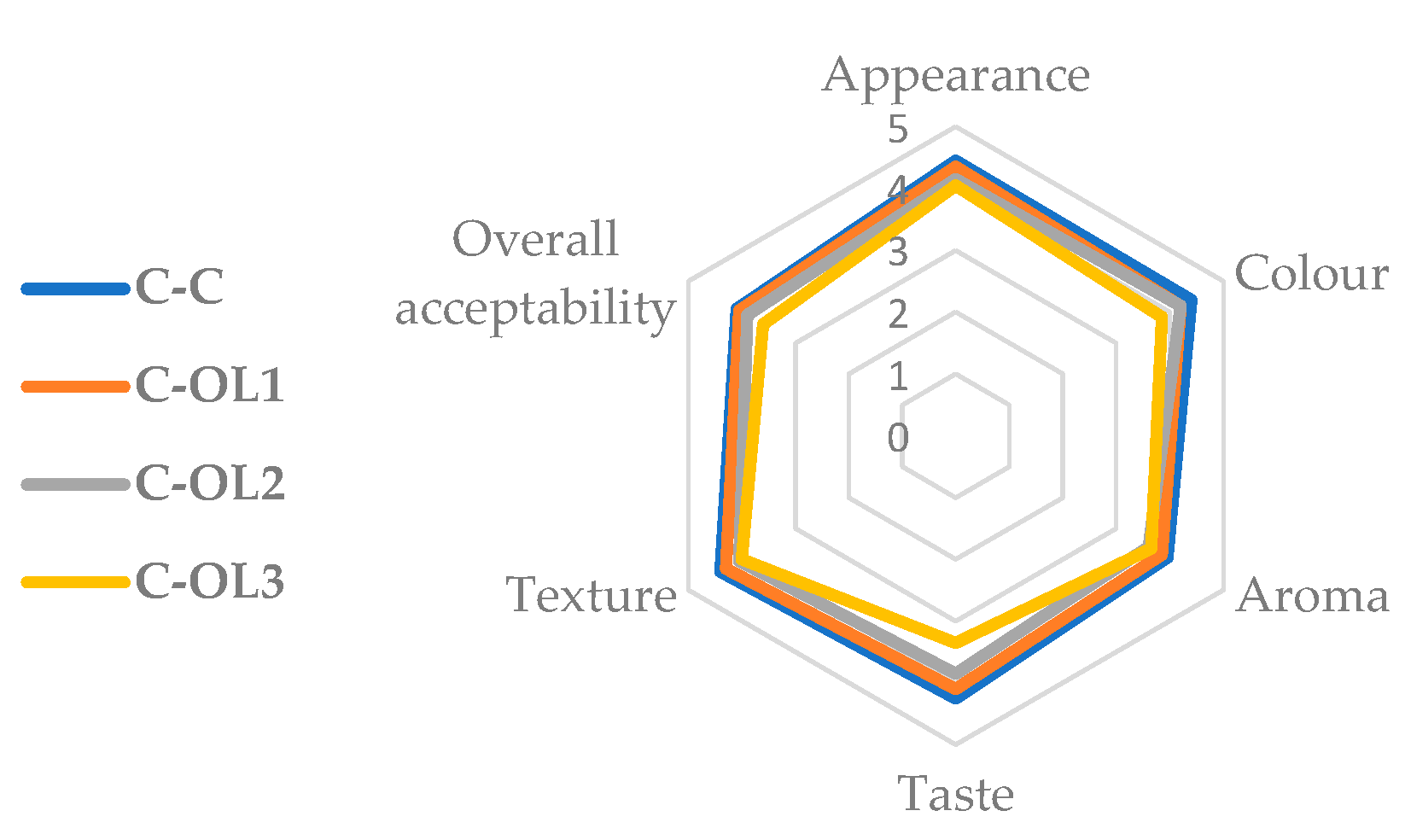
Figure 6 presents the hedonic sensory evaluation results for the control cracker sample (C-C) and crackers enriched with freeze-dried olive leaf powder (C-OL1, C-OL2, C-OL3). Panellists evaluated appearance, colour, odour, taste, texture, and overall acceptability using a five-point hedonic scale. The sensory data indicate distinct differences between the control sample (C-C) and fortified crackers.
Appearance and colour were similarly liked for the C-C sample, C-OL1, and C-OL2, with C-OL3 scoring lower. Aroma scores declined slightly as OLP increased, suggesting lower acceptability at higher levels. The most notable differences were in taste, with the C-C and C-OL2 samples rated highest and the C-OL3 sample lowest due to its increased bitterness. Earlier studies have shown that incorporating high levels of phenolic compounds, such as those derived from olive products, can lead to a bitter taste in the final product [31].
Texture scores were similar across all samples. Overall acceptability slightly decreased with higher OLP content, indicating that lower additions maintained sensory quality, while higher levels negatively affected consumer liking. These results confirm that lower levels of olive leaf powder in the formulation do not compromise sensory quality, whereas higher additions negatively affect product acceptability. Bitterness from phenolic compounds such as oleuropein is known to limit the use of olive leaf extracts in foods, as the intense bitter taste becomes perceptible at higher concentrations [68]. Similar results were reported in the study by Cedola et al. [16], which evaluated the sensory acceptability of “taralli” enriched with olive leaf extract. In contrast, other studies have shown that increasing the concentration of berry powder increases consumer acceptability across all evaluated attributes, particularly taste and mouthfeel [34,69].

4. Conclusions

This study proposes a potential valorisation strategy for olive oil by-products. Specifically, it evaluates the impact of incorporating freeze-dried olive leaf powder into cracker formulations by comparing the resulting products with a control for sensory attributes, volatile profile, and bioactive compounds. The addition of freeze-dried olive leaf powder to cracker formulations slightly affects their physicochemical properties. Total phenolic content and antioxidant activity of cracker extracts increased proportionally with higher olive leaf powder levels. Both microwave and ultrasonic extraction methods were effective, with microwave-assisted extracts showing slightly higher phenolic content and antioxidant activity. Lower addition levels (2.5–5%) were sensory acceptable, while higher levels reduced sensory scores, particularly taste, due to pronounced bitterness. The addition of FDOLP to the cracker formulation resulted in a reduction in aldehydic compounds, particularly hexanal, which are indicative markers of lipid oxidation, as well as a decrease in Maillard reaction-derived products, suggesting a potential contribution to enhanced oxidative stability and extended shelf life of the final product. The results showed that the addition of freeze-dried olive leaf powder increased the total polyphenolic profile and the antioxidant activity of the crackers. Tyrosol, oleuropein derivatives, and pinoresinol 4-O-glucoside were detected, thereby demonstrating that olive leaf powder has significant potential for the development of functional bakery products due to its high bioactive phenolic content, though further studies are needed to determine optimal use. Future research should focus on evaluating the product’s nutritional properties, monitoring lipid oxidation, and conducting microbial analyses throughout storage to provide valuable insights into its stability and shelf life.

Author Contributions

Conceptualization, M.Š., E.M., A.C. and D.S.; methodology, M.Š., S.R., E.M. and P.B.; investigation, M.Š., A.C., D.S., P.B., E.M., S.R. and B.V.; resources, M.Š., E.M., B.V. and P.B.; writing—original draft preparation, M.Š., S.R., A.C. and D.S.; writing—review and editing, M.Š., S.R. and P.B. All authors have read and agreed to the published version of the manuscript.

Funding

This work was carried out as part of the activities of the project “Strengthening Strategic Partnerships for Innovation in the Process of Industrial Transition” (SPIN IP.1.1.03.0110, 2025–2028), co-financed by the European Union.

Institutional Review Board Statement

Ethical approval was waived by Ethics Committee of the Faculty of Chemistry and Technology, University of Split, because the study involved a low-risk sensory evaluation of food products using voluntary adult participants, without collection of sensitive personal data or invasive procedures.

Informed Consent Statement

Ethical approval was waived because the study involved a low-risk sensory evaluation of food products using voluntary adult participants, without collection of sensitive personal data or invasive procedures.

Data Availability Statement

The original contributions presented in this study are included in the article. Further inquiries can be directed to the corresponding authors.

Conflicts of Interest

Author Božo Vukušić was employed by the company Jurin Dvor Ltd. The remaining authors declare that the research was conducted in the absence of any commercial or financial relationships that could be construed as a potential conflict of interest.

Abbreviations

The following abbreviations are used in this manuscript:
OLEOlive Leaf Powder
TPCTotal Phenol Content
FDOLPFreeze-Dried Olive Leaf Powder
C-CControl Cracker Sample
C-OL1Crackers Enriched with 2.5% of FDOLP
C-OL2Crackers Enriched with 5.0% of FDOLP
C-OL3Crackers Enriched with 7.5% of FDOLP
GAEGallic Acid Equivalents
FRAPFerric Reducing Antioxidant Power
DPPH2,2-Diphenyl-1-Picrylhydrazyl
TPTZ2,4,6-Tris(2-pyridyl)-s-Triazine
SPMESolid-Phase Microextraction
UAEUltrasound-Assisted Extraction
MAEMicrowave-Assisted Extraction
PTFEPolytetrafluoroethylene
UHPLC-ESI-HRMS Ultra-High-Performance Liquid Chromatography Coupled with Electrospray Ionisation High-Resolution Mass Spectrometry
UHPLCUltra-High-Performance Liquid Chromatography 
HS-SPMEHeadspace Solid-Phase Microextraction
DVB/CAR/PDMSDivinylbenzene/Carboxen/Polydimethylsiloxane
GCGas Chromatography
GC-MSGas Chromatography–Mass Spectrometry
HS-SPME/GC-MSHeadspace Solid-Phase Microextraction/Gas Chromatography–Mass Spectrometry
MSDMass Spectrometry Detector
RIRetention Indices
NISTNational Institute of Standards and Technology

References

  1. Šimat, V.; Skroza, D.; Tabanelli, G.; Čagalj, M.; Pasini, F.; Gómez-Caravaca, A.M.; Fernández-Fernández, C.; Sterniša, M.; Smole Možina, S.; Ozogul, Y.; et al. Antioxidant and Antimicrobial Activity of Hydroethanolic Leaf Extracts from Six Mediterranean Olive Cultivars. Antioxidants 2022, 11, 1656. [Google Scholar] [CrossRef] [PubMed]
  2. Paciulli, M.; Grimaldi, M.; Rinaldi, M.; Cavazza, A.; Flamminii, F.; Mattia, C.D.; Gennari, M.; Chiavaro, E. Microencapsulated Olive Leaf Extract Enhances Physicochemical Stability of Biscuits. Future Foods 2023, 7, 100209. [Google Scholar] [CrossRef]
  3. Selim, S.; Albqmi, M.; Al-Sanea, M.M.; Alnusaire, T.S.; Almuhayawi, M.S.; AbdElgawad, H.; Al Jaouni, S.K.; Elkelish, A.; Hussein, S.; Warrad, M.; et al. Valorizing the Usage of Olive Leaves, Bioactive Compounds, Biological Activities, and Food Applications: A Comprehensive Review. Front. Nutr. 2022, 9, 1008349. [Google Scholar] [CrossRef] [PubMed]
  4. Markhali, F.S.; Teixeira, J.A.; Rocha, C.M.R. Olive Tree Leaves—A Source of Valuable Active Compounds. Processes 2020, 8, 1177. [Google Scholar] [CrossRef]
  5. Difonzo, G.; Squeo, G.; Pasqualone, A.; Summo, C.; Paradiso, V.M.; Caponio, F. The Challenge of Exploiting Polyphenols from Olive Leaves: Addition to Foods to Improve Their Shelf-Life and Nutritional Value. J. Sci. Food Agric. 2021, 101, 3099–3116. [Google Scholar] [CrossRef]
  6. Sánchez-Gutiérrez, M.; Gómez-García, R.; Carrasco, E.; Rodríguez, A.; Pintado, M. Bioactive Potential of Olive Leaf By-Product Throughout In Vitro Gastrointestinal Digestion. Foods 2025, 14, 563. [Google Scholar] [CrossRef]
  7. Karamazakcadik, D.; Kilincli, B.; Ilgaz, C.; Kadiroglu, P. Anti-Quorum Sensing Activity of Olive Leaf Microwave-Assisted Extract. Discov. Food 2025, 5, 114. [Google Scholar] [CrossRef]
  8. Escobar-Talavera, J.F.; Martínez-Navarro, M.E.; Alonso, G.L.; Sánchez-Gómez, R. Determination of the Main Phenolic Compounds of Olive (Olea europaea L.) Leaves by near Infrared Spectroscopy (NIR). Sci. Rep. 2025, 15, 29791. [Google Scholar] [CrossRef]
  9. Rezagholizadeh, L.; Aghamohammadian, M.; Oloumi, M.; Banaei, S.; Mazani, M.; Ojarudi, M. Inhibitory Effects of Ficus carica and Olea europaea on Pro-Inflammatory Cytokines: A Review. Iran. J. Basic Med. Sci. 2022, 25, 268–275. [Google Scholar]
  10. Câmara Rocha Menezes, R.; Peres, K.K.; da Mata, I.R.; Morelo Dal Bosco, S.; Garavaglia, J.; Dalle-grave, E. Metabolic and Inflammatory Effects of Oleuropein and Olive Leaf Extract: A Systematic Review and Meta-Analysis. Food Funct. 2026, 17, 3077–3090. [Google Scholar] [CrossRef] [PubMed]
  11. Quan, Y.; Ren, H.; Liu, S.; Zhao, X.; Hao, J. Identification and Molecular Mechanism of Novel Antioxidant Peptides from Tiger Nut (Cyperus esculentus L.). Food Biosci. 2025, 63, 105738. [Google Scholar] [CrossRef]
  12. Giacometti, J.; Milovanović, S.; Jurčić Momčilović, D.; Bubonja-Šonje, M. Evaluation of Antioxidant Activity of Olive Leaf Extract Obtained by Ultrasound-assisted Extraction and Their Antimicrobial Activity against Bacterial Pathogens from Food. Int. J. Food Sci. Technol. 2021, 56, 4843–4850. [Google Scholar] [CrossRef]
  13. Cittan, M.; Çelik, A. Development and Validation of an Analytical Methodology Based on Liquid Chromatography–Electrospray Tandem Mass Spectrometry for the Simultaneous Determination of Phenolic Compounds in Olive Leaf Extract. J. Chromatogr. Sci. 2018, 56, 336–343. [Google Scholar] [CrossRef] [PubMed]
  14. Noori, N.; Rajabian, M.; Nasrabadi, H.G.; Soofiani, M.R. Effect of Olea Europaea Leaf Extract as A Prebiotic on Survival of Lactobacillus casei in UF Cheese During Cold Storage. J. Vet. Res. 2020, 75, FA38–FA46. [Google Scholar] [CrossRef]
  15. Guglielmotti, M.; Passaghe, P.; Buiatti, S. Use of Olive (Olea europaea L.) Leaves as Beer Ingredient, and Their Influence on Beer Chemical Composition and Antioxidant Activity. J. Food Sci. 2020, 85, 2278–2285. [Google Scholar] [CrossRef]
  16. Cedola, A.; Palermo, C.; Centonze, D.; Del Nobile, M.A.; Conte, A. Characterization and Bio-Accessibility Evaluation of Olive Leaf Extract-Enriched “Taralli”. Foods 2020, 9, 1268. [Google Scholar] [CrossRef]
  17. Mustapha, B.O.; Aderibigbe, O.R.; Idowu, O.O.; Otunla, C.A. Evaluation of the Nutritional and Chemical Composition of Crackers Developed from Blends of Wheat, Unripe Plantain, and Mushroom Flour. Food Humanit. 2024, 3, 100379. [Google Scholar] [CrossRef]
  18. Chatziharalambous, D.; Kaloteraki, C.; Potsaki, P.; Papagianni, O.; Giannoutsos, K.; Koukoumaki, D.I.; Sarris, D.; Gkatzionis, K.; Koutelidakis, A.E. Study of the Total Phenolic Content, Total Antioxidant Activity and In Vitro Digestibility of Novel Wheat Crackers Enriched with Cereal, Legume and Agricultural By-Product Flours. Oxygen 2023, 3, 256–273. [Google Scholar] [CrossRef]
  19. Medina, E.; Romero, C.; García, P.; Brenes, M. Characterization of Bioactive Compounds in Commercial Olive Leaf Extracts, and Olive Leaves and Their Infusions. Food Funct. 2019, 10, 4716–4724. [Google Scholar] [CrossRef] [PubMed]
  20. Kamal, M.; Youssef, E.; Ali, H.M.; El-Manfaloty, M.M. Nutritional Assessment of Wheat Biscuits and Fortified Wheat Biscuits with Carob Pod Powder (Ceratonia siliqua L.). Food Public Health 2013, 2013, 336–340. [Google Scholar] [CrossRef]
  21. Delaš Aždajić, M.; Delaš, I.; Grbić, D.Š.; Aždajić, S.; Vahčić, N. Udio kuhinjske soli u kruhu grada Zagreba. Acta Medica Croat. 2018, 72, 133–138. [Google Scholar]
  22. Veršić Bratinčević, M.; Kovačić, R.; Popović, M.; Radman, S.; Generalić Mekinić, I. Comparison of Conventional and Green Extraction Techniques for the Isolation of Phenolic Antioxidants from Sea Fennel. Processes 2023, 11, 2172. [Google Scholar] [CrossRef]
  23. Singleton, V.L.; Orthofer, R.; Lamuela-Raventos, R.M. Analysis of Total Phenols and Other Oxidation Substrates and Antioxidants by Means of Folin-Ciocalteu Reagent. Methods Enzymol. 1999, 299, 152–178. [Google Scholar] [CrossRef]
  24. Brand-Williams, W.; Cuvelier, M.E.; Berset, C. Use of a Free Radical Method to Evaluate Antioxidant Activity. LWT—Food Sci. Technol. 1995, 28, 25–30. [Google Scholar] [CrossRef]
  25. Benzie, I.F.F.; Strain, J.J. The Ferric Reducing Ability of Plasma (FRAP) as a Measure of “Antioxidant Power”: The FRAP Assay. Anal. Biochem. 1996, 239, 70–76. [Google Scholar] [CrossRef]
  26. Radman, S.; Cikoš, A.M.; Babić, S.; Čižmek, L.; Čož-Rakovac, R.; Jokić, S.; Jerković, I. In Vivo and In Vitro Antioxidant Activity of Less Polar Fractions of Dasycladus vermicularis (Scopoli) Krasser 1898 and the Chemical Composition of Fractions and Macroalga Volatilome. Pharmaceuticals 2022, 15, 743. [Google Scholar] [CrossRef]
  27. Mutavski, Z.; Jerković, I.; Nikolić, N.Ć.; Radman, S.; Flanjak, I.; Aladić, K.; Šubarić, D.; Vulić, J.; Jokić, S. Comprehensive Phytochemical Profiling of Ulva lactuca from the Adriatic Sea. Int. J. Mol. Sci. 2024, 25, 11711. [Google Scholar] [CrossRef] [PubMed]
  28. Wei, S.; Xiao, X.; Wei, L.; Li, L.; Li, G.; Liu, F.; Xie, J.; Yu, J.; Zhong, Y. Development and Comprehensive HS-SPME/GC–MS Analysis Optimization, Comparison, and Evaluation of Different Cabbage Cultivars (Brassica oleracea L. Var. Capitata L.) Volatile Components. Food Chem. 2021, 340, 128166. [Google Scholar] [CrossRef] [PubMed]
  29. Radonić, A.; Šarić, L.; Marijanović, Z.; Šarolić, M. The Volatile Compound Profile of “Lumblija”, the Croatian Protected Geographical Indication Sweet Bread. AppliedChem 2025, 5, 29. [Google Scholar] [CrossRef]
  30. NIST Chemistry WebBook. NIST Standard Reference Database Number 69. Available online: https://webbook.nist.gov/chemistry/ (accessed on 24 February 2026).
  31. Escobar, S.P.; Rus-Fernández, P.; López, A.F. Table Olive Powder as a New Functional Ingredient for Bakery Products: Wheat-Olive Crackers. Int. J. Gastron. Food Sci. 2025, 41, 101253. [Google Scholar] [CrossRef]
  32. Faccioli, L.S.; Klein, M.P.; Borges, G.R.; Dalanhol, C.S.; Machado, I.C.K.; Garavaglia, J.; Dal Bosco, S.M. Development of Crackers with the Addition of Olive Leaf Flour (Olea europaea L.): Chemical and Sensory Characterization. LWT 2021, 141, 110848. [Google Scholar] [CrossRef]
  33. de Gennaro, G.; Difonzo, G.; Summo, C.; Pasqualone, A.; Caponio, F. Olive Cake Powder as Functional Ingredient to Improve the Quality of Gluten-Free Breadsticks. Foods 2022, 11, 552. [Google Scholar] [CrossRef] [PubMed]
  34. Salihu, S.; Gashi, N.; Hasani, E. Effect of Plant Extracts Addition on the Physico-Chemical and Sensory Properties of Biscuits. Appl. Sci. 2023, 13, 9674. [Google Scholar] [CrossRef]
  35. Pumilia, G.; Cichon, M.J.; Cooperstone, J.L.; Giuffrida, D.; Dugo, G.; Schwartz, S.J. Changes in Chlorophylls, Chlorophyll Degradation Products and Lutein in Pistachio Kernels (Pistacia vera L.) during Roasting. Food Res. Int. 2014, 65, 193–198. [Google Scholar] [CrossRef]
  36. Simsek, M.; Süfer, Ö. Olive Pomace from Olive Oil Processing as Partial Flour Substitute in Breadsticks: Bioactive, Textural, Sensorial and Nutritional Properties. J. Food Process. Preserv. 2022, 46, e15705. [Google Scholar] [CrossRef]
  37. Jahanbakhshi, R.; Ansari, S. Physicochemical Properties of Sponge Cake Fortified by Olive Stone Powder. J. Food Qual. 2020, 2020, 1493638. [Google Scholar] [CrossRef]
  38. Şahin, S.; Elhussein, E.; Bilgin, M.; Lorenzo, J.M.; Barba, F.J.; Roohinejad, S. Effect of Drying Method on Oleuropein, Total Phenolic Content, Flavonoid Content, and Antioxidant Activity of Olive (Olea europaea) Leaf. J. Food Process. Preserv. 2018, 42, e13604. [Google Scholar] [CrossRef]
  39. Pogorzelska-Nowicka, E.; Hanula, M.; Pogorzelski, G. Extraction of Polyphenols and Essential Oils from Herbs with Green Extraction Methods—An Insightful Review. Food Chem. 2024, 460, 140456. [Google Scholar] [CrossRef]
  40. Chemat, F.; Vian, M.A.; Cravotto, G. Green Extraction of Natural Products: Concept and Principles. Int. J. Mol. Sci. 2012, 13, 8615–8627. [Google Scholar] [CrossRef]
  41. Taamalli, A.; Arráez-Román, D.; Ibañez, E.; Zarrouk, M.; Segura-Carretero, A.; Fernández-Gutiérrez, A. Optimization of Microwave-Assisted Extraction for the Characterization of Olive Leaf Phenolic Compounds by Using HPLC-ESI-TOF-MS/IT-MS 2. J. Agric. Food Chem. 2012, 60, 791–798. [Google Scholar] [CrossRef]
  42. Şahin, S.; Samli, R.; Tan, A.S.B.; Barba, F.J.; Chemat, F.; Cravotto, G.; Lorenzo, J.M. Solvent-Free Microwave-Assisted Extraction of Polyphenols from Olive Tree Leaves: Antioxidant and Antimicrobial Properties. Molecules 2017, 22. [Google Scholar] [CrossRef]
  43. Li, Q.; Dou, Z.; Duan, Q.; Chen, C.; Liu, R.; Jiang, Y.; Yang, B.; Fu, X. A Comparison Study on Structure-Function Relationship of Polysaccharides Obtained from Sea Buckthorn Berries Using Different Methods: Antioxidant and Bile Acid-Binding Capacity. Food Sci. Hum. Wellness 2024, 13, 494–505. [Google Scholar] [CrossRef]
  44. Starowicz, M.; Lelujka, E.; Ciska, E.; Lamparski, G.; Sawicki, T.; Wronkowska, M. The Application of Lamiaceae Lindl. Promotes Aroma Compounds Formation, Sensory Properties, and Antioxidant Activity of Oat and Buckwheat-Based Cookies. Molecules 2020, 25, 5626. [Google Scholar] [CrossRef] [PubMed]
  45. Benavente-García, O.; Castillo, J.; Lorente, J.; Ortuño, A.; Del Rio, J.A. Antioxidant Activity of Phenolics Extracted from Olea europaea L. Leaves. Food Chem. 2000, 68, 457–462. [Google Scholar] [CrossRef]
  46. Haris Omar, S. Oleuropein in Olive and Its Pharmacological Effects. Sci. Pharm. 2010, 78, 133–154. [Google Scholar] [CrossRef]
  47. Kiritsakis, K.; Kontominas, M.G.; Kontogiorgis, C.; Hadjipavlou-Litina, D.; Moustakas, A.; Kiritsakis, A. Composition and Antioxidant Activity of Olive Leaf Extracts from Greek Olive Cultivars. J. Am. Oil Chem. Soc. 2010, 87, 369–376. [Google Scholar] [CrossRef]
  48. Ieri, F.; Cecchi, L.; Giannini, E.; Clemente, C.; Romani, A. GC-MS and HS-SPME-GC×GC-TOFMS Determination of the Volatile Composition of Essential Oils and Hydrosols (By-Products) from Four Eucalyptus Species Cultivated in Tuscany. Molecules 2019, 24, 226. [Google Scholar] [CrossRef]
  49. Cecchi, L.; Ghizzani, G.; Bellumori, M.; Lammi, C.; Zanoni, B.; Mulinacci, N. Virgin Olive Oil By-Product Valorization: An Insight into the Phenolic Composition of Olive Seed Extracts from Three Cultivars as Sources of Bioactive Molecules. Molecules 2023, 28, 2776. [Google Scholar] [CrossRef]
  50. Talhaoui, N.; Taamalli, A.; Gómez-Caravaca, A.M.; Fernández-Gutiérrez, A.; Segura-Carretero, A. Phenolic Compounds in Olive Leaves: Analytical Determination, Biotic and Abiotic Influence, and Health Benefits. Food Res. Int. 2015, 77, 92–108. [Google Scholar] [CrossRef]
  51. Quirantes-Piné, R.; Lozano-Sánchez, J.; Herrero, M.; Ibáñez, E.; Segura-Carretero, A.; Fernández-Gutiérrez, A. HPLC-ESI-QTOF-MS as a Powerful Analytical Tool for Characterising Phenolic Compounds in Olive-Leaf Extracts. Phytochem. Anal. 2013, 24, 213–223. [Google Scholar] [CrossRef]
  52. Pereira, A.P.; Ferreira, I.C.F.R.; Marcelino, F.; Valentão, P.; Andrade, P.B.; Seabra, R.; Estevinho, L.; Bento, A.; Pereira, J.A. Phenolic Compounds and Antimicrobial Activity of Olive (Olea europaea L. Cv. Cobrançosa) Leaves. Molecules 2007, 12, 1153–1162. [Google Scholar] [CrossRef] [PubMed]
  53. Mylonaki, S.; Kiassos, E.; Makris, D.P.; Kefalas, P. Optimisation of the Extraction of Olive (Olea europaea) Leaf Phenolics Using Water/Ethanol-Based Solvent Systems and Response Surface Methodology. Anal. Bioanal. Chem. 2008, 392, 977–985. [Google Scholar] [CrossRef]
  54. Mir-Cerdà, A.; Granados, M.; Saurina, J.; Sentellas, S. Olive Tree Leaves as a Great Source of Phenolic Compounds: Comprehensive Profiling of NaDES Extracts. Food Chem. 2024, 456, 140042. [Google Scholar] [CrossRef]
  55. Feng, S.; Zhang, C.; Liu, L.; Xu, Z.; Chen, T.; Zhou, L.; Yuan, M.; Li, T.; Ding, C. Comparison of Phenolic Compounds in Olive Leaves by Different Drying and Storage Methods. Separations 2021, 8, 156. [Google Scholar] [CrossRef]
  56. Klisović, D.; Novoselić, A.; Lukić, M.; Kraljić, K.; Brkić Bubola, K. Thermal-Induced Alterations in Phenolic and Volatile Profiles of Monovarietal Extra Virgin Olive Oils. Foods 2024, 13, 3525. [Google Scholar] [CrossRef]
  57. Zhang, C.; Zhang, J.; Xin, X.; Zhu, S.; Niu, E.; Wu, Q.; Li, T.; Liu, D. Changes in Phytochemical Profiles and Biological Activity of Olive Leaves Treated by Two Drying Methods. Front. Nutr. 2022, 9, 854680. [Google Scholar] [CrossRef]
  58. The Good Scents Company Information System. Available online: https://www.thegoodscentscompany.com/ (accessed on 20 March 2026).
  59. Flavornet. Available online: https://www.flavornet.org/ (accessed on 20 March 2026).
  60. Campeol, E.; Flamini, G.; Cioni, P.L.; Morelli, I.; Cremonini, R.; Ceccarini, L. Volatile Fractions from Three Cultivars of Olea europaea L. Collected in Two Different Seasons. J. Agric. Food Chem. 2003, 51, 1994–1999. [Google Scholar] [CrossRef]
  61. Wang, L.-F.; Lee, J.-Y.; Chung, J.-O.; Baik, J.-H.; So, S.; Park, S.-K. Discrimination of Teas with Different Degrees of Fermentation by SPME–GC Analysis of the Characteristic Volatile Flavour Compounds. Food Chem. 2008, 109, 196–206. [Google Scholar] [CrossRef] [PubMed]
  62. Gomes Da Silva, M.D.R.; Freitas, A.M.C.; Cabrita, M.J.B.; Garcia, R. Olive Oil Composition: Volatile Compounds. In Olive Oil: Constituents, Quality, Health Properties and Bioconversions; IntechOpen: London, UK, 2012. [Google Scholar] [CrossRef]
  63. Man, S.M.; Stan, L.; Păucean, A.; Chiş, M.S.; Mureşan, V.; Socaci, S.A.; Pop, A.; Muste, S. Nutritional, Sensory, Texture Properties and Volatile Compounds Profile of Biscuits with Roasted Flaxseed Flour Partially Substituting for Wheat Flour. Appl. Sci. 2021, 11, 4791. [Google Scholar] [CrossRef]
  64. Difonzo, G.; Pasqualone, A.; Silletti, R.; Cosmai, L.; Summo, C.; Paradiso, V.M.; Caponio, F. Use of Olive Leaf Extract to Reduce Lipid Oxidation of Baked Snacks. Food Res. Int. 2018, 108, 48–56. [Google Scholar] [CrossRef]
  65. Papageorgiou, M.; Paraskevopoulou, A.; Pantazi, F.; Skendi, A. Cake Perception, Texture and Aroma Profile as Affected by Wheat Flour and Cocoa Replacement with Carob Flour. Foods 2020, 9, 1586. [Google Scholar] [CrossRef] [PubMed]
  66. Chambers, E.; Koppel, K. Associations of Volatile Compounds with Sensory Aroma and Flavor: The Complex Nature of Flavor. Molecules 2013, 18, 4887–4905. [Google Scholar] [CrossRef] [PubMed]
  67. Spence, C. What Is the Relationship between the Presence of Volatile Organic Compounds in Food and Drink Products and Multisensory Flavour Perception. Foods 2021, 10, 1570. [Google Scholar] [CrossRef] [PubMed]
  68. Kranz, P.; Braun, N.; Schulze, N.; Kunz, B. Sensory Quality of Functional Beverages: Bitterness Perception and Bitter Masking of Olive Leaf Extract Fortified Fruit Smoothies. J. Food Sci. 2010, 75, S308–S311. [Google Scholar] [CrossRef]
  69. Kolesárová, A.; Solgajová, M.; Bojňanská, T.; Kopčeková, J.; Zeleňáková, L.; Mrázová, J. The Effect of saskatoon berry (Amelanchier alnifolia nutt.) addition on the technological properties of wheat flour and the quality of biscuits. J. Microbiol. Biotechnol. Food Sci. 2022, 12, e9251. [Google Scholar] [CrossRef]
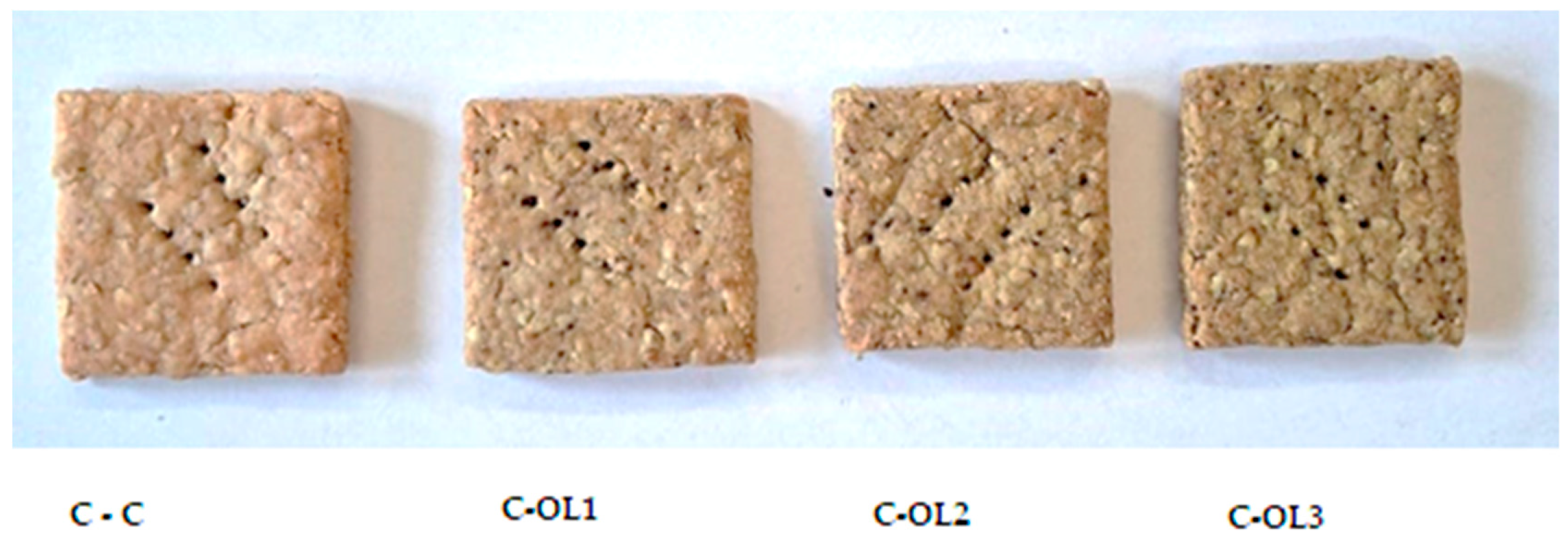
Figure 1. Cracker samples. C-C—control cracker sample; C-OL1—crackers enriched with 2.5% of FDOLP; C-OL2—crackers enriched with 5.0% of FDOLP; C-OL3—crackers enriched with 7.5% of FDOLP.
Processes 14 01930 g001
Figure 2. Total phenol content of crackers with the addition of freeze-dried olive leaf powder, where C-C—control cracker sample; C-OL1—crackers enriched with 2.5% of FDOLP; C-OL2—crackers enriched with 5.0% of FDOLP; C-OL3—crackers enriched with 7.5% of FDOLP.
Processes 14 01930 g002
Figure 3. Antioxidant capacity (FRAP) of crackers with addition of olive leaf powder, where C-C—control cracker sample; C-OL1—crackers enriched with 2.5% of FDOLP; C-OL2—crackers enriched with 5.0% of FDOLP; C-OL3—crackers enriched with 7.5% of FDOLP.
Processes 14 01930 g003
Figure 4. Antioxidant capacity (DPPH) of crackers with addition of olive leaf powder, where C-C—control cracker sample; C-OL1—crackers enriched with 2.5% of FDOLP; C-OL2—crackers enriched with 5.0% of FDOLP; C-OL3—crackers enriched with 7.5% of FDOLP.
Processes 14 01930 g004
Figure 5. Phenolic profile of olive leaf, control cracker, and olive leaf-enriched crackers determined by UHPLC-ESI-HRMS analysis. C-C—control cracker sample; C-OL1—crackers enriched with 2.5% of FDOLP; C-OL2—crackers enriched with 5.0% of FDOLP; C-OL3—crackers enriched with 7.5% of FDOLP.
Processes 14 01930 g005
Figure 6. Sensory attributes of crackers enriched with freeze-dried olive leaf powder where C-C—control cracker sample; C-OL1—crackers enriched with 2.5% of FDOLP; C-OL2—crackers enriched with 5.0% of FDOLP; C-OL3—crackers enriched with 7.5% of FDOLP.
Processes 14 01930 g006
Table 1. Formulations of cracker samples.
IngredientsCracker Composition (g)
C-CC-OL1C-OL2C-OL3
Oat flour30303030
Almond flour1513.51210.5
Rice flour5555
Spelt flour10101010
Freeze-dried olive leaf powder-1.534.5
Sourdough15151515
Butter15151515
Extra-virgin olive oil2222
Salt1111
Sugar1111
Water10101010
Composition of control (C-C) and freeze-dried olive leaf powder (FDOLP)-enriched cracker formulations (C-OL1, C-OL2, and C-OL3). C-C: control sample without FDOLP; C-OL1, C-OL2, and C-OL3: cracker samples enriched with 2.5%, 5.0%, and 7.5% FDOLP, respectively.
Table 2. Gradient elution programme. A is aqueous and B is organic mobile phase.
Time (min)A (%)B (%)
01000
51000
200100
260100
26.11000
271000
Table 3. Results of the crackers’ dimensions.
SampleLength (cm)Width (cm)Height (cm)Spread RatioSpread Factor
C-C 4.73 ± 0.12 a3.70 ± 0.10 a0.43 ± 0.06 a11.03 ± 1.27 a100 ± 0.00 a
C-OL14.70 ± 0.20 a3.57 ± 0.15 a0.40 ± 0.00 a11.75 ± 0.50 a107.44 ± 13.13 a
C-OL24.60 ± 0.17 a3.57 ± 0.12 a0.40 ± 0.00 a11.50 ± 0.43 a104.89 ± 8.66 a
C-OL34.50 ± 0.10 a3.67 ± 0.15 a0.40 ± 0.00 a11.25 ± 0.25 a102.89 ± 12.38 a
Data are expressed as mean ± standard deviation (n = 3). Different superscripts in each column indicate significant differences between formulations (p < 0.05). C-C—control cracker sample; C-OL1—crackers enriched with 2.5% of FDOLP; C-OL2—crackers enriched with 5.0% of FDOLP; C-OL3—crackers enriched with 7.5% of FDOLP.
Table 4. Chemical parameters of crackers enriched with freeze-dried olive leaf powder.
SamplepHWater Activity
(aw)
Moisture
(%)
NaCl
(%)
C-C5.48 ± 0.01 a0.231 ± 0.00 c4.61 ± 0.07 c1.94 ± 0.02 a
C-OL15.46 ± 0.01 b0.282 ± 0.00 b5.31 ± 0.06 a1.86 ± 0.03 a
C-OL25.46 ± 0.01 b0.283 ± 0.00 b5.19 ± 0.03 a1.50 ± 0.02 b
C-OL35.36 ± 0.00 c0.320 ± 0.00 a4.92 ± 0.04 b1.39 ± 0.05 c
Data are expressed as mean ± standard deviation (n = 3). Different superscripts in each column indicate significant differences between formulations (p < 0.05), as determined by one-way ANOVA and Tukey’s HSD test. C-C—control cracker sample; C-OL1—crackers enriched with 2.5% of FDOLP; C-OL2—crackers enriched with 5.0% of FDOLP; C-OL3—crackers enriched with 7.5% of FDOLP. The moisture content of FDOLP was 6.4%.
Table 5. Results of colour analyses of crackers.
SampleL* a*b*
C-C 68.12 ± 0.27 a7.76 ± 0.04 a29.37 ± 0.36 a
C-OL1 64.71 ± 0.26 b6.58 ± 0.07 b29.48 ± 0.13 a
C-OL2 63.86 ± 0.40 c5.26 ± 0.03 d27.83 ± 0.06 b
C-OL3 61.63 ± 0.18 d5.71 ± 0.05 c27.75 ± 0.22 b
Data are expressed as mean ± standard deviation (n = 3). Different superscripts in each column indicate significant differences between formulations (p < 0.05), as determined by one-way ANOVA and Tukey’s HSD test. C-C—control cracker sample; C-OL1—crackers enriched with 2.5% of FDOLP; C-OL2—crackers enriched with 5.0% of FDOLP; C-OL3—crackers enriched with 7.5% of FDOLP.
Table 6. Total phenols and antioxidant activity of freeze-dried olive leaf powder extracts.
SampleExtraction MethodTPC (mg GAE/L)FRAP (µM TE/L Extract)DPPH (% Inhibition)
FDOLPUAE6619.332486.4692.11
MAE3486.672760.7289.64
Table 7. Volatile compounds (expressed as percentage of the total area) identified in freeze-dried olive leaf powder (FDOLP) and cracker samples.
NoRIVolatile
Compound
FDOLP
(AV ± SD)
C-C
(AV ± SD)
C-OL1
(AV ± SD)
C-OL2
(AV ± SD)
C-OL3
(AV ± SD)
Odour Description *
   Aldehydes       
1698pentanalnd5.91 ± 0.21ndndndfermented, bready, fruity, nutty
2754(E)-2-pentenal3.26 ± 0.122.51 ± 0.13ndndndapple, fruity, pungent
3800hexanal 4.14 ± 0.0620.67 ± 0.326.40 ± 0.055.40 ± 0.146.10 ± 0.11fresh, green, fatty, grass, fruity 
4854(E)-2-hexenal0.68 ± 0.05ndndndndgreen, leaf
5909heptanal0.84 ± 0.050.98 ± 0.070.64 ± 0.070.46 ± 0.090.56 ± 0.04fat, citrus, rancid
6956(E)-2-heptenal0.52 ± 0.030.75 ± 0.052.18 ± 0.144.96 ± 0.176.82 ± 0.30green, fatty
7961benzaldehyde0.65 ± 0.062.05 ± 0.072.62 ± 0.144.34 ± 0.243.89 ± 0.16almond, burnt sugar
81006octanalnd1.85 ± 0.033.49 ± 0.152.69 ± 0.142.51 ± 0.31fat, soap, lemon, green
91007(E,E)-2,4-heptadienal29.33 ± 0.36ndndndndnutty, fatty, hay
101049phenylacetaldehydend1.27 ± 0.031.64 ± 0.084.47 ± 0.242.91 ± 0.02honey, floral rose, sweet
111056(E)-2-octenalnd1.22 ± 0.040.46 ± 0.061.91 ± 0.151.71 ± 0.03fresh, leafy, fatty
1214672-dodecenal2.49 ± 0.55ndndndndherbal
131102nonanalnd3.52 ± 0.129.87 ± 0.157.72 ± 0.256.51 ± 0.25fat, citrus, green
141162(E)-2-nonenalndnd0.93 ± 0.110.29 ± 0.060.59 ± 0.06fatty
151200decanal0.44 ± 0.042.49 ± 0.135.37 ± 0.112.12 ± 0.042.58 ± 0.08soap, orange peel, tallow
161265(E)-2-decenal0.29 ± 0.07nd1.54 ± 0.121.04 ± 0.091.10 ± 0.06tallow
171317(E,E)-2, 4-decadienalndndnd1.75 ± 0.090.92 ± 0.07fatty, fried, citrus
  Alcohols      
189671-heptanolnd0.66 ± 0.09ndndndchemical, green
199861-octen-3-olnd0.83 ± 0.081.13 ± 0.032.61 ± 0.144.24 ± 0.15earthy, green
2010152-ethyl-1-hexanolnd0.80 ± 0.090.90 ± 0.030.81 ± 0.101.09 ± 0.10green, vegetable
211033benzyl alcohol0.35 ± 0.013.04 ± 0.073.78 ± 0.033.53 ± 0.212.74 ± 0.10sweet, floral
221066(E)-2-octen-1-olndnd0.56 ± 0.091.08 ± 0.051.11 ± 0.05green, citrus
2310731-octanolnd1.80 ± 0.043.60 ± 0.022.86 ± 0.072.66 ± 0.12herbal, fatty, green
241139phenylethyl alcohol2.09 ± 0.031.70 ± 0.094.08 ± 0.084.32 ± 0.043.07 ± 0.06floral
  Ketones      
256781-penten-3-one5.77 ± 0.24ndndndndpungent, peppery, mustard
269876-methyl-5-hepten-2-one4.43 ± 0.19ndndndndearthy, fruity
2710813,5-octadien-2-one7.58 ± 0.20ndndndndfruity, fatty, mushroom
2810902-nonanonendnd0.52 ± 0.040.69 ± 0.070.15 ± 0.03floral, fatty
2911076-methyl-3,5-heptadien-2-one2.62 ± 0.08ndndndndcinnamon, spicy, woody, sweet
3012942-undecanonend0.72 ± 0.031.18 ± 4.041.89 ± 0.161.90 ± 0.19fruity, fresh
3114942-tridecanonendnd0.71 ± 90.011.83 ± 0.091.02 ± 0.08fatty, waxy, herbal, earthy 
  Acids      
32602acetic acid2.34 ± 0.118.76 ± 0.9413.98 ± 0.6811.68 ± 0.3414.88 ± 0.24alcoholic
33981hexanoic acidnd2.21 ± 0.102.66 ± 0.113.16 ± 0.132.18 ± 0.06rancid, sweaty
341191octanoic acidnd0.90 ± 0.073.98 ± 0.041.02 ± 0.040.14 ± 0.04sweat, cheese
351276nonanoic acidnd1.54 ± 0.071.01 ± 0.031.55 ± 0.221.06 ± 0.07green, fat
361964hexadecanoic acid nd5.04 ± 0.08ndndndwaxy
  Furans      
379962-pentylfurannd0.85 ± 0.07ndnd0.72 ± 0.07green, earthy, beany
  Esters      
381197methyl salicylate0.56 ± 0.01ndndndndmint
  Terpens      
391021p-cymene0.53 ± 0.09ndndndndcitrus, solvent
401030limonene1.65 ± 0.050.76 ± 0.030.71 ± 0.030.72 ± 0.070.80 ± 0.02citrus
411214β-cyclocitral0.85 ± 0.09ndndndndtropical, saffron, herbal
421273α-citral0.88 ± 0.06ndndndndcitrus
431434neryl acetone4.36 ± 0.18ndndndndfatty
441469β-ionone1.55 ± 0.09ndndndndviolet, flower, raspberry
  Others      
45898oxime-, methoxy-phenylnd1.74 ± 0.071.32 ± 0.041.55 ± 0.072.35 ± 0.14fresh shrimp and crabs
469683-ethenylpyridine0.41 ± 0.03ndndnd3.92 ± 0.26tobacco, caramelic
RI = retention indices relative to C9–C25 alkanes; Av = average area percentage composition for three replicates; SD = standard deviation of the area percentages for three replicates; * = odour description taken from The Good Scents Company Information System and/or Flavornet online databases [58,59]; nd = not detected in sample; C-C—control cracker sample; C-OL1—crackers enriched with 2.5% of FDOLP; C-OL2—crackers enriched with 5.0% of FDOLP; C-OL3—crackers enriched with 7.5% of FDOLP.
Disclaimer/Publisher’s Note: The statements, opinions and data contained in all publications are solely those of the individual author(s) and contributor(s) and not of MDPI and/or the editor(s). MDPI and/or the editor(s) disclaim responsibility for any injury to people or property resulting from any ideas, methods, instructions or products referred to in the content.