1. Introduction
Sustainable wastewater management in hyper-arid regions poses a major challenge to water security, soil conservation, and the resilience of agricultural ecosystems in oases. Extreme evaporation, the near absence of groundwater recharge, and the natural accumulation of salts in desert environments impose significant biogeochemical constraints that directly and effectively impact the functioning of biological purification processes [
1,
2]. In this context, the reuse of treated wastewater is considered a key strategy to reduce the depletion of deep aquifers and to support agricultural production in oases [
3,
4].
Most studies conducted in arid regions have shown that wastewater treatment processes, particularly intensive biological and plant-based systems, can maintain high productivity despite extreme climatic conditions, thanks to microbial adaptation, natural aeration processes, and rhizosphere interactions [
4,
5]. However, these environments are characterized by several challenges, including high salinity and temperature fluctuations, which can lead to changes in soil structure, in addition to the risks of sodification and a significant progressive decrease in soil permeability. This requires careful monitoring of electrical conductivity, major ions, and sodicity [
6,
7].
Research on irrigated agriculture using treated wastewater in harsh and arid environments in North Africa has also highlighted the crucial importance of assessing the long-term effects of this water on soil, plant productivity, and nutrient dynamics [
8]. Furthermore, the quality of the water used for irrigation and the treatment performance stability are factors strongly influenced by the anthropogenic and climatic pressures [
9]. In this context, analyzing the operation and efficiency of the wastewater treatment plant in the Timimoun oasis is of particular importance to ensure the sustainable management of scarce water resources and to support agricultural development in a desert environment subject to significant constraints.
Therefore, this study aims to provide a comprehensive evaluation of the wastewater treatment performance of the Timimoun plant within the broader framework of scientific knowledge on wastewater treatment in extremely arid and hostile environments.
Most previous studies focused mainly on treatment efficiency without fully addressing salinity constraints and agricultural reuse [
10,
11]. Most previous work did not integrate treatment performance with irrigation suitability indicators.
This study evaluates treatment performance, salinity constraints, and agricultural reuse suitability under hyper-arid conditions. Unlike previous studies primarily focused on treatment efficiency, this work integrates operational performance, irrigation suitability indicators, and the practical implications of wastewater reuse. It also provides field data from a Saharan oasis environment.
In order to address these gaps, this study is guided by the following research questions: (1) Can the activated sludge system maintain high treatment efficiency under extremely arid climatic conditions? (2) Does seasonal variation, especially extreme summer temperatures, have a significant impact on treatment performance? (3) According to irrigation standards, is the treated wastewater suitable for agricultural reuse? (4) In the long term, to what extent does residual salinity affect the feasibility of treated wastewater reuse?
In accordance with these questions, this study tests the following hypotheses: (H1) the treatment efficiency (removal of COD, BOD5 and TSS) remains high despite the harsh climatic conditions; (H2) seasonal variations have a limited or moderate impact on the system’s performance; (H3) the treated wastewater meets the requirements for agricultural reuse in terms of organic and microbiological quality; and (H4) residual salinity is the most important limiting factor for sustainable reuse in hyper-arid environments.
2. Materials and Methods
2.1. Study Area and Environmental Context
The Timimoun oasis (southern Algeria) is located in the hyper-arid Sahara region, characterized by an annual rainfall of less than 80 mm, with temperatures exceeding 45 °C in summer and among the highest potential evaporation rates worldwide. These extreme climatic conditions significantly affect the performance of biological treatment processes and the quality of effluents intended for agricultural reuse [
12,
13]. The wastewater treatment plant serves approximately 5000 population equivalents (PE). It primarily receives domestic wastewater with a moderate organic load but a high mineral content, typical of desert environments [
8,
9].
2.2. Description of the Treatment Process
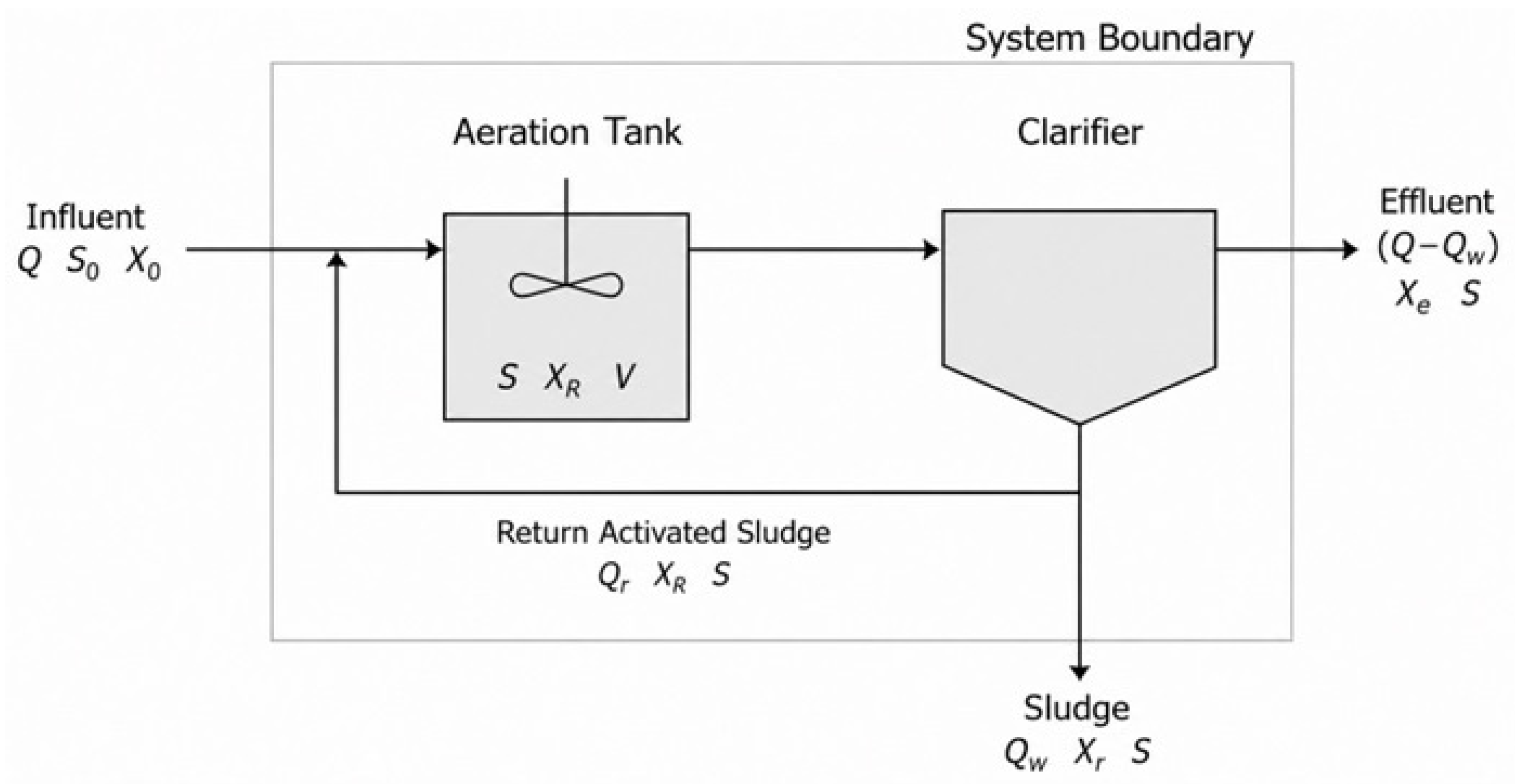
The wastewater treatment plant in the Timimoun oasis operates using a conventional activated sludge process adapted to the harsh climatic conditions of hyper-arid desert environments. The treatment system ensures stable organic matter removal while maintaining satisfactory microbiological quality despite extreme temperatures, high evaporation rates, and the elevated mineral content characteristic of wastewater in desert regions.
As illustrated in
Figure 1, the treatment process includes preliminary treatment, biological treatment, secondary clarification, UV disinfection, and sludge management. During the preliminary stage, coarse and fine screening are applied to remove large suspended solids and floating debris, followed by grit and oil removal to protect downstream equipment and improve process stability.
The biological treatment stage is based on an extended aeration activated sludge system that promotes organic matter biodegradation and partial nitrification. Previous studies conducted in similar environments have shown that activated sludge biomass can progressively adapt to high temperatures and elevated salinity levels while maintaining relatively stable treatment efficiency [
4,
5]. Secondary clarification ensures the gravity separation of biological sludge from the treated effluent before tertiary treatment.
As shown in
Figure 1, ultraviolet (UV) disinfection is applied as the final treatment stage to reduce microbiological contamination and improve the sanitary quality of treated wastewater intended for agricultural reuse. UV treatment is particularly suitable for arid environments because it avoids the formation of chlorinated disinfection by-products commonly associated with chemical disinfection methods [
14,
15].
Table 1 summarizes the main operating conditions of the wastewater treatment plant. The hydraulic retention time ranged from 18 to 24 h, while the sludge retention time varied between 15 and 20 days depending on seasonal conditions and influent flow variations. Continuous aeration was maintained to compensate for the reduced oxygen solubility observed during high summer temperatures. The sludge recirculation ratio was maintained between 50 and 100% to ensure sufficient biomass concentration and process stability. Excess sludge generated during clarification was periodically removed and naturally dried under desert climatic conditions before being reused for agricultural applications according to local management practices [
7,
16].
This treatment configuration allows the plant to maintain high removal efficiencies under extreme desert conditions while supporting the safe reuse of treated wastewater in oasis agriculture.
2.3. Sampling Strategy
To ensure more representative monitoring under severe drought conditions, sampling was conducted over a 12-month period from January to December 2025 according to a structured protocol. Twenty-four composite samples (two samples per month) were collected at each sampling point (P1, P2, P3, and B1).
Table 2 shows the locations of the sampling points. Each sample consisted of a time-proportional composite collected over a 24 h period. Each composite sample was prepared by combining four sub-samples collected at 6 h intervals (06:00, 12:00, 18:00, and 00:00) to account for diurnal variations, which are particularly prominent in very dry climates due to extreme temperature fluctuations and high evaporation rates. In order to reduce temporal variability and to provide a more representative assessment of the daily wastewater characteristics, composite sampling was preferred over random sampling.
Samples were collected according to standard APHA methods [
12] and stored at 4 °C prior to analysis. To ensure data quality and integrity, they were analyzed within the recommended retention periods.
The sampling design was chosen to achieve a balance between statistical representation and logistical constraints in the presence of highly variable climatic conditions, consistent with monitoring strategies reported in the literature on wastewater in arid regions [
11,
12].
2.4. Physicochemical Analyses
The analyzed parameters included: COD, BOD
5, TSS, TDS, pH, electrical conductivity (EC), ammonium (NH
4+), nitrate (NO
3−), Kjeldahl nitrogen (TKN), total phosphorus (TP), and major ions (Na
+, Ca
2+, Mg
2+, Cl
−).
Table 3 summarizes the analytical methods used.
Physicochemical and nutrient parameters were analyzed using standardized APHA and ISO methods to ensure data quality and comparability.
Quality assurance and quality control (QA/QC) procedures included the analysis of blanks and duplicate samples to ensure analytical accuracy and data reliability.
The physicochemical and microbiological parameters were selected based on their relevance for evaluating treatment efficiency, salinity constraints, irrigation suitability, and sanitary safety under hyper-arid reuse conditions.
2.5. Calculation of Irrigation Suitability Parameters
To evaluate the suitability of treated wastewater for agricultural reuse under hyper-arid conditions, irrigation quality indicators were calculated using the average physicochemical values obtained during the 12-month monitoring period.
2.5.1. Sodium Adsorption Ratio (SAR)
The sodium adsorption ratio (SAR) was calculated to evaluate the sodicity hazard associated with irrigation water according to Equation (1) [
19]:
where:
, , and are the concentrations of sodium, calcium, and magnesium, respectively (meq/L).
2.5.2. Residual Sodium Carbonate (RSC)
Residual sodium carbonate (
) was determined according to Equation (2) [
20]:
where:
and are carbonate and bicarbonate concentrations (meq/L),
are calcium and magnesium concentrations (meq/L).
An
> 2.5 meq/L indicates a high risk of sodification [
1,
21].
2.5.3. Risk Index for Soil Permeability (ISP)
The soil permeability index (
) was calculated according to Equation (5) [
20]:
where all ionic concentrations are expressed in meq/L
These standards are essential in desert regions where salinity levels are naturally high [
6,
7].
To ensure consistency, we converted the ion concentrations from mg/L to meq/L using the following relationship (4):
The equivalent weight is calculated as (5):
This approach is widely adopted in assessing the quality of irrigation water as it allows comparison with FAO guidelines and international standards [
19,
20].
2.6. Microbiological Analyses
The microbiological indicators measured included total coliforms, fecal coliforms, and
E. coli determined by membrane filtration (APHA 9222 D/E) [
22].
The effectiveness of UV disinfection was evaluated by comparing the bacterial concentrations before and after exposure.
Microbiological analyses were performed regularly throughout the 12-month monitoring period using membrane filtration (APHA 9222 D/E). The microbiological parameters analyzed and their corresponding analytical methods are summarized in
Table 3. The limit of detection was approximately 1 colony-forming unit (CFU/100 mL). Samples were collected before and after UV disinfection and handled according to recommended holding times. The UV system operated at a dose of 30–40 mJ/cm
2, with contact times consistent with standard UV disinfection practices.
2.7. Kinetic Modeling
A first-order model was used to study the kinetics of COD and nitrogen decomposition (6) [
23]:
where
C0 and
C are the P1 raw wastewater and P3 treated wastewater COD concentrations (mg/L), k is the apparent first-order rate constant (day
−1), and t is the hydraulic residence time (HRT, days).
The hydraulic residence time (
HRT) was calculated as (7):
where
V is the effective volume of the aeration tank (m
3), and
Q is the influent flow rate (m
3/day). Based on operational data from the treatment plant, the hydraulic retention time ranged from 18 to 24 h, depending on seasonal flow variations.
The kinetic constant k was estimated using nonlinear regression (OriginPro 2023) by matching experimental COD data with the exponential decay model. The obtained k values were subsequently compared with values previously reported in the literature for activated sludge systems operating under warm and arid climatic conditions. The model performance was evaluated using the coefficient of determination (R2).
To account for temperature effects on reaction kinetics, the Arrhenius-type relationship was considered (8):
where
kt represents the kinetic constant at temperature
T (°C),
k20 the reference constant at 20 °C, and
θ the temperature coefficient (often 1.02–1.07 for biological processes).
This method is commonly used in biological processes in arid regions, particularly in nature-based and hybrid treatment systems [
24,
25].
2.8. Statistical Analysis
Statistical analysis was performed using R 4.3 and OriginPro 2023:
- -
Normality tests (Shapiro-Wilk)
- -
Analysis of variance (ANOVA) of seasonal variations
- -
Pearson correlation analysis between salinity, sodium, and electrical conductivity;
- -
kinetic modeling using nonlinear regression
- -
Statistical significance was set at p < 0.05.
3. Results and Discussion
3.1. Overall Treatment Performance of the Timimoun Wastewater Treatment Plant Under Hyper-Arid Conditions
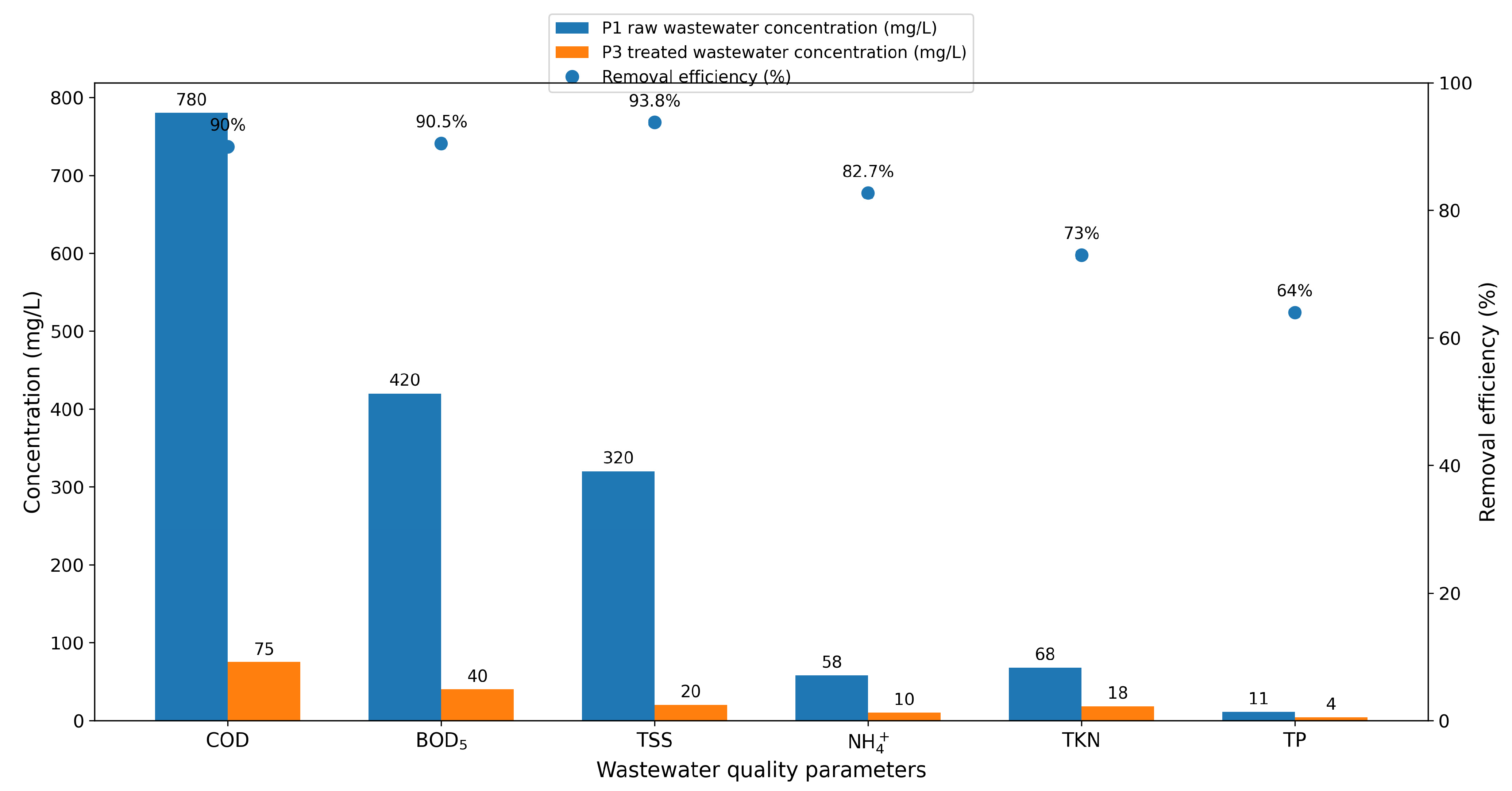
Table 4 presents the average treatment performance of the Timimoun plant. The high removal rates observed for COD (90%), BOD
5 (90.5%), and TSS (93.8%) indicate high treatment efficiency of the activated sludge system despite the severe climatic constraints of the hyper-arid environment. Similar results have been reported for wastewater treatment plants operating in hot and dry climates, demonstrating the robustness and efficiency of conventional biological treatment systems under appropriate operational conditions [
4,
26,
27]. The main physicochemical parameters and treatment performances are summarized in
Table 4.
All values are presented as mean ± standard deviation (SD).
TSS visually illustrates the results obtained in
Table 3, which clearly demonstrate the overall stability of the treatment, a result also observed in studies recently published in several journals [
28,
29].
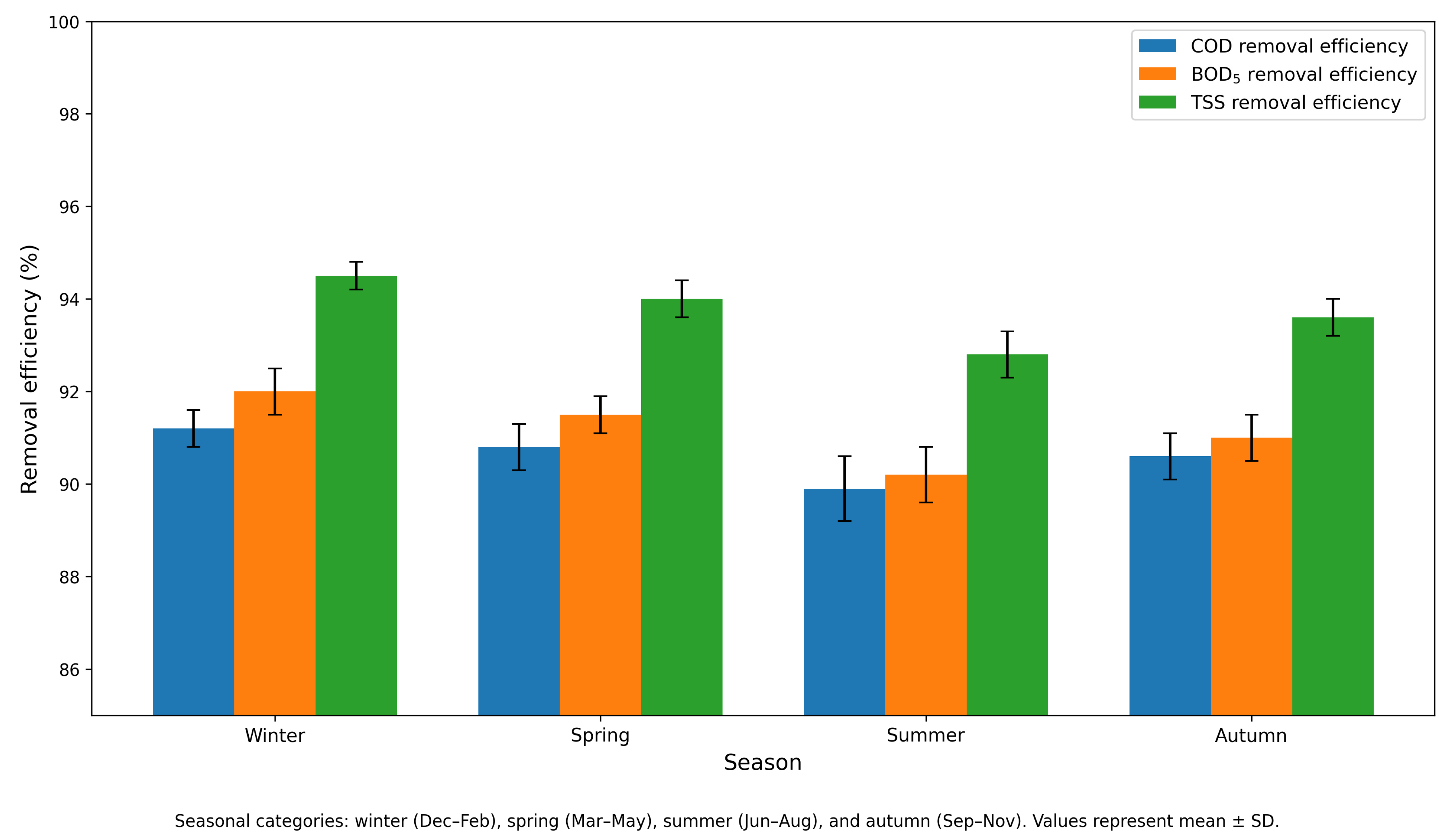
Figure 2 illustrates the seasonal variation of removal efficiencies for the main wastewater quality parameters, while detailed numerical values are summarized in
Table 4.
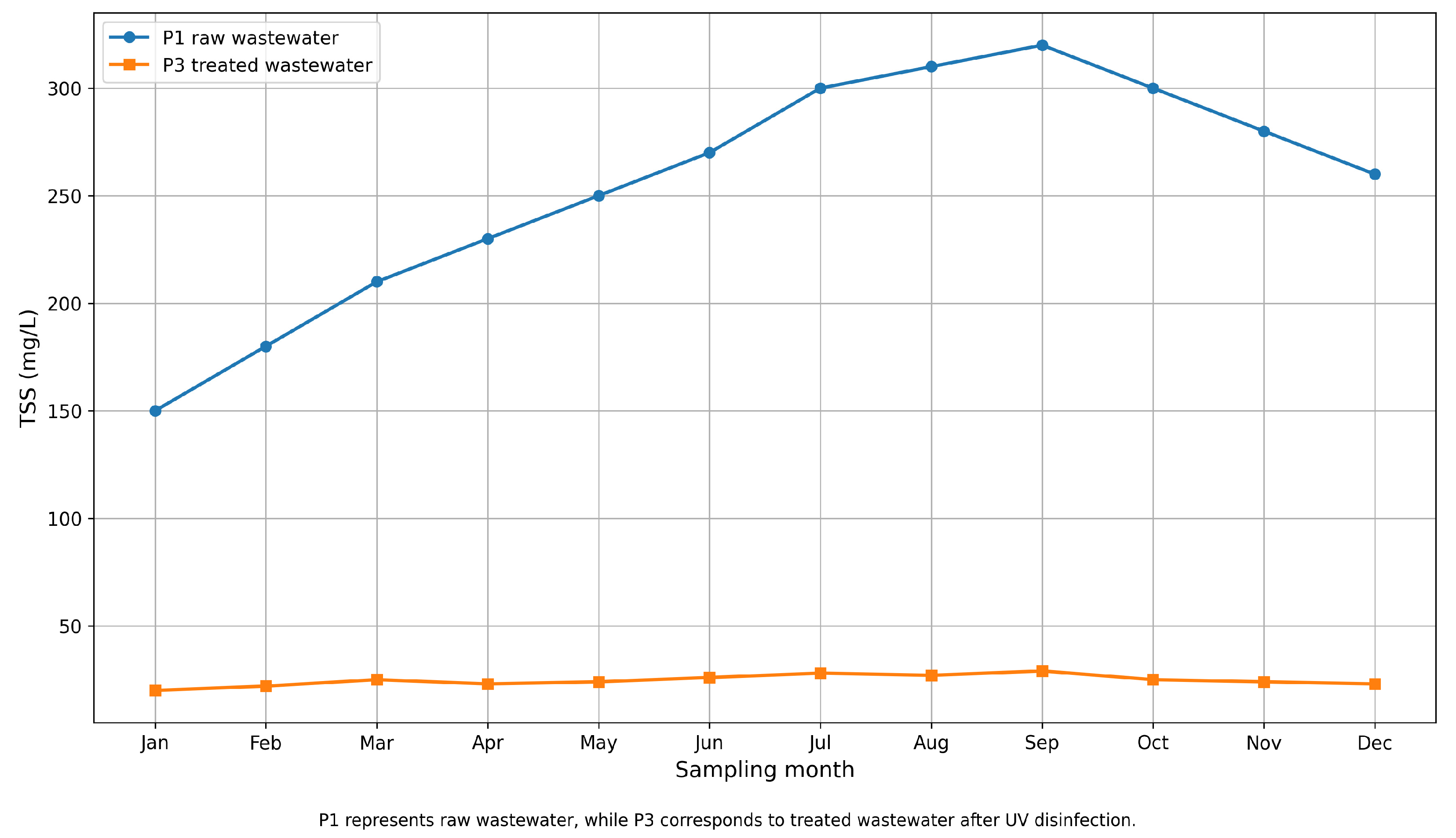
Figure 3 illustrates the monthly variation of TSS concentrations in influent and effluent. Despite fluctuations in P1 raw wastewater concentrations, effluent exhibits relatively low and stable concentration levels, indicating effective secondary settling and good floc stability [
30]. These results are consistent with what has been observed and reported for biological systems operating under high-temperature conditions [
31].
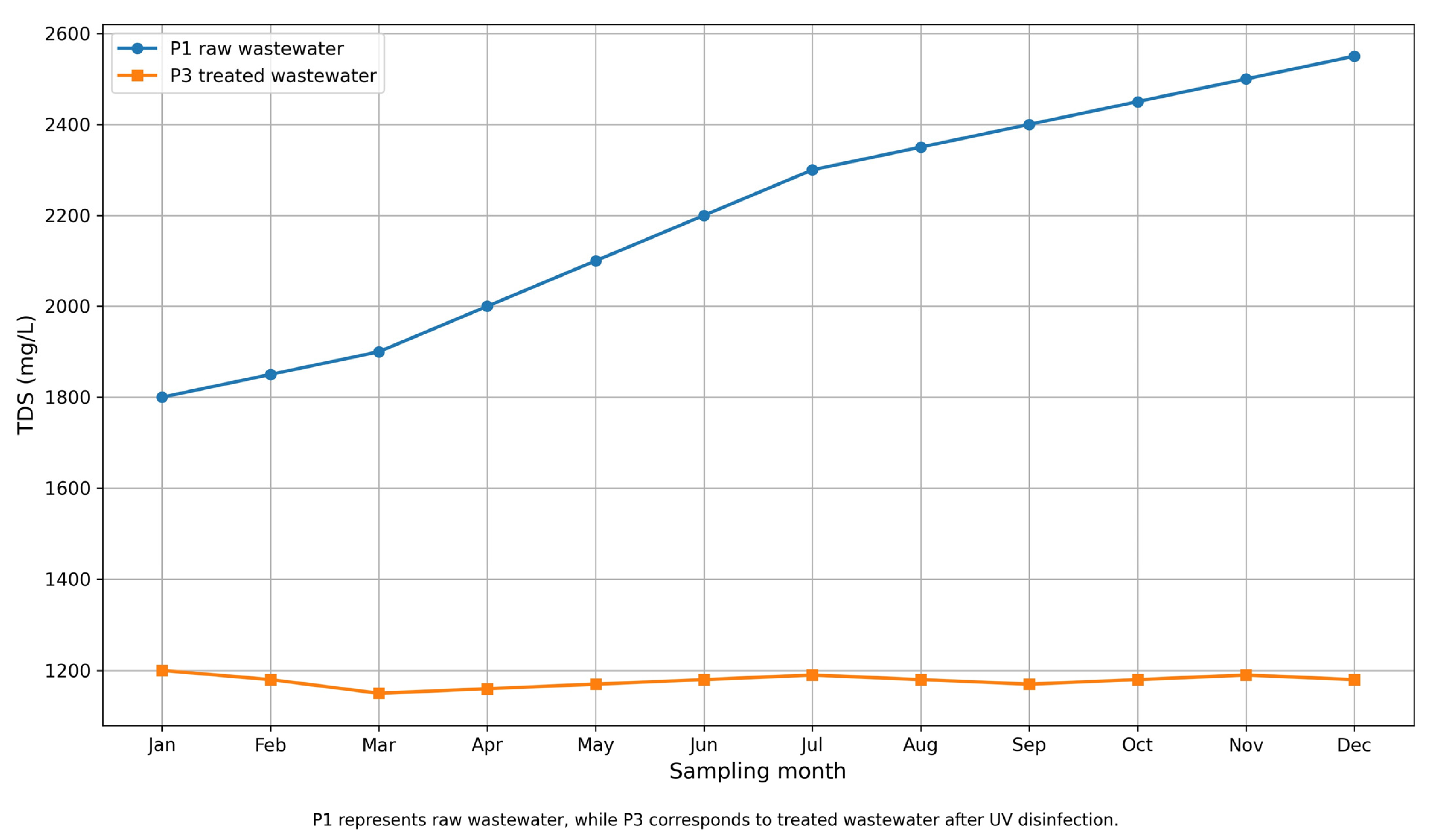
Figure 4 illustrates the temporal variation of total dissolved solids (TDS). The removal efficiency is moderate (40–55%), reflecting the inherent limitations of biological processes for dissolved constituents. This finding has been widely documented in recent studies, as TDS is a key parameter in evaluating the feasibility of effluent reuse in arid regions [
31,
32].
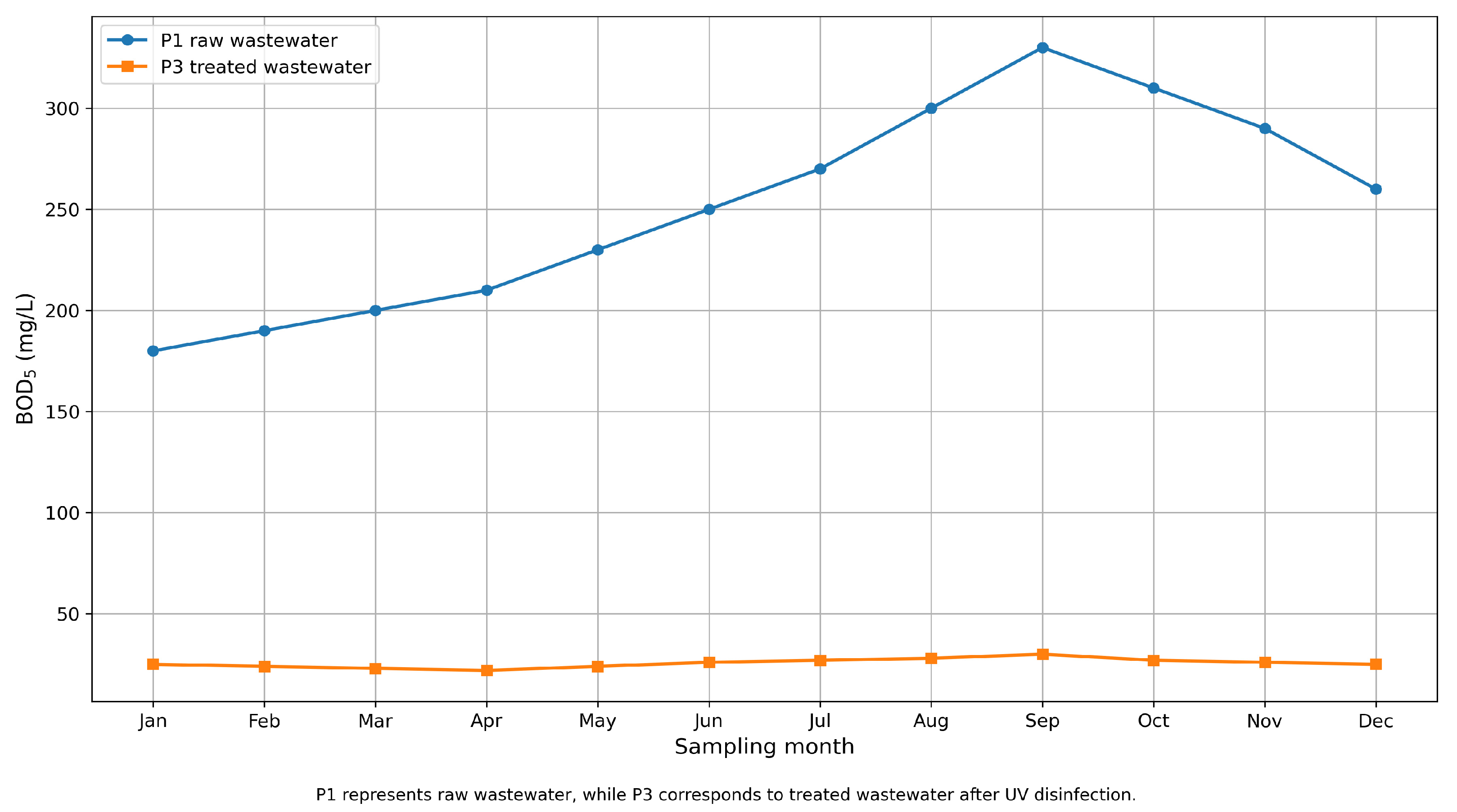
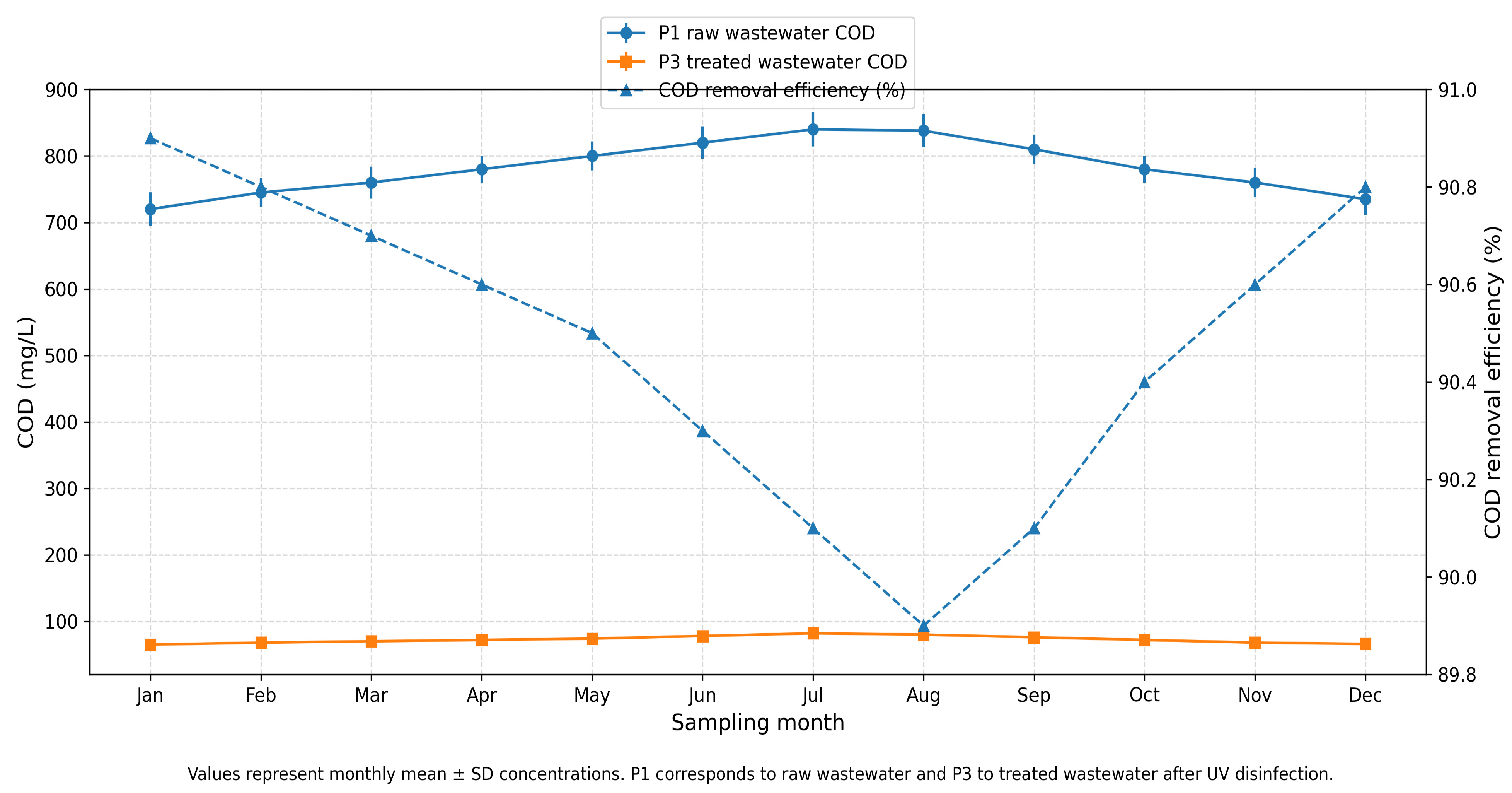
Figure 5 and
Figure 6 illustrate the monthly variation of BOD
5 and COD, showing significant and relatively stable removal rates, often exceeding 85%. These results confirm the stability of biological treatment under hyper-arid conditions [
33].
The reduction in BOD is particularly high, ranging between 85% and 95%. This trend was observed even during peak periods in July/August, where the treatment system maintained relatively low effluent concentrations of biodegradable organic matter and stable removal efficiencies, confirming the resilience of activated sludge biomass under increased organic loading [
34].
Values represent monthly mean concentrations. P1 corresponds to raw wastewater and P3 to treated wastewater after UV disinfection.
The high removal efficiencies observed for TSS, BOD, and COD confirm the effectiveness of biological treatment under hyper-arid conditions [
19,
35]. In contrast, the slight decrease recorded in the total dissolved solids (TDS) is typical of conventional biological processes [
36]. This underscores the need to use advanced technologies such as nanofiltration or reverse osmosis to remove dissolved constituents [
36]. The removal efficiencies obtained are comparable to those observed in constructed wetlands in arid regions [
5] and in wastewater treatment plants in hot climates [
37]. In addition to conventional organic pollution indicators, the nutrient and salinity parameters presented in
Table 4 were further analyzed in relation to agricultural reuse suitability and environmental constraints under hyper-arid conditions.
Nitrogen and phosphorus removal efficiencies were lower than those observed for organic matter and suspended solids. The high NH
4+ removal efficiency (82.7%) indicated effective nitrification despite elevated temperatures, whereas the lower total nitrogen and total phosphorus removal efficiencies may be attributed to limited biological nutrient removal and the absence of advanced tertiary treatment. Nevertheless, the residual nutrients may provide agronomic benefits for wastewater reuse in oasis agriculture [
21,
38]. Residual nitrogen and phosphorus concentrations reported in
Table 4 may contribute to nutrient recycling and reduce fertilizer demand in oasis agriculture.
3.2. Seasonal Variability of Treatment Performance
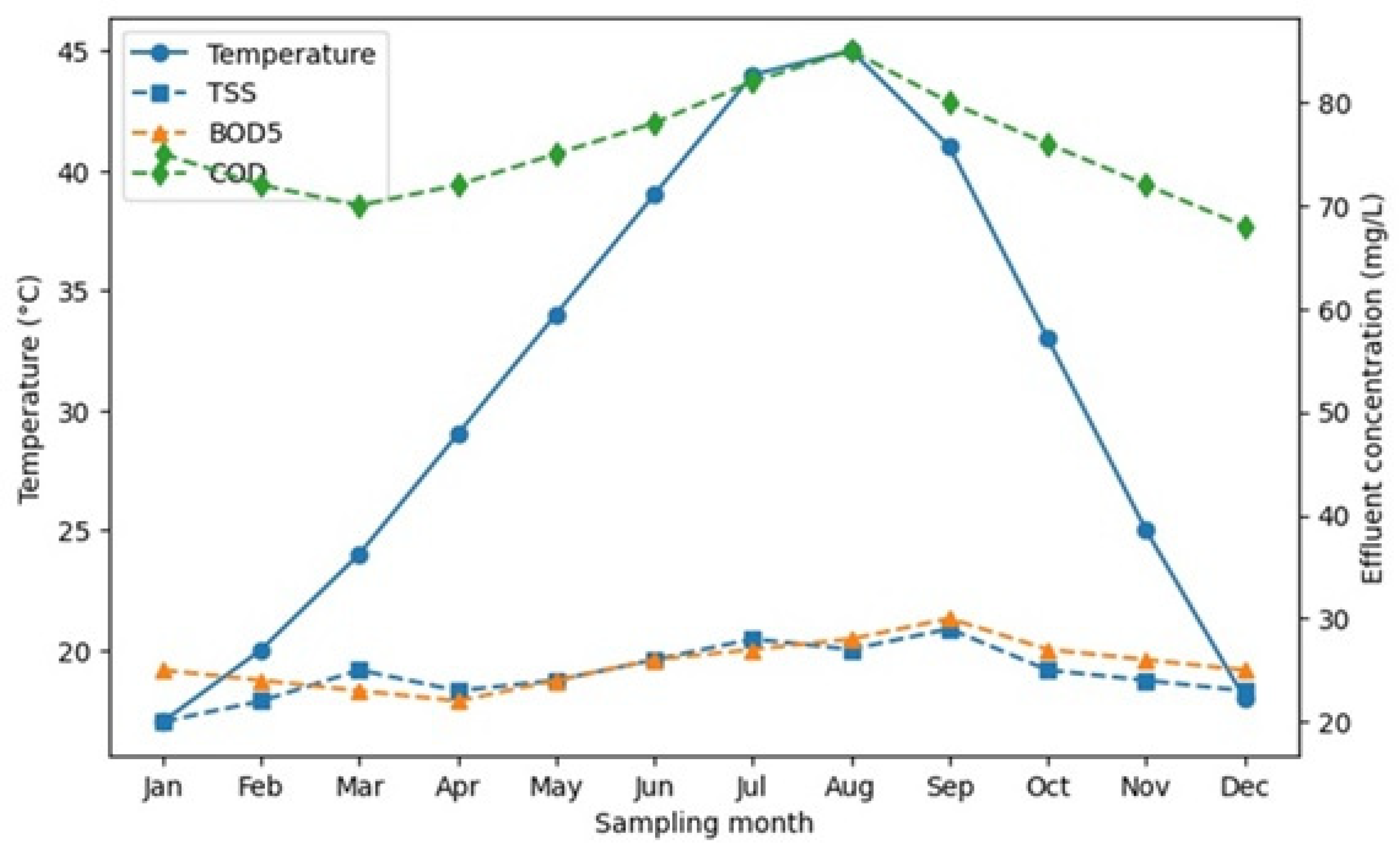
Seasonal variations in treatment performance were analyzed to assess the impact of the extreme climatic conditions typical of hyper-arid environments. As illustrated in
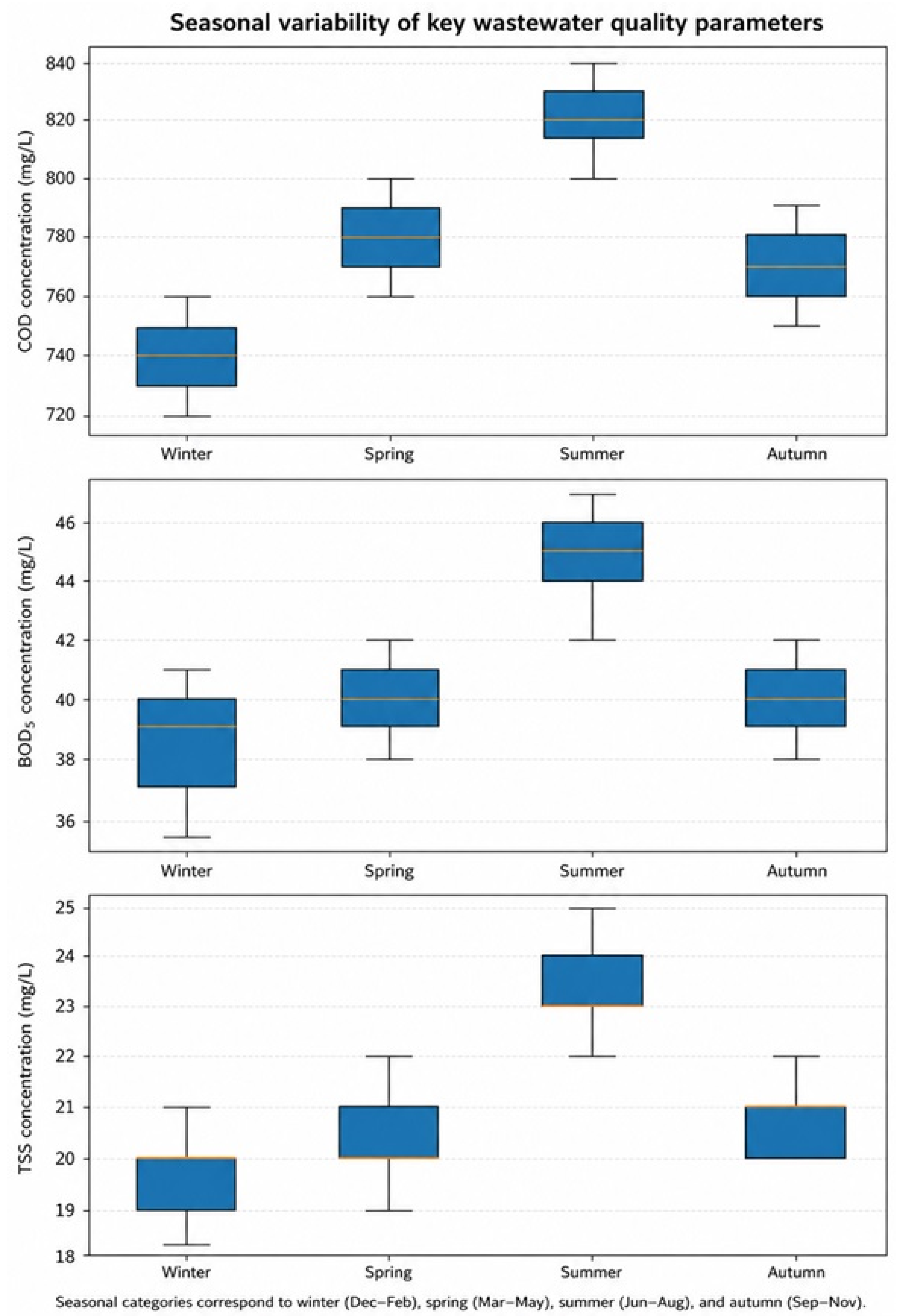
Figure 7, a slight decrease in COD removal efficiency was observed during the summer period, when temperatures exceeded 40 °C. Variability of key parameters over the monitoring period is illustrated using time-series and boxplot representations, showing the stability of treatment performance despite seasonal fluctuations. Despite this, a one-way ANOVA analysis revealed that this variation was statistically significant (
p = 0.018), indicating that extreme seasonal conditions, especially high temperatures in the summer, have a measurable impact on treatment performance, even though the system remains operationally stable.
Boxplots were used to illustrate seasonal variability to illustrate the seasonal variation of key parameters (COD, BOD
5, and TSS). The results indicate limited variability, confirming the overall stability of treatment performance despite seasonal fluctuations (
Figure 8).
In addition,
Figure 9 illustrates the relationship between variation in physicochemical parameters and temperature fluctuations. Despite the extreme temperature conditions, the concentrations of suspended solids and organic matter showed limited variation, highlighting the robustness of the activated sludge system. These results are consistent with previous studies showing that biological treatment systems operating in arid and hyper-arid environments, due to microbial adaptation and process flexibility, can maintain stable performance [
37,
38,
39].
The slight decrease in treatment performance observed at high temperatures can be attributed to the partial inhibition of microbial activity, particularly nitrogenous bacteria, as well as increased osmotic stress associated with high salinity during summer [
6,
7,
40].
Despite statistically significant seasonal variation (
p = 0.018), the treatment process maintained high treatment efficiency, indicating strong operational stability under combined thermal and salinity stress, which is essential for sustainable wastewater reuse in hyper-arid environments [
13,
26].
3.3. Salinity of Effluents and Suitability for Agricultural Reuse
Based on established irrigation suitability criteria, treated wastewater quality was assessed using key salinity and sodicity indicators.
Table 5 summarizes the measured values and corresponding guideline limits.
As shown in
Table 5, the treated wastewater exhibits electrical conductivity (EC) values ranging from 2.4 to 2.8 dS/m, indicating moderate salinity levels. Although these values remain within the FAO guidelines for irrigation (<3 dS/m), under hyper-arid conditions, they represent a critical threshold, as the limited natural leaching and high evaporation rates favor salt accumulation in the root zone [
28,
41].
The elevated TDS and conductivity values reported in
Table 4 reflect the mineralization characteristics commonly observed in treated wastewater from arid environments.
Based on the sodium adsorption ratio (SAR = 6.2), the treated wastewater presents a low sodicity risk according to FAO standards; however, with repeated irrigation, even moderate SAR values may gradually lead to an increase in soil sodification [
42]. This process may promote clay dispersion, deterioration of soil structure, reduced aggregate stability, and ultimately a decrease in infiltration capacity and hydraulic conductivity [
6].
In addition to measuring electrical conductivity (EC) and sodium uptake ratio (SAR), analysis of major ions provides insight into potential irrigation hazards. While the chloride concentration (5.4 meq/L) remains within acceptable limits, long-term accumulation may induce ion-specific toxicity, particularly in chloride-sensitive crops. Boron (0.65 mg/L) also remains within acceptable limits, although long-term irrigation may cause a gradual accumulation in the soil, potentially affecting plant metabolism over time [
4].
The combined effect of salinity (EC) and sodicity (SAR) is particularly important in desert soils, where buffering capacity is low, and evapoconcentration processes are intense [
43]. In such conditions, even moderately saline water can cause osmotic stress in plants, which reduces water uptake efficiency and negatively affects crop productivity over time.
From an agricultural perspective, these salinity levels limit the suitability of treated wastewater use for moderately to highly salt-tolerant crops. Suitable crops include date palms (Phoenix dactylifera), forage crops such as alfalfa (Medicago sativa), and barley (Hordeum vulgare). However, sensitive crops may experience reduced growth and yield under such conditions.
Regarding soil management, long-term irrigation with this water may lead to a gradual deterioration of its physical properties, including decreased permeability, surface crusting, and reduced aeration. The high evaporation rates characteristic of extremely arid environments exacerbate these effects, as salts concentrate in the upper soil layers.
Therefore, although the treated wastewater complies with both FAO guidelines and Algerian national standards for its reuse in irrigation, its sustainable use requires appropriate management strategies, including:
- -
The application of leaching fractions (10–20%) to control salt accumulation,
- -
Continuous monitoring of soil salinity and sodicity,
- -
The use of efficient irrigation techniques such as drip irrigation,
- -
The selection of salt-tolerant crops.
These results confirm that salinity remains the principal limiting factor for the reuse of treated wastewater in hyper-arid oasis systems, not due to immediate non-compliance with regulations, but as a result of long-term risks related to soil degradation and reduced agricultural productivity.
3.4. Effluent Microbiological Quality and Sanitary Safety
Table 6 presents the results of microbiological analyses obtained before and after UV disinfection. Significant reductions demonstrate the high effectiveness of UV treatment, with reductions ranging from 4 to 5 log
10 for coliforms and
E. coli. These results are consistent with previous studies for wastewater treatment plants intended for agricultural reuse, where microbiological risk control has been identified as a fundamental condition for sanitary safety [
38].
As shown in
Table 6, microbial concentrations decreased from more than 10
5–10
6 CFU/100 mL in raw wastewater to 10–10
2 CFU/100 mL after UV treatment, corresponding to a reduction of 4 to 5 log
10. Indicate high disinfection efficiency and consistent performance throughout the monitoring period.
Complies with international guidelines (such as WHO/FAO) for restricted agricultural reuse, particularly for crops not consumed raw and for controlled irrigation practices. Therefore, the treated effluent can be considered suitable from a microbiological perspective for the intended reuse category under controlled conditions.
According to World Health Organization (WHO) and Food and Agriculture Organization (FAO) guidelines for treated wastewater reuse in agriculture, treated effluents intended for restricted irrigation should not exceed 103 fecal coliforms per 100 mL under controlled irrigation conditions. The microbiological concentrations measured after UV disinfection remained within the recommended limits.
3.5. Kinetic Modeling of COD Degradation
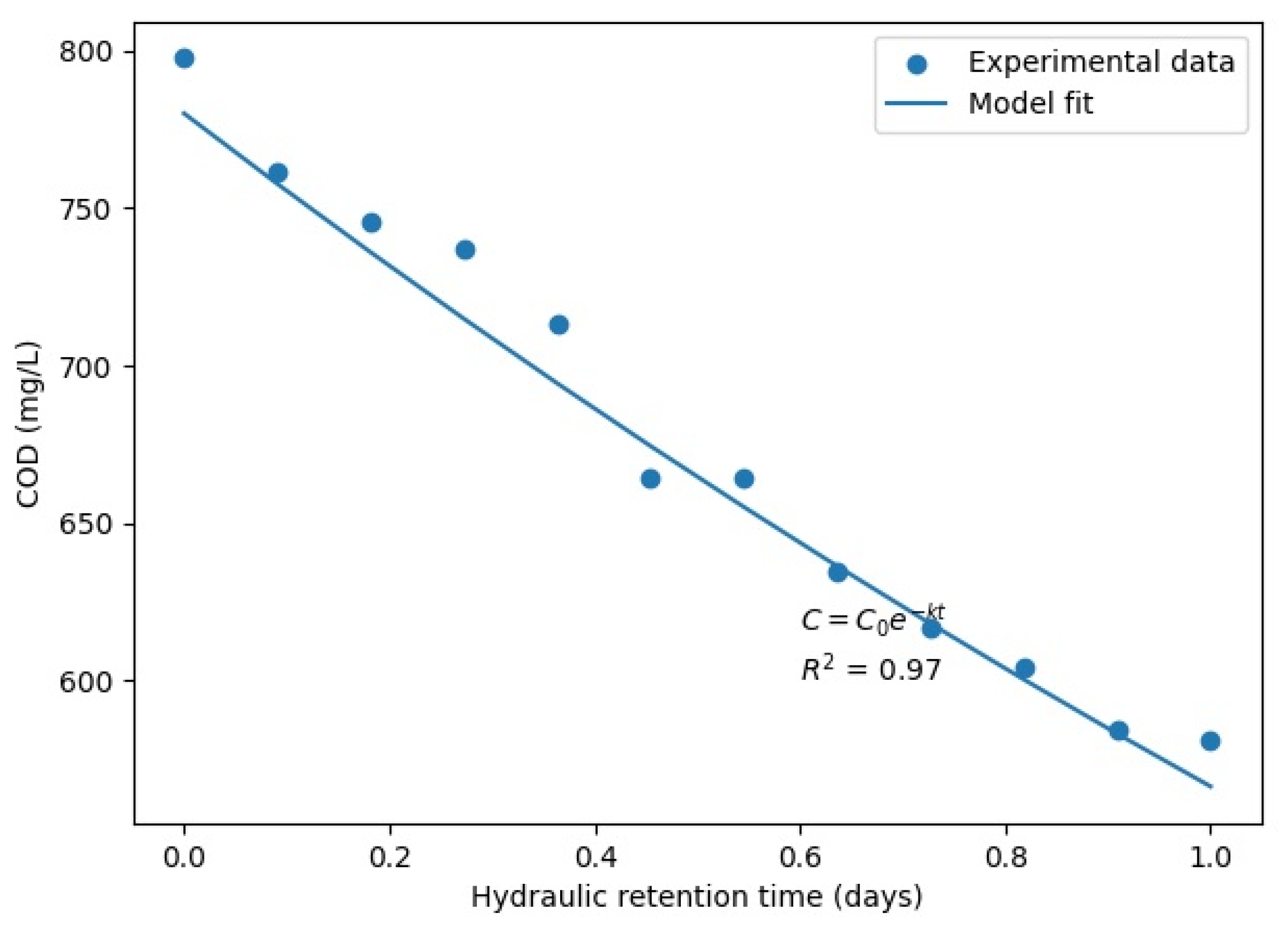
The application of a first-order kinetic model shows good agreement with experimental data (R
2 > 0.90), indicating the suitability of this approach under hyper-arid conditions. The experimentally determined average kinetic constant was estimated at
k ≈ 0.32 d
−1. This value is consistent with kinetic coefficients previously reported for activated sludge systems operating under warm climatic conditions [
38].
Figure 10 compares the measured COD concentrations and the model predictions, which demonstrates the robustness of the biological process despite fluctuations in influent quality.
Seasonal analysis revealed moderate variation in the kinetic constant. Partial inhibition due to high temperatures of microbial activity and increased osmotic stress due to high salinity may have resulted in slightly lower values being recorded during peak summer temperatures (> 40 °C). Despite the extremely harsh climatic conditions recorded, the system maintained stable performance, demonstrating strong microbial resilience, as reported in previous studies in arid regions.
3.6. Implications for Land Management and Reuse Policies
The results indicate that the feasibility of reusing treated wastewater in desert environments requires a comprehensive approach that combines treatment performance, salinity management, and appropriate agricultural practices. This approach is fully consistent with the guidelines proposed in recent studies, which recommend the implementation of flexible regulatory frameworks, adaptable to specific soil and climate conditions, and integrated into sustainable soil management strategies [
23,
44].
Residual salinity (EC = 2.4–2.8 dS/m) and sodicity (SAR = 6.2) are the main obstacles to the reuse of treated wastewater. Under these conditions, treated wastewater is suitable for the cultivation of moderately salt-tolerant crops, especially date palms (
Phoenix dactylifera) and barley (
Hordeum vulgare), as well as forage crops such as alfalfa (
Medicago sativa). To protect the soil from degradation, drip irrigation with a leaching fraction of 10–20% is recommended to control salt accumulation. These results suggest that sustainable wastewater reuse may be feasible in oasis systems when appropriate crops are selected, and appropriate irrigation management is implemented [
45].
3.7. Transferability to Other Arid and Hyperarid Oases
Although this study focuses on a single wastewater treatment plant, it provides insights applicable to other oases in the Sahara and similar arid regions. This is consistent with recent studies, which confirm the importance of these integrated approaches for improving the sustainability of treated wastewater reuse strategies in water-scarce environments [
24].
Compared to wastewater treatment plants operating in several other arid regions (
Table 7), the Timimoun plant exhibits high COD removal efficiency, comparable to or higher than conventional biological systems operating under similar climatic conditions. Unlike membrane processes, residual salinity remains the main limiting factor for expanding agricultural reuse, confirming that treatment performance alone is insufficient to guarantee the sustainability of wastewater reuse in desert environments [
40].
As shown in
Table 7, COD removal efficiency and salinity levels, a comprehensive assessment should also consider the process type, climate, influent characteristics, and reuse constraints [
46]. Activated sludge systems in hyper-arid regions demonstrate high removal efficiency (>85%), but their high salinity (EC > 2.4 dS/m) limits their reuse for irrigating salt-tolerant crops. Lagoon systems exhibit lower efficiency and higher salinity. In contrast, membrane bioreactor systems achieve lower salinity and broader reuse potential, but at a higher cost. Finally, comparisons between studies should be interpreted with caution due to methodological differences. Overall, in arid regions, salinity remains the primary limiting factor for sustainable reuse.
Under hyper-arid conditions, the operation of activated sludge systems is associated with increased energy demand due to decreased oxygen solubility at high temperatures (>40–45 °C), requiring increased blower operation and aeration intensity. resulting in higher specific energy consumption than in temperate climates. Furthermore, due to evaporation, open aeration tanks and sedimentation basins experience significant water loss, which can lead to increased salt concentration and a reduction in the net volume available for reuse. To improve transferability and sustainability, optimization strategies should be considered, such as microbubble aeration systems, intermittent aeration control, and, if possible, partial covering of tanks to reduce evaporation. Integrating renewable energy sources, such as solar power, can also help reduce the increasing energy demand in desert environments. These approaches can support the long-term sustainability of wastewater treatment and reuse systems in arid regions [
47].
4. Conclusions
This study demonstrates that the wastewater treatment plant in the Timimoun oasis maintains high treatment efficiency under hyper-arid desert conditions and severe climatic constraints. High removal efficiencies were achieved for BOD5, COD, and TSS, confirming the stability and robustness of the activated sludge process under extreme temperatures and very high evaporation rates. Seasonal analysis revealed moderate variations in treatment performance, particularly during the summer months when temperatures exceeded 40 °C. Despite this, the treatment system remained stable throughout the monitoring period, demonstrating strong microbial resilience and adaptability to combined thermal and salinity stress conditions.
The analysis of treated wastewater showed satisfactory microbiological and physicochemical quality for safe reuse in agriculture. Furthermore, UV disinfection ensured a significant reduction in pathogens, while irrigation suitability indicators, such as SAR and RSC, remained within acceptable guidelines. These results demonstrated that treated wastewater reuse is feasible for irrigating moderately salt-tolerant crops.
Nevertheless, residual salinity remains the primary limiting factor affecting the long-term sustainability of treated wastewater reuse in hyper-arid oasis systems. EC values ranging from 2.4 to 2.8 dS/m may gradually contribute to soil salinization and reduced agricultural productivity under desert conditions. Therefore, sustainable reuse requires integrated management strategies such as drip irrigation, leaching practices, continuous soil monitoring, and the selection and cultivation of salt-tolerant crops.
Overall, this study highlights the importance of combining treatment performance assessment with salinity management and sustainable agricultural practices to support long-term wastewater reuse in Saharan oasis environments and other arid regions worldwide.
Author Contributions
C.R. contributed to conceptualization, methodology, formal analysis, investigation, visualization, and writing–original draft, while T.M. was responsible for supervision, project administration, validation, and writing–review & editing. A.B. contributed to data curation, resources, formal analysis, validation, and writing–review & editing. All authors have read and agreed to the published version of the manuscript.
Funding
This research received no external funding.
Data Availability Statement
The original contributions presented in this study are included in the article. Further inquiries can be directed to the corresponding author.
Conflicts of Interest
The authors declare no conflicts of interest.
References
- Minhas, P.S.; Ramos, T.B.; Ben-Gal, A.; Pereira, L.S. Coping with salinity in irrigated agriculture: Crop evapotranspiration and water management issues. Agric. Water Manag. 2020, 227, 105832. [Google Scholar] [CrossRef]
- Mohammed, A.S.; Kutaila, A.F.; Al-Hinai, H.S.; Ahmed, A.; Sharma, D.; Patra, B.; Kumari, K.; Mina, U.; Meena, R. Sustainable agriculture in Oman: Evaluating treated wastewater irrigation effects on soil quality, heavy metal accumulation, and alfalfa growth. J. Saudi Soc. Agric. Sci. 2025, 24, 81. [Google Scholar] [CrossRef]
- Lyu, S.; Chen, W.; Zhang, W.; Fan, Y.; Jiao, W. Wastewater reclamation and reuse in China: Opportunities and challenges. J. Environ. Sci. 2016, 39, 86–96. [Google Scholar] [CrossRef]
- Rezzoug, C.; Merzougui, T.; Bouchiba, A. Wastewater treatment technologies and challenges in Algeria and their future prospects. Discov. Sustain 2025, 6, 884. [Google Scholar] [CrossRef]
- Bendida, A.; Kendouci, M.A.; Mebarki, S.; El-Bari Tidjani, A. Wastewater purification and recycling using plants in an arid environment for agricultural purposes: Case of the Algerian Sahara. Appl. Water Sci. 2024, 14, 123. [Google Scholar] [CrossRef]
- Moussaoui, T.; Derdour, A.; Hosni, A.; Ballesta-de los Santos, M.; Legua, P.; Pardo-Picazo, M.Á. Assessing the quality of treated wastewater for irrigation: A case study of Ain Sefra wastewater treatment plant. Sustainability 2023, 15, 11133. [Google Scholar] [CrossRef]
- Ukoha-Onuoha, E.; Horsfall, I. The evolution of wastewater reuse for irrigation: Lessons learned and future directions. Next Sustain. 2026, 7, 100253. [Google Scholar] [CrossRef]
- Mazouzi, M.; Chenchouni, H. Evaluating the impacts of treated wastewater and groundwater irrigation on soil quality and physico-chemical properties. Eurasian Soil Sci. 2026, 59, 30. [Google Scholar] [CrossRef]
- Machineni, L. Review on biological wastewater treatment and resources recovery: Attached and suspended growth systems. Water Sci. Technol. 2019, 80, 11. [Google Scholar] [CrossRef] [PubMed]
- Christou, A.; Agüera, A.; Bayona, J.M.; Cytryn, E.; Fotopoulos, V.; Lambropoulou, D.; Manaia, C.M.; Michael, C.; Revitt, M.; Schröder, P.; et al. The potential implications of reclaimed wastewater reuse for irrigation on the agricultural environment: The knowns and unknowns of the fate of antibiotics and antibiotic resistant bacteria and resistance genes—A review. Water Res. 2017, 123, 448–467. [Google Scholar] [CrossRef]
- Savari, M.; Amghani, M.; Malekian, A. Application of the diffusion of innovation theory to identify factors affecting the use of treated wastewater in crop irrigation: A study in Tehran province. Clean. Eng. Technol. 2025, 29, 101094. [Google Scholar] [CrossRef]
- Dib, D.; Ouanes, M.; Fellah, M.; Khezzani, B.; Addad, D.; Kadi, K.; Ouldjaoui, M.; Khiari, A.; Perez-Larios, A.; Castañeda-Pimienta, B.; et al. Suitability of a classic wastewater treatment plant to purify the collective effluent of Oum El-Bouaghi City, North East Algeria. Appl. Water Sci. 2025, 15, 204. [Google Scholar] [CrossRef]
- Abatabaei, S.H.; Najafi, P.; Mirlatifi, S.M.; Hosseini, S.M. Urban wastewater reuse in agriculture for irrigation in arid and semi-arid regions: A review. Int. J. Recycl. Org. Waste Agric. 2020, 9, 193–220. [Google Scholar]
- UNESCO. United Nations World Water Development Report 2023: Partnerships and Cooperation for Water; UNESCO: Paris, France, 2023. [Google Scholar]
- APHA. Standard Methods for the Examination of Water and Wastewater, 24th ed.; APHA/AWWA/WEF: Washington, DC, USA, 2022. [Google Scholar]
- Panda, D.; Kumar, A.; Gangawane, K.M. Principles of Wastewater Treatment and Sludge Generation. In Wastewater Sludge Nexus; Mandpe, A., Shah, M.P., Eds.; Sustainable Landscape Planning and Natural Resources Management; Springer: Cham, Switzerland, 2025. [Google Scholar]
- ISO 7888:1985; Water Quality—Determination of Electrical Conductivity. ISO: Geneva, Switzerland, 1985.
- ISO 10523:2008; Water Quality—Determination of pH. ISO: Geneva, Switzerland, 2008.
- Henze, M.; van Loosdrecht, M.C.M.; Ekama, G.A.; Brdjanovic, D. Biological Wastewater Treatment: Principles, Modelling and Design; IWA Publishing: London, UK, 2017. [Google Scholar]
- Das, A.; Mishra, S.; Ayejoto, D.A. Harnessing Biotechnology for Sustainable Wastewater Treatment and Circular Economy. Earth Syst. Environ. 2025, 9, 625–638. [Google Scholar] [CrossRef]
- Hajjar, T.; Mohtar, R.; Abou Jaoude, L.; Yanni, S. Treated wastewater reuse for irrigation in a semi-arid region. Sci. Total Environ. 2025, 966, 178579. [Google Scholar] [CrossRef] [PubMed]
- Singhopon, T.; Canh, V.; Kadoya, S.; Katayama, H. A full-scale co-located comparison of virus removal by membrane bioreactor and conventional activated sludge systems. Water Res. 2026, 292, 125352. [Google Scholar] [CrossRef]
- Bari, A.H.; Akolkar, H.N.; Hatvate, N.T.; Haghi, A.K. Introduction to Wastewater Treatment. In Wastewater Treatment; Synthesis Lectures on Sustainable Development; Springer: Cham, Switzerland, 2026. [Google Scholar]
- García, F.; Jaramillo, A.; Garay, C.; Sánchez, K.; Gonzales, L. Effectiveness of membrane technologies in removing emerging contaminants from wastewater: Reverse osmosis and nanofiltration. Water Cycle 2025, 6, 357–373. [Google Scholar] [CrossRef]
- Reid, E.; Liu, X.; Judd, S. Effect of high salinity on activated sludge characteristics and membrane permeability in an immersed membrane bioreactor. J. Membr. Sci. 2006, 283, 164–171. [Google Scholar] [CrossRef]
- Metcalf, L.; Eddy, H.P.; Tchobanoglous, G. Wastewater Engineering: Treatment and Resource Recovery; McGraw-Hill Education: New York, NY, USA, 2014. [Google Scholar]
- Drechsel, P.; Qadir, M.; Galibourg, D. The WHO Guidelines for Safe Wastewater Use in Agriculture: A Review of Implementation Challenges and Possible Solutions in the Global South. Water 2022, 14, 864. [Google Scholar] [CrossRef]
- Alresheedi, M.T.; Haider, H.; Albuaymi, A.M.; Alsulaili, A.D.; Alshammari, S.B. Sustainability of a low-cost decentralized treatment system for wastewater reuse: Resident perception-based evaluation for arid regions. Water 2023, 15, 3458. [Google Scholar] [CrossRef]
- Yong, Z.Y.; Othman, M.H.D.; Yong, E.L.; Puteh, M.H.; Jaafar, J.; Rahman, M.A. Global occurrence, health risks, and treatment challenges of PFAS in wastewater: Prospects for photocatalytic membrane technologies. Int. J. Environ. Res. 2026, 20, 60. [Google Scholar] [CrossRef]
- Mabrouk, O.; Hamdi, H.; Sayadi, S.; Al-Ghouti, M.; Abu-Dieyeh, M.; Zouari, N. Reuse of sludge as organic soil amendment: Insights into the current situation and potential challenges. Sustainability 2023, 15, 6773. [Google Scholar] [CrossRef]
- Al-Rashdi, T.; Ahmed, M.; Stefanakis, A. Assessment of a sludge treatment reed bed mesocosm under an arid and hot climate. Ecol. Eng. 2025, 218, 107676. [Google Scholar] [CrossRef]
- Savari, M.; Amghani, M.; Malekian, A. Treated wastewater irrigation: A bridge between water scarcity, a healthy environment, and safe food production. One Health 2025, 21, 101251. [Google Scholar] [CrossRef] [PubMed]
- Rezzoug, C.; Belhadj, M.; Merzougui, T.; Bouchiba, A. Wastewater treatment plants as environmental barriers in hyperarid regions: A comprehensive evaluation of their performance, groundwater protection, and reuse in agriculture in the Algerian Sahara. Processes 2026, 14, 1112. [Google Scholar] [CrossRef]
- Gugliucci, W.; Pepe, O.; Ventorino, V. Biomass conversion strategies and wastewater reuse: A deep focus on hydrothermal liquefaction as a circular economy approach. Chem. Biol. Technol. Agric. 2024, 11, 177. [Google Scholar] [CrossRef]
- Dhinesh, R.; Kirthiga, S.S.; Gopinath, A.; Taherzadeh, M. Future Trends and Innovations: Emerging Technologies in Wastewater Treatment and Potential Breakthroughs in Resource Recovery. In Resource Resurgence; Dhiman, S., Mukherjee, G., Eds.; Springer Water; Springer: Cham, Switzerland, 2025. [Google Scholar]
- Azuma, T.; Adachi, F.; Kawahara, R.; Yamaguchi, N.; Kanamori, H. First nationwide survey of the distribution and seasonal variation of antimicrobials in effluents from wastewater treatment plants in Japan. J. Hazard. Mater. Adv. 2026, 21, 101054. [Google Scholar] [CrossRef]
- Gao, Y.; Shao, G.; Wu, S.; Xiaojun, W.; Lu, J.; Cui, J. Changes in soil salinity under treated wastewater irrigation: A meta-analysis. Agric. Water Manag. 2021, 255, 106986. [Google Scholar] [CrossRef]
- Qadir, M.; Drechsel, P.; Jiménez Cisneros, B.; Kim, Y.; Pramanik, A.; Mehta, P.; Olaniyan, O. Global and regional potential of wastewater as a water, nutrient and energy source. Nat. Resour. Forum 2020, 44, 40–51. [Google Scholar] [CrossRef]
- Heyde, B.J.; Braun, M.; Soufi, L.; Lüneberg, K.; Gallego, S.; Amelung, W.; Axtmann, K.; Bierbaum, G.; Glaeser, S.; Grohmann, E.; et al. Transition from irrigation with untreated wastewater to treated wastewater and associated benefits and risks. npj Clean. Water 2025, 8, 6. [Google Scholar] [CrossRef]
- Abou Jaoude, L.; Kamaleddine, F.; Bou Said, R.; Mohtar, R.H.; Dbaibo, R.; Yanni, S.F. Treated wastewater reuse and its impact on soil properties and potato and corn growth. Sci. Total Environ. 2025, 958, 178130. [Google Scholar] [CrossRef] [PubMed]
- Vymazal, J. Constructed wetlands for wastewater treatment: Five decades of experience. Environ. Sci. Technol. 2011, 45, 61–69. [Google Scholar] [CrossRef]
- Levy, G.; Bar-Tal, A.; Cytryn, E.; Borisover, M. Wastewater as a contamination risk for agricultural soils. In Contaminants in Agricultural Soils: Challenges and Solutions; Naidu, R., Ed.; Burleigh Dodds Series in Agricultural Science; Burleigh Dodds Science Publishing: Cambridge, UK, 2025. [Google Scholar]
- Bchatnia, N.; Allani, M.; Ibrahim, H.; Bouzriba, I.; Malaoui, M.A.; Brahim, N. Assessment of organic carbon stock and labile carbon in soils of the Gataaya Oasis, Tunisia. J. Arid Land 2025, 17, 1576–1589. [Google Scholar] [CrossRef]
- Peña, N.; Maroto-Melle, E.; Del Rey, S.; Valenciano, A.; Gutiérrez, M.; Gracia-Lor, E. Ecotoxicological risk and seasonal removal of licit and illicit drugs in wastewater treatment plants: A comparison of secondary and tertiary processes. J. Hazard. Mater. 2025, 499, 140290. [Google Scholar] [CrossRef] [PubMed]
- Shah, S.M.H.; Abba, S.I.; Yassin, M.A.; Lawal, D.; Aliyu, F.; Al-Qadami, E.; Qureshi, H.; Aljundi, I.; Asmaly, H.; Sammen, S.; et al. New strategy based on Hammerstein–Wiener and supervised machine learning for identification of treated wastewater salinization in Al-Hassa region, Saudi Arabia. Environ. Sci. Eur. 2024, 36, 114. [Google Scholar] [CrossRef]
- Alassaf, R.; Al-Tawaha, A.R.; Alajlouni, A.M. Performance evaluation of a horizontal subsurface flow constructed wetland for sustainable wastewater treatment and agricultural reuse in arid regions: A WEFE nexus approach. Euro-Mediterr. J. Environ. Integr. 2025, 10, 4623–4635. [Google Scholar] [CrossRef]
- Christou, A.; Beretsou, V.G.; Iakovides, I.C.; Karaolia, P.; Michael, C.; Benmarhnia, T.; Chefetz, B.; Donner, E.; Gawlik, B.; Lee, Y.; et al. Sustainable wastewater reuse for agriculture. Nat. Rev. Earth Environ. 2024, 5, 504–521. [Google Scholar] [CrossRef]
Figure 1.
Schematic representation of the activated sludge system of the Timimoun oasis wastewater treatment plant.
Figure 1.
Schematic representation of the activated sludge system of the Timimoun oasis wastewater treatment plant.
Figure 2.
Influent and P3 treated wastewater concentrations of major wastewater quality parameters and corresponding removal efficiencies in the Timimoun WWTP.
Figure 2.
Influent and P3 treated wastewater concentrations of major wastewater quality parameters and corresponding removal efficiencies in the Timimoun WWTP.
Figure 3.
Monthly variation of TSS concentrations in P1 raw wastewater and P3 treated wastewater during the monitoring period.
Figure 3.
Monthly variation of TSS concentrations in P1 raw wastewater and P3 treated wastewater during the monitoring period.
Figure 4.
Monthly variation of TDS concentrations in P1 raw wastewater and P3 treated wastewater during the monitoring period.
Figure 4.
Monthly variation of TDS concentrations in P1 raw wastewater and P3 treated wastewater during the monitoring period.
Figure 5.
Monthly variation of BOD5 concentrations in P1 raw wastewater and P3 treated wastewater during the monitoring period.
Figure 5.
Monthly variation of BOD5 concentrations in P1 raw wastewater and P3 treated wastewater during the monitoring period.
Figure 6.
Monthly variation of COD concentrations in P1 raw wastewater and P3 treated wastewater, together with COD removal efficiency during the monitoring period.
Figure 6.
Monthly variation of COD concentrations in P1 raw wastewater and P3 treated wastewater, together with COD removal efficiency during the monitoring period.
Figure 7.
Seasonal variation of COD removal efficiency (mean ± SD), highlighting the effect of extreme summer temperatures.
Figure 7.
Seasonal variation of COD removal efficiency (mean ± SD), highlighting the effect of extreme summer temperatures.
Figure 8.
Seasonal boxplots of COD, BOD5, and TSS concentrations, illustrating variability and stability of treatment performance over the 12-month monitoring period.
Figure 8.
Seasonal boxplots of COD, BOD5, and TSS concentrations, illustrating variability and stability of treatment performance over the 12-month monitoring period.
Figure 9.
Influence of temperature on key wastewater quality parameters.
Figure 9.
Influence of temperature on key wastewater quality parameters.
Figure 10.
First-order kinetic modeling of COD removal: comparison between experimental data and model predictions.
Figure 10.
First-order kinetic modeling of COD removal: comparison between experimental data and model predictions.
Table 1.
Main operational parameters of the wastewater treatment plant.
Table 1.
Main operational parameters of the wastewater treatment plant.
| Parameter | Value/Range | Unit | Description |
|---|
| Hydraulic Retention Time (HRT) | 18–24 | h | Aeration tank residence time (varies seasonally) |
| Sludge Retention Time (SRT) | 15–20 | days | Maintains stable biological activity |
| Influent Flow Rate | Variable | m3/d | Moderate seasonal variation |
| Organic Loading Rate | Typical range | kg COD/m3·d | Consistent with conventional activated sludge |
| Sludge Recirculation Ratio | 50–100 | % | Ensures sufficient biomass concentration |
| Aeration Strategy | Continuous | — | Increased oxygen demand in summer |
| UV Dose | 30–40 | mJ/cm2 | Effective pathogen removal |
| Sludge Wasting | Periodic | — | Prevents biomass overaccumulation |
Table 2.
Sampling points.
Table 2.
Sampling points.
| Sampling Point | Description |
|---|
| P1 | Influent wastewater (raw wastewater) |
| P2 | Secondary effluent |
| P3 | Final effluent after UV disinfection intended for agricultural reuse |
| P4 | Stabilized sludge intended for agricultural recovery |
Table 3.
Parameters analyzed and associated methods.
Table 3.
Parameters analyzed and associated methods.
| Setting | Method | Reference |
|---|
| COD | Dichromate | APHA 5220 D [12] |
| BOD5 | Incubation period: 5 days | APHA 5210 B [12] |
| TSS | GF/C Filtration | APHA 2540 D [12] |
| TDS | Gravimetric method | APHA 2540 C [12] |
| NH4+ | Indophenol | APHA 4500-NH3 [12] |
| NO3− | UV 220 nm | APHA 4500-NO3 [12] |
| TP | Ascorbic acid | APHA 4500-P [12] |
| EC | Conductimetry | ISO 7888 [17] |
| pH | Potentiometry | ISO 10523 [18] |
| Na+ | Atomic Absorption Spectrometry (AAS) | APHA 3111 B [12] |
| Ca2+ | Atomic Absorption Spectrometry (AAS) | APHA 3111 B [12] |
| Mg2+ | Atomic Absorption Spectrometry (AAS) | APHA 3111 B [12] |
| Cl− | Argentometric titration | APHA 4500-Cl− B [12] |
| Total Coliforms | Membrane filtration | APHA 9222 B [12] |
| Fecal Coliforms | Membrane filtration | APHA 9222 D [12] |
| E. coli | Membrane filtration | APHA 9222 E [12] |
Table 4.
Average wastewater treatment performance expressed as mean ± standard deviation (SD).
Table 4.
Average wastewater treatment performance expressed as mean ± standard deviation (SD).
| Setting | P1 Raw Wastewater (mg/L) | P3 Treated Wastewater (mg/L) | Yield (%) |
|---|
| COD | 780 ± 60 | 75 ± 10 | 90% |
| BOD5 | 420 ± 35 | 40 ± 5 | 90.5% |
| TSS | 320 ± 28 | 20 ± 3 | 93.8% |
| NH4+ | 58 ± 6 | 10 ± 2 | 82.7% |
| TKN | 68 ± 5 | 18 ± 3 | 73% |
| TP | 11 ± 3 | 4 ± 1 | 64% |
Table 5.
Irrigation suitability parameters.
Table 5.
Irrigation suitability parameters.
| Setting | Measured Value | FAO Threshold | Interpretation |
|---|
| EC | 2.4–2.8 dS/m | <3 | Acceptable |
| SAR | 6.2 | <10 | Low risk |
| RSC | 1.1 meq/L | <1.25 | Satisfying |
| Cl− | 5.4 meq/L | <7 | Tolerable |
| Boron | 0.65 mg/L | <1 | Low risk |
Table 6.
Microbiological quality of wastewater at sampling points P1 and P3 before and after UV disinfection.
Table 6.
Microbiological quality of wastewater at sampling points P1 and P3 before and after UV disinfection.
| Indicator | P1—Influent Wastewater (Raw Wastewater) (CFU/100 mL) | P3—Final Effluent After UV Disinfection Intended for Agricultural Reuse (CFU/100 mL) | Reduction |
|---|
| Total coliforms | >106 | <102 | 4 log10 |
| E. coli | >105 | <10 | 4–5 log10 |
| Fecal coliforms | >106 | <102 | 4 log10 |
Table 7.
Comparative performance of wastewater treatment plants in arid and hyper-arid regions [
4,
20,
37].
Table 7.
Comparative performance of wastewater treatment plants in arid and hyper-arid regions [
4,
20,
37].
| Site/Country | Climate | Processing Method | Influent COD (mg/L) | Effluent COD (mg/L) | COD Yield (%) | CE Effluent (dS/m) | Agricultural Use Possible |
|---|
| Timimoun—Algeria | Saharan hyper-arid | Activated sludge + UV | 780 | 75 | 90 | 2.4–2.8 | Salt-tolerant crops |
| Al-Ahsa—Saudi Arabia | Hyper-arid | Prolonged activated sludge | 720 | 85 | 88 | 2.6–3.1 | Yes (strict management) |
| Ouargla—Algeria | Hyper-arid | Lagooning + planted filters | 650 | 110 | 83 | 3.2 | Limit |
| Negev—Palestine | Extreme arid | MBR | 600 | 30 | 95 | 1.8 | Yes (broad spectrum) |
| Al-Qassim—Saudi Arabia | Hyper-arid | Conventional activated sludge | 700 | 95 | 86 | 2.9 | Yes (forage) |
| Rajasthan—India | Hot arid | Activated sludge + ponds | 680 | 120 | 82 | 3.4 | Restricted |
| Southern Tunisia—Tunisia | Arid | aerated lagoon | 620 | 100 | 84 | 3.0 | Yes (salt tolerance) |
| Disclaimer/Publisher’s Note: The statements, opinions and data contained in all publications are solely those of the individual author(s) and contributor(s) and not of MDPI and/or the editor(s). MDPI and/or the editor(s) disclaim responsibility for any injury to people or property resulting from any ideas, methods, instructions or products referred to in the content. |