1. Introduction
The increasing demand for protein-rich foods, together with pressure on natural resources and the need to reduce food losses, has intensified interest in sustainable approaches to meat processing [
1,
2]. Meat and meat products remain important components of the human diet because they provide highly bioavailable proteins, minerals, and vitamins [
3]. However, the traditional focus on prime cuts does not align with current principles of circular bioeconomy and resource-efficient production. In this context, the rational use of edible animal by-products and plant-derived secondary raw materials has become an important scientific and industrial objective, as it may reduce waste, improve raw material utilization, and support the development of functional meat products with enhanced nutritional value [
4,
5].
This issue is relevant for the global meat industry, where increasing meat production and processing volumes generate substantial amounts of edible by-products during slaughter and industrial processing [
6]. Beef and beef-based products remain important components of diets in many regions, and the expansion of meat-processing enterprises with full technological cycles further increases the need for efficient raw material utilization [
7]. This problem is also relevant for Kazakhstan, where livestock production and meat processing are important sectors of the agri-food system and generate considerable volumes of slaughter-derived raw materials. Therefore, technologies for the rational use of edible offal and other secondary raw materials are important for improving meat-processing efficiency. They can reduce waste, increase product yield, and support the development of value-added meat products [
8,
9].
Among secondary meat resources, edible beef offal deserves particular attention. These materials may account for a substantial proportion of carcass mass and include nutritionally valuable organs and tissues such as liver, heart, lungs, and tripe [
10]. They are rich in high-quality proteins, essential amino acids, lipids, vitamins, minerals, and other bioactive compounds, often at levels comparable to or higher than those of skeletal muscle [
11,
12]. Liver is particularly notable for its high contents of protein, iron, zinc, selenium, and fat-soluble vitamins, while heart and other red offal also contribute valuable protein and mineral fractions [
13]. Despite this nutritional potential, edible offal remains underutilized in human nutrition because of technological limitations, sensory constraints, and insufficient incorporation into modern processed meat formulations [
14]. Their conversion into finely comminuted pastes and multifunctional ingredients, therefore, represents a promising strategy for increasing the nutritional density and processing value of meat systems [
15].
Another promising direction is the combination of animal offal with plant-derived ingredients. Oilseed cakes and flax-based materials contain protein, dietary fiber, minerals, and residual lipids and can contribute to water binding, emulsion stabilization, and modification of lipid composition in meat systems [
16]. Flax ingredients are also valuable sources of polyunsaturated fatty acids, especially α-linolenic and linoleic acids, as well as fiber and antioxidant compounds [
17]. Whey is of additional technological interest because it contains soluble proteins and salts and can improve hydration and structural stability in comminuted products [
18,
19]. The combined use of offal paste, plant ingredients, and whey, therefore, appears to be a reasonable approach for creating multifunctional food additives for processed meat products.
Growing attention has been directed toward the development of functional meat products that incorporate alternative protein sources and value-added ingredients derived from animal and plant raw materials. Numerous studies have investigated the technological and nutritional potential of individual components such as edible offal, flaxseed ingredients, oilseed cakes, and whey, demonstrating their capacity to improve protein content, optimize lipid composition, and enhance the functional–technological properties of meat systems [
20,
21,
22].
Several studies have demonstrated the potential of edible offal in processed meat systems. Malvestiti et al. (2007) developed a sausage-type product based on beef tripe, beef liver, and soybeans and showed that the formulation affected protein content, texture, color, sensory acceptance, and microbiological safety [
23]. Rahman et al. (2019) used defatted bovine heart as a replacer of beef tallow in reduced-fat frankfurters and reported improvements in protein content, viscosity, emulsion stability, texture, oxidative stability, and microbial quality [
24]. Villalobos-Delgado et al. (2020) investigated cooked sausages containing beef or pork heart surimi and found that heart-derived ingredients increased protein content while maintaining acceptable physicochemical and sensory characteristics at selected inclusion levels [
25]. Muthulakshmi et al. (2020) also reported that buffalo meat sausages containing offal meat could maintain acceptable quality during frozen storage under appropriate packaging conditions [
26]. These studies confirm the technological feasibility of using edible offal in meat products; however, most of them focused on individual offal materials, sausage-type systems, or fat/meat replacement strategies rather than composite animal–plant–dairy ingredients.
However, limited information is available on the use of integrated animal–plant–dairy ingredients in cutlet-type meat products. Most previous studies have focused on sausages, frankfurters, or individual offal-derived ingredients, whereas cutlets represent a weakly structured minced meat system in which quality depends on water and fat retention, texture formation, color, sensory acceptance, and storage stability [
27,
28]. Therefore, the simultaneous effect of a complex ingredient containing edible beef offal, whey, oilseed cake powder, and flax flour on the nutritional, technological, textural, sensory, and storage properties of cutlets remains insufficiently studied.
The novelty of this study lies in the formulation of a complex functional ingredient based on beef offal paste, whey, rapeseed, and sunflower cake powder, and flax flour, followed by its application in beef cutlet formulations. In contrast to previous approaches based mainly on single functional ingredients, this study integrates animal, plant, and dairy-derived components into one composite system intended to improve protein enrichment, lipid composition, and technological functionality.
This study aimed to evaluate the effect of different inclusion levels of the complex functional ingredient on the quality characteristics of beef cutlets. It was hypothesized that the incorporation of the developed ingredient would improve the nutritional and technological characteristics of the cutlets, while moderate inclusion levels would provide the most favorable balance between product quality and sensory acceptability.
2. Materials and Methods
2.1. Samples
The raw materials used for the preparation of the experimental cutlets were obtained from local commercial sources in Semey, Kazakhstan. Fresh beef and raw beef fat were purchased from a local meat market, “Akshyn” (Semey city, Kazakhstan), and transported to the laboratory under refrigerated conditions (4 ± 1 °C). Beef offal, including heart, liver, tripe, and lungs, used for the preparation of the offal paste, was obtained from the same supplier on the day of processing.
Wheat bread, breadcrumbs, onions, black ground pepper, and table salt were purchased from a local retail market. Flaxseed flour and oilseed cake powder (rapeseed and sunflower cake) were obtained from a local oil processing enterprise. Liquid whey used in the preparation of the complex functional ingredient was supplied by a regional dairy processing plant, “QazMilk” (Semey, Kazakhstan).
All raw materials were stored under refrigerated conditions (+2)–(+4) °C and used within 24 h before sample preparation.
2.2. Preparation of Offal Paste and Complex Functional Ingredient
The offal paste was prepared using edible beef offal, including beef liver (40%), beef heart (20%), beef tripe (20%), and beef lungs (20%). Before processing, the raw materials were thoroughly washed to remove impurities and connective tissues.
Beef tripe was cleaned of visible contaminants and thoroughly washed under running cold water. The prepared raw material was then cut into pieces measuring approximately 3–5 cm. To improve tissue softening and reduce the intensity of the characteristic offal odor, beef tripe was treated in a 1% acetic acid solution under ultrasound application. The treatment was performed at a raw material-to-solution ratio of 1:3 (w/v) using an Elmasonic P 120 H ultrasonic bath (Elma Schmidbauer GmbH, Singen, Germany). Ultrasonic treatment was carried out at a frequency of 60 kHz for 30 min, while the treatment temperature was maintained within 25–30 °C. After treatment, the tripe was rinsed with cold water and used for further grinding.
The prepared offal were then cut into small pieces and subjected to thermal treatment in boiling water for approximately 20–30 min to ensure partial softening of the tissues and microbial safety. After cooking, the raw materials were cooled to room temperature and ground using a laboratory meat grinder until a homogeneous paste-like consistency was obtained. The components were thoroughly mixed to obtain a uniform paste suitable for further incorporation into the complex functional ingredient.
The complex functional ingredient was subsequently prepared by combining the offal paste with plant- and dairy-based components. The additive consisted of offal paste (58%), whey (20%), rapeseed and sunflower oilseed cake powder (7%), and flaxseed flour (15%). All ingredients were mixed using a laboratory mixer until a homogeneous protein-plant mixture with uniform consistency was formed.
The resulting complex functional ingredient was stored under refrigerated conditions (4 ± 1 °C) before use in the preparation of cutlet formulations and further physicochemical and technological analyses.
2.3. Preparation of Cutlets
Cutlets were prepared according to a standard formulation with partial replacement of beef by the complex functional ingredient. Four formulations were produced: a control sample without an additive and three experimental variants containing 5%, 10%, and 15% of the complex functional ingredient.
Beef and fat were first ground using a laboratory meat grinder. The minced meat was then mixed with pre-soaked wheat bread, chopped onion, salt, spices, and water until a homogeneous meat mixture was obtained. The complex functional ingredient was incorporated into the mixture according to the experimental formulation and thoroughly blended to ensure a uniform distribution of all components. The prepared meat batter was portioned into cutlets weighing 90–95 g and manually shaped into round patties. The cutlets had a diameter of 90 mm, an average mass of 90–95 g, and a thickness of 10–12 mm. The formed cutlets were coated with breadcrumbs and kept under refrigerated conditions (4 ± 1 °C) until thermal processing. Thermal treatment was carried out in a convection oven at 180 °C until the internal temperature of the cutlets reached 72–75 °C, ensuring complete cooking. After cooking, the samples were cooled to room temperature before further physicochemical, texture, and sensory analyses were performed (
Table 1).
2.4. Proximate Composition Analysis
The proximate composition of samples was determined using standard methods. Protein content was measured by the Kjeldahl method (GOST 25011-2017) [
29]. Moisture content was determined by oven drying at (103 ± 2) °C to constant mass (GOST 33319-2015) [
30]. Ash content was determined by dry ashing at 550 °C (GOST 31727-2012) [
31]. Fat content was determined by Soxhlet extraction using petroleum ether (GOST 23042-2015) [
32]. Carbohydrate content (%) was estimated by difference as: 100 − (moisture (%) + protein (%) + fat (%) + ash (%)).
2.5. pH and Water Activity
The pH of the samples was determined in accordance with ISO 2917-2009 using a calibrated pH meter (Seven2Go, Mettler Toledo, Greifensee, Switzerland) [
33]. Sample preparation and measurement conditions were as previously described [
34].
Water activity (a
w) was measured using an aWLife analyzer (Steroglass S.r.l., Perugia, Italy) following the manufacturer’s instructions. The analyzer was operated using the built-in Steroglass aWLife software, Rel. 4.0.0. Calibration and measurement procedures were performed as described in the study [
35].
2.6. Determination of Fatty Acid Composition
Chromatographic analysis was performed using a Kristallux-4000M gas chromatograph (Meta-Chrom LLC, Yoshkar-Ola, Russia) equipped with a flame ionization detector and an Rt-2560 capillary column (Restek, Bellefonte, PA, USA; 100 m × 0.25 mm i.d., 0.20 μm film thickness). Nitrogen was used as the carrier gas. The oven temperature program was as follows: the initial column temperature was held at 140 °C for 5 min and then increased to 240 °C at a rate of 4 °C/min. The injector and detector temperatures were 230 °C and 260 °C, respectively. The injection volume was 1 μL. Individual fatty acids were identified by comparing retention times with those of a certified reference mixture of fatty acid methyl esters, containing 37 FAME components in dichloromethane (Petroanalytica LLC, Saint Petersburg, Russia). Data acquisition and processing were performed using NetChrom V2.1 software, and fatty acid composition was expressed as a percentage of total fatty acids using the internal normalization method [
36].
2.7. Functional and Technological Properties
Water-holding capacity (WHC) and fat-holding capacity (FHC) were determined using previously described methods [
37]. WHC was evaluated using a gyrometer method based on the quantification of released moisture after thermal treatment. FHC was determined by comparing fat content before and after heating using a refractometric method.
Emulsifying capacity (EC) and emulsion stability (ES) were determined using a gravimetric centrifugation method as described previously [
37]. Briefly, samples were homogenized with water and oil to form an emulsion, followed by centrifugation to determine the EC. Emulsion stability was evaluated after thermal treatment and centrifugation based on the proportion of the stable emulsified phase.
2.8. Texture Profile Analysis (TPA)
Texture profile analysis (TPA) was performed using a Brookfield CT3 Texture Analyzer (AMETEK, Middleboro, MA, USA). Samples were cut into cubes (10 × 10 × 10 mm) and equilibrated to 20–25 °C before analysis. Measurements were carried out using a double-compression test at a speed of 5 mm/s to 75% of the sample height.
Hardness, cohesiveness, springiness, gumminess, and chewiness were determined from the force–deformation curves obtained during testing. Data acquisition and analysis were performed using the instrument software [
38].
2.9. Determination of Viscosity and Shear Stress
Dynamic viscosity and shear stress of the samples were measured using a BOYN digital viscometer (BOYN Instrument Co., Ltd., Shanghai, China) according to the manufacturer’s instructions. Approximately 100 mL of the sample was placed in a thermostatic beaker and equilibrated to 18–22 °C. The measuring spindle was immersed to the reference mark, and measurements were performed at a constant rotational speed of 6 rpm. Viscosity (Pa·s) and shear stress (mPa) were recorded simultaneously from the instrument display after 60 s of operation.
2.10. Determination of Color Characteristics
Color characteristics of the samples were measured using a Chroma Meter CR-400 (Konica Minolta, Tokyo, Japan) in accordance with standard colorimetric procedures. Measurements were performed on the sample surface, and the color parameters were recorded in the CIE Lab* color space.
2.11. Sensory Evaluation Procedure
Sensory evaluation was conducted by a trained panel of eleven members from the Kazakh Research Institute of Processing and Food Industry (Semey Branch). Cutlets were cooked in a convection oven at 180 °C until the internal temperature reached 72–75 °C, then cooled for 5 min and portioned into equal pieces before evaluation. Samples were coded with three-digit numbers and presented in random order under controlled conditions (22 ± 2 °C, neutral lighting). The panel evaluated appearance and color, aroma, texture, and flavor using a five-point hedonic scale (1 = very poor, 5 = excellent). Water was provided between the samples for palate cleansing [
39].
2.12. Determination of Total Viable Count
The total viable count (TVC) was determined according to GOST 10444.15-94 [
40]. Samples (10 g) were aseptically homogenized in 90 mL of sterile saline, and serial decimal dilutions were prepared. Aliquots of appropriate dilutions were plated on Petritest™ media and incubated at 36 ± 1 °C for 18 h. After incubation, the colonies were counted, and results were expressed as colony-forming units per gram (CFU/g). Analyses were performed in triplicate.
2.13. Determination of Acid Number
Acid number was determined according to [
41] by alkalimetric titration of free fatty acids in the lipid extract. The sample was homogenized, and 20–50 g was mixed with anhydrous sodium sulfate to remove moisture. Lipids were extracted with chloroform, and the filtrate was obtained after shaking and filtration. For analysis, 10 mL of the filtrate was transferred to a beaker, mixed with 10 mL of ethanol and 1–2 drops of 1% phenolphthalein, and titrated with 0.1 mol/dm
3 potassium hydroxide to a faint pink endpoint persisting for 30 s. The fat content of the extract was determined gravimetrically after solvent evaporation and drying to constant weight. Acid number (mg KOH/g fat) was calculated by Equation (1):
where
V—volume of 0.1 mol/dm
3 potassium hydroxide solution consumed for titration, cm
3;
K—correction factor to the nominal concentration of solutions;
m—mass of fat in the analyzed sample, g;
5.61—mass of potassium hydroxide corresponding to 1 cm3 0.1 mol/dm3 of potassium hydroxide solution, mg.
2.14. Determination of Peroxide Value
The peroxide value was determined according to GOST 34118-2017 [
42] using an iodometric titration method. The sample was homogenized, and 20–50 g was dehydrated with anhydrous sodium sulfate. Lipids were extracted with chloroform, and a 10 mL aliquot of the extract was mixed with glacial acetic acid and freshly prepared 50% potassium iodide. After standing for 5 min in the dark, distilled water and starch indicator were added, and the liberated iodine was titrated with 0.01 mol/dm
3 sodium thiosulfate. A blank determination was performed in parallel. The mass of fat in the extract was determined gravimetrically after solvent evaporation and drying to constant weight. The peroxide value (
PV), expressed in millimoles of active oxygen per kilogram of fat (mmol active O
2/kg fat), was calculated according to Equation (2) as follows:
where
V1—the volume (cm
3) of 0.01 mol/dm
3 sodium thiosulfate solution consumed in the titration of the test solution;
V2—the volume (cm3) of 0.01 mol/dm3 sodium thiosulfate solution consumed in the titration of the blank control solution;
C is the molar concentration of the sodium thiosulfate solution used (mol/dm3);
K is the correction factor for the titer of the 0.01 mol/dm3 sodium thiosulfate solution;
1000 is the conversion coefficient for expressing the result in mmol/kg;
m is the mass of fat in the extract (g).
2.15. Statistical Analysis
All experiments were conducted in triplicate. Four variants of cutlets were produced according to the experimental design. For each variant, three independent production batches were prepared, and each batch consisted of approximately 20–25 cutlets. Analytical measurements were performed for samples taken from each batch, and the results are presented as mean values ± standard deviation. Statistical analysis of the obtained data was carried out using one-way analysis of variance (ANOVA) to determine the significance of differences between the experimental variants. Calculations were performed using Microsoft Excel 2016 (Microsoft Corp., Redmond, WA, USA). Differences were considered statistically significant at p < 0.05.
3. Results
3.1. Physicochemical and Functional Properties of the Offal Paste
The offal paste was characterized by a balanced chemical composition (
Table 2). The moisture content was 75.74%, while protein, fat, and ash contents were 17.96%, 4.76%, and 1.74%, respectively. The paste exhibited a pH value of 6.64 and a water activity of 0.9832. The functional–technological properties of the paste showed high water-holding capacity (71.85%), as well as emulsifying capacity (60.0%) and emulsion stability (59.6%). These results indicate that the paste possesses the ability to retain water and form stable fat–water systems. Rheological analysis demonstrated a dynamic viscosity of 18,460 Pa·s and a shear stress of 11,851.3 mPa. These values reflect the formation of a viscous and structurally stable system. Overall, the obtained results demonstrate that the developed offal paste exhibits suitable physicochemical, functional, and rheological properties for use as a component in meat product formulations.
3.2. Quality Characteristics of the Complex Functional Ingredient
The complex functional ingredient was formulated using offal paste (58%), whey (20%), rapeseed and sunflower cake powder (7%), and flax flour (15%). The ingredient exhibited a balanced chemical composition, with protein, fat, moisture, and ash contents of 32.84%, 4.53%, 60.73%, and 1.90%, respectively (
Table 3). The pH value was 6.33, and the water activity reached 0.9854. The functional–technological properties of the additive included a water-holding capacity of 60.72%, an emulsifying capacity of 60.0%, and an emulsion stability of 56.0%. These values indicate the ability of the complex functional ingredient to retain water and stabilize dispersed fat phases. Color parameters were L* = 31.40, a* = 5.64, and b* = 9.15, reflecting a relatively dark appearance with red and yellow tones. Overall, the results show that the developed complex functional ingredient possesses suitable compositional, functional, and physicochemical characteristics for application in meat product formulations.
3.3. Physicochemical and Functional Properties of Fresh Cutlets
The proximate composition and physicochemical properties of fresh cutlets are presented in
Table 4 and
Table 5. The incorporation of the complex functional ingredient influenced the chemical composition of the samples. Moisture content showed a slight decreasing trend from 66.93% in the control to 64.99% in the sample containing 15% additive. In contrast, protein content increased from 16.20% in the control to 17.55% and 17.78% in the samples containing 10% and 15% additive, respectively (
p < 0.05). Fat content decreased from 12.50% in the control to 11.32% and 11.20% in the corresponding samples (
p < 0.05). Ash content increased slightly, while carbohydrate content increased progressively from 2.05% in the control to 3.59% in the 15% additive sample (
p < 0.05).
The pH and water activity values of the cutlets were also affected by the addition of the complex functional ingredient. The control sample exhibited a pH value of 6.46, whereas the experimental samples showed lower values ranging from 6.03 to 6.22, with the lowest value observed in the 15% formulation (p < 0.05). Water activity decreased from 0.9912 in the control to 0.9791, 0.9767, and 0.9646 in the samples containing 5%, 10%, and 15% additive, respectively (p < 0.05).
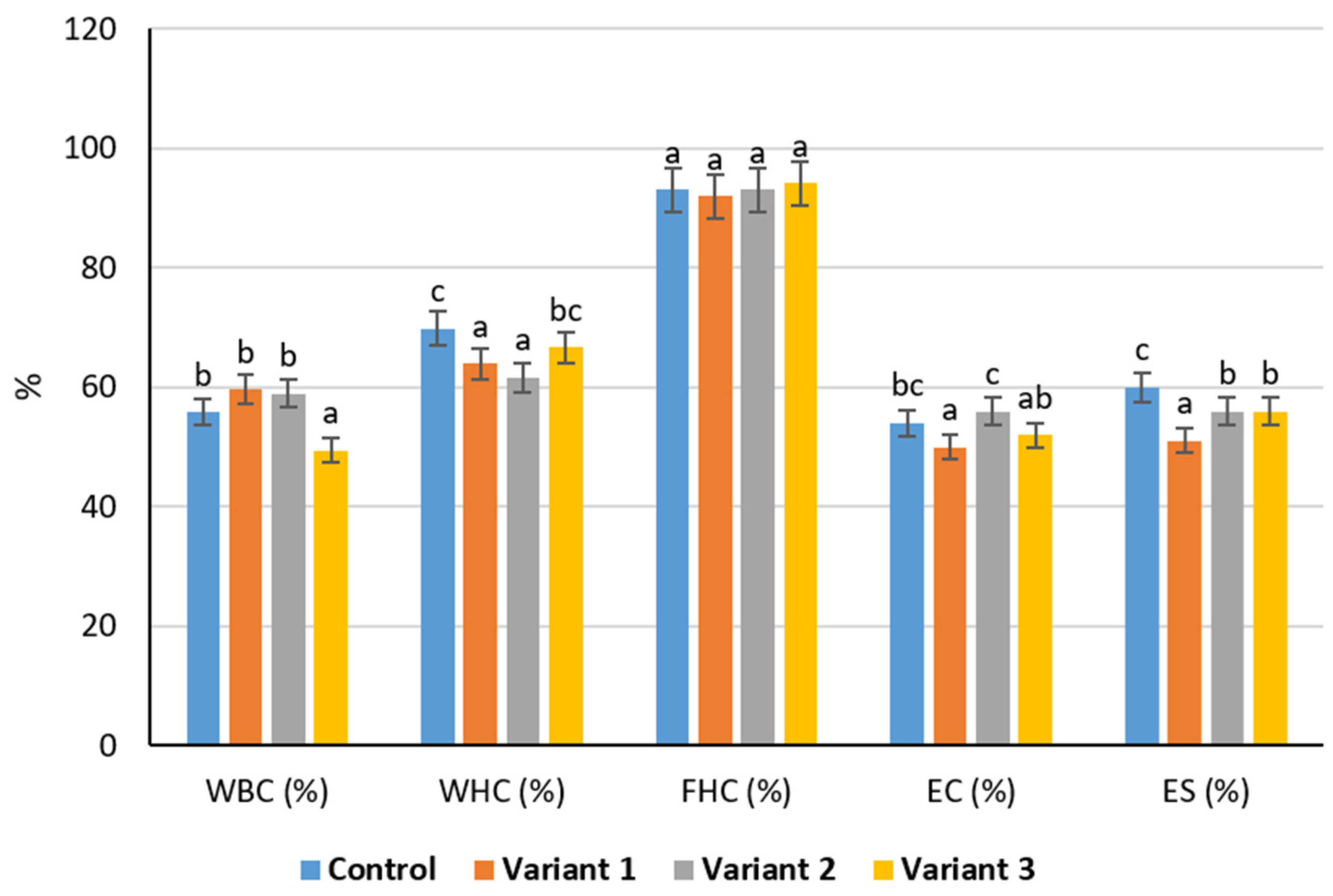
The functional and technological properties of the cutlets are presented in
Figure 1. Water-binding capacity (WBC) increased in the sample containing 5% additive (59.6%) compared with the control (55.8%) (
p < 0.05), while the lowest value was observed in the 15% sample (49.4%) (
p < 0.05). Water-holding capacity (WHC) decreased in the additive-containing samples, with the lowest value recorded in the 10% formulation (61.69%) (
p < 0.05). Fat-holding capacity (FHC) remained relatively stable across all samples, ranging from 92.0% to 94.1%. The emulsifying capacity (EC) varied from 50% to 56%, with the highest value observed in the 10% additive sample, while emulsion stability (ES) ranged from 51% to 60%, with the control sample showing the highest value. Overall, the results demonstrate that the incorporation of the complex functional ingredient modified the composition, physicochemical parameters, and functional properties of the cutlets.
3.4. Color Characteristics of Cutlets
The color characteristics of the cutlets were evaluated using the CIE Lab* color system (
Table 6). The incorporation of the complex functional ingredient influenced all color parameters. The lightness (L*) value decreased with the increasing additive level. The control sample exhibited the highest L* value (52.70), while the lowest value was observed in the 15% additive sample (47.47), which was significantly lower than the control (
p < 0.05). The redness (a*) values ranged from 7.13 to 8.20. The highest value was recorded in the 5% additive sample (8.20), while the lowest value was observed in the 10% formulation (7.13) (
p < 0.05). The yellowness (b*) values varied from 17.44 to 18.50. The highest value was observed in the 5% additive sample (18.50), which was significantly higher than that of the control (
p < 0.05). Overall, the results show that the addition of the complex functional ingredient affected the color parameters of the cutlets, leading to a decrease in lightness and variations in redness and yellowness.
3.5. Fatty Acid Composition of Cutlets
The fatty acid composition of cutlets is presented in
Table 7. The major fatty acids detected in all samples were palmitic (C16:0), stearic (C18:0), oleic (C18:1 n9c), and linoleic (C18:2 n6c). In the control sample, the lipid fraction was dominated by palmitic (25.45%), oleic (31.27%), and stearic acids (16.96%). The incorporation of the complex functional ingredient altered the fatty acid profile of the cutlets. The highest oleic acid content was observed in Variant 2, containing 5% additive (34.56%;
p < 0.05), while the highest linoleic acid content was recorded in Variant 4 (11.53%;
p < 0.05). α-Linolenic acid (C18:3 n3) was not detected in the control but was present in all experimental samples, increasing from 0.40% to 1.27% with increasing additive level (
p < 0.05).
The total saturated fatty acids ranged from 45.55% to 51.27%, while the total monounsaturated fatty acids varied from 41.11% to 42.36%. In contrast, the total polyunsaturated fatty acids increased from 7.03% in the control (Variant 1) to 13.34% in Variant 4 (p < 0.05). A similar increase was observed for total ω-6 fatty acids, reaching 12.07% in Variant 4 (p < 0.05), while total ω-3 fatty acids increased to 1.27% in the same formulation. The results show that the incorporation of the complex functional ingredient modified the fatty acid profile of the cutlets by increasing the proportion of polyunsaturated fatty acids.
3.6. Texture Profile Analysis (TPA) of Cutlets
The texture profile parameters of the cutlets are presented in
Table 8. The incorporation of the complex functional ingredient affected all measured textural characteristics. Hardness values ranged from 52.31 N to 56.72 N. The control sample exhibited the lowest hardness (52.31 N), while higher values were observed in all additive-containing samples. The highest hardness was recorded in Variant 3 (56.72 N;
p < 0.05), followed by Variant 4 formulation (55.41 N;
p < 0.05). Springiness increased from 0.72 mm in Variant 1 to 0.83 mm in Variant 3 (
p < 0.05). Variant 4 also showed higher springiness (0.79 mm) compared with the control sample.
Cohesiveness values increased from 0.62 in the control to 0.89 in Variant 3 (p < 0.05), while Variant 4 exhibited a lower value (0.78) compared with Variant 3. Gumminess and chewiness followed similar trends. Gumminess increased from 32.43 N in the control to 50.48 N in Variant 3 (p < 0.05), while chewiness increased from 23.35 N·mm to 41.90 N·mm (p < 0.05). Variant 4 showed lower values than Variant 3 but remained higher than the control. The results show that the addition of the complex functional ingredient influenced the textural properties of the cutlets, with the most pronounced changes observed in the 10% additive sample (Variant 3).
3.7. Sensory Evaluation of Cutlets
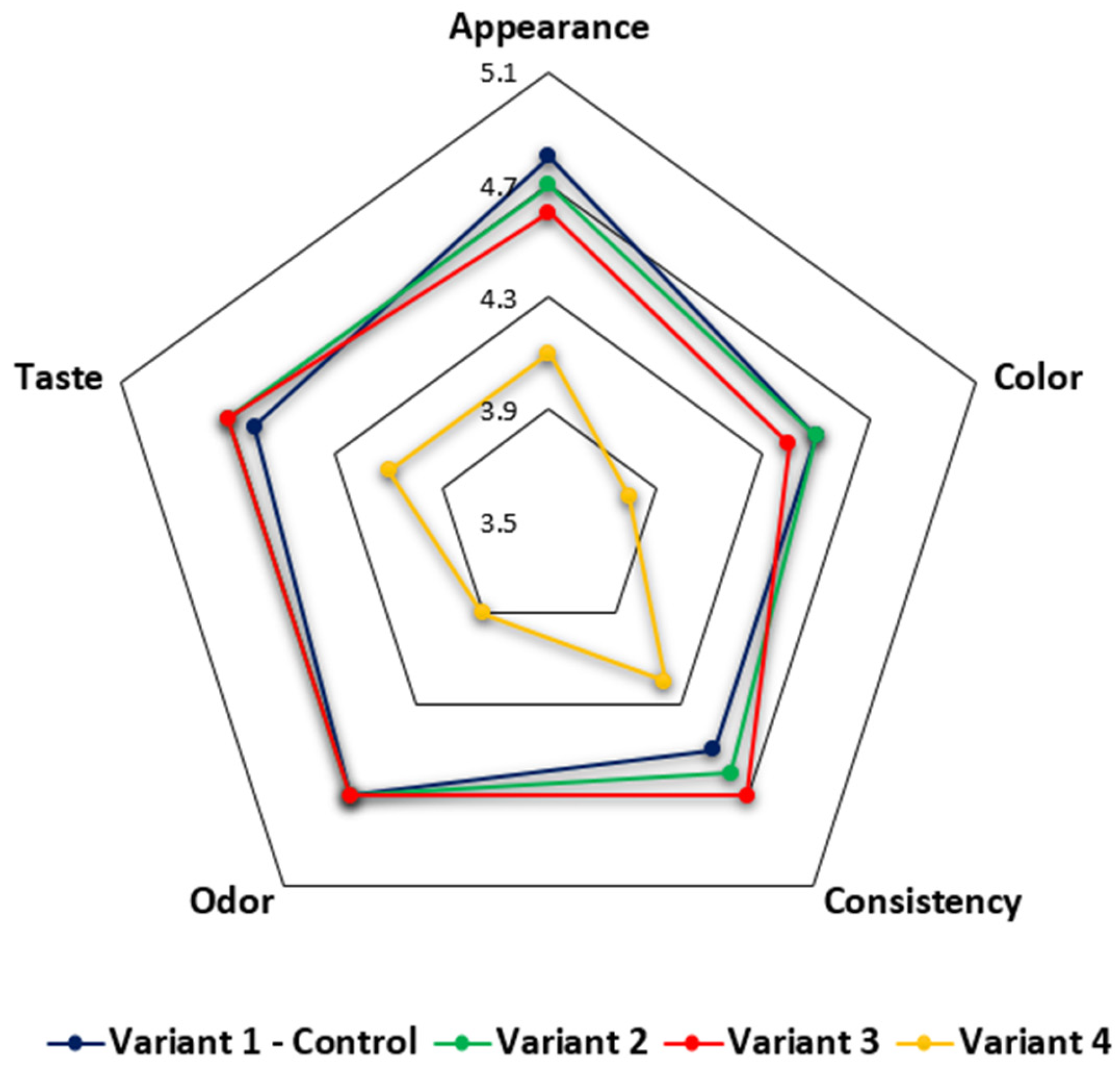
The sensory quality of the developed cutlets was assessed based on appearance, color, consistency, odor, taste, and total score. The results showed that the incorporation of the complex functional ingredient at 5% and 10% did not adversely affect the overall sensory acceptance of the product (
Figure 2). On the contrary, these samples demonstrated sensory characteristics comparable to those of the control sample.
The control sample received a total score of 23.1 points, while Variants 2 and 3 scored 23.2 and 23.1 points, respectively. Variant 2 was characterized by slightly improved consistency and taste, whereas Variant 3 showed the highest consistency score (4.7; p < 0.05). These results indicate that moderate inclusion of the complex functional ingredient maintained the desirable sensory properties of the cutlets.
In contrast, the sample containing 15% of the additive (Variant 4) showed a noticeable decrease in sensory quality. This formulation had significantly lower scores for appearance, color, consistency, odor, taste, and total score compared with the control (p < 0.05). The reduction in sensory acceptability at the highest additive level may be associated with the more pronounced influence of the offal and plant components on the visual appearance, aroma, and flavor profile of the product.
Overall, the sensory results indicate that the addition of the complex functional ingredient at levels of 5% and 10% is acceptable from an organoleptic standpoint, whereas the 15% level negatively affects consumer-relevant quality attributes.
3.8. Changes in Physicochemical, Oxidative, and Microbiological Properties of Cutlets During Refrigerated Storage
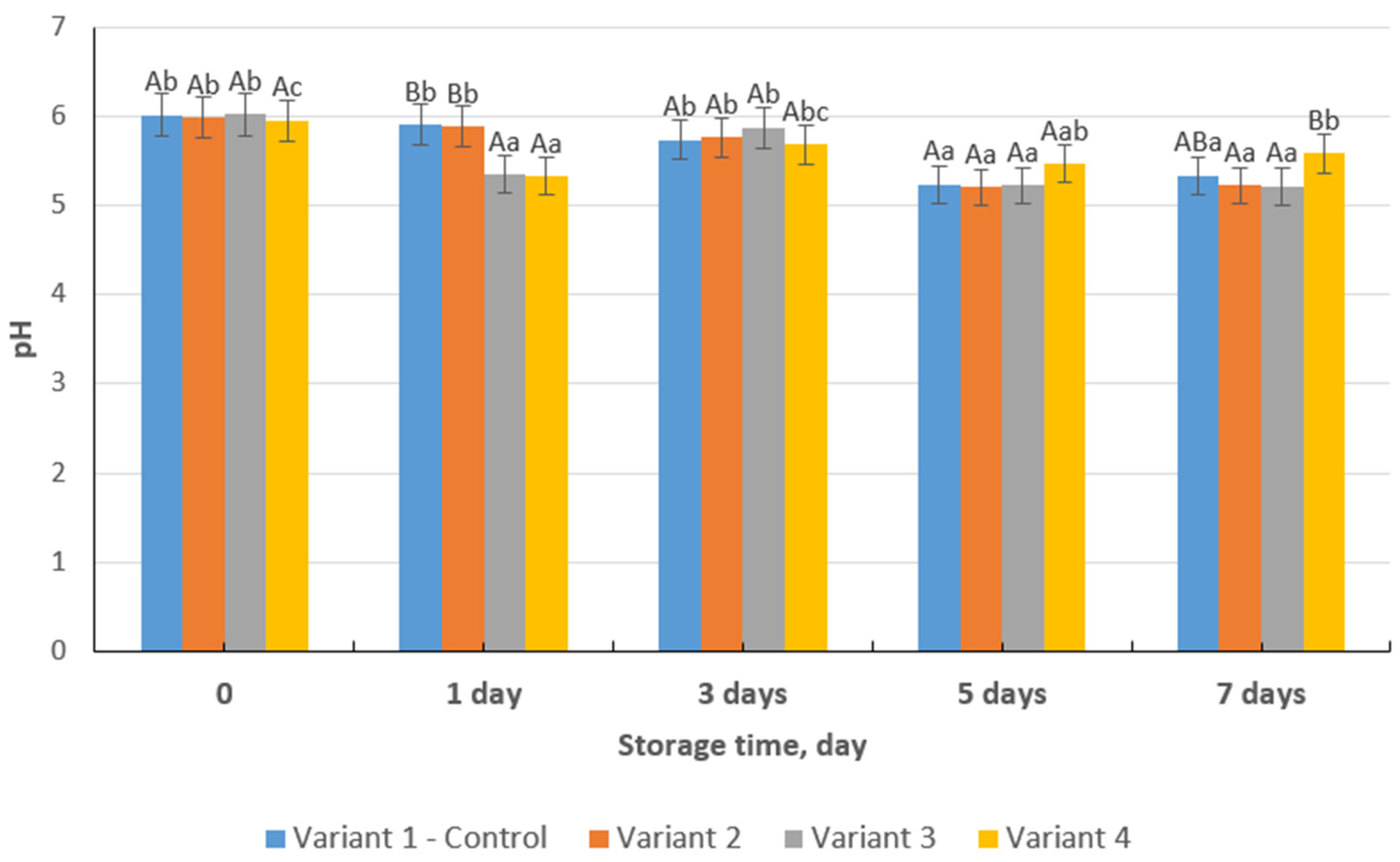
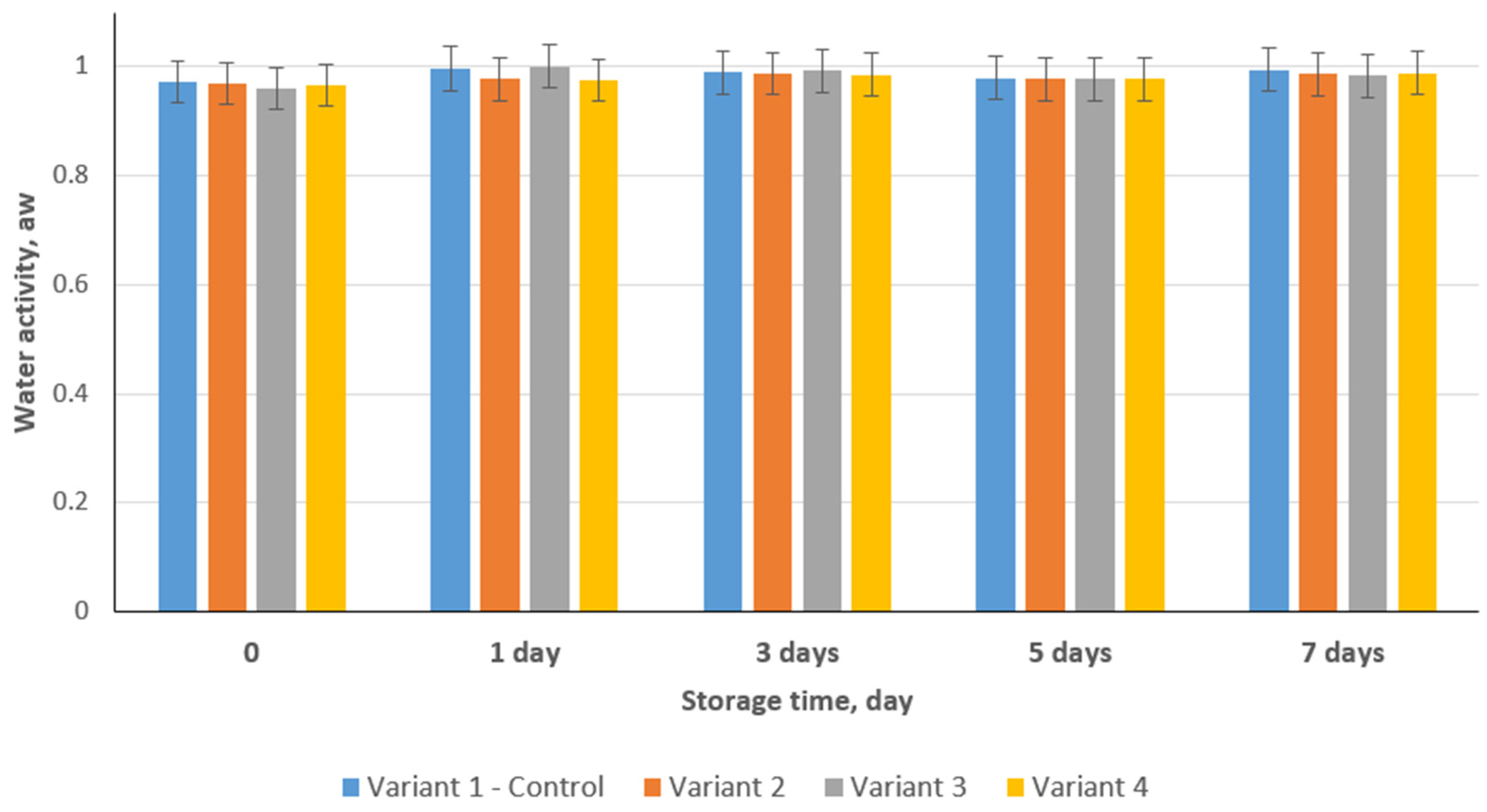
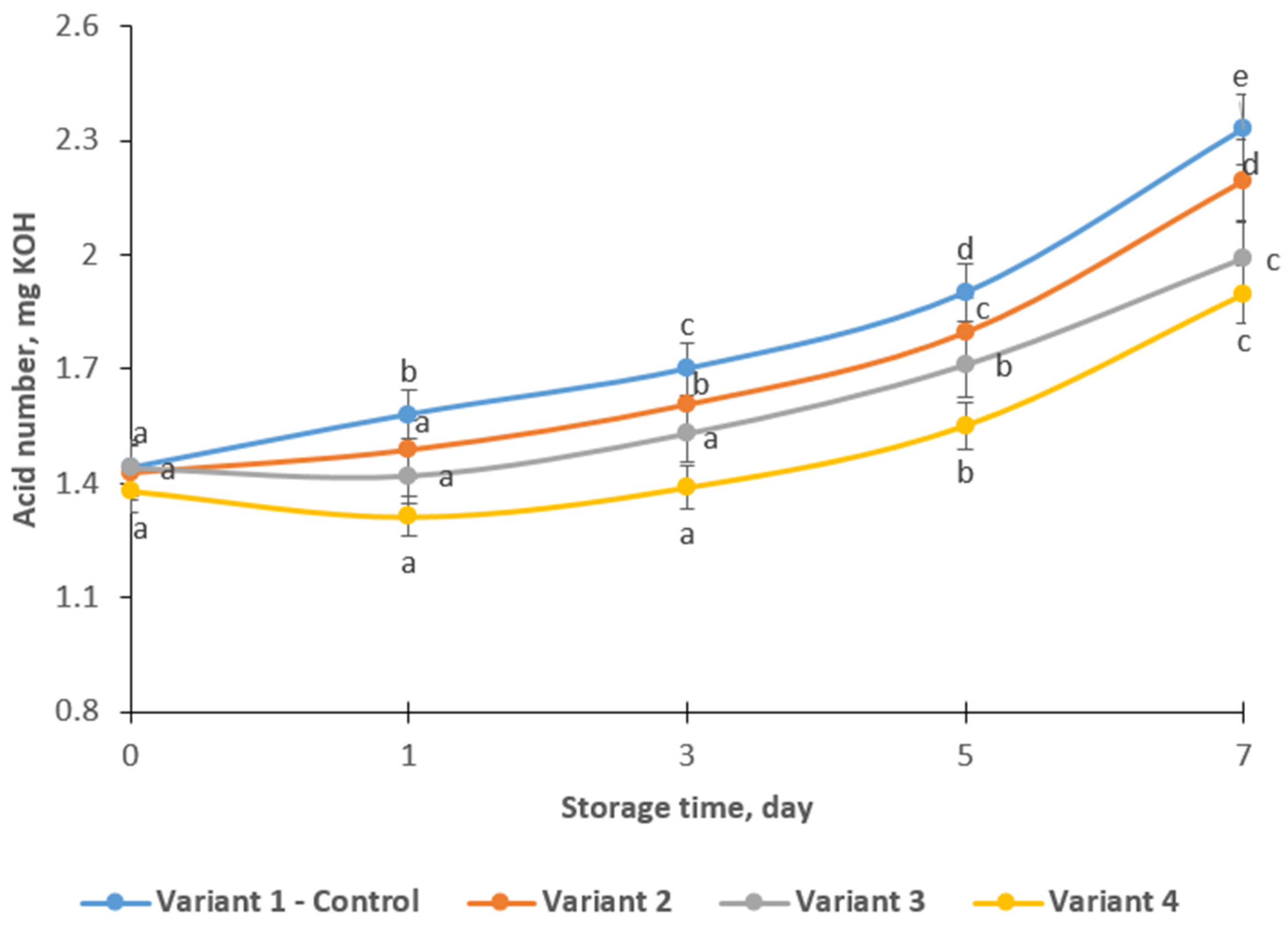
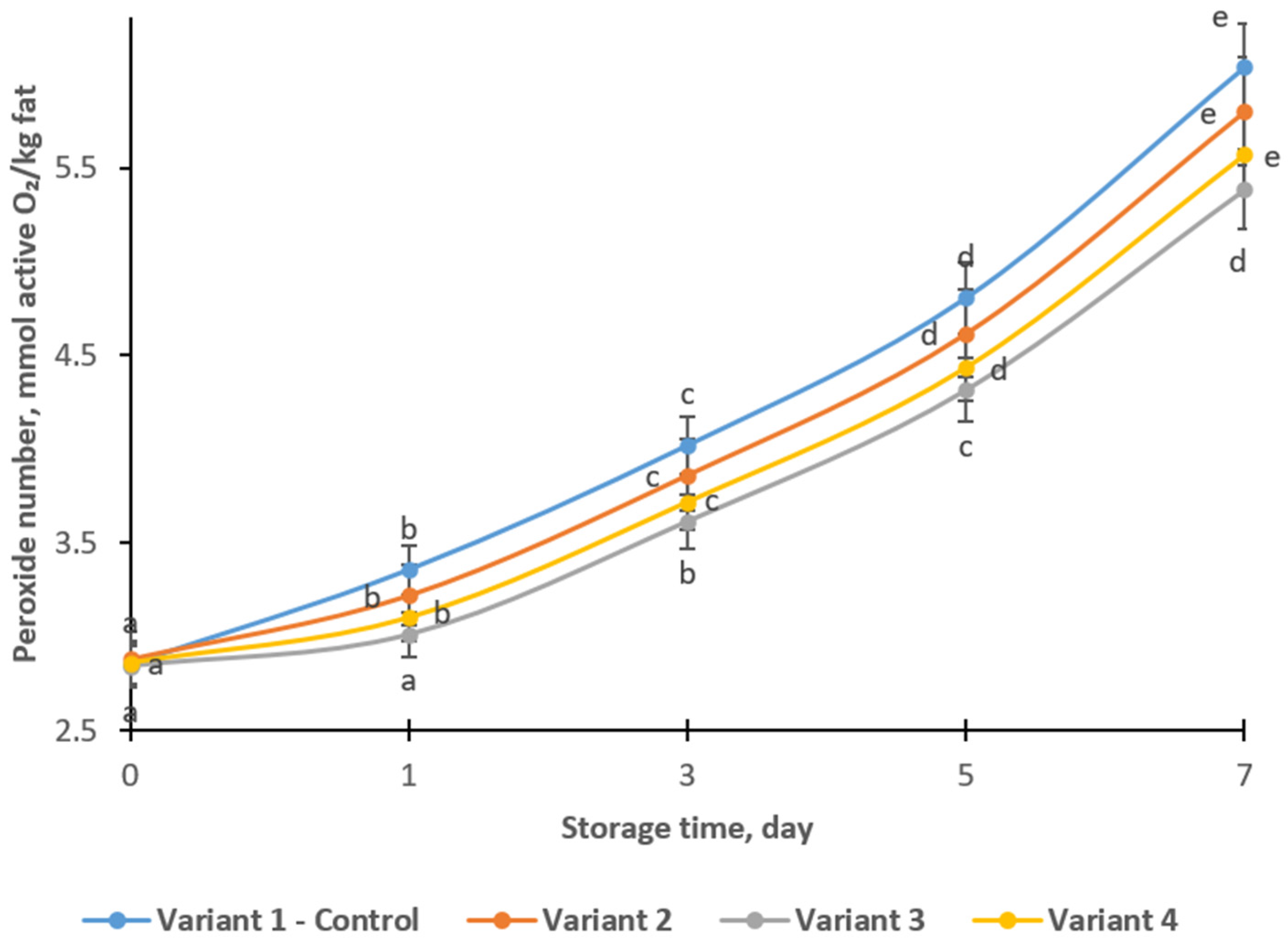
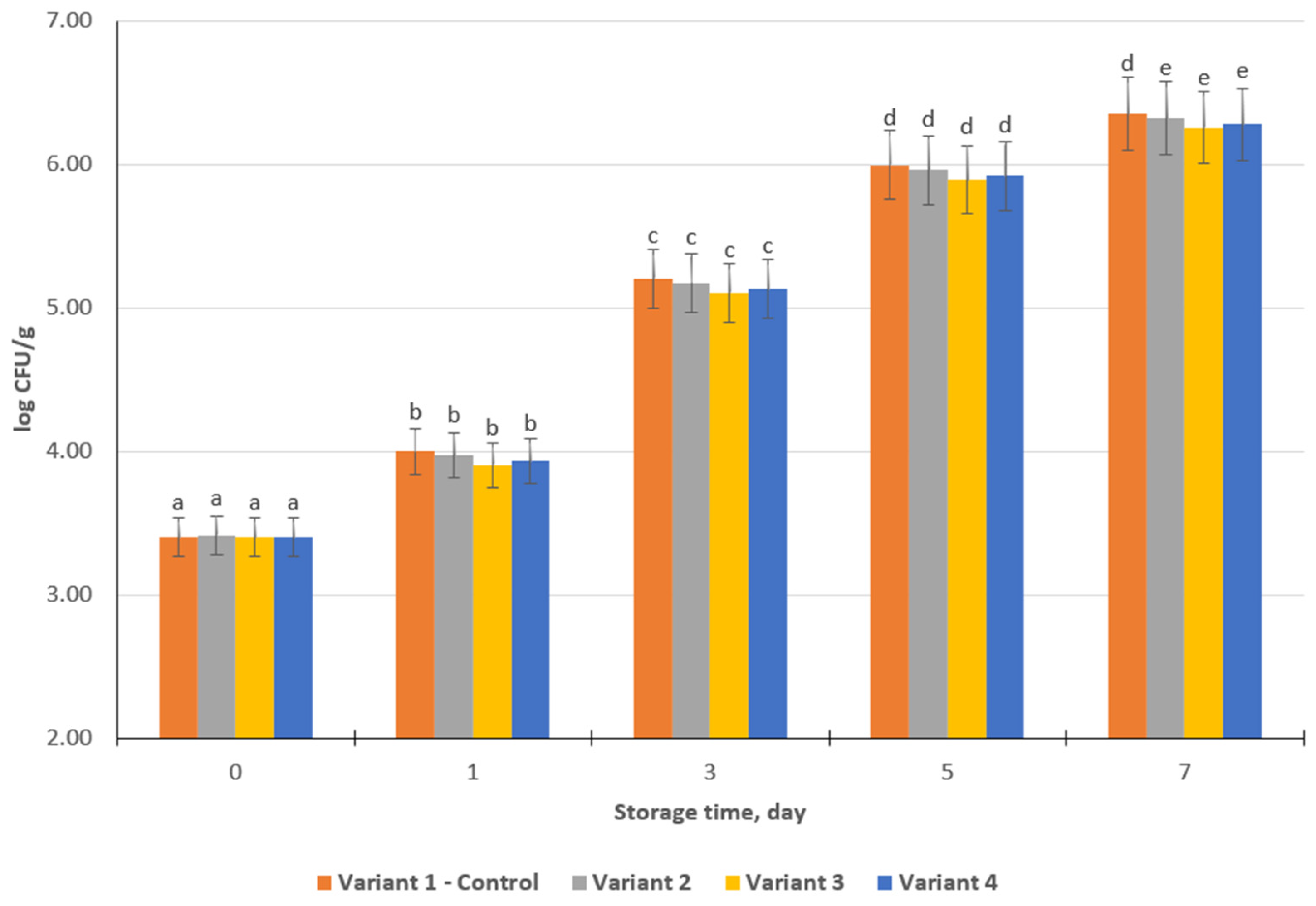
The changes in physicochemical, oxidative, and microbiological parameters of cutlets during refrigerated storage (+2 °C, 7 days) are presented in
Figure 3,
Figure 4,
Figure 5,
Figure 6 and
Figure 7. A general decrease in pH was observed in all samples during storage, reflecting ongoing biochemical and microbial processes. The control sample showed a decline from 5.91 to 5.24 by day 5, followed by a slight increase to 5.34 on day 7. In contrast, additive-containing samples maintained lower or more stable pH values, with Variant 3 showing significantly higher pH at the final stage (
p < 0.05), indicating differences in buffering capacity.
Water activity showed a slight decrease in all samples during the initial storage period, indicating redistribution and partial immobilization of water within the matrix. Although experimental samples tended to exhibit lower aw values than the control at the early stages of storage, these differences were not statistically significant (p ≥ 0.05). By days 5–7, the values became more similar, suggesting the establishment of moisture equilibrium within the system.
Lipid deterioration indicators increased progressively during storage. The acid number rose from 1.44 to 2.33 mg KOH/g in the control, whereas all additive-containing samples showed significantly lower values throughout storage (p < 0.05). A similar trend was observed for the peroxide value, which reached 6.04 mmol O2/kg in the control by day 7, while remaining significantly lower in experimental samples (p < 0.05), with the lowest values observed in the 10% variant.
Microbial growth followed the expected pattern for refrigerated meat products, with TVC increasing significantly during storage within each variant, from about 3.40 log CFU/g on day 0 to 6.26–6.35 log CFU/g on day 7 (p < 0.05). However, no statistically significant differences were observed between the cutlet variants at the same storage time (p ≥ 0.05). The results indicate that incorporation of the complex functional ingredient influenced physicochemical stability, slowed lipid deterioration, and slightly reduced microbial growth during storage.
4. Discussion
The present study evaluated the effect of a complex additive based on beef offal paste, whey, oilseed cake powder, and flax flour on the nutritional, technological, and storage properties of beef cutlets. The results demonstrate that the additive functioned as a multifunctional reformulation ingredient, influencing water and fat distribution, enhancing structural properties at moderate inclusion levels, improving the fatty acid profile, and moderating quality deterioration during refrigerated storage. At the same time, the observed effects were dose-dependent, and the highest level of nutritional enrichment did not coincide with optimal technological and sensory performance.
A key prerequisite for these effects was the functionality of the developed offal paste and the resulting complex functional ingredient. The paste exhibited high water-holding, emulsifying, and rheological properties, while the final additive retained sufficient WHC, EC, and ES after the incorporation of whey and plant components. These characteristics indicate the formation of a hydrated protein-rich matrix capable of stabilizing dispersed fat and immobilizing water within the system [
43,
44]. Such behavior is critical in comminuted meat systems, as it determines phase stability during mixing, heating, and storage. Similar effects have been reported for whey-containing and plant-enriched formulations, where protein–matrix interactions enhance water and fat retention. For example, Serdaroğlu (2006) [
45] demonstrated improved yield and moisture retention in meatballs with whey powder, while Samchenko and Merkucheva (2016) [
46] reported improved sensory and nutritional characteristics with oilseed ingredients.
The compositional and physicochemical changes in fresh cutlets confirm that the additive acted as a reformulation component rather than a filler. Increasing additive levels resulted in higher protein content and reduced fat content, accompanied by increased carbohydrate and ash levels due to plant-derived components [
47]. These shifts align with current approaches to improving the nutritional profile of meat products by reducing fat and increasing protein density [
48]. The observed decrease in pH and water activity indicates changes in the physicochemical environment of the system, which may influence protein functionality and water distribution.
Comparable improvements in lipid quality have been reported in studies involving flax-based ingredients. Bilek and Turhan (2009) [
49] and Turp (2016) [
50] observed increased levels of polyunsaturated fatty acids in meat products containing flax. In addition, studies on cutlets enriched with plant materials such as amaranth flour, pea flour, wheat sprouts, and corn flour have consistently shown that moderate inclusion levels provide the best balance between quality and acceptability [
51,
52,
53]. However, these studies primarily focused on basic quality parameters, whereas the present work demonstrates broader effects, including structural and storage-related changes.
The structural results further support this interpretation. Moderate inclusion levels (5–10%) improved the water-binding capacity and maintained high fat-holding capacity, indicating the effective retention of both aqueous and lipid phases. This behavior can be explained by interactions between myofibrillar proteins, offal-derived proteins, whey proteins, and plant-derived polysaccharides/fibers from flax flour and oilseed cake powder. During mixing and heating, hydrated proteins can interact with polysaccharide-rich plant particles through hydrogen bonding, electrostatic interactions, and physical entrapment, forming a more integrated protein–polysaccharide matrix [
54]. Such a matrix may increase the number of water-binding sites, reduce fluid mobility, and improve the retention of water and fat during heating. The TPA results confirm this mechanism, as the 10% formulation exhibited the highest hardness, cohesiveness, gumminess, and chewiness, indicating the formation of a denser and more stable heat-induced network. At this level, plant fibers likely acted as structural fillers and water-binding components, while whey proteins contributed to protein–protein and protein–polysaccharide interactions, thereby reinforcing the cooked matrix [
55]. In contrast, excessive fiber, offal particles, and non-meat solids at 15% may have competed with myofibrillar proteins for water, limited protein hydration, and partially disrupted the formation of a continuous protein network [
56]. This explains why the 15% formulation remained structurally firm but showed lower sensory acceptability. Changes in color parameters, especially a decrease in L*, further confirm the influence of offal pigments and plant solids on the appearance of the cooked matrix. Similar observations were reported by Kotecka-Majchrzak et al. (2021) [
57] for hemp cake meatballs and by Bilek and Turhan (2009) [
49] for flax-containing meat products.
The fatty acid profile represents the most significant nutritional outcome of the study. The addition of the developed ingredient led to a decrease in the relative proportion of saturated fatty acids and a marked increase in polyunsaturated fatty acids, including both ω-6 and ω-3 fractions. The progressive increase in linoleic and α-linolenic acids reflects the contribution of flax and oilseed components. The highest enrichment was observed in the 15% formulation, which showed the maximum PUFA and ω-3 levels. These results are consistent with previous studies demonstrating the positive effect of flax-based ingredients on lipid composition [
49,
50]. However, the present study shows that nutritional improvements must be evaluated alongside technological and sensory characteristics, as excessive inclusion levels may compromise overall product quality.
The storage study indicates that the additive contributed to improved stability, although its effect was moderate. All samples exhibited progressive changes in pH, water activity, acid number, peroxide value, and microbial load during storage, reflecting ongoing biochemical and microbiological processes. However, additive-containing samples consistently showed lower water activity, reduced lipid oxidation, and slightly lower microbial counts compared with the control, particularly at the 10% inclusion level. These findings suggest that the additive influenced storage stability by modifying the physical structure of the system and limiting the availability of free water and reactive lipid fractions. The slightly reduced oxidative stability at the 15% level compared with the 10% formulation may be explained by the higher content of oxidation-prone polyunsaturated fatty acids [
58].
Microbial safety is a critical issue when edible beef offal is used, because organs such as tripe, lungs, liver, and heart may be more susceptible to microbial contamination than skeletal muscle due to their anatomical structure, high moisture content, and handling during slaughter and processing [
59]. In this study, this risk was minimized by washing the raw materials, treating tripe in 1% acetic acid solution under ultrasound, applying preliminary thermal treatment to the offal before paste preparation, and cooking the final cutlets to an internal temperature of 72–75 °C. TVC increased in all samples during refrigerated storage, indicating that microbial growth was not fully prevented. Although additive-containing samples tended to show slightly lower TVC values, differences between variants were not statistically significant. Therefore, the developed complex functional ingredient should not be considered a strong antimicrobial agent; rather, it may indirectly contribute to microbial stability by modifying pH, water distribution, and product structure. Future studies should include pathogen-specific tests, including
Salmonella spp.,
Listeria monocytogenes, and
Escherichia coli, under extended storage conditions.
Similar trends have been reported in studies using plant-derived ingredients and natural antioxidants in meat systems. Umaraw et al. (2024) [
60], Mostafa and El Azab (2022) [
61], and Kotecka-Majchrzak et al. (2021) [
57] demonstrated improved oxidative and microbiological stability in meat products during refrigerated storage. However, unlike these studies, which focused mainly on specific antioxidant components, the present work demonstrates that a complex functional ingredient can simultaneously influence nutritional, structural, and storage-related properties.
From a practical perspective, the developed ingredient may also contribute to resource efficiency by supporting the value-added use of edible beef offal and plant-derived secondary raw materials. In the present formulations, the ingredient was incorporated at 5–15%, corresponding to approximately 2.9–8.7% edible offal paste in the final cutlets, because the ingredient contained 58% offal paste. Therefore, this approach should be considered a partial reformulation and valorization of secondary raw materials, rather than a replacement of the main meat fraction. Its economic benefit may result from the lower cost of edible offal and plant-derived ingredients compared with lean beef, although the final cost advantage will depend on regional raw material prices, processing costs, and market positioning. At the same time, the use of edible offal requires transparent ingredient declaration and appropriate product naming. If offal-derived ingredients are used without proper labeling, this may create a risk of misleading consumers. When properly declared, however, this technology represents a resource-efficient approach to developing value-added meat products.
Overall, the results confirm that the developed complex functional ingredient can be effectively used in meat product formulations, with a 10% inclusion level providing the best balance between nutritional improvement, technological performance, storage stability, and sensory acceptability.