1. Introduction
To maintain the high-quality sustainable development of human civilization, promoting the low-carbon and zero-carbon transition of the global energy system and achieving the substitution of green renewable energy has become a global consensus. Biomass energy, characterized by its wide availability, abundant reserves, and rapid regeneration, is considered one of the ideal alternative energy sources. As the main component of lignocellulosic biomass, cellulose is the most widely distributed and abundant biomass resource in nature [
1,
2]. Approximately 40 to 76 billion tons of cellulose are produced annually through photosynthesis worldwide, which is equivalent to 1.3 to 2.4 times the current global energy consumption; however, 89% of the cellulose remain underutilized, indicating a significant potential for energy development [
3,
4,
5].
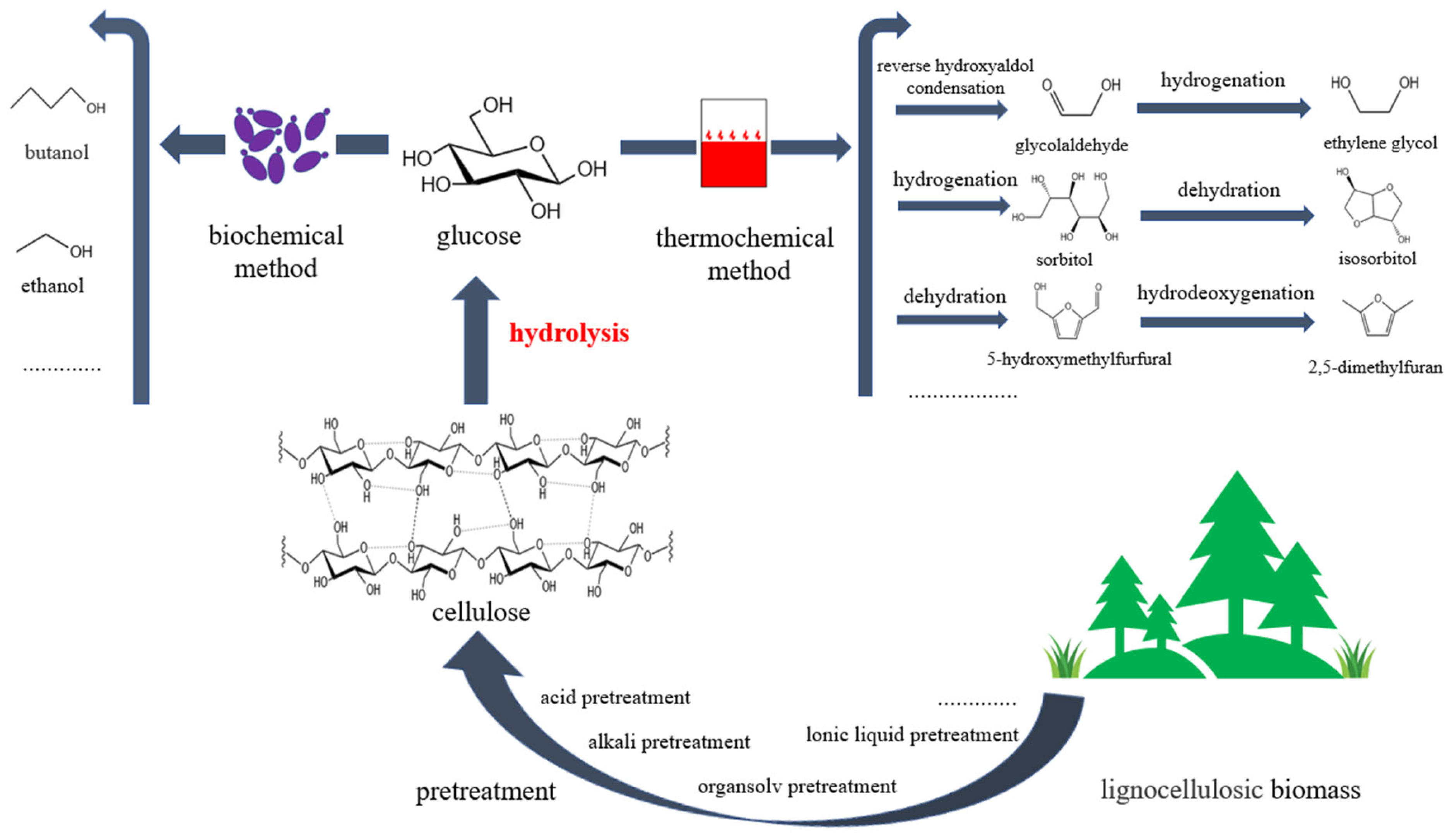
Converting cellulose into high-energy-density liquid biofuels through biochemical or thermochemical methods can effectively enhance the quality of the energy and facilitate the high-value utilization of resources. The technological pathway [
6,
7,
8] for obtaining high-quality liquid biofuels from cellulose, as illustrated in
Figure 1, involves three main steps: the pretreatment of lignocellulosic biomass, the hydrolysis of cellulose, and the biochemical/thermochemical conversion of glucose.
Firstly, the lignocellulosic biomass would be subjected to a pretreatment process to achieve the separation and classified utilization of cellulose and lignin. Given that cellulose consists of D-glucose units linked by β-1-4 glycosidic bonds, and the presence of numerous intermolecular and intramolecular hydrogen bonds results in a highly crystalline and densely packed structure [
9], direct biochemical or thermochemical treatment faces challenges such as poor bioavailability and interphase mass transfer difficulties, which are not conducive to the improvement of cellulose conversion rate and overall treatment efficiency, necessitating the hydrolysis of cellulose into its basic unit, glucose.
As a platform compound, glucose can be converted into alcohols as ethanol and butanol through biochemical methods, or into liquid biofuels as ethylene glycol, isosorbide, and 5-hydroxymethylfurfural (5-HMF) through thermochemical methods [
10,
11,
12]. The structural characteristics of cellulose make hydrolysis a crucial technical step in preparation of high-quality liquid biofuels from it.
Cellulose hydrolysis can be categorized into two distinct methods, namely enzyme-catalysis and acid-catalysis [
9,
13,
14].
Cellulase enzymatic hydrolysis offers advantages such as mild processing conditions, low energy consumption, and minimal use of chemical additives. However, its drawbacks include prolonged processing time, low stability of cellulase as a protein during treatment, poor tolerance to high temperatures and extreme pH levels, high production costs, and difficulties in large-scale industrial application. Organic acid catalysts used in acid hydrolysis exhibit weak acidity, resulting in poor catalytic capability for cellulose hydrolysis. Solid acid catalysts suffer from limitations such as harsh reaction conditions, high energy consumption, and challenges in mixing and separation with solid hydrolysis residues. In contrast, homogeneous inorganic acid catalysts demonstrate strong acidity and high efficiency in catalyzing cellulose hydrolysis, making them the most promising for large-scale industrial applications. Nevertheless, they are associated with poor environmental performance and operational safety concerns. Compared to enzymatic hydrolysis, acid hydrolysis shows greater potential for large-scale industrial implementation. Among acid catalysts, homogeneous inorganic acid catalysts are more efficient in catalyzing cellulose hydrolysis than organic and solid acids but face issues related to environmental friendliness and operational safety; therefore, it is crucial to find acid catalysts that balance environmental friendliness and performance to develop energy-efficient and high-efficiency cellulose hydrolysis technologies.
The action of discharge plasma on water can generate a large amount of H
3O
+, converting the water into an acidic solution. Since H
3O
+ is produced by the action of discharge plasma, it is referred to as plasma acid [
15]. Research by Wang and Robinson [
15,
16] indicates that the pH value of plasma acid gradually increases over time until it neutralizes, demonstrating the temporality of plasma acid. Theoretically, the temporality of plasma acid can make it an excellent environmentally friendly homogeneous acid catalyst and provide a clean and safe acidic environment for cellulose hydrolysis.
Huang et al. achieved a 40.95% yield of reducing sugars by hydrolyzing microcrystalline cellulose using plasma acid prepared via dielectric barrier discharge [
17]. Yuan et al. prepared plasma acid with a pH of 1.42 for cellulose hydrolysis, resulting in a glucose yield of 46.05% [
15]. The research practices involving plasma acid demonstrate its potential as a clean and efficient homogeneous acid catalyst and have explored a new feasible approach to address the current challenges in the field of cellulose hydrolysis technology.
However, current research directly applying plasma acid to cellulose hydrolysis is limited, and the few existing studies primarily employ a two-step process of acid preparation followed by cellulose hydrolysis. Specifically, plasma acid is first prepared in a discharge apparatus, and then cellulose hydrolysis is carried out in a thermodynamic reactor. Detailed analyses of the principles and apparatus characteristics for plasma acid preparation and cellulose hydrolysis indicate that these two processes can be conducted simultaneously. Compared to the two-step acid preparation and cellulose hydrolysis approach, a simultaneous acid preparation and cellulose hydrolysis approach theoretically offers simpler operation, better utilization of discharge energy, and saves time, thereby reducing the energy consumption for cellulose hydrolysis and improving operational efficiency; more importantly, the electric field can be used to enhance the chemical reaction of cellulose hydrolysis [
18,
19,
20], thereby increasing the hydrolysis conversion rate.
In order to verify the feasibility of the aforementioned technical solution, a reactor that allows for the simultaneous preparation of plasma acid and hydrolysis of cellulose was designed, and experimental research on the plasma acid-catalyzed hydrolysis of cellulose was conducted. The effects of key operational parameters such as discharge voltage, discharge gap, and reaction time on cellulose hydrolysis were systematically explored, and then a comparative evaluation of the simultaneous and two-step techniques for plasma acid-catalyzed cellulose hydrolysis was followed. It is expected that the research will provide a more efficient and environmentally friendly solution for the energy use of cellulose.
2. Experimental
2.1. Construction of Experimental System
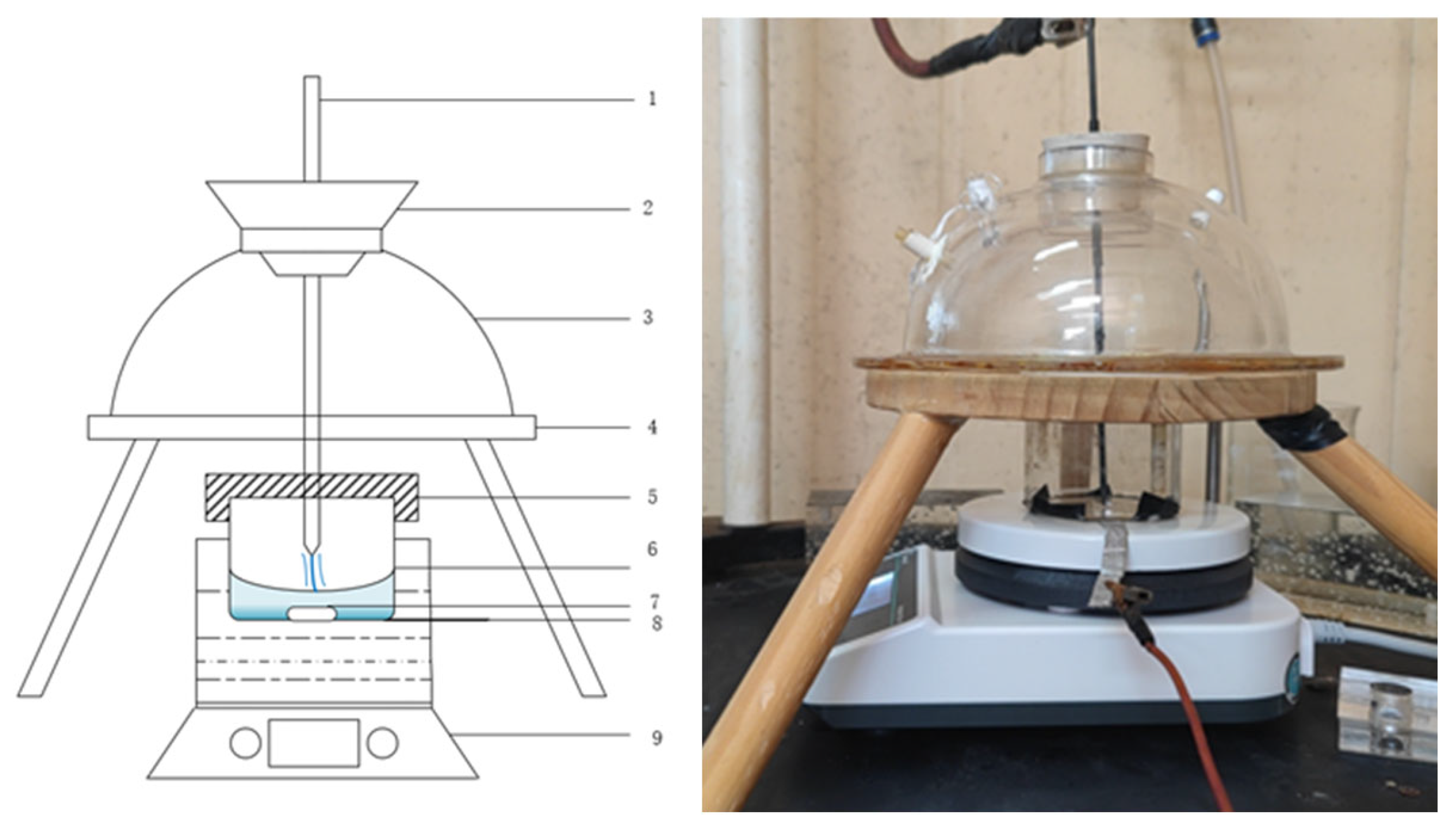
Based on the principles of dielectric barrier discharge and the chemical reaction of cellulose hydrolysis, a device was designed and constructed as shown in
Figure 2 for the preparation of plasma acid and cellulose hydrolysis. The device primarily consists of high-voltage electrode (1), silicone stopper (2), quartz insulator (3), insulating support frame (4), silicone cover (5), quartz cup (6), rotor (7), ground electrode (8), and digital heating magnetic stirrer (9).
The high-voltage electrode (1), the bottom of the quartz cup (6), and the ground electrode (8), which is closely attached to the outer bottom of the quartz cup, constitute a needle–plate dielectric barrier discharge structure. When the electric field strength between the high-voltage electrode and the liquid surface exceeds the critical breakdown field strength of the gas, the gas gap is broken down, producing discharge plasma, which interacts with the deionized water and generates plasma acid, and the strong electric field can also intensify the cellulose hydrolysis reaction. Digital heating magnetic stirrer is used to control the reaction temperature and increase the solid–liquid mass transfer between cellulose and deionized water through stirring. Silicone cover is used to seal the quartz cup and prevent the evaporation of deionized water during plasma acid preparation and cellulose hydrolysis.
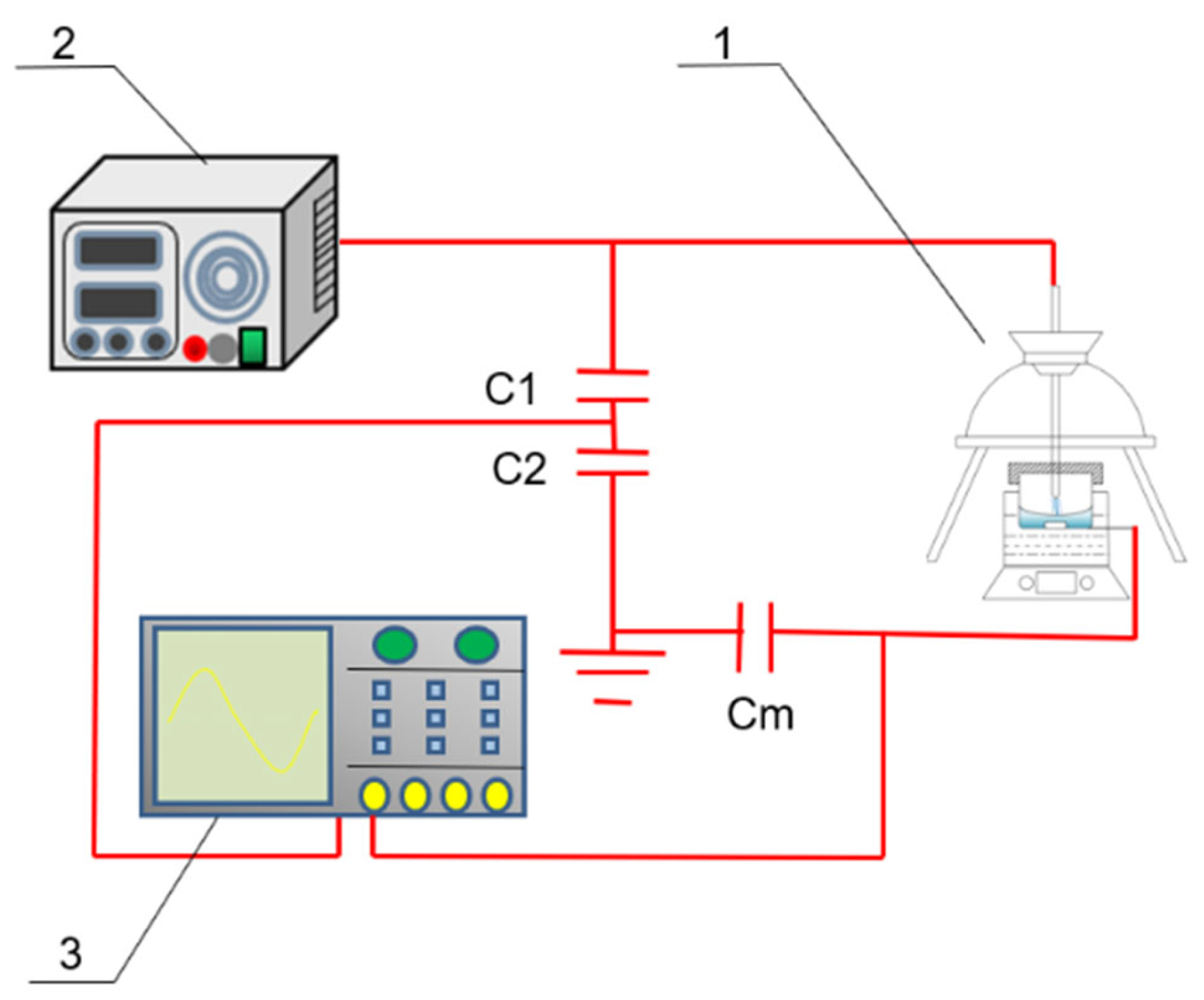
The device is connected to the circuit, forming the simultaneous acid preparation and cellulose hydrolysis experimental system as shown in
Figure 3. In the system, the high-voltage AC power supply (2) provides the alternating high voltage for dielectric barrier discharge; the oscilloscope (3), measurement capacitor (Cm), and capacitors (C1 and C2) form a voltage divider circuit that constitutes the DBD measurement circuit based on the Lissajous figure method.
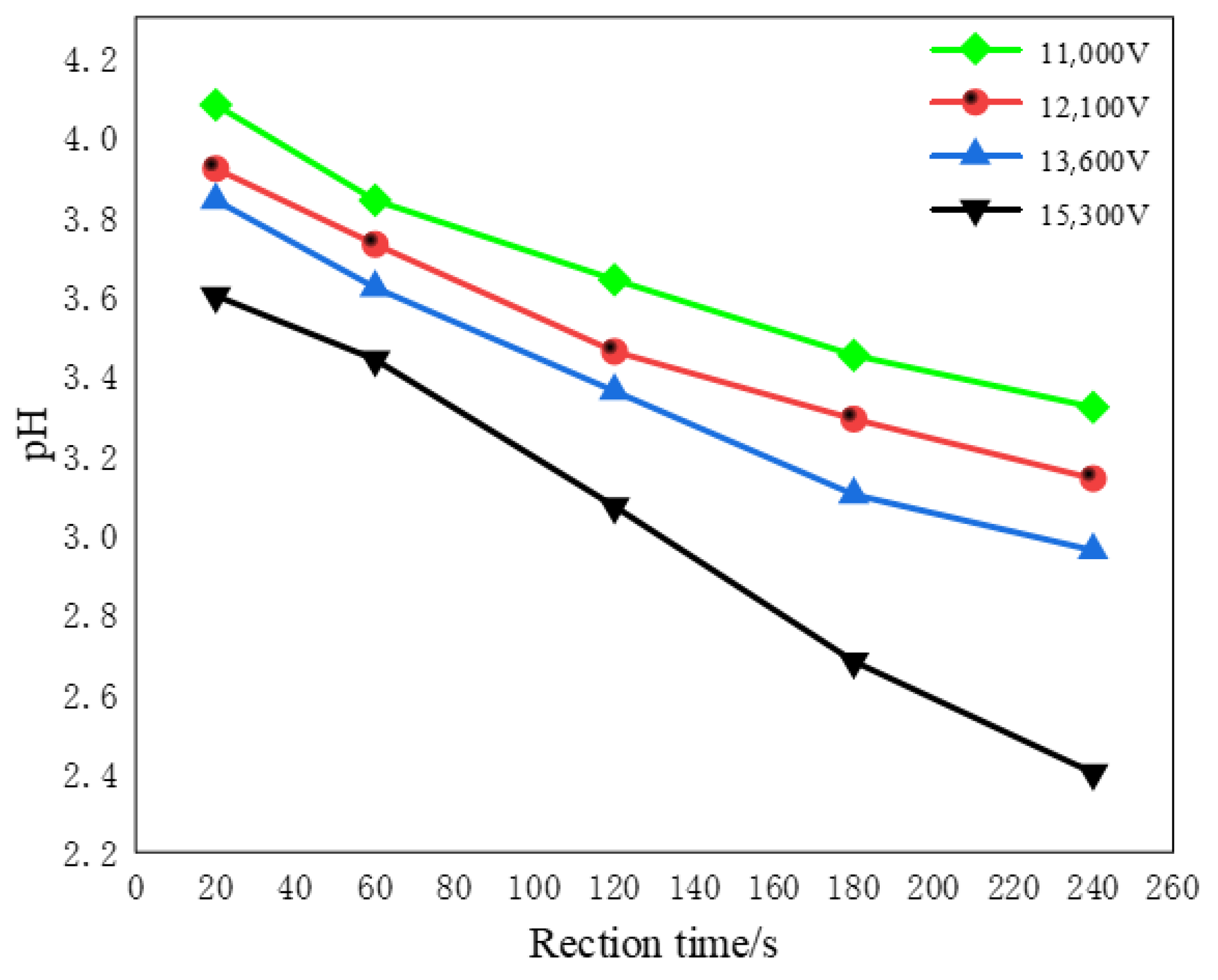
With air as the discharge gas, a discharge gap of 8 mm, a power frequency of 8.0 kHz, and 20 mL of deionized water, the variation in the pH value of plasma acid over reaction time at different operating voltages is shown in
Figure 4. As seen in
Figure 4, the pH value of the plasma acid decreases monotonically with increasing operating voltage and reaction time. Thus, by controlling the reaction time and operating voltage, plasma acid with the desired pH value can be obtained for the experiments.
A number of studies [
16] have demonstrated that the discharge in an air–water two-phase system produces a considerable quantity of reactive oxygen species and a relatively small amount of nitric oxide, which then react with water to give deionized water acidic characteristics; the specific processes are as follows:
The energy required to break the
bond (first ionization energy of 15.8 eV) is higher than that of
(12.2 eV), which makes reaction (1) far more likely to occur than reaction (5), and the reaction rate of Equation (6) is relatively low [
21,
22]; therefore, during air-water two phase discharge, reactions (1)–(4) dominate and are the primary sources of the acidity of plasma acid. Additionally, because
is unstable and easily decomposes into water and oxygen, it cannot remain stable for long periods; hence, plasma acid generated in an air environment has a limited lifespan.
2.2. Materials
The microcrystalline cellulose used in the experiments was purchased from Shanghai Aladdin Biochemical Technology Co., Ltd. (Shanghai, China), with a purity of 99%. The degree of polymerization of this cellulose ranges between 200 and 400, and it exhibits a relatively high crystallinity. Deionized water is self-made in the laboratory. The filter paper was purchased from Situofan Biotechnology Co., Ltd. (Hangzhou, China), with the type of 202 and diameter of 90 mm (GB/T 1914-2017).
2.3. Experimental Program and Procedures
According to the principles of the chemical reaction of cellulose hydrolysis and research findings [
23,
24], the factors influencing plasma acid-catalyzed cellulose hydrolysis mainly include reaction time, temperature, solid–liquid ratio, and pH value, while the mechanism of plasma acid generation and the electric field-enhanced chemical reaction [
15,
16,
17,
18,
19,
20,
25] indicate that working voltage and discharge gap are the most crucial parameters affecting chemical reaction enhancement and the pH value of plasma acid. In the practical operation of the simultaneous plasma acid preparation and cellulose hydrolysis, the continuous input of electric energy will cause the temperature of the device to rise continuously due to the discharge thermal effect until thermal equilibrium is reached; on the other hand, the increase in temperature and the electro-hydro dynamics (EHD) effect will cause the deionized water to evaporate (to ensure the device operates at atmospheric pressure, it cannot be completely sealed); therefore, reaction temperature and solid–liquid ratio are dependent variables determined by environmental temperature, structural parameters of the device, energy input parameters, and reaction time, rather than independent variables. Hence, working voltage, discharge gap, and reaction time were selected as the influencing factors for the simultaneous plasma acid preparation and cellulose hydrolysis, and the influence of each parameter on cellulose hydrolysis was systematically explored through single-factor experiments.
Based on single-factor experimental results of the simultaneous acid preparation and cellulose hydrolysis, optimal operating parameters were selected. Using the pH value of the plasma acid obtained under optimal operating parameters and the thermal equilibrium temperature of the device, experiments were conducted for two-step acid preparation and cellulose hydrolysis. The evaluation of the two techniques for plasma acid-catalyzed cellulose hydrolysis was performed using cellulose conversion rate, average cellulose conversion rate, and average specific energy consumption as evaluation indicators.
For the single-factor experimental study of the simultaneous plasma acid preparation and cellulose hydrolysis, 90 mL of deionized water, 0.2 g of microcrystalline cellulose, and the stirrer were placed into the quartz cup, which was then sealed with the silicone cover. The high-voltage electrode was inserted into the silicone cover quartz cup through the silicone cover, and the discharge gap was adjusted. The digital heating magnetic stirrer was turned on with the heating function turned off, and the target rotation speed was set to 500 r/min. The high-voltage AC power supply was switched on, the working voltage of the device was monitored using the oscilloscope, the discharge frequency was set to the resonant frequency of 8.0 kHz, and the input voltage was adjusted to the set value to initiate discharge. An infrared thermometer was used to measure the temperature of the device, a pH meter was used to measure the solution’s pH value, and the oscilloscope was used to measure the Q-V Lissajous figure of the discharge process to calculate the discharge power of the device. After the experiment, the power supply and digital heating magnetic stirrer were turned off, the remaining liquid–solid mixture in the quartz cup was filtered, the volume of plasma acid was recorded, and the filter paper and residue were dried in an oven at 105 °C and weighed.
For the experimental study of two-step acid preparation and cellulose hydrolysis, firstly, 90 mL of plasma acid with a predetermined pH value was prepared, and the high-voltage electrode was replaced with a temperature probe inserted into the solution. The digital heating magnetic stirrer was turned on, the temperature was set, and the solution was heated to the set temperature. Then, 0.2 g of microcrystalline cellulose and a stirrer were placed into the quartz cup, and the target rotation speed of the digital heating magnetic stirrer was set to 500 r/min. After the experiment, the digital heating magnetic stirrer was turned off, the remaining liquid–solid mixture in the quartz cup was filtered, and the filter paper and residue were dried in an oven at 105 °C and weighed.
2.4. Evaluation Indicators for Cellulose Hydrolysis
2.4.1. Cellulose Conversion Rate
Cellulose conversion rate (Y) could be calculated according to Equation (9):
: mass of cellulose before hydrolysis, g; : mass of the solid residue from cellulose hydrolysis after drying, g.
2.4.2. Average Cellulose Hydrolysis Reaction Rate
Average cellulose hydrolysis reaction rate (G) could be calculated according to Equation (10):
M: mass of hydrolyzed cellulose, g; t: cellulose Hydrolysis reaction time, s.
2.4.3. Average Specific Energy Consumption
The energy required to hydrolyze a unit mass of cellulose is defined as the average specific energy consumption (B). The average specific energy consumption for the two technical approaches of plasma acid-catalyzed cellulose hydrolysis can be calculated using Equations (11) and (14), respectively.
- (1)
Simultaneous acid preparation and cellulose hydrolysis
Given that the heating function of the digital heating magnetic stirrer is turned off and the energy consumed by the rotating stirrer is minimal, the energy consumption of the digital heating magnetic stirrer could be neglected, and then the average specific energy consumption (B) of the device could be calculated according to Equation (11):
: the discharge power of the device, W;
: operating time of the device, s; M: the mass of hydrolyzed cellulose, g;
can be calculated using Equation (12).
: the discharge power of the device, W; k: the voltage division ratio of the voltage divider circuit; f: the frequency of the high-voltage AC power supply, Hz; Cm: the capacitance value of the measurement capacitor, F; S: the area integral of the Q-V Lissajous figure.
- (2)
Two-step acid preparation and cellulose hydrolysis
The energy consumption for the two-step acid preparation and cellulose hydrolysis technical approach can be divided into acid preparation energy consumption and cellulose hydrolysis energy consumption. Assuming good heat preservation performance of the device and negligible heat loss during the cellulose pyrolysis process, the cellulose hydrolysis energy consumption mainly involves the heat absorbed by the solution from room temperature to the set temperature. The energy consumption of the device during acid preparation could be calculated according to Equation (12), and the energy consumption
Q of cellulose hydrolysis could be calculated according to Equation (13):
Q: the energy consumption of cellulose hydrolysis, J; c: the specific heat capacity of water, J/(g·°C); m: the mass of plasma acid (deionized water) used for cellulose hydrolysis, g; : temperature difference as the solution is heated from room temperature to the set temperature, °C.
The average specific energy consumption B of the two-step acid preparation and cellulose hydrolysis technical approach then could be calculated according to Equation (14):
: the discharge power of the device during plasma acid preparation, W; : time taken for plasma acid preparation, s; M: the mass of hydrolyzed cellulose, g.
3. Results and Discussion
3.1. Effect of Operating Parameters on Cellulose Conversion Rate Under Simultaneous Acid Preparation and Cellulose Hydrolysis Condition
3.1.1. Working Voltage
Under the specific experimental conditions of a fixed discharge gap of 5 mm and a controlled reaction time of 30 min,
Figure 5 illustrates the variations in solution pH and cellulose conversion rate with changes in the applied voltage. As shown in the figure, as the working voltage gradually increases, the pH of the solution exhibits a continuous monotonic decline, while the cellulose conversion rate demonstrates a clear monotonic upward trend. This phenomenon can be explained from the perspective of the physical and chemical mechanisms of plasma discharge: when the working voltage rises, the electric field intensity in the discharge region increases accordingly. The enhanced electric field promotes the ionization and excitation of gas molecules, significantly increasing the number of high-energy electrons and various active ions (such as oxygen ions and hydrogen ions) entering the solution. After these high-energy particles enter the solution, they further induce the dissociation of water molecules and a series of redox reactions, leading to a notable increase in the concentration of hydronium ions (H
3O
+). This, in turn, enhances the overall acidity of the solution, manifesting as a marked decrease in pH. The acidification of the solution environment further accelerates the hydrolysis and depolymerization processes of cellulose macromolecules, promoting the cleavage of glycosidic bonds and thereby effectively improving the conversion efficiency of cellulose. Relevant studies in the literature [
26] also support this explanation, further confirming the intrinsic causal relationship among electric field intensity, active particle yield, solution proton concentration, and cellulose degradation rate.
3.1.2. Discharge Gap
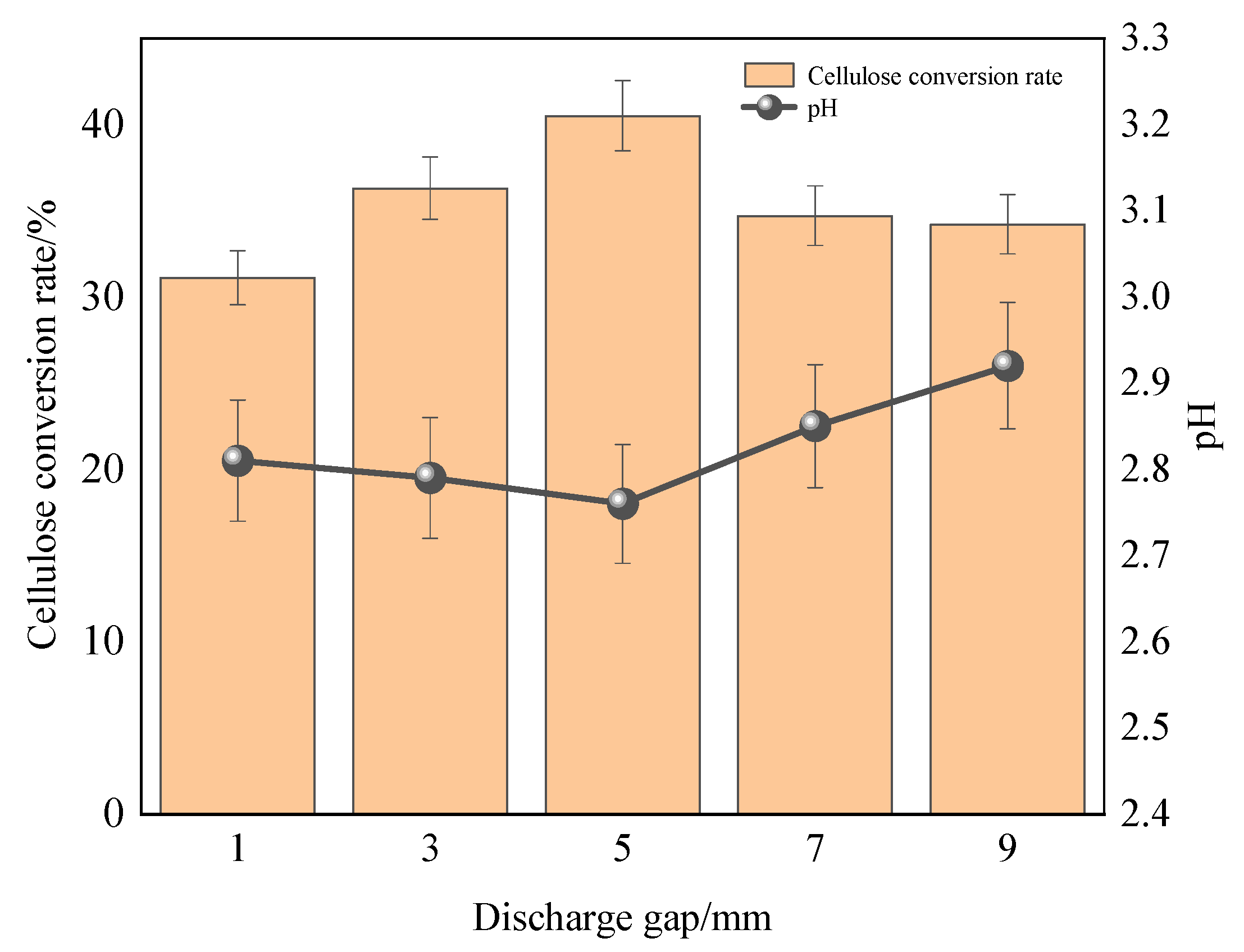
Under the conditions of a working voltage of 14,410 V and a reaction time of 30 min, the effect of the discharge gap on the solution pH value and cellulose conversion rate is shown in
Figure 6.
As illustrated in
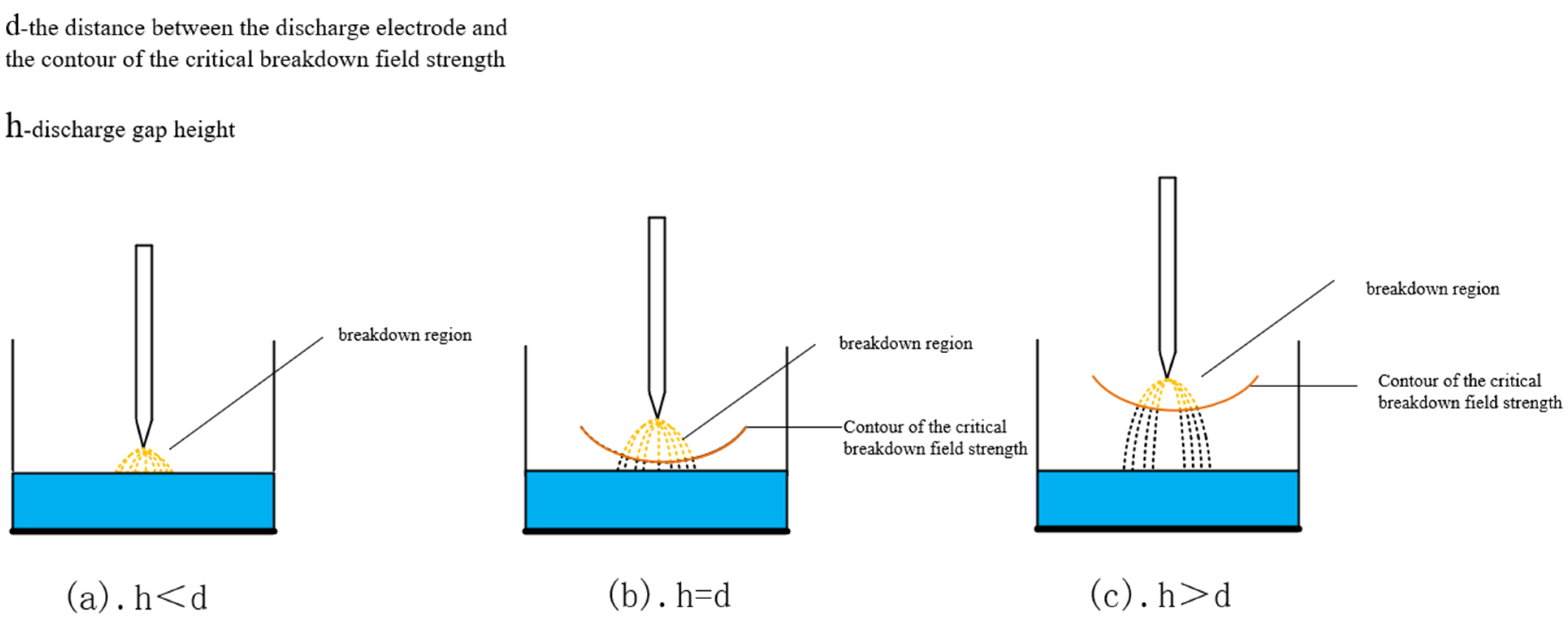
Figure 6, the cellulose conversion rate first increases and then decreases with the increase in discharge gap, while the solution pH value first decreases and then increases. The maximum cellulose conversion rate and the minimum solution pH value were obtained at a discharge gap of 5 mm. When the working voltage is constant, the effect of the discharge gap on the pH value of plasma acid and cellulose hydrolysis conversion rate can be attributed to changes in the volume and field strength of the discharge breakdown region. As illustrated in
Figure 7, the discharge breakdown region in a needle–plate electrode structure DBD device is conical, determined by the distribution of electric field lines, and its volume is constrained by the critical breakdown field strength and the height of the discharge gap.
When the discharge gap height is less than the distance between the critical breakdown field strength contour and the discharge electrode (
Figure 7a), the volume of the discharge breakdown region is determined by the discharge gap height between the discharge electrode and the liquid surface and increases with the gap height. When the discharge gap height exceeds the distance between the critical breakdown field strength contour and the discharge electrode (
Figure 7c), the volume of the discharge breakdown region is determined by the distance between the discharge electrode and the critical breakdown field strength contour. In this case, increasing the discharge gap height leads to a reduction in field strength, causing the position of the critical breakdown field strength contour to rise, thereby reducing the volume of the discharge breakdown region. Therefore, as the discharge gap height increases, the volume of the discharge breakdown region first increases and then decreases. Consequently, the quantity of plasma generated and the discharge power also varies with the volume of the discharge breakdown region, affecting the pH value of the produced plasma acid and the cellulose hydrolysis conversion rate.
3.1.3. Reaction Time
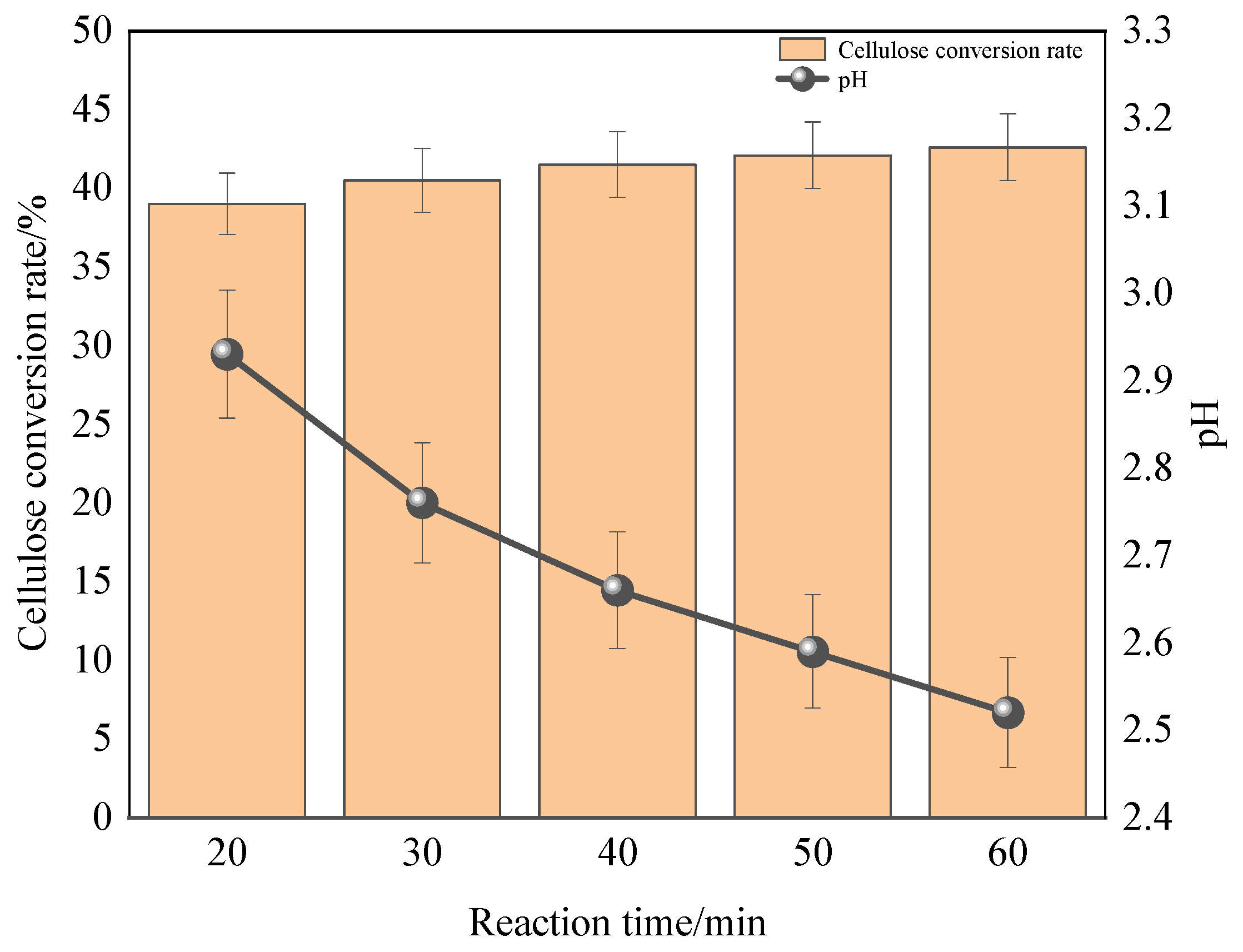
Under the conditions of a working voltage of 14,410 V and a discharge gap of 5 mm, the variation in solution pH value and cellulose conversion rate with reaction time is shown in
Figure 8. As seen in
Figure 8, with the increase in reaction time, the solution pH value continuously decreases, and the cellulose conversion rate increases. Notably, when the reaction time was increased from 20 min to 60 min, the cellulose conversion rate increases from 40% to 42.6%, indicating a relatively slow growth. The increase in reaction time leads to prolonged interaction between the discharge plasma and deionized water, producing more
. Additionally, as shown in
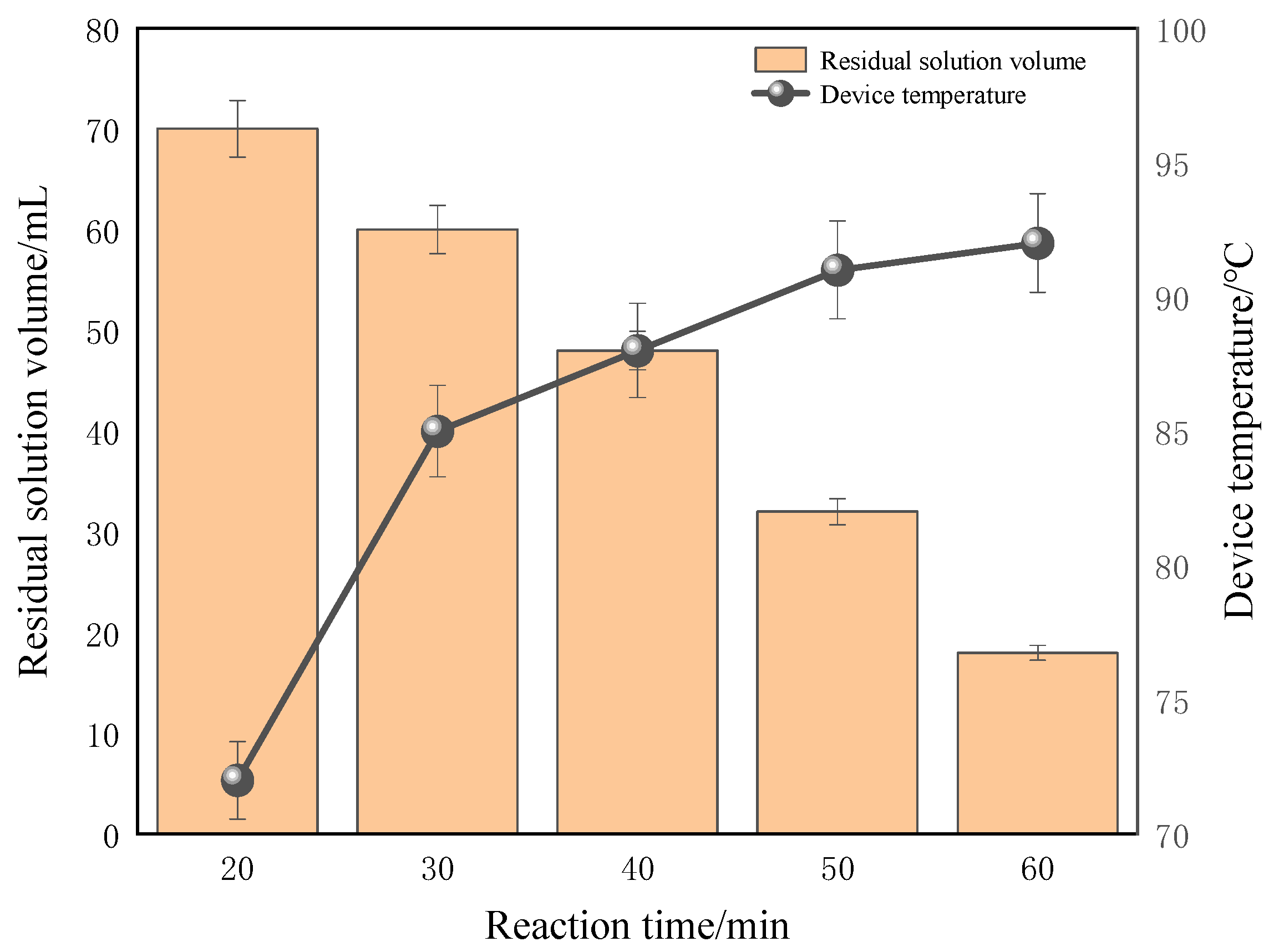
Figure 9, the temperature of the device rises continuously due to the thermal effect of the discharge, and this temperature increase, along with the electro-hydro dynamics (EHD) effect, causes more deionized water to evaporate, thereby increasing the concentration of
. Consequently, the solution pH value continues to decrease with the increase in reaction time.
Cellulose could be categorized into amorphous and crystalline forms based on its molecular aggregation state. Amorphous cellulose, with loosely arranged molecules, offers better accessibility to solvents and catalysts, thus being more susceptible to hydrolysis; in contrast, crystalline cellulose has a highly ordered and dense structure, making it less reactive and more difficult to hydrolyze [
9]. During the initial 20 min of the reaction, the easily hydrolyzed amorphous cellulose is almost entirely broken down. Subsequently, the hydrolysis reaction primarily involves crystalline cellulose, resulting in a lower reaction rate and limited hydrolysis extent over time. However, the increase in solution pH and device temperature facilitates the hydrolysis reaction rate of crystalline cellulose, leading to a more significant increase in cellulose conversion rate during the 50–60 min timeframe.
3.2. Comparison of the Simultaneous and Two-Step Plasma Acid-Catalyzed Cellulose Hydrolysis Approaches
Based on the experimental results of the simultaneous acid production and cellulose hydrolysis method shown in
Figure 8 and
Figure 9, a comparative two-step acid production and cellulose hydrolysis experiment was conducted using the equilibrium temperature of 92 °C and solution pH of 2.52 obtained after 60 min in the simultaneous experiment as parameters. The results were compared with those of the simultaneous acid production and cellulose hydrolysis experiment described in
Section 3.1.3. The comparison results are shown in
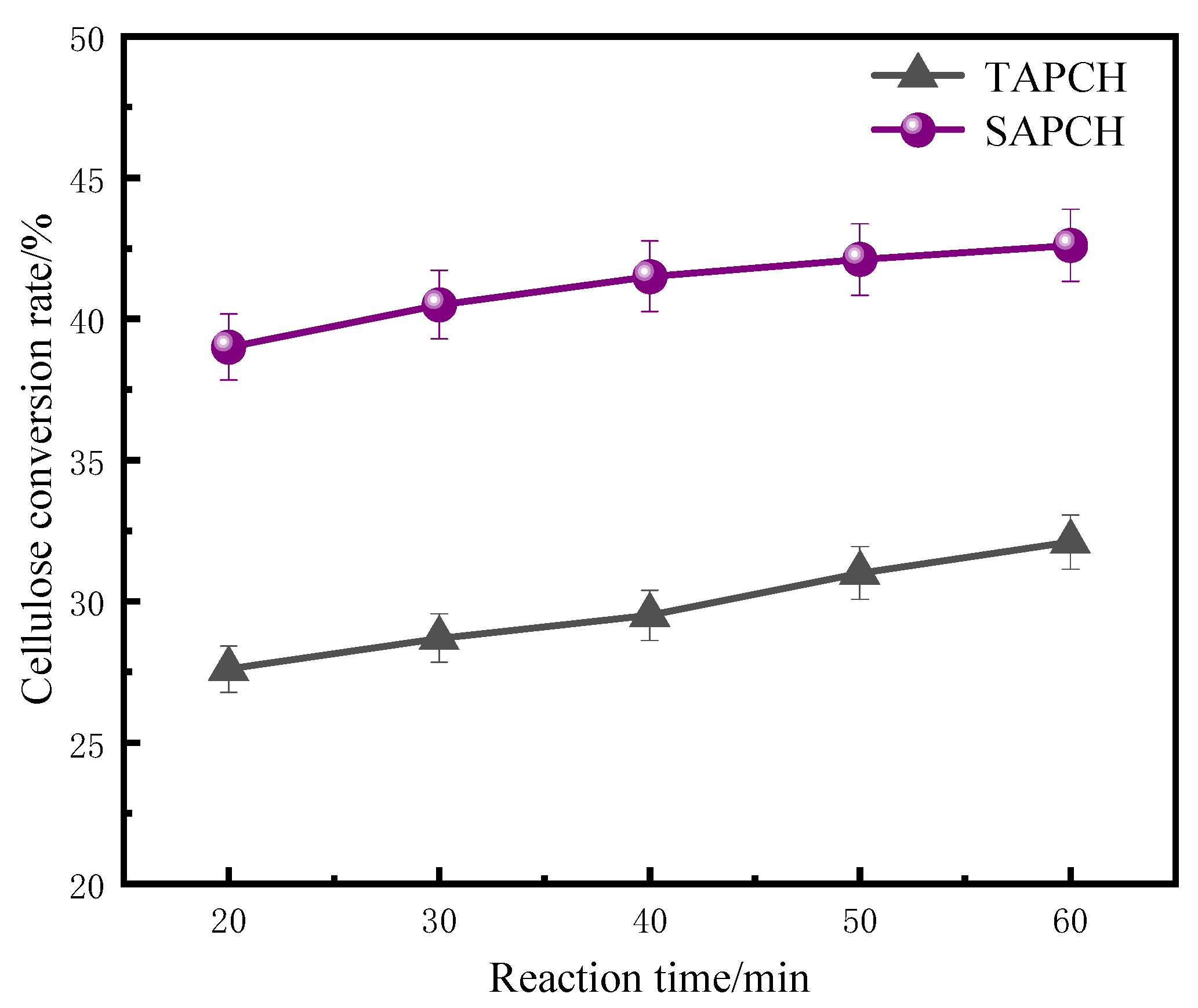
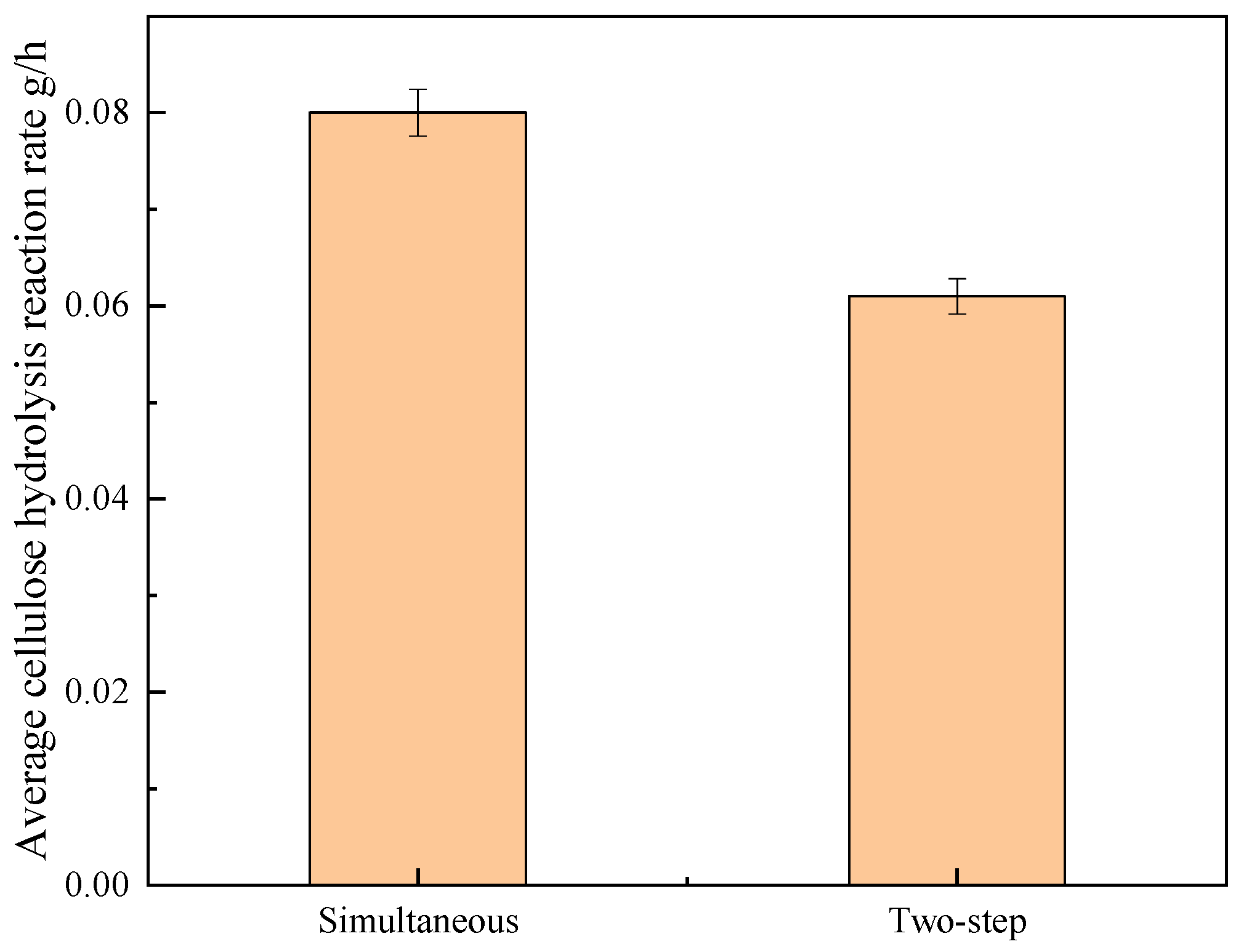
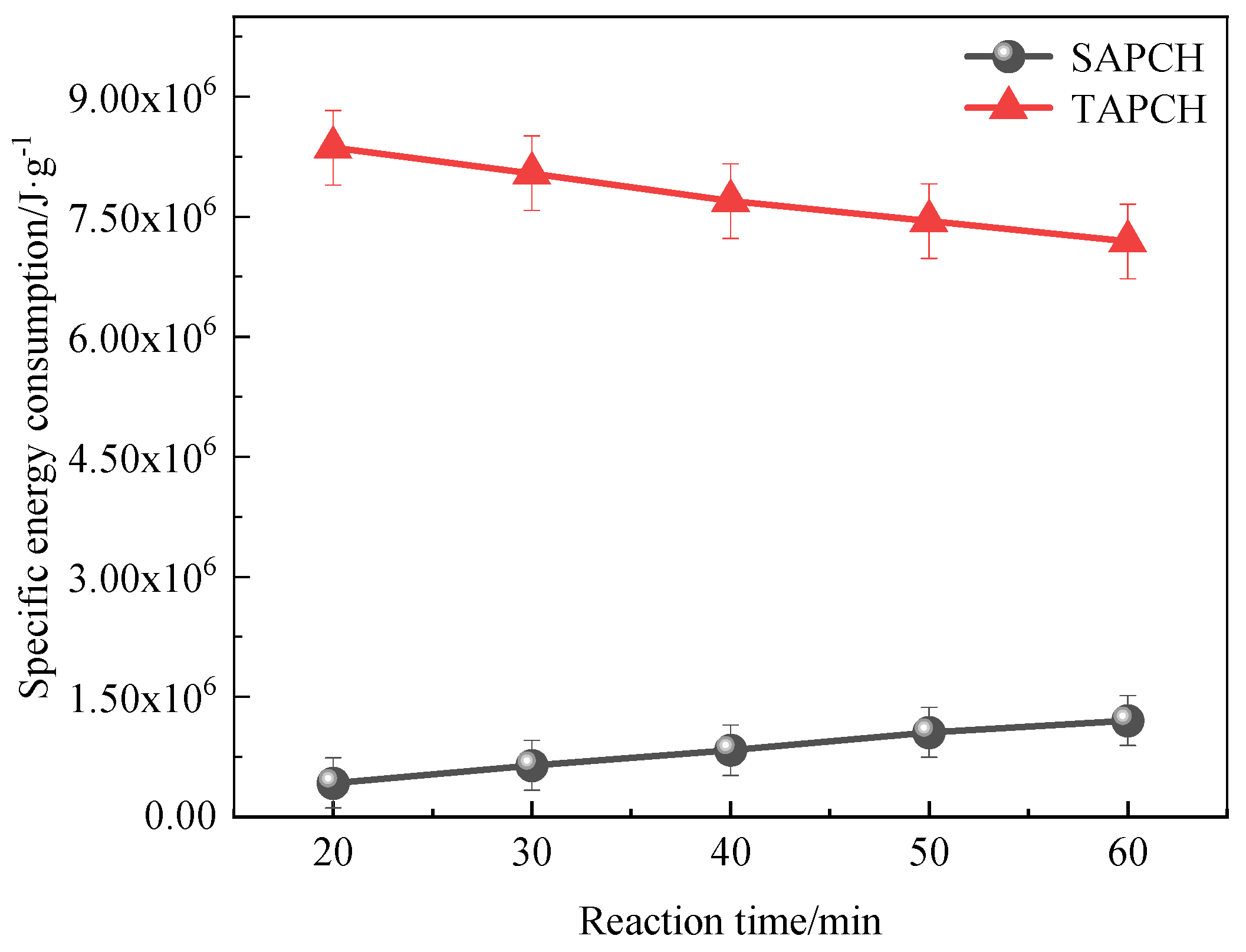
Figure 10,
Figure 11 and
Figure 12.
As shown in
Figure 10, the cellulose conversion rates of both the simultaneous and two-step methods increased with reaction time, rising from 40% and 27.6% to 42.6% and 32.1%, respectively. Moreover, at the same reaction time, the cellulose conversion rate of the simultaneous method consistently exceeded that of the two-step method.
A comparison of the average cellulose hydrolysis reaction rates for the two methods is shown in
Figure 11. It can be observed that, within a 1 h reaction period, the average hydrolysis rate of the simultaneous method was 0.0852 g/h, approximately 32.8% higher than the 0.0642 g/h achieved by the two-step method.
The comparison of average specific energy consumption for cellulose hydrolysis under the two methods is shown in
Figure 12. For the simultaneous method, the average specific energy consumption increased monotonically with reaction time, whereas for the two-step method, it decreased monotonically. At the same reaction duration, the average specific energy consumption of the simultaneous method was significantly lower than that of the two-step method. At 60 min, the average specific energy consumption of the simultaneous method reached a maximum of 1201 kJ/g, while that of the two-step method reached a minimum of 7191 kJ/g—the former being only 16.7% of the latter.
When the simultaneous acid production and cellulose hydrolysis method was employed, the device remained continuously under discharge with constant power, leading to a linear increase in energy consumption over time. As analyzed in
Section 3.1.3, the initially hydrolyzed cellulose within the first 20 min was primarily amorphous, resulting in higher conversion and lower specific energy consumption. As the reaction progressed, hydrolysis involved more crystalline cellulose, which exhibited lower conversion, causing the specific energy consumption to rise continuously. In contrast, for the two-step method, external energy was introduced into the system through both acid production and heating. The energy allocated for cellulose hydrolysis remained constant, while the amount of converted cellulose increased over time, leading to a decrease in specific energy consumption with prolonged reaction.
In summary, compared with the two-step acid production and cellulose hydrolysis method, the simultaneous method demonstrated significant technical advantages in terms of cellulose conversion rate, average hydrolysis rate, and specific energy consumption. The enhanced hydrolysis performance, attributable to the synergistic effects of the electric field and discharge plasma, underscores the feasibility and innovation of the proposed simultaneous technique.
3.3. Mechanism Analysis of Plasma Acid-Catalyzed Cellulose Hydrolysis Enhanced by Electric Field
Based on the analysis of the forces acting on reactant particles in electric field, combined with existing theoretical research [
27,
28,
29,
30] on the pathways of acid-catalyzed cellulose hydrolysis, the mechanisms of plasma acid-catalyzed cellulose hydrolysis enhanced by electric field were discussed to provide a reference for the optimization of the electric field-enhanced chemical reaction process and the design of the reaction device.
With the simultaneous acid preparation and cellulose hydrolysis approach, the
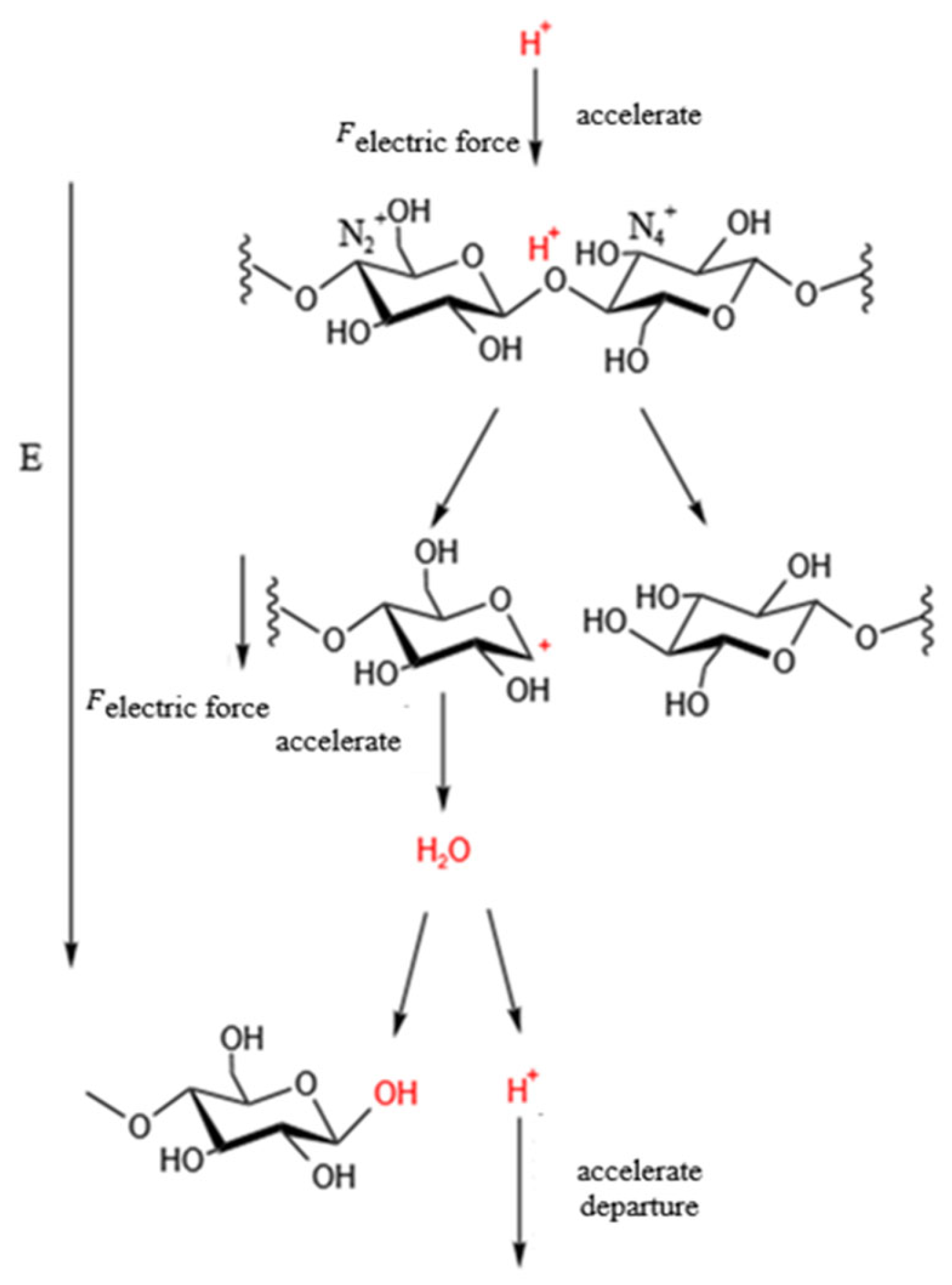
) generated by the action of the discharge plasma on the deionized water will be accelerated by the electric field force to impact and adsorb on the cellulose molecules. On the one hand, the energy transferred by high-speed impact can make the activation energy of cellulose hydrolysis reaction decrease, so that glycosidic bond C-O is more likely to break; on the other hand, under the action of electric field force, the kinetic energy of cellulose molecules that have adsorbed positively charged
would increase, which promotes the collision with water molecules to generate free glucose molecules and makes cellulose more easily hydrolyzed in acidic solution. The mechanism of the electric field promoting the cellulose hydrolysis reaction is illustrated in
Figure 13.
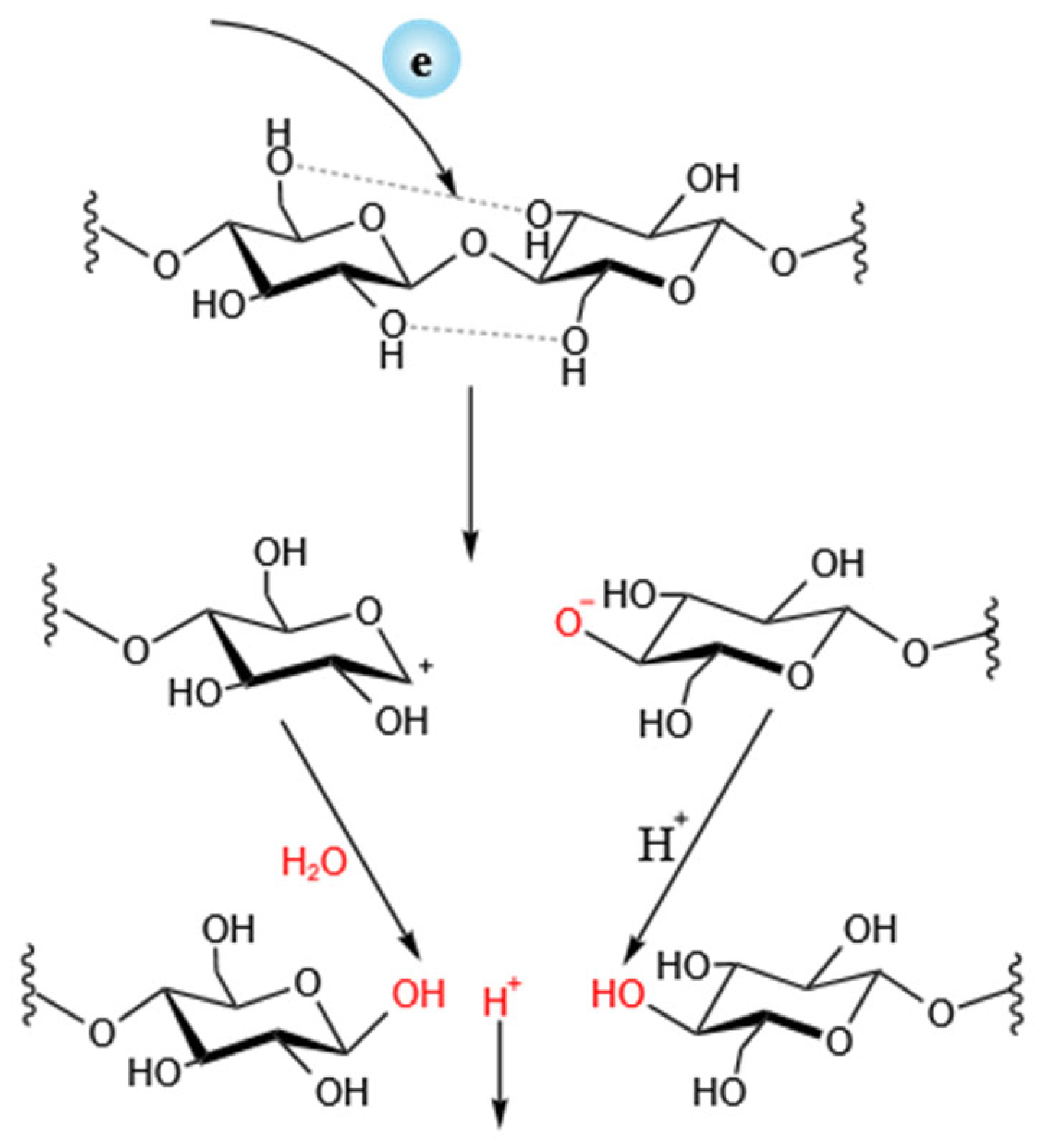
Furthermore, from the perspective of bond energy, the glycosidic bond energy in cellulose molecules is 3.37 eV, while in an atmospheric pressure air environment, the dielectric barrier discharge generates no thermal plasma containing a significant number of high-energy electrons with temperatures exceeding 7.35 eV [
31]. When these high-energy electrons collide with cellulose molecules, they can provide sufficient energy to break the glycosidic bonds in the cellulose molecules, thereby promoting cellulose hydrolysis. The mechanism by which high-energy electrons facilitate cellulose hydrolysis is illustrated in
Figure 14.
3.4. Energy and Economic Analysis
From the perspectives of energy and economics, the plasma acid synchronous catalytic hydrolysis technology proposed in this study demonstrates disruptive potential. Its core advantage lies in its exceptionally high energy efficiency: experimental data indicate that when achieving similar conversion rates, the energy consumption per unit for the synchronous method is only 16.7% of that required by the conventional two-step method. This implies that the direct energy cost (primarily electricity) for producing each unit of glucose can be reduced by over 80%, significantly alleviating the economic bottleneck associated with this critical step of cellulose hydrolysis.
Economically, this technology achieves cost savings through process intensification. It integrates acid production and the hydrolysis reaction within a single apparatus, eliminating multiple intermediate steps such as the preparation, storage, and transfer of plasma acid, as well as separate heating of reactors. This not only reduces capital investment but also substantially cuts down operational time and labor costs, thereby enhancing the overall process intensification. Furthermore, the “feedstock” used consists solely of air and water, and the generated plasma acid is transient and leaves no residue. This avoids the high costs associated with waste acid treatment, equipment corrosion, and environmental remediation typically incurred when using traditional strong inorganic acids (e.g., sulfuric acid). Consequently, the technology exhibits minimal environmental and economic negative externalities throughout its lifecycle.
Looking ahead, this technology offers a clean, low-cost pathway for sugar platform production in biomass refining. Once integrated with downstream technologies like glucose fermentation or catalytic conversion, it holds the potential to drastically reduce the overall production costs of second-generation biofuels (such as cellulosic ethanol) and bio-based chemicals (such as 5-hydroxymethylfurfural). This will accelerate their commercialization, playing a strategically significant role in advancing the transformation of the energy structure and achieving green, sustainable development within the chemical industry.