


Abstract
Climate change has emerged as one of the defining risks in recent years. These risks are associated with economic losses and, ultimately, the stability of the financial system. This study examines the impact of climate change on financial stability in Namibia using quarterly data spanning from the period 2009 to 2023. The Nonlinear Autoregressive Distributed Lag (NARDL) approach is employed to assess how climate change asymmetrically affects the stability of Namibia’s financial system. The findings reveal that both increases and decreases in rainfall, as well as higher temperatures, exert negative long-term asymmetric effects on financial stability, while rises in CO2 emissions appear to enhance it. Accordingly, this study recommends the integration of climate-related risks into financial institutions’ risk assessment frameworks, together with the adoption of long-term monitoring and mitigation strategies. Finally, regulators are also encouraged to conduct climate stress tests to assess the resilience of the financial system under varying climate scenarios.
1. Introduction
Climate change has emerged as a defining challenge of the 21st century, bringing about many environmental, social, and economic transformations. According to the Intergovernmental Panel on Climate Change (IPCC 2021), the global average surface temperature increased by approximately 1.1 °C between 2011 and 2020 compared to the period from 1850 to 1990. Abnormal shifts in the climate system have led to a rising frequency and intensity of extreme weather and climate events worldwide. These events significantly impact the real economy. Given that finance plays a pivotal role in economic development, such events can also affect the financial sector through various channels, potentially threatening the value of assets and income sources of borrowers. Consequently, regulators are increasingly focusing on climate-related risks. For instance, central banks and the Network for Greening the Financial System (NGFS) have initiated efforts to integrate climate-related risks into supervision and financial stability monitoring. Dietz et al. (2016) noted that climate change could lead to losses in global financial assets estimated at approximately USD 24 trillion. Liu et al. (2024) contended that climate change generates a sequence of financial fluctuations, which could potentially cause system risk and affect the safety and stability of the financial sector. As a result, climate change has become a growing concern and a source of risk for financial stability.
Risks to financial stability from climate change are notably uncertain, both in severity and time horizon, as emphasised by the Financial Stability Board (FSB 2020). The future trajectory of climate change and its impact on the financial system is highly uncertain and could exhibit nonlinear dynamics over time, often contingent on policy measures. While research on the relationship between climate change and financial stability continues to evolve, existing literature indicates that climate change affects the financial system mainly through two channels: physical risks and transition risks. Physical risks refer to disruptions in economic activity or decline in asset values resulting from the direct impact of climate change, such as droughts, flooding, hurricanes, and wildfires. Transition risks refer to the financial risks associated with the shift to a lower-carbon economy aimed at mitigating climate change. Against this backdrop, the financial sector, a linchpin in the country’s economic landscape, faces a range of challenges emanating from both physical and transition risks associated with climate change.
Namibia experiences climate-related challenges that extend beyond its impact on agriculture, adversely influencing household income levels. According to the World Bank (2021), Namibia suffered its most severe drought in 2013, affecting nearly 37 percent of the population. Table 1 shows that, although flooding is a frequent phenomenon in Namibia, drought episodes tend to be more devastating, costing the country an estimated USD 175 million annually. Besides drought and floods, wildfires have become a growing concern for the country, as it witnessed a staggering 499,344 hectares of land consumed by uncontrolled fires between January and April 2023 (BoN 2024).
Table 1.
Climate events in Namibia between 1900 and 2023.
Given that economic activities ultimately underpin financial assets, climate-related risks can therefore affect the financial system. Despite Namibia’s Nationally Determined Contributions (NDC) Implementation Strategy and Action Plan, there is limited empirical literature providing a quantitative understanding of the impact of climate risks on the financial sector. Such evidence is crucial to facilitate efficient adjustment of business models, policy adaptation, and mitigation strategies. This is especially pressing considering the principles for the effective management and supervision of climate-related financial risks, published by the Bank for International Settlements (BIS 2022), which aim to enhance banks’ risk management and supervisory practices related to climate risks.
Climate change presents growing risks to financial systems, particularly in climate-vulnerable developing economies (IMF 2019; FSB 2020). In Namibia, where the economy is highly exposed to climate variability through sectors such as agriculture, mining, and energy, the financial system faces increasing vulnerability to both physical and transition risks.
While existing literature on climate-related financial risks is expanding, it remains limited for developing economies and is largely focused on linear transmission mechanisms. For this reason, the current study addresses this gap by developing climate risk scenarios tailored to the Namibian context and applying a Nonlinear Autoregressive Distributed Lag (NARDL) model to examine both the long-run and short-run asymmetric effects of climate change on financial stability over the period 2009Q1 to 2023Q4. By decomposing climate variables into positive and negative shocks, the paper contributes novel empirical evidence on the transmission of climate risks in a developing economy context.
Moreover, Amo-Bediako et al. (2023) characterise the financial systems of sub-Saharan economies as predominantly bank-based; however, this stylised fact does not uniformly apply across all countries in the region. Namibia represents an important exception, with the Non-Bank Financial Institutions (NBFIs), particularly pension funds and insurance sectors, accounting for a larger share of total financial system assets than the banking sector. This institutional structure implies that climate-related risks may transmit through both bank and non-bank balance sheets. As such, Namibia provides a distinctive and informative case for examining climate–financial stability linkages beyond the standard bank-centric framework as assumed in Amo-Bediako et al. (2023). For example, the banking sector assets relative to GDP averaged 77.5 percent in 2024, while that of the NBFI averaged 193.5 percent over the same period (Ministry of Finance 2025).
The remainder of this paper is organised as follows. Section 2 explores key stylised facts that highlight the nature and scope of climate-related risks in Namibia. Section 3 synthesises the existing literature relevant to these risks. Section 4 presents the data, model specification, and method of estimation. Section 5 presents the estimation results along with an interpretation of the key findings. The paper concludes in Section 6, offering a summary of insights and related policy recommendations.
2. Climate-Related Risk Stylised Facts in Namibia
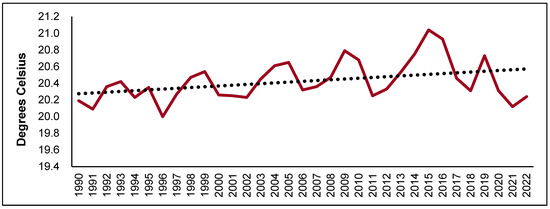
Namibia’s climate change is characterised by a distinct upward trend in temperature, as depicted in Figure 1. The mean annual temperature in Namibia has remained broadly unchanged over the years, hovering around 20.4 degrees Celsius. In this regard, the mean annual temperature reached its highest level of 21.0 degrees Celsius in 2015 and has been drifting downwards since then, reporting an average of 20.2 degrees Celsius during 2022. However, temperature is projected to increase by an average of 0.6 degrees Celsius to 1.8 degrees Celsius between 2020 and 2039 (World Bank 2021). This sort of increase in temperature is likely to affect the agricultural sector, particularly crop and livestock production, which will ultimately impact the country’s GDP.
Figure 1.
Annual temperature 1990–2022. Source: World Bank. Note: The dotted line is the trendline while the solid line is the annual temperature.
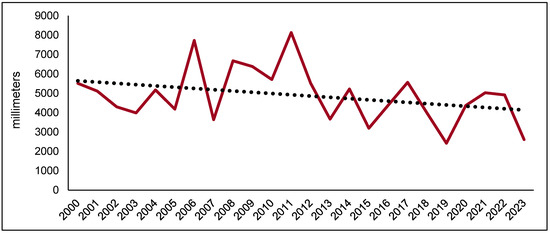
Precipitation levels in Namibia have been erratic, with variable rainfall patterns over the years. The accumulated annual rainfall stands at a modest 4890 mm over the period 2000 to 2023, exhibiting considerable diversity across the country (Figure 2). Rainfall levels range from 750 mm in the northeast to less than 110 mm in the southwest and coastal areas. Such disparities in precipitation have increased extreme weather phenomena, including droughts and floods, which pose substantial pressure on Namibia’s socio-economic development. The climatic conditions of Namibia, particularly rainfall and temperature, are notably influenced by the El Niño–Southern Oscillation (ENSO)1 effect. During El Niño episodes, rainfall tends to be below average, exacerbating the challenges faced by the country (World Bank 2021).
Figure 2.
Annual rainfall level. Source: Climate Hazards Group Infrared Precipitation (CHIRP). Note: The dotted line is the trendline while the solid line is the annual rainfall.
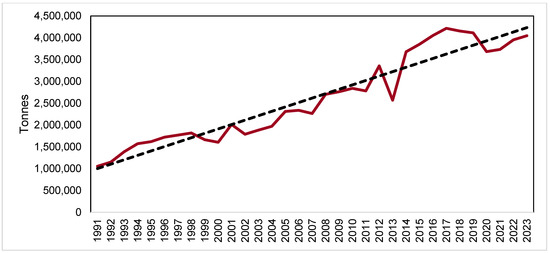
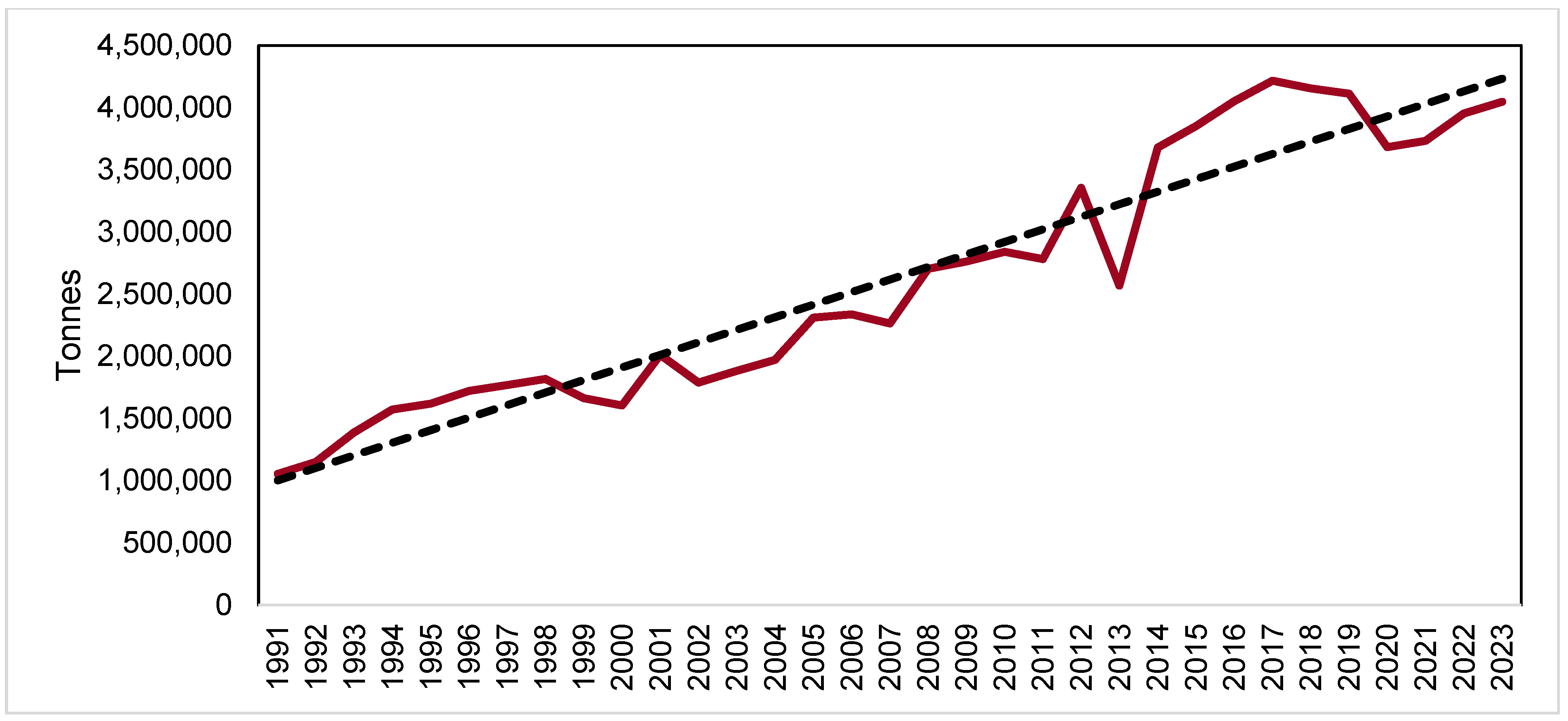
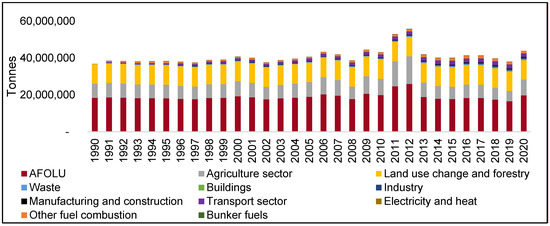
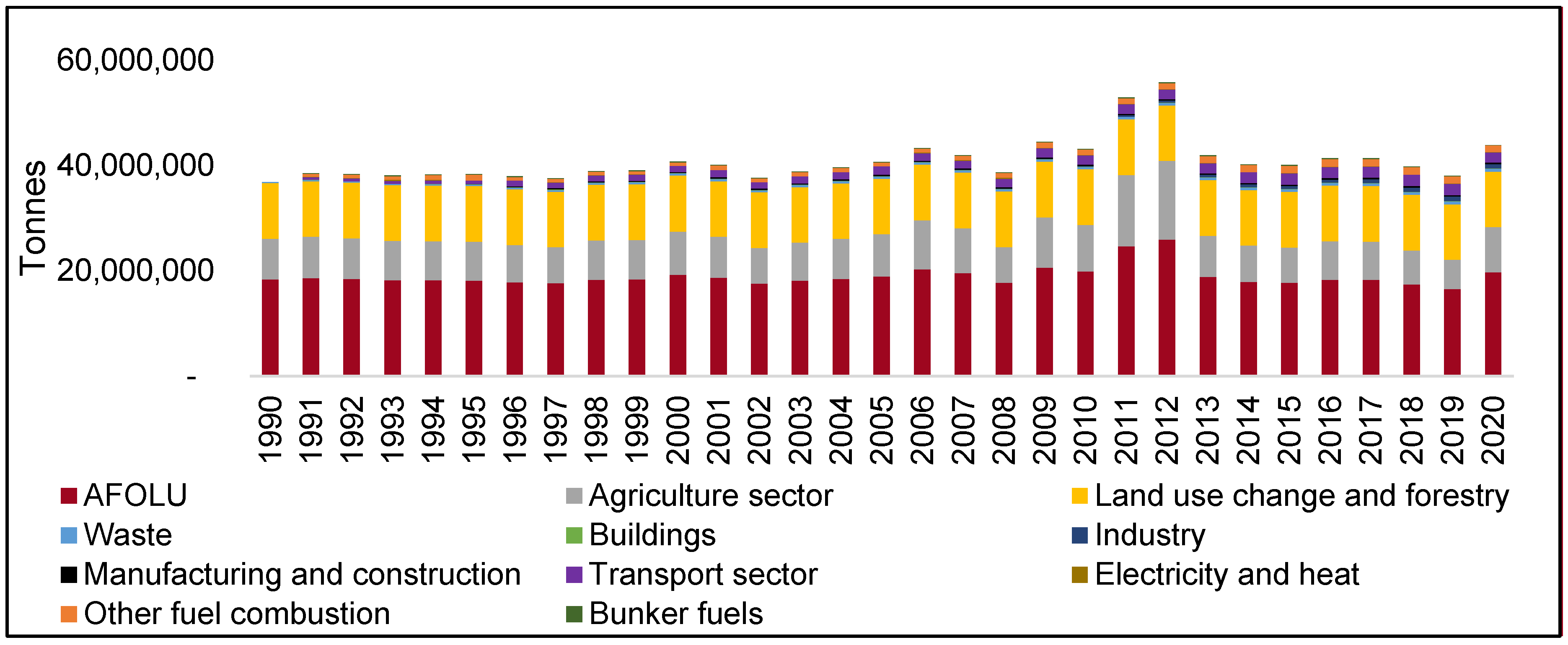
Although carbon emission levels have increased over the years, Namibia remains a net carbon sink according to Climate Analytics. Namibia’s carbon emission levels have tripled, increasing from 1.1 million metric tonnes of carbon dioxide in 1990 to 3.9 million metric tonnes in 2022 (Figure 3). However, Namibia is a net carbon sink with a negligible contribution, accounting for less than 0.01 percent of global emissions. Nevertheless, although current emission levels are comparatively low by global standards, they are on an upward trajectory and are projected to reach 90.713 Mt CO2 e in 2030 under the business-as-usual scenario2 (GRN 2023). The Agriculture, Forestry, and Other Land Use (AFOLU) sectors are a predominant source of greenhouse gas emissions in Namibia, accounting for approximately 81.5 percent of total national emissions. This is primarily due to fertiliser application, fossil fuel use, and the open burning of agricultural residues. The transport and energy sectors follow, contributing around 8.3 percent (Figure 4). In line with the Paris Agreement, Namibia’s Nationally Determined Contribution (NDC) under the United Nations Framework Convention on Climate Change outlines mitigation commitments across key sectors, including AFOLU, energy, and industrial processes and product use. These efforts are complemented by the promotion of climate-smart technologies, such as renewable energy, sustainable energy systems, and improved waste management practices (GRN 2023).
Figure 3.
Annual CO2 emissions. Source: Climate Watch. Note: The dotted line is the trendline while the solid line is the annual carbon emission.
Figure 4.
Greenhouse gas emissions by sector. Source: Climate Watch.
Namibia has committed to reducing emissions, despite its low levels of greenhouse gas emissions. In this regard, Namibia aims to mitigate a total of 11.902 Mt CO2 e, comprised of a 7.669 Mt CO2 e reduction in projected emissions and an additional 4.233 Mt CO2 e from enhanced removals (GRN 2023). Key sectoral interventions include the expansion of renewable and sustainable energy sources, the implementation of improved waste management technologies, the promotion of low-carbon transport systems, and the adoption of climate-smart practices (GRN 2023).
Namibia’s sectoral loan distribution is centred on the individual sub-sector. The concentration of commercial bank lending is mainly geared toward the individual sub-sector, accounting for an average of 42.1 percent for the period 2019–2023 (Table 2). It is important to note that, in the individual sub-sector, mortgage advances account for over 60 percent of total credit advanced to the sub-sector. These mortgage advances are exposed to climate change through physical risks such as wildfires and floods and may have an impact on property values. Over the years, banks have gradually increased their credit allocation to the agriculture sector, rising from an average of 3.0 percent during 2004–2008 to 4.9 percent between 2019 and 2023. Although the proportion of credit extended to agriculture remains relatively modest, the sector continues to serve as the primary source of staple food production and sustains the livelihoods of many rural communities in Namibia.
Table 2.
Bank lending in Namibia per sector (Percentage Share).
Agriculture remains a fundamental component of Namibia’s economy and serves as a key foundation for agri-based industries. In 2023, the sector contributed approximately 7 percent to Namibia’s GDP. It is closely integrated with other vital sectors, such as manufacturing, trade, tourism, and transport, through both input and output linkages (GRN 2023). The banking sector may face financial exposure through its lending to households and businesses that are dependent on agricultural activity. Climate-related physical risks, including prolonged droughts and erratic rainfall, can reduce agricultural output and consequently undermine the financial positions of borrowers. This impact may be direct through diminished production and income levels, or indirect through broader macroeconomic effects such as lower GDP growth. As a result, credit risk may increase due to higher default rates, declining asset values, reduced availability of funding, and increased reliance on existing credit facilities (BoN 2024). In addition, physical damage to collateral assets resulting from extreme weather events can elevate risks associated with collateralised lending (European Systemic Risk Board 2021).
Financing needs for climate change mitigation have increased globally, particularly for emerging and developing economies (EMDEs). It is estimated that, in the EMDEs, climate mitigation investment needs are expected to increase from USD 0.3 trillion of total investment needs in 2020 to around USD 2.1 trillion of the total USD 17.2 trillion investment needs in 2030 (IMF 2023). Furthermore, private finance is critical for EMDEs to meet their climate investment requirements for both mitigation and adaptation, as public investments will not be sufficient to meet climate investment needs (IMF 2023). In Namibia, the Green, Social, and Sustainability (GSS) bond issuance by the banking sector has increased from a value of NAD 66.6 million observed in 2018 to around NAD 1.2 billion at the end of 2023. Nonetheless, there is a pressing need to scale up both public and private climate finance to achieve the targets set out in the NDC. The financial sector is anticipated to play a critical role in mobilising and directing investments toward sustainable development and climate-resilient initiatives. As indicated by GRN (2023), the estimated financial resources required for the implementation of climate mitigation and adaptation measures are around USD 15.1 billion, of which USD 13.6 billion (90 percent) is to be sourced internationally, implying that the remaining USD 1.5 billion will be funded domestically through various initiatives, such as the Environmental Investment Fund.
3. Literature Review
3.1. Theoretical Literature
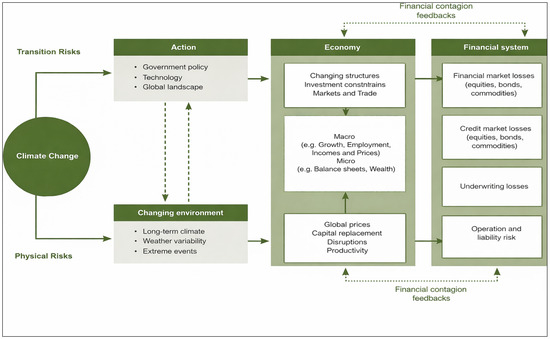
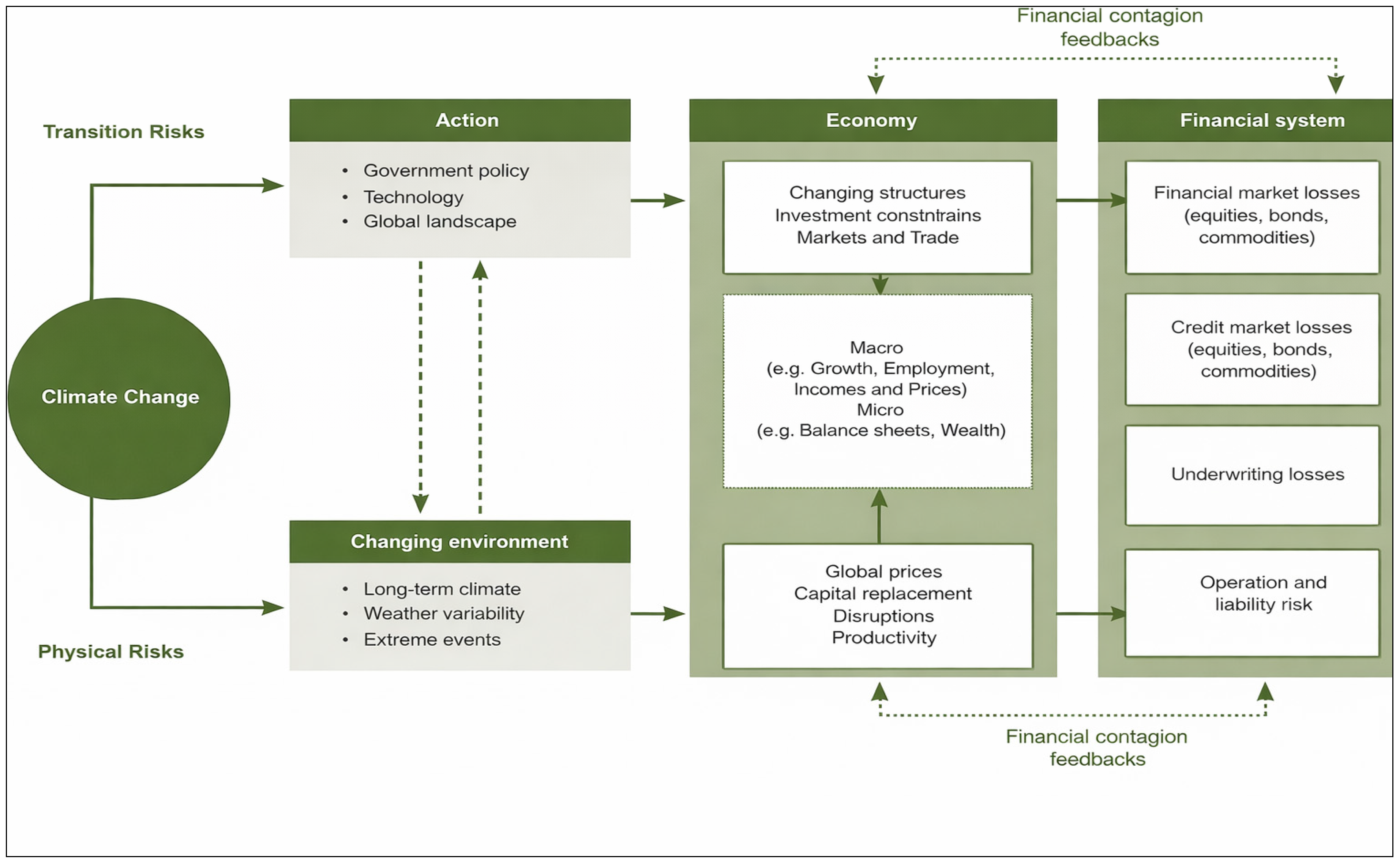
Physical and transition risks constitute a key theoretical framework for analysing the impact of climate change on financial stability. Physical risks directly affect infrastructure and economic assets as a result of climate-related phenomena, including temperature fluctuations, a rise in sea levels, and extreme weather. Conversely, transition risks are associated with the shift to a low-carbon economy, including policy changes, technological developments, and shifts in consumer preferences (NGFS 2019). These risks can lead to stranded assets, asset revaluations, and sudden changes in market conditions (Carney 2015). According to Fabris (2020), the key problem is that the financial system generally considers these risks in the short run, whereas transition risks tend to materialise in the long run, thus creating a mismatch. Figure 5 below demonstrates in detail how physical and transition risks can affect the financial system.
Figure 5.
Potential financial stability risks associated with climate change. Source: Network for Greening the Financial System.
3.2. Empirical Literature
Nur et al. (2023) conducted an empirical investigation into how climate-related risks influence both financial access and stability within G20 economies. Using a panel dataset spanning from 2006 to 2017, the authors applied a fixed-effects model that accounts for variations across countries and potential heterogeneity in the relationships studied. To proxy climate risk, the Global Climate Risk Index (GCRI) developed by the German watch was used. The study’s results demonstrate that heightened climate risks significantly constrain financial access, while efforts to reduce such risks appear to facilitate improved access to financial services. Conversely, the analysis found no statistically significant link between climate risk and financial fragility among G20 nations. The authors emphasise the importance of integrating climate risk considerations into financial regulatory frameworks. They further argue that, in the pursuit of a low-carbon transition, policymakers must ensure that financial resource distribution does not exacerbate environmental harm.
The impact of climate risk on financial stability is more pronounced in developing and emerging economies than it is for developed countries. Liu et al. (2024) conducted a panel data analysis using yearly datasets for 53 countries ranging from developed to developing and emerging economies to investigate the impact of climate change on financial stability. The global climate risk index, as constructed by the German watch, was used to measure climate risk, with bank-specific and relevant macroeconomic variables used as covariates in the study. The findings of the study reveal that climate risk has a negative impact on financial stability, although the impact is heterogenous among countries due to different levels of economic development, financial development, and competition. It is noted that, while macroprudential policies have proven effective in safeguarding financial stability in climate vulnerable countries, it is important to recognise that various instruments differ in their effectiveness when addressing climate-related financial risks.
Based on the European Central Bank (2021), climate risks pose a potential systemic threat to financial stability that extends beyond the individual risks faced by specific institutions. Due to the distinct characteristics and broad-reaching impact of climate-related risks, addressing them may necessitate a macroprudential approach to enhance the banking system’s resilience and mitigate climate-related vulnerabilities. The inherent complexity, long time horizons, tipping points, and partial irreversibility of these risks lead to significant uncertainty regarding their timing and impact, making risk quantification and forward-looking projections particularly challenging. This uncertainty often results in the systematic underestimation or underpricing of climate risks, as financial markets and institutions may discount these risks, assuming they will only materialise in the distant future (European Central Bank 2021). Furthermore, climate-related systemic risks are exacerbated by interconnectedness, spillover effects, and second-round consequences, which are common in other types of financial risks as well. Since these systemic dimensions are typically not captured by banks’ individual risk management strategies, a combination of microprudential and macroprudential measures, including enhanced disclosure requirements, capital-based policies, and climate stress-testing, is necessary to maintain financial stability (European Central Bank 2021).
Noth and Schüwer (2023) concluded that natural disasters matter for bank stability. The study adopted the fixed-effects Ordinary Least Squares (OLS) regression model on 6136 US banks over the period 1994–2012 to analyse the natural disaster and bank stability in the US financial system. The findings of the paper reveal that weather-related natural disasters significantly weaken the stability of banks in affected regions. In the short term, it is noted that, due to natural disasters, the banks’ z-scores decreased, probabilities of default increased, non-performing asset ratios and foreclosure ratios increased, and the return on assets and equity ratios decreased. Furthermore, the results also show that the negative effects of weather-related disasters die out after some years if no further disasters occur in the process.
Diallo et al. (2023) examined the causal relationship between climate risk and financial stress in 15 Economic Community of West African States (ECOWASs) over the period 2000–2019. Employing the Multivariate Threshold Autoregressive Vector model (MTVAR) to estimate this relationship, the empirical evidence strongly supports the nonlinear relationship between climate risk and financial stress. Specifically, the findings of the study revealed the existence of an optimal temperature threshold, below and above which a complex interplay occurs between climate risk and financial stress.
Amo-Bediako et al. (2023) assessed how climate change impacts the banking systems’ resilience in 29 sub-Saharan African (SSA) economies, employing a two-step empirical approach. First, a Generalised Auto-Regressive Conditional Heteroscedasticity (GARCH) model was used to forecast climate change variables. Thereafter, a panel ARDL was estimated for the period 1996–2017. The study found that, despite a temperature shock, the SSA banking system maintained its resilience in the long run. In contrast, the banking system did not maintain its resilience when faced with precipitation and greenhouse gas shocks in the long run. The short-term impact indicates that the banking systems in SSA are resilient to only precipitation shocks. Based on these findings, the study advocates for robust climate-related stress testing and the formulation of proactive strategies and risk management frameworks to address emerging climate-related financial vulnerabilities. In addition to ensuring long-term financial stability and confidence, and good and efficient macroeconomic policy creation and execution require a thorough grasp of the factors that shape a country’s financial sector, thus making research tailored to individual nations essential.
Dafermos et al. (2018) found that climate change is likely to increase the rate of default on corporate loans, which could harm the stability of the banking system. This would be after eroding the capital of firms and reducing their profitability and liquidity. To reach this conclusion, the paper examined climate change, financial stability, and monetary policy using a stock-flow-fund ecological macroeconomic model. The model is estimated and calibrated using global data and simulations conducted for the period 2016–2120. The findings of the study further highlight that climate change could lead to a reallocation of portfolios, which will result in a gradual decline in the prices of corporate bonds, thus revealing that climate-induced financial instability might adversely affect credit intermediation in the financial system.
Fabris (2020) developed a comprehensive nine-step framework for managing climate-related risks and demonstrated that climate change can adversely affect the balance sheets of financial institutions. The study revealed that climate-related impacts raise the probability of credit defaults, thereby posing risks to overall financial stability. An increase in non-performing loans as a result of climate disruptions can constrain lending activities within the financial sector, which may subsequently slow economic growth, reduce employment opportunities, and adversely affect social welfare.
Liu et al. (2021) investigated the effects of climate change on financial stability in China using a two-step empirical approach. Initially, they applied a vector autoregression (VAR) model to capture the dynamic impact of climate variables on financial stability. Subsequently, they employed a Nonlinear Autoregressive Distributed Lag (NARDL) model to explore the asymmetric and nonlinear responses of financial stability to climate shocks based on monthly data spanning 2002 to 2018. Their findings reveal that both positive and negative climate shocks negatively affect financial stability. Notably, in the short run, positive climate shocks have a stronger immediate effect on financial stability compared to negative shocks; however, in the lagged periods, the impact of negative shocks becomes more pronounced.
To the best of the authors’ knowledge, no empirical study has been performed in the context of Namibia to investigate the effects of climate change on financial stability. This study addresses this gap by investigating the nonlinear and asymmetric effects of climate change on financial stability, considering both short-term and long-term dynamics.
4. Data, Model Specification, and Method
This paper provides new insight into the relationship between climate change and financial stability in Namibia by adopting a nonlinear and asymmetric analytical framework. The study employed a nonlinear autoregressive distributive lag (NARDL) methodology to estimate the asymmetric relationship between climate change and financial stability, using quarterly data covering the period 2009Q1 to 2023Q4 sourced from the Bank of Namibia (BoN), the Namibia Statistics Agency (NSA), the World Bank, and Climate Watch, as well as the Climate Hazards Group InfraRed Precipitation with Station (CHIRPS) data (Table 3). The selection of the study period is guided by the availability of quarterly data on key banking sector indicators. The study converted annual temperature and carbon emissions data to quarterly frequency using the linear match-last interpolation method available in EViews (version 13). This method ensures that the annual observation coincides with the fourth quarter. Given the relatively smooth nature of the temperature and emissions series and the limited number of annual observations, the linear match-last approach minimises artificial volatility and avoids introducing spurious high-frequency dynamics that could bias long-run estimation.
Table 3.
Description of variables.
4.1. Measurements of Variables
To facilitate the nonlinear and asymmetric impact of climate change on financial stability, this study derives the Financial Stability Index following the study conducted by Liu et al. (2021). This paper selects various indicators representing various dimensions affecting financial stability in Namibia. Three broad dimensions in the form of Financial Market Indicators, Financial Vulnerability Indicators, and Financial Soundness Indicators were selected (Table 3). Each dimension consists of a set of indicators that are first standardised using z-score normalisation to account for differing units and scales. To ensure consistency in interpretation, all indicators that are negatively associated with financial stability (such as non-performing loans) are inverted so that higher values uniformly indicate improved stability. Within each category, indicators are equally weighted to construct their respective sub-indices. These sub-indices are then aggregated into the overall FSI using expert-assigned weights: 25 percent for Financial Market Indicators, 15 percent for Financial Vulnerability Indicators, and 60 percent for Financial Soundness Indicators. This weighting reflects the relative importance of each dimension, with a strong emphasis on financial soundness given its role in institutional resilience. Furthermore, given the limited depth and activity in capital markets, the authors opted for a higher weight to be assigned for Financial Soundness Indicators. However, to validate the robustness of the results, an alternative specification using equal weights was also employed. A higher value of the FSI indicates greater financial system stability, while a lower value signals increased systemic risk or vulnerability.
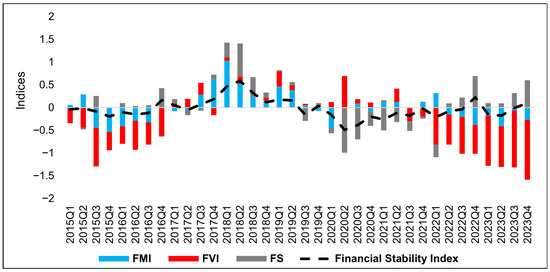
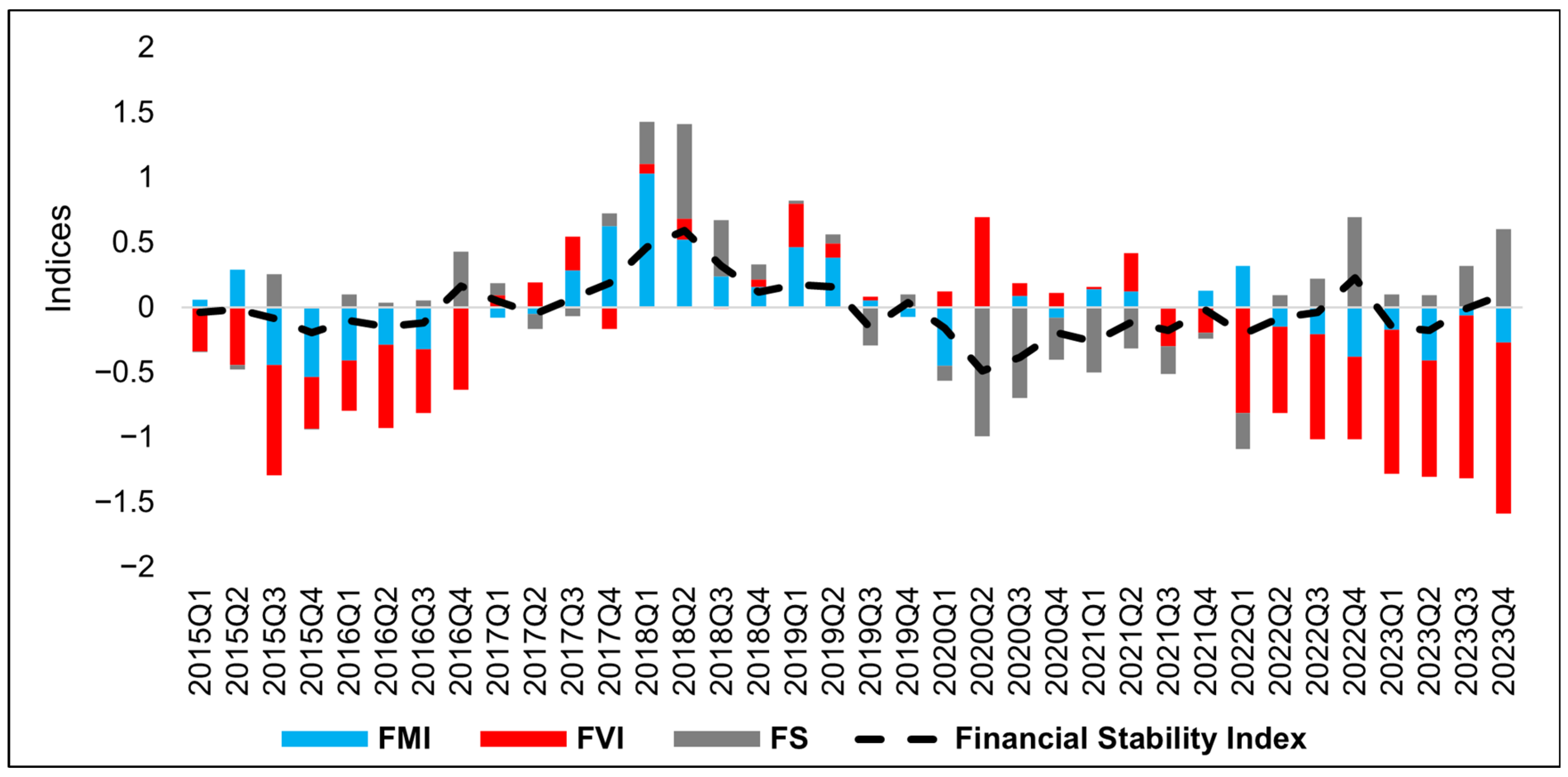
Figure 6 illustrates the quarterly movements of the Financial Stability Index (FSI), represented by the black line, alongside its decomposed sub-indices. The overall FSI remained broadly stable around zero for most of the sample period, reflecting a relatively resilient financial system. However, notable episodes of instability are evident, particularly during the COVID-19 pandemic (grey shaded area), when the index dipped sharply into negative territory. The post-pandemic period reflects a gradual recovery, with the FSI sub-index being the key driver behind the rebound in the overall index.
Figure 6.
Namibia’s Financial Stability Index. Source: Authors’ computation using data obtained from the Bank of Namibia.
In terms of the control variables, climate change is measured by three indicators, namely, temperature and rainfall levels as well as carbon emissions. Following the paper by Odongo et al. (2022), this study uses rainfall data measured in millimetres as well as temperature measured in degrees Celsius. Theoretically, the transmission of climate change to the financial system is through physical and transition risks. Depending on the exposure of banks to households and businesses, the combined impact of physical and transition risk results in losses related to market, credit, and underwriting as well as operational risks (BoN 2024). As a result, lower asset valuations and debt defaults may have a negative impact on investor confidence and cause systemic bank losses (Batten et al. 2016; Bovari et al. 2018; Dafermos et al. 2018; Fabris 2020). Thus, there is an anticipated negative relationship between temperature, rainfall variability, and financial stability. A similar impact is expected for carbon emissions, which is likely to influence the financial system through its impact on carbon tax and its consequent effect on business operations. It is worth noting that the data on carbon emissions are usually reported as tonnes of carbon. However, the figures have been recalculated as tonnes of carbon dioxide, thus applying a conversion factor of 3.6643.
The descriptive statistics presented in Table 4 reveal notable differences in the distribution and variability of the variables used in this study. The Financial Stability Index (FSI) has a mean of −0.011 and a standard deviation of 0.489, indicating a modest variability. The relative wide range from −0.041 to 0.593 suggests the presence of both periods of stability and episodes of financial stress, while the positive skewness of 0.181 and a kurtosis of around 0.640 suggest a distribution with a slight right-tail tendency but without pronounced extreme values. Temperature (measured in degrees Celsius) has a tight distribution, with a mean of 20.513 °C and a standard deviation of 0.284, indicating relatively stable temperature levels across the sample spanning from 2009 to 2023. In contrast, rainfall displays a substantial variability. The mean of 1184.56 mm is accompanied by a large standard deviation (1325.78 mm), indicating significant fluctuations between drought years and unusually wet years. This is further confirmed by the strong right skewness (1.26) and high kurtosis (3.65), highlighting the presence of extreme rainfall events, a known feature of Namibia’s climate variability. CO2 emissions average approximately 3.55 million metric tonnes, with moderate dispersion (standard deviation of 549,000.00). The distribution is mildly left-skewed (–0.444) and exhibits lower kurtosis (1.57), implying that emissions evolve gradually over time with relatively few extreme deviations. This pattern is consistent with structural economic activity being the main driver of emissions rather than short-term shocks.
Table 4.
Summary statistics and correlations.
Overall, the descriptive statistics reveal substantial climate variability, especially in rainfall, against a backdrop of relatively stable temperature and gradually evolving CO2 emissions. The weak and statistically insignificant correlations suggest that simple contemporaneous linear relationships may not fully capture the linkages between climate variability and financial stability in Namibia. This provides justification for the use of more sophisticated econometric approaches capable of modelling nonlinearities, asymmetries, and lagged effects, such as the NARDL framework employed in this study.
Prior to estimating the empirical model, the Augmented Dickey–Fuller (ADF) and Dickey–Fuller Generalised Least Squares (DF-GLS) unit root tests were conducted on each variable to ascertain their order of integration. The unit root test results presented in Table 5 indicate that all of the variables are non-stationary in levels, becoming stationary after first differencing. This implies that all variables are integrated of order one, I(1). As a result, the NARDL estimating method has been used to estimate asymmetric effects of both the long-run and short-run coefficients.
Table 5.
Unit root test results.
4.2. Model Specification
This study adopts the Nonlinear Autoregressive Distributed Lag (NARDL) approach introduced by Shin et al. (2014), and later applied in many studies, including Liu et al. (2021), due to its suitability of capturing asymmetric long-run and short-run dynamics, as presented in Equation (1). The NARDL framework offers several advantages over traditional linear specifications. One of its key strengths is its flexibility regarding the integration order of variables, provided none are integrated beyond first order. Additionally, it is well-suited for use with small sample sizes, making it a robust option for empirical analysis. Importantly, the model allows for the simultaneous estimation of both long-run and short-run asymmetries, facilitating a straightforward approach to testing for symmetry across different time horizons.
where designates the financial stability indicator, as explained under the measurement of variables. represents rainfall, while and denote carbon emissions and temperature, respectively. To investigate the asymmetric relationship between climate change and financial stability in Namibia, Equation (1) is adapted to capture the differential effects of climate variables on financial stability. This adaptation involves decomposing the explanatory variables into their positive and negative partial sum components, following the methodology proposed by Shin et al. (2014), thereby allowing for the identification of asymmetric dynamic responses. Independent variables in the model are decomposed into their respective partial sums to capture both positive and negative changes, as expressed in the following equation:
The modified long-run form of Equation (1) is given by the following equation:
In this specification, the superscripts denote the partial sums of positive and negative changes in the explanatory variables. The summation terms, , represent the long-run coefficients to be estimated. Consistent with the main objective of this study, Equation (2) is finally transformed fully into a NARDL model capturing both short- and long-run dynamics taking the form:
Equation (4) presents the final asymmetric specification of the NARDL model applied to assess financial stability in the context of Namibia. In this formulation, the coefficients and represent the short-run and long-run parameters, respectively. The long-run effects of positive and negative shocks in the explanatory variables on financial stability are measured by and , respectively. and represent the lag orders.
Lastly, similar to the linear ARDL method, Shin et al. (2014) introduced the bound test for identifying asymmetric cointegration in the long run. The null hypothesis states that the effect is symmetrical in the long run if the below holds:
In contrast, the alternative hypothesis posits the existence of a long-run asymmetric relationship, which holds true if the following condition is satisfied:
The F-statistics and critical values are also used in the NARDL to reach a conclusion about . If is rejected, it indicates that there is a long-term nonlinear equilibrium relationship between climate change and financial stability. In order to ensure the fitness and stability of the estimated model, it is typical when dealing with time-series models, such as the ARDL/NARDL, to carry out numerous diagnostic tests (Pesaran and Shin 1999). Therefore, this paper includes a number of diagnostic tests, including the Lagrange multiplier test for serial correlation, Wald test for testing asymmetry, and functional form. The cumulative sum of recursive residuals (CUSUM) and the cumulative sum of squares (CUSUMSQ) plots are also used to verify model stability.
5. Results and Discussion
Nonlinear Autoregressive Distributed Lag (NARDL)
Prior to estimating the NARDL model, the unit root properties of the series were conducted to determine the order of integration of the variables. The unit root test results show that all variables are integrated of order one, I(1). Given this, the NARDL framework remains appropriate for the analysis, as it accommodates I(1) variables, provided none of the series is integrated of order two, I(2), which would violate the model’s assumptions. Before proceeding with the bounds test for cointegration, it is essential to identify the appropriate lag length for the model. As noted by Yesigat et al. (2018), lag selection is particularly important in time-series analysis, given that economic variables often exhibit delayed responses. Appropriately chosen lags help capture dynamic adjustments and mitigate potential autocorrelation in the residuals. Based on the Akaike Information Criterion (AIC), the optimal lag length selection for the NARDL model is (1, 1, 1, 2, 2, 0, 1).
After determining the optimal lag length, the bounds testing approach was applied to examine the presence of cointegration among the variables. The results of the bounds test presented in Table 6 indicate the presence of a long-term nonlinear relationship between climate variables (temperature, rainfall, and CO2 emissions) and financial stability. This is evident from the F-statistic value, which exceeds the upper and lower critical bounds at the 5 percent level of significance, as specified by Pesaran et al. (2001).
Table 6.
Bounds test results for the financial stability climate nexus model.
In addition, the study applies Wald-type coefficient symmetry tests to assess both the long-run and short-run asymmetries between the explanatory variables and the Financial Stability Index. As presented in Table 7, the null hypothesis assumes that positive and negative changes in each climate-related variable (CO2 emissions, rainfall, and temperature) exert symmetric effects on the Financial Stability Index. The results reveal that the null hypothesis is strongly rejected for all climate-related variables, suggesting significant asymmetric transmission effects. This implies that increases and decreases in these variables impact the Financial Stability Index differently. The short-run test results reaffirm the significant asymmetric effect, although rainfall displays weak evidence of asymmetry.
Table 7.
Results of the symmetric test.
Following the confirmation of a nonlinear relationship between climate variables and financial stability, the study proceeds to estimate the short-run and long-run coefficients within the NARDL framework. The estimation results, presented in Table 8, are based on the NARDL (1, 1, 1, 2, 2, 0, 1) specification, which reflects the optimal lag structure determined for the variables included in the model. Overall, the covariates are consistent with the a priori expectations.
Table 8.
Asymmetric short-run and long-run regression results.
The results presented in Table 8 feature two models. Model 1, which is the baseline model that is interpreted in this section, was estimated using an FSI generated using expert-assigned weights to the three main categories aforementioned, whereas the FSI employed in Model 2 (for robustness’ sake) was generated using equal weights to three main categories. Overall, the results in both models are comparable. More specifically, the long-run results from Model 1 show that temperature exerts a negative asymmetric effect on financial stability, such that a 1 °C increase in average temperature leads to a decline of approximately 2.63 index points in the Financial Stability Index, suggesting that rising temperatures significantly weaken financial resilience. This finding is consistent with the empirical evidence reported by Liu et al. (2021). Conversely, a 1 °C decline in average temperature increases the index by 0.36 points, implying that colder-than-usual temperatures improve financial stability resilience, ceteris paribus. This suggests that lower temperatures are more beneficial to financial stability than rising temperatures. One possible explanation is improved business conditions in sectors such as agriculture, where cooler temperatures help mitigate the risks associated with extreme heat. A decline in temperature can enhance crop-growing conditions by improving soil moisture retention and reducing heat stress, ultimately boosting agricultural productivity. As a result, this eases financial stress for farmers and lenders actively involved in agricultural financing and related business ventures, contributing to resilient financial stability.
As shown in Table 8, the short-run results indicate that all four coefficients of temperature have a statistically significant impact on financial stability in Namibia. Both positive and negative shocks to temperature in the current period exhibit similar directional effects as their long-run counterparts, although the magnitude of these short-run impacts is comparatively lower. At the first lag, a clear asymmetry is observed. A positive shock to temperature increases the Financial Stability Index by approximately 2.52 points, while a negative shock at the same lag decreases the index by about 1.93 points, holding other factors constant. The positive and significant coefficient on the first lag of a negative temperature shock supports the findings of Liu et al. (2021) and aligns with a priori expectations. Importantly, unlike the long-run case, the null hypothesis of coefficient symmetry is rejected in the short run based on the Wald test. This suggests that positive and negative temperature shocks exert asymmetric effects on financial stability even over shorter horizons.
In terms of CO2 emissions, the results indicate that a positive shock to CO2 emissions does have a significant positive effect on the Financial Stability Index. More specifically, a 1 percent increase in CO2 emissions leads to a 0.0154 index point increase in the Financial Stability Index. These findings on carbon emissions accord with the findings by Agbloyor et al. (2021). The findings show that an increase in CO2 through increased activity in the energy use industry, agriculture, and land use can result in a resilient financial system. Improved industrial activity leads to an enhanced Financial Stability Index, as financial sectors’ profitability improves and supports lower default risks. Similarly, although statistically insignificant, a negative shock to CO2 emissions is associated with an improvement in financial stability. Specifically, a 1 percent decline in CO2 emissions increases the index by 0.005 points, suggesting that reduced emissions may also contribute to a more resilient financial system, possibly through increased focus on green financing and reduced environmental risks. These findings highlight the complex interplay between carbon-intensive sectors and financial stability and underscore the need to balance economic growth with environmental sustainability. What is encouraging about the results on CO2 emissions is the fact that Namibia is a net carbon sink with a negligible contribution to global emissions.
Although statistically insignificant, the short-run results for CO2 emissions indicate that the model selected only the negative partial sums, with a coefficient sign opposite to that observed in the long run. Nonetheless, consistent with the long-run findings, the null hypothesis of symmetry is rejected in the short run based on the Wald test, as shown in Table 7.
The results on rainfall patterns indicate that a positive shock to rainfall levels reduces the Financial Stability Index, implying a weakening of financial system resilience. This finding aligns with studies such as Amo-Bediako et al. (2023), which highlight the adverse effects of extreme weather events, including floods, on the sub-Saharan banking system stability. What these results mean for Namibia is that higher rainfall may be associated with increased risks of flooding, which can disrupt economic activities, particularly in agriculture, a key sector of the economy. Floods can lead to crop failures, damage to infrastructure, and higher insurance claims, all of which strain financial institutions by reducing loan repayment capacity and increasing non-performing loans. These results underscore the importance of climate adaptation measures, such as improved flood management systems and diversification of economic activities, to mitigate the adverse impacts of rainfall patterns on financial stability.
On the other hand, a negative shock to rainfall patterns significantly reduces the Financial Stability Index, an expected outcome given Namibia’s high vulnerability to recurrent droughts. Namibia is highly susceptible to recurrent drought episodes, with the recent drought, especially those experienced since 2019, being ranked among the worst in recent history. The severity of these conditions has prompted the Bank of Namibia to issue a determination to provide drought relief for the agricultural sector during 2024. Prolonged droughts adversely impact agricultural productivity, reduce household incomes, and increase credit risk for banks, particularly those with significant exposure to the agricultural sector. These findings highlight the vulnerability of Namibia’s financial system to climate-related shocks, reinforcing the need for policies that enhance resilience.
Over the short run, the coefficients of positive and negative shocks in rainfall behave in a similar fashion to their long-run counterparts, although the magnitude of the impact is notably lower. Contrary to the long run, the null hypothesis of symmetry from the Wald test cannot be rejected at the 5 percent level of significance in the short run, suggesting that the short-run coefficients of positive and negative partial sums of rainfall are statistically symmetric. This short-run symmetry may reflect the lagged economic impacts of slow-onset hazards like droughts, as well as the limited immediate transmission of fast-onset shocks such as floods into financial system dynamics.
To assess the statistical adequacy of the model, a series of diagnostic tests were conducted. As shown in Table 8, both models satisfy key diagnostic criteria, with test statistics yielding p-values greater than the 5 percent threshold. These results suggest that the residuals exhibit normality, homoscedasticity, and no serial correlation, thereby confirming the model’s appropriate specification.
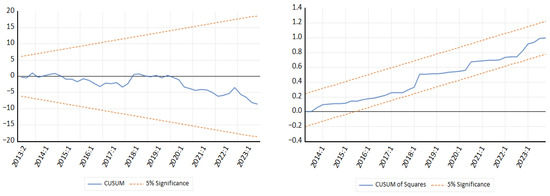
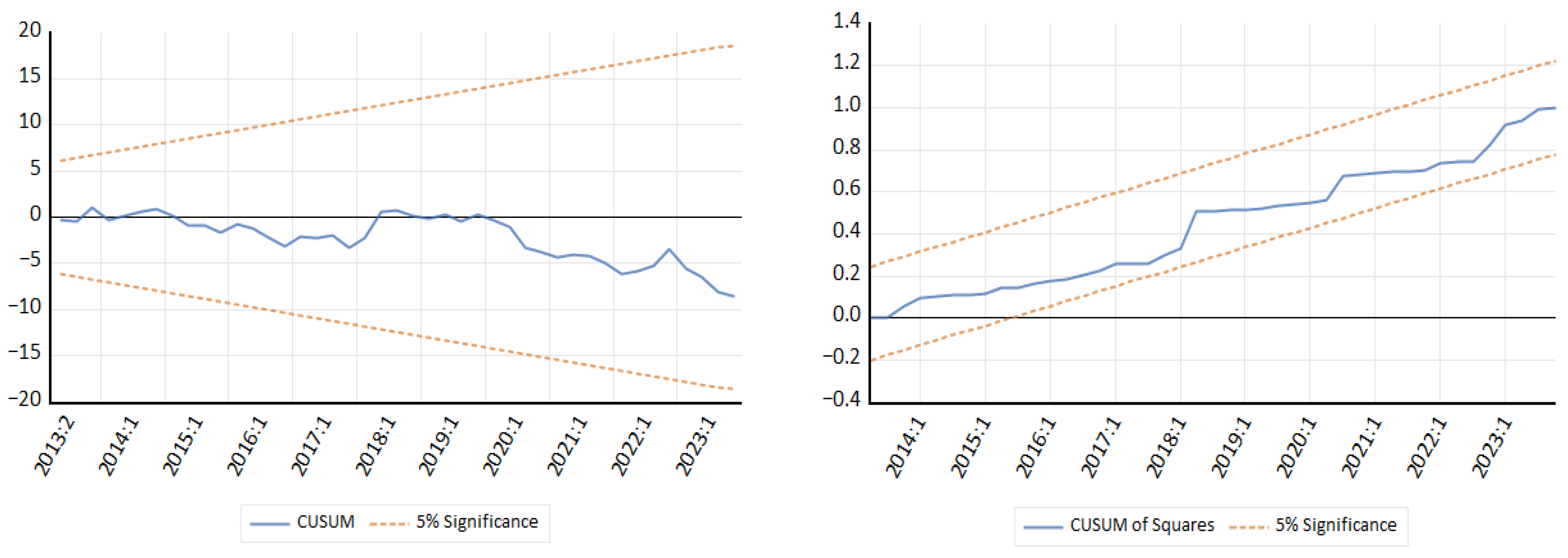
To assess the structural stability of the estimated NARDL for the baseline model (Model 1), both the cumulative sum (CUSUM) and cumulative sum of squares (CUSUMSQ) plots were employed. As illustrated in Figure 7, the plots remain within the 5 percent significance boundaries, indicating that the model is structurally stable over the sample period.
Figure 7.
CUSUM and CUSUMSQ plots of recursive residuals. Source: Authors’ computation.
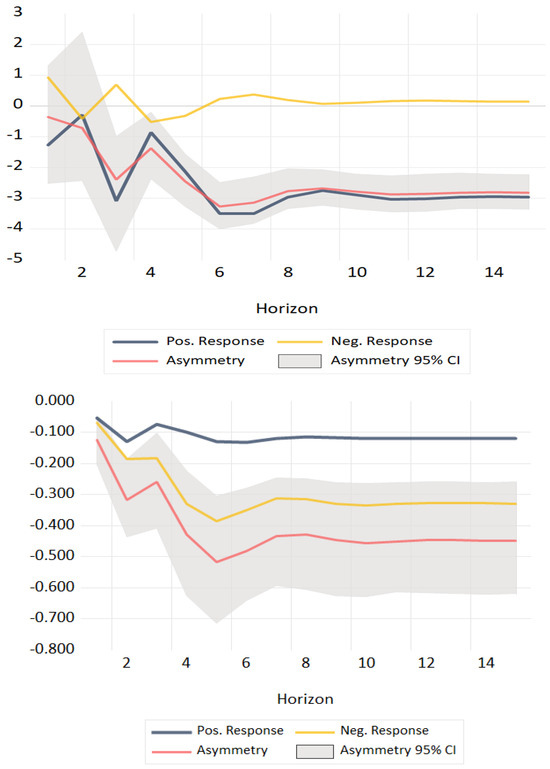
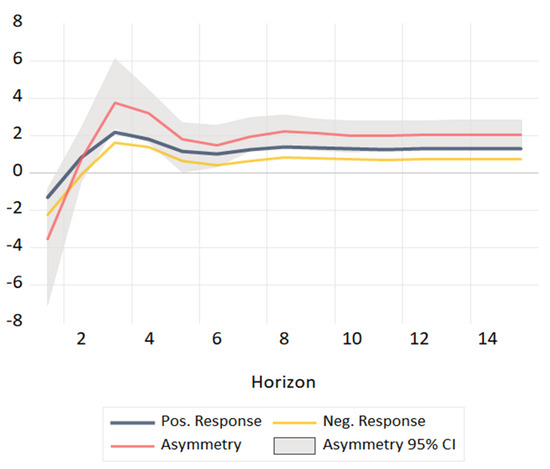
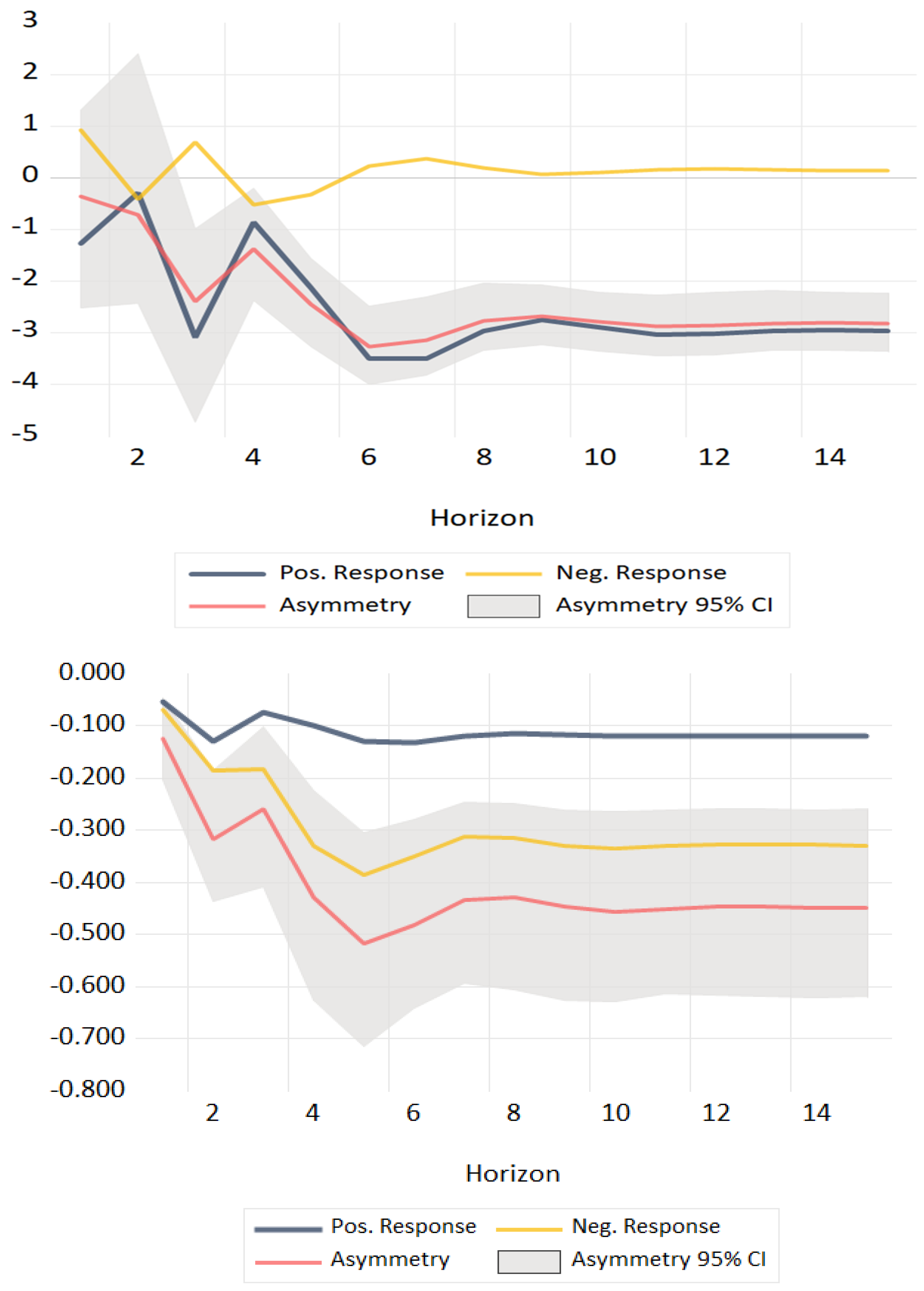
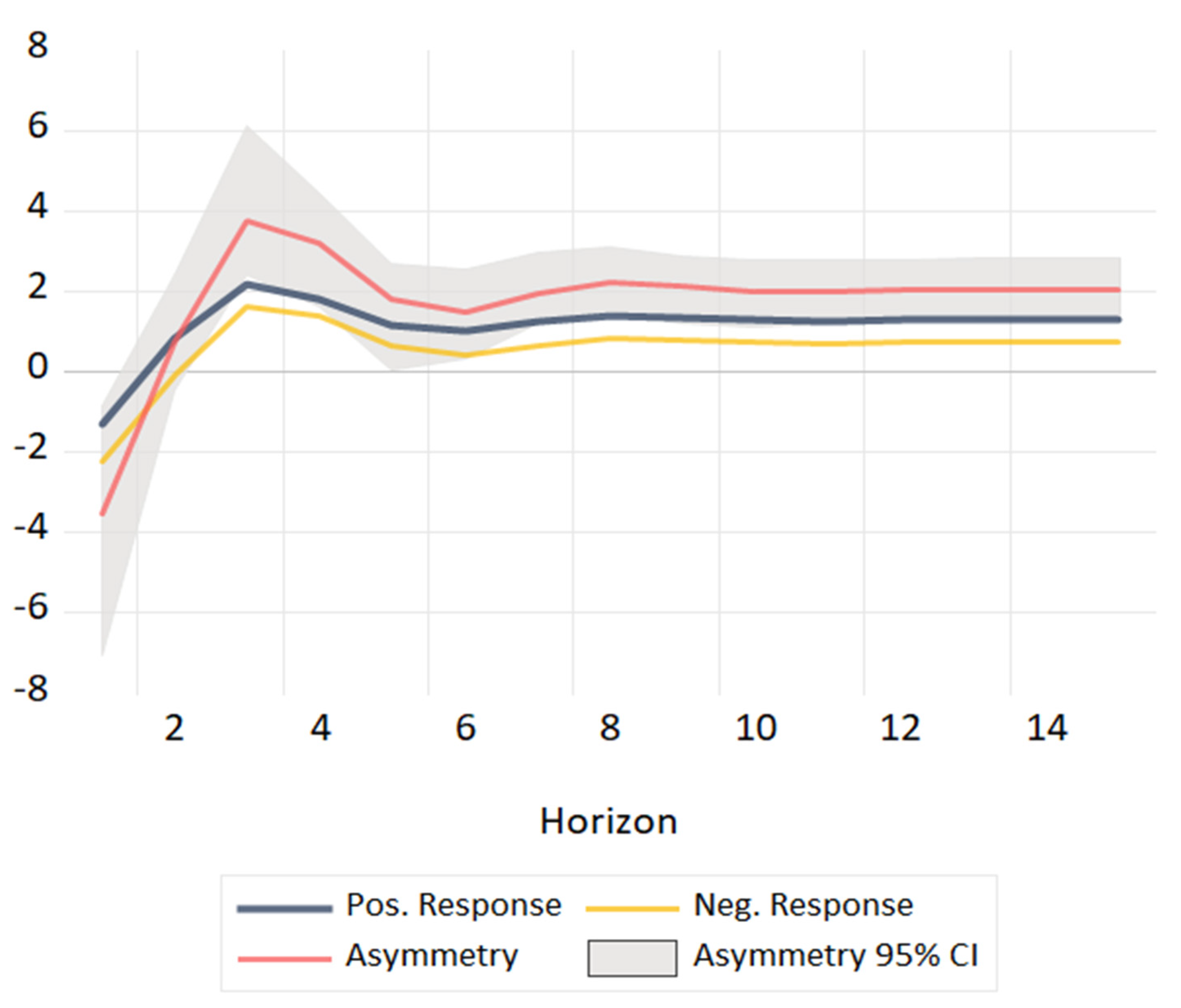
To gain further insight into the adjustment dynamics, the study examines the asymmetric cumulative dynamic multipliers derived from the estimated NARDL model selected based on the lowest AIC. These multipliers trace the evolution of the Financial Stability Index in response to positive and negative shocks to CO2 emissions, rainfall, and temperature over a 15-quarter forecast horizon. The trajectories of the responses are depicted using distinct colour-coded lines, where the blue and yellow lines represent positive and negative climate shocks, respectively. The divergence between these paths illustrates the extent of asymmetry in the adjustment process. In addition, the red line highlights the net difference between the two responses, while the surrounding shaded grey areas indicate the 95 percent bootstrap confidence intervals, as presented in Figure 8.
Figure 8.
Cumulative effects of temperature, rainfall, and CO2 on FSI in Namibia. Source: Authors’ computation.
As shown in Figure 8, all the graphs validate the significant asymmetric response of FSI to shocks in CO2, rainfall, and temperature. The empirical findings show that the cumulative effects of easing temperature or a negative change in temperature dominate the cumulative effects of a positive change in temperature. In particular, the positive temperature shock has a very volatile negative effect on the FSI until period 6, which stabilises after period 10. However, the negative temperature shock has the greatest muted positive effects on the FSI throughout the horizon. In terms of rainfall, an overall negative relationship is observed between shocks in rainfall and FSI. In contrast, CO2 exhibits an overall positive association with financial stability, primarily driven by the stronger influence of positive shocks compared to the effects of negative shocks.
6. Conclusions and Recommendations
Challenges posed by climate change have become one of the greatest concerns in recent years, particularly its impact on financial stability. This paper uses the NARDL approach to cointegration to examine the potential impact of climate change on financial stability in Namibia using quarterly time-series data from the period 2009 to 2023. The study constructs a Financial Stability Index (FSI) used as a proxy for financial stability. This index is used to empirically test the relationship of financial stability against climate variables such as CO2, temperature, and rainfall. The findings indicate a long-term equilibrium relationship between the FSI and climate-related variables. The study finds a negative asymmetric impact of temperature on financial stability. It also reveals that both negative and positive shocks to rainfall patterns reduce the Financial Stability Index, as weather conditions, such as droughts and floods, disrupt agricultural activity and strain the broader financial system. The study further finds that both negative and positive shocks to CO2 emissions improve the Financial Stability Index, suggesting that higher emissions may be associated with increased economic activity, which temporarily supports financial conditions despite potential long-term environmental risks.
The results of this research suggest important policy implications. Firstly, the short-term immediate impact of climate-related shocks highlights the importance of integrating climate-related risks into financial institutions’ risk assessment frameworks. These frameworks should clearly define procedures for identifying vulnerabilities and outline response strategies for managing climate-related shocks. Secondly, this study recommends that financial institutions adopt a long-term risk monitoring and mitigation strategy. This would involve developing adaptive policies that allow for the gradual adjustment of portfolios and investment strategies in response to changes in these variables. Thirdly, financial institutions should aim to actively explore early-warning systems that will assist in identifying and mitigating the potential idiosyncratic risks to their institutions stemming from systemic climate disasters. Finally, for fast-moving hazards, such as floods and storms, regulators should conduct climate testing to assess the resilience of the financial system to sudden and unpredictable climate events. This study is subject to several limitations. One key limitation is that the analysis focuses on system-wide financial stability and does not explicitly model the transmission of climate risks across individual segments of Namibia’s financial system. For instance, while non-bank financial institutions such as insurers and investment fund managers play a significant role, their sector-specific responses to climate shocks are not examined separately. Consequently, the results should be interpreted as aggregate evidence on climate–financial stability linkages rather than sector-level causal effects. Future research could build on this work by incorporating macroeconomic control variables or analysing climate risk transmission within specific financial sub-sectors to provide a more granular insight into how climate risk affects particular institutions or sub-sectors.
Author Contributions
Methodology, J.K., A.E. and V.J.U.; Formal analysis, J.K., A.E. and V.J.U.; Writing—original draft, J.K., A.E. and V.J.U.; Writing—review & editing, J.K., A.E. and V.J.U. All authors have read and agreed to the published version of the manuscript.
Funding
This research received no external funding.
Data Availability Statement
The data presented in this study are available in Bank of Namibia, Namibia Statistics Agency, World Bank and Climate Watch and the Climate Hazards Group InfraRed Precipitation with Station (CHIRPS). These data were derived from the following resources available in the public domain: https://www.bon.com.na/, https://nsa.org.na/, https://data.worldbank.org/ and https://chc.ucsb.edu/data (accessed on 1 December 2025).
Acknowledgments
The authors gratefully acknowledge the insightful comments and constructive suggestions from the anonymous reviewers of Economic Research Southern Africa (ERSA), which significantly enhanced the quality of this paper.
Conflicts of Interest
The authors declare no conflicts of interest.
Notes
| 1 | El Niño is a cyclical event that consistently ravages the region’s economies and agricultural sectors with droughts and water scarcity. |
| 2 | The business-as-usual scenario is projected based on observed emission trends during the baseline period 2000–2010 and the currently available socio-economic information and development plans, inclusive of the impact of the COVID-19 pandemic. The projections are performed on an individual category basis and aggregated to arrive at sector and eventual national levels. |
| 3 | This is the conversion factor recommended by the Global Carbon Project. It comes from the fact that an average CO2 molecule has a mass 3.664 times that of a carbon atom. |
References
- Agbloyor, Elikplimi Kolma, Richard A. Dwumfour, Lei Pan, and Alfred Yawson. 2021. Carbon Emissions and Banking Stability: Global Evidence. Munich: University Library of Munich. [Google Scholar]
- Amo-Bediako, Emmanuel, Oliver Takawira, and Ireen Choga. 2023. The impact of climate change on the resilience of banking systems in selected sub-Saharan economies. International Journal of Applied Economics, Finance and Accounting 17: 469–82. [Google Scholar] [CrossRef] [Scilit]
- Bank of Namibia (BoN). 2024. Financial Stability Report, 2023. Windhoek: Bank of Namibia. [Google Scholar]
- Batten, Sandra, Rhiannon Sowerbutts, and Misa Tanaka. 2016. Let’s Talk About the Weather: The Impact of Climate Change on Central Banks. London: Bank of England. [Google Scholar]
- BIS. 2022. Principles for the Effective Management and Supervision of Climate-Related Financial Risks. Basel: BIS. [Google Scholar]
- Bovari, Emmanuel, Gaël Giraud, and Florent Mc Isaac. 2018. Coping with collapse: A stock-flow consistent monetary macrodynamics of global warming. Ecological Economics 147: 383–98. [Google Scholar] [CrossRef] [Scilit]
- Carney, Mark. 2015. Breaking the tragedy of the horizon–climate change and financial stability. In Speech. Speech Given at Lloyd’s of London. London: Bank of England, vol. 29, pp. 220–30. [Google Scholar]
- Dafermos, Yannis, Maria Nikolaidi, and Giorgos Galanis. 2018. Climate change, financial stability and monetary policy. Ecological Economics 152: 219–34. [Google Scholar] [CrossRef] [Scilit]
- Diallo, Mamadou N., Mamadou M. Bah, and Seydou N. Ndiaye. 2023. Climate risk and financial stress in ECOWAS. Journal of Climate Finance 5: 100025. [Google Scholar] [CrossRef] [Scilit]
- Dietz, Simon, Alex Bowen, Charlie Dixon, and Philip Gradwell. 2016. Climate value at risk of global financial assets. Nature Climate Change 6: 676–79. [Google Scholar] [CrossRef] [Scilit]
- European Central Bank. 2021. Climate-related risks to financial stability. In ECB Macroprudential Bulletin. Frankfurt am Main: European Central Bank, pp. 12–13. [Google Scholar]
- European Systemic Risk Board Project Team on Climate Risk Monitoring. 2021. Climate-Related Risk and Financial Stability. Frankfurt am Main: European Central Bank. [Google Scholar]
- Fabris, Nikola. 2020. Financial stability and climate change. Journal of Central Banking Theory and Practice 9: 27–43. [Google Scholar] [CrossRef] [Scilit]
- Financial Stability Board (FSB). 2020. The Implications of Climate Change for Financial Stability. Available online: https://www.fsb.org/2020/11/fsb-examines-financial-stability-implications-of-climate-change/ (accessed on 30 January 2024).
- Government of Namibia (GRN). 2023. Namibia’s Nationally Determined Contribution (NDC) Second Update of Namibia’s Emission Baseline Projections and Impact on NDC Target. Windhoek: Government of Namibia. [Google Scholar]
- International Monetary Fund (IMF). 2019. The Economics of Climate Change: Fiscal Risks and Opportunities. IMF Fiscal Monitor. Available online: https://www.imf.org/en/Publications/fandd/issues/2019/12/climate-change-central-banks-and-financial-risk-grippa (accessed on 30 January 2024).
- International Monetary Fund (IMF). 2023. Global Financial Stability Report: Financial and Climate Policies for a High-Interest-Rate Era. Washington, DC: International Monetary Fund. Available online: https://www.imf.org/en/Publications/GFSR/Issues/2023/10/10/global-financial-stability-report-october-2023 (accessed on 6 February 2024).
- IPCC. 2021. Summary for policymakers. In Climate Change 2021: The Physical Science Basis. Edited by Valérie Masson-Delmotte, Panmao Zhai, Anna Pirani, Sarah L. Connors, Clotilde Péan, Sophie Berger, Nathalie Caud, Yong Chen, Leah Goldfarb, Melissa I. Gomis and et al. Contribution of Working Group I to the Sixth Assessment Report of the Intergovernmental Panel on Climate Change. Geneva: Intergovernmental Panel on Climate Change. [Google Scholar]
- Liu, Zhonglu, Haibo Sun, and Songlin Tang. 2021. Assessing the impacts of climate change to financial stability: Evidence from China. International Journal of Climate Change Strategies and Management 13: 375–93. [Google Scholar] [CrossRef] [Scilit]
- Liu, Zhonglu, Shuguang He, Wenjiao Men, and Haibo Sun. 2024. Impact of climate risk on financial stability: Cross-country evidence. International Review of Financial Analysis 92: 103096. [Google Scholar] [CrossRef] [Scilit]
- Ministry of Finance. 2025. The Namibia Financial Sector Transformation Strategy: 2025–2035; Windhoek: Ministry of Finance. Available online: https://www.bon.com.na/CMSTemplates/Bon/Files/bon.com.na/69/69d02c71-5762-41b5-949e-76cff74ac75b.pdf (accessed on 23 December 2025).
- Network for Greening the Financial System (NGFS). 2019. Technical Supplement to the First NGFS Comprehensive Report: Macroeconomic and Financial Stability Impacts of Climate Change. Available online: https://www.ngfs.net/en/publications-and-statistics/publications/technical-supplement-first-ngfs-comprehensive-report (accessed on 24 January 2024).
- Noth, Felix, and Ulrich Schüwer. 2023. Natural disasters and bank stability: Evidence from the US financial system. Journal of Environmental Economics and Management 119: 102792. [Google Scholar] [CrossRef] [Scilit]
- Nur, Tugba, Serkan Sahin, Emre E. Topaloglu, and Ilhan Ege. 2023. Evaluating the impact of climate risk on financial access and stability in G20 countries: A panel data approach (2006–2017). The Journal of Corporate Governance, Insurance, and Risk Management 10: 125–39. [Google Scholar] [CrossRef] [Scilit]
- Odongo, Maureen T., Roseline N. Misati, Anne W. Kamau, and Kethi N. Kisingu. 2022. Climate change and inflation in Eastern and Southern Africa. Sustainability 14: 14764. [Google Scholar] [CrossRef] [Scilit]
- Pesaran, Mohammad Hashem, and Yongcheol Shin. 1999. An Autoregressive Distributed Lag Modelling Approach to Cointegration Analysis. Cambridge: Department of Applied Economics, University of Cambridge, vol. 9514. [Google Scholar]
- Pesaran, Mohammad Hashem, Yongcheol Shin, and Richard J. Smith. 2001. Bounds testing approaches to the analysis of level relationships. Journal of Applied Econometrics 16: 289–326. [Google Scholar] [CrossRef] [Scilit]
- Shin, Yongcheol, Byungchul Yu, and Matthew Greenwood-Nimmo. 2014. Modelling asymmetric cointegration and dynamic multipliers in a nonlinear ARDL framework. In Festschrift in Honor of Peter Schmidt: Econometric Methods and Applications. New York: Springer, pp. 281–314. [Google Scholar]
- World Bank. 2021. Climate Risk Profile: Namibia. Washington, DC: The World Bank Group. [Google Scholar]
- Yesigat, Abate, T. Koteswara Rao, and G. Nagaraja. 2018. Determinants of Demand for Money and its Stability in Ethiopia. International Journal of Research and Analytical Reviews 5: 349–60. [Google Scholar]

Disclaimer/Publisher’s Note: The statements, opinions and data contained in all publications are solely those of the individual author(s) and contributor(s) and not of MDPI and/or the editor(s). MDPI and/or the editor(s) disclaim responsibility for any injury to people or property resulting from any ideas, methods, instructions or products referred to in the content. |
© 2026 by the authors. Licensee MDPI, Basel, Switzerland. This article is an open access article distributed under the terms and conditions of the Creative Commons Attribution (CC BY) license.