Article

Branching Random Walks with Ageing

1
Dipartimento di Matematica e Applicazioni, Università di Milano-Bicocca, Via Cozzi 53, 20125 Milano, Italy
2
Dipartimento di Scienze Statistiche, Sapienza Università di Roma, Piazzale Aldo Moro 5, 00185 Roma, Italy
3
Dipartimento di Matematica, Politecnico di Milano, Piazza Leonardo da Vinci 32, 20133 Milano, Italy
*
Author to whom correspondence should be addressed.
Mathematics 2026, 14(6), 1088; https://doi.org/10.3390/math14061088
Submission received: 26 February 2026 / Revised: 19 March 2026 / Accepted: 21 March 2026 / Published: 23 March 2026
(This article belongs to the Section D1: Probability and Statistics)

Abstract

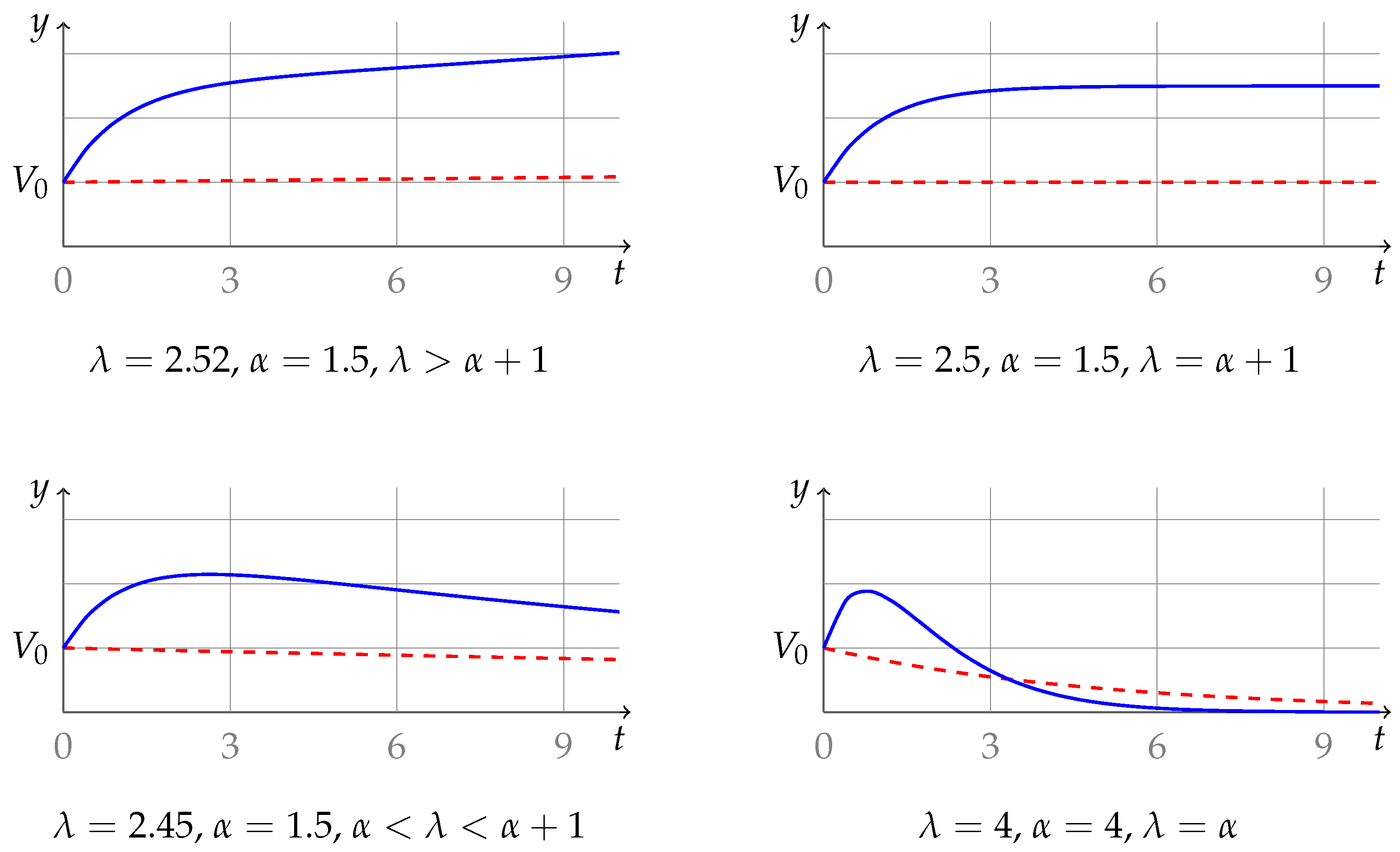
Branching processes are stochastic models describing the evolution of populations in which individuals reproduce and die independently over time. In the classical setting, an individual’s reproductive capacity is fixed throughout its lifetime. However, in real-world situations, fertility typically rises during a juvenile phase, peaks at maturity, and subsequently declines. In order to capture this feature, we introduce a branching random walk with ageing, as an extension of the classical branching random walk, by assigning each individual an age-dependent reproductive rate. Our model differs from classical age-dependent processes such as the Bellman–Harris model, where the remaining lifespan depends on age, while the rate of reproduction is fixed within that lifetime. As in the classical case, branching random walks with ageing are parametrised by λ>0, which tunes the reproductive speed and may be seen as a characteristic of the population. The thresholds of λ separating extinction and survival are the global and local critical parameters. We characterise the value of the local critical parameter and provide a lower bound for the global critical parameter. We identify a class of ageing branching random walks for which this lower bound coincides with the global critical parameter. We study how local modifications to the reproduction and ageing rates may change the critical parameters. This is of practical interest: in species preservation, one may want to lower the critical parameters, so that λ exceeds them, and there is a positive probability of survival. On the other hand, in epidemic control, the goal is to increase the critical parameters, since if λ is below them, then the epidemic is eventually going to disappear. We compute the expected number of individuals alive in a branching process with ageing and show that, contrary to the behaviour of classical branching processes, it may exhibit an initial growth even when the population is ultimately destined for extinction.
Keywords: branching random walk; branching process; ageing; critical parameters; local survival; global survival; pure global survival phase branching random walk; branching process; ageing; critical parameters; local survival; global survival; pure global survival phase