Article

Toward Optimal Robot Machining Considering the Workpiece Surface Geometry in a Task-Oriented Approach

Faculty of Electrical Engineering and Computer Science, University of Maribor, Koroška cesta 46, SI-2000 Maribor, Slovenia
Mathematics 2024, 12(2), 257; https://doi.org/10.3390/math12020257
Submission received: 27 November 2023 / Revised: 10 January 2024 / Accepted: 11 January 2024 / Published: 12 January 2024
(This article belongs to the Special Issue Mathematical Modeling in Nonlinear Control and Robotics)

Abstract

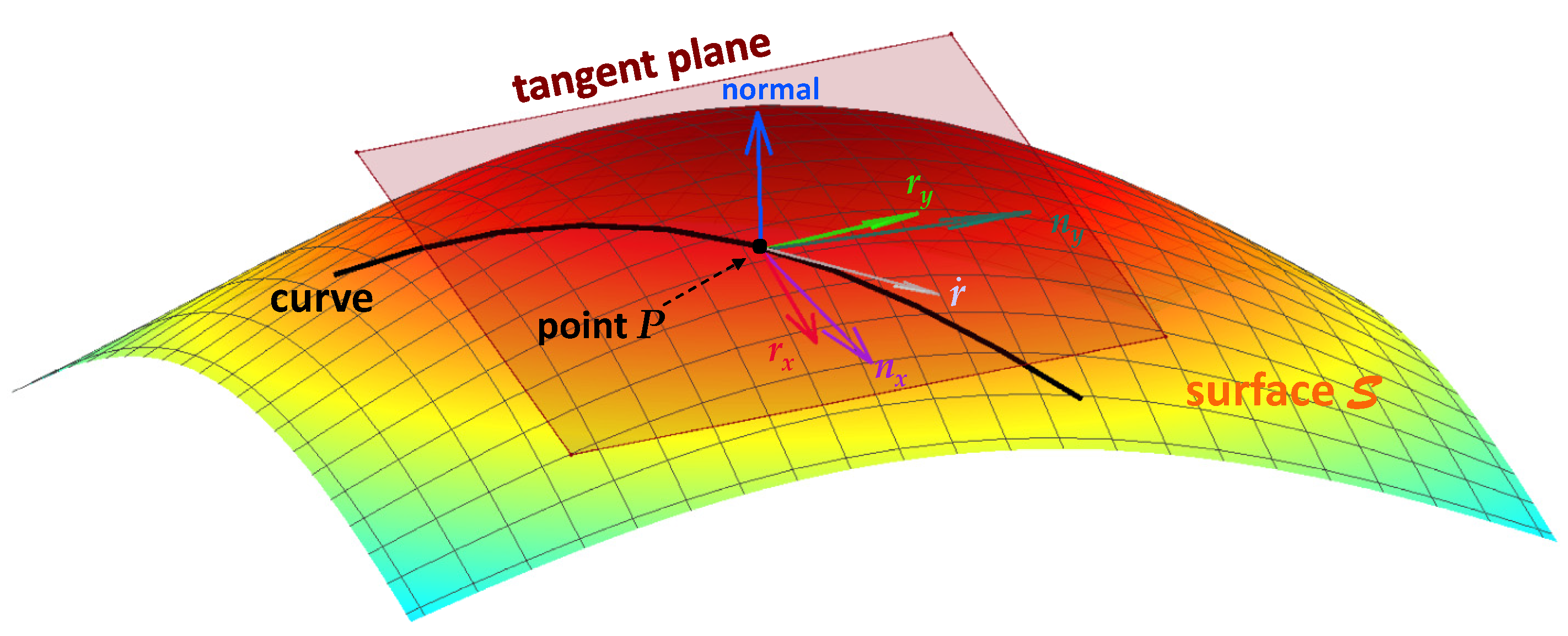
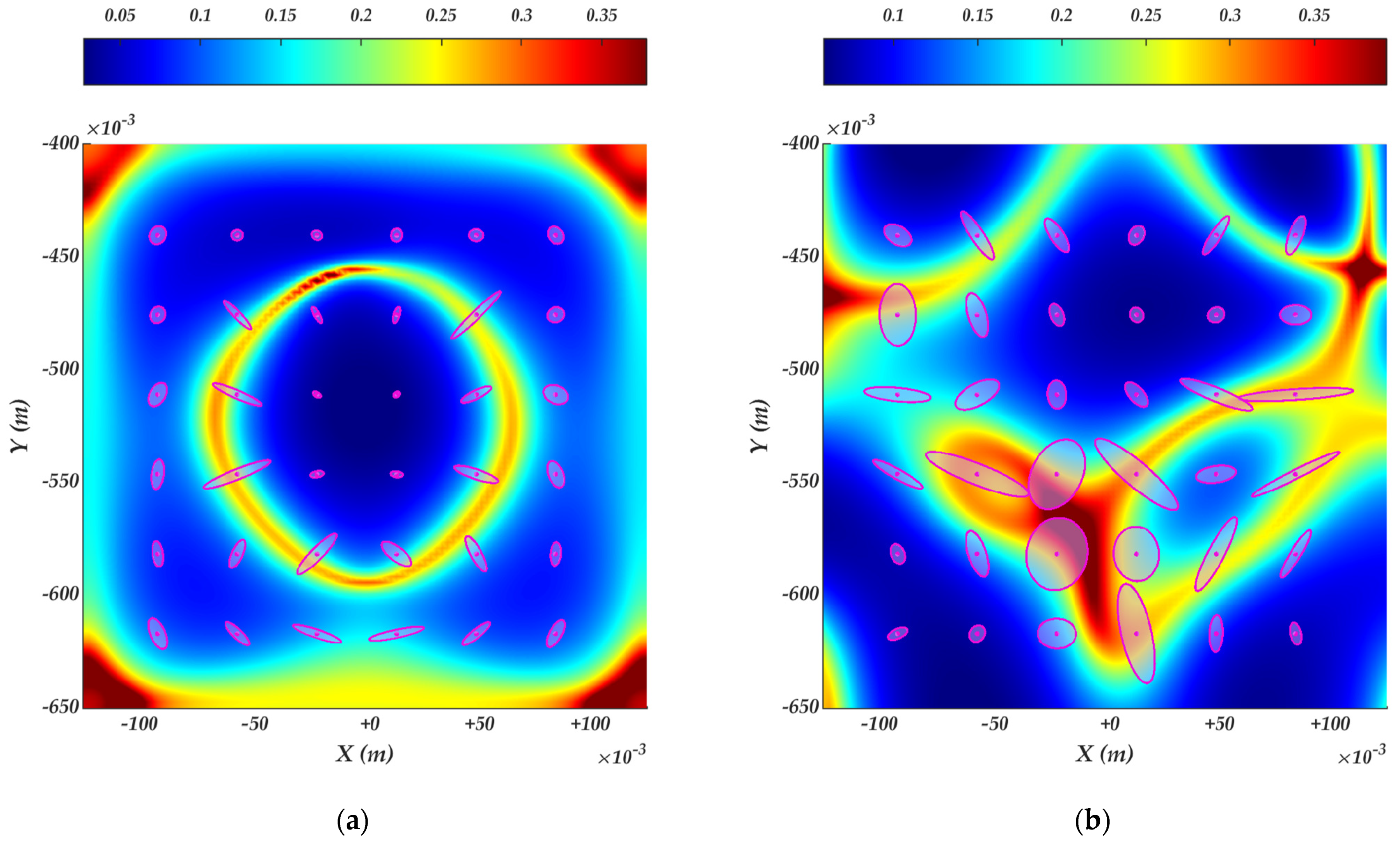
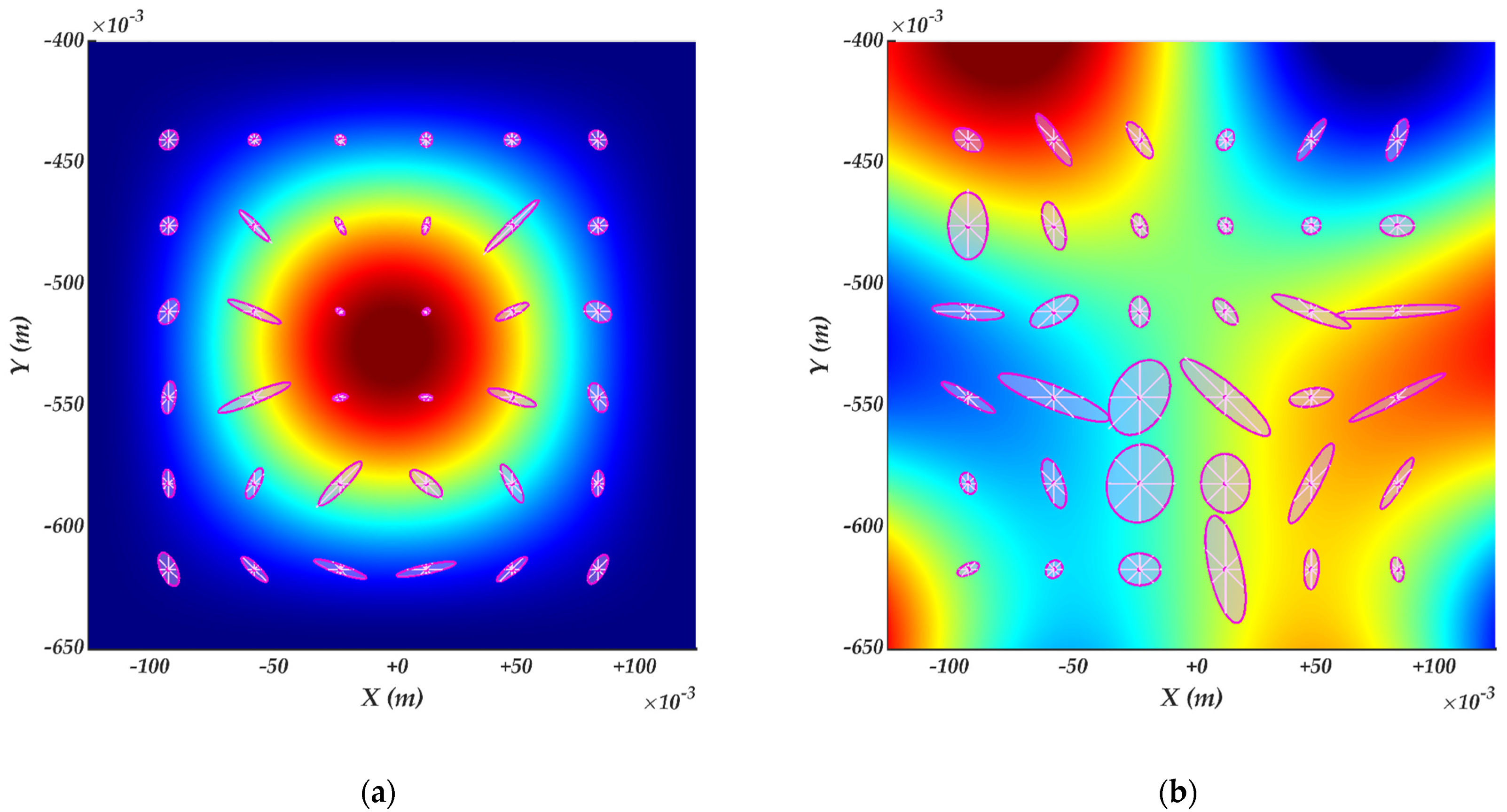
Robot workpiece machining is interesting in industry as it offers some advantages, such as higher flexibility in comparison with the conventional approach based on CNC technology. However, in recent years, we have been facing a strong progressive shift to custom-based manufacturing and low-volume/high-mix production, which require a novel approach to automation via the employment of collaborative robotics. However, collaborative robots feature only limited motion capability to provide safety in cooperation with human workers. Thus, it is highly necessary to perform more detailed robot task planning to ensure its feasibility and optimal performance. In this paper, we deal with the problem of studying kinematic robot performance in the case of such manufacturing tasks, where the robot tool is constrained to follow the machining path embedded on the workpiece surface at a prescribed orientation. The presented approach is based on the well-known concept of manipulability, although the latter suffers from physical inconsistency due to mixing different units of linear and angular velocity in a general 6 DOF task case. Therefore, we introduce the workpiece surface constraint in the robot kinematic analysis, which enables an evaluation of its available velocity capability in a reduced dimension space. Such constrained robot kinematics transform the robot’s task space to a two-dimensional surface tangent plane, and the manipulability analysis may be limited to the space of linear velocity only. Thus, the problem of physical inconsistency is avoided effectively. We show the theoretical derivation of the proposed method, which was verified by numerical experiments.
Keywords: robotics; automation; robot machining; workpiece surface polishing; collaborative robot; manipulability; complex surface geometry; motion planning robotics; automation; robot machining; workpiece surface polishing; collaborative robot; manipulability; complex surface geometry; motion planning