
Efficient Trajectory Planning for Optimizing Energy Consumption and Completion Time in UAV-Assisted IoT Networks


Abstract
:1. Introduction
1.1. Energy Consumption Model
1.2. Trajectory Optimization Method
1.3. Overview of the Proposed Method
2. Materials and Methods
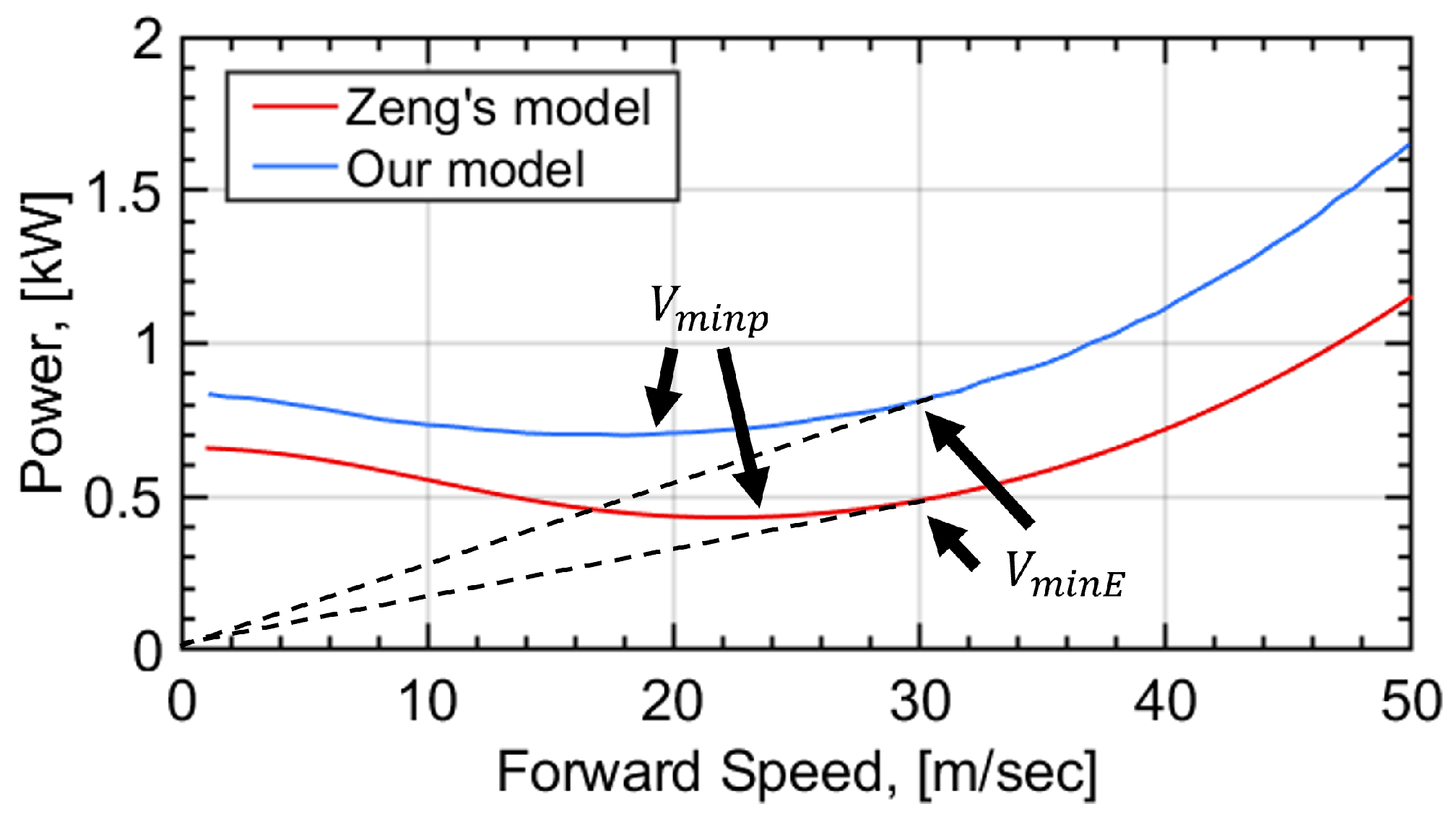
2.1. UAV Energy Consumption Model
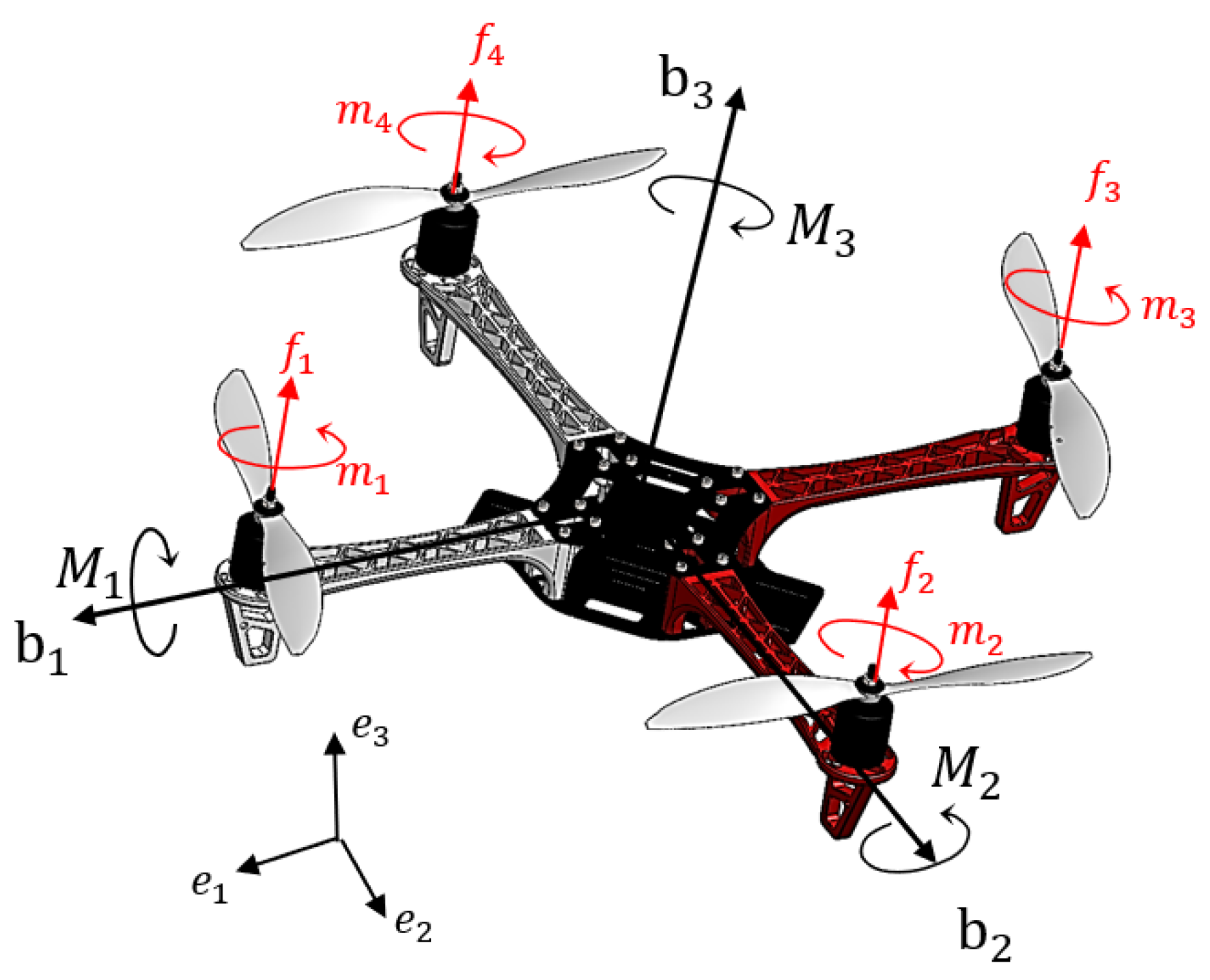
2.1.1. Dynamic Model of a Quadrotor UAV
2.1.2. Thrust Coefficient and Torque Coefficient

| Parameter | Value | Parameter | Value |
|---|---|---|---|
| mass | kg | gravity | N/kg |
| rotor radius | m | rotor location | m |
| lift slope | rotor disk area | m2 | |
| fuselage equivalent flat plate area | m2 | air density | kg/m3 |
| collective pitch angle | rad | profile drag coefficient | |
| incremental correction factor | rotor solid | ||
| viscous damping coefficient | Nms/rad | voltage constant | Vs/rad |
| motor resistance | Ω | moment of inertia x | kgm2 |
| moment of inertia y | kgm2 | moment of inertia z | kgm2 |
2.1.3. BLDC Motor Dynamic Model
2.1.4. Energy Consumption Calculation
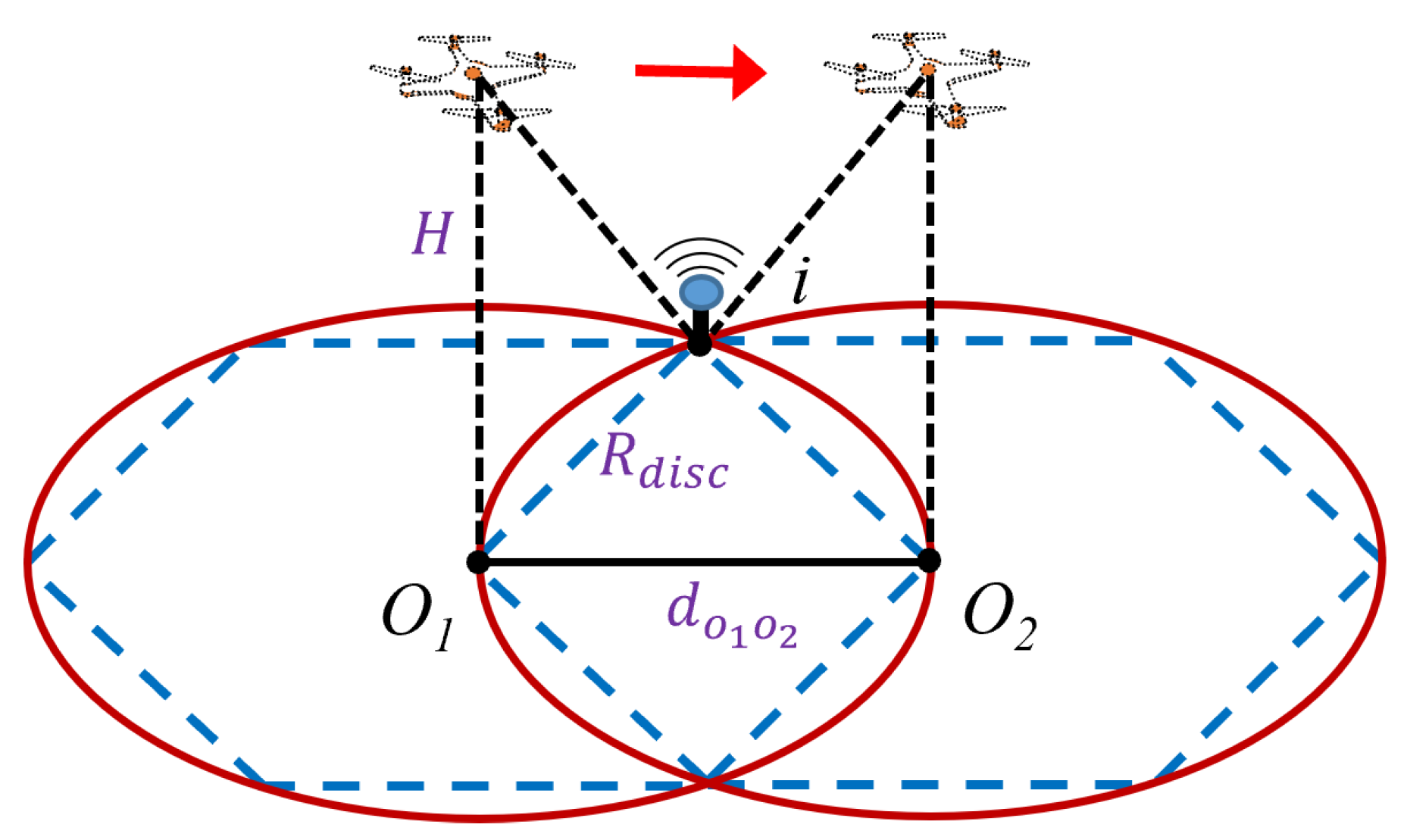
2.2. Communication Model for Mobile IoT Networks
2.3. Trajectory Planning
2.3.1. Optimization Problem
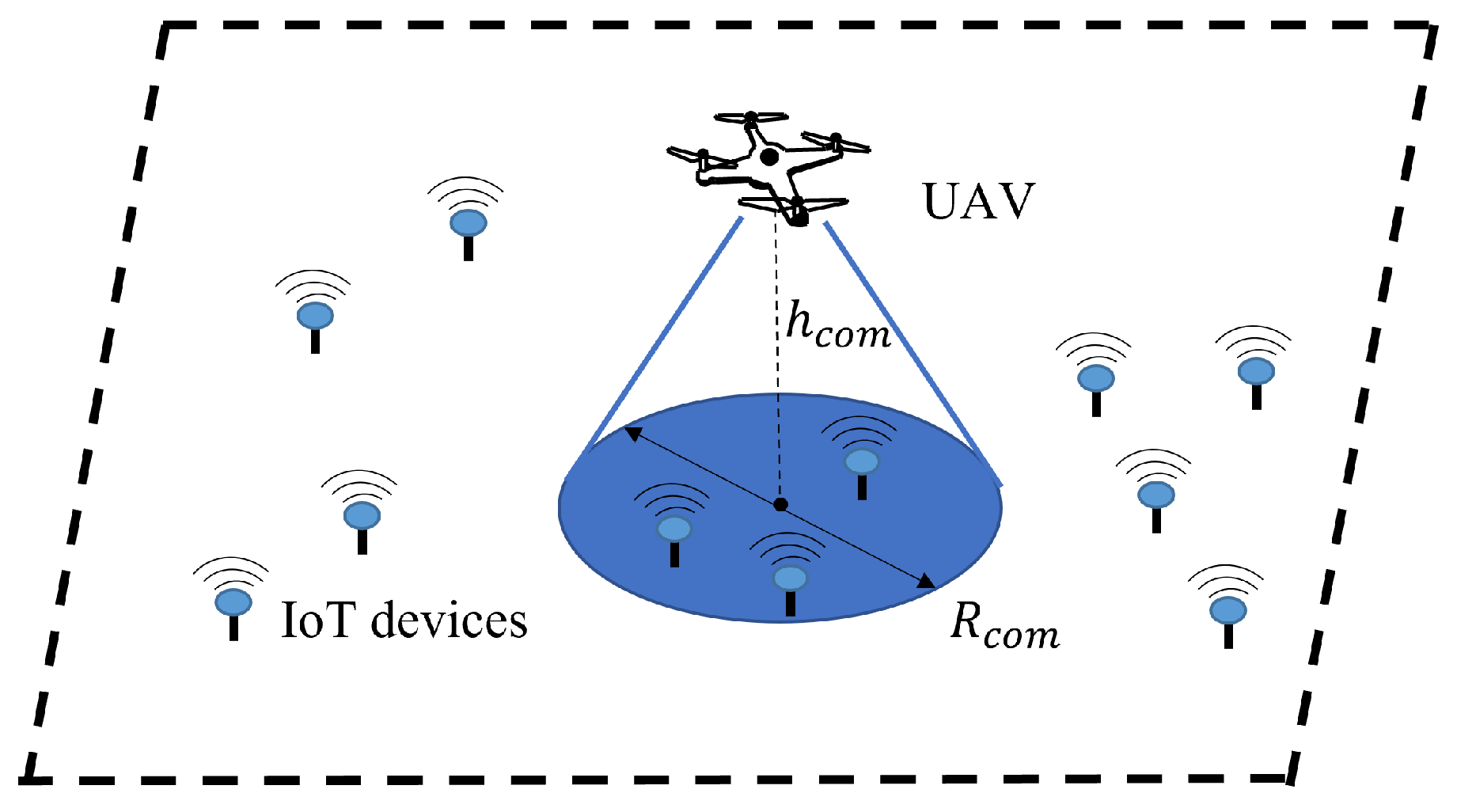
2.3.2. Disk Cover Clustering
| Algorithm 1: Disk Cover Problem based on GAK-means Algorithm. |
|
2.3.3. Clustered Disk Connection
2.3.4. Three-Dimensional Dubins Curve Connection
| Algorithm 2: FCC Trajectory Planning Algorithm. |
|
3. Results
3.1. Benchmark TSP Approach
3.2. Zigzag Approach
3.3. The Proposed Approach
3.4. Comparison and Discussion
4. Conclusions
- An intelligently designed clustering algorithm is introduced to cluster IoT devices with optimal coverage radii, enhancing the energy efficiency of both the UAV and the IoT network.
- A methodology for designing trajectories with optimized energy consumption and completion time using circular paths and 3D Dubins curves in UAV-assisted communication networks is derived, providing physically achievable trajectory planning for UAVs.
- The proposed methodology significantly reduces the overall communication time and conserves more energy compared to other classical benchmark schemes.
Author Contributions
Funding
Data Availability Statement
Acknowledgments
Conflicts of Interest
Abbreviations
| BLDC | Brushless direct current |
| CoG | Center of gravity |
| FCC | Fly–circle–communicate |
| GA | Genetic Algorithm |
| IoT | Internet of Things |
| LoS | Line-of-sight |
| NLoS | Non-line-of-sight |
| TSP | Traveling salesman problem |
| UAV | Unmanned aerial vehicle |
| WSN | Wireless sensor network |
References
- Boursianis, A.D.; Papadopoulou, M.S.; Diamantoulakis, P.; Liopa-Tsakalidi, A.; Barouchas, P.; Salahas, G.; Karagiannidis, G.; Wan, S.; Goudos, S.K. Internet of things (IoT) and agricultural unmanned aerial vehicles (UAVs) in smart farming: A comprehensive review. Internet Things 2022, 18, 100187. [Google Scholar] [CrossRef]
- Sony, S.; Laventure, S.; Sadhu, A. A literature review of next-generation smart sensing technology in structural health monitoring. Struct. Control. Health Monit. 2019, 26, e2321. [Google Scholar] [CrossRef]
- Mozaffari, M.; Saad, W.; Bennis, M.; Nam, Y.H.; Debbah, M. A tutorial on UAVs for wireless networks: Applications, challenges, and open problems. IEEE Commun. Surv. Tutor. 2019, 21, 2334–2360. [Google Scholar] [CrossRef]
- Zhao, N.; Lu, W.; Sheng, M.; Chen, Y.; Tang, J.; Yu, F.R.; Wong, K.K. UAV-assisted emergency networks in disasters. IEEE Wirel. Commun. 2019, 26, 45–51. [Google Scholar] [CrossRef]
- Ahmed, S.; Chowdhury, M.Z.; Jang, Y.M. Energy-efficient UAV relaying communications to serve ground nodes. IEEE Commun. Lett. 2020, 24, 849–852. [Google Scholar] [CrossRef]
- Zhan, C.; Zeng, Y. Aerial–ground cost tradeoff for multi-UAV-enabled data collection in wireless sensor networks. IEEE Trans. Commun. 2019, 68, 1937–1950. [Google Scholar] [CrossRef]
- Du, R.; Gkatzikis, L.; Fischione, C.; Xiao, M. Energy efficient sensor activation for water distribution networks based on compressive sensing. IEEE J. Sel. Areas Commun. 2015, 33, 2997–3010. [Google Scholar] [CrossRef]
- Ouyang, F.; Cheng, H.; Lan, Y.; Zhang, Y.; Yin, X.; Hu, J.; Peng, X.; Wang, G.; Chen, S. Automatic delivery and recovery system of Wireless Sensor Networks (WSN) nodes based on UAV for agricultural applications. Comput. Electron. Agric. 2019, 162, 31–43. [Google Scholar] [CrossRef]
- Baek, H.; Lim, J. Design of future UAV-relay tactical data link for reliable UAV control and situational awareness. IEEE Commun. Mag. 2018, 56, 144–150. [Google Scholar] [CrossRef]
- Bouabdallah, S.; Noth, A.; Siegwart, R. PID vs LQ control techniques applied to an indoor micro quadrotor. In Proceedings of the 2004 IEEE/RSJ International Conference on Intelligent Robots and Systems (IROS) (IEEE Cat. No. 04CH37566), Sendai, Japan, 28 September–2 October 2004; Volume 3, pp. 2451–2456. [Google Scholar]
- Bouabdallah, S.; Siegwart, R. Backstepping and sliding-mode techniques applied to an indoor micro quadrotor. In Proceedings of the 2005 IEEE International Conference on Robotics and Automation, Barcelona, Spain, 18–22 April 2005; pp. 2247–2252. [Google Scholar]
- Mahony, R.; Kumar, V.; Corke, P. Multirotor aerial vehicles: Modeling, estimation, and control of quadrotor. IEEE Robot. Autom. Mag. 2012, 19, 20–32. [Google Scholar] [CrossRef]
- Lee, T.; Leok, M.; McClamroch, N.H. Geometric tracking control of a quadrotor UAV on SE (3). In Proceedings of the 49th IEEE conference on decision and control (CDC), Atlanta, GA, USA, 15–17 December 2010; pp. 5420–5425. [Google Scholar]
- Goodarzi, F.; Lee, D.; Lee, T. Geometric nonlinear PID control of a quadrotor UAV on SE (3). In Proceedings of the 2013 European Control Conference (ECC), Zurich, Switzerland, 17–19 July 2013; pp. 3845–3850. [Google Scholar]
- Quan, Q.; Fu, R.; Li, M.; Wei, D.; Gao, Y.; Cai, K.Y. Practical distributed control for VTOL UAVs to pass a virtual tube. IEEE Trans. Intell. Veh. 2021, 7, 342–353. [Google Scholar] [CrossRef]
- Zhu, C.; Chen, J.; Zhang, H. Attitude control for quadrotors under unknown disturbances using triple-step method and nonlinear integral sliding mode. IEEE Trans. Ind. Electron. 2022, 70, 5004–5012. [Google Scholar] [CrossRef]
- Zeng, Y.; Zhang, R.; Lim, T.J. Wireless communications with unmanned aerial vehicles: Opportunities and challenges. IEEE Commun. Mag. 2016, 54, 36–42. [Google Scholar] [CrossRef]
- Zhan, C.; Zeng, Y.; Zhang, R. Energy-efficient data collection in UAV enabled wireless sensor network. IEEE Wirel. Commun. Lett. 2017, 7, 328–331. [Google Scholar] [CrossRef]
- Abeywickrama, H.V.; Jayawickrama, B.A.; He, Y.; Dutkiewicz, E. Empirical power consumption model for uavs. In Proceedings of the 2018 IEEE 88th Vehicular Technology Conference (VTC-Fall), Chicago, IL, USA, 27–30 August 2018; pp. 1–5. [Google Scholar]
- Di Franco, C.; Buttazzo, G. Energy-aware coverage path planning of UAVs. In Proceedings of the 2015 IEEE International Conference on Autonomous Robot Systems and Competitions, Vila Real, Portugal, 8–10 April 2015; pp. 111–117. [Google Scholar]
- Bramwell, A.R.S.; Balmford, D.; Done, G. Bramwell’s Helicopter Dynamics; Elsevier: Amsterdam, The Netherlands, 2001. [Google Scholar]
- Filippone, A. Flight Performance of Fixed and Rotary Wing Aircraft; Elsevier: Amsterdam, The Netherlands, 2006. [Google Scholar]
- Zeng, Y.; Xu, J.; Zhang, R. Energy minimization for wireless communication with rotary-wing UAV. IEEE Trans. Wirel. Commun. 2019, 18, 2329–2345. [Google Scholar] [CrossRef]
- Powers, C.; Mellinger, D.; Kushleyev, A.; Kothmann, B.; Kumar, V. Influence of aerodynamics and proximity effects in quadrotor flight. In Experimental Robotics: The 13th International Symposium on Experimental Robotics; Springer: Berlin/Heidelberg, Germany, 2013; pp. 289–302. [Google Scholar]
- Fay, G. Derivation of the Aerodynamic Forces for the Mesicopter Simulation; Standord University: Stanford, CA, USA, 2001. [Google Scholar]
- Hoffmann, G.; Huang, H.; Waslander, S.; Tomlin, C. Quadrotor helicopter flight dynamics and control: Theory and experiment. In Proceedings of the AIAA Guidance, Navigation and Control Conference and Exhibit, Hilton Head, SC, USA, 20–23 August 2007; p. 6461. [Google Scholar]
- Jia, G.; Li, C.; Li, M. Energy-Efficient Trajectory Planning for Smart Sensing in IoT Networks Using Quadrotor UAVs. Sensors 2022, 22, 8729. [Google Scholar] [CrossRef] [PubMed]
- Yang, D.; Wu, Q.; Zeng, Y.; Zhang, R. Energy tradeoff in ground-to-UAV communication via trajectory design. IEEE Trans. Veh. Technol. 2018, 67, 6721–6726. [Google Scholar] [CrossRef]
- Ning, Z.; Yang, Y.; Wang, X.; Guo, L.; Gao, X.; Guo, S.; Wang, G. Dynamic computation offloading and server deployment for UAV-enabled multi-access edge computing. IEEE Trans. Mob. Comput. 2021, 22, 2628–2644. [Google Scholar] [CrossRef]
- Zeng, Y.; Xu, X.; Zhang, R. Trajectory design for completion time minimization in UAV-enabled multicasting. IEEE Trans. Wirel. Commun. 2018, 17, 2233–2246. [Google Scholar] [CrossRef]
- Tran, D.H.; Vu, T.X.; Chatzinotas, S.; ShahbazPanahi, S.; Ottersten, B. Coarse trajectory design for energy minimization in UAV-enabled. IEEE Trans. Veh. Technol. 2020, 69, 9483–9496. [Google Scholar] [CrossRef]
- Lyu, J.; Zeng, Y.; Zhang, R.; Lim, T.J. Placement optimization of UAV-mounted mobile base stations. IEEE Commun. Lett. 2016, 21, 604–607. [Google Scholar] [CrossRef]
- Galkin, B.; Kibilda, J.; DaSilva, L.A. Deployment of UAV-mounted access points according to spatial user locations in two-tier cellular networks. In Proceedings of the 2016 Wireless Days (WD), Toulouse, France, 23–25 March 2016; pp. 1–6. [Google Scholar]
- Li, F.; He, C.; Li, X.; Peng, J.; Yang, K. Geometric Analysis-Based 3D Anti-Block UAV Deployment for mmWave Communications. IEEE Commun. Lett. 2022, 26, 2799–2803. [Google Scholar] [CrossRef]
- Qu, H.; Zhang, W.; Zhao, J.; Luan, Z.; Chang, C. Rapid deployment of UAVs based on bandwidth resources in emergency scenarios. In Proceedings of the 2020 Information Communication Technologies Conference (ICTC), Nanjing, China, 29–31 May 2020; pp. 86–90. [Google Scholar]
- Mozaffari, M.; Saad, W.; Bennis, M.; Debbah, M. Unmanned aerial vehicle with underlaid device-to-device communications: Performance and tradeoffs. IEEE Trans. Wirel. Commun. 2016, 15, 3949–3963. [Google Scholar] [CrossRef]
- Mozaffari, M.; Saad, W.; Bennis, M.; Debbah, M. Efficient deployment of multiple unmanned aerial vehicles for optimal wireless coverage. IEEE Commun. Lett. 2016, 20, 1647–1650. [Google Scholar] [CrossRef]
- Al-Hourani, A.; Kandeepan, S.; Lardner, S. Optimal LAP altitude for maximum coverage. IEEE Wirel. Commun. Lett. 2014, 3, 569–572. [Google Scholar] [CrossRef]
- Jia, G.; Ding, B.; Li, M. Mathematical Derivation and Simulational Verification for Aggressive Quadrotor Perching Control. In Proceedings of the 2021 China Automation Congress (CAC), Beijing, China, 22–24 October 2021; pp. 5319–5324. [Google Scholar]
- Zhu, B.; Bedeer, E.; Nguyen, H.H.; Barton, R.; Henry, J. UAV trajectory planning in wireless sensor networks for energy consumption minimization by deep reinforcement learning. IEEE Trans. Veh. Technol. 2021, 70, 9540–9554. [Google Scholar] [CrossRef]
- Stuart, S. DC Motors, Speed Controls, Servo Systems: An Engineering Handbook; Elsevier: Amsterdam, The Netherlands, 2013. [Google Scholar]
- Bor-Yaliniz, R.I.; El-Keyi, A.; Yanikomeroglu, H. Efficient 3-D placement of an aerial base station in next generation cellular networks. In Proceedings of the 2016 IEEE International Conference on Communications (ICC), Kuala Lumpur, Malaysia, 22–27 May 2016; pp. 1–5. [Google Scholar]
- Laporte, G. The traveling salesman problem: An overview of exact and approximate algorithms. Eur. J. Oper. Res. 1992, 59, 231–247. [Google Scholar] [CrossRef]
- Potvin, J.Y. Genetic algorithms for the traveling salesman problem. Ann. Oper. Res. 1996, 63, 337–370. [Google Scholar] [CrossRef]
- Aarts, E.H.; Korst, J.H.; van Laarhoven, P.J. A quantitative analysis of the simulated annealing algorithm: A case study for the traveling salesman problem. J. Stat. Phys. 1988, 50, 187–206. [Google Scholar] [CrossRef]
- Shkel, A.M.; Lumelsky, V. Classification of the Dubins set. Robot. Auton. Syst. 2001, 34, 179–202. [Google Scholar] [CrossRef]
- Song, Q.; Jin, S.; Zheng, F.C. Completion time and energy consumption minimization for UAV-enabled multicasting. IEEE Wirel. Commun. Lett. 2019, 8, 821–824. [Google Scholar] [CrossRef]
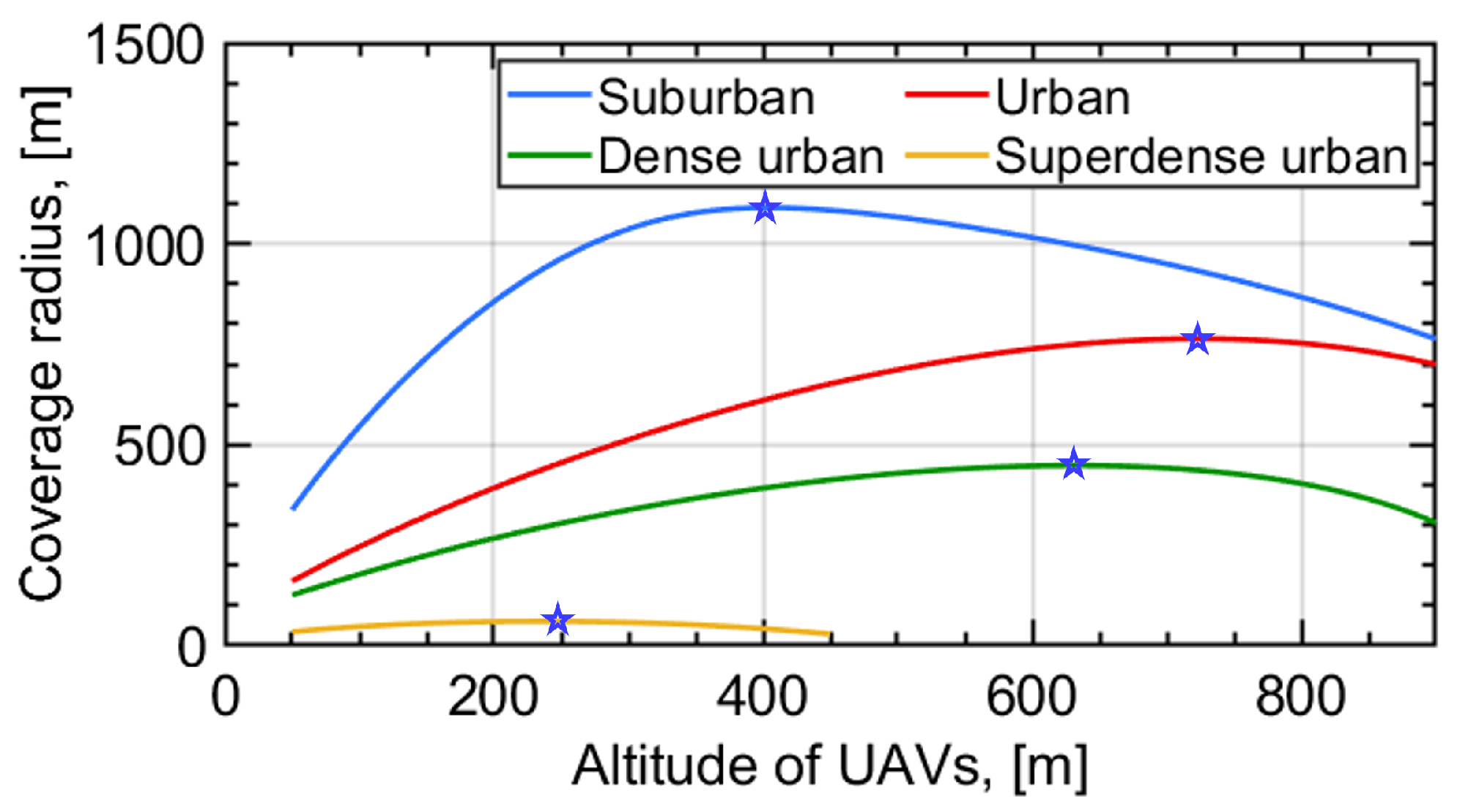
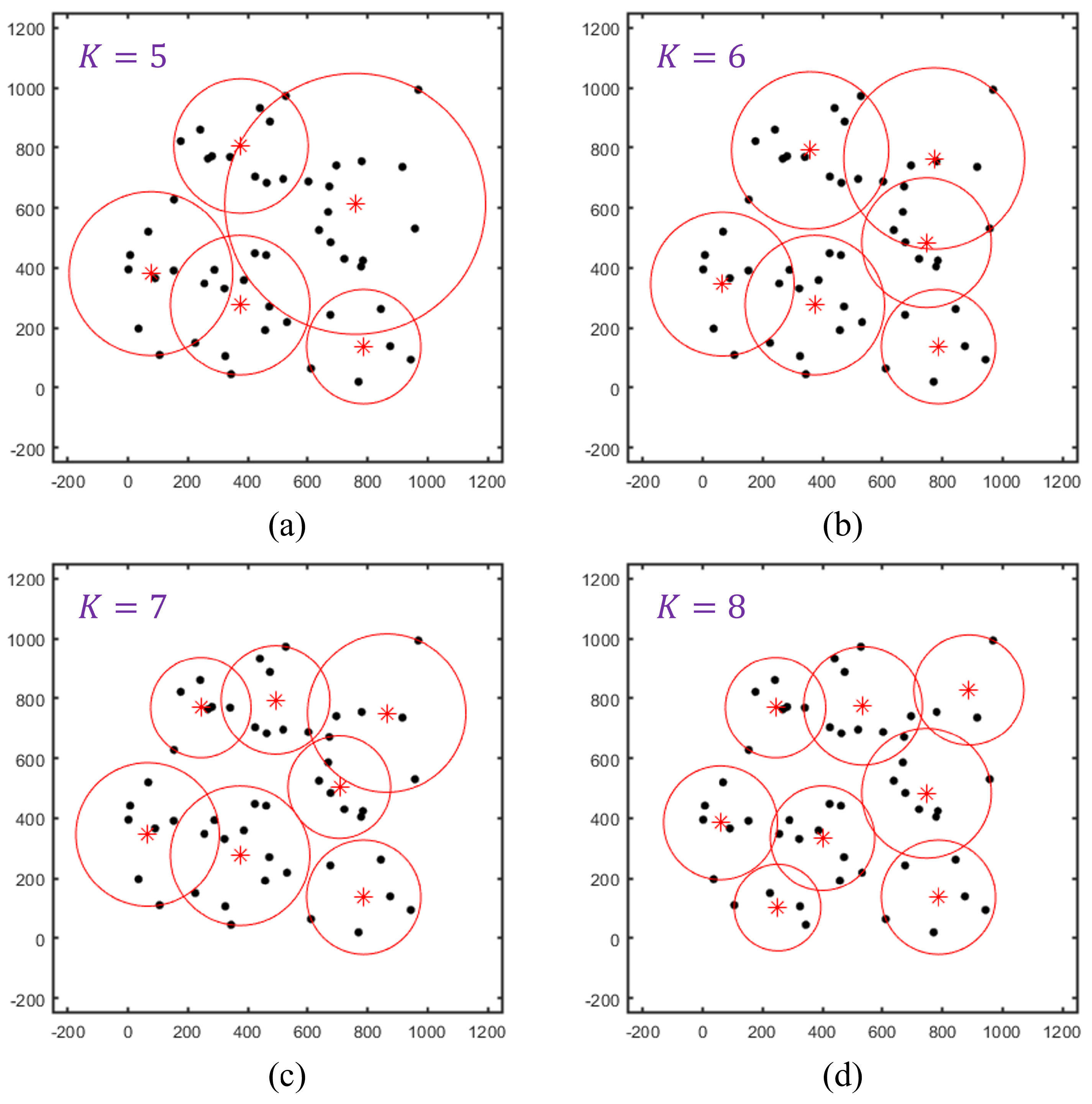
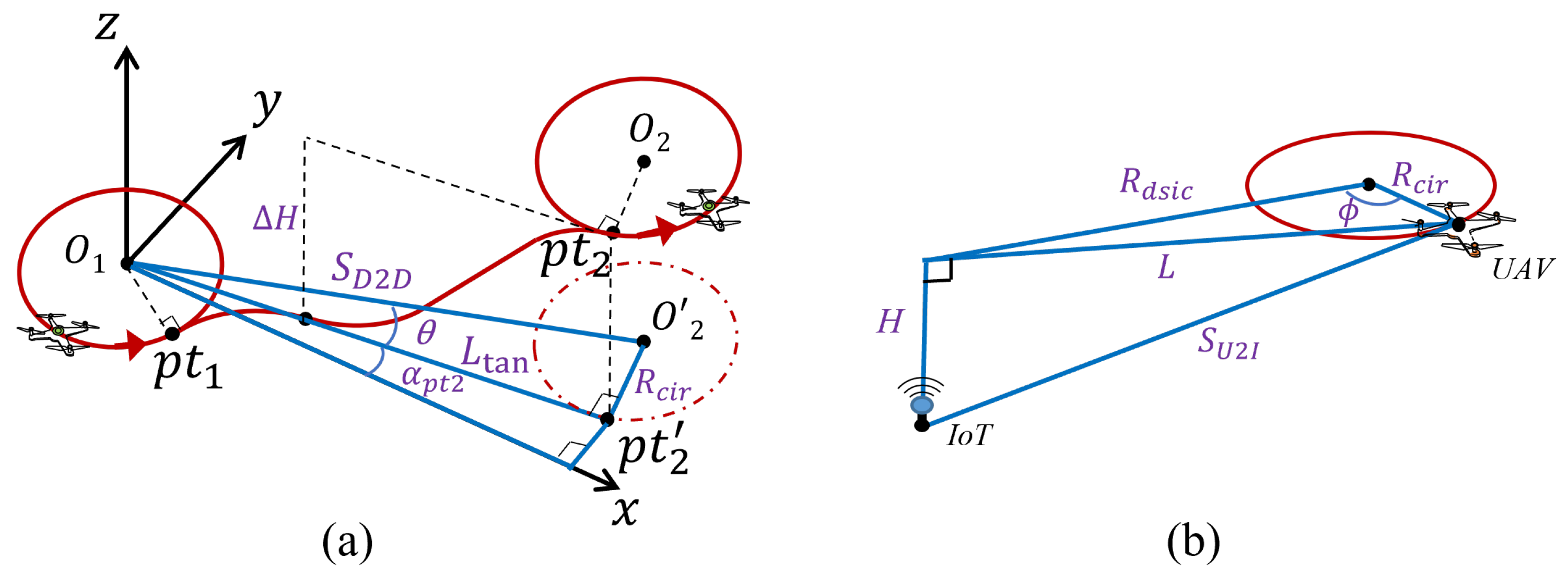
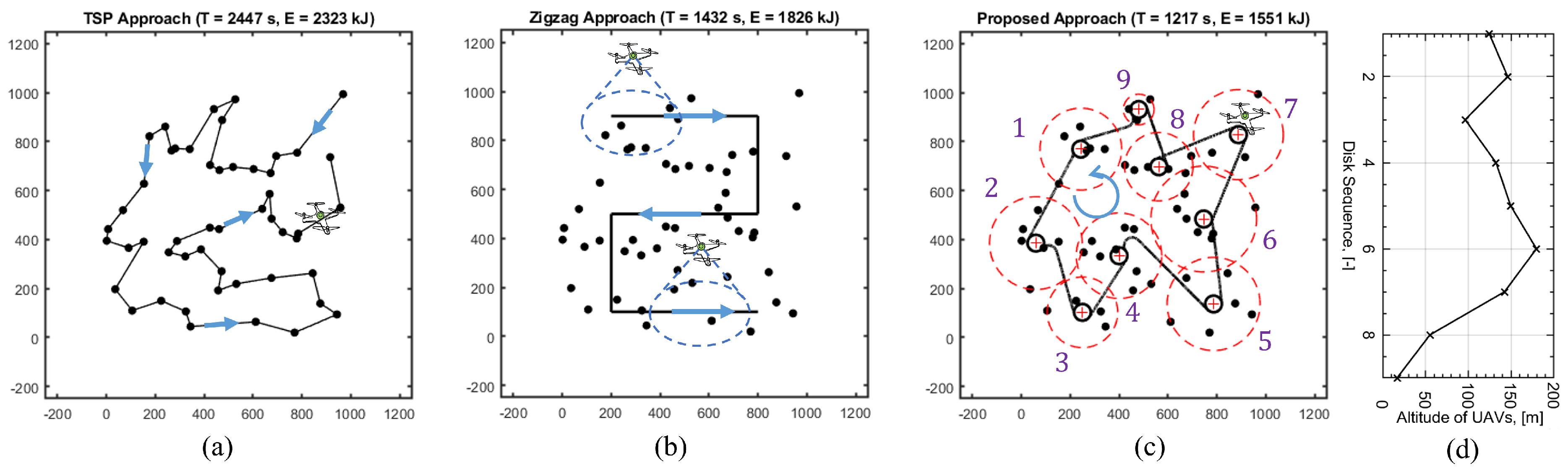
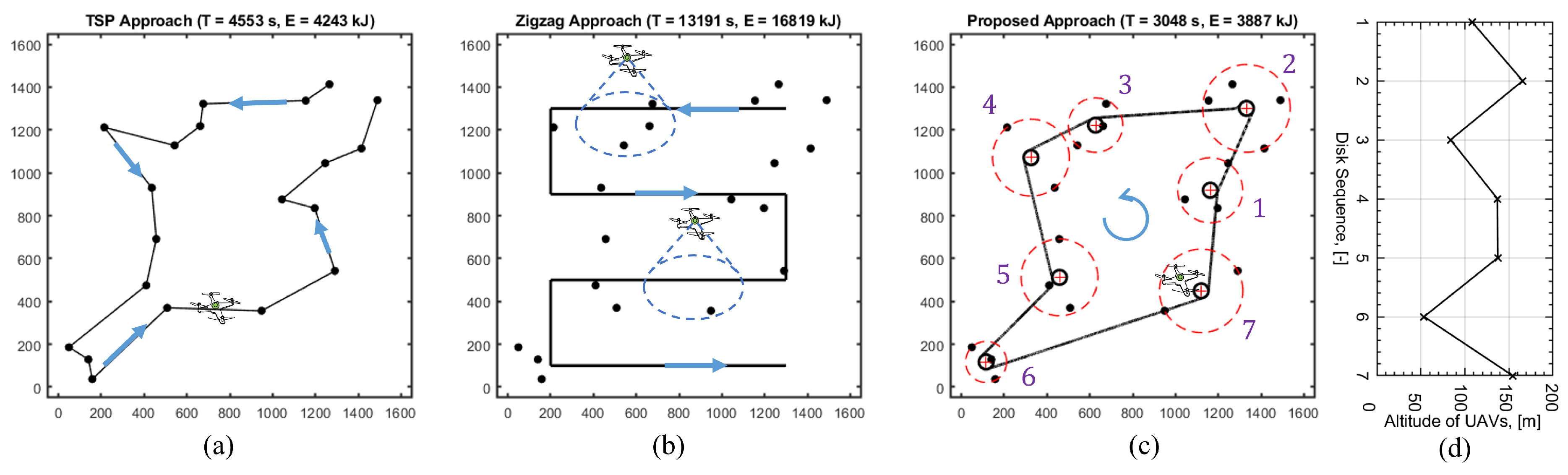

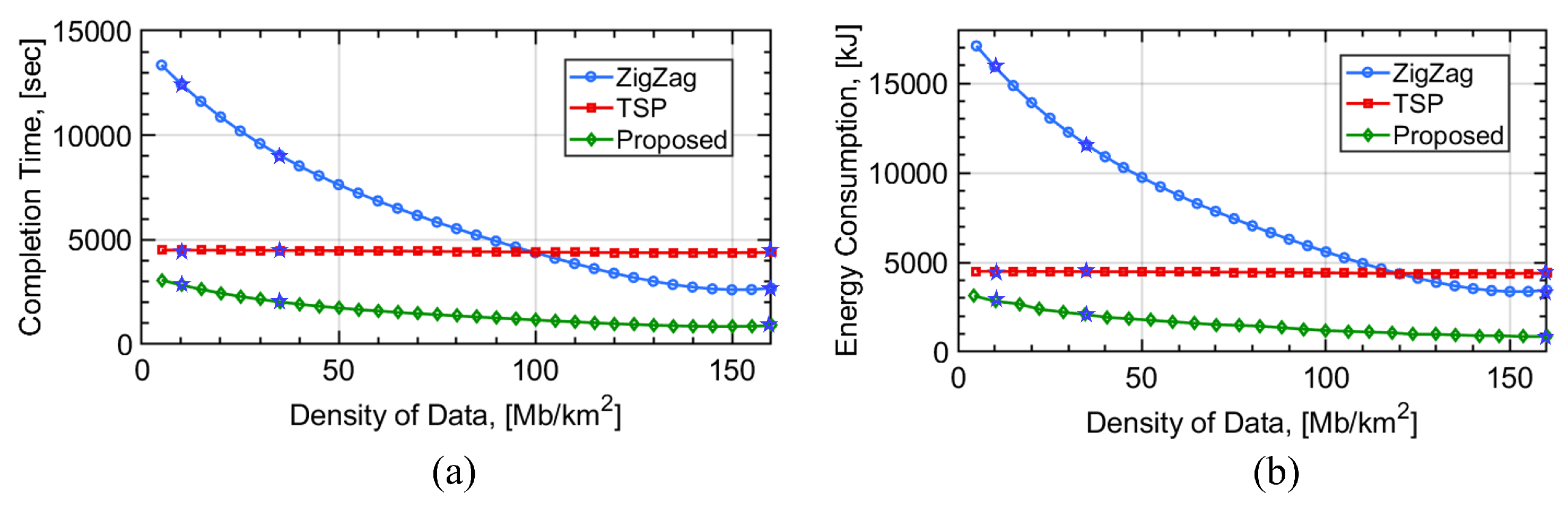
| Environment | Parameters |
|---|---|
| Suburban | |
| Urban | |
| Dense urban | |
| Superdense urban |
| IoT Numbers | 20 (2 Mb per IoT) | 35 (1 Mb per IoT) | 50 (0.5 Mb per IoT) | |||||||
|---|---|---|---|---|---|---|---|---|---|---|
| area [m2] | 5002 | 10002 | 15002 | 5002 | 10002 | 15002 | 5002 | 10002 | 15002 | |
| TSP | time [s] | 4415 | 4477 | 4553 | 7681 | 7778 | 7873 | 2815 | 2447 | 3058 |
| energy [kJ] | 4067 | 4146 | 4243 | 7060 | 7183 | 7304 | 2613 | 2323 | 2992 | |
| Zigzag | time [s] | 2591 | 8951 | 13,191 | 1295 | 4475 | 8482 | 648 | 1423 | 4241 |
| energy [kJ] | 3303 | 11,412 | 16,819 | 1651 | 5706 | 10,812 | 826 | 1826 | 5408 | |
| Proposed | time [s] | 875 | 2020 | 3048 | 479 | 1128 | 2258 | 441 | 1217 | 1398 |
| energy [kJ] | 1116 | 2576 | 3887 | 611 | 1439 | 2880 | 562 | 1551 | 1782 | |
Disclaimer/Publisher’s Note: The statements, opinions and data contained in all publications are solely those of the individual author(s) and contributor(s) and not of MDPI and/or the editor(s). MDPI and/or the editor(s) disclaim responsibility for any injury to people or property resulting from any ideas, methods, instructions or products referred to in the content. |
© 2023 by the authors. Licensee MDPI, Basel, Switzerland. This article is an open access article distributed under the terms and conditions of the Creative Commons Attribution (CC BY) license (https://creativecommons.org/licenses/by/4.0/).
Share and Cite
Li, M.; Jia, G.; Li, X.; Qiu, H. Efficient Trajectory Planning for Optimizing Energy Consumption and Completion Time in UAV-Assisted IoT Networks. Mathematics 2023, 11, 4399. https://doi.org/10.3390/math11204399
Li M, Jia G, Li X, Qiu H. Efficient Trajectory Planning for Optimizing Energy Consumption and Completion Time in UAV-Assisted IoT Networks. Mathematics. 2023; 11(20):4399. https://doi.org/10.3390/math11204399
Chicago/Turabian StyleLi, Mengtang, Guoku Jia, Xun Li, and Hao Qiu. 2023. "Efficient Trajectory Planning for Optimizing Energy Consumption and Completion Time in UAV-Assisted IoT Networks" Mathematics 11, no. 20: 4399. https://doi.org/10.3390/math11204399
APA StyleLi, M., Jia, G., Li, X., & Qiu, H. (2023). Efficient Trajectory Planning for Optimizing Energy Consumption and Completion Time in UAV-Assisted IoT Networks. Mathematics, 11(20), 4399. https://doi.org/10.3390/math11204399