

Effectiveness of the Use of Technological Tools in Higher Education in Ibero-American Universities: A Systematic Review of Evidence from Ibero-American Countries




Abstract
1. Introduction
1.1. Justification
1.2. Background of Study
1.3. Research Objective and Question
2. Theoretical Framework
2.1. Theoretical Models for Technology Integration in Higher Education
2.2. Needs and Challenges of the Usage of Technology in Higher Education
2.3. Analysis of the Effectiveness of Technological Tools Implementation in Education
3. Methodology
3.1. Design
3.2. Eligibility Criteria
3.3. Sources of Information
3.4. Search Strategy: Selection
- Criterion 1: Necessity of technology in higher education;
- Criterion 2: Benefits and effectiveness of implementing technological tools in universities.
- 1.
- TITLE-ABS-KEY ((“studies” OR “case analysis”) AND (“higher education” OR “universities”) AND (“Ecuador” OR “América Latina”))
- 2.
- TITLE-ABS-KEY (“use of ICT” AND “higher education”)
- 3.
- TITLE-ABS-KEY (“ICT” AND “university” AND (“study” OR “systematic review”))
- 4.
- TITLE-ABS-KEY (“Moodle” AND “higher education”)
- 5.
- TITLE-ABS-KEY (“higher education” AND “technology”)
3.5. Statistical Analysis
3.6. Selection Process
3.7. Data Extraction
3.8. Risk of Bias
4. Results
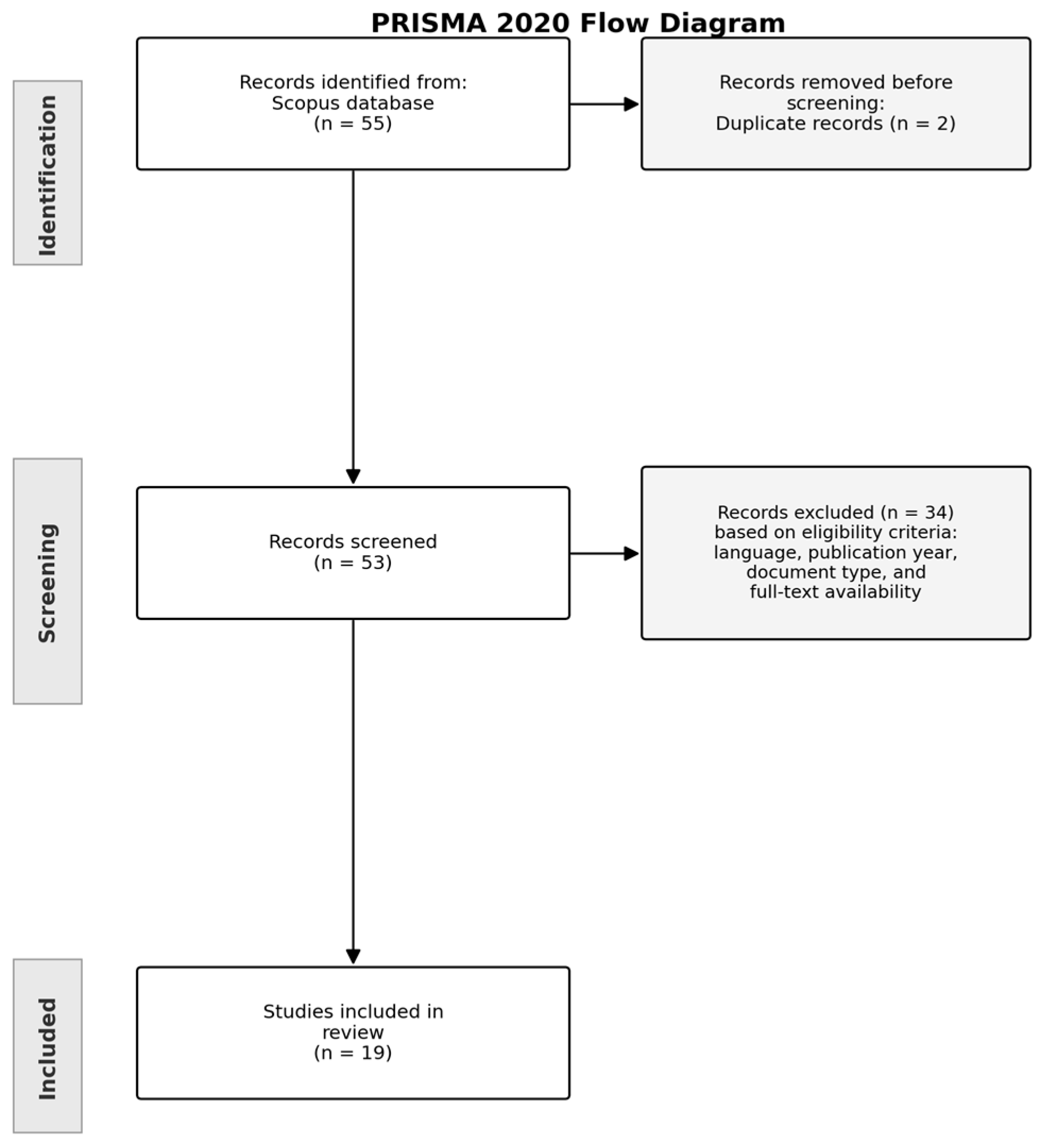
4.1. Study Selection Flow
4.2. Characteristics of Included Studies
4.3. Individual and Global Results
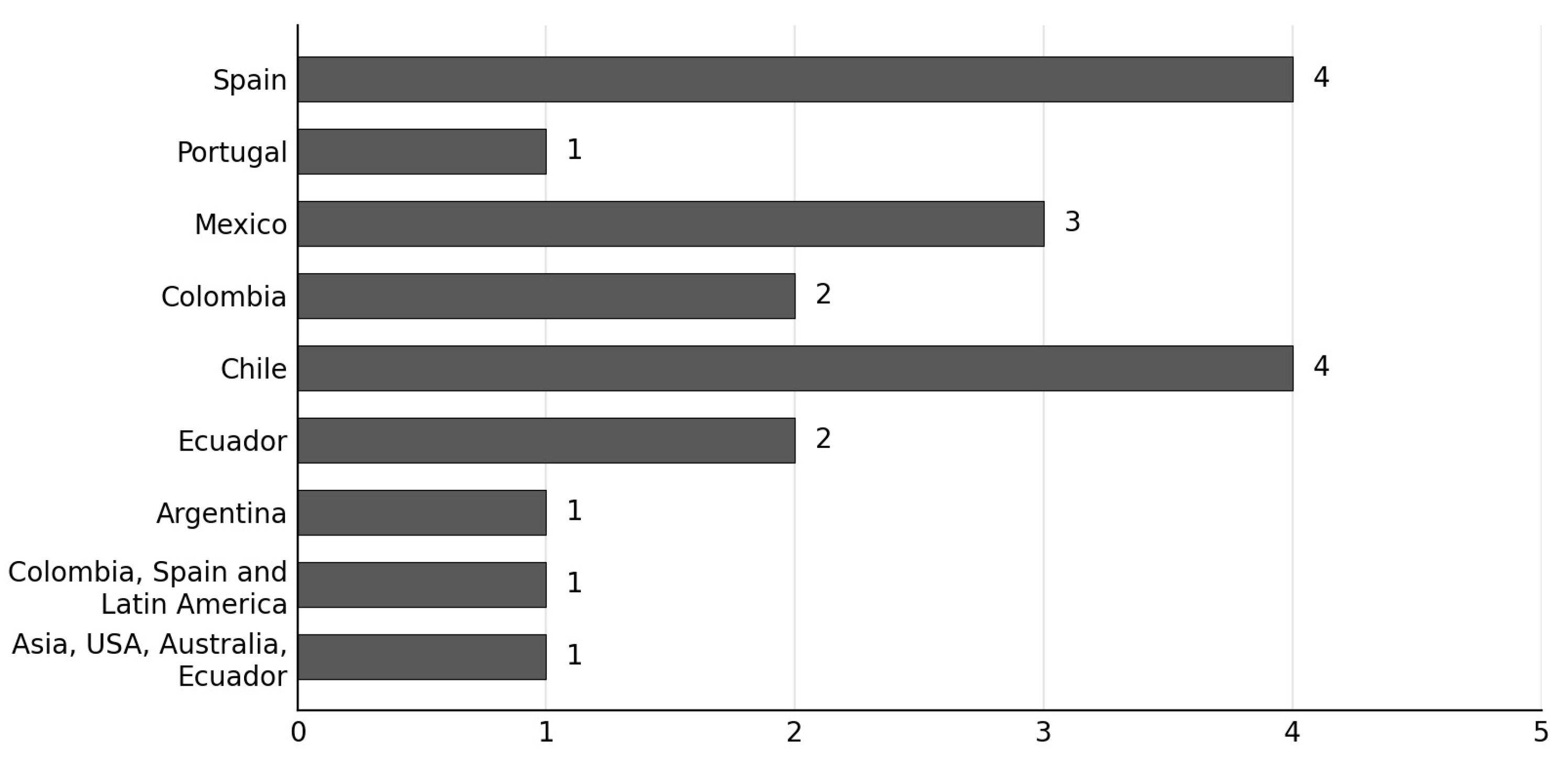
4.3.1. Country Trend
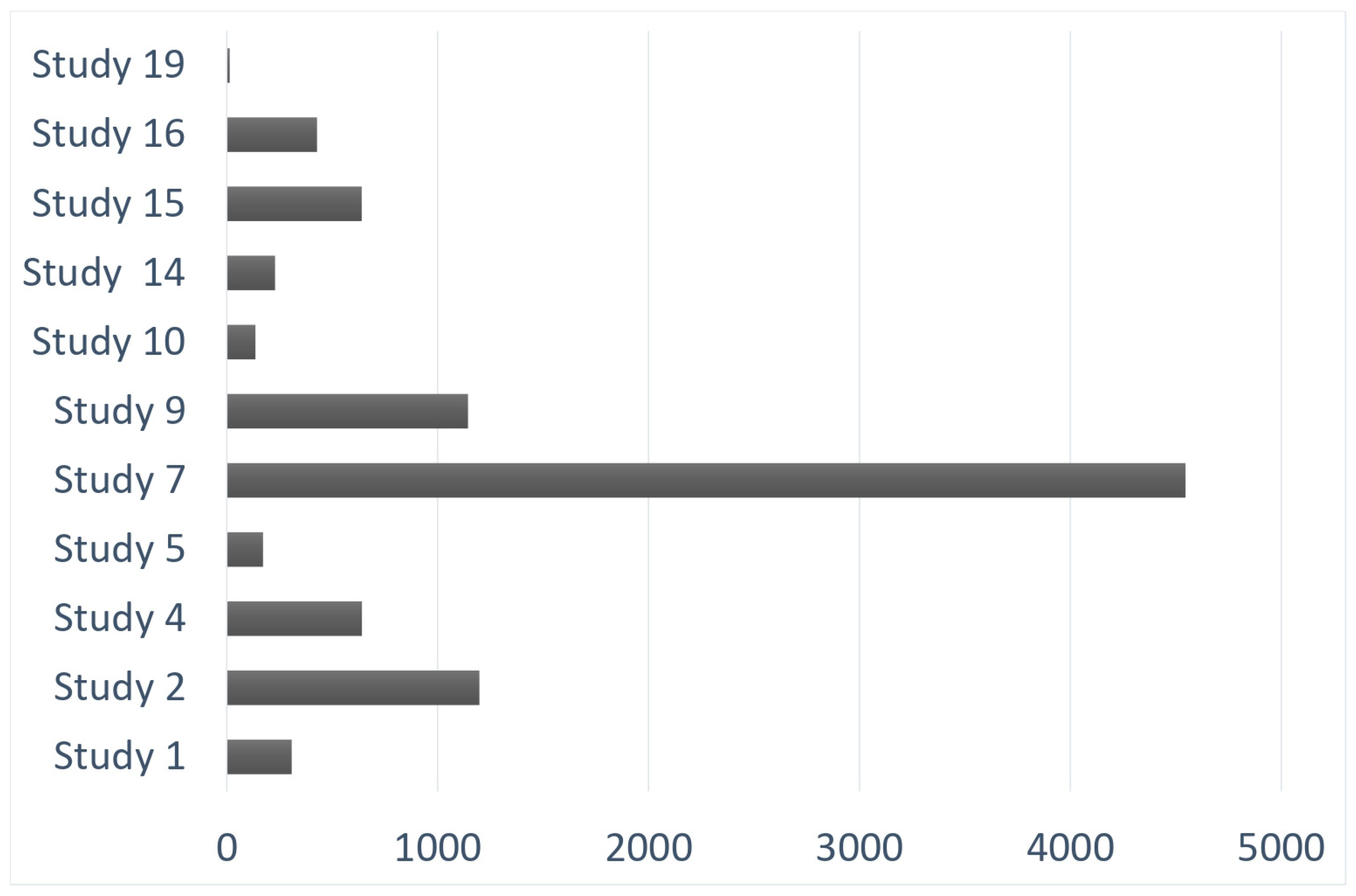
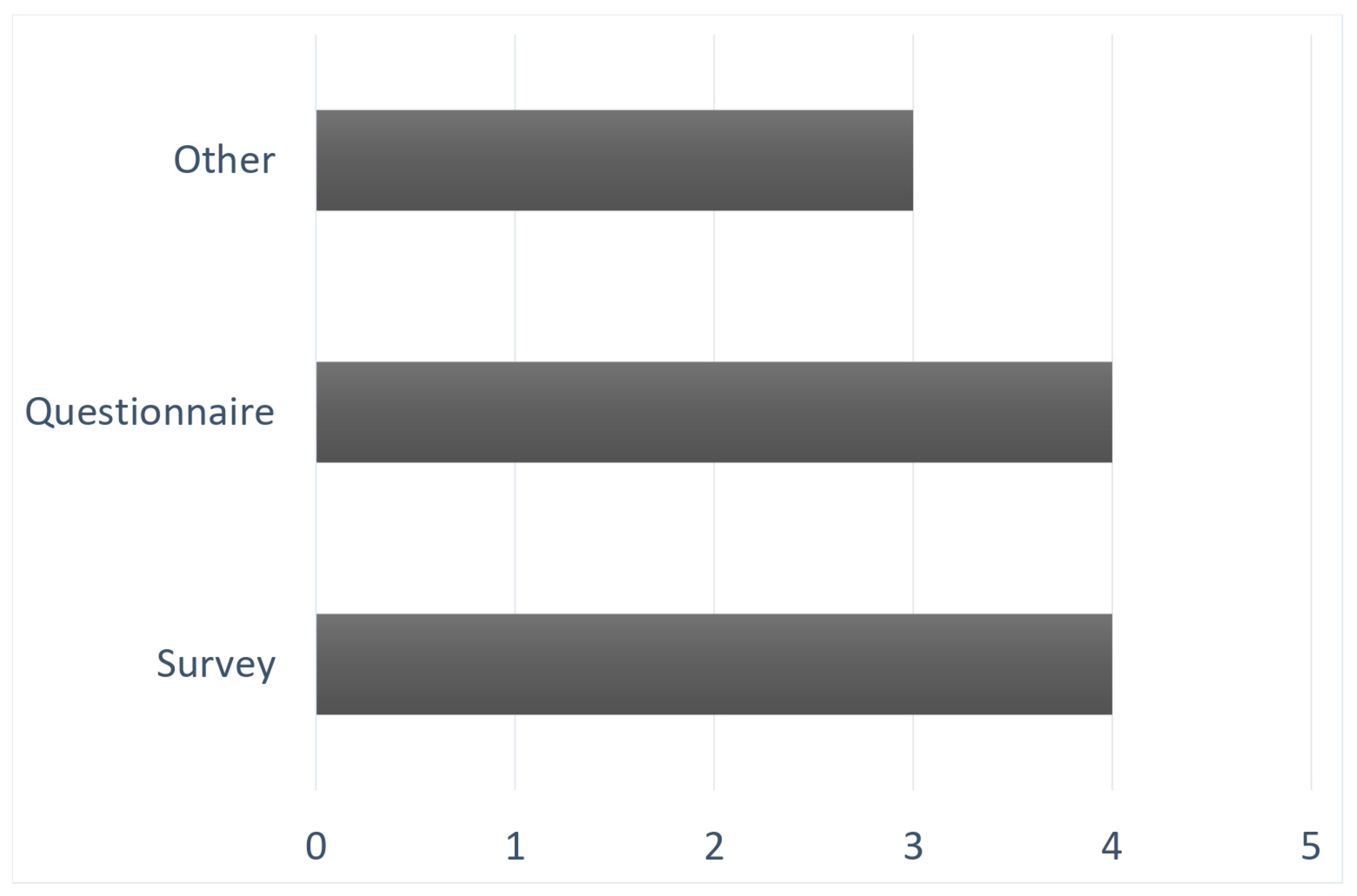
4.3.2. Results of Sample Size and Data Collection Techniques
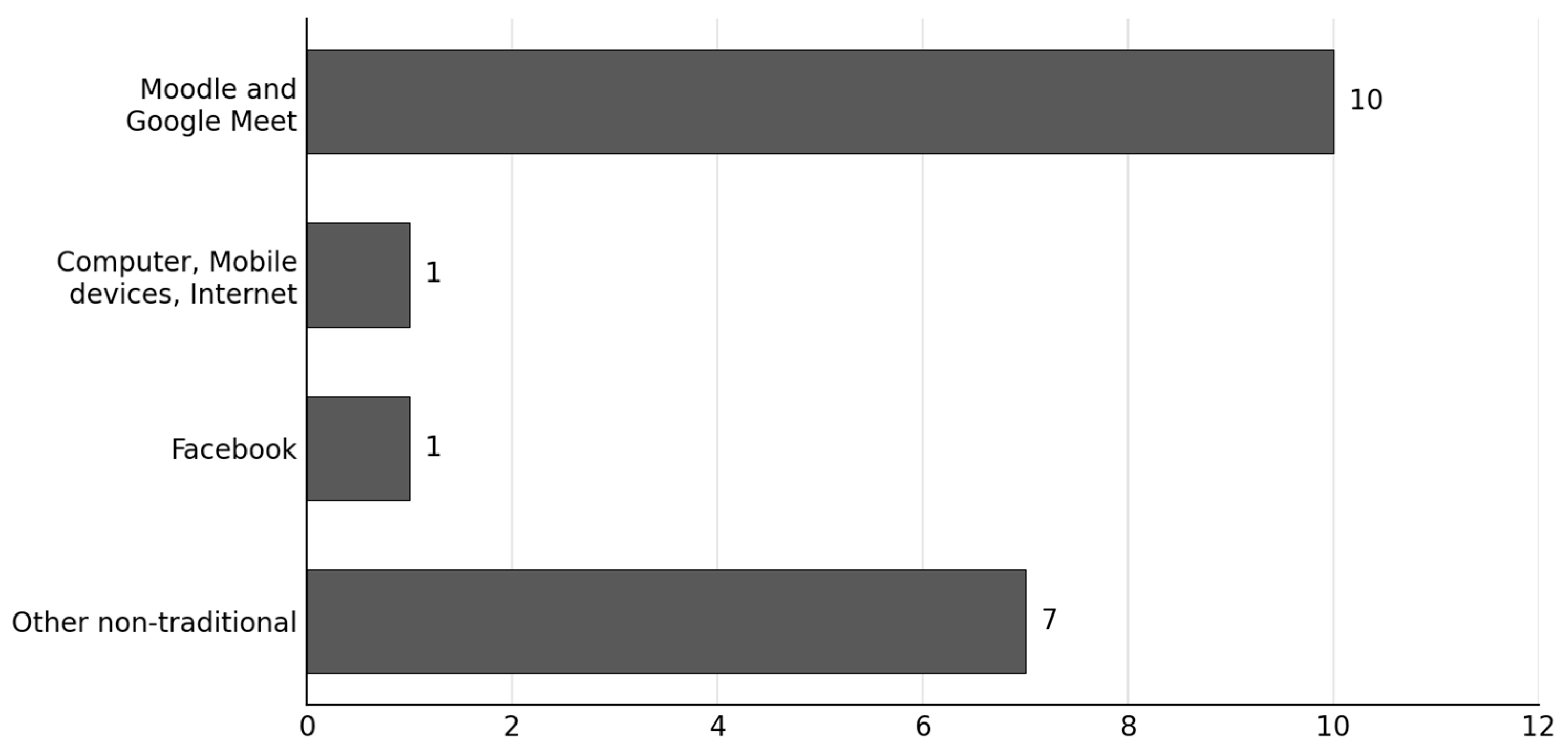
4.3.3. Analysis of Variables
4.4. Risk of Bias in Included Studies
5. Discussion and Recommendations
- The positive impact of strategic ICT integration: The evidence indicates that technological tools significantly enhance interaction, collaboration, and motivation within the classroom. However, these benefits are not inherent to the technology itself but are realized when tools are properly integrated into the teaching-learning process. This pattern is consistent with the TPACK framework of Mishra and Koehler (2006), which locates the effectiveness of teaching with technology in the convergence of technological, pedagogical, and disciplinary knowledge, rather than in the mere incorporation of the resource.
- The primacy of pedagogy over technological resources: A fundamental finding is that educational benefits are primarily derived from active and constructive pedagogy rather than the mere presence of technology. The data suggests that providing digital resources without a clear pedagogical strategy result in negligible academic gains. This distinction between the incorporation of the technological tool and its pedagogically meaningful use reflects the logic of the SAMR model (Hamilton et al., 2016; Puentedura, 2006), in which the Substitution and Augmentation levels improve existing tasks without transforming practice, while the Modification and Redefinition levels enable substantive pedagogical redesigns.
- Critical barriers to effective technological adoption: Despite the positive impact observed in many cases, several studies highlight significant obstacles that hinder the proper integration of digital tools. These include resistance to change, a lack of specialized faculty training, and low ICT literacy among educators. In addition, the absence of solid institutional strategies remains a primary deterrent to the sustained success of teaching-learning processes. These barriers align with the determinants of the UTAUT theory (Venkatesh et al., 2003), particularly with facilitating conditions and social influence, and coincide with the findings of Mollo-Torrico et al. (2023) and Cajamarca-Correa et al. (2024) regarding the need for teacher training and resistance to change as central obstacles.
- The dual impact of the COVID-19 pandemic: The health crisis functioned as a catalyst for the rapid adoption of digital tools necessary for academic continuity. While this period demonstrated high levels of digital literacy among most students, it simultaneously exacerbated the digital divide, exposing significant inequalities in connectivity and hardware access that remain a challenge for institutional inclusivity.
- The emergence of Learning Analytics and predictive modeling: There is a strong trend toward integrating Learning Analytics to monitor and predict academic performance. The systematic evidence highlights that drawing on data from Learning Management Systems (LMS)—predominantly Moodle—allows institutions to identify at-risk students and implement proactive interventions through predictive modeling.
- Versatility of ICT applications across specialized disciplines: The research spans a diverse range of academic fields, demonstrating that digital integration is effective far beyond general education. Specific studies highlighted in this review include successful interventions in English language learning and music education, as well as innovative proposals for academic accreditation using Blockchain technology. This breadth confirms that ICT application in Ibero-American universities is wide-ranging, offering significant disciplinary possibilities and adapting to the unique pedagogical requirements of diverse academic programs and national educational systems. Among the tools analyzed, Moodle stands out as the most consistent: it appears in 53% of the studies and in all cases with confirmed positive impact, suggesting that Learning Management Systems constitute the most reliable foundation for technology integration in Ibero-American Higher Education.
5.1. Key Limitations and Potential Future Lines of Research
- Scarcity of longitudinal and experimental designs: The majority of analyzed studies utilize cross-sectional designs, focusing on a specific point in time. There is a notable lack of longitudinal research that monitors long-term academic behavior, which is essential for identifying causal relationships and assessing the sustained impact of technological interventions.
- Focus on usage frequency over cognitive quality: Most existing research prioritizes behavioral metrics, such as the frequency of access to digital tools. However, there is limited evidence regarding the depth of cognitive quality of student interaction. Future research should shift toward evaluating how these tools transform mental processes and learning outcomes rather than merely tracking usage rates.
- Need for transformative faculty development models: Current institutional approaches often focus on basic skill training. There is a critical need for scalable, evidence-based professional development designs that aim to transform actual classroom practice and pedagogical strategies, rather than providing technical instruction and tool operation.
- Single-reviewer screening and extraction: The screening, selection, and data extraction were carried out by a single reviewer rather than through the duplicate, independent screening recommended by PRISMA 2020. To limit the effect of this constraint, the eligibility criteria were defined in advance and applied uniformly across all records; nevertheless, the authors acknowledge that independent verification by a second reviewer would strengthen the reliability of the selection process.
- Spanish-language scope of the corpus: The review was restricted to scientific production in Spanish, in line with the Ibero-American focus of the study. The reach of this criterion should be qualified; however, of the 55 records initially retrieved, only 4 were excluded on language grounds (Table 3), so its effect on the final corpus was limited. Even so, the authors recognize that it may have left out relevant research on the region published in English, and broadening the linguistic range is proposed as a future line of work.
5.2. Practical Recommendations
- Prioritizing pedagogical design over tool selection: The implementation process must begin with a rigorous evaluation of desired learning outcomes. Technological tools should only be selected if they facilitate active learning frameworks, such as peer assessment, project-based learning, or collaborative assignments designed to be executed during instructional time.
- Establishing sustainable faculty support systems: Universities should move beyond basic technical assistance and establish dedicated pedagogical support units. These units should provide continuous mentorship to faculty members, ensuring the effective integration of technology into teaching strategies rather than merely addressing operational software issues.
- Optimizing Learning Management Systems (LMS) for academic analytics: Institutions should make full use of LMS platforms beyond basic content delivery. These systems must be configured as reliable monitoring tools that allow for the responsible tracking of significant participation indicators—such as activity completion rates and submission patterns—enabling proactive pedagogical support.
- Mitigating structural access gaps in volatile contexts: Given the structural access challenges prevalent across Ibero-American higher education—including infrastructure limitations, connectivity disparities, and context specific disruptions such as the 2024 energy emergency experienced in Ecuador—it is essential to implement resilient access models. Recommendations include the provision of offline-compatible resources, the use of mobile-ready content, and establishment of contingency connectivity support for students in vulnerable conditions, ensuring educational continuity across diverse national and regional circumstances.
- Implementing continuous monitoring and evaluation cycles: Beyond the initial deployment of digital tools, institutions must establish systematic follow-up protocols. This continuous evaluation ensures that technological resources function as intended and allows for the timely identification of technical or pedagogical failures, ensuring that adequate solutions are provided to maintain the quality of the teaching–learning process.
6. Conclusions
- Regarding faculty development, the evidence confirms that the success of digital integration depends directly on continuous training. It is imperative that instructors not only master the technical operation of available tools but also develop the pedagogical competencies necessary to implement them effectively. This dual proficiency is essential to maximize the educational value of institutional investments.
- In terms of student development, engaging in digitalized learning environments is no longer optional but crucial for modern academic preparation. These virtual ecosystems facilitate a flexible learning model that allows the students to bridge the gap between theoretical knowledge and professional practice. By enabling the simultaneous application of university-acquired competencies within real-world work environments, digital integration fosters a more integral and competitive professional profile.
- Finally, regarding institutional adaptation and professional competitiveness, it is evident that digital innovation in Higher Education is an irreversible trend that institutions must proactively embrace. Beyond temporary implementations, technology must be integrated as a core element of the teaching–learning process to ensure that graduates possess the essential digital competencies required by a rapidly evolving global workforce. Ultimately, the effective application of these tools qualifies professionals to lead and innovate within the context of the digital era, ensuring their relevance and adaptability in increasingly digitalized workplace environments.
Author Contributions
Funding
Institutional Review Board Statement
Informed Consent Statement
Data Availability Statement
Conflicts of Interest
Abbreviations
| ICT | Information and Communication Technology |
| TLK | Technology of Learning and Knowledge |
References
- Alfaro Pérez, V., & Capetillo Velásquez, R. R. (2024). Competencias digitales docentes en estudiantes de pedagogía de la Universidad de Tarapacá. Un estudio de caso en el norte chileno [Digital teaching competences in pedagogy students of the University of Tarapacá: A case study in northern Chile]. Aloma: Revista de Psicologia, Ciències de l’Educació i de l’Esport, 42(1), 69–78. [Google Scholar] [CrossRef]
- Alonso-García, S., Aznar-Díaz, I., Cáceres-Reche, M. P., Trujillo-Torres, J. M., & Romero-Rodríguez, J. M. (2019). Systematic review of good teaching practices with ICT in Spanish higher education. Trends and challenges for sustainability. Sustainability, 11(24), 7150. [Google Scholar] [CrossRef]
- Angulo Guerrero, R. J., Mesías Simisterra, Á. E., & Olmedo Ponce, J. D. (2022). Impact of new technologies on university education in Ecuador. Revista Qualitas, 23(23), 12–21. [Google Scholar] [CrossRef]
- Arancibia, M. L., Cabero, J., & Marín, V. (2020). Beliefs on teaching and the use of information and communication technologies (ICT) by higher education professors. Formación Universitaria, 13(3), 89–100. [Google Scholar] [CrossRef]
- Cajamarca-Correa, M. A., Cangas-Cadena, A. L., Sánchez-Simbaña, S. E., & Pérez-Guillermo, A. G. (2024). New trends in the use of resources and tools of educational technology for university education. Journal of Economic and Social Science Research, 4(3), 127–150. [Google Scholar] [CrossRef]
- Candia López, J. C. (2023). Competencias digitales en la educación superior [Digital competences in higher education]. Horizontes Revista de Investigación en Ciencias de la Educación, 7(29), 1548–1563. [Google Scholar] [CrossRef]
- Chachagua, M. R., & Hnilitze, S. A. (2021). University and ICT: A case study of an educational experience in Salta (Argentina) in the context of a pandemic. Contratexto, 36, 21–41. [Google Scholar] [CrossRef]
- Cifuentes Álvarez, G. A. (2016). Conceptualizing ICT leadership practices: A study in Colombian higher education. Archivos Analíticos de Políticas Educativas, 24, 100. [Google Scholar] [CrossRef]
- Del Prete, A., & Cabero Almenara, J. (2020). Use of the virtual learning environment among higher education teaching staff: A gender analysis. Revista de Educación a Distancia (RED), 20, 62. [Google Scholar] [CrossRef]
- Faure Carvallo, A., Calderón Garrido, D., & Gustems Carnicer, J. (2021). Digital technology at the service of musical production, expression and perception: A case study in higher education. Per Musi, 41, e214104. [Google Scholar] [CrossRef]
- García, A. C., Gil-Mediavilla, M., Álvarez, I., & Casares, M. A. (2020). Peer assessment in online higher education environments through the Moodle Workshop. Case of study. Formación Universitaria, 13(2), 119–126. [Google Scholar] [CrossRef]
- Gómez Contreras, J. L., Bonilla Torres, C. A., & Esteban Ojeda, Y. C. (2022). Uso de TIC y TAC en la educación superior: Un análisis bibliométrico [Use of ICT and TLK in higher education: A bibliometric analysis]. Revista Complutense de Educación, 33(3), 601–613. [Google Scholar] [CrossRef]
- Hamilton, E. R., Rosenberg, J. M., & Akcaoglu, M. (2016). The substitution augmentation modification redefinition (SAMR) model: A critical review and suggestions for its use. TechTrends, 60(5), 433–441. [Google Scholar] [CrossRef]
- Hémbuz Falla, G. D., Polo Osso, E., & González Camacho, C. C. (2021). ICT implementation in higher education educational practices. Boletín Redipe, 10(6), 245–258. [Google Scholar]
- Jaramillo, M. P., & Piedra, N. (2021). A framework based on blockchain technology to improve traceability and trust in the exchange of information between higher education institutions. Revista Ibérica de Sistemas y Tecnologías de Información, 41, 97–111. [Google Scholar] [CrossRef]
- Jenaro Río, C., Castaño Calle, R., Martín Pastor, M. E., & Flores Robaina, N. (2018). Academic performance in higher education and its association with active participation in the Moodle platform. Estudios Sobre Educación, 34, 177–198. [Google Scholar] [CrossRef]
- Marín, F. V., Inciarte, A. J., Hernández, H. G., & Pitre, R. C. (2017). Strategies of higher education institutions for the integration of information and communication technology and innovation in teaching processes. A study in the district of Barranquilla, Colombia. Formación Universitaria, 10(6), 29–37. [Google Scholar] [CrossRef]
- Mella Norambuena, J., Badilla Quintana, M. G., & López Angulo, Y. (2022). Modelos predictivos basados en uso de analíticas de aprendizaje en educación superior: Una revisión sistemática [Predictive models based on the use of learning analytics in higher education: A systematic review]. Texto Livre: Linguagem e Tecnologia, 15, e36310. [Google Scholar] [CrossRef]
- Mishra, P., & Koehler, M. J. (2006). Technological pedagogical content knowledge: A framework for teacher knowledge. Teachers College Record, 108(6), 1017–1054. [Google Scholar] [CrossRef]
- Mollo-Torrico, J. P., Lázaro-Cari, R. R., & Crespo-Albares, R. (2023). Implementation of new information and communication technologies for higher education: Systematic review. Revista Ciencia & Sociedad, 3(1), 16–30. [Google Scholar]
- Monroy, A., Hernández, I. A., & Jiménez, M. (2018). Digital classrooms in higher education: The case of Mexico. Formación Universitaria, 11(5), 93–104. [Google Scholar] [CrossRef]
- Monroy García, F. A., & Fialho, I. (2023). Use of technological supports in academic tasks. A study with higher education students. Digital Education Review, 43, 87–102. [Google Scholar] [CrossRef]
- Page, M. J., McKenzie, J. E., Bossuyt, P. M., Boutron, I., Hoffmann, T. C., Mulrow, C. D., Shamseer, L., Tetzlaff, J. M., Akl, E. A., Brennan, S. E., Chou, R., Glanville, J., Grimshaw, J. M., Hróbjartsson, A., Lalu, M. M., Li, T., Loder, E. W., Mayo-Wilson, E., McDonald, S., … Moher, D. (2021). The PRISMA 2020 statement: An updated guideline for reporting systematic reviews. BMJ, 372, n71. [Google Scholar] [CrossRef] [PubMed]
- Pieper, D., & Puljak, L. (2021). Language restrictions in systematic reviews should not be imposed in the search strategy but in the eligibility criteria if necessary. Journal of Clinical Epidemiology, 132, 146–147. [Google Scholar] [CrossRef] [PubMed]
- Puentedura, R. R. (2006). Transformation, technology, and education [PowerPoint slides]. Strengthening your district through technology workshops, Maine, United States. Available online: http://hippasus.com/resources/tte/ (accessed on 16 July 2025).
- Quinde Herrera, K., Pinos Vélez, V., Esteve González, V., & Valls Bautista, C. (2023). Flipped learning in higher education: A scoping review of implementation. Edutec. Revista Electrónica de Tecnología Educativa, 84, 18–34. [Google Scholar] [CrossRef]
- Robles-Francia, V. H., De la Cruz-Caballero, A. M., & Terrones Cordero, A. (2020). The use of ICT and reading in Mexican public higher education. Investigación Bibliotecológica: Archivonomía, Bibliotecología e Información, 34(83), 55–69. [Google Scholar] [CrossRef]
- Salgado Reyes, N. E., & Guzmán Rodríguez, S. (2017). Result of proposed methodology for learning English with the use of TICs. Case study: Universidad Tecnológica Equinoccial. In 2017 12th Iberian conference on information systems and technologies (CISTI) (pp. 1–6). IEEE. [Google Scholar] [CrossRef]
- Sapién Aguilar, A. L., Piñón Howlet, L. C., Gutiérrez Díez, M. C., & Bordas Beltrán, J. L. (2020). Higher education during the COVID-19 health contingency: Use of ICT as learning tools. Case study: Students of the Faculty of Accounting and Administration. Revista Latina de Comunicación Social, 78, 309–328. [Google Scholar] [CrossRef]
- Sánchez-Caballé, A., & Esteve-Mon, F. M. (2023). Analysis of teaching methodologies using digital technologies in higher education: A systematic review. RIED-Revista Iberoamericana de Educación a Distancia, 26(1), 181–199. [Google Scholar] [CrossRef]
- Solano-Fernández, I. M., García-Tudela, P. A., & Sánchez-Vera, M. M. (2021). Use of Facebook in higher education: Analysis of the relationship between participation and subject marks. Digital Education Review, 40, 1–16. [Google Scholar] [CrossRef]
- Venkatesh, V., Morris, M. G., Davis, G. B., & Davis, F. D. (2003). User acceptance of information technology: Toward a unified view. MIS Quarterly, 27(3), 425–478. [Google Scholar] [CrossRef]



| Keywords |
|---|
| Higher Education |
| ICT |
| Technological Tools |
| Ibero-American Universities |
| ICT & TLK 1 |
| Information and Communication Technology |
| Technology of Learning and Knowledge |
| Virtual Education |
| Moodle |
| Universities and Education |
| Component | Inclusion Criteria | Exclusion Criteria |
|---|---|---|
| Population (P) | Studies involving students and/or faculty in Higher Education institutions from Ibero-American countries. | Studies focused on non-university educational levels |
| Intervention (I) | Studies addressing the implementation or use of technological tools in university teaching–learning processes | Studies not directly related to technological tool integration in Higher Education |
| Comparators (C) | Not applicable | Not applicable |
| Outcomes (O) | Studies reporting the effectiveness or impact of technological tools on academic performance or educational processes | Studies without measurable outcomes or indicators of effectiveness |
| Study Design (S) | Peer-reviewed journal articles, including quantitative, qualitative, and bibliometric studies, published between 2016 and 2025, with full-text availability | Conference papers, theses, technical reports, and abstract-only records |
| Database: SCOPUS | Initial Result | Criteria | Total Selected | Other Discard Criteria | ||||
|---|---|---|---|---|---|---|---|---|
| Language | Year of Publication | Document Type | Full Text | Duplicate | ||||
| SEARCH 1: (“studies” OR “case analysis”) AND (“Higher education” OR “Universities”) AND (“Ecuador” OR “América Latina”) | 8 | 5 | 3 | 8 | 4 | 0 | 3 | |
| SEARCH 2: Use of ICT in higher education | 11 | 11 | 9 | 11 | 5 | 1 | 4 | |
| SEARCH 3: (“ICT”) AND (“University”) AND (“study” OR “systematic review”) | 9 | 9 | 6 | 9 | 3 | 0 | 3 | |
| SEARCH 4: (“Moodle”) AND (“higher education”) | 13 | 12 | 11 | 13 | 7 | 1 | 5 | (−1) Not focused on students |
| SEARCH 5: Higher education and technology | 14 | 14 | 14 | 13 | 5 | 4 | ||
| TOTAL | 55 | 51 | 43 | 54 | 24 | 2 | 19 | |
| No. | Author | Year of Publication | Type of Document | Country | Design of Study | Quantitative | Qualitative | Systematic Review |
|---|---|---|---|---|---|---|---|---|
| 1 | Monroy García, F. A.; Fialho, I. | 2023 | Scientific Article | Portugal | Quantitative, non-experimental, descriptive | 1 | ||
| 2 | Sapién Aguilar, A. L.; Piñón Howlet, L. C.; Gutiérrez Díez, M. C.; Bordas Beltrán, J. L. | 2020 | Scientific Article | Mexico | Quantitative, applied, non-experimental, descriptive | 1 | ||
| 3 | Cifuentes Álvarez, G. A. | 2016 | Scientific Article | Colombia | Case of study, Qualitative | 1 | ||
| 4 | Arancibia, M. L.; Cabero, J.; Marín, V. | 2020 | Scientific Article | Chile | Quantitative, cluster analysis (non-experimental) | 1 | ||
| 5 | Solano-Fernández, I. M.; García-Tudela, P. A.; Sánchez-Vera, M. M. | 2021 | Scientific Article | Spain | Quantitative, ex post facto | 1 | ||
| 6 | Gómez Contreras, J. L.; Bonilla Torres, C. A.; Esteban Ojeda, Y. C. | 2022 | Article—Bibliometric Review | Colombia, Spain and Latin America | Bibliometric review | 1 | ||
| 7 | Robles-Francia, V. H.; De la Cruz-Caballero, A. M.; Terrones Cordero, A. | 2020 | Scientific Article | Mexico | Quantitative, descriptive, ANOVA | 1 | ||
| 8 | Chachagua, M. R.; Hnilitze, S. A. | 2021 | Scientific Article | Argentina | Case of study, Qualitative | 1 | ||
| 9 | Salgado Reyes, N. E.; Guzmán Rodríguez, S. | 2017 | Scientific Article | Ecuador | Quantitative, non-equivalent group design | 1 | ||
| 10 | Alfaro Pérez, V.; Capetillo Velásquez, R. R. | 2024 | Scientific Article | Chile | Quantitative, comparative statistical analysis | 1 | ||
| 11 | García A.C.; Gil-Mediavilla M.; Álvarez I.; Casares M.A. | 2020 | Scientific Article | Spain | Case of study, Qualitative, descriptive, analytical | 1 | ||
| 12 | Mella Norambuena J.; Badilla Quintana M.G.; López Angulo Y. | 2022 | Article—Bibliometric Review | Chile | Systematic Review | 1 | ||
| 13 | Quinde Herrera K.; Pinos Vélez V.; Esteve González V.; Valls Bautista C. | 2023 | Article—Bibliometric Review | Asia, USA, Australia, Ecuador | Bibliometric review | 1 | ||
| 14 | Jenaro Río C.; Castaño Calle R.; Martín Pastor M.E.; Flores Robaina N. | 2018 | Scientific Article | Spain | Quantitative, ex post facto, correlational—causal | 1 | ||
| 15 | Del Prete, A.; Cabero Almenara, J. | 2020 | Scientific Article | Chile | Quantitative, comparative statistical analysis | 1 | ||
| 16 | Monroy A.; Hernández I. A.; Jiménez M. | 2018 | Scientific Article | Mexico | Descriptive—Quantitative | 1 | ||
| 17 | Jaramillo M.P.; Piedra N. | 2021 | Technical article | Ecuador | Case of Study, Systematic Review | 1 | ||
| 18 | Faure Carvallo A.; Calderón Garrido D.; Gustems Carnicer J. | 2021 | Scientific Article | Spain | Case of Study, Qualitative | 1 | ||
| 19 | Marín, F. V.; Inciarte, A. J.; Hernández, H. G.; Pitre, R. C. | 2017 | Scientific Article | Colombia | Quantitative, descriptive, analytical | 1 | ||
| TOTAL | 11 (58%) | 4 (21%) | 4 (21%) |
| % | Total | Country |
|---|---|---|
| 21% | 4 | Spain |
| 5% | 1 | Portugal |
| 16% | 3 | Mexico |
| 11% | 2 | Colombia |
| 21% | 4 | Chile |
| 11% | 2 | Ecuador |
| 5% | 1 | Argentina |
| 5% | 1 | Colombia, Spain and Latin America |
| 5% | 1 | Asia, USA, Australia, Ecuador |
| 100% | 19 | Total |
| Data Collection Technique | Sample Size | ID of Study |
|---|---|---|
| Survey | 308 | Study 1 |
| Google forms questionnaire | 1198 | Study 2 |
| Survey | 641 | Study 4 |
| Assessments—Ex Post Facto Study | 172 | Study 5 |
| Survey | 4546 | Study 7 |
| Comparative Analysis | 1144 | Study 9 |
| Questionnaire | 136 | Study 10 |
| Assessment of Moodle platform usage—Ex Post Facto Study | 229 | Study 14 |
| Questionnaire | 640 | Study 15 |
| Survey | 428 | Study 16 |
| Questionnaire | 14 | Study 19 |
| % | Frequency (n) | Range |
|---|---|---|
| 73% | 8 | (0–1000) |
| 18% | 2 | (1000–2000) |
| 9% | 1 | (+4000) |
| 100% | 11 | Total |
| Data Collection Technique | ID of Study |
|---|---|
| Survey | Study 1 |
| Questionnaire | Study 2 |
| Survey | Study 4 |
| Other | Study 5 |
| Survey | Study 7 |
| Other | Study 9 |
| Questionnaire | Study 10 |
| Other | Study 14 |
| Questionnaire | Study 15 |
| Survey | Study 16 |
| Questionnaire | Study 19 |
| % | Frequency (n) | Data Collection Techniques |
|---|---|---|
| 36% | 4 | Survey |
| 36% | 4 | Questionnaire |
| 28% | 3 | Other |
| 100% | 11 | Total |
| ID of Study | Variable/Indicators | Key Findings/Results | Technological Tool | Perceived Impact (Positive/Negative) |
|---|---|---|---|---|
| Study 1 | Frequency of ICT use; Behaviors and emotions generated by ICT; Academic use of ICT, computers and mobile devices. | ICT tools facilitate academic information searches and enhances student performance. The computer remains the most utilized device for these tasks. | Internet, computers, and mobile devices. | Positive |
| Study 2 | ICT usage and tools for virtual learning environments. | High level of student proficiency in ICT usage and overall satisfaction with virtual tools. | Moodle Platform, Google Meet | Positive |
| Study 3 | Implementation of ICT in Higher Education. | ICT is determined to be a critical driver for educational innovation and technology-supported learning. | Other non-traditional tools | Positive |
| Study 4 | Moodle usage proficiency and frequency. | Frequent usage is limited to basic tasks, primarily email communication and assignment delivery. | Moodle | Negative (due to underutilization) |
| Study 5 | Facebook integration in Higher Education. | A positive correlation exists between student interaction on Facebook and final academic grades. | Positive | |
| Study 6 | ICT and TLK for innovation. | While ICT management is widely documented, the integration of Technology of Learning and Knowledge (TLK) remains in early stages. | Other non-traditional tools | Not determined |
| Study 7 | ICT proficiency, access barriers, and digital vs. print reading habits. | Most students demonstrate high familiarity and adequate training in ICT usage for educational purposes, despite uneven access across centers. | Other non-traditional tools | Positive |
| Study 8 | Systematization of the “extended classroom” experience. | The extended classroom model is a viable and effective strategy for transitioning virtual students back to in-person learning environments. | Classrooms, Blogs, Facebook & Moodle | Positive |
| Study 9 | ICT integration for English language learning. | Students exhibited significant improvement in academic performance through the integration of digital learning tools. | Moodle | Positive |
| Study 10 | Digital teaching competence levels in ICT usage. | Educators demonstrate a medium-high level of proficiency in digital teaching competences. | Digital Resources for teaching | Positive |
| Study 11 | Implementation of Moodle workshops. | Evaluation of the workshop tool indicates it facilitates and promotes student learning engagement. | Moodle | Positive |
| Study 12 | Academic performance in online learning environments. | The predictive power regarding academic performance is high; although currently incipient and limited, the model remains promising. | Moodle | Positive |
| Study 13 | Flipped Learning application, advantages and disadvantages. | Significant levels of student participation, motivation, and satisfaction were observed with the proposed learning modality. | Moodle | Positive |
| Study 14 | Moodle platform usage and academic performance. | Evidence suggests that ICT integration within the teaching-learning process is directly related to enhanced student performance. | Moodle | Positive |
| Study 15 | Moodle usage and gender differences. | No significant differences were found between genders regarding Moodle usage or self-reported proficiency levels. | Moodle | Positive |
| Study 16 | Virtual and Digital classrooms. | While digital classrooms were not directly implemented in the study, findings suggest their usage would significantly increase academic performance. | Moodle, Schoology, Edmodo | Expected positive effect |
| Study 17 | Blockchain technology in Higher Education. | The proposed tool is expected to have a significant impact on academic certification processes and credential verification. | Blockchain | Expected positive effect |
| Study 18 | Digital technology in music education and production. | The application of digital tools in music education enhances instructional effectiveness and fosters students’ critical thinking capacities. | Digital notation, DAW Resources, ICT | Positive |
| Study 19 | ICT integration and teacher training in Higher Education. | A high percentage of the surveyed universities lack continuous professional development programs for ICT integration, leading to suboptimal tool usage. | Other non-traditional tools | Negative (due to lack of training) |
| % | Frequency (n) | Digital Tool |
|---|---|---|
| 53% | 10 | Moodle and Google Meet |
| 5% | 1 | Computer, Mobile devices, Internet |
| 5% | 1 | |
| 37% | 7 | Other non-traditional |
| 100% | 19 | Total |
| % | Frequency (n) | Impact Category |
|---|---|---|
| 84% | 16 | Positive impact |
| 11% | 2 | Negative impact |
| 5% | 1 | Not determined |
| 100% | 19 | Total |
| No. | Author(s) | Year | Research Design | Risk of Bias |
|---|---|---|---|---|
| Study 1 | Monroy García & Fialho | 2023 | Quantitative, non-experimental, descriptive | Moderate |
| Study 2 | Sapién Aguilar et al. | 2020 | Quantitative, applied, non-experimental, descriptive | Moderate |
| Study 3 | Cifuentes Álvarez | 2016 | Qualitative, case study | Moderate |
| Study 4 | Arancibia et al. | 2020 | Quantitative, cluster analysis (non-experimental) | Moderate |
| Study 5 | Solano-Fernández et al. | 2021 | Quantitative, ex post facto | Low |
| Study 6 | Gómez Contreras et al. | 2022 | Bibliometric review | High |
| Study 7 | Robles-Francia et al. | 2020 | Quantitative, descriptive, ANOVA | Low |
| Study 8 | Chachagua & Hnilitze | 2021 | Qualitative, case study | Moderate |
| Study 9 | Salgado Reyes & Guzmán Rodríguez | 2017 | Quantitative, non-equivalent group design | Low |
| Study 10 | Alfaro Pérez & Capetillo Velásquez | 2024 | Quantitative, comparative statistical analysis | Low |
| Study 11 | García et al. | 2020 | Qualitative, descriptive, analytical, case study | Moderate |
| Study 12 | Mella Norambuena et al. | 2022 | Systematic review | High |
| Study 13 | Quinde Herrera et al. | 2023 | Bibliometric review | High |
| Study 14 | Jenaro Río et al. | 2018 | Quantitative, ex post facto, correlational-causal | Low |
| Study 15 | Del Prete & Cabero Almenara | 2020 | Quantitative, comparative statistical analysis | Low |
| Study 16 | Monroy et al. | 2018 | Quantitative, descriptive | Moderate |
| Study 17 | Jaramillo & Piedra | 2021 | Case study, systematic review | High |
| Study 18 | Faure Carvallo et al. | 2021 | Qualitative, case study | Moderate |
| Study 19 | Marín et al. | 2017 | Quantitative, descriptive, analytical | Moderate |
Disclaimer/Publisher’s Note: The statements, opinions and data contained in all publications are solely those of the individual author(s) and contributor(s) and not of MDPI and/or the editor(s). MDPI and/or the editor(s) disclaim responsibility for any injury to people or property resulting from any ideas, methods, instructions or products referred to in the content. |
© 2026 by the authors. Licensee MDPI, Basel, Switzerland. This article is an open access article distributed under the terms and conditions of the Creative Commons Attribution (CC BY) license.
Share and Cite
Aray-Arauz, R.; Hernando Gómez, Á.; García-Rojas, A.D. Effectiveness of the Use of Technological Tools in Higher Education in Ibero-American Universities: A Systematic Review of Evidence from Ibero-American Countries. Educ. Sci. 2026, 16, 1090. https://doi.org/10.3390/educsci16071090
Aray-Arauz R, Hernando Gómez Á, García-Rojas AD. Effectiveness of the Use of Technological Tools in Higher Education in Ibero-American Universities: A Systematic Review of Evidence from Ibero-American Countries. Education Sciences. 2026; 16(7):1090. https://doi.org/10.3390/educsci16071090
Chicago/Turabian StyleAray-Arauz, Ricardo, Ángel Hernando Gómez, and Antonio Daniel García-Rojas. 2026. "Effectiveness of the Use of Technological Tools in Higher Education in Ibero-American Universities: A Systematic Review of Evidence from Ibero-American Countries" Education Sciences 16, no. 7: 1090. https://doi.org/10.3390/educsci16071090
APA StyleAray-Arauz, R., Hernando Gómez, Á., & García-Rojas, A. D. (2026). Effectiveness of the Use of Technological Tools in Higher Education in Ibero-American Universities: A Systematic Review of Evidence from Ibero-American Countries. Education Sciences, 16(7), 1090. https://doi.org/10.3390/educsci16071090