Systematic Review

Education Outside the Classroom from a Norwegian, Danish and German Perspective—A Scoping Review


by
Julia Perlinger
1,*,
Hauke Hinnerk Karl Johannsen
1,
Gabriele Lauterbach
2 and
Jürgen Frentz
3
1
Institution of Educational Science, Leuphana University of Lueneburg, 21335 Lueneburg, Germany
2
Norwegian Centre for Learning Environment, University of Stavanger, 4021 Stavanger, Norway
3
Center for School Development Consulting, University of Education in Burgenland, 7000 Eisenstadt, Austria
*
Author to whom correspondence should be addressed.
Educ. Sci. 2026, 16(7), 1056; https://doi.org/10.3390/educsci16071056
Submission received: 28 April 2026 / Revised: 29 June 2026 / Accepted: 29 June 2026 / Published: 2 July 2026

Abstract

The topic of Education Outside the Classroom (EOtC) is gaining more attention in international academic discourse. In Germany as well, following the example of Scandinavian countries, the concept is gaining increasing traction in school practice (primary schools) and research. This scoping review therefore aims to provide an overview of the current state of empirical research (peer-reviewed journal articles) in Germany and the Scandinavian countries, Norway and Denmark, between 2015 and the end of 2024. The time frame from 2015 to the end of 2024 was set to outline the ‘current’ status of EOtC within the research landscape. The literature search was concluded at the end of December 2024. To address the overarching research objective—namely, to identify which empirical studies on EOtC have been published in Germany, Denmark and Norway over the past ten years—the following research questions were formulated: 1. How is Education Outside the Classroom (EOtC) conceptualised within German and Scandinavian research discourses? 2. What thematic areas are addressed in empirical studies on EOtC in Denmark, Norway and Germany? 3. What differences, challenges and patterns in EOtC practice are identified in empirical research across these national contexts? Following an extensive scoping review, a total of 24 articles were selected for the final analysis. To ensure transparency and reproducibility in this review, the study follows the Preferred Reporting Items for Systematic Reviews and Meta-Analysis Extension for Scoping Reviews. Analysis of the articles reveals that the research focuses on the topics of well-being, teaching methods, performance and stress. Furthermore, a clear orientation of the German understanding of EOtC towards Norwegian and Danish EOtC practice can be discerned.

1. Introduction

Outdoor teaching, or Education Outside the Classroom (EOtC), is defined as the relocation of regular curricular activities to settings outside the classroom (Pulido et al., 2025). These settings range from natural environments, such as parks, school gardens and forests, to cultural venues, such as museums (Winje, 2022; Remmen & Iversen, 2023; Jucker & von Au, 2022b). In recent years, particularly following the COVID-19 pandemic, EOtC has gained international attention and is increasingly recognised for its potential to enhance academic achievement and support a range of psychosocial outcomes (Pulido et al., 2025).
A growing body of scoping and systematic review literature (e.g., Becker et al., 2017; Mann et al., 2022; Miller et al., 2021; Remmen & Iversen, 2023) indicates a substantial expansion of EOtC research in the international literature. Across these reviews, a consistent pattern emerges: EOtC is associated with improvements in pupils’ well-being, social development, motivation and physical activity and shows promising potential for enhancing academic learning in a range of subjects. Recurring themes include reduced stress, increased engagement, and enriched opportunities for experiential place-based learning. Collectively, these reviews provide aggregated evidence that EOtC contributes to multiple dimensions of children’s development, despite ongoing methodological diversity and variation in definitions across national contexts.
This scoping review aims to compare how these effects are conceptualised, investigated and implemented in Norwegian, Danish and German research traditions. EOtC is also gaining traction in Germany (Armbrüster & Witte, 2022), where it is commonly referred to as Draußenschule (“outdoor school”) (Jucker & von Au, 2022b; von Au, 2017). In Scandinavia1, the concept originated in Norway as Uteskole (Jordet, 1998), where it has been an established component of the educational landscape for several decades (Jordet, 2011; Winje & Løndal, 2021). It has also been adopted in Denmark as Udeskole (Barfod & Mygind, 2022; Bentsen et al., 2018; Gräfe & Bentsen, 2015; Mygind, 2022). The Norwegian concept of Uteskole is strongly influenced by Friluftsliv (“outdoor life”), which is also an element in the primary and secondary school curricula, in contrast to Germany (Abelsen & Leirhaug, 2017; Perlinger, 2025). Gelter (2000, 2009) understands Friluftsliv to be a romanticised orientation towards life, emphasising a return to nature. The focus is on living and learning with, in and from nature. Jørgensen-Vittersø et al. (2022) describe a process of Norwegian identity formation that explains the strong connection to nature through Friluftsliv, which is also viewed critically. In this context, Uteskole practices are strongly shaped by Friluftsliv, which—as Winje and Løndal (2021) argue—has come to dominate how outdoor education is understood and implemented. Consequently, Uteskole often prioritises experiential Friluftsliv-based activities, whereas curriculum-linked outdoor teaching and place-based learning in local community environments are less frequently emphasised. To counter this imbalance, Winje and colleagues propose an integrated Uteskole model that combines Friluftsliv-oriented activities, practical subject-specific outdoor learning, and locally grounded approaches purposefully combined within an “inne–ute–inne” (inside–outside–inside) structure to enhance curricular coherence and pedagogical integration (Winje & Løndal, 2021).
In contrast, Germany lacks a cultural tradition comparable to Friluftsliv, and the conceptual foundations of EOtC therefore differ markedly from those in Denmark and Norway. However, as there are yet no nationwide curricula or established understanding of EOtC in Germany, educational practice and the understanding of EOtC are based on the Norwegian/Danish model. This is also reflected in the choice of terminology, which is simply a translation of ‘Uteskole’ or ‘Udeskole’. Rather than being rooted in outdoor-life traditions, EOtC in Germany is primarily framed as a pedagogical and school development approach. In particular, it is closely linked to education for sustainable development (Grundmann & Overwien, 2016; Hauenschild, 2023). Central to this perspective is the aim of fostering children’s awareness of their relationship with, and responsibility toward, the natural environment (Chawla, 2020, 2022). This engagement is not limited to extracurricular activities but is integrated into regular curriculum-linked instruction (Kminek et al., 2024). Accordingly, EOtC is understood as an opportunity to promote holistic and sustainable interactions with nature (Molitor, 2024), with a strong emphasis on multisensory and embodied learning experiences (Armbrüster, 2021).
Building on existing international scoping reviews (e.g., Pulido et al., 2025; Remmen & Iversen, 2023) and in the light of the growing interest in EOtC in Germany, the present review focuses on empirical studies conducted in Germany, Norway and Denmark at the primary school level. These countries were selected because Norway and Denmark have served as key reference contexts for the German discourse on Draußenschule since Scandinavian approaches were introduced into Germany by Witte and Gräfe (2010a, 2010b). Scoping reviews are particularly well suited to mapping the breadth and characteristics of a research field; accordingly, this review synthesises empirical studies published between 2015 and 2024 that examine EOtC practices in the three selected countries.
This comparative review is written from a German normative perspective, reflecting the authors’ academic socialisation in German-speaking contexts. To incorporate a Scandinavian perspective, an expert from Norway familiar with the German, Norwegian and Danish education systems was consulted. The expert from Norway (Author 3) was specifically tasked with providing support on Norwegian literature and finding a constructive way to determine the extent to which the empirical data from the various countries and school systems could be compared. In particular, the inclusion and exclusion criteria were drawn up collaboratively, constructively and critically. Furthermore, the expertise of Author 3 was of great importance for the subsequent development of the ‘categories’, as she has been conducting research in the field of EOtC for many years.

2. Methodology

Scoping reviews constitute a valuable methodological approach for comprehensively mapping existing research, especially in complex and interdisciplinary fields (Pham et al., 2014). Unlike systematic reviews, which typically address narrowly defined research questions and incorporate formal quality assessments, scoping reviews provide a broader synthesis of the literature. They encompass diverse sources of evidence—ranging from conceptual frameworks to empirical studies—and facilitate the identification of thematic trends, methodological variation, and definitional ambiguities (Levac et al., 2010; Peters et al., 2020). This breadth makes scoping reviews particularly well suited for fields characterised by limited theoretical clarity and dispersed empirical work. By identifying both well-developed areas and gaps in the literature, they establish a foundation for subsequent systematic investigations and the refinement of theoretical constructs (Colquhoun et al., 2014; Daudt et al., 2013).
To ensure transparency and reproducibility, this review follows the Preferred Reporting Items for Systematic Reviews and Meta-Analyses Extension for Scoping Reviews (PRISMA-ScR) (Tricco et al., 2016). This framework structures the reporting process into four main sections: (1) the Introduction, which outlines objectives and rationale; (2) the Methods, detailing search strategies and selection criteria; (3) the Results, presenting key findings; and (4) the Discussion, interpreting implications for research and practice. Adherence to this structure enhances methodological rigour and supports critical evaluation by other scholars (Moher et al., 2009).
Recent methodological advancements emphasise the iterative nature of scoping reviews. Ongoing team discussions throughout the review process help ensure alignment between the review’s scope, practical relevance and theoretical coherence (Pollock et al., 2021). The present study follows the five-stage framework proposed by Arksey and O’Malley (2005): (1) identifying the research questions; (2) identifying relevant studies; (3) selecting studies based on predefined criteria; (4) charting the data; and (5) collating, summarising and reporting the results. In this process, studies were first screened through abstract review, then systematically categorised, and finally analysed and synthesised to identify patterns, refine classifications and present the findings in a coherent thematic structure.

2.1. Research Questions

To address the overarching research objective—namely, to identify which empirical studies on EOtC have been published in Germany, Denmark and Norway over the past ten years—the following research questions were formulated:
How is Education Outside the Classroom (EOtC) conceptualised within German and Scandinavian research discourses?
What thematic areas are addressed in empirical studies on EOtC in Denmark, Norway and Germany?
What differences, challenges and patterns in EOtC practice are identified in empirical research across these national contexts?

2.2. Search String and Identification of Relevant Studies

The present scoping review focuses exclusively on studies published between 2015 and the end of 2024, reflecting the aim of capturing current studies on the topic of EOtC. The literature search was conducted between October 2024 and the end of December 2024. The time frame from 2015 to the end of 2024 was set in order to outline the ‘current’ status of EOtC within the research landscape. The literature search was concluded at the end of December 2024. However, it should be noted that it is possible that further literature may have been published in 2025; nevertheless, as part of the scoping review and writing process, the end of December 2024 was set as the cut-off date for the search to proceed with the subsequent stages of the analysis. As outlined in Table 1 (Section 2.3), the review included empirical studies employing qualitative, quantitative and mixed-method designs, as well as relevant scientific reviews.
As part of the scoping review, studies focusing on primary schools were examined. In Germany, this includes grades 1 to 4, whereas in Norway and Denmark, it covers grades 1 to 7. During the search process, the authors therefore adapted the search strategy to include studies whose research design related at least to classes or pupils in grades 1 to 4, to ensure comparability (as the scoping review was written from a German normative perspective). This means that studies focusing, for example, on grades 5 to 7 were excluded, whereas studies were included if the design specified pupils in grades 3 to 5 as the target group. For this reason, Table 2 also lists articles that include studies conducted in Years 1–10, as these contain findings and results relating to Years 1–4.
The search process (see Figure 1) began with an exploratory, non-systematic search in Google Scholar to gain an overview of the international research landscape. The scoping review involves a comparison between Germany, Denmark and Norway; however, it includes only these Scandinavian countries, as Swedish articles could not have been analysed due to a lack of expertise in the Swedish language. The authors therefore decided not to take the state of research in Sweden into consideration, as the search could only have been based on English-language literature. Based on our research objectives, the following keywords were used: “Uteskole”, “Udeskole”, “Draußenschule”, “Outdoor School”, “Education Outside the Classroom”, “Friluftsliv”, “außerschulischer Lernort”, “Lernarena”, “learnarea” and “læringsarena”. The keywords, search strings and Boolean combinations were determined on the basis of current research discourse in Germany, Norway and Denmark, as well as the focus on primary education. The terms and combinations were initially identified by authors one and two and supplemented by author three in order to comprehensively cover the Scandinavian perspective.
To refine the search and ensure the identification of articles on EOtC in primary education within Germany, Norway and Denmark, additional search strings were applied: (1) AND primary school, AND Grundschule, AND grunnskole; (2) AND empirical research, AND empirical study; and (3) AND Germany or AND Scandinavia. As the article focuses on the primary school sector, only ‘AND’ was used for the Boolean combinations to efficiently exclude other outdoor target groups. All search strings are listed in Appendix A. Furthermore, searches in the respective databases were restricted to German, Norwegian, Danish and English. The search strategies were also applied consistently across all databases to ensure that the results were as comparable as possible. The search was further restricted so that no citations or grey literature were included. For the search engines Scopus, FIS-Bildung, Iduun and Eric Ovid, the search was also restricted to peer-reviewed articles. Following the initial keyword search in Google Scholar (n = 234), the search was extended to the databases FIS-Bildung (n = 29), Scopus (n = 74), ERIC Ovid (n = 19) and Idunn (n = 31). A total of 387 articles were identified (Figure 1). A folder was created in Citavi for the search, in which the articles found were saved. To enable the inclusion and exclusion criteria, as well as the duplicate filters, to be applied more quickly during the analysis, all articles were assigned to the relevant categories (search engines, search strings, target audience, language/country, document type). The results were examined for duplicates (n = 115) and cleaned up by Authors 1 and 2. A total of 272 papers were subsequently included in the abstract analysis.

2.3. Selection

Only articles published in peer-reviewed journals were included. After removing duplicates, the first search yielded 272 results that met the inclusion criteria (Table 1).
Abstract screening was conducted independently by two researchers, guided by the predefined inclusion and exclusion criteria. The inclusion and exclusion criteria (Table 1) were established in advance by authors one and two and are based on the research questions. The criteria were reviewed by authors three and four and supplemented or amended until all four authors agreed on them. A table was created for the evaluation of the articles, in which the authors could enter their ratings. The first step was to check which search strings the articles were associated with and which search engine they originated from. The next step was to verify whether the article was an empirical study, which country it came from, in which language it was written, and in which year it was published. If an author considered that all criteria had been met, the article was marked green; if there was uncertainty, it was marked yellow; and if it was to be excluded, it was marked red. Once all authors had assessed the abstracts independently, the results of the table were discussed, and a decision was made based on the inclusion and exclusion criteria.
The results of the screening were then compared, and studies that did not meet the criteria were excluded. In cases of disagreement, a third member of the research team conducted an additional abstract review to reach a final decision.
Of the initial 272 records identified, only 31 studies were retained for full-text analysis. During this stage, the reference lists of the included articles were also examined to identify additional relevant studies, resulting in the inclusion of one further publication. The abstract analysis was carried out primarily by authors 1 and 2 and discussed with author 3 in the event of any disagreements.

2.4. Charting the Data

Ultimately, 24 studies met all inclusion criteria and were assigned to the final categories.
Each study included in the full-text analysis was systematically summarised by the first and second authors to support subsequent data extraction and synthesis. For this purpose, a folder was created in which the respective summaries were saved. Each summary included the full reference, research question, study design, country of origin and key findings. The results of the full-text analysis were reviewed by Author 3 and discussed in the event of any disagreement.

2.5. Data Synthesis

The first and second authors wrote a detailed summary of the articles and their outcomes, as well as a first draft for the results section, which was then checked and proofread by all other co-authors. The categories established for the content analysis were derived from the full-text analysis and were discussed and agreed upon by the authors. The articles were assigned to the categories according to their content. The categories used in the analysis were constructed inductively from the findings of the full-text analysis. This means that, during the full-text analysis, the authors independently identified categories based on the content and subsequently compared these with each other. The categories of the individual articles were compared with one another to identify overarching themes and patterns. Only those articles that did not share any thematic overlap with other articles were assigned to their own core category (see Table 2). In order to derive the categories inductively from the text, Table 2 was created, in which Author 1 and Author 2 jointly carried out the full-text analyses. Baseline data for the texts (author, year, title, country, language and school level) were first identified for this purpose. Furthermore, for this stage of the analysis, particular attention was paid to the methodology, research questions and results of the articles to generate codes and, ultimately, summarising categories. The table was finalised, and Table 2 now lists also the methodological classification and the identified core categories. In a plenary session, the final categories for the content analysis were determined and established based on the thematic synergies between the individual articles.

3. Results

The results are presented in two stages. First, the findings from the descriptive analysis are reported, followed by a detailed thematic synthesis of the included studies. In total, the results section of this scoping review comprises 24 contributions (Table 2), all of which were systematically reviewed, categorised and analysed in depth.

3.1. Results of the Descriptive Analysis

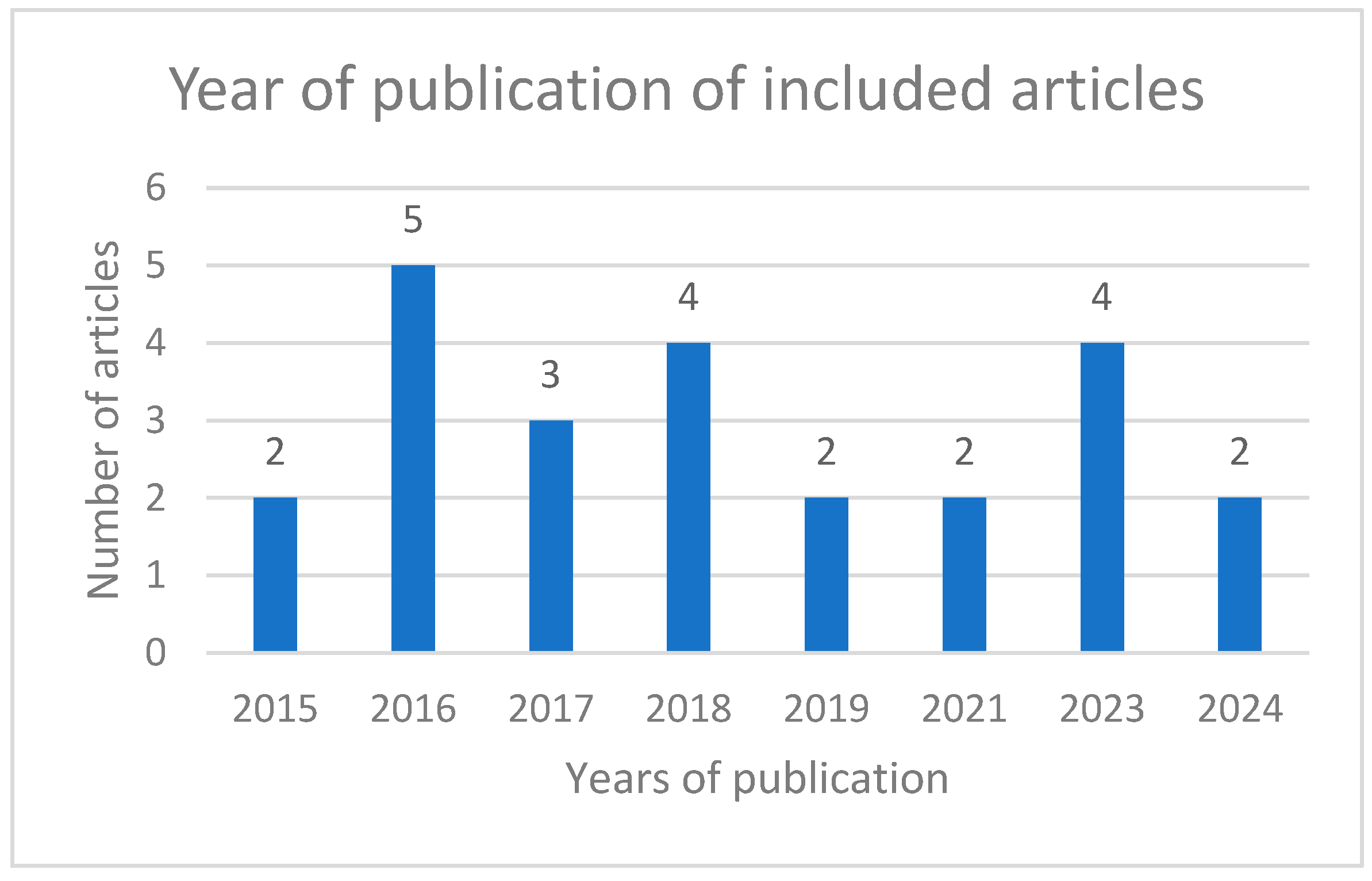
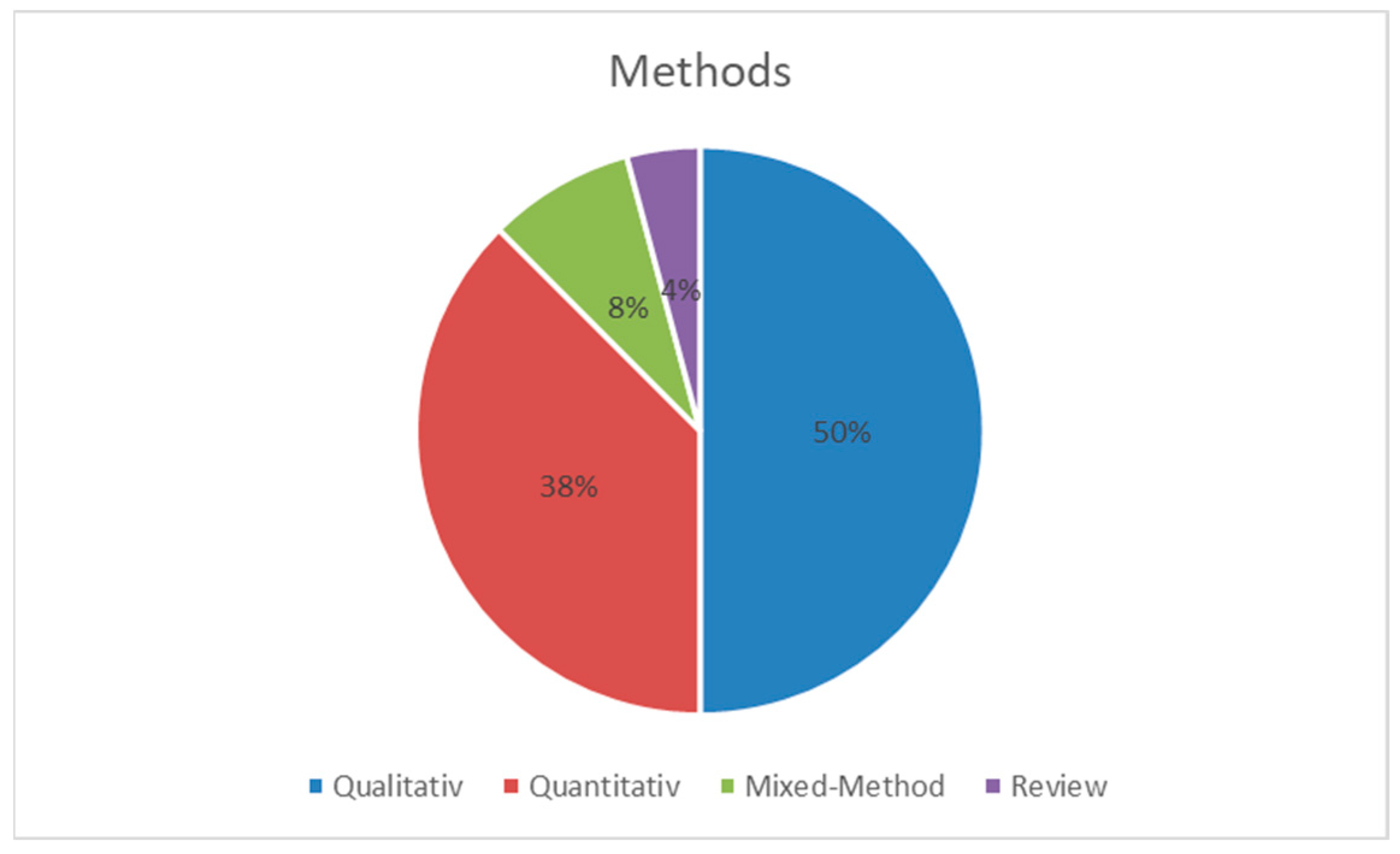
An initial overview of the findings reveals that the total number of 24 articles meeting the inclusion criteria was not high, as shown in Figure 2. Figure 2 shows that most of the articles on EOtC in the German and Danish academic discourse were published during the first five years of the period from 2015 to 2020. As Table 2 shows, this is primarily attributable to two research projects (one in Germany and one in Denmark). Since 2023, there has been a number of articles, particularly within Norwegian academic discourse. Regarding age range and grade level, Table 2 shows that empirical research in German-speaking contexts primarily focuses on classes implementing EOtC from Grade 2 onwards. In contrast, Danish and Norwegian studies more frequently examine pupils from Grade 3 onward, with the target population often extending to Grade 6. In terms of methodology, the sample comprised 50% qualitative studies, 38% quantitative studies, 8% mixed-method designs and 4% review studies (Figure 3). A comparison of Figure 3 and Table 2 clearly shows that the articles from Germany primarily adopt a qualitative research approach, whereas those from Denmark have a quantitative focus. In contrast, the Norwegian discourse on EOtC includes studies based on qualitative and quantitative research designs, as well as (systematic) reviews, which are treated as a separate category within the article. Finally, Table 3 shows that the majority of the articles were published in English (75%), reflecting the internationalisation of the research field.

3.2. Results of the Content Analysis

3.2.1. Education Outside the Classroom Research and Practice Perspectives

As shown in Table 2, a total of four identified articles dealt with ‘Education Outside the Classroom research and practice perspectives’. Barfod et al. (2021, 2016) replicated an earlier Danish mapping study of EOtC (Bentsen et al., 2010). Using online questionnaires with telephone follow-up, they examined the prevalence of EOtC across schools, as well as key characteristics of its implementation, including how teachers conceptualised EOtC and the settings in which it was conducted.
More recently, Lauterbach et al. (2024) conducted a comparable mapping study in Norway, applying a similar theoretical and methodological framework to ensure cross-national comparability. Their findings indicate notable differences in prevalence: in Denmark, according to the 2019 survey, approximately 19.5% of mainstream schools and approximately 34.0% of special-needs schools reported implementing EOtC (Barfod et al., 2021), whereas in Norway, the proportion of mainstream schools was considerably higher, at approximately 68.7%.
In addition, Korsager and Gabrielsen (2024) conducted a review examining nature as a learning arena in Norwegian primary schools. Drawing on Andersen and Fiskum’s (2014) definition, they conceptualised a “learning arena” as a specific setting in which diverse teaching and learning activities take place. The findings suggest that EOtC offers several benefits, particularly in terms of sensory stimulation and increased physical activity, highlighting its potential as a resource-oriented approach to supporting pupils’ development (Korsager & Gabrielsen, 2024). There is currently no comparative quantitative study in German research on EOtC that uses a mapping method to examine understanding of EOtC or its popularity in Germany.

3.2.2. Appropriation of Space in EOtC

The full-text analysis also revealed the inductive category ‘Appropriation of space in EOtC’ (Armbrüster, 2021; Armbrüster et al., 2016a, 2016b; Witte, 2015). Four articles also deal with this topic, as shown in Table 2. It should be noted, however, that all the articles refer to a data set from a research project. Armbrüster (2021) examined how educational practice at participating schools developed over the two-year project period and how these practices can be characterised structurally. The analysis draws on data from all three survey phases of the research, whereas the findings of Armbrüster et al. (2016a, 2016b) focus specifically on the initial phase of the project.
The findings indicate notable shifts in the material and organisational dimensions of outdoor learning spaces. On the one hand, pupils had a wider range of new materials at their disposal; on the other hand, certain resources remained limited. In addition, the absence of fixed spatial boundaries influenced pupils’ movement patterns and interactions. Nevertheless, the children were able to differentiate between free play and externally determined activities. Overall, the studies suggest that although EOtC opens up space, elements of institutional structure and organisation are nonetheless reproduced within these settings. However, the findings of the articles relate to a research project and associated qualitative research data. There is no quantitative sub-study on the appropriation of space to assess representativeness. Furthermore, the findings relate solely to EOtC practice in Germany, specifically a case study comprising three ‘model schools’.

3.2.3. Communication Outside the Classroom

Furthermore, a sub-analysis within the research project ‘Modellprojekt Draußenschule’ (Armbrüster, 2021; Armbrüster et al., 2016a, 2016b; Gräfe & Bentsen, 2015; Sahrakhiz, 2017, 2018; Sahrakhiz et al., 2018; Witte, 2015) reveals a shift in the pattern of ‘Communication outside the classroom’ via EOtC. Overall, the analysis revealed no significant changes in teacher–pupil communication. Nevertheless, communication during outdoor lessons was generally more dynamic and directive (Sahrakhiz, 2018).

3.2.4. Aims and Subjects in EOtC

In addition to studies on learning processes and the influence of EOtC on children’s well-being, the scientific discourse about EOtC also addresses subject-specific competence development and teaching content. A total of three studies were identified that address the topic of ‘Aims and subjects in EOtC’. For instance, Killengreen et al. (2023) examined the topics covered in EOtC and explored teachers’ perspectives across Grades 1–7, corresponding to Norwegian primary school. Their study found that teachers predominantly focused on biology-related topics in outdoor education. Other scientific content was also addressed, but to a lesser extent (Killengreen et al., 2023).
Unlike Killengreen et al. (2023), Otte et al. (2019a, 2019b) focused their quantitative study specifically on the development of pupils’ subject-specific skills—for example, in mathematics and reading—rather than on the teachers’ perspective. Their research therefore examined individual subject competences rather than, as in Killengreen et al.’s (2023) work, general perspectives on teaching content in EOtC. Notably, the reading comprehension test revealed substantial differences between EOtC and control classes, with EOtC classes performing significantly better on the standardised Hogrefe test (text sentence reading test). While these findings suggest a positive impact on reading, the authors emphasised the need for further investigation—particularly regarding mathematics—despite earlier studies reporting positive effects in that domain (Berezowitz et al., 2015; Blair, 2009; Otte et al., 2019a; Williams & Dixon, 2013). However, the findings do not explain why these results have been obtained, as they have not been supplemented by, for example, a qualitative sub-study. As things stand, there is no record of any comparative research in Germany.

3.2.5. Learning Aspects in EOtC

With a total of five findings relating to the research topic ‘Learning aspects’, this category is the second largest. Furthermore, the topic reflects not only national interest, as evidenced by one study, but also international interest, as there are published articles from Germany, Norway and Denmark, even though the research designs differ. Taking a broader perspective on learning processes and content, Gräfe and Bentsen (2015) reported that Udeskole does not primarily focus on individual subjects; rather, interdisciplinary learning is one of its central objectives. Their findings indicated that EOtC had a significant positive effect on children’s physical activity, well-being, linguistic development, cognitive skills, social interaction and a more intensive subject-environment relationship. Furthermore, learning and teaching in EOtC were characterised by multisensory engagement, leading to more lasting Experiences. However, it is not clear from the results to what extent these effects can be quantified, as there have been no quantitative studies to date on measuring the effects or competencies of EOtC in Germany.
The importance of sensory perception and increased movement was further emphasised in Witte’s (2015) study, which involved interviews with Grade 2 pupils. He found that children clearly distinguished between indoor and outdoor learning and did not associate EOtC with performance pressure. Instead, the focus was on play, movement and sensory experiences (Witte, 2015).
Similarly, Sahrakhiz et al. (2018) conducted 13 focus group interviews with children, examining pupils’ perspectives on weekly EOtC. The study highlighted key aspects of play, movement, social cooperation and overarching learning potential. EOtC combined formal, teacher-guided learning with spontaneous, informal learning opportunities. Both free play (child-initiated, intrinsically motivated) and teacher-led educational games were identified as particularly engaging. Moreover, EOtC promoted peer interaction, shared problem-solving and crisis management (e.g., responding collectively when a peer tried to run away). While existing social roles often persisted, the setting offered opportunities to strengthen teamwork and empathy.
In particular, the aspect of social skills is also evident as a learning process in the study by Hartmeyer and Mygind (2016), which also examined social relationships fostered by EOtC from a retrospective standpoint, focusing on pupils’ interactions in the Danish “Nature Class” project. They identified four main categories that supported the development of social interactions and relationships: play, participation, interactions and child-centred tasks.
Finally, Winje and Løndal (2023) examined the experiences of students during Uteskole and their implications for deep learning. The study identified four experience themes: movement in varied terrain, organised outdoor learning activities, learning “in-between” (in the interstices of structured activities) and symbolic or representational tasks. The study noted that significant potential remained untapped, particularly regarding the integration of informal activities with curriculum goals and the application of outdoor learning across other subjects (Winje & Løndal, 2023).

3.2.6. Inclusion in EOtC

With just one study, the category of ‘Inclusion in EOTC’ highlights a gap in the research of EOtC. Lauterbach et al. (2023) investigated the potential of EOtC to support the inclusion of immigrant and refugee children in primary education. Their findings indicate that EOtC can provide opportunities to support the inclusion of children from diverse backgrounds to demonstrate different strengths and to engage with local people and places, thereby fostering a sense of achievement and belonging. The study emphasised the central role of teachers and their pedagogical approaches in facilitating these inclusive experiences. EOtC itself was not found to be an automatic solution for successful inclusion; however, when implemented in ways responsive to place and culture, it demonstrated considerable potential to promote more inclusive school environments (Lauterbach et al., 2023).

3.2.7. Well-Being and (Mental) Health in EOtC

The most extensive category is the ‘Well-being and (mental) health in EOtC’ section, which features a total of six articles. It should be noted, however, that these studies are based solely on findings from Scandinavian research and that the field of research into well-being in primary schools in Germany remains an area where significant research is still desired. As part of the Danish TEACHOUT research project, Nielsen et al. (2016) conducted a quasi-experimental, cross-disciplinary study among primary school children aged 9 to 13. The study investigated learning behaviour and processes, physical activity, motivation, well-being, social interactions and relationships, as well as academic performance within EOtC. Its cross-disciplinary focus provided a comprehensive perspective on school health promotion and pupils’ overall well-being (Nielsen et al., 2016).
Bølling et al. (2018) found that weekly lessons outside the classroom had a positive effect on pupils’ intrinsic school motivation. Between two and seven hours of EOtC per week were sufficient to produce measurable improvements. Furthermore, outdoor lessons enhanced introjected regulation and promoted a greater sense of autonomy and competence, which in turn positively affected peer interactions (Bølling et al., 2018).
Regarding physical activity, Schneller et al. (2017b) reported that EOtC had a particularly positive effect on boys’ moderate and light activity, whereas girls showed no significant change between indoor and outdoor lessons. A related sub-study by Schneller et al. (2017a) indicated that light activities in everyday school life were increased and supported by EOtC but had no observable effect on more intensive physical activities.
Lauterbach (2023) examined the effects of EOtC on the three basic psychological needs of self-determination theory (SDT) among primary school pupils. EOtC met the need for competence by allowing the children to display diverse strengths, especially those who typically underperformed in indoor settings. Physical, hands-on and sensory activities enhanced self-efficacy and motivation, reinforced through clear structures and routines. Opportunities for greater freedom of movement, discovery and choice in the outdoor settings also met their need for autonomy. EOtC also met pupils’ need for relatedness as teacher–pupil relationships deepened and the children developed stronger bonds with their local community (Lauterbach, 2023).

3.2.8. Teacher Perspectives on EOtC

Only one article could be identified as belonging to the ‘Teacher perspectives on EOtC’ category. Sahrakhiz (2018) examined teachers’ perspectives and experiences, as well as the effects of teaching at an “outdoor school”. Three key themes emerged from the teachers’ responses. First, the development of teaching itself became a central focus, differing substantially from indoor instruction. Teachers were required to act with greater flexibility and to consider new didactic methods and thematic approaches that could be delivered in an interdisciplinary manner.
Second, EOtC influenced staff development. In addition to their own professional growth, teachers increasingly engaged external experts to support and enhance lesson quality. Finally, teachers highlighted the need for structured guidance to sustain EOtC in the long term (Sahrakhiz, 2018).

4. Discussion

As outlined in the Introduction, scoping reviews provide an opportunity to gain a comprehensive overview of a research topic or area of interest. The following section discusses the findings from the descriptive and content analyses in relation to the research questions formulated in Section 2.1, namely:
How is Education Outside the Classroom (EOtC) conceptualised within German and Scandinavian research discourse?
What thematic areas are addressed in empirical studies on EOtC in Denmark, Norway and Germany?
What differences, challenges and patterns in EOtC practice are identified in empirical research across these national contexts?
Before discussing the content of the included studies, it is necessary to return to the issue of the target group. As outlined at the beginning, there are differences between Germany, Norway and Denmark regarding the length of primary school. Whilst in Germany primary school generally ends in the fourth grade, in Scandinavian countries it continues up to and including the seventh grade. This also presented challenges during the analysis, as, for example, no studies from grades 5 to 7 in Norway and Denmark could be included to ensure comparability. The studies show that, particularly in the Norwegian and Danish studies, data was primarily collected from third grade onwards, whereas in Germany the focus was mostly on second grade. One area for improvement in both Norwegian/Danish and German research appears to be the first year, which may be linked to reading and writing skills, as children of this age have limited ability to complete quantitative questionnaires and interview questions must also be designed differently than, for example, for third-year pupils. However, this gap could be addressed, for instance, through ethnographic studies.
Regarding the understanding and practice of EOtC in German, Danish and Norwegian discourse, the analysis shows that Denmark (Barfod et al., 2016) and particularly Norway (Lauterbach et al., 2024) have a long-standing tradition of EOtC as part of the school system. In Norway, Lauterbach et al. (2024) reported that 68.7% of public schools regularly practice EOtC, with 72% of schools offering it for half a day or a full day per week. In Denmark, by contrast, only 19.3% of schools reported regular EOtC (Barfod et al., 2016). Lauterbach et al. (2024) suggested that this difference may be due to the integration of Friluftsliv into the Norwegian curriculum, making activities such as hiking part of formal teaching. In both Norway and Denmark, teachers enjoy a degree of freedom and flexibility in organising lessons as long as curriculum objectives are met.
In Germany, no statistics were found on the prevalence of EOtC, and empirical studies show that multiple terms are used to describe it. On the one hand, the educational concept is understood as “outdoor school”, and on the other hand, on a more didactic level, as outdoor teaching or outdoor learning (Korsager & Gabrielsen, 2024; Sahrakhiz, 2018). This indicates a continuing need for clarification and consensus regarding terminology in the scientific discourse.
With respect to methodology, the included studies revealed differences across countries. Research in Denmark tends to be quantitative (Barfod et al., 2021; Bølling et al., 2018; Nielsen et al., 2016; Otte et al., 2019a, 2019b; Schneller et al., 2017a, 2017b), whereas German research primarily employs qualitative or mixed-method approaches (Armbrüster, 2021; Armbrüster et al., 2016a, 2016b; Lauterbach, 2023; Lauterbach et al., 2023; Sahrakhiz, 2017, 2018; Sahrakhiz et al., 2018; Witte, 2015). Norwegian studies frequently use mixed methods (Killengreen et al., 2023; Korsager & Gabrielsen, 2024; Lauterbach, 2023; Lauterbach et al., 2024; Winje & Løndal, 2023).
A closer look at the data also reveals that two large research projects dominate the scientific discourse on EOtC in Denmark and Germany (Nielsen et al., 2016; Witte, 2015), with most publications deriving from these datasets, whereas Norway features a broader range of studies. When synthesising and critically evaluating the scientific findings, it is important to bear in mind that the results of the scoping review are based primarily on findings from two research projects. Attention must be paid to the methodological limitations here, as the results can currently hardly be verified by further studies. Furthermore, the project results presented must be viewed critically in terms of their relevance, as the data was collected over ten years ago and, considering recent studies—such as those by Lauterbach et al. (2024)—suggests that the concept has evolved since then. This implies that the findings would need to be placed in a contemporary context through further studies.
In terms of content, almost all studies address social competence in and through EOtC. Furthermore, the articles show that learning in alternative environments, particularly in nature, has a positive effect on children’s holistic learning through multisensory engagement (Armbrüster, 2021; Armbrüster et al., 2016a; Hartmeyer & Mygind, 2016; Lauterbach et al., 2023; Sahrakhiz et al., 2018; Winje & Løndal, 2023; Witte, 2015). In addition, EOtC has been shown to positively influence pupils’ well-being (Lauterbach, 2023; Schneller et al., 2017a, 2017b), which in turn supports motivation and learning processes. Moreover, there is evidence of positive effects on subject-specific skills (Otte et al., 2019a, 2019b).
Nevertheless, EOtC also presents challenges. In Germany, teachers often report feeling overwhelmed by the implementation of EOtC and the loss of familiar indoor structures (Sahrakhiz, 2017, 2018). The variety of potential distractions outdoors requires flexible teaching structures. Such “overwhelming challenges” are less frequently mentioned in Scandinavian studies; instead, issues such as adverse weather conditions—particularly in northern Norway—are emphasised, with implications for Uteskole teaching (Killengreen et al., 2023).

5. Limitations

The scoping review provides an overview of the current EOtC research landscape in Germany, Norway and Denmark. However, the analysis was constrained by several exclusion criteria. One significant limitation is the target group of primary school pupils, which reflects the different school structures across the countries. Future reviews could extend the analysis to other age groups and school levels. Furthermore, the scoping review does not provide a complete overview of the state of research in Scandinavia, as Sweden could not be included as a Scandinavian country due to a lack of language proficiency. This gap should be addressed in future articles, for example, by including a further author from Sweden. Furthermore, this scoping review did not include contributions in the form of anthologies or monographs, which slightly shifts the perspective on the current state of research. For instance, Jucker and von Au (2022a) published an anthology addressing outdoor learning. Expanding the scope to include other countries with established EOtC traditions—such as Scotland, Ireland, Sweden, New Zealand or Australia—would also provide valuable comparative insights.

6. Conclusions

Overall, the scoping review shows that EOtC is not yet particularly prominent in the research landscape, particularly regarding early grades. This represents a notable research gap, as seven of the 24 publications are based on a single data set from one research project completed in 2016/17 (Witte, 2015). Since then, very little new research data has been published in Germany. Furthermore, the articles dealing with EOtC in Germany primarily employ qualitative methodologies, whereas quantitative research is more prevalent in Norway (Lauterbach et al., 2024) and Denmark (Barfod et al., 2021; Otte et al., 2019a, 2019b; Nielsen et al., 2016). Whilst research in Germany focuses primarily on qualitative research methods and findings (e.g., Witte, 2015), the emphasis in Denmark is on quantitative data collection (e.g., Otte et al., 2019a, 2019b). For future research, this means that in Germany (in addition to a general lack of research findings), quantitative data in particular is essential for drawing representative conclusions about EOtC in Germany. In contrast, a specific focus on qualitative research (e.g., ethnography or interviews) would be a fundamental component of the ongoing research process in Denmark.
This suggests that a uniform, internationally shared perspective on EOtC and its conceptual framework has yet to emerge. Nevertheless, it is evident that EOtC practice in Germany is increasingly oriented towards the definitions and conceptualisations of EOtC in Norway (Korsager & Gabrielsen, 2024; Lauterbach, 2023; Lauterbach et al., 2024) and Denmark (Armbrüster, 2021; Gräfe & Bentsen, 2015). It should not be overlooked, however, that German and Scandinavian school systems differ greatly, which may partly explain why the development of EOtC in Germany is not as widespread as it is in Norway, for example. Another contributing factor may be the greater freedom and autonomy of teaching in Norway (Winje, 2022). Additionally, the tradition of Friluftsliv plays a major role in shaping outdoor education in Scandinavian countries (Gelter, 2000; Jørgensen-Vittersø et al., 2022), which may account for the more advanced research and practice in these countries compared with Germany, where no comparable cultural orientation towards nature exists.
The scoping review demonstrates the need for further mixed-method research to provide more comprehensive insights into current EOtC practice in order to support the further development of EOtC as an educational approach. Existing studies indicate that the concept of EOtC has the potential to positively influence learning motivation, social and cognitive skills and the well-being of children (e.g., Armbrüster et al., 2016b; Hartmeyer & Mygind, 2016; Otte et al., 2019a, 2019b; Winje & Løndal, 2023).

Author Contributions

Conceptualization, J.P.; methodology, J.P. and J.F.; formal analysis, J.P., H.H.K.J. and G.L.; writing—original draft preparation, J.P. and H.H.K.J.; writing—review and editing, J.P., H.H.K.J., G.L. and J.F.; supervision, J.P.; project administration, J.P.; funding acquisition, J.P. All authors have read and agreed to the published version of the manuscript.

Funding

This publication was funded by the Open Access Publication Fund of Leuphana University Lueneburg—no specific number.

Institutional Review Board Statement

Not applicable.

Informed Consent Statement

Not applicable.

Data Availability Statement

No new data were created or analyzed in this study.

Conflicts of Interest

The authors declare no conflicts of interest.

Appendix A. List of Search Strings

-
Uteskole AND grunnskole; Uteskole AND primary school; Uteskole AND grunnskole AND empirical research; Uteskole AND primary school AND empirical study; Uteskole AND Scandinavia
-
Udeskole AND grunnskole; Udeskole AND primary school; Udeskole AND grunnskole AND empirical research; Udeskole AND primary school AND empirical study; Udeskole AND Scandinavia
-
Draußenschule AND Grundschule; Draußenschule AND primary school; Draußenschule AND Grundschule AND empirical research; Draußenschule AND empirical Study; Draußenschule AND Deutschland; Draußenschule AND Scandinavia
-
Outdoor School AND primary school; Outdoor School AND primary school AND empirical research; Outdoor School AND empirical Study; Outdoor School AND Germany; Outdoor School AND Scandinavia
-
Education Outside the Classroom AND primary school; Education Outside the Classroom AND primary school AND empirical research; Education Outside the Classroom AND empirical Study; Education Outside the Classroom AND Germany; Education Outside the Classroom AND Scandinavia
-
Friluftsliv AND grunnskole; Friluftsliv AND primary school; Friluftsliv AND grunnskole AND empirical research; Friluftsliv AND primary school AND empirical study; Friluftsliv AND Scandinavia
-
Außerschulischer Lernort AND Grundschule; außerschulischer Lernort AND primary school; außerschulischer Lernort AND Grundschule AND empirical research; außerschulischer Lernort AND empirical Study; außerschulischer Lernort AND Deutschland; außerschulischer Lernort AND Scandinavia
-
Lernarena AND Grundschule; Lernarena AND primary school; Lernarena AND Grundschule AND empirical research; Lernarena AND empirical Study; Lernarena AND Deutschland; Lernarena AND Scandinavia
-
Learnarea AND primary school; Learnarea AND primary school AND empirical research; Learnarea AND empirical Study; Learnarea AND Germany; Learnarea AND Scandinavia
-
læringsarena AND grunnskole; læringsarena AND primary school; læringsarena AND grunnskole AND empirical research; læringsarena AND primary school AND empirical study; læringsarena AND Scandinavia

Notes

1
The term ‘Scandinavia’ is used when statements or references generally refer to Denmark, Norway and Sweden.
2
The PRISMA checklist can be found in Appendix A. The protocol has not been published as an Open Science Framework but can be requested from the authors.

References

  1. Abelsen, K., & Leirhaug, P. E. (2017). Hva vet vi (ikke) om elevers opplevelser med friluftsliv i norsk skole—En gjennomgang av empiriske studier 1974–2014. Journal for Research in Arts and Sports Education, 1(3), 18–31. [Google Scholar] [CrossRef]
  2. Andersen, H. P., & Fiskum, T. A. (2014). Hva er uteskole?—Noen begrepsavklaringer. In T. A. Fiskum, & J. A. Husby (Eds.), Uteskoledidaktikk. Ta fagene med ut (pp. 15–29). Cappelen Damm Akademisk. [Google Scholar]
  3. Arksey, H., & O’Malley, L. (2005). Scoping studies: Towards a methodological framework. International Journal of Social Research Methodology, 8(1), 19–32. [Google Scholar] [CrossRef]
  4. Armbrüster, C. (2021). Naturerfahrung als Krise durch Muße? Struktureigenschaften der bildungspraxis der ‘Draußenschule’ im primarbereich. Zeitschrift für Pädagogik, 67(1), 84–101. [Google Scholar] [CrossRef]
  5. Armbrüster, C., Gräfe, R., Harring, M., Sahrakhiz, S., Schenk, D., & Witte, M. D. (2016a). Inside we learn, outside we explore the world—Children’s perception of a weekly outdoor day in German primary schools. Journal of Education and Human Development, 5(2), 103–114. [Google Scholar] [CrossRef]
  6. Armbrüster, C., Gräfe, R., Harring, M., Sahrakhiz, S., Schenk, D., & Witte, M. D. (2016b). Spielen, bewegen, erkunden—Praktiken der raumaneignung von grundschulkindern in der Draußenschule. Diskurs kindheits—Und jugendforschung/discourse. Journal of Childhood and Adolescence Research, 11(4), 473–489. [Google Scholar] [CrossRef]
  7. Armbrüster, C., & Witte, M. D. (2022). Outdoor school in Germany. Theoretical considerations and empirical findings. In R. Jucker, & J. von Au (Eds.), High-quality outdoor learning: Evidence-based education outside the classroom for children, teachers and society (pp. 335–347). Springer. [Google Scholar]
  8. Barfod, K., Bølling, M., Mygind, L., Elsborg, P., Ejbye-Ernst, N., & Bentsen, P. (2021). Reaping fruits of labour: Revisiting Education Outside the Classroom provision in Denmark upon policy and research interventions. Urban Forestry & Urban Greening, 60, 127044. [Google Scholar] [CrossRef]
  9. Barfod, K., Ejbye-Ernst, N., Mygind, L., & Bentsen, P. (2016). Increased provision of udeskole in Danish schools: An updated national population survey. Urban Forestry & Urban Greening, 20, 277–281. [Google Scholar] [CrossRef]
  10. Barfod, K., & Mygind, E. (2022). Udeskole—Regular teaching outside the classroom. In R. Jucker, & J. von Au (Eds.), High-quality outdoor learning: Evidence-based education outside the classroom for children, teachers and society (pp. 287–297). Springer. [Google Scholar]
  11. Becker, C., Lauterbach, G., Spengler, S., Dettweiler, U., & Mess, F. (2017). Effects of regular classes in outdoor education settings: A systematic review on students’ learning, social and health dimensions. International Journal of Environmental Research and Public Health, 14(5), 485. [Google Scholar] [CrossRef] [PubMed]
  12. Bentsen, P., Jensen, F. S., Mygind, E., & Randrup, T. B. (2010). The extent and dissemination of udeskole in Danish schools. Urban Forestry & Urban Greening, 9(3), 235–243. [Google Scholar] [CrossRef]
  13. Bentsen, P., Stevenson, M. P., Mygind, E., & Barfod, K. S. (2018). Udeskole: Education outside the classroom in a Danish context. In The budding and blooming of outdoor education in diverse global contexts (pp. 81–114). National Academy for Educational Research. Available online: https://www.ucviden.dk/en/publications/udeskole-education-outside-the-classroom-in-a-danish-context (accessed on 24 November 2024).
  14. Berezowitz, C. K., Bontrager Yoder, A. B., & Schoeller, D. A. (2015). School gardens enhance academic performance and dietary outcomes in children. Journal of School Health, 85(8), 508–518. [Google Scholar] [CrossRef] [PubMed]
  15. Blair, D. (2009). The child in the garden: An evaluative review of the benefits of school gardening. The Journal of Environmental Education, 40(2), 15–38. [Google Scholar] [CrossRef]
  16. Bølling, M., Otte, C. R., Elsborg, P., Nielsen, G., & Bentsen, P. (2018). The association between education outside the classroom and students’ school motivation: Results from a one-school-year quasi-experiment. International Journal of Educational Research, 89, 22–35. [Google Scholar] [CrossRef]
  17. Chawla, L. (2020). Childhood nature connection and constructive hope: A review of research on connecting with nature and coping with environmental loss. People and Nature, 2(3), 619–642. [Google Scholar] [CrossRef]
  18. Chawla, L. (2022). Childhood nature connection and constructive hope: Helping young people connect with nature and cope with environmental loss. In R. Jucker, & J. von Au (Eds.), High-quality outdoor learning: Evidence-based education outside the classroom for children, teachers and society (pp. 95–122). Springer. [Google Scholar]
  19. Colquhoun, H. L., Levac, D., O’Brien, K. K., Straus, S., Tricco, A. C., Perrier, L., Kastner, M., & Moher, D. (2014). Scoping reviews: Time for clarity in definition, methods, and reporting. Journal of Clinical Epidemiology, 67(12), 1291–1294. [Google Scholar] [CrossRef] [PubMed]
  20. Daudt, H. M. L., van Mossel, C., & Scott, S. J. (2013). Enhancing the scoping study methodology: A large, inter-professional team’s experience with Arksey and O’Malley’s framework. BMC Medical Research Methodology, 13(1), 48. [Google Scholar] [CrossRef] [PubMed]
  21. Gelter, H. (2000). Friluftsliv: The Scandinavian philosophy of outdoor life. Canadian Journal of Environmental Education, 5(1), 77–92. [Google Scholar]
  22. Gelter, H. (2009). Friluftsliv as slow and peak experiences in the transmodern society. Norwegian Journal of Friluftsliv, 1–22. [Google Scholar]
  23. Gräfe, R., & Bentsen, P. (2015). Udeskole—Draußenschule: Außerschulisches lernen in Dänemark. Die Grundschulzeitschrift, 29(287), 16–21. [Google Scholar]
  24. Grundmann, D., & Overwien, B. (2016). Bildung für nachhaltige entwicklung in schulen verankern: Handlungsfelder, strategien und rahmenbedingungen der schulentwicklung. Springer VS. [Google Scholar]
  25. Hartmeyer, R., & Mygind, E. (2016). A retrospective study of social relations in a Danish primary school class taught in ‘udeskole’. Journal of Adventure Education and Outdoor Learning, 16(1), 78–89. [Google Scholar] [CrossRef]
  26. Hauenschild, K. (2023). Bildung für nachhaltige Entwicklung in der Grundschule. In M. Haider, R. Böhme, S. Gebauer, C. Gößinger, M. Munser-Kiefer, & A. Rank (Eds.), Jahrbuch grundschulforschung: Vol. 27. Nachhaltige bildung in der grundschule (pp. 54–66). Julius Klinkhardt. [Google Scholar] [CrossRef]
  27. Jordet, A. E. (1998). Nærmiljøet som klasserom: Uteskole i teori og praksis. Cappelen. [Google Scholar]
  28. Jordet, A. E. (2011). Uteskole: I en utdanningspolitisk brytningstid. Unge Pædagoger, 4, 47–55. [Google Scholar]
  29. Jørgensen-Vittersø, K. A., Blenkinsop, S., Fraser, S., Presthus Heggen, M., & Neegaard, H. (2022). Friluftsliv and wild pedagogies: Building pedagogies for early childhood education in a time of environmental uncertainty. Canadian Journal of Environmental Education, 25, 135–154. [Google Scholar]
  30. Jucker, R., & von Au, J. (Eds.). (2022a). High-quality outdoor learning: Evidence-based education outside the classroom for children, teachers and society. Springer. [Google Scholar] [CrossRef]
  31. Jucker, R., & von Au, J. (Eds.). (2022b). Outdoor learning—Why it should be high up on the agenda of every educator: Introduction. In High-quality outdoor learning: Evidence-based education outside the classroom for children, teachers and society (pp. 1–26). Springer. [Google Scholar]
  32. Killengreen, S. T., Lundberg, H., Jensvoll, I., & Höper, J. (2023). Naturfag utenfor klasserommet fra et Nordnorsk perspektiv. Nordic Studies in Science Education, 19(1), 78–96. [Google Scholar] [CrossRef]
  33. Kminek, H., Singer-Brodowski, M., & Holz, V. (Eds.). (2024). Bildung für eine nachhaltige entwicklung im umbruch?: Beiträge zur theorieentwicklung angesichts ökologischer, gesellschaftlicher und individueller umbrüche. Verlag Barbara Budrich. [Google Scholar]
  34. Korsager, M., & Gabrielsen, A. (2024). Naturen som læringsarena i norsk grunnskole. Acta Didactica Norden, 18(2), 1–19. [Google Scholar] [CrossRef]
  35. Lauterbach, G. (2023). “Building roots”—Developing agency, competence, and a sense of belonging through education outside the classroom. Education Sciences, 13(11), 1107. [Google Scholar] [CrossRef]
  36. Lauterbach, G., Bølling, M., & Dettweiler, U. (2024). Education outside the classroom in Norway: The prevalence, provision, and nature of uteskole. International Journal of Educational Research, 125, 102349. [Google Scholar] [CrossRef]
  37. Lauterbach, G., Fandrem, H., & Dettweiler, U. (2023). Does “out” get you “in”? Education outside the classroom as a means of inclusion for students with immigrant backgrounds. Education Sciences, 13(9), 878. [Google Scholar] [CrossRef]
  38. Levac, D., Colquhoun, H., & O’Brien, K. K. (2010). Scoping studies: Advancing the methodology. Implementation Science, 5, 69. [Google Scholar] [CrossRef] [PubMed]
  39. Mann, J., Gray, T., Truong, S., Brymer, E., Passy, R., Ho, S., Sahlberg, P., Ward, K., Bentsen, P., Curry, C., & Cowper, R. (2022). Getting out of the classroom and into nature: A systematic review of nature-specific outdoor learning on school children’s learning and development. Frontiers in Public Health, 10, 877058. [Google Scholar] [CrossRef] [PubMed]
  40. Miller, N. C., Kumar, S., Pearce, K. L., & Baldock, K. L. (2021). The outcomes of nature-based learning for primary school aged children: A systematic review of quantitative research. Environmental Education Research, 27(8), 1115–1140. [Google Scholar] [CrossRef]
  41. Moher, D., Liberati, A., Tetzlaff, J., & Altman, D. G. (2009). Preferred reporting items for systematic reviews and meta-analyses: The PRISMA statement. BMJ (Clinical Research Ed.), 339, b2535. [Google Scholar] [CrossRef] [PubMed]
  42. Molitor, H. (2024). Naturerfahrungsräume als spielorte für stadtkinder und als lebensraum für pflanzen und tiere in der stadt: Möglichkeiten für den umgang mit umbrüchen in der stadtentwicklung. In H. Kminek, M. Singer-Brodowski, & V. Holz (Eds.), Schriftenreihe “ökologie und erziehungswissenschaft” der kommission bildung für nachhaltige entwicklung der deutschen gesellschaft für erziehungswissenschaft (DGfE). Bildung für eine nachhaltige entwicklung im umbruch? Beiträge zur theorieentwicklung angesichts ökologischer, gesellschaftlicher und individueller Umbrüche (1st ed., pp. 143–167). Verlag Barbara Budrich. [Google Scholar]
  43. Mygind, E. (2022). Udeskole—Pupils’ physical activity and gender perspectives. In R. Jucker, & J. von Au (Eds.), High-quality outdoor learning: Evidence-based education outside the classroom for children, teachers and society (pp. 135–152). Springer. [Google Scholar]
  44. Nielsen, G., Mygind, E., Bølling, M., Otte, C. R., Schneller, M. B., Schipperijn, J., Ejbye-Ernst, N., & Bentsen, P. (2016). A quasi-experimental cross-disciplinary evaluation of the impacts of education outside the classroom on pupils’ physical activity, well-being and learning: The TEACHOUT study protocol. BMC Public Health, 16(1), 1117. [Google Scholar] [CrossRef] [PubMed]
  45. Otte, C. R., Bølling, M., Elsborg, P., Nielsen, G., & Bentsen, P. (2019a). Teaching maths outside the classroom: Does it make a difference? Educational Research, 61(1), 38–52. [Google Scholar] [CrossRef]
  46. Otte, C. R., Bølling, M., Stevenson, M. P., Ejbye-Ernst, N., Nielsen, G., & Bentsen, P. (2019b). Education outside the classroom increases children’s reading performance: Results from a one-year quasi-experimental study. International Journal of Educational Research, 94, 42–51. [Google Scholar] [CrossRef]
  47. Perlinger, J. (2025). Outdoor education in school curricula: A Norwegian–German comparative analysis. Journal of Outdoor and Environmental Education, 1–18. [Google Scholar] [CrossRef]
  48. Peters, M. D. J., Marnie, C., Tricco, A. C., Pollock, D., Munn, Z., Alexander, L., McInerney, P., Godfrey, C. M., & Khalil, H. (2020). Updated methodological guidance for the conduct of scoping reviews. JBI Evidence Synthesis, 18(10), 2119–2126. [Google Scholar] [CrossRef] [PubMed]
  49. Pham, M. T., Rajić, A., Greig, J. D., Sargeant, J. M., Papadopoulos, A., & McEwen, S. A. (2014). A scoping review of scoping reviews: Advancing the approach and enhancing the consistency. Research Synthesis Methods, 5(4), 371–385. [Google Scholar] [CrossRef] [PubMed]
  50. Pollock, D., Davies, E. L., Peters, M. D. J., Tricco, A. C., Alexander, L., McInerney, P., Godfrey, C. M., Khalil, H., & Munn, Z. (2021). Undertaking a scoping review: A practical guide for nursing and midwifery students, clinicians, researchers, and academics. Journal of Advanced Nursing, 77(4), 2102–2113. [Google Scholar] [CrossRef] [PubMed]
  51. Pulido, L., Pépin, A., Bergeron-Leclerc, C., Cherblanc, J., Godue-Couture, C., Laprise, C., Paquette, L., Nadeau-Tremblay, S., & Simard, S. (2025). The effects of outdoor teaching on academic achievement and its associated factors—A scoping review. Education Sciences, 15(8), 1060. [Google Scholar] [CrossRef]
  52. Remmen, K. B., & Iversen, E. (2023). A scoping review of research on school-based outdoor education in the Nordic countries. Journal of Adventure Education and Outdoor Learning, 23(4), 433–451. [Google Scholar] [CrossRef]
  53. Sahrakhiz, S. (2017). Immediacy and distance in teacher talk—A comparative case study in German elementary- and outdoor school-teaching. Cogent Education, 4(1), 1291175. [Google Scholar] [CrossRef]
  54. Sahrakhiz, S. (2018). The ‘outdoor school’ as a school improvement process: Empirical results from the perspective of teachers in Germany. Education 3-13, 46(7), 825–837. [Google Scholar] [CrossRef]
  55. Sahrakhiz, S., Harring, M., & Witte, M. D. (2018). Learning opportunities in the outdoor school—Empirical findings on outdoor school in Germany from the children’s perspective. Journal of Adventure Education and Outdoor Learning, 18(3), 214–226. [Google Scholar] [CrossRef]
  56. Schneller, M. B., Duncan, S., Schipperijn, J., Nielsen, G., Mygind, E., & Bentsen, P. (2017a). Are children participating in a quasi-experimental education outside the classroom intervention more physically active? BMC Public Health, 17(1), 523. [Google Scholar] [CrossRef] [PubMed]
  57. Schneller, M. B., Schipperijn, J., Nielsen, G., & Bentsen, P. (2017b). Children’s physical activity during a segmented school week: Results from a quasi-experimental education outside the classroom intervention. International Journal of Behavioral Nutrition and Physical Activity, 14(1), 80. [Google Scholar] [CrossRef] [PubMed]
  58. Tricco, A. C., Lillie, E., Zarin, W., O’Brien, K., Colquhoun, H., Kastner, M., Levac, D., Ng, C., Sharpe, J. P., Wilson, K., Kenny, M., Warren, R., Wilson, C., Stelfox, H. T., & Straus, S. E. (2016). A scoping review on the conduct and reporting of scoping reviews. BMC Medical Research Methodology, 16(1), 15. [Google Scholar] [CrossRef] [PubMed]
  59. von Au, J. (2017). Outdoor education an schulen in Dänemark, Schottland und Deutschland: Kompetenzorientierte und kontextspezifische einflüsse auf intentionen und handlungen von erfahrenen outdoor education-lehrpersonen [Doctoral dissertation, Pädagogische Hochschule Heidelberg]. GRIN Verlag. [Google Scholar]
  60. Williams, D. R., & Dixon, P. S. (2013). Impact of garden-based learning on academic outcomes in schools. Review of Educational Research, 83(2), 211–235. [Google Scholar] [CrossRef]
  61. Winje, Ø. (2022). The grass is greener outdoors: Potentials for deep learning in Norwegian uteskole. Oslo Metropolitan University. Available online: https://skriftserien.oslomet.no/skriftserien/article/view/811 (accessed on 13 October 2024).
  62. Winje, Ø., & Løndal, K. (2021). Theoretical and practical, but rarely integrated: Norwegian primary school teachers’ intentions and practices of teaching outside the classroom. Journal of Outdoor and Environmental Education, 24(2), 133–150. [Google Scholar] [CrossRef]
  63. Winje, Ø., & Løndal, K. (2023). ‘Wow! is that a birch leaf? In the picture it looked totally different’: A pragmatist perspective on deep learning in Norwegian ‘uteskole’. Education 3-13, 51(1), 142–155. [Google Scholar] [CrossRef]
  64. Witte, M. D. (2015). Draußenschule aus kindersicht: Eine vernachlässigte perspektive in der udeskole-forschung. Die Grundschulzeitschrift, 287(29), 22–27. [Google Scholar]
  65. Witte, M. D., & Gräfe, R. (2010a). Die skandinavische “Draußenschule”: Schulbildung jenseits des klassenzimmers. Erleben & Lernen: Internationale Zeitschrift für handlungsorientiertes Lernen, 18(3–4), 20–23. [Google Scholar]
  66. Witte, M. D., & Gräfe, R. (2010b). Schule unter freiem himmel—Die norwegische uteskole als Lern- und bildungskonzept. Motorik. Zeitschrift für Motopädagogik und Mototherapie, 33(3), 122–127. [Google Scholar]
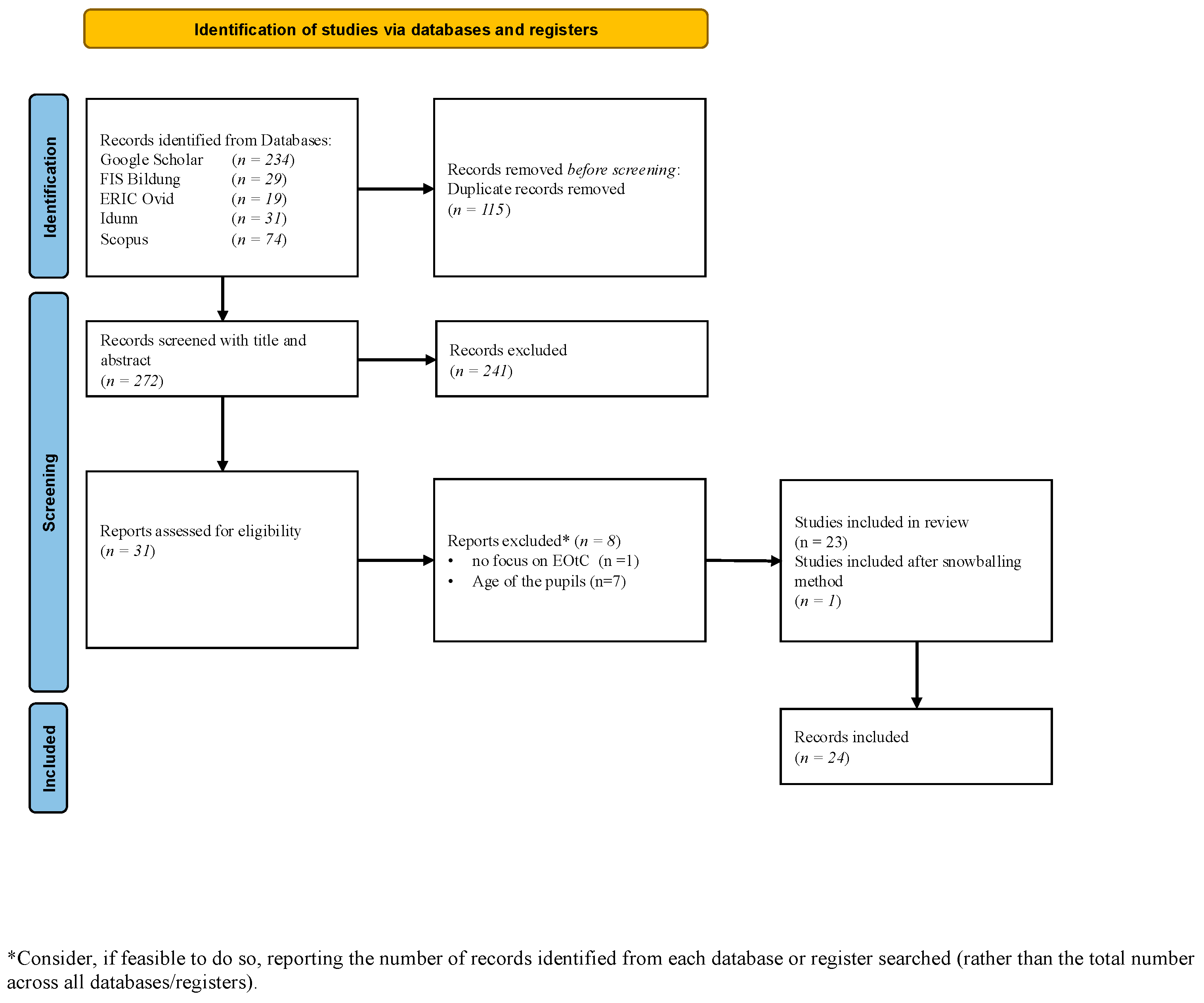
Figure 1. Search Process for the Present Study Following the Preferred Reporting Items for Systematic Reviews and Meta-Analyses Extension for Scoping Reviews Protocol2.
Education 16 01056 g001
Figure 2. Year of Publication of Included Articles.
Education 16 01056 g002
Figure 3. Empirical Methods.
Education 16 01056 g003
Table 1. Inclusion and Exclusion Criteria.
InclusionExclusion
Scoping reviews for which the main topic is contributions and content related to EOtCAspects of outdoor education in the extracurricular sector
Studies that deal with professionalisation or teacher perspectives regarding EOtCStudies on early childhood and secondary education
Articles related to Germany, Norway and Denmark, given that the focus is on the German, Norwegian and Danish perspectives. However, due to a lack of language skills, Sweden is excluded despite belonging to Scandinavia.International studies that do not explicitly refer to any of the three focus countries
The target group is primary school. (However, to ensure comparability, only studies that include classes corresponding to the German primary school system (Grades 1–4) will be included, as primary school in Denmark and Norway extends up to Grade 7).
Only empirical studies and systematic or scoping reviewsTheoretical work without empirical research
The contributions must be published in at least one peer-reviewed journalArticles in edited volumes and monographs or non-peer-reviewed papers
Only contributions from the beginning of 2015 to the end of 2024Contributions outside the specified timeline
Table 2. Included Papers from the Scoping Review.
TitleAuthorsYearCountryLanguageSchool LevelMethodCategory Content Analysis
Naturen som læringsarena i norsk grunnskole (Nature as a learning arena in Norwegian primary school)  1Korsager, Majken; Gabrielsen, Anja2024NorwayNorwegianGrades 1–10ReviewEducation Outside the Classroom (EOtC) Research and practice perspectives
Education Outside the Classroom in Norway: The Prevalence, Provision, and Nature of Uteskole (Education Outside the Classroom)Lauterbach, Gabriele; Bølling, Mads; Dettweiler, Ulrich2024NorwayEnglishGrades 1–10Quantitative
(structured quantitative questionnaire)
EOtC research and practice perspectives
Naturfag utenfor klasserommet fra et Nordnorsk perspektiv (Science education outside the classroom from a Northern Norwegian perspective)Killengreen, Siw T.; Lundberg, Helene; Jensvoll, Ingrid; Höper, Jan2023NorwayNorwegianGrades 1–10Quantitative
(digital questionnaire)
Aims and subjects in EOtC
“Building Roots”—Developing Agency, Competence, and a Sense of Belonging Through Education Outside the ClassroomLauterbach, Gabriele2023GermanyEnglishGrades 2–3Qualitative
(ethnography)
Well-being and (mental) health in EOtC
Does “Out” Get You “In”? Education Outside the Classroom as a Means of Inclusion for Students with Immigrant BackgroundsLauterbach, Gabriele; Fandrem, Hildegunn; Dettweiler, Ulrich2023GermanyEnglishGrades 1–4Mixed MethodsInclusive potential of EOtC
‘Wow! Is that a birch leaf? In the picture it looked totally different’: A Pragmatist Perspective on Deep Learning in Norwegian Uteskole (Education Outside the Classroom)Winje, Øystein; Løndal, Knut2023NorwayEnglishGrades 1–8Qualitative (participatory observations & subsequent interviews)Learning aspects in EOtC
Naturerfahrung als Krise durch Muße? Struktureigenschaften der Bildungspraxis der ‘Draußenschule’ im Primarbereich (Experiencing nature as a crisis through leisure? Structural characteristics of the ‘outdoor school’ educational practice in primary education)Armbrüster, Christian2021GermanyGermanGrades 2–3Qualitative
(focus-group interviews)
Appropriation of space in EOtC
Reaping Fruits of Labour: Revisiting Education Outside the Classroom Provision in Denmark Upon Policy and Research InterventionsBarfod, Karen; Bølling, Mads; Mygind, Lærke; Elsborg, Peter; Ejbye-Ernst, Niels; Bentsen, Peter2021DenmarkEnglishGrades 1–10Quantitative
(structured questionnaire)
EOtC research and practice perspectives
Teaching Maths Outside the Classroom: Does It Make a Difference?Otte, Camilla R.; Bølling, Mads; Elsborg, Peter; Nielsen, Glen; Bentsen, Peter2019DenmarkEnglishGrades 3–6Quantitative
(explorative, quasi-experimental study)
Aims and subjects in EOtC
Education Outside the Classroom Increases Children’s Reading Performance: Results From a One-Year Quasi-Experimental StudyOtte, Camilla R.; Bølling, Mads; Stevenson, Matt P.; Ejbye-Ernst, Niels; Nielsen, Glen; Bentsen, Peter2019DenmarkEnglishGrades 3–6Quantitative
(explorative, quasi-experimental study)
Well-being and (mental) health in EOtC
Potentials in Udeskole (Education Outside the Classroom): Inquiry-Based Teaching Outside the ClassroomBarfod, Karen S.; Daugbjerg, Peer2018DenmarkEnglishGrades 3–5Qualitative
(participant observations)
Aims and subjects in EOtC
The Association Between Education Outside the Classroom and Students’ School Motivation: Results From a One-School-Year Quasi-ExperimentBølling, Mads; Otte, Camilla R.; Elsborg, Peter; Nielsen, Glen; Bentsen, Peter2018DenmarkEnglishGrades 3–6Quantitative
(quasi-experimental intervention study)
Well-being and (mental) health in EOtC
The ‘Outdoor School’ as a School Improvement Process: Empirical Results From the Perspective of Teachers in GermanySahrakhiz, Sarah2018GermanyEnglishGrades 2–3Qualitative
(interviews with teachers)
Teacher perspectives on EOtC
Learning Opportunities in the Outdoor School–Empirical Findings on Outdoor School in Germany from the Children’s PerspectiveSahrakhiz, Sarah; Harring, Marius; Witte, Matthias D.2018GermanyEnglishGrades 2–3Qualitative
(focus-group interviews)
Appropriation of space in EOtC;
Learning processes in EOtC
Immediacy and Distance in Teacher Talk—A Comparative Case Study in German Elementary- and Outdoor School-TeachingSahrakhiz, Sarah2017GermanyEnglishGrade 2Qualitative
(conversation analysis)
Communication outside the classroom
Are Children Participating in a Quasi-Experimental Education Outside the Classroom Intervention more Physically Active?Schneller, Mikkel Bo; Duncan, Scott; Schipperijn, Jasper; Nielsen, Glen; Mygind, Erik; Bentsen, Peter2017DenmarkEnglishGrades 3–6Quantitative
(large-scale quasi-experimental study)
Well-being and (mental) health in EOtC
Children’s Physical Activity During a Segmented School Week: Results From a Quasi-Experimental Education Outside the Classroom InterventionSchneller, Mikkel Bo; Schipperijn, Jasper; Nielsen, Glen; Bentsen, Peter2017DenmarkEnglishGrades 3–6Quantitative
(quasi-experimental)
Well-being and (mental) health in EOtC
Inside We Learn, outside We Explore the World—Children’s Perception of a Weekly Outdoor Day in German Primary SchoolsArmbrüster, Christian; Gräfe, Robert; Harring, Marius; Sahrakhiz, Sarah; Schenk, Daniela; Witte, Matthias D.2016GermanyEnglishGrade 2Qualitative
(focus-group interviews)
Appropriation of space in EOtC
Spielen, Bewegen, Erkunden—Praktiken der Raumaneignung von Grundschulkindern in der Draußenschule (playing, moving, exploring—how primary school children make the most of their Education Outside the Classroom environment)Armbrüster, Christian; Gräfe, Robert; Harring, Marius; Sahrakhiz, Sarah; Schenk, Daniela; Witte, Matthias D.2016GermanyGermanGrade 2Qualitative
(focus-group interviews)
Appropriation of space in EOtC
Increased Provision of Udeskole (Education Outside the Classroom) in Danish Schools: An Updated National Population SurveyBarfod, Karen; Ejbye-Ernst, Niels; Mygind, Lærke; Bentsen, Peter2016DenmarkEnglishGrades 1–10Quantitative
(structured quantitative questionnaire)
EOtC research and practice perspectives
A Retrospective Study of Social Relations in a Danish Primary School Class Taught in ‘Udeskole’ (Education Outside the Classroom)Hartmeyer, Rikke; Mygind, Erik2016DenmarkEnglishNot specificQualitative
(retrospective interviews)
Learning aspects in EOtC
A Quasi-Experimental Cross-Disciplinary Evaluation of the Impacts of Education Outside the Classroom on Pupils’ Physical Activity, Well-Being and Learning: The TEACHOUT Study ProtocolNielsen, Glen; Mygind, Erik; Bølling, Mads; Otte, Camilla Roed; Schneller, Mikkel Bo; Schipperijn, Jasper; Ejbye-Ernst, Niels; Bentsen, Peter2016DenmarkEnglishGrade 3–6Mixed Methods
(quasi-experimental, cross-disciplinary study)
Well-being and (mental) health in EOtC
Udeskole–
Draußenschule
Außerschulisches Lernen in Dänemark (Udeskole (EOtC)–
Outdoor School
Out-of-school learning in Denmark
Gräfe, Robert;
Bentsen, Peter
2015Germany/
Denmark
GermanGrade 2Qualitative
(Ethnography)
Learning aspects in EOtC
Draußenschule aus Kindersicht: Eine vernachlässigte Perspektive in der Udeskole-Forschung
(Education Outside the Classroom) from a child’s perspective: a neglected perspective in education research)
Witte, Mattias D.2015GermanyGermanGrade 2Qualitative
(focus-group interviews)
Learning aspects in EOtC
1 The translations of the original titles are given in brackets (own translations).
Table 3. Languages of the Included Articles.
LanguageNumberPercentage
Norwegian28.3%
German416.7%
English1875.0%
Disclaimer/Publisher’s Note: The statements, opinions and data contained in all publications are solely those of the individual author(s) and contributor(s) and not of MDPI and/or the editor(s). MDPI and/or the editor(s) disclaim responsibility for any injury to people or property resulting from any ideas, methods, instructions or products referred to in the content.