1. Introduction
Preparing future teachers to meet the needs of culturally, linguistically, and socioeconomically diverse learners remains a central challenge in teacher education.
Herner-Patnode and Lee (
2021) argue that one of the fundamental aims of any high-quality teacher preparation program is to intentionally cultivate culturally responsive pedagogical practices that enable PSTs to equitably support all students in their classrooms. More recent scholarships continue to emphasize this need, highlighting that specific components of teacher preparation programs play an important role in developing teachers’ confidence and ability to implement culturally responsive practices (
Pai, 2025;
Paulick et al., 2024;
Siliunas et al., 2024). Yet, developing such dispositions and skills is not always straightforward. Research shows that PSTs often enter teacher preparation programs with limited experiences interacting with cultural diversity. Additionally, many PSTs have minimal awareness and understandings of how systemic inequalities affect students and often experience discomfort or uncertainty when engaging in culturally responsive teaching (
Agbenyega & Klibthong, 2012;
Anderson, 2020;
De Gioannis et al., 2023). These challenges can hinder their ability to adopt equitable instructional approaches, particularly in content areas such as mathematics and science and by extension STEM, where traditional instructional views have historically overlooked issues of culture, identity, and representation in learning (
Brown & Crippen, 2016;
Ogodo, 2024).
Together, these challenges highlight the need for teacher education programs to provide intentional experiences with the curriculum that prepares PSTs to engage with diverse learners. This need is underscored by the shifting student demographics and the demand for culturally responsive practices in STEM (science, technology, engineering, and mathematics)/STEAM education. Notably, projections from the National Center for Education Statistics suggest that, by 2031 in the United States, the proportion of White students in public elementary and secondary schools will be approximately 42%, while the proportions of Hispanic, Asian, and multiracial students are projected to continue increasing (
National Center for Education Statistics, 2024). This demographic shift underscores the responsibility of teachers to be aware of facilitating instructional practices for students from varied cultural backgrounds (
van Ingen et al., 2018). Particularly, within STEM and STEAM education, researchers have increasingly called for frameworks that highlight equity, representation, and cultural relevance (
Calabrese Barton & Tan, 2019;
Chen & Moore Mensah, 2022). However, despite this growing body of work, there remains a notable gap in the literature on how PSTs, especially elementary teacher candidates, develop culturally responsive dispositions within STEM/STEAM methods coursework (Note: the acronyms STEM and STEAM are often used interchangeably throughout the article, based on the current literature). Much of the existing research focuses on theoretical frameworks (e.g.,
Ladson-Billings, 2014;
Paris & Alim, 2014) or broad program recommendations. While fewer studies examine tangible, curriculum-embedded assignments that concretely support PSTs in connecting CRT principles to STEM/STEAM contexts. This gap is particularly evident in elementary teacher preparation programs, where candidates must learn to integrate multiple content areas while simultaneously cultivating equitable and responsive instructional mindsets.
Moreover, research that does exist often emphasizes “belief shifts” without detailing how specific coursework tasks or learning experiences help PSTs operationalize CRT in ways that are actionable and sustainable in elementary STEM/STEAM classrooms (e.g.,
Min et al., 2023;
Smith et al., 2018). While researchers have established important theoretical foundations for culturally responsive STEM education, practical guidance remains limited. Few studies examine practical and replicable approaches that explicitly support CRT development through discipline-specific assignments in teacher education. The authors/researchers of this study (instructors of this STEAM pedagogical course) address this gap by examining the implementation of a STEAM Biography assignment within third-year mathematics and science methods courses for elementary teacher candidates enrolled in a Bachelor of Education program. This focus is supported by research indicating that exposure to multicultural curricula and structured opportunities to reflect on equity have positive effects on PSTs’ attitudes, sense of efficacy, and preparedness to teach culturally diverse learners (
Bangura, 2018;
Sleeter, 2024). Additionally, recent studies have shown the potential of reflective conversations, ethnographic documentation, and narrative approaches to disrupt deficit-oriented perspectives in STEM education and promote more humanizing understandings of learners and disciplinary identities (e.g.,
Calabrese Barton et al., 2021;
Beverly, 2025;
Krusberg, 2025;
Vakil & Ayers, 2019). However, few studies have examined how these approaches function specifically within teacher preparation and even fewer within STEAM methods coursework.
2. Literature Review
2.1. Background on Culturally Responsive Teaching (CRT)
Culturally responsive teaching (CRT) can be understood as one of the contemporary manifestations of the critical education tradition and social justice education. On the one hand, following the tradition of critical education, schooling is viewed as a site of power, identity formation, and sociopolitical struggle. This is rooted in
Paulo Freire’s (
1970/2005) assertion that education is never neutral but always either reproduces or challenges systems of oppression. In contrast, social justice education provides rationales and pedagogical techniques for challenging deep-rooted social inequities with the explicit goal of transforming educational systems and broader society by identifying unjust power relations and centering marginalized perspectives in curriculum and practice (e.g.,
Hosseini et al., 2024).
Critical education theorists such as
Giroux (
1988),
Apple (
1995), and many other critical scholars have argued that curriculum, pedagogy, and assessment are embedded within hegemonic structures that privilege dominant cultural norms while marginalizing others. Within this theoretical lens,
Ladson-Billings (
1995) extended critical pedagogy by centering on the lived experiences, epistemologies, and cultural identities of students of color as legitimate sources of academic knowledge. Ladson-Billings coined the term culturally responsive pedagogy (CRP) to emphasize sociopolitical consciousness that directly echoes Freirean concepts of critical awareness and positions students as transformative agents capable of interrogating and reshaping inequitable social systems.
Ladson-Billings (
1995), whose seminal research studied teachers identified as highly successful with African American students. Ladson-Billings outlined three essential tenets of CRP: (1) academic achievement, (2) cultural competence, and (3) critical consciousness. These pillars position teaching as both intellectually rigorous and socially grounded, recognizing students’ cultural ways of knowing as assets in the learning process.
Gay (
2000,
2018) expanded
Ladson-Billings (
1995) framework, with culturally responsive teaching (CRT), specifying instructional practices through which teachers can draw on students’ cultural knowledge, communication styles, and lived experiences to enhance learning. Building on this lineage,
Paris (
2012) and
Paris and Alim (
2014) proposed culturally sustaining pedagogy (CSP), arguing that all culturally responsive teaching practices (CRTP) should not only acknowledge cultural practices but actively sustain them across generations. Their work highlights the importance of linguistic inclusion, community knowledge, and student agency in classrooms. Subsequent scholars, such as
Brown-Jeffy and Cooper (
2011), synthesized the evolving definitions of CRP into conceptual dimensions including identity affirmation, equity, developmental appropriateness, whole-child attention, and sociopolitical consciousness.
The relevance of CRT becomes particularly salient within STEM education, particularly in the field of mathematics, in which inequities in access, participation, and identity have been widely documented. Mathematics has historically been positioned as objective, culture-free, and politically neutral; however, research in critical mathematics education demonstrates that mathematics learning is deeply shaped by culture, language, power, and institutional structures (
Gutiérrez, 2013;
Martin, 2009). Scholars argue that dominant narratives in mathematics, as well as science, engineering, and technology, such as meritocracy, individualism, and the myth of neutrality, often reproduce racialized and gendered hierarchies that marginalize students of color (
Larnell, 2016;
Nasir, 2011). Within this context, CRP and CRT provide frameworks through which STEM educators can disrupt deficit-based discourses and create learning environments that affirm students’ identities while broadening their mathematical opportunities. For instance, research shows that culturally responsive mathematics teachers intentionally adapt representations, discourse structures, and problem contexts to align with students’ cultural experiences (
Aguirre & Zavala, 2013). These practices can illustrate how to counteract pervasive deficit narratives in STEM education and foster more equitable participation structures. Researchers such as
Turner et al. (
2012) and
Wager (
2014) have documented how classrooms grounded in CRP leverage students’ cultural and community knowledge as intellectual resources, positioning learners as mathematically capable and agentive. Sociopolitical consciousness, a key tenet of CRP, has also informed the development of critical and social justice-oriented mathematics teaching, in which students engage with real-world issues, analyze inequities using mathematical tools, and see mathematics as a means for understanding and transforming their communities (
Gutstein, 2012;
Tan & Kastberg, 2017).
The above literature review is only a short synopsis of this important research field in STEM education at large and does focus on mathematics, the core discipline of STEM. Classroom-based studies of CRP have demonstrated its influence on student participation, identity formation, and academic engagement.
Ladson-Billings (
1995) documented how effective teachers integrated culturally embedded examples, encouraged collaborative knowledge-building, and structured instruction that allowed learners to critique social inequities. Field studies in STEM classrooms have also demonstrated the benefits of CRP.
Mathis et al. (
2023) observed that physics teachers who incorporated students’ community knowledge expanded what counted as scientific reasoning, granting students broader entry points into disciplinary participation. Research in multilingual settings further indicates that CRP supports literacy development, a key pedagogical concern in science education, when teachers value linguistic repertoires and invite translanguaging, students’ fluid movement across languages, into learning (
Paris & Alim, 2014). These studies affirm that CRTP deepens engagement and expands academic access and, therefore, should be a key objective in teacher education programs.
2.2. Preparing Pre-Service Teachers for Diverse Classrooms
A robust body of literature has examined how teacher education programs prepare pre-service teachers to enact CRTP in public school settings. Compared to in-service professional development, pre-service preparation holds unique potential because it shapes teachers’ beliefs and practices prior to their assuming full responsibility for classroom instruction, even if they have some early field experiences. Although many teacher preparation programs throughout the U.S. stress a critical education framework as a staple in their overall education program, it is not clear how those frameworks get enacted in the coursework and even less clear how pre-service teachers experience such coursework.
Villegas and Lucas (
2002) outlined early models of preparing culturally responsive educators, highlighting the importance of acknowledging culture as a central mediator of learning. Their framework, grounded in constructivist pedagogy, urged teacher education programs to provide candidates with explicit opportunities to design instruction grounded in students’ cultural and linguistic resources.
Howard (
2003) expanded this by emphasizing identity work and critical reflection. His findings assert that pre-service teachers must confront their own biases and racialized assumptions rather than relying on colorblind ideologies. Without structured opportunities for self-examination, even well-intentioned candidates may default to deficit interpretations of student ability. From their study,
Chahar Mahali and Sevigny (
2022) highlight that teacher education programs need a reliable instructor for whom the students find knowledge and meaningful cross-cultural experiences. They contend that “becoming an effective culturally responsive teacher requires both the acquisition of related knowledge and skills, and the self-efficacy beliefs to put these skills to use” (p. 367).
Research identifies the following effective components of CRTP-based teacher preparation:
Community exploration and learning projects centered on culturally and linguistically diverse communities (
Walker, 2023).
Collectively, these elements help pre-service teachers move beyond theoretical understanding toward practical instructional application; however, research also identifies persistent barriers:
Some teachers resist discussions of race due to discomfort or entrenched colorblindness, and others struggle to apply equity-based frameworks in rigid, standardized curriculum contexts (
Cochran-Smith, 2004;
M. Haddix, 2015).
Scholars argue that preparing culturally responsive teachers requires ongoing, program-wide alignment rather than isolated diversity of coursework (
Hernández, 2021).
Teachers sometimes “celebrate culture,” thereby simplifying, generalizing, or trivializing the cultural heritage of their students (
Sleeter, 2012).
While extensive research has explored pre-service teachers’ beliefs and dispositions related to culturally responsive teaching, fewer studies investigate how pre-service teachers develop concrete instructional strategies or maintain culturally relevant commitments. This gap suggests the need for studies that examine not only belief development but also specific and intentional curricula changes that can enhance and sustain such development. The present research contributes to this area by exploring how pre-service teachers can be effectively prepared to teach diverse populations by exploring their own reflection of specific CRTP enacted in a STEM classroom setting and their suggestions for improvement.
3. Theoretical and Conceptual Framework
3.1. Theoretical Framework: Culturally Responsive Teaching
This study is grounded in culturally responsive teaching (CRT), which provides the primary analytical lens guiding the interpretation of the data collected in the research study. CRT, as initially presented by
Ladson-Billings (
1995) and expanded by
Gay (
2000), theorizes teaching as a pedagogical practice that values students’ cultural identities, promotes academic success, and develops critical consciousness. CRT emphasizes three interrelated dimensions: (1) academic achievement, (2) cultural competence, and (3) sociopolitical consciousness.
In this study, CRT functions as the theoretical framework in two ways. First, it informs the design of the STEAM Biography assignment by highlighting representation, equity, and inclusion of historically marginalized contributions in STEAM fields. Second, it serves as the interpretive lens through which PSTs’ reflections are analyzed. Specifically, participants’ written responses are examined for evidence of developing awareness and understandings related to representation, equity, inclusive practice, and challenging traditional beliefs and narratives in STEAM education.
Importantly, CRT is not treated as an outcome variable in this research study. Instead, it provides the key ideas and guiding concepts used to interpret how participants describe their evolving understandings and intended practices.
3.2. Conceptual Framework: The NYS Culturally Responsive-Sustaining Education Framework
While CRT serves as the theoretical lens, the New York State Culturally Responsive-Sustaining (CR-S) Education Framework functions as the study’s conceptual and contextual guide. The NYS CR-S Framework (
New York State Education Department, 2022) outlines four principles of culturally responsive-sustaining education in New York State schools: (1) welcoming and affirming environments, (2) high expectations and rigorous instruction, (3) inclusive curriculum and assessment, and (4) ongoing professional learning.
In this study, the NYS CR-S Framework does not operate as a theory to be tested or proven. Rather it positions the course and the assignment within the policy context in which PSTs are being prepared for engaging in STEAM teaching education in culturally diverse settings. The framework provides a structural reference for understanding how culturally responsive principles are operationalized in teacher preparation programs within New York State.
Thus, whereas CRT provides the theoretical foundation for interpreting participants’ reflections, the NYS CR-S Framework provides the contextual structure that informs the course assignment design and instruction practices.
3.3. Relationship Between the Frameworks
CRT and the NYS CR-S Framework are related but analytically distinct. CRT gives a theoretical explanation of how and why culturally responsive practices support equity and social justice. The NYS CR-S Framework translates these intended commitments into policy-oriented principles and professional expectations for educators in New York State.
In this study, CRT informs the analytic coding of participants’ reflections, while the NYS CR-S Framework situates the assignment within broader state, institutional, and policy expectations. The frameworks are therefore complementary but serve different roles within this research design.
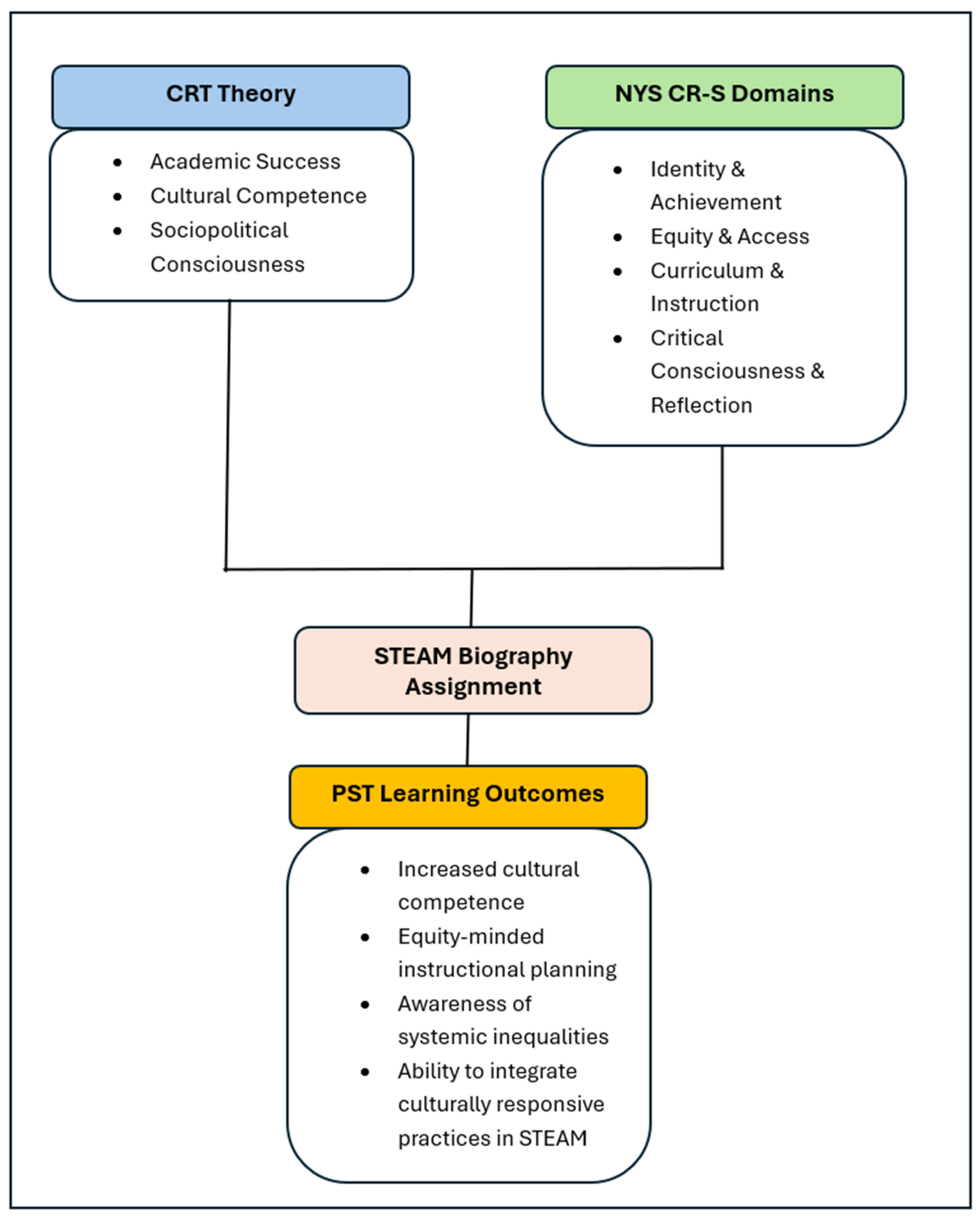
Figure 1 below presents a conceptual alignment among the STEAM Biography assignment, CRT theory, and the NYS CR-S Framework. The figure illustrates the theoretical and contextual positioning of the assignment with this research study.
3.4. Conceptual Alignment: STEAM Biography Assignment; CRT, and NYS CR-S
Specifically,
Figure 1 presents a visual representation of the relationship among (a) the STEAM Biography assignment, (b) culturally responsive teaching principles, and (c) PSTs’ reflections. The figure is intended as a conceptual model illustrating alignment among these components. It does not depict causal or developmental pathways, nor does it imply that completion of the assignment produces measurable changes in teacher identity or long-term pedagogical transformation. Rather, it illustrates how the assignment was intentionally designed to align with CRT principles and the NYS CR-S Framework, and how participant reflections were analyzed through these lenses.
Figure 1.
Conceptual alignment among a STEAM Biography assignment, CRT theory, and NYS CR-S Framework. Source: The Authors.
Figure 1.
Conceptual alignment among a STEAM Biography assignment, CRT theory, and NYS CR-S Framework. Source: The Authors.
Within this combined framework, the STEAM Biography assignment functions as the central pedagogical mechanism through which CRT theory and the NYS CR-S domains converge. By engaging PSTs in examining diverse STEAM contributors and reflecting upon culture, identity, and power, the assignment supports the development of cultural competence, equity-minded instructional planning, awareness, and understandings of systemic inequities. Collectively, this framework enables the study to examine how equity-oriented mindsets are nurtured and enacted through reflective, culturally responsive STEAM pedagogy in teacher preparation.
4. Purpose of the Study
The purpose of this study is to explore how a STEAM Biography assignment supports PSTs’ development of culturally responsive teaching practices and equity-oriented mindsets in elementary STEAM education. Grounded in the premise that CRT must be both intentional and embedded within discipline-specific contexts, this research examines how teacher candidates make sense of cultural relevance, representation, and equity as they engage with the assignment. Additionally, it explores if their experiences shift their beliefs about who belongs in STEAM and how these reflections may influence their approach to future classroom practice. By examining a concrete and replicable assignment situated within STEAM methods instruction, this study contributes to ongoing conversations about how teacher preparation programs can move beyond theoretical commitments to CRT. Moreover, it advances toward practical, sustainable strategies that prepare PSTs to foster inclusive, culturally responsive learning environments. Ultimately, this work seeks to illuminate how thoughtfully designed and implemented coursework experiences can empower future educators to challenge inequities, cultivate broader notions of representation, and support the engagement and success of all students in elementary STEAM classrooms.
Specifically, we sought to answer the following research questions:
How do pre-service teachers describe the ways in which the STEAM Biography assignment enhanced their understanding of culturally responsive teaching, equity, and social justice in STEAM education?
What specific approaches do pre-service teachers propose for incorporating underrepresented groups in STEAM into their future curriculum?
What improvements do pre-service teachers identify as necessary to better support their growth as culturally responsive educators within a STEAM methods course?
5. Materials and Methods
For this study, the focus is on CRT as the grounding pedagogical framework to share with our PSTs. We chose this terminology within our lectures and classroom activities primarily due to the article assigned to our students that utilizes CRT language.
5.1. Participants and Data Collection
This research was conducted at a public comprehensive state university located in the northeastern United States. Data were collected in university classrooms during the implementation of a methods course titled Connecting Mathematics, Science, and Technology in Elementary School. This study was reviewed and approved by the university’s Human Research Ethics Board (HREB), and all participants provided informed consent prior to participation.
The course is part of an undergraduate teacher preparation program and is designed for students enrolled in a Bachelor of Early Childhood/Childhood Education program. It prepares teacher candidates for elementary teaching by emphasizing the integration of STEM/STEAM disciplines into effective instructional practices. The pedagogical approach for the course included interactive lectures, collaborative group activities, class presentations, and individual research-based learning experiences intended to promote creativity, self-reflection, and critical thinking among teacher candidates.
Participants in this study were undergraduate pre-service teachers in their third year of the program. The cohort consisted predominantly of female students (93%), with males comprising 7% of participants. In terms of ethnicity, 90% of participants identified as non-Hispanic and 10% as Hispanic. With respect to race, the majority identified as White (84%), followed by Black (8%), Asian (3%), Multiracial (2%), and 3% who did not report their race. A summary of participant demographics is provided in
Table 1.
Throughout the spring 2025 semester, these PSTs were engaged in several modules that covered interdisciplinary STEAM content as well as reading materials, discussion, and activities related to equity, justice, and culturally responsive teaching practices. Particularly, as part of the STEAM Biography assignment (
Appendix A), pre-service teachers read an article entitled “The Synergy Between Integrated STEM Lessons and Culturally Responsive Teaching (CRT) in Elementary Classrooms” (
van Ingen et al., 2018). PSTs were guided to work in groups of either two or three to research one individual from a marginalized/underrepresented group who made a significant contribution in the STEAM field. For the purpose of this study, “marginalized/underrepresented” refers to individuals from racial/ethnic groups (e.g., African American, Hispanic/Latinx, Asian) and genders (e.g., female) who have historically had lower representation in STEAM fields compared to their proportions in the general population. This operational definition aligns with prior research on diversity in STEM education and workforce participation (e.g.,
National Science Foundation, 2021;
Ong et al., 2011).
Once an individual was selected, PSTs researched and collected relevant information and compiled a short biography explaining background information about the individual and their contribution to the STEAM field. They were then required to give a presentation to their peers in which they briefly explained why that individual was an inspiration to them and why they think that person would also serve as an inspiration to students in elementary grades. Another component of the assignment required PSTs to intentionally design an age-appropriate instructional activity for elementary students that meaningfully connected the individual’s contributions to STEAM content typically taught at the elementary level. Additionally, based on their research, while presenting, PSTs reflected on the concept of CRT practices and what it meant for them as future educators. Groups were given five to eight minutes at the end of the semester to share their research with colleagues. PSTs were provided with the option to present their work using either a slide deck (PowerPoint or Google Slides), a poster presentation (24″ × 36″), or a bulletin board display. Upon completing the class presentations, PSTs were invited to participate in a Qualtrics survey (see
Appendix B). This survey collected no identifiable information from participants and included questions designed to further explore how the STEAM Biography assignment influenced PSTs’ perspectives on equity and justice, as well as how it prepared them to implement culturally responsive teaching practices in their future classrooms. Notably, participation in individual survey items was optional; hence, not all participants responded to every question. As a result, the sample size varied across analyses. Quantitative summaries were therefore calculated based on the number of valid responses received for each individual survey item. The sample size (n) reported for each analysis reflects the number of participants who provided responses to that specific question or prompt.
5.2. Content Analysis Procedures
The choice to utilize content analysis, which offers a flexible mixed-method approach to investigate the assumptions made within text, afforded us a reflexive window into the values, assumptions, beliefs, and norms our PSTs reported to experience while completing the assignment. Content analysis methodology requires a systematic examination and interpretation to understand and make sense of data in print and digital materials (
Bowen, 2009). As a methodology, content analysis can be classified as both quantitative and qualitative, since it incorporates numerical data analysis as well as an interpretative, recursive approach to understanding the overt and covert patterns under investigation. Furthermore,
Krippendorff (
2018) calls content analysis a “scientific tool” that “provides new insights for researchers to understand particular phenomena that informs practical actions” (p. 18). Content analysis is a widely utilized qualitative methodology for examining textual, visual, or verbal data to identify patterns, themes, and meaning structures within participant responses (
Krippendorff, 2018). Content analysis has been widely used in researching educational issues (e.g.,
Carnine et al., 1997;
Taylor, 2009;
Tenam-Zemach, 2010;
Tasdemir, 2011) and to study educational policies and legislation is widespread internationally (e.g.,
Erdogan et al., 2009;
Eyler et al., 2010). Noting that, in this study, content analysis served as the primary methodological approach for systematically coding and organizing participants’ responses. Thematic interpretation was used as an analytic step within this process to identify patterns across codes and to construct broader themes that reflected participants’ perspectives.
Positioned within interpretive traditions of research, content analysis moves beyond simple categorization by allowing the researcher to analyze how language reflects knowledge, belief systems, cultural assumptions, and conceptual development (
Schreier, 2012). This approach is especially well-suited for studies of teacher education in which reflection, self-disclosure, and narrative explanation serve as primary forms of data. In such contexts, content analysis is methodologically valuable because it enables researchers to trace how pre-service teachers describe their pedagogical reasoning, articulate understanding of culturally responsive teaching practices, and reveal shifts in belief or identity across learning experiences (
Miles et al., 2014).
This systemic and iterative process of data analysis involved coding and categorizing participants’ responses to generate themes and subthemes grounded in the data (
Charmaz, 2015). Initially, responses were transposed from the Qualtrics platform into an Excel spreadsheet to support preliminary coding and data organization. Guided by the CRT framework and the research literature outlined above, emerging themes were identified and organized into an initial set of themes and subthemes (
Saldaña, 2014). These themes were then reviewed, refined, and categorized to ensure analytic accuracy and reduce redundancy, with related themes collapsed where appropriate. A preliminary codebook (
see Table A1, Table A2 and Table A3 in Appendix C), consisting of approximately three to four codes per interview question, was subsequently developed. To enhance the credibility and trustworthiness of the analysis, we engaged in triangulation by involving multiple analysts in the coding process (
Carter, 2014). The first three participants’ transcripts were coded independently, after which the research team met to compare interpretations, resolve discrepancies through consensus, and iteratively refined codes and themes. This collaborative approach ensured that interpretations were not unique to a single researcher and strengthened the dependability of the analytic conclusions.
This method of analysis supported the identification of patterns related to how pre-service teachers conceptualized equity and culturally responsive teaching practices through the processes of compiling STEAM Biographies, presenting their research, and engaging in reflection. The iterative process of constant comparison enabled the research team to identify key insights and relationships within the data, ensuring that findings remained closely aligned with the study’s objectives and content (
Birks & Mills, 2022). Ultimately, the purpose of this approach was to interpret participants’ development understandings of equity and justice in education, their awareness of CRT practices and dispositions, and their key takeaways from the course assignment.
6. Results
The Qualtrics survey was designed to capture both quantitative and qualitative data. Questions 1 and 3 were structured as five-point Likert-scale items, while Questions 2 (a), 2 (b), and 4 were open-response items. Findings for the Likert-scale questions (Questions 1 and 3) are presented first, followed by the findings from the open-response questions (Questions 2 (a), 2 (b), and 4).
Question 1 elicited PSTs’ prior exposure to culturally responsive practices in the teacher preparation program: To what extent has this teacher education program at [university] exposed you to culturally responsive practices and social justice education? Of the 64 respondents, 66% (N = 42) indicated that they had “extensive exposure,” defined as the topic being thoroughly covered by multiple instructors across courses. An additional 33% (N = 21) reported “moderate exposure,” meaning that culturally responsive practices were thoroughly addressed by one or two instructors. Only 1% (N = 1) indicated being “somewhat exposed,” defined as occasional discussion across courses. No respondents selected “minimal exposure” or “no exposure.
This distribution suggests that the vast majority of PSTs perceived culturally responsive teaching and social justice education as established components of the teacher preparation program. The frequency of responses indicating moderate to extensive exposure indicates that these concepts are not isolated to a single course but appear across different instructional contexts within the program. This level of prior exposure provides an important contextual foundation for interpreting PSTs’ reflections on the STEAM Biography assignment, as it suggests that participants engaged with the activity with at least some familiarity with culturally responsive teaching principles (see
Table 2).
In Question 3, PSTs were asked to indicate the impact of completing the assignment on their preparation for CRT practices: After experiencing this assignment and corresponding lesson, do you feel more informed about culturally responsive teaching practices and social justice in STEAM education and education at large? Out of the 46 respondents, 65% (N = 30) indicated that they felt “very much prepared and informed,” while 33% (N = 15) reported that they felt “a little more prepared and informed” about CRT practices and social justice in STEAM education and, by extension, education at large. With respect to feeling “the same” about being prepared and informed, 2% (N = 1) selected this option. None (N = 0) of the respondents chose the last two options: “little more confused” or “not informed at all” (see
Table 3 below).
These findings suggest that the assignment contributed positively to PSTs’ perceived understanding of culturally responsive teaching and social justice within STEAM contexts. The large proportion of respondents reporting that they felt either “very much” or “a little more” prepared indicates that the activity served as a meaningful learning experience that reinforced or expanded PSTs’ prior exposure to CRT concepts within the teacher preparation program. This pattern aligns with the pedagogical intent of the STEAM Biography assignment, which was designed to help PSTs connect issues of equity and representation in STEAM fields with culturally responsive instructional practices.
In Question 2 (a), PSTs were asked an open-ended response question regarding their preparation for culturally responsive teaching (CRT): How did this assignment enhance your understanding/awareness of culturally responsive teaching, equity, and social justice in STEAM education, for example, in terms of creating meaningful learning opportunities for all students, addressing disparities, promoting inclusive practices etc.? We coded the responses for four (4) recurring themes (see
Table 4 below). Out of the 50 respondents (N = 50), 42% (N = 21) considered the importance of “personal connections and belonging.” An equal number of respondents reported that they had a greater “awareness of the diversity in STEAM” (N = 7) and a desire to use “pedagogical strategies” to help create meaningful CRT learning experiences for their future students (N = 7). Fifteen students (N = 15, 30%) stated that they gained an “awareness of CRT and inclusive education” after experiencing the assignment; however, the respondents placed a high level of emphasis on students’ different cultures and ethnicities. One respondent stated, “It is important to be educated on different cultures and ethnicities and learn how to bring that into your classroom and make sure each student’s needs are met.” Another PST responded, “It (CRT) allows students to develop empathy and gain confidence and understanding with others.” Although we separately coded for the two themes of “personal connections and belonging” and “awareness of CRT and inclusive education,” there is a clear overlap between the two categories.
This finding is significant because most PSTs emphasized the importance of their future elementary students understanding one another and developing empathy, as well as feeling represented, safe, seen, and heard. In other words, the STEAM Biography assignment helped them recognize the deeply human dimension of culturally responsive teaching (CRT), rather than viewing it merely as a pedagogical tool for traditional academic outcomes. Participants’ responses indicated that, upon completing the assignment, they felt more prepared and reported an increased understanding of culturally responsive teaching, equity, and social justice in STEAM education.
In Question 2 (b), PSTs were asked an open-ended prompt based on the assignment: Share one way you plan to incorporate underrepresented groups in STEAM into your curriculum. We coded the responses for three (3) different recurring themes (see
Table 5 below). Out of the 47 responses (N = 47), eight respondents (N = 8, 17%) saw the importance of “hidden/informal curricular approaches.” PSTs reported the need to get to know their students’ cultures and their interests outside of school. One respondent stated, “I plan to have weekly discussions with my class about how the world affects their lives. For example, anything meaningful to them about their family, unique traditions, and how they feel about themselves as part of any particular culture.” Another PST stressed the importance of “…allowing students to talk about their cultures freely with no judgement and keeping good teacher–family relationships as well as student–teacher relationships.” Most responses in this category focused on the informal curriculum without any direct connection to the STEAM disciplines or the academic curriculum. On the other hand, 43% (N = 20) of respondents focused on “curriculum-based approaches”, and 40% (N = 19) stressed the use of “add-on approaches” to incorporate underrepresented groups in STEAM into the academic curriculum. The following is a sample curriculum-based approach response: “Whichever curriculum I am working on, for instance, if I did a lesson on steam engines, I would pull up a bio about someone in that field that was considered underrepresented.” The following is a sample response in favor of an add-on approach: “I plan to post representations everywhere in my classroom. I would like posters on my walls and books about underrepresented groups in my classroom.”
It is not particularly surprising that PSTs primarily focused on either integrating underrepresented STEAM individuals directly into their lessons (43%) or creating an inclusive learning environment through various “add-on” strategies (40%). These responses align closely with the core learning outcome of our methods course, which emphasizes that candidates will learn about principles and strategies for teaching mathematics, science, and technology in elementary classrooms. By examining how PSTs propose to approach the integration of equity and representation in their lesson planning, this analysis directly addresses our research question regarding how PSTs intend to enact culturally responsive teaching practices in STEAM education in their future curriculum.
In Question 4, PSTs were asked a general reflection question about how to improve the course: What could be improved in this course to better support your growth as a culturally responsive educator? Please give specific examples such as videos, lesson plans, class discussions, articles, etc. The responses were coded for four (4) recurring themes (see
Table 6 below). Out of the 40 respondents (N = 40), 60% (N = 24) reported the need for more “CRT resources” with numerous PSTs stating the need for “real classroom examples of culturally responsive teaching to help connect theory to practice.” Even though 18% (N = 7) stated that they felt “very well prepared and informed” about CRT from taking our course, the majority wanted more information to gain a complete understanding of CRT, especially in the context of the STEAM disciplines. In a similar vein, 12% (N = 5) reported the need for more integration of CRT throughout the methods course or to introduce the topic “much earlier on.” Lastly, 4 respondents (10%) wanted “CRT lesson planning.”
PSTs emphasized the importance of designing their own culturally responsive teaching (CRT) lessons, as well as engaging in more hands-on CRT experiences during the methods course. These responses are particularly meaningful because they provide direct insight into how the course can be improved to better support and cultivate culturally responsive educators. These findings highlight the value of practical, experiential opportunities reported by PSTs to actively apply CRT principles in their teaching practice.
7. Discussion
Within the teacher preparation program, these findings reveal that PSTs are receiving substantial exposure to some sort of culturally responsive practices and social justice education in general. Most respondents reported extensive or moderate exposure, with only one reporting occasional exposure and none reporting minimal or no exposure. This suggests that these concepts are consistently integrated across multiple courses and instructors. With respect to the impact of the STEAM Biography assignment, this experience positively influenced how PSTs perceived preparedness for CRT in STEAM education. The near-unanimous reporting of increased preparedness, with no participants indicating confusion or lack of understanding, suggests that structured, equity-focused STEAM assignments may effectively support PSTs’ perceived readiness to implement culturally responsive practices in their future classrooms.
While the overall responses reflected largely positive perceptions of the assignment, a small number of responses were more neutral or less explicit in describing shifts in understanding. These responses may indicate that some PSTs viewed the activity as reinforcing previously introduced concepts rather than generating entirely new insights. Alternatively, these more reserved responses may reflect varying levels of familiarity with CRT or differing degrees of reflection captured in the short survey responses. Acknowledging these perspectives suggests that, while the assignment was beneficial for many PSTs, its impact may vary depending on prior exposure to culturally responsive pedagogy and individual engagement with the reflective process.
Moreover, the findings of this study generally suggest that PSTs had positive experiences with our implementation of CRT within the STEAM coursework. Generally, PST discussed how they would add CRT within their future curriculum rather than simply adding a lesson or activity. This finding optimistically reports that our efforts in providing our students (PSTs) with experience and knowledge of CRT contributed to their understanding that CRT should be implemented throughout the curriculum, rather than as an add-on or supplemental material. This finding suggests that PSTs value meaningful, authentic learning experiences rather than fragmented and superficial approaches that scholars report unfortunately exist in teacher preparation programs (
McDonald, 2005;
Mills, 2008). Furthermore, the STEAM Biography assignment clearly impacted their awareness of diversity in STEAM. Survey responses indicated a shift in thinking about the value and significance of including diverse individuals in STEAM to create meaningful learning experiences.
PSTs asked for more CRT resources in their coursework. This finding is encouraging since it shows that students want to have self-efficacy in culturally relevant pedagogies and believe this is valuable knowledge to attain in their teacher preparation program. Aligned with the research of
Chahar Mahali and Sevigny (
2022) and
Siwatu (
2011), our study suggests that the goal of a teacher preparation program is to ensure that PSTs feel empowered and effective in their ability to implement CRT strategies in the classroom. Accordingly, their strong desire to obtain more practical examples of CRT may indicate the development of positive dispositions toward CRT practices, as well as their overall inclination to incorporate CRT in their future teaching repertoire.
Our most interesting finding was PST disclosure about the importance of students’ feelings of belonging and connection to meet the needs of all learners. This is a key foundational concept of CRT. Although most of our students are Caucasian from similar cultural backgrounds, we contend that this finding could positively impact PSTs’ implementation of CRT in their future classrooms. We speculate that this emerging equity-oriented mindset could, in turn, impact the way in which PSTs will navigate their own diverse classroom and broader school community; however, a different research design would be needed to further explore this preliminary finding, which is also a limitation of this study. For example, observing the teaching of PSTs in a classroom with a focus on the inclusion and development of CRT practices would be necessary.
Taken together, these findings highlight the value of intentionally designed, equity-focused STEAM coursework in supporting PSTs’ understanding of culturally responsive teaching as an integrated pedagogical approach rather than an isolated strategy. Notably, despite PSTs reporting substantial exposure to CRT practices in other coursework, this STEAM Biography assignment uniquely contributed to their perceived preparedness, awareness of diversity in STEAM, and attention to student belonging and inclusion as foundational elements of learning. PSTs’ expressed desire for additional CRT resources further suggests the development of positive dispositions and growing self-efficacy toward culturally responsive practices. While future research is needed to examine how these understandings translate into classroom enactment, the findings suggest that reflective STEAM assignments may help support PSTs’ readiness to implement CRT in their future teaching.
8. Conclusions and Recommendations
In this work, we underscored the potential of intentional, culturally responsive coursework, such as the STEAM Biography assignment, to support PSTs in developing equity-oriented mindsets and a deeper understanding of belonging and representation in elementary STEAM education. Some limitations should be acknowledged. First, the sample size was relatively small, which may limit the generalizability of the findings. Second, given the scope and design of the study, we were unable to capture more nuanced insights into pre-service teachers’ biases and underlying assumptions. Those hidden variables may provide valuable insight into how different students experience CRT lessons and make sense of them. For instance, this study did not capture variables such as culture, gender, age, etc., that influence how PSTs reflect upon and experience these lessons. As such, the findings should be interpreted as exploratory and situated within the specific context of this research. Despite these initial findings being encouraging, they are only a small snapshot of how teacher preparation programs can improve CRT awareness and understanding for PSTs. In addition, key aspects of CRT in the literature (that this study did not focus on) are important to study in teacher preparation programs. These primarily involve fieldwork experiences in diverse communities and reviewing program-wide CRT coursework that is meaningful and authentic to our students.
Given the exploratory nature of this study and its relatively small, context-specific sample, the following recommendations should be interpreted as preliminary implications rather than definitive prescriptions for teacher education programs. Building on these findings, these recommendations are offered as potential considerations for teacher preparation programs seeking to foster equity-oriented and culturally responsive STEAM instruction: Firstly, embed culturally responsive STEAM assignments systematically across mathematics, science, and integrated STEAM methods courses rather than positioning CRT as a standalone topic or isolated module. Systematic integration can help PSTs move beyond surface-level “add-on” approaches toward more meaningful curricular integration that promotes representation, belonging, and disciplinary identity within STEAM learning environments. Secondly, provide structured opportunities for practice-based CRT applications in STEAM contexts. Incorporating CRT-focused lesson design/planning, classroom examples, and guided reflection can enhance PSTs’ self-efficacy and preparedness for culturally responsive STEAM instruction in elementary classrooms. Thirdly, expand reflective and identity-focused learning experiences to support equity-oriented dispositions among PSTs. Deepening reflective practices can support PSTs in developing sociopolitical consciousness and sustaining culturally responsive dispositions.
While these recommendations offer practical guidance for strengthening culturally responsive STEAM preparation within teacher education programs, they also highlight the need for continued empirical inquiry. In particular, understanding how pre-service teachers carry these equity-oriented dispositions into their professional practice requires research that extends beyond coursework experiences. Hence, these recommendations should therefore be interpreted as contextually grounded insights that emerged from the data collected in this study instead of broadly generalized conclusions.
Future research should look at the variables that affect how PSTs make sense of CRT in their future teaching practice by conducting a longitudinal study after they have graduated. In that way, it can be determined how PSTs operationalized CRT and hence sustain these practices. Based on the preliminary findings on this topic, we suggest that future research in teacher education programs nationwide should be conducted to understand more broadly how or if teachers are being prepared to teach in what will most likely be a very diverse classroom.