1. Introduction
Fostering vocations in Science, Technology, Engineering, and Mathematics (STEM) is globally recognized as a critical imperative for societal progress (
Ludwig et al., 2024;
Zhou et al., 2025) and sustainable development (
Fuentes et al., 2025). These fields are the fundamental engines of innovation, driving the economic growth that improves quality of life and enhances global competitiveness (
Bacovic et al., 2022;
Kersanszki & Nadai, 2020;
Kocsis et al., 2022). A skilled STEM workforce is essential for developing new technologies, creating efficiencies in industry, and generating high-value jobs that fuel national economies (
Durazzi, 2021;
Nguyen, 2023;
Pagkratis, 2024).
Beyond its economic impact, a strong focus on STEM education is crucial for addressing the most complex challenges facing humanity. Issues such as climate change, public health crises, food and water security, and the need for clean energy all demand scientific understanding and technological solutions (
Cahyono et al., 2024;
Miralles-Wilhelm et al., 2023;
Shahbazloo & Mirzaie, 2023). By cultivating a new generation of scientists, engineers, and innovators, societies equip themselves with the intellectual capital necessary to create sustainable solutions and build a more resilient future for all (
Marshall & Galey-Horn, 2024).
While the push for STEM education is a national priority, its benefits are not always distributed equitably across different geographical areas. A significant challenge is the persistent educational divide between rural and urban areas, which often creates disparities in opportunity (
Casado-Mansilla et al., 2023;
Mutambara & Bayaga, 2021). Students in rural communities, compared to their urban counterparts, frequently have limited exposure to a diverse range of professional role models and less direct access to specialized information about university programs and career paths (
de Abreu & Cabral, 2024;
Yang & Kong, 2025). This informational and relational deficit can inadvertently narrow their academic and professional aspirations, leading them to overlook fields like engineering that may not be visibly present in their immediate environment. As a result, a potential pool of talent from these regions remains untapped, reinforcing a cycle of underrepresentation in critical economic sectors (
Tang & Qian, 2025).
International empirical research underscores that access to STEM pathways in rural communities is frequently obstructed by critical barriers such as geographic isolation and limited engagement with STEM professionals (
Munn et al., 2018). Longitudinal studies have demonstrated that students from rural and small-town areas are significantly less likely to enroll in postsecondary STEM degree programs compared to their suburban peers, a disparity largely attributed to restricted access to advanced curricula and lower teaching capacity within local educational institutions (
Saw & Agger, 2021). However, well-designed outreach initiatives have proven effective in bridging this gap; long-term evaluations of such programs indicate that participation in engineering and science challenges significantly impacts students’ decisions to pursue technical coursework and university-level STEM studies (
Reed et al., 2021). To maximize the effectiveness of these interventions, it is crucial to employ evidence-based frameworks that specifically address the social and developmental factors unique to under-represented groups in these settings (
Valla & Williams, 2012).
Within the broader STEM fields, Civil Engineering faces a particular perception challenge. It is often a poorly understood profession among the general public, frequently viewed as either abstract or exceptionally difficult (
Nesbit et al., 2012). This lack of visibility and the associated stereotypes can significantly hinder efforts to attract new talent to a field that is vital for societal infrastructure (
Civil Engineering Body of Knowledge 3 Task Committee, 2019). Moreover, public often pose doubts regarding the motives and the environmental implications of large-scale projects, highlighting the importance of procedural justice and community participation (
Feng et al., 2024;
Moffat et al., 2016;
Roelich & Litman-Roventa, 2020;
Shuster, 2021). It is not infrequent to depict civil engineers as professional worried only about the technical side of the problem without considering their social and ethical roles (
Lucietto et al., 2020). Overall, the current literature portrays a growing demand for transparency, inclusivity, and social accountability within the field to maintain public trust and legitimacy in infrastructure development.
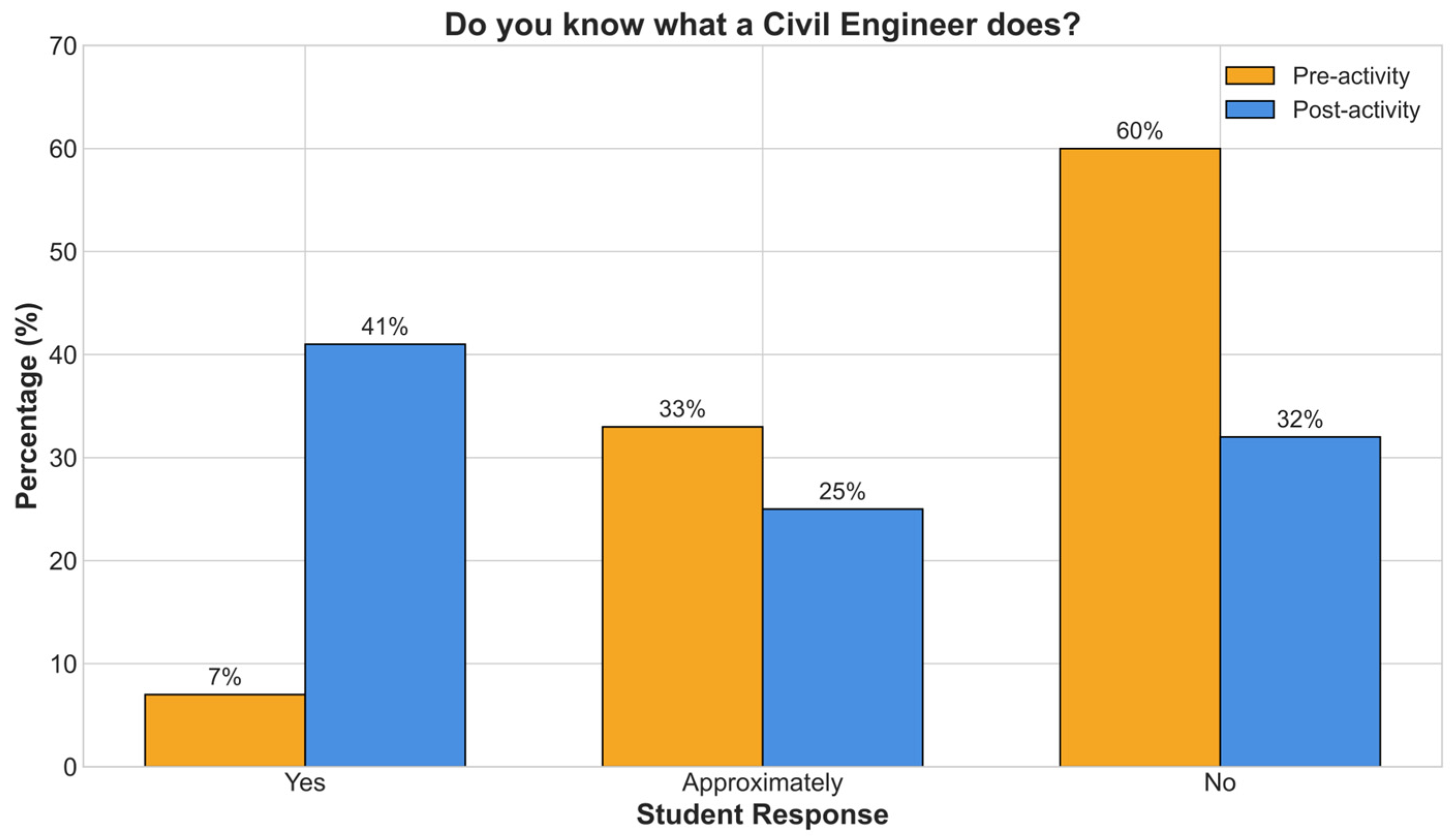
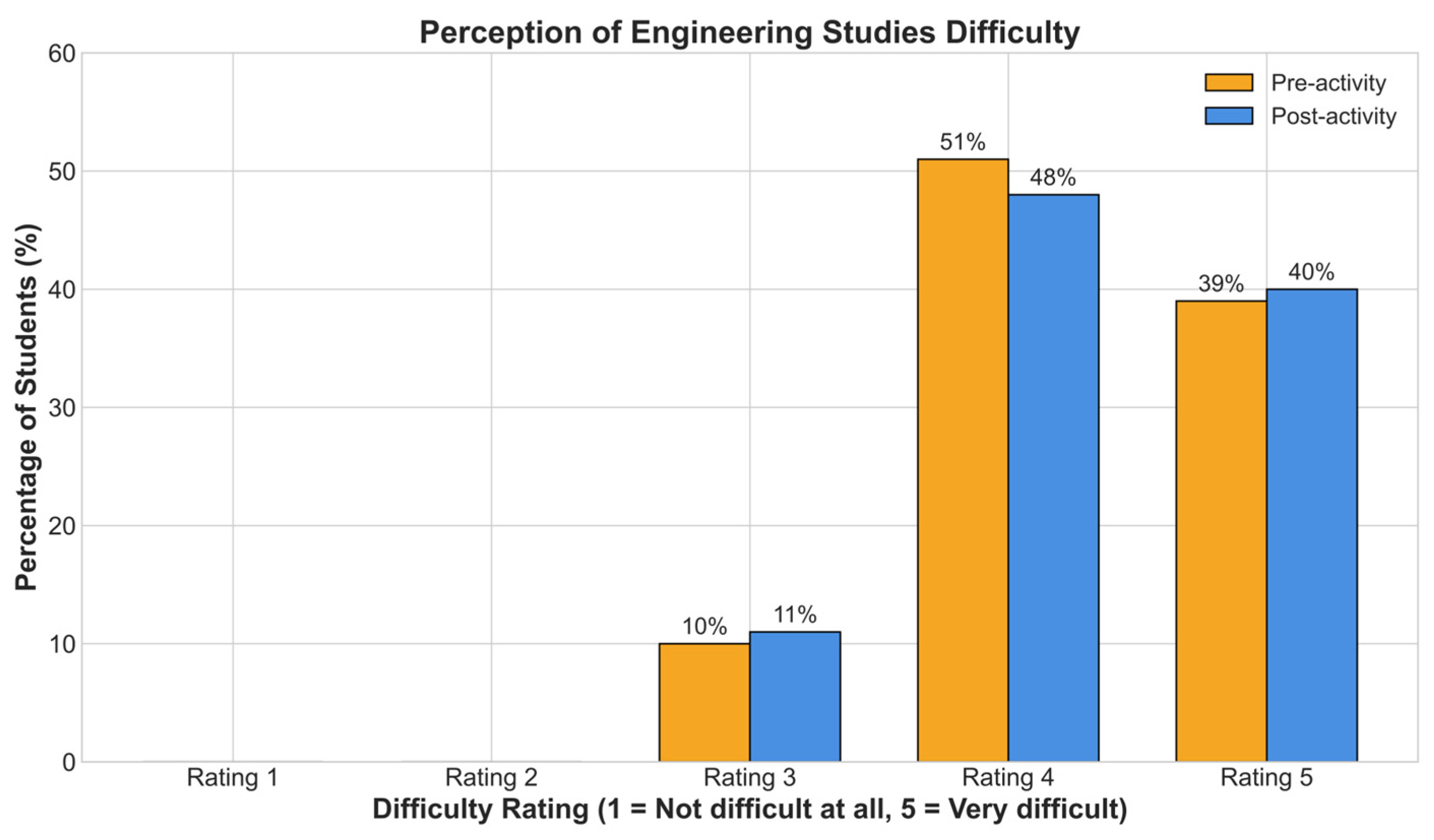
The baseline data collected for this study starkly illustrates this issue. The pre-intervention survey revealed that a staggering 93% of the participating students either did not know (60%) or had only an approximate idea (33%) of what a civil engineer does. This profound lack of awareness was compounded by a formidable perception of difficulty; 90% of the same students rated engineering studies as difficult or very difficult (a score of 4 or 5 out of 5). These findings provide irrefutable evidence of the barriers at play and underscore the critical need for targeted outreach interventions, such as the one presented in this paper, to demystify the profession and challenge preconceived notions.
To address these challenges, this project was designed within the Service-Learning (SL) pedagogical framework (
Bringle & Hatcher, 1996). This methodology intentionally integrates meaningful community service with academic instruction and reflection to achieve bidirectional benefits for both the service recipients and the student providers (
Bringle & Hatcher, 1996). By applying their classroom knowledge to real-world contexts, students enhance their learning while simultaneously addressing a community need (
Dorman & Dorman, 2023;
McLaughlin, 2010).
The core of our intervention is grounded in the “near-peer mentoring” model (
Chandrasekera et al., 2024). The central hypothesis of this approach is that university students, due to their proximity in age and recent educational experience, can serve as more credible and relatable role models for adolescents than senior professionals (
Penman et al., 2024). By closing this generational gap, we posited that the university mentors could more effectively demystify the path to higher education, humanize the challenges of a difficult degree, and inspire genuine vocational interest (
Bates et al., 2024). The pedagogical effectiveness of this intervention is rooted in the theoretical synergy between Service-Learning (SL) and near-peer mentoring. Near-peer mentoring is defined by a relationship where the mentor is close in age or experience to the mentee, a proximity that fosters a unique level of relatability and role modelling often absent in traditional faculty-led instruction (
Collier, 2023). Within a Service-Learning framework, this interaction becomes a “reciprocal learning” process; as
McElwain et al. (
2016) and
J. Ford et al. (
2025) observe, university students do not merely act as providers of knowledge, but they simultaneously reinforce their own understanding and professional identity through the act of teaching and serving.
The mechanism that drives these effective interactions is the transmission of “social and cultural capital.” By utilizing mentors who have recently navigated the same academic transitions as the secondary students, the program provides mentees with navigational knowledge and networks that facilitate their own aspirations toward higher education (
McCallen et al., 2023). This approach “humanizes” complex disciplines like engineering, disrupting impersonal academic narratives and replacing them with an engaged support network that fosters a sense of belonging (
Sáenz et al., 2015).
Furthermore, integrating near-peer interactions into Service-Learning shifts the focus toward student-led, socially relevant experiences. This model encourages university students to connect their academic content with community needs, thereby developing critical transversal competencies such as communicative agency and social responsibility (
Zeri et al., 2024). By designing outreach through frameworks that prioritize social relevance, the intervention ensures that the learning goals of the university students and the developmental needs of the community are met with equal rigor (
Catete et al., 2022). Consequently, the near-peer mentor serves as a “bridge” that translates abstract vocational paths into reachable and desirable futures for students in underserved contexts.
To directly address the aforementioned rural-urban divide, this paper presents a mixed-methods evaluation of a Service-Learning project situated in a rural community. The intervention involved two final-year Civil Engineering students from the Universidad Politécnica de Madrid (UPM) presenting their adapted Final Degree Projects to 73 secondary school students in Torrelaguna, a 4900-person rural town located in Madrid. The study has two primary objectives: first, to quantitatively measure the impact of the intervention on the high school students’ knowledge, perceptions, and vocational interest in civil engineering; and second, to qualitatively analyze the learning experience and the development of transversal competencies in the participating university students. By doing so, this paper aims to provide a comprehensive assessment of the project’s dual impact on both the rural community served and the students providing the service.
2. Materials and Methods
2.1. Study Design and Framework
This study employs a mixed-methods research design, combining a quantitative pre-test/post-test approach with a qualitative analysis to provide a holistic evaluation of the intervention’s impact. The project is framed within the Service-Learning (SL) pedagogical methodology, which aims to connect academic learning with meaningful community service.
The core of the project is based on the concept of “near-peer mentoring”. This model posits that university students, due to their proximity in age and recent educational experience, can serve as more relatable and credible role models for high school students compared to senior professionals. The primary goal was to leverage this dynamic to demystify the engineering profession and motivate secondary students, while simultaneously developing transversal competencies in the university student presenters.
2.2. Participants
The participant sample for this study was composed of two key cohorts whose interaction formed the basis of the Service-Learning intervention: the secondary school students receiving the information, and the university undergraduates delivering it. The target population for the educational intervention comprised 70 students from the IES Alto Jarama, a public secondary school situated in the rural municipality of Torrelaguna (Madrid). The selection of a rural school was intentional, aligning with the project’s goal of reaching students outside of the main urban centers. This group included students from the 3rd and 4th years of Compulsory Secondary Education (ESO) and the 1st year of Baccalaureate, with ages predominantly ranging from 14 to 17 years old. The sample selection was determined by the high school administration based on enrollment in specific Technology courses, where the intervention was implemented as part of the academic schedule. A limitation of this study is the use of a pre-experimental design without a control group (one-group pretest/posttest design). Consequently, the results cannot be compared against a baseline of students who did not receive the intervention, which theoretically limits the ability to isolate the specific effects of the activity from potential external variables. However, given that the post-activity survey was administered immediately following the presentation, the potential influence of extraneous factors (such as history or maturation effects) is minimized. This temporal proximity supports the inference that the significant changes observed in the students’ knowledge and perceptions can be reasonably attributed to the educational intervention.
Facilitating the intervention and serving as near-peer mentors were two volunteer students from the final year of the Bachelor’s Degree in Civil and Territorial Engineering at the Universidad Politécnica de Madrid (UPM)
2.3. The Intervention: Service-Learning Activity
The intervention consisted of a single session held at the high school, where the two university students delivered presentations based on their Final Degree Projects (TFGs). The topics of the TFGs were “The extension of the West Pier of the Port of Palma de Mallorca.” and “The construction project for the new Sóller tunnel”. The content of these complex technical projects was significantly adapted and simplified by the university students to make it accessible and engaging for a non-specialist audience of teenagers. This adaptation process was a key component of the learning experience for the university students.
2.4. Data Collection and Procedure
The data collection procedure was executed in a structured sequence designed to capture the effects of the intervention. Initially, a pre-activity questionnaire was administered to the 73 high school students to establish a baseline of their existing knowledge, perceptions of difficulty, self-efficacy, and vocational interest regarding engineering. This was immediately followed by the intervention, where the two UPM students delivered their presentations and held a Q&A session. Directly after the activity, a post-activity questionnaire was administered to the same group of students. This survey contained a core set of questions identical to the pre-survey to allow for a direct measurement of change, as well as additional questions designed to evaluate their satisfaction with and comprehension of the activity. A complete list of all survey items is detailed in
Table 1.
The final phase of data collection focused on gathering in-depth qualitative data. A semi-structured focus group was conducted with the two participating university students to explore their experience. The discussion was guided by a script designed to probe their motivations for participating, the challenges they faced in adapting technical content, their perceived learning outcomes, and their overall reflections on the project.
2.5. Data Analysis
The data analysis was conducted in two stages to align with the mixed-methods design of the study. For the quantitative component, the data from the pre- and post-activity surveys were analyzed using descriptive statistics. Frequency distributions (percentages) were calculated for each survey response to allow for a direct comparison of the results before and after the intervention, thereby assessing the impact on the high school students’ perceptions and vocational interests. To determine the statistical significance of the changes observed between the pre- and post-intervention phases, a quantitative analysis was performed. Due to the anonymous nature of the data collection —conducted to ensure student privacy—individual responses could not be paired. Consequently, the data were analyzed as two independent samples. Pearson’s Chi-square test (χ2) was employed to evaluate the shifts in the distribution of responses for the categorical variables regarding professional knowledge, perceived difficulty, and vocational interest (Questions 5 through 9). For all statistical tests, a significance level of α = 0.05 was established. This conservative analytical approach ensured a rigorous assessment of the intervention’s impact while respecting the ethical constraints of the study environment. Concurrently, the qualitative data from the transcribed focus group session was subjected to a thematic analysis. This process focused on identifying, coding, and interpreting recurrent themes aligned with the university students’ learning objectives, such as their initial motivations, challenges in scientific communication, the development of transversal skills like improvisation and adaptability, and the evolution of their perspective on the social role of engineering.
4. Discussion
The findings of this study show that the Service-Learning intervention had a notable and multifaceted impact, providing significant benefits for both the high school and the university students. This discussion interprets the key results, connects them to the state of the art, project’s theoretical framework and considers the implications for future educational outreach initiatives.
4.1. Demystifying Engineering Through Near-Peer Mentoring
The most striking result of this study is the project’s success in increasing the high school students’ awareness of the civil engineering profession. The dramatic increase in students who felt they understood what a civil engineer does (from 7% to 41%) confirms that the primary goal of the intervention was met. This quantitative finding is powerfully corroborated by the qualitative data from the focus group, where university students perceived that the high schoolers “didn’t expect that we civil engineers did so much”.
This success can be largely attributed to the “near-peer mentoring” model. In common with González-Perez et al. or Blanco et al., face to face mentoring have an important impact on students’ perception of STEM capacities (
González-Pérez et al., 2020;
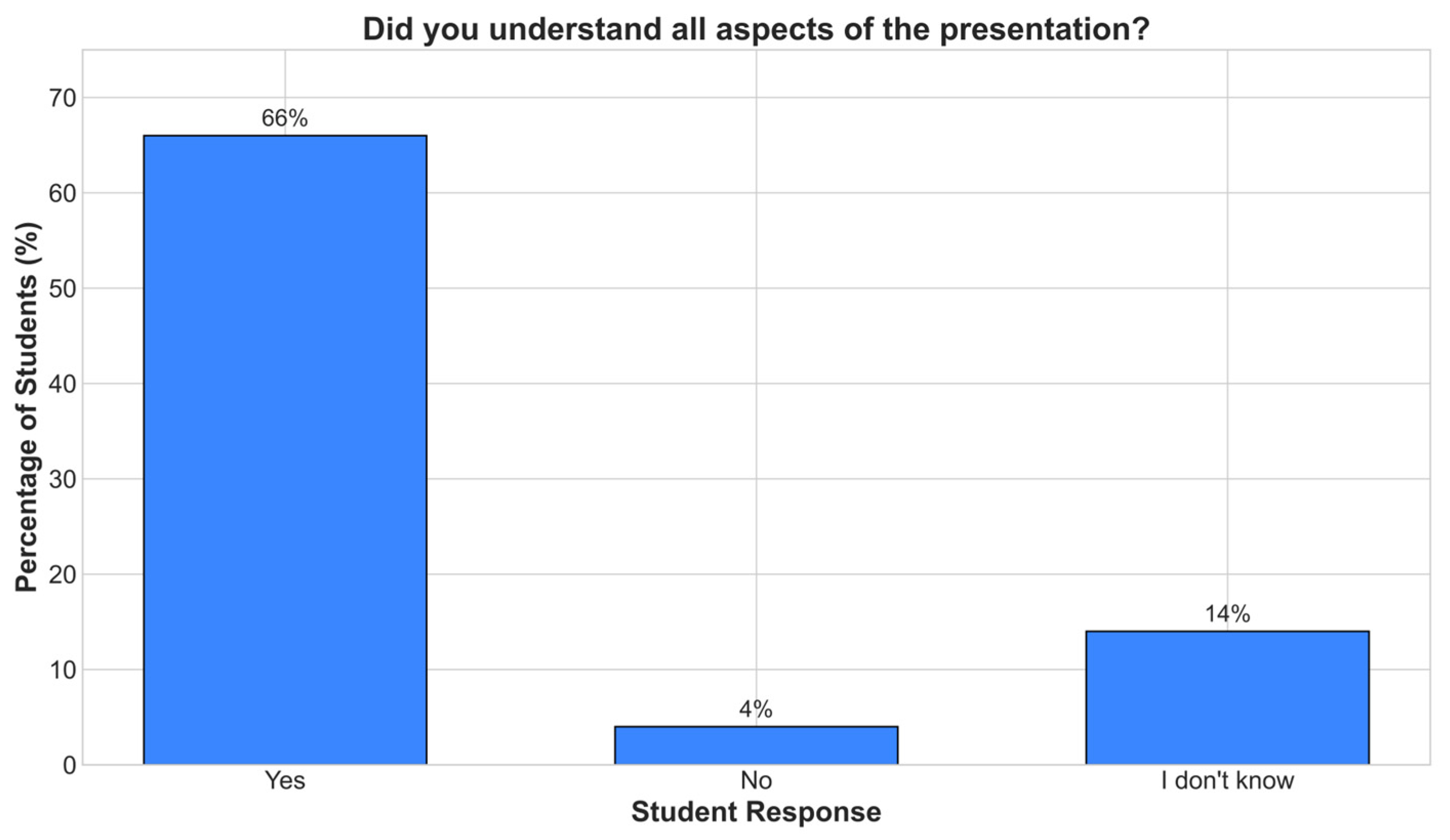
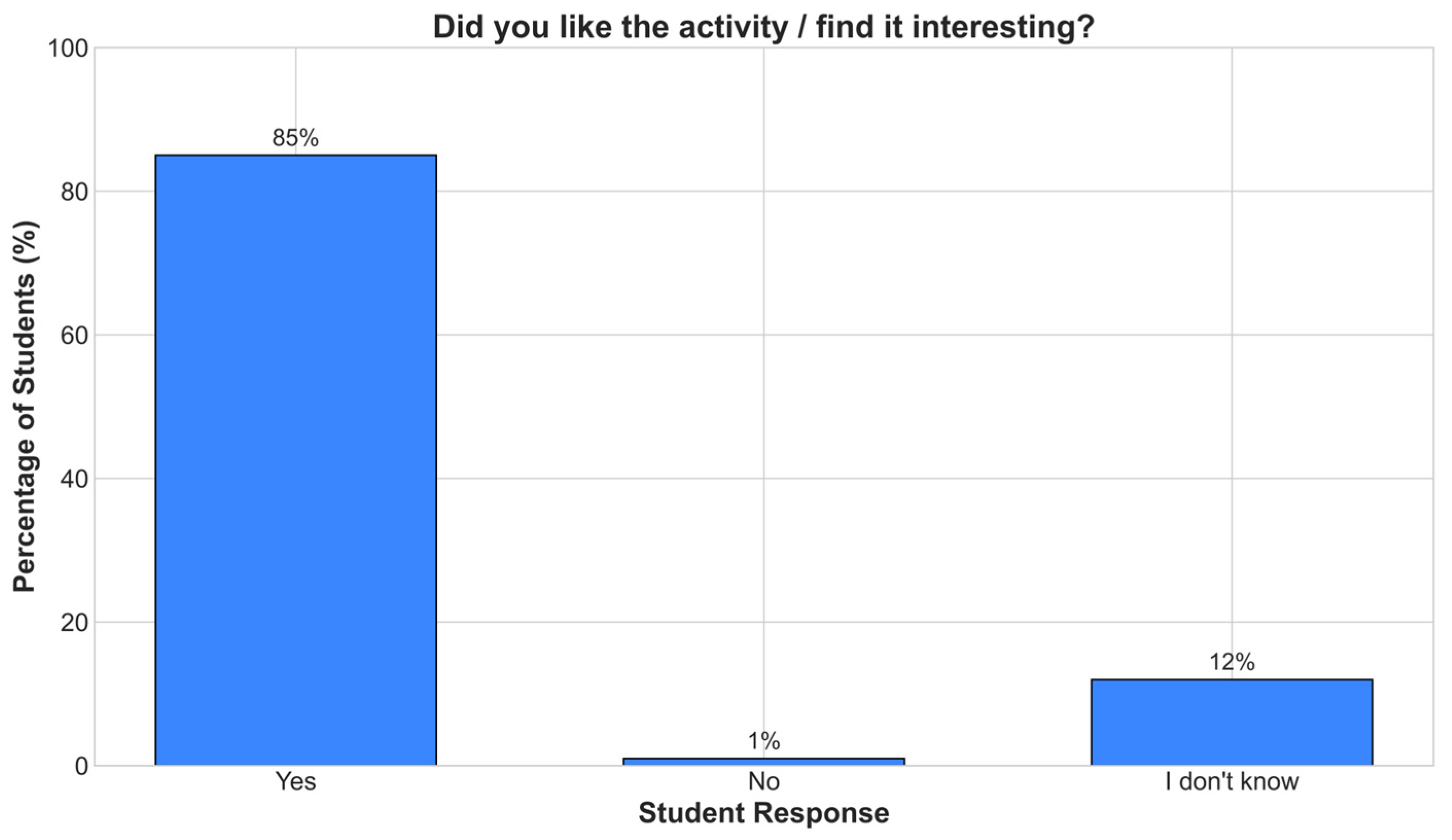
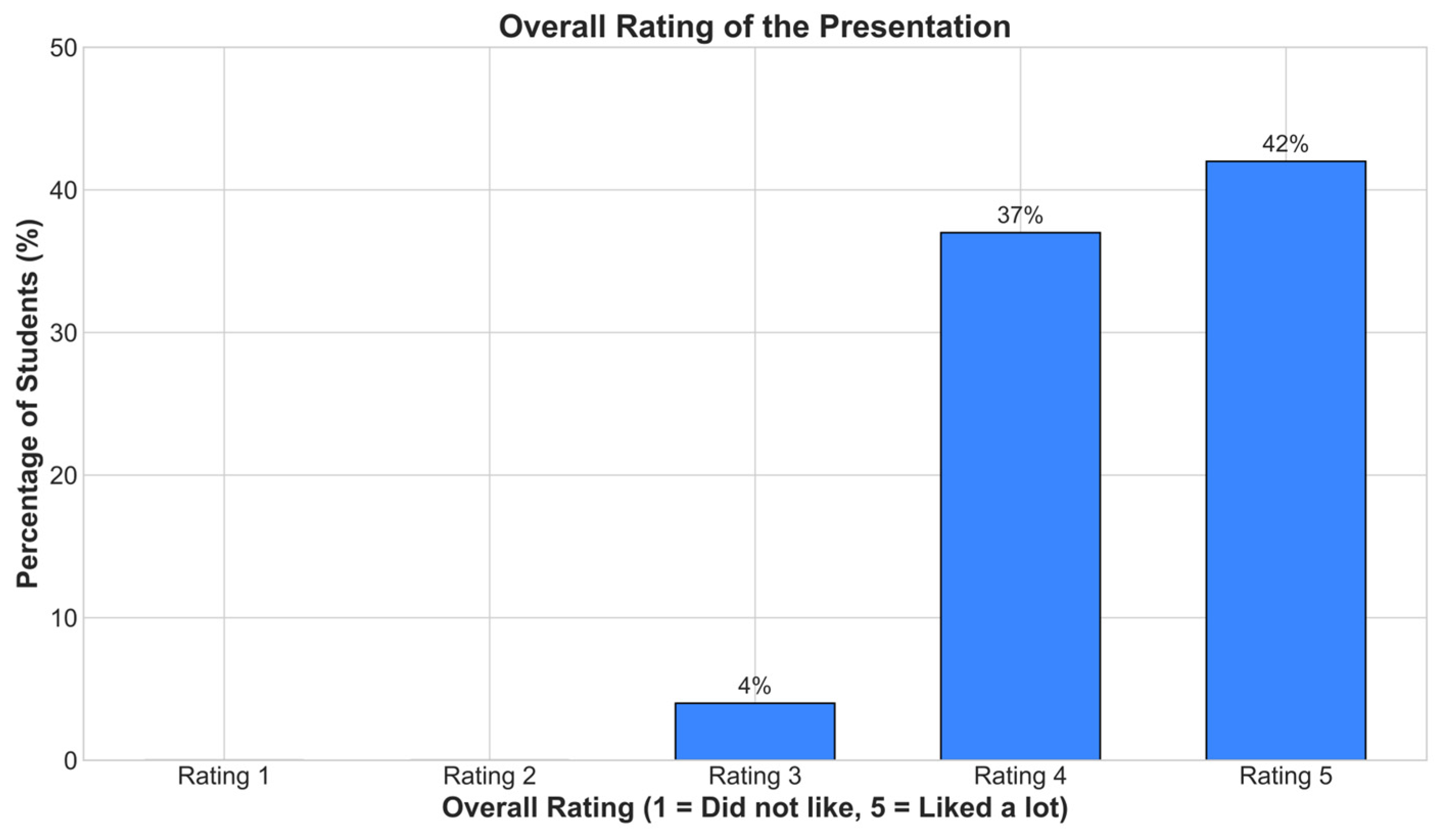
Blanco et al., 2023). In this project, university students, which were closer in age to the high schoolers, acted as relatable role models. The experience gets outstanding satisfaction rates (85% found the activity interesting) and, also, high comprehension levels (66% understood the content). This suggest that the presenters were effective communicators precisely because their message was perceived as authentic and accessible. One university student highlighted the importance of the high school teacher in creating a “connection between the students and us”, further reinforcing this bridge.
The transformation of rural students’ understanding went beyond a mere increase in vocabulary; it represented a fundamental shift from a stereotypical, “impersonal” view of engineering to a recognition of its multi-faceted societal impact. As suggested by
Quince and Coultas (
2026), traditional outreach often fails because it presents engineering as an abstract set of technical challenges. In our intervention, the “extent” of change was characterized by students transitioning from viewing civil engineers as simple “builders” to perceiving them as problem-solvers who manage complex social and environmental needs. This qualitative deepening is evidenced by the “doubling” of specific interest in the field, indicating that the baseline ignorance common in rural settings—where professional role models are scarce—was replaced by a concrete professional identity.
Several elements of the near-peer model were instrumental in driving this change:
Navigational Knowledge and Social Capital: University mentors functioned as “navigational bridges” (
McCallen et al., 2023). Unlike older professionals, university students could share recent, first-hand experiences of the transition to higher education. This provided rural students with “social capital” that made the professional path feel attainable rather than distant.
Humanization through Relatability: The most influential element was what Collier (
Collier, 2023) defines as “relatability.” Because the mentors were close in age, the power dynamic was horizontal. This allowed for a “humanization” of the profession (
Sáenz et al., 2015), where the engineer was seen not as a remote expert, but as a person with shared interests and similar recent history.
Authenticity and Communicative Agency: The use of adapted Final Degree Projects (TFGs) allowed university students to exhibit a high degree of “communicative agency” (
Zeri et al., 2024). Their passion for their own research acted as an authenticity anchor; the high schoolers were not just listening to a career talk, but to a peer sharing a personal achievement. This “authenticity” is what enabled 66% of the students to grasp complex technical content that might have been lost in a more formal, faculty-led lecture.
Cultural Wealth and Belonging: In a rural context, the intervention directly addressed the “cultural wealth” of the community by bringing the university to the school. By fostering a “sense of belonging” (
Sáenz et al., 2015) during the interactive sessions, the near-peer model dismantled the barrier that often makes STEM feel like an “urban-only” pursuit.
4.2. The Resilient Stereotype of Difficulty
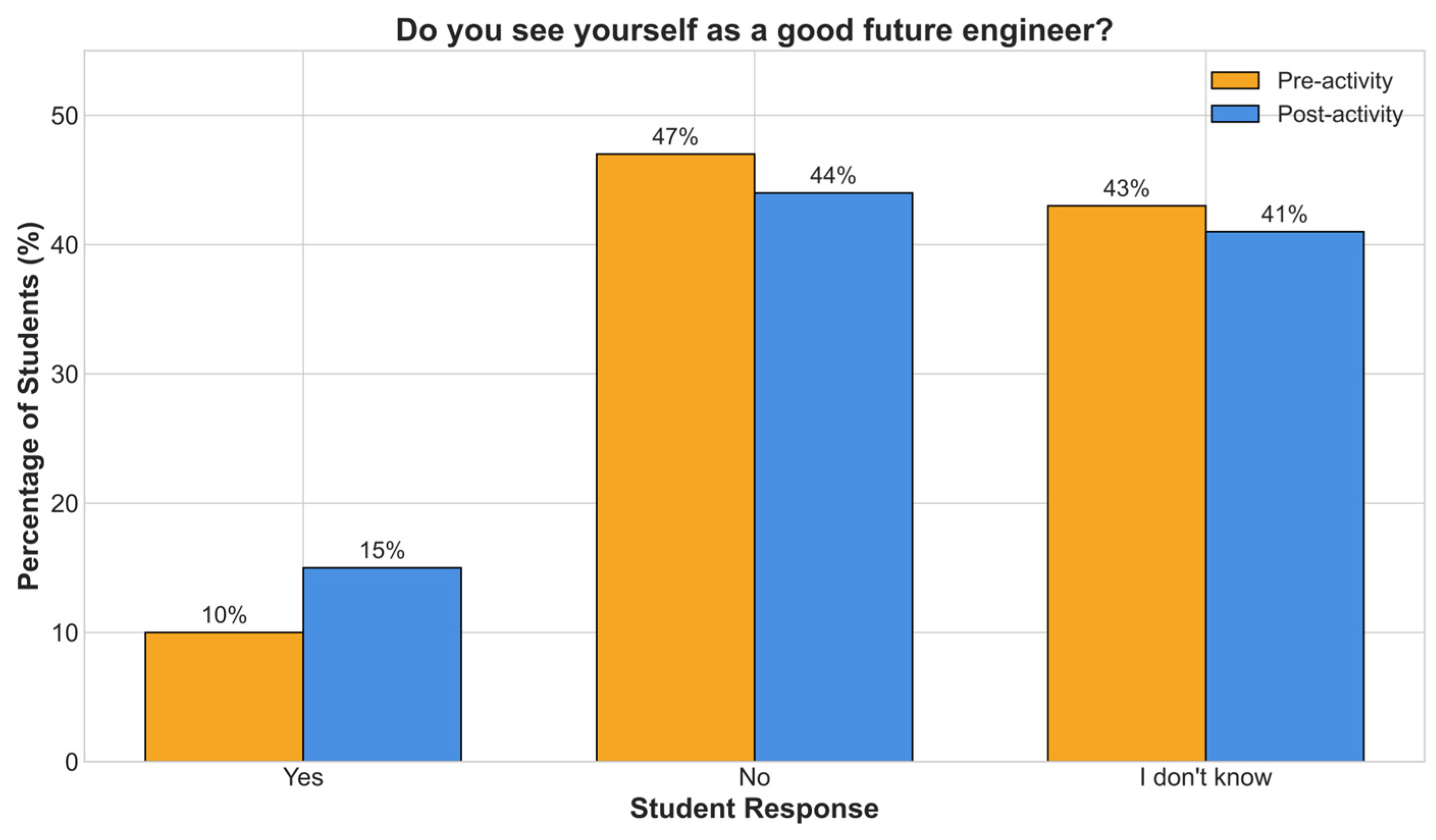
In stark contrast to the change in awareness, the deep-seated perception of engineering as a “very difficult” field of study remained almost entirely unchanged (90% pre- vs. 88% post-intervention). This finding suggests that while a short-term intervention can effectively transmit information and spark interest, it is insufficient to dismantle long-held stereotypes. In contrast with
Canaan and Mouganie (
2023) or
S. J. Ford et al. (
2024), which enhanced student’s STEM perception with mentoring and different activities, this project could not change significantly initial students’ thoughts about their STEM skills and capacities. This perception is likely a significant barrier that discourages students to enroll in STEM related studies. The university students’ presentations highlighted both the inherent challenges of STEM degrees and their professional rewards. This suggests that future interventions should foster a more nuanced dialogue, balancing the reality of academic difficulty with the importance of perseverance and the long-term benefits of the career.
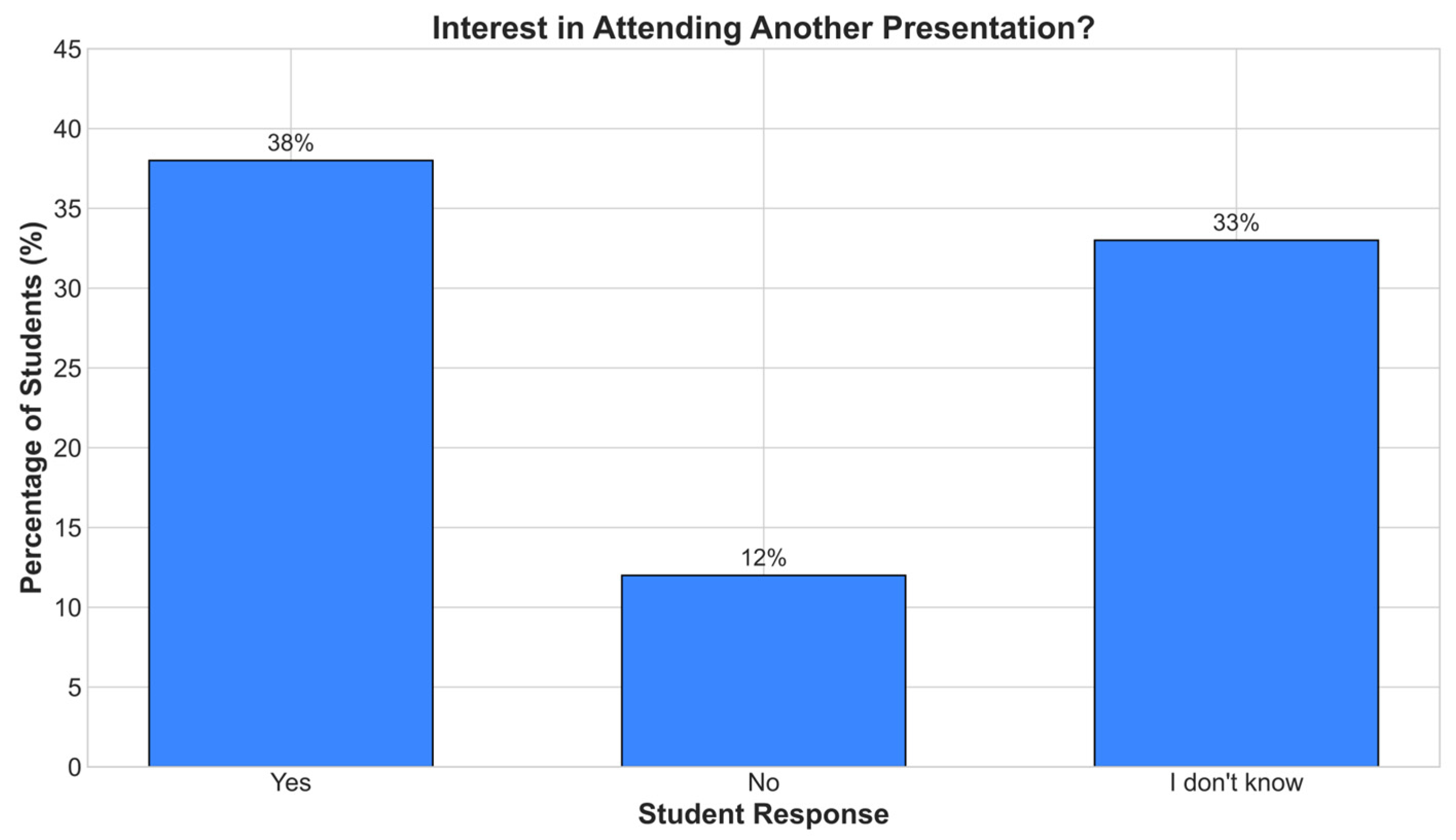
4.3. Fostering Vocational Interest: The Shift from “No” to “I Don’t Know”
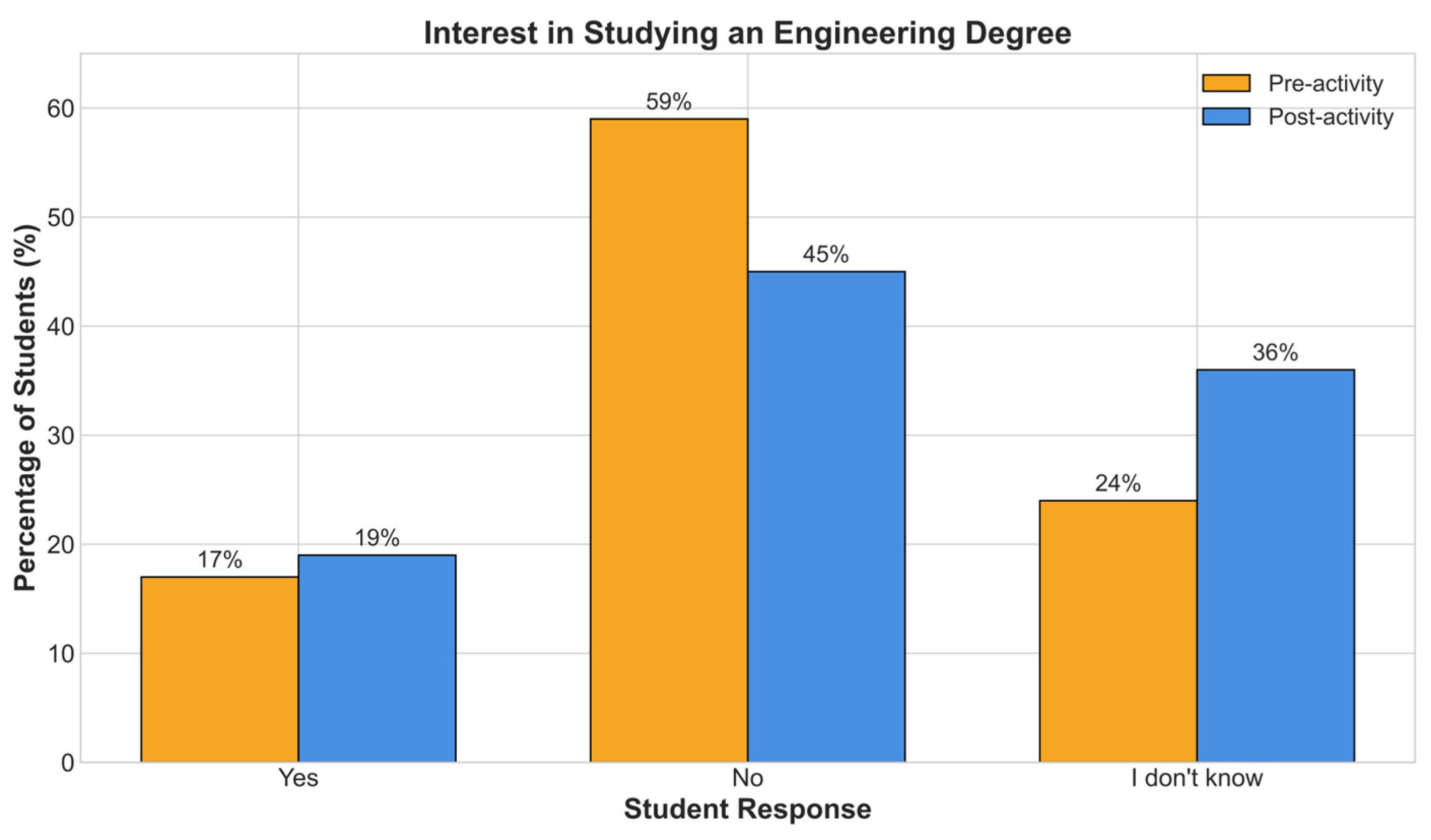
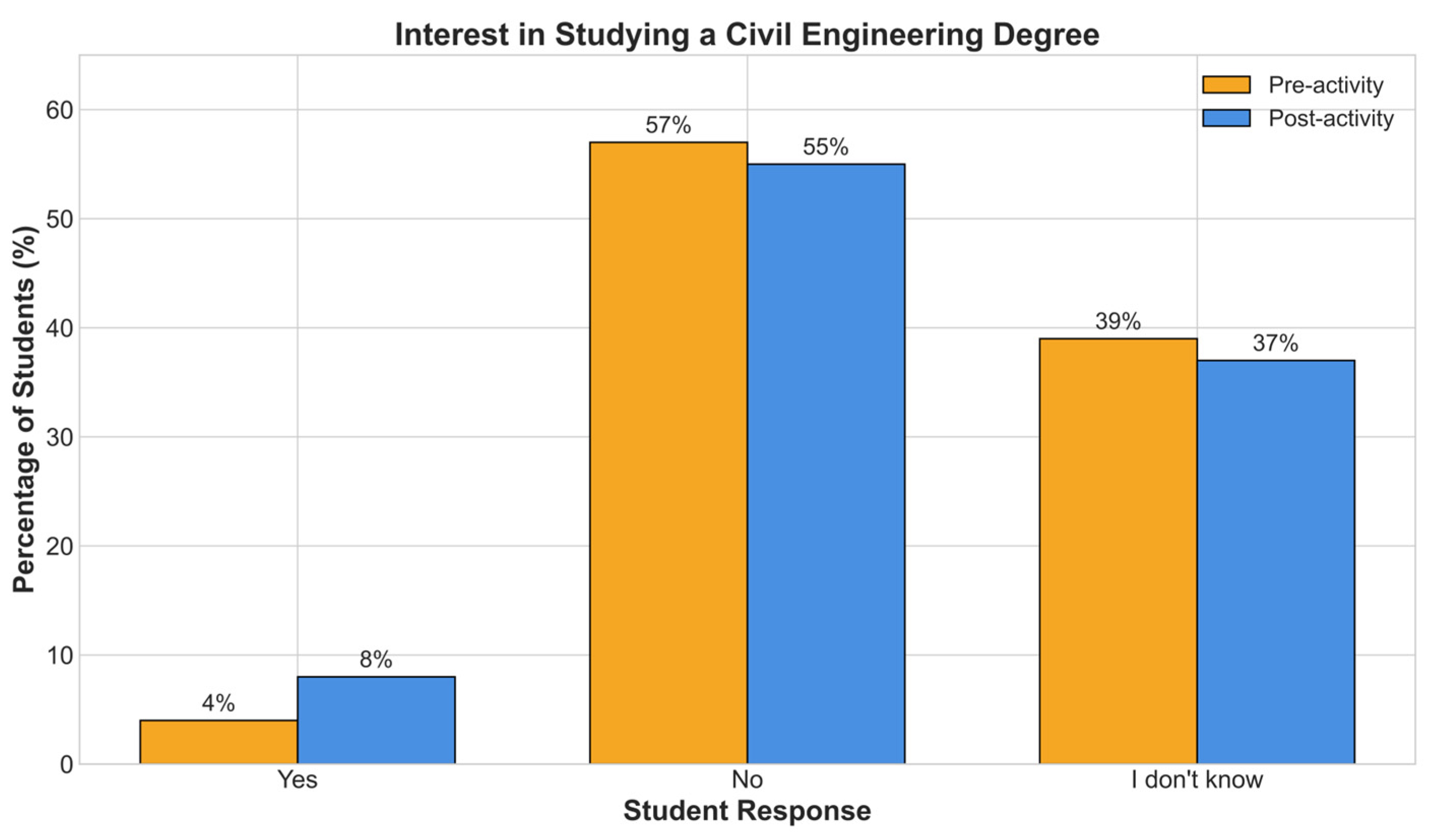
While the intervention did not cause a massive surge in students deciding to become engineers overnight, it achieved a crucial objective: it opened their minds to the possibility. The specific interest in Civil Engineering doubled from 4% to 8%, a significant relative increase. More importantly, for engineering in general, there was a substantial 14-point drop in students who flatly rejected the idea (from 59% to 45% “No”). This drop was largely absorbed by the “I don’t know” category, which grew from 24% to 36%.
This shift from a definitive “No” to a more reflective “I don’t know” should be viewed as a major success. It signifies that the project moved students from a position of dismissal to one of consideration. This is supported by the focus group anecdotes of students asking practical questions about which subjects to take and what the salary is, indicating a genuine contemplation of the career path. In this regard, due to the short length of the activity, percentages would be increased if more experience were provided to high school students. For instance, more mentoring, personal experiences or challenges based on professional projects with private companies of the sector, as it is detailed by
S. J. Ford et al. (
2024) and their experience with Scientella organization. This kind of works have been demonstrated to highly encourage STEM vocations.
The persistence of perceptions of high difficulty (Q6), despite the significant gains in knowledge and interest, suggests that the intervention provided students with a realistic rather than an idealized view of the profession. According to
Siew et al. (
2016), rural students engaged in engineering challenges often describe the technical process as intellectually demanding and “brain-tiring,” even when they report high levels of enjoyment. This implies that the outreach did not lower the perceived bar for entry but rather clarified the level of commitment required. For future STEM outreach in rural contexts, this indicates that programs should move beyond merely trying to make engineering “look easy.” Instead, as suggested by the challenges identified in
Rivera et al. (
2019), the focus should shift toward building students’ self-efficacy—equipping them with the confidence to tackle these known difficulties through sustained support and visible role models who have already navigated these hurdles.
The shift from categorical rejection (“No”) toward a reflective “I don’t know” position (Q8) represents a fundamental transition in the students’ vocational orientation. In rural and economically disadvantaged communities, a lack of access to high-quality STEM opportunities often leads to a “dismissal by default,” where students do not even consider engineering a viable path (
Rivera et al., 2019). By connecting university mentors with high schoolers, the intervention provided the “social capital” necessary to break down these initial barriers. This transition is a critical first step in the “predisposition” phase of college choice; moving from dismissal to uncertainty signifies that the student has moved into a “deliberative space” where they are actively contemplating their academic aspirations. As
Elam et al. (
2012) emphasize, increasing awareness and technical literacy in rural districts is a prerequisite for improving student achievement and enrolment. Therefore, the “I don’t know” response is not a failure to convert, but a successful pedagogical outcome that opens a door to professional identities that were previously perceived as unreachable or nonexistent within their local environment.
4.4. The University Students’ Learning Experience
The focus group analysis confirms the bidirectional benefits central to the Service-Learning methodology. Thanks to team background in Service-Learning projects at UPM (
Muñoz-Medina et al., 2022;
Blanco et al., 2023), interesting points of STEM vocations have been monitored along different years. For instance, linking STEM with different areas with distinct income levels, gender perception or STEM studies concept in rural areas, which is the main topic of the present paper. With this line of projects, the team is analyzing different environments of the whole region of Madrid Community. Results of present project provide more data and analysis in rural areas high school, which was not studied in previous projects.
In current project context, on one hand, university students reported significant personal and professional learning. The most salient skill they developed was not merely public speaking, but the “capacity for improvisation” to adapt a complex technical discourse in real time to high school students. This is a high-level communication competency that traditional academic presentations often fail to cultivate. Furthermore, the experience reinforced their professional identity and understanding of the social impact of their work. While their core belief in the importance of engineering did not change, it became more tangible. As one student noted, understanding the reality of a 1.5 h student commute highlighted the real-world importance of infrastructure projects like a new commuter rail line.
This development of high-level communication competencies aligns closely with the core theoretical principles of both Service-Learning and near-peer mentoring. According to Collier (
Collier, 2023), the effectiveness of a near-peer relationship depends on the mentor’s ability to act as a “cultural translator, “bridging the gap between complex institutional knowledge and the mentee’s current reality”. The university students’ reported “capacity for improvisation” is, in fact, a manifestation of this translator role. By adapting their Final Degree Projects for a younger audience, they practiced what Zeri et al. (
Zeri et al., 2024) describe as “communicative agency”—a student-led Service-Learning outcome where the server must take ownership of the narrative to ensure its community relevance.
Furthermore, the reinforcement of professional identity through social impact mirrors the “bidirectional benefits” and “reciprocity” central to SL theory (
McElwain et al., 2016). As mentors helped secondary students navigate their vocational doubts, they simultaneously strengthened their own “affective characteristics” and “Engineering identity,” variables that
Li et al. (
2009) identify as critical predictors of academic persistence. This process of teaching to serve allows the university students to move from an abstract understanding of engineering to a “socially relevant” one, where technical solutions are directly linked to human needs, such as local infrastructure and commuting realities (
Catete et al., 2022).
This experience also aligns with the “role-modeling” mechanism in near-peer mentoring. By acting as mentors, the university students not only provided “social capital” to the high schoolers (
McCallen et al., 2023) but also experienced a boost in their own self-efficacy. This “mentor-modeling” benefit, as discussed by
J. Ford et al. (
2025), suggests that the act of supporting a peer (or a near-peer) fosters a deeper sense of professional responsibility and disability or social awareness, effectively transforming the university student from a passive learner into an active, civic-minded engineer.
On the other hand, high understanding rates of Civil Engineering competencies and satisfaction rates demonstrate the interest in the project among high school students. In addition, the concept of STEM studies as too difficult ones to study still remain after the presentation. Nevertheless, according to students and high school teachers, the activity was enriching for all scholars.
4.5. The Role of Civil Engineering Within the Engineering Landscape and the Extensibility of Vocational Interest
The results of this study provide a dual perspective on how a targeted intervention influences both general engineering interest (Q8) and specific discipline-related vocations (Q9). While the affirmative response for general engineering interest showed a modest increase (from 17% to 19%), the most significant quantitative shift was the 14-point reduction in students who explicitly rejected the field, with the “No” category dropping from 59% to 45%. This shift was complemented by the results of Q9, where specific interest in Civil Engineering doubled from 4% to 8% following the presentations.
The decision to analyze these two levels of interest is supported by the understanding that vocational choice is a developmental process. According to
Quince and Coultas (
2026), effective STEM outreach must align with the developmental stages of students, recognizing that initial engagement often broadens a student’s “deliberative space” before leading to a specific career choice. In this sense, the reduction in general engineering rejection (Q8) serves as a critical first step in the vocational pipeline, creating the necessary conditions for the specific interest in Civil Engineering (Q9) to emerge.
Furthermore, the findings suggest that the positive impact of the intervention is extensible to other engineering disciplines. As established by
Li et al. (
2009), students who pursue engineering degrees share a common core of “affective characteristics,” such as specific interests, attitudes, and self-efficacy. These internal traits are primary predictors of college enrollment across all engineering branches. The high levels of enjoyment and engagement reported by the participants in this study indicate that the intervention successfully targeted these shared affective characteristics, suggesting that the motivation generated is not exclusive to Civil Engineering but could be replicated across the broader engineering landscape.
While the vocational tendencies observed are shared with other engineering programs, the focus on Civil Engineering is particularly relevant due to the unique challenges that the field faces.
Quince and Coultas (
2026) highlight that Civil Engineering suffers from growing workforce shortages and a lack of professional visibility compared to other STEM areas. Our intervention addressed this by utilizing “near-peer” mentors to showcase adapted Final Degree Projects, effectively countering the “impersonal nature” of traditional technical curricula that often discourages potential students.
The success of the activity in humanizing the profession and demonstrating its real-world impact aligns with the external influences identified by
Li et al. (
2009) as key drivers for student motivation. By showcasing how Civil Engineering solves tangible community problems, the activity not only doubled specific interest in the field but also reinforced the “Engineering identity” in a way that is applicable to recruitment efforts in any engineering bachelor’s program. Ultimately, the transition of students from rejection to uncertainty—and from uncertainty to interest—validates this model as an promising strategy for addressing the global demand for engineering professionals.
5. Conclusions
This study shows that a Service-Learning (SL) model based on near-peer mentoring is a valuable tool for reducing the information and vocational gap in rural educational settings. By integrating mixed methods, this research identifies a clear coherence between quantitative shifts and qualitative insights, validating the intervention’s impact through intentional triangulation.
First, the demystification of the Civil Engineering profession represents the most prominent outcome of the project. The significant increase in the proportion of students who reported a clear understanding of the profession—rising from 7% to 41%—is directly corroborated by the university mentors’ observations. During the focus group, mentors noted a profound sense of “surprise” among the high schoolers, reporting that the youths “didn’t expect that civil engineers did so much.” This alignment suggests that the use of tangible, real-world examples from Final Degree Projects (TFGs) served as the primary mechanism to transform an abstract perception into a concrete professional role.
Second, the study highlights a clear link between the students’ reported comprehension levels (66%) and the high-level competencies developed by the university mentors. The “capacity for improvisation” and “adaptive communication” cited by the mentors were the pedagogical engines that allowed for the simplification of complex technical content. Despite the fact that the perceived difficulty of the field remained high (90% at levels 4 and 5), the mentors’ ability to “translate” engineering concepts in real time ensured that the high school students remained engaged and capable of assimilating the technical discourse without being discouraged by its academic rigor.
Third, the shift in vocational aspirations—most notably the 14-point reduction in categorical rejection of engineering (from 59% to 45% responding “No”)—is strongly tied to the mentors’ ability to communicate the social impact of their discipline. Narrative testimonies from the focus group, such as the discussion regarding how a new commuter rail line could reduce a 1.5 h student commute, provided a “humanized” context for the engineering projects. This connection to the students’ daily realities was instrumental in moving them from a position of “dismissal by default” toward a reflective “I don’t know yet” status, signifying the opening of a deliberative space for future career considerations.
Finally, this research provides preliminary evidence of the bidirectional benefits inherent to the Service-Learning methodology. While secondary students gained relatable role models and vocational clarity, university students reinforced their professional identity and developed vital transversal skills. In conclusion, this study suggests that short-term interventions, when built upon the pedagogical foundations of authenticity, relatability, and reciprocity, are capable of generating a significant and measurable impact on the educational outlook of underserved rural communities.
6. Limitations and Future Works
While the findings of this study provide valuable insights into rural STEM outreach, several limitations must be acknowledged to contextualize the results. First and foremost, this work should be explicitly framed as a small-scale exploratory case study. The intervention was conducted at a single rural school during a one-time short session, involving a relatively small number of participants (N = 70) and a very limited sample of university mentors. Consequently, the findings regarding vocational shifts and perceptions are specific to this cohort, and their generalizability to a broader population or other diverse “rural communities” cannot be assumed.
The lack of statistical significance in several key areas—specifically the perceptions of academic difficulty (Q6), self-efficacy (Q7), and long-term career intentions (Q8 and Q9)—underscores the inherent difficulty of altering deep-seated vocational identities through a single intervention. While the descriptive data showed promising trends, such as the doubling of interest in Civil Engineering and a significant reduction in categorical rejection of the field, the limited sample size and the brevity of the session likely resulted in insufficient statistical power to confirm these shifts as robust, group-wide changes.
Furthermore, the study may be subject to certain methodological biases. The “novelty effect” of having university students visit a small rural town may have temporarily inflated engagement levels. Additionally, “social desirability bias” might have influenced secondary students to provide more favourable responses to please the visiting mentors. Because the intervention relied on a very small number of university participants, the outcomes may also be influenced by the specific communication skills and charismatic qualities of those individuals, rather than the Service-Learning model itself.
Regarding future works and institutional adoption, several recommendations are proposed for ensuring the scalability and sustainability of this model:
Longitudinal Tracking: Future research should move beyond pre- and post-tests to track whether these initial “sparks” of interest actually translate into university applications and enrolment in STEM fields over several years.
Sustainability through Curricular Integration: To move away from isolated, one-off events, universities should consider integrating these outreach activities into the formal engineering curriculum as a permanent Service-Learning component. This would ensure a steady stream of mentors and a consistent presence in rural schools.
Scalability and Regional Hubs: For wider adoption, we recommend a “hub-and-spoke” institutional model, where regional universities establish long-term partnerships with clusters of rural municipalities. This would allow for a more sustained mentoring relationship, reducing the reliance on individual “novelty” and fostering a genuine sense of belonging among rural students.
Broader Mentor Training: Future iterations should involve a larger, more diverse group of university mentors. Providing these mentors with standardized pedagogical training would help minimize individual variability and allow for a more rigorous evaluation of the outreach model’s effectiveness across different delivery styles.
By adopting a more cautious framing and focusing on these longitudinal and institutional goals, future interventions can build upon this case study to provide a more robust foundation for STEM promotion in underserved rural areas.




 ,
,