


Abstract
This mixed-methods study examines one public university’s dual-language bilingual education (DLBE) teacher preparation program through the lens of the National Dual Language Education Teacher Preparation Standards (NDLETPSs). Data sources include course syllabi, classroom observations, and participant surveys, providing a comprehensive overview of program design and implementation. The analysis highlights clear and robust alignment in bilingualism and biliteracy, sociocultural competence, and instructional practices. Alignment with assessment and professionalism is also reflected in the program, though it is conveyed in a less visible or less explicit manner in the documents reviewed. Quantitative comparisons of stated versus observed NDLETPS alignment are triangulated with qualitative coding and participant perspectives. While grounded in a U.S. context, the study offers insights that are relevant to global bilingual education efforts by highlighting transferable themes such as teacher agency, critical consciousness, and collaboration. These findings contribute to this Education Sciences Special Issue’s goal of advancing bilingual education as a transformative tool for linguistic, cognitive, and sociocultural development in diverse educational landscapes.
1. Introduction
“Desde el inicio del programa, mis principales objetivos en la educación bilingüe han sido promover un ambiente inclusivo y culturalmente enriquecedor para mis estudiantes, y al mismo tiempo, mejorar mis habilidades pedagógicas para apoyar a los estudiantes de diversa procedencia”(Evelin, candidate’s post-survey response #37)
[“Since the beginning of the program, my main goals in bilingual education have been to promote an inclusive and culturally enriching environment for my students, while at the same time improving my pedagogical skills to support students from diverse backgrounds.”]
The participant’s reflection that we chose to open this work captures the essence of what dual-language bilingual education (DLBE) programs strive to achieve: fostering equity, cultural responsiveness, and professional growth. Building on this perspective, our mixed-methods study examines one public university’s DLBE teacher preparation program through the lens of the National Dual Language Education Teacher Preparation Standards (NDLETPSs; Guerrero & Lachance, 2018). By analyzing course syllabi, candidates’ course evaluation survey responses, field experience observations, and pre- and post-program evaluation survey responses, we illustrate how program design aligns with core principles of bilingualism, sociocultural competence, and instructional practice, while revealing areas for growth in assessment and professionalism. These findings offer insights not only for U.S. contexts but for global efforts to advance bilingual education as a transformative tool for linguistic, cognitive, and sociocultural development.
Dual-language bilingual education (DLBE) has garnered enormous attention in recent years, given its promise in promoting academic achievement for multilingual and multicultural children. In the United States context, DLBE occurs in programs where children receive at least 50% (and as much as 90%) of their academic instruction in a language other than English (LOTE). Children who attend DLBE schools experience equal or higher levels of academic achievement (e.g., K. J. Lindholm-Leary, 2001; Marian et al., 2013; Steele et al., 2017), are more likely to be reclassified as fully proficient in English (Serafini et al., 2020; Steele et al., 2017; Valentino & Reardon, 2015), and have the advantage of receiving education and developing proficiency in two languages. While students who are home speakers of the LOTE develop higher proficiency in this language than those who are not exposed to it outside of school (e.g., K. Lindholm-Leary, 2012), all students can benefit from bilingual education, including if they speak a third language at home (Genesee & Lambert, 1983; Swain & Lapkin, 1991). Students in DLBE programs also receive early exposure to perspectives from multiple cultures, with an aim to embrace students’ home identities and build inclusive attitudes towards people of all cultures (Bearse & de Jong, 2008). Research has also demonstrated that multicultural students in DLBE programs have favorable attitudes towards school.
However, for DLBE programs to deliver on the promise of providing students with a learning experience that leads to developing bilingualism, biliteracy, and academic proficiency in tandem, well-structured teacher preparation programs are essential. At the national level, high-quality teacher education programs in all disciplines have never been more necessary. According to Franco and Patrick (2023), approximately 10% of teaching positions nationwide are either unfilled or filled by educators who do not fully comply with licensure requirements, amounting to over 314,000 in total. The learning task for DLBE educators is considerably harder than it may appear, which makes high-quality preparation programs in this area particularly urgent. Compared to monolingual teachers who must become proficient in the methods of instruction for a particular content area or age group, which by itself is a complex task, DLBE educators also need to develop proficiency in the LOTE, and, in many cases, must have working proficiency in English to pass state licensure exams. In addition, they must master methodologies for making language comprehensible for students, create intertwined content and language objectives, and develop materials that are appropriate for multicultural and multilingual children. Therefore, the training process for DLBE educators, including those who are fluent in the LOTE, is considerably more complex than in many other subfields of education.
Specifically, Guerrero and Lachance (2018) argue that teachers must become proficient in six key areas of competence to successfully teach in DLBE programs, which they identify as six principles: (a) bilingualism and biliteracy; (b) sociocultural competence; (c) dual language instructional practices and pedagogy; (d) authentic assessment in dual language; (e) professionalism, advocacy, agency; and (f) program design and curricular leadership. These researchers argue that teachers must possess critical language awareness that equips them to confront deficit ideologies towards bilingualism, detrimental policies related to language learning, and imbalanced relations of power constructed through linguistic inequities. The areas identified as language, brain, and mind describe the need for teachers to understand the factors and processes that contribute to bilingual development, as well as the philosophy that bilingualism is an asset to each child. Microlevel language planning involves educators’ familiarity with the policies and goals of the school district and community at large for bilingualism and biliteracy, including the formulation of plans concerning how much of the LOTE should be taught, when, and for how long. Finally, teacher candidates’ language ability relates to their proficiency in the LOTE, a natural prerequisite for teaching in DLBE programs.
This sets the bar high for university-level educator preparation programs that provide training to DLBE teachers. These programs must develop coursework that can address these skills interdependently, and that provides educators with useful tools to employ in the unique context of DLBE classrooms. In this sense, NDLETPSs provide goalposts to which teacher preparation programs can be aligned. A resultant question is if and how extensively teacher preparation courses address each of the NDLETPSs. Such an analysis is crucial for such programs, which are tasked with the tall order of training highly competent bilingual educators through a limited set of courses. To better understand the alignment between coursework and teacher education goals, the present project comprises a mixed-methods analysis that evaluates multiple sources of data (i.e., course syllabi, candidates’ course evaluation survey responses, field experience observations, pre and post program evaluation survey responses) from a five-course teacher preparation program for DLBE teachers and administrators at a public institution of higher education (IHE) in the Northeast of the United States.
This study investigates how one public institution of higher education in Massachusetts responded by developing a Bilingual Education Endorsement program aimed at preparing DLBE teachers under the newly established framework and the effectiveness of such programs in terms of standards implementation and teacher candidates perceived knowledge growth and preparedness to implement DLBE practices. Hence, this study aims to respond to the following questions:
RQ1: To what extent does the Bilingual Education Endorsement (BEE) program at a public institution of higher education in the U.S. Northeast align with and implement the National Dual Language Education Teacher Preparation Standards (NDLETPSs)?
RQ2: How do teacher candidates perceive their knowledge growth and preparedness to implement DLBE practices after completing the BEE program?
The document begins with an overview of the NDLETPSs and the conceptual framework that informs this study, followed by a description of the five-course sequence at the university where the research was conducted. We then outline the research questions and explain the data analysis plan, including the coding protocol. The subsequent sections present the results, discuss key findings and implications for practice, and conclude with limitations and directions for future research.
2. Context and Program Description
In Massachusetts, the DLBE teacher preparation has evolved significantly over the past two decades. In November 2002, voters passed Question 2 “English Language Education in Public Schools” mandating that, with few exceptions, English learners (ELs) be instructed exclusively in English through an instructional approach that was later identified as sheltered English immersion (SEI) rather than using their home language (LOTE) in instruction. This effectively halted bilingual education models in the state.
A significant shift occurred in 2017, when the LOOK Act was signed into law. This law provided school districts with greater flexibility in designing language acquisition programs, including dual-language or two-way immersion, that incorporate LOTE instruction, while also establishing a process for state oversight, EL parent advisory councils (ELPACs), and the development of licensure endorsements that are specific to these models. In June 2018, following LOOK Act directives, the Massachusetts Board of Elementary and Secondary Education adopted regulations formalizing the BEE, requiring all teachers using a LOTE as a language of instruction to obtain additional certification.
3. Conceptual Framework
This study is grounded in Linguistically and Culturally Sustaining Pedagogies (LCSPs), which extend culturally relevant pedagogy (Ladson-Billings, 1994) by explicitly centering multilingual learners and affirming linguistic diversity as a core dimension of identity, learning, and justice (Paris, 2012; Alim & Haupt, 2017). LCSP positions students’ lived experiences and community knowledge as assets that should inform curriculum and pedagogy, building on the funds of knowledge tradition (Moll & González, 1994). LCSP also calls for cultivating students’ and teachers’ critical consciousness to interrogate and disrupt inequities embedded in schooling, language policies, and everyday classroom practices (Bucholtz et al., 2017).
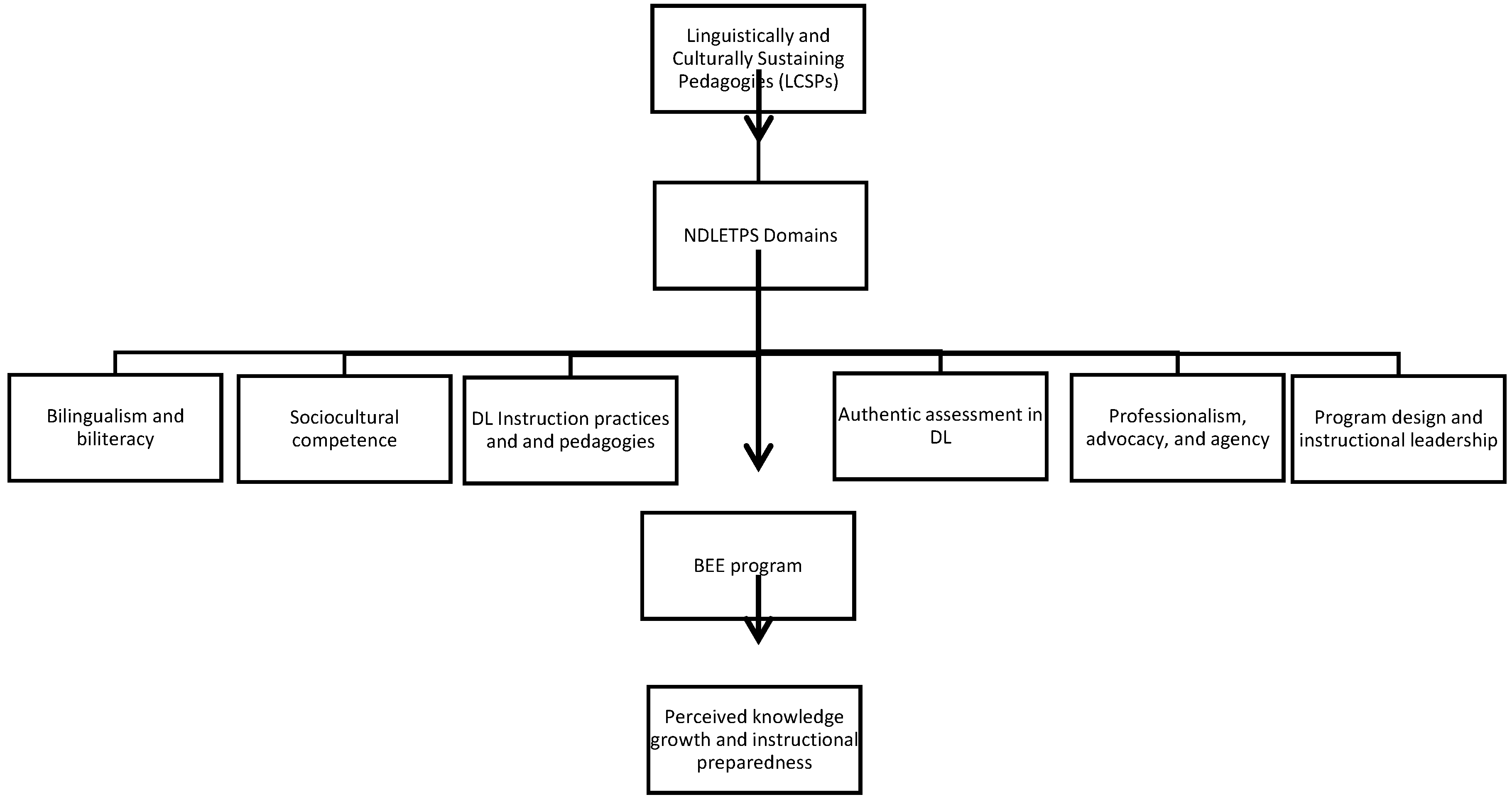
Figure 1 depicts the study’s conceptual framework. At the top, Linguistically and Culturally Sustaining Pedagogies (LCSPs) anchor the approach to teacher preparation. LCSP principles are operationalized through the NDLETPSs , detailed across six domains. The BEE program is positioned as the mechanism that translates these standards into practice. Arrows indicate the directional flow from LCSPs to NDLETPS domains to program design, culminating in teacher candidates’ perceived knowledge growth and instructional preparedness to enact linguistically and culturally sustaining instruction. This structure underscores how a standards-aligned endorsement program is intended to build teachers’ instructional capacity and preparedness to enact linguistically and culturally sustaining pedagogies.
Figure 1.
Conceptual framework linking LCSPs, NDLETPS domains, the DLBE/BEE program, and teacher candidates’ perceived knowledge growth and instructional preparedness.
The NDLETPSs provide the operational bridge between LCSP principles and concrete teacher preparation outcomes. NDLETPS domains map onto LCSP’s commitments by specifying the knowledge, skills, and dispositions that DLBE teachers must demonstrate to sustain students’ linguistic and cultural identities while delivering rigorous, standards-aligned instruction (Guerrero & Lachance, 2018). In this framework, NDLETPSs function as measurable indicators of LCSP enactment in teacher education: for example, sociocultural competence operationalizes the asset orientation and critical stance of LCSP; bilingualism/biliteracy specify the language development goals that are consistent with sustaining pedagogy; and professionalism/agency centers teachers’ role in advocacy and collaborative leadership, which is key to advancing equitable DLBE program design.
In this study, perceived preparedness and knowledge growth are treated as proximal outcomes of participation in a standards-aligned endorsement program. These perceptions reflect candidates’ self-reported readiness to plan, implement, and reflect on DLBE practices, which prior research has linked to instructional quality and professional growth in teacher education contexts (Tschannen-Moran & Hoy, 2001). While distinct from task-specific self-efficacy, perceived preparedness provides a meaningful indicator of a program’s impact at the completion stage of preparation.
Finally, a program evaluation lens situates these constructs within the Massachusetts policy context. Following the LOOK Act and the formalization of the Bilingual Education Endorsement (BEE), programs are accountable both to regulatory standards and to equity-oriented goals for English learners. Drawing on evaluation frameworks for professional learning (e.g., Guskey, 2002; Kirkpatrick & Kirkpatrick, 2006), effectiveness is conceptualized at multiple levels: (a) program alignment with the NDLETPSs (structures, syllabi, observed pedagogy, and assessments); (b) participant learning and perceived preparedness (survey and qualitative evidence of readiness to enact DLBE practices); and (c) early transfer to practice (instructional moves and artifacts that are consistent with LCSP). This integrated framework guides the study’s design (i.e., syllabi analysis, observations, surveys, etc.) and interpretation, positioning the BEE program as a mechanism to translate policy flexibility into sustained, standards-aligned, and empowering DLBE teaching.
4. Methodology
This study employed a mixed-methods concurrent case study design (Creswell & Plano Clark, 2018) to examine one public teacher preparation program for dual-language bilingual education (DLBE) educators in Massachusetts. The program primarily targeted classroom teachers seeking the Bilingual Education Endorsement (BEE) but also enrolled administrators and paraprofessionals from participating school districts. While the course sequence was originally designed for teachers, program practices and supervised field experiences were adapted to accommodate the diverse roles of these candidates, ensuring alignment with endorsement requirements and the realities of DLBE implementation.
To evaluate the effectiveness of the BEE program, this study draws on established frameworks for professional development and training evaluation. Guskey (2002) emphasizes that meaningful evaluation of professional learning should consider multiple levels, including participants’ reactions, learning, organizational support, and subsequent changes in practice and student outcomes. Similarly, Kirkpatrick and Kirkpatrick’s (2006) four-level model provides a structured approach to assessing training programs, beginning with participants’ satisfaction (Level 1), followed by learning gains (Level 2), application of skills in practice (Level 3), and broader organizational or student impact (Level 4). These models informed the design of this mixed-methods case study by guiding the selection of data sources, such as course evaluations, pre- and post-program surveys, and field observations, to capture both immediate and longer-term indicators of program success.
4.1. Researchers’ Positionalities
The first author is an associate professor and program coordinator, as well as a first-generation multilingual and multicultural educator, whose research centers on STEAM identity development, disciplinary biliteracy, and Linguistically and Culturally Sustaining Pedagogies in DLBE contexts. She leads a bilingual education hub and serves on a state-level advisory council for English language learners, roles that shape a deeply equity-oriented and teacher-centered orientation to research and practice.
The second author is a Latino trained economist, with 20+ years of higher education experience, including roles in policy analysis and evaluation. He now focuses on K–12 education, applying rigorous econometric and statistical methods to evaluate and inform equitable educational policies. As the coordinator of a bilingual education hub, he brings a data-driven perspective to DLBE program development.
The third author is an Afro-Latina project manager with specialized expertise in bilingual and special education from the same university. She has practical teaching experience, has delivered conference presentations, and has a strong background in curriculum design and individualized learning plans. Her work within the bilingual education hub situates her at the nexus of research implementation, educator development, and inclusive pedagogical practice.
4.2. Participants
A total of 59 candidates participated in this study. Survey responses were collected from all participants; however, field experience observations were analyzed for only 35 candidates. The remaining 24 candidates were excluded because their documentation is still in progress, because they have not completed the field experience component.
We use the term candidates intentionally, because participants were enrolled in a state-approved endorsement program and could include in-service teachers of record working in DLBE programs (instructing in either Spanish or English), special education teachers, administrators, and pre-service teachers who, in some cases, were employed as paraprofessionals in schools. Referring to all participants as candidates aligns with Massachusetts’ definition of individuals pursuing a specific certification. Of the 59 candidates, the group included 46 K–12 classroom teachers, 4 special education teachers, 1 speech and language pathologist, and 8 administrators (e.g., district multilingual directors and other leadership roles). Demographically, the cohort was predominantly female (approximately 87%), with about 13% male representation. In terms of linguistic and cultural background, most candidates self-identified as Latine with Caribbean or Latin American heritage, with a high incidence of first-generation college students and individuals from low- to medium-socioeconomic status. The majority were Spanish-dominant speakers, reflecting the linguistic diversity that is central to DLBE programs.
4.3. Data Sources and Analysis
Data were collected from multiple sources to enable triangulation and provide a comprehensive understanding of program implementation and outcomes (Creswell & Plano Clark, 2018). These sources include the following:
- Course syllabi (n = 10 in total, two syllabi per each course), which were analyzed to assess alignment with NDLETPS domains and LCSP principles.
- Candidates’ course evaluation survey responses (Forward-Focus Surveys), offering insights into their perceptions of course quality and relevance.
- Field experience observation notes (n = 35 completed observations), documenting candidates’ instructional practices and application of DLBE strategies in authentic classroom settings.
- Pre- and post-program evaluation surveys (n = 115 completed responses from n = 59 participants), designed to measure changes in candidates’ perceived subject matter knowledge and preparedness to implement DLBE practices.
To examine the design, implementation, and outcomes of the dual-language bilingual education (DLBE) teacher preparation program, this study employed a multi-component mixed-methods analytic strategy (Creswell & Plano Clark, 2018; Greene, 2007). The qualitative phase focused on how program standards were enacted across coursework and practicum experiences, while the quantitative component assessed changes in participants’ subject matter knowledge and perceived preparedness over time. In addition, Forward-Focus course surveys were used as formative evaluation tools to capture participants’ perceptions of instructional quality, course design, and learning experiences.
Quantitative data, primarily drawn from candidates’ responses to pre- and post-program surveys and Forward-Focus evaluations, were analyzed. The results of these surveys were analyzed using frequency distributions of the responses to identify patterns and variation within and across program components. Together, these analyses provide evidence of alignment with the NDLETPSs and can inform ongoing, data-driven program improvement efforts (Guskey, 2002; Kirkpatrick & Kirkpatrick, 2006).
Subject matter knowledge (SMK) was measured using a composite index representing 28 items aligned with the SMK indicators. Each item was rated on a five-point Likert scale ranging from 1 (very low perceived knowledge) to 5 (very high perceived knowledge). For each respondent, a composite SMK score was calculated as the arithmetic mean of responses across all 28 items, yielding a continuous measure bounded between 1 and 5. This composite score provides an interpretable summary of participants’ perceived content knowledge in bilingual education and allows for meaningful comparisons across cohorts of students and between pre- and post-program surveys. Changes in average scores over time are interpreted as shifts in participants’ self-reported preparedness and confidence in bilingual education content following program participation.
Thematic analysis was selected as the primary qualitative analytic approach, because it provides a systematic yet flexible method for identifying patterns and themes across diverse data sources, including syllabi, observation notes, and open-ended survey responses. This approach allows researchers to organize data into meaningful categories that reflect both predetermined constructs and emergent insights, making it particularly suitable for studies examining program alignment with standards while also exploring participants’ lived experiences. Following Saldaña’s (2016) recommendations, we employed two coding cycles: an initial a priori cycle guided by the NDLETPS domains to assess standards implementation, and a subsequent a posteriori cycle to capture unanticipated themes related to teacher agency, collaboration, and culturally sustaining practices. This iterative process ensured both conceptual alignment and openness to new understandings grounded in participants’ perspectives.
4.3.1. Course Syllabi
While previous studies have analyzed syllabi in multilingual education (see Gorski, 2019), to our knowledge, no research has specifically examined DLBE teacher preparation programs through the lens of the NDLETPSs. This gap underscores the need for a closer look at how these standards are reflected in program design and implementation.
We conducted a systematic syllabus analysis to assess and strengthen program-level alignment with the NDLETPSs. The analysis examined 10 syllabi across five required courses in the Bilingual Education Certificate program (two syllabi per course). Using a mixed qualitative approach, syllabi were coded in two analytic phases: a priori coding aligned with the six NDLETPSs to assess stated and enacted alignment, followed by inductive a posteriori coding to identify cross-cutting themes in assignments, topics, readings, and course objectives. Analyses revealed strong and consistent emphasis on bilingualism and biliteracy, sociocultural competence, and instructional practices, with comparatively less explicit coverage of assessment and professionalism. Based on these findings, targeted revisions were implemented across the five-course sequence, including adjustments to course emphasis and alignment, as part of the program’s continuous improvement efforts to ensure greater coherence between standards, coursework, and intended DLBE teacher competencies.
4.3.2. Candidates’ Course Evaluation Survey Responses (Forward-Focus Surveys)
As part of the program’s internal quality assurance and continuous improvement processes, we administered Forward-Focus Surveys to candidates enrolled in the BEE program. The surveys were developed simultaneously in Spanish–English (not through translation) to ensure linguistic and cultural appropriateness, implemented by the researchers, and completed by candidates anonymously at the conclusion of each course. The instrument is designed to capture candidates’ perceptions of instructional quality and learning experiences, including clarity of expectations, usefulness of feedback, inclusivity and engagement, course organization, alignment between activities and learning goals, and instructor preparedness, clarity, responsiveness, and fairness in assessment, but also candidates’ perceptions of their learning progress and instructional readiness. The survey also includes items assessing the perceived value of specific course components (e.g., lectures, discussions, readings, and assignments), estimates of weekly time commitment, and open-ended questions that invite reflection on key learning outcomes and suggestions for improvement. Forward-Focus Surveys are intended as formative, program-level tools to support instructional reflection, faculty development, and monitoring of program coherence across courses and in this case also to work as predictors of teaching effectiveness and candidates’ self-perceived learning outcomes.
4.3.3. Candidates’ Field Experience Observations
As an additional component of the program evaluation framework, the BEE program employs a course-embedded observation protocol that is integrated into a required field experience course. This protocol is used to systematically document instructional practices observed during teacher candidates’ clinical placements while they are concurrently enrolled in program coursework. The observation protocol focuses on instructional quality, pedagogical alignment, classroom interactions, and the application of DLBE teaching practices in authentic classroom contexts during a required 75 h field experience. By embedding the protocol within the practicum and the associated course, the program captures evidence of candidates’ enactment of program principles at the intersection of theory and practice. Data generated through the protocol are aggregated and used formatively to identify recurring patterns across candidates, courses, and semesters, inform targeted instructional and curricular refinements, and complement evidence derived from syllabus analyses and other program evaluation components. The protocol, along with a capstone assessment which is based on the development of an inquiry-based curriculum development curriculum unit, contributes to the summative assessment of individual candidates and also functions as a program-level tool within a multi-method evaluation design to support continuous improvement of the BEE program.
4.3.4. Candidates’ Pre- and Post-Program Evaluation Survey Responses
Finally, we conducted a pre- and post-program survey analysis to assess the program’s contribution to participants’ subject matter knowledge (SMK) in bilingual education, determined through the NDLETPSs (see Appendix A.1 for the full instrument). Survey data were collected from 59 educators across multiple cohorts, including 24 pre-program and 35 post-program responses. The instrument consisted of 28 Likert-scale items aligned with Massachusetts subject matter knowledge indicators (SMKIs) and the NDLETPS domains, from which a composite SMK score was calculated for each respondent.
5. Results
In this section, we present the results from the collected and analyzed data. We will examine each source of data individually, providing findings from course syllabi, classroom observations, Forward-Focus Surveys, and pre- and post-program evaluation surveys in sequence.
5.1. Course Syllabi
The analysis shows that the DLBE teacher preparation program demonstrates strong and consistent alignment with the NDLETPSs, particularly in the areas of bilingualism and biliteracy (NDLETPS #1), sociocultural competence (NDLETPS #2), and dual language instructional practices and pedagogy (NDLETPS #3). These three standards accounted for the majority of a priori codes (nearly 80%), appearing across all five courses and most syllabi. Qualitative coding of assignments, readings, and course topics revealed a sustained emphasis on culturally responsive teaching, integration of students’ linguistic and community resources, development of content and language objectives, and pedagogical practices that value multilingualism. Complementing these findings, a posteriori analysis identified recurring cross-cutting themes such as critical consciousness, teacher reflection and positionality, collaboration, and translanguaging, indicating that the program intentionally prepares teacher candidates to act as reflective practitioners and agents of change in linguistically diverse contexts.
The quantitative analysis further supports these qualitative findings by showing a moderate and statistically significant overall correlation between the standards that are explicitly stated on syllabi and those that are observed through coding of course content (β = 0.74, R2 = 0.616, p < 0.0001). Observed standards represent the collection of evidence from the researcher that the standard was addressed in the course (i.e., alignment with course objectives, assessment, readings, materials, etc.). We assumed the causality relation by defining the stated standards in the syllabus as the only determinant in the observed standards, and used the following formula:
where the relative weight of the observed standards y for each course i in each moment t is determined by the relative weight of the stated standards x for each course i in each moment t.
Since the coding process is subjective, not deterministic, and some categories may be under- or overrepresented, we assume that there are no systematic biases in the codification process; hence, errors may be distributed with mean zero and constant variance. The empirical exercise also restricts the regression to be non-constant, since zero stated standards in a syllabus means zero expected value of the observed standards. The parameter β is then a representation of an elasticity. An increase in 1% of the relative weight of a stated standard increases the relative weight of the observed standards by β percent. Table 1 provides a summary of the correlations for each course across standards. Stated standards represent the statement included in each syllabus, where the instructor lists and describes the standards that are addressed in the course.
Table 1.
Correlations by course between observed and stated NDLETPSs across standards.
A final set of correlations was calculated for each standard across courses. Table 2 provides a summary of the correlations for standards across courses. Results indicate that the correlations for NDLETPS #1, #2, #3, and #4 are significant at the p < 0.05 level. Correlations for standards #1 and #2 were strong, and correlations for standards #3 and #4 were moderate.
Table 2.
Correlations by standard between observed and stated NDLETPSs across courses.
This result suggests substantial coherence between program goals and their implementation. Alignment was strongest for courses that centered on sociocultural and foundational perspectives and for standards related to bilingualism and sociocultural competence, while alignment was weaker for authentic assessment (NDLETPS #4) and especially limited for professionalism, advocacy, and agency (NDLETPS #5) and program design and curricular leadership (NDLETPS #6). Although assessment appeared consistently across syllabi, it was less deeply developed, and professionalism and leadership were concentrated in only a few courses. Overall, the results highlight a programmatic strength in sociocultural and pedagogical preparation, alongside clear opportunities to more intentionally integrate assessment practices, professional advocacy, and leadership development across the full course sequence.
5.2. Candidates’ Course Evaluation Survey Responses (Forward-Focus Surveys)
As part of the program’s forward-focused continuous improvement strategy, course-level Forward-Focus Surveys (see Appendix A.2) are used to systematically capture candidates’ perceptions of instructional quality, course design, and learning experiences, and to translate this feedback into actionable program refinements. The surveys employ a consistent 5-point Likert scale (1 = Almost never to 5 = Almost always) across core items assessing clarity of expectations, instructional effectiveness, engagement, inclusivity, and perceived learning, complemented by an overall course rating item. The survey also includes three open-ended questions (Appendix A.2).
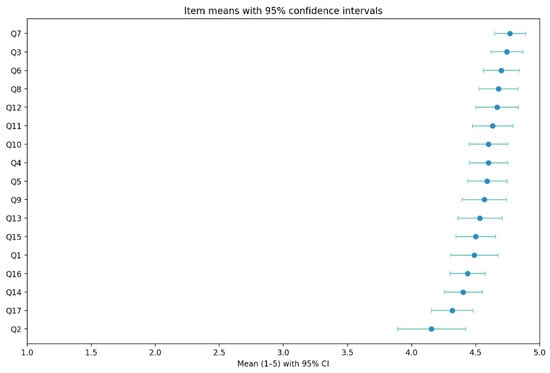
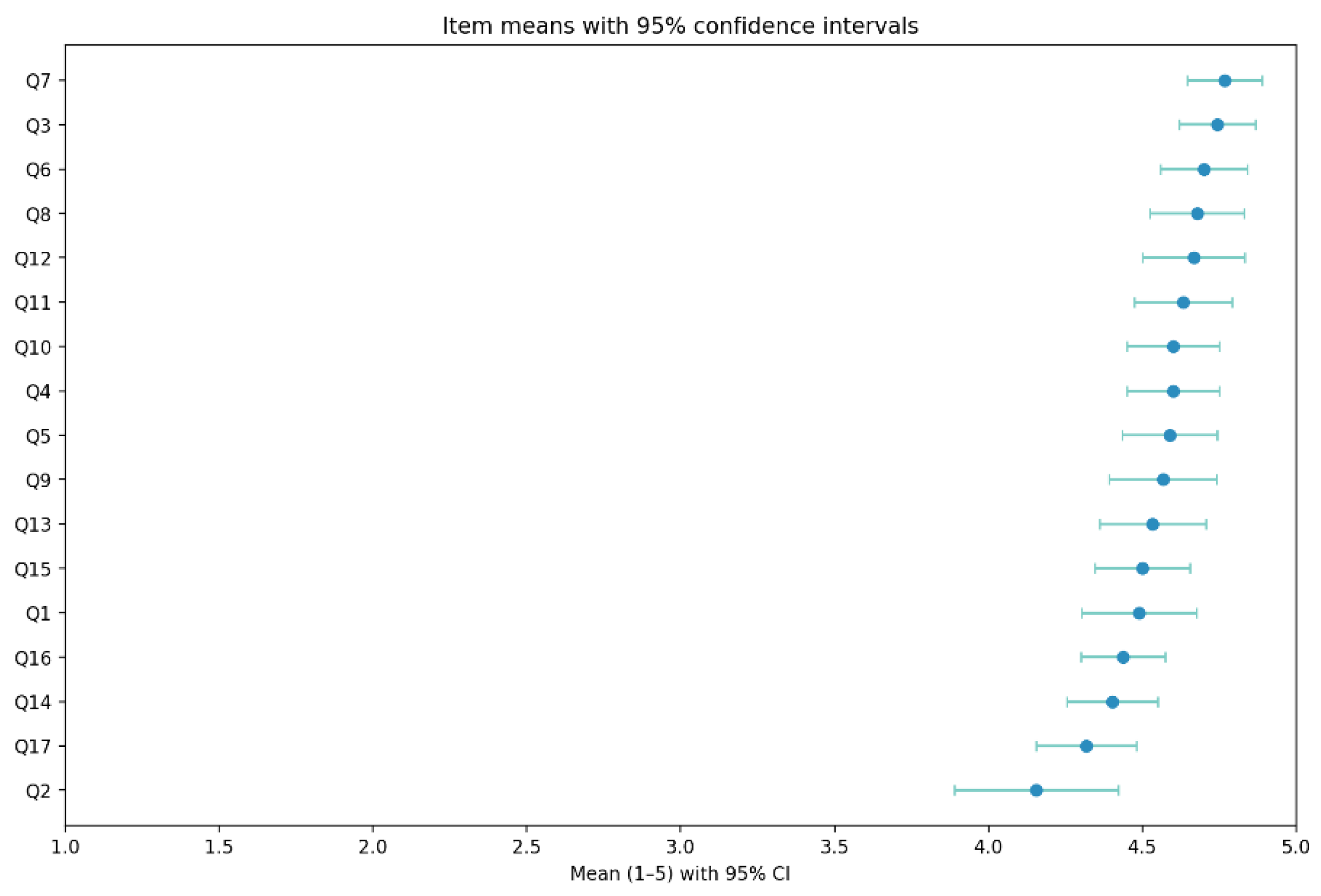
We analyzed 92 responses from the 5-point Likert questions submitted by 59 candidates across 17 items during the five-course program offered in the academic year 2024–2025. Item-level missingness was modest (2–5 per item). Internal consistency was excellent (Cronbach’s α = 0.954), and the overall mean response was 4.55, indicating strong endorsement of the statements. The highest-rated items were Q7 (M = 4.77, 95% CI [4.64, 4.89]), Q3 (M = 4.74, 95% CI [4.62, 4.87]), and Q6 (M = 4.70, 95% CI [4.56, 4.84]), whereas Q2 (M = 4.16, 95% CI [3.89, 4.42]), Q17 (M = 4.32, 95% CI [4.16, 4.48]), and Q14 (M = 4.40, 95% CI [4.26, 4.55]) received comparatively lower ratings. These patterns suggest generally positive perceptions across the survey, with some variation by item.
Figure 2 presents the mean score for each item on the 5-point Likert scale, accompanied by their 95% confidence intervals. Items are arranged from lowest to highest mean, providing a clear comparison of relative endorsement. Narrow confidence intervals indicate consistent responses across participants, while wider intervals suggest greater variability. Overall, most items cluster near the upper end of the scale, reflecting generally favorable perceptions. While Figure 2 presents item means and confidence intervals to highlight relative strengths and areas for improvement, the full distribution of item-level responses is provided in Appendix A.3 for transparency.
Figure 2.
Item means with 95% confidence intervals.
The qualitative analysis of responses to “What were the three most valuable things that you learned (or learned to do) in this course?” revealed six major themes (Table 3). Candidates highlighted the importance of culturally responsive teaching and valuing students’ identities, deepened their understanding of language acquisition and bilingual education, and emphasized instructional strategies such as scaffolding and genre-based approaches. Reflection and professional growth emerged as key aspects, alongside assessment literacy for equitable evaluation practices. Finally, participants appreciated collaboration and supportive learning environments as essential for their development as educators.
Table 3.
Q18 major themes.
The analysis of responses to Question #19 revealed six major themes regarding aspects of the course and the instructor’s teaching that were particularly helpful for learning (Table 4). Candidates valued the course’s clear structure and organization, including well-planned assignments and expectations. Readings and resources were frequently mentioned as beneficial, although some noted the volume of readings as challenging. Interactive activities, group work, and opportunities for discussion were highlighted as promoting engagement and deeper understanding. Instructor support, feedback, and scaffolding were consistently praised for creating a supportive learning environment. Participants also appreciated real-world connections and practical examples that made concepts relatable, as well as learning about policies and dual-language program structures, which provided important contextual knowledge for their professional practice.
Table 4.
Q19 major themes.
The analysis of the responses to Question #20 revealed several themes regarding suggested changes to enhance learning (Table 5). While many participants indicated that no changes were needed, others recommended adjustments to improve clarity, engagement, and workload balance. Common suggestions included reducing the volume of readings and aligning them more closely with in-class discussions, providing clearer instructions and consistent information across platforms, and incorporating more interactive activities and group discussions. Some respondents emphasized the need for more instructor-led explanations to clarify complex content, while others requested earlier class times and extended sessions for deeper engagement. A few comments highlighted the importance of respectful communication and maintaining professional boundaries. Overall, these suggestions reflect a desire for increased clarity, practical application, and collaborative learning opportunities.
Table 5.
Q20 major themes.
5.3. Candidates’ Field Experience Observations
In-depth analysis of classroom observations is conducted during the practicum experiences of 35 DLBE teacher candidates who are enrolled in a state-funded teacher preparation program. Using a structured observation protocol aligned with the state’s subject matter knowledge indicators (SMKIs) and the NDLETPSs, observers documented instructional practices, language use, scaffolding strategies, and sociocultural interactions during lessons lasting approximately 30–60 min.
Observation data were analyzed through a two-cycle coding process. In the first cycle, protocol coding applied the seven SMKIs as a priori codes to assess explicit alignment with established standards. In the second cycle, descriptive coding inductively generated a posteriori codes capturing recurring instructional patterns such as translanguaging, differentiation, metalinguistic awareness, and teacher–student relationships. The results indicate strong evidence of bilingual pedagogy, sociocultural competence, and instructional scaffolding in enacted practice, while competencies related to bilingual assessment and foundational knowledge of bilingual education were less visible through classroom observation alone. Importantly, these findings informed targeted revisions to the observation protocol as part of the continuous improvement efforts of the BEE program, strengthening its capacity to more accurately capture DLBE-specific competencies over time.
Classroom observations of 35 DLBE teacher candidates revealed strong evidence of bilingual pedagogy, sociocultural competence, and instructional scaffolding in alignment with the NDLETPSs. Using a two-cycle coding process, the first cycle applied six a priori codes based on the NDLETPSs, while the second cycle generated a posteriori codes inductively from observed practices. Findings indicate that while bilingual instructional strategies and sociocultural competence were frequently observed, competencies related to bilingual assessment and foundational knowledge were less visible. These insights informed revisions to the observation protocol to better capture DLBE-specific competencies.
Table 6 summarizes the distribution of a priori codes aligned with the NDLETPSs. The most frequently observed competency was bilingualism and biliteracy (22 observations), followed by sociocultural competence (15) and dual language instructional practices and pedagogy (10). These patterns suggest that teacher candidates consistently enacted practices that promote bilingual development and sociocultural awareness. In contrast, competencies such as authentic assessment in dual language and professionalism, advocacy, agency appeared less frequently, indicating areas for targeted support in program design.
Table 6.
A priori codes aligned with NDLETPSs.
Table 7 presents the a posteriori codes that were generated inductively from observation data. Language use, including translanguaging, emerged as the most salient feature (79 instances), reflecting candidates’ flexible and strategic use of both languages during instruction. Other prominent practices included scaffolding (61) and instructional strategies (43), which highlight candidates’ efforts to support comprehension and engagement. Codes such as metalinguistic awareness (35) and differentiation (26) further demonstrate nuanced approaches to bilingual instruction. Less frequent but notable categories, such as engaging activities and bilingualism in physical spaces, suggest opportunities to deepen culturally responsive and interactive practices. Collectively, these findings underscore the strengths of the program in fostering bilingual pedagogy while revealing gaps in assessment and leadership competencies.
Table 7.
Inductively generated a posteriori codes.
5.4. Candidates’ Pre- and Post-Program Evaluation Survey Responses
The candidates were required to respond to a multiple-choice questionnaire at the beginning of the five-course cycle program and at the end. The questionnaire includes 28 Likert-scale items from the pre- and post-surveys. Respondents selected from the following scale to rate their knowledge in each area: No knowledge (0), Limited knowledge (1), Some knowledge (2), Average knowledge (3), A lot of knowledge (4), and Maximum level of knowledge (5) (see Appendix A for the full instrument).
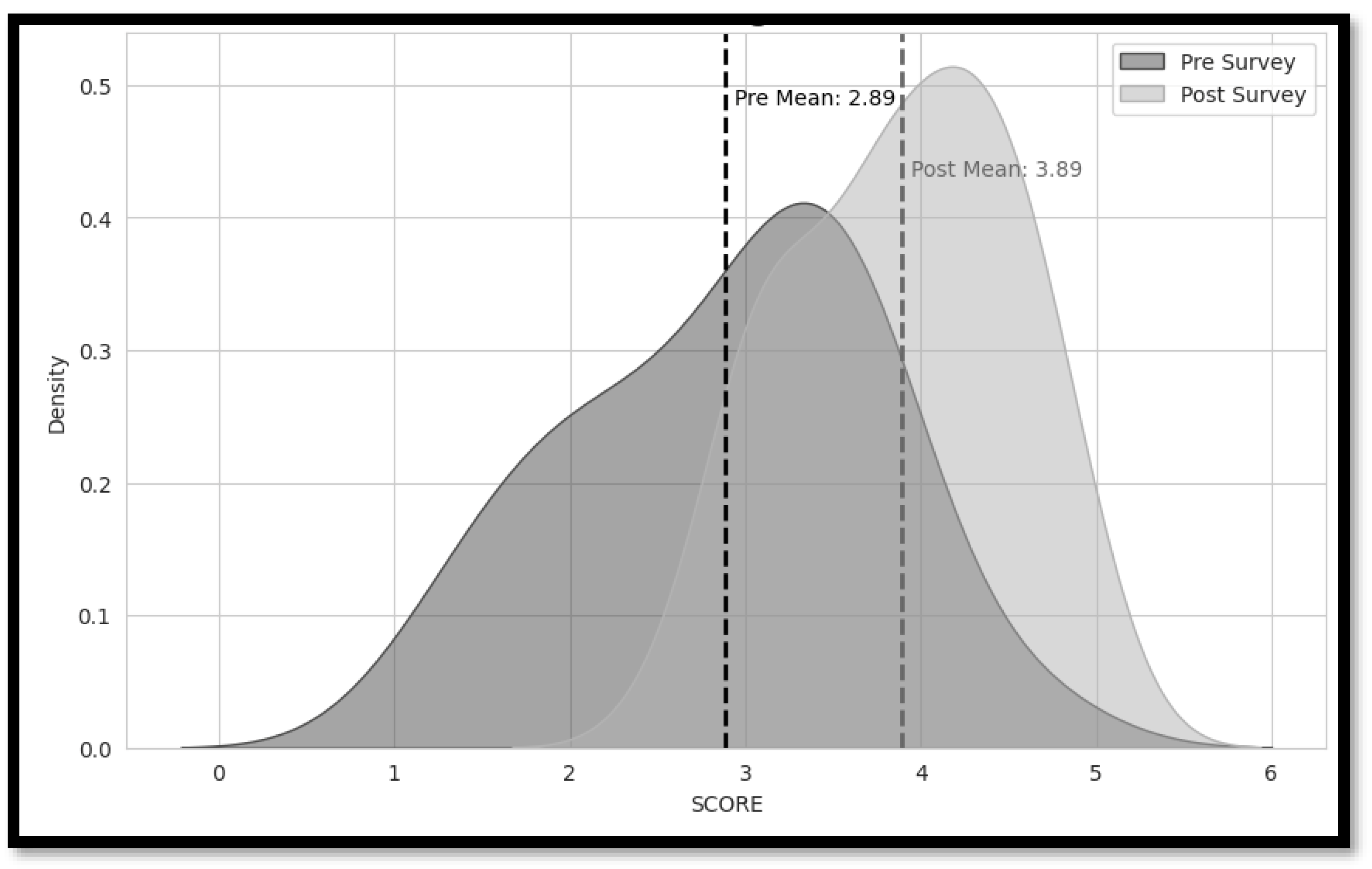
The results show a statistically significant increase in the average SMK score from 2.66 to 4.00 on a 5-point scale (+1.34 points; 33.5% gain; p < 0.001). These findings provide quantitative evidence that complements the qualitative analyses, indicating that program participation is associated with substantial gains in participants’ perceived content knowledge in DLBE.
The results of the pre- and post-surveys show a clear increase in participants’ self-reported subject matter knowledge and perceived preparedness across key domains of bilingual education. Educators reported substantial gains in their understanding of foundational theories and instructional strategies, and their roles as advocates for multilingual learners. These improvements indicate the program’s effectiveness in supporting teacher learning and professional development.
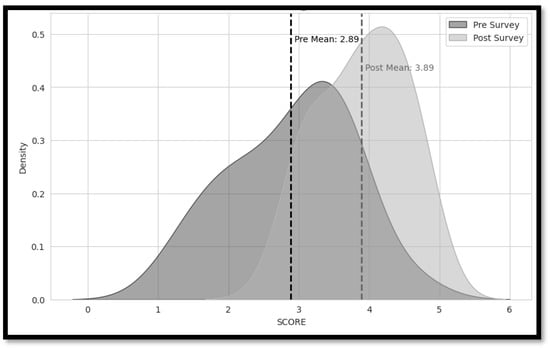
Figure 3 shows the response distribution, offering a detailed view of the areas in which educators feel more confident after completing the program and points to specific competencies that may benefit from continued instructional focus.
Figure 3.
Distribution of subject matter knowledge (SCORE) before and after program participation.
The qualitative analysis of the two open-ended survey questions was conducted using a two-cycle thematic approach. Question 29 asked “What do you believe are your strengths as an educator in a DLBE program?”. Question 30 asked “Is there anything else you would like to share about your experiences as a bilingual educator or goals for growth?”.
In the first cycle, a priori coding was applied based on the National Dual Language Teacher Preparation Standards (NDLTPSs). We mapped sentences to the six NDLTPS domains, using the official labels from the standards (Standards 1 through 6) and bilingual English–Spanish keyword patterns for each domain. Then we performed unit of analysis, where we coded at the sentence level to capture multiple codes inside longer responses (this tends to lower any single category’s percent compared to “per-response” coding, where one response receives one dominant code). Responses most frequently aligned with Standard 3: dual language instructional practices and pedagogies, followed by Standard 1: bilingual pedagogy. The least represented was Standard 4: assessment, indicating limited emphasis on assessment-related practices. When asked about the strength of DLBE educators, candidates most frequently highlight instructional practices and pedagogies (planning, differentiation, scaffolding, bridging, translanguaging), followed closely by bilingualism and biliteracy (speaking/teaching in Spanish–English, language development, translanguaging). Mentions of assessment practices are comparatively rare, supporting the assertion of limited emphasis on assessment (see standard names/definitions in NDLTPSs for alignment).
In the second cycle, a posteriori coding was used to analyze the whole corpus to identify emergent themes beyond the NDLTPS framework. Two dominant themes emerged, (a) Instructional Practices and Pedagogical Strategies and (b) Professional Growth and Collaboration, reflecting participants’ focus on effective teaching approaches and ongoing professional development. Table 8 organizes representative quotes from participants into four key categories in alignment with the coding framework and emergent themes.
Table 8.
Qualitative excerpts by category.
6. Discussion
This study examined how a state-level teacher preparation program for dual-language bilingual education (DLBE) educators supports candidates in developing the necessary knowledge, skills, and dispositions for bilingual teaching. Grounded in Linguistically and Culturally Sustaining Pedagogies (LCSPs), the findings affirm that the program largely succeeds in positioning candidates to enact pedagogies that value linguistic diversity, center students’ lived experiences, and promote sociocultural competence. Across classroom observations, syllabus analysis, and survey data, participants demonstrated substantial growth in bilingualism and biliteracy, instructional practices, and sociocultural awareness—core dimensions of LCSPs and the National DLBE Teacher Preparation Standards.
These outcomes suggest that the program is not only meeting endorsement requirements but also advancing LCSP principles by framing multilingualism as an asset and embedding community knowledge into curriculum design. For example, observed lessons frequently incorporated translanguaging strategies and culturally relevant texts, signaling candidates’ ability to affirm students’ identities through instruction. Similarly, survey responses indicated greater self-reported readiness to integrate students’ funds of knowledge into instructional planning, a critical LCSP tenet.
However, the study also revealed areas for improvement that warrant attention. While sociocultural competence and instructional practices were consistently emphasized, assessment and professionalism emerged as comparatively weaker domains. This gap raises questions about how candidates are prepared to critically interrogate assessment practices that often reproduce inequities, which is a central aim of LCSP’s call for critical consciousness. Strengthening these components could involve integrating more explicit coursework into equitable assessment and reflective professional practice, as well as revising observation protocols to capture these dimensions.
Methodologically, the mixed-methods design provided a robust lens for triangulating evidence and identifying both strengths and limitations. The convergence of qualitative and quantitative data not only validated program coherence but also functioned as a formative evaluation tool, informing iterative improvements. This continuous improvement cycle aligns with LCSP’s emphasis on responsive, justice-oriented pedagogy, underscoring the need for teacher preparation programs to remain dynamic and context-sensitive.
The findings carry important implications beyond the program studied. First, they underscore the need for state-level policies to prioritize LCSP principles in bilingual teacher preparation standards, ensuring that linguistic diversity and sociocultural competence are not peripheral but central to program design. Second, the identified gaps in assessment and professionalism point to a systemic challenge: teacher preparation programs must equip educators to navigate and challenge inequitable assessment systems that disproportionately impact multilingual learners. Finally, the study illustrates the value of embedding continuous improvement cycles within endorsement programs, suggesting that policy frameworks should incentivize formative evaluation practices that link standards, curriculum, and teacher learning outcomes. By institutionalizing these commitments, states can advance equity-oriented bilingual education and strengthen the pipeline of educators prepared to sustain linguistically and culturally diverse classrooms.
A distinctive contribution of this study lies in its emphasis on candidate voice as a driver of program design and improvement. Unlike traditional models that often treat teacher preparation as static, this program demonstrates how systematic incorporation of candidate feedback can shape a more responsive and equity-oriented approach. Specifically, the program’s evolution toward a hybrid model, combining synchronous and asynchronous online learning with in-person community of practice seminars, reflects a deliberate effort to honor candidates’ professional realities and linguistic identities while maintaining rigorous standards. This adaptability not only aligns with LCSP principles of centering lived experiences and community knowledge but also challenges the field to reconceptualize teacher preparation as a dynamic, co-constructed process. By foregrounding candidate agency in program refinement, this study offers a critical perspective on how DLBE preparation can move beyond compliance with endorsement requirements toward transformative practices that sustain multilingualism and cultural diversity.
7. Limitations
Several limitations should be acknowledged when interpreting these findings. First, the study focused on a single state-level DLBE teacher preparation program, which limits its generalizability to other contexts with different policy environments, program structures, or candidate demographics. While the mixed-methods design provided rich, triangulated data, the sample size was relatively small and drawn from participants who were connected to a state-funded initiative, potentially introducing selection bias. Additionally, classroom observations captured a snapshot of practice during supervised field experiences, which may not fully reflect candidates’ instructional approaches once they assume independent teaching roles.
Although the conceptual framework draws on research related to teacher efficacy, the instruments used in this study assess perceived knowledge and preparedness rather than task-specific self-efficacy; future research could incorporate validated efficacy scales to examine this construct more directly.
Another limitation relates to the scope of data sources. Although surveys and syllabus analyses offered valuable insights into program coherence and candidate learning, they relied on self-reported measures and document reviews, which may not capture the depth of candidates’ critical consciousness or their ability to disrupt inequitable practices in real-world settings. Finally, the study did not systematically examine long-term outcomes, such as retention in DLBE classrooms or impact on student achievement, which are essential indicators of program effectiveness.
Future research should address these limitations by conducting longitudinal studies that follow program graduates into their teaching careers to assess their sustained implementation of LCSP-aligned practices and their influence on multilingual learners’ academic and sociocultural development. Comparative studies across multiple programs and states could illuminate how policy contexts shape the integration of LCSP principles into teacher preparation. Additionally, research should explore innovative approaches to strengthening underemphasized domains—such as equitable assessment and professionalism—through targeted coursework, mentorship models, and field-based experiences. Finally, incorporating student perspectives and community voices into program evaluation would deepen understanding of how teacher preparation translates into culturally and linguistically sustaining classroom environments.
8. Conclusions
Taken together, the classroom observation analysis, syllabus review, pre- and post-program surveys, and Forward-Focus course surveys provide converging evidence of the coherence and effectiveness of the BEE educator preparation program. Across data sources, findings consistently indicate strong alignment with the National Dual Language Education Teacher Preparation Standards in the areas of bilingualism and biliteracy, sociocultural competence, and instructional practices, while also revealing comparatively weaker and less visible emphasis on assessment and professionalism. Classroom observations captured how DLBE pedagogies are enacted in practice, the syllabus analysis documented how these priorities are systematically embedded across the program’s curriculum, pre- and post-program surveys demonstrated substantial gains in participants’ subject matter knowledge, and Forward-Focus Surveys offered timely, participant-centered feedback on course design and instructional quality. Beyond documenting outcomes, this triangulated evidence functioned as a formative evaluation framework, directly informing revisions to observation protocols, course alignment, and instructional emphasis and reinforcing a continuous improvement cycle that intentionally links standards, program design, and teacher learning outcomes.
Author Contributions
Conceptualization, M.D.S., D.T.G. and A.C.D.; Methodology, M.D.S. and D.T.G.; Investigation, D.T.G. and A.C.D.; Data curation, D.T.G.; Formal analysis, D.T.G.; Validation, M.D.S., D.T.G. and A.C.D.; Resources, M.D.S.; Visualization, M.D.S.; Writing—original draft, M.D.S. and D.T.G.; Writing—review and editing, D.T.G. and A.C.D.; Supervision, M.D.S. and D.T.G.; Project administration, A.C.D.; Funding acquisition, M.D.S. and D.T.G. All authors have read and agreed to the published version of the manuscript.
Funding
This research was funded by the Massachusetts Department of Elementary and Secondary Education, Grant 181.
Institutional Review Board Statement
The study was conducted in accordance with the Declaration of Helsinki and approved by the University of Massachusetts, Amherst, Human Research Protection Office (protocol code 3642 and date of approval: 27 June 2022).
Informed Consent Statement
Informed consent was obtained from all subjects involved in the study.
Data Availability Statement
Data supporting the findings of this study are not publicly available due to privacy and ethical restrictions related to the use of institutional documents and qualitative research materials.
Conflicts of Interest
The authors declare no conflicts of interest.
Appendix A
Appendix A.1. Candidates Pre–Post-Program Evaluation Survey Instrument
This table presents the 28 quantitative items and the 2 qualitative items (total of 30 questions) that are identical across the Cohort 7 Pre-Survey and the Cohorts 1–4 Post-Survey. Rows correspond to survey items, and columns correspond to the Likert response options, enabling direct pre–post and cross-cohort comparison. After the table, the two qualitative questions included in the instrument are also presented.
| Survey Item | No Knowledge (0) | Limited Knowledge (1) | Some Knowledge (2) | Average Knowledge (3) | A Lot of Knowledge (4) | Maximum Knowledge (5) |
| 1. Understand theories of bilingualism, biliteracy, and multilingual/multicultural development | ☐ | ☐ | ☐ | ☐ | ☐ | ☐ |
| 2. Understand planning and policy for dual language programs | ☐ | ☐ | ☐ | ☐ | ☐ | ☐ |
| 3. Familiar with holistic and equitable assessment methods | ☐ | ☐ | ☐ | ☐ | ☐ | ☐ |
| 4. Familiar with instructional materials for bilingualism and biliteracy | ☐ | ☐ | ☐ | ☐ | ☐ | ☐ |
| 5. Familiar with the history of bilingual education | ☐ | ☐ | ☐ | ☐ | ☐ | ☐ |
| 6. Understand the relationship between students’ two or more languages | ☐ | ☐ | ☐ | ☐ | ☐ | ☐ |
| 7. Understand the bilingual continuum | ☐ | ☐ | ☐ | ☐ | ☐ | ☐ |
| 8. Understand types of bilingual education programs | ☐ | ☐ | ☐ | ☐ | ☐ | ☐ |
| 9. Can justify the most appropriate bilingual program for a school community | ☐ | ☐ | ☐ | ☐ | ☐ | ☐ |
| 10. Understand how students’ identities connect to experiences over time | ☐ | ☐ | ☐ | ☐ | ☐ | ☐ |
| 11. Understand how language ideologies influence student development | ☐ | ☐ | ☐ | ☐ | ☐ | ☐ |
| 12. Understand educator role in implementing dual-language policy and plans | ☐ | ☐ | ☐ | ☐ | ☐ | ☐ |
| 13. Understand relationship between students’ past experiences and identity | ☐ | ☐ | ☐ | ☐ | ☐ | ☐ |
| 14. Reflect on own social position as an educator of multilingual learners | ☐ | ☐ | ☐ | ☐ | ☐ | ☐ |
| 15. Can plan instruction and curriculum across two languages | ☐ | ☐ | ☐ | ☐ | ☐ | ☐ |
| 16. Familiar with strategies to transfer content knowledge across languages | ☐ | ☐ | ☐ | ☐ | ☐ | ☐ |
| 17. Familiar with structural aspects of the two instructional languages | ☐ | ☐ | ☐ | ☐ | ☐ | ☐ |
| 18. Know grouping strategies to differentiate instruction in each language | ☐ | ☐ | ☐ | ☐ | ☐ | ☐ |
| 19. Know how to support grammatical, pragmatic, discourse, and metalinguistic development | ☐ | ☐ | ☐ | ☐ | ☐ | ☐ |
| 20. Know how to scaffold instruction in multiple languages | ☐ | ☐ | ☐ | ☐ | ☐ | ☐ |
| 21. Know when to separate languages and when to use translanguaging | ☐ | ☐ | ☐ | ☐ | ☐ | ☐ |
| 22. Familiar with materials supporting language and content acquisition | ☐ | ☐ | ☐ | ☐ | ☐ | ☐ |
| 23. Familiar with multiple assessment types to inform instruction | ☐ | ☐ | ☐ | ☐ | ☐ | ☐ |
| 24. Integrate students’ funds of knowledge and full linguistic repertoires | ☐ | ☐ | ☐ | ☐ | ☐ | ☐ |
| 25. Recognize stereotypical or racially biased materials | ☐ | ☐ | ☐ | ☐ | ☐ | ☐ |
| 26. Promote equity through culturally responsive teaching | ☐ | ☐ | ☐ | ☐ | ☐ | ☐ |
| 27. Connect students’ cultural knowledge to new learning | ☐ | ☐ | ☐ | ☐ | ☐ | ☐ |
| 28. Prepare culturally appropriate and rigorous instructional materials | ☐ | ☐ | ☐ | ☐ | ☐ | ☐ |
| 29. What do you believe are your strengths as an educator in a DLBE program? ______________________________________________________________________________________________________________________________________________________________________________________________________________________________________________________ | ||||||
| 30. Is there anything else you would like to share about your experiences as a bilingual educator or goals for growth? ______________________________________________________________________________________________________________________________________________________________________________________________________________________________________________________ | ||||||
Appendix A.2. Forward-Focus Survey
| Item | Question | Almost Never (1) | Rarely (2) | Sometimes (3) | Frequently (4) | Almost Always (5) |
| Q1 | I clearly understood the expectations for assignments and participation in this course. | ☐ | ☐ | ☐ | ☐ | ☐ |
| Q2 | I received useful feedback on my assignments and exams. | ☐ | ☐ | ☐ | ☐ | ☐ |
| Q3 | I felt included in the class. | ☐ | ☐ | ☐ | ☐ | ☐ |
| Q4 | I felt engaged in this course. | ☐ | ☐ | ☐ | ☐ | ☐ |
| Q5 | I knew what content was critical to learn in this course. | ☐ | ☐ | ☐ | ☐ | ☐ |
| Q6 | My instructor was approachable and authentic. | ☐ | ☐ | ☐ | ☐ | ☐ |
| Q7 | I had multiple opportunities to interact with other students. | ☐ | ☐ | ☐ | ☐ | ☐ |
| Q8 | The instructor was well prepared to teach the course. | ☐ | ☐ | ☐ | ☐ | ☐ |
| Q9 | The instructor explained course 4 material clearly. | ☐ | ☐ | ☐ | ☐ | ☐ |
| Q10 | The instructor used instructional time effectively. | ☐ | ☐ | ☐ | ☐ | ☐ |
| Q11 | The instructor inspired interest in the subject matter of this course. | ☐ | ☐ | ☐ | ☐ | ☐ |
| Q12 | The instructor showed an interest in helping students learn. | ☐ | ☐ | ☐ | ☐ | ☐ |
| Q13 | The instructor used methods of evaluating student work that were fair. | ☐ | ☐ | ☐ | ☐ | ☐ |
| Now think about specific course activities. How VALUABLE were the following activities for your learning? | ||||||
| Q14 | Lectures | ☐ | ☐ | ☐ | ☐ | ☐ |
| Q15 | Discussions | ☐ | ☐ | ☐ | ☐ | ☐ |
| Q16 | Readings | ☐ | ☐ | ☐ | ☐ | ☐ |
| Q17 | Homework | ☐ | ☐ | ☐ | ☐ | ☐ |
| Q18 | What were the three most valuable things that you learned (or learned to do) in this course? ________________________________________________________________________________________________________________________________________________________ | |||||
| Q19 | What aspects of this course and/or the instructor’s teaching of it (e.g., activities, assignments, expectations, tools, etc.) were particularly HELPFUL FOR YOUR LEARNING? ________________________________________________________________________________________________________________________________________________________ | |||||
| Q20 | What CHANGES to this course and/or your instructor’s teaching of it would you suggest to enhance your learning? If possible, explain why this change would be helpful for your learning. ________________________________________________________________________________________________________________________________________________________ | |||||
Appendix A.3. Likert Scale Survey Distribution of Responses
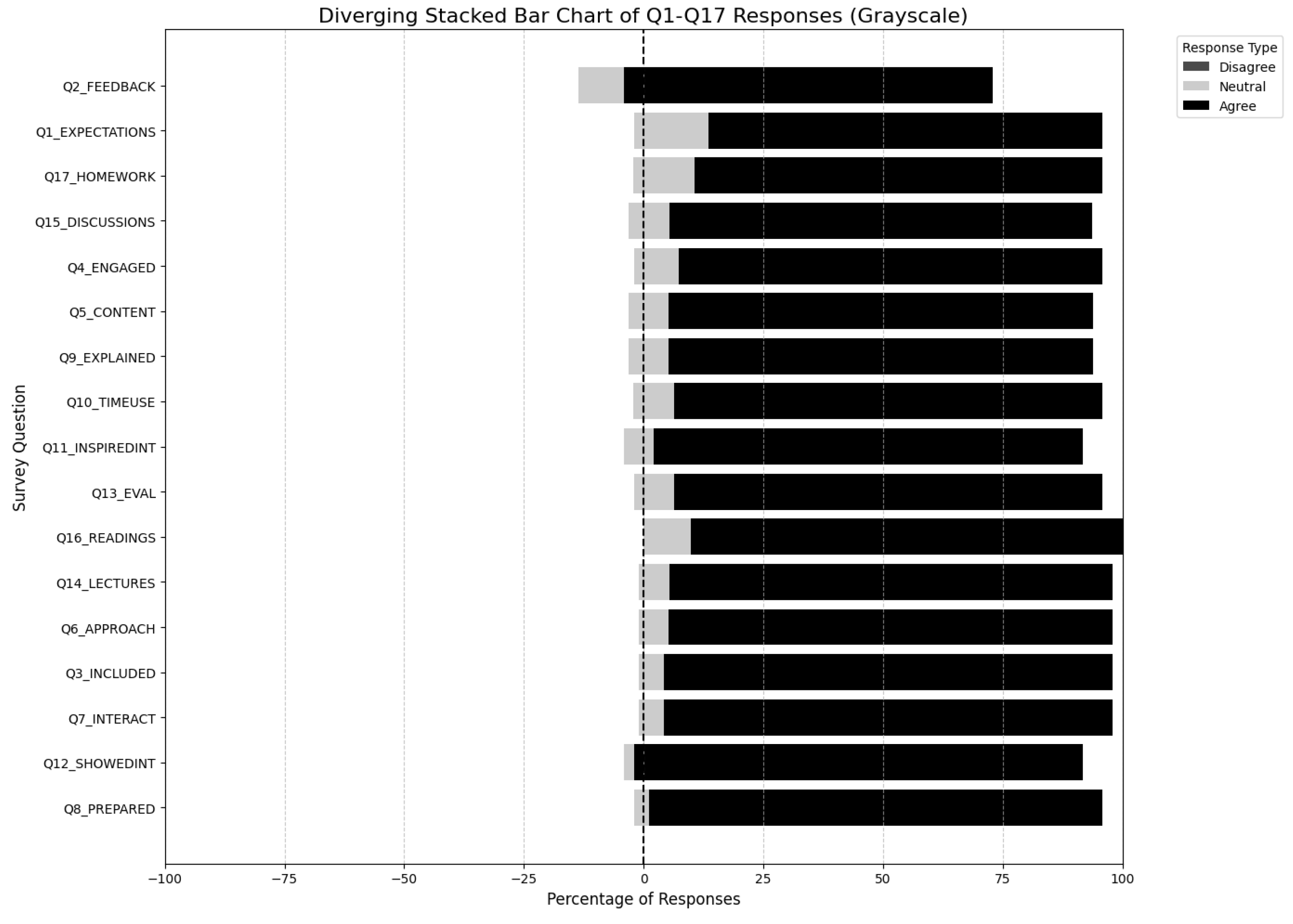
The figure below displays the distribution of responses for each survey item using a diverging stacked bar format. Percentages of disagreement (1–2) are shown to the left in red, neutral responses (3) are centered in beige, and agreement (4–5) appears to the right in green. Items are ordered by their mean score, allowing for quick identification of the most and least endorsed statements. The visualization highlights the strong positive skew across most items, with minimal disagreement and a small proportion of neutral responses.
Figure A1.
Diverging stacked bar chart of Likert responses.
References
- Alim, H. S., & Haupt, B. M. (2017). Critical language awareness and the politics of language. In S. L. Makoni, & A. Pennycook (Eds.), Disinventing and reconstituting languages (pp. 205–218). Multilingual Matters. [Google Scholar]
- Bearse, C., & de Jong, E. J. (2008). Cultural and linguistic investment: Adolescents in a secondary two-way immersion program. Equity & Excellence in Education, 41(3), 325–340. [Google Scholar] [CrossRef] [Scilit]
- Bucholtz, M., Casillas, D. I., & Lee, S. (2017). Beyond empowerment: Accompaniment and sociolinguistic justice in a youth research program. Language, 93(4), e224–e259. [Google Scholar] [CrossRef] [Scilit]
- Creswell, J. W., & Plano Clark, V. L. (2018). Designing and conducting mixed methods research (3rd ed.). SAGE Publications. [Google Scholar]
- Franco, M., & Patrick, S. K. (2023). State teacher shortages: Teaching positions left vacant or filled by teachers without full certification. The State. [Google Scholar]
- Genesee, F., & Lambert, W. E. (1983). Trilingual education for majority-language children. Child Development, 54, 105–114. [Google Scholar] [CrossRef]
- Gorski, P. (2019). Avoiding racial equity detours. Educational Leadership, 76(7), 56–61. [Google Scholar]
- Greene, J. C. (2007). Mixed methods in social inquiry. Jossey-Bass. [Google Scholar]
- Guerrero, M. D., & Lachance, J. R. (2018). National dual language education teacher preparation standards (NDLETPS). Dual Language Education of New Mexico. Available online: https://img1.wsimg.com/blobby/go/a1d311f9-ccee-43e7-bca6-e9679d0f2d70/downloads/NDLETPS.FALL2020.pdf?ver=1673016307892 (accessed on 11 August 2025).
- Guskey, T. R. (2002). Professional development and teacher change. Teachers and Teaching: Theory and Practice, 8(3), 381–391. [Google Scholar] [CrossRef] [Scilit]
- Kirkpatrick, D. L., & Kirkpatrick, J. D. (2006). Evaluating training programs: The four levels (3rd ed.). Berrett-Koehler Publishers. [Google Scholar]
- Ladson-Billings, G. (1994). The dreamkeepers: Successful teachers of African American children. Jossey-Bass. [Google Scholar]
- Lindholm-Leary, K. (2012). Success and challenges in dual language education. Theory Into Practice, 51(4), 256–262. Available online: https://eric.ed.gov/?id=EJ986201 (accessed on 15 July 2025). [CrossRef] [Scilit]
- Lindholm-Leary, K. J. (2001). Chapter 11. Student outcomes in reading and literacy: Standardized achievement tests vs. alternative assessment. In Dual language education (pp. 234–246). Multilingual Matters. [Google Scholar] [CrossRef] [Scilit]
- Marian, V., Shook, A., & Schroeder, S. R. (2013). Bilingual two-way immersion programs benefit academic achievement. Bilingual Research Journal, 36(2), 167–186. [Google Scholar] [CrossRef] [Scilit] [PubMed]
- Moll, L. C., & González, N. (1994). Lessons from research with language-minority children. Journal of Reading Behavior, 26(4), 439–456. [Google Scholar] [CrossRef] [Scilit]
- Paris, D. (2012). Culturally sustaining pedagogy: A needed change in stance, terminology, and practice. Educational Researcher, 41(3), 93–97. [Google Scholar] [CrossRef] [Scilit]
- Saldaña, J. (2016). The coding manual for qualitative researchers (3rd ed.). SAGE Publications. [Google Scholar]
- Serafini, E. J., Rozell, N., & Winsler, A. (2020). Academic and English language outcomes for DLLs as a function of school bilingual education model: The role of two-way immersion and home language support. International Journal of Bilingual Education and Bilingualism, 25(2), 552–570. [Google Scholar] [CrossRef] [Scilit]
- Steele, J. L., Slater, R. O., Zamarro, G., Miller, T., Li, J., Burkhauser, S., & Bacon, M. (2017). Effects of dual-language immersion programs on student achievement: Evidence from lottery data. American Educational Research Journal, 54, 282S–306S. [Google Scholar] [CrossRef] [Scilit]
- Swain, M., & Lapkin, S. (1991). Additive bilingualism and French immersion education: The roles of language proficiency and literacy. In A. G. Reynolds (Ed.), Bilingualism, multiculturalism, and second language learning: The McGill conference in honour of Wallace E. Lambert (pp. 203–216). Lawrence Erlbaum Associates, Inc. [Google Scholar]
- Tschannen-Moran, M., & Hoy, A. W. (2001). Teacher efficacy: Capturing an elusive construct. Teaching and Teacher Education, 17(7), 783–805. [Google Scholar] [CrossRef] [Scilit]
- Valentino, R. A., & Reardon, S. F. (2015). Effectiveness of four instructional programs designed to serve english learners: Variation by ethnicity and initial english proficiency. Educational Evaluation and Policy Analysis, 37(4), 612–637. [Google Scholar] [CrossRef] [Scilit]

Disclaimer/Publisher’s Note: The statements, opinions and data contained in all publications are solely those of the individual author(s) and contributor(s) and not of MDPI and/or the editor(s). MDPI and/or the editor(s) disclaim responsibility for any injury to people or property resulting from any ideas, methods, instructions or products referred to in the content. |
© 2026 by the authors. Licensee MDPI, Basel, Switzerland. This article is an open access article distributed under the terms and conditions of the Creative Commons Attribution (CC BY) license.