Review

AI in Indian Education: Opportunities, Challenges, and Emerging Paths in the Global South
by
Rashmi Gujrati
1,
Cemalettin Hatipoglu
2,
Hayri Uygun
3,
Carlos Antonio da Silva Carvalho
4,
Bruno Santos Cezario
5,
Patrícia Bilotta
5,
Patrícia Maria Dusek
5,
Danielle Pereira Vieira
6 and
André Luis Azevedo Guedes
5,*
1
Management Department, Ludhiana Group of Colleges, Ludhiana 142021, India
2
Department of Management Information System, Ömer Seyfettin Faculty of Applied Sciences, Bandırma Onyedi Eylül University, Bandırma 10250, Türkiye
3
Tourism and Hotel Management, Ardeşen Vocational School, Recep Tayyip Erdogan University, Rize 53400, Türkiye
4
Administration Department, Centro Universitário de Valença (UNIFAA), Valença 27600-000, Brazil
5
Postgraduate Program in Local Development—PPGDL, Centro Universitário Augusto Motta (UNISUAM), Rio de Janeiro 21041-020, Brazil
6
Department of Biosciences Applied to Health, Institute of Medical Sciences, Multidisciplinary Center UFRJ Macaé, Federal University of Rio de Janeiro, Macaé 27930-560, Brazil
*
Author to whom correspondence should be addressed.
Educ. Sci. 2026, 16(2), 179; https://doi.org/10.3390/educsci16020179
Submission received: 29 October 2025 / Revised: 1 January 2026 / Accepted: 5 January 2026 / Published: 23 January 2026

Abstract

Despite the growing recognition of Artificial Intelligence (AI)’s potential for global education, the literature lacks strategic analyses on how to maximize personalized learning and ensure equitable access within the vast and diverse Indian educational system. The objective of this study is to analyze this strategic integration of AI into the Indian educational system, focusing on maximizing personalized learning and ensuring equitable access across diverse socioeconomic contexts, while evaluating current initiatives and the relevance of reporting guidelines, such as the use of Self-Sovereign Identity (SSI). The methodology employed bibliographic and documentary research, alongside the analysis of governmental and sectoral policies. The results indicate that the sustainable implementation of AI is critically dependent on the mitigation of algorithmic bias and the rigorous assurance of data privacy. In conclusion, to balance technological innovation with human-centered pedagogical approaches, maintaining the educator’s fundamental role and fostering collaboration among stakeholders for responsible governance are essential.

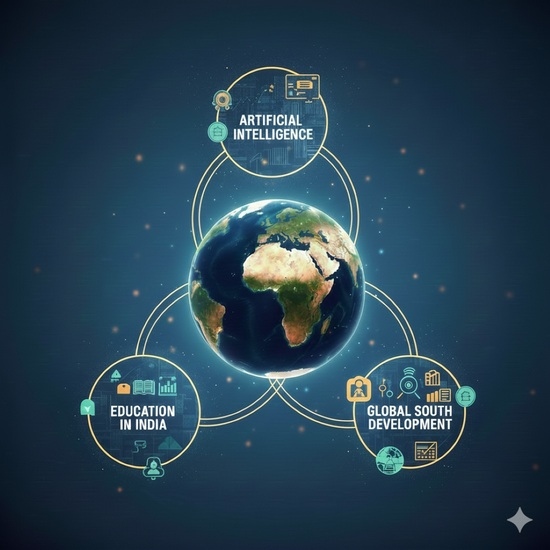
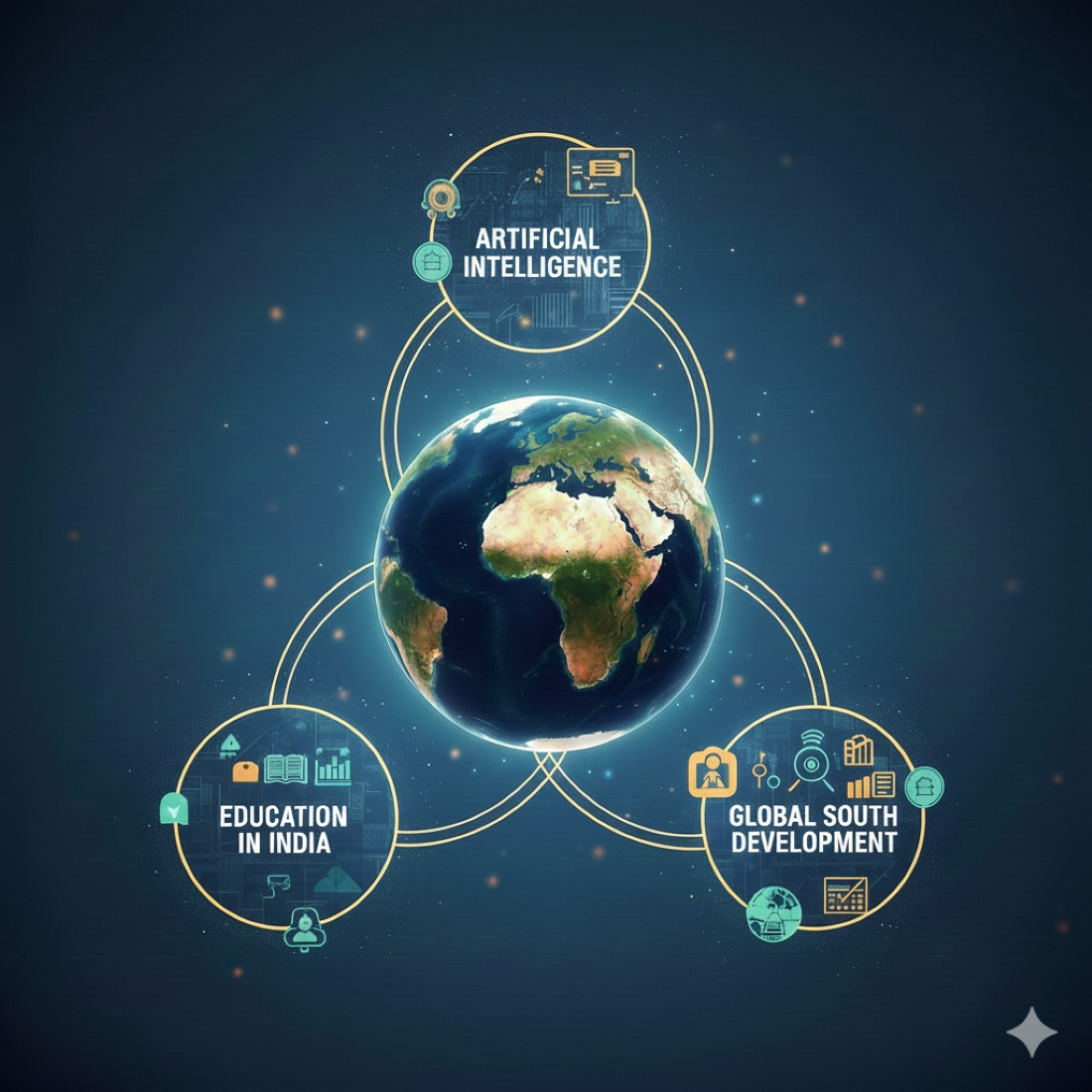
Graphical Abstract

1. Introduction

The rapid progression of Artificial Intelligence (AI) has created both excitement and apprehension about its potential to reshape various sectors. AI, as a field of computer science, has evolved significantly since its inception, moving from theoretical models to complex systems capable of learning, problem-solving, and decision-making. Emphasizing the core principles can help the audience feel more confident and understand AI’s foundation. The fundamental principles of AI involve developing algorithms that can process data, identify patterns, and simulate human cognitive functions. Recent advances in machine learning, deep learning, and generative models have accelerated this transformation, enabling applications with previously unimaginable capabilities (Chen et al., 2020; Zhai et al., 2021).
Several authors highlight that the application of AI in education has been consolidating as a dynamic field, marked by technical advances and ethical debates. AI improves the personalization of teaching and the monitoring of learning, but it involves risks related to privacy and access (Chen et al., 2020; Zhai et al., 2021). Organizations in general sectors use AI for automation, complex data analysis, and predictive modeling. In education, this manifests through personalized educational experiences, engaging measurement tools, and innovative tutoring methods. Azzam and Charles (2024) and C. K. Y. Chan and Tsi (2023) argue that AI should support teaching work, not replace it, and its adoption requires ethical principles, inclusive policies (Souza et al., 2024), and well-founded pedagogical strategies.
Among the main reasons for challenges in AI integration are technological lag, limited investment, and inequalities between urban and rural areas. Bulut et al. (2024) observe that while intelligent algorithms improve assessments, they must incorporate ethical considerations to prevent bias (Raftopoulos et al., 2025). Kamalov et al. (2025) consider AI a transformative force in pedagogy and organization, and Mahmoud and Sørensen (2024) highlight that intelligent systems support personalized teaching, provided ethical issues are addressed.
Shalini and Tewari (2020) highlight the challenges and opportunities of AI in promoting a more inclusive and sustainable education, such as reducing inequalities and using resources more efficiently in the long term. Al-Zahrani (2024) warns against excessive expectations, while Cheng (2023) advocates critical analysis of social and cognitive impacts. Johnson and Lee (2025) emphasize that actively mitigating algorithmic bias is essential to prevent disparities from worsening. Roy and Swargiary (2024) provide empirical evidence on both the benefits and limitations of AI integration across various contexts.
Although the implementation of AI promises to offer personalized educational experiences, engaging measurement tools, and innovative tutoring methods, it also raises critical ethical considerations that must be carefully addressed (Mahmoud & Sørensen, 2024; Lund et al., 2026). Emphasizing these issues helps the audience feel responsible and motivated to contribute to ethical AI integration. These issues include data security, data encryption, equitable access to AI-based educational resources, and the acquisition of professional character and competence in an AI-augmented learning environment. One way to protect students is through Self-Sovereign Identity (SSI) using encryption (W. Chan et al., 2025; Smith, 2025). An additional point is the need to observe the use of curated data and conduct bias auditing, as AI trained on biased data can exacerbate historical injustices. Addressing these challenges is crucial to distribute the benefits of AI equitably and to ensure that the technology integrates in a way that enhances, rather than replaces, the essential role of human judgment in the educational process (Johnson & Lee, 2025). By examining the current landscape of AI integration in Indian education, this research aims to provide a comprehensive understanding of the opportunities, challenges, and prospects of this transformative technology. The study also explores the roles of governmental policies and industry collaborations in shaping the successful and sustainable adoption of AI in the Indian education system and in developing countries of the Global South (Agarwal & Vij, 2024).
The integration of AI into the Indian educational system, based on international best practices in AI education, has the potential to revolutionize the learning experience for students, increase teacher efficiency, and streamline administrative tasks in educational institutions (Agarwal & Vij, 2024; Shalini & Tewari, 2020; Sihag & Vibha, 2024). Highlighting this transformative potential can inspire confidence in the audience about AI’s positive impact. This research delves into the transformative potential of AI to revolutionize the Indian education system, examining its impact on key stakeholders, including students, teachers, and administrators.

2. Materials and Methods

This study uses a multifaceted analytical framework to evaluate AI implementation in the Indian education sector, emphasizing the synergy between personalized learning and ethical standards. Methodological priority is given to assessing data security protocols—specifically Self-Sovereign Identity (SSI) and algorithmic bias auditing—to secure equitable access and professional integrity. Furthermore, the research examines the roles of government policies and industry collaborations in fostering sustainable technological deployment. By scrutinizing the impacts on students, educators, and administrators, the investigation determines how AI-augmented tools optimize administrative efficiency while preserving the primacy of human judgment. This approach provides a rigorous socio-technical assessment of the challenges and transformative potential unique to education systems across the Global South.
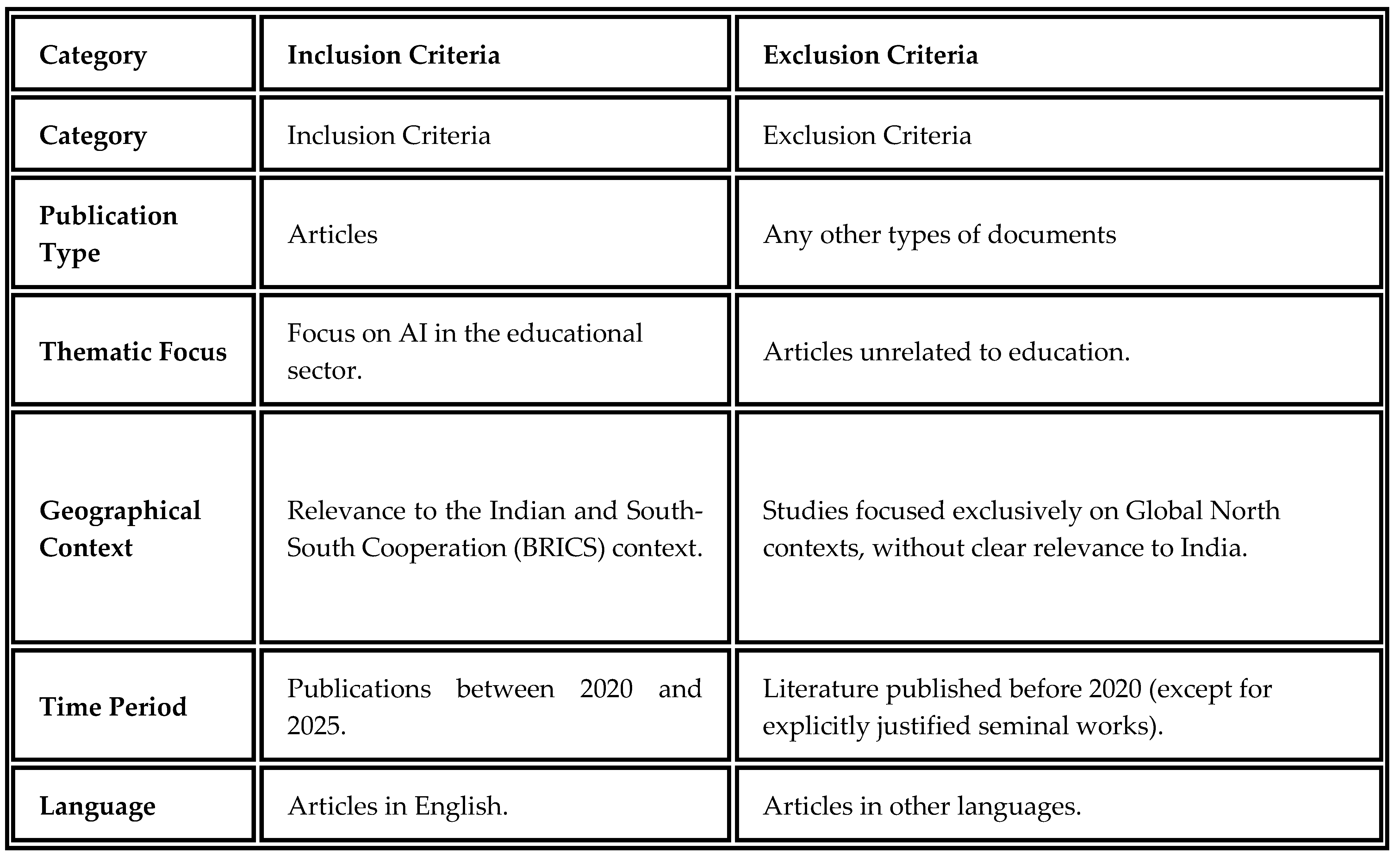
The selection of literature followed the parameters detailed in Figure 1, prioritizing English-language articles published between 2020 and 2025 that focus on AI within the Indian and BRICS educational contexts. Conversely, documents unrelated to education, studies focused exclusively on the Global North, and publications preceding 2020—except for justified seminal works—were excluded. This framework confirms that the study maintains strict geographical and thematic rigor.
Their widespread recognition underscores the importance of choosing these two databases, giving the audience confidence in the thoroughness and credibility of the research process. Selecting Scopus and Web of Science ensures comprehensive coverage of peer-reviewed journals and high-impact publications, providing a robust and high-quality data sample that minimizes relevant article loss and emphasizes the rigor of the methodology.
An initial search of the Scopus and Web of Science databases yielded 312 records. After removing duplicate entries, 247 unique records remained, which were screened based on titles and abstracts. This screening process led to the selection of 94 articles for full-text review. Applying the predefined inclusion and exclusion criteria resulted in 27 studies being deemed eligible and included in the final narrative synthesis. An additional seven articles were incorporated, covering methodological construction (Booth et al., 1995; Radinger-Peer et al., 2021; Van Eck & Waltman, 2023), data privacy, algorithmic bias, and ethical principles (Souza et al., 2024; Cezario et al., 2025), along with reports from Allied Market Research (2025) and IBEF (2025), totaling 34 references.
Following the identification and full-text review of eligible materials, we organized key information into substantive concepts aligned with the study’s objectives. The central categories included the analysis of AI integration, ethical challenges (including biases), policy frameworks guiding implementation, and evidence of effectiveness in learning outcomes. The knowledge synthesis was conducted using a qualitative narrative approach, focused on highlighting convergent findings and generating insights directly applicable to the educational contexts of India and the Global South. This qualitative analysis was performed manually, utilizing structured summaries and comparative tables, without recourse to specialized qualitative analysis software.
Complementarily, the VOSviewer software, version 1.6.20 (Van Eck & Waltman, 2023), was employed for a keyword analysis of the literature, providing a structural and bibliometric overview of the thematic distribution of the articles and supporting the contextualization of the research corpus. In VOSviewer, the option “create a map based on bibliographic data” was selected, followed by “read data from reference manager files”, inserting the file in “ris” format. The settings “co-occurrence,” “keywords,” and “full counting” were selected for the keyword co-occurrence analysis.
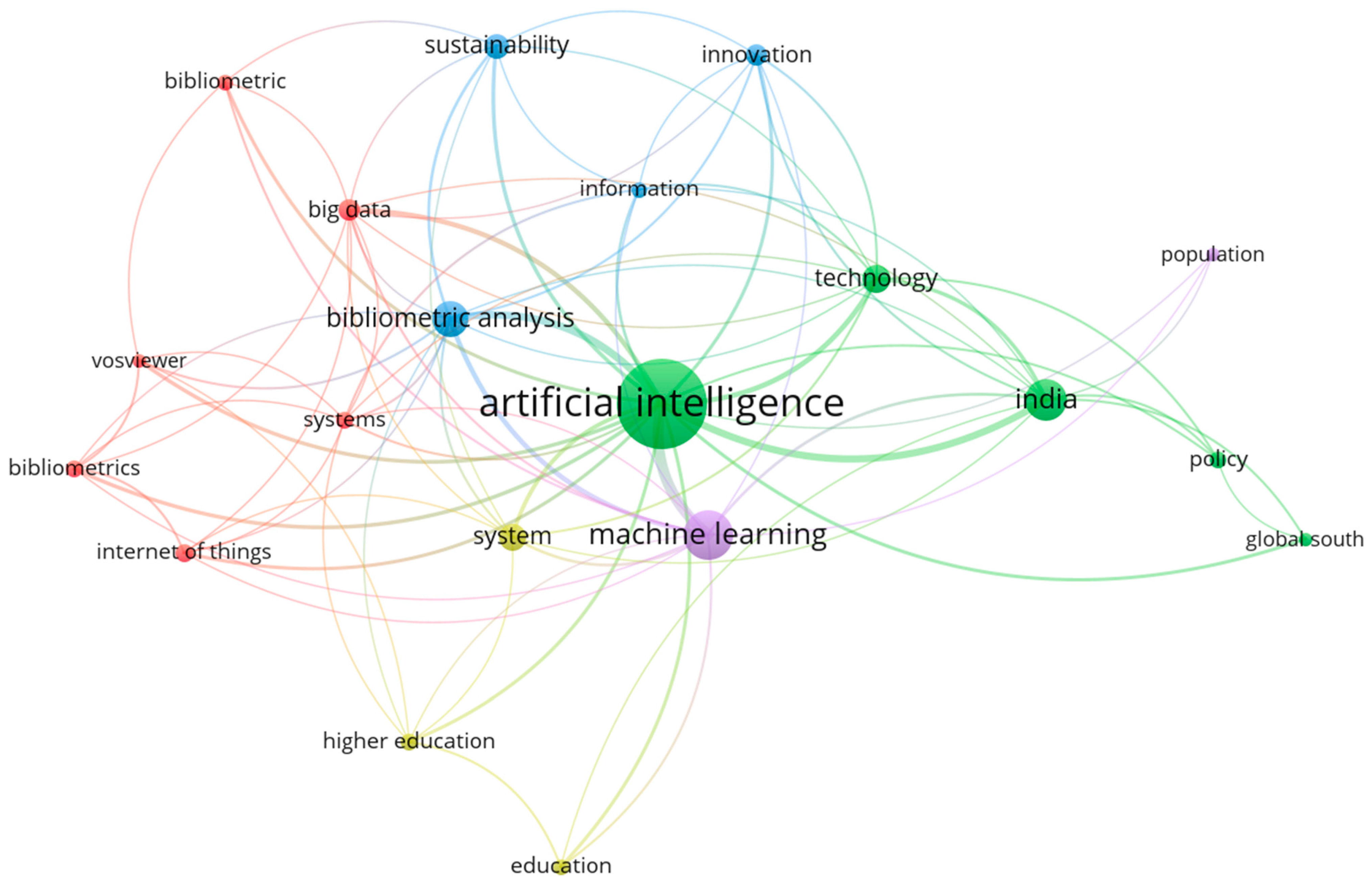
In Figure 2, the clusters show how research on Artificial Intelligence in India is organized around different interconnected themes. One group focuses on the technological foundations of AI, bringing together terms such as machine learning, neural networks, and prediction. Other highlights applications related to education, higher education, public policy, and technology adoption. Some clusters reflect analytical and data-centric approaches, such as big data, bibliometric analysis, and the Internet of Things, as well as areas focused on health and diagnostics, highlighting AI’s contribution to medical research in the Indian scientific landscape. The co-occurrence of terms such as “India,” “education,” and “technology adoption” among the clusters indicates the intersection between the debates promoted by the publications.
The study consulted selected policy and sectoral reports (such as Allied Market Research, IBEF, and institutional documents) exclusively for analytical contextualization. These materials did not form part of the formal systematic search conducted in academic databases and were not included in the corpus of the review.

3. Results

3.1. AI and Education

Chen et al. (2020) provided a historical perspective on AI’s evolution in education. It covers various AI applications, including machine-learning-based adaptive learning platforms, and presents case studies of AI implementation across different educational settings. Zhai et al. (2021) propose an extensive taxonomy of AI applications in education, emphasizing the emergence of multimodal learning analytics and their use to support language acquisition and STEM education.
Although global trends highlight AI’s role in education, Indian-specific studies reveal that unique institutional and socioeconomic factors influence AI adoption. Sihag and Vibha (2024) emphasize that AI tools for personalization, performance monitoring, and pedagogical support are practical only when Indian institutions address structural gaps in teacher training, digital infrastructure, and resource availability, making the discussion more relevant to local contexts.
The literature also suggests that Indian challenges related to access, connectivity, and technological infrastructure make the debate on ethics and governance even more relevant. Agarwal and Vij (2024) observe that schools and universities in less favored regions face limitations in both the availability of devices and the stability of digital infrastructure, which can widen inequalities when AI solutions depend on resources unavailable to some students. These authors reinforce that the discussion of algorithmic transparency, data security, and human oversight must be situated within a context where technological adoption coexists with profound institutional asymmetries.
Perez-Ortiz et al. (2021) explored how AI can make education more approachable and comprehensive. It emphasizes AI-powered open educational resources (OER) and adaptive learning technologies that cater to diverse learning needs. The paper also discusses socio-technical challenges in AI-driven education. Shaik et al. (2023) focused on AI-powered NLP tools for analyzing student feedback and assessments. It discusses the potential of NLP in improving educational evaluations while addressing challenges such as language bias and accuracy.
It is especially critical given India’s linguistic diversity, which poses challenges to inclusive education. Shaik et al. (2023) suggest that NLP tools tailored to multilingual contexts can support students at Indian institutions, where switching between mother tongues and English is standard. Implementing such technologies could reduce linguistic barriers and promote broader student participation, offering practical solutions for policymakers and educators.
Agarwal and Vij (2024) evaluated the impact of AI on the Indian education system, highlighting key opportunities such as personalized learning and automation of administrative tasks. It also highlights challenges, including educators’ resistance to AI, ethical concerns, particularly data privacy and bias, and how these issues can hinder implementation. The research suggests policy interventions to facilitate AI integration in Indian education, emphasizing the need for practical solutions to the ethical challenges it raises.
Addressing ethical concerns, such as bias and fairness, in AI assessments shows respect for researchers and professionals committed to responsible AI development.
To address these diverse challenges, education systems are encouraged to develop context-specific guidelines and regulatory frameworks that articulate how accountability, transparency, and equity will be maintained in the deployment of AI technologies. For example, establishing clear standards for data privacy, bias mitigation, and decision-making processes can help policymakers ensure responsible AI use. Ultimately, this perspective reinforces that AI should function as a tool of empowerment—comparable to an electric bicycle that amplifies human capabilities without relinquishing control—rather than as an autonomous system that disengages educators from meaningful instructional decisions (Cardona et al., 2023).

3.2. Adoption and Implementation of AI in the Indian Education Sector

The incorporation of Artificial Intelligence in Indian educational institutions is steadily gaining momentum (Roy & Swargiary, 2024), with a growing number of schools, colleges, and universities adopting AI-powered technologies and solutions. Recent studies indicate that the adoption of AI in the Indian education sector has been driven by its potential benefits, such as customized learning experiences, data-driven assessments, and enhanced administrative efficiency (Chen et al., 2020).
According to Allied Market Research (2025), the Indian AI in education market has shown rapid growth in recent years. IBEF (2025) supported this trend, highlighting a significant expansion in India’s EdTech user base and suggesting sustained growth in adoption. However, Agarwal and Vij (2024) emphasize that only a small portion of schools currently possess adequate infrastructure for large-scale AI integration, reflecting persistent disparities in readiness. Several studies report that Indian educators recognize AI’s potential to improve administrative efficiency, while a considerable share expresses concerns about privacy and data security.
Moreover, the Indian government’s National Education Policy 2020 has placed a strong emphasis on the insertion of technology, including AI, to improve the quality and accessibility of education (Muralidharan et al., 2022). Several government initiatives, such as the National Mission on Education through Information and Communication Technology and the Atal Innovation Mission, are actively promoting the adoption of AI-based solutions in educational institutions across the country (Kamalov et al., 2025).
Despite the flourishing of AI in the Indian education system, the level of its implementation varies significantly across regions, socioeconomic groups, and types of educational institutions (Affonso et al., 2024). Factors such as digital infrastructure, teacher training, and funding availability play a significant role in determining the pace and scale of AI integration across India’s diverse educational landscape (Dey, 2024).
Additional research has highlighted that AI adoption in India is not limited to large urban institutions but is gradually extending to smaller colleges and regional schools as digital infrastructure improves (Sihag & Vibha, 2024). According to Shalini and Tewari (2020), initiatives aimed at sustainable education are increasingly utilizing AI tools to address disparities in access and learning outcomes across diverse socioeconomic groups.
Furthermore, the integration of natural language processing technologies and data-driven feedback systems has been identified as a significant factor in increasing student engagement and supporting formative assessment practices (Shaik et al., 2023). Mahmoud and Sørensen (2024) highlight the growing role of AI-based learning analytics in predicting learning trajectories and enabling early interventions to support at-risk students. Perez-Ortiz et al. (2021) note that AI-based learning companions are gaining attention as scalable solutions to promote lifelong learning and continuous skill development in India’s evolving educational landscape.
Recent reviews also highlight that while AI promises substantial improvements in content delivery and performance monitoring, its implementation requires robust teacher training programs to build capacity and trust among educators (Azzam & Charles, 2024). Furthermore, Bulut et al. (2024) emphasize the importance of addressing ethical issues related to bias and transparency, which continue to pose significant obstacles as AI becomes a crucial component of fundamental educational practices (Raftopoulos et al., 2025; Johnson & Lee, 2025). Al-Zahrani (2024) argues that the rapid proliferation of AI technologies must be accompanied by critical evaluation frameworks to distinguish genuine educational innovation from superficial technology adoption, ensuring that investments produce meaningful pedagogical outcomes.

3.3. Perspectives on AI Integration in Indian Education

The performance and status of AI integration in the Indian education system vary considerably among stakeholders, including students, teachers, and school administrators. From the students’ perspective, adopting AI-powered learning solutions offers the potential for personalized, adaptive educational experiences. Students may benefit from AI-driven tutoring systems that can tailor content and pacing to individual learning needs, as well as AI-enabled assessments that provide real-time feedback and adjust difficulty based on student performance (Dey, 2024). However, some students may also face challenges in adapting to AI-integrated learning environments, particularly those from low-resource or underserved communities who may lack access to necessary digital infrastructure and devices (Harry & Sayudin, 2023).
Teachers, on the other hand, may perceive both opportunities and challenges in the aggregation of AI. While AI-powered tools can automate specific administrative tasks and provide valuable data-driven insights to inform instructional practices, there are also concerns about displacing teachers’ expertise and the need for extensive training to effectively use AI technologies in the classroom (Al-Zahrani, 2024). Teachers may also grapple with the ethical implications of AI, such as protecting sensitive information and mitigating the risk of algorithmic bias in educational decision-making (C. K. Y. Chan & Tsi, 2023; Lund et al., 2026).
School administrators may recognize the potential advantages of increased operational efficiency and data-driven decision-making, and they are responsible for implementing AI and monitoring its integration (Cheng, 2023).
However, they also face challenges in securing adequate funding, providing necessary infrastructure, and ensuring equitable access to AI-enabled educational resources across all student demographics within their institutions (Slimi & Villarejo Carballido, 2023).
Several scholars have noted that a mix of optimism and apprehension shapes perceptions of AI integration in Indian education. Sihag and Vibha (2024) emphasize that many educators in India view AI as a catalyst for reforming outdated pedagogical practices and expanding access to quality learning materials, especially in underserved regions. At the same time, Agarwal and Vij (2024) report that teachers and administrators often express concerns about the scalability of AI solutions in institutions with limited technological infrastructure.
Empirical studies indicate diverse perspectives among educators and students regarding AI adoption. Sihag and Vibha (2024) report that many educators express optimism about AI-based teaching tools, although a noteworthy portion remains concerned about potential workforce implications. Roy and Swargiary (2024) report that students generally have positive experiences with AI-based assessments, although many teachers indicate that they still require additional training to use these technologies effectively.
Shalini and Tewari (2020) highlight that students generally perceive AI-enabled platforms as valuable tools for bridging learning gaps and receiving personalized support. However, disparities in digital literacy may limit their practical use. According to Roy and Swargiary (2024), there is also a widespread belief among school leaders that AI can help streamline administrative processes and reduce educators’ workload, provided there is sufficient training and policy guidance.
Dey (2024) notes that policymakers in India are increasingly framing AI adoption as essential to align the education system with global standards. Nevertheless, there remains considerable debate over how to balance innovation with ethical safeguards. These perspectives reflect the complex interplay of opportunities, constraints, and cultural attitudes that shape the integration of AI into the Indian education landscape.

3.4. Generative AI in Education

In countries where social and cultural differences are profound, like India, generative AI can help bridge many gaps. It can benefit diverse stakeholder groups in the education system, including parents, teachers, and students.
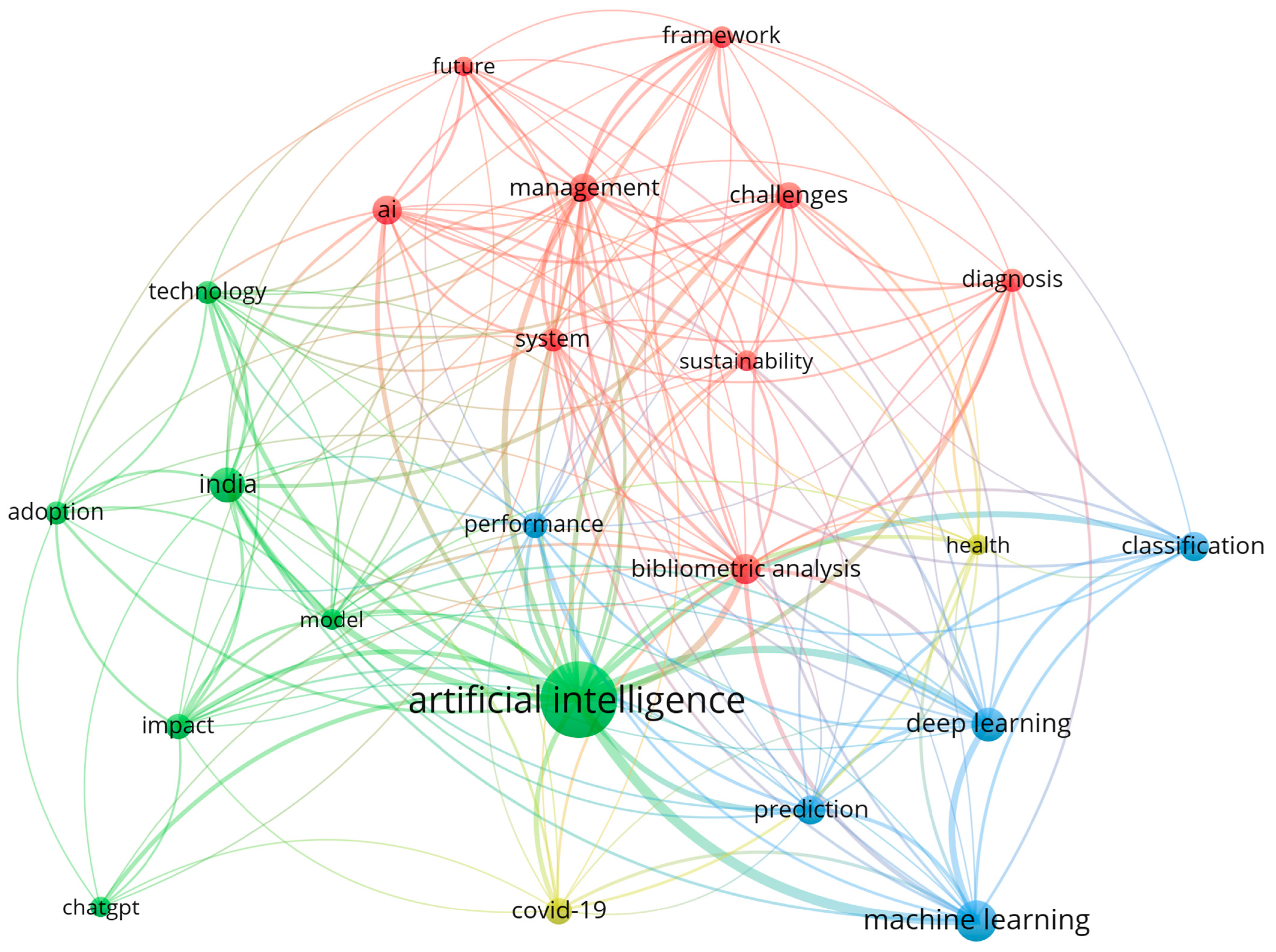
The integration of the bibliometric analysis with the article’s initial premises reinforces the relevance and robustness of the topic. The research demonstrates that Artificial Intelligence acts as a central hub of innovation, already firmly established in India and in key sectors such as education. It is clear, therefore, that this topic is not mere speculation, but rather a proposal to expand and consolidate an already emerging knowledge ecosystem.
Corroborating this foundation, Figure 3 presents the keyword co-occurrence network (revealing 20 items distributed across 5 clusters), emphasizing the relevance of Artificial Intelligence in Indian Education as an established research focus. Cluster 3 (Light Blue) isolates the primary application sector, gathering terms such as “education” and “higher education”, which is intimately connected to Cluster 2 (Green), serving as the geo-political-technological core of the research (“artificial intelligence”, “India”, “global south”, and “policy”). This strong interconnection confirms that the study of AI in the Indian context is intrinsically linked to discussions of public policy and South-South Cooperation, thereby validating the proposed scope of the analysis. Furthermore, the keyword “machine learning” (Cluster 4) acts as a central node with strong ties to the “education” sector; this enabling technology predominantly drives the applications discussed in the literature, reinforcing the article’s focus on pedagogical and technological transformations.
According to authors such as Agarwal and Vij (2024), IBEF (2025), Shalini and Tewari (2020), and Sihag and Vibha (2024), “Generative AI can assist teachers in adhering to the rules for effective instruction”. By consulting a variety of carefully selected texts and professional insights, a generative AI-based virtual assistant can help a teacher create original and captivating lesson plans by offering strategies that might be effective in the classroom. Without having to spend hours going over several reading materials. The bibliographic research and scientific findings highlight the following points:
  • This technology can adapt to each child’s specific needs; it can be very beneficial in early childhood education, as each child learns differently and at different speeds. It is especially true when a caring adult (teacher, parent, or community member) is present. It can help educate fundamental language skills and build foundational literacy and numeracy.
  • In addition to helping with text-to-speech, speech-to-text, and speech-to-speech translations, generative AI can adjust the translation’s cultural background and tone. It can contribute to a more inclusive education for children from different sociocultural and language backgrounds.
  • Generative AI can assist in developing smartphone virtual labs, particularly for college and senior high school students. Students from marginalized backgrounds who may not have access to a real lab to conduct science experiments or acquire vocational skills often find this very helpful. AI can assist individuals in comprehending these abilities and ideas.
  • In addition to answering students’ questions and concerns, virtual assistants can support the development of critical thinking, creativity, problem-solving, and communication skills. How the trainers teach the virtual assistant to help pupils acquire these abilities may affect the outcome. Students can type straight into the virtual assistant, create and scan content, or converse with it in their own tongue. Similarly to this, parents, instructors, and students can customize a virtual assistant-based school app to track assignments, attendance, results, and other information.
Additionally, generative AI can enhance the security and management of student data. When integrated with self-sovereign identity systems and encryption, it can manage electronic documents, such as digital student IDs, ensuring that student records and credentials are verifiable, portable, and protected from unauthorized access, addressing one of the main ethical concerns surrounding AI adoption (W. Chan et al., 2025; Smith, 2025).
It is important to highlight that AI aids are most effective when incorporated into rich, language-based, and playful interactions, rather than serving as substitutes for adult communication.

Self-Sovereign Identity (SSI): A Strategic Framework for Ethical and Viable AI Integration

The concepts of Self-Sovereign Identity (SSI) and encrypted digital wallets offer vital solutions to mitigate ethical risks (e.g., data security and privacy) arising from the integration of AI in education, especially in India, according to the literature. However, their viability depends on a strategic approach to the identified challenges.
The W3C’s Verifiable Credentials (VCs) and Decentralized Identifiers (DIDs) are designed to promote interoperability with existing identity and education systems, allowing credentials (such as digital student IDs and e-portfolios) to be issued and verified by any trusted party (HEIs/School Boards).
The article suggests that SSI, when integrated with cryptography (W. Chan et al., 2025; Smith, 2025), can improve the security and management of student data by enabling the use of electronic documents such as digital student IDs and e-portfolios, ensuring that records are verifiable, portable, and protected from unauthorized access. This emphasis on portability aims to reassure educators and researchers about the system’s flexibility and ease of use.
Governance (issuance/verification/revocation) requires Issuers (educational institutions) and Verifiers (employers, other schools) to operate within a framework of trust governed by clear rules, in which individuals hold credentials in a secure digital wallet. This clarity helps educators and administrators feel confident in the system’s reliability.
The ease of reissuing VCs mitigates failure modes (such as key loss), and the risk of large-scale consent and re-identification is addressed by the principle of selective disclosure (revealing only the necessary data). SSI is presented as important for protecting sensitive information, addressing one of the main ethical concerns surrounding the adoption of AI.
In the Indian education ecosystem, SSI is best conceived as a complementary layer interoperable with existing identification infrastructures, enhancing portability and user control without replacing foundational systems (W. Chan et al., 2025; Smith, 2025).
Finally, implementing low-cost public/semi-public SSI systems tailored to India’s mobile environment can address the cost and capacity challenges in resource-limited contexts, making the audience feel their efforts are crucial for equitable access and that their support can lead to meaningful change, ensuring that data protection does not become a new factor in inequality in access to educational technology.
The literature highlights a specific research gap regarding the feasibility and effectiveness of cryptographically secure SSI and digital school IDs in India, especially as their adoption increases across countries in the Global South to reduce data privacy risks and promote equitable access, underscoring the need for further investigation.

3.5. Evaluating the Effectiveness of AI-Driven Educational Interventions in Improving Student Learning Outcomes

The incorporation of AI-powered technologies in the Indian education system has shown promising results in enhancing student learning outcomes. Several studies have reported positive impacts of AI-driven educational interventions, such as individualized learning platforms, adaptive evaluation, and effective coaching systems (Kamalov et al., 2025).
Students may benefit from personalized learning experiences tailored to their unique requirements and learning preferences thanks to these AI-enabled technologies (Zhai et al., 2021). AI-powered solutions can help meet the diverse learning needs of students across the Indian educational system by evaluating student performance data and adjusting curricula, timing, and feedback accordingly (Dey, 2024).
Furthermore, AI-driven assessments can offer real-time feedback and insights to both students and teachers, enabling them to identify and address knowledge gaps more effectively. It can improve academic performance by providing targeted support and interventions tailored to individual strengths and weaknesses (C. K. Y. Chan & Tsi, 2023).
However, the power of AI-driven educational intervention can vary depending on factors such as the quality of the AI algorithms, their integration with existing pedagogical practices, and the availability of necessary infrastructure and support (Shaik et al., 2023). Careful implementation and ongoing evaluation are pivotal to ensuring that AI-powered technologies effectively enhance student learning and help achieve desired educational outcomes.
Empirical studies have shown that AI-based educational interventions in India have contributed to notable improvements in learning outcomes, particularly in settings where limited resources constrained traditional teaching methods (Agarwal & Vij, 2024). Sihag and Vibha (2024) note that AI-based platforms have enabled more consistent formative assessments and targeted support, which many educators consider critical to meeting diverse student needs.
Roy and Swargiary (2024) highlight that adaptive learning tools have been practical in personalizing instruction and increasing student engagement, especially in subjects that require individualized practice. At the same time, Shalini and Tewari (2020) caution that the overall impact of AI solutions may be uneven, as disparities in infrastructure and teacher readiness continue to affect the consistency of implementation across regions.
Harry and Sayudin (2023) also document that intelligent tutoring systems increase student engagement and motivation, especially when combined with AI-driven content recommendation strategies.
Evidence suggests that AI interventions can lead to noticeable improvements in learning outcomes when integrated thoughtfully. Sihag and Vibha (2024) note that effective AI adoption can contribute to meaningful gains in student achievement over time. Roy and Swargiary (2024) also report that adaptive learning platforms have generally increased engagement among participating students. Additionally, Harry and Sayudin (2023) document case studies in which intelligent tutoring systems enhanced student engagement, highlighting the importance of solutions that complement existing pedagogical practices.
Dey (2024) emphasizes that while AI technologies hold promise for improving academic performance, their success depends on careful alignment with curriculum standards, adequate educator training, and sustained investments in digital capacity. These findings collectively suggest that in India, AI-driven engagement can transform learning experiences, but broader systemic and contextual factors closely link its effectiveness to real-world outcomes.
To synthesize the diverse perspectives identified in the reviewed literature, Table 1 categorizes the major thematic areas under which Artificial Intelligence has been examined in the Indian educational context. By grouping studies by common topics and organizing authors chronologically, this synthesis provides a consolidated view of how academic contributions have addressed the opportunities and constraints of AI integration. This overview facilitates a clearer understanding of the intersections between research findings and provides a ground for future research and policy considerations.
Adaptive and personalized learning systems demonstrate potential to support self-regulated learning by providing individualized learning pathways, real-time feedback, and interventions tailored to the specific needs of each student (Chen et al., 2020; Zhai et al., 2021; Dey, 2024; Mahmoud & Sørensen, 2024; Roy & Swargiary, 2024). By adjusting the pace, content, and assessment mechanisms based on student performance, these technologies allow learners to progressively take greater responsibility for their own educational process, while educators play a guiding and supportive role (Chen et al., 2020; Dey, 2024). In this way, the integration of AI solutions into the Indian education system not only promotes improvements in academic performance but also strengthens self-regulation and autonomy skills, important for continuous and personalized learning (Zhai et al., 2021; Mahmoud & Sørensen, 2024).
In the Indian education system, the integration of Artificial Intelligence presents both opportunities and challenges for careful analysis. On the one hand, AI-powered technologies can unlock a range of benefits, including individualized learning pathways, adaptive assessments, and enhanced administrative efficiency. However, implementing AI also raises critical ethical considerations, such as data security, ensuring equitable access to AI-driven resources, and redefining educators’ roles in an AI-augmented environment. Addressing these challenges is crucial to ensure that the system distributes the gains of AI equitably and facilitates the technology’s integration in a way that enhances, rather than replaces, the approaches with which studies have examined Artificial Intelligence in the Indian educational context.

4. Discussion

The findings of this research, synthesized from the academic literature, establish the critical implications of integrating Artificial Intelligence into the Indian educational system across three interconnected levels: political, institutional, and EdTech development.
The discussion begins with the urgent need for robust regulatory frameworks to manage the risks inherent in AI. The findings emphasize that AI success hinges on mitigating issues such as data privacy, security, and algorithmic bias. The literature reinforces the need for policymakers in India to establish clear guidelines that promote equity and inclusion in the adoption of AI-based solutions. Regarding concerns about bias and impartiality in AI-based educational assessment systems (Bulut et al., 2024; Raftopoulos et al., 2025), systematic audits and transparency are recommended.
The integration of AI must be carefully balanced to enhance, rather than replace, the human element. The study’s findings reinforce the “human in the loop” principle by indicating that, while AI systems can offer personalized learning experiences (Zhai et al., 2021) and modify curricula and feedback pacing, efficacy resides in the integration with existing pedagogical practices. The need for collaboration between administrators and educators is crucial for developing comprehensive training programs and support systems (Azzam & Charles, 2024) to ensure that teachers can utilize AI effectively. The discussion must therefore explore how we translate AI-based insights (Dey, 2024) into instructional decisions informed by human judgment, while preserving the educator’s essential role.
The findings directly impact the EdTech sector, which is an essential vector in this transition. The results emphasize that we must tailor the development of AI solutions to the specific requirements and challenges of the Indian educational system. It entails moving beyond standardized solutions, requiring companies to collaborate with stakeholders to create tools that are comprehensible, flexible, and respectful of the nation’s multilingual and multicultural environment (Agarwal & Vij, 2024). The effectiveness of AI-driven platforms, including the automation of administrative tasks and adaptive assessments (Yazdani & Darbani, 2023), depends directly on the quality of the algorithms, their integration with pedagogical practices, and the supporting infrastructure.
In summary, the successful transition of AI in India requires a collaborative and multifaceted approach. By addressing political, institutional, and industrial implications in a coordinated manner, stakeholders can leverage AI’s transformative potential to enhance educational outcomes and promote equity, while safeguarding the critical pedagogical role of instructors. The focus must be on careful implementation and continuous evaluation to ensure that AI acts as a tool for empowerment and inclusion.

5. Conclusions

This study investigated the transformative potential of Artificial Intelligence in the Indian educational system by analyzing its effects on students, instructors, and administrators. The findings, synthesized from academic literature, confirm that AI-based technologies offer significant opportunities to enhance teaching and facilitate differentiated learning. However, widespread adoption remains significantly limited by practical challenges, such as infrastructure and teacher training, and by ethical concerns, including data privacy, algorithmic bias, and equitable access, especially in resource-constrained contexts. Clarifying these challenges helps policymakers and educators better understand the barriers to implementation.
The research findings indicate that AI should be understood as a tool that enhances (rather than reduces) essential relational processes, such as secure teacher–student bonds and peer interactions, especially during early and middle childhood. In adolescents, it is important to consider identity formation and autonomy development, recognizing that monitoring performance or behaviour through AI can influence self-concept and motivation, and may pose risks such as labeling or the creation of rigid learning profiles. The incorporation of these considerations favors AI contributing not only to educational outcomes but also to socio-emotional development, which is fundamental for effective learning across all age groups.
A coordinated approach is imperative, as highlighted by the converging findings of this research. To foster a sense of shared purpose among policymakers, institutions, and EdTech developers, establishing transparent governance structures and inclusive strategies is essential. The implementation of systems such as SSI, the robust use of cryptography, and the adoption of secure electronic documents, such as digital school IDs (e-portfolios), are vital, given their growing adoption across countries in the Global South. These technologies (W. Chan et al., 2025; Smith, 2025) are important for protecting sensitive information and ensuring equitable distribution of AI benefits.
By highlighting AI’s potential to transform education (Cezario et al., 2025), India can inspire policymakers and researchers to see its role in creating a more accessible, inclusive, and high-quality educational system that meets societal needs. Future research should focus on longitudinal studies and empirical evaluations to build confidence in AI’s long-term impact across diverse settings. Specifically, there is an evident need for studies that explore the feasibility and effectiveness of implementing SSI and cryptographically secured digital school IDs within the Indian educational ecosystem, as proposed by W. Chan et al. (2025) and Smith (2025). These investigations should prioritize how such technologies can reduce data privacy risks and promote equitable access, thus addressing the needs of the Global South.

Author Contributions

Conceptualization, R.G. and A.L.A.G.; methodology, R.G., C.A.d.S.C., B.S.C., H.U., and D.P.V.; data curation, R.G., C.A.d.S.C., C.H., P.B., P.M.D. and A.L.A.G.; writing—original draft preparation, R.G., C.H., and A.L.A.G.; writing—review and editing, R.G., C.A.d.S.C., B.S.C., H.U., A.L.A.G., and D.P.V.; visualization, C.H., H.U., and D.P.V.; supervision, R.G., P.B., P.M.D. and A.L.A.G. All authors have read and agreed to the published version of the manuscript.

Funding

This research received no external funding that could have influenced its outcome.

Institutional Review Board Statement

Not applicable.

Informed Consent Statement

Not applicable.

Data Availability Statement

No new data were created or analyzed in this study. Data sharing is not applicable.

Conflicts of Interest

The authors declare no conflicts of interest.

References

  1. Affonso, E. O. T., Branco, R. R., Menezes, O. V. C., Guedes, A. L. A., Chinelli, C. K., Haddad, A. N., & Soares, C. A. P. (2024). The main barriers limiting the development of smart buildings. Buildings, 14(6), 1726. [Google Scholar] [CrossRef]
  2. Agarwal, P., & Vij, A. (2024). Assessing the challenges and opportunities of artificial intelligence in Indian education. International Journal for Global Academic & Scientific Research, 3(1), 36–44. [Google Scholar] [CrossRef]
  3. Allied Market Research (AMR). (2025). AI in education market size, industry analysis—2032. Allied Market Research. Available online: https://www.alliedmarketresearch.com/artificial-intelligence-in-education-sector-market (accessed on 1 October 2025).
  4. Al-Zahrani, A. M. (2024). Unveiling the shadows: Beyond the hype of AI in education. Heliyon, 10(9), e30696. [Google Scholar] [CrossRef] [PubMed]
  5. Azzam, A., & Charles, T. (2024). A review of artificial intelligence in K-12 education. Open Journal of Applied Sciences, 14(8), 2088–2100. [Google Scholar] [CrossRef]
  6. Booth, W. C., Colomb, G. G., & Williams, J. M. (1995). The craft of research. University of Chicago Press. Available online: http://archive.org/details/craftofresearch00boot (accessed on 1 October 2025).
  7. Bulut, O., Beiting-Parrish, M., Casabianca, J., Slater, S., Jiao, H., Song, D., Ormerod, C., Fabiyi, D., Ivan, R., Walsh, C., Rios, O., Wilson, J., Yildirim-Erbasli, S., Wongvorachan, T., Liu, J., Tan, B., & Morilova, P. (2024). The rise of artificial intelligence in educational measurement: Opportunities and ethical challenges. Chinese/English Journal of Educational Measurement and Evaluation | 教育测量与评估双语期刊, 5(3), 3. [Google Scholar] [CrossRef]
  8. Cardona, M. A., Rodríguez, R. J., & Ishmael, K. (2023). Artificial intelligence and the future of teaching and learning. U.S. Department of Education, Office of Educational Technology. Available online: https://files.eric.ed.gov/fulltext/ED631097.pdf (accessed on 1 October 2025).
  9. Cezario, B. S., Moreira, O. J., Peres, O. B., Bilotta, P., Soares, C. A. P., & Guedes, A. L. A. (2025). Smart cities, people at the center: A collaborative mapping with AI for a sustainable future. In A. de bem Machado, M. J. Sousa, A. Brambilla, A. Pesqueira, & A. Rocha (Eds.), Environmental, social, governance and digital transformation in organizations (pp. 257–274). Springer Nature. [Google Scholar] [CrossRef]
  10. Chan, C. K. Y., & Tsi, L. H. Y. (2023). The AI revolution in education: Will AI replace or assist teachers in higher education? arXiv. [Google Scholar] [CrossRef]
  11. Chan, W., Gai, K., Yu, J., & Zhu, L. (2025). Blockchain-assisted self-sovereign identities on education: A Survey. Blockchains, 3(1), 3. [Google Scholar] [CrossRef]
  12. Chen, L., Chen, P., & Lin, Z. (2020). Artificial intelligence in education: A review. IEEE Access, 8, 75264–75278. [Google Scholar] [CrossRef]
  13. Cheng, X. (2023). The widespread application of artificial intelligence in education necessitates critical analyses. Science Insights Education Frontiers, 16(2), 2475–2476. [Google Scholar] [CrossRef]
  14. Dey, D. N. C. (2024). Enhancing educational tools through artificial intelligence in perspective of need of AI (SSRN Scholarly Paper No. 5031275). Social Science Research Network. [CrossRef]
  15. Harry, A., & Sayudin, S. (2023). Role of AI in education. INJURITY: Journal of Interdisciplinary Studies, 2(3), 260–268. [Google Scholar] [CrossRef]
  16. IBEF. (2025). Growth and expansion of India’s edtech industry. India Brand Equity Foundation. Available online: https://www.ibef.org/research/case-study/growth-and-expansion-of-india-s-edtech-industry (accessed on 1 October 2025).
  17. Johnson, L., & Lee, H. (2025). Artificial intelligence: An untapped opportunity for equity and access in STEM education. Education Sciences, 15, 68. [Google Scholar] [CrossRef]
  18. Kamalov, F., Calonge, D. S., & Gurrib, I. (2025). New era of artificial intelligence in education: Towards a sustainable multifaceted revolution. Sustainability, 15(16), 12451. [Google Scholar] [CrossRef]
  19. Lund, B., Mannuru, N. R., Teel, Z. A., Lee, T. H., Ortega, N. J., Simmons, S., & Ward, E. (2026). Student perceptions of AI-assisted writing and academic integrity: Ethical concerns, academic misconduct, and use of generative AI in higher education. AI in Education, 1, 2. [Google Scholar] [CrossRef]
  20. Mahmoud, C. F., & Sørensen, J. T. (2024). Artificial intelligence in personalized learning with a focus on current developments and future prospects. Research and Advances in Education, 3(8), 25–31. [Google Scholar] [CrossRef]
  21. Muralidharan, K., Shanmugan, K., & Klochkov, Y. (2022). The new education policy 2020, digitalization and quality of life in India: Some reflections. Education Sciences, 12(2), 75. [Google Scholar] [CrossRef]
  22. Perez-Ortiz, M., Novak, E., Bulathwela, S., & Shawe-Taylor, J. (2021). An AI-based Learning companion promoting lifelong learning opportunities for all. arXiv. [Google Scholar] [CrossRef]
  23. Radinger-Peer, V., Pflitsch, G., Kanning, H., & Schiller, D. (2021). Establishing the Regional sustainable developmental role of universities—From the multilevel-perspective (MLP) and beyond. Sustainability, 13(13), 6987. [Google Scholar] [CrossRef]
  24. Raftopoulos, G., Davrazos, G., & Kotsiantis, S. (2025). Evaluating fairness strategies in educational data mining: A comparative study of bias mitigation techniques. Electronics, 14(9), 1856. [Google Scholar] [CrossRef]
  25. Regel, J., Rajagopalan, A., Mukherji, A., Basu, S., & Pilz, M. (2024). Implementation of innovations in skill ecosystems: Promoting and inhibiting factors in the Indian context. Education Sciences, 14(12), 1404. [Google Scholar] [CrossRef]
  26. Roy, K., & Swargiary, K. (2024). Exploring the impact of AI integration in education: A mixed-methods study. Available online: https://papers.ssrn.com/sol3/papers.cfm?abstract_id=4857648 (accessed on 1 October 2025).
  27. Shaik, T., Tao, X., Dann, C., Xie, H., Li, Y., & Galligan, L. (2023). Sentiment analysis and opinion mining on educational data: A survey. Natural Language Processing Journal, 2, 100003. [Google Scholar] [CrossRef]
  28. Shalini, & Tewari, A. (2020, July 6–10). Sustainable education in India through artificial intelligence: Challenges and opportunities. Companion Publication of the 12th ACM Conference on Web Science (pp. 41–47), Southampton, UK. [Google Scholar] [CrossRef]
  29. Sharma, D. (2025). Smart education and sustainable learning environments in smart cities: Significant role of AI applications for sustainable education. In A. Sorayyaei Azar, S. Gupta, K. Al Bataineh, N. Maurya, & P. Somani (Eds.), Smart education and sustainable learning environments in smart cities (pp. 403–430). IGI Global Scientific Publishing. [Google Scholar] [CrossRef]
  30. Sihag, P., & Vibha. (2024). Transforming and reforming the Indian education system with artificial intelligence. Digital Education Review, 45, 98–105. [Google Scholar] [CrossRef]
  31. Sinclair, M. (2026). Learning to be human: Forming and implementing national blends of transformative and holistic education to address 21st century challenges and complement AI. Education Sciences, 16(1), 107. [Google Scholar] [CrossRef]
  32. Slimi, Z., & Villarejo Carballido, B. (2023). Navigating the ethical challenges of artificial intelligence in higher education: An analysis of seven global AI ethics policies. TEM Journal, 12, 590–602. [Google Scholar] [CrossRef]
  33. Smith, J. (2025). Self-Sovereign Identity-Based E-Portfolio Ecosystem. Applied Sciences, 14, 10361. [Google Scholar] [CrossRef]
  34. Souza, R. M., Cezario, B. S., Affonso, E. O. T., Machado, A. D. B., Vieira, D. P., Chinelli, C. K., Haddad, A. N., Dusek, P. M., Miranda, M. G. d., Soares, C. A. P., & Guedes, A. L. A. (2024). My human rights smart city: Improving human rights transparency identification system. Sustainability, 16(3), 1274. [Google Scholar] [CrossRef]
  35. Van Eck, N. J., & Waltman, L. (2023). VOSviewer manual (Manual for VOSviewer version 1.6.20). Available online: https://www.vosviewer.com/documentation/Manual_VOSviewer_1.6.20.pdf (accessed on 1 October 2025).
  36. Yazdani, A., & Darbani, S. (2023). The impact of AI on trends, design, and consumer behavior. AI and Tech in Behavioral and Social Sciences, 1(4), 4–10. [Google Scholar] [CrossRef]
  37. Zhai, X., Chu, X., Chai, C. S., Jong, M. S. Y., Istenic, A., Spector, M., Liu, J.-B., Yuan, J., & Li, Y. (2021). A review of artificial intelligence (AI) in education from 2010 to 2020. Complexity, 2021(1), 8812542. [Google Scholar] [CrossRef]
Figure 1. Inclusion and exclusion criteria.
Education 16 00179 g001
Figure 2. Clustering of the relationship between studies that relate to Artificial Intelligence and India.
Education 16 00179 g002
Figure 3. Clusters of AI Innovation in Education and Key Sectors.
Education 16 00179 g003
Table 1. Perspectives identified in the reviewed literature.
ThemeTopics CoveredAuthors Who Deal with the Same Theme
Personalization of Learning and Adaptive AssessmentsPersonalized learning systems, intelligent tutoring, platforms that adjust content and pace, real-time feedback, customization based on individual performanceChen et al. (2020); Dey (2024); Johnson and Lee (2025); Kamalov et al. (2025); Mahmoud and Sørensen (2024); Muralidharan et al. (2022); Perez-Ortiz et al. (2021); Roy and Swargiary (2024); Shaik et al. (2023); Sihag and Vibha (2024); Zhai et al. (2021)
Technology Integration and Sustainability Adoption of AI at different levels of education in India, policy and institutional initiatives, strategies to democratize digital access and sustainable use of technologyAgarwal and Vij (2024); Dey (2024); Kamalov et al. (2025); Perez-Ortiz et al. (2021); Roy and Swargiary (2024); Shalini and Tewari (2020); Sinclair (2026); Sihag and Vibha (2024); Sharma (2025)
Ethics, Data Privacy and Algorithmic Bias Ethical concerns about the use of personal data, risks of algorithmic discrimination, need for transparency and regulation, issues of trust in AIAl-Zahrani (2024); Bulut et al. (2024); C. K. Y. Chan and Tsi (2023); W. Chan et al. (2025); Cheng (2023); Johnson and Lee (2025); Kamalov et al. (2025); Lund et al. (2026); Raftopoulos et al. (2025); Shaik et al. (2023); Sinclair (2026); Slimi and Villarejo Carballido (2023); Smith (2025); Souza et al. (2024); Yazdani and Darbani (2023)
Implementation and Scalability ChallengesTechnological infrastructure barriers, regional and socioeconomic disparities, cultural resistance, lack of teacher training, implementation costsAgarwal and Vij (2024); Al-Zahrani (2024); Azzam and Charles (2024); Dey (2024); Johnson and Lee (2025); Regel et al. (2024); Roy and Swargiary (2024); Shalini and Tewari (2020); Sihag and Vibha (2024)
Effects on Learning OutcomesImproved academic performance, increased student engagement, assessment results, progress monitoring, empirical evidence of positive impact, and observed limitationsAgarwal and Vij (2024); C. K. Y. Chan and Tsi (2023); Dey (2024); Johnson and Lee (2025); Kamalov et al. (2025); Roy and Swargiary (2024); Sihag and Vibha (2024); Zhai et al. (2021)
The Role of Teachers and Transformations in Teaching WorkChanges in educators’ roles, a combination of automation and human interaction, concerns about replacing teaching roles, the need for continuous training, and pedagogical adaptationAl-Zahrani (2024); Azzam and Charles (2024); C. K. Y. Chan and Tsi (2023); Harry and Sayudin (2023); Mahmoud and Sørensen (2024); Muralidharan et al. (2022); Regel et al. (2024); Slimi and Villarejo Carballido (2023)
Lifelong Learning and Social InclusionPromoting lifelong learning, supporting historically disadvantaged groups, using AI to create inclusive opportunities, and reducing inequalitiesCezario et al. (2025); Johnson and Lee (2025); Muralidharan et al. (2022); Perez-Ortiz et al. (2021); Roy and Swargiary (2024); Shalini and Tewari (2020)
Disclaimer/Publisher’s Note: The statements, opinions and data contained in all publications are solely those of the individual author(s) and contributor(s) and not of MDPI and/or the editor(s). MDPI and/or the editor(s) disclaim responsibility for any injury to people or property resulting from any ideas, methods, instructions or products referred to in the content.