Systematic Review

Peer Power in Practice: A Systematic Literature Review of Peer Programs for Inclusive and Supportive Schools


1
MTA-ELTE Educational Opportunities Research Group, Doctoral School of Education, ELTE Eötvös Loránd University, 1053 Budapest, Hungary
2
MTA-ELTE Educational Opportunities Research Group, Institute of Education, ELTE Eötvös Loránd University, 1053 Budapest, Hungary
*
Author to whom correspondence should be addressed.
Educ. Sci. 2026, 16(1), 154; https://doi.org/10.3390/educsci16010154
Submission received: 24 November 2025 / Revised: 19 December 2025 / Accepted: 16 January 2026 / Published: 19 January 2026
(This article belongs to the Section Special and Inclusive Education)

Abstract

In today’s multicultural and interconnected societies, as schools and classrooms become more diverse, promoting inclusive attitudes and supportive learning environments is a central challenge for education systems. Present systematic review synthesizes evidence on the effectiveness of peer programs—including mentoring, tutoring, teaching, and peer support initiatives—in enhancing inclusivity within schools. A systematic search was conducted in Web of Science, Scopus, and ERIC for studies published between 2015 and 2024, following PRISMA 2020 guidelines. No review protocol was registered. Fifteen peer-reviewed articles were included based on criteria such as implementation in general education from grade 1 to grade 12 and a clear goal of improving community, social interactions, school climate, students’ attitudes, acceptance of differences, or overall inclusivity. Methodological quality was appraised using the Mixed Methods Appraisal Tool (MMAT), with most studies meeting all criteria. Findings demonstrate that peer programs are generally associated with improvements in inclusive attitudes, empathy, and community engagement, contributing to improved school climate and student well-being, while also supporting academic goals. Future research should expand the geographic scope of peer program studies and incorporate longitudinal designs to better understand their sustained impact across diverse educational contexts.

1. Introduction

In today’s multicultural and interconnected societies, education has an increased role in building inclusive and socially cohesive communities. As classrooms become more diverse, the need for practices that promote belonging and mutual respect has grown (Ainscow, 2016; Lee et al., 2023; Nicaise, 2013). Among these practices, peer-led programs, including mentoring, tutoring, and student support initiatives, have gained recognition as promising tools for strengthening inclusive attitudes and improving school climate (Burton et al., 2021; Williams et al., 2024; Brock & Huber, 2017). Previous reviews have primarily focused on specific subfields: for example, restricted participant cohorts (Kuntz & Carter, 2019), limited contemporary relevance (Bowman-Perrott et al., 2014; Watts et al., 2018), and single-country contexts (Palomero-Fernández et al., 2024). Prior syntheses highlight important outcomes but are limited by their narrow scope. Only two of the studies reported in earlier reviews overlap with those included in our final sample (Brock & Huber, 2017; Williams et al., 2024). Addressing these limitations, our systematic review examines how peer programs influence inclusive attitudes among diverse student populations. Specifically, it expands the scope to general education (grades 1–12) and outcomes related to social and attitudinal change, classroom dynamics, and the cohesion of school communities. By clarifying this scope, the study establishes the research questions that guide the synthesis of the evidence presented in the following sections. By examining the role of peer programs in fostering interpersonal connections and equitable participation, the study offers an updated perspective on how peer programs contribute to inclusive education.

2. Theoretical Framework

2.1. The Role of Education in Culturally Diverse Environments

As the world is shaped by global processes, cultural diversity becomes widespread, and cultural exchange appears inevitable. Education, in response, is challenged to convey intercultural sensitivity and awareness of diverse cultural identities and groups. These efforts aim to build socially cohesive and culturally resilient communities (Ainscow, 2016; Rizvi & Choo, 2020; Nicaise, 2013). Multicultural education focuses on recognizing and valuing differences to build a more equitable society (Ainscow, 2016; Banks & McGee Banks, 2006; Ladson-Billings, 2004, as cited in Lee et al., 2023). European Commission (2020) highlights education’s role in social cohesion. While multicultural education prioritizes diversity, inclusive education goes further by ensuring all learners are welcomed and accepted. Both approaches promote understanding and equal opportunity, reducing discrimination (Cardenas-Rodriguez & Terron-Caro, 2021; Ainscow, 2016). An inclusive school culture can mitigate social exclusion while respecting the distinct characteristics of cultural identities (Council of the European Union, 2009). Inclusive education engages all members in school life, making schools more accessible and supportive for students, staff, and parents. Strengthening the connection between schools and their communities lays a foundation for broader societal inclusion (Booth & Ainscow, 2011).

2.2. Inclusive Attitude

Inclusive values and accessible learning environments can be achieved through a wide variety of strategies. Creating a strong foundation for inclusion starts with establishing a clear conceptual framework and encouraging active dialogue. It also involves aligning the curriculum with these values, then identifying and reducing barriers to learning and participation (Booth & Ainscow, 2011). Inclusion operates at multiple levels—classroom, staff, and leadership—and requires collaboration (Schuelka, 2018; Tahir et al., 2019). Various activities help reinforce inclusive attitudes. A productive learning environment starts with flexible tasking and grouping tailored to individual goals. Ongoing external and self-assessments are also vital (Tomlinson, 2014, as cited in Alnahdi et al., 2022), as well as differentiation, cooperative teaching, adaptive instructions, and personalization (Alnahdi et al., 2022; Mempin, 2024). Inclusive educational environments rely on safe, welcoming communities that encourage participation and belonging (Mempin, 2024). Bond & Castagnera (2006) state that in such environments, all students are welcomed and valued, regardless of their differences. Peer programs, in which participants improve academically and socially and gain recognition and acceptance of diversity, can help achieve inclusive goals (Bond & Castagnera, 2006). Throughout this review, we use the term “inclusive attitude” to refer to students’ openness, acceptance, and empathy toward peers.

2.3. Peer Programs

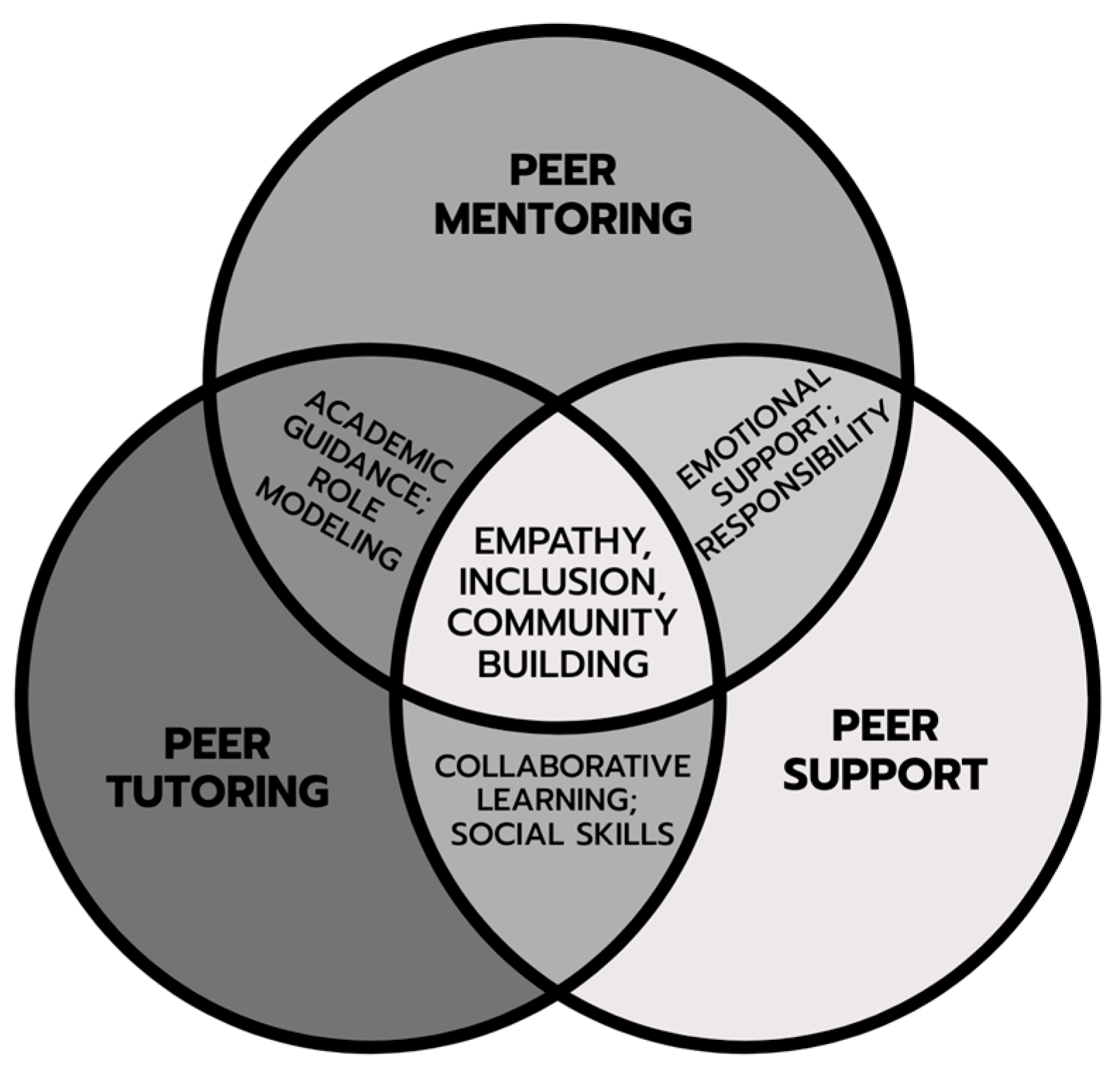
Peer programs in education are structured activities in which students support each other’s academic, personal, or social growth. Peer mentoring is often used as an umbrella term that encompasses activities such as role modeling, coaching, tutoring, teaching, and support initiatives (Krishna et al., 2019, as cited in Toh et al., 2022). In other contexts, peer support is used as a comprehensive term to describe any arrangement in which students help each other (Cowie & Wallace, 2000; Houlston et al., 2009, as cited in Bradley, 2016). Participants in peer programs are often of the same age, but according to Karcher (2014), program success requires an age or experience gap. While these categories overlap conceptually, distinguishing them clarifies the inclusion criteria: studies were included if they examined peer mentoring, tutoring, or peer-led support initiatives in general education settings and reported outcomes related to social, attitudinal, or school climate change. In this review, we adopt the broader category of “peer programs.” Figure 1 illustrates the conceptual overlap between peer mentoring, peer tutoring, and peer support.
Regardless of definition, research consistently shows that peer programs enhance academic, social, and attitudinal outcomes (Burton et al., 2021). They build empathy and responsibility, helping students recognize and accept diversity, especially in attitudes toward peers with disabilities (Williams et al., 2024). Peer programs also provide academic, social, and community support. Reviews by Brock and Huber (2017), Dada et al. (2023), and Kuntz and Carter (2019) found positive effects on academic and social goals, with social and behavioral improvements often leading and academic gains appearing as secondary outcomes. Curran and Wexler (2017) found that school-based youth mentoring programs enhanced self-esteem, responsibility, and peer relationships. However, concerns about peer programs were also identified, particularly the potential damage that an improperly implemented program confidentiality issues might cause. Burton et al.’s (2021) meta-analysis of cross-age peer programs showed that these arrangements helped students develop stronger social skills and become more engaged with their school community. Similarly, Watts et al. (2018) observed that cross-age tutoring led to social and academic benefits for both tutors and tutees, especially in the social-behavioral domain. Bowman-Perrott et al.’s (2014) meta-analysis found valuable results, establishing that non-academic gains often outweighed academic progress.

2.4. Peer Influence and Skill Development

The effectiveness of peer programs is driven by the power of peer influence. Drawing on the concept of peer influence, peer programs can evolve by exploiting the constructive aspects of peer interactions. According to several prior studies, peer influence plays an important role in shaping students’ academic performance, behavior, attitudes, and social connectedness, both negatively and positively (Shao et al., 2024; Sharon et al., 2018; Tomé et al., 2012). Through shared activities, students can get to know each other, develop empathy, problem-solving, cooperation, acceptance, and prosocial behavior (Harris et al., 2023, as cited in Li et al., 2024). These interactions refine individual and social skills. Skills are categorized in many ways, with these categories often overlapping and sharing similar examples. A systematic literature review on skill development within learning communities groups skill sets into soft, social, and life skills, all of which support inclusive attitudes and community formation. These skills include communication, collaboration, negotiation, problem-solving, also empathy, assertiveness, social confidence, friendship, and teamwork (Zamiri & Esmaeili, 2024). In different disciplines, the soft skill set may contain various elements. Another taxonomy includes diversity and intercultural sensitivity among soft skills (Matteson et al., 2016), which are also considered useful in forming an accepting environment.

2.5. Existing Review Articles

To support the relevance of our review, we conducted a preliminary scoping search for previous systematic reviews and meta-analyses on peer intervention programs in general education settings. The search was conducted across three databases—Web of Science, Scopus, and the Educational Resources Information Center (ERIC)—covering the period from 2015 to 2024. In Web of Science and Scopus, the keywords “peer mentor*”, “peer tutor*”, “peer teach*”, “peer support*”, “peer-led”, “student-led”, and “cross-age” were used, with results filtered to include only review articles. In ERIC, each of these keywords was combined with “review”, “synthesis”, and “meta-analysis” to refine the search. We identified nine studies meeting our criteria, all focusing on outcomes related to social, community, or school climate improvements. Additionally, we included studies that described practices and initiatives supporting inclusive attitudes, school climate, and community growth, provided that at least one of these practices involved a peer program. Analyzing these works helps to clarify the impact of peer interventions on academic performance, social skill development, and school engagement.
Curran and Wexler’s (2017) review of Positive Youth Development programs found that they helped students mature, assume responsibilities, and build peer connections. However, the limited number of peer program studies (only 2 of 23) leaves a gap for further research. A review of peer programs for students with learning disabilities showed holistic benefits in academic, social, and emotional support, with improved well-being and confidence (Williams et al., 2024). While relevant to our research, this review is restricted to students with learning disabilities and covers both general and higher education, leaving a gap in understanding broader applicability. Other systematic reviews on peer support, mainly for students with severe disabilities, reported gains in communication, academic skills, peer interactions, and reduced disruptive behavior (Brock & Huber, 2017; Dada et al., 2023; Kuntz & Carter, 2019). These reviews provide valuable insights but focus primarily on special needs populations, limiting their relevance to more diverse student groups.
A meta-analysis of six studies (published from 1994 to 2011) found peer programs had a medium, positive effect across psychological, health, cognitive, school, and social domains (Burton et al., 2021). Another meta-analysis quantified the direct and collateral effects of peer tutoring on social and behavioral outcomes, synthesizing twenty studies from 1990 to 2009 (Bowman-Perrott et al., 2014). Cross-age tutoring studies for students with emotional-behavioral disorders, published from 1972 to 2017, reported positive, though sometimes mixed, outcomes for tutors and tutees (Watts et al., 2018). While these meta-analyses offer important findings, they are constrained by the age of the studies, with the most recent from 2011, 2009, and 2017 and many conducted before 2000. This reliance on older data may not reflect current dynamics in peer mentoring and tutoring.
One notable finding is a systematic review of peer support programs for improving school climate in Spain. Covering studies from 2001 to 2021, it aligns closely with our objectives but focuses exclusively on peer helper programs in Spanish secondary schools (Palomero-Fernández et al., 2024).
Existing syntheses on this topic only partially align with our focus. Gaps remain due to fragmented educational settings, narrow participant groups, mixed interventions, wide time spans, and country-specific studies, raising questions about the broader applicability of peer programs (Bowman-Perrott et al., 2014; Brock & Huber, 2017; Burton et al., 2021; Curran & Wexler, 2017; Dada et al., 2023; Kuntz & Carter, 2019; Palomero-Fernández et al., 2024; Watts et al., 2018; Williams et al., 2024). Our systematic review addresses these gaps by focusing on peer programs, incorporating recent studies from multiple countries, and providing deeper outcome analysis. Of the studies included in previous reviews, only two overlap with our final sample: one from Brock and Huber (2017) and one from Williams et al. (2024). This limited overlap underscores the distinct scope of our synthesis, which includes more recent and diverse empirical work.
Taken together, this review offers a more up-to-date and focused synthesis by examining peer programs in general education across recent studies and diverse national contexts, providing clearer insight into emerging objectives, implementation features, and outcome patterns. At the same time, the contribution is shaped by several constraints, including the limited level of methodological detail reported in primary studies, the substantial conceptual diversity across peer program models, and the geographic concentration of available research, which restricts the generalizability of findings. These considerations help clarify both the unique contribution and the boundaries of the present review.

3. The Current Study

Purpose and Research Questions

This study aims to review studies with the explicit purpose of improving school and classroom climate, community, social attitudes, acceptance, and the progress of an inclusive approach. Beyond advancing academic outcomes, the study highlights the role of peer programs in multicultural education, fostering accepting attitudes and reducing prejudice in general education settings.
The primary purpose is to address gaps in existing literature by presenting a detailed, current analysis of the impact of peer programs across diverse student populations in general education contexts. By synthesizing recent research, this review seeks to deepen our understanding of the benefits and challenges of peer programs, thereby supporting the advancement of more efficient and inclusive educational practices. To address these aims, the following research questions were formulated:
  • How do peer programs relate to the development of inclusive attitudes and acceptance among students in general education settings?
  • How do peer-led initiatives contribute to a positive school climate and improve students’ social skills and empathy?
  • What are the perceived benefits and challenges of peer programs in fostering community development within schools?

4. Materials and Methods

4.1. Systematic Search Procedures

The systematic literature search followed PRISMA guidelines for transparency and methodological rigor (Page et al., 2021). An a priori protocol guided the search strategy, inclusion/exclusion criteria, and data extraction. The protocol was not registered in PROSPERO or OSF, which we acknowledge as a limitation. To address this risk, all steps of the review process were documented internally, and no substantial deviations from the initial protocol occurred.
Our synthesis covers studies published between 1 January 2015, and 31 December 2024, representing a ten-year period. The time frame was selected to capture recent developments in peer programs that support inclusive and positive school environments, and to ensure that the review reflects contemporary educational policies, school climate initiatives, and current approaches to peer-based support. We aimed to identify relevant empirical studies published in peer-reviewed journals across three major databases: Web of Science, Scopus, and the Educational Resources Information Center (ERIC). The selected databases were chosen for their broad coverage of education and social sciences, including peer-reviewed journals from multiple countries. Specifically, our search combined two broad multidisciplinary databases with one thematic database focused on education, ensuring both breadth and subject-specific depth, and aligning the selection with our research objectives. While other databases could also contain relevant studies, the overlap with Scopus and ERIC was expected. The choice of these three databases was therefore considered sufficient to capture the majority of relevant literature, although we acknowledge that some studies may have been missed.
In the Web of Science database, the search was conducted within the categories Education & Educational Research, Education Special, Ethnic Studies, and Social Issues. In Scopus, the search was narrowed to Social Sciences and confined to the Title, Abstract, and Keywords fields. In all three databases, the results were filtered to peer-reviewed journal articles. No language restrictions were applied. The majority of eligible studies were in English, but one Spanish-language article and one Lithuanian-language article met the inclusion criteria and were analyzed in full.
The search keywords included “peer mentor*”, “peer support*”, “peer teach*”, “peer tutor*”, “peer-led”, “student-led”, and “cross-age” to cover all possible peer programs. The full search strings for all three databases (Web of Science, Scopus, and ERIC), along with the dates of the last searches, are provided in Appendix A.1 Table A1. These keywords were chosen to capture a broad range of peer program studies. Given the diverse terminology used to describe the effects we aimed to examine, we did not employ additional narrowing operators in the systematic search. This decision was made to ensure a thorough search that includes all relevant studies, regardless of the specific terms used by different authors. By focusing on widely used descriptors, the search strategy aimed to cover the full spectrum of relevant literature without being limited by terminological variability.
After completing the database searches, duplicates were removed, and the first author screened titles and abstracts against the predefined inclusion and exclusion criteria. In cases of ambiguity, both authors discussed the record and reached a consensus. Full-text screening was conducted by the first author, with final inclusion decisions made jointly.
In addition to database searches, we conducted a backward citation search by manually screening the reference lists of relevant systematic reviews, syntheses, and meta-analyses to identify further empirical studies. This step ensured that potentially eligible studies not captured in the database queries were considered. No forward citation tracking was applied.
Data extraction was carried out by the first author using a standardized template, jointly developed in advance to ensure methodological rigor. This template defines the main deductive categories (study characteristics, participants, program type, objectives, and outcomes). At the same time, additional inductive themes emerged during coding, particularly within objectives and outcomes, ensuring that recurrent patterns in the data were captured. Approximately 20% of the included studies were double-coded and cross-checked by the second author to ensure consistency. The double coding showed near-complete agreement, so no formal inter-rater reliability statistics were calculated. Uncertainties were resolved through consensus discussions, and all extracted data were verified by the second author. By combining deductive and inductive approaches across data extraction, synthesis, and coding, the review ensured both methodological rigor and openness to emergent patterns.

4.2. Inclusion/Exclusion Criteria

Inclusion criteria:
  • Peer-reviewed journal articles;
  • Empirical studies;
  • Studies presenting peer programs, namely peer mentoring, cross-age mentoring, peer tutoring, peer teaching, and peer support programs;
  • Research conducted in a general education setting, from grade 1 to grade 12;
  • Studies presenting peer programs with the explicit aim of improving communities, social interactions, school and classroom climate, students’ social attitudes, acceptance of individual differences, or promoting an inclusive environment.
On this basis, the following exclusion categories were established:
(1)
Different publication/article type;
(2)
Different types of intervention/program;
(3)
Different settings/participants;
(4)
Different aims of the intervention/focus of the study.
Studies that reported both individual-level outcomes (e.g., personal skill development, self-esteem) and community- or school-level outcomes (e.g., classroom climate, peer relationships, inclusivity) were included, provided that the community or climate outcomes were explicitly addressed. Studies were excluded only if they focused solely on individual improvement without reference to broader social or school-level effects.

4.3. Data Synthesis

The findings of the included studies were synthesized using a narrative synthesis approach, guided by inductively derived thematic categories. Narrative synthesis, applied here in a deductive manner, covers the selection, chronicling, and ordering of evidence to produce an account of the findings (Green et al., 2006). In addition, thematic analysis was applied, involving the identification of prominent or recurrent themes from the collected data of selected studies and summarizing these under thematic headings (Braun & Clarke, 2006). This analytic approach was directly aligned with the research questions, as the narrative synthesis organized evidence in relation to the stated aims, while the thematic analysis highlighted recurrent objectives and outcomes that addressed the research questions.
Coding was conducted according to criteria derived from the research questions, and the resulting categories (program characteristics, participant characteristics, objectives, and outcomes) provided the framework for thematic grouping. This approach allowed us to integrate diverse study designs and outcome measures into a coherent descriptive synthesis, while remaining closely aligned with the three research questions: (1) inclusive attitudes and acceptance, (2) school climate, social skills, and empathy, and (3) community development benefits and challenges. By combining coding with thematic grouping, the synthesis aimed to capture the breadth of peer program impacts while acknowledging methodological limitations and variations in program design.

4.4. Quality Appraisal

To evaluate the methodological quality of the included studies, the Mixed Methods Appraisal Tool (MMAT) was applied. Following MMAT guidelines (Hong et al., 2018), both authors independently assessed each study. Any discrepancies were resolved through discussion and consensus, supported by the senior author’s methodological expertise.
The appraisal process adhered strictly to the official MMAT protocol. All studies were first screened to confirm their empirical nature, then categorized by methodological design. Each study was evaluated using the five criteria relevant to its category, rated as “Yes”, “No”, or “Can’t tell”. The authors agreed on the most relevant indicators for the field and applied them consistently across all studies. A detailed summary of the MMAT ratings is provided in Table A2 in the Appendix A.2.
Out of the 15 studies included in the review, 14 met all five MMAT criteria, with no methodological concerns identified during appraisal, indicating strong methodological quality across diverse study designs. One mixed-methods study (Martí Ballester & Moliner Miravet, 2015) was rated “No” for Criterion 3 due to insufficient interpretation of the integrated qualitative and quantitative findings.
Distribution by Study Type:
  • Mixed methods: 6 studies (one with partial fulfillment of criteria);
  • Quantitative—RCT: 2 studies (both fully met criteria);
  • Quantitative—Non-randomized: 4 studies (all fully met criteria);
  • Qualitative: 3 studies (all fully met criteria).
The selected studies demonstrated high methodological rigor based on MMAT criteria, with only minor limitations noted. Overall, the included studies provide a solid foundation for the systematic review. In line with MMAT guidance, we did not calculate an overall numerical score; instead, the criteria were used to support a structured and transparent appraisal of each study. Although 14 of the 15 studies met all applicable criteria, indicating generally strong methodological reporting, this does not eliminate typical limitations such as small sample sizes or context-specific findings.

5. Results

5.1. Study Selection

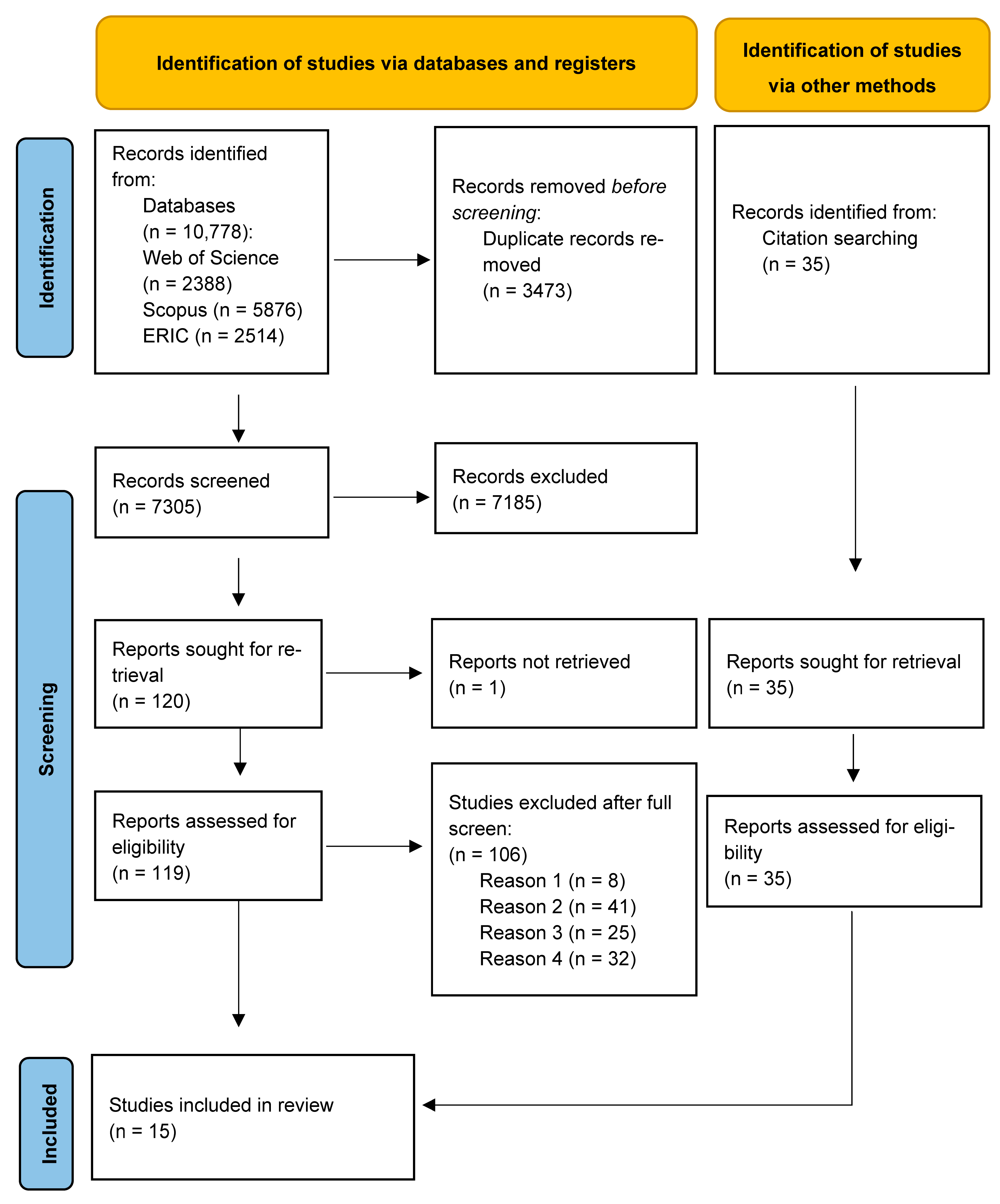
During the search, 10,778 items were found and imported into the Zotero reference manager. After removing duplicates, 7305 items remained. Title and abstract screening resulted in the exclusion of 7185 records. The remaining 120 records were assessed in full text. One article could not be retrieved, and 106 were excluded based on the eligibility criteria. Thirteen studies met the criteria and were included. Of these, two were published in languages other than English—one in Spanish (Palomero-Fernández et al., 2024) and one in Lithuanian (Gvaldaitė et al., 2024)—and both were analyzed in full alongside the English-language studies.
Additionally, we screened the reference lists of review articles (systematic literature reviews, syntheses, and meta-analyses) for relevant empirical studies. In nine review articles, 35 items were found within the examined time span. After removing duplicates, 23 studies remained. Abstract screening excluded 16 records, and seven full texts were assessed. Two additional studies met the inclusion criteria. In total, 15 studies were included in the final sample. The selection process is illustrated in the PRISMA flowchart (Figure 2).

5.2. Coding

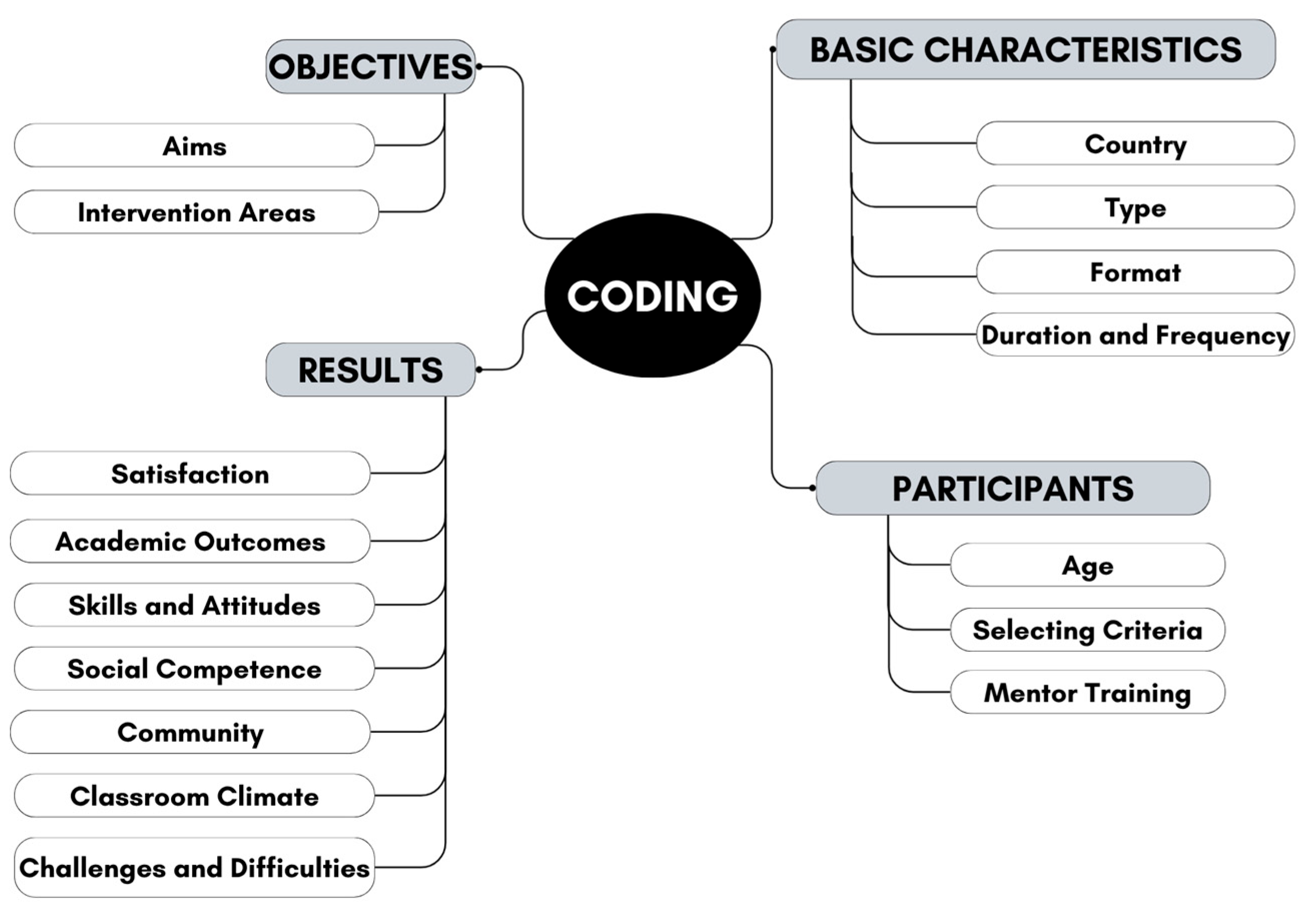
The peer programs in the selected studies were coded according to criteria derived from the research questions. The coding criteria were divided into four groups: basic characteristics of the programs, characteristics of the participants, objectives of the programs, and characteristics related to the results and effects of the peer programs (Figure 3). The coding scheme was developed collaboratively by the authors. The first author conducted the primary coding of the studies, and approximately 20% underwent double coding. When coding was challenging or ambiguous, the two authors jointly made decisions to ensure consistency and reliability. The coding process combined deductive and inductive elements. Deductive coding was applied to predefined categories (study characteristics, participants, and program type), which were established in advance based on the research questions and theoretical framework. In contrast, coding of objectives and outcomes incorporated inductive elements, as additional themes and patterns emerged during the analysis of the included studies (Braun & Clarke, 2006; Green et al., 2006).

5.3. Basic Characteristics

Table A3 in the Appendix A.3 contains the basic characteristics of the mentoring programs, including the country where the peer program took place, the type of the peer program (mentoring, tutoring, support), its general characteristics (pairs or group, same-age or cross-age, fixed or reciprocal), and the duration and frequency of the peer activity. Regarding the locations, two programs were conducted in the UK, six in the USA, two in Japan (presented in two separate studies from different perspectives), two in Spain, one in Portugal, one in Greece, and one in Lithuania. As for the types of programs, two were defined as mentoring, eight as tutoring, and five as peer support. In most cases (10 programs), the activities were carried out in pairs, in one case in groups, and in four cases the format alternated between pairs and groups. Regarding the age group of participants, five peer programs involved students of the same age, seven featured cross-age interactions, and two included both types of pairing. In one case, the age group was not specified. Fixed-type peer support was documented in 13 studies, reciprocal in one, and both types in one case, where the format differed by class. The duration of the programs (12 programs) ranged from 4 weeks to 1 academic year (typically 32 to 36 weeks). One program was longitudinal, running continuously for six years, while two studies did not specify the duration. Regarding frequency, most programs involved 1–2 h of activity per week (nine programs), two studies reported 3–4 h per week, three mentioned ongoing support, and one did not specify the frequency (see references in Appendix A.3 Table A3). Overall, most programs were tutoring initiatives (8 out of 15), implemented in the United States (6 out of 15), and typically organized as pair-based activities. Cross-age arrangements were slightly more common (7 out of 15) than same-age pairings, and fixed formats predominated (13 out of 15). The majority of programs lasted one semester or one school year (approximately 32–36 weeks), with weekly sessions of 1–2 h. Only one program was longitudinal, running for six years, while a few studies did not specify duration or frequency. These patterns suggest that peer programs are most often designed as structured, semester-long tutoring interventions with regular weekly meetings.

5.4. Participants

Table 1 contains the characteristics of the participants, including the age group of participant students (considering that the studies fit the inclusion criteria and are from various countries with different school systems, we mark the participants by age), the criteria for selecting mentors and mentees, as well as the attributes and focus of mentor training.
Regarding the age of participants and the setting of the mentoring programs, mentors and mentees were typically adolescents, pre-adolescents, and young children attending primary and secondary education. In the case of two programs, young adults served as mentors, in line with the programs’ design. Though their age ranged from 16 to 32 years, they fully meet the “general education” inclusion criterion as they were high school or college students (and, in some cases, young adults who still formally affiliated with educational institutions). Younger same-age pairings were also present in three programs, involving children aged 6 to 12. Where exact age data were not specified, the participants’ ages were estimated according to their education level. Selection criteria for participants varied across studies. In selecting mentees for the programs, academic level was the most frequently cited criterion (four studies), followed by special education status (three programs), socioemotional needs (two cases), voluntary participation (two studies), and teacher nomination (two studies). In some cases, multiple criteria were combined to ensure appropriate matching. Mentor selection was more diverse. While academic level and age/grade difference were common (six programs), other studies emphasized student motivation, peer modeling, teacher nomination, and inclusion in established peer groups. In one program (appearing in two studies), school health committee members were assigned as mentors. Training for mentors was a consistent feature. Most programs provided both initial and ongoing training, although a few offered only preprogram preparation. The mentor training content was multifaceted. It included outlining aims and expectations, introducing communication strategies and instructional techniques, improving socioemotional competencies, and recognizing mentees’ special needs. Three studies did not specify any training details. Some programs emphasized the importance of confidentiality and respectful interaction, as well as guidance on when and how to ask for help (see references in Table 1). It should be noted that in some studies key participant details were missing. In synthesizing the characteristics of the included programs, it became evident that several primary studies reported participant-related information inconsistently. In some cases, details such as the age of the participants, the criteria for selecting mentors or mentees, the existence of mentor training, or the specific focus and content of such training were missing or only partially described. These gaps limited the comparability of programs and constrained the depth of the cross-study analysis, as certain categories could only be coded based on incomplete or inferred information.

5.5. Programs’ Objectives

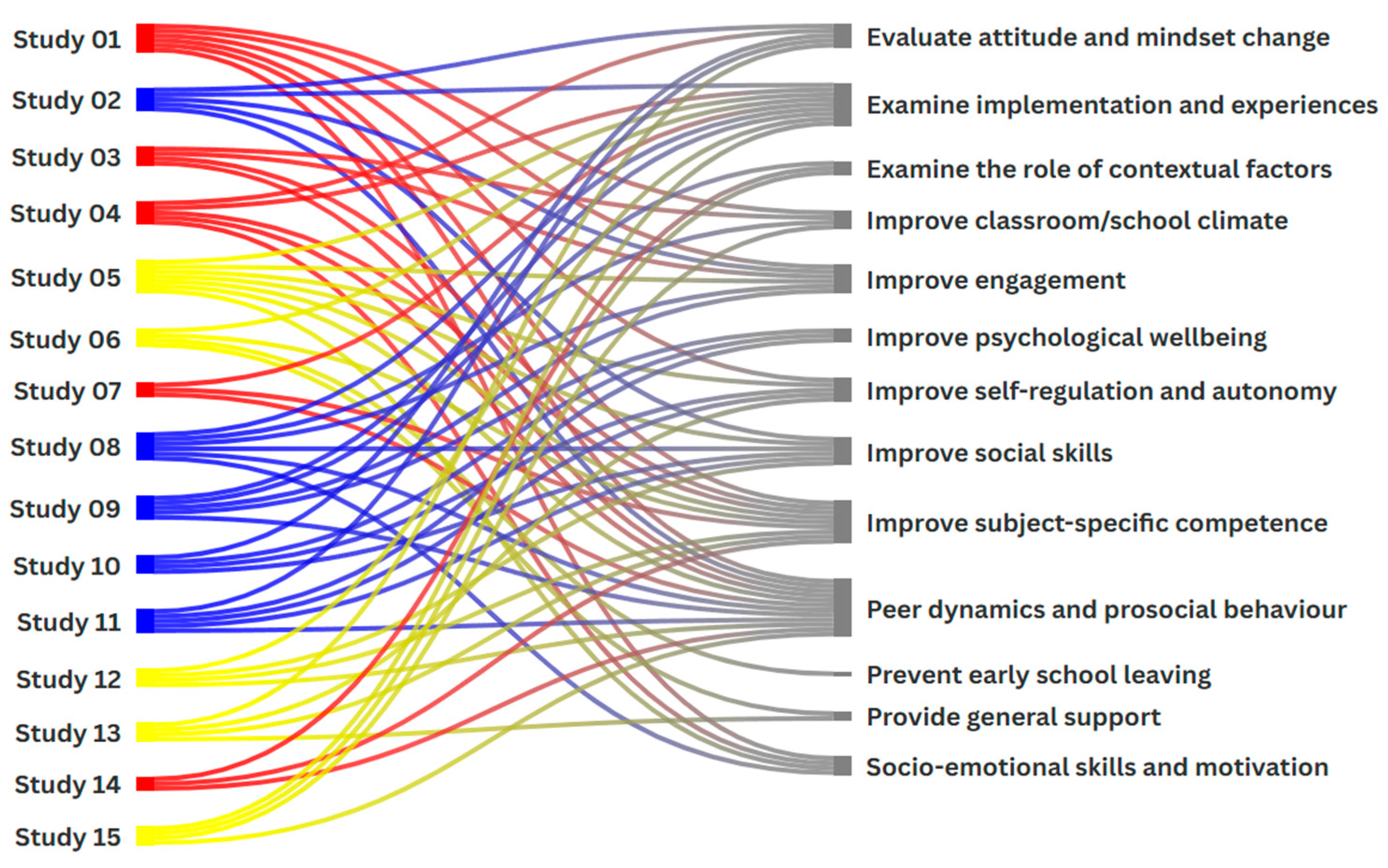
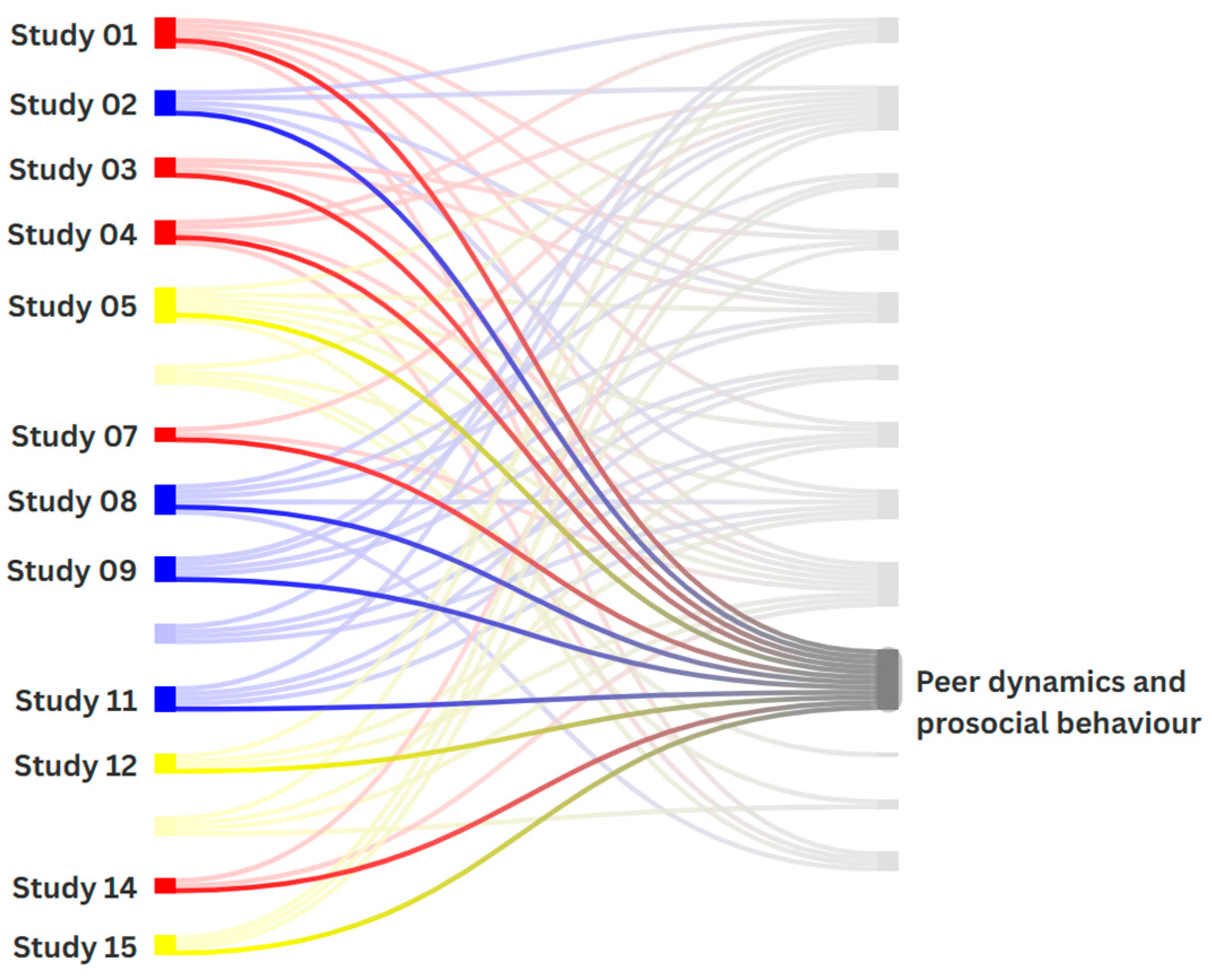
Figure 4 presents the objectives of the peer programs, along with the areas of intervention based on expressed goals. The objectives were diverse, with 55 distinct phrases documented across the 15 studies. These were systematically condensed into 13 thematic categories to allow comparative analysis. The categorized goals include improving classroom/school climate, engagement in classroom/school life, subject-specific competence, peer dynamics and prosocial behavior, self-regulation and autonomy, socioemotional skills and motivation, social skills, and psychological well-being, as well as examining program implementation and experiences, evaluating attitude, mindset change, and the role of contextual factors, preventing early school leaving, and providing general support. The programs targeted three main intervention domains: academic (n = 5, marked in red), social (n = 5, marked in blue), and combined academic and social (n = 5, marked in yellow). The numbered studies (1–15) shown in Figure 4 are listed in Table A4 in the Appendix A.4.
The goals of the peer programs examined here meet the inclusion criteria defined in our review, either as a primary goal or as an integral part of the intervention strategies presented. Twelve of the fifteen studies included—regardless of the intervention domain—aimed to improve peer dynamics and prosocial behavior (Figure 5).
Besides peer dynamics and prosocial behavior as central aims, several studies also targeted social outcomes like boosting social skills (six studies), psychological well-being (three studies), and socioemotional skills and motivation (four studies). These goals reflect a consistent emphasis on forming socially supportive environments across diverse intervention domains. Even studies with a primarily academic focus (three studies) and studies with a combined intervention domain (three studies) included aims such as improving classroom climate, engagement in classroom and school life, and evaluating the changes in attitude and mindset. These examples show the interdependence between academic success and social development, underscoring the holistic nature of peer programs (see references in Table A4 in the Appendix A.4).
The objectives identified across the programs can be directly related to the three research questions guiding this review. Goals such as fostering empathy, promoting acceptance of differences, and encouraging attitudinal change correspond to RQ1, which examines inclusive attitudes. Objectives addressing classroom climate, student engagement, and socioemotional skill development align with RQ2, focused on school climate and social cohesion. Finally, aims concerning program implementation, contextual conditions, and broader community involvement relate to RQ3, which explores how peer programs contribute to community development within schools. This mapping highlights that while peer dynamics and prosocial behavior were central across most studies, the objectives collectively address all three dimensions of inclusion examined in this review.

5.6. Programs’ Outcomes

Table 2 highlights the outcomes of the programs presented in the studies. Categorizing outcomes, we distinguished program satisfaction, academic improvement, improvement in individual skills, shifts in attitudes, improvement in social competence, community and peer interaction, and the development of classroom climate. The categories listed in the columns indicate the areas in which there were positive changes (+), those in which there were no changes at all or no significant changes (=), and those in which problems or difficulties were experienced (−). A mixed symbol (+/=) is used when one part of a broader construct showed improvement while other components did not show additional quantifiable change. Another mixed symbol (+/−) indicates that within the same category some indicators improved while others showed decline. An x means that the study did not examine that category.
The studies show which peer programs (six cases) contribute to creating an open-minded and collaborative school culture and classroom atmosphere. However, the supporting evidence varies in methodological quality: while some studies employed stronger designs with control groups (Studies 2, 5), others relied on small samples (Studies 1, 8, 15), and all six studies used exclusively self-reported measures, which may overestimate perceived changes in the learning environment.
In eleven cases, the research reports positive gains in individual skills and abilities, including solidarity, empathy, cooperation and communication skills, assertiveness, self-confidence, creativity, critical thinking, responsibility, and resilience. The strength of these findings is closely linked to the methods of data collection. Where outcomes were derived mainly from self-report questionnaires and interviews, gains reflect participants’ perceptions rather than independently verified changes. Teacher assessments (Study 4) and classroom observations (Studies 1, 3) indicate that improvements were observable in practice and behavior, while validated standardized instruments (Studies 1, 9, 10, 11, 12) offer stronger evidence of measurable progress in individual skills.
Academic outcomes were less consistently reported across the studies. Only a few programs explicitly targeted academic skills, and among these, results were mainly positive. Some studies reported improvement in subject-specific confidence (Study 1, 3, 7, 12) and motivation (Study 1, 6) that may support academic engagement. However, academic progress was not a primary focus in most interventions.
Across the included studies, positive changes were consistently reported in social competence and/or in community development and peer interaction quality, yet the strength of these findings differed depending on the methodological design and type of evidence collected. Although MMAT ratings suggest high methodological rigor overall, a closer examination of study characteristics reveals important nuances. Several studies relied on small samples (Studies 1, 8, 12, 13), which limits generalizability. However, in other cases, samples—even small ones—were demographically diverse (Study 1, 2, 3, 5, 9), which strengthens the interpretation of inclusive attitude shifts. Notably, the two randomized controlled trials (Studies 2 and 5) combined demographic diversity with rigorous design and provided the strongest causal evidence for changes in empathy and social interaction. Study 3, despite lacking a control group and randomization, offers strong contextual validity, as it employed multi-site classroom observations that captured outcomes in authentic school settings. Due to its qualitative design, the study further provides strong contextual validity by reflecting processes and impacts in real educational environments. Study 6 combined content analysis with descriptive statistics across five projects, providing rich contextual insights despite the absence of mentee perspectives. It was consistent with its MMAT appraisal as a mixed method design, offering strong descriptive value but limited generalizability. Longitudinal designs (Study 10) and widely implemented programs (Studies 10, 11) contribute to external validity, while validated instruments in Studies 1, 7, 9, 10, 11, 12 and 14 support the reliability of outcome measurement. Conversely, several studies lacked demographic transparency (Studies 4, 7, 12, 13), and some relied on homogenous samples (Studies 10, 11), constraining the interpretation of peer dynamics across diverse populations. These methodological variations were not used to weight the evidence; nevertheless, they remain essential for readers to consider when assessing the robustness and generalizability of the reported outcomes.
Besides the beneficial outcomes reported across several domains, Table 2 also reflects the challenges and limitations in specific areas. Implementation-related issues—such as inconsistent delivery (Study 3), scheduling conflicts (Study 6), and a decline in motivation and engagement in the case of tutors (Study 8)—undermined program efficacy. In Study 3, the intended objectives of boosting math skills and motivation were not supported by actual teaching practices: teachers and tutors rarely used visuals or real-world connections, and the lack of emotional encouragement limited students’ confidence and persistence. Study 6 highlighted organizational difficulties, with teachers pointing to the need for more service time and better planning to manage schedules, while peer tutors themselves struggled with personal insecurities and the challenge of adopting appropriate pedagogical strategies in their new role. In Study 8, although high school mentors initially expressed enthusiasm, their motivation gradually waned as the semester progressed, largely due to increased academic workload, spring fatigue, and the physical effort required to sustain weekly commitments—factors that some mentors admitted they had underestimated, especially those supporting more than one mentee. Study 12 noted limited benefits for tutors as the peer tutoring program did not lead to significant improvements in their reading comprehension. Studies 10 and 11 raised concerns about unequal benefits across student groups, as students with initially low self-esteem and mental health scores showed notable improvements, while the ones with high baseline scores did not exhibit statistically significant gains. Overall, the synthesis underscores that while peer programs consistently show beneficial effects, their interpretation must remain sensitive to study quality and contextual limitations.

6. Discussion

Our systematic review explored how peer programs contribute to the development of inclusive attitudes, multicultural understanding, and school and classroom climate. Our findings suggest that peer programs can enhance students’ empathy, mutual respect, social competence, peer relationships, cooperation, and classroom climate. These results are consistent with previous systematic reviews (Bowman-Perrott et al., 2014; Brock & Huber, 2017; Kuntz & Carter, 2019). Our analysis supports the additional benefits of peer programs beyond academic achievement, in line with earlier reviews on social skills, socioemotional development, self-regulation, well-being, communication, and behavior (Curran & Wexler, 2017; Dada et al., 2023; Williams et al., 2024). Mutual benefits for mentees and mentors, as shown in meta-analyses (Burton et al., 2021; Watts et al., 2018), were also found. The following sections address the three research questions in detail.
RQ1 (inclusive attitudes and acceptance). Peer programs were reported to advance inclusive attitudes and acceptance among students in general education settings. They were associated with increased empathy and appreciation for diversity, particularly when students interacted with peers who differed in ability or background. For instance, Bond and Castagnera (2006) noted that peer tutoring was linked to greater acceptance of differences among participants. Programs targeting neurotypical students indicated shifts in attitudes toward peers with disabilities, suggesting greater awareness and appreciation of diversity. These outcomes align with the aims of inclusive education, which emphasize reducing exclusion and fostering respect for learners.
RQ2 (school climate, social skills, empathy). In addition to promoting inclusion, peer-led initiatives were reported to be linked with a more nurturing school climate through the development of students’ social skills and empathy. They were connected with strengthened interpersonal relationships, a greater sense of belonging, and reductions in behavioral issues. Burton et al. (2021) found that cross-age peer programs were associated with improvements in students’ social skills and engagement with the school community. In our review, most programs reported gains in communication, self-confidence, responsibility, and resilience—skills that can contribute to a supportive classroom environment. Curran and Wexler (2017) noted that mentors described feeling more mature and connected to their peers, suggesting that peer programs may foster personal growth and reinforce community ties.
RQ3 (perceived benefits and challenges for community development). Peer programs were reported to support community development within schools, though challenges were also noted. Students often expressed feeling more involved in school life and more responsible toward their peers (Curran & Wexler, 2017). Palomero-Fernández et al. (2024) presented that peer helper programs in Spanish schools contributed to a more positive school environment. However, challenges such as poor pairing or insufficient mentor training were noted as limiting the potential benefits of programs. Burton et al. (2021) warned that poorly implemented programs could have adverse effects, particularly if confidentiality was breached or mentors were unprepared. In our review, three studies did not provide details on mentor training, making it unclear whether such training was implemented and how it may have influenced program outcomes. Additionally, some studies reported implementation challenges, including inconsistent delivery, scheduling conflicts, and declining engagement, which can undermine program efficacy. Unequal benefits across student groups and limited impact for tutors were also noted, highlighting the importance of structured planning, consistent execution, and adequate mentor preparation.
Compared to earlier reviews, this study offers several important contributions. First, while Curran and Wexler (2017) reviewed 23 studies, of which only two focused on peer mentoring programs—highlighting a lack of focused research in this area—our review includes 15 studies that explicitly examine peer programs in general education settings. This addresses a gap in literature and offers a broader overview of peer programs. Second, previous meta-analyses (Bowman-Perrott et al., 2014; Burton et al., 2021; Watts et al., 2018) primarily drew on studies published before 2000, with limited inclusion of more recent research. As educational contexts and approaches to inclusion have evolved considerably in recent decades, the predominance of older studies may reduce the applicability of their findings to current school environments. By incorporating more up-to-date and diverse studies, our review provides a contemporary perspective on the implementation and effects of peer programs. Third, some earlier reviews focused primarily on students with severe disabilities (Brock & Huber, 2017; Dada et al., 2023; Kuntz & Carter, 2019) or studied programs within a single national context (Palomero-Fernández et al., 2024). This narrow focus limits the generalizability of their findings to more diverse student populations and varied educational settings. In contrast, our review expands the scope by including peer programs that promote inclusive attitudes across a wide range of student groups and geographic locations. This perspective suggests that our findings may be applicable to mainstream educational environments and contribute to a broader understanding of how peer programs can help inclusion in various contexts. In addition, our review makes a novel contribution by systematically categorizing the explicit goals of peer programs across 15 studies, mapping 13 thematic areas—including attitude and mindset change, community and school climate improvement—that are often overlooked in previous reviews. Based on our detailed analysis of program objectives (see Figure 4 and Figure 5), our study provides a structured overview of the intended aims of peer programs, highlighting their social and attitudinal functions that extend beyond academic and behavioral outcomes, pointing to their role in fostering equitable school environments.
Our analysis combined narrative and thematic synthesis, using inductive and deductive approaches to integrate different study designs and highlight recurrent patterns in program characteristics and outcomes. Programs varied in structure, duration, format (mentoring, tutoring, support), pairing (same-age vs. cross-age), and frequency. Mentor training was a consistent feature, typically including communication, socioemotional skills, and understanding of mentees’ needs. Program objectives were diverse but consistently targeted social growth, with most aiming to improve peer dynamics, prosocial behavior, psychological well-being, socioemotional skills, classroom climate, and community engagement—even in academically focused programs. Outcomes showed positive impacts on individual skills (empathy, cooperation, assertiveness, resilience), peer interaction, and classroom climate, suggesting peer programs may foster inclusive and collaborative school environments.
The interpretation of these findings should consider the methodological quality of the included studies, as assessed with the Mixed Methods Appraisal Tool (MMAT). Most studies received high ratings, which lends support to the reliability of the reported outcomes. At the same time, methodological variations are important to consider. Some of the studies relied on small samples, non-randomized designs, or qualitative approaches, which limit generalizability, while others employed more rigorous designs with control groups and diverse samples, strengthening confidence in observed changes. Randomized controlled trials provided the strongest evidence of improvements in empathy and school climate, whereas quasi-experimental and qualitative studies offered valuable contextual insights into how peer programs operate in authentic school settings. Effect sizes were seldom reported, follow-up periods were short, and outcomes often depended on self-report measures, yet teacher assessments, classroom observations, and validated instruments in some studies provided additional support for the reported gains. Given this heterogeneity, findings were integrated through narrative synthesis, which highlights consistent patterns across diverse contexts but does not allow statistical aggregation. Overall, peer programs were observed to be associated with inclusive attitudes, empathy, and community engagement, with effectiveness best interpreted as promising trends supported by multiple forms of evidence, while future research should employ more rigorous designs and longer-term evaluations to strengthen the knowledge base.
The evidence reviewed in this study highlights several practical implications for schools and policymakers. Structured mentor training is essential, as programs with clear preparation and ongoing support appear more likely to achieve consistent outcomes. Attention to program fidelity is critical, since inconsistent delivery or poor pairing can undermine effectiveness. Unequal benefits across student groups further suggest the need for equity-focused monitoring to ensure that peer programs do not inadvertently reinforce disparities. For policymakers, these findings emphasize the importance of providing schools with resources, guidelines, and evaluation frameworks that promote high-quality training, standardized implementation, and inclusive practices. Together, these measures can strengthen the contribution of peer programs to positive and equitable school environments.
In summary, this review contributes to existing literature by offering a more extensive and up-to-date analysis of peer programs. It addresses research gaps identified in previous systematic literature reviews and meta-analyses and highlights the multifaceted benefits of peer programs. When thoughtfully implemented—with clear goals, structured training, and ongoing support—peer programs can serve as valuable tools for fostering inclusion, improving social development, and enhancing school climate. Future research should employ more rigorous designs, larger and more diverse samples, and longer follow-up periods to clarify the long-term impact of peer programs and guide schools and policymakers in developing sustainable, equitable practices.

7. Limitations

While this review offers valuable insights into the role of peer programs in supporting inclusive attitudes and school climate, limitations also must be acknowledged.

7.1. Search Strategy Limitations

We conducted our systematic search according to PRISMA guidelines to ensure transparency and rigor. An a priori protocol guided the search strategy, inclusion/exclusion criteria, and data extraction, but it was not registered publicly, which may increase the risk of selective reporting. To address this, all review steps were documented internally. No substantial deviations from the initial protocol occurred, supporting the consistency of the search and synthesis procedures. The review focused on studies published between 2015 and 2024, which improved relevance but may have excluded foundational research. The last search occurred in January 2025; later database updates may yield different results. Only peer-reviewed articles from Web of Science, Scopus, and ERIC were included. This selection offered multidisciplinary and education-focused breadth and depth, but some relevant studies in other databases or the grey literature may have been missed. The search was not limited by language, yet only two non-English studies met the criteria, potentially limiting representation of culturally specific programs. The use of broad descriptors maximized inclusivity, but terminological differences may have led to some omissions. No forward citation tracking was performed, possibly missing recent studies. Most screening and data extraction were completed by a single reviewer, introducing possible bias; while consensus checks were used, no formal inter-rater reliability statistics were calculated, which may reduce reproducibility.

7.2. Reporting and Quality of Primary Studies

The coding and synthesis were based on information available in the original studies. Occasionally, key details—such as mentor training, program duration, participant selection, or the ages of mentors and mentees—were missing or inconsistently reported. These gaps reduced transparency, limited comparability across programs, and may have affected the depth of the analysis. Although MMAT ratings indicated generally high methodological rigor, many included studies relied on small samples, non-randomized designs, self-report measures, and lacked long-term follow-up. These limitations constrain the robustness of the evidence base and complicate the generalizability of findings.

7.3. Conceptual and Terminological Diversity

Definitions of “peer programs” vary in the literature, encompassing mentoring, tutoring, teaching, and support initiatives. This conceptual diversity complicates comparability and interpretation, as programs with different structures and aims are grouped under a broad umbrella. Most studies did not report effect sizes, and outcomes were often described narratively. Consequently, claims of effectiveness should be interpreted cautiously, especially given the limited number of randomized controlled trials.

7.4. Synthesis and Generalizability

Findings were integrated through narrative synthesis using inductively derived thematic categories. This approach accommodated diverse study designs and outcome measures, yielding descriptive insights into recurring patterns and themes instead of statistical aggregation. Although this diversity enriches the review by reflecting varied practices, it also limits generalizability. Therefore, the findings should be seen as context-sensitive rather than universally applicable.

8. Recommendations for Future Research

Several of the following recommendations stem directly from the limitations outlined above, including the limited geographic diversity and the predominance of small, short-term studies. Addressing these gaps will help strengthen the evidence base on peer programs. As the literature on peer programs continues to evolve, further research is needed to deepen understanding and address emerging gaps in diverse educational contexts. The geographic scope of the reviewed studies—spanning Europe, North America, and Asia—adds depth to the analysis, though most were conducted in Western contexts. Only a few studies originated in other regions (Japan, Lithuania, Greece, Spain, and Portugal), limiting generalizability. Further systematic reviews focusing on non-Western regions and underrepresented cultural settings remain necessary, and could help uncover context-specific practices and broaden the global evidence base. Comparative systematic literature reviews across different school systems may also reveal how structural factors shape program outcomes. Longitudinal empirical studies are needed to assess how peer programs influence inclusive attitudes and school climate over extended periods. Most existing research focuses on short-term effects; future reviews could synthesize long-term findings to evaluate the long-term sustainability of these interventions. Moreover, systematic reviews dedicated to mentor training and program fidelity would be valuable. Such reviews could map how different training models influence mentors’ performance and reveal best practices across settings. Finally, future systematic literature reviews might adopt mixed-methods synthesis approaches to integrate quantitative outcomes with qualitative insights, offering a more nuanced picture of peer program dynamics. In the short term, the most urgent and feasible priorities are longitudinal studies assessing long-term sustainability of peer programs, alongside expanding studies to diverse global settings—particularly to regions currently underrepresented in the literature—and carrying out systematic reviews on mentor training and program fidelity.

9. Conclusions

This systematic literature review explores the varied roles of peer programs in general education settings. By synthesizing recent findings, the review addresses gaps in the literature, particularly the limited focus on general education populations and the reliance on outdated data. While the review offers a more current perspective on peer-led interventions and their potential contributions to inclusive education and community engagement, the quality and consistency of available evidence vary considerably.
Beyond academic support, peer initiatives may strengthen social bonds and foster a more accepting school climate. Several studies reported improvements in students’ relationships, empathy, and cooperation, indicating that peer programs hold promise for social and emotional development. However, methodological limitations—such as small samples, non-randomized designs, and short follow-up periods—mean that these findings should be interpreted with caution. Variation in study quality and reporting further complicates interpretation. When carefully designed and implemented with attention to mentor training and program fidelity, peer programs may support mutual respect and appreciation of diversity. These potential outcomes align with the broader aims of multicultural education and the role of schools in fostering socially cohesive communities.

Supplementary Materials

The following supporting information can be downloaded at: https://www.mdpi.com/article/10.3390/educsci16010154/s1, Figure S1: Interactive Sankey diagram.

Author Contributions

Conceptualization, E.F. and A.F.; methodology, E.F. and A.F.; formal analysis, E.F.; investigation, E.F.; resources, E.F.; validation, A.F.; supervision, A.F.; writing—original draft preparation, E.F.; writing—review and editing, E.F. and A.F.; visualization, E.F. All authors have read and agreed to the published version of the manuscript.

Funding

This research was funded by the Research Program for Public Education Development of the Hungarian Academy of Sciences, MTA-ELTE Educational Opportunities Research Group, under the grant agreement SZKF2025-11/2025.

Institutional Review Board Statement

Not applicable.

Informed Consent Statement

Not applicable.

Conflicts of Interest

The authors declare no conflicts of interest. The funders had no role in the design of the study; in the collection, analyses, or interpretation of data; in the writing of the manuscript; or in the decision to publish the results.

Appendix A

Appendix A.1

Table A1. Full Search Strings. (Author’s own compilation).
DatabaseFull Search StringLast Search Date
Web of ScienceTS = (“peer mentor*” OR “peer support*” OR “peer teach*” OR “peer tutor*” OR “peer-led” OR “student-led” OR “cross-age”)
AND WC = (“Education & Educational Research” OR “Education Special” OR “Ethnic Studies” OR “Social Issues”)
AND DT = (Article)
AND PY = (2015–2024)
17 January 2025
ScopusTITLE-ABS-KEY(“peer mentor*” OR “peer support*” OR “peer teach*” OR “peer tutor*” OR “peer-led” OR “student-led” OR “cross-age”)
AND PUBYEAR > 2015 AND PUBYEAR < 2024
AND LIMIT-TO(SUBJAREA, “SOCI”)
AND LIMIT-TO(DOCTYPE, “ar”)
22 January 2025
ERIC(“peer mentor*” OR “peer support*” OR “peer teach*” OR “peer tutor*” OR “peer-led” OR “student-led” OR “cross-age”)
AND (Publication Type: Journal Articles)
AND (Publication Year: 2015–2024)
AND (Peer Reviewed: Yes)
25 January 2025
* Indicates truncation used to include all suffix variations.

Appendix A.2

Table A2. MMAT Quality Appraisal of Included Studies (Author’s own compilation).
StudyStudy TypeCriterion 1Criterion 2Criterion 3Criterion 4Criterion 5Notes
(Alegre Ansuategui & Moliner Miravet, 2017)Mixed methodsYesYesYesYesYesAll criteria met; no methodological concerns identified.
(Asmus et al., 2017)Quantitative—RCTYesYesYesYesYesAll criteria met; no methodological concerns identified.
(Barahona et al., 2023)QualitativeYesYesYesYesYesAll criteria met; no methodological concerns identified.
(Capp et al., 2018)Mixed methodsYesYesYesYesYesAll criteria met; no methodological concerns identified.
(Carter et al., 2016)Quantitative—RCTYesYesYesYesYesAll criteria met; no methodological concerns identified.
(Carvalho & Santos, 2021)Mixed methodsYesYesYesYesYesAll criteria met; no methodological concerns identified.
(Cockerill et al., 2018)Mixed methodsYesYesYesYesYesAll criteria met; no methodological concerns identified.
(Gvaldaitė et al., 2024)Mixed methodsYesYesYesYesYesAll criteria met; no methodological concerns identified.
(Haft et al., 2019)Quantitative—Non-randomizedYesYesYesYesYesAll criteria met; no methodological concerns identified.
(Kondo & Kato, 2023)Quantitative—Non-randomizedYesYesYesYesYesAll criteria met; no methodological concerns identified.
(Kondo & Kato, 2024)Quantitative—Non-randomizedYesYesYesYesYesAll criteria met; no methodological concerns identified.
(Martí Ballester & Moliner Miravet, 2015)Mixed methodsYesYesNoYesYesThe integration of qualitative and quantitative findings was not conducted with sufficient depth.
(Scheef & Buyserie, 2020)QualitativeYesYesYesYesYesAll criteria met; no methodological concerns identified.
(Thurston et al., 2020)Quantitative—Non-randomizedYesYesYesYesYesAll criteria met; no methodological concerns identified.
(Toulia et al., 2023)QualitativeYesYesYesYesYesAll criteria met; no methodological concerns identified.

Appendix A.3

Table A3. The basic characteristics of the mentoring programs (Author’s own compilation).
The StudyCountryType of the ProgramPairs or Group?Same-Age or Cross-Age?Fixed or
Reciprocal?
DurationFrequency
(Alegre Ansuategui & Moliner Miravet, 2017)Spaintutoringpairssame-agefixed12 weeks1–2 h/week
(Asmus et al., 2017)USAsupportgroupsnot specifiedfixed16–18 weeks1 h/week
(Barahona et al., 2023)USAtutoringpairscross-agefixed22–27 weeks1 h/week
(Capp et al., 2018)USAtutoringpairscross-agefixed32–36 weeks2 h/week
(Carter et al., 2016)USAsupportpairssame-agefixed16–18 weeksongoing support
(Carvalho & Santos, 2021)Portugaltutoringbothcross-agefixednot specified1–2 h/week
(Cockerill et al., 2018)UKtutoringpairscross-agefixed16–18 weeks1 h/week
(Gvaldaitė et al., 2024)Lithuaniamentoringpairscross-agefixednot specifiednot specified
(Haft et al., 2019)USAmentoringpairscross-agefixed32–36 weeks1 h/week
(Kondo & Kato, 2023)Japansupportbothbothfixed6 yearsongoing support
(Kondo & Kato, 2024)Japansupportbothbothfixed32–36 weeksongoing support
(Martí Ballester & Moliner Miravet, 2015)Spaintutoringbothcross-agefixed4 weeks2 h/week
(Scheef & Buyserie, 2020)USAsupportpairssame-agefixed16–18 weeks4 h/week
(Thurston et al., 2020)UKtutoringpairssame-agereciprocal16–18 weeks1 h/week
(Toulia et al., 2023)Greecetutoringpairssame-ageboth (varies by class)12 weeks3 h/week

Appendix A.4

Table A4. Identification of Reviewed Studies (Author’s own compilation).
Study IDCitation
Study 1(Alegre Ansuategui & Moliner Miravet, 2017)
Study 2(Asmus et al., 2017)
Study 3(Barahona et al., 2023)
Study 4(Capp et al., 2018)
Study 5(Carter et al., 2016)
Study 6(Carvalho & Santos, 2021)
Study 7(Cockerill et al., 2018)
Study 8(Gvaldaitė et al., 2024)
Study 9(Haft et al., 2019)
Study 10(Kondo & Kato, 2023)
Study 11(Kondo & Kato, 2024)
Study 12(Martí Ballester & Moliner Miravet, 2015)
Study 13(Scheef & Buyserie, 2020)
Study 14(Thurston et al., 2020)
Study 15(Toulia et al., 2023)

References

  1. Ainscow, M. (2016). Diversity and equity: A global education challenge. New Zealand Journal of Educational Studies, 51(2), 143–155. [Google Scholar] [CrossRef]
  2. Alegre Ansuategui, F. J., & Moliner Miravet, L. (2017). Emotional and cognitive effects of peer tutoring among secondary school mathematics students. International Journal of Mathematical Education in Science and Technology, 48(8), 1185–1205. [Google Scholar] [CrossRef]
  3. Alnahdi, G. H., Lindner, K.-T., & Schwab, S. (2022). Teachers’ implementation of inclusive teaching practices as a potential predictor for students’ perception of academic, social and emotional inclusion. Frontiers in Psychology, 13, 917676. [Google Scholar] [CrossRef] [PubMed]
  4. Asmus, J. M., Carter, E. W., Moss, C. K., Biggs, E. E., Bolt, D. M., Born, T. L., Bottema-Beutel, K., Brock, M. E., Cattey, G. N., Cooney, M., Fesperman, E. S., Hochman, J. M., Huber, H. B., Lequia, J. L., Lyons, G. L., Vincent, L. B., & Weir, K. (2017). Efficacy and social validity of peer network interventions for high school students with severe disabilities. American Journal on Intellectual and Developmental Disabilities, 122(2), 118–137. [Google Scholar] [CrossRef] [PubMed]
  5. Banks, J. A., & McGee Banks, C. A. (Eds.). (2006). Multicultural education: Issues and perspectives (6th ed.). John Wiley & Sons. [Google Scholar]
  6. Barahona, E., Padrón, Y. N., & Waxman, H. C. (2023). Classroom observations of a cross-age peer tutoring mathematics program in elementary and middle schools. European Journal of Science and Mathematics Education, 11(3), 515–532. [Google Scholar] [CrossRef]
  7. Bond, R., & Castagnera, E. (2006). Peer supports and inclusive education: An underutilized resource. Theory into Practice, 45(3), 224–229. Available online: https://www.jstor.org/stable/40071601 (accessed on 17 October 2024). [CrossRef]
  8. Booth, T., & Ainscow, M. (2011). Index for inclusion: Developing learning and participation in schools (3rd ed.). Centre for Studies on Inclusive Education (CSIE). [Google Scholar]
  9. Bowman-Perrott, L., Burke, M. D., Zhang, N., & Zaini, S. (2014). Direct and collateral effects of peer tutoring on social and behavioral outcomes: A meta-analysis of single-case research. School Psychology Review, 43(3), 260–285. [Google Scholar] [CrossRef]
  10. Bradley, R. (2016). ‘Why single me out?’ Peer mentoring, autism and inclusion in mainstream secondary schools. British Journal of Special Education, 43(3), 272–288. [Google Scholar] [CrossRef]
  11. Braun, V., & Clarke, V. (2006). Using thematic analysis in psychology. Qualitative Research in Psychology, 3(2), 77–101. [Google Scholar] [CrossRef]
  12. Brock, M. E., & Huber, H. B. (2017). Are peer support arrangements an evidence-based practice? A systematic review. The Journal of Special Education, 51(1), 3–13. [Google Scholar] [CrossRef]
  13. Burton, S., Raposa, E. B., Poon, C. Y. S., Stams, G. J. J. M., & Rhodes, J. (2021). Cross-age peer mentoring for youth: A meta-analysis. American Journal of Community Psychology, 67(1–2), 45–60. [Google Scholar] [CrossRef]
  14. Capp, G., Benbenishty, R., Astor, R. A., & Pineda, D. (2018). Learning together: Implementation of a peer-tutoring intervention targeting academic and social–emotional needs. Children & Schools, 40(3), 173–184. [Google Scholar] [CrossRef]
  15. Cardenas-Rodriguez, R., & Terron-Caro, T. (2021). Inclusive intercultural education in multicultural societies. Oxford Research Encyclopedia of Education. Available online: https://oxfordre.com/education/view/10.1093/acrefore/9780190264093.001.0001/acrefore-9780190264093-e-803 (accessed on 10 March 2024).
  16. Carter, E. W., Asmus, J., Moss, C. K., Biggs, E. E., Bolt, D. M., Born, T. L., Brock, M. E., Cattey, G. N., Chen, R., Cooney, M., Fesperman, E., Hochman, J. M., Huber, H. B., Lequia, J. L., Lyons, G., Moyseenko, K. A., Riesch, L. M., Shalev, R. A., Vincent, L. B., & Weir, K. (2016). Randomized evaluation of peer support arrangements to support the inclusion of high school students with severe disabilities. Exceptional Children, 82(2), 209–233. [Google Scholar] [CrossRef]
  17. Carvalho, A. R., & Santos, C. (2021). The transformative role of peer learning projects in 21st century schools—Achievements from five Portuguese educational institutions. Education Sciences, 11(5), 196. [Google Scholar] [CrossRef]
  18. Cockerill, M., Craig, N., & Thurston, A. (2018). Teacher perceptions of the impact of peer learning in their classrooms: Using social interdependence theory as a model for data analysis and presentation. International Journal of Education and Practice, 6(1), 14–27. [Google Scholar] [CrossRef]
  19. Council of the European Union. (2009). Council conclusions of 12 May 2009 on a strategic framework for European cooperation in education and training (‘ET 2020’) (2009/C 119/02). Official Journal of the European Union. Available online: https://eur-lex.europa.eu/LexUriServ/LexUriServ.do?uri=OJ:C:2009:119:0002:0010:en:PDF (accessed on 24 February 2023).
  20. Cowie, H., & Wallace, P. (2000). Peer support in action: From bystanding to standing by. Sage. [Google Scholar]
  21. Curran, T., & Wexler, L. (2017). School-based positive youth development: A systematic review of the literature. Journal of School Health, 87(1), 71–80. [Google Scholar] [CrossRef]
  22. Dada, S., Wilder, J., May, A., Klang, N., & Pillay, M. (2023). A review of interventions for children and youth with severe disabilities in inclusive education. Cogent Education, 10(2), 2278359. [Google Scholar] [CrossRef]
  23. European Commission. (2020). Strategic plan 2020–2024. European Union. Available online: https://commission.europa.eu/document/download/7f3ee4a6-a334-41fd-bde8-052e97b728c0_en?filename=eac_sp_2020_2024_en.pdf (accessed on 24 February 2023).
  24. Green, B. N., Johnson, C. D., & Adams, A. (2006). Writing narrative literature reviews for peer-reviewed journals: Secrets of the trade. Journal of Chiropractic Medicine, 5(3), 101–117. [Google Scholar] [CrossRef]
  25. Gvaldaitė, L., Budreckaitė, R., & Bučinskienė, D. (2024). Mokinių mentorystė: Šv. Juozapo mokyklos atvejis. Acta Paedagogica Vilnensia, 52, 58–72. [Google Scholar] [CrossRef]
  26. Haft, S. L., Chen, T., LeBlanc, C., Tencza, F., & Hoeft, F. (2019). Impact of mentoring on socioemotional and mental health outcomes of youth with learning disabilities and attention-deficit hyperactivity disorder. Child and Adolescent Mental Health, 24(4), 318–328. [Google Scholar] [CrossRef] [PubMed]
  27. Hong, Q. N., Pluye, P., Fàbregues, S., Bartlett, G., Boardman, F., Cargo, M., Dagenais, P., Gagnon, M.-P., Griffiths, F., Nicolau, B., O’Cathain, A., Rousseau, M.-C., & Vedel, I. (2018). Mixed methods appraisal tool (MMAT), version 2018. McGill University. Available online: http://mixedmethodsappraisaltoolpublic.pbworks.com (accessed on 16 April 2025).
  28. Karcher, M. (2014). Cross-age peer mentoring. In D. L. DuBois, & M. J. Karcher (Eds.), Cross-age peer mentoring (2nd ed., pp. 233–258). SAGE Publications, Inc. [Google Scholar]
  29. Kondo, M., & Kato, H. (2023). A longitudinal study of the impact of the peer support programme on a Japanese male-dominated high school through 6 years practices. European Journal of Psychology and Educational Research, 6(2), 85–96. [Google Scholar] [CrossRef]
  30. Kondo, M., & Kato, H. (2024). The impact of the peer support programme on interpersonal relationship, self-esteem, general health questionnaire and adaptation scale for school environments on six spheres among Japanese high school pupils. European Journal of Psychology and Educational Research, 7(1), 1–10. [Google Scholar] [CrossRef]
  31. Kuntz, E. M., & Carter, E. W. (2019). Review of interventions supporting secondary students with intellectual disability in general education classes. Research and Practice for Persons with Severe Disabilities, 44(2), 103–121. [Google Scholar] [CrossRef]
  32. Lee, S., Cha, Y. K., & Ham, S. H. (2023). The global institutionalization of multicultural education as an academic discourse. Societies, 13(8), 191. [Google Scholar] [CrossRef]
  33. Li, W., He, Q.-F., Lan, J.-Z., Attiq-Ur-Rehman, Ge, M.-W., Shen, L.-T., Hu, F.-H., Jia, Y.-J., & Chen, H.-L. (2024). Empathy as a mediator of the relation between peer influence and prosocial behavior in adolescence: A meta-analysis. Journal of Youth and Adolescence, 54, 682–703. [Google Scholar] [CrossRef] [PubMed]
  34. Martí Ballester, J. B., & Moliner Miravet, L. (2015). Una experiencia de tutoría entre iguales fija en Educación Primaria para la mejora de la comprensión lectora y las habilidades sociales. Revista de Investigación en Educación, 13(2), 206–218. Available online: https://dialnet.unirioja.es/servlet/articulo?codigo=5487611 (accessed on 27 February 2025).
  35. Matteson, M. L., Anderson, L., & Boyden, C. (2016). “Soft skills”: A phrase in search of meaning. Portal: Libraries and the Academy, 16(1), 71–88. [Google Scholar] [CrossRef]
  36. Mempin, J. R. (2024). Creating a safe and inclusive learning environment: The synergy of student responsibility and teacher skills. International Journal of Research Publication and Reviews, 5(11), 3710–3716. Available online: https://ijrpr.com/uploads/V5ISSUE11/IJRPR35134.pdf (accessed on 17 February 2025).
  37. Nicaise, I. (2013). A Smart Social Inclusion Policy for the EU: The Role of Education and Training. European Journal of Education, 47(2), 327–342. [Google Scholar] [CrossRef]
  38. Page, M. J., McKenzie, J. E., Bossuyt, P. M., Boutron, I., Hoffmann, T. C., Mulrow, C. D., Shamseer, L., Tetzlaff, J. M., Akl, E. A., Brennan, S. E., Chou, R., Glanville, J., Grimshaw, J. M., Hróbjartsson, A., Lalu, M. M., Li, T., Loder, E. W., Mayo-Wilson, E., McDonald, S., … Moher, D. (2021). The PRISMA 2020 statement: An updated guideline for reporting systematic reviews. BMJ, 372, n71. [Google Scholar] [CrossRef]
  39. Palomero-Fernández, P., Cáceres-Iglesias, J., & Torrego-Egido, L. (2024). Student helper programs for the improvement of school coexistence in Spain. Psychology, Society & Education, 16(2), 70–79. [Google Scholar] [CrossRef]
  40. Rizvi, F., & Choo, S. S. (2020). Education and cosmopolitanism in Asia: An introduction. Asia Pacific Journal of Education, 40(1), 1–9. [Google Scholar] [CrossRef]
  41. Scheef, A., & Buyserie, B. (2020). Student development through involvement: Benefits of peer support arrangements. Journal of At-Risk Issues, 23(2), 1–8. Available online: https://files.eric.ed.gov/fulltext/EJ1286546.pdf (accessed on 3 February 2025).
  42. Schuelka, M. J. (2018). Implementing inclusive education. Department for International Development. Available online: https://assets.publishing.service.gov.uk/media/5c6eb77340f0b647b214c599/374_Implementing_Inclusive_Education.pdf (accessed on 17 February 2025).
  43. Shao, Y., Kang, S., Lu, Q., Zhang, C., & Li, R. (2024). How peer relationships affect academic achievement among junior high school students: The chain mediating roles of learning motivation and learning engagement. BMC Psychology, 12, 278. [Google Scholar] [CrossRef]
  44. Sharon, S. C., Reshma, R., Jain, Y., & Pai, K. (2018). Influence of peer relationships on the happiness of early adolescents. International Journal of Indian Psychology, 6(4), 57–67. [Google Scholar] [CrossRef]
  45. Tahir, K., Doelger, B., & Hynes, M. (2019). A case study on the ecology of inclusive education in the United States. Journal for Leadership and Instruction, 18(1), 17–24. [Google Scholar]
  46. Thurston, A., Roseth, C., Chiang, T.-H., Burns, V., & Topping, K. (2020). The influence of social relationships on outcomes in mathematics when using peer tutoring in elementary school. International Journal of Educational Research Open, 1, 100004. [Google Scholar] [CrossRef]
  47. Toh, R. Q. E., Koh, K. K., Lua, J. K., Wong, R. S. M., Quah, E. L. Y., Panda, A., Ho, C. Y., Lim, N.-A., Ong, Y. T., Chua, K. Z. Y., Ng, V. W. W., Wong, S. L. C. H., Yeo, L. Y. X., See, S. Y., Teo, J. J. Y., Renganathan, Y., Chin, A. M. C., & Radha Krishna, L. K. (2022). The role of mentoring, supervision, coaching, teaching and instruction on professional identity formation: A systematic scoping review. BMC Medical Education, 22, 531. [Google Scholar] [CrossRef]
  48. Tomé, G., Matos, M. G., Simões, C., Camacho, I., & Diniz, J. A. (2012). How can peer group influence the behavior of adolescents: Explanatory model. Global Journal of Health Science, 4(2), 26–35. [Google Scholar] [CrossRef] [PubMed]
  49. Toulia, A., Strogilos, V., & Avramidis, E. (2023). Peer tutoring as a means to inclusion: A collaborative action research project. Educational Action Research, 31(2), 213–229. [Google Scholar] [CrossRef]
  50. Watts, G. W., Bryant, D. P., & Carroll, M. L. (2018). Students with emotional-behavioral disorders as cross-age tutors: A synthesis of the literature. Behavioral Disorders, 44(3), 131–147. [Google Scholar] [CrossRef]
  51. Williams, C. J., Chen, J. M., Quirion, A., & Hoeft, F. (2024). Peer mentoring for students with learning disabilities: The importance of shared experience on students’ social and emotional development. Frontiers in Education, 9, 1292717. [Google Scholar] [CrossRef]
  52. Zamiri, M., & Esmaeili, A. (2024). Strategies, methods, and supports for developing skills within learning communities: A systematic review of the literature. Administrative Sciences, 14(9), 231. [Google Scholar] [CrossRef]
Figure 1. Conceptual overlap of peer mentoring, peer tutoring, and peer support (Author’s own compilation).
Education 16 00154 g001
Figure 2. Adapted PRISMA 2020 flow diagram illustrating the study selection process (Page et al., 2021).
Education 16 00154 g002
Figure 3. Mind map of peer program coding criteria (Author’s own compilation, created using Canva).
Education 16 00154 g003
Figure 4. Sankey diagram illustrating the network of intervention domains and program objectives across the 15 reviewed studies (Author’s own compilation, created with Flourish). The interactive Sankey diagram is available in the Supplementary Material (Supplementary Figure S1; link provided therein).
Education 16 00154 g004
Figure 5. Highlighted view of the frequency of the aim of improving peer dynamics and prosocial behavior (excerpt from Figure 4).
Education 16 00154 g005
Table 1. The characteristics of participants and mentor training (Author’s own compilation).
The StudyMentors’ AgeMentees’ AgeCriteria for
Selecting
Mentors
Criteria for
Selecting Mentees
Mentor Training
(Before,
Ongoing, or Both)
Focus of Mentor Training
(Alegre Ansuategui & Moliner Miravet, 2017)13–1513–15Academic levelAcademic levelbothHighlighting aims and mutual benefits;
Discussion and visualization;
Defining effective mentoring characteristics
(Asmus et al., 2017)15–1815–18Student preference;
Motivation;
Positive peer modeling;
Established peer group inclusion
Special education status;
Inclusive classroom participation
bothHighlighting aims and expectations;
Peer network strategies;
Interests and communication needs of mentees;
Emphasis on confidentiality and respectful communication;
Strategies of asking for help
(Barahona et al., 2023)11–148–11Academic level;
Age/grade difference
Academic levelbothGuided practice with modeling;
Lesson delivery techniques and lesson structure;
Instructional strategies and materials
(Capp et al., 2018)10–148–11Not specifiedTeacher nomination;
Socioemotional criteria
bothLesson delivery techniques;
Instructional strategies and modeling
(Carter et al., 2016)15–1815–18Teacher nomination;
Student preference;
Socioemotional criteria;
Positive peer modeling;
Reliable attendance
Special education status;
Inclusive classroom participation
beforeHighlighting aims and expectations;
Peer support strategies;
Background information on mentees;
Emphasis on confidentiality and respectful communication;
Strategies of asking for help
(Carvalho & Santos, 2021)14–26Not specifiedAge/grade differenceAge/grade difference;
Voluntary participation
Not mentionedNot mentioned
(Cockerill et al., 2018)1311Not specifiedNot specifiedNot mentionedNot mentioned
(Gvaldaitė et al., 2024)15–177–10Not specifiedVoluntary participationbothNot mentioned
(Haft et al., 2019)16–3211–13Special education status;
Age/grade difference;
Background check
Special education status;
Documented IEP (Individualized Education Program)
bothCurriculum and program goals;
Understanding of special needs;
Defining effective mentoring characteristics
(Kondo & Kato, 2023)15–1815–18School health committee membersNot specifiedbothInterpersonal skills;
Socioemotional competencies
(Kondo & Kato, 2024)15–1815–18School health committee membersNot specifiedbothInterpersonal skills;
Socioemotional competencies;
Defining effective mentoring characteristics
(Martí Ballester & Moliner Miravet, 2015)8–96–7Reading competence level;
Character compatibility
Reading competence level;
Character compatibility
beforeTraining sessions with both peer partners;
Roles and responsibilities;
Highlighting aims and benefits;
Defining effective peer interaction strategies
(Scheef & Buyserie, 2020)14–1814–18Teacher nominationTeacher nominationbothHighlighting aims of the program;
Understanding special needs;
Understanding strengths and needs of mentees
(Thurston et al., 2020)10–1210–12Academic levelAcademic levelNot mentionedNot mentioned
(Toulia et al., 2023)10–1210–12Academic level,
Socioemotional strengths
Academic level,
Socioemotional needs
bothInstructional strategies and teaching techniques;
Mentoring roles
Table 2. The outcomes of peer programs (Author’s own compilation).
The StudyProgram
Satisfaction
Academic
Improvement
Individual Skills
and Attitudes
Social
Competence
Community and
Peer Interaction
Classroom Climate
(Alegre Ansuategui & Moliner Miravet, 2017)+++/=+++
(Asmus et al., 2017)xx+=++
(Barahona et al., 2023)+/−+++==
(Capp et al., 2018)+=+++x
(Carter et al., 2016)++x+++
(Carvalho & Santos, 2021)+/−x++xx
(Cockerill et al., 2018)+=x++x
(Gvaldaitė et al., 2024)+/−x++++
(Haft et al., 2019)xx+++x
(Kondo & Kato, 2023)xx+/−++x
(Kondo & Kato, 2024)xx+++x
(Martí Ballester & Moliner Miravet, 2015)++/−+++x
(Scheef & Buyserie, 2020)x+++xx
(Thurston et al., 2020)x+=+++
(Toulia et al., 2023)++x+++
Disclaimer/Publisher’s Note: The statements, opinions and data contained in all publications are solely those of the individual author(s) and contributor(s) and not of MDPI and/or the editor(s). MDPI and/or the editor(s) disclaim responsibility for any injury to people or property resulting from any ideas, methods, instructions or products referred to in the content.